
10 Q
6th
18 Q
10th - 12th
25 Q
8th
10 Q
5th - 6th
10 Q
6th
6 Q
4th - 7th
24 Q
4th
15 Q
6th
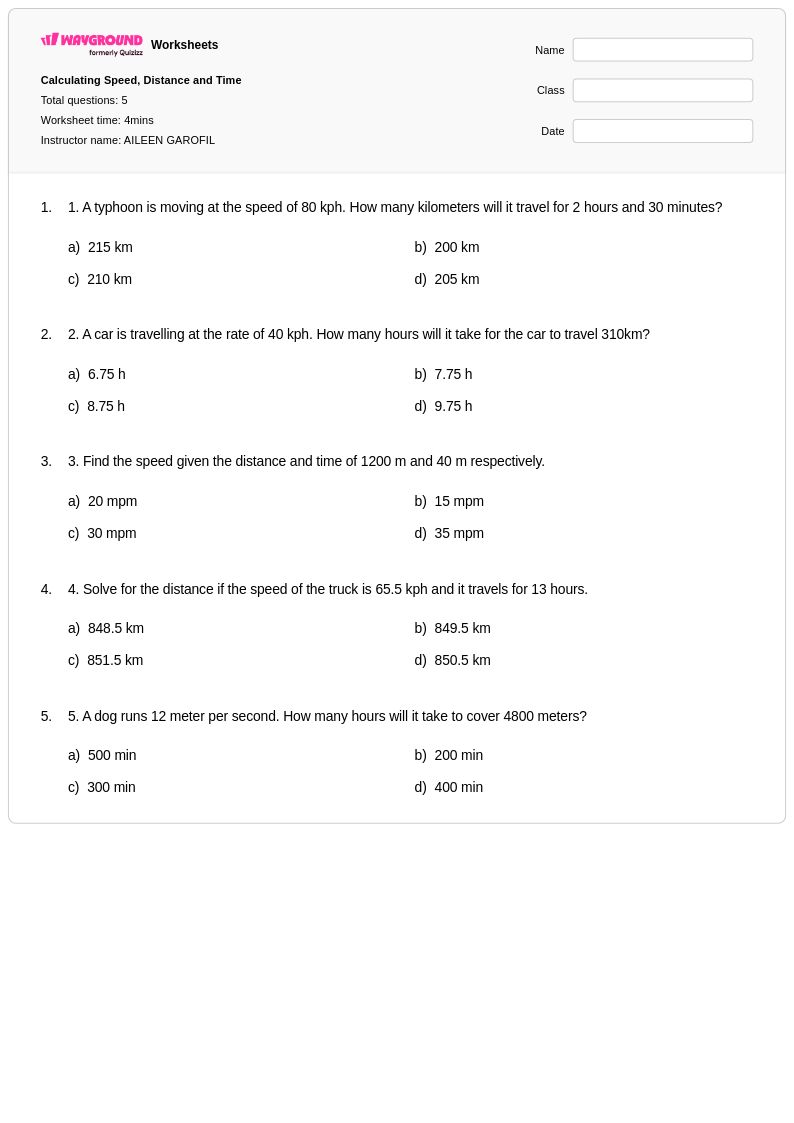
5 Q
5th - 6th
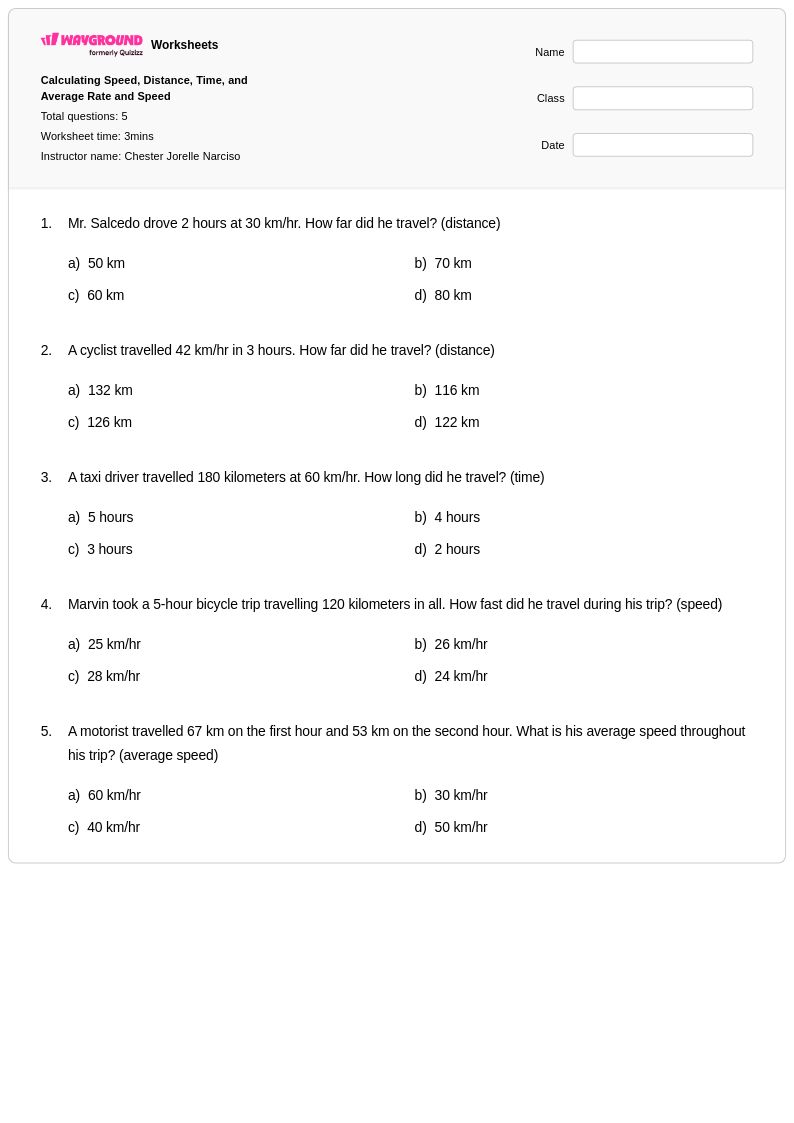
5 Q
6th
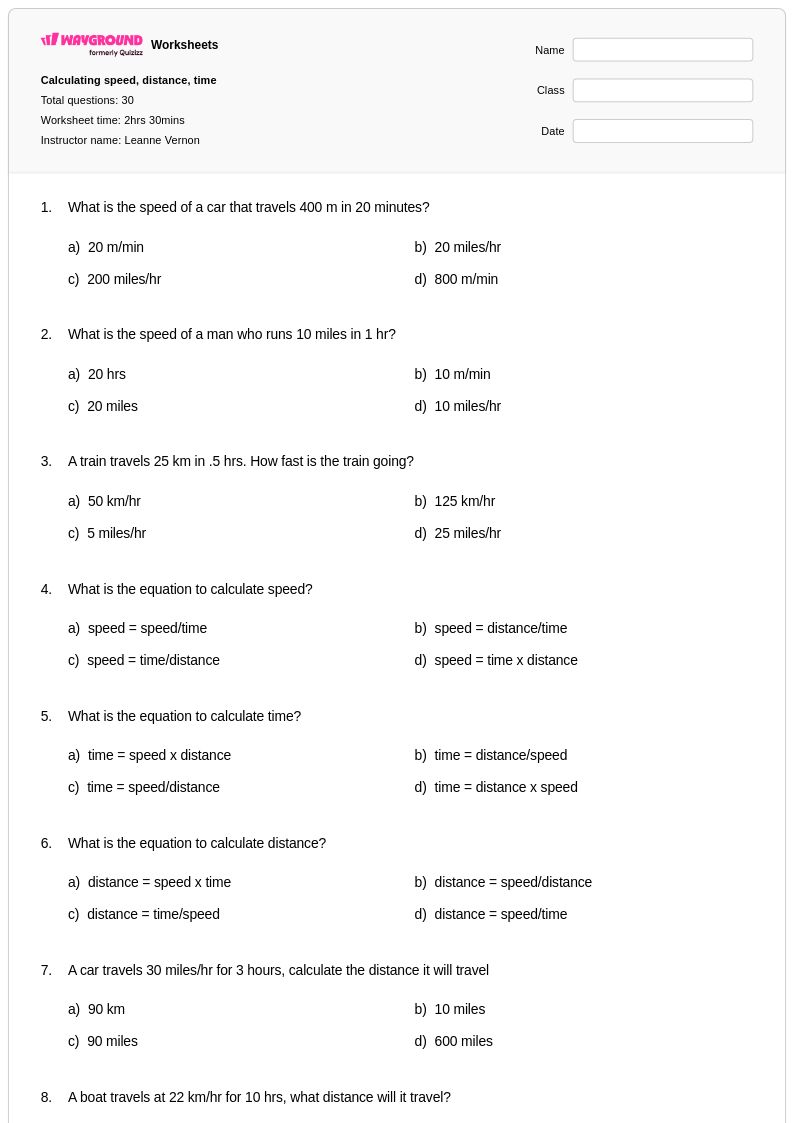
30 Q
7th
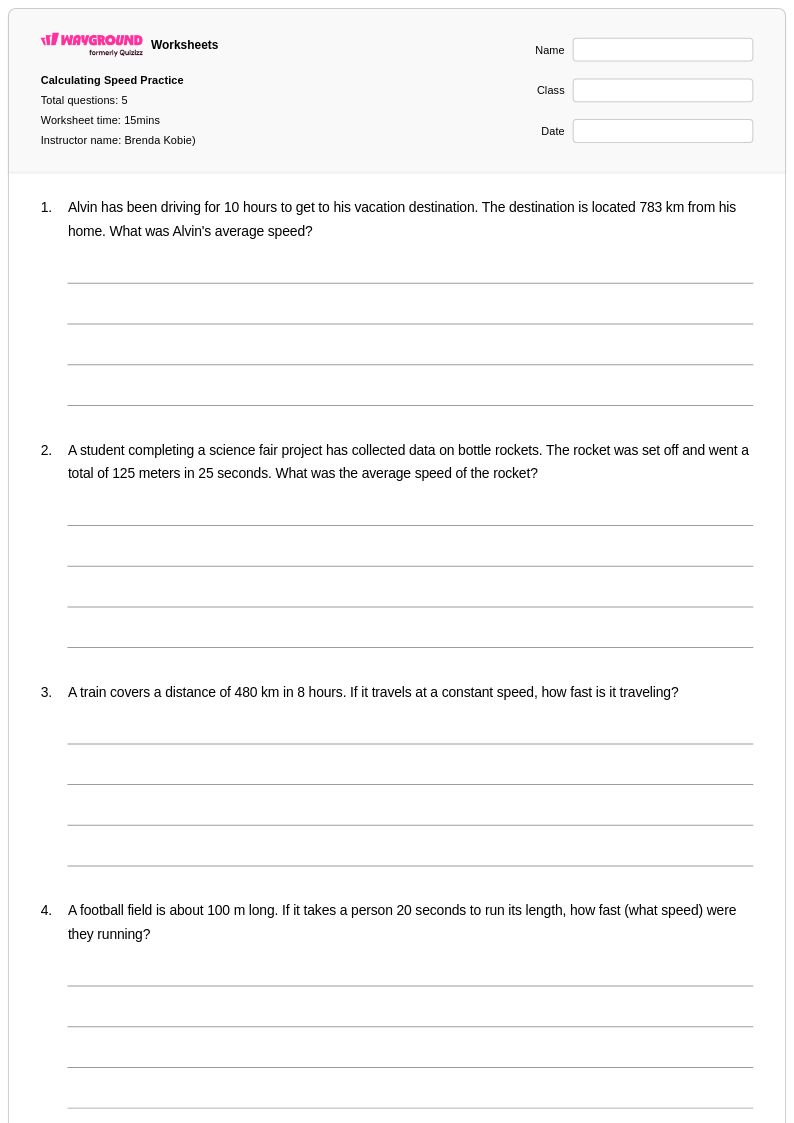
5 Q
8th
5 Q
6th
5 Q
6th
27 Q
9th - 12th
19 Q
6th - Uni
10 Q
5th
10 Q
7th - 12th
20 Q
6th
20 Q
7th
13 Q
6th
20 Q
11th
21 Q
9th - 12th
17 Q
12th - Uni
Explore Worksheets by Subjects
Explore printable Calculating Speed worksheets
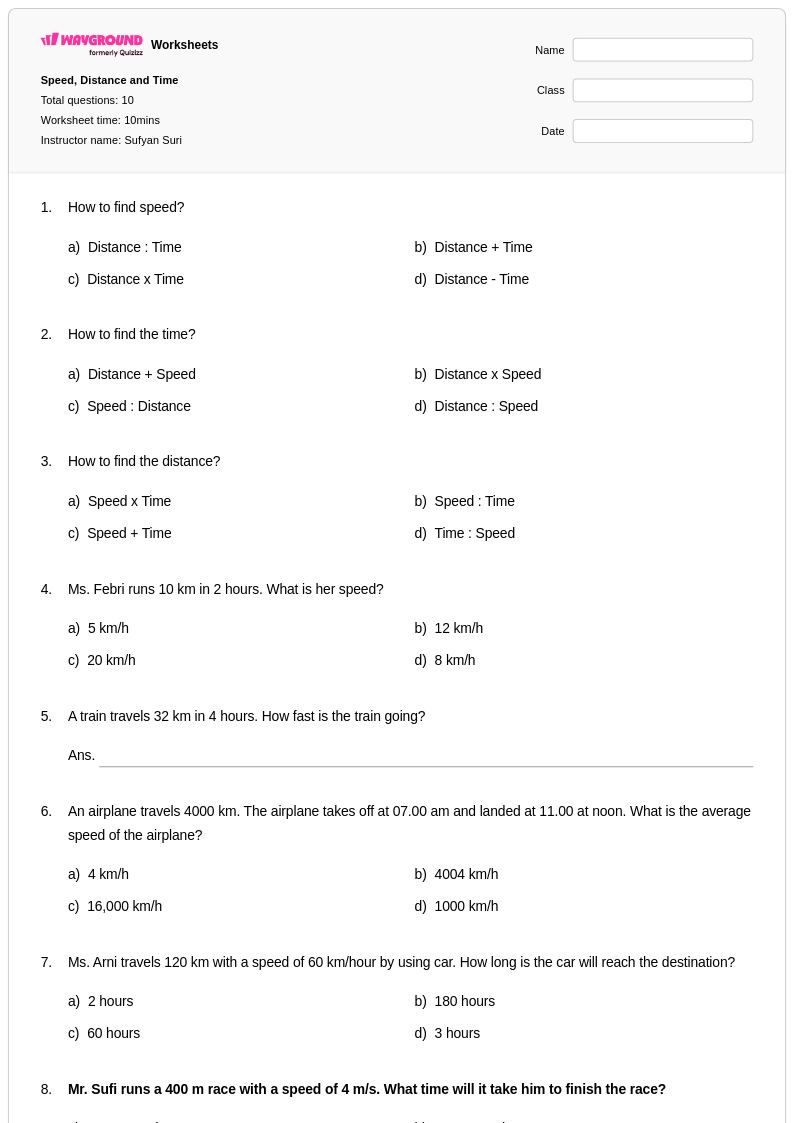
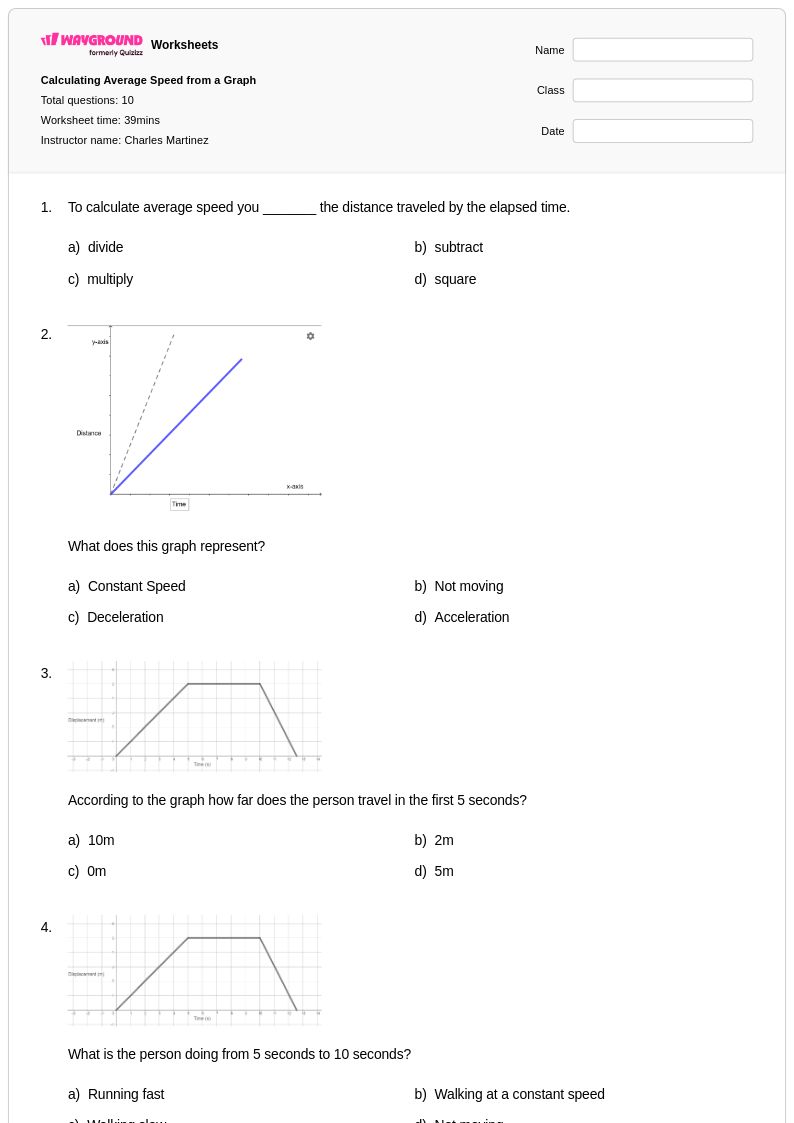
Calculating speed worksheets available through Wayground (formerly Quizizz) provide students with comprehensive practice in applying the fundamental formula of speed equals distance divided by time. These mathematics worksheets systematically develop students' ability to solve real-world problems involving velocity, time intervals, and distance measurements across various contexts including vehicle travel, athletic performance, and everyday scenarios. The collection strengthens critical analytical skills by requiring students to identify given information, select appropriate units of measurement, and perform accurate calculations while interpreting results in meaningful ways. Each worksheet includes detailed answer keys and step-by-step solutions, with free printable pdf formats available to support both classroom instruction and independent practice problems that reinforce conceptual understanding.
Wayground (formerly Quizizz) empowers teachers with millions of educator-created resources specifically designed for calculating speed instruction, featuring robust search and filtering capabilities that allow quick identification of materials aligned to curriculum standards and student needs. The platform's differentiation tools enable teachers to customize worksheet difficulty levels, modify problem types, and adapt content for diverse learning requirements, while flexible formatting options provide both printable pdf versions and interactive digital formats suitable for various classroom environments. These comprehensive features streamline lesson planning by offering ready-to-use materials for skill practice, targeted remediation for students struggling with speed calculations, and enrichment opportunities for advanced learners, ensuring that educators can effectively address the full spectrum of student abilities and learning objectives within their mathematics curriculum.
FAQs
How do I teach students to calculate speed?
What exercises help students practice calculating speed?
What mistakes do students commonly make when calculating speed?
How can I use a calculating speed worksheet in my classroom?
How does calculating speed fit into the Common Core math progression?
How can I differentiate calculating speed practice for mixed-ability students?