
20 Q
5th - Uni
11 Q
4th - 5th
10 Q
5th
31 Q
6th
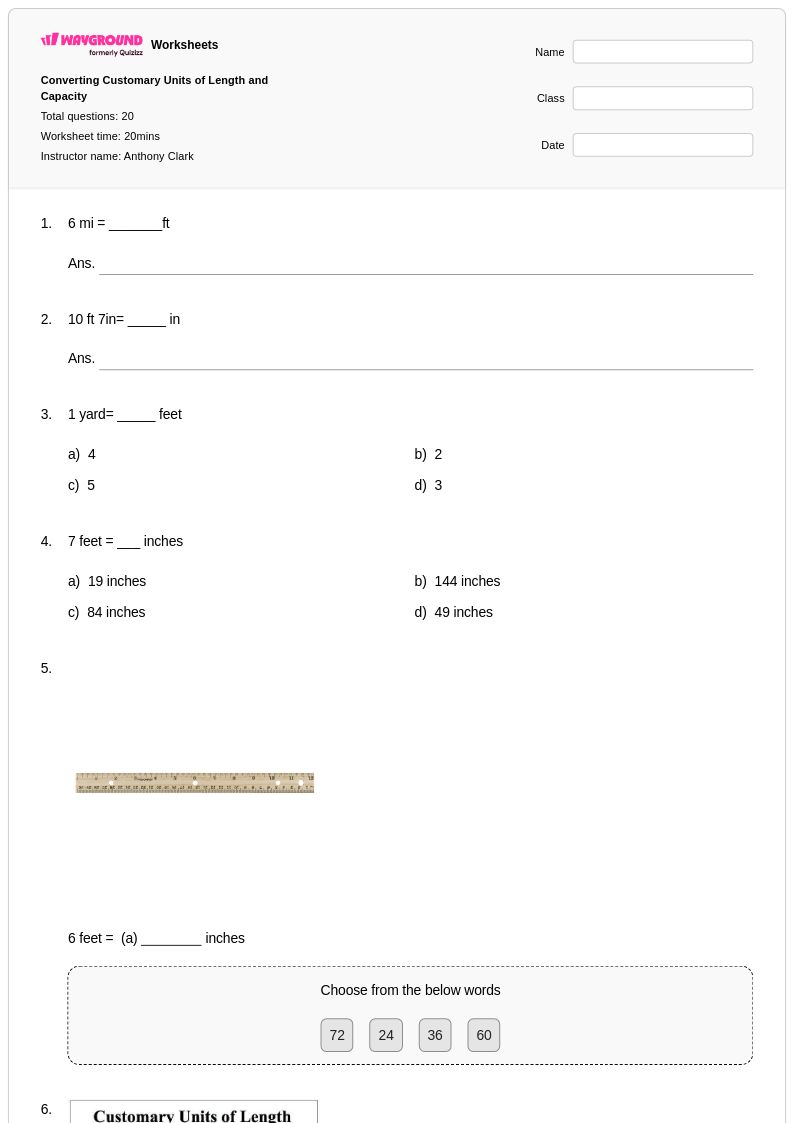
20 Q
5th - Uni
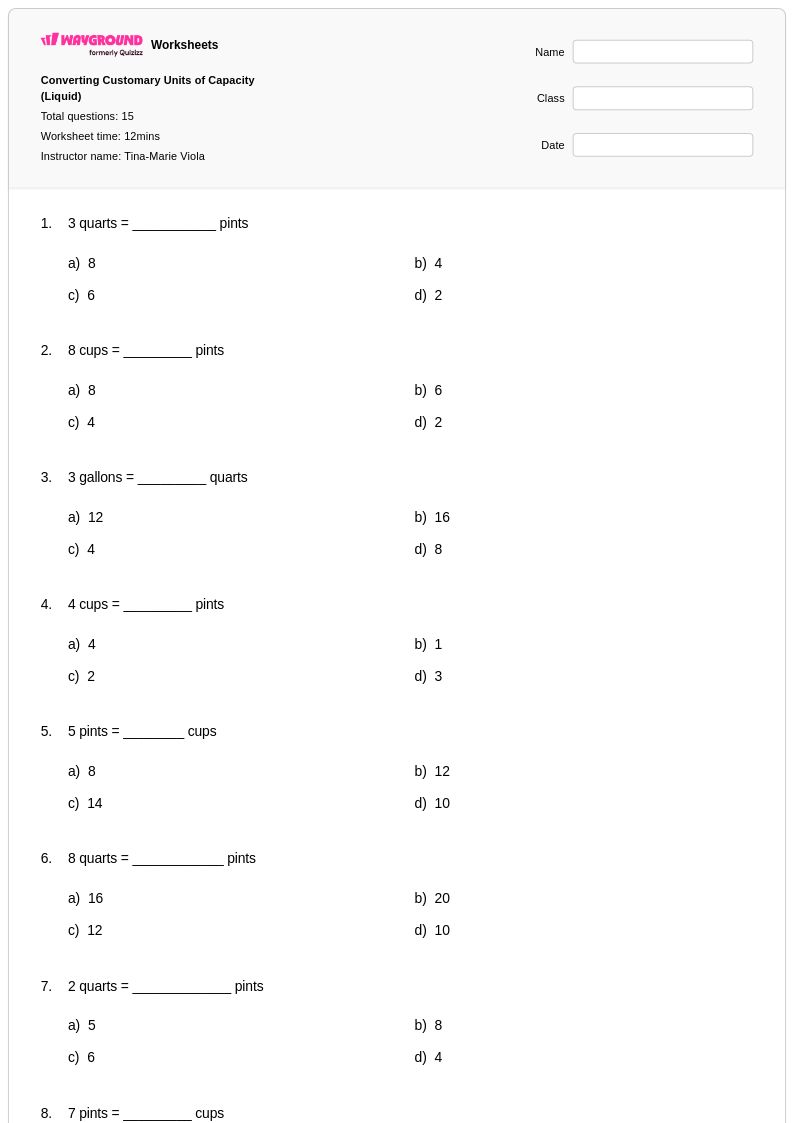
15 Q
5th
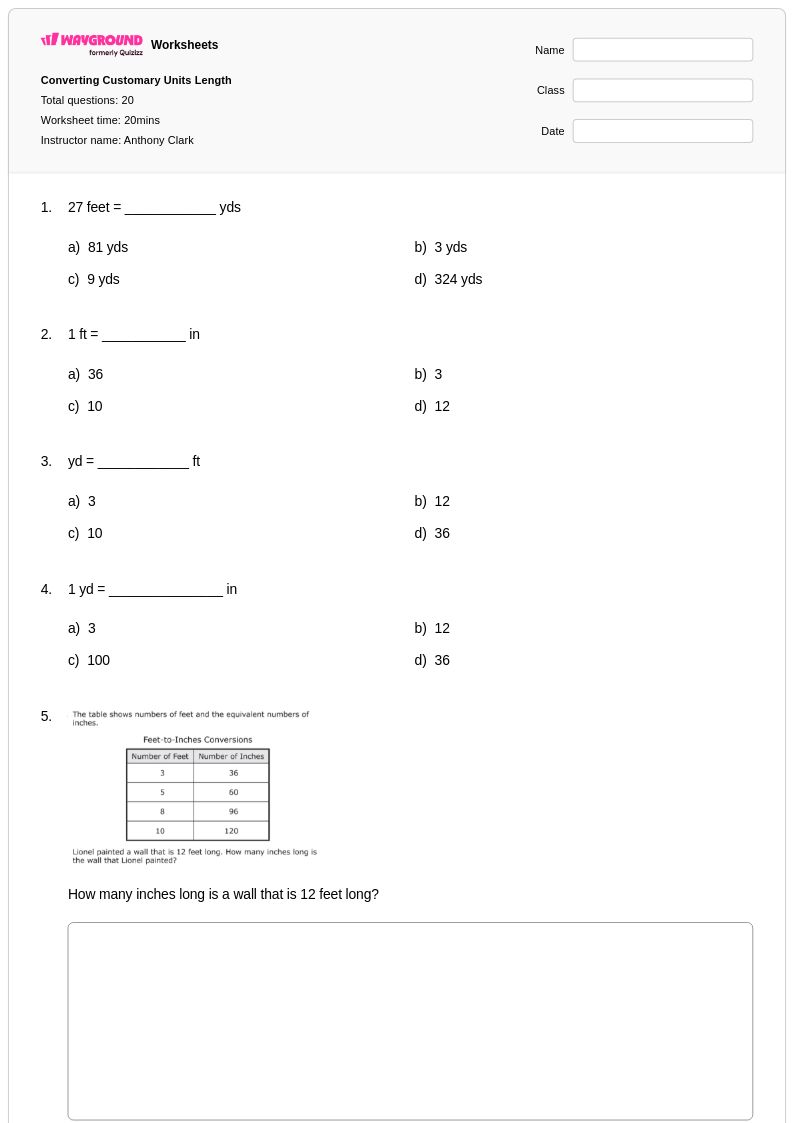
20 Q
5th - Uni
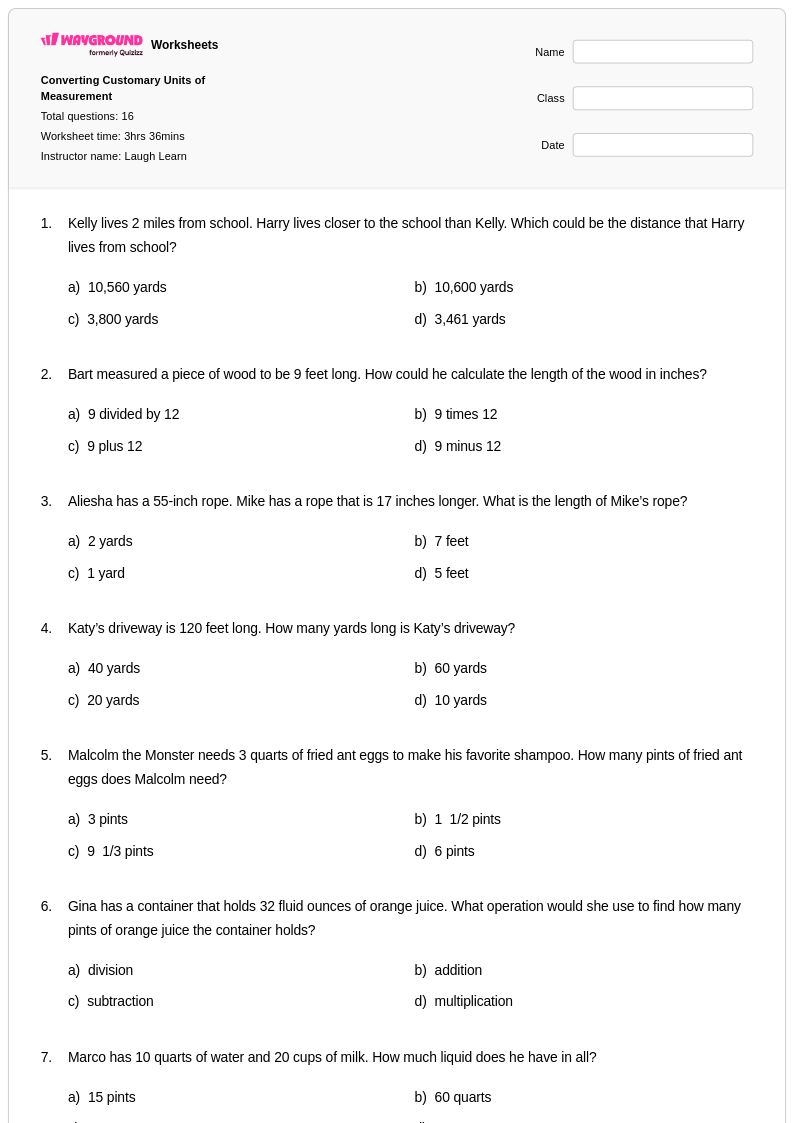
16 Q
5th
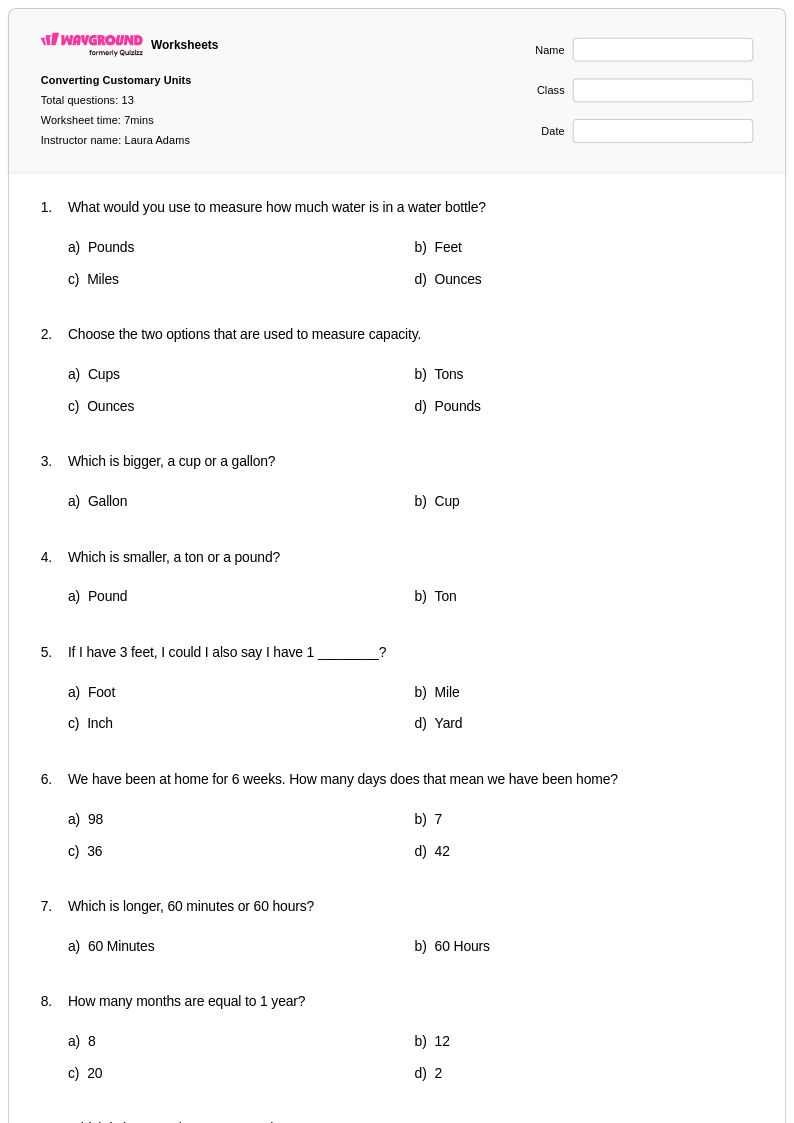
13 Q
5th
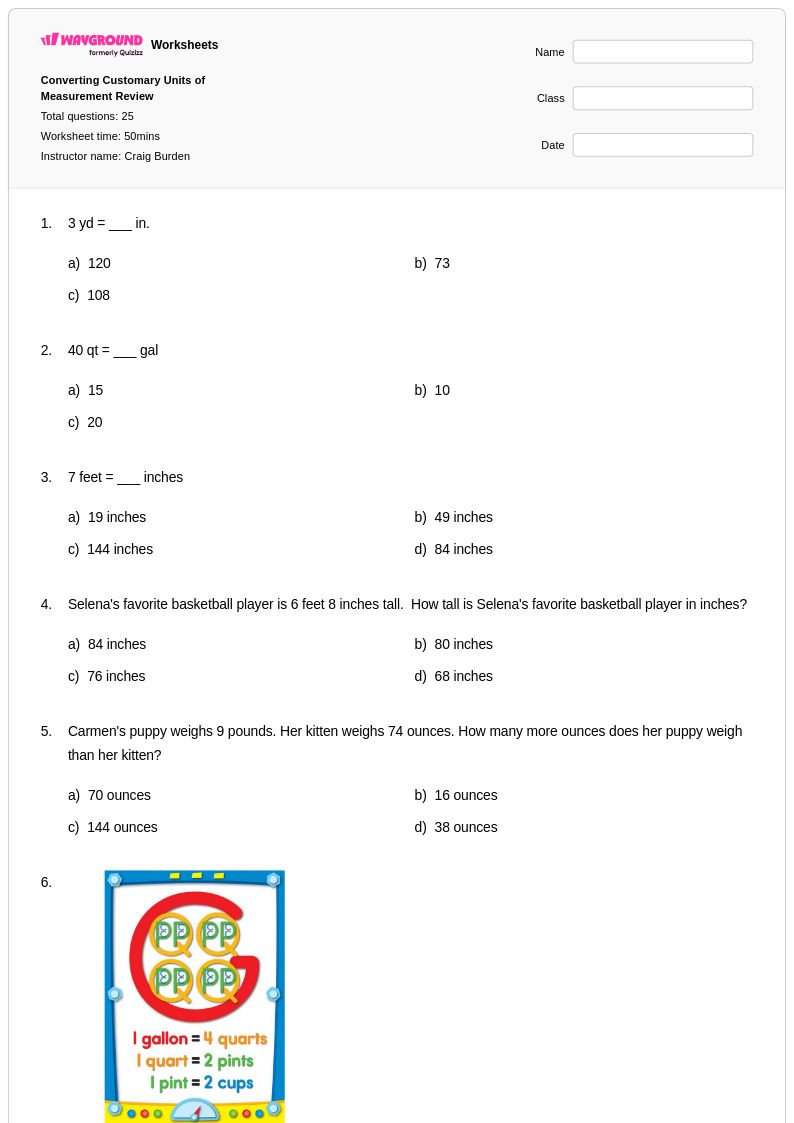
25 Q
5th
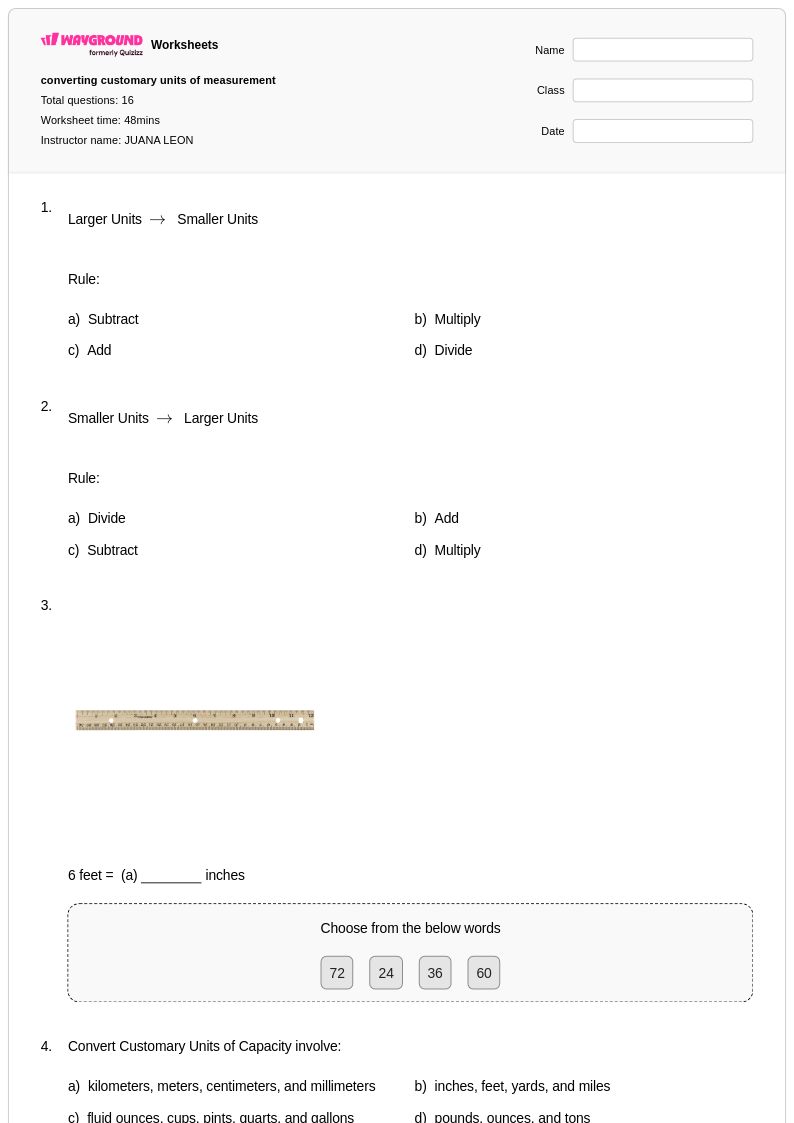
16 Q
4th
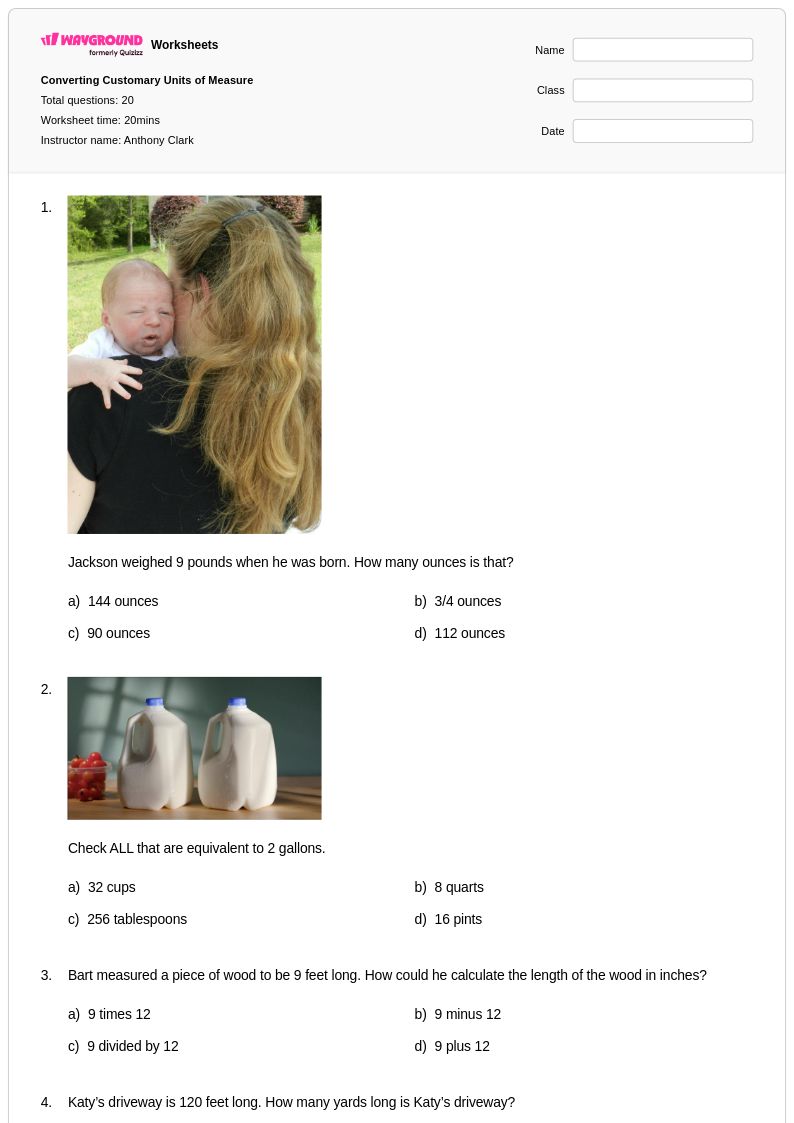
20 Q
5th - Uni
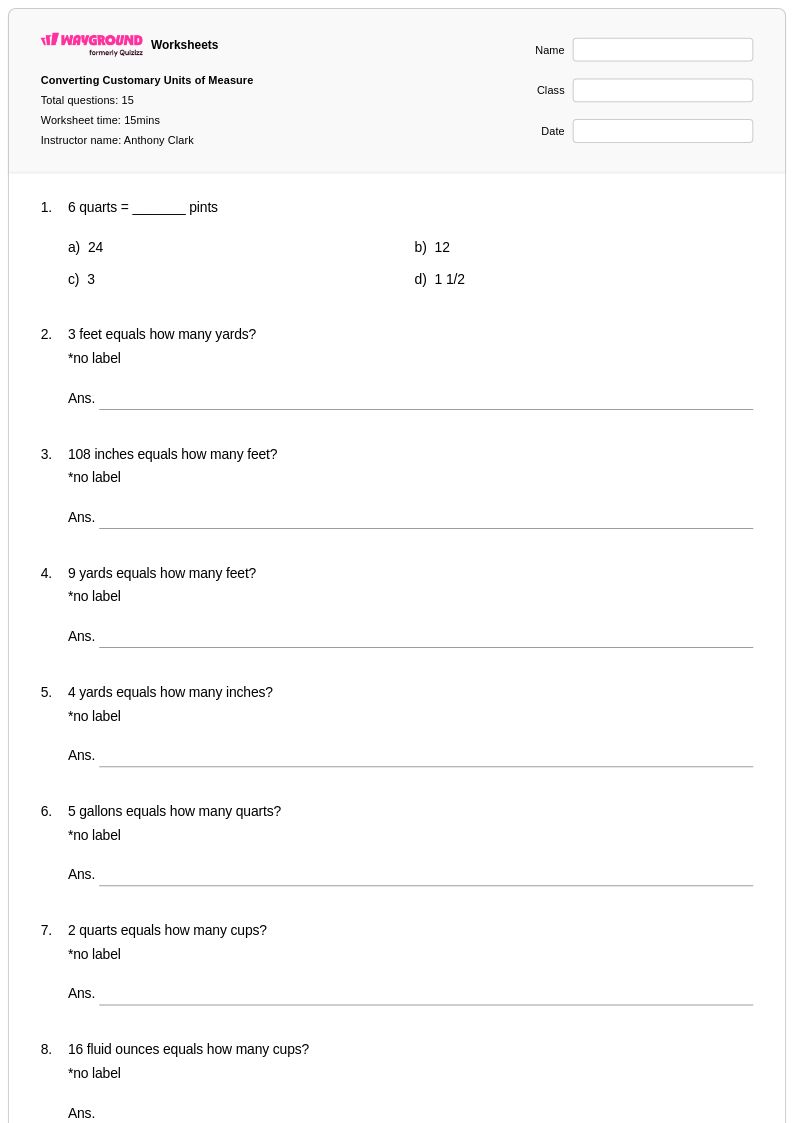
15 Q
5th - Uni
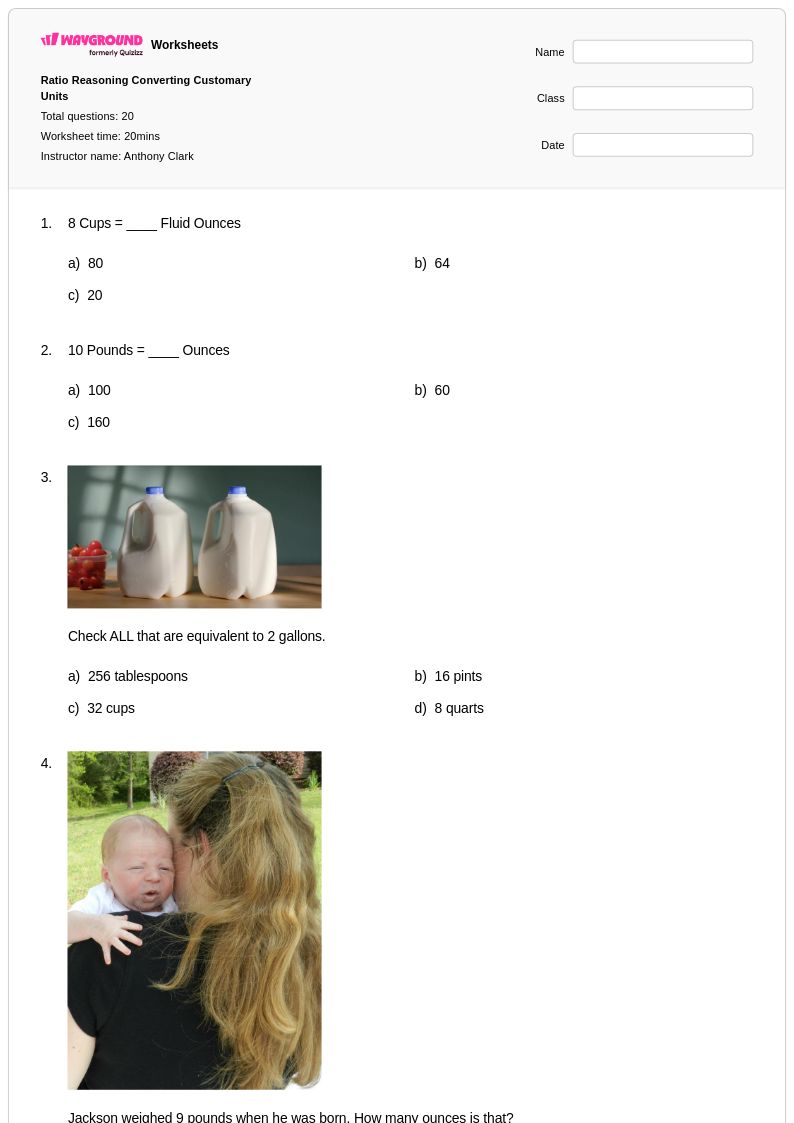
20 Q
5th - Uni
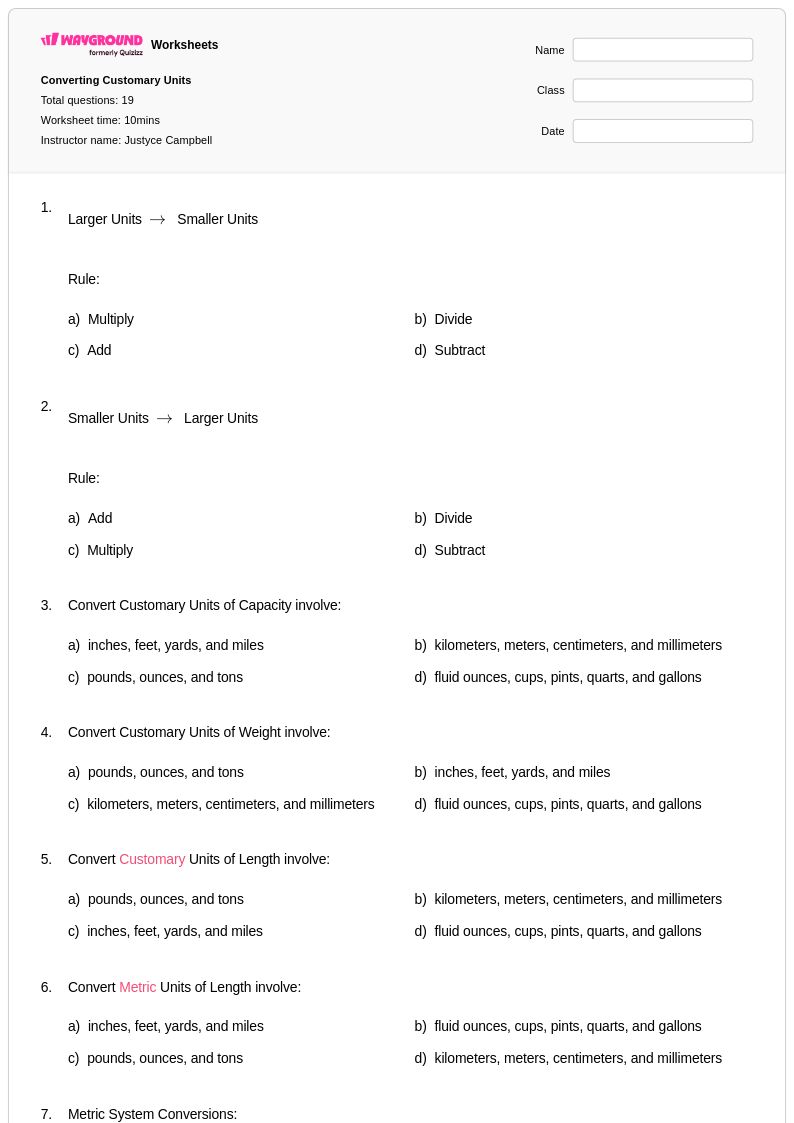
19 Q
3rd - 5th
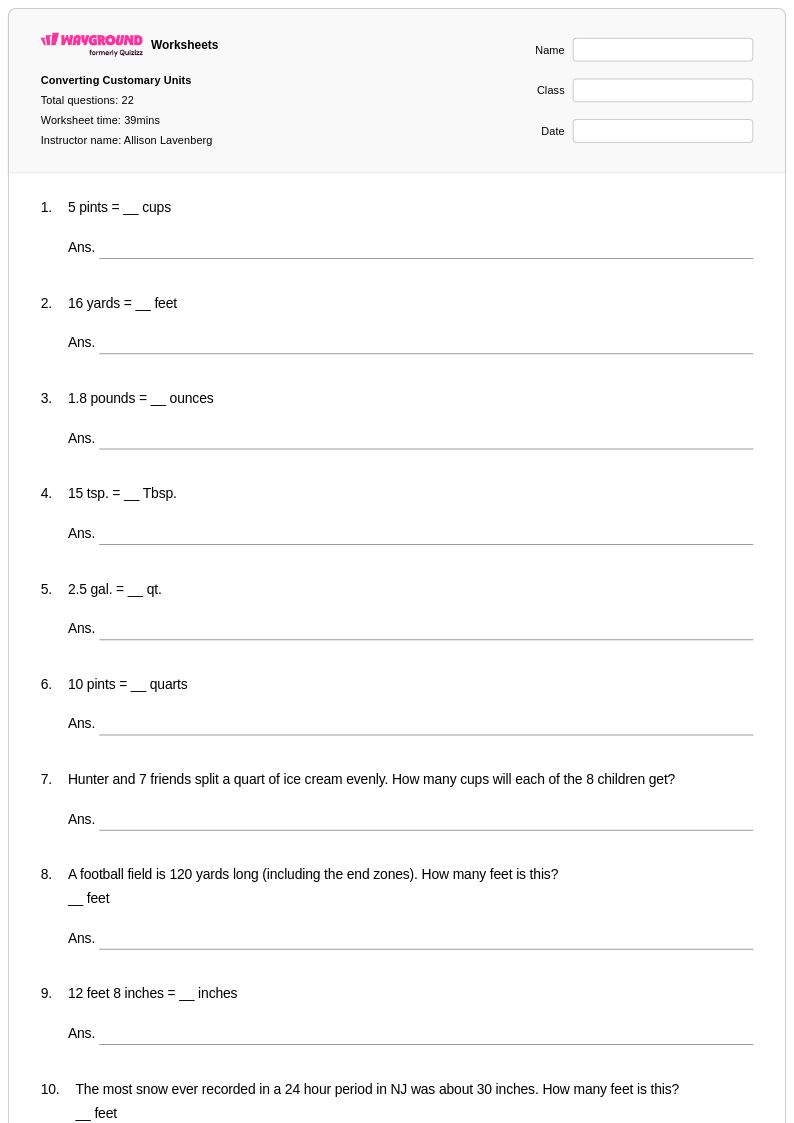
22 Q
6th
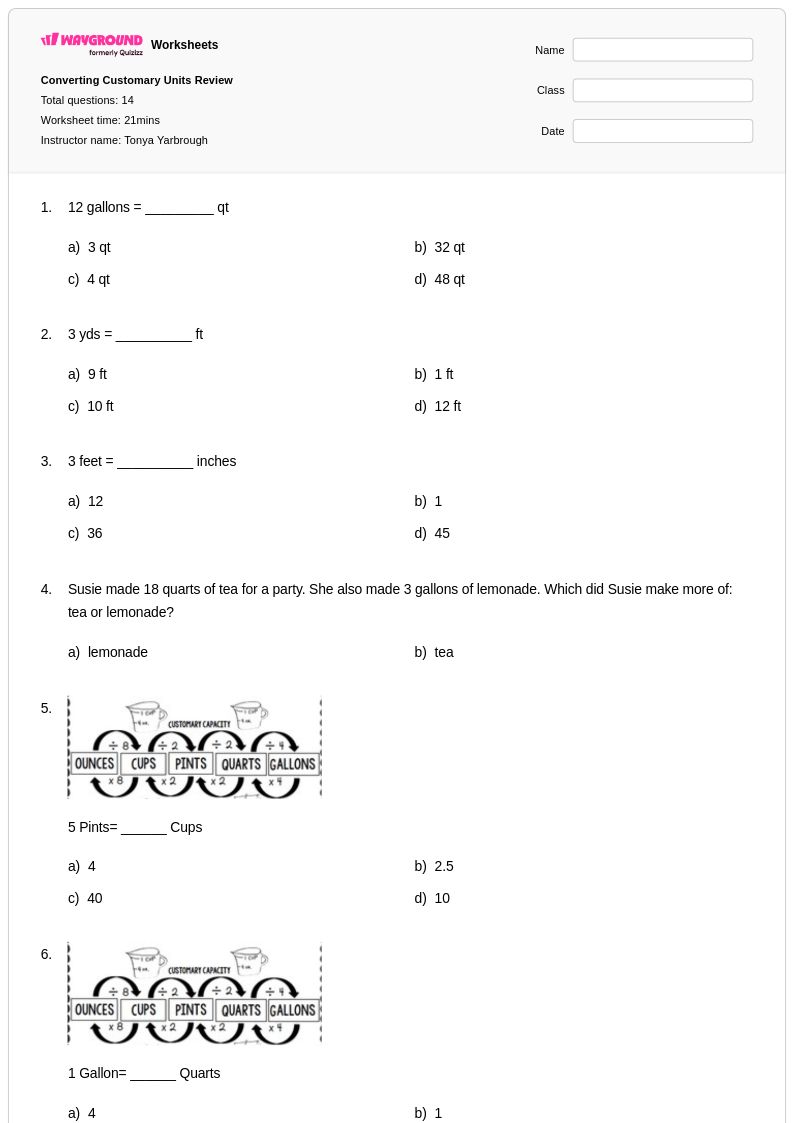
14 Q
4th
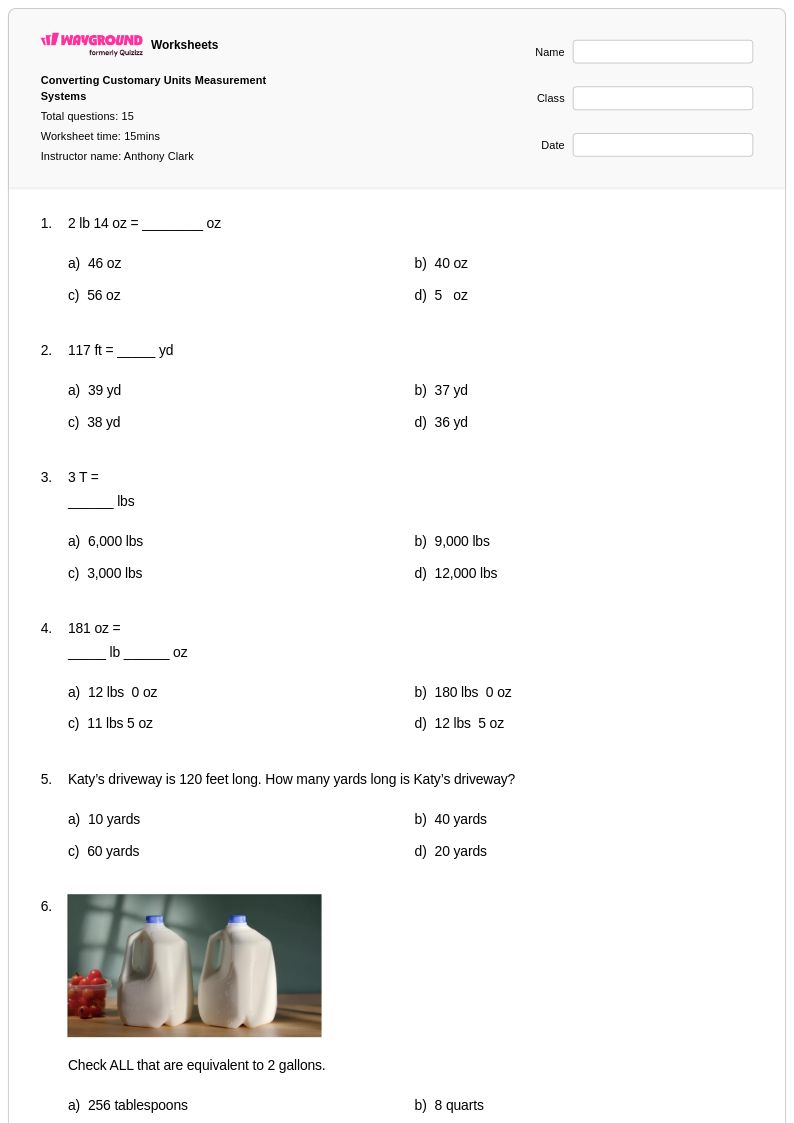
15 Q
5th - Uni
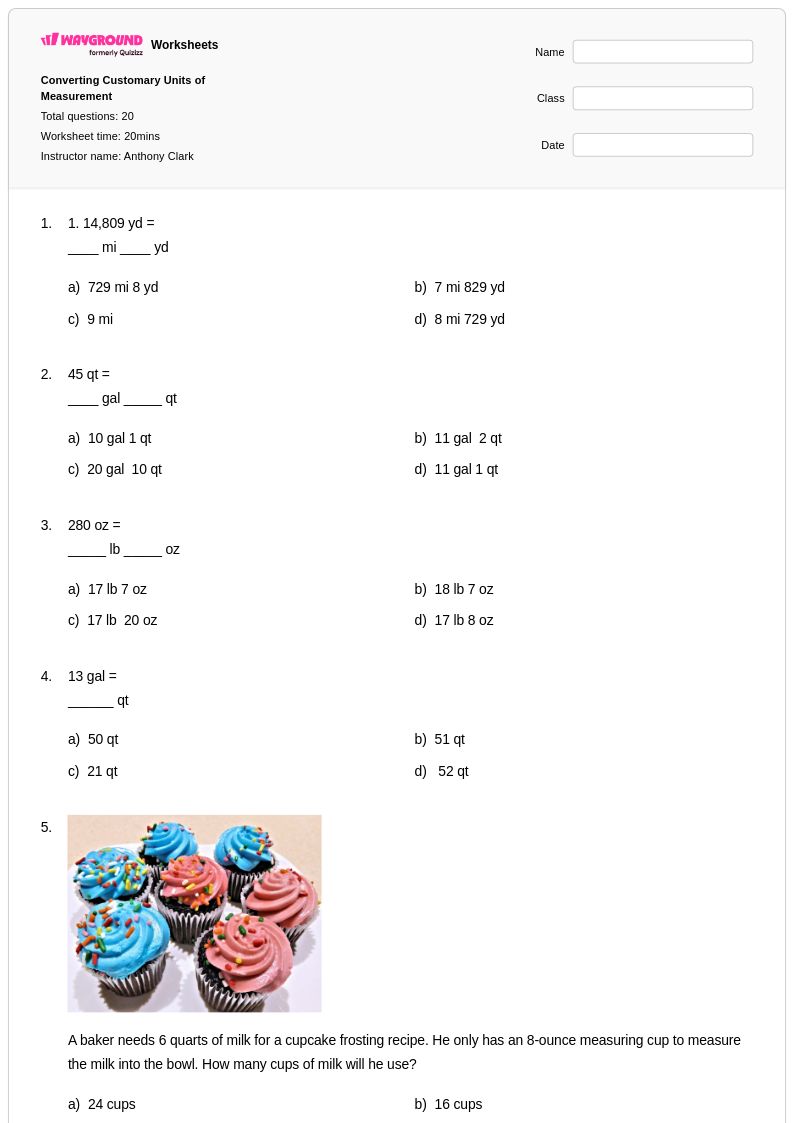
20 Q
4th - Uni
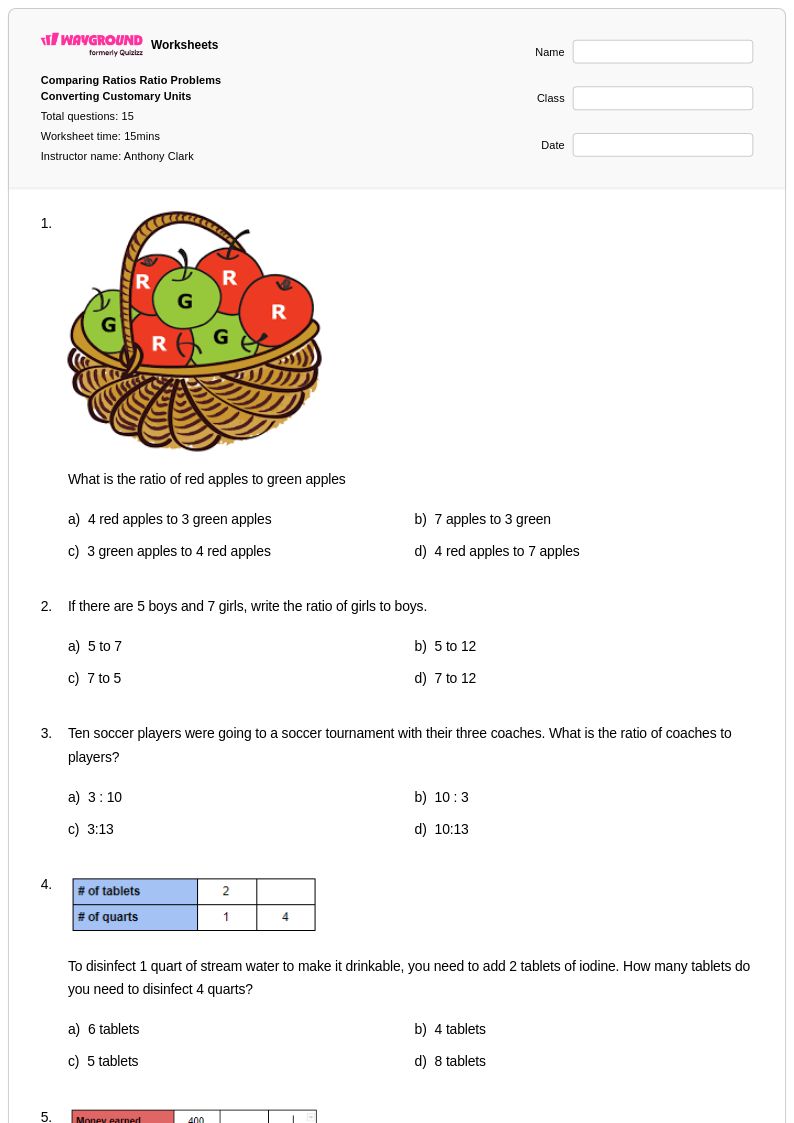
15 Q
6th - Uni
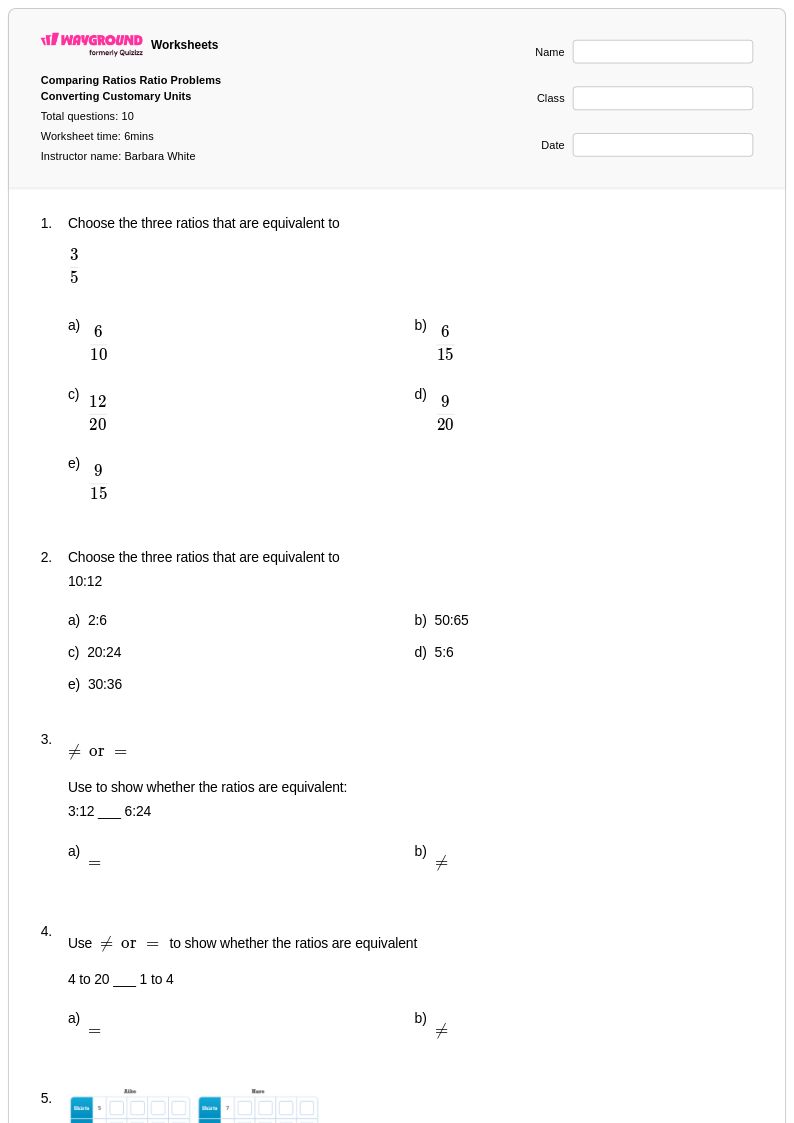
10 Q
6th - 9th
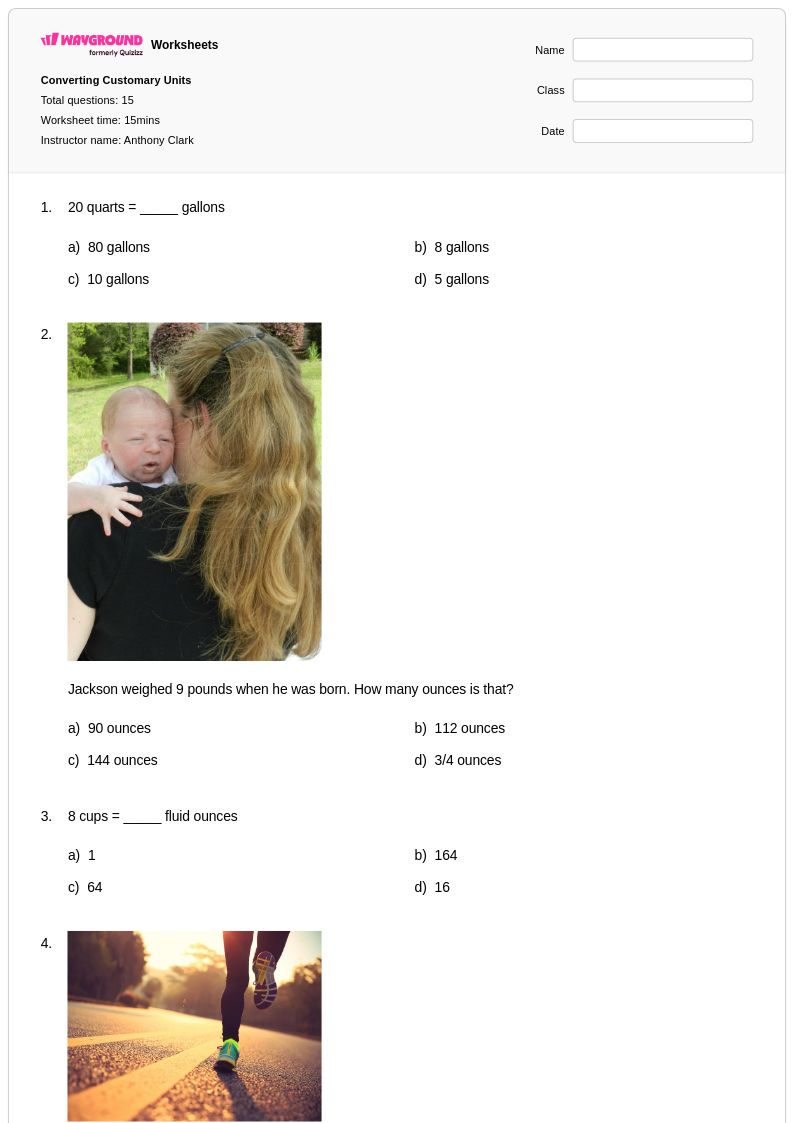
15 Q
5th - Uni
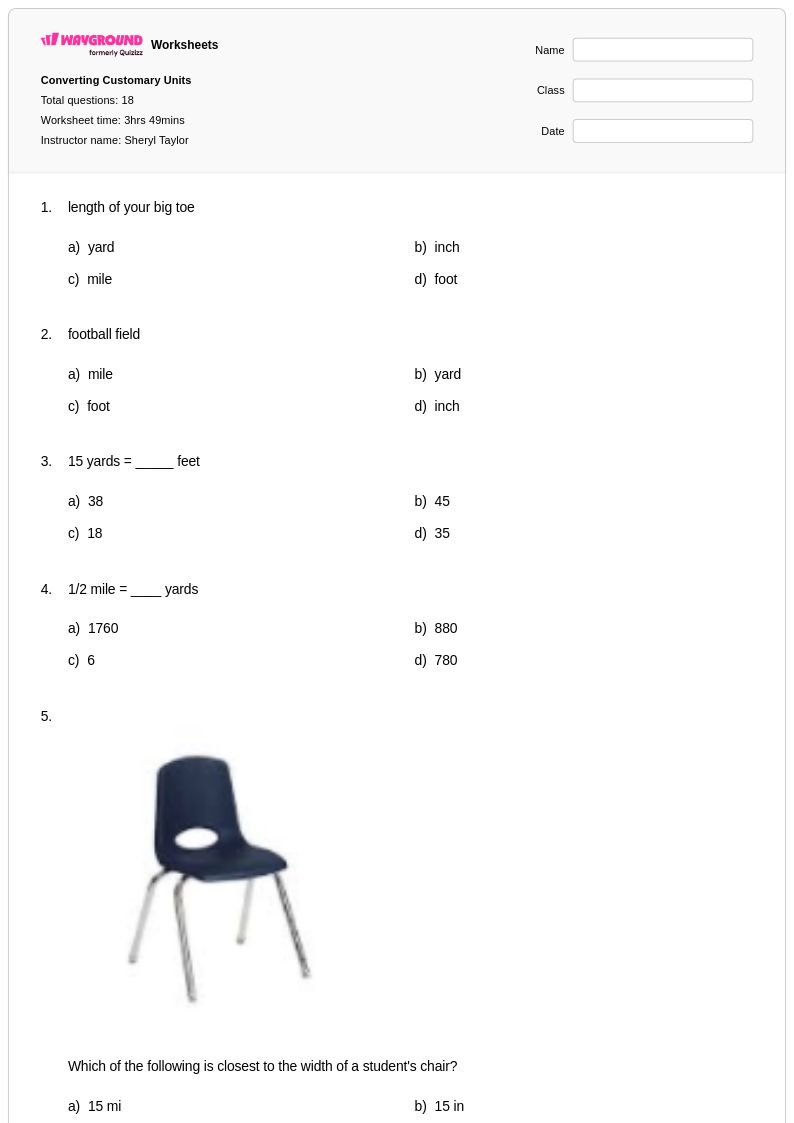
18 Q
5th
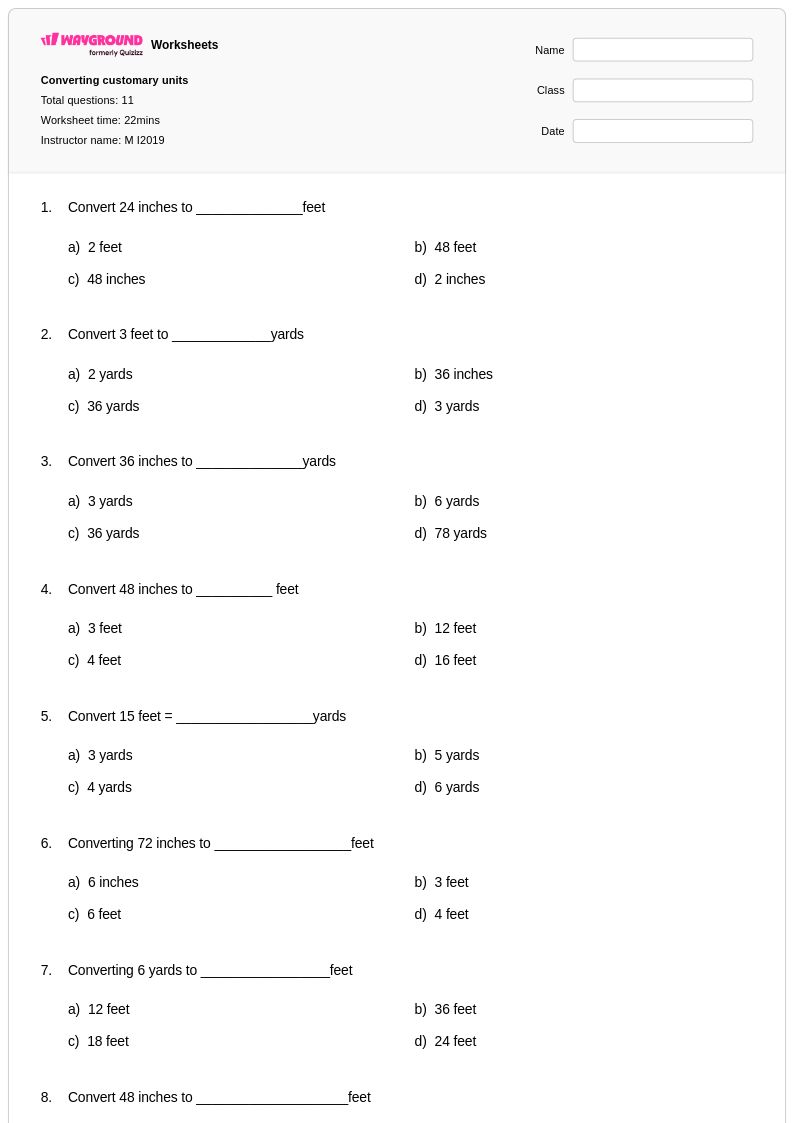
11 Q
6th
Explore Worksheets by Subjects
Explore printable Converting Customary Units worksheets
Converting customary units worksheets available through Wayground (formerly Quizizz) provide comprehensive practice for students learning to transform measurements within the U.S. customary system. These educational resources strengthen essential mathematical skills including dimensional analysis, proportional reasoning, and multiplicative thinking as students work with conversions between inches and feet, ounces and pounds, cups and gallons, and other standard units of length, weight, and capacity. Each worksheet collection includes detailed answer keys and step-by-step solutions that help students understand conversion processes, while the free printable format makes these practice problems accessible for classroom instruction, homework assignments, and independent study sessions.
Wayground (formerly Quizizz) supports mathematics educators with millions of teacher-created resources specifically designed for customary unit conversion instruction. The platform's advanced search and filtering capabilities allow teachers to quickly locate worksheets aligned with specific mathematics standards and learning objectives, while differentiation tools enable customization based on individual student needs and skill levels. These versatile materials are available in both printable pdf format and interactive digital versions, making them ideal for traditional classroom instruction, remote learning environments, and blended educational approaches. Teachers can efficiently plan targeted skill practice sessions, provide focused remediation for struggling learners, and offer enrichment opportunities for advanced students through this comprehensive worksheet collection system.
FAQs
How do I teach students to convert customary units?
What exercises help students practice converting customary units?
What mistakes do students commonly make when converting customary units?
How can I use a converting customary units worksheet in my classroom?
How do customary unit conversions fit into the Common Core math progression?
How can I differentiate customary unit conversion practice?