
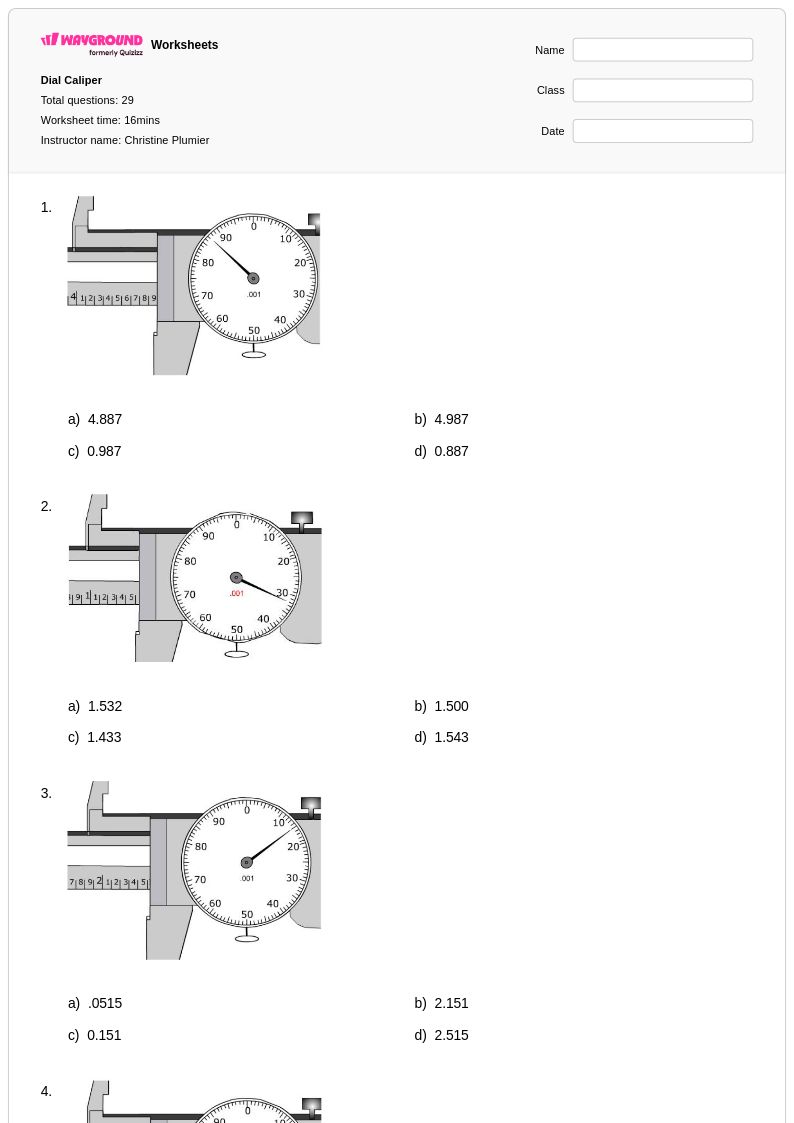
29 Q
6th - 7th
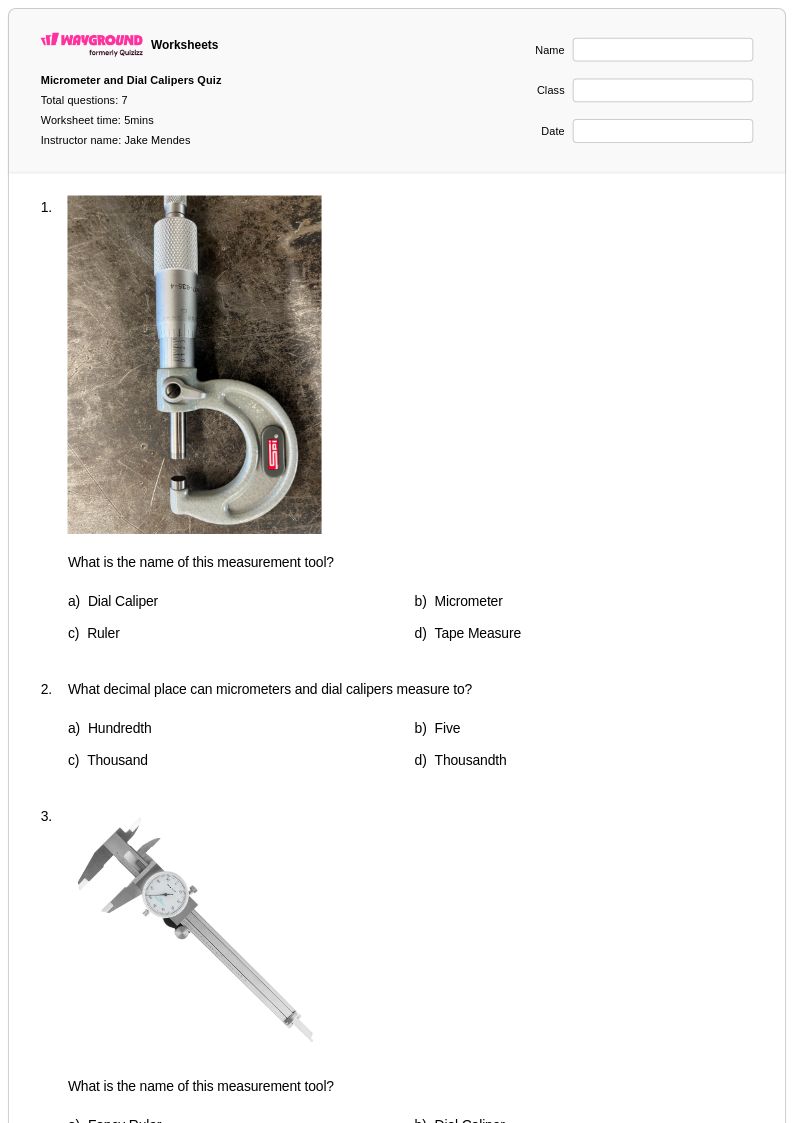
7 Q
9th
20 Q
6th - Uni
7 Q
2nd
10 Q
2nd
13 Q
3rd
20 Q
5th

11 Q
2nd
18 Q
2nd - 3rd
12 Q
4th
10 Q
3rd
13 Q
7th
16 Q
3rd
12 Q
5th

11 Q
3rd
16 Q
1st
12 Q
5th

7 Q
3rd
10 Q
8th - Uni

13 Q
7th
14 Q
2nd
15 Q
6th - 8th

10 Q
7th
Explore Worksheets by Subjects
Explore printable Reading a Dial Caliper worksheets
Reading a dial caliper worksheets available through Wayground (formerly Quizizz) provide comprehensive practice in interpreting precise measurements using this essential precision instrument. These educational resources strengthen students' abilities to read both imperial and metric dial calipers accurately, understanding fractional and decimal measurements, and developing the visual-spatial skills necessary for technical measurement tasks. The worksheets feature varied practice problems that progress from basic dial reading exercises to more complex measurement scenarios, complete with detailed answer keys that support independent learning and self-assessment. Available as free printables in convenient pdf format, these resources enable students to master the critical skill of reading dial calipers through structured, hands-on practice that mirrors real-world applications in manufacturing, engineering, and scientific contexts.
Wayground (formerly Quizizz) supports educators with millions of teacher-created resources specifically designed for measurement instruction, including extensive collections focused on dial caliper reading skills. The platform's robust search and filtering capabilities allow teachers to quickly locate worksheets that match their specific instructional needs, while standards alignment features ensure content meets curriculum requirements. Teachers can easily customize these dial caliper worksheets to accommodate different skill levels, making differentiation seamless for diverse learners who may need additional practice with precision measurement concepts. Available in both printable and digital formats including pdf downloads, these resources provide flexibility for classroom instruction, homework assignments, remediation support, and enrichment activities, enabling teachers to effectively address varying student needs while building competency in this fundamental technical measurement skill.
FAQs
How do I teach students to read a dial caliper?
What exercises help students practice reading a dial caliper?
What are the most common mistakes students make when reading a dial caliper?
How can I use this dial caliper worksheet in my class?
How can I support students who struggle with this visual skill?