Discover free Class 3 chloroplast worksheets and printables from Wayground that help students learn about plant cell structures through engaging practice problems and activities with complete answer keys.
Explore printable Chloroplast worksheets for Class 3
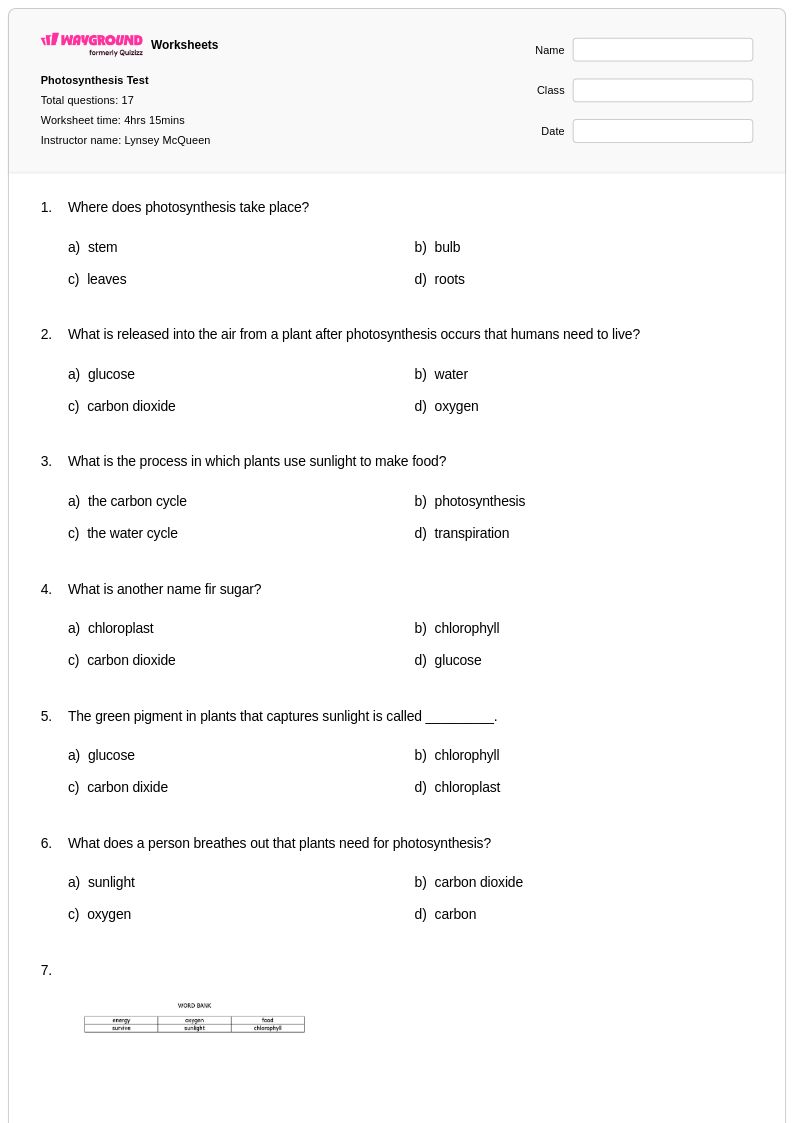
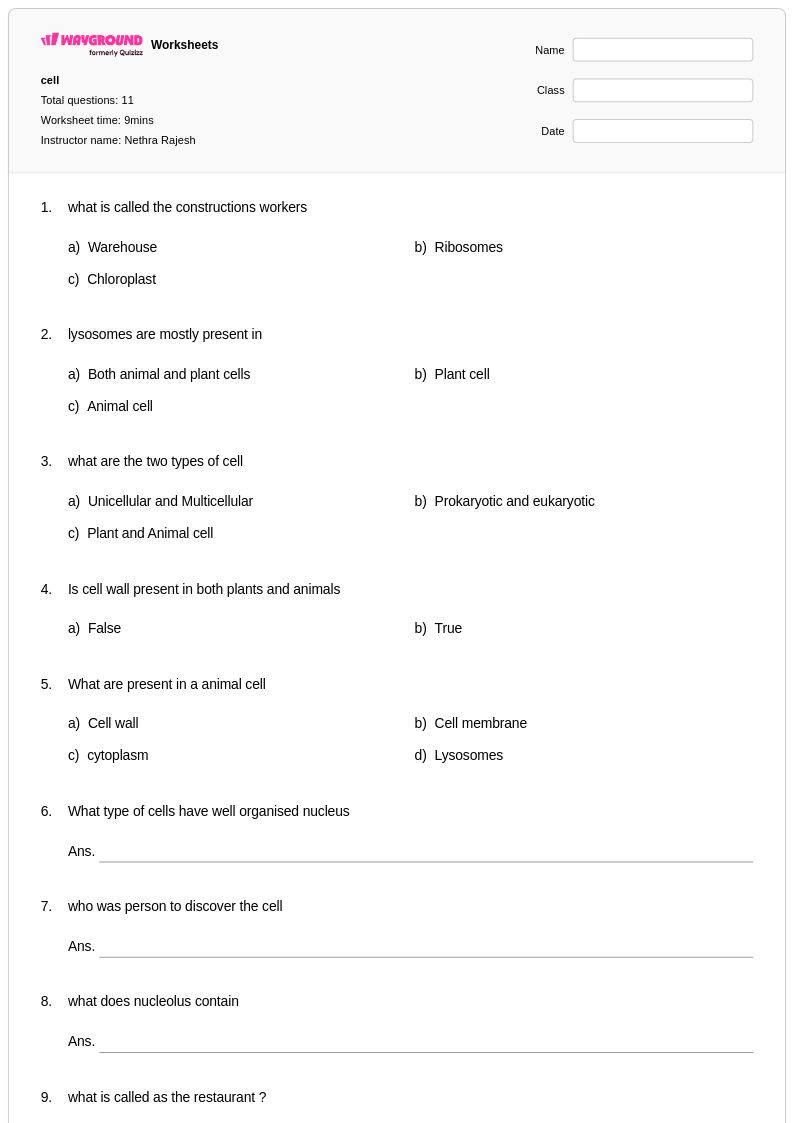
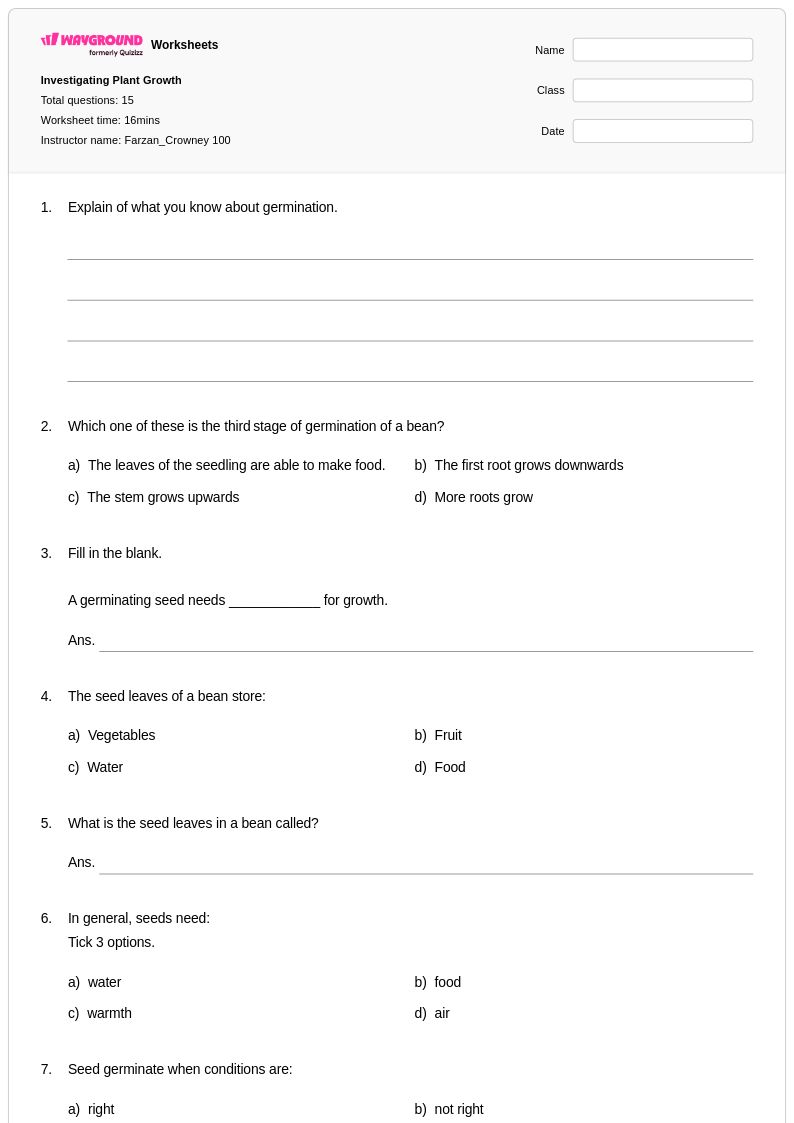
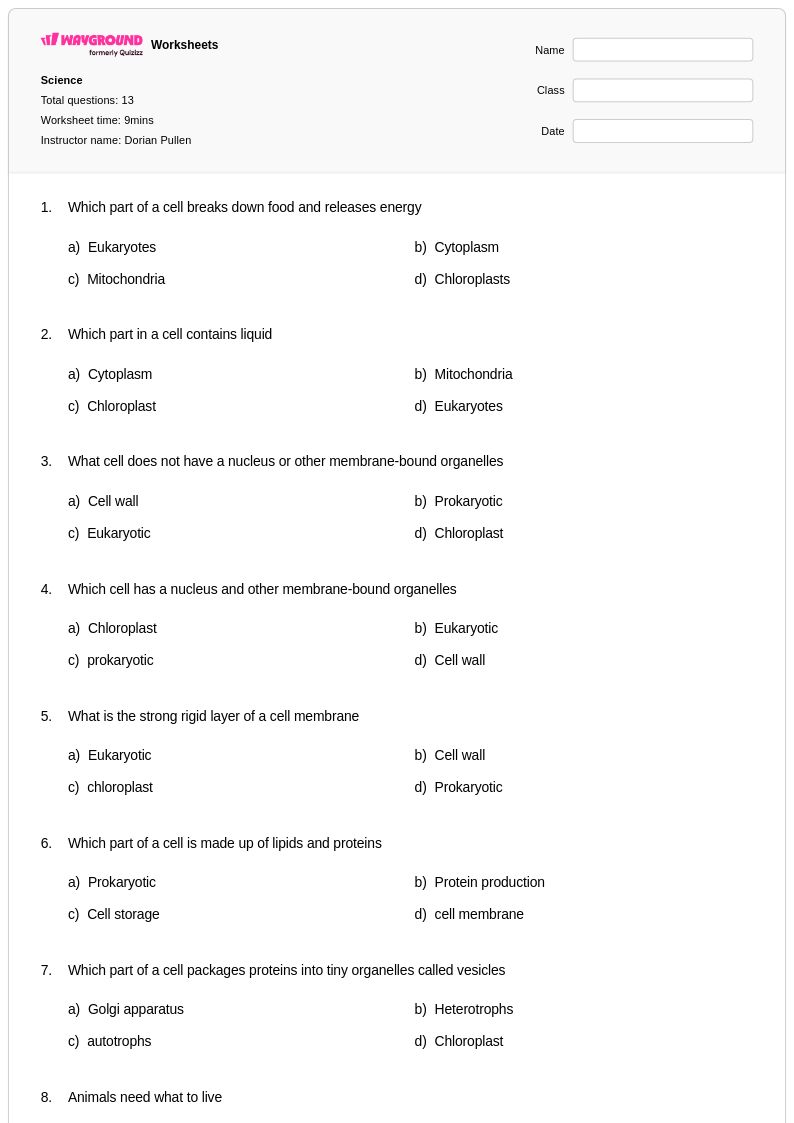
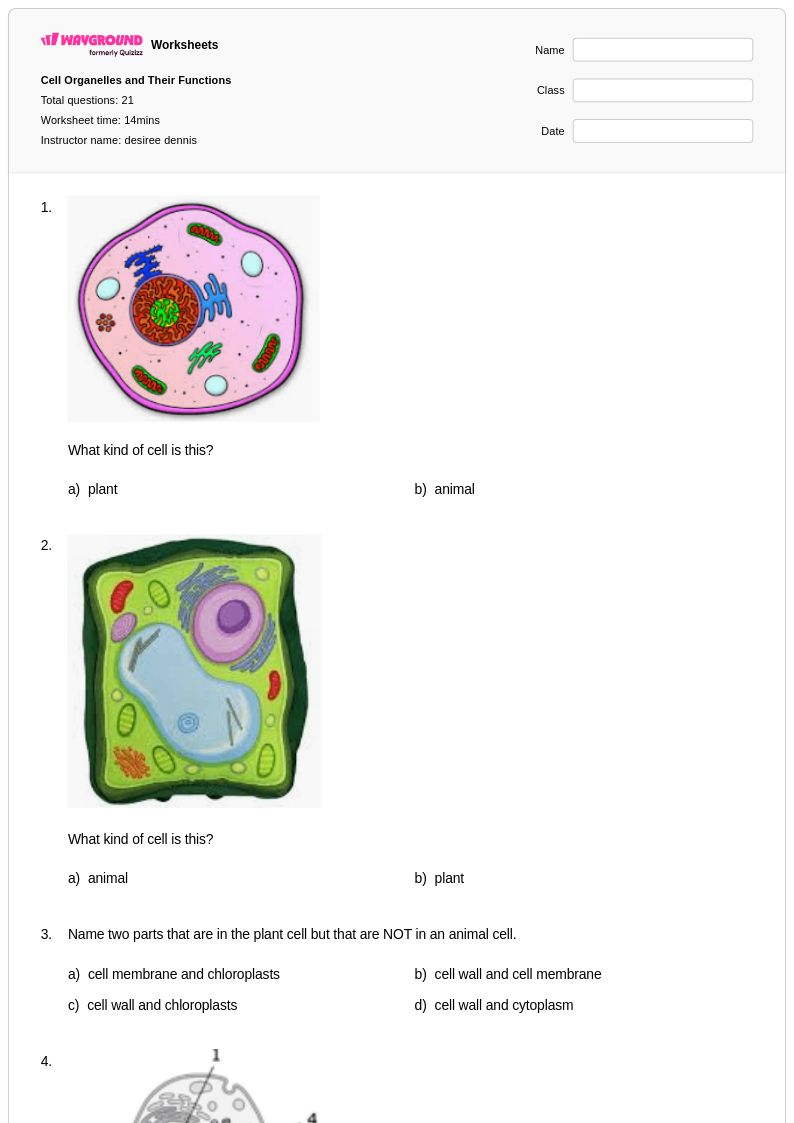
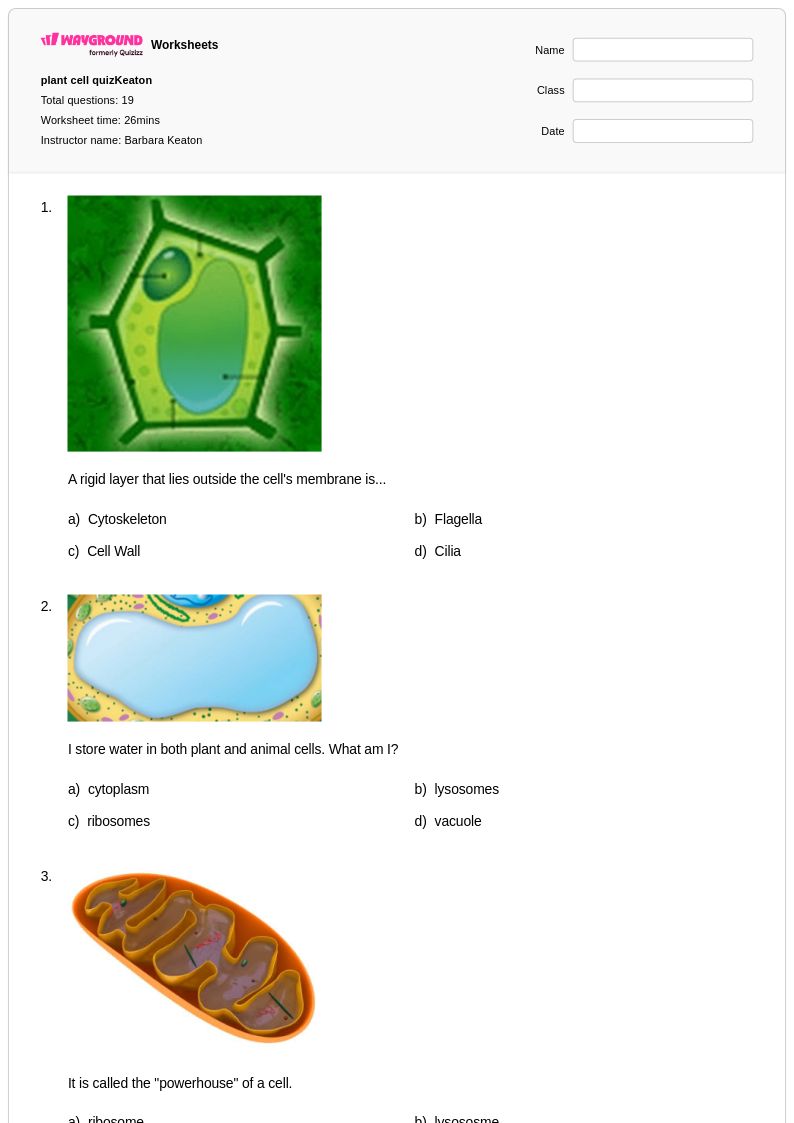
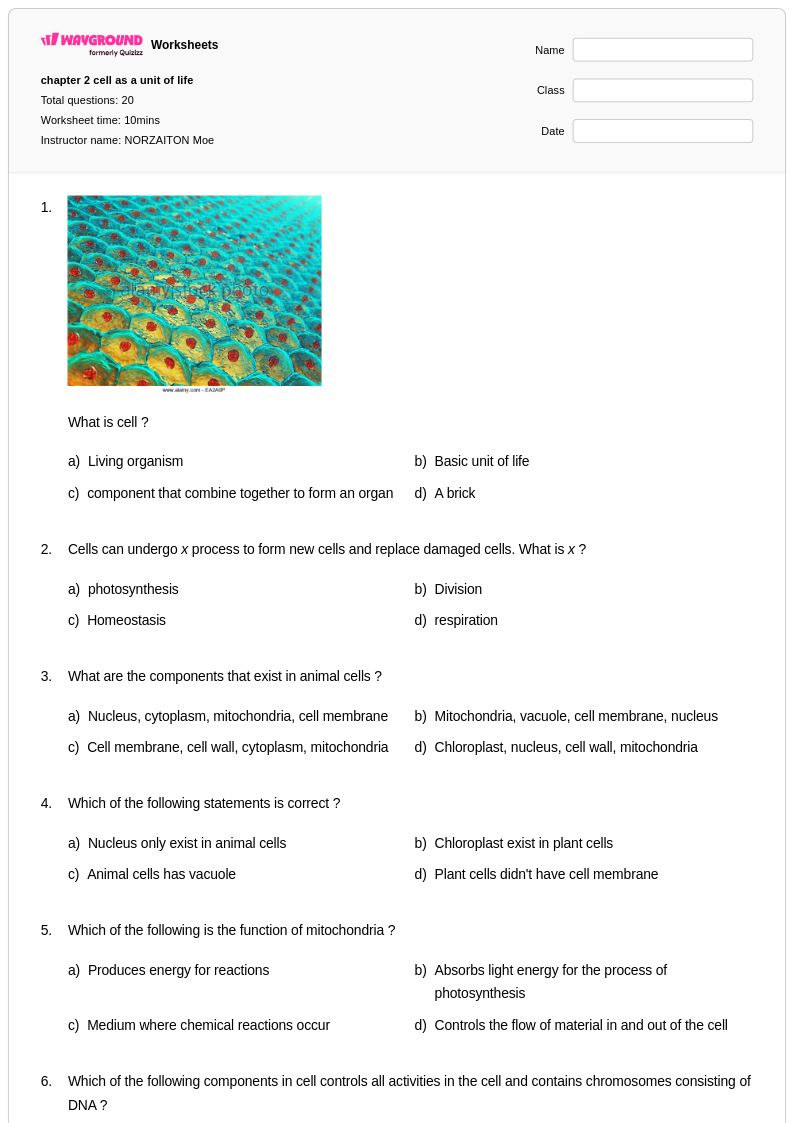
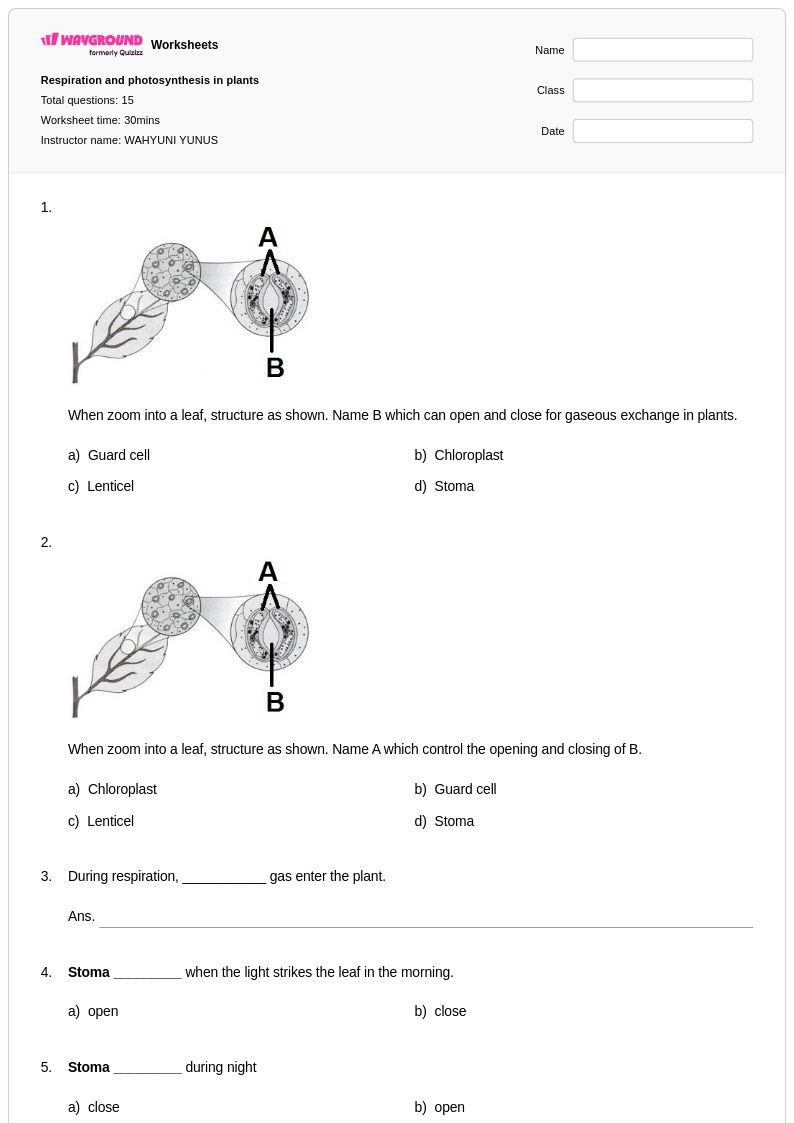
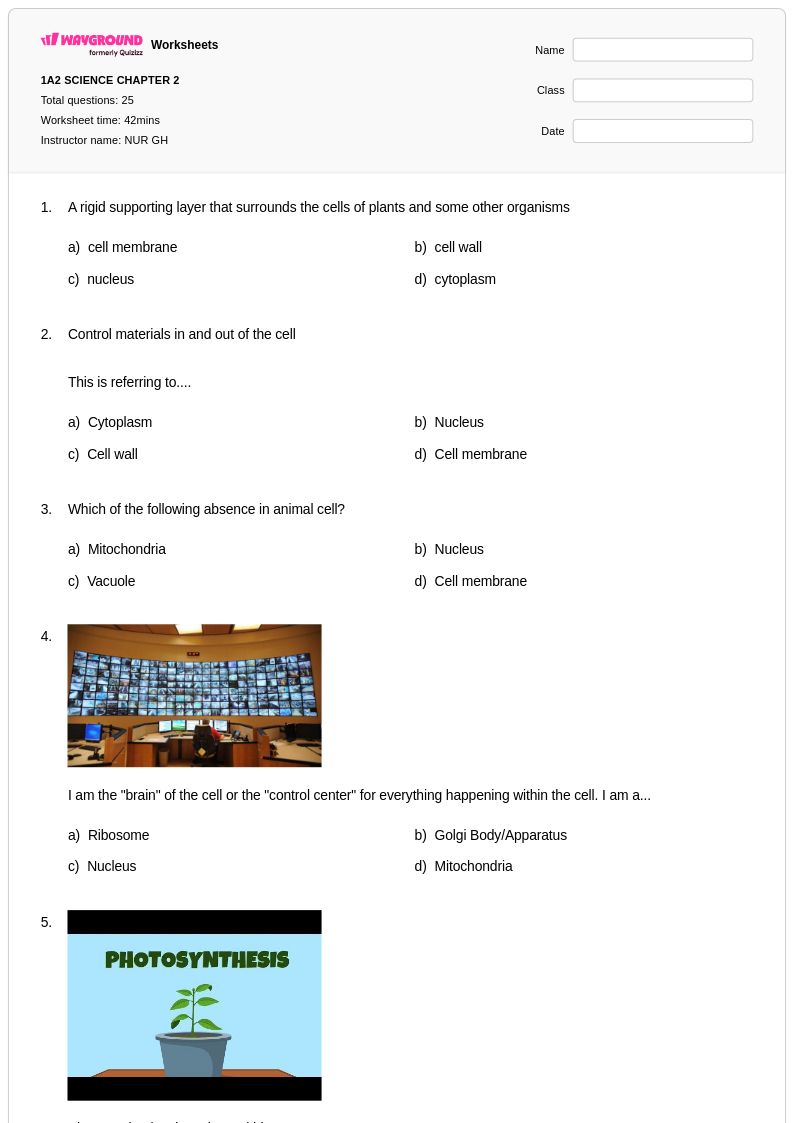
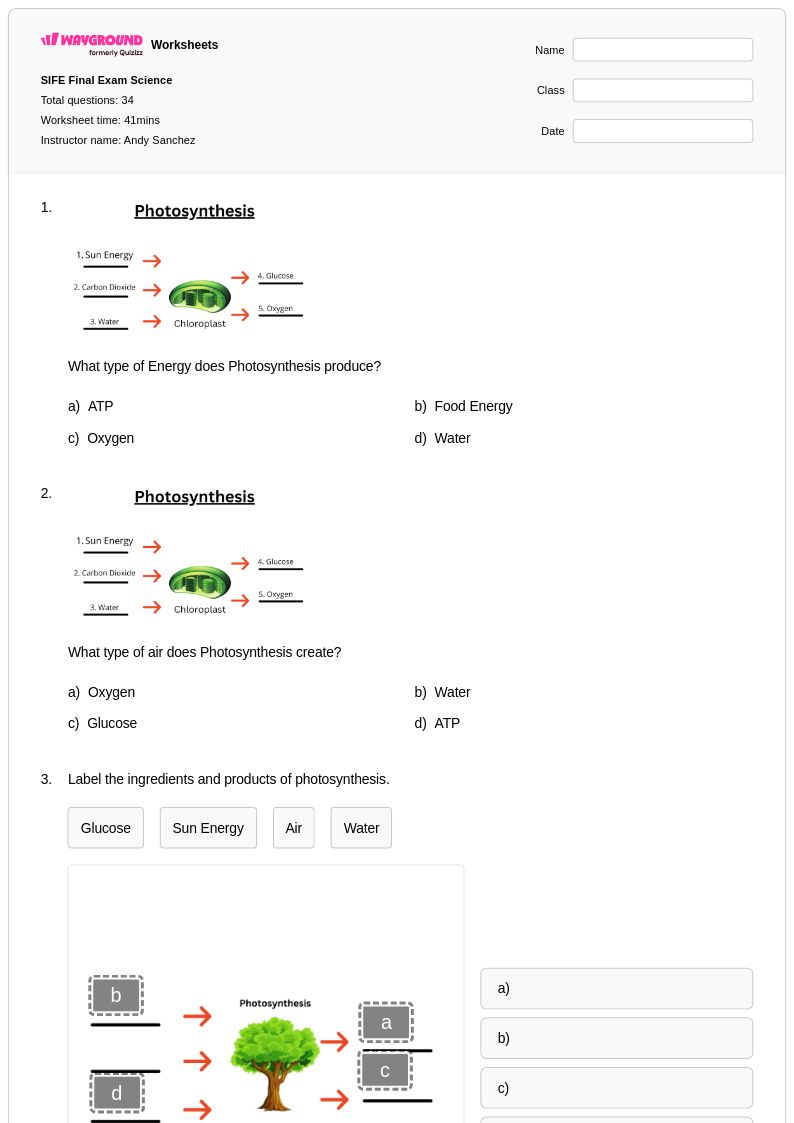
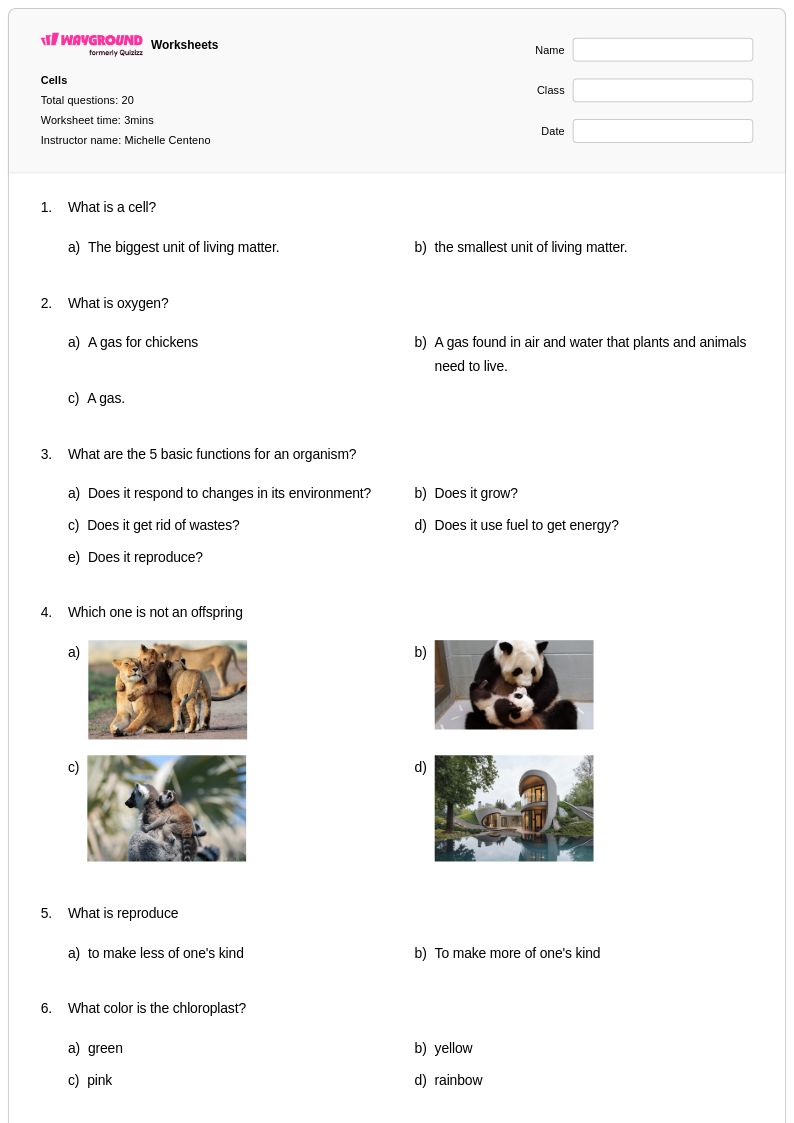
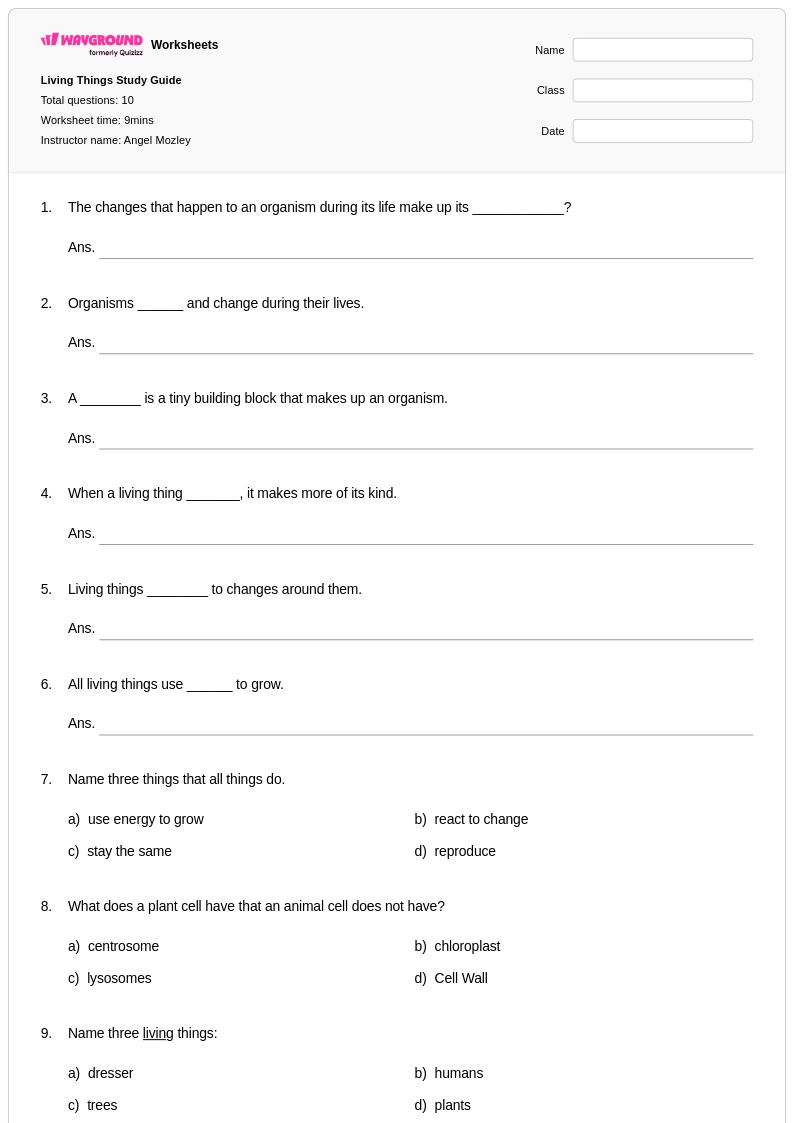
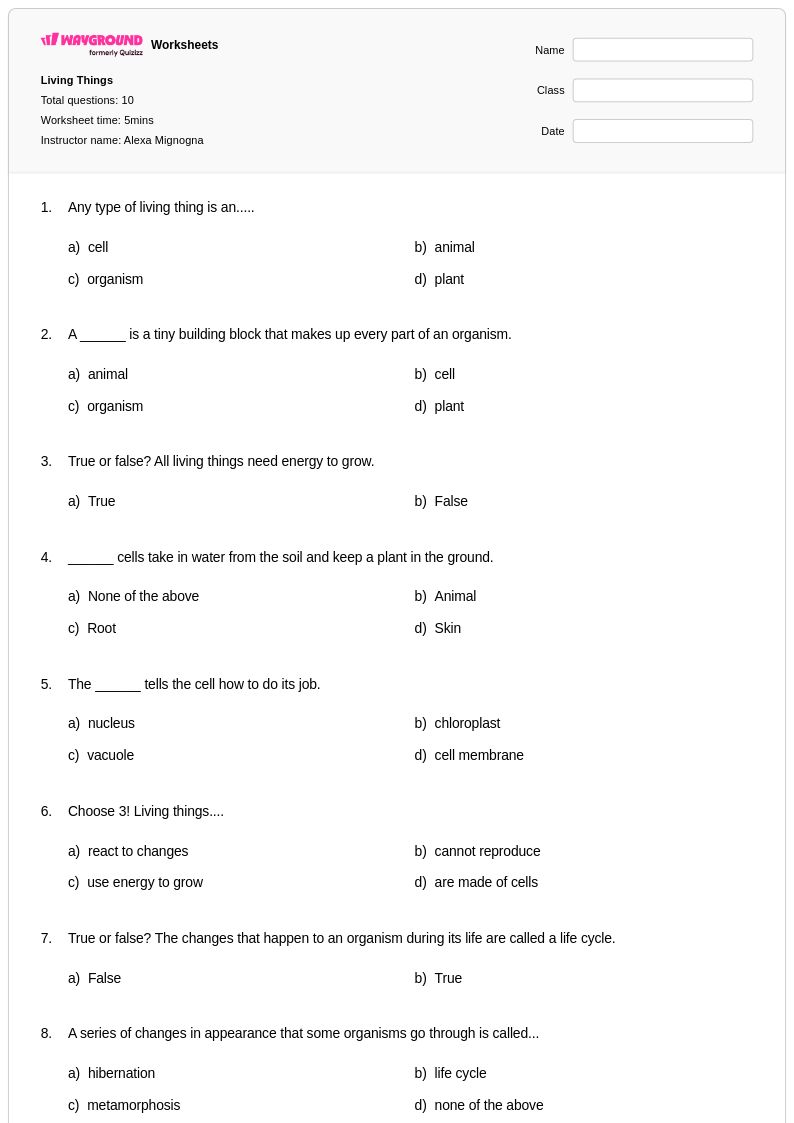
Chloroplast worksheets for Class 3 students available through Wayground (formerly Quizizz) introduce young learners to these essential plant structures through age-appropriate activities and visual exercises. These educational resources help third-grade students understand that chloroplasts are the tiny green parts inside plant cells that capture sunlight and help plants make their own food through photosynthesis. The worksheets strengthen foundational biology skills by encouraging students to identify chloroplasts in plant diagrams, compare plant and animal cells, and explore how plants use sunlight to grow. Each printable worksheet includes practice problems that reinforce key vocabulary and concepts, while comprehensive answer keys support both independent learning and guided instruction. These free educational materials present complex cellular biology concepts in accessible formats that align with elementary science standards and developmental expectations for third-grade learners.
Wayground (formerly Quizizz) empowers teachers with millions of educator-created chloroplast and cellular biology resources specifically designed for Class 3 instruction. The platform's robust search and filtering capabilities allow teachers to quickly locate worksheets that match their specific curriculum needs, grade-level standards, and student readiness levels. Advanced differentiation tools enable educators to customize content complexity, adjust vocabulary difficulty, and modify visual supports to meet diverse learning needs within their classrooms. Teachers can access these materials in both digital and printable pdf formats, providing flexibility for various instructional settings and technology availability. This comprehensive collection supports effective lesson planning by offering resources for initial concept introduction, skill practice sessions, remediation activities for struggling learners, and enrichment opportunities for advanced students ready to explore more detailed aspects of plant cell structure and function.
FAQs
How do I teach chloroplast structure and function to students?
Start by grounding students in the organelle's physical structure before connecting it to function. Use labeled diagrams to walk through the outer and inner membranes, thylakoid stacks (grana), and stroma, explaining how each component plays a role in photosynthesis. Once students can identify the parts, introduce the light-dependent reactions in the thylakoids and the Calvin cycle in the stroma as a two-stage process, reinforcing that structure directly enables function. Comparative analysis with mitochondria is especially effective for helping students see the evolutionary and functional parallels between the two organelles.
What exercises help students practice identifying chloroplast structures?
Diagram labeling exercises are the most effective starting point, requiring students to identify and annotate the outer membrane, inner membrane, thylakoids, grana, and stroma on a visual cross-section. Follow-up practice problems that ask students to match structures to their functions, or to explain what would happen if a specific component were missing, push thinking beyond memorization. Comparative organelle charts, where students contrast chloroplasts with mitochondria, reinforce both structures simultaneously and build a stronger conceptual framework for cellular biology.
What misconceptions do students commonly have about chloroplasts?
One of the most common misconceptions is that all plant cells contain chloroplasts, when in fact only cells exposed to light, such as those in leaves, typically have them. Students also frequently confuse the location of the light-dependent and light-independent reactions, incorrectly placing the Calvin cycle in the thylakoid membrane rather than the stroma. Another persistent error is conflating photosynthesis with respiration, or assuming chloroplasts and mitochondria perform the same function because both are double-membrane organelles involved in energy conversion.
How do I use chloroplast worksheets to address gaps in student understanding?
Chloroplast worksheets are most effective for targeted remediation when used after an initial lesson or assessment reveals specific gaps, such as confusion between thylakoid and stromal reactions, or difficulty connecting chloroplast structure to its photosynthetic function. Assign diagram labeling or process-sequencing problems to students who need structural reinforcement, while directing more advanced learners toward comparative analyses or questions connecting chloroplast function to cellular respiration. On Wayground, these worksheets are available as printable PDFs for in-class use and in digital formats that allow teachers to host them as a quiz, providing immediate feedback that helps both students and teachers identify where understanding breaks down.
How can I differentiate chloroplast instruction for students at different skill levels?
For students who need foundational support, focus on basic structure identification using simplified diagrams and reduce the number of answer choices on practice questions to lower cognitive load. More advanced students benefit from open-ended prompts that ask them to explain the consequences of chloroplast dysfunction or explore the evolutionary origins of chloroplasts through endosymbiotic theory. On Wayground, teachers can apply individual accommodations such as read aloud, extended time, and reduced answer choices to specific students without alerting the rest of the class, making differentiation practical and discreet.
How does chloroplast structure connect to the two stages of photosynthesis?
The physical compartments of the chloroplast directly correspond to the two stages of photosynthesis, which is why understanding structure is essential before tackling the biochemistry. The light-dependent reactions occur in the thylakoid membranes, where chlorophyll and other pigments absorb light energy to produce ATP and NADPH. The light-independent reactions, or Calvin cycle, take place in the stroma, using that stored energy to fix carbon dioxide into glucose. Teaching this spatial relationship helps students move from rote memorization of reaction names to a functional understanding of why chloroplasts are organized the way they are.