
10 Q
3rd - 12th
10 Q
3rd - 12th
10 Q
3rd - 12th
10 Q
4th
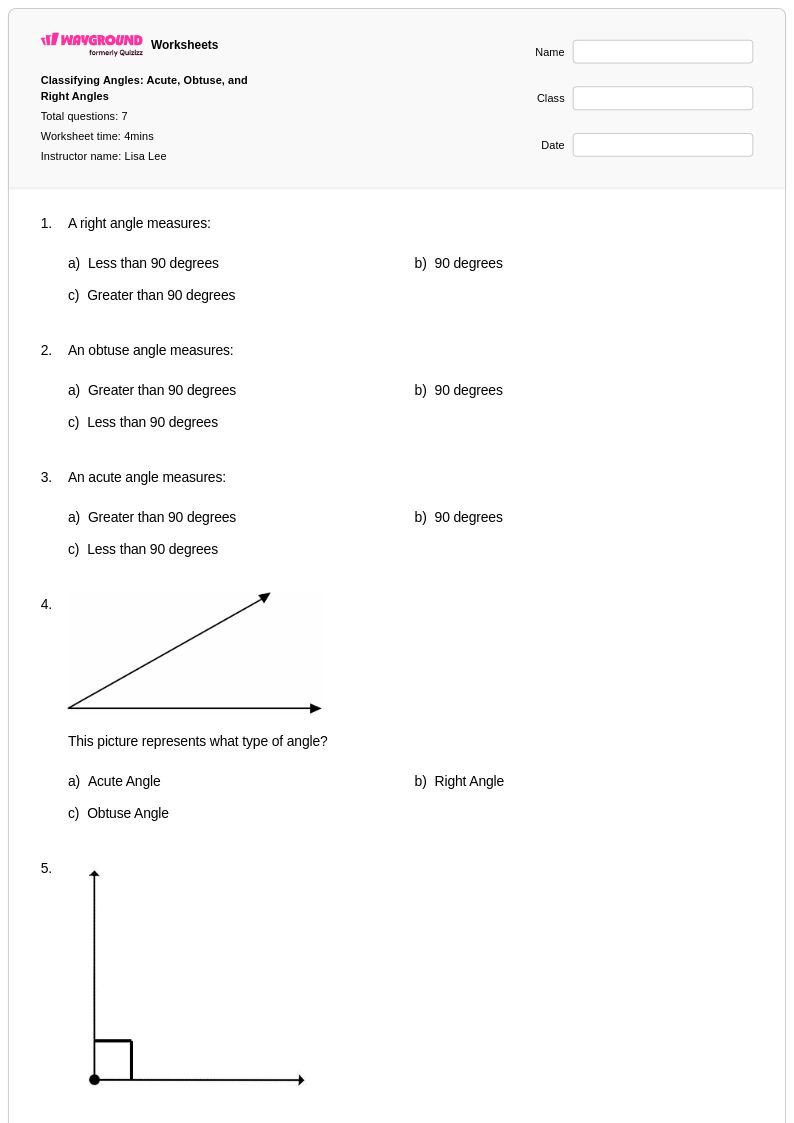
7 Q
3rd - 4th
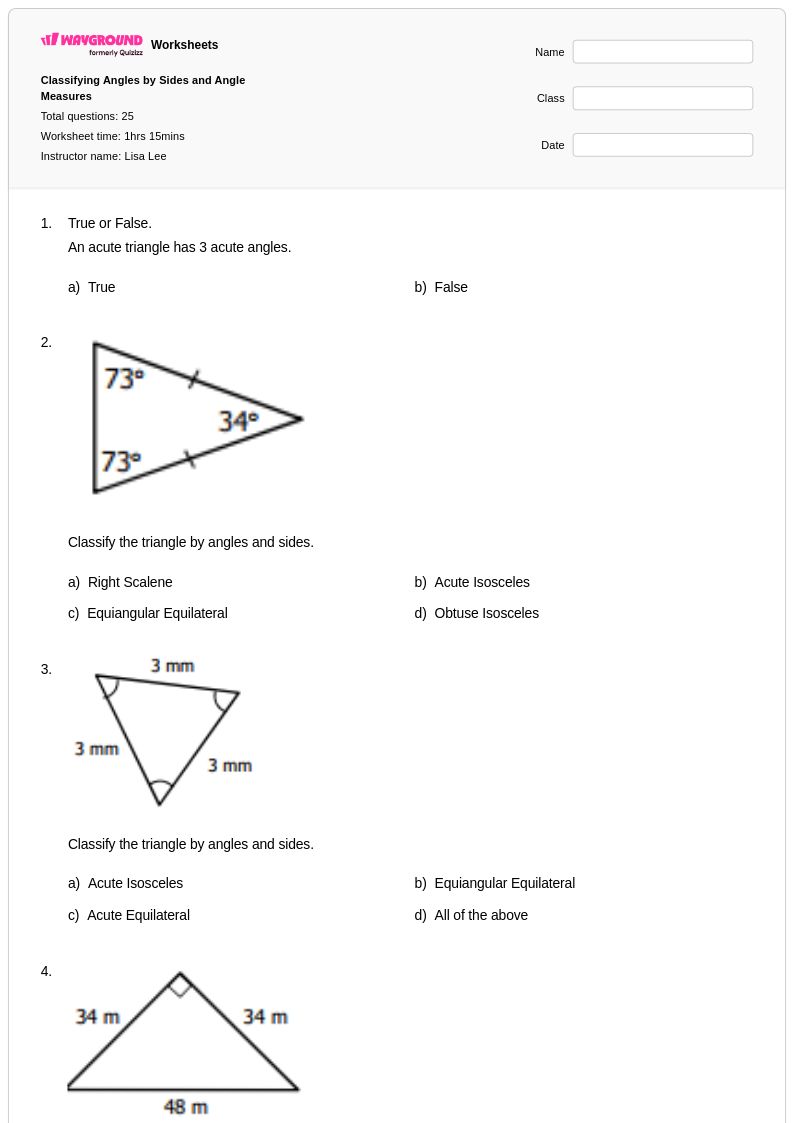
25 Q
4th
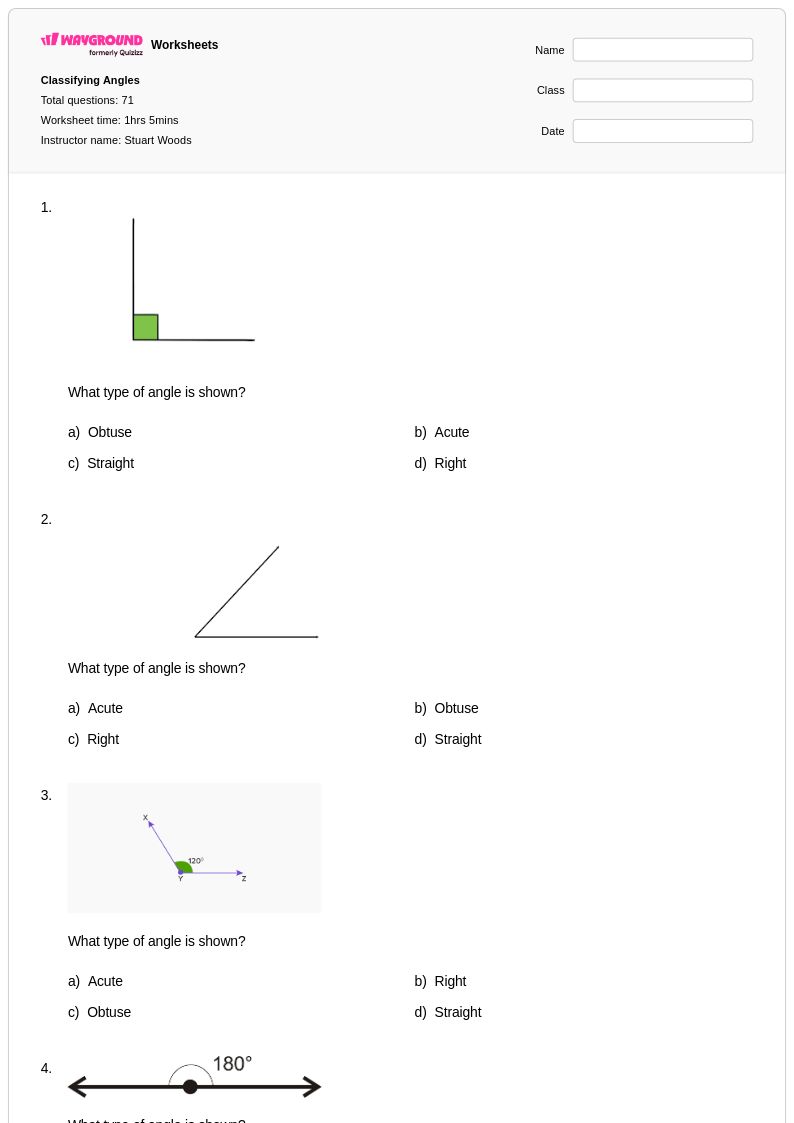
71 Q
4th - 5th
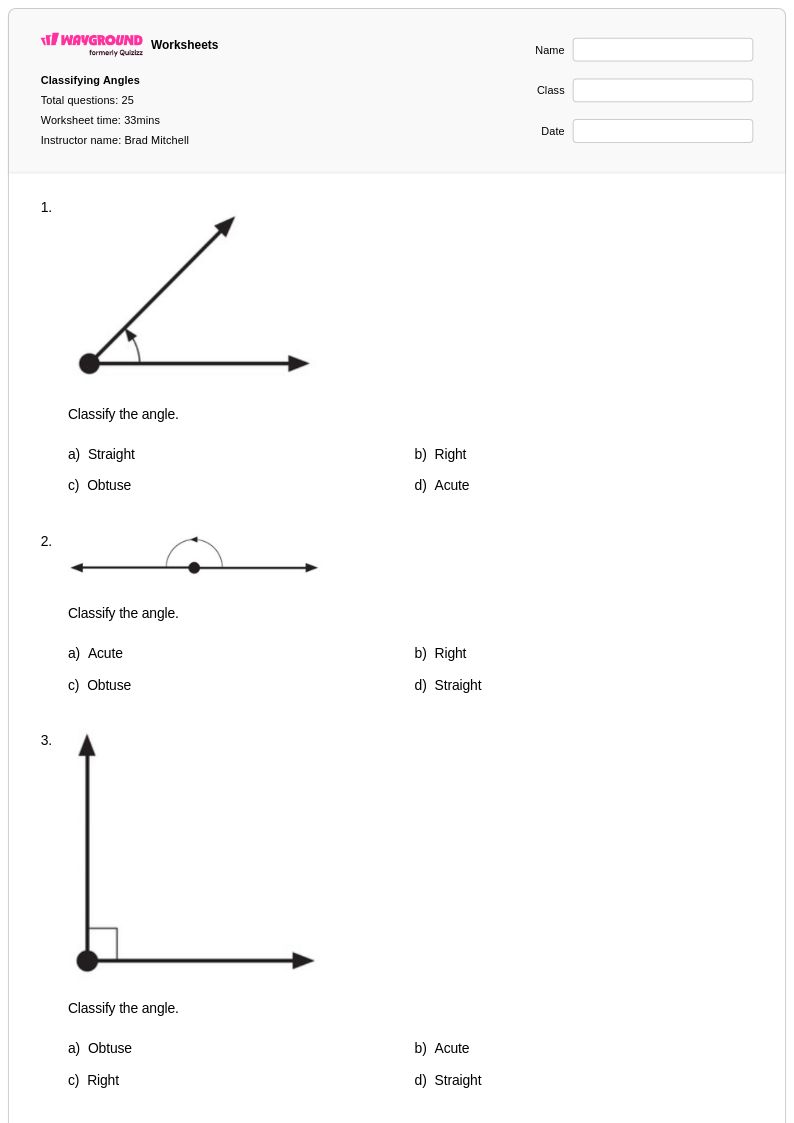
25 Q
4th - 12th
10 Q
3rd - 12th
25 Q
3rd - 5th
10 Q
3rd - 12th
25 Q
4th
10 Q
3rd - 12th
18 Q
4th
10 Q
4th
9 Q
4th
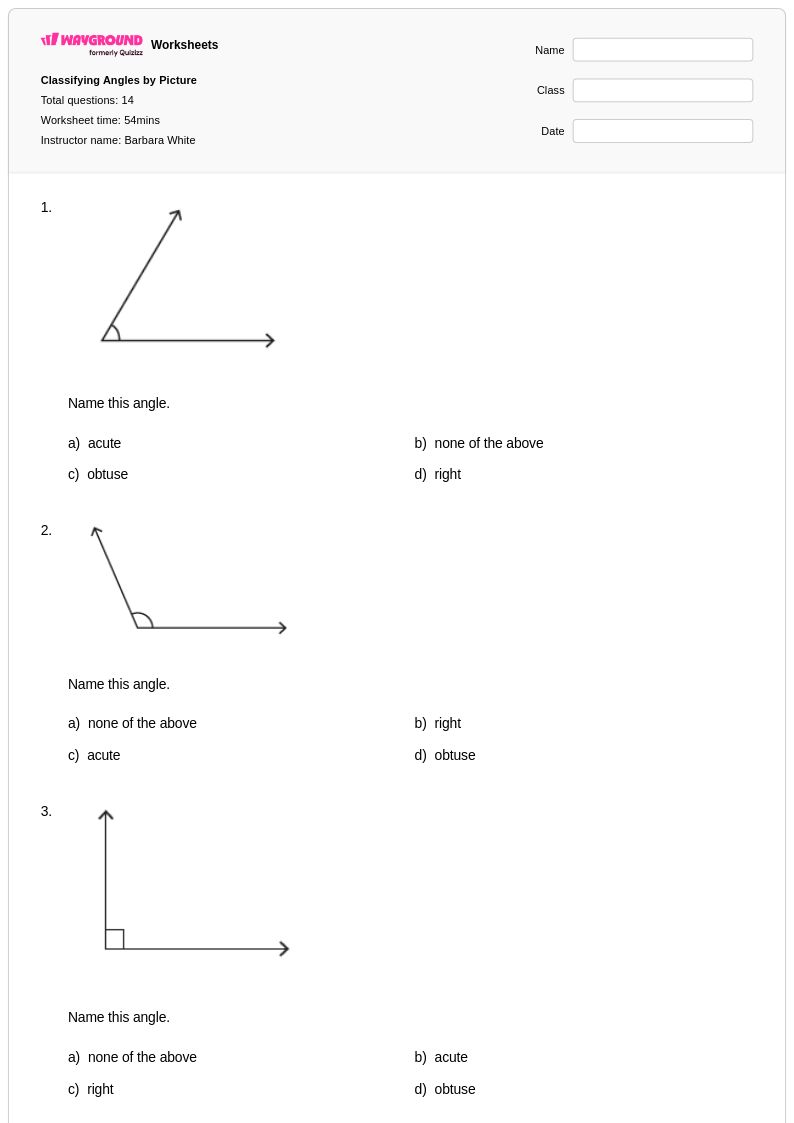
14 Q
4th
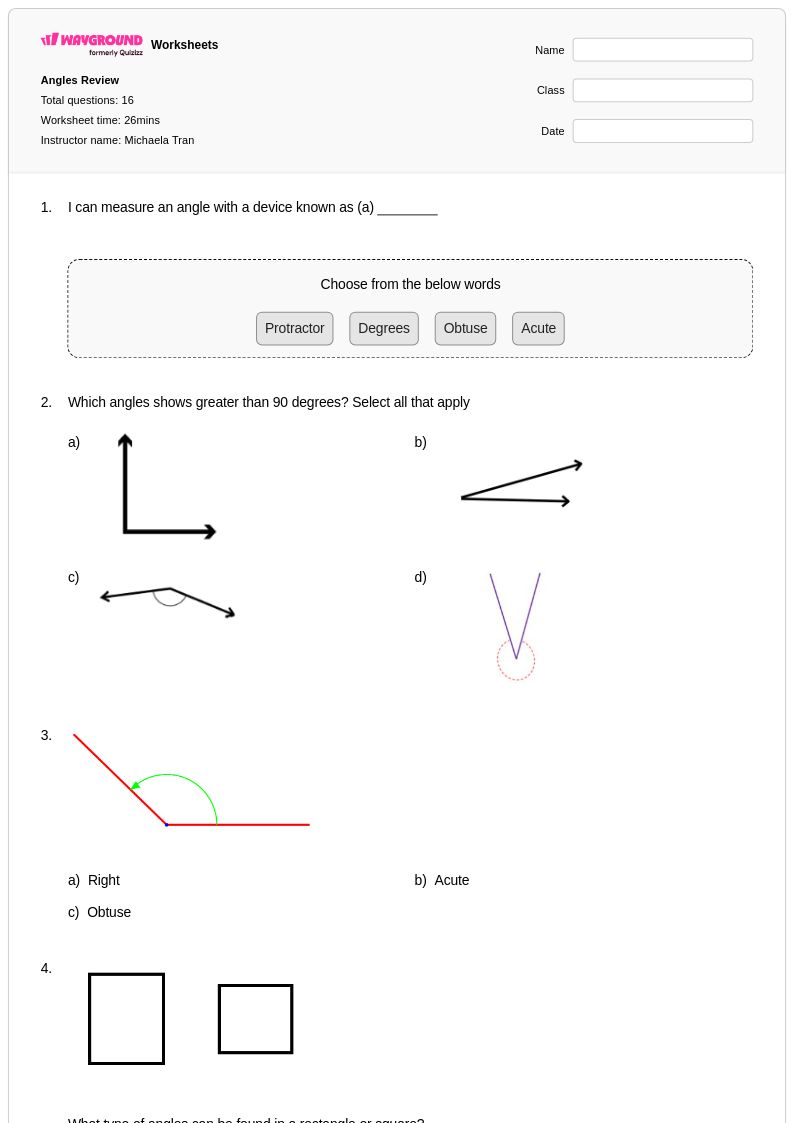
16 Q
4th
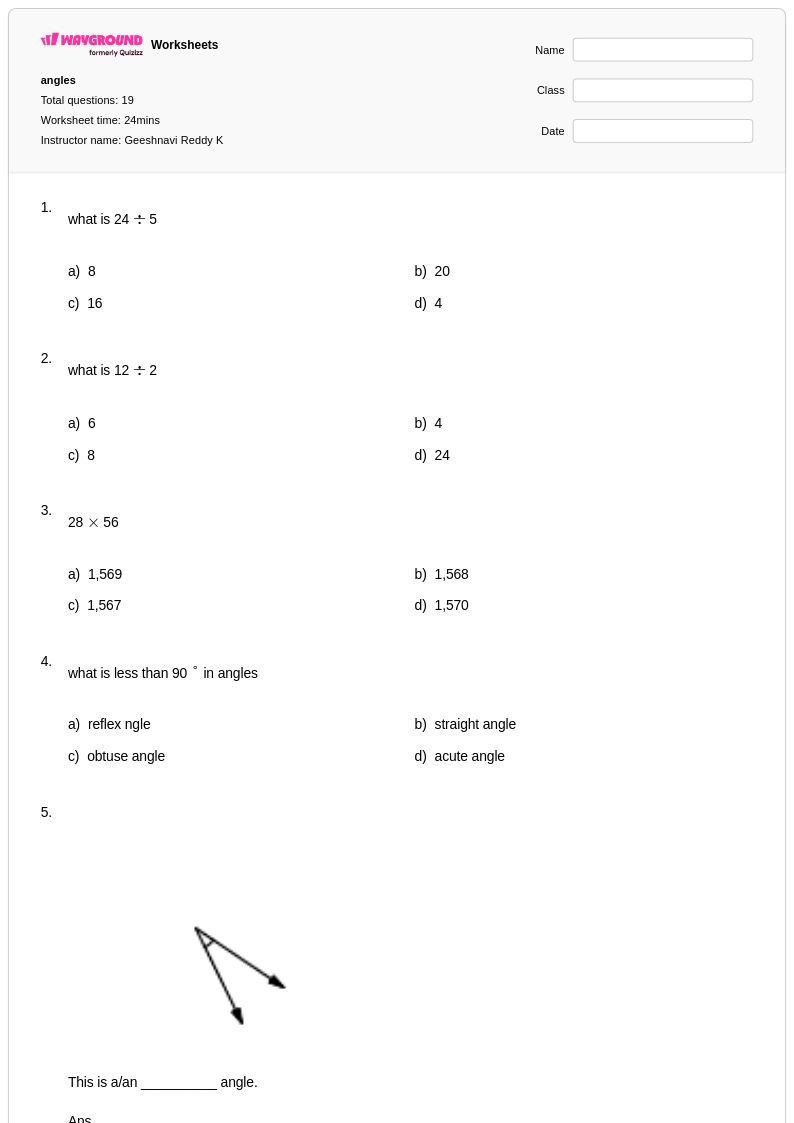
19 Q
4th
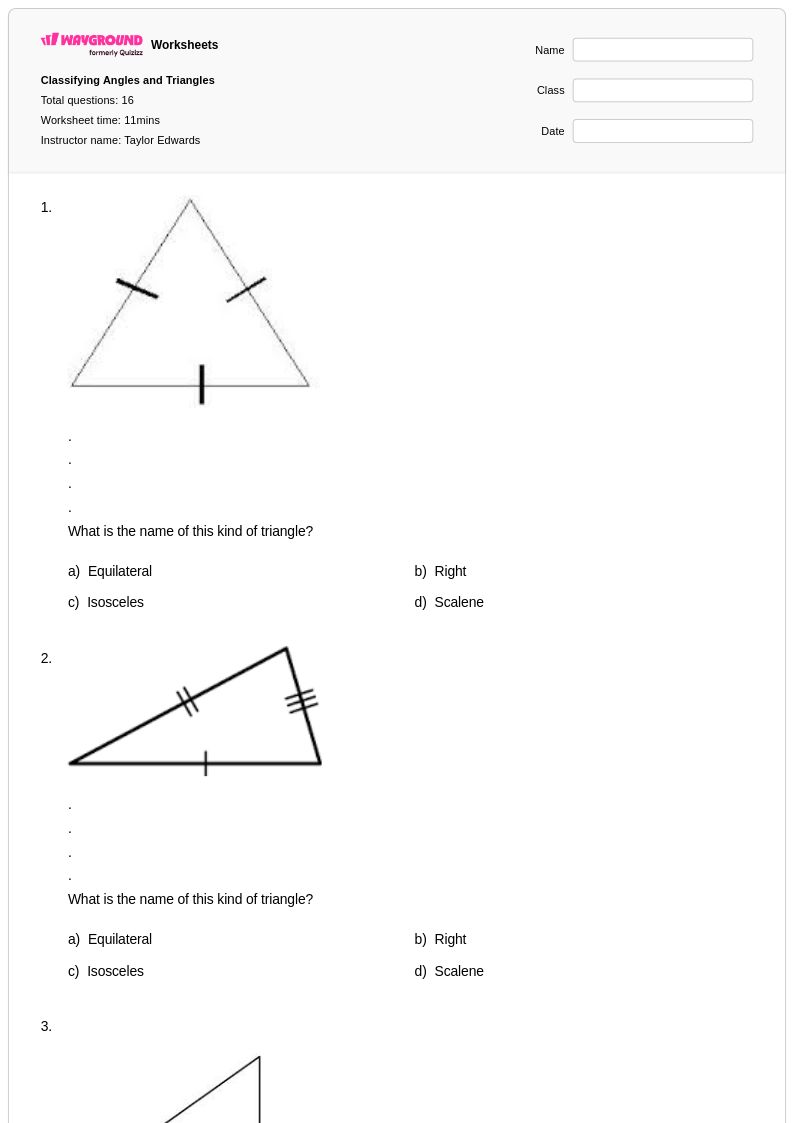
16 Q
4th - 5th
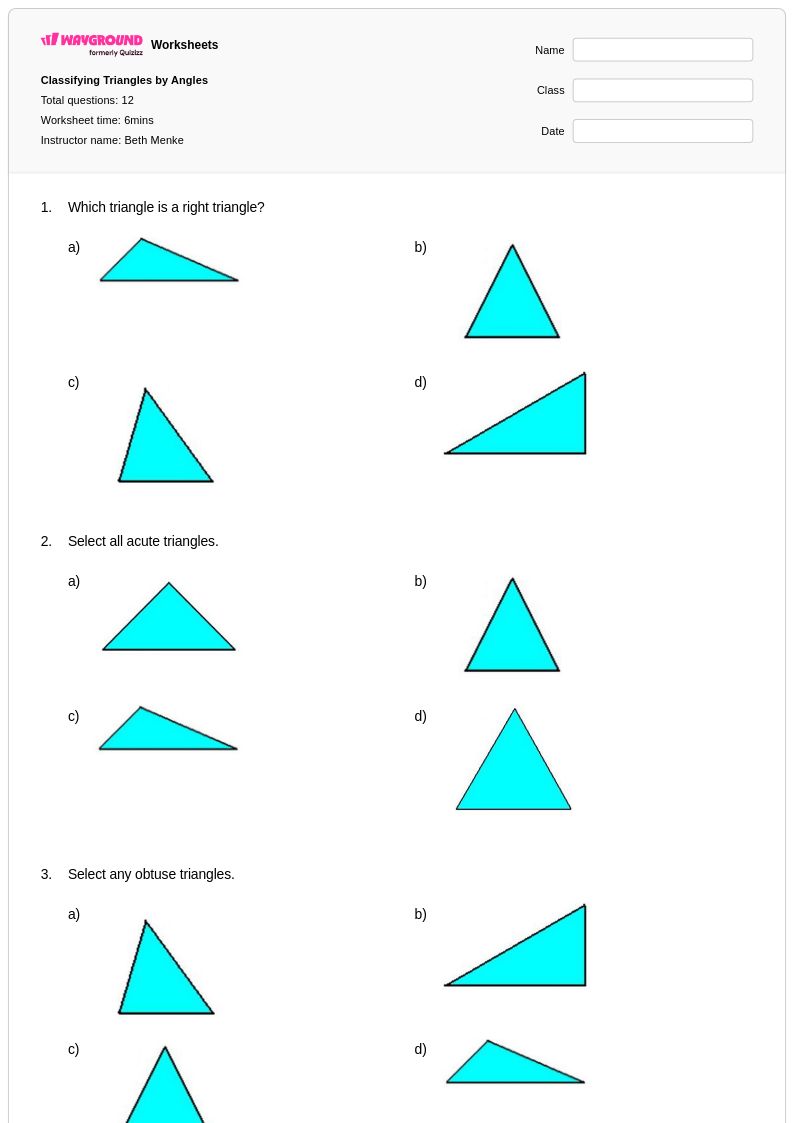
12 Q
4th
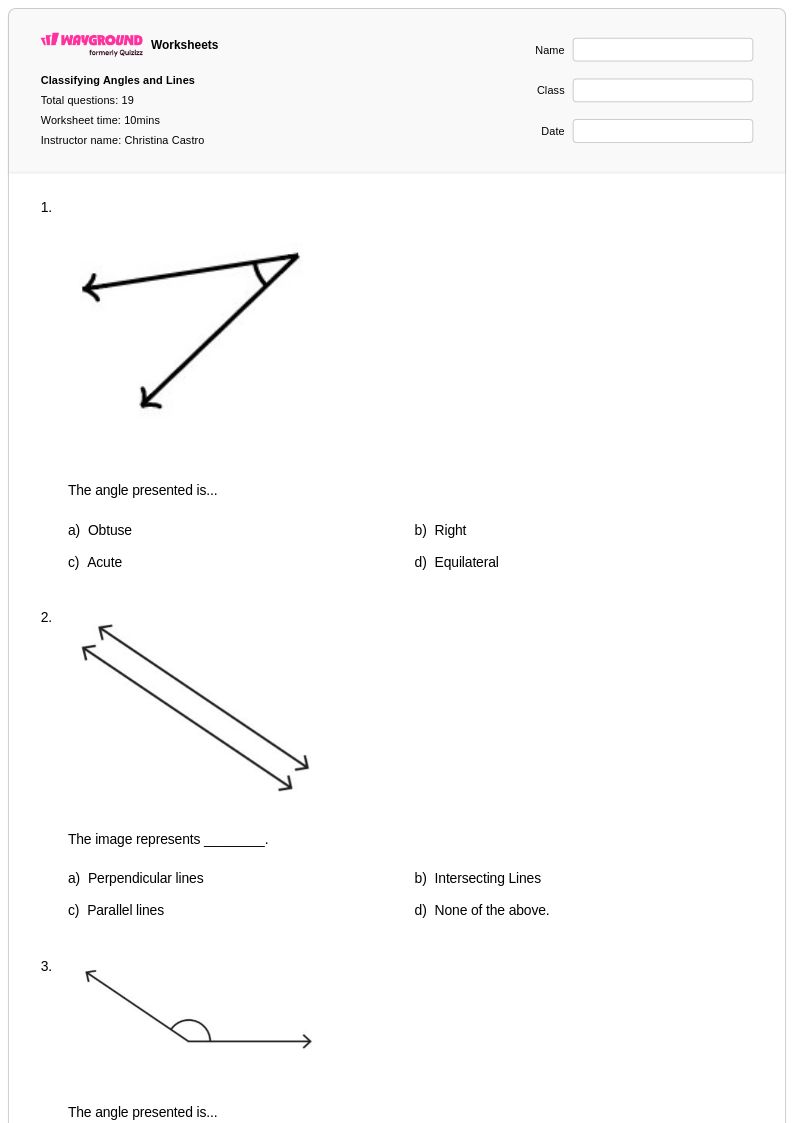
19 Q
3rd - 5th
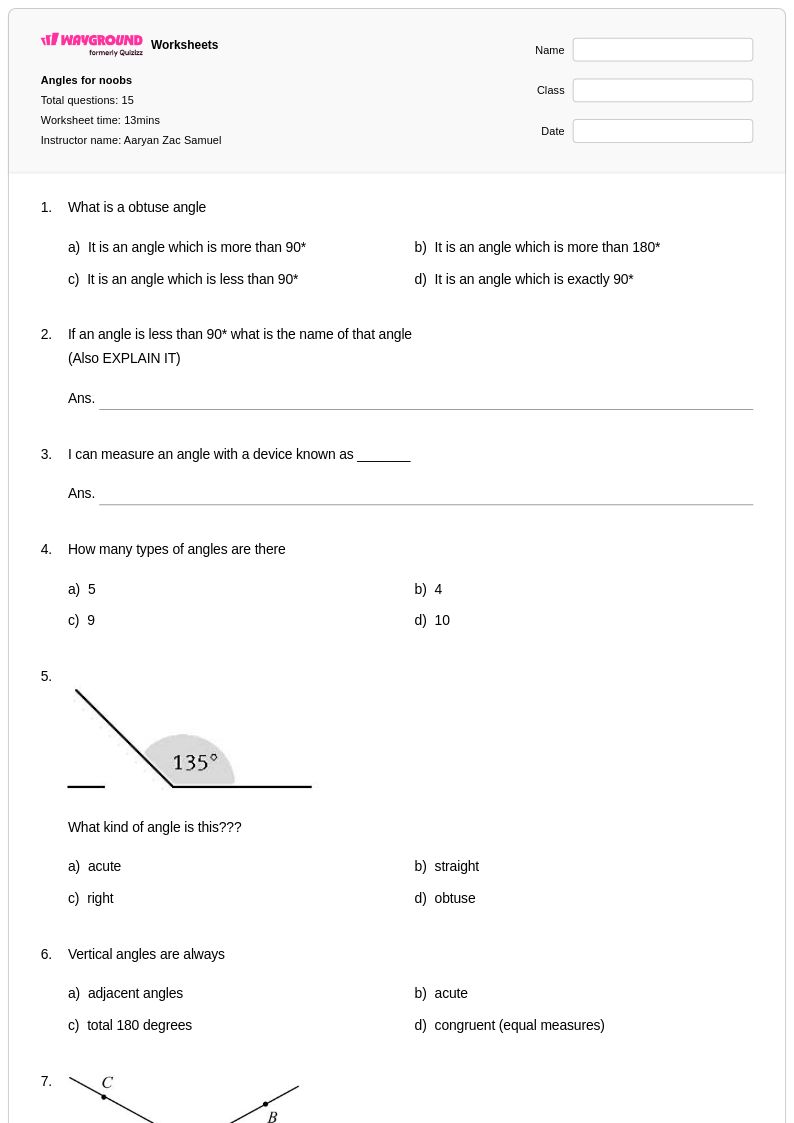
15 Q
4th - 9th
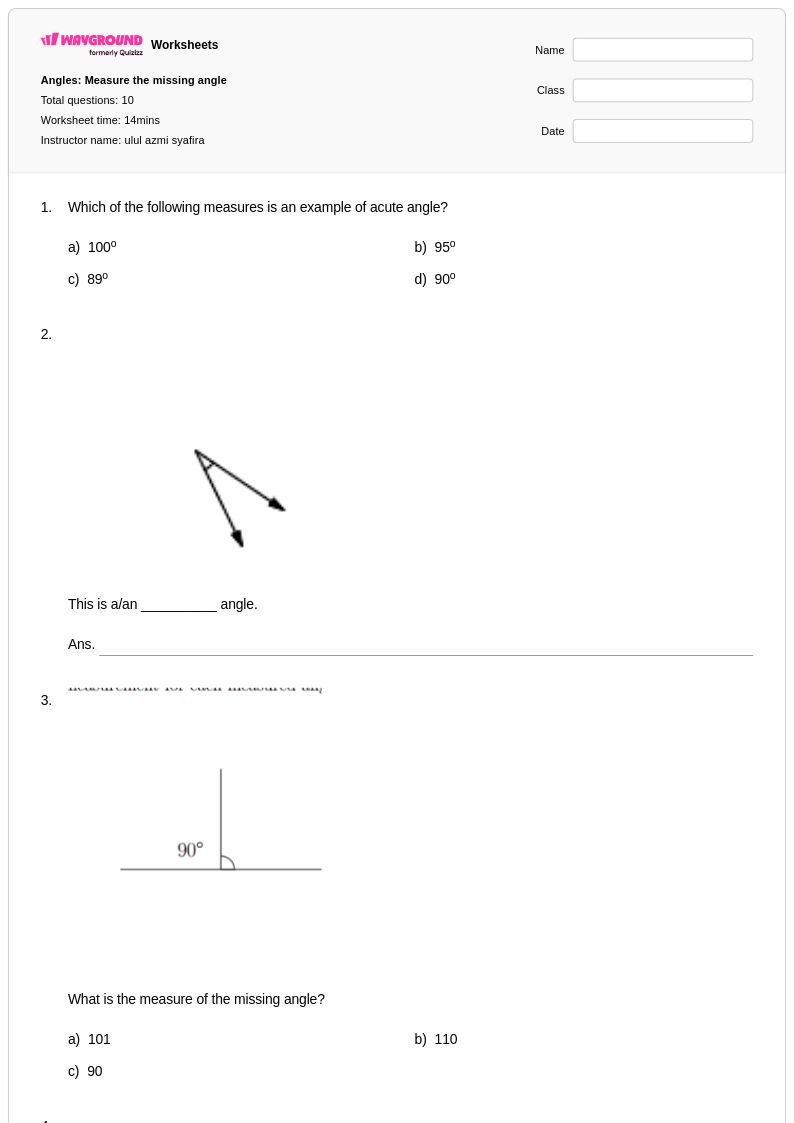
10 Q
4th
Explore Other Subject Worksheets for class 4
Explore printable Classifying Angles worksheets for Class 4
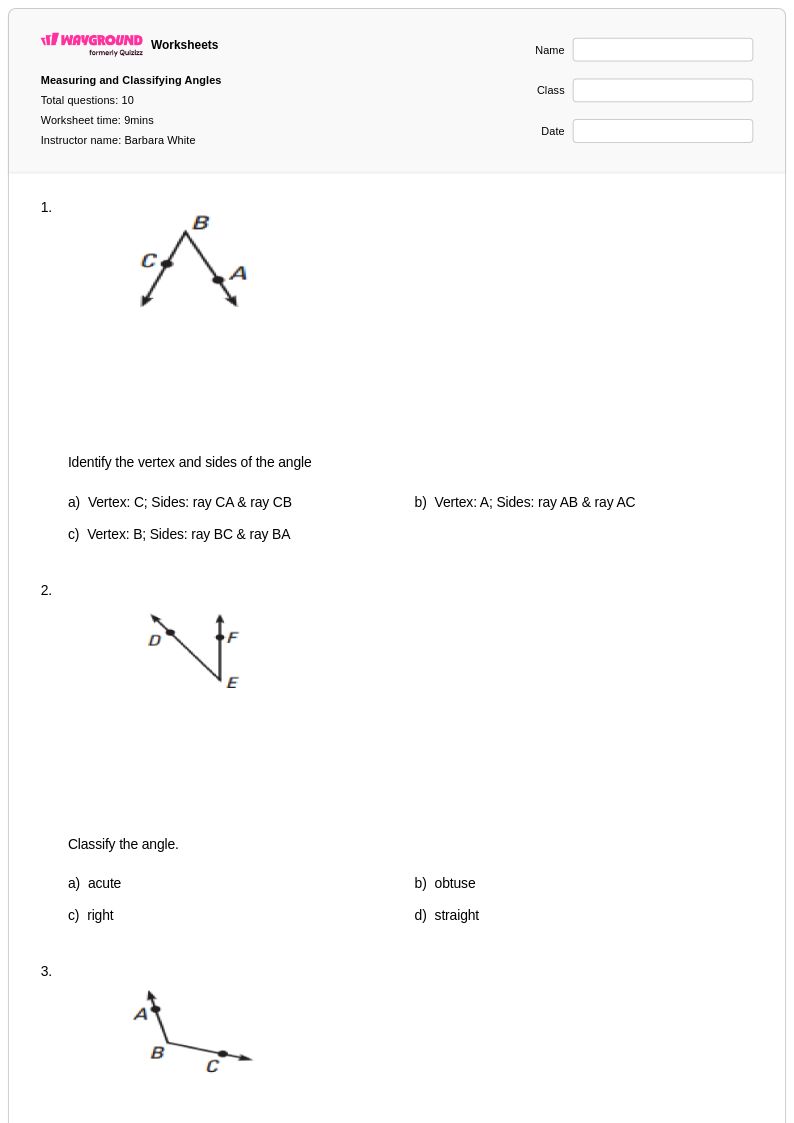
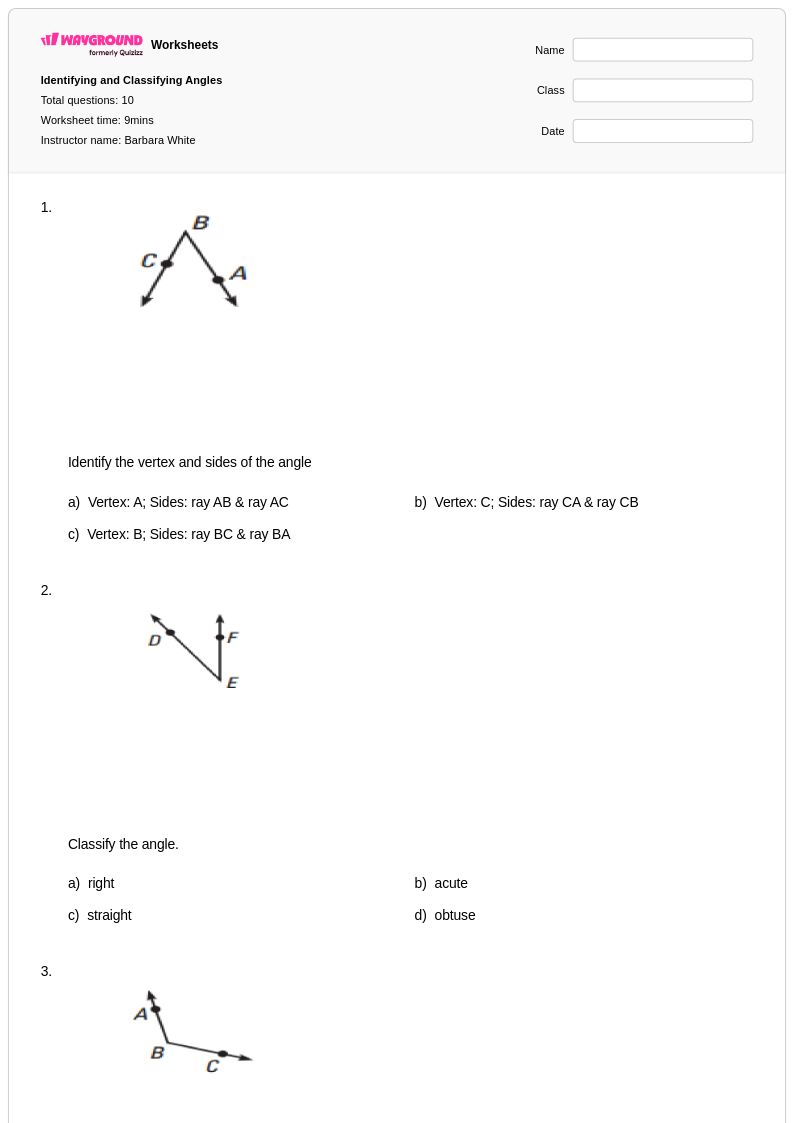
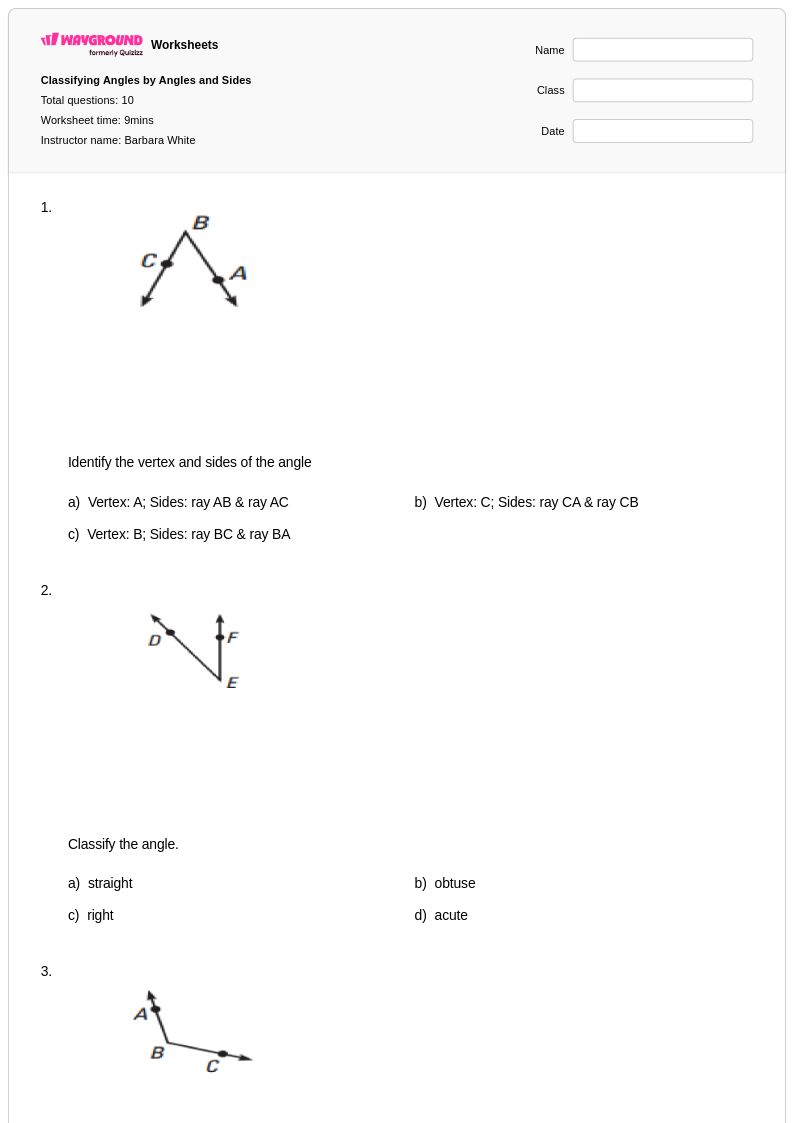
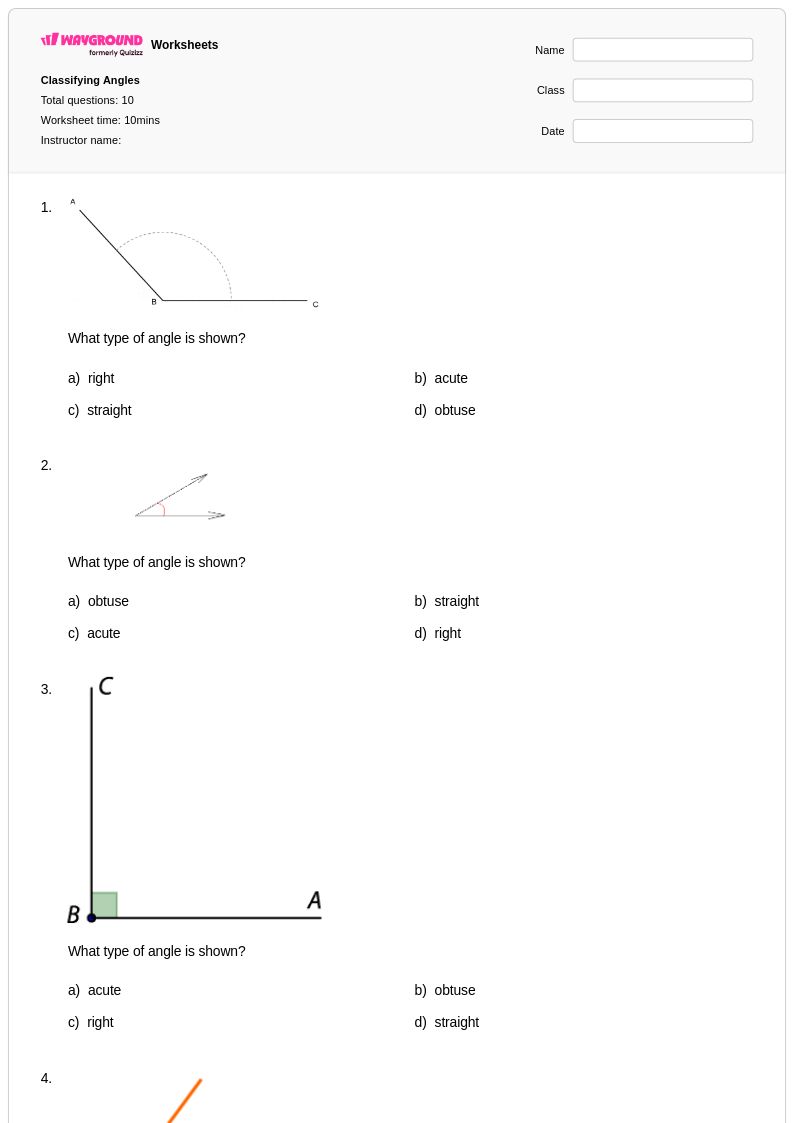
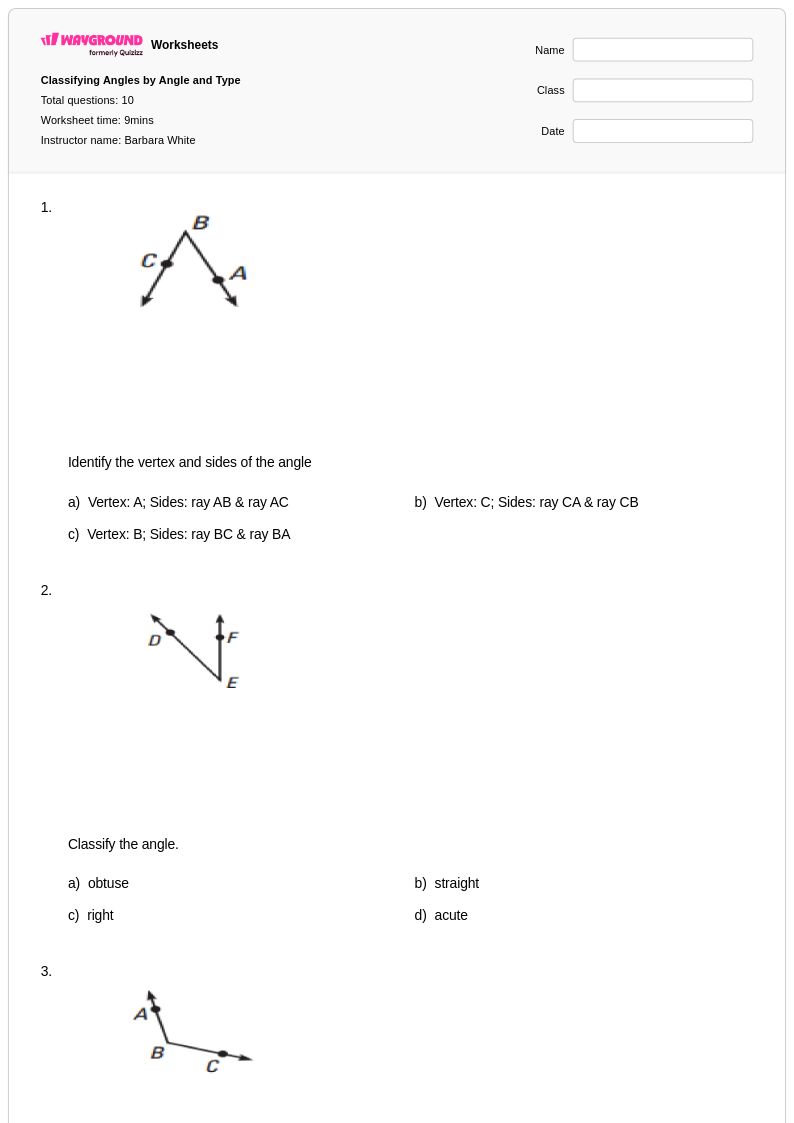
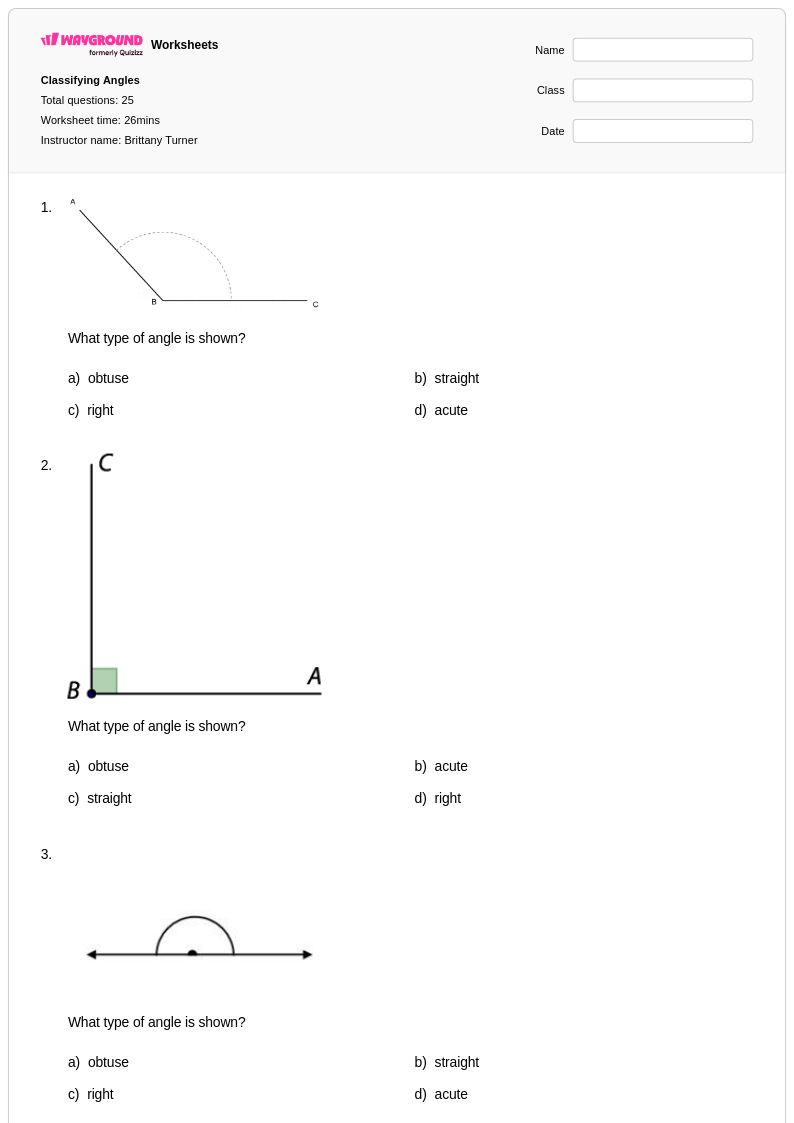
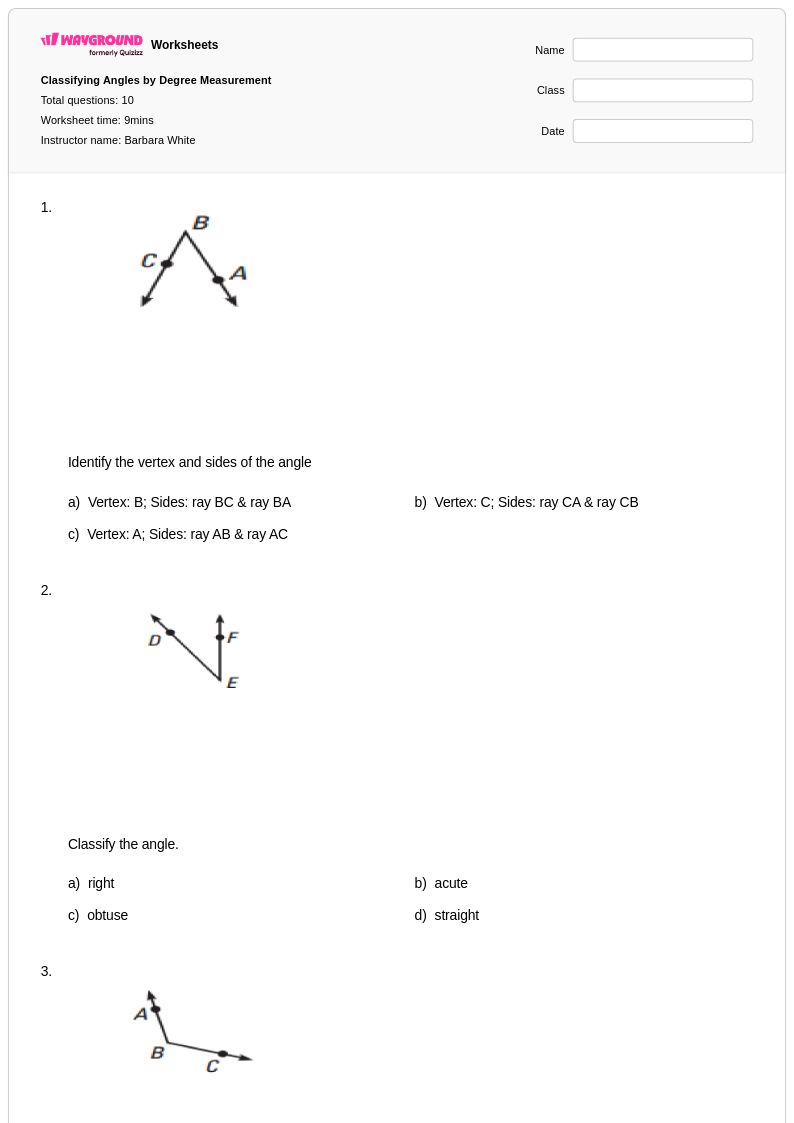
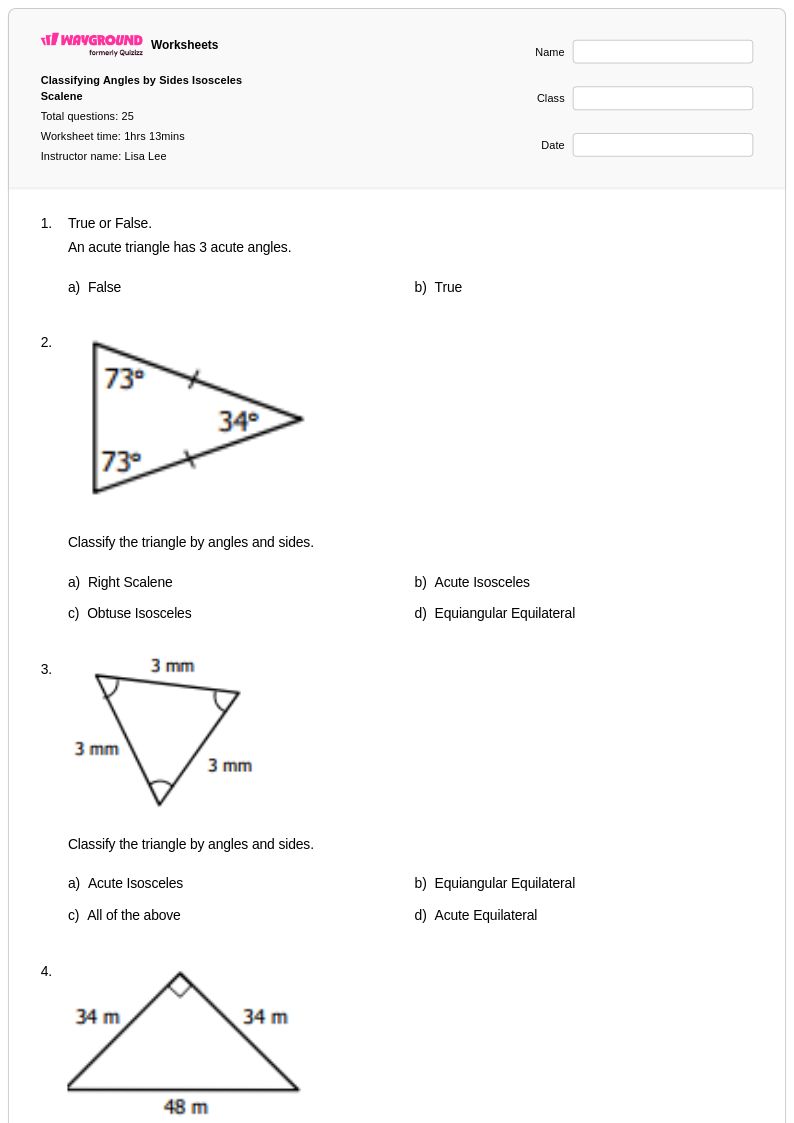
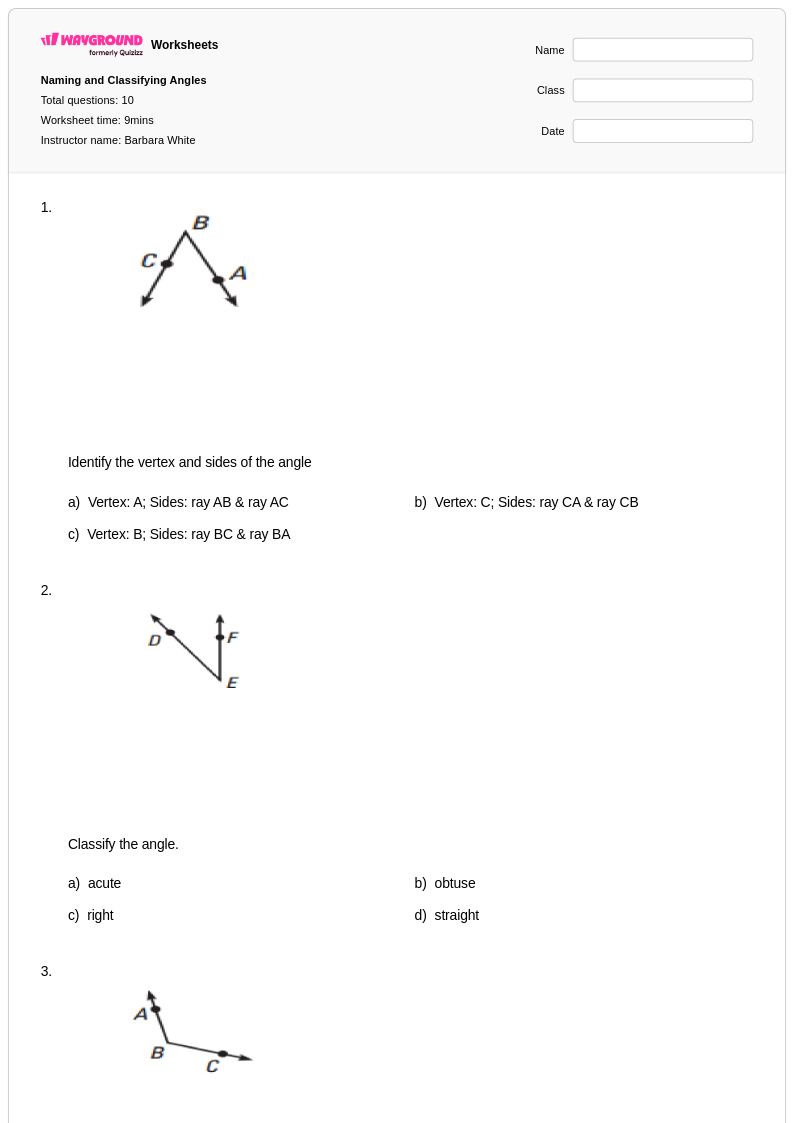
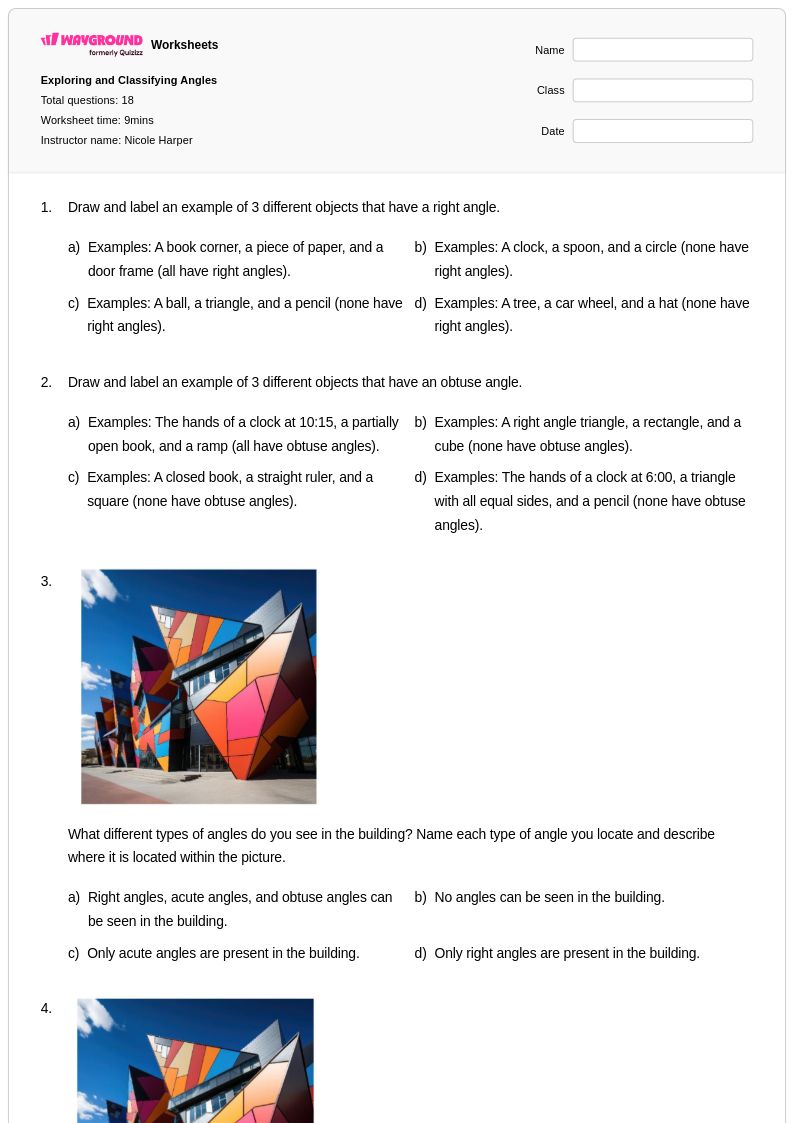
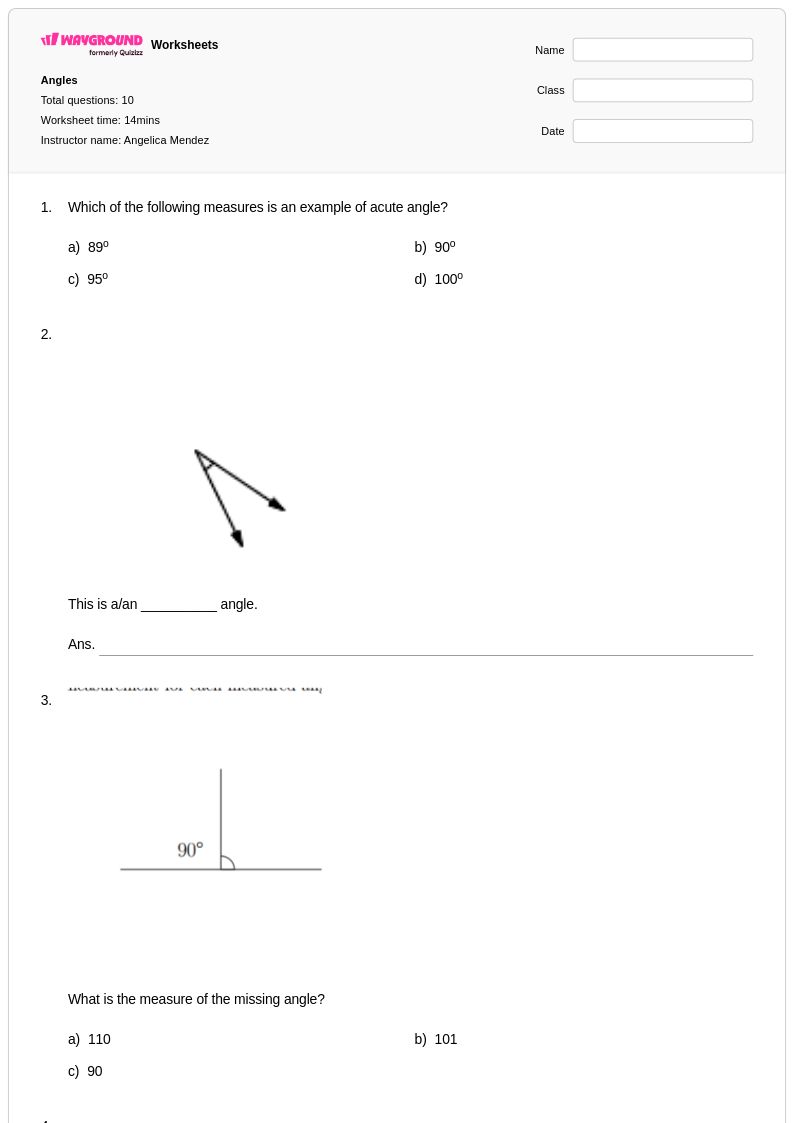
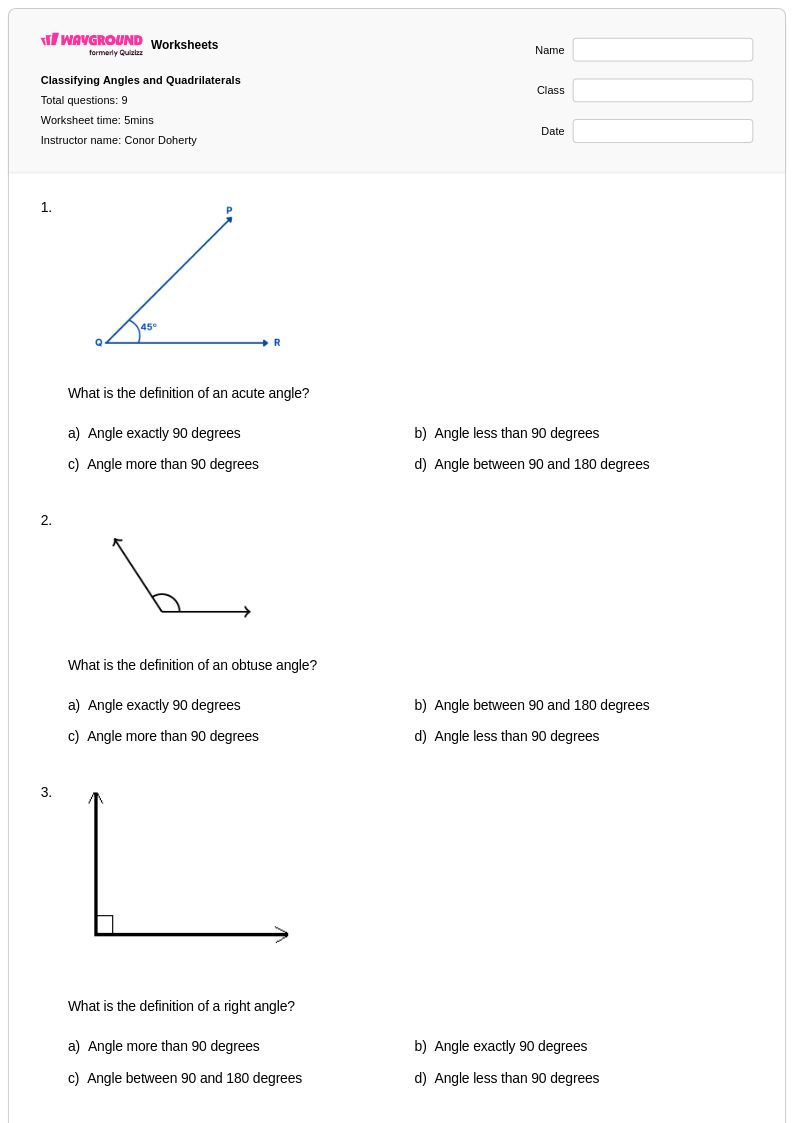
Classifying angles worksheets for Class 4 students through Wayground (formerly Quizizz) provide essential practice in identifying and categorizing different types of angles based on their measurements and characteristics. These comprehensive worksheets strengthen students' geometric reasoning skills by teaching them to distinguish between acute angles (less than 90 degrees), right angles (exactly 90 degrees), obtuse angles (between 90 and 180 degrees), and straight angles (exactly 180 degrees). The practice problems guide fourth graders through systematic angle classification using visual representations, measurement tools, and real-world examples, while the accompanying answer key enables immediate feedback and self-assessment. These free printable resources offer structured skill-building exercises that help students develop spatial awareness and mathematical vocabulary essential for advanced geometry concepts.
Wayground (formerly Quizizz) supports educators with an extensive collection of teacher-created classifying angles worksheets, drawing from millions of high-quality resources specifically designed for Class 4 mathematics instruction. The platform's advanced search and filtering capabilities allow teachers to locate worksheets that align with specific curriculum standards and learning objectives, while differentiation tools enable customization for diverse student needs and ability levels. Available in both printable pdf format and interactive digital versions, these worksheet collections facilitate flexible lesson planning, targeted remediation for struggling learners, and enrichment opportunities for advanced students. Teachers can seamlessly integrate these resources into their geometry units to provide consistent skill practice, formative assessment opportunities, and scaffolded learning experiences that build confidence in angle classification concepts.
FAQs
How do I teach classifying angles in Grade 4?
What exercises help fourth graders practice classifying angles?
What mistakes do Grade 4 students make when classifying angles?
How can I use Grade 4 classifying angles worksheets on Wayground?
Are Grade 4 classifying angles worksheets aligned with Common Core?
How can I differentiate angle-classification practice in Grade 4?
What grade do students formally learn to classify angles?