Free Printable Consonant Blending Worksheets for Class 3
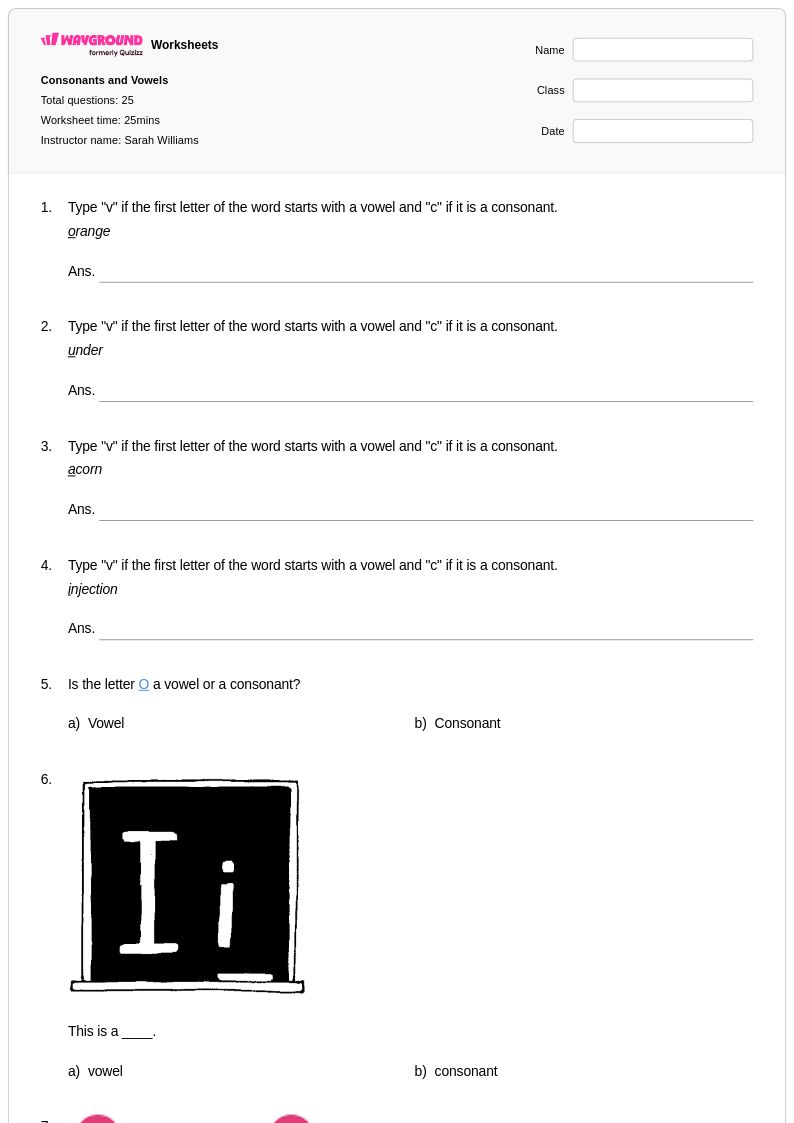
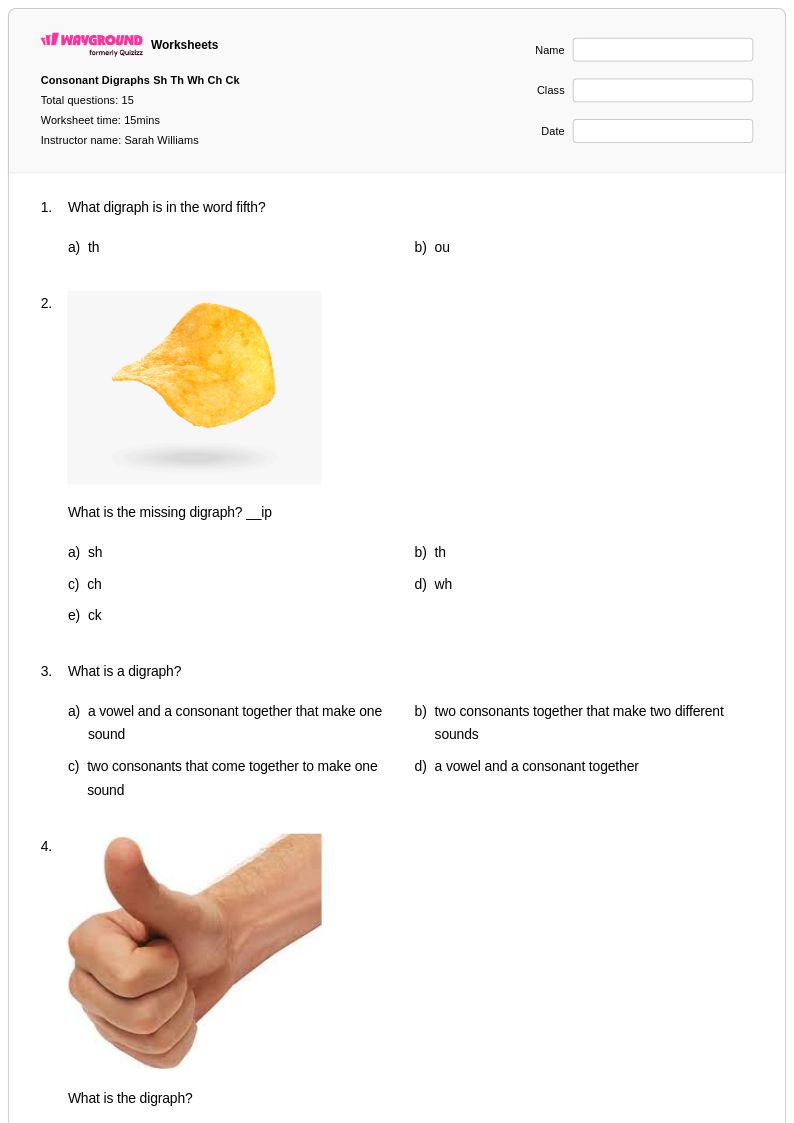
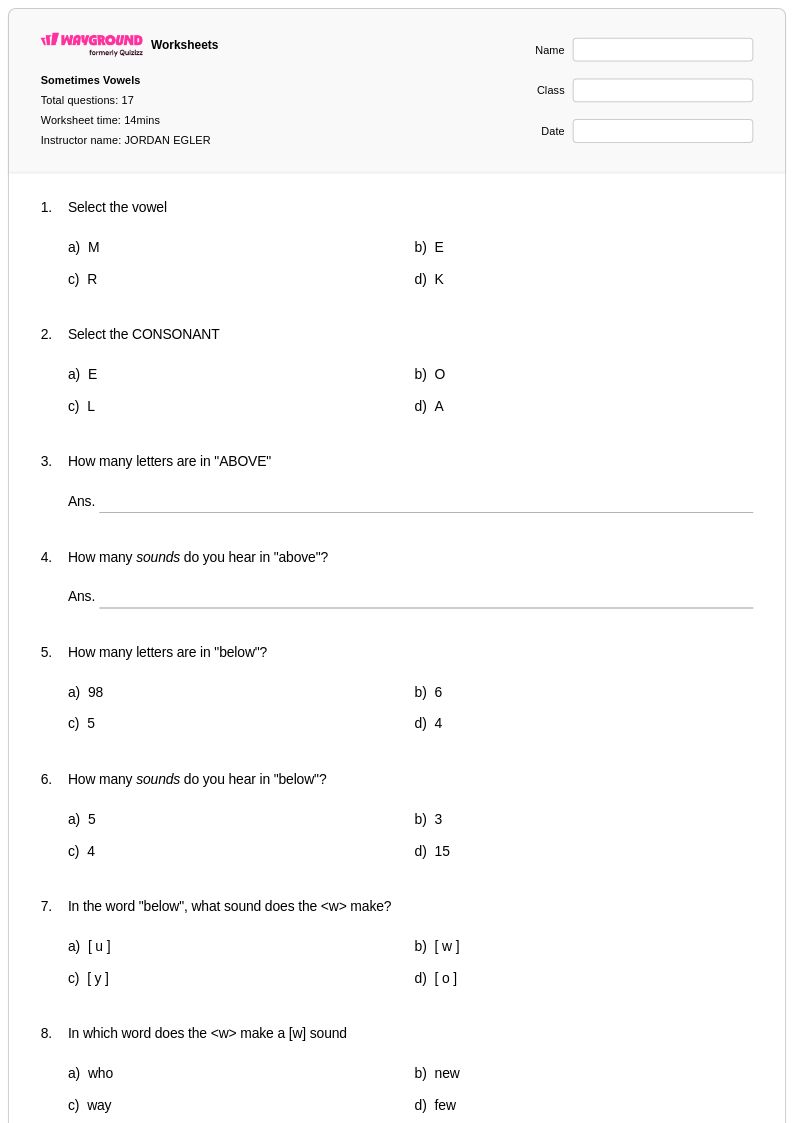
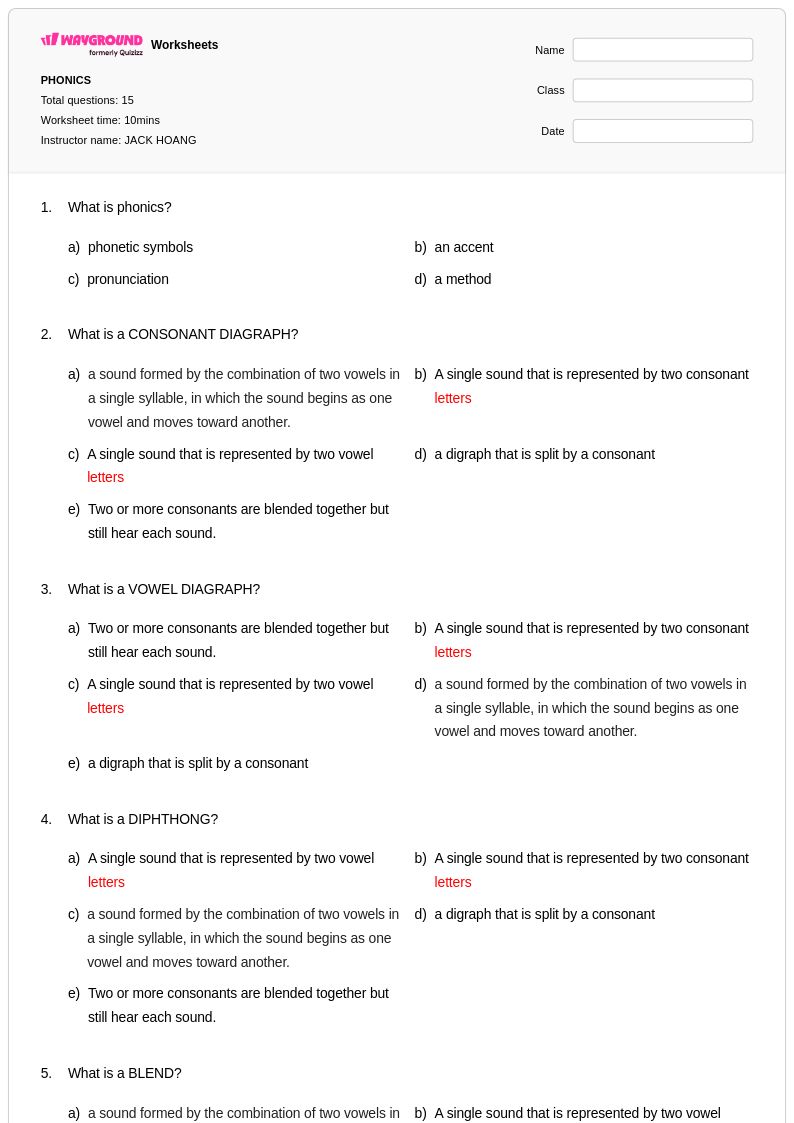
Class 3 consonant blending worksheets provide engaging printables and practice problems to help students master combining consonant sounds, featuring free PDF resources with comprehensive answer keys for effective phonics learning.
Explore printable Consonant Blending worksheets for Class 3
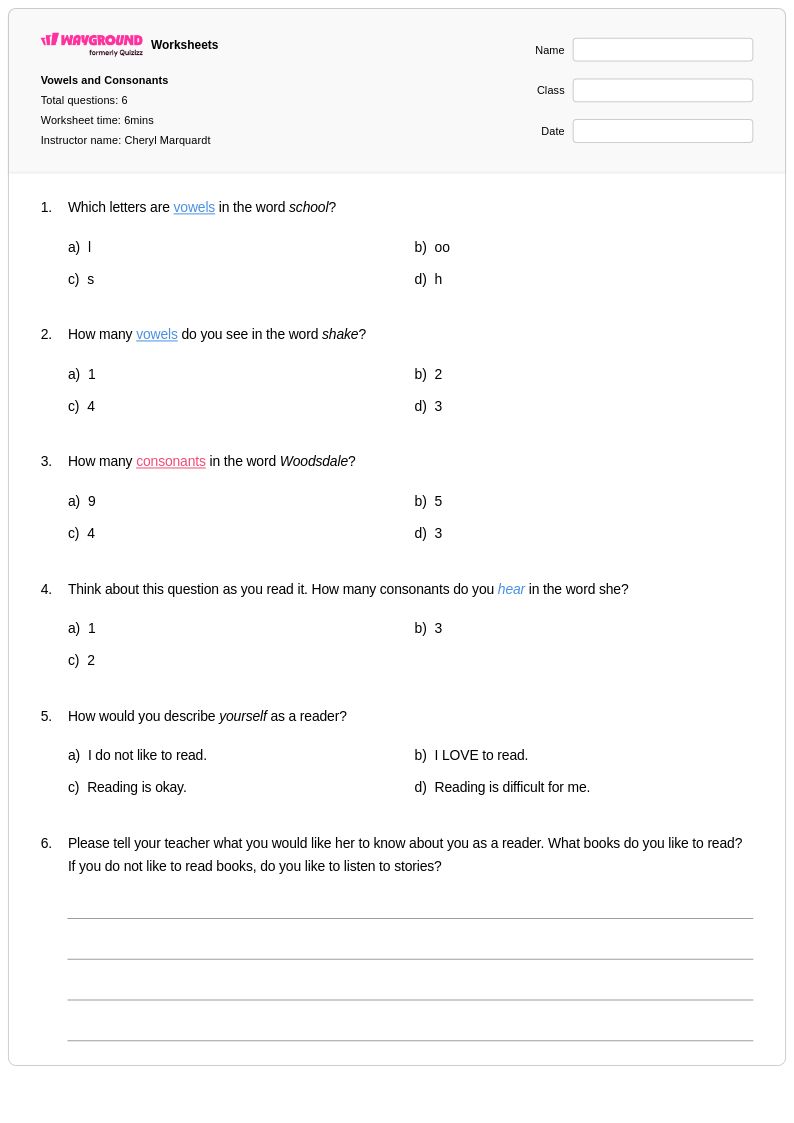
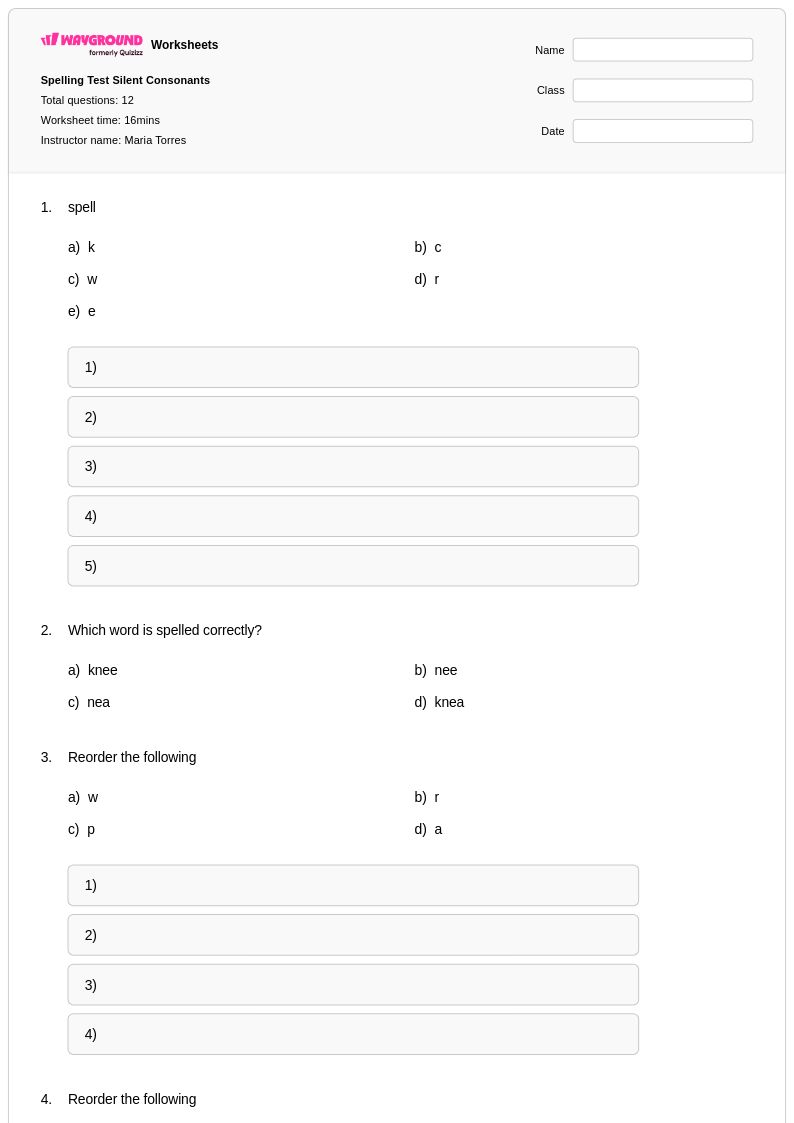
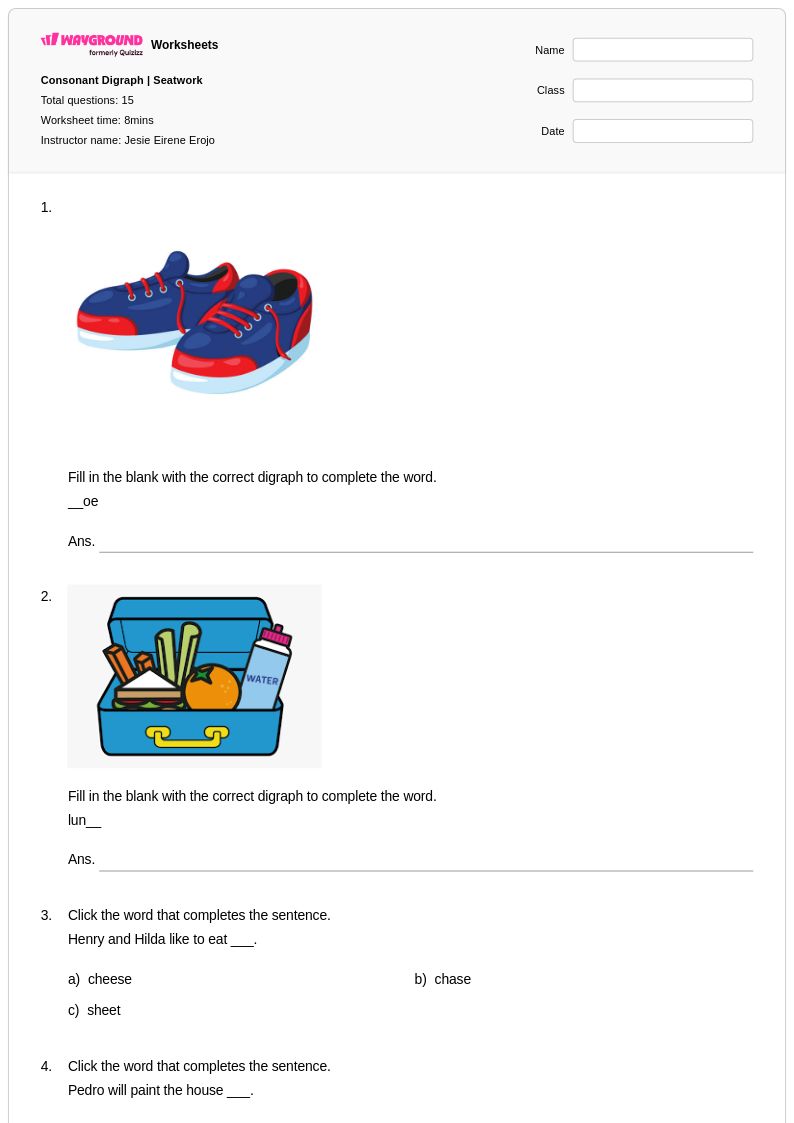
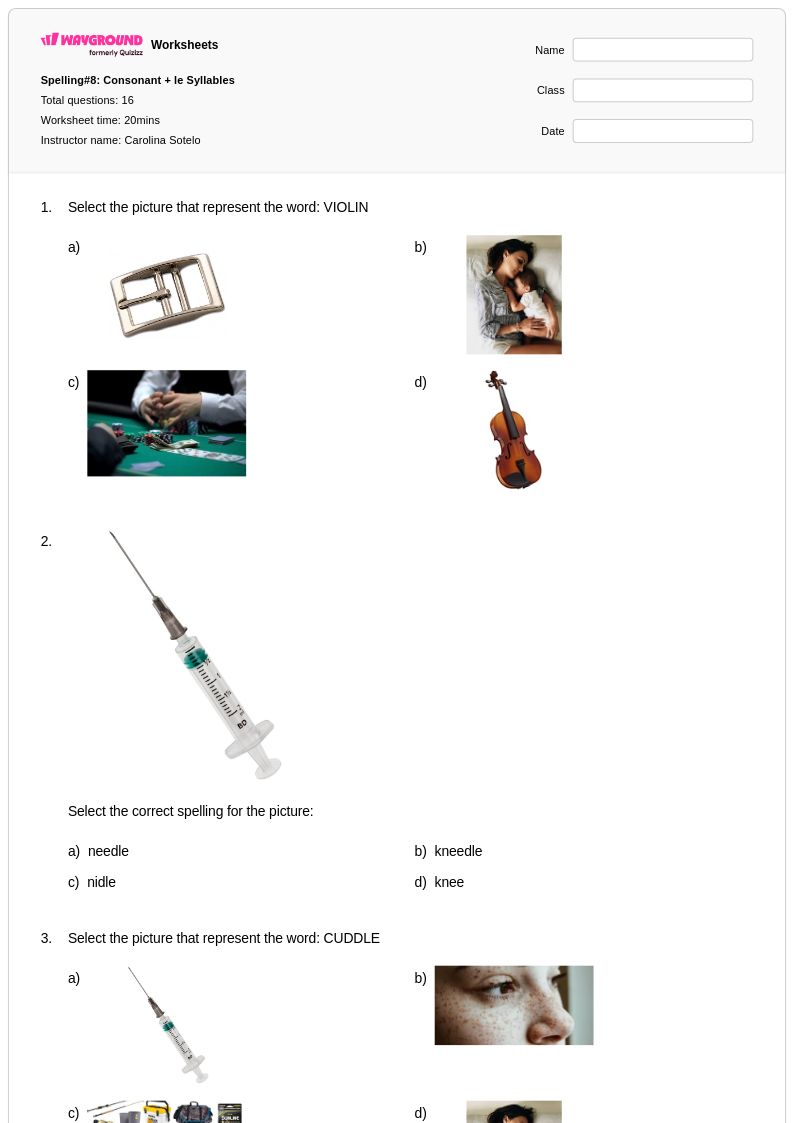
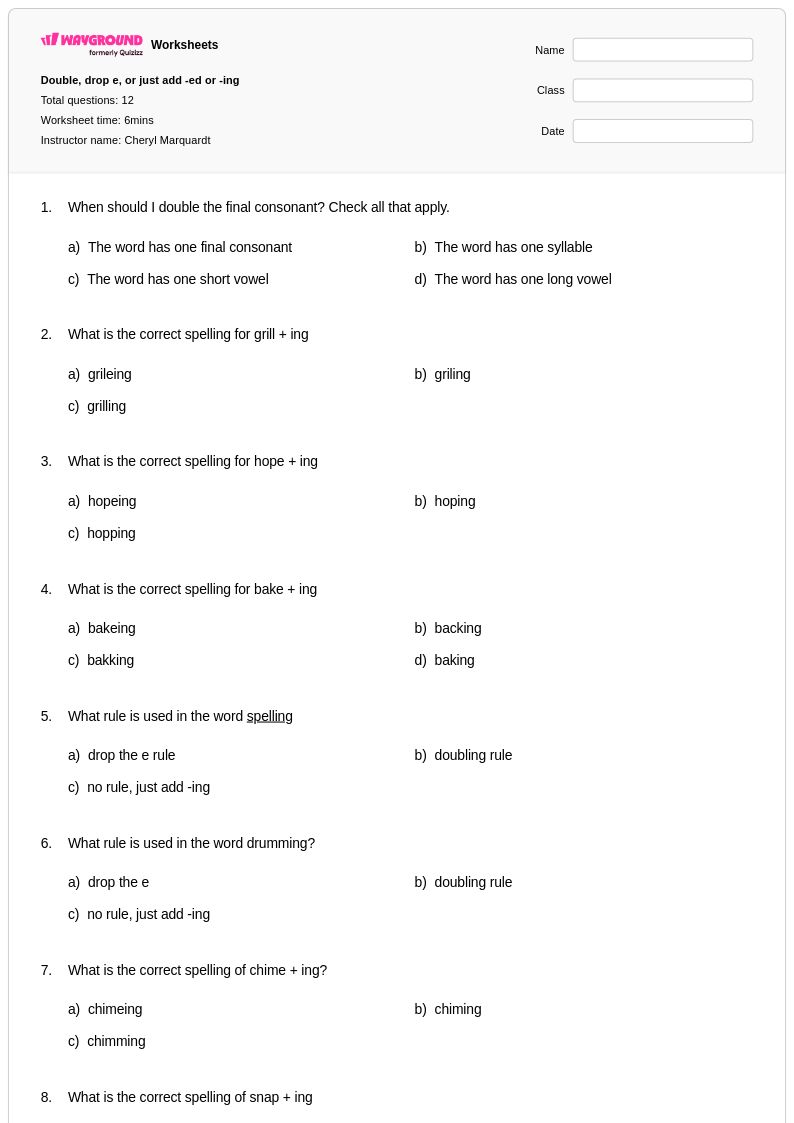
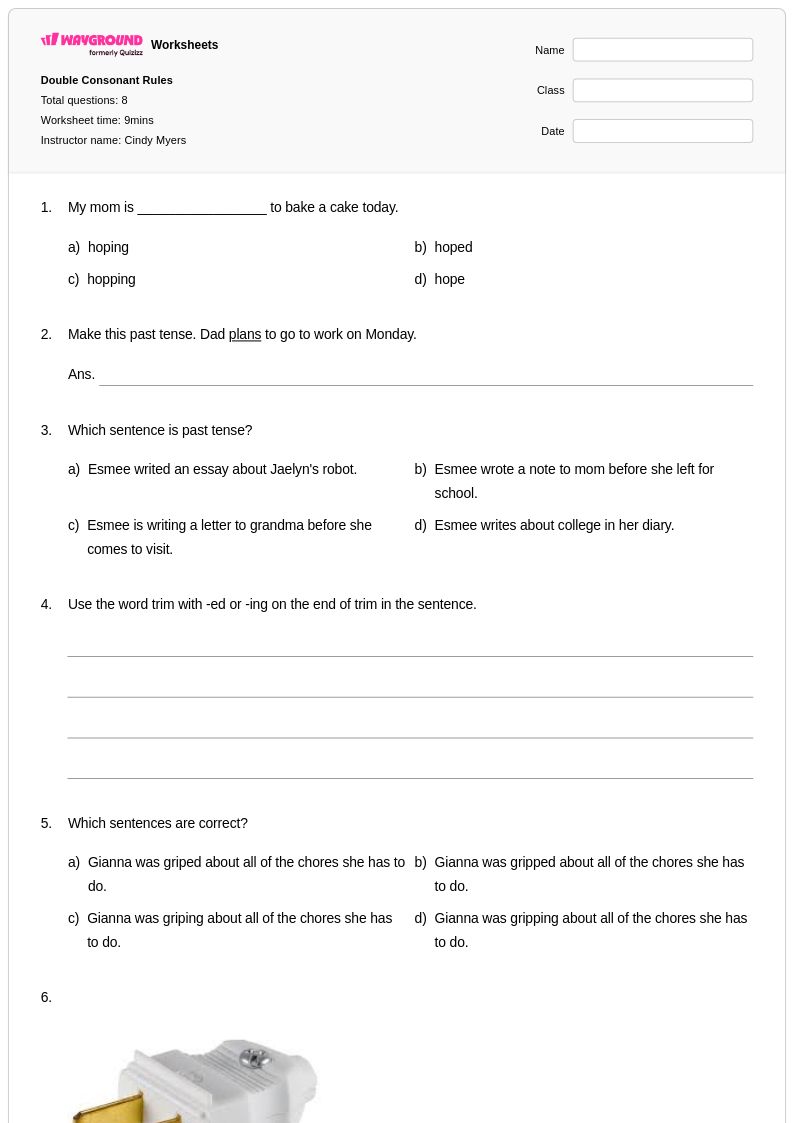
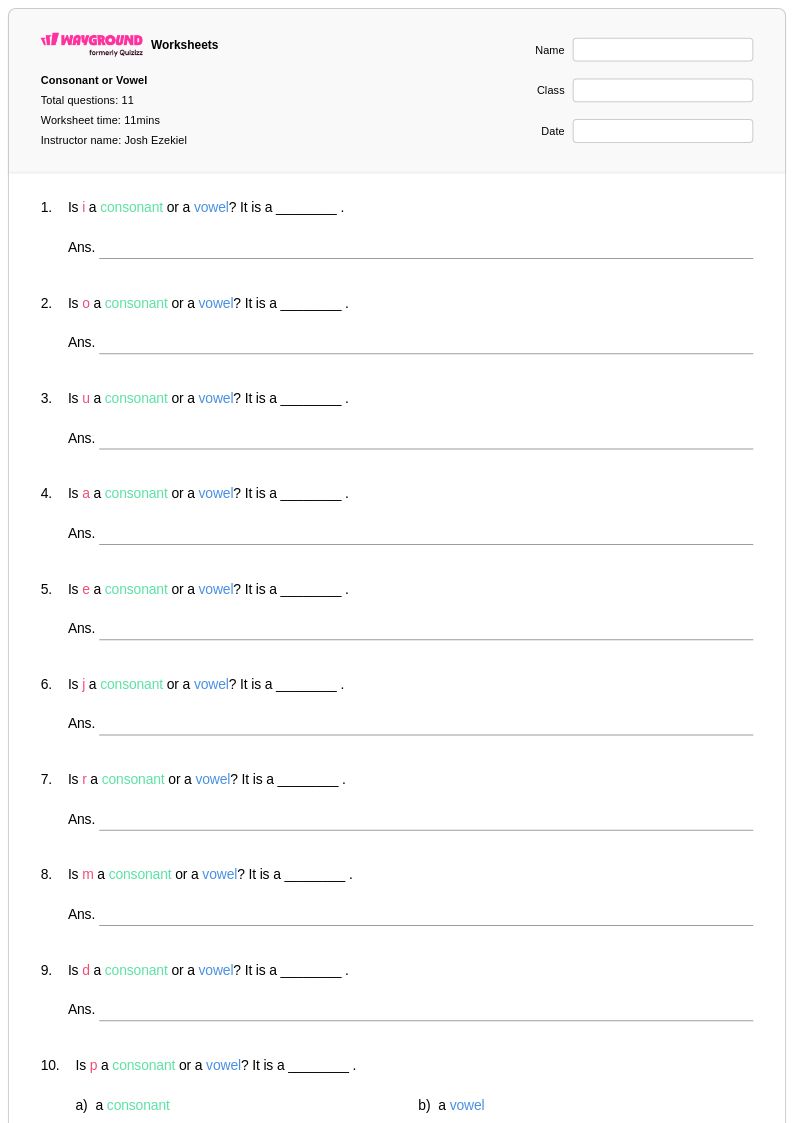
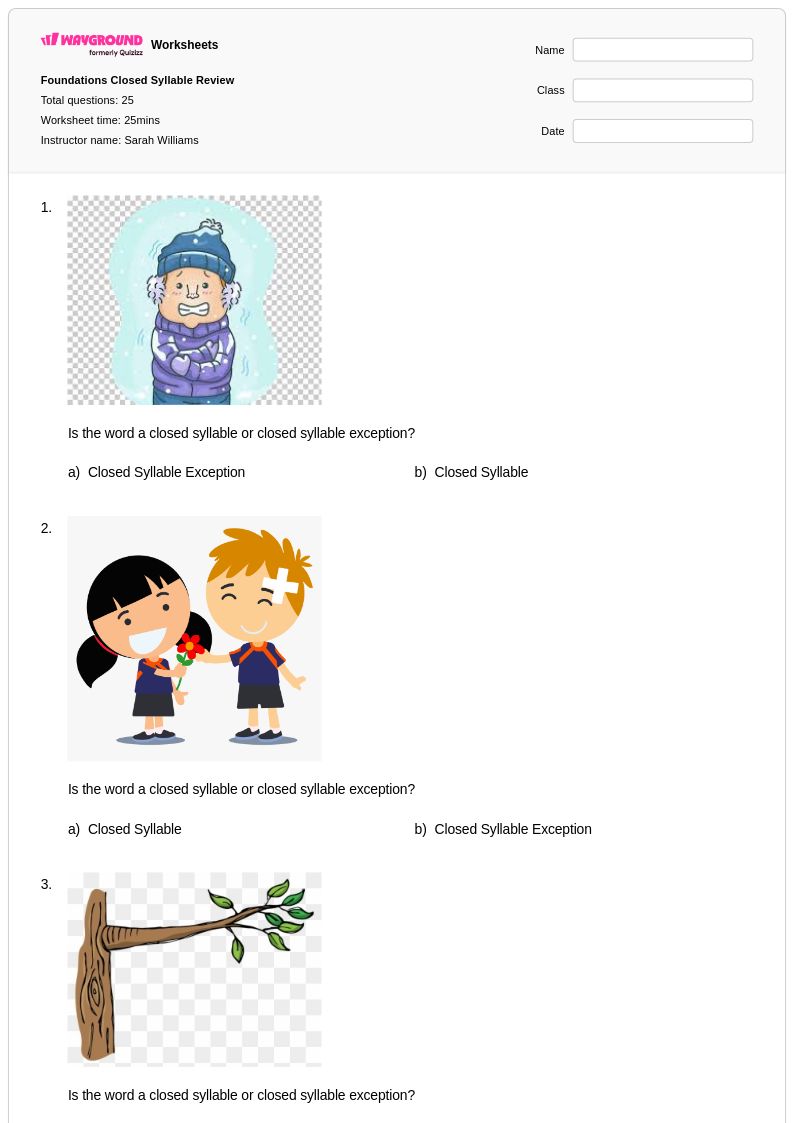
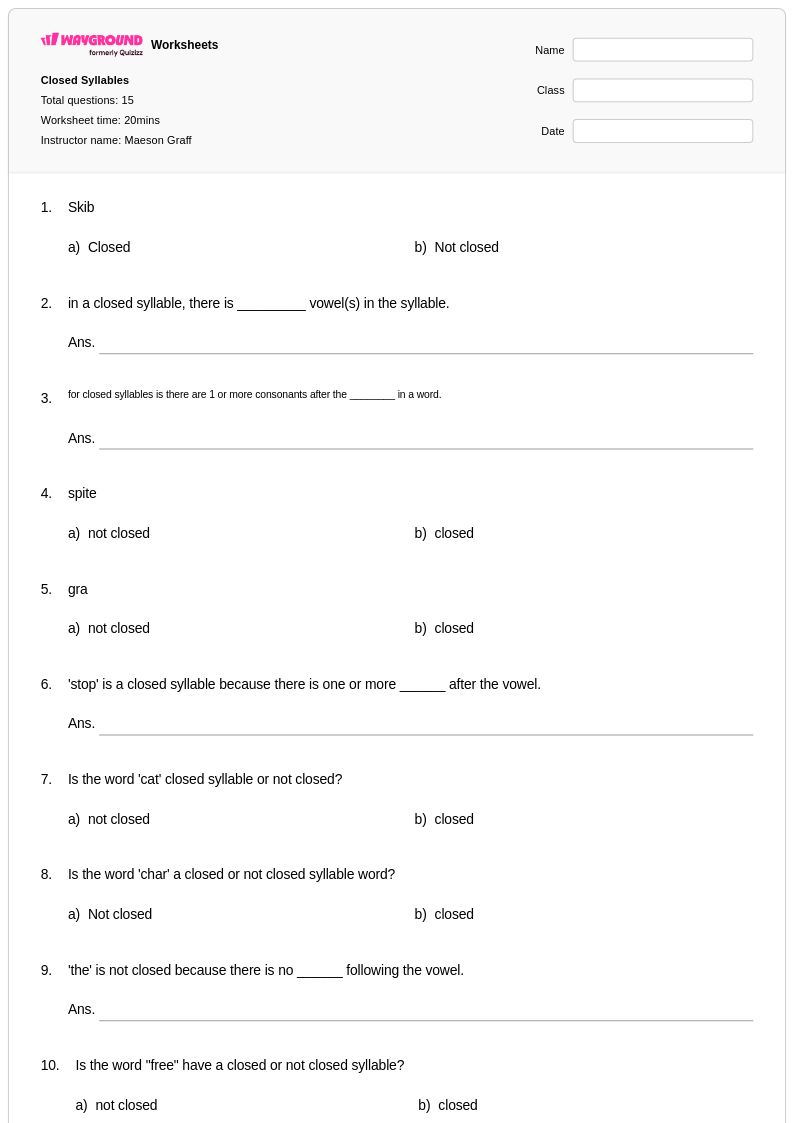
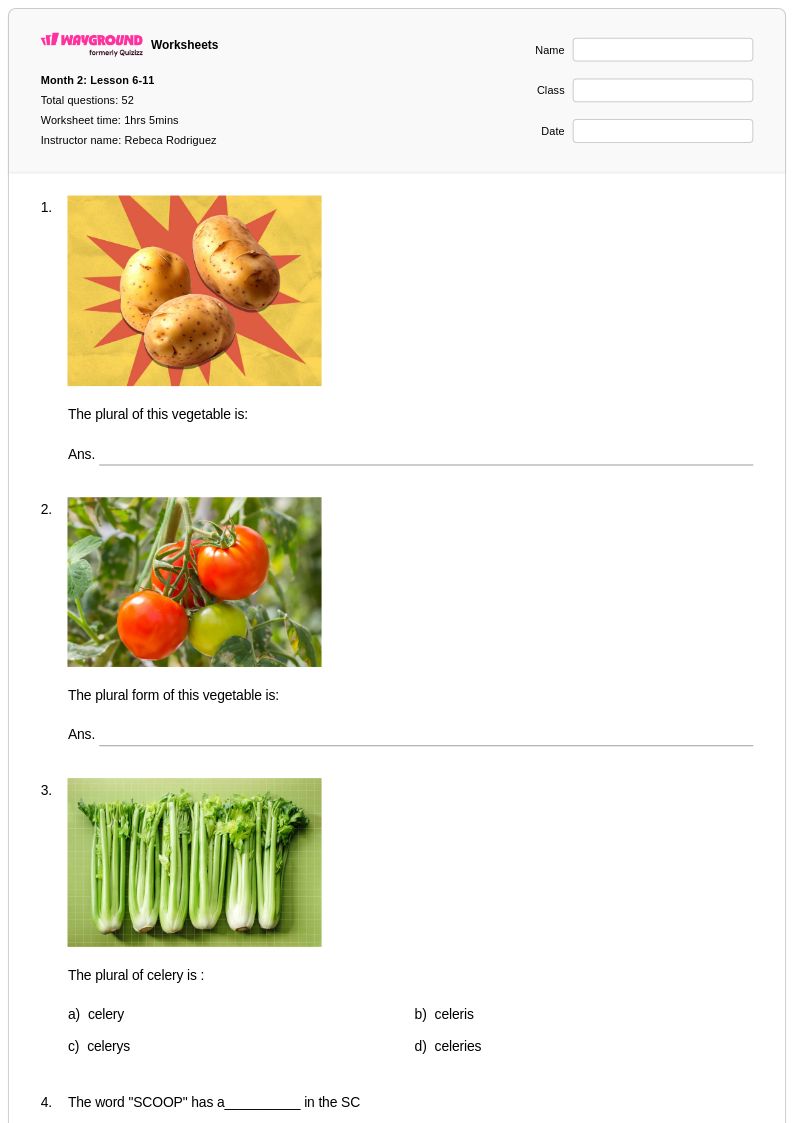
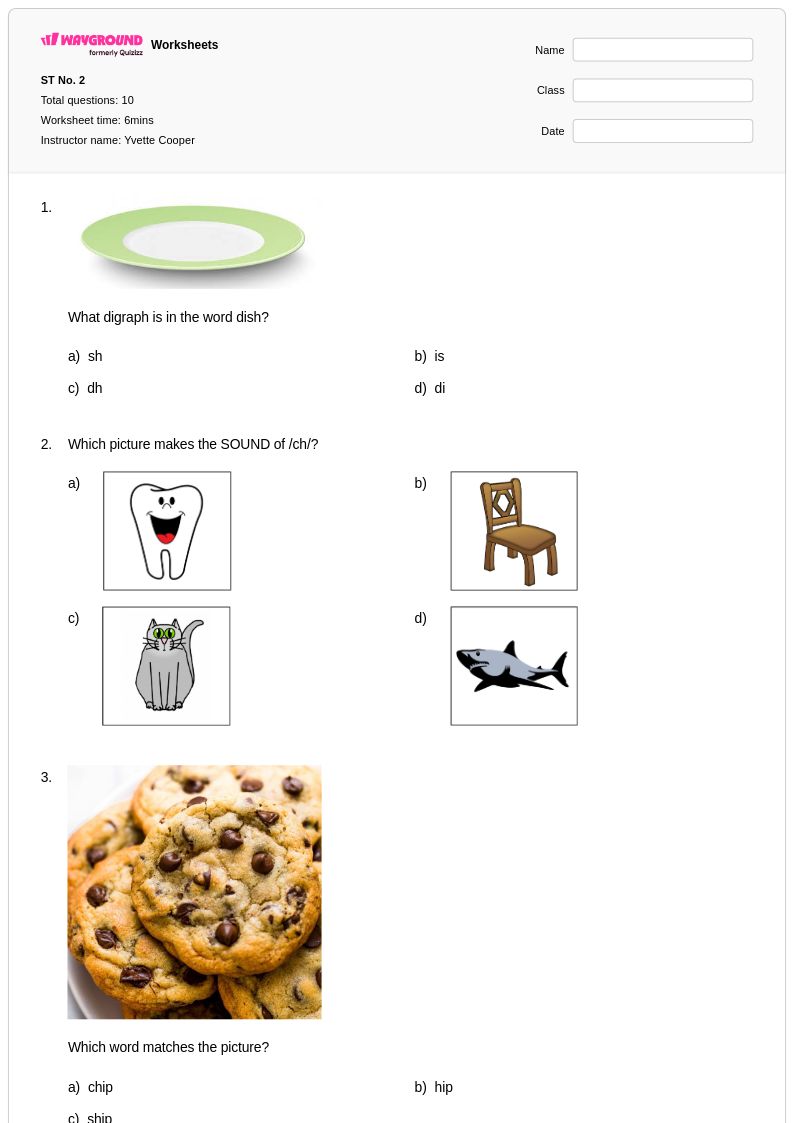
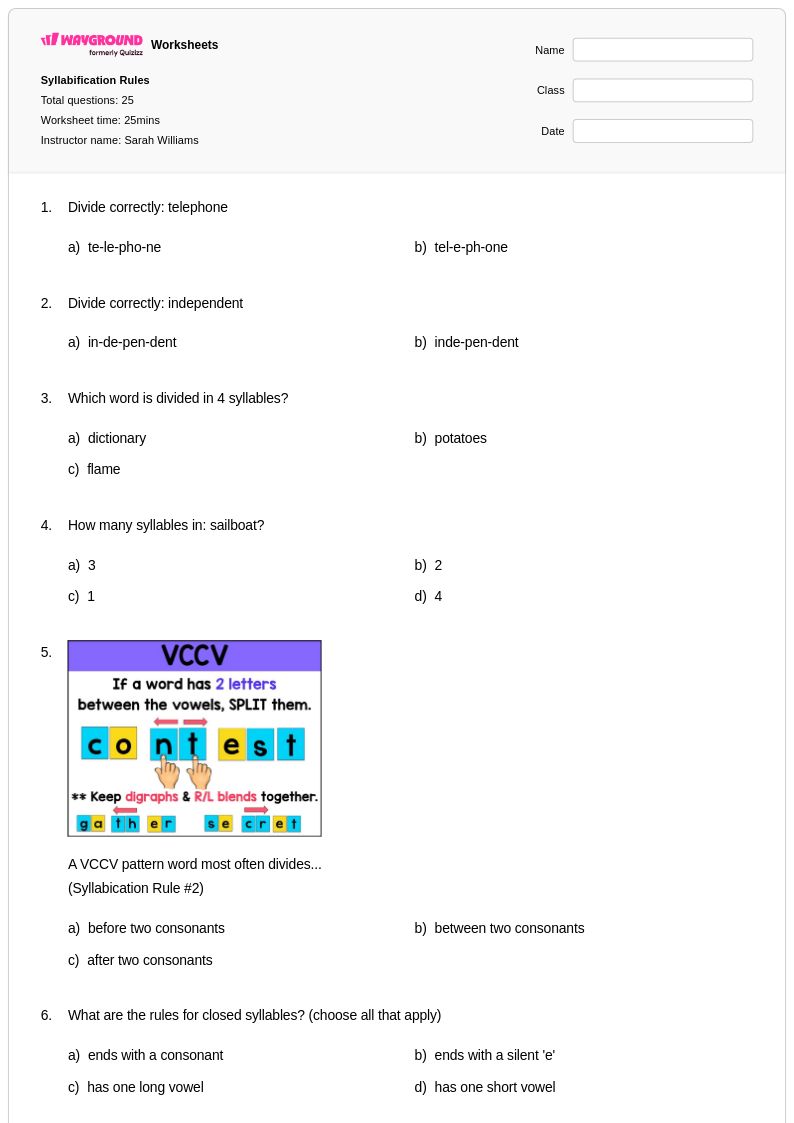
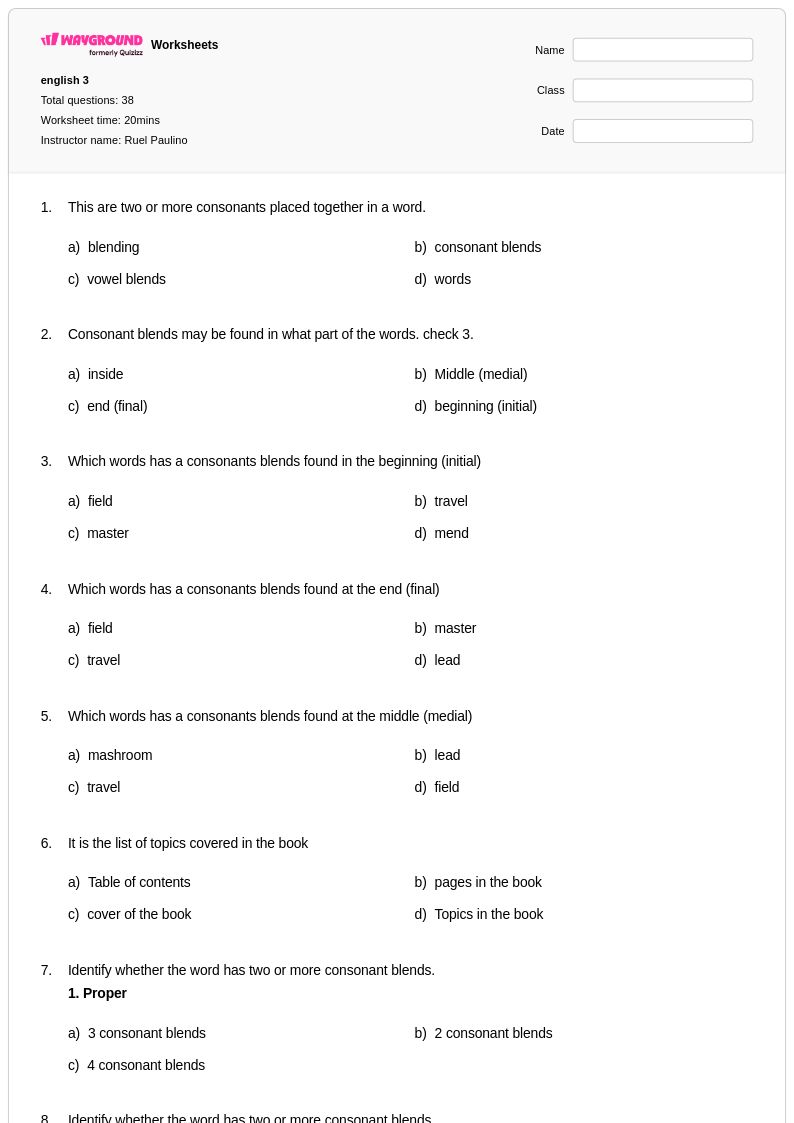
Consonant blending worksheets for Class 3 students available through Wayground provide essential practice for developing fluency with multi-letter consonant combinations at the beginning and end of words. These comprehensive resources strengthen students' ability to smoothly combine consonant sounds like "bl," "cr," "st," and "nd" while reading and spelling, building the foundational skills necessary for advanced literacy development. Each worksheet collection includes carefully scaffolded practice problems that progress from simple two-consonant blends to more complex three-consonant combinations, with complete answer keys provided to support both independent work and guided instruction. The free printable materials offer systematic phonics practice through engaging activities such as word sorting, sentence completion, and reading passages that reinforce proper consonant blending techniques essential for Class 3 reading proficiency.
Wayground's extensive library of consonant blending worksheets draws from millions of teacher-created resources, providing educators with robust search and filtering capabilities to locate materials perfectly aligned with their specific curriculum standards and student needs. The platform's differentiation tools enable teachers to customize worksheets for various skill levels within their Class 3 classrooms, while the flexible format options include both printable PDF versions and interactive digital activities suitable for different learning environments. These comprehensive collections support effective lesson planning by offering ready-made materials for initial instruction, targeted remediation for struggling readers, and enrichment opportunities for advanced students, ensuring that all learners receive appropriate consonant blending practice to master this critical phonics skill.
FAQs
How do I teach consonant blends to early readers?
Start by introducing two-letter blends in isolation before embedding them in words, grouping blends by their initial consonant (e.g., 'bl,' 'br,' 'st,' 'sp') so students can see the pattern. Use explicit, systematic instruction where students first hear the sounds separately, then blend them together orally before connecting them to print. Once students are secure with two-letter blends, progress to three-letter combinations like 'scr,' 'spl,' and 'thr.' Consistent practice decoding blend patterns in context accelerates transfer to independent reading.
What exercises help students practice consonant blends?
Effective practice exercises include word-sorting activities where students categorize words by blend type, fill-in-the-blank sentences that require students to identify and apply the correct blend, and picture-naming tasks where students write the blend that begins each illustrated word. Progressing from simple two-letter blends to three-letter combinations ensures students build fluency incrementally. Repeated exposure through structured worksheet practice reinforces the connection between written letter patterns and their spoken sounds.
What mistakes do students commonly make when learning consonant blends?
The most common error is inserting a vowel sound between the two consonants, pronouncing 'blue' as 'buh-lue' rather than blending fluidly. Students also frequently omit one consonant entirely when decoding, reading 'stop' as 'top' or 'flap' as 'lap.' Another common error is confusing blends with digraphs, treating 'sh' or 'ch' as blends when they actually represent single sounds. Targeted practice that isolates each blend and requires students to segment and then re-blend the sounds helps address all three error patterns.
How do I use consonant blending worksheets to support struggling readers?
For struggling readers, use worksheets that isolate a single blend pattern per page so students are not overwhelmed by too many patterns simultaneously. Pair worksheet practice with oral blending warm-ups so students activate the phonological skill before applying it in print. On Wayground, teachers can apply accommodations such as Read Aloud, which reads questions aloud for students who need additional support, and Reduced Answer Choices, which lowers cognitive load for students who find multiple-option tasks challenging. These settings can be assigned to individual students without disrupting the rest of the class.
How do I use Wayground's consonant blending worksheets in my classroom?
Wayground's consonant blending worksheets are available as printable PDFs for traditional classroom use and in digital formats for technology-integrated learning environments, giving teachers flexibility across in-person, hybrid, and remote settings. Teachers can also host worksheets as a live quiz on Wayground, making them suitable for whole-class instruction or individual practice. The platform's filtering tools allow educators to search by specific blend types or complexity level, making it straightforward to locate resources that match exactly where students are in their phonics progression.
How do consonant blending skills connect to overall reading fluency?
Consonant blending is a foundational decoding skill because most English words contain blend patterns, and readers who cannot fluently process blends must laboriously sound out each letter rather than chunking phonemes efficiently. When students automate blend recognition, their decoding speed increases, which frees up cognitive capacity for comprehension. Research in structured literacy consistently identifies phoneme blending as a prerequisite skill for reading multisyllabic words accurately and fluently.