Free Printable Consonants Worksheets for Kindergarten
Discover free kindergarten consonant worksheets and printables from Wayground that help young learners master letter sounds through engaging practice problems, complete with answer keys for effective phonics instruction.
Explore printable Consonants worksheets for Kindergarten
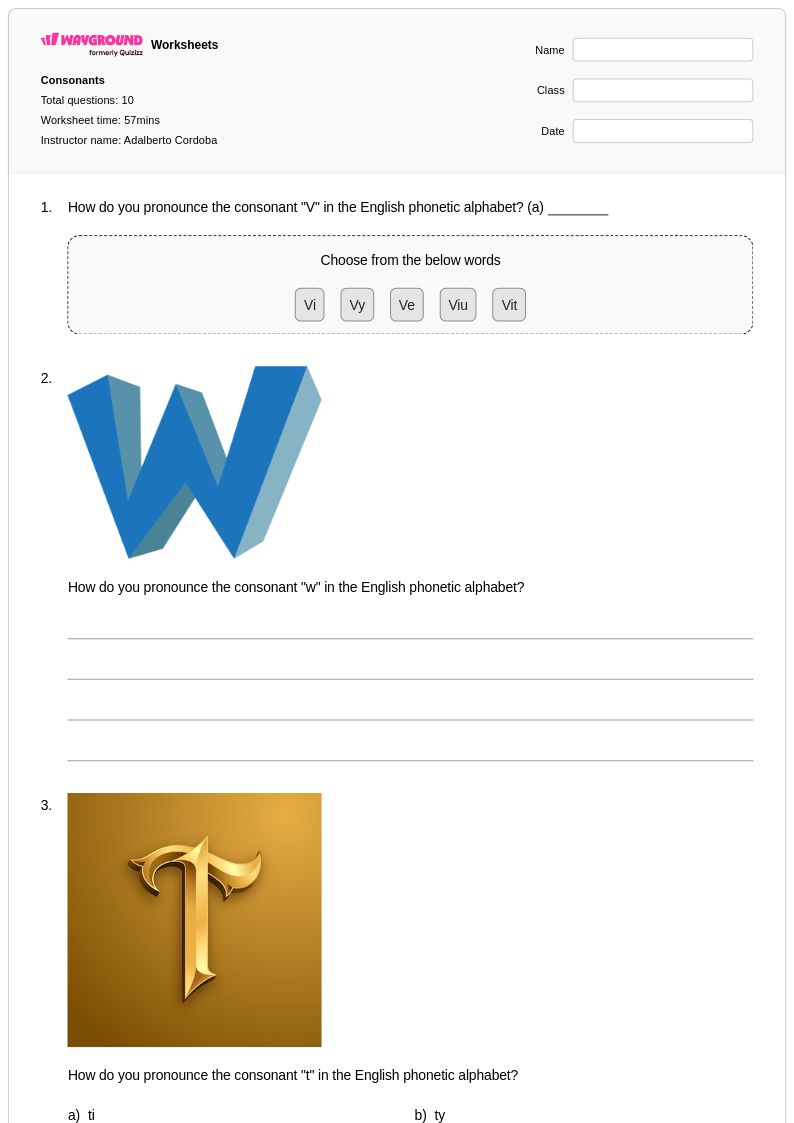
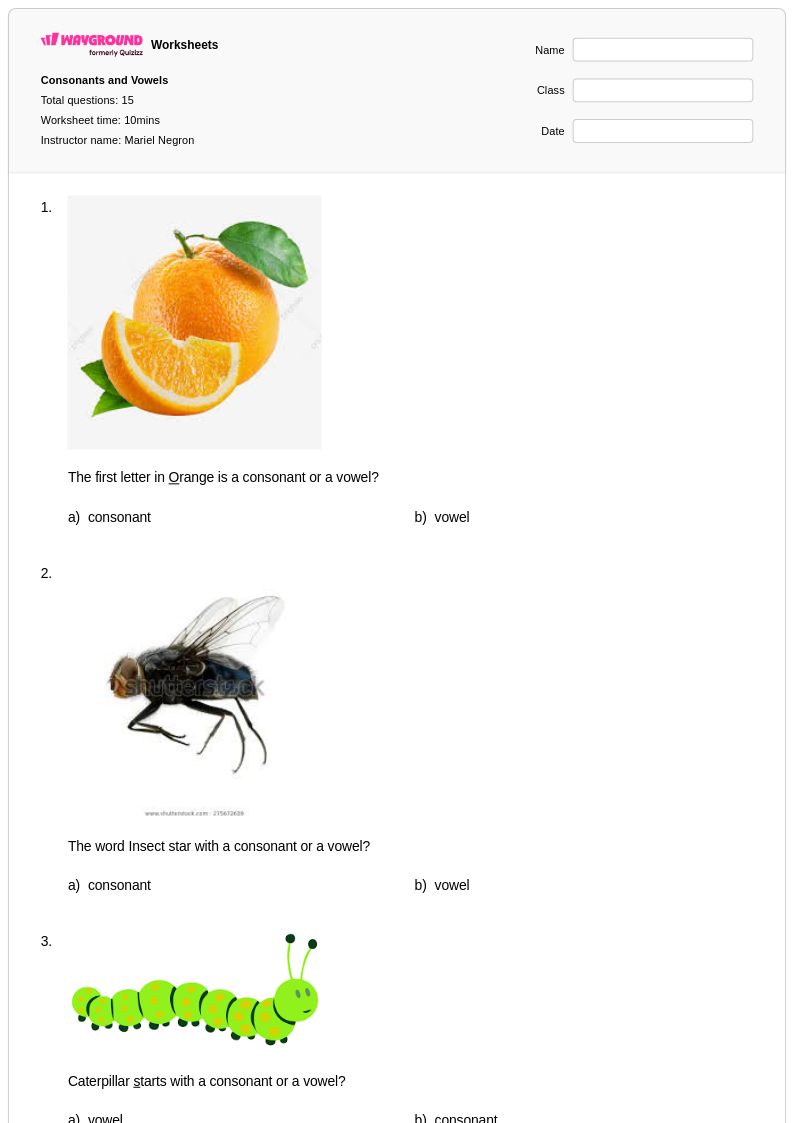
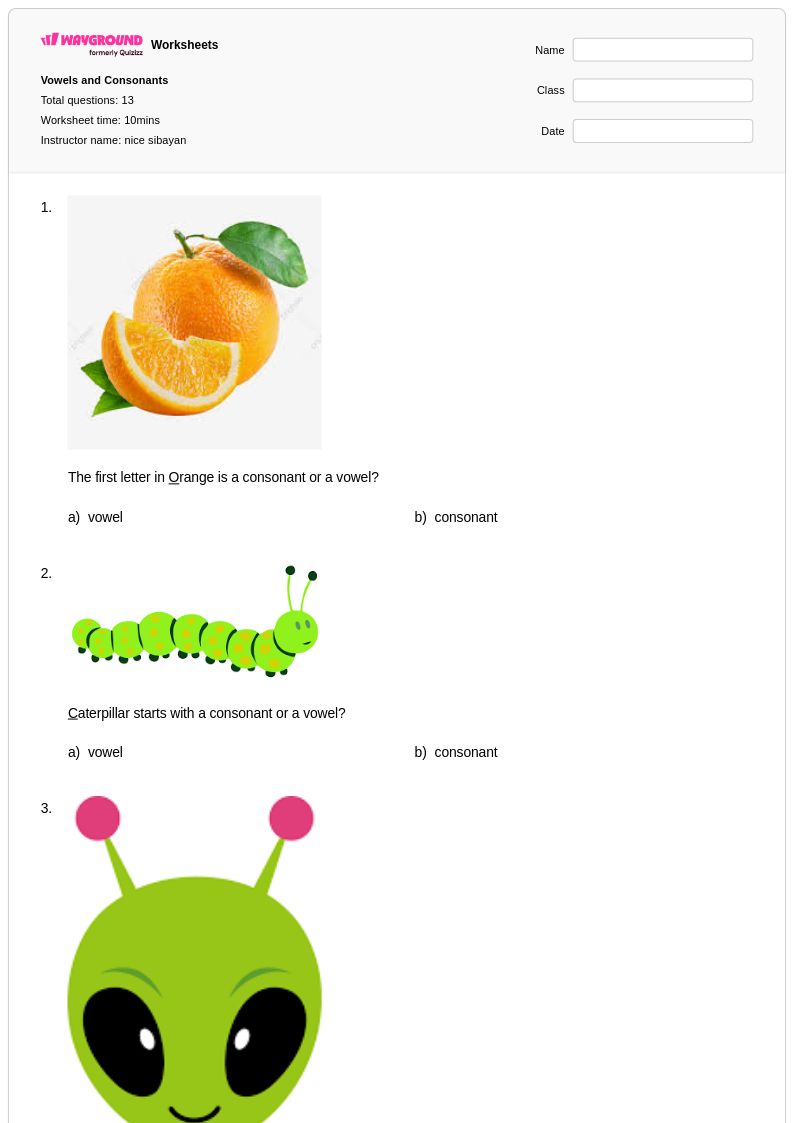
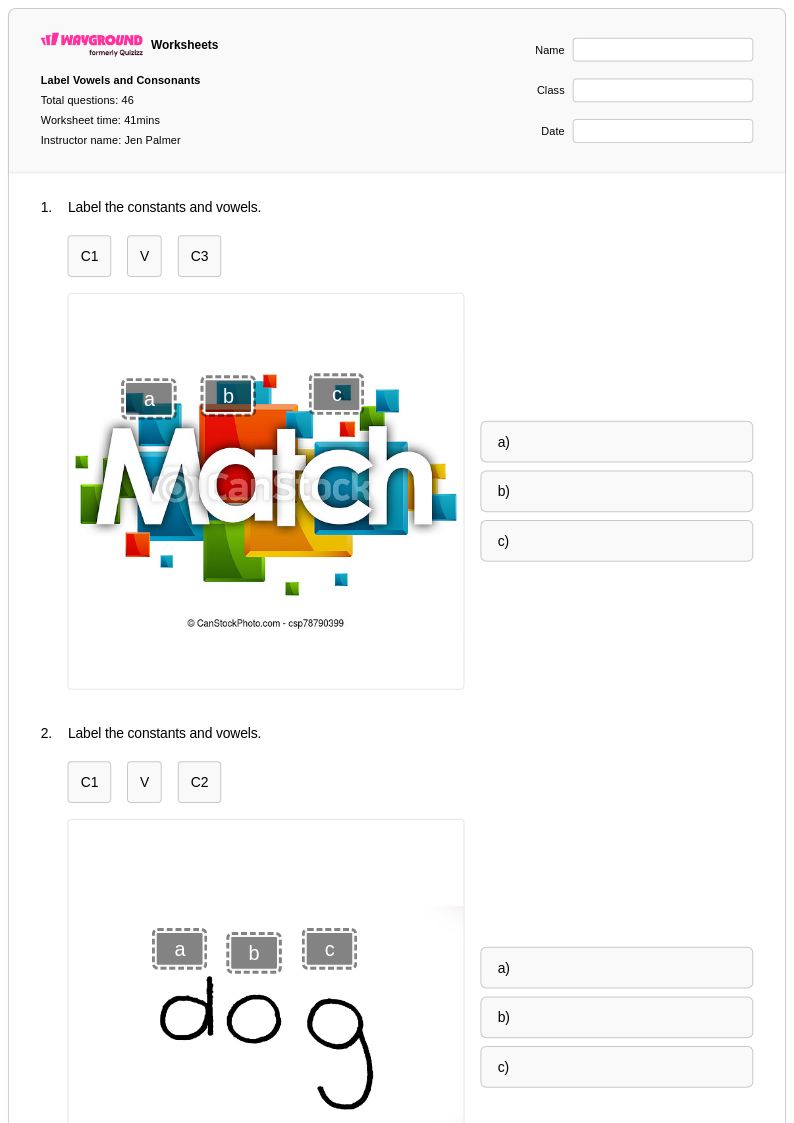
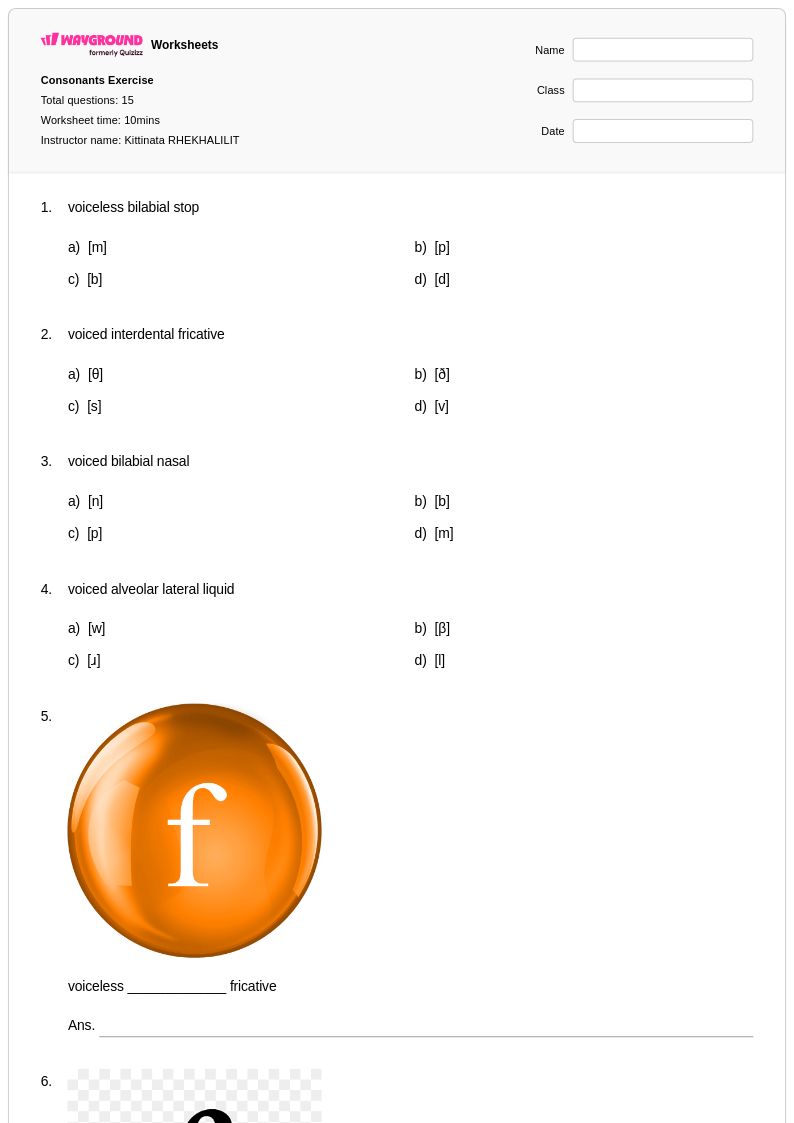
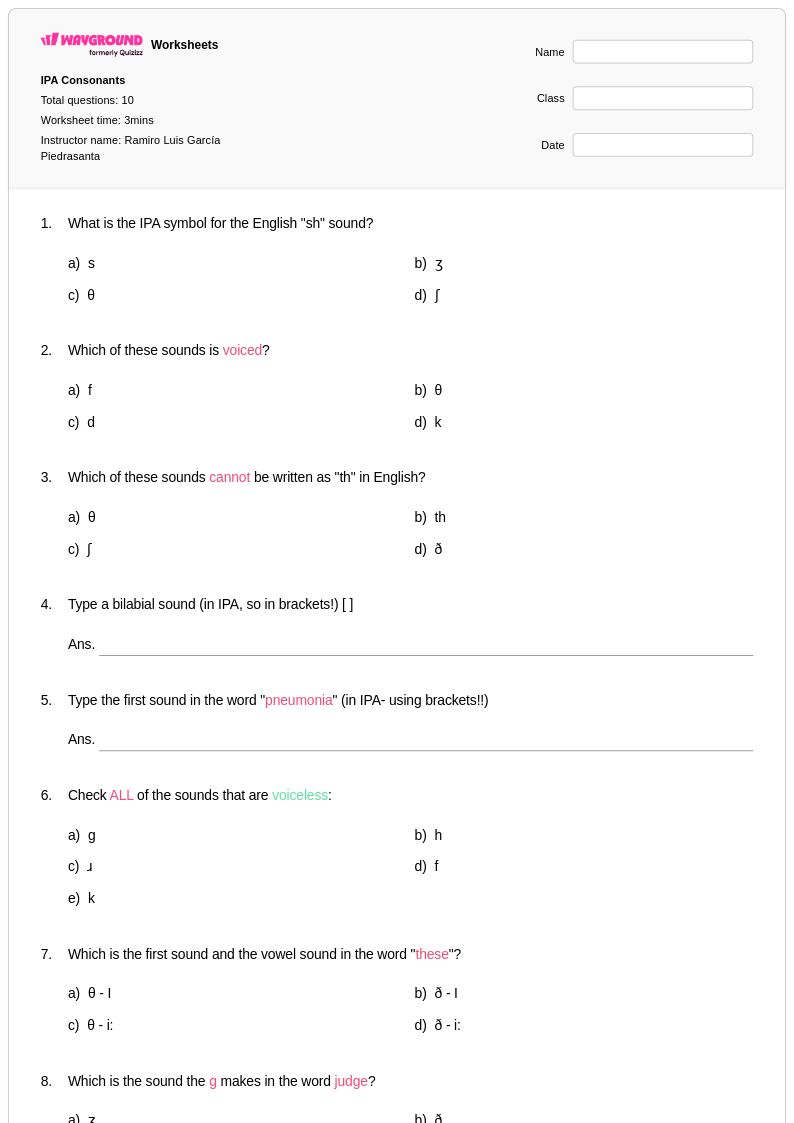
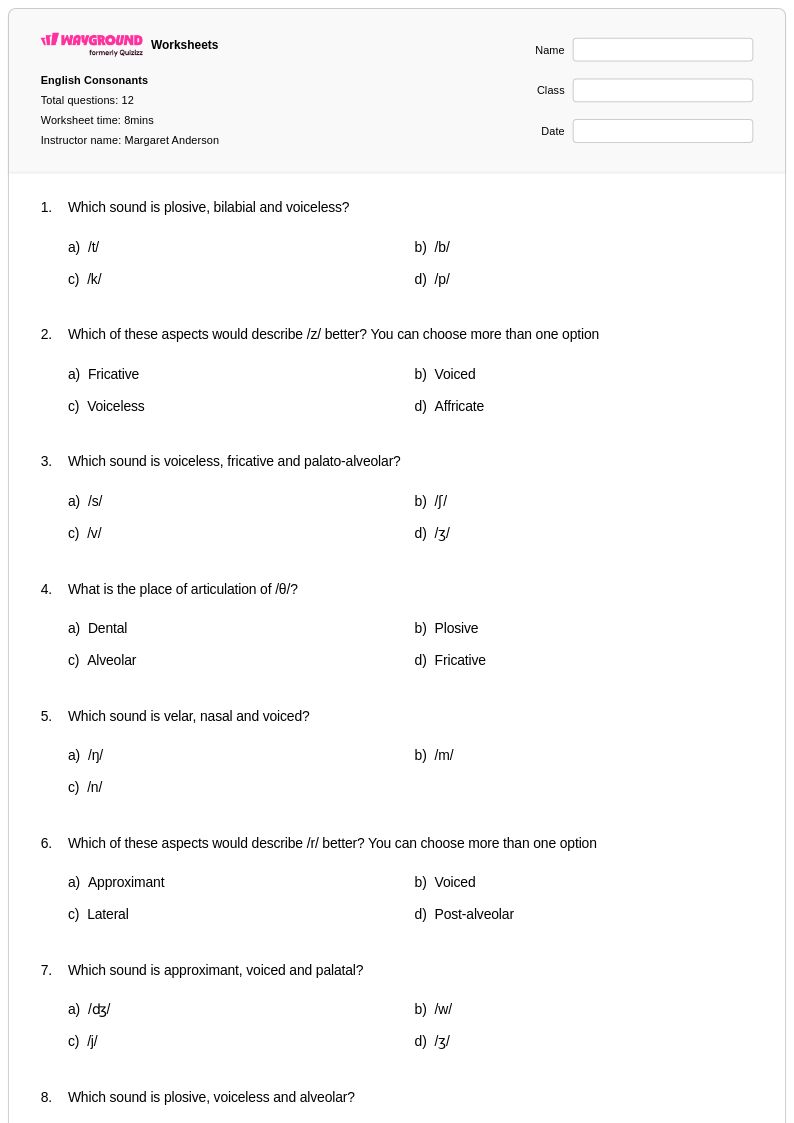
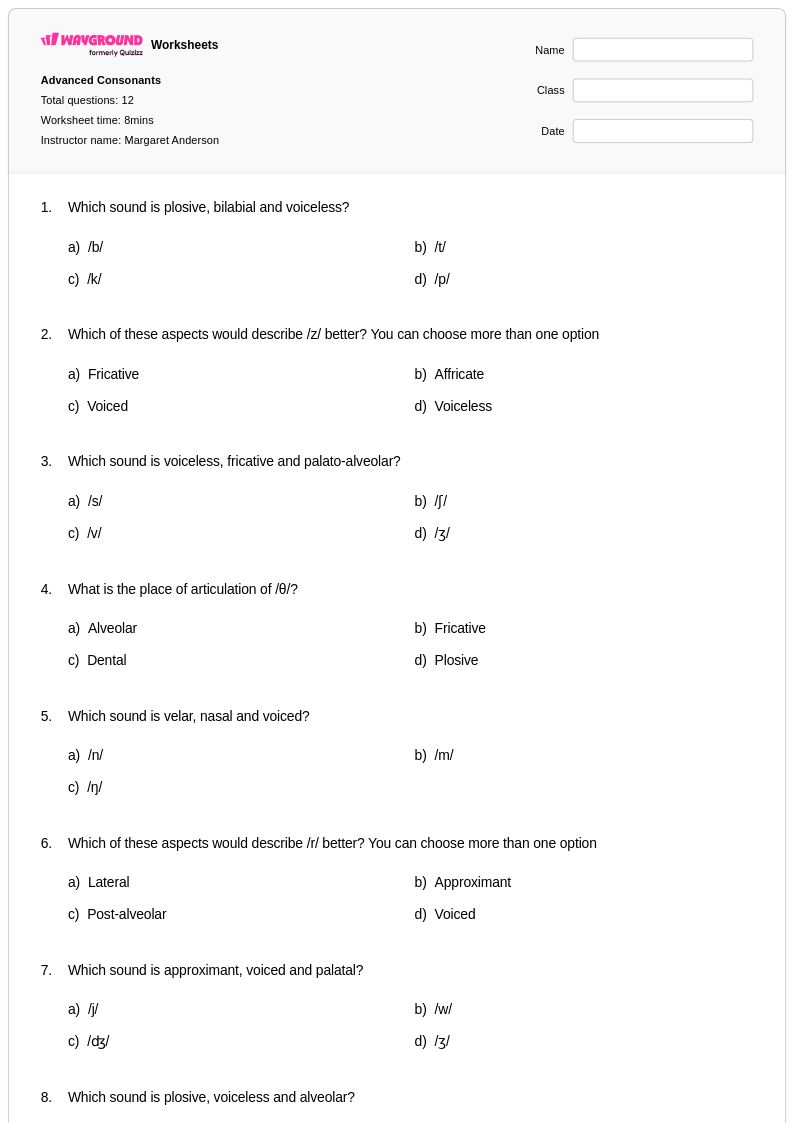
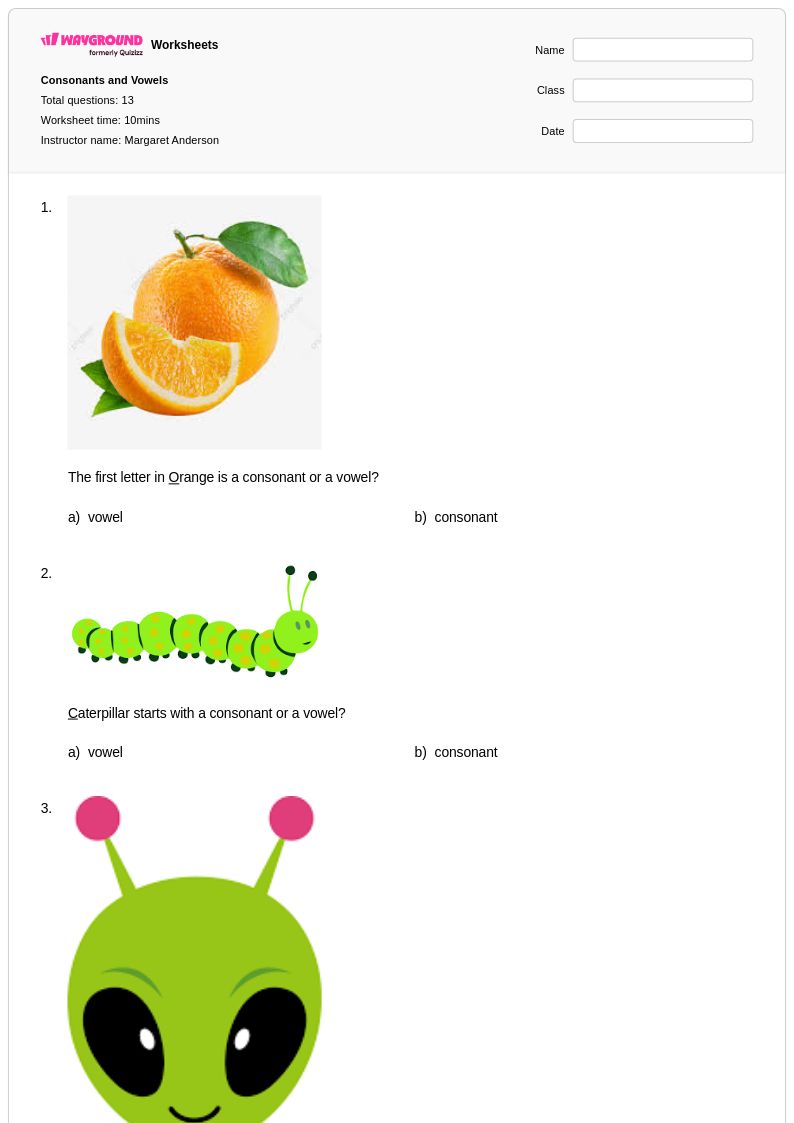
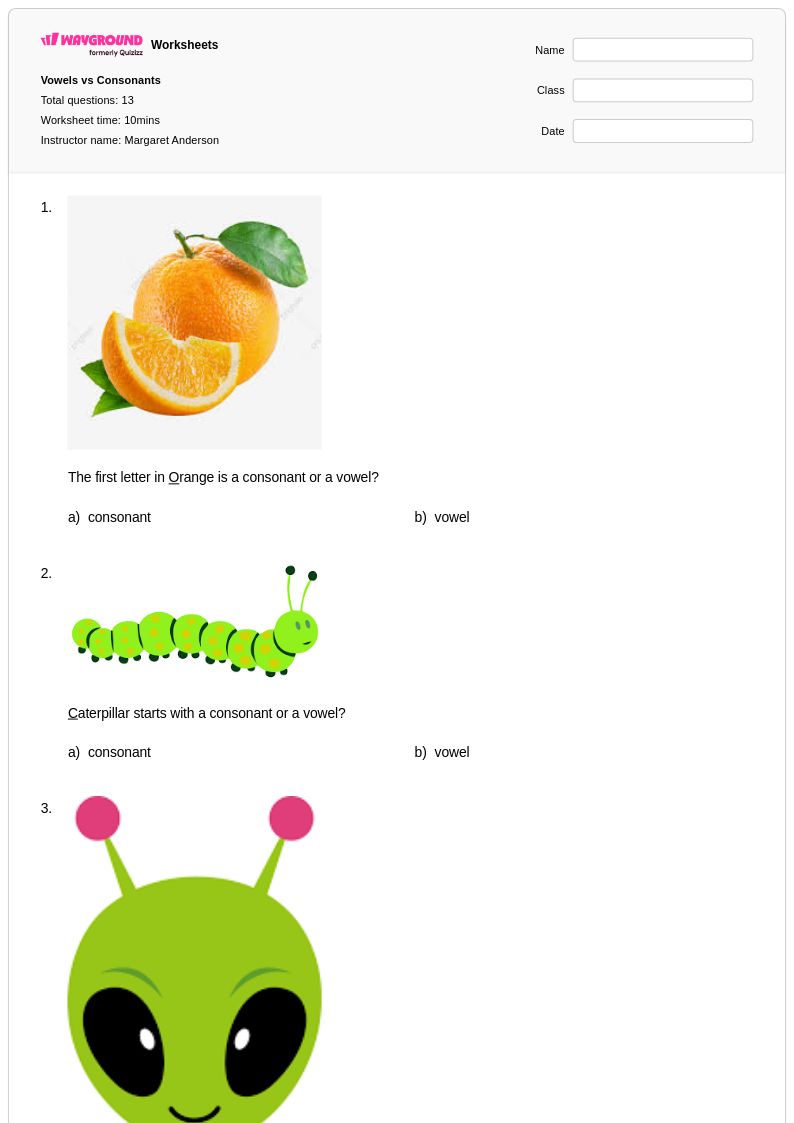
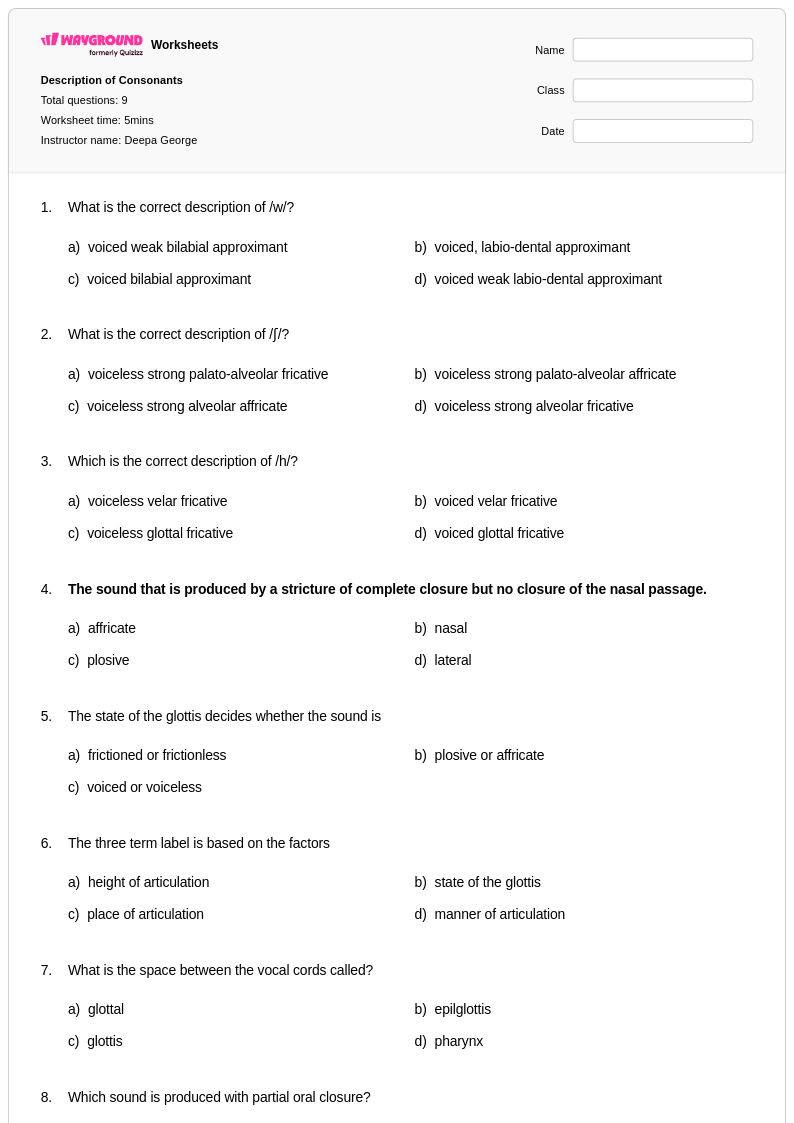
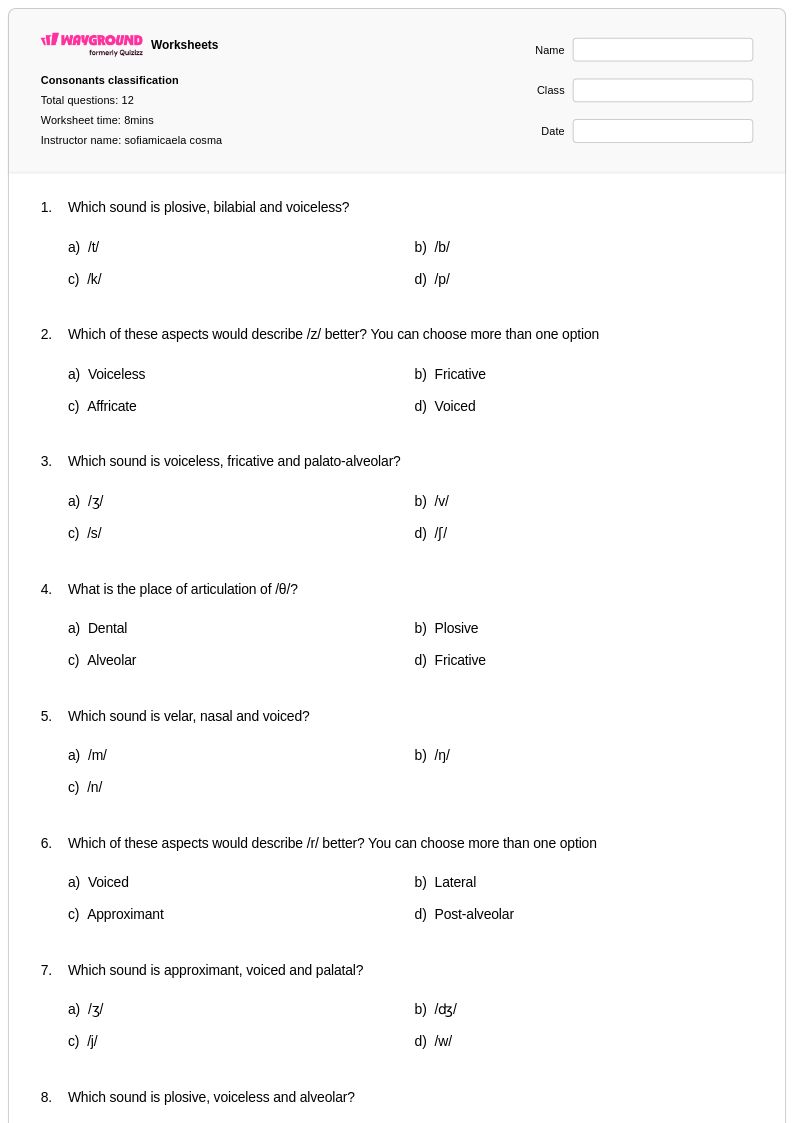
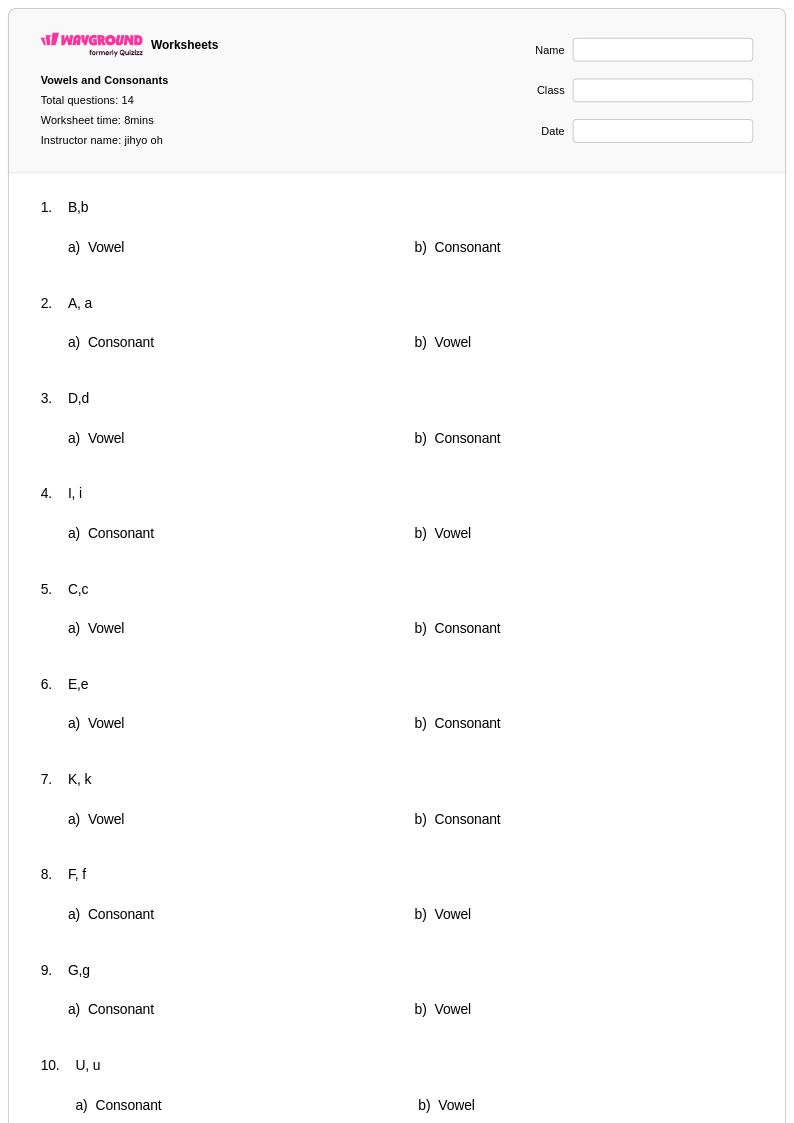
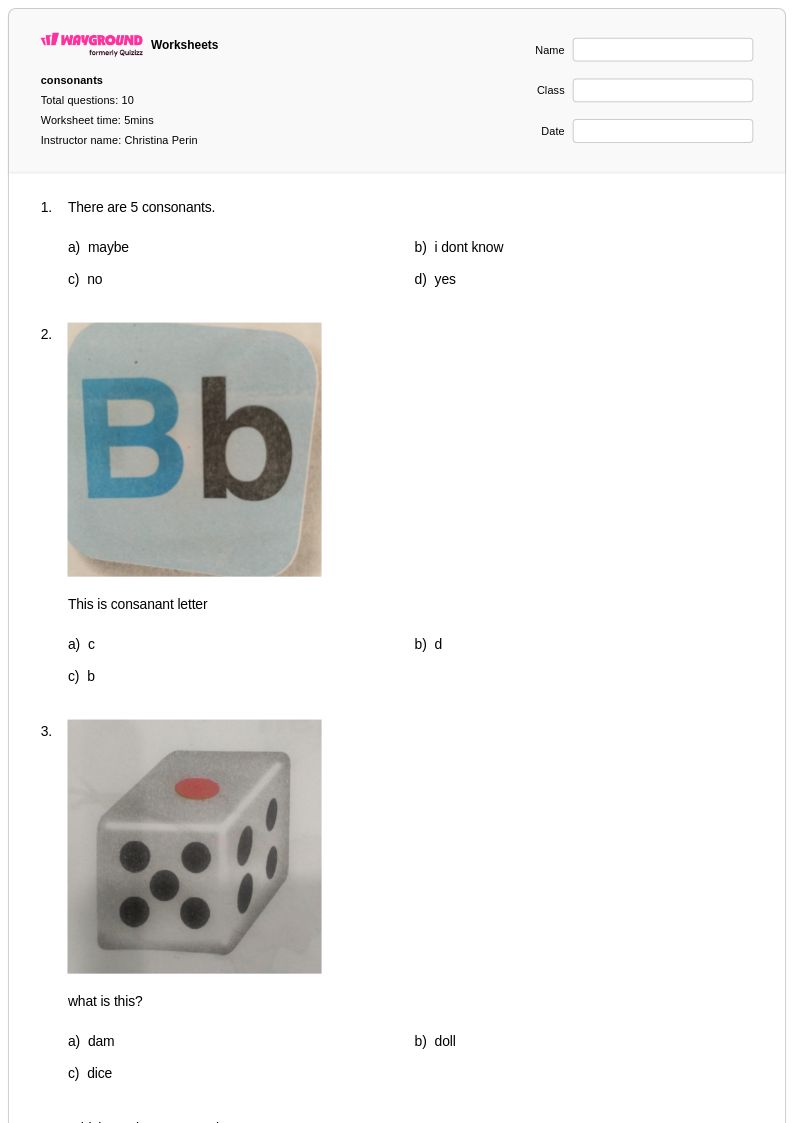
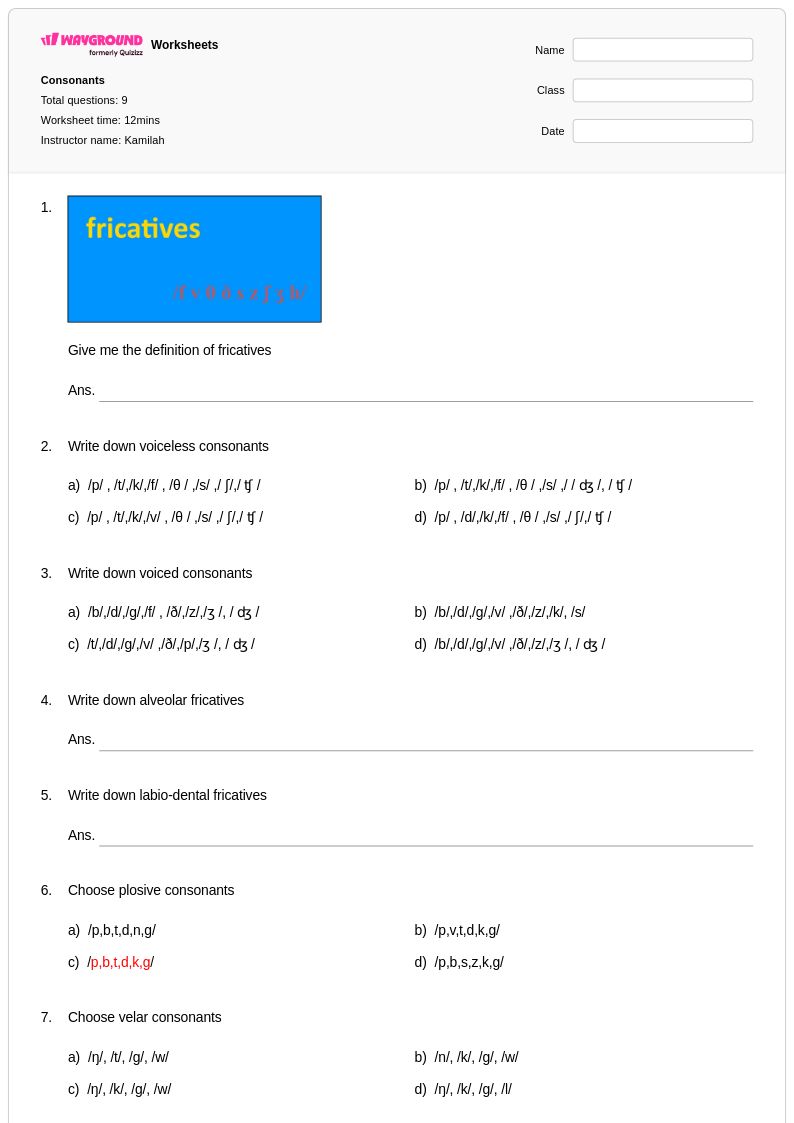
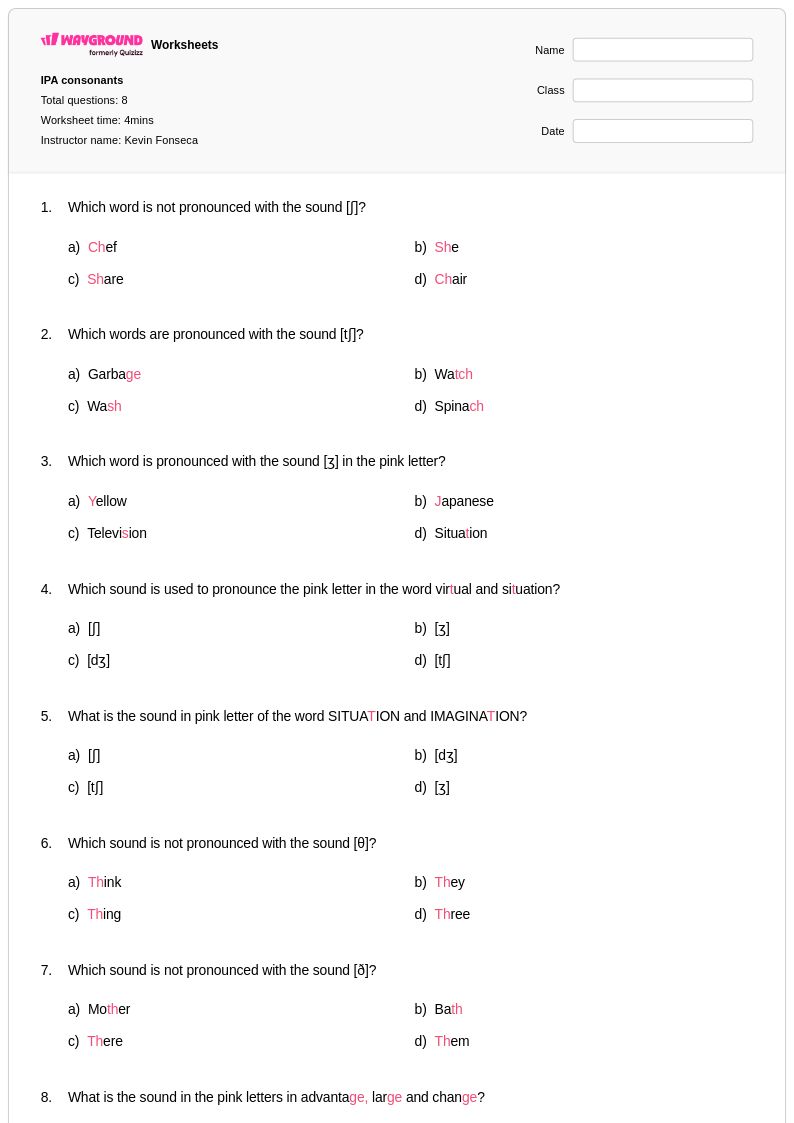
Consonant letter sounds form the foundation of reading instruction in kindergarten, and Wayground's comprehensive worksheet collection provides targeted practice for young learners developing these essential phonetic skills. These carefully designed worksheets help students identify, distinguish, and produce the sounds associated with consonant letters, building the phonemic awareness necessary for successful reading development. Each worksheet focuses on specific consonant sounds through engaging activities that reinforce letter-sound correspondence, featuring practice problems that progress from simple recognition tasks to more complex sound manipulation exercises. Teachers can access complete answer keys for efficient grading and assessment, while the free printable format ensures easy classroom distribution and home practice opportunities.
Wayground, formerly Quizizz, empowers educators with millions of teacher-created consonant worksheets that can be easily searched, filtered, and customized to meet diverse classroom needs. The platform's robust collection aligns with kindergarten literacy standards and offers differentiation tools that allow teachers to modify content for students at various skill levels, supporting both remediation for struggling learners and enrichment for advanced students. Available in both printable PDF format and interactive digital versions, these resources seamlessly integrate into lesson planning while providing flexible options for independent practice, small group instruction, and assessment. The comprehensive search functionality enables teachers to quickly locate worksheets targeting specific consonant sounds or skill combinations, streamlining preparation time and ensuring consistent, high-quality phonics instruction that builds strong foundational reading skills.
FAQs
How do I teach consonant sounds to early readers?
Start by introducing consonants in isolation, helping students connect each letter to a consistent keyword and sound (e.g., 'B says /b/ like ball'). Once students can identify individual consonant sounds, move into word-position practice — recognizing consonants at the beginning, middle, and end of words. Systematic, explicit phonics instruction that builds from single consonants to blends and digraphs gives students a reliable decoding framework they can apply independently.
What exercises help students practice recognizing consonant sounds?
Effective practice exercises include picture-to-sound matching, fill-in-the-blank word completion, sorting words by initial or final consonant sound, and identifying consonants within spoken or written words. Progressing from single consonant recognition to consonant blends and digraphs ensures students develop both accuracy and flexibility with phonics patterns. Repeated, varied practice across different word positions reinforces the phonemic awareness skills needed for decoding and spelling.
What mistakes do students commonly make when learning consonant sounds?
One of the most frequent errors is confusing visually similar letters that represent distinct sounds, such as b/d, p/q, or m/n, which reflects both phonemic and print awareness challenges. Students also commonly struggle with consonant sounds that change based on context, such as the soft and hard sounds of c and g. In blends and digraphs, students often omit one sound entirely rather than blending both, which requires targeted practice at those specific word patterns.
How do I differentiate consonant instruction for struggling readers versus advanced students?
For struggling readers, focus on high-frequency single consonants in the initial position before introducing medial or final positions, and use picture supports to reduce cognitive load. Advanced students can move into consonant blends, digraphs, and multisyllabic word patterns that demand more sophisticated phonemic manipulation. On Wayground, teachers can apply accommodations such as Read Aloud and reduced answer choices for individual students, ensuring that differentiated support is built directly into the practice experience without singling students out.
How do I use Wayground's consonant worksheets in my classroom?
Wayground's consonant worksheets are available as printable PDFs for traditional classroom use and in digital formats for technology-integrated lessons, making them flexible for whole-group instruction, small-group work, independent practice, or homework. Teachers can also host them as a quiz directly on Wayground, enabling real-time student responses and built-in answer key grading. Each worksheet includes a complete answer key, so teachers can provide immediate corrective feedback during phonics instruction.