

22 Q
2nd
15 Q
10th
10 Q
PD
12 Q
2nd
15 Q
9th
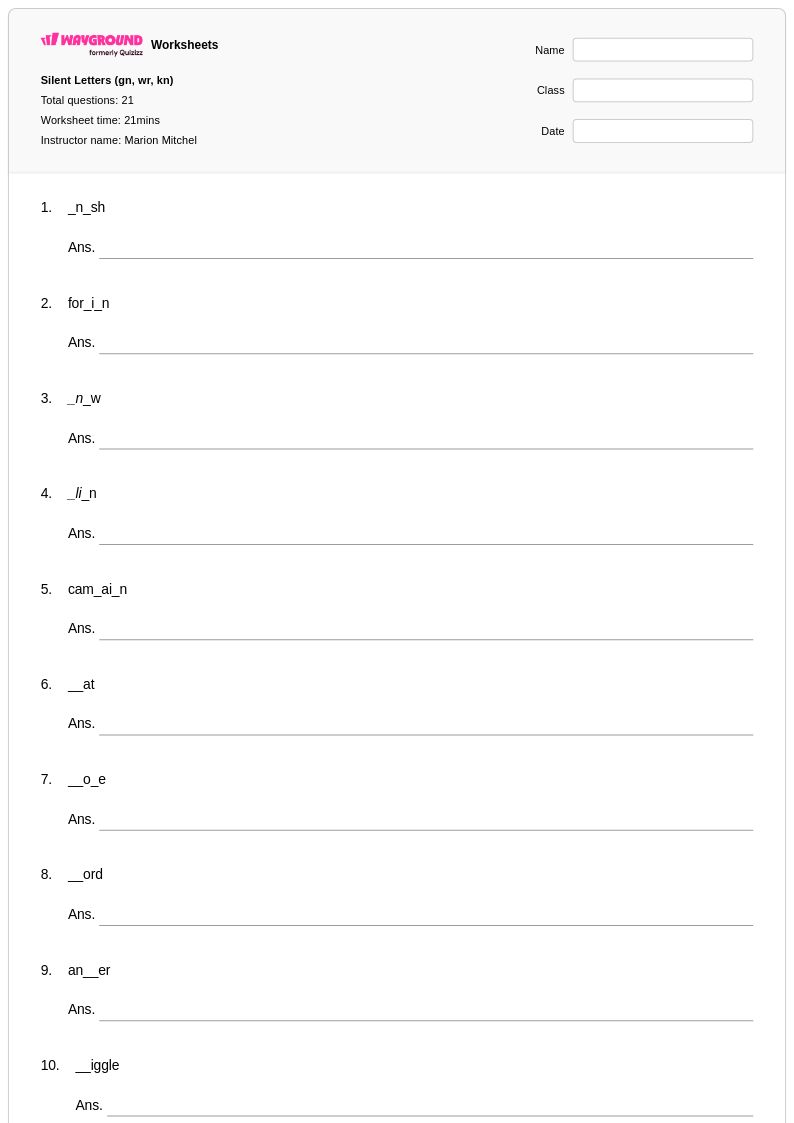
21 Q
4th
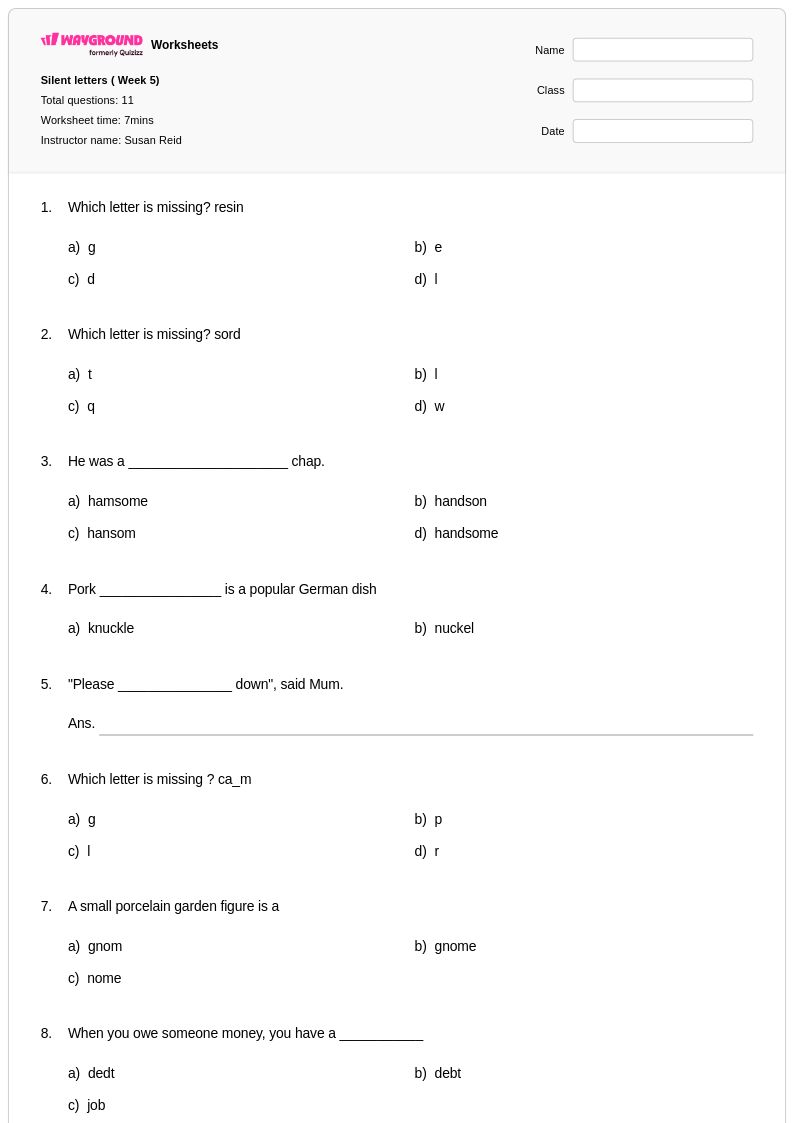
11 Q
4th - 5th
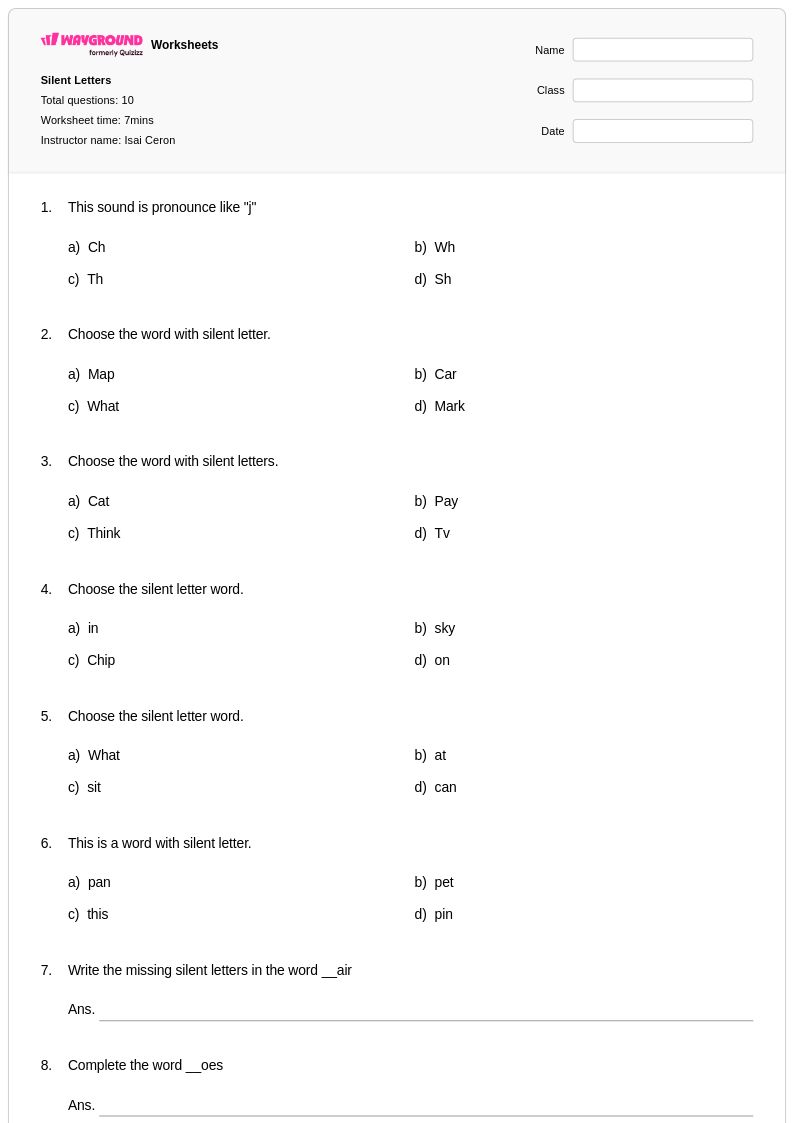
10 Q
2nd
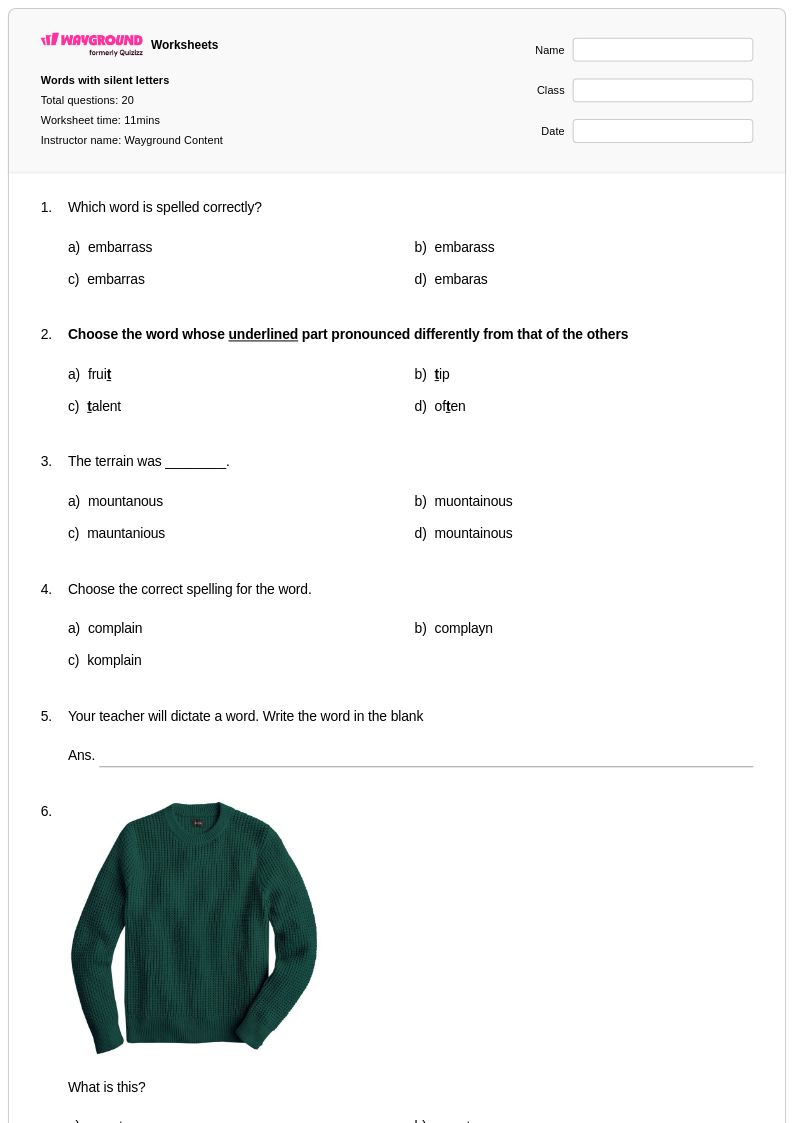
20 Q
3rd
20 Q
3rd
25 Q
1st - Uni
10 Q
PD
10 Q
2nd
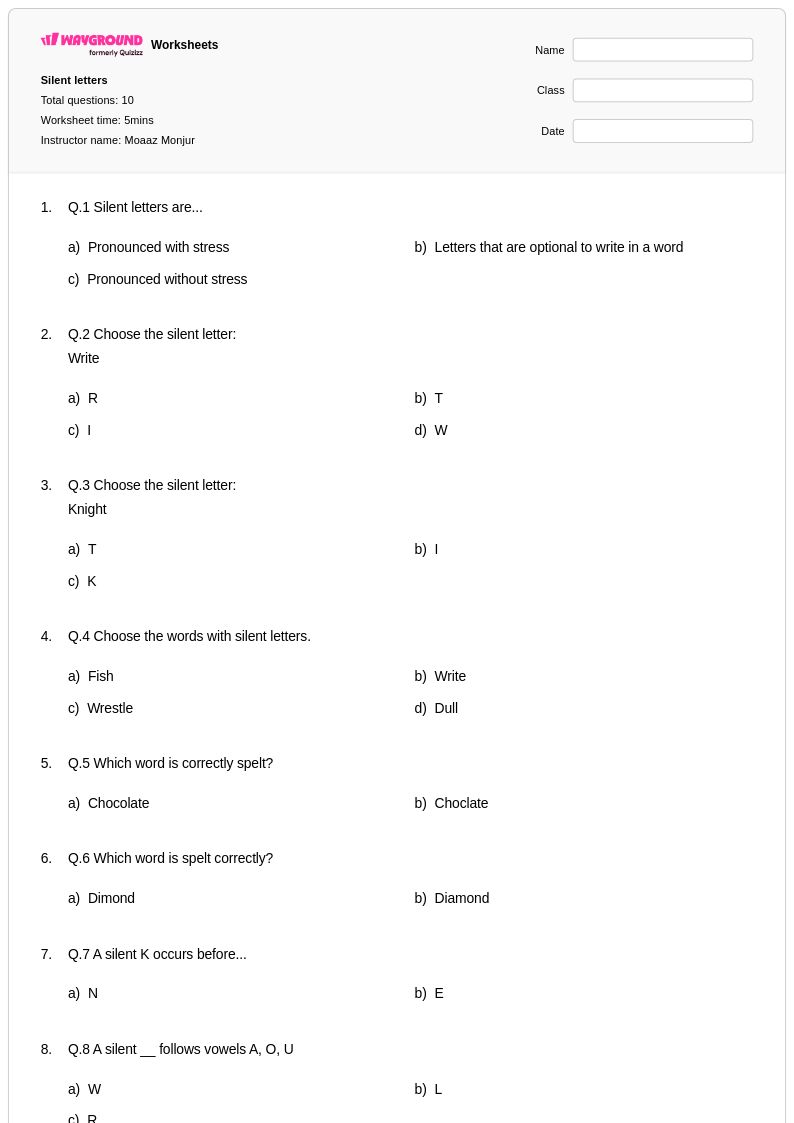
10 Q
4th
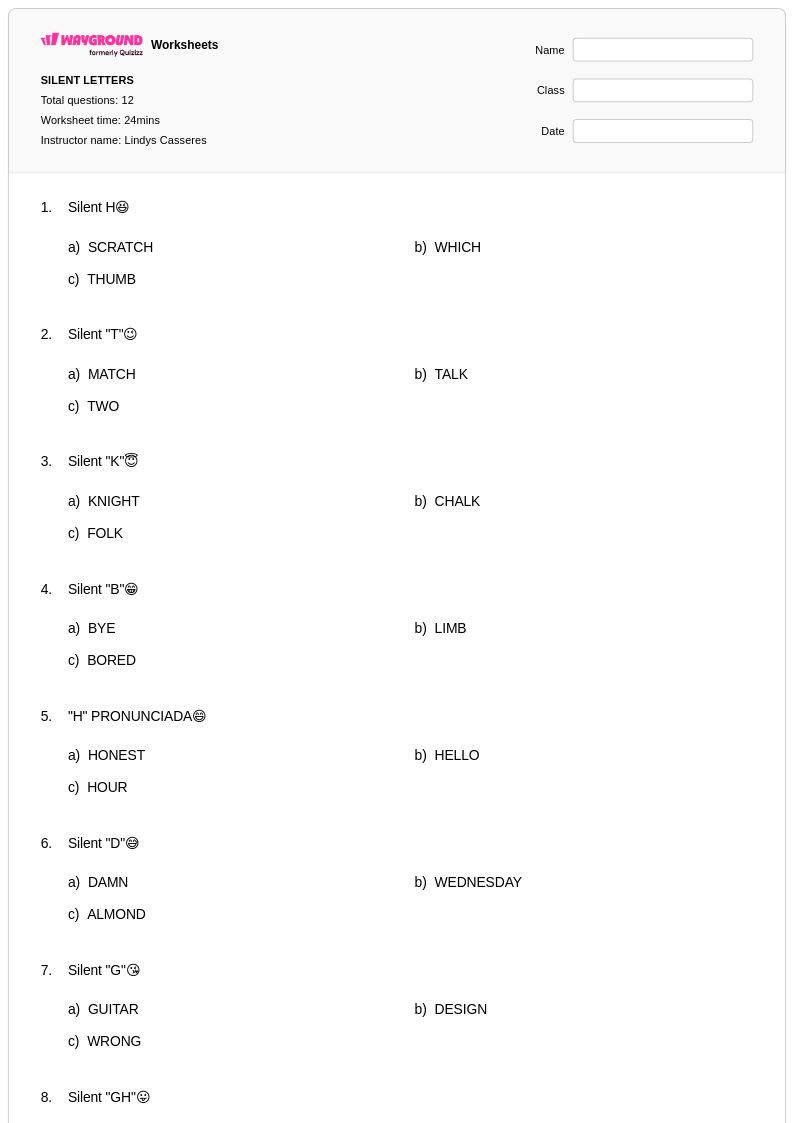
12 Q
KG
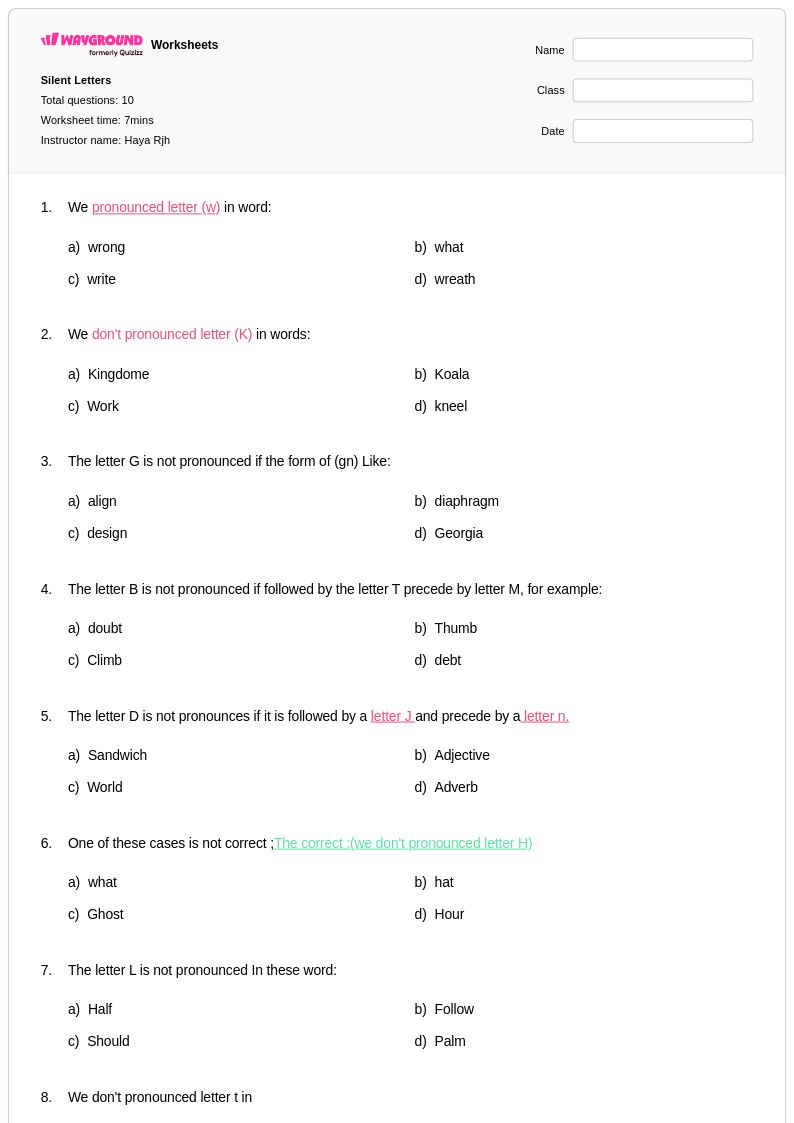
10 Q
9th - Uni
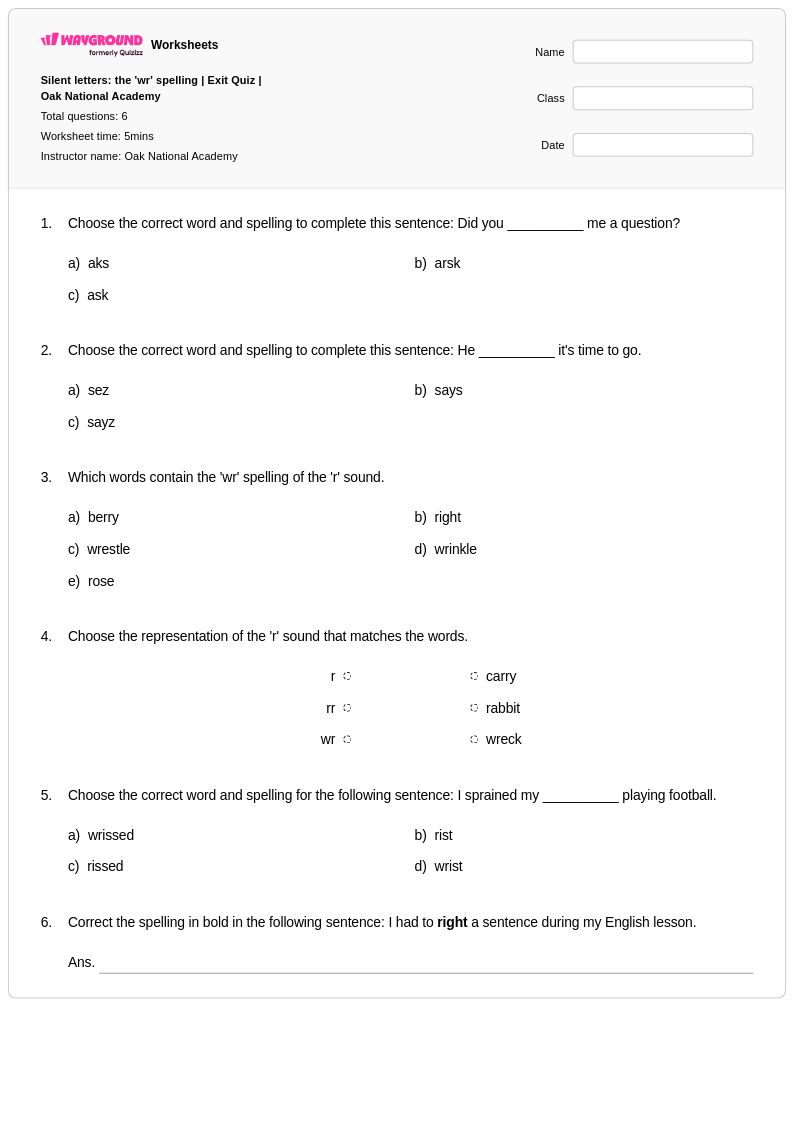
6 Q
1st - Uni
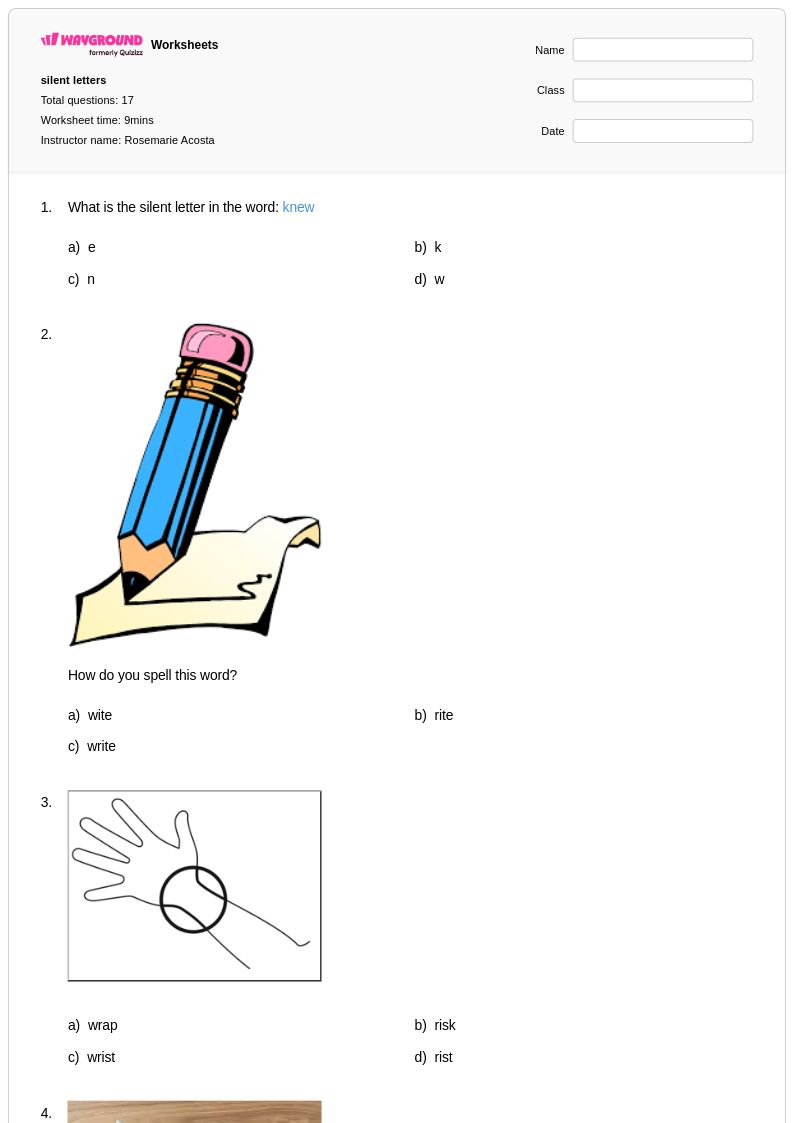
17 Q
2nd
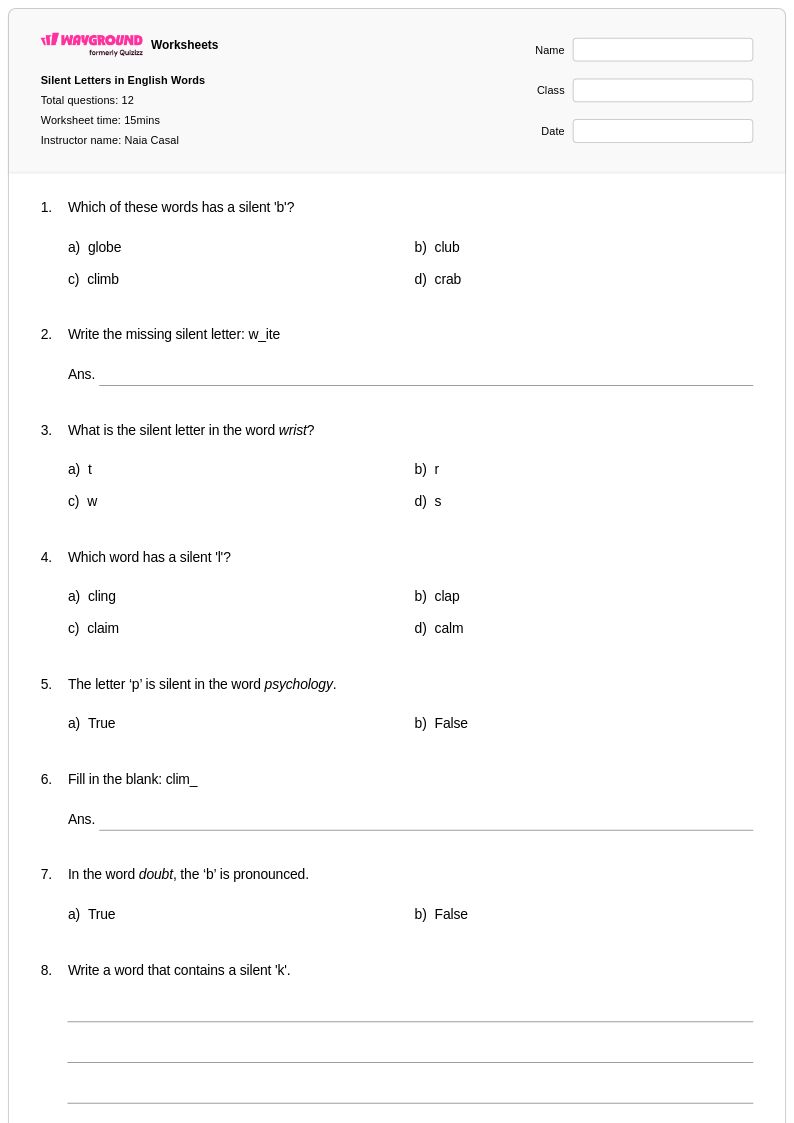
12 Q
6th
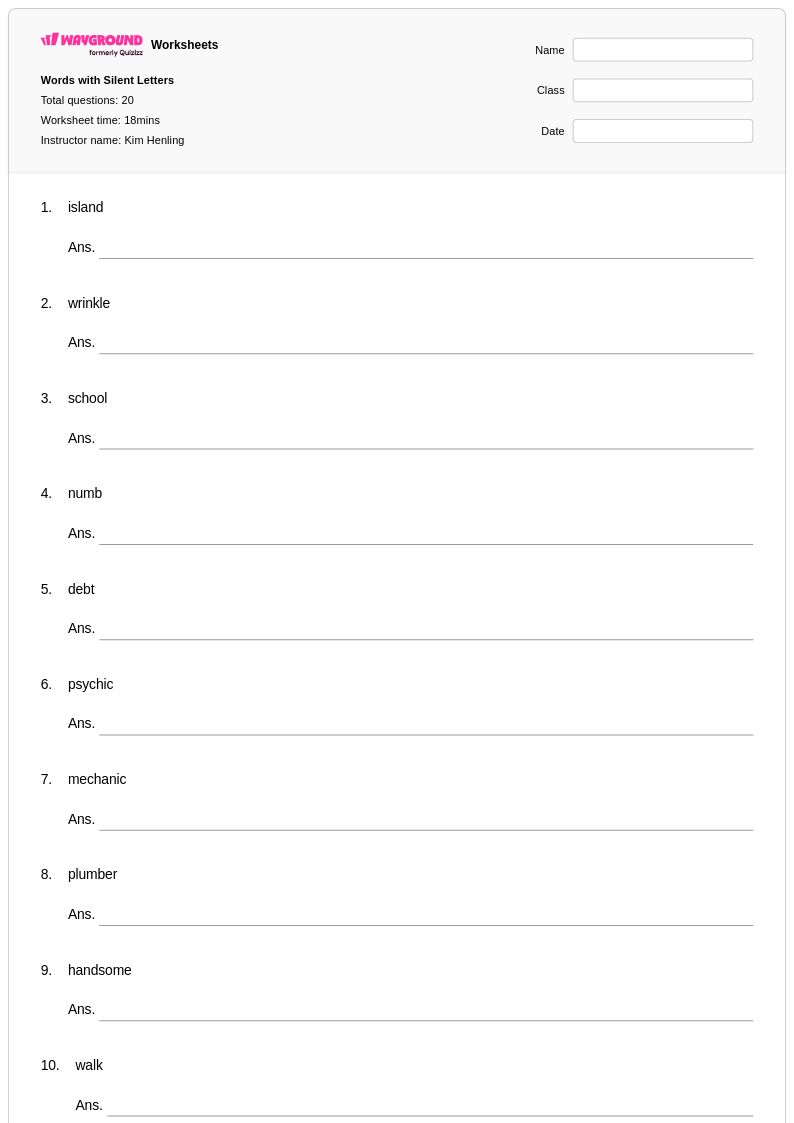
20 Q
4th
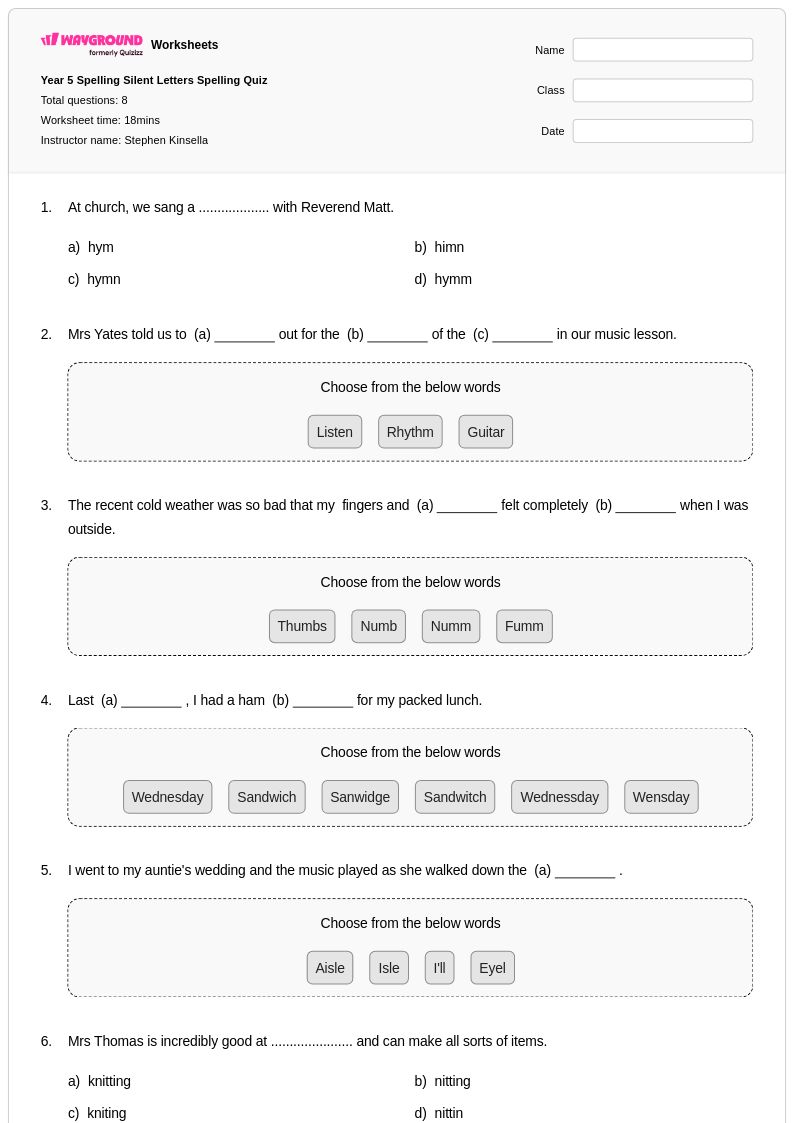
8 Q
4th
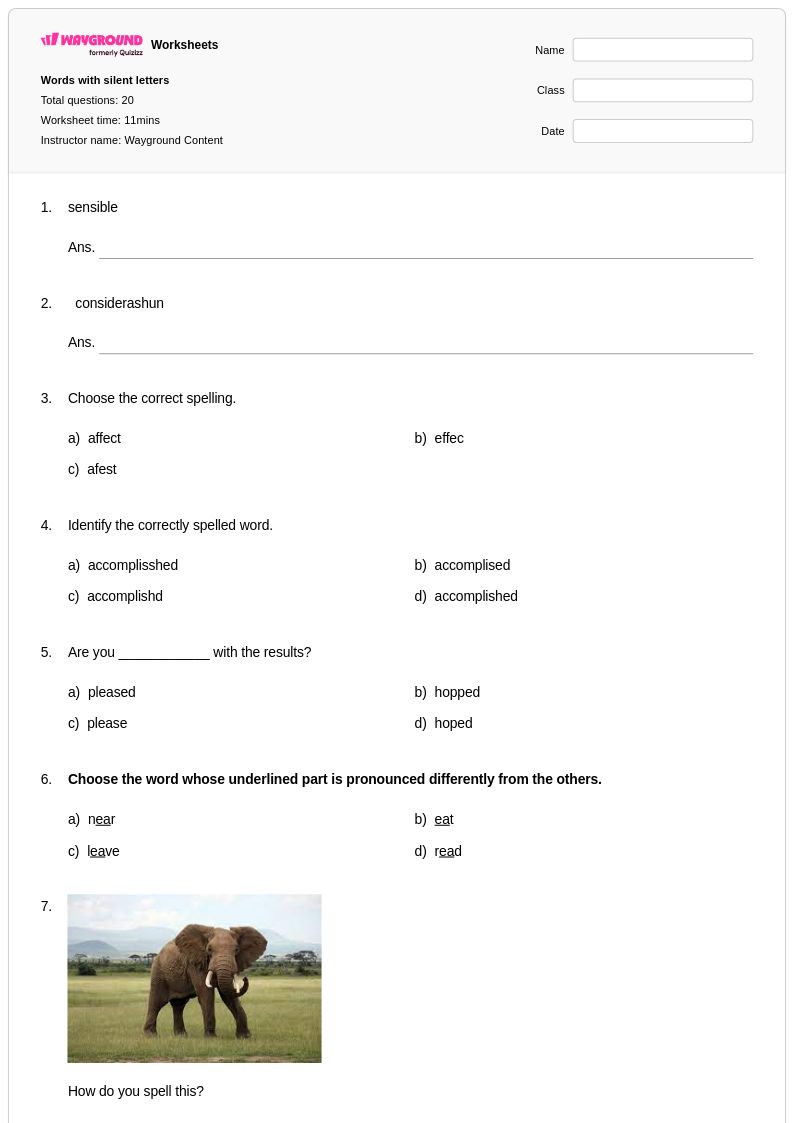
20 Q
3rd
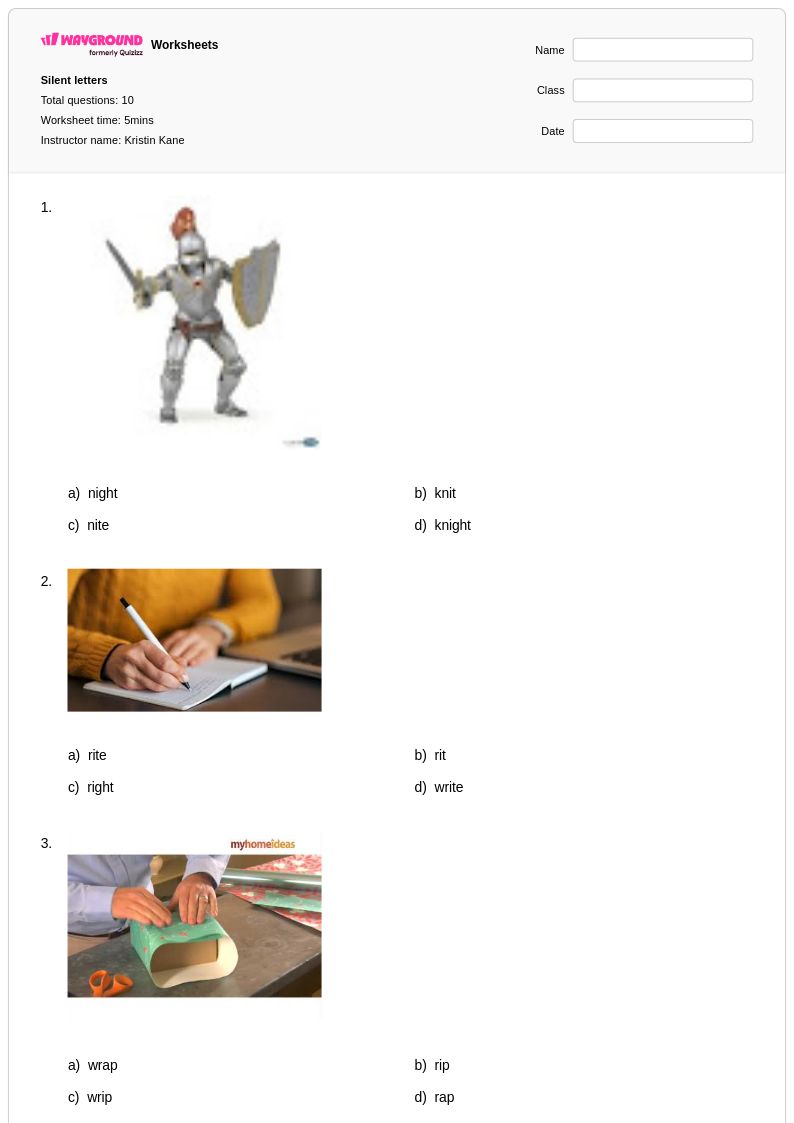
10 Q
1st - 3rd
Explore Silent Letters Worksheets by Grades
Explore Other Subject Worksheets for kindergarten
Explore printable Silent Letters worksheets for Kindergarten
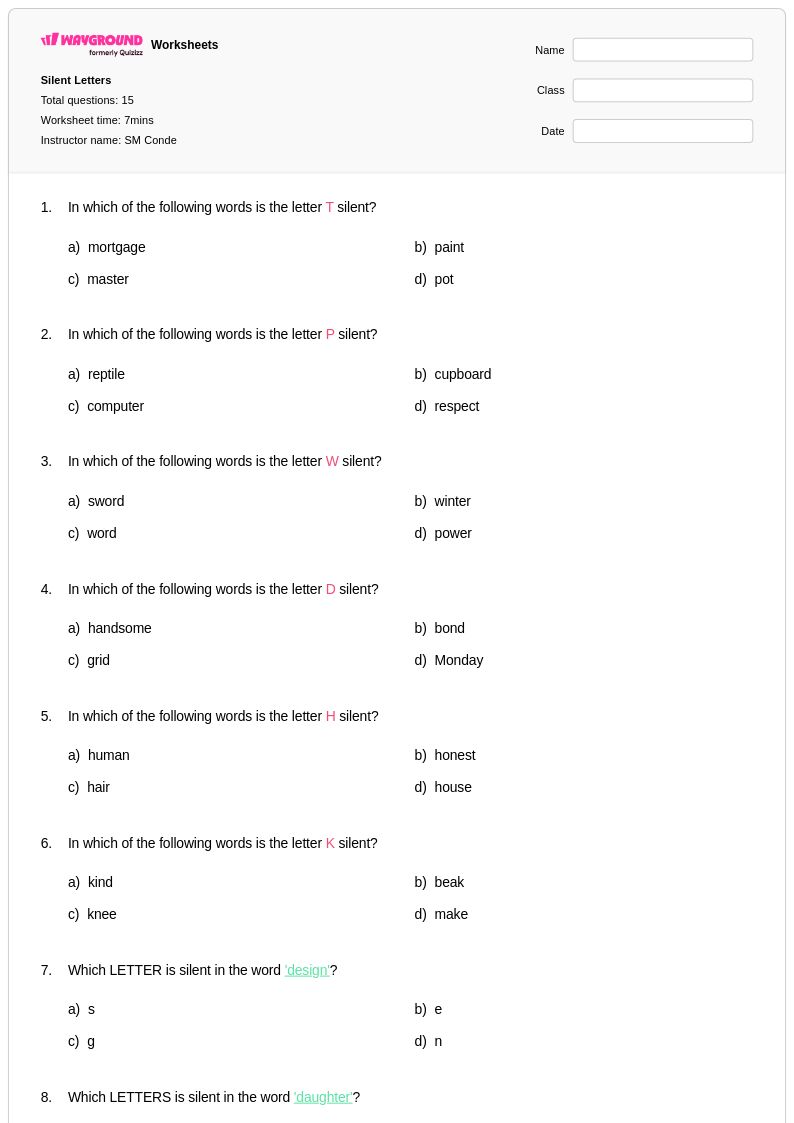
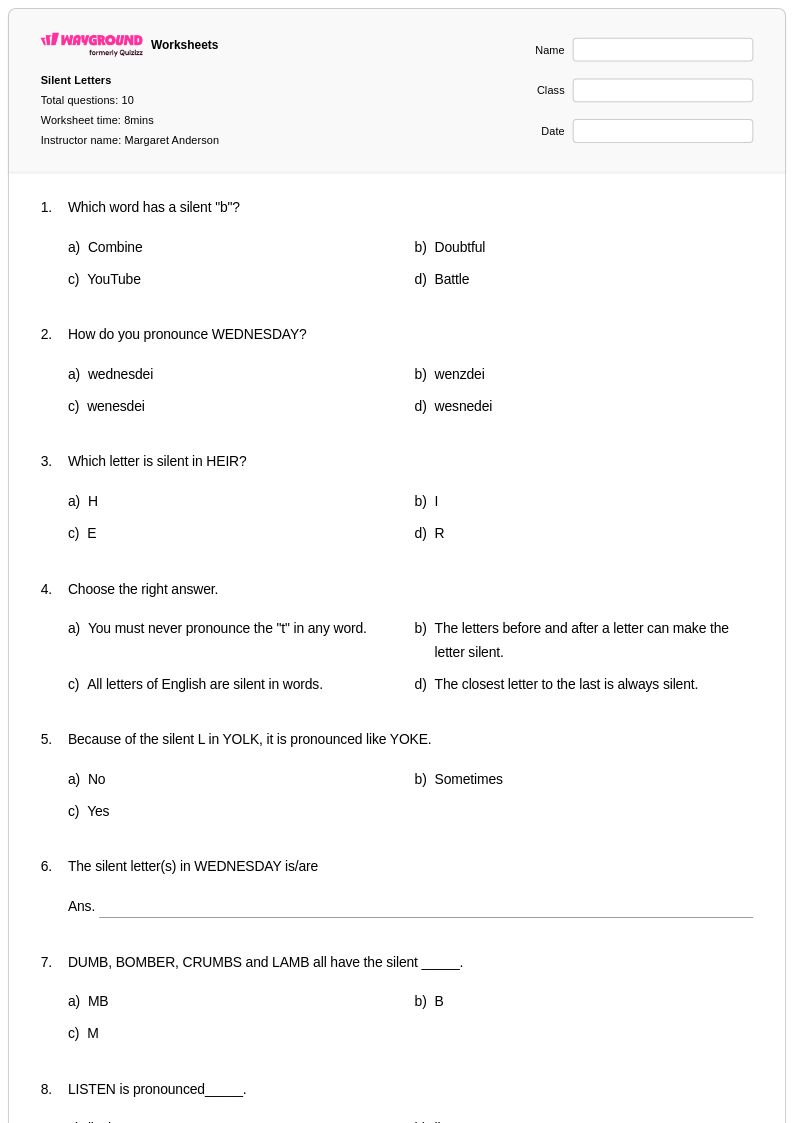
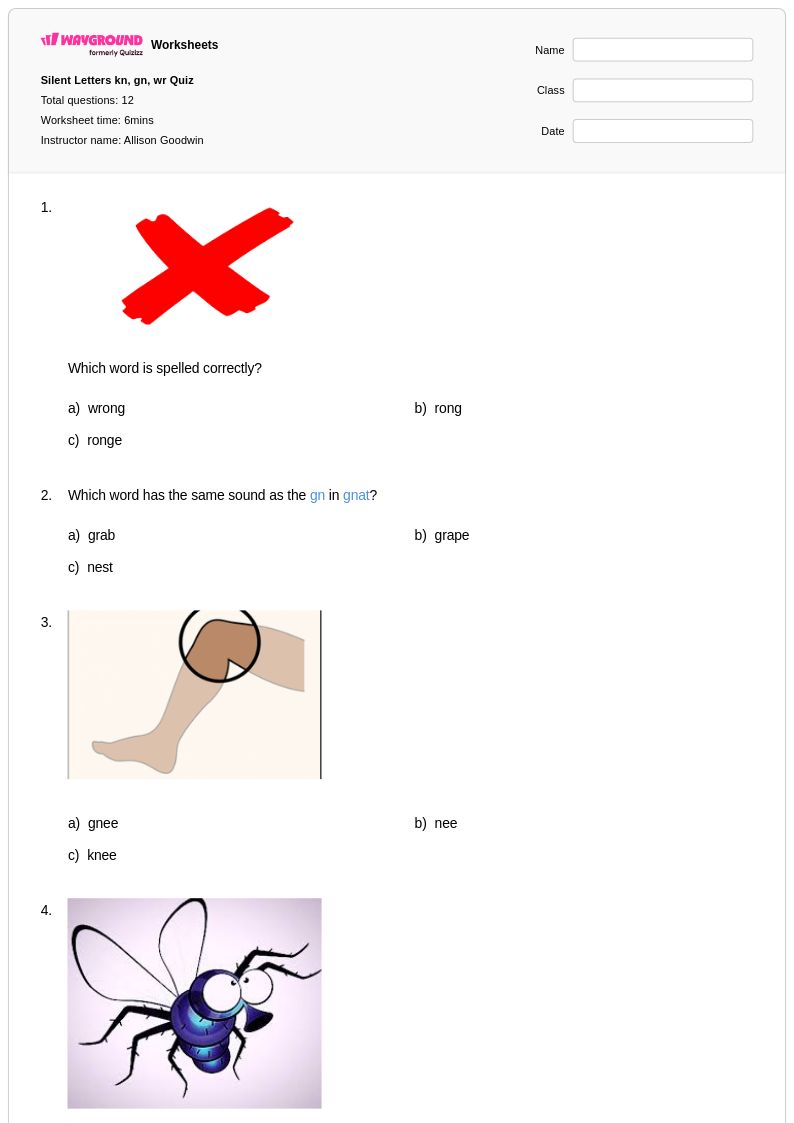
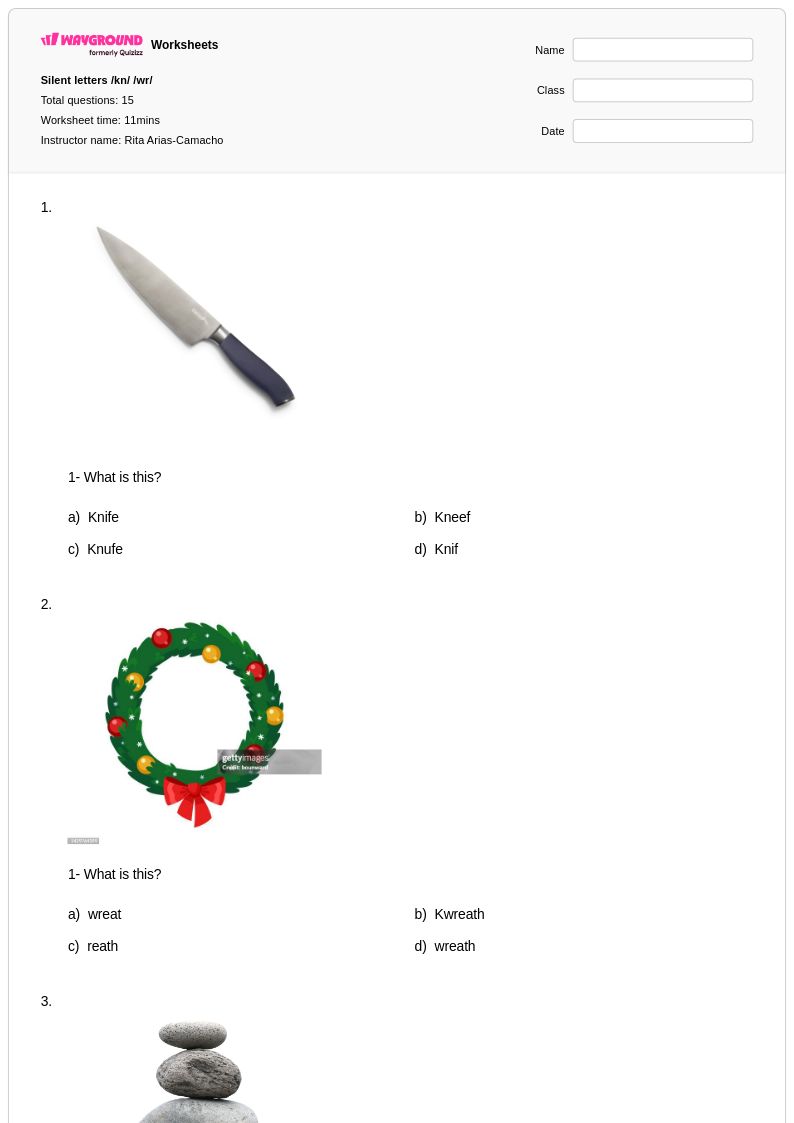
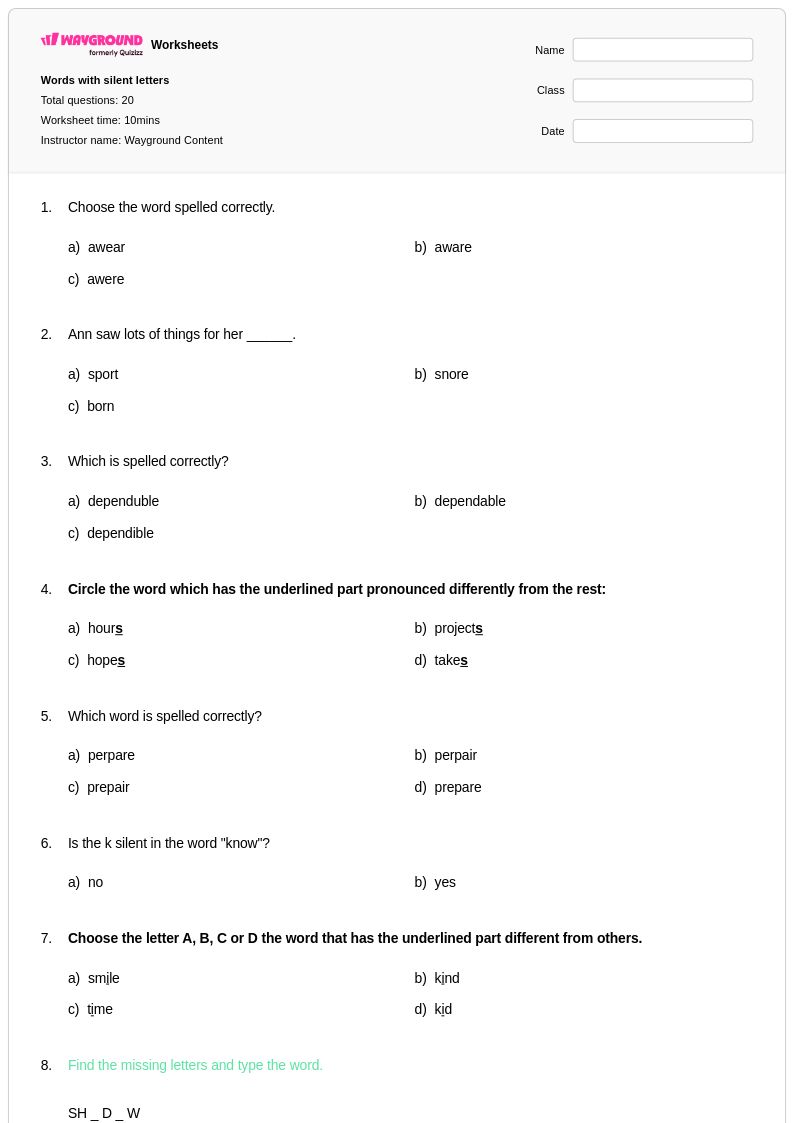
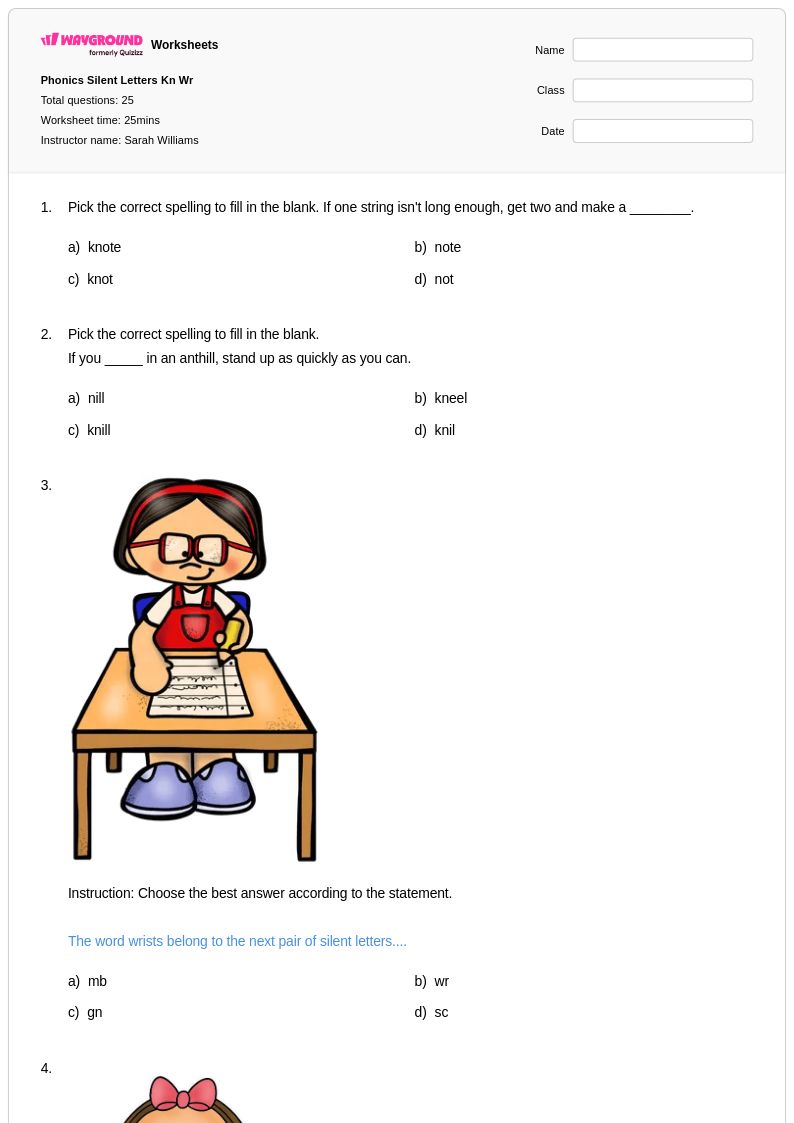
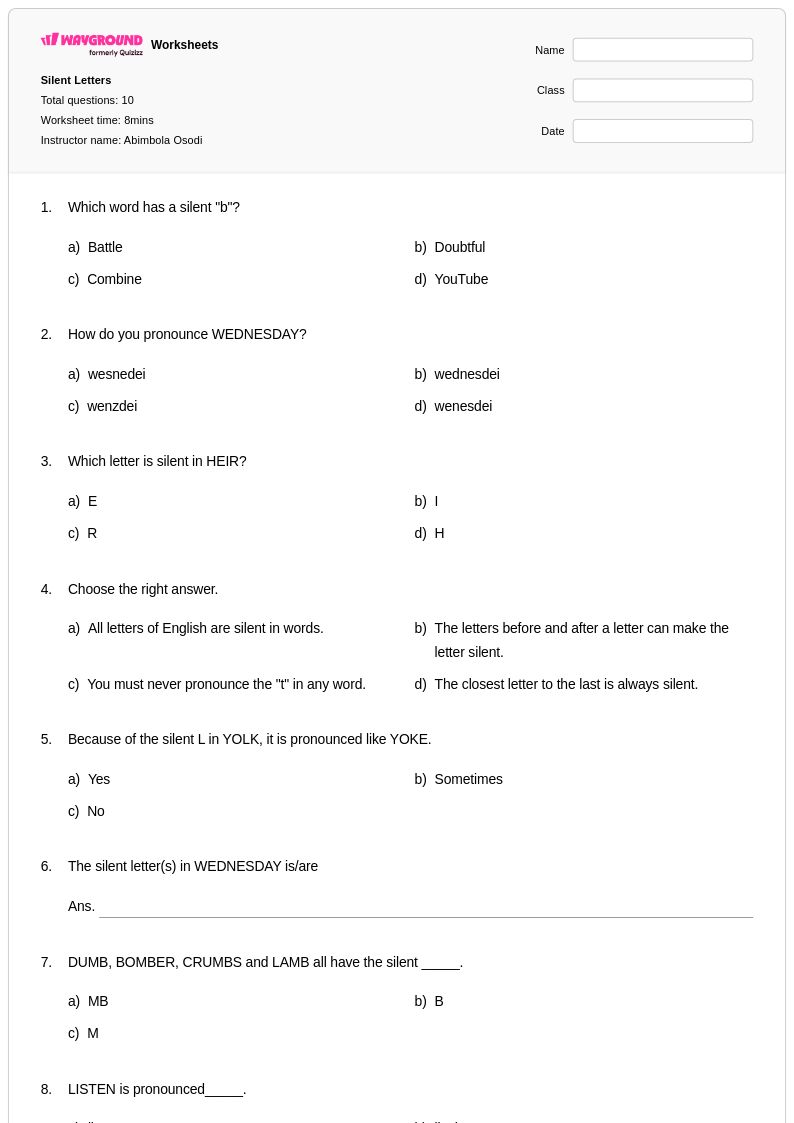
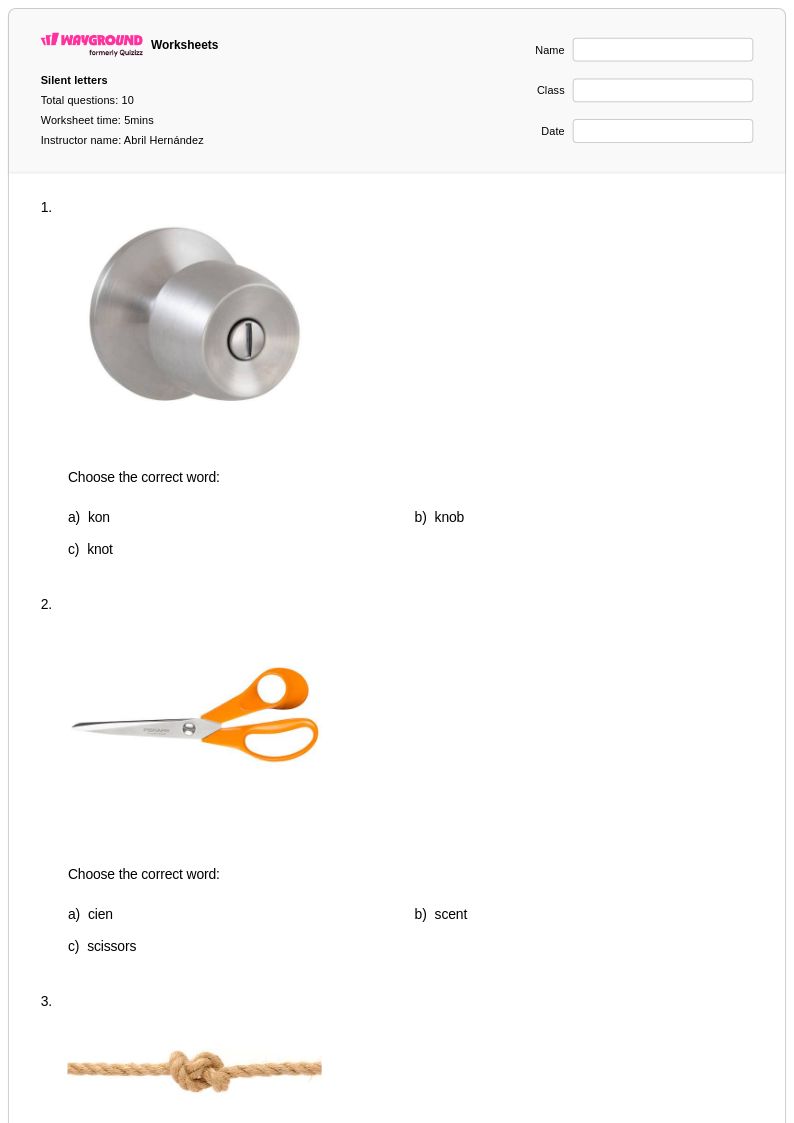
Silent letters present one of the most challenging aspects of early literacy development for kindergarten students, as these invisible sounds require learners to recognize patterns and memorize exceptions to standard phonetic rules. Wayground's comprehensive collection of silent letter worksheets provides kindergarten teachers with expertly designed practice problems that systematically introduce common silent letter patterns such as silent 'b' in words like "lamb" and "thumb," silent 'k' in "knee" and "knife," and silent 'l' in "talk" and "walk." These free printables strengthen essential reading and spelling skills by helping young learners identify when letters appear in words but remain unspoken, building the foundational knowledge necessary for accurate word recognition and pronunciation. Each worksheet includes a detailed answer key and focuses on age-appropriate vocabulary, ensuring kindergarten students can successfully engage with the material while developing confidence in their emerging literacy abilities.
Wayground, formerly Quizizz, empowers educators with millions of teacher-created resources specifically designed to support silent letter instruction at the kindergarten level. The platform's robust search and filtering capabilities allow teachers to quickly locate worksheets that align with their curriculum standards and match their students' developmental needs, while differentiation tools enable customization for learners requiring additional support or enrichment opportunities. These silent letter resources are available in both printable pdf formats for traditional classroom use and digital formats for interactive learning experiences, providing flexibility for diverse teaching environments and learning preferences. Teachers can seamlessly integrate these worksheets into their lesson planning for systematic skill practice, targeted remediation sessions, or independent learning centers, ensuring every kindergarten student receives the focused practice necessary to master these complex phonetic concepts.