
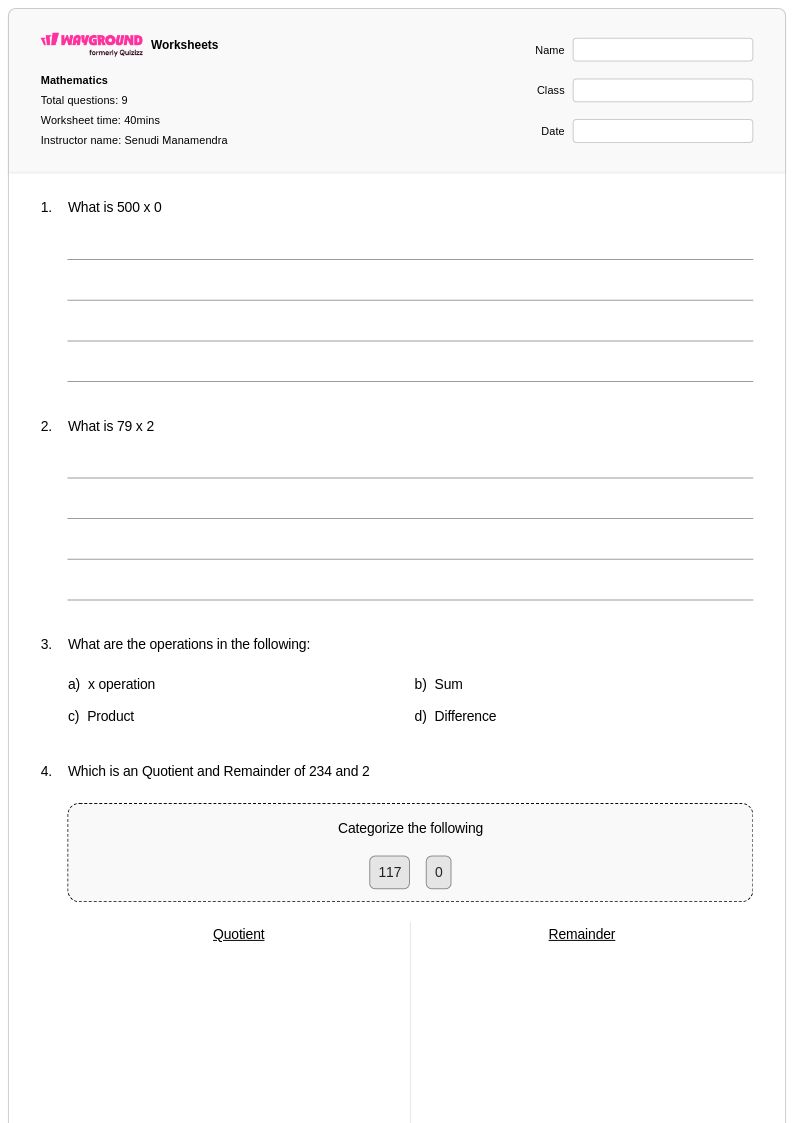
9 Q
3rd
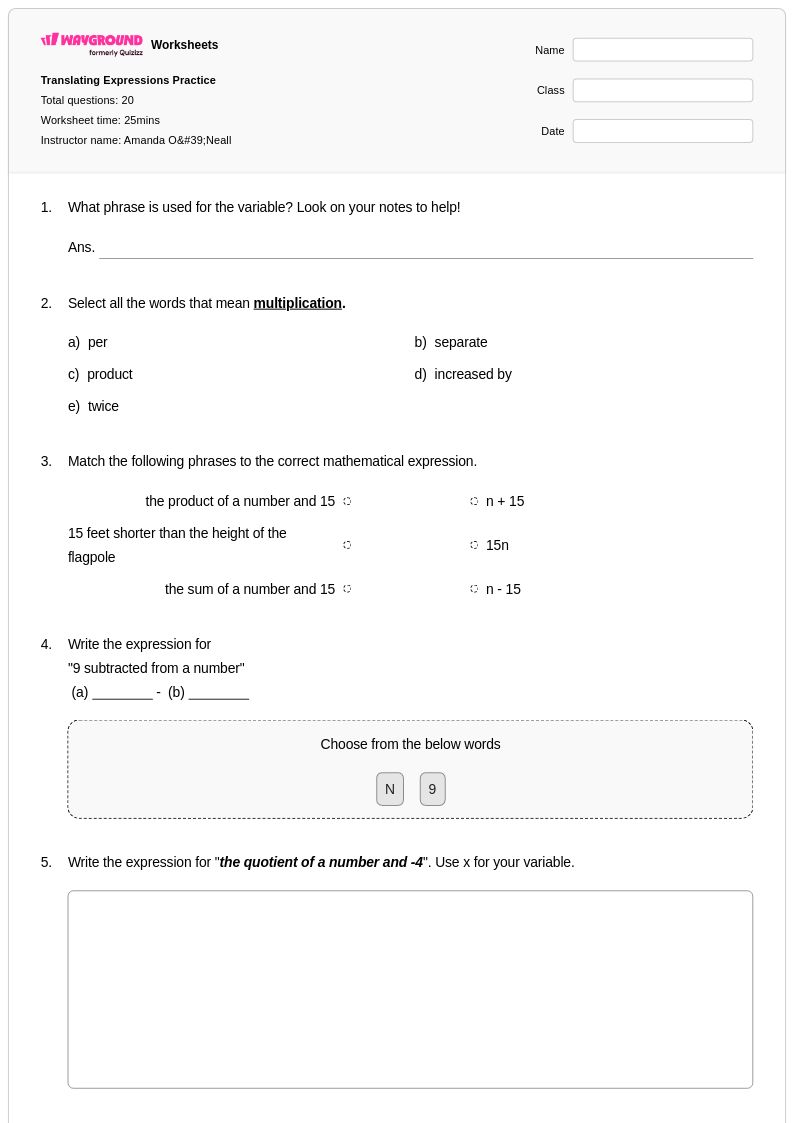
20 Q
7th - Uni
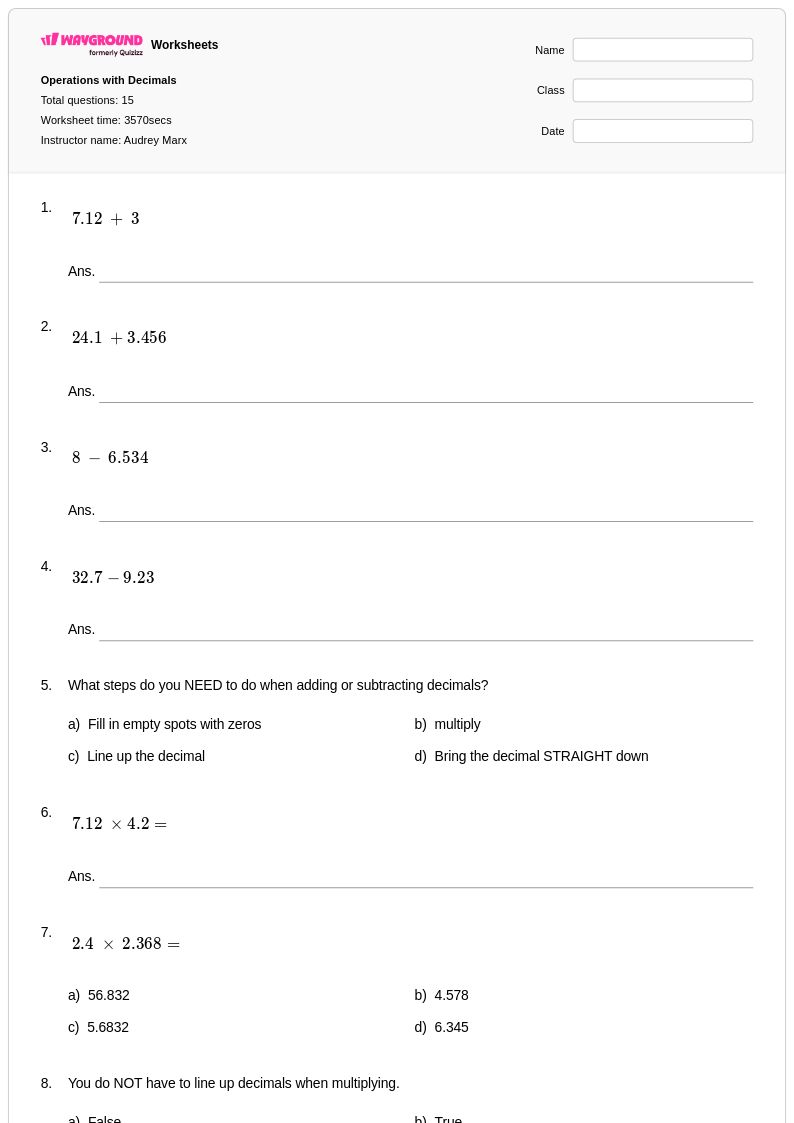
15 Q
6th - 8th
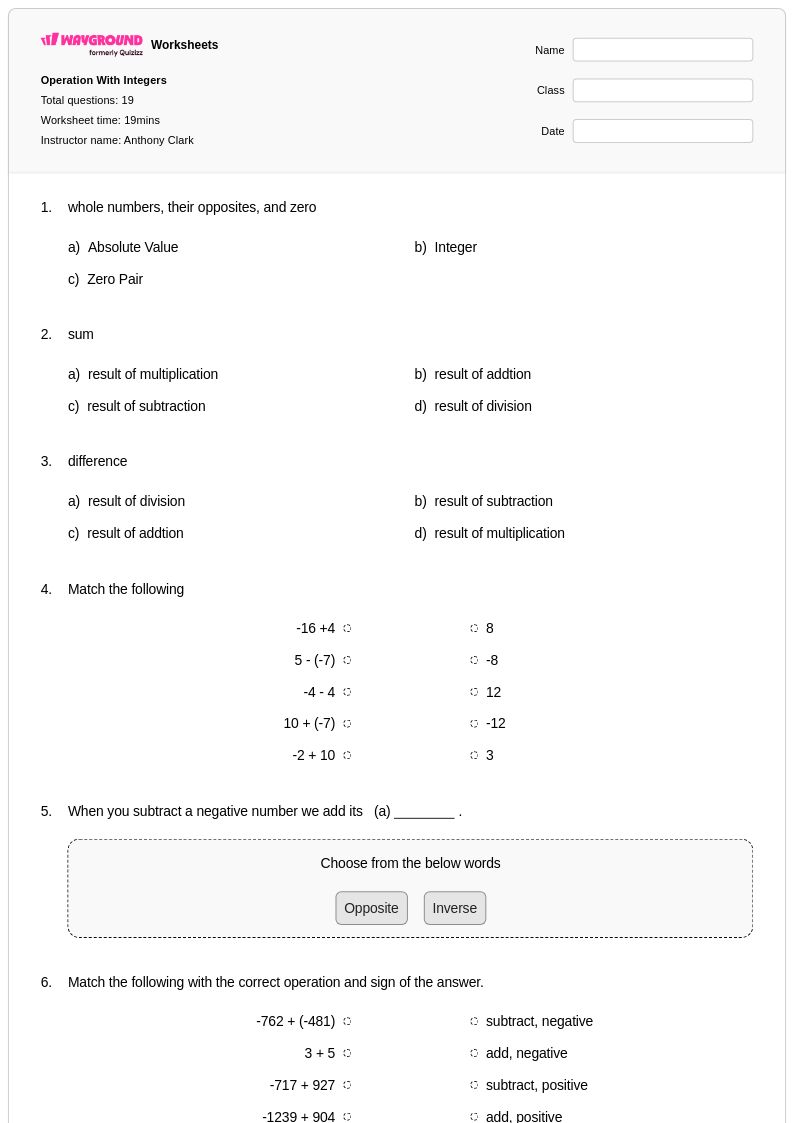
19 Q
7th - Uni
20 Q
6th - Uni
20 Q
5th - Uni
20 Q
KG - Uni
17 Q
5th
12 Q
6th
12 Q
7th
20 Q
3rd
17 Q
5th
14 Q
8th
20 Q
7th
20 Q
12th
15 Q
6th
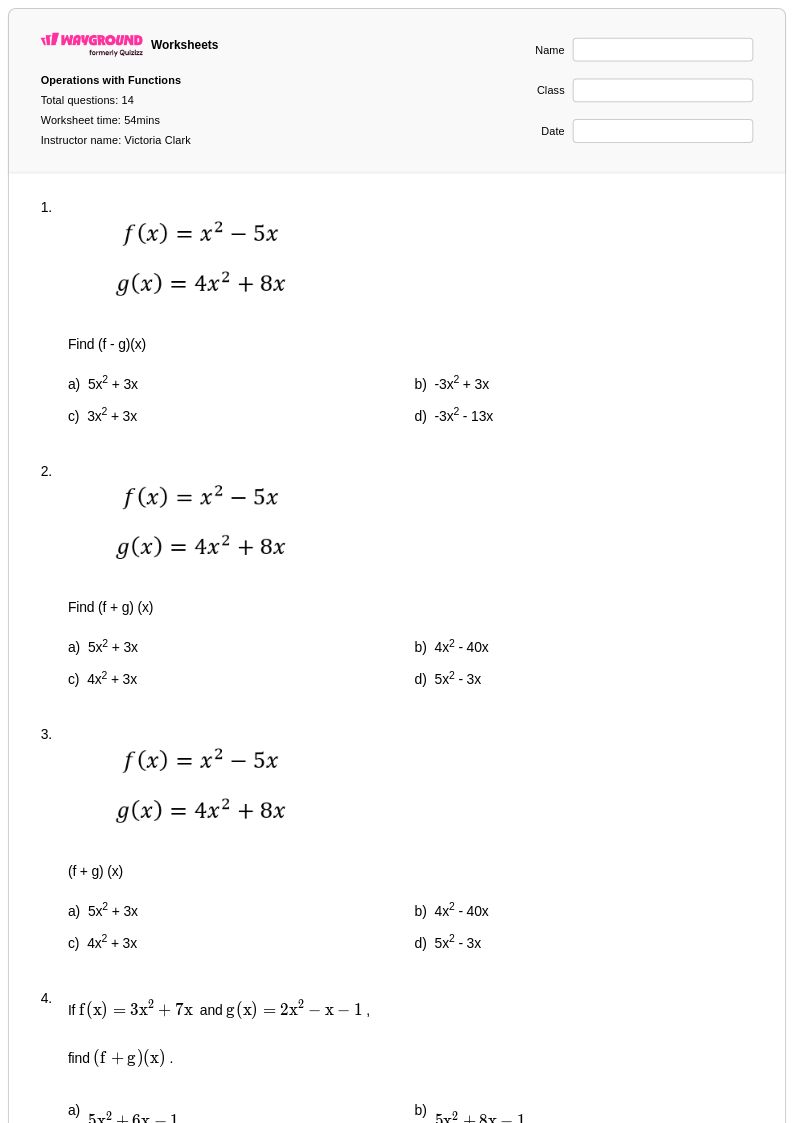
14 Q
9th
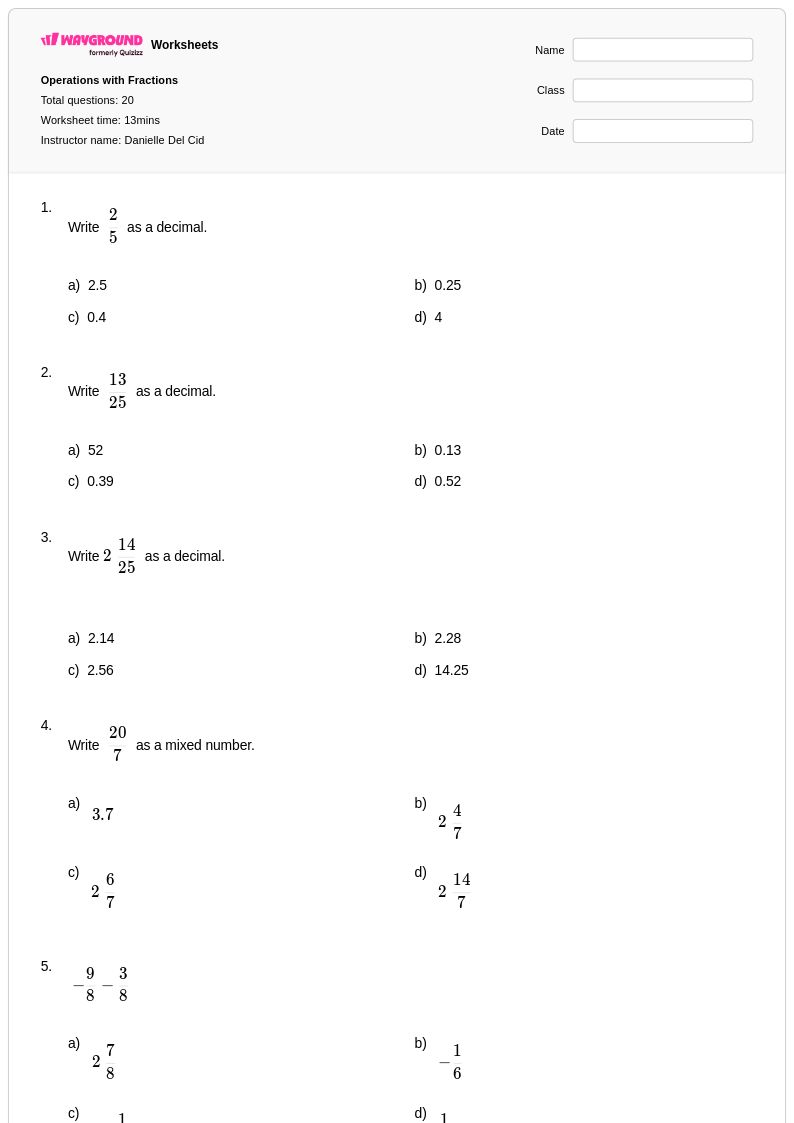
20 Q
7th

13 Q
7th
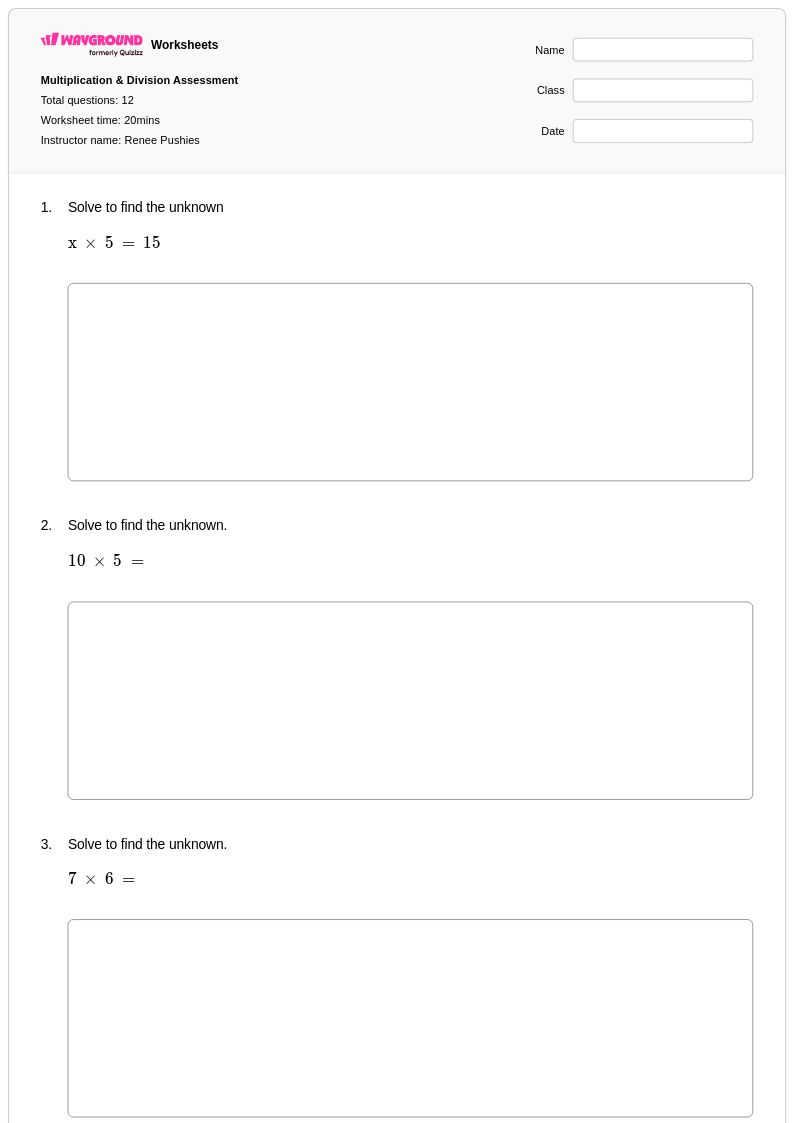
12 Q
3rd
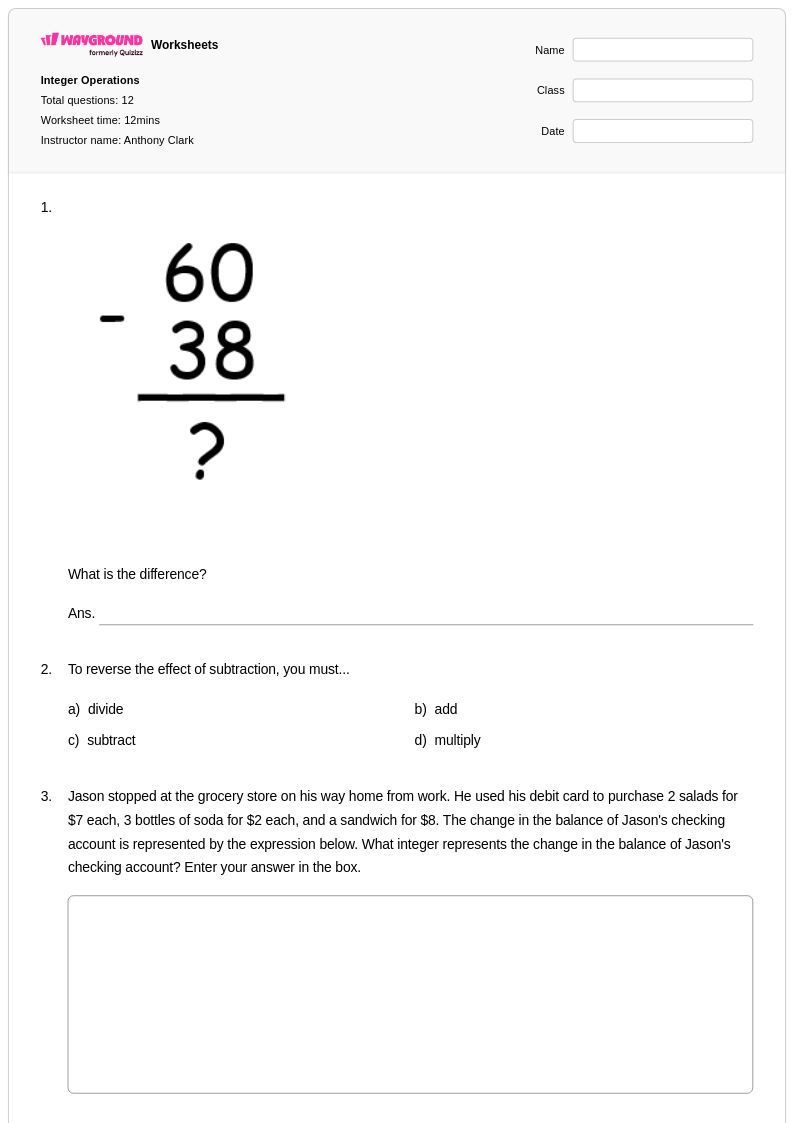
12 Q
6th - Uni
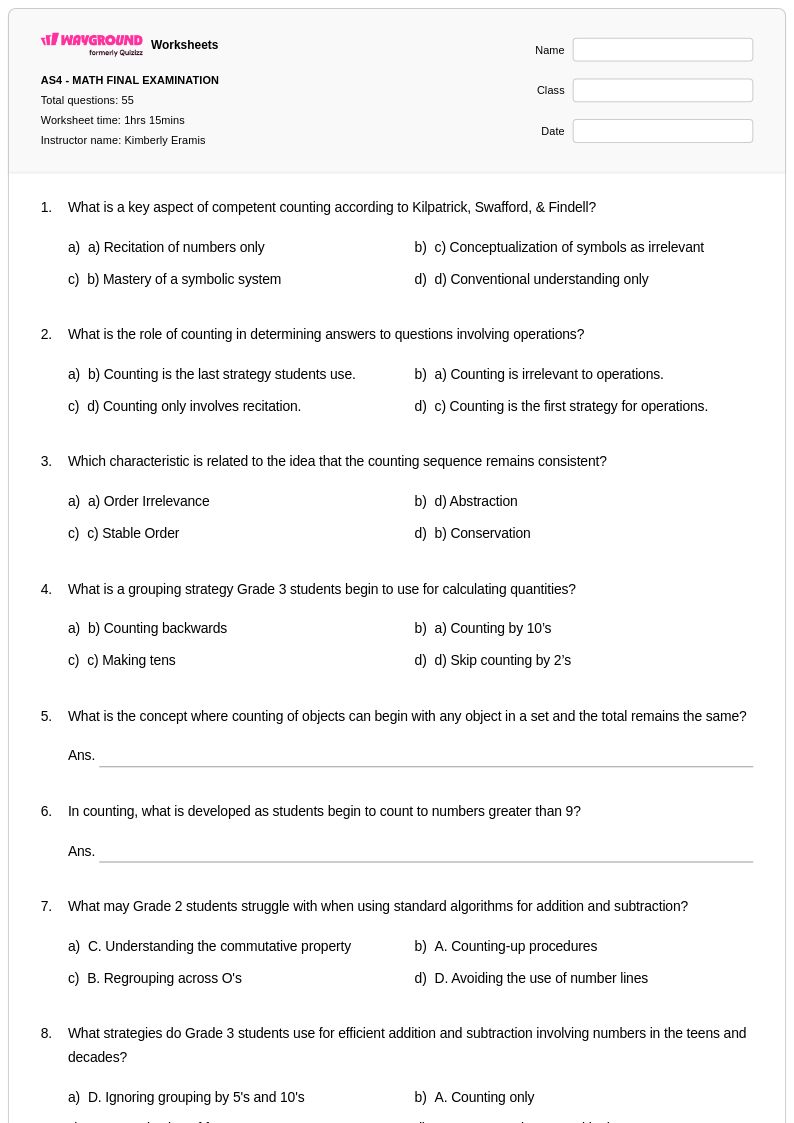
55 Q
Uni
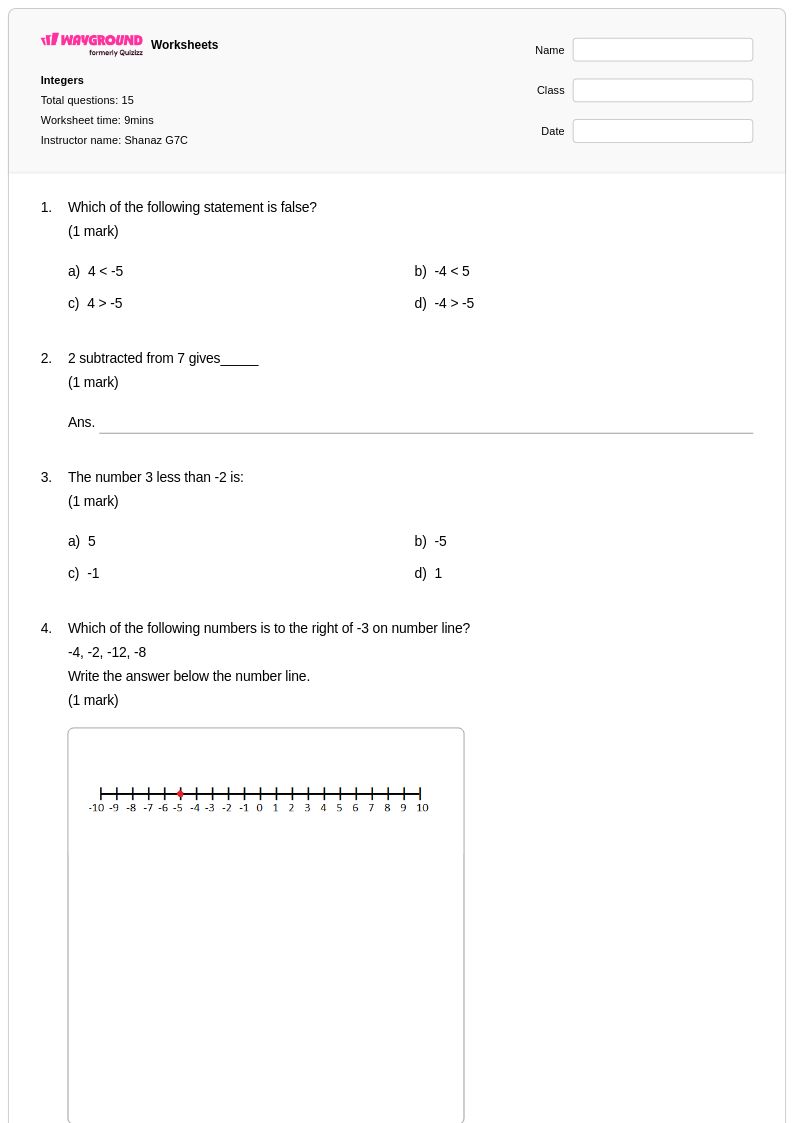
15 Q
6th - 7th
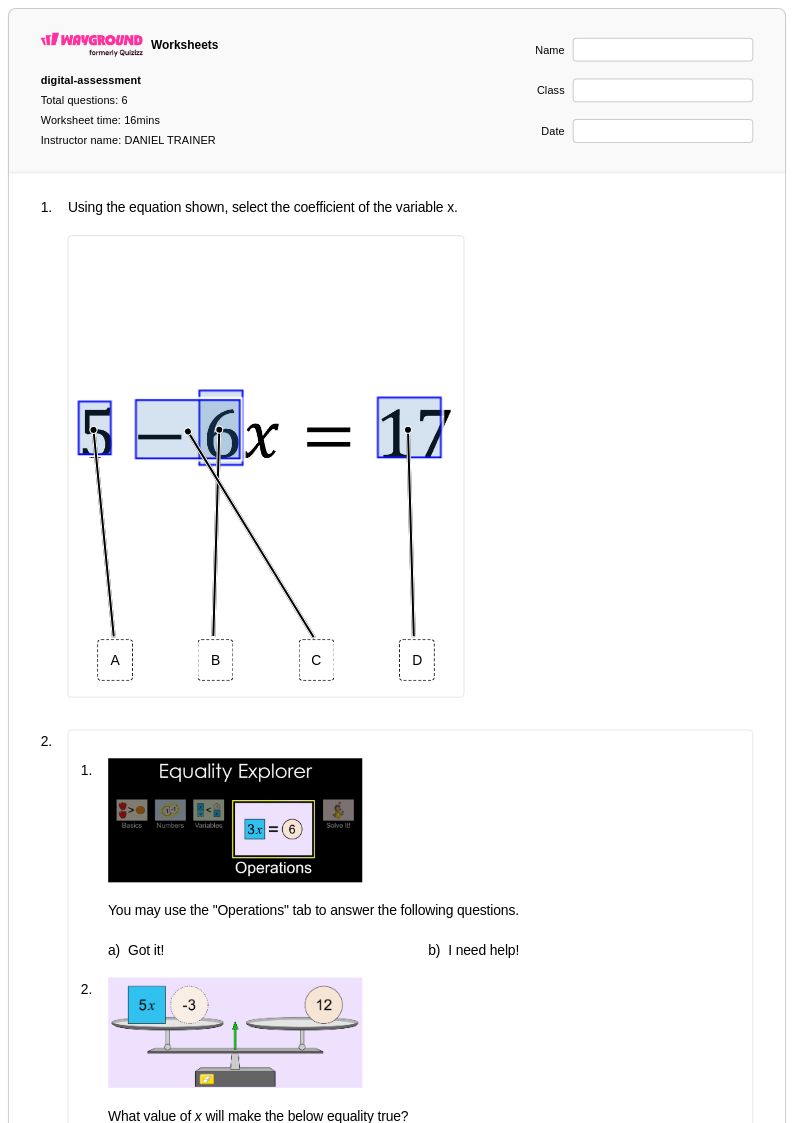
11 Q
8th - Uni
Explore Counting and Operations with Manipulatives Worksheets by Grades
Explore Other Subject Worksheets for kindergarten
Explore printable Counting and Operations with Manipulatives worksheets for Kindergarten
Counting and Operations with Manipulatives worksheets for Kindergarten students provide essential foundational practice that bridges concrete learning experiences with abstract mathematical concepts. These carefully designed resources from Wayground help young learners develop crucial number sense skills through hands-on activities that incorporate visual aids, physical objects, and interactive elements. Students strengthen their ability to count objects accurately, understand one-to-one correspondence, perform basic addition and subtraction operations, and recognize number patterns through engaging practice problems that make mathematics tangible and accessible. Each worksheet comes with a comprehensive answer key and is available as a free pdf download, making these printables invaluable tools for reinforcing mathematical understanding through manipulative-based learning experiences.
Wayground's extensive collection of teacher-created resources supports educators in delivering effective Kindergarten mathematics instruction through millions of expertly crafted materials that emphasize counting and operations with manipulatives. The platform's robust search and filtering capabilities allow teachers to quickly locate worksheets that align with specific learning standards and match their students' developmental needs. These differentiation tools enable seamless customization for remediation and enrichment activities, while the flexible format options including both printable and digital pdf versions accommodate diverse classroom environments and learning preferences. Teachers benefit from streamlined lesson planning as they access consistently high-quality materials that support skill practice through structured manipulative activities, ensuring students build solid mathematical foundations through concrete, visual, and symbolic representations of number concepts.
FAQs
How do I teach counting and operations with manipulatives in kindergarten?
What manipulative activities help kindergarten students practice counting, addition, and subtraction?
What mistakes do kindergarten students commonly make when counting objects?
How can I use these kindergarten counting and operations worksheets?
How do kindergarten counting and operations with manipulatives align with Common Core?
What grade level are counting and operations with manipulatives taught?
How can I differentiate these kindergarten math worksheets?