
25Q
8th - Uni
25Q
10th - Uni
20Q
7th - Uni
25Q
9th - Uni
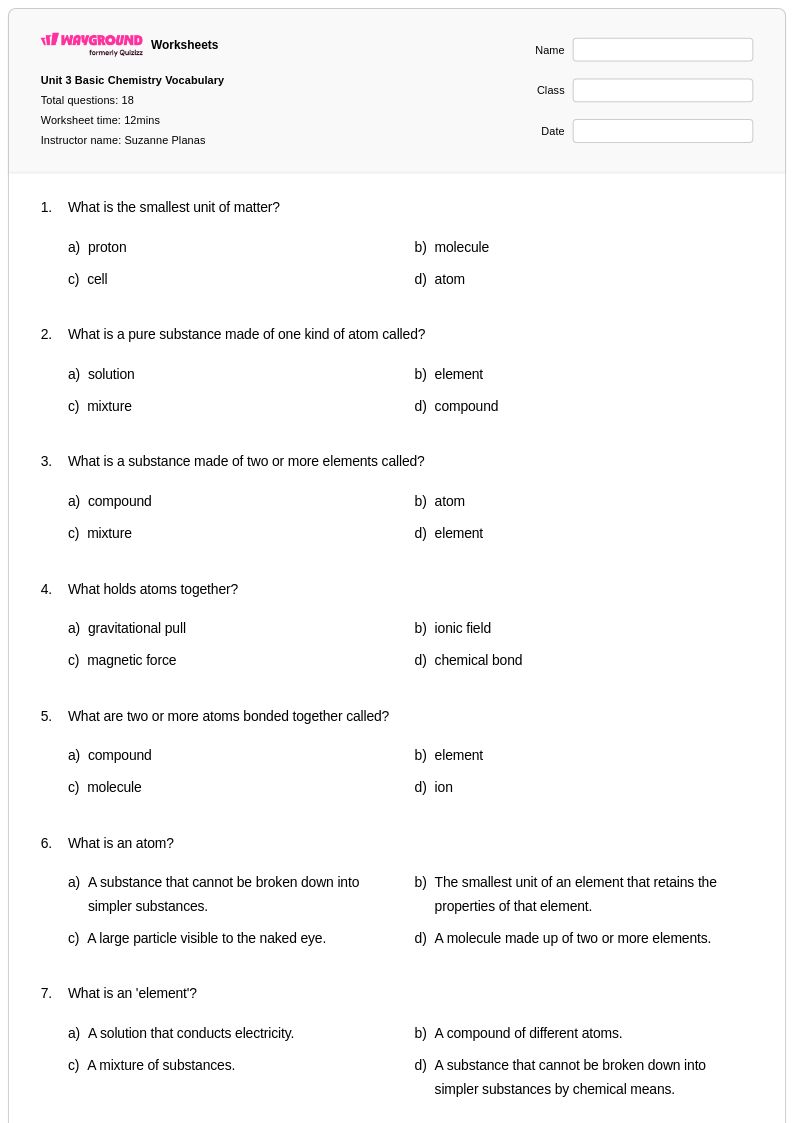
18Q
10th - Uni
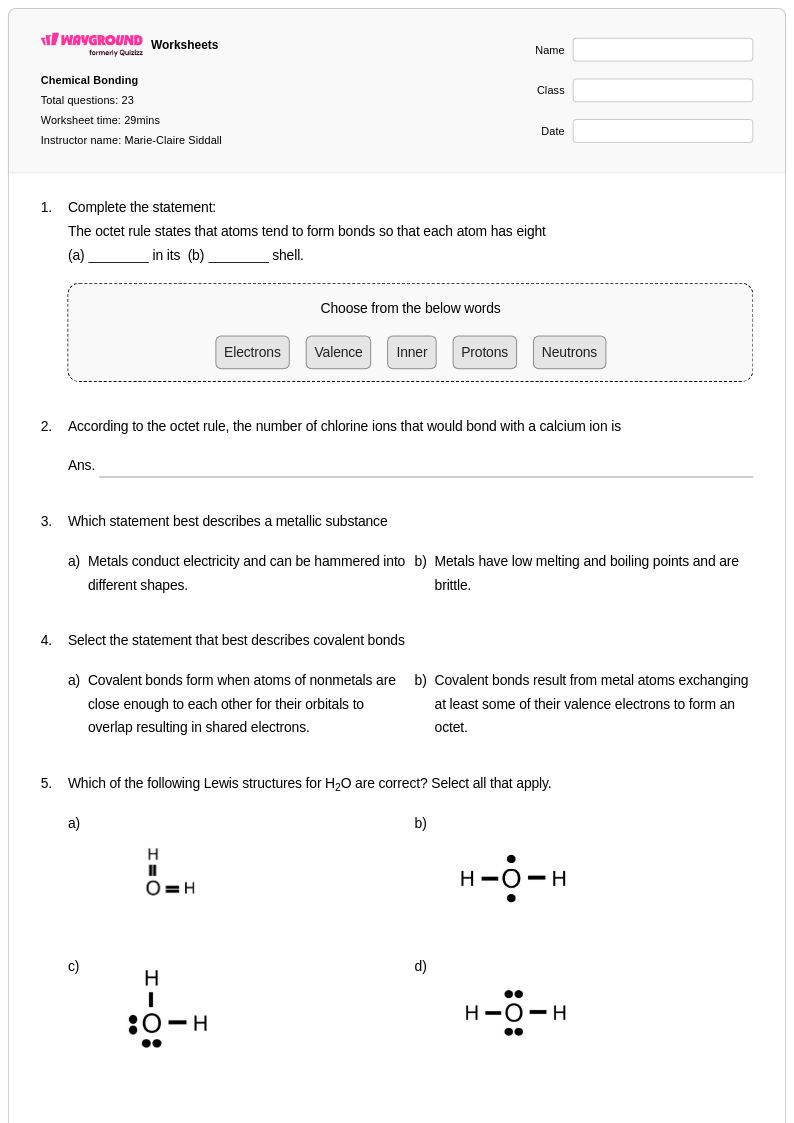
30Q
10th - Uni
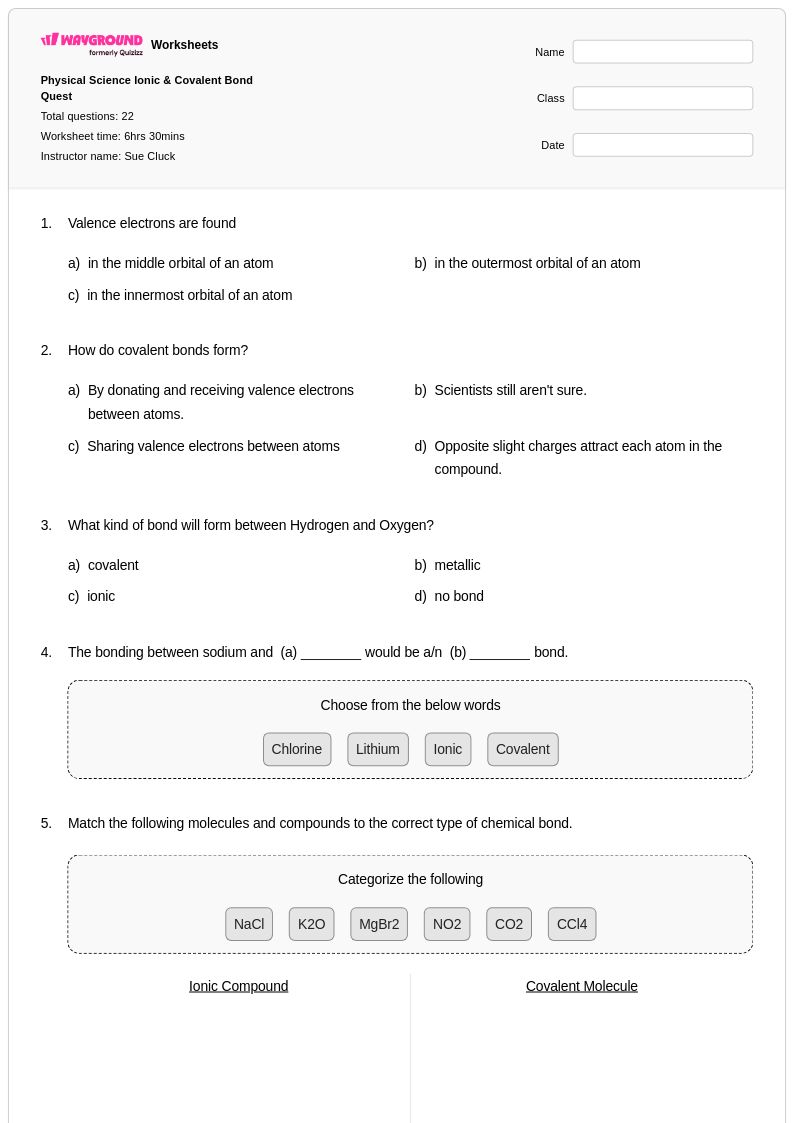
22Q
9th - 12th
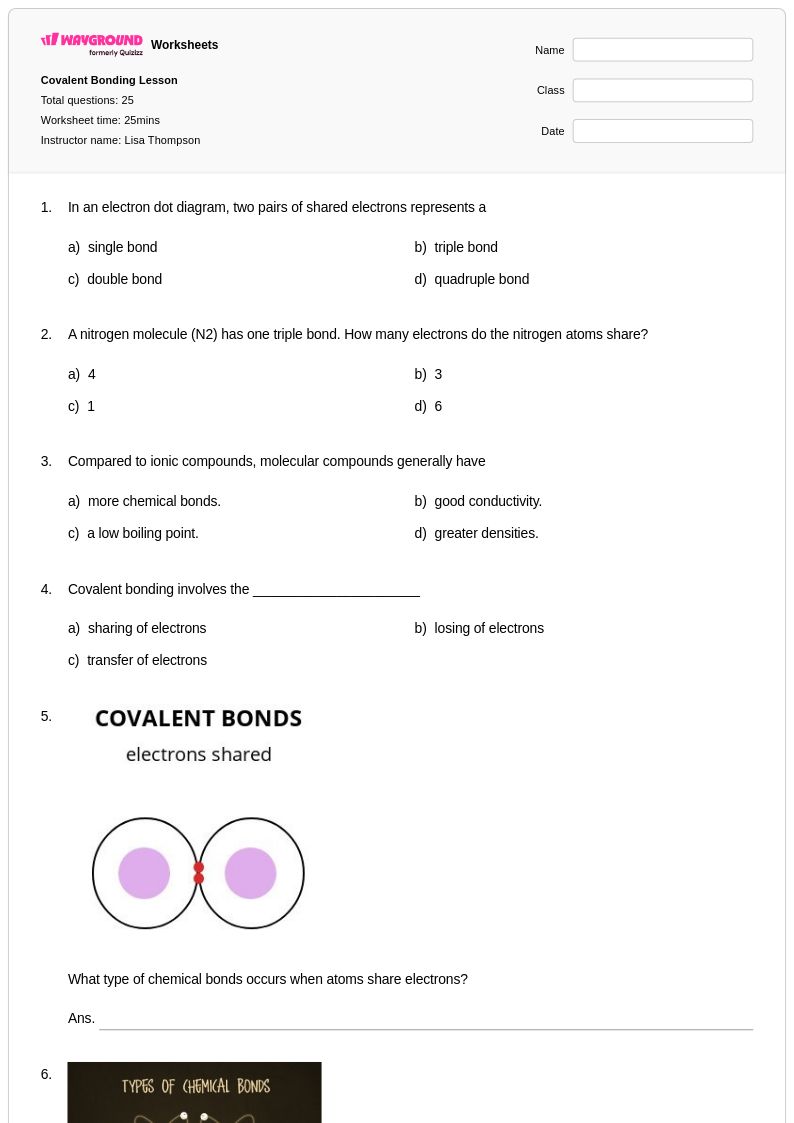
25Q
9th - Uni
20Q
12th
15Q
7th - Uni
25Q
7th - Uni
51Q
9th - 12th
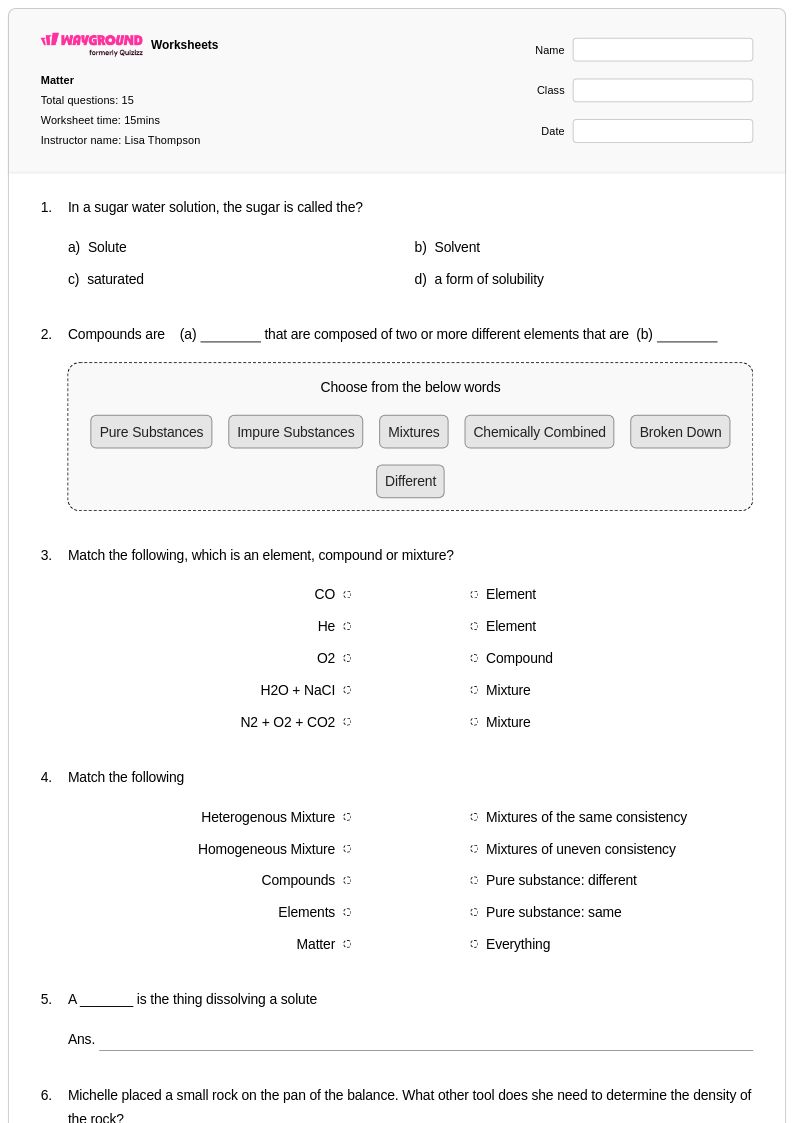
15Q
8th - Uni
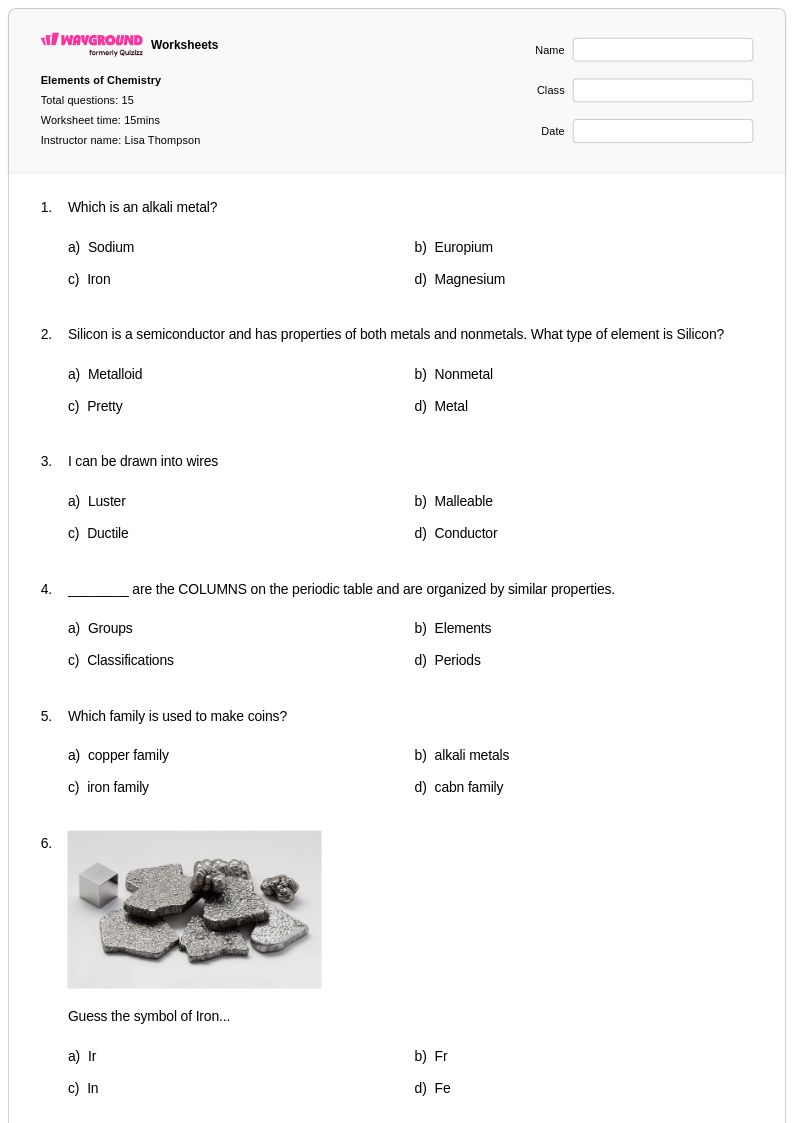
15Q
8th - Uni
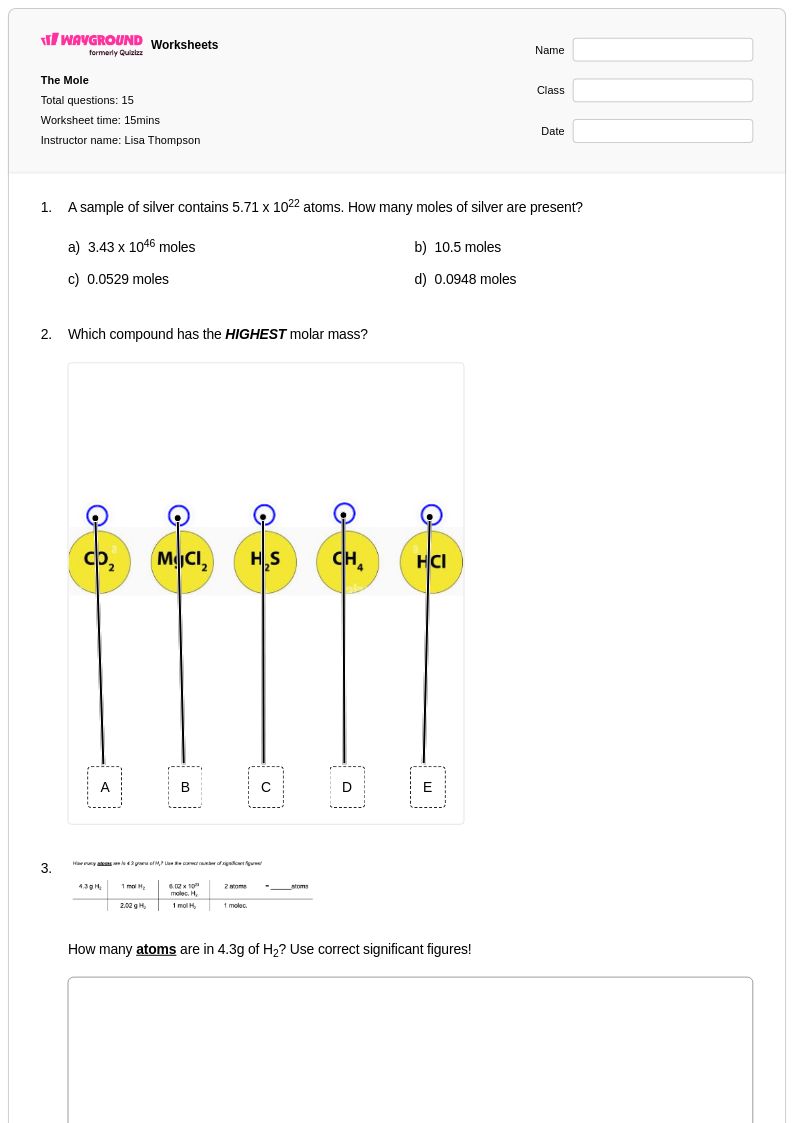
15Q
10th - Uni
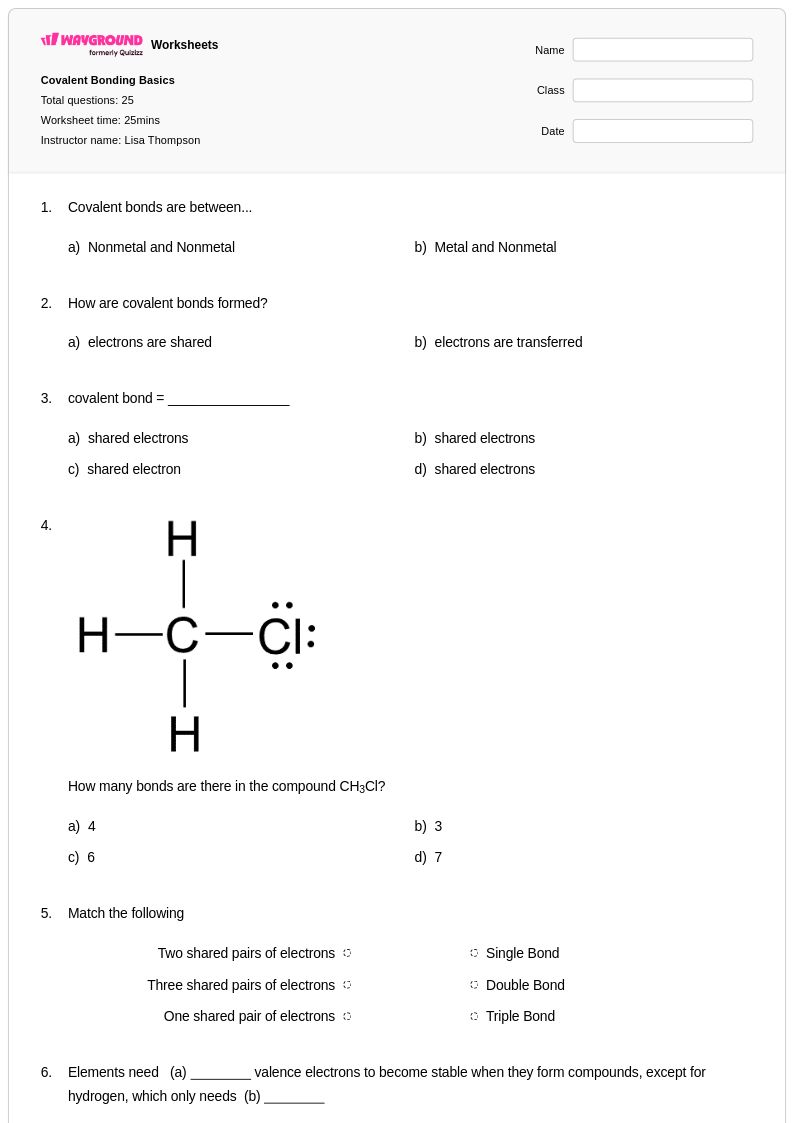
25Q
9th - Uni
25Q
10th - Uni
20Q
9th - 12th
16Q
9th - 12th
10Q
9th - 12th
15Q
10th - Uni
15Q
10th - Uni
25Q
8th - Uni
Explorar Counting Atoms in Compounds hojas de trabajo por grados
Explore otras hojas de trabajo de materias para class 12
Explore printable Counting Atoms in Compounds worksheets for Class 12
Counting atoms in compounds represents a fundamental skill that Class 12 chemistry students must master to succeed in advanced chemical calculations and stoichiometry. Wayground's comprehensive collection of counting atoms in compounds worksheets provides students with systematic practice in identifying and quantifying individual atoms within complex molecular formulas, including polyatomic ions, hydrates, and multi-component compounds. These carefully structured worksheets strengthen critical analytical skills by guiding students through step-by-step processes for breaking down chemical formulas, applying coefficients and subscripts correctly, and performing accurate atom inventories. Each worksheet includes detailed answer keys that allow students to verify their work and identify areas needing improvement, while the variety of practice problems ranges from basic binary compounds to challenging multi-step calculations involving parentheses and complex ionic structures. The printable pdf format ensures students can work through problems systematically, building confidence in this essential chemistry skill that serves as the foundation for more advanced topics like molar mass calculations and balanced chemical equations.
Wayground's extensive library contains millions of teacher-created resources specifically designed to support chemistry educators in delivering effective instruction on counting atoms in compounds. The platform's advanced search and filtering capabilities allow teachers to quickly locate worksheets that align with specific curriculum standards and match their students' current skill levels, whether they need basic practice with simple compounds or advanced challenges involving complex molecular structures. Teachers can easily customize existing worksheets or create differentiated versions to meet diverse learning needs, providing targeted remediation for struggling students while offering enrichment opportunities for advanced learners. The flexibility of both digital and printable formats enables seamless integration into various classroom settings, from traditional paper-based instruction to hybrid learning environments. These resources prove invaluable for lesson planning, homework assignments, test preparation, and skills-based practice sessions, ensuring that Class 12 students develop the precise computational abilities necessary for success in general chemistry, AP chemistry, and future scientific coursework.
FAQs
How do I teach students to count atoms in chemical compounds?
What exercises help students practice counting atoms in compounds?
What mistakes do students commonly make when counting atoms in compounds?
How do coefficients change the way students count atoms in a formula?
How can I use Wayground's counting atoms in compounds worksheets in my classroom?
How does counting atoms in compounds connect to more advanced chemistry topics?