Free Printable Dollar Up Method Worksheets for Class 5
Class 5 dollar up method worksheets and printables help students master this essential money math strategy through engaging practice problems with complete answer keys available as free PDF downloads.
Explore printable Dollar Up Method worksheets for Class 5
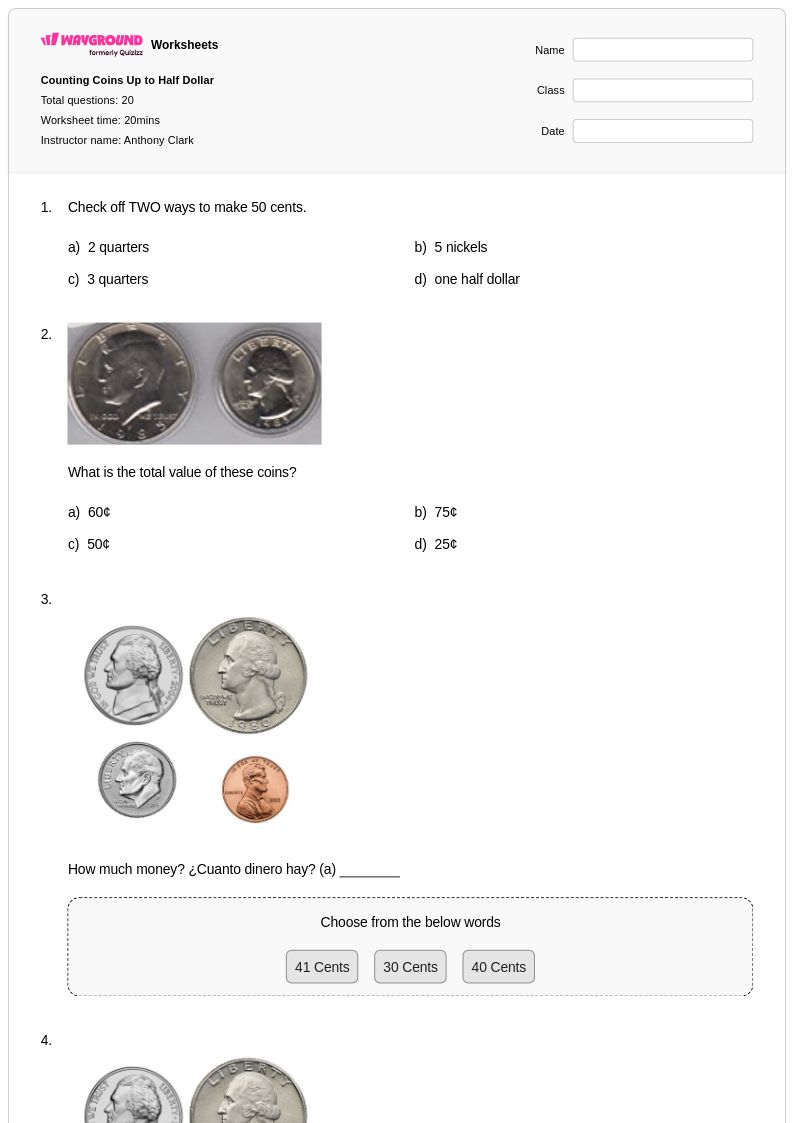
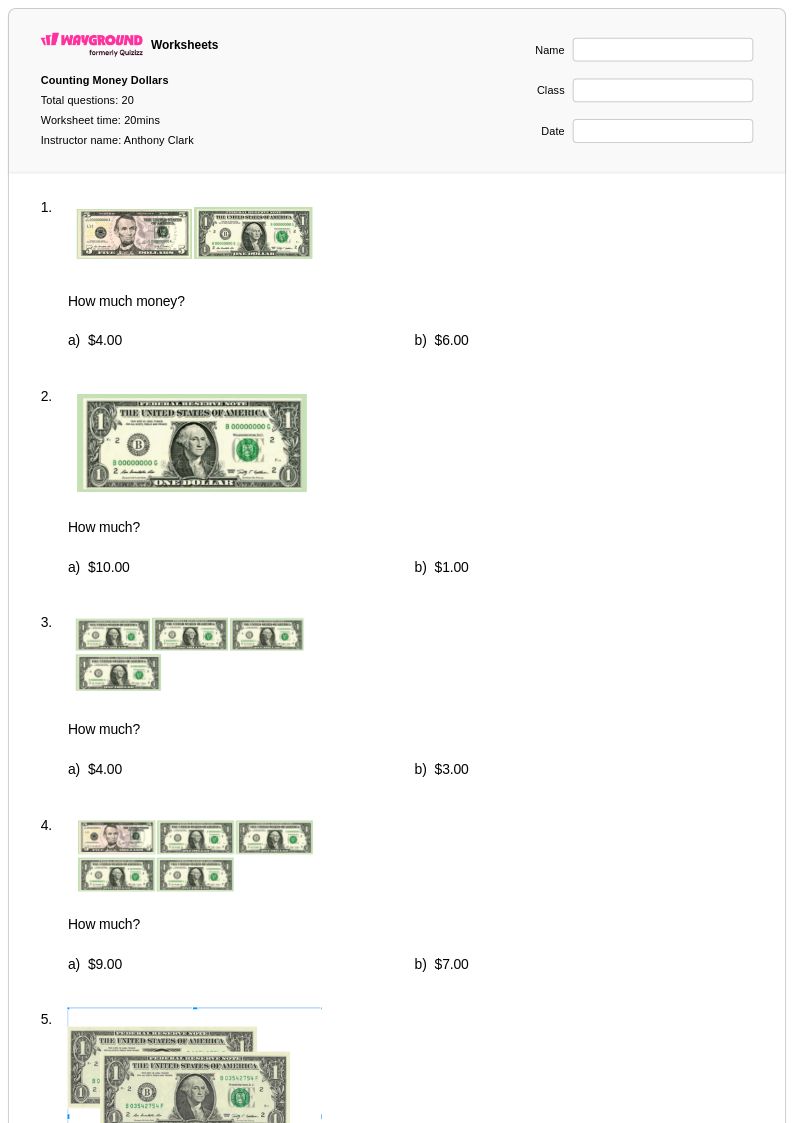
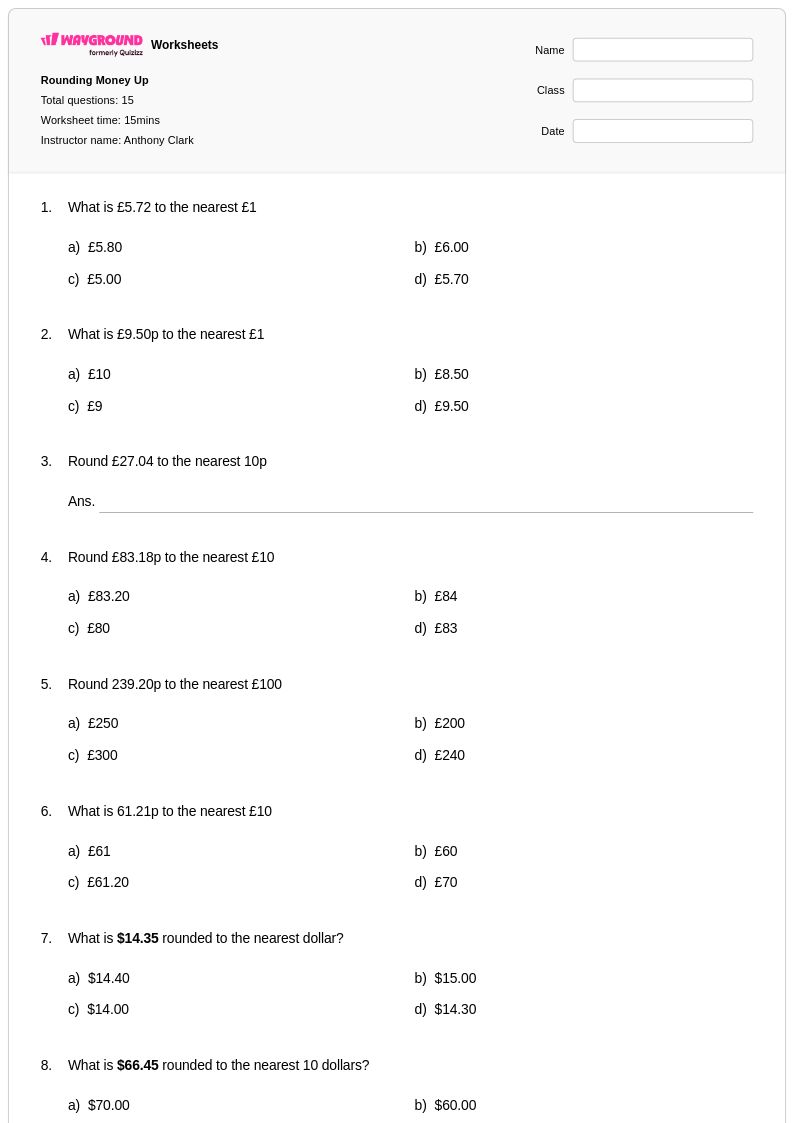
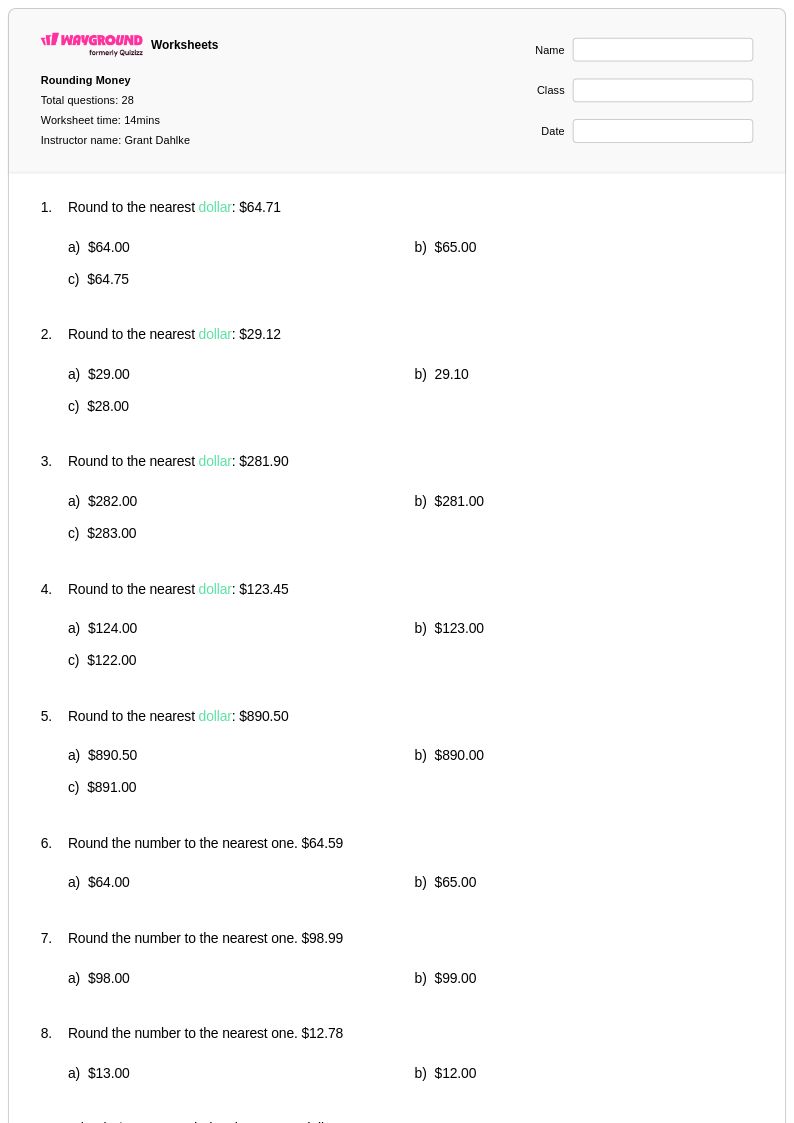
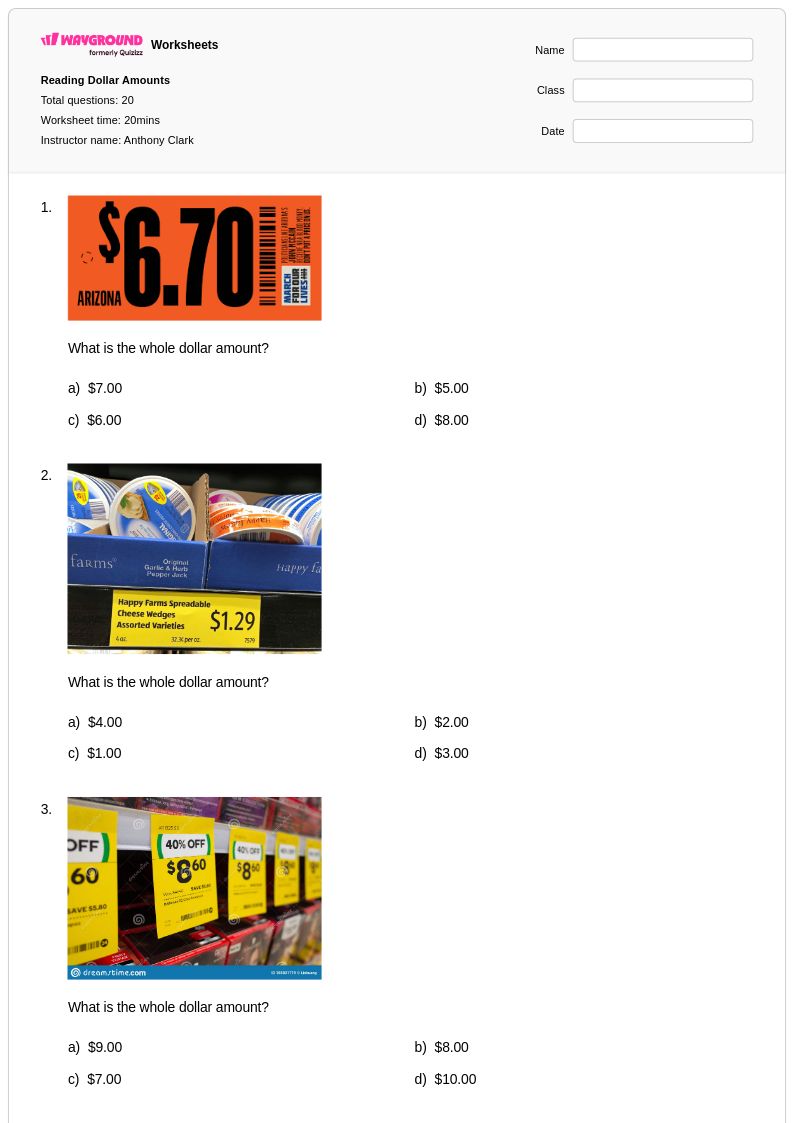
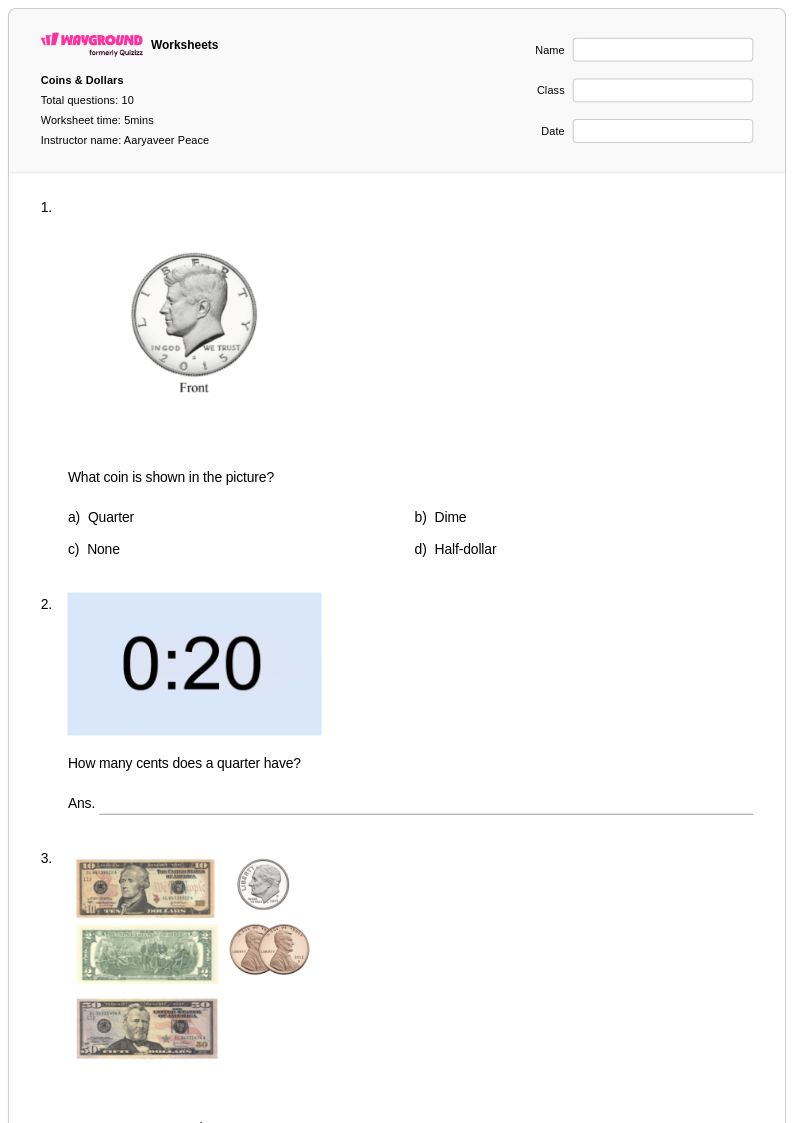
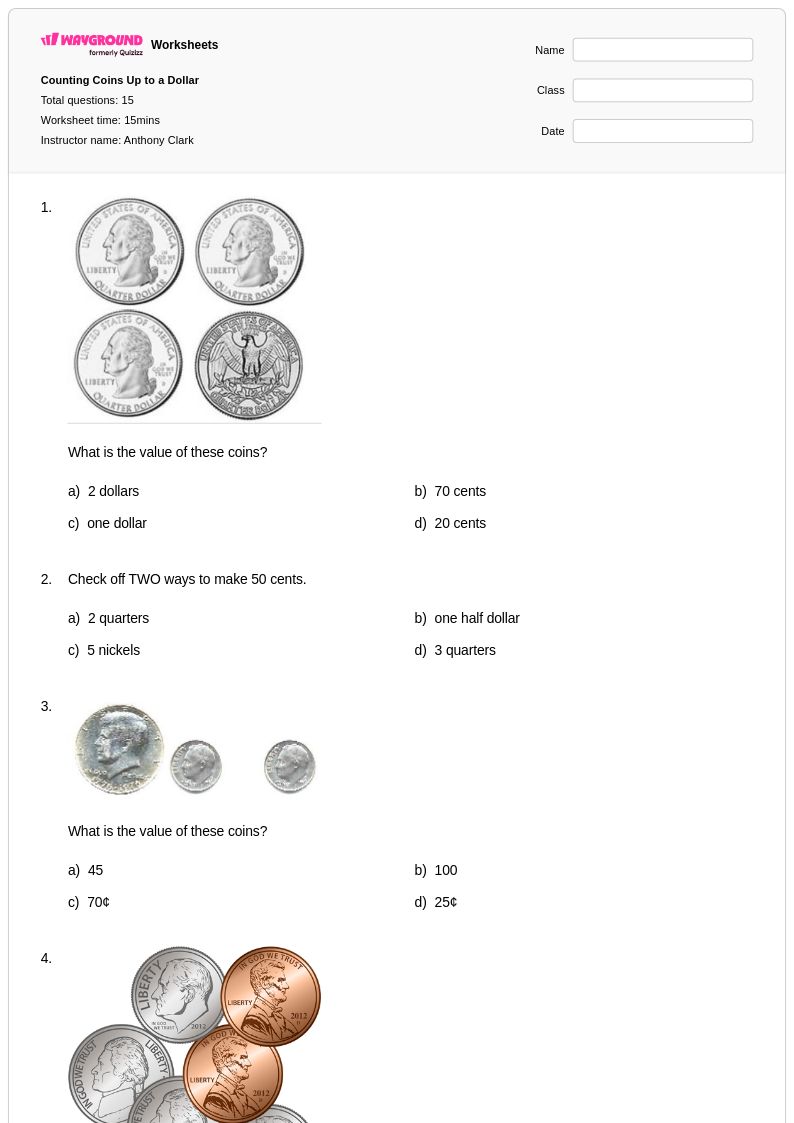
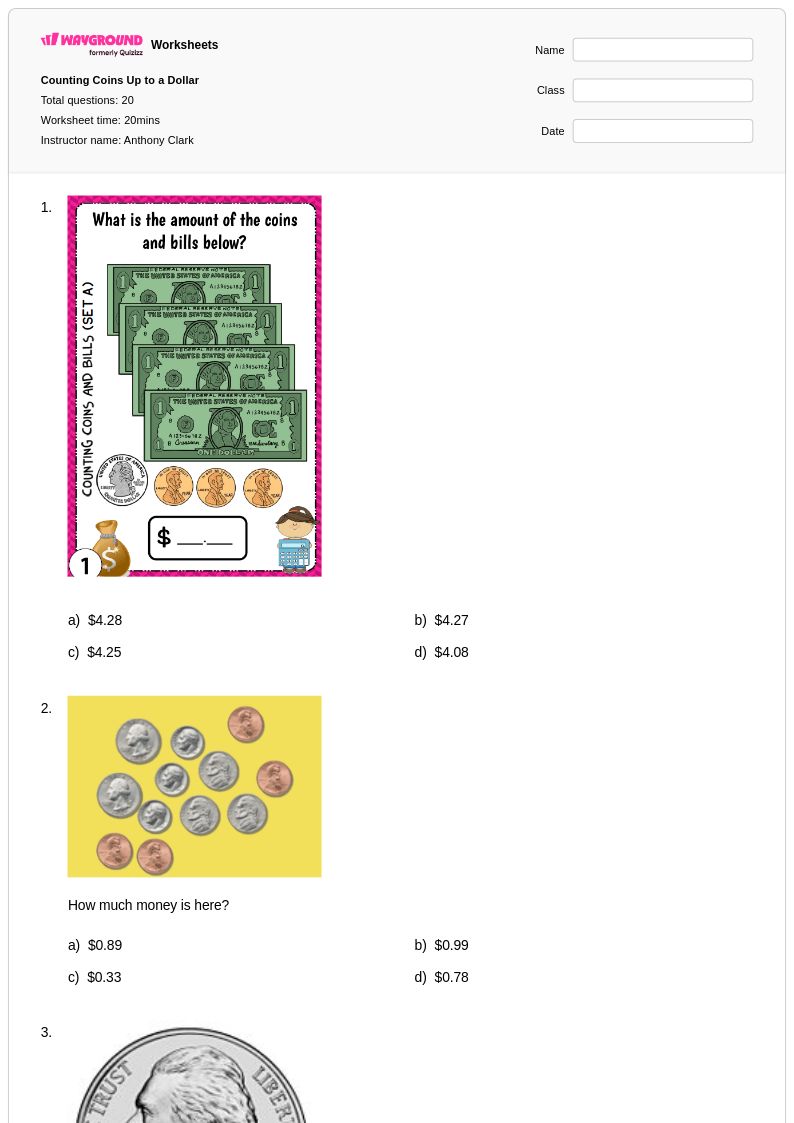
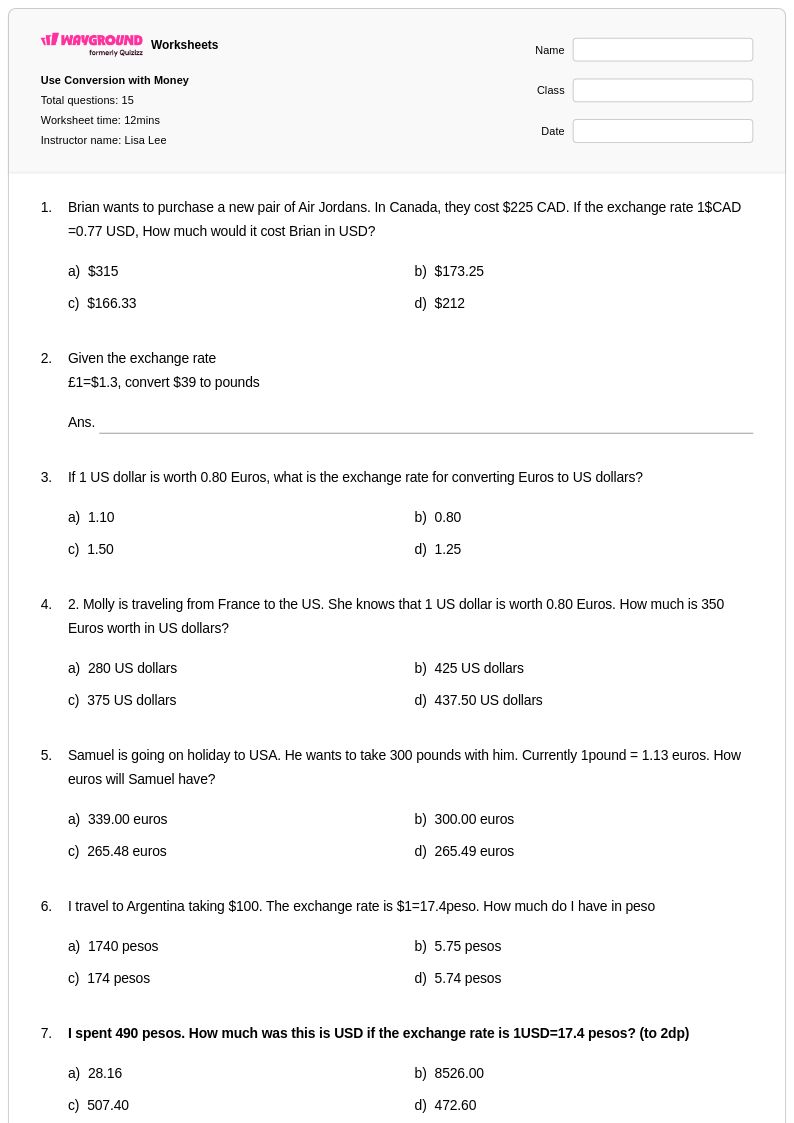
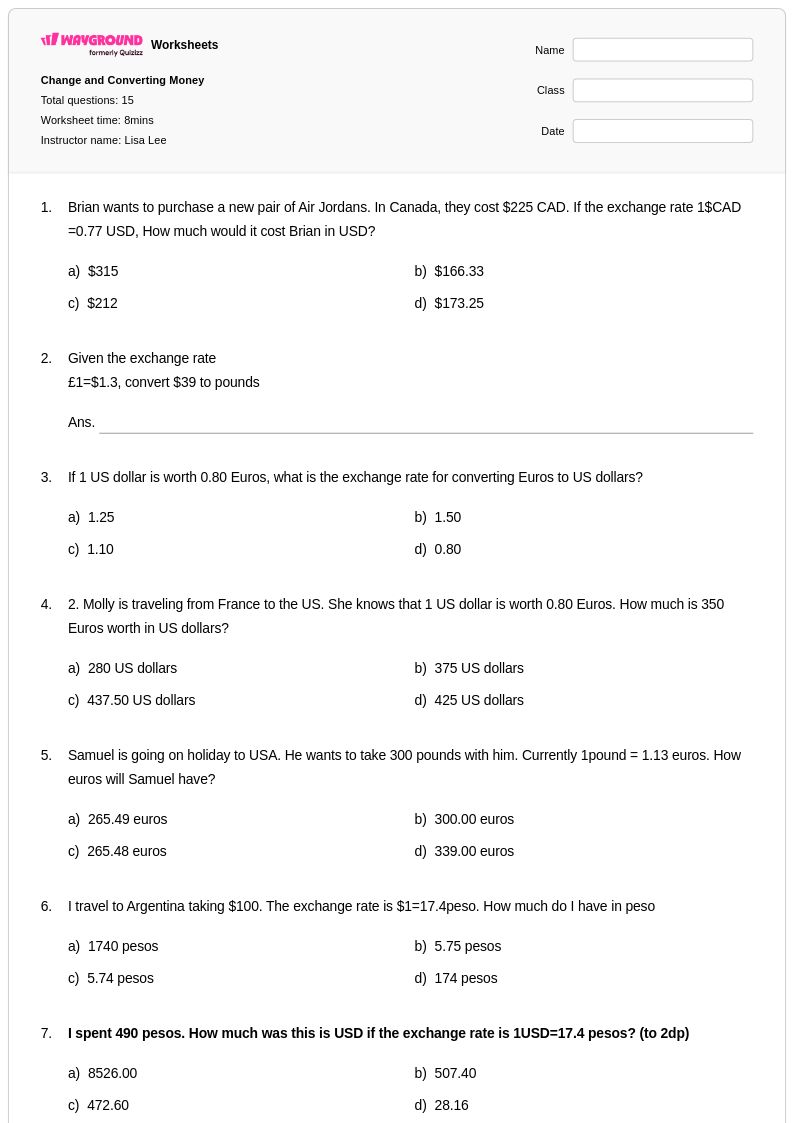
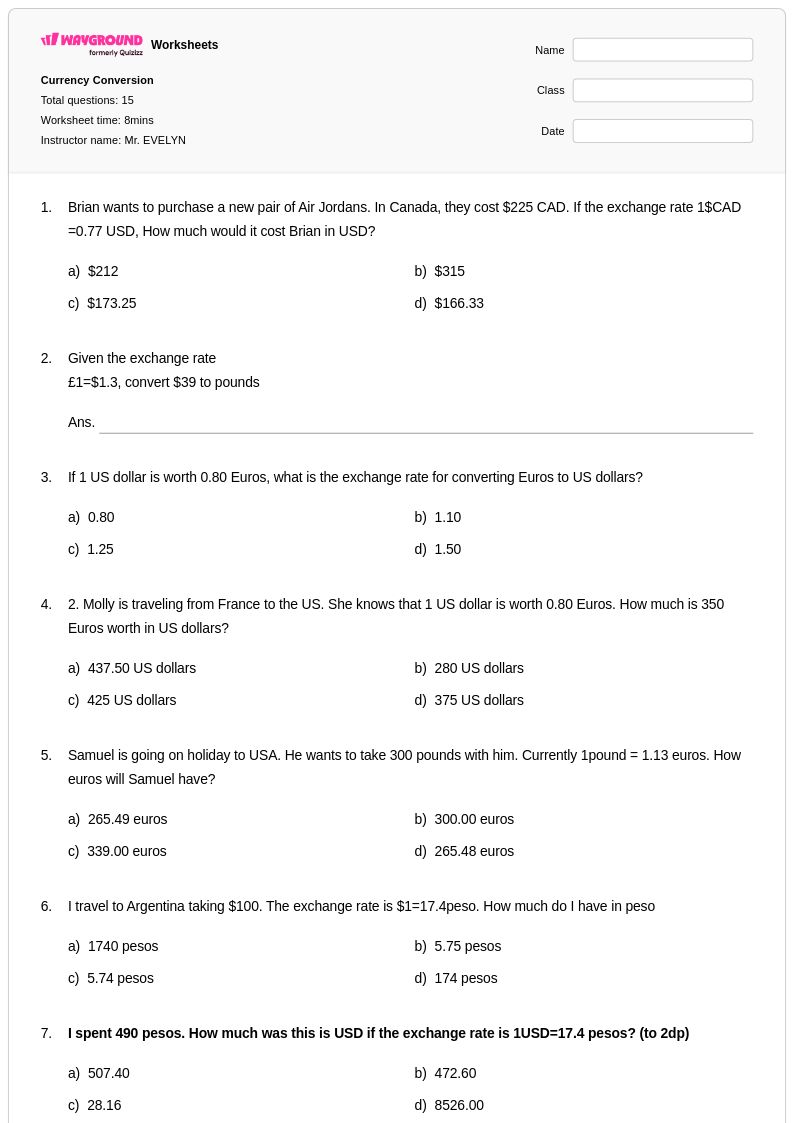
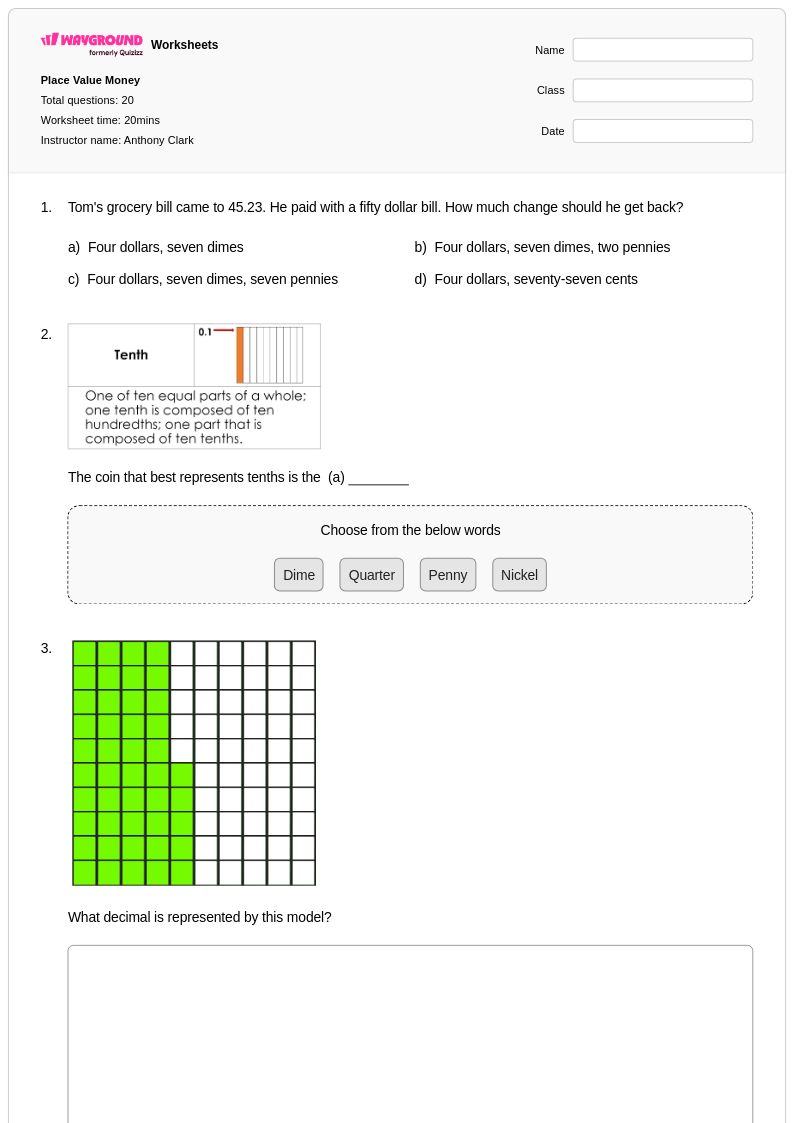
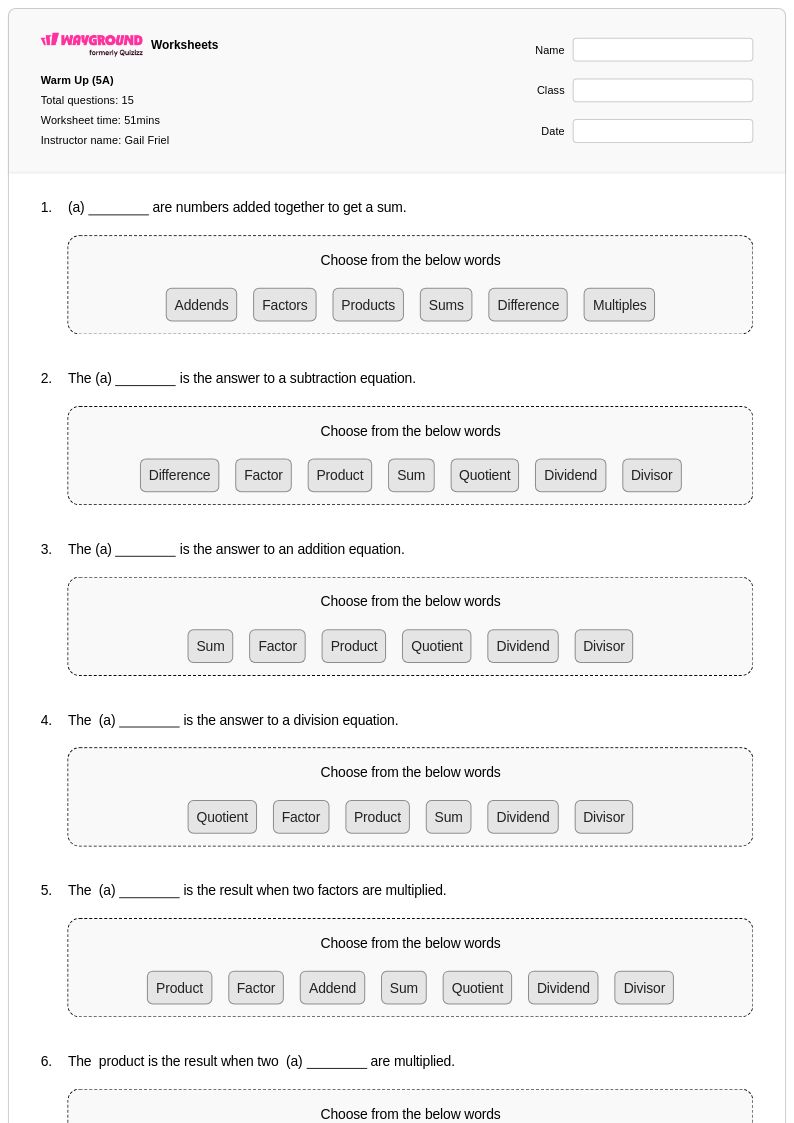
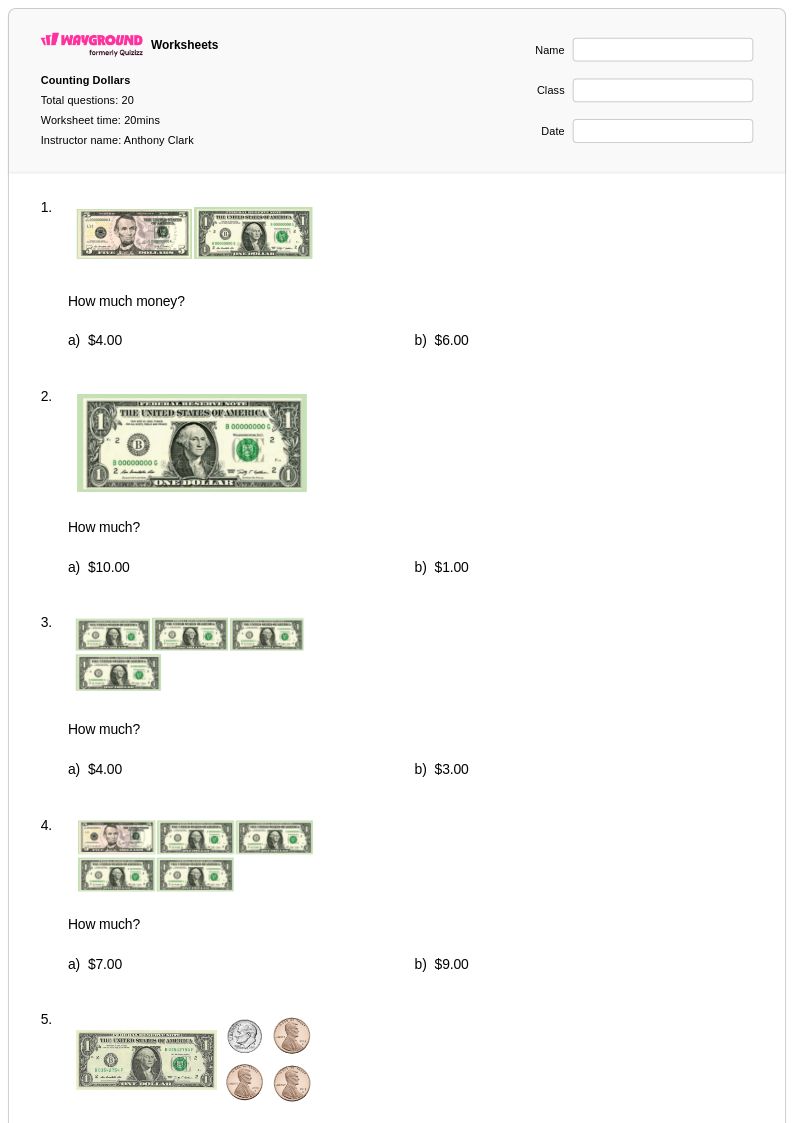
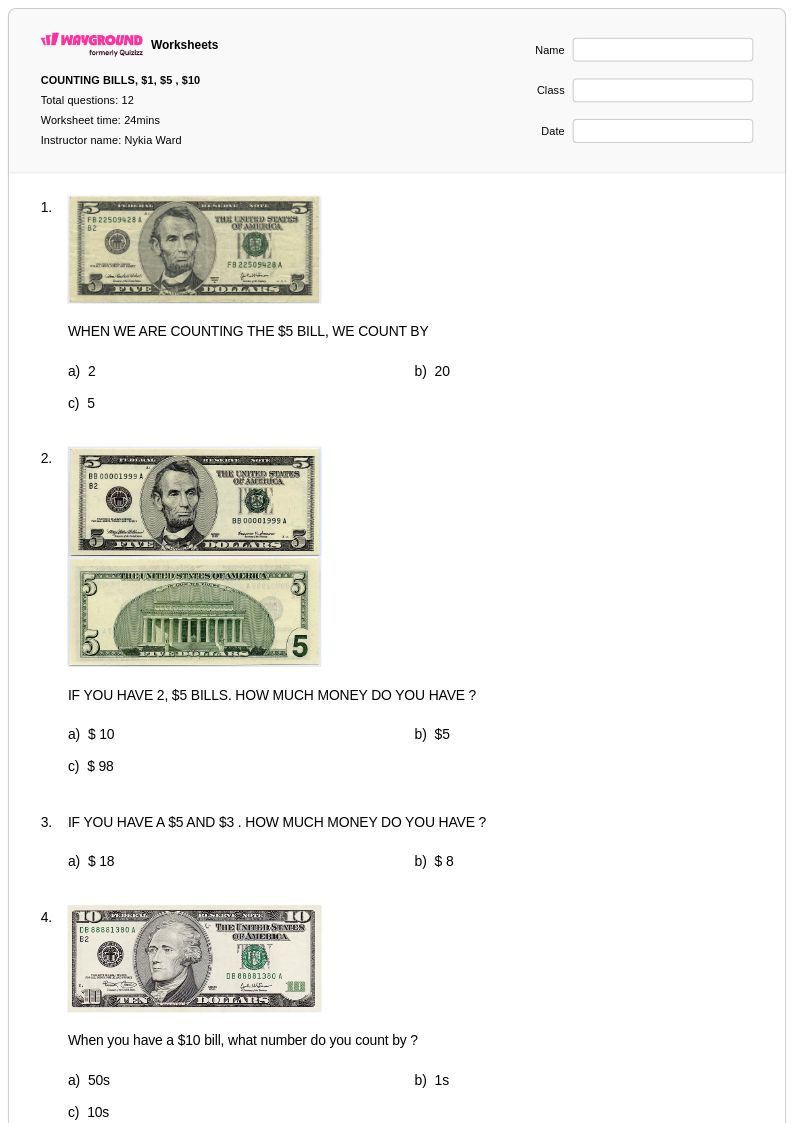
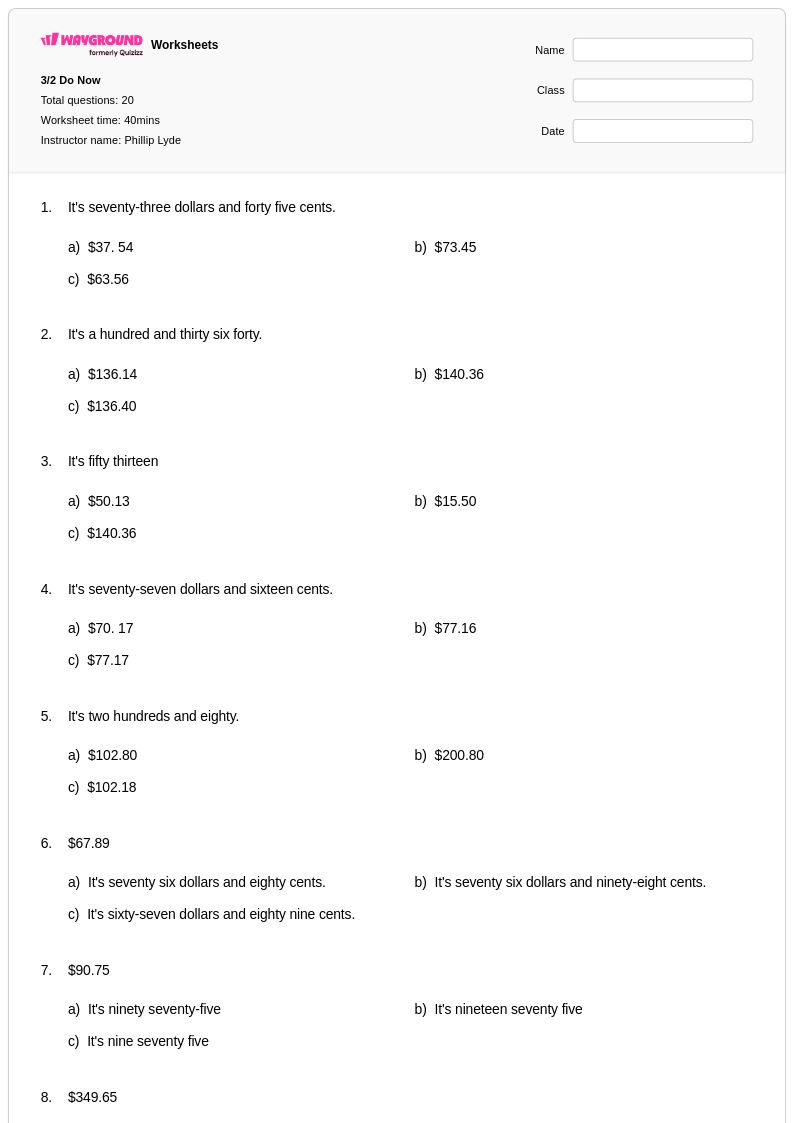
Dollar Up Method worksheets for Class 5 students available through Wayground (formerly Quizizz) provide comprehensive practice with this essential money counting strategy that builds computational fluency and real-world mathematical reasoning. These carefully designed printables focus on teaching students to make change by counting up from the purchase price to the amount paid, utilizing coins and bills in sequential order from smallest to largest denomination. The worksheets strengthen critical skills including mental math computation, understanding of decimal place value in monetary contexts, and logical reasoning through step-by-step change-making processes. Each practice problem set includes detailed answer keys that demonstrate the dollar up counting sequence, making these free resources invaluable for both independent student work and guided instruction in developing confident money handling abilities.
Wayground (formerly Quizizz) supports mathematics educators with an extensive collection of Dollar Up Method resources created by millions of teachers who understand the nuances of Class 5 money math instruction. The platform's robust search and filtering capabilities enable teachers to quickly locate worksheets that align with specific learning standards and match their students' skill levels, while differentiation tools allow for seamless customization of difficulty levels and problem types. These versatile resources are available in both printable pdf formats for traditional classroom use and digital formats for technology-integrated learning environments, supporting flexible lesson planning approaches. Teachers utilize these comprehensive worksheet collections for targeted skill practice, remediation of counting difficulties, enrichment activities for advanced learners, and systematic assessment of student progress in mastering this fundamental financial literacy concept.
FAQs
Why are Grade 5 students still practicing the dollar up method?
For most fifth graders, the dollar up method isn't remediation — it's a mental math tool that runs faster than decimal subtraction in real-world situations. At this grade, the goal shifts from learning the procedure to applying it fluently: multi-item purchases, larger bills, and problems where students must decide whether to count up or subtract based on which is more efficient. It also reinforces decimal place value in a context students find concrete and motivating.
What exercises help Grade 5 students practice the dollar up method?
Push beyond single-item transactions. Problems involving two or three items — where students must first total the purchase, then count up change from a $20 bill — require both addition with decimals and the counting-up strategy in sequence. You can also introduce estimation: ask students to predict the approximate change before working the exact problem, which builds number sense alongside the procedure. Problems where the 'correct' method is debatable (count up vs. subtract) make good discussion starters.
What mistakes do Grade 5 students commonly make with the dollar up method?
Fifth graders most often stumble when the purchase total itself requires computation — they'll make an addition error on the multi-item total and then execute the dollar up steps correctly on a wrong number, so the change is off. The second common error is skipping the coin phase when the price ends in a round amount like $7.50, then miscounting the bills. A quick check: if a student's change doesn't add back to the tendered amount, have them verify the purchase total first before re-examining the counting steps.
How do I use Wayground's Grade 5 dollar up method worksheets?
Assign them as a digital quiz on Wayground for immediate result tracking, or download the PDF and print for paper practice — both formats include a complete answer key. The printable route works especially well for timed drills or test-prep sessions where you want students off screens. When you collect paper submissions, the Wayground for Teachers app lets you scan and grade student work without entering answers manually.
How does the dollar up method connect to Grade 5 math standards?
Common Core's fifth-grade focus on decimal operations — adding and subtracting to the hundredths place — maps directly onto what the dollar up method requires in a money context. Students who can count up from $6.83 to $20.00 are applying the same place-value logic they use when adding decimals on paper, just in a different direction. The method also supports the multi-step word problem work that Common Core emphasizes at this grade, where students must plan a solution sequence rather than apply a single operation.
How can I differentiate dollar up method practice for my Grade 5 class?
For students who are still building decimal fluency, Wayground's Read Aloud accommodation reads problem text aloud so they can concentrate on the counting logic rather than parsing written numbers. For students ready for a challenge, select problems involving multi-item totals and larger bills — the same worksheet collection covers a wide difficulty range. If you have ELL students, Wayground can translate the worksheet into their home language, keeping the math accessible without simplifying the problem.