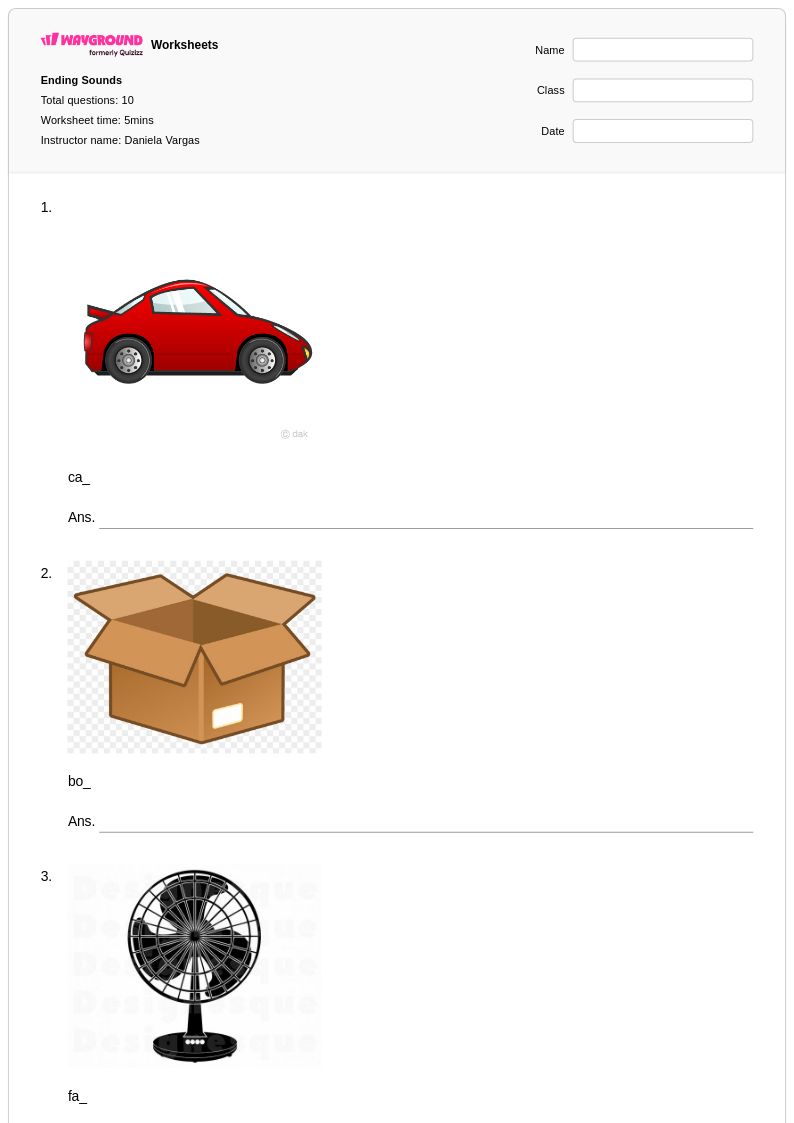
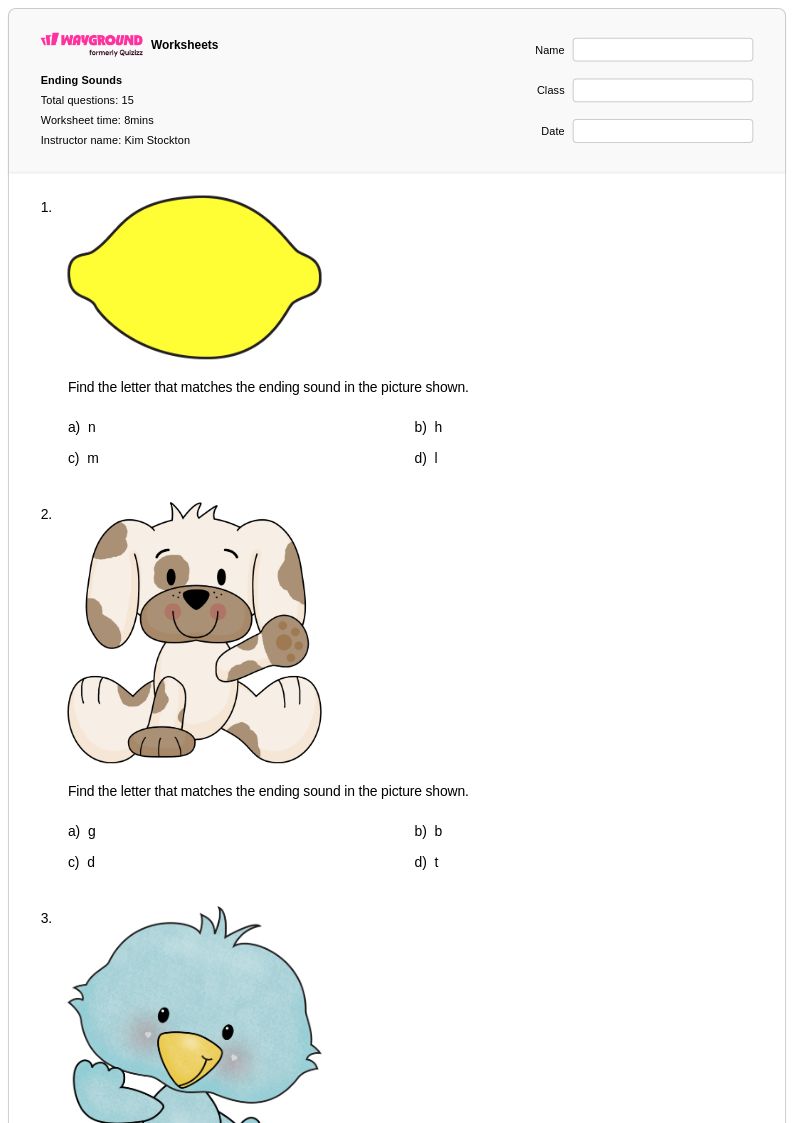
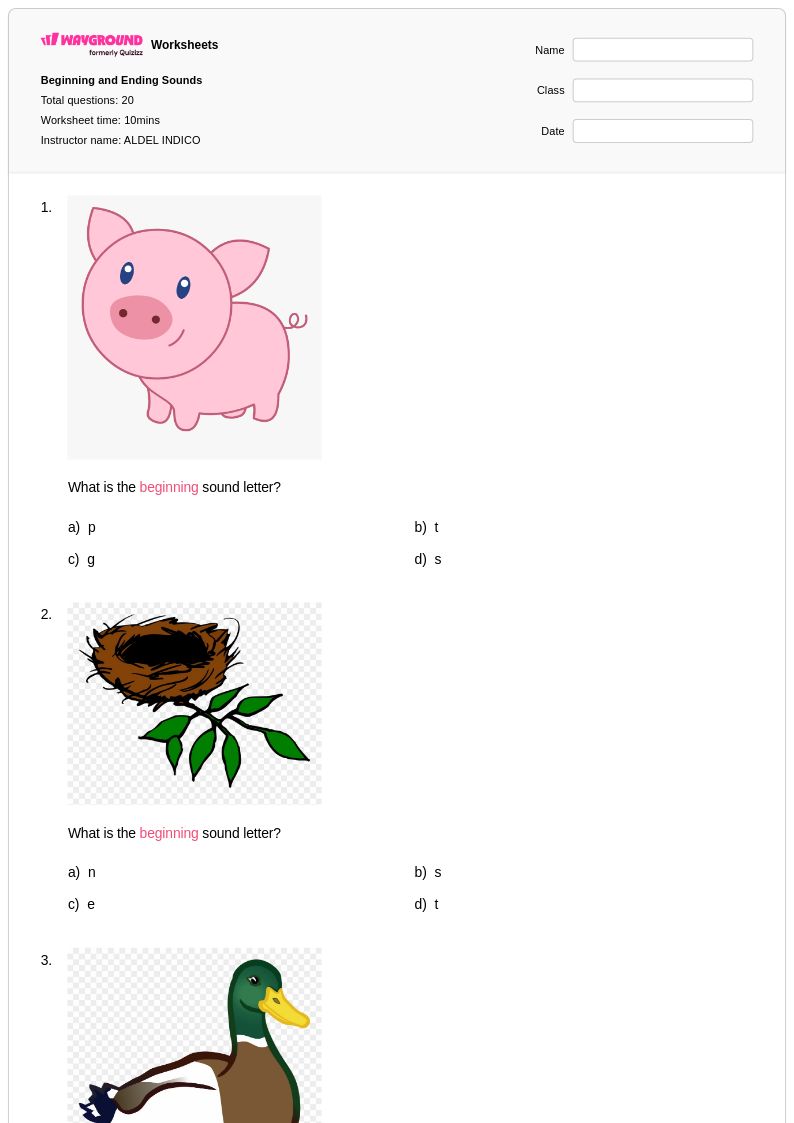
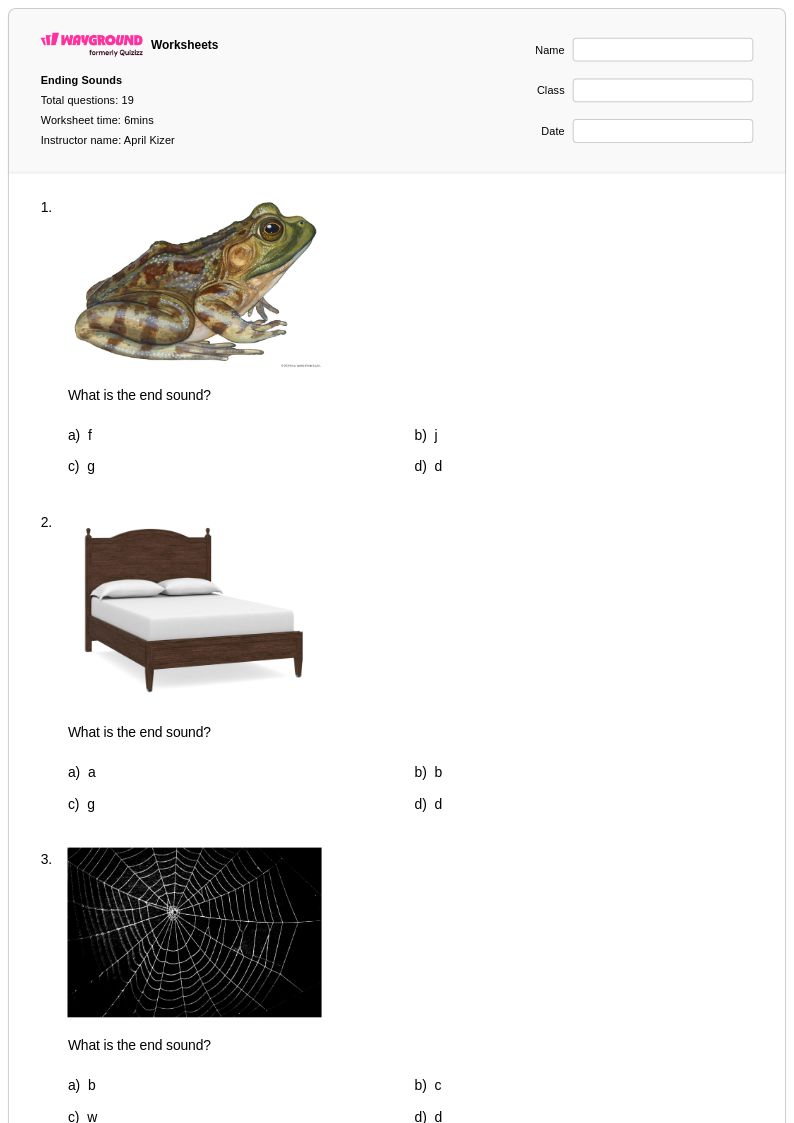
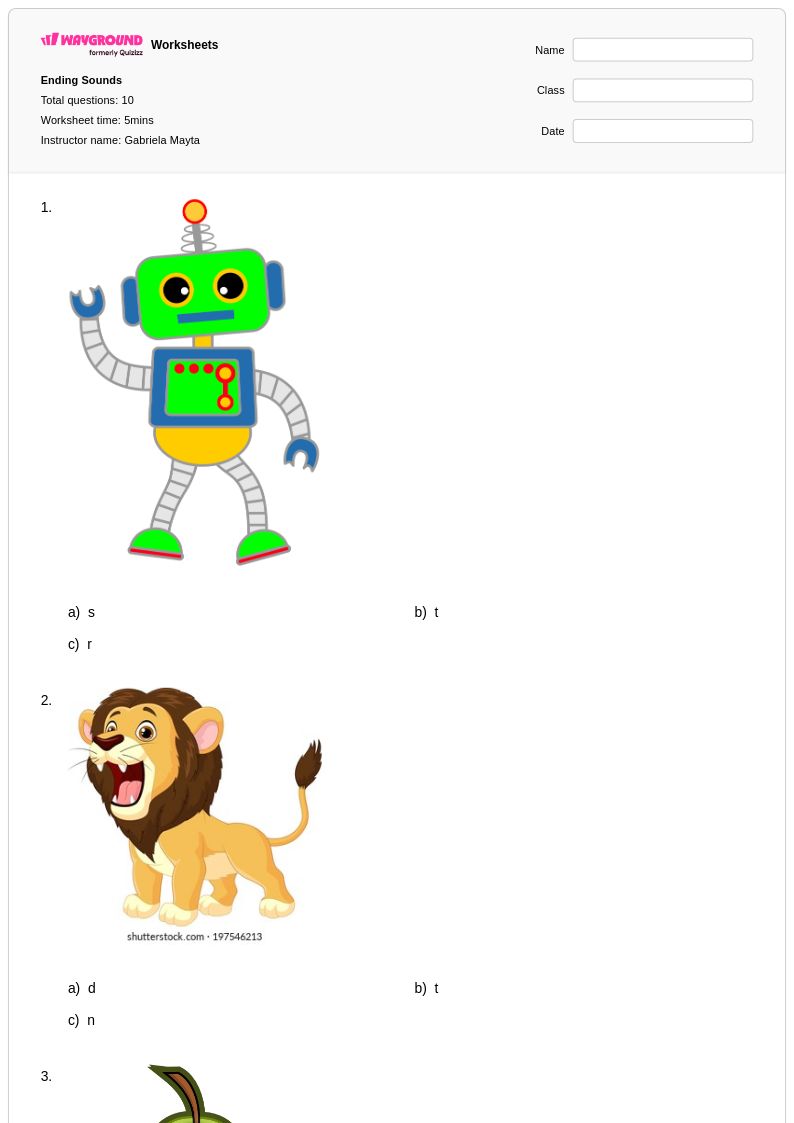
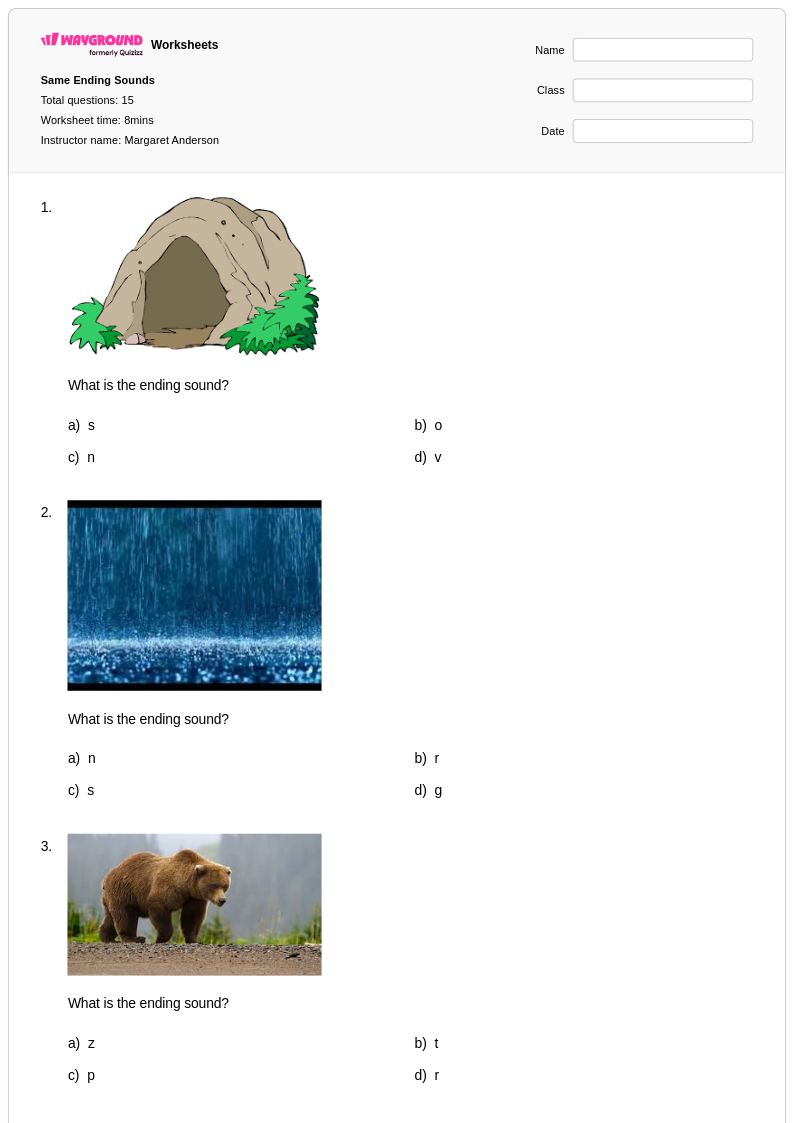
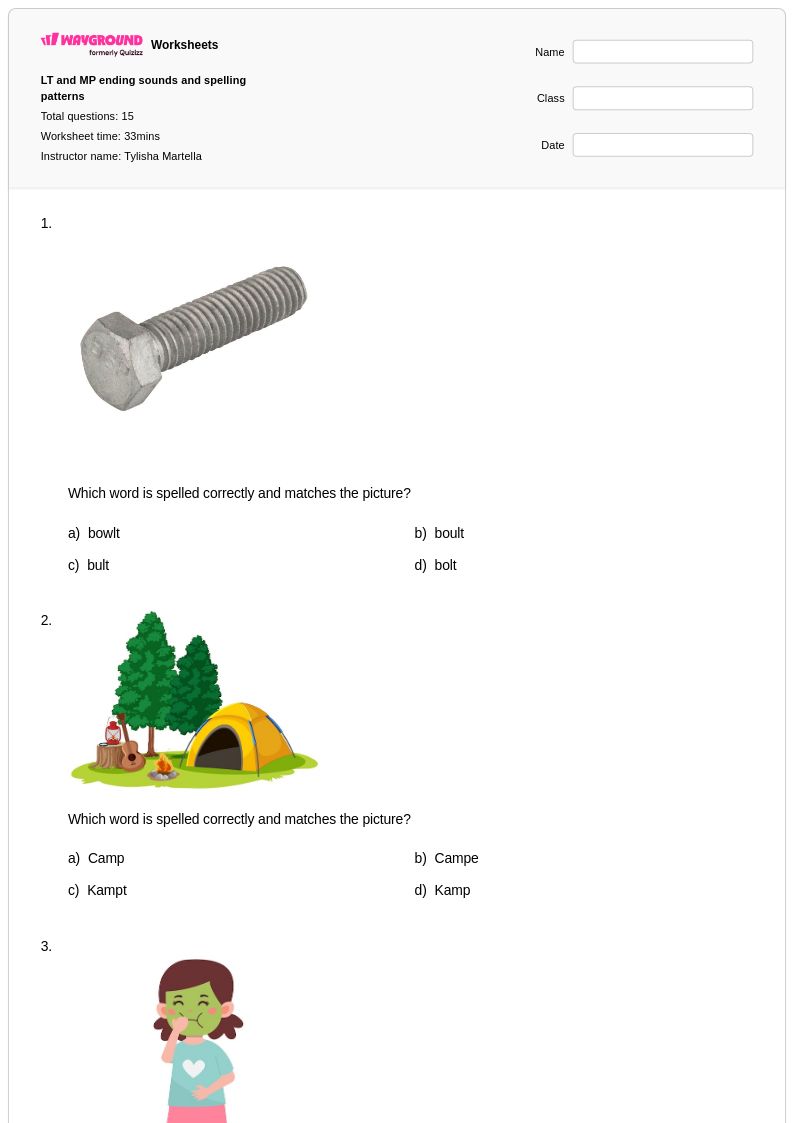
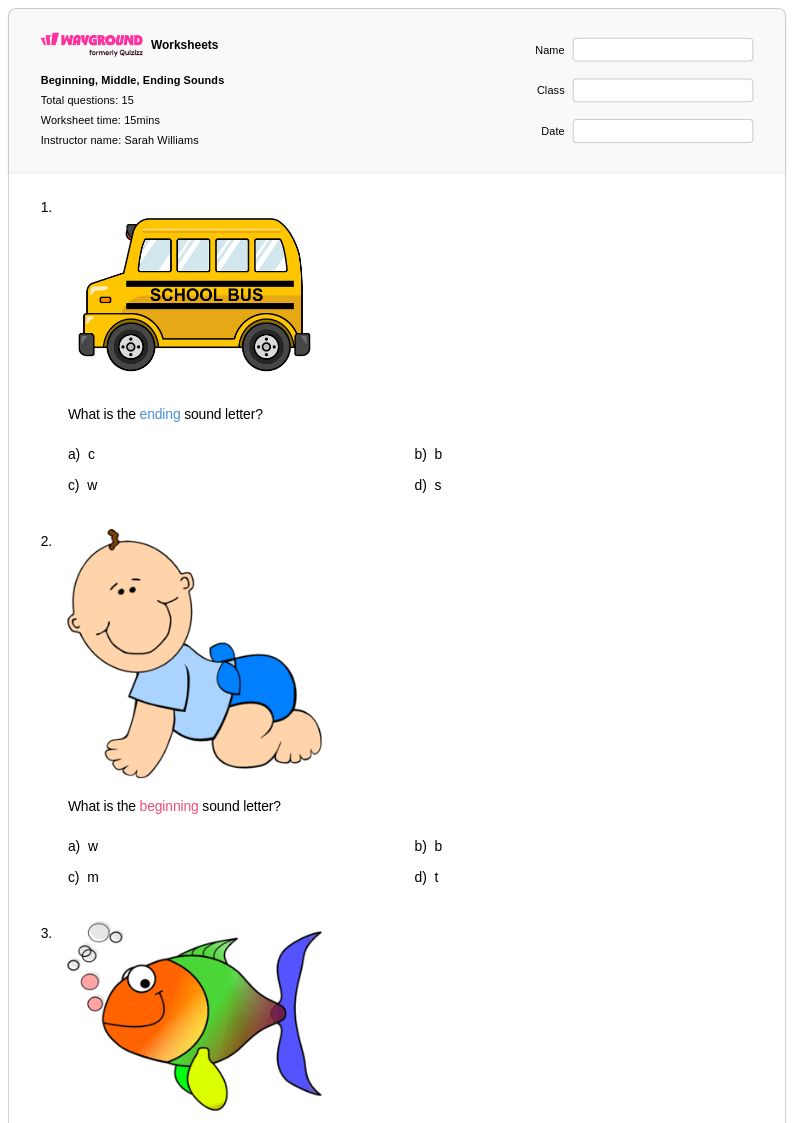
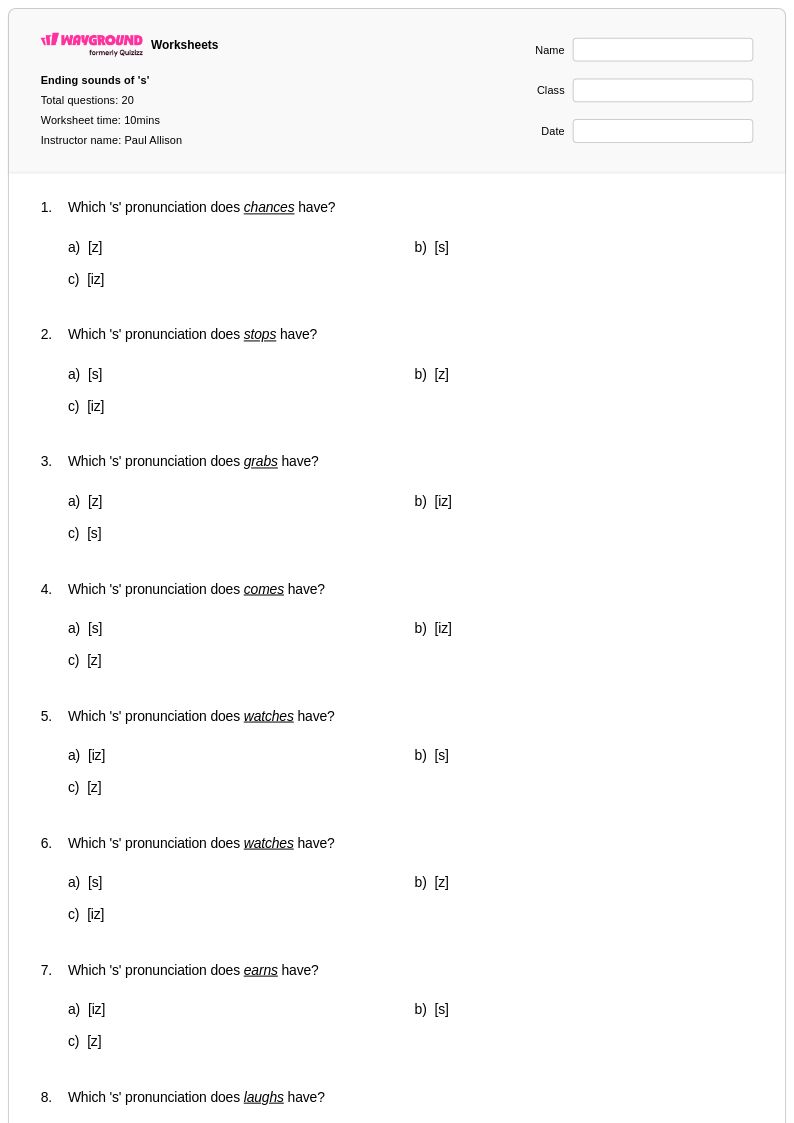
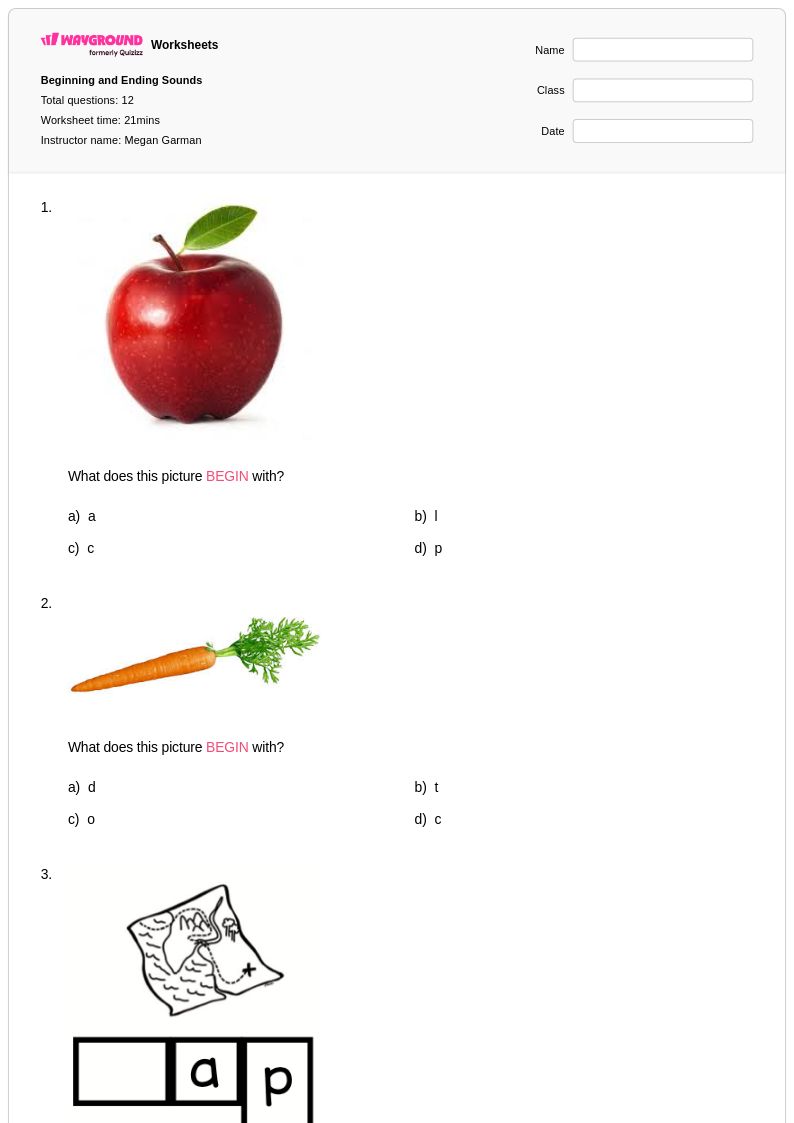
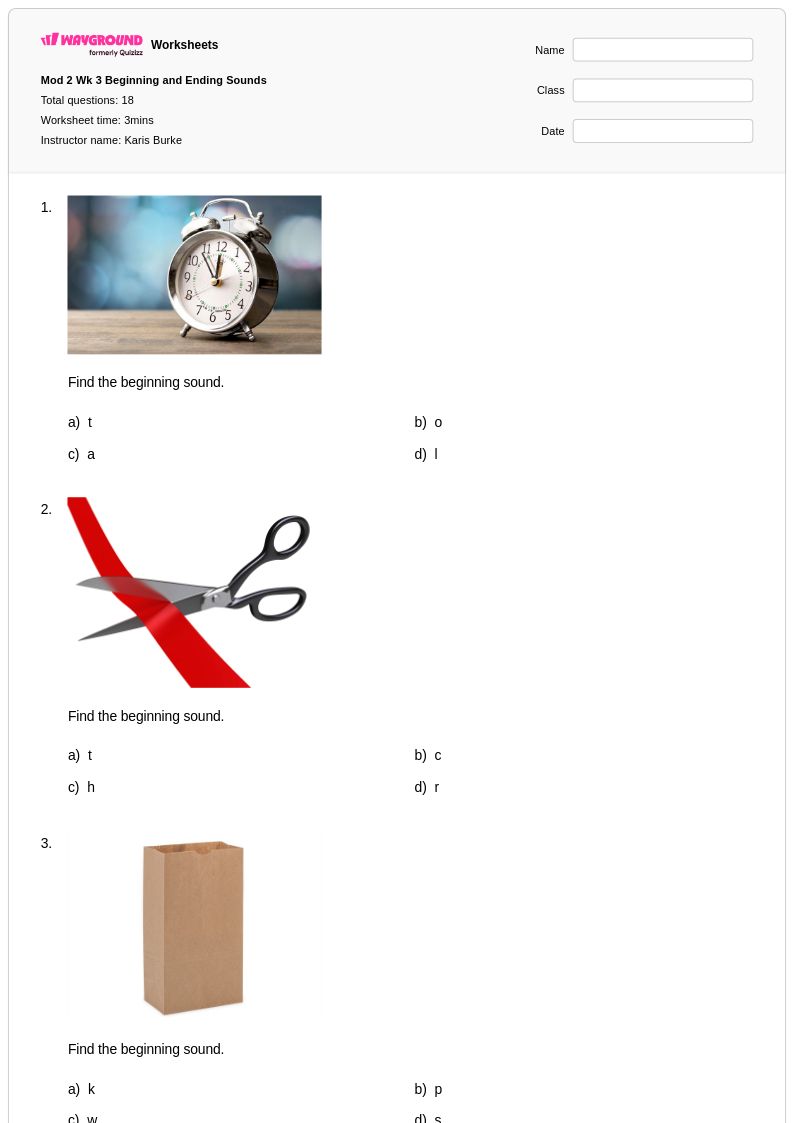
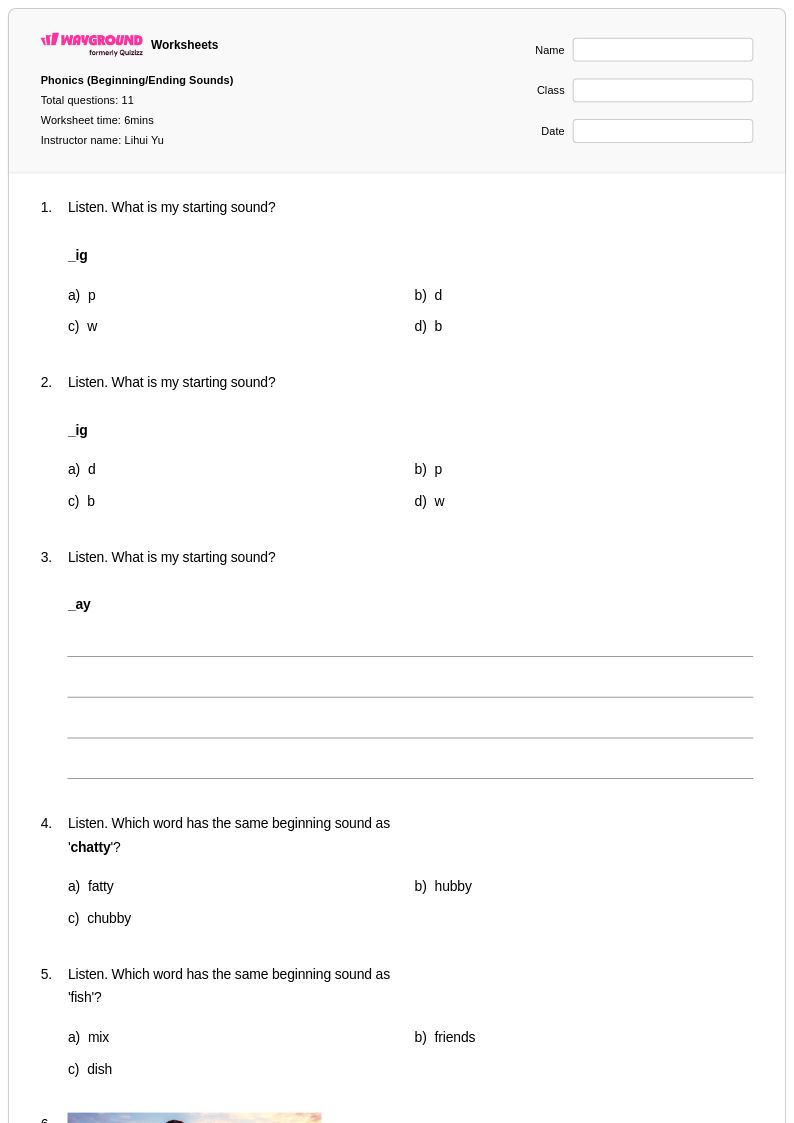
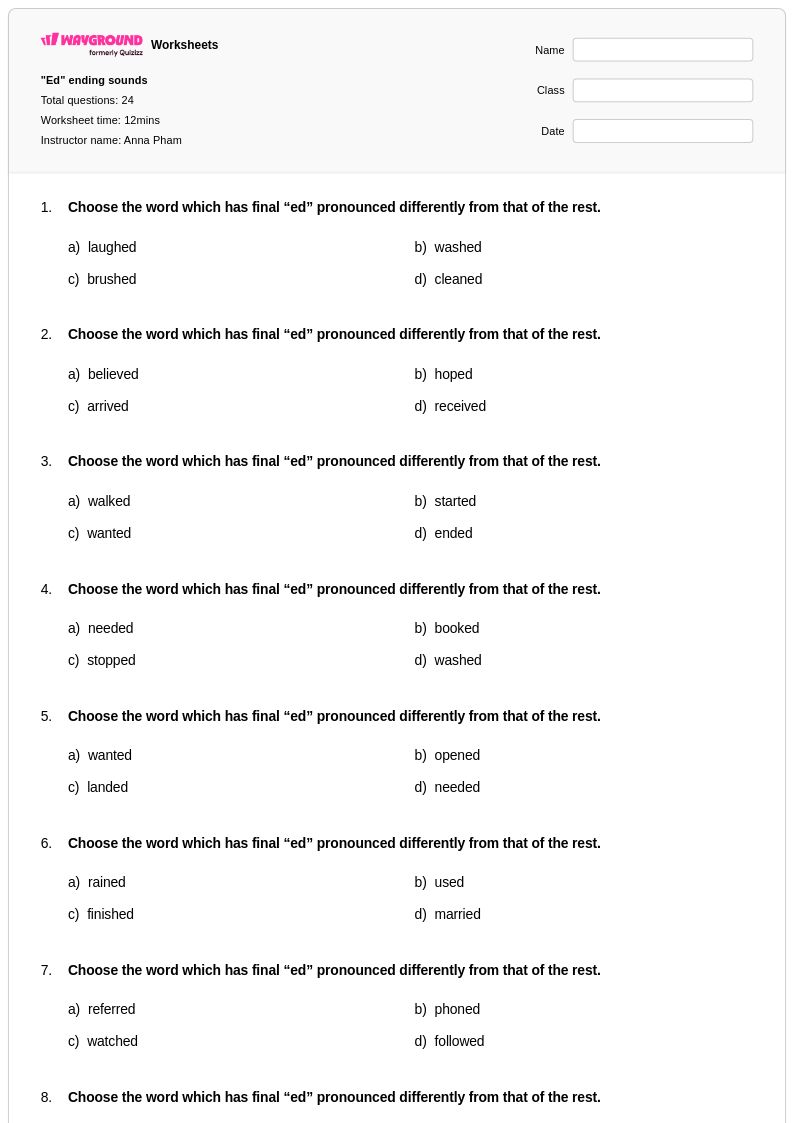
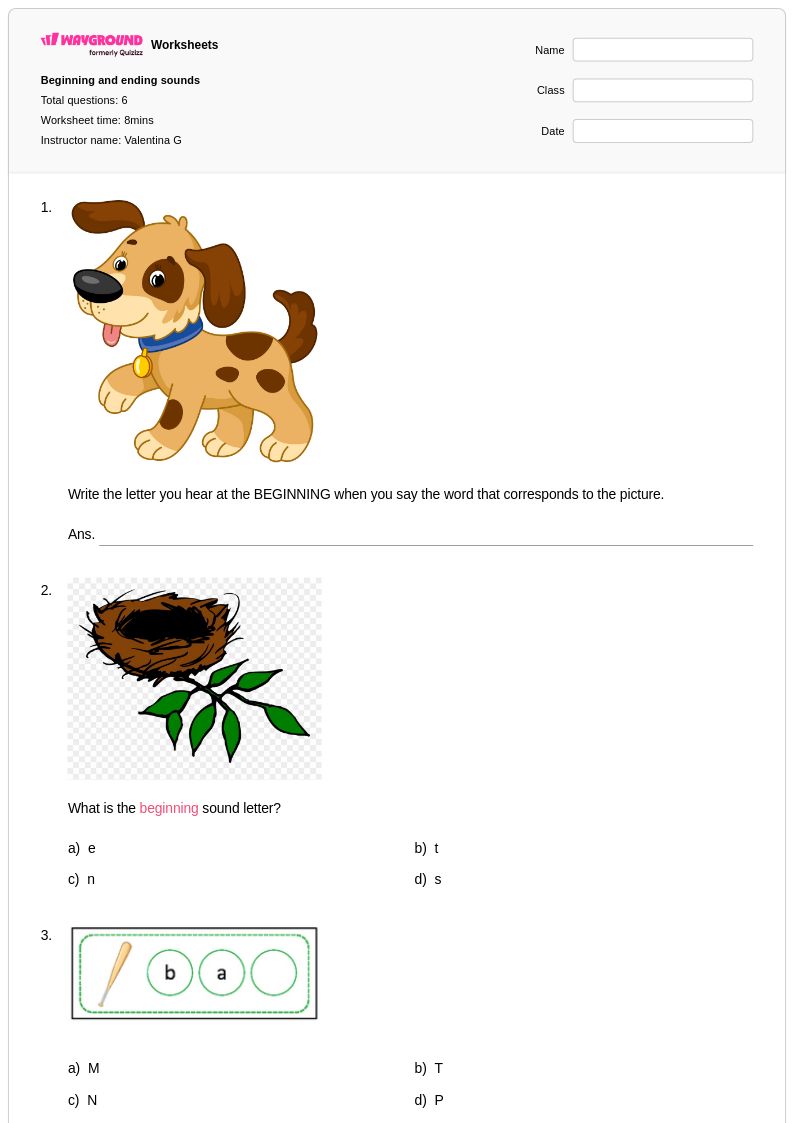
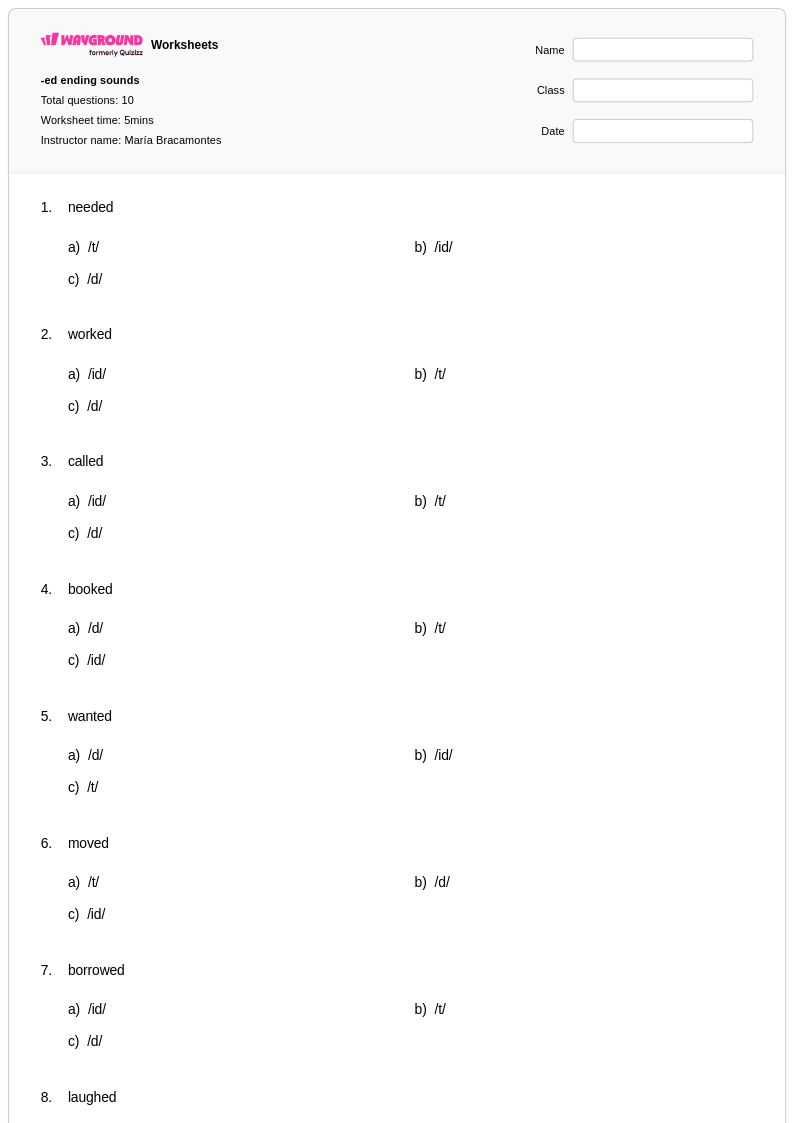
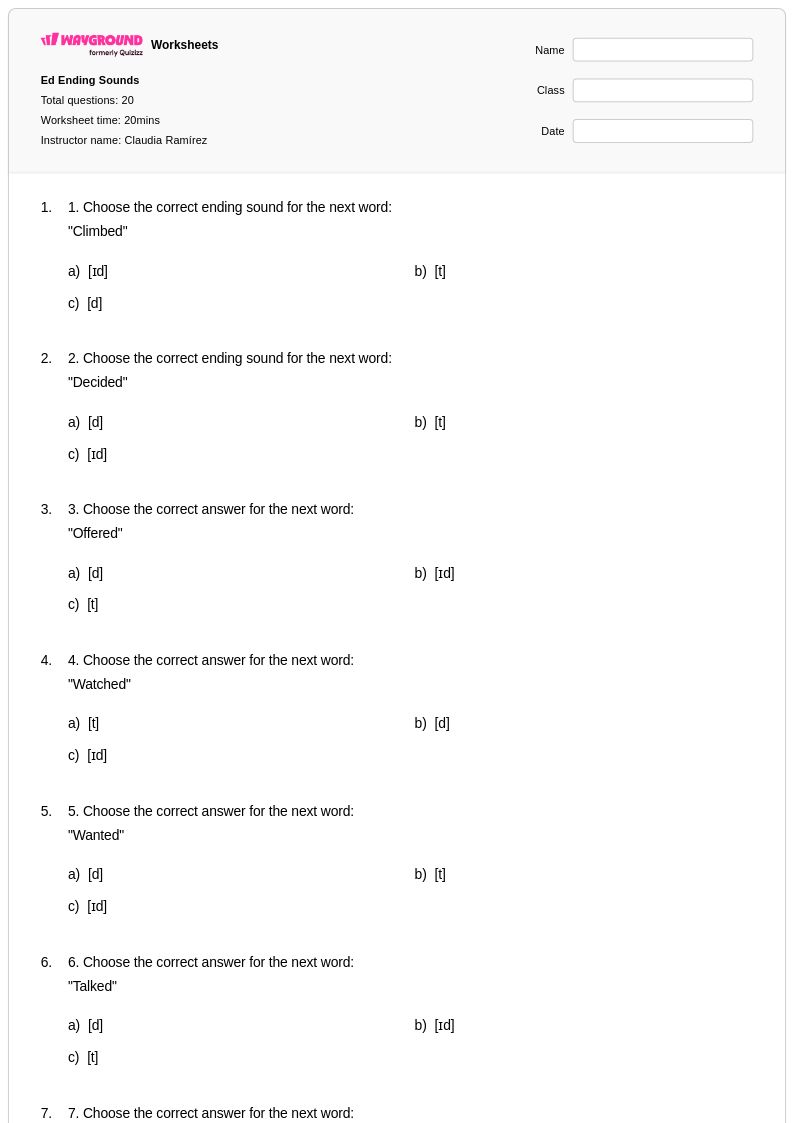
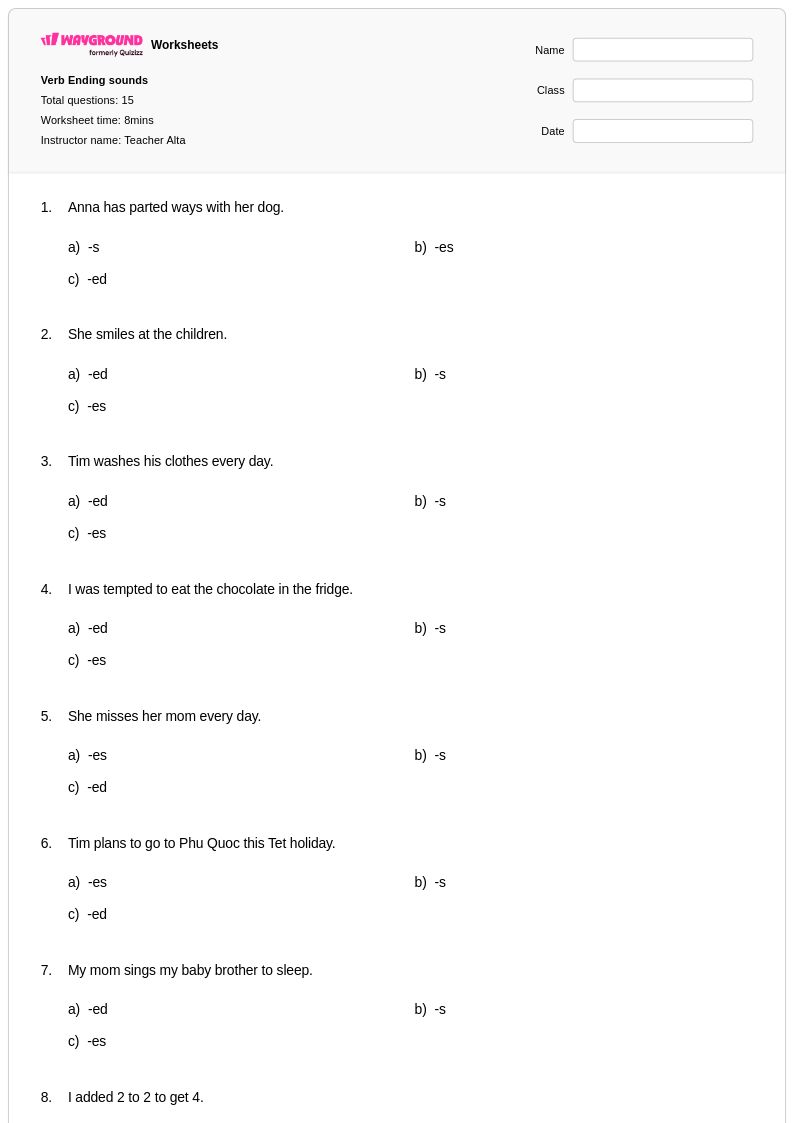
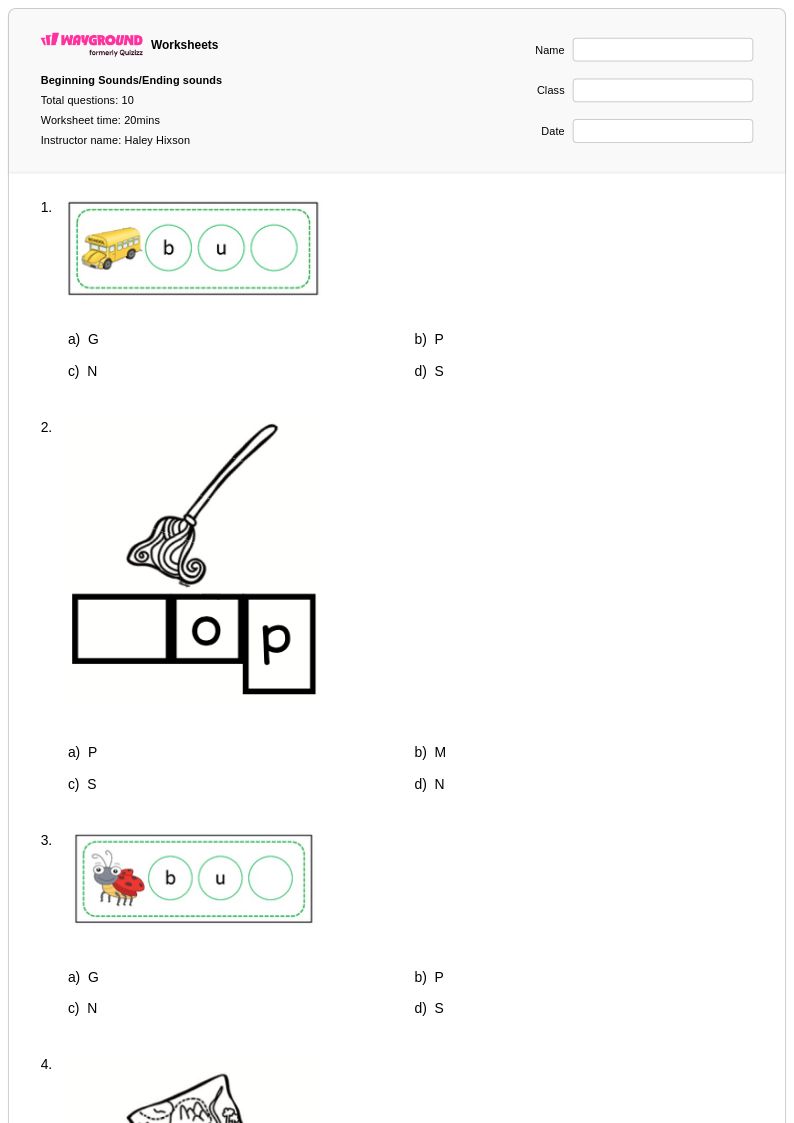
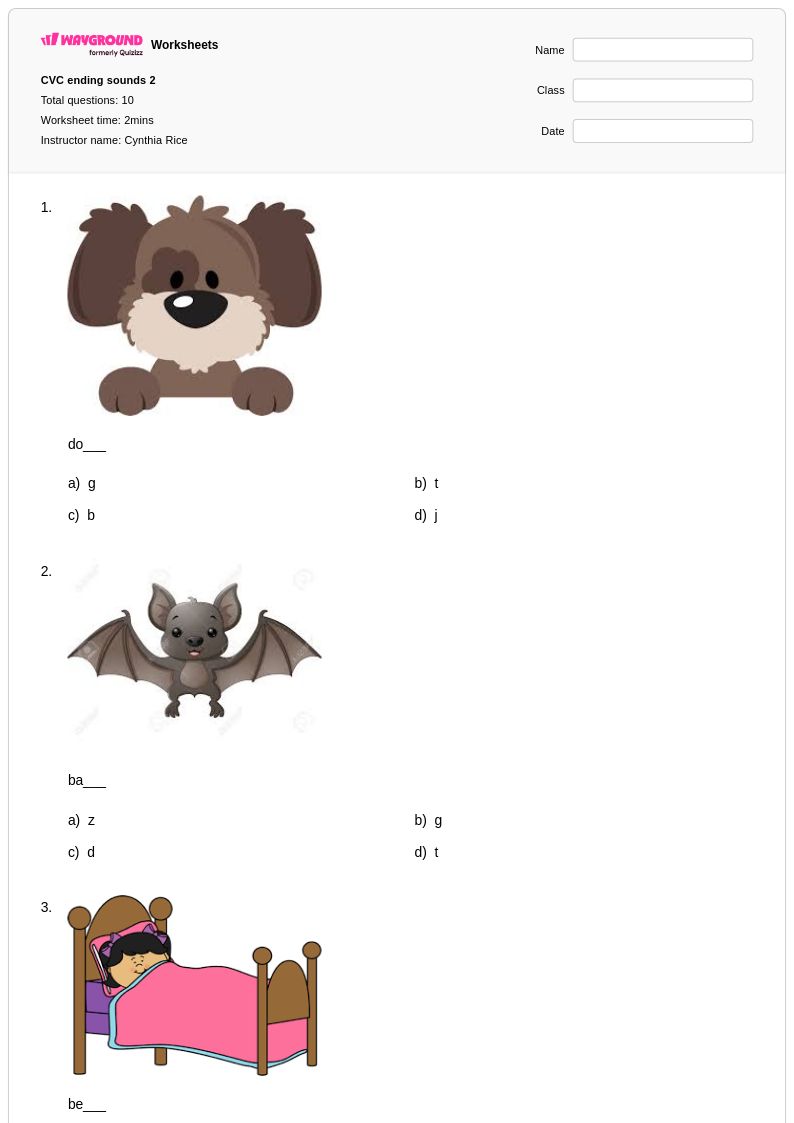
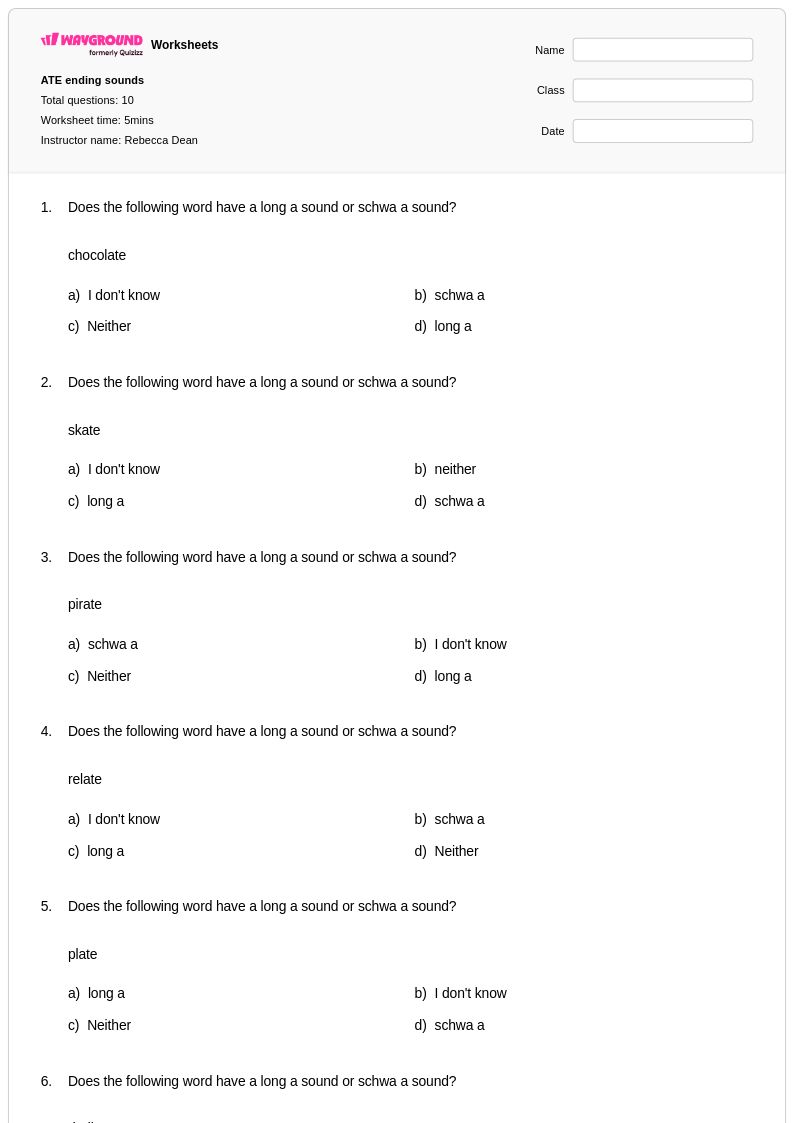
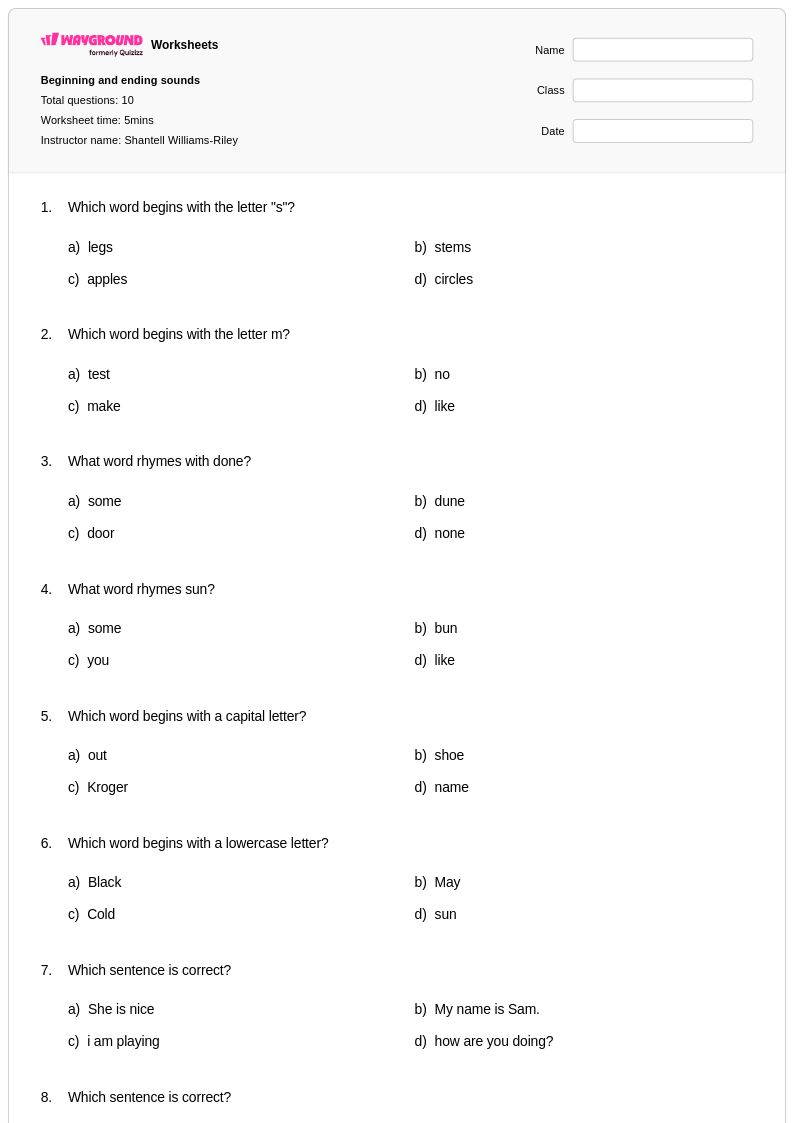
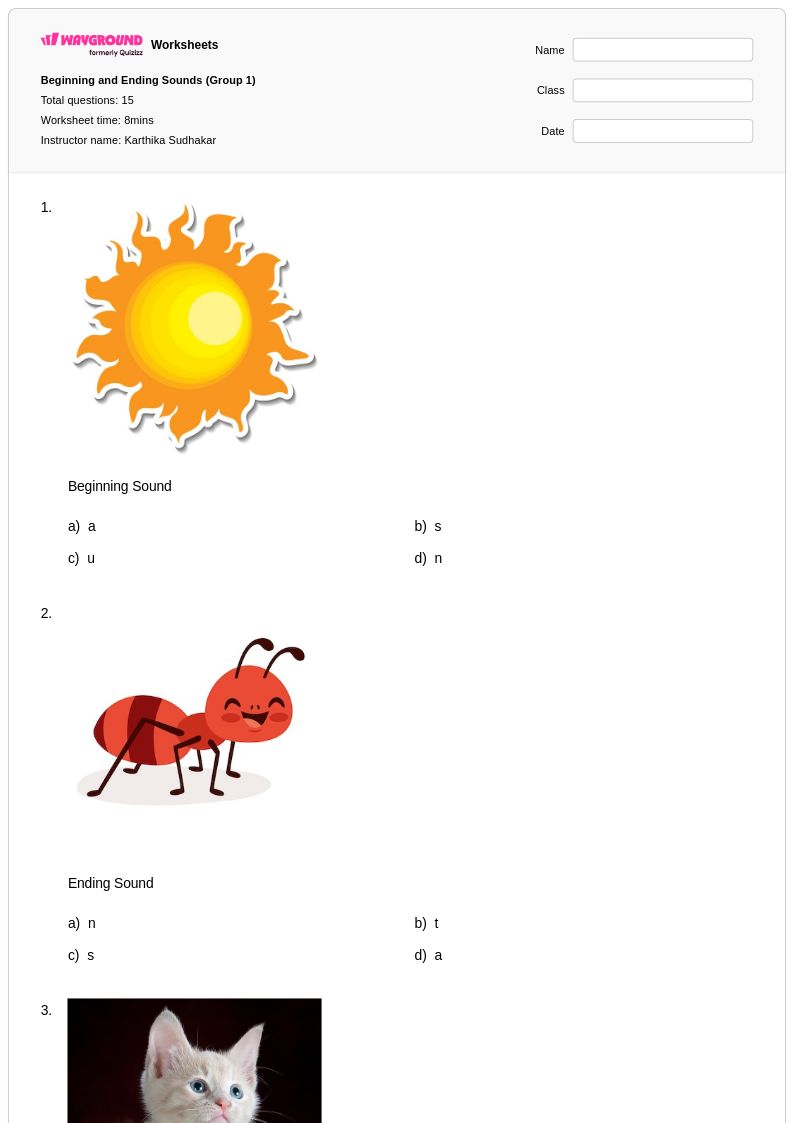
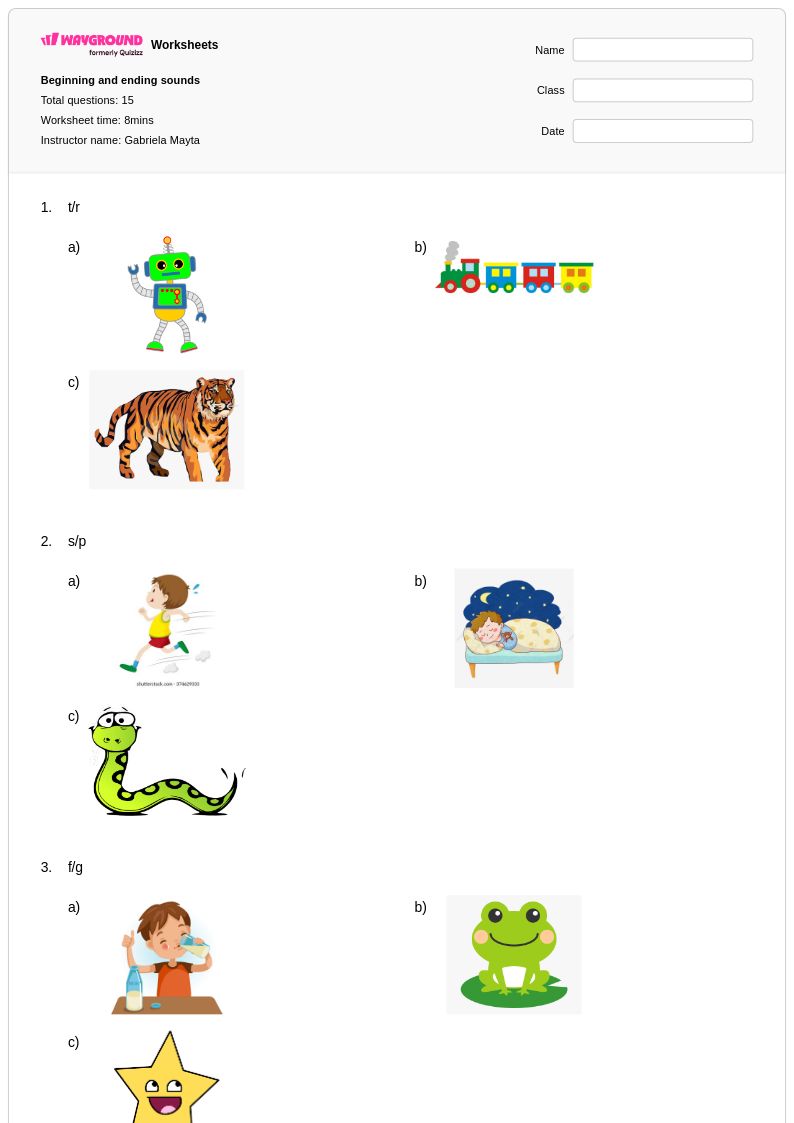
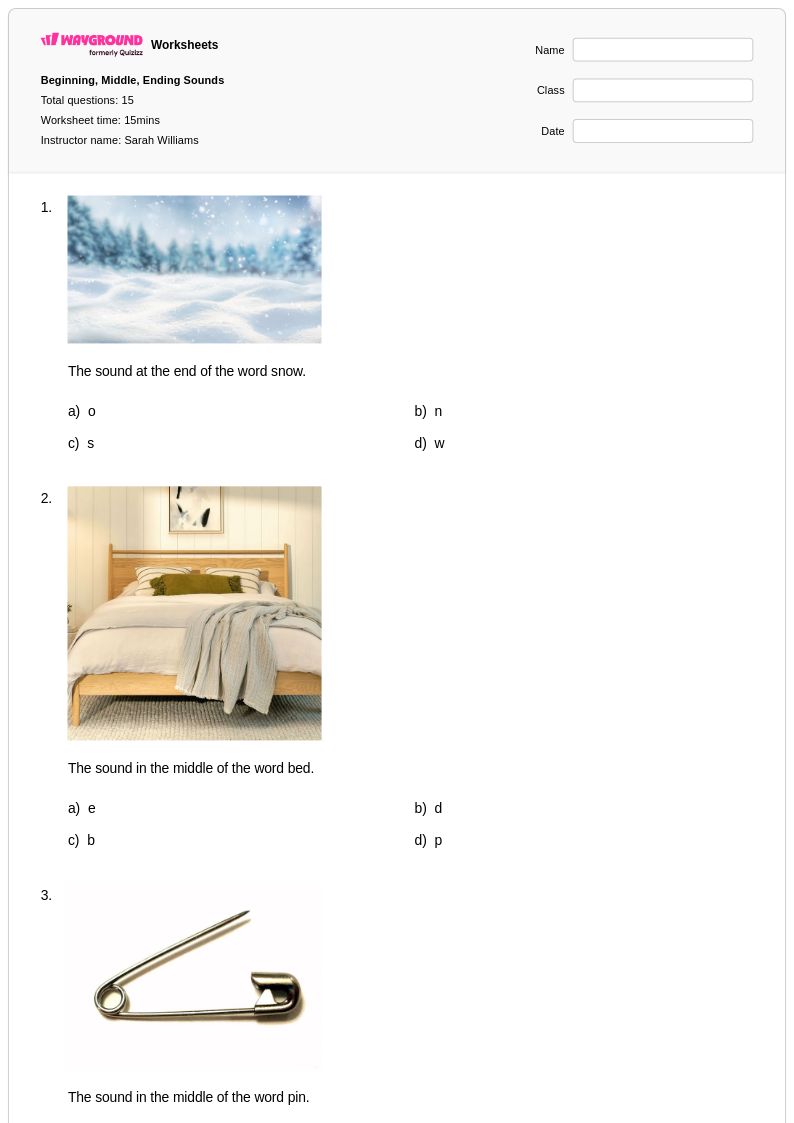
Explore Wayground's collection of free ending sounds worksheets and printables that help students master phonics by identifying final letter sounds through engaging practice problems with answer keys.
Ending sounds worksheets from Wayground (formerly Quizizz) provide essential phonological awareness practice that helps students master the critical skill of identifying final consonant and vowel sounds in words. These comprehensive printables target the foundational ability to isolate and recognize ending phonemes, which directly supports reading fluency, spelling accuracy, and overall literacy development. Each worksheet collection includes carefully structured practice problems that progress from simple single-syllable words to more complex vocabulary, allowing students to build confidence while strengthening their auditory discrimination skills. Teachers can access complete answer keys and free pdf downloads that make implementation seamless, whether used for whole-class instruction, small group intervention, or independent practice sessions.
Wayground's extensive library contains millions of teacher-created ending sounds resources that support educators in delivering differentiated phonics instruction across diverse learning needs. The platform's robust search and filtering capabilities allow teachers to quickly locate worksheets aligned with specific standards and skill levels, while customization tools enable easy modification of content to match individual student requirements. These versatile materials are available in both printable and digital formats, including downloadable pdfs that facilitate flexible lesson planning and accommodate various classroom environments. Whether implementing targeted remediation for struggling readers, providing enrichment opportunities for advanced learners, or establishing consistent skill practice routines, teachers can rely on this comprehensive collection to support systematic phonemic awareness instruction that builds the foundation for successful reading development.
FAQs
How do I teach ending sounds to early readers?
Teaching ending sounds begins with explicit, auditory-focused instruction where students listen to words and isolate the final phoneme before connecting it to a letter. Effective strategies include say-it-and-move-it phoneme segmentation, sorting picture cards by final sound, and using minimal pairs (e.g., 'cat' vs. 'cap') to highlight how ending sounds change word meaning. Once students can hear ending sounds reliably, transition to print-based practice that reinforces the sound-symbol connection.
What exercises help students practice identifying final consonant sounds?
Effective practice exercises include picture-name matching tasks where students identify the ending sound of an illustrated word, fill-in-the-blank activities that require selecting the correct final letter, and word sorting by shared ending sound. Worksheets that progress from single-syllable CVC words to slightly more complex vocabulary allow students to build automaticity at each stage before moving forward. Repeated, low-stakes practice with immediate feedback is key to building fluency with final phonemes.
What common mistakes do students make when identifying ending sounds?
The most frequent error is confusing the ending sound with the ending letter, particularly in words where a vowel-consonant-e pattern or a digraph is involved (e.g., students may name the letter 'e' as the ending sound in 'bike'). Students also frequently blend the medial vowel sound into their ending sound response, saying the rime rather than the final phoneme alone. Targeted practice that isolates only the final phoneme, separate from the vowel, helps correct this pattern.
How can I use ending sounds worksheets to support struggling readers?
For struggling readers, ending sounds worksheets work best as small-group intervention tools where the teacher can model phoneme isolation aloud before students attempt independent practice. Start with worksheets focused on simple CVC words with voiced stop consonants (e.g., /d/, /g/, /b/) since these ending sounds are the easiest to hear and sustain. On Wayground, teachers can enable accommodations such as Read Aloud so students hear questions and prompts read to them, and Reduced Answer Choices to lower cognitive load during digital practice sessions.
How do I use ending sounds worksheets from Wayground in my classroom?
Wayground's ending sounds worksheets are available as printable PDFs for traditional classroom use and in digital formats for technology-integrated learning environments, including the option to host them as a quiz directly on Wayground. Printable versions work well for independent seatwork, take-home practice, or small group instruction, while digital versions allow teachers to assign practice remotely or track student responses in real time. Each worksheet includes a complete answer key, making self-correction and formative assessment straightforward.
At what age or grade level should students master ending sounds?
Most phonics scope-and-sequences introduce ending sounds in kindergarten alongside beginning sounds, with mastery expected by the end of kindergarten or early first grade for common CVC words. Students who have not yet reliably identified final consonant sounds by mid-first grade may benefit from targeted intervention, as this skill directly underpins spelling and decoding accuracy. Ending sounds practice remains relevant through early second grade for students working with more complex word families and consonant blends.