Free Printable Fiction Text Features Worksheets for Class 4
Enhance Class 4 students' reading comprehension with our free fiction text features worksheets and printables, complete with practice problems and answer keys to master literary elements identification.
Explore printable Fiction Text Features worksheets for Class 4
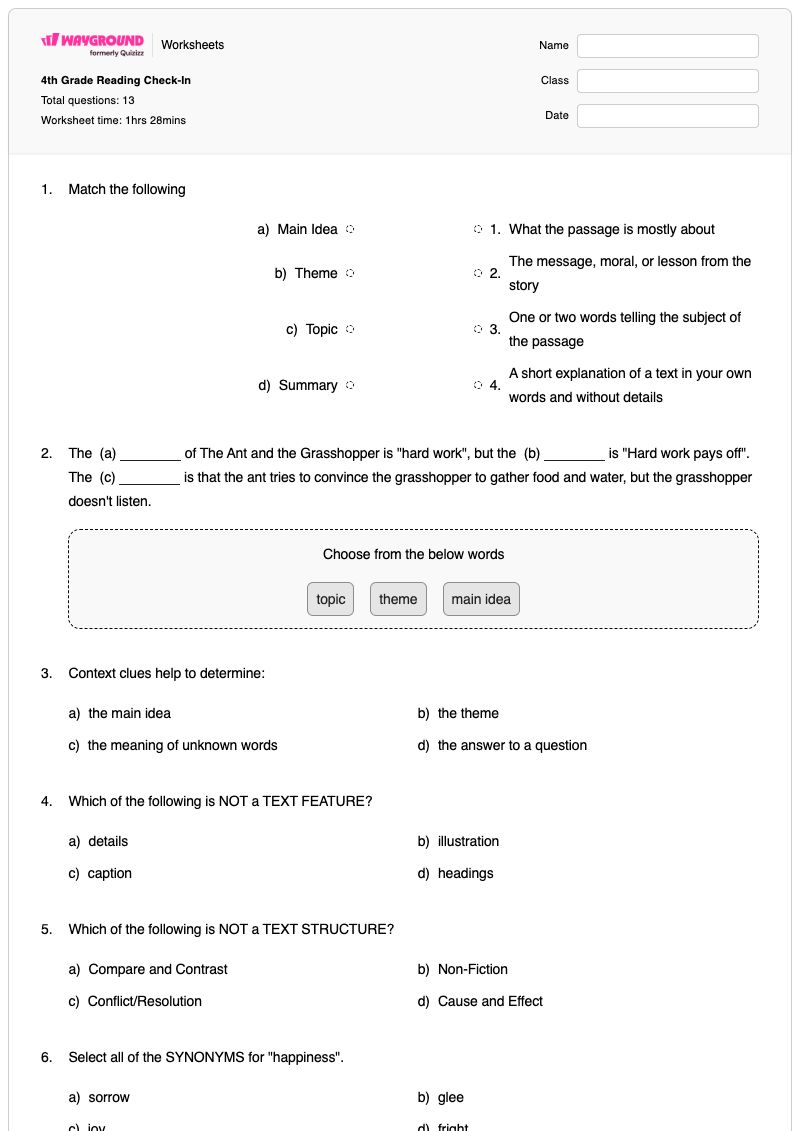
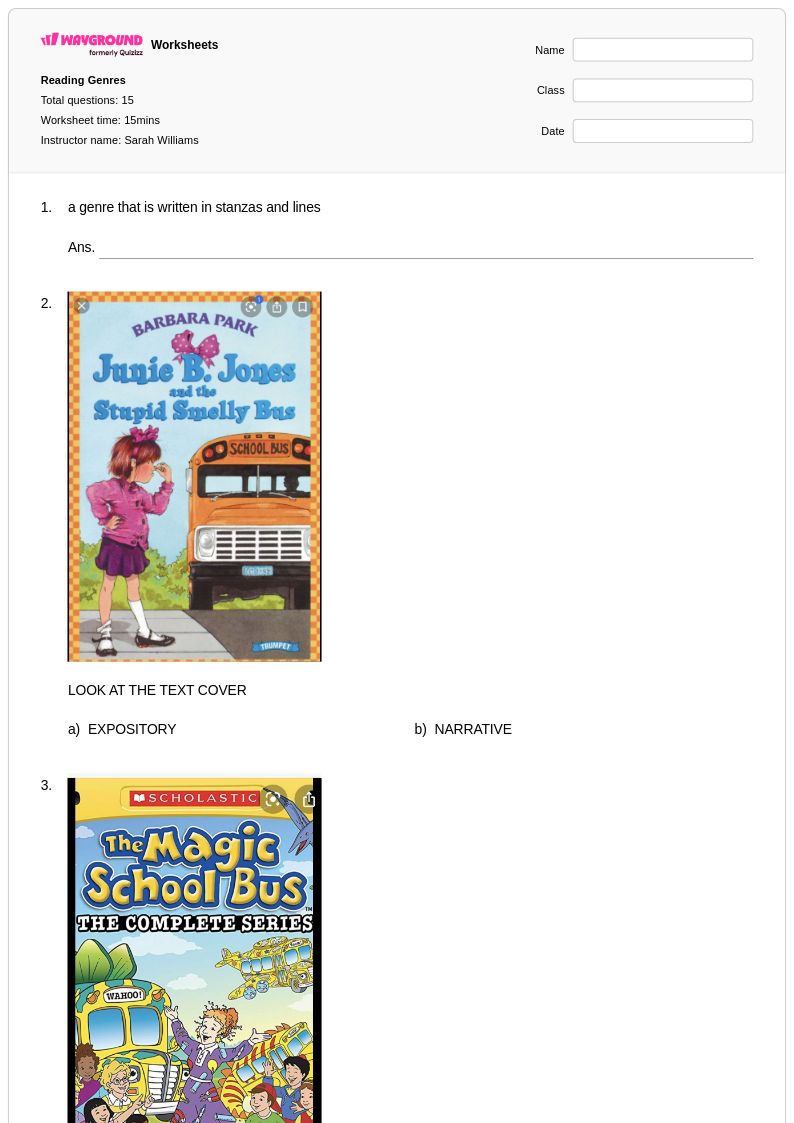
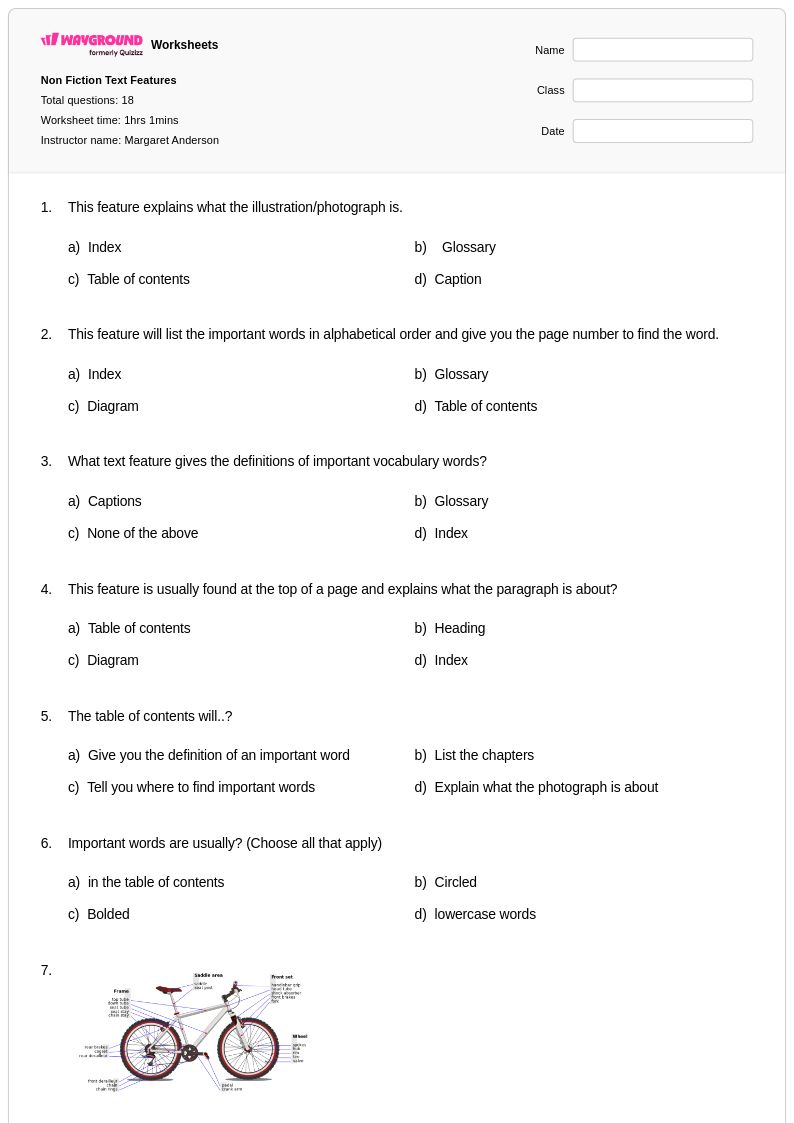
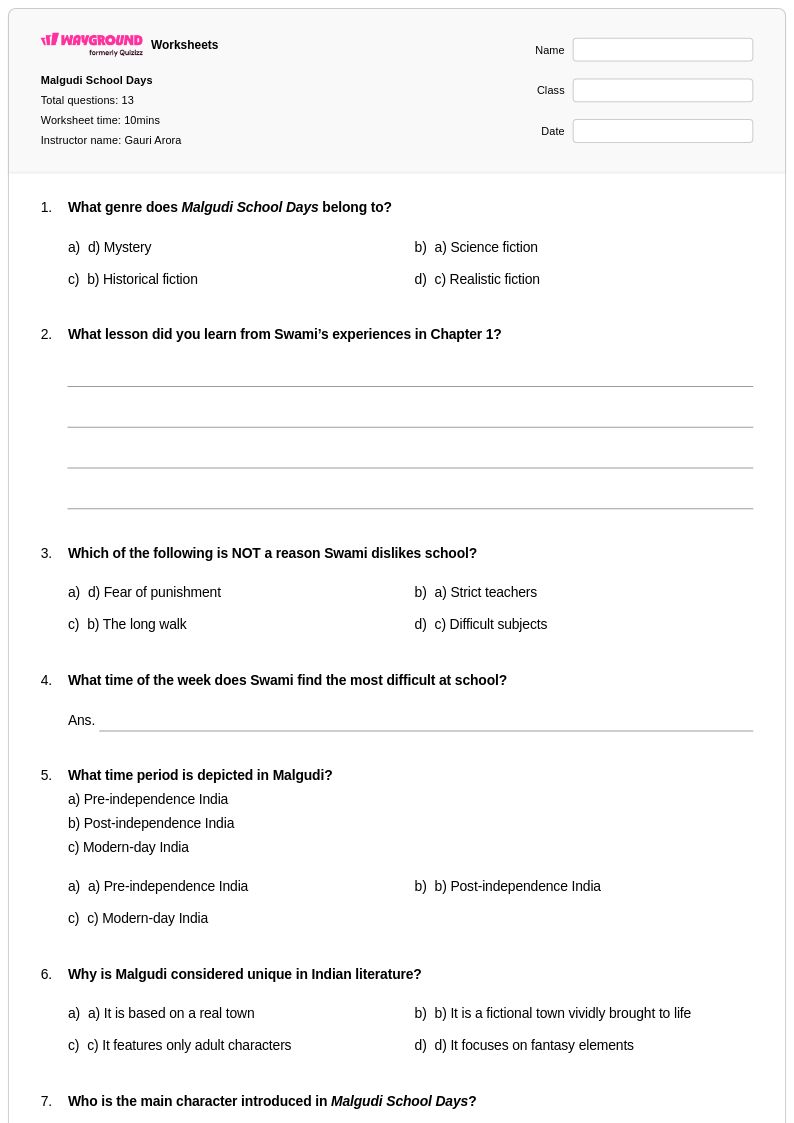
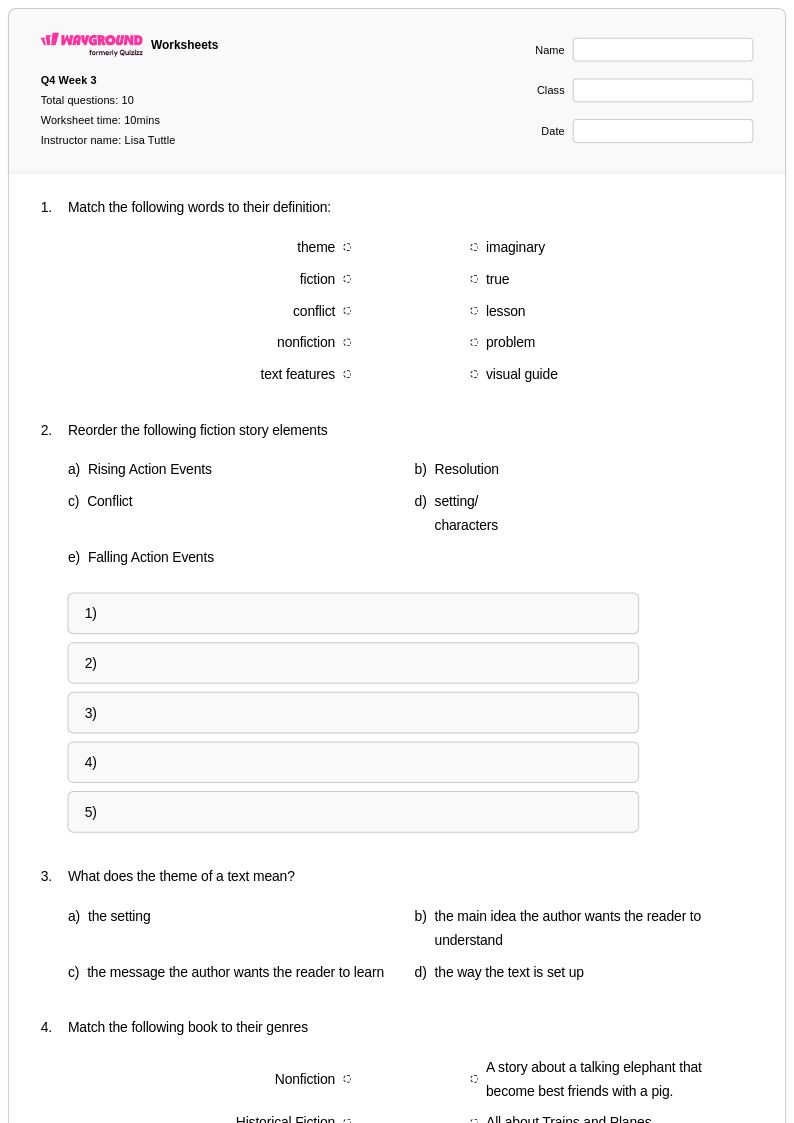
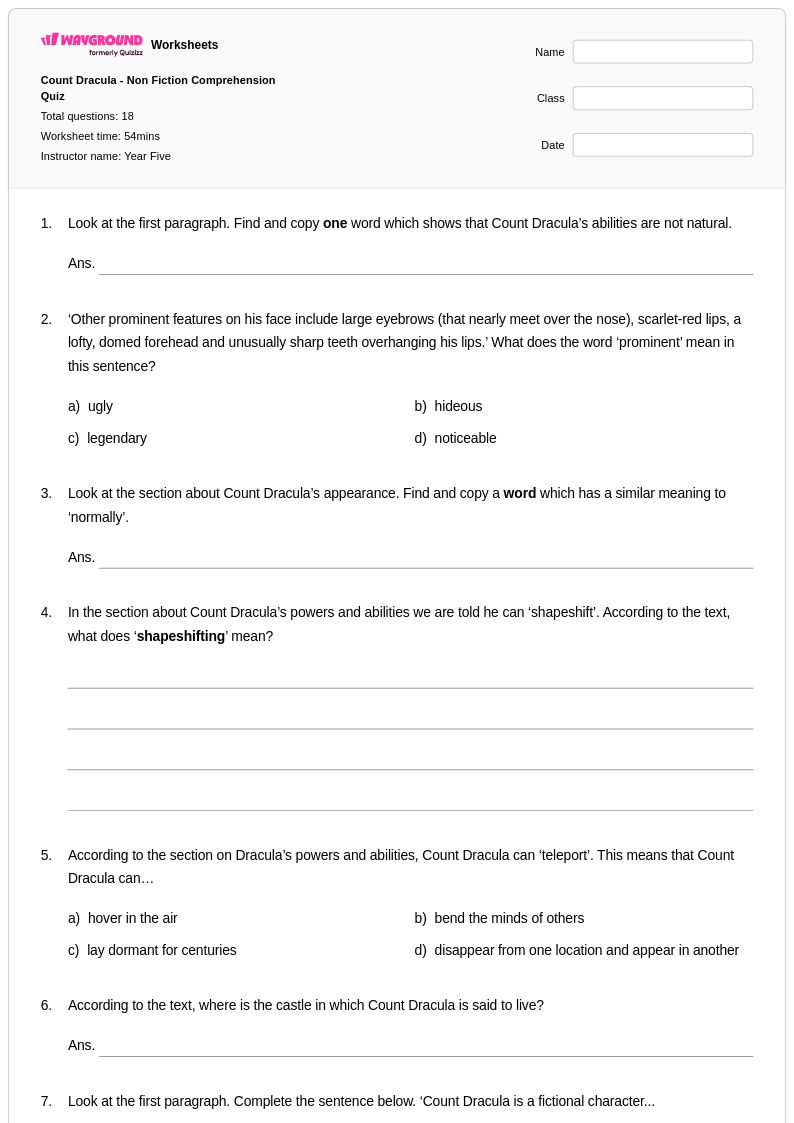
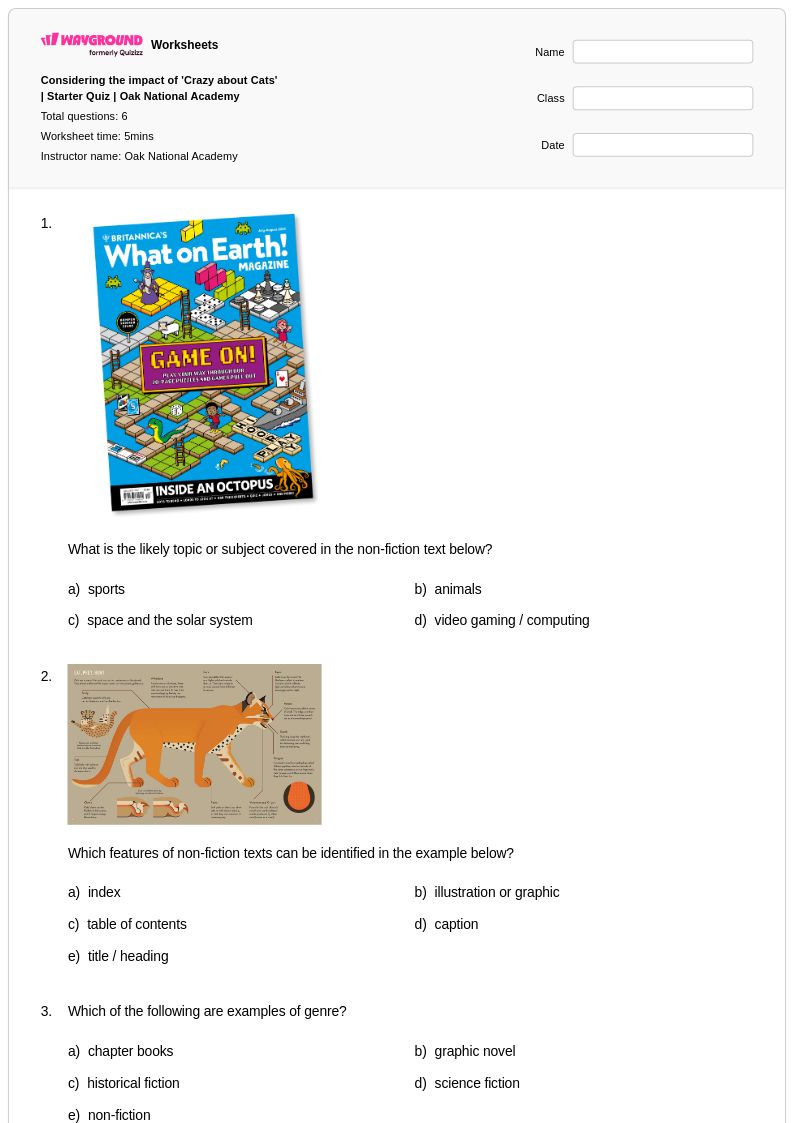
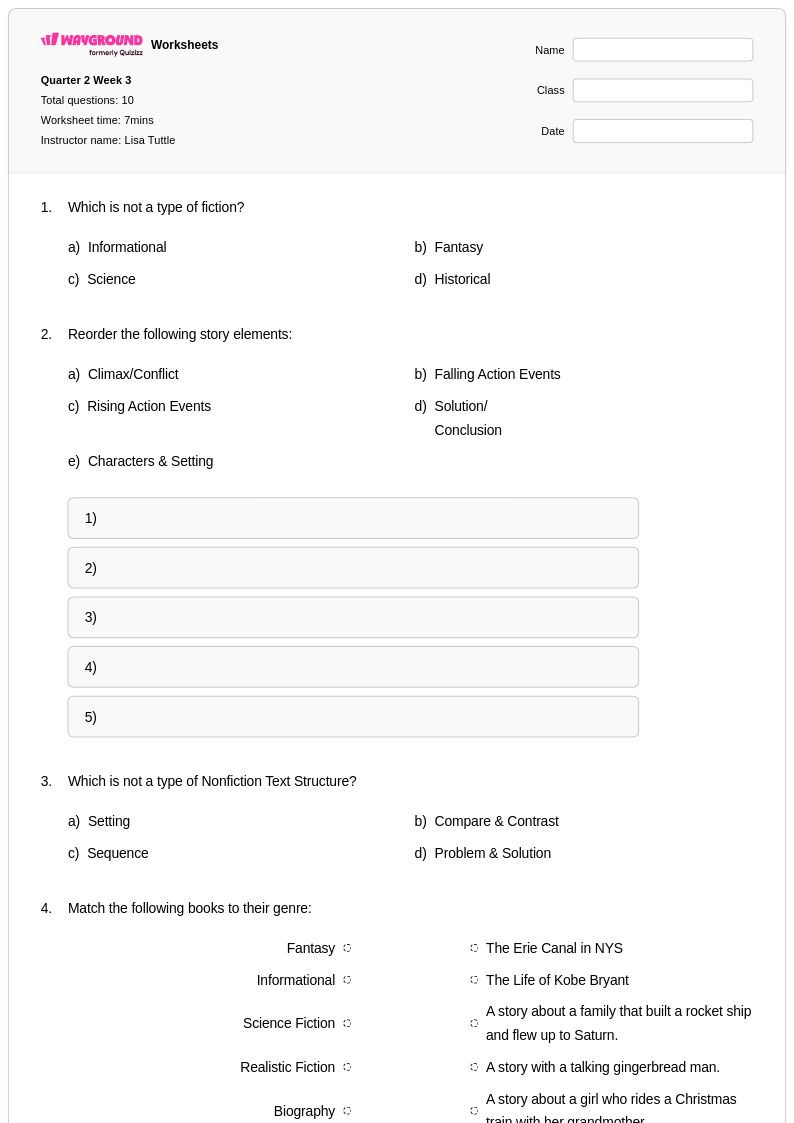
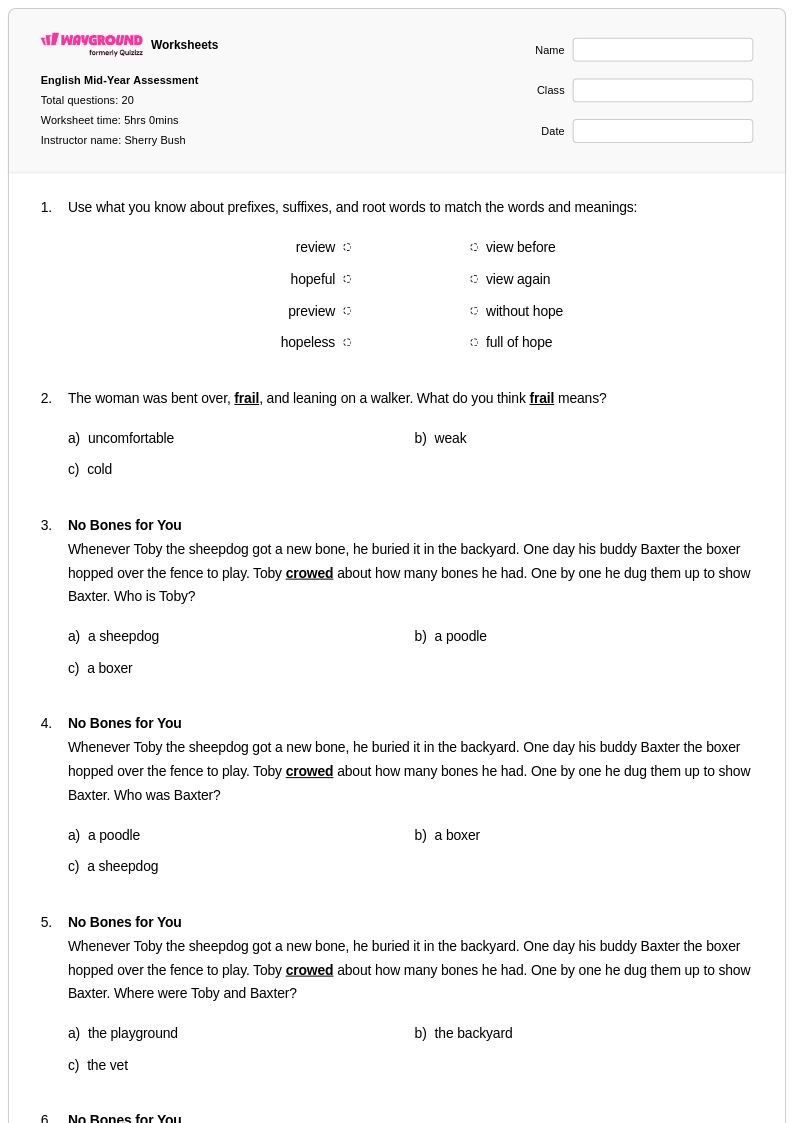
Fiction text features for Class 4 students represent a critical component of reading comprehension development, and Wayground's extensive worksheet collection addresses this essential skill area with precision and depth. These carefully crafted worksheets guide fourth-grade learners through the identification and analysis of key fiction elements including character development, setting details, plot structure, dialogue formatting, and chapter organization. Students engage with practice problems that strengthen their ability to navigate title pages, table of contents, illustrations with captions, and other structural elements that support fictional narratives. Each worksheet includes a comprehensive answer key, enabling both independent student practice and guided instruction, while the free printables format ensures accessibility for diverse classroom environments and learning scenarios.
Wayground's robust platform, formerly known as Quizizz, empowers educators with millions of teacher-created resources specifically designed for fiction text features instruction at the Class 4 level. The platform's advanced search and filtering capabilities allow teachers to locate worksheets that align perfectly with state standards and curriculum requirements, while differentiation tools enable seamless adaptation for students with varying reading abilities and learning needs. These customizable resources are available in both printable pdf format and interactive digital versions, providing flexibility for traditional classroom instruction, remote learning environments, and blended educational approaches. Teachers leverage these comprehensive worksheet collections for targeted skill practice, remediation support for struggling readers, enrichment opportunities for advanced students, and systematic lesson planning that builds sequential understanding of how fiction text features enhance reading comprehension and literary analysis skills.
FAQs
How do I teach fiction text features to my students?
Start by anchoring instruction in a shared text students are already reading, pointing out specific features like chapter titles, dialogue formatting, flashbacks, and foreshadowing as they appear in context. Teaching fiction text features works best when students see them as deliberate authorial choices rather than arbitrary conventions — ask students to explain why an author used italics for a character's internal thought or why a paragraph break appears where it does. Repeated exposure across multiple texts helps students internalize how these features shape pacing, atmosphere, and comprehension.
What exercises help students practice identifying fiction text features?
Effective practice exercises ask students to locate and label specific features within a passage — such as marking dialogue with quotation marks, identifying a flashback sequence, or circling foreshadowing indicators — then explain the narrative function each feature serves. Moving from identification to analysis is key: students should not just find the feature but articulate how it affects their understanding of character, setting, or plot. Worksheets that pair short fictional excerpts with targeted questions give students focused, repeatable practice without requiring a full novel reading.
What mistakes do students commonly make when analyzing fiction text features?
The most common error is treating fiction text features as decorative rather than functional — students often note that dialogue appears without connecting it to character voice, relationship dynamics, or plot advancement. Students also frequently conflate foreshadowing with direct plot summary, missing the subtler textual cues authors embed to hint at future events. Another common misconception is assuming all descriptive passages serve the same purpose, when in practice setting details, character descriptions, and atmosphere-building passages each play distinct narrative roles.
How can I use fiction text features worksheets to differentiate instruction for different reading levels?
For students who struggle, focus worksheets on high-visibility features like chapter titles, paragraph breaks, and quotation marks before introducing more abstract elements like foreshadowing or narrative transitions. Advanced readers can be challenged with analysis questions that require them to compare how two authors use the same feature differently or evaluate whether a particular text feature is effective. On Wayground, teachers can apply accommodations such as read aloud support, reduced answer choices, and extended time to individual students, allowing the same worksheet to serve the full range of learners in one classroom.
How do I use fiction text features worksheets from Wayground in my classroom?
Wayground's fiction text features worksheets are available as printable PDFs for traditional classroom use and in digital formats for technology-integrated or remote learning environments, giving teachers flexibility in how they assign and collect student work. Teachers can also host worksheets directly as a quiz on Wayground, enabling real-time student responses and built-in answer key grading. Each worksheet includes a complete answer key, making it practical for independent practice, small group work, or homework assignments without additional teacher prep.
How do fiction text features differ from nonfiction text features, and why does the distinction matter?
Nonfiction text features — such as headings, captions, indexes, and text boxes — are primarily organizational tools designed to help readers locate and process factual information. Fiction text features, by contrast, serve narrative purposes: dialogue formatting establishes voice, italicized thoughts reveal interiority, and flashbacks restructure chronology to deepen meaning. Teaching students to distinguish between the two prevents the common error of applying informational reading strategies to literary texts, where the features require interpretive rather than navigational reading skills.