
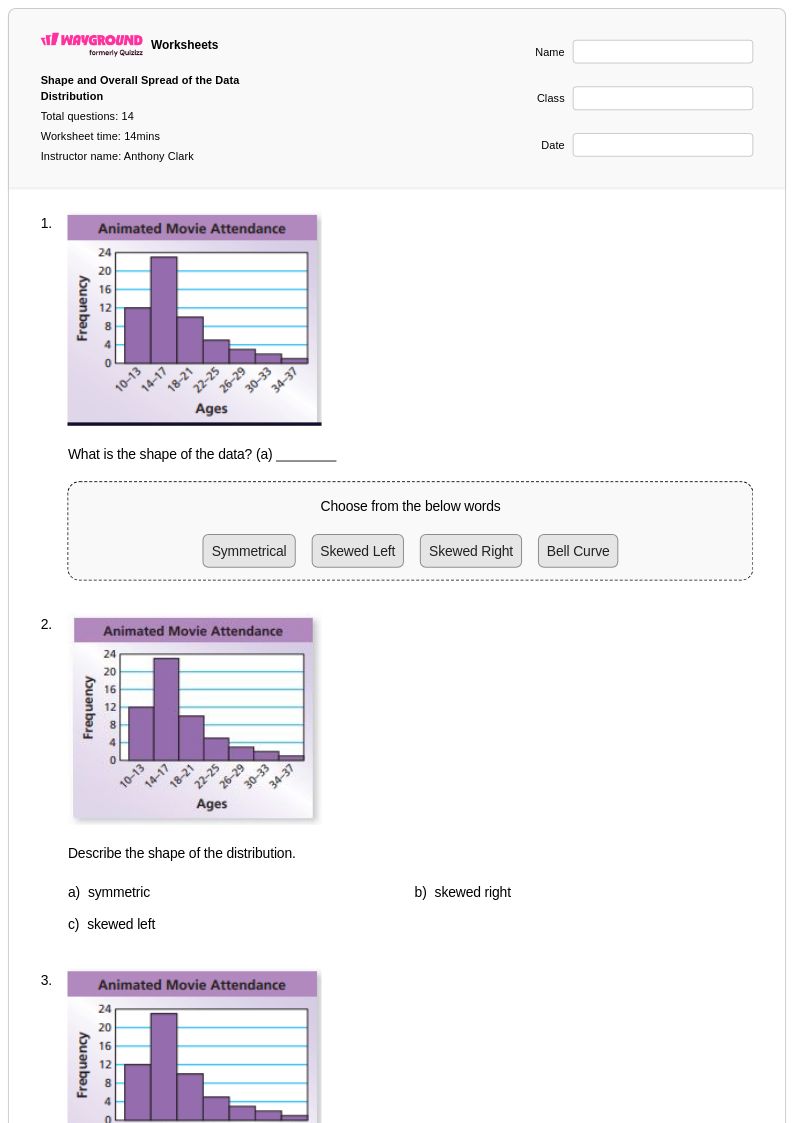
14 Q
6th - Uni
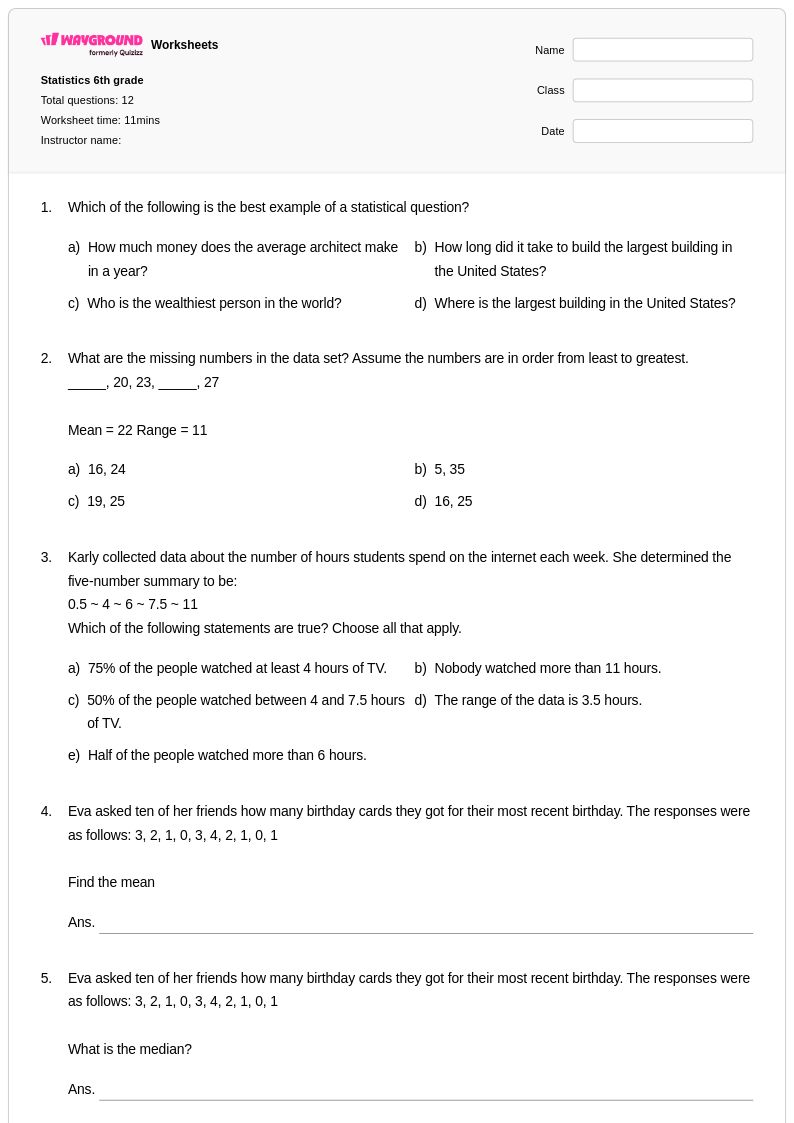
12 Q
6th - 7th
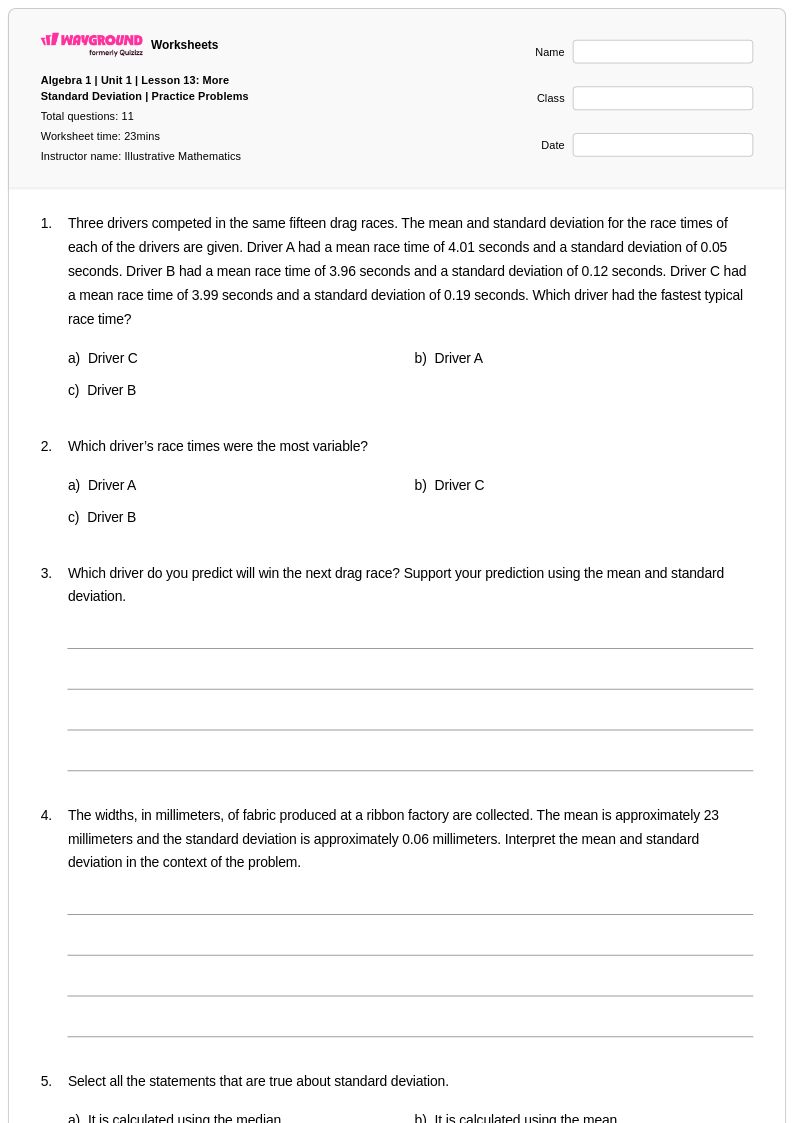
11 Q
6th - Uni
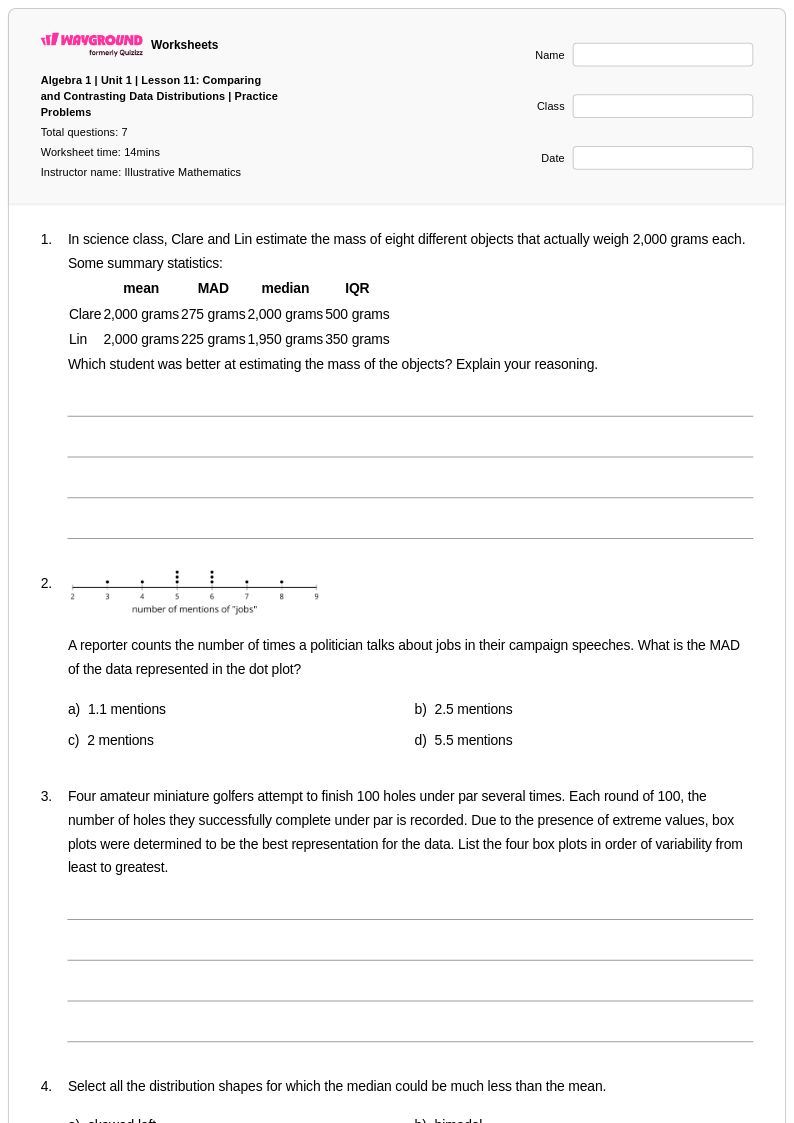
7 Q
6th - Uni
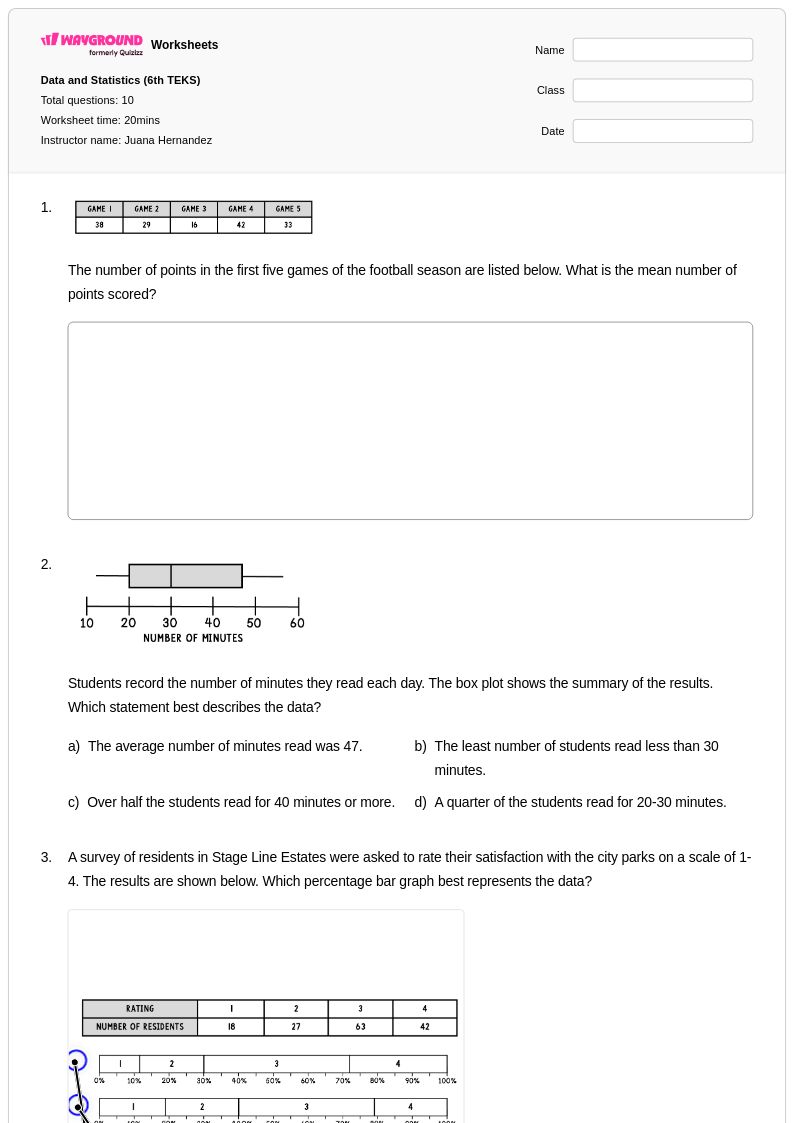
10 Q
6th
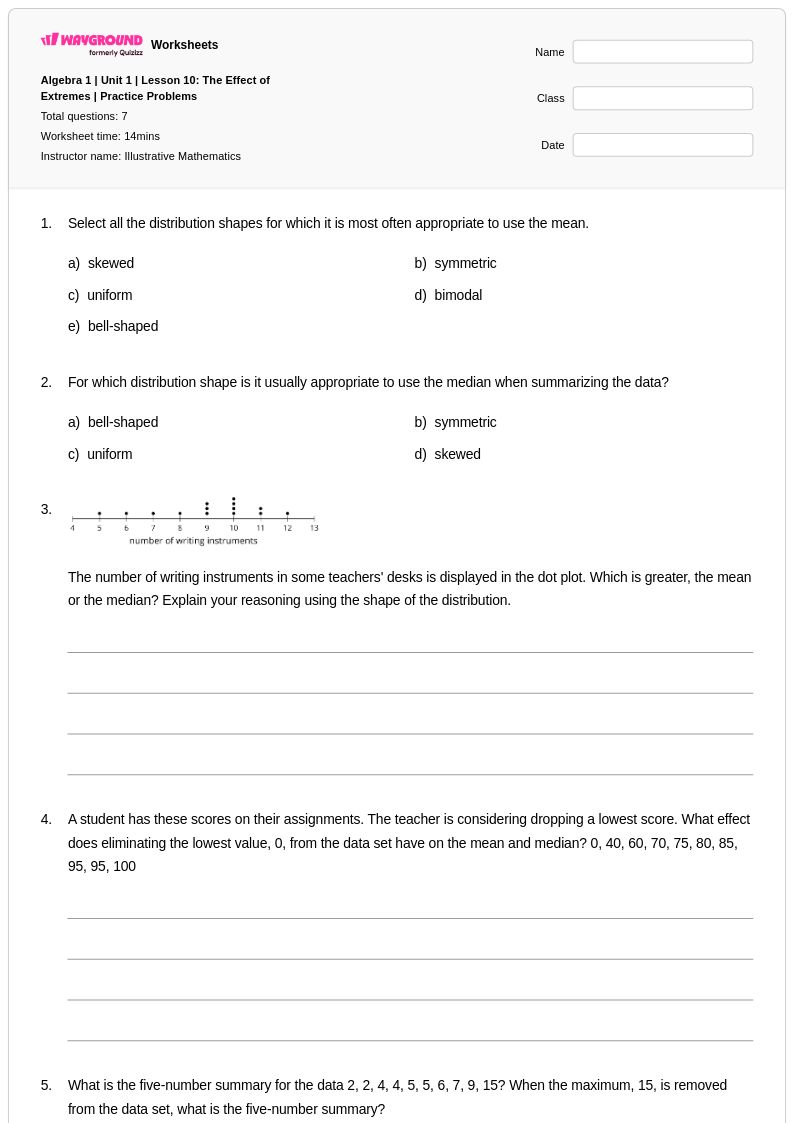
7 Q
6th - Uni

16 Q
6th
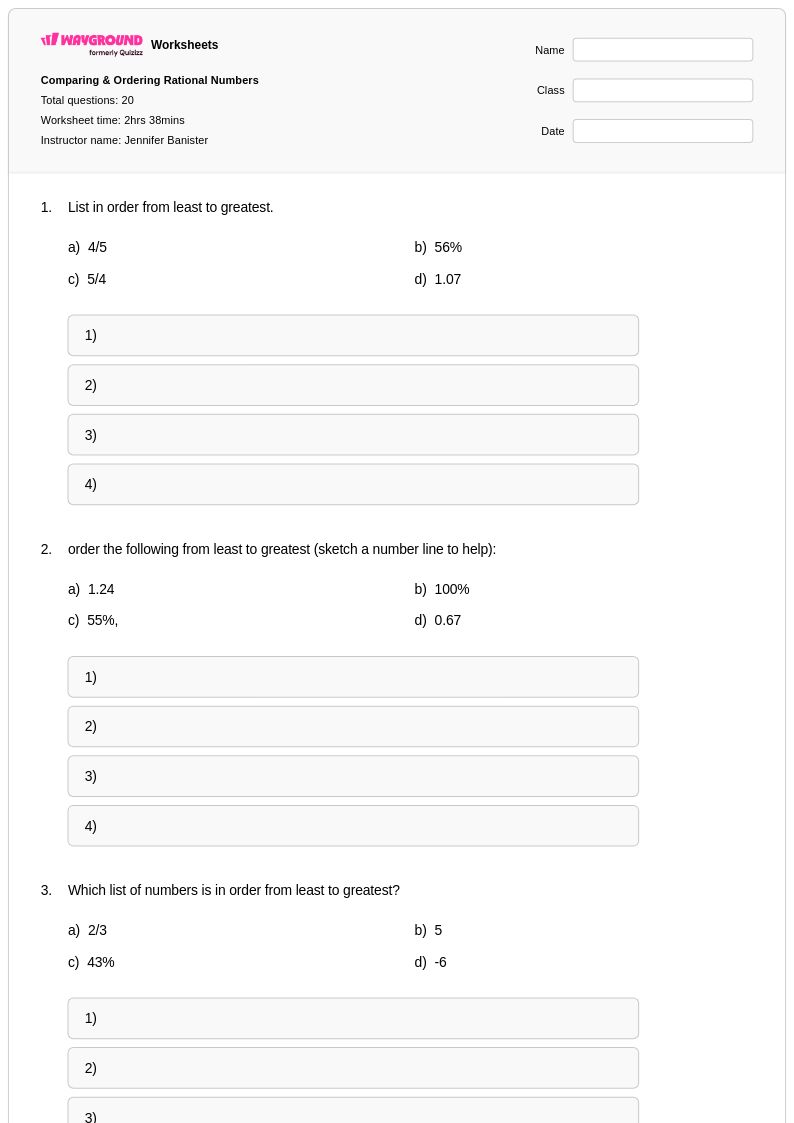
20 Q
6th - 8th
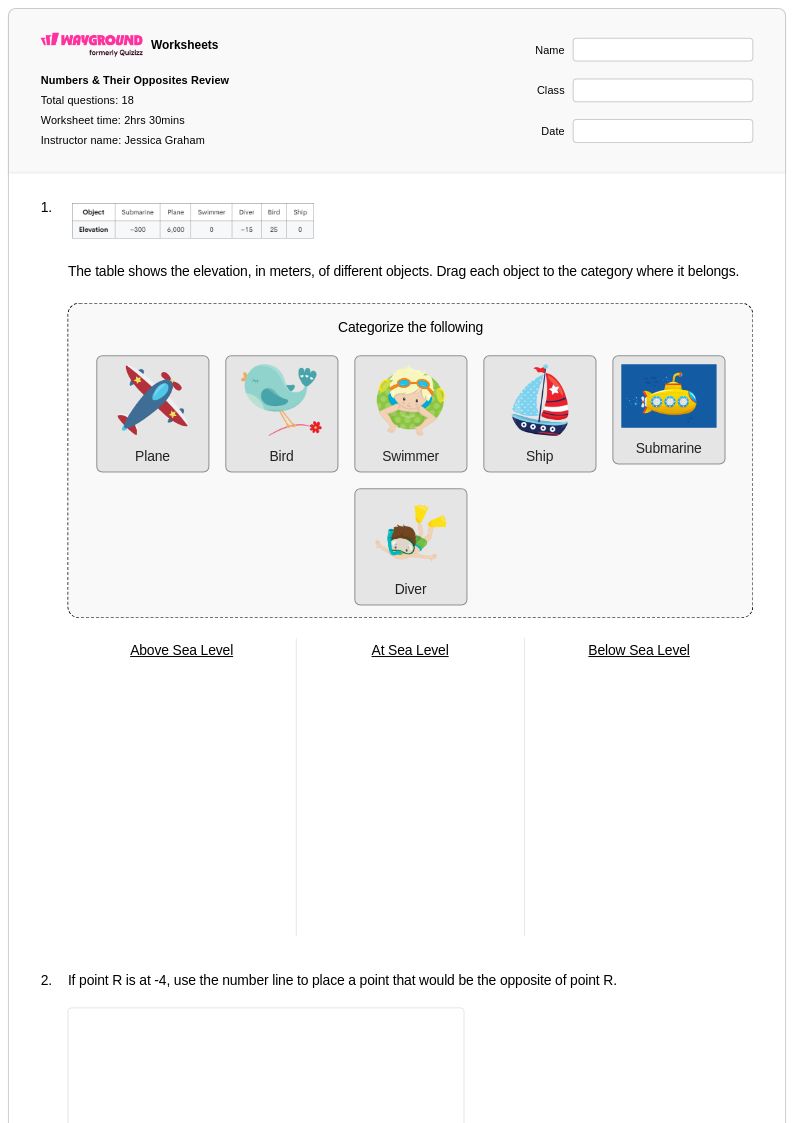
18 Q
6th
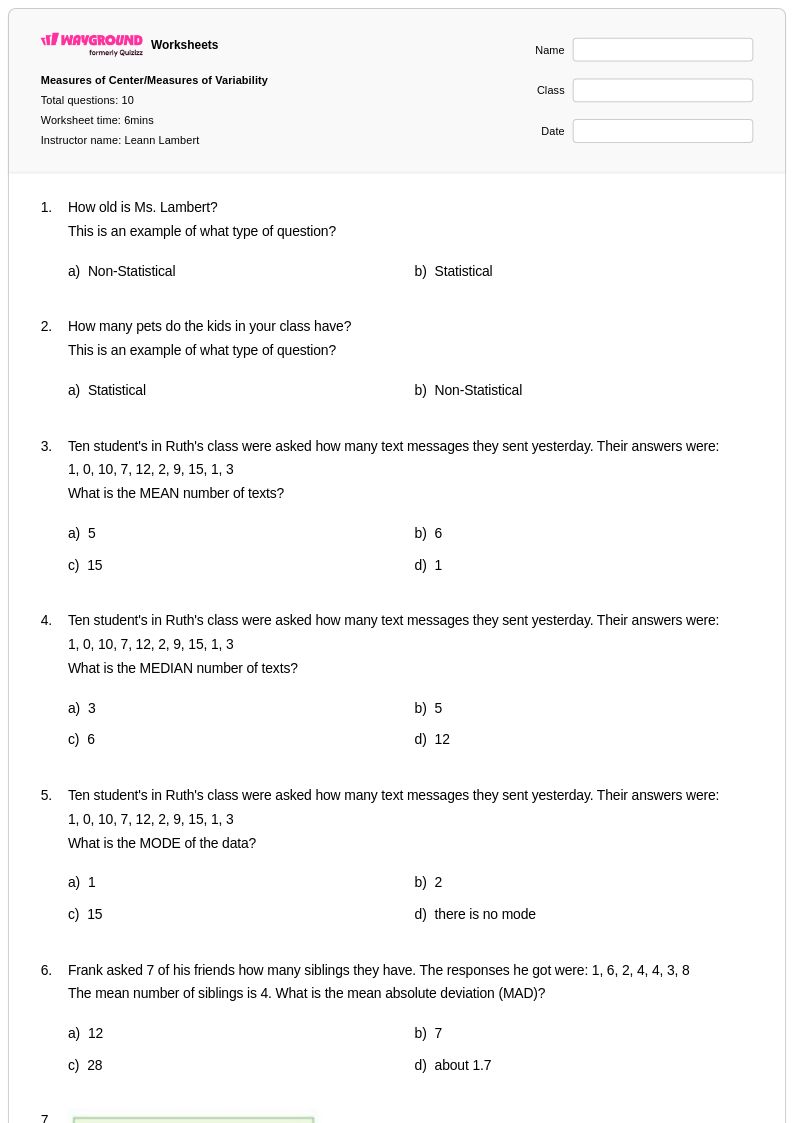
10 Q
6th - 7th
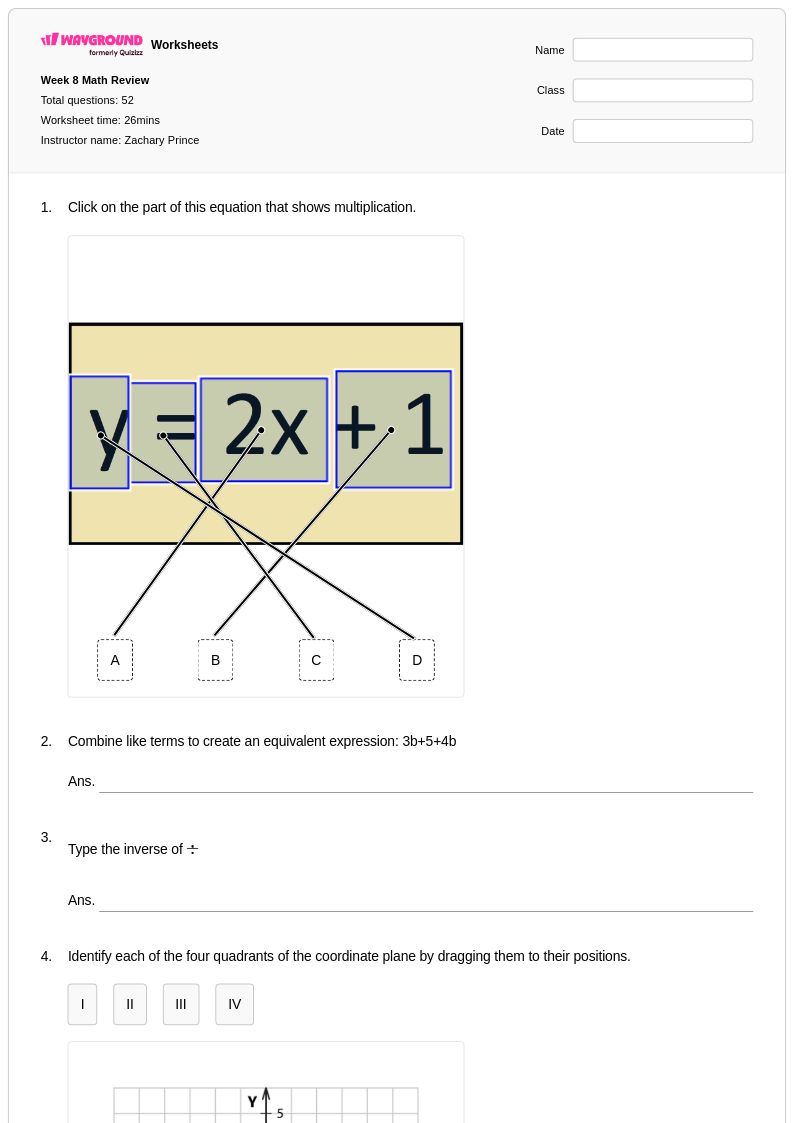
52 Q
6th
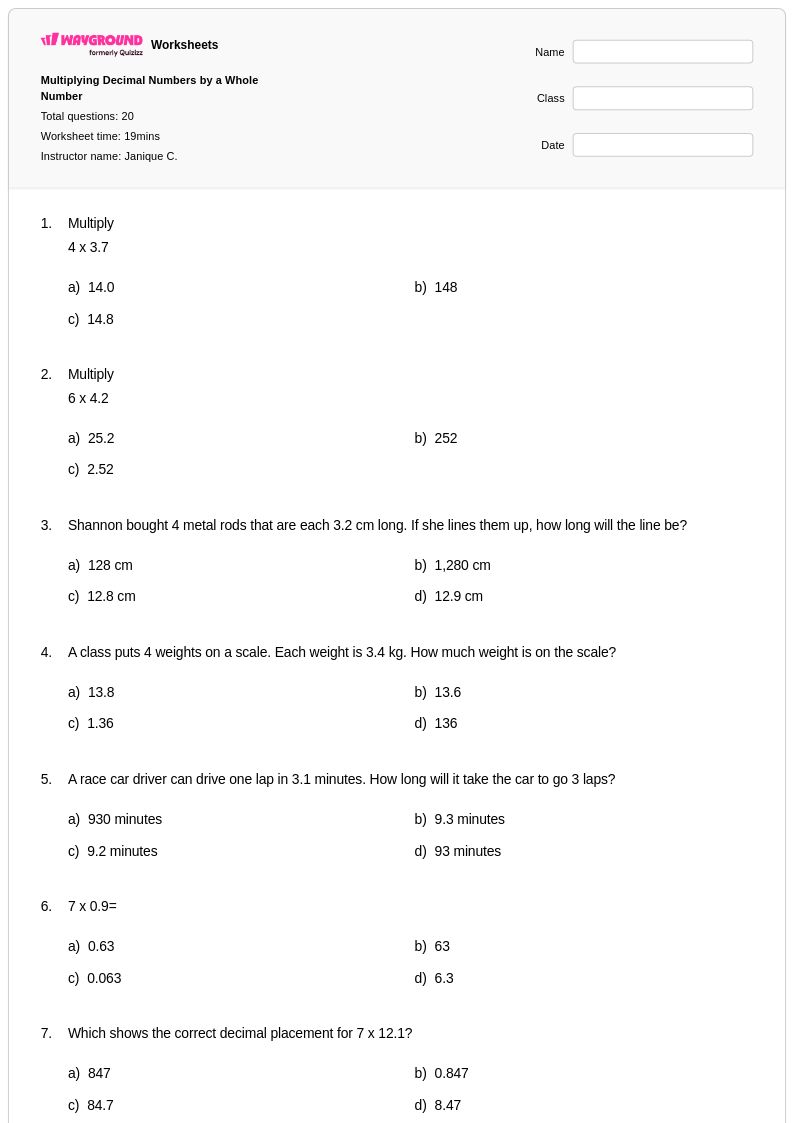
20 Q
6th
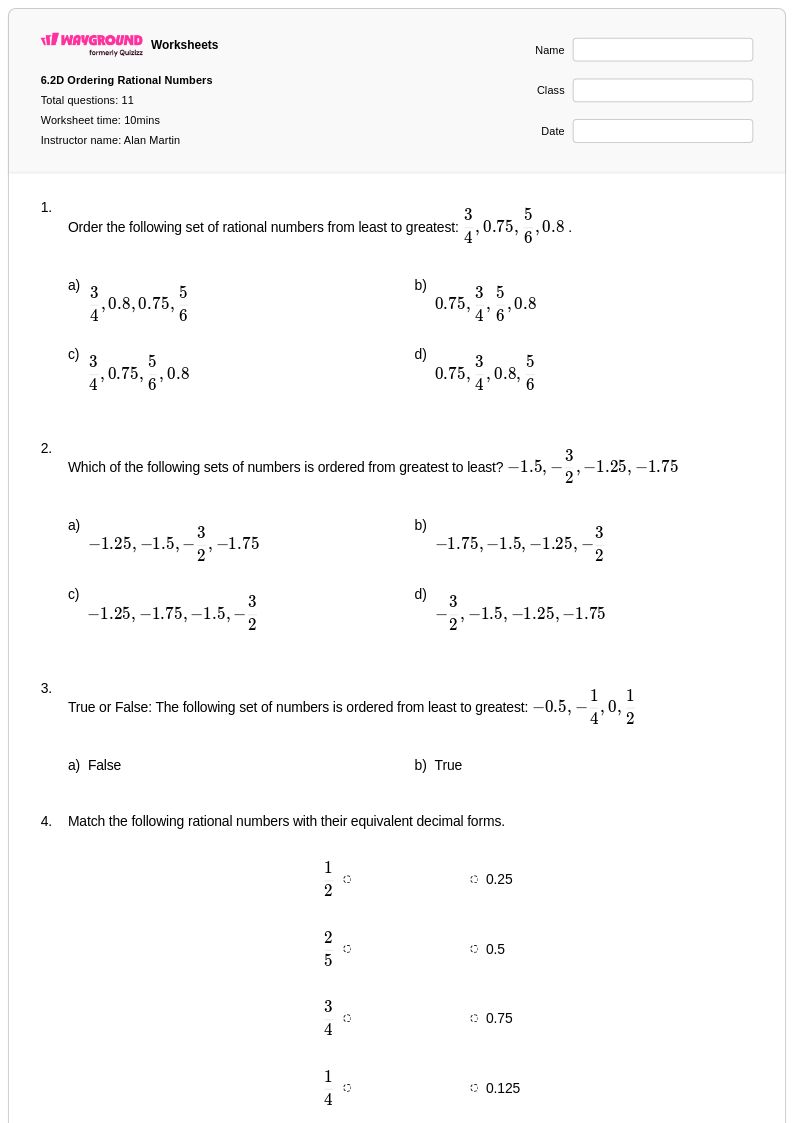
11 Q
6th
14 Q
6th
7 Q
6th
14 Q
6th
18 Q
6th - Uni
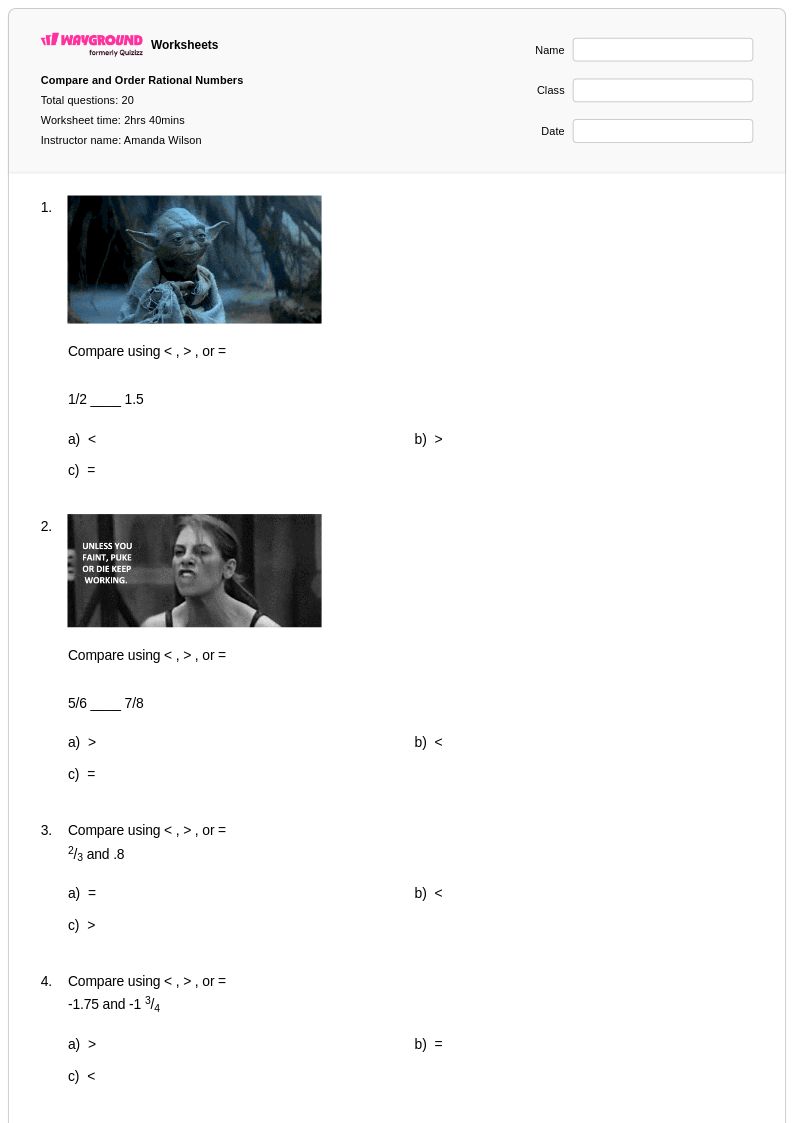
20 Q
6th
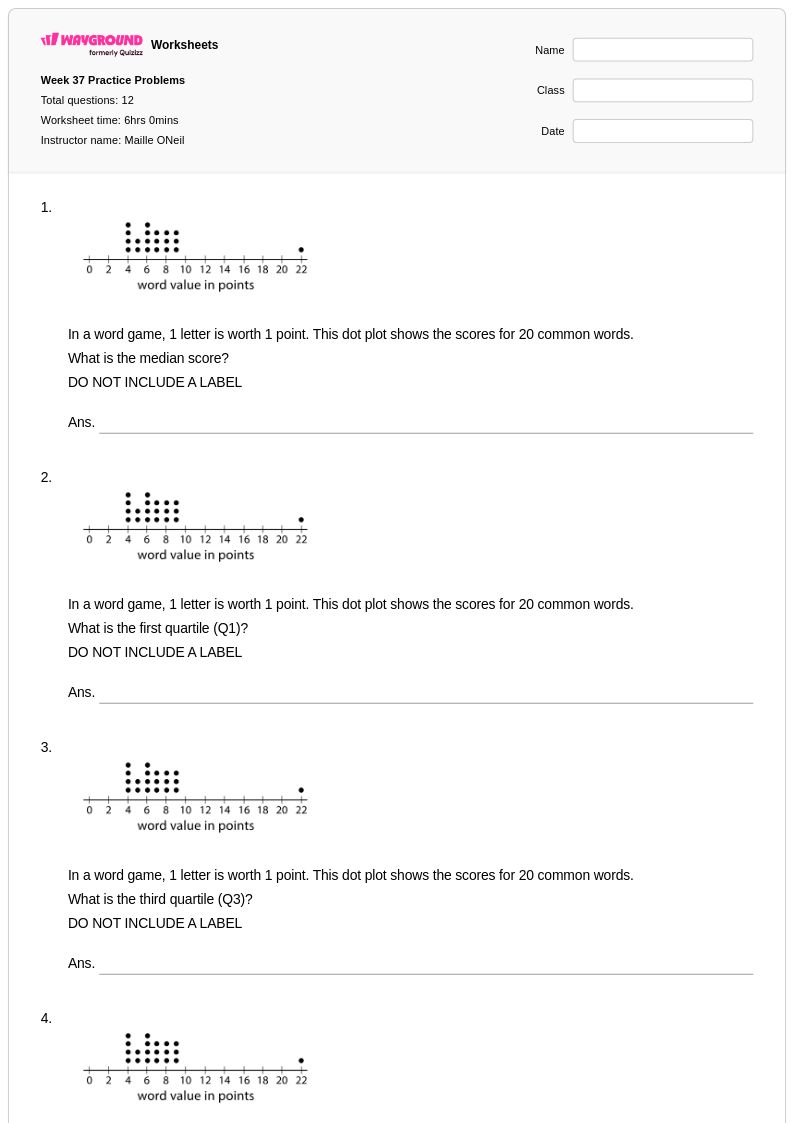
12 Q
6th
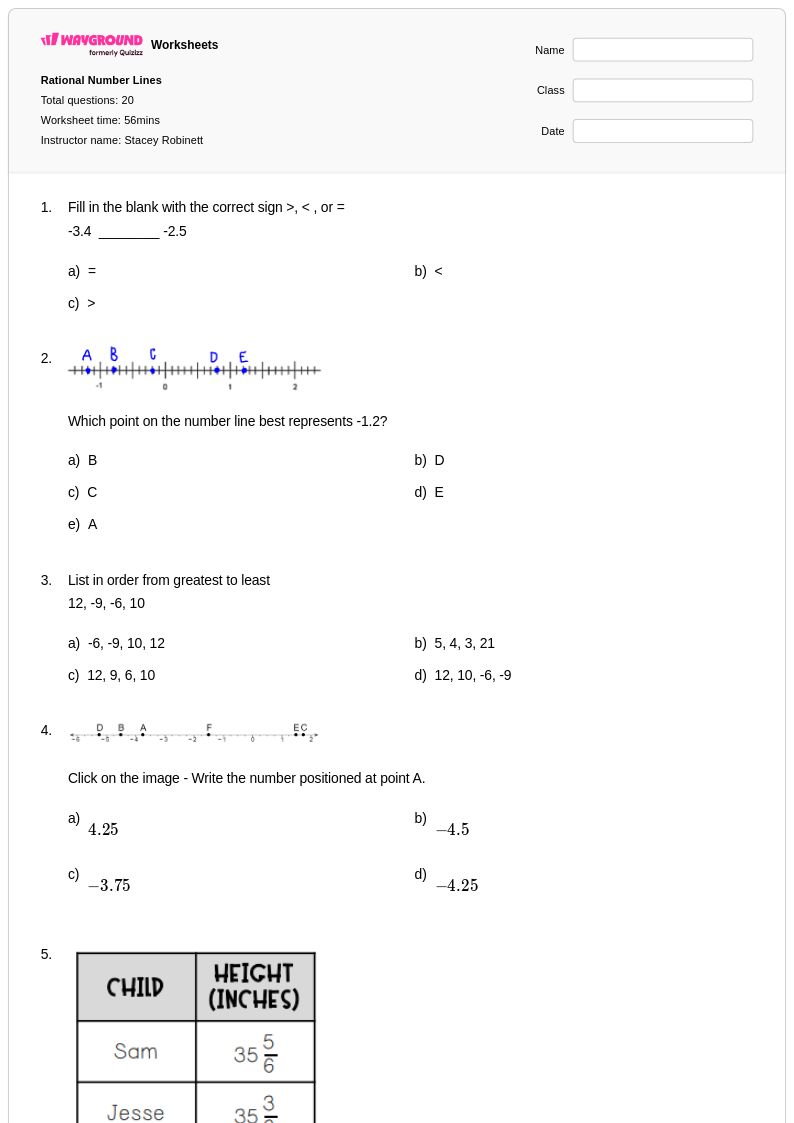
20 Q
6th - 7th
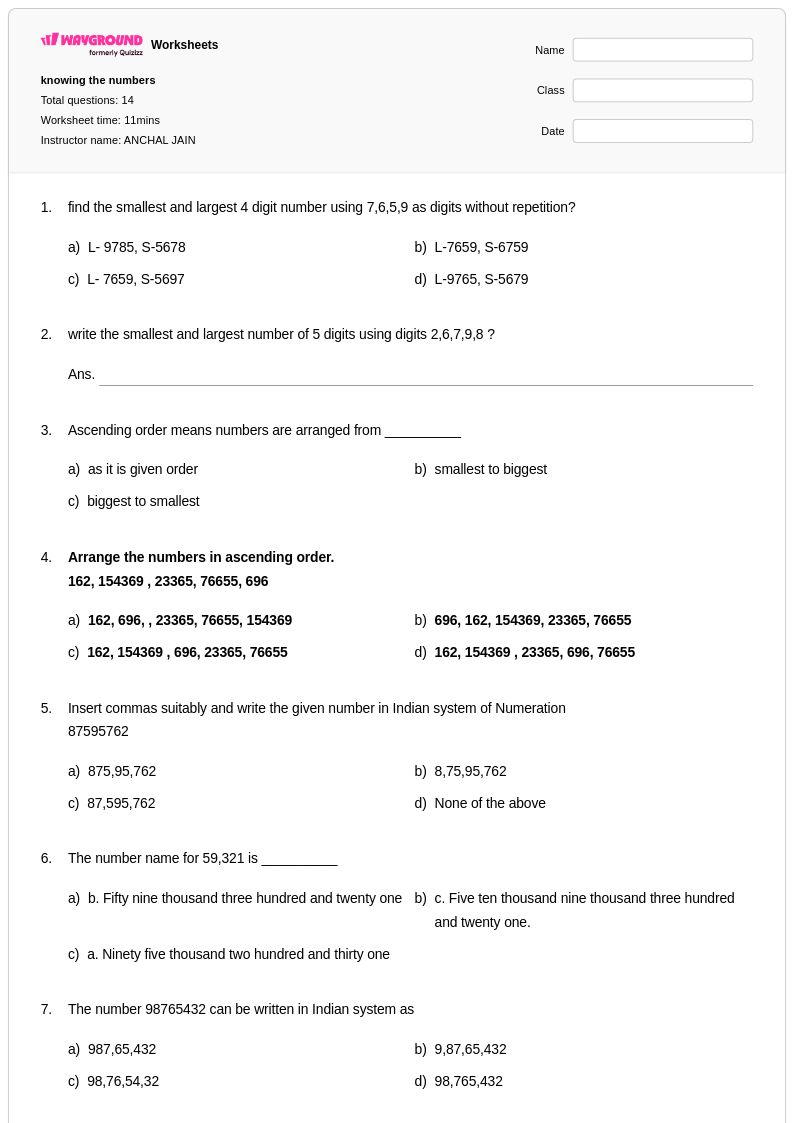
14 Q
6th
20 Q
6th

24 Q
6th
16 Q
6th
Explore Five Number Summary Worksheets by Grades
Explore Other Subject Worksheets for class 6
Explore printable Five Number Summary worksheets for Class 6
Five Number Summary worksheets for Class 6 students available through Wayground (formerly Quizizz) provide comprehensive practice with this fundamental statistical concept that forms the foundation for box plots and data analysis. These carefully designed printables guide sixth graders through identifying the minimum, first quartile, median, third quartile, and maximum values in data sets, strengthening their ability to summarize and interpret numerical information. Each worksheet includes varied practice problems that progress from simple ordered lists to more complex unsorted data sets, helping students develop systematic approaches to organizing and analyzing statistical information. The free pdf resources come complete with detailed answer keys that support both independent practice and guided instruction, ensuring students can verify their understanding of quartile calculations and data ordering techniques.
Wayground (formerly Quizizz) empowers educators with millions of teacher-created Five Number Summary resources that streamline lesson planning and support differentiated instruction for Class 6 mathematics classrooms. The platform's robust search and filtering capabilities allow teachers to quickly locate worksheets aligned with specific standards and customize materials to match diverse learning needs, whether for remediation with struggling students or enrichment for advanced learners. These digital and printable resources offer flexible implementation options, enabling teachers to seamlessly integrate Five Number Summary practice into various instructional formats while maintaining consistent quality and mathematical accuracy. The extensive collection supports ongoing skill development through varied problem types and difficulty levels, helping educators build students' confidence in statistical reasoning and data interpretation techniques essential for advanced mathematical concepts.
FAQs
What grade do students learn the five-number summary?
How do I teach the five-number summary to 6th graders?
What are common mistakes 6th graders make with this concept?
What kind of practice is on this 6th-grade worksheet?
How does this topic align with 6th-grade math standards?
How can I use this worksheet with my 6th graders?