Free Printable Hearing Digraphs Worksheets for Class 3
Class 3 students can master hearing digraphs with Wayground's free worksheets and printables featuring engaging practice problems and complete answer keys to develop essential phonics skills.
Explore printable Hearing Digraphs worksheets for Class 3
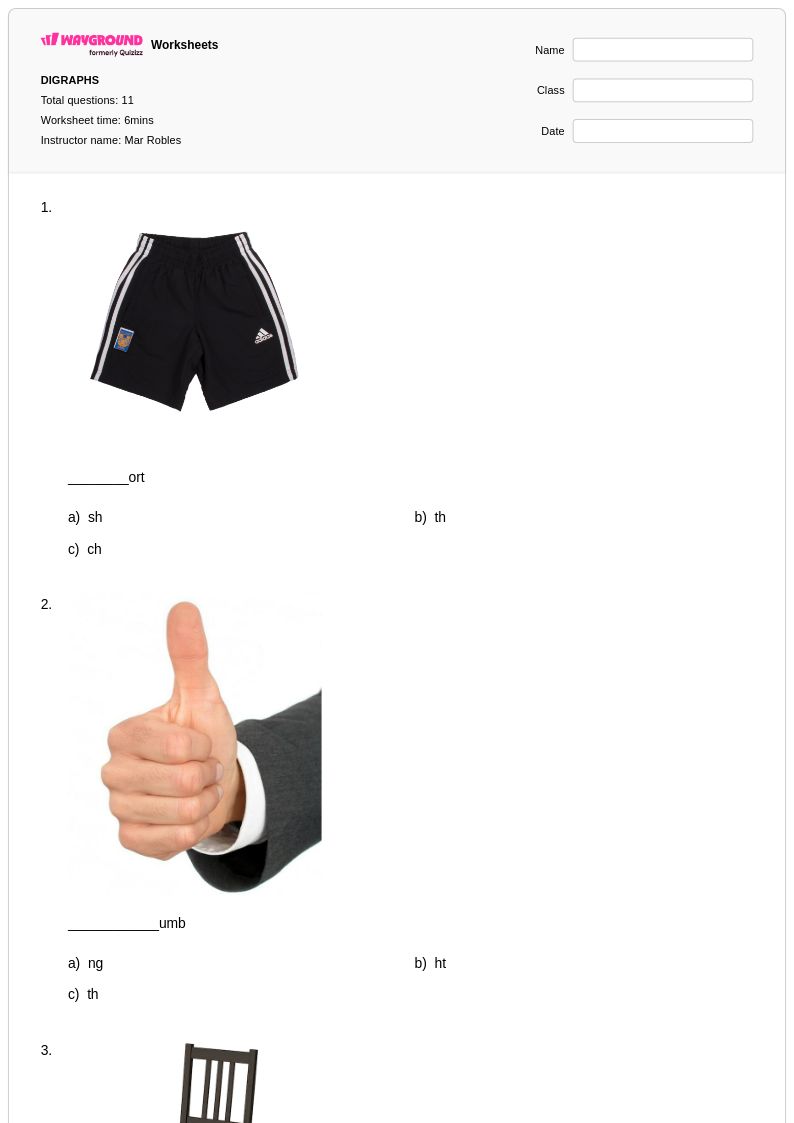
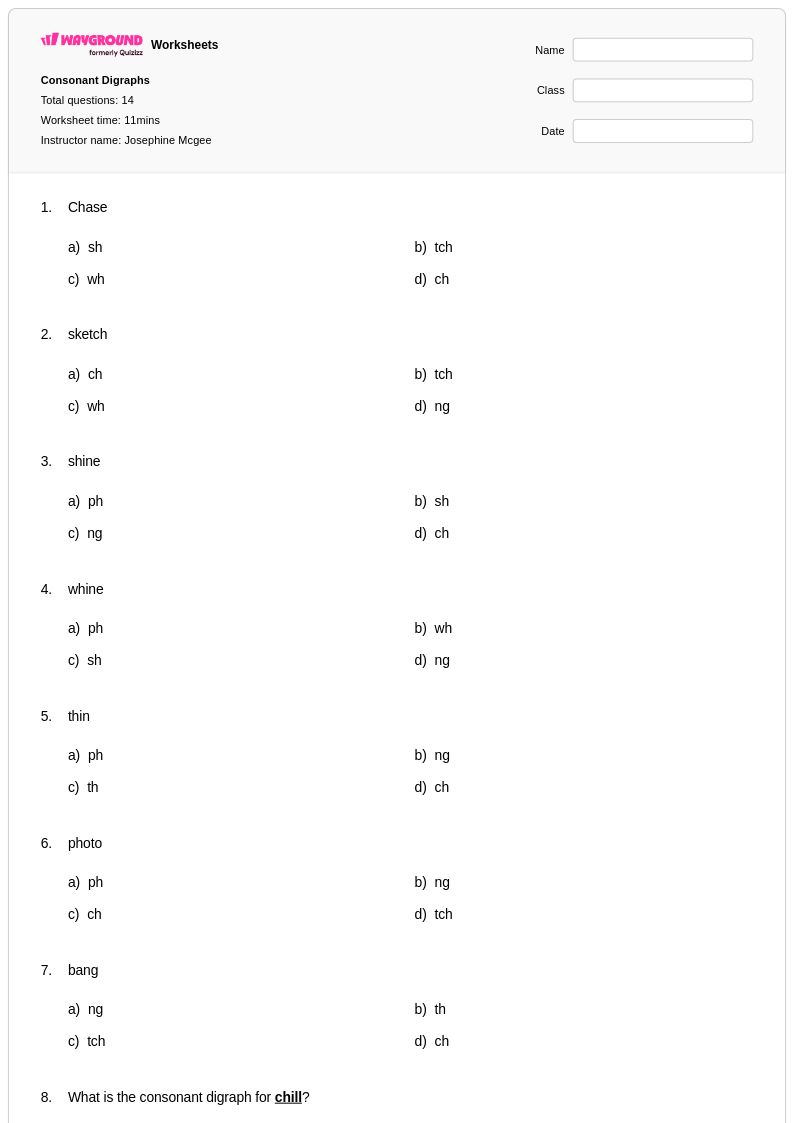
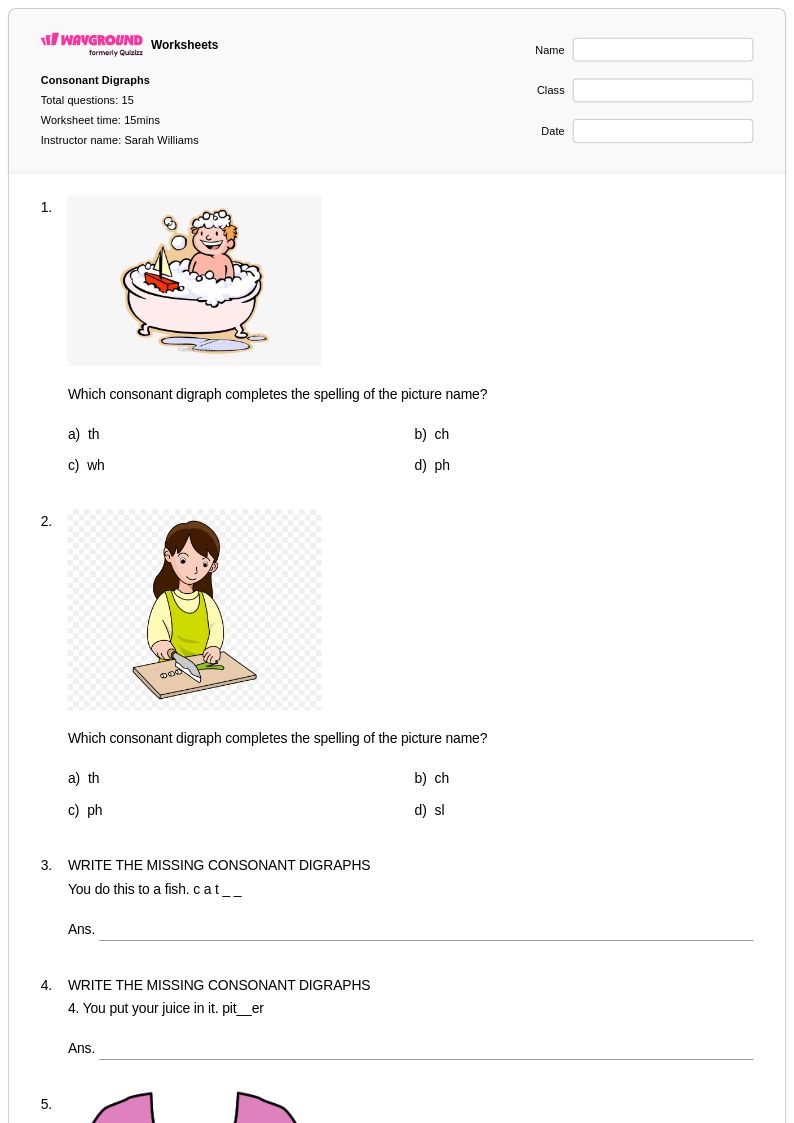
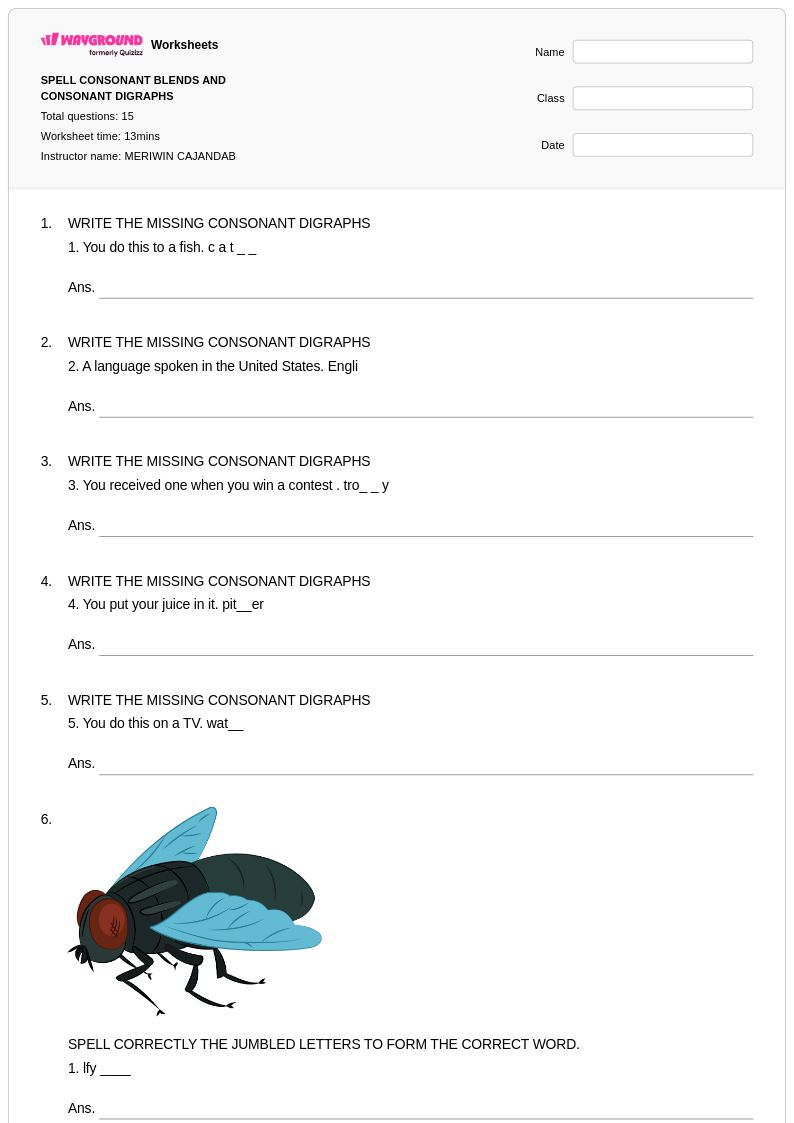
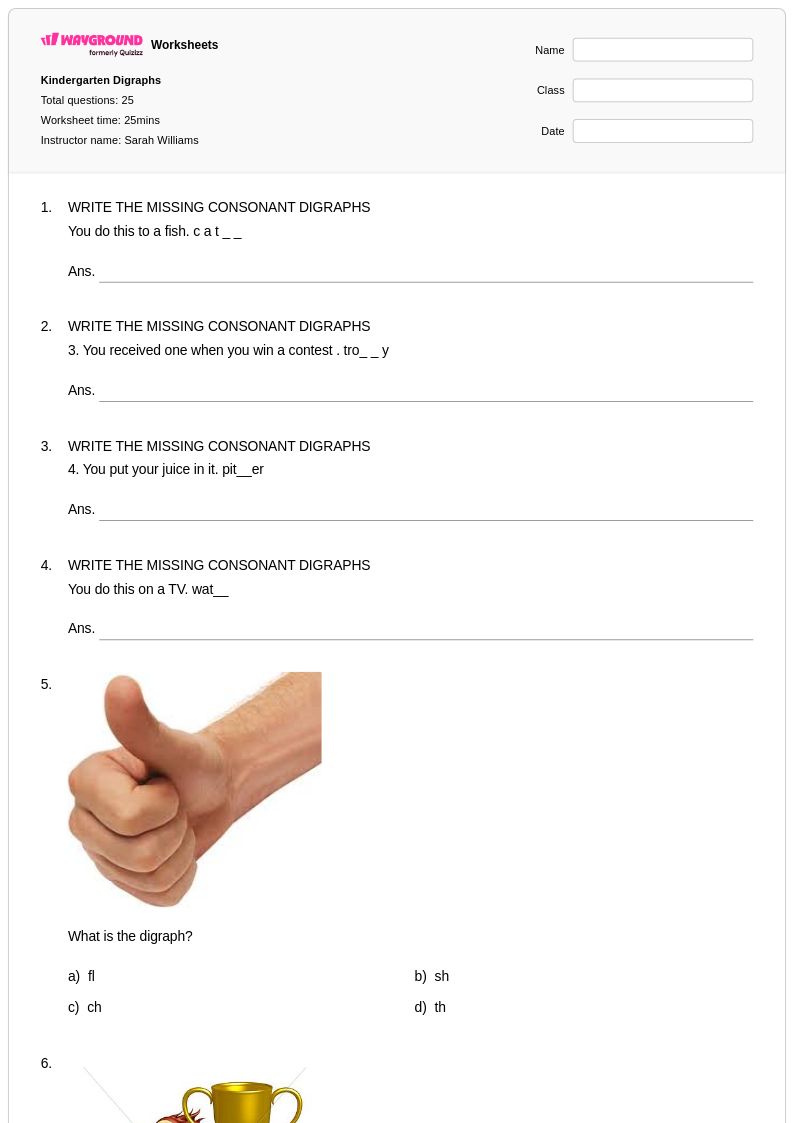
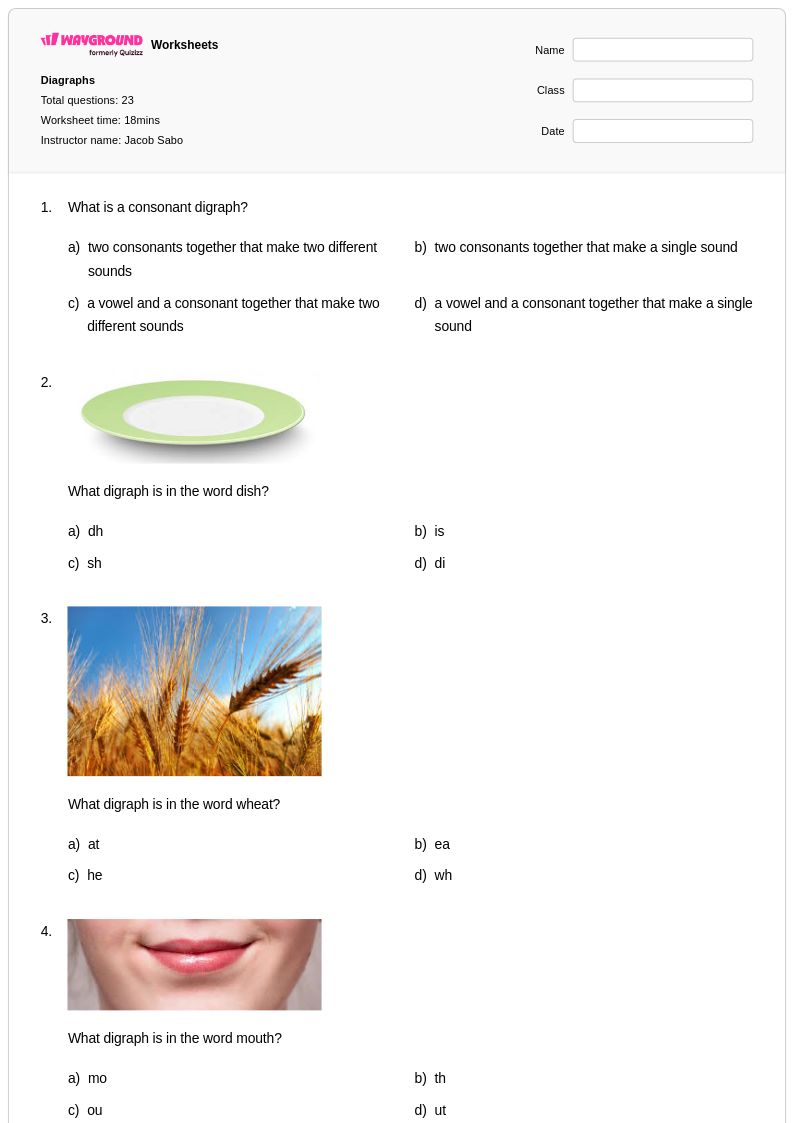
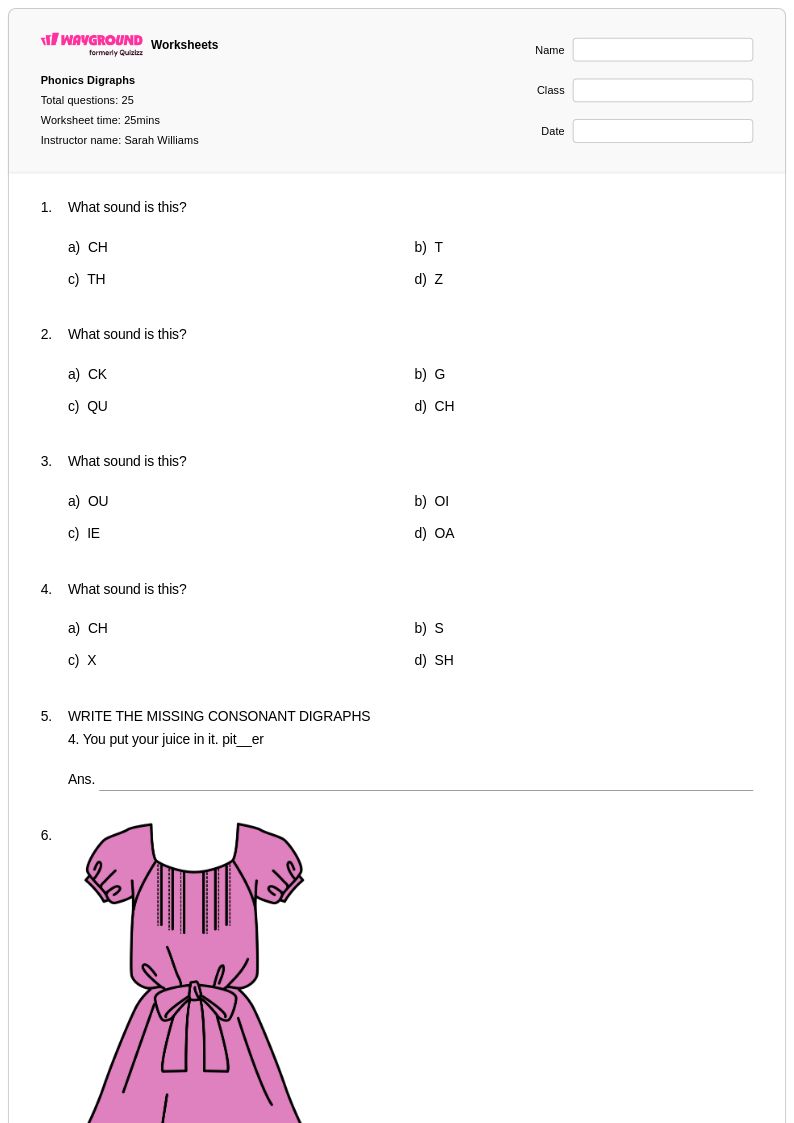
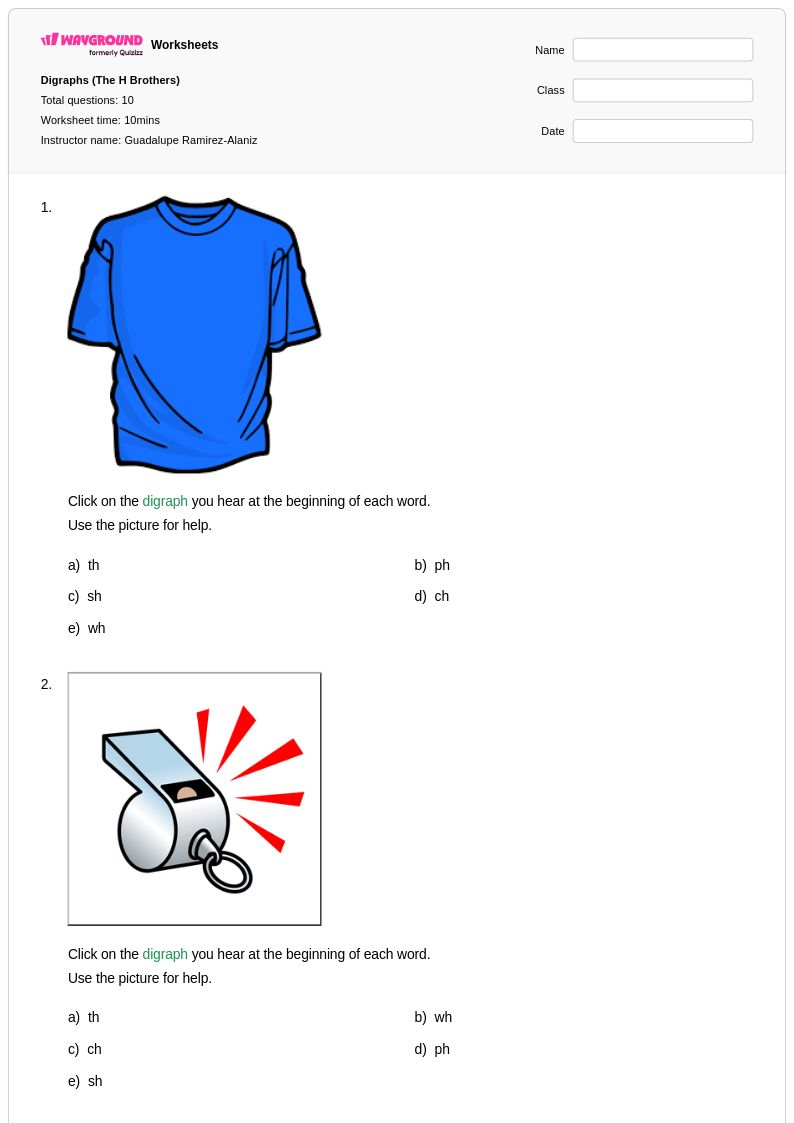
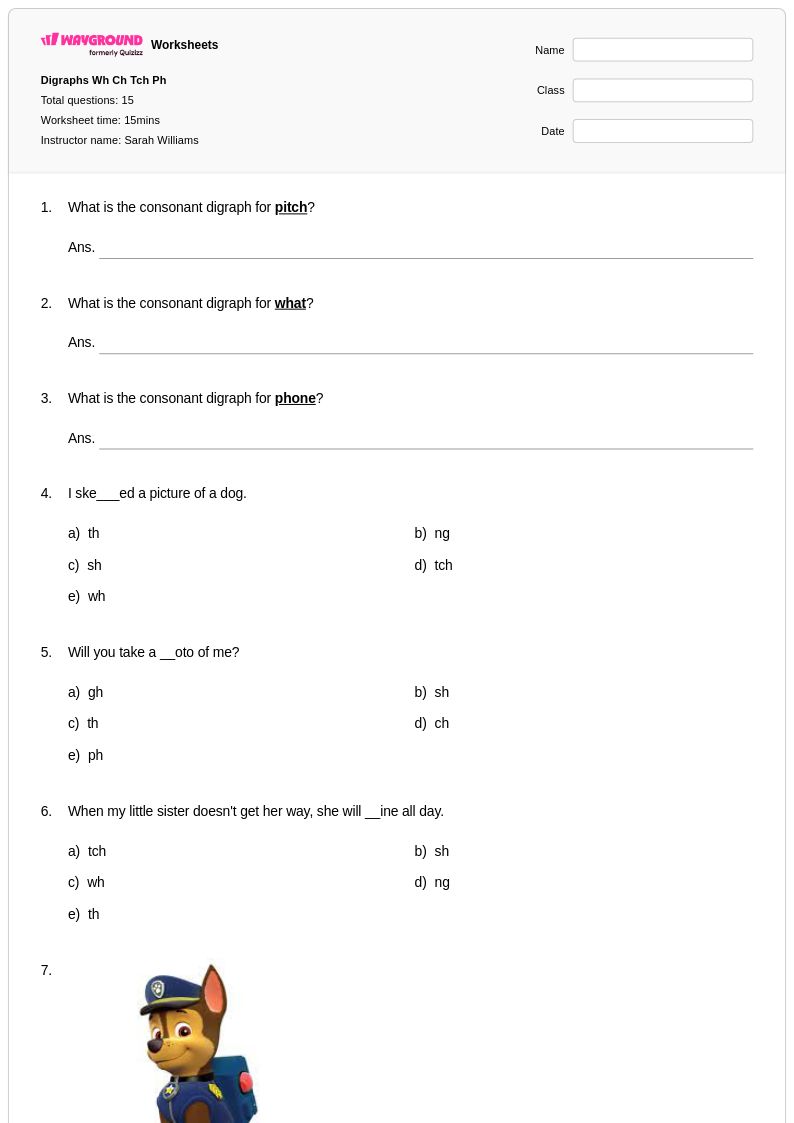
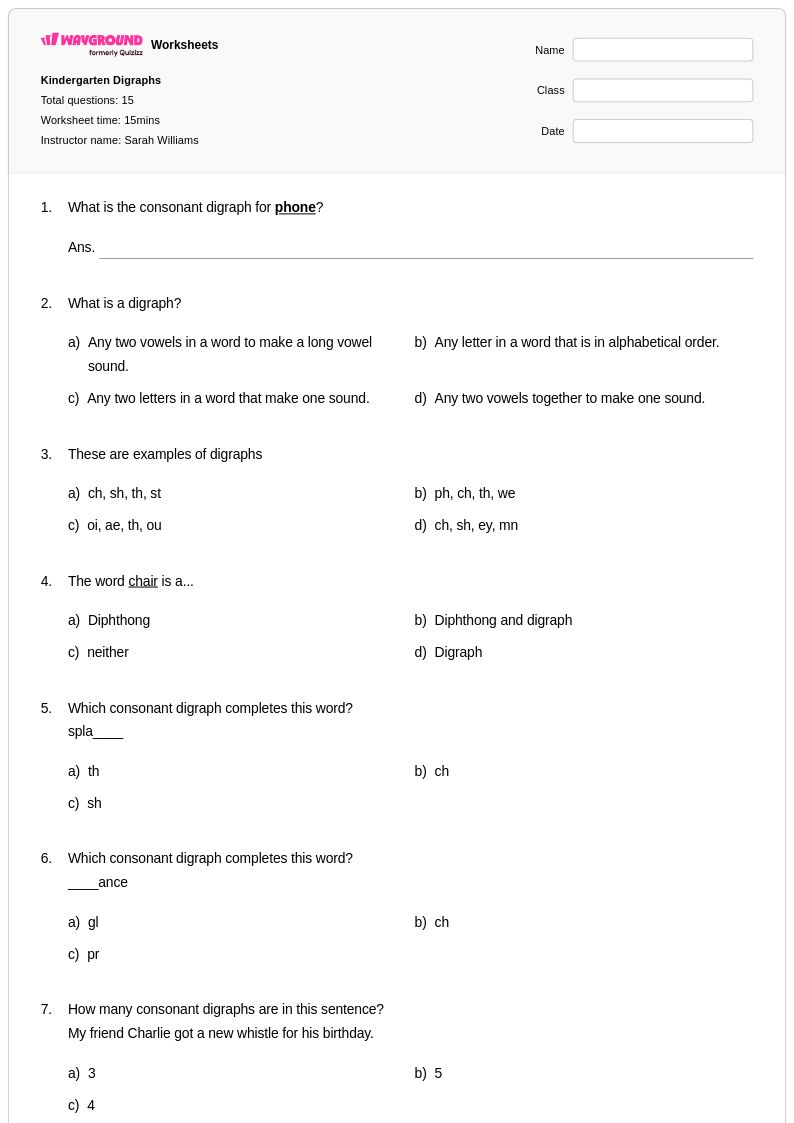
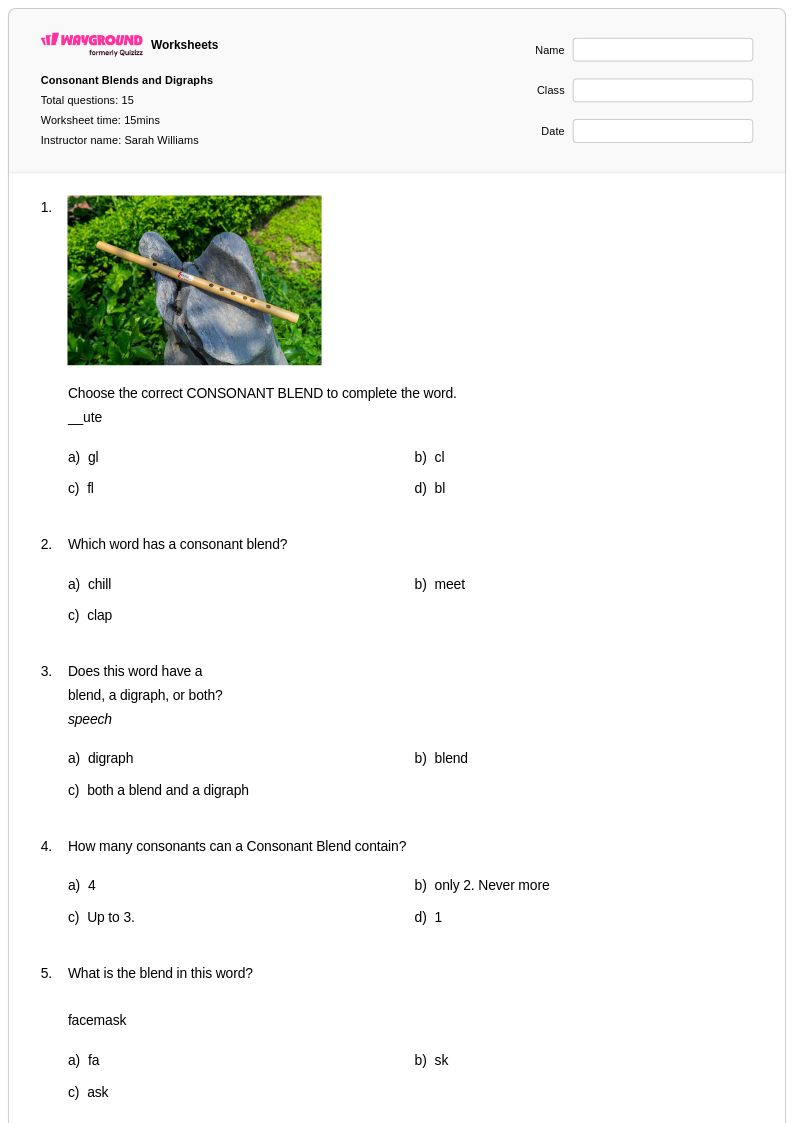
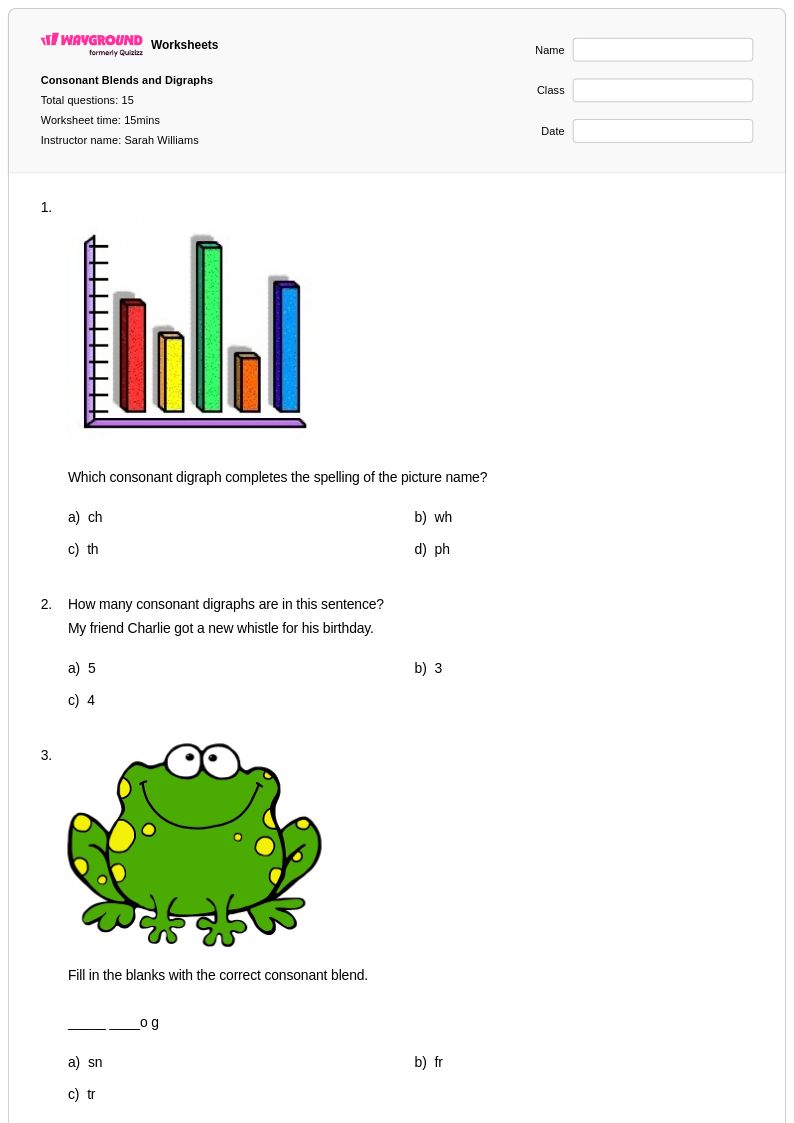
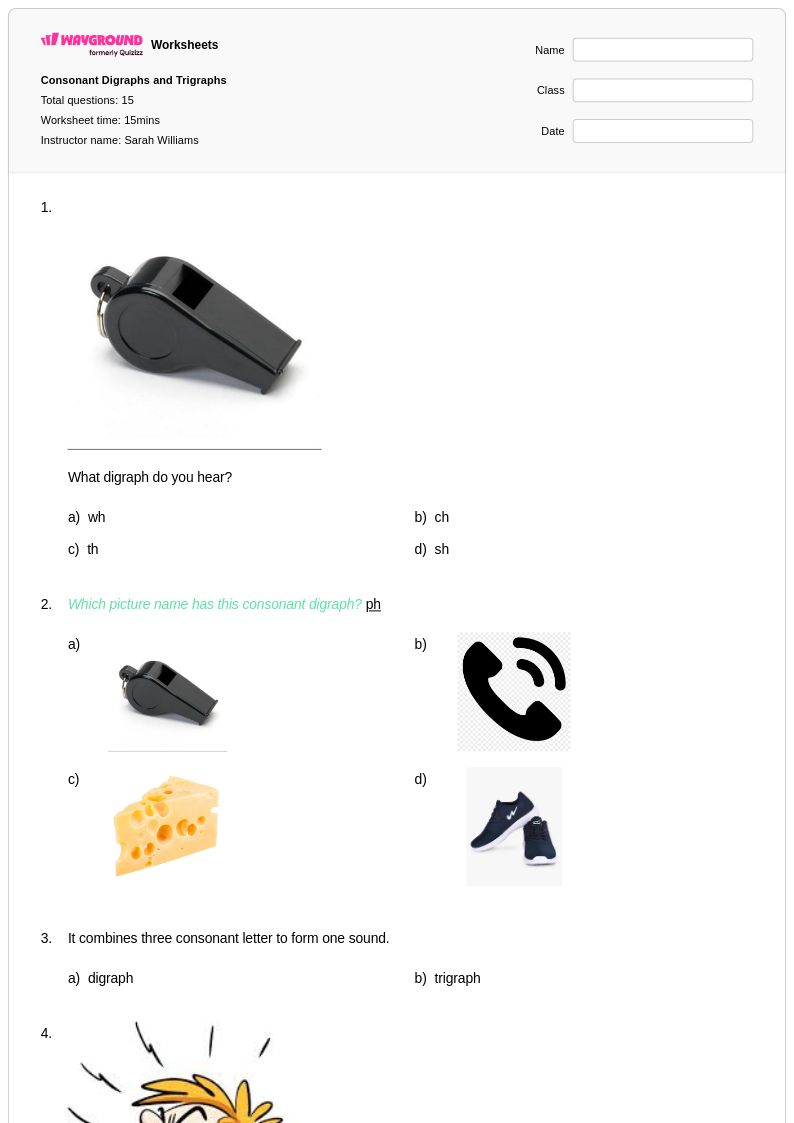
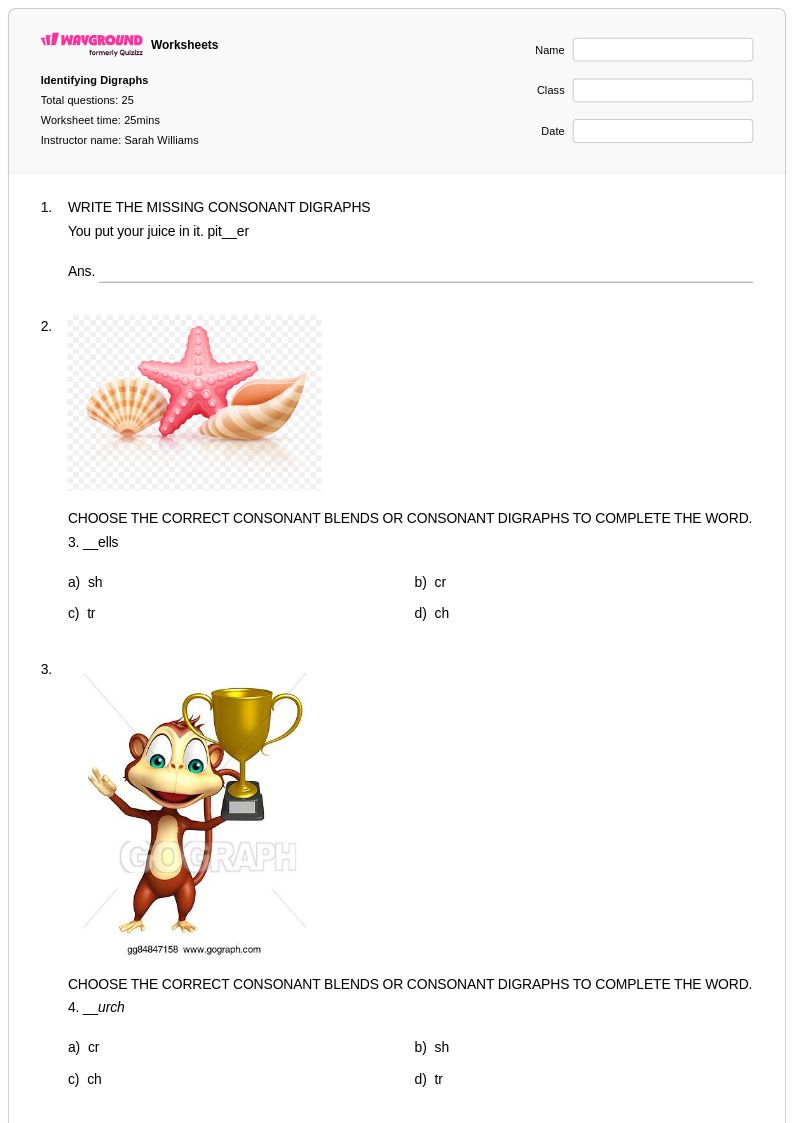
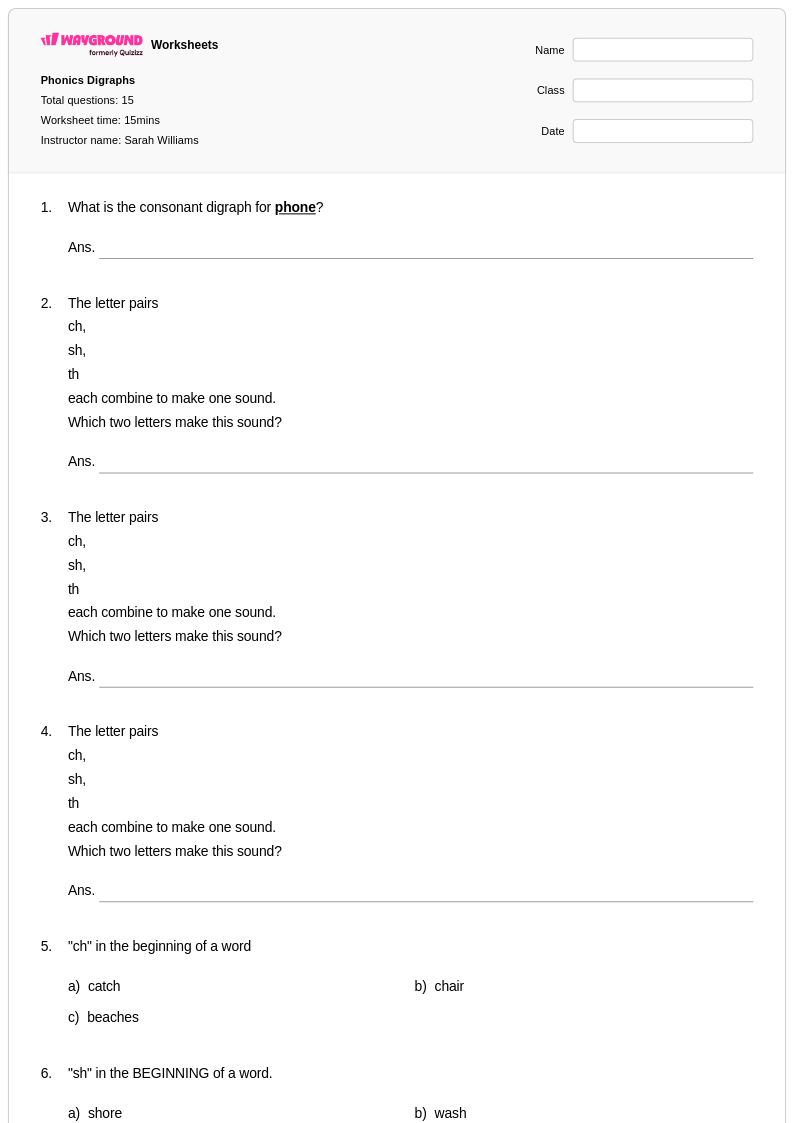
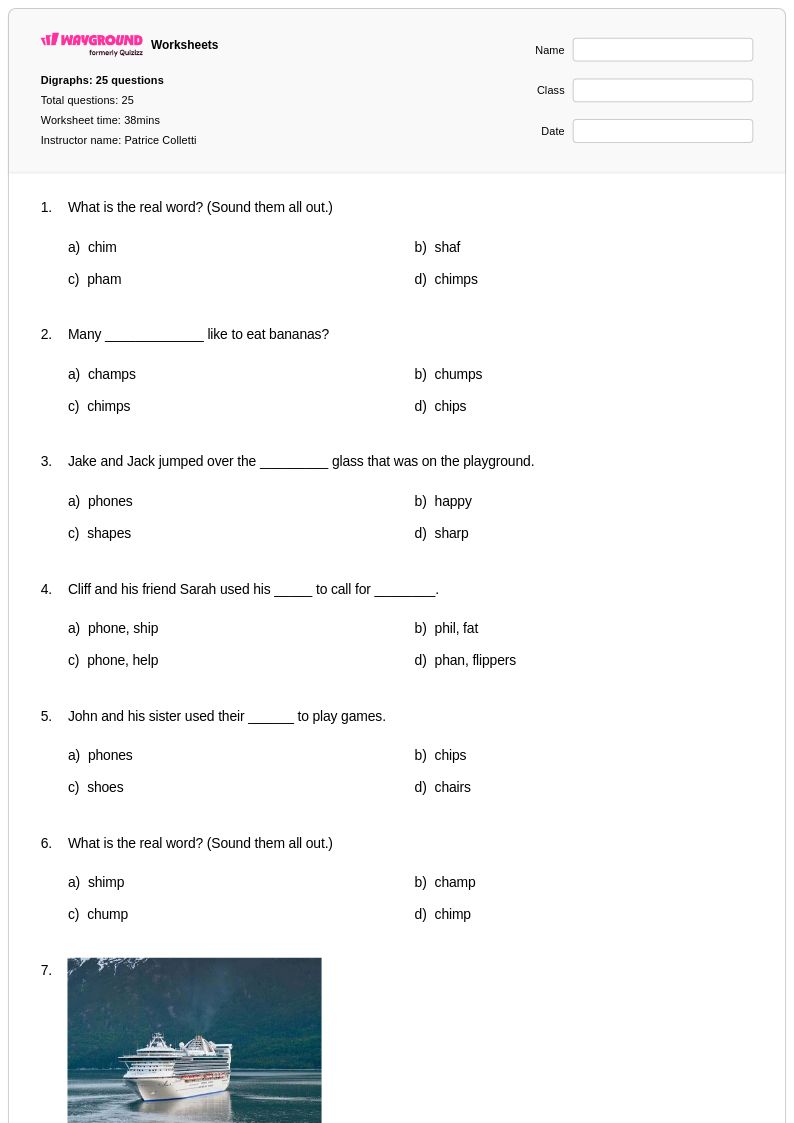
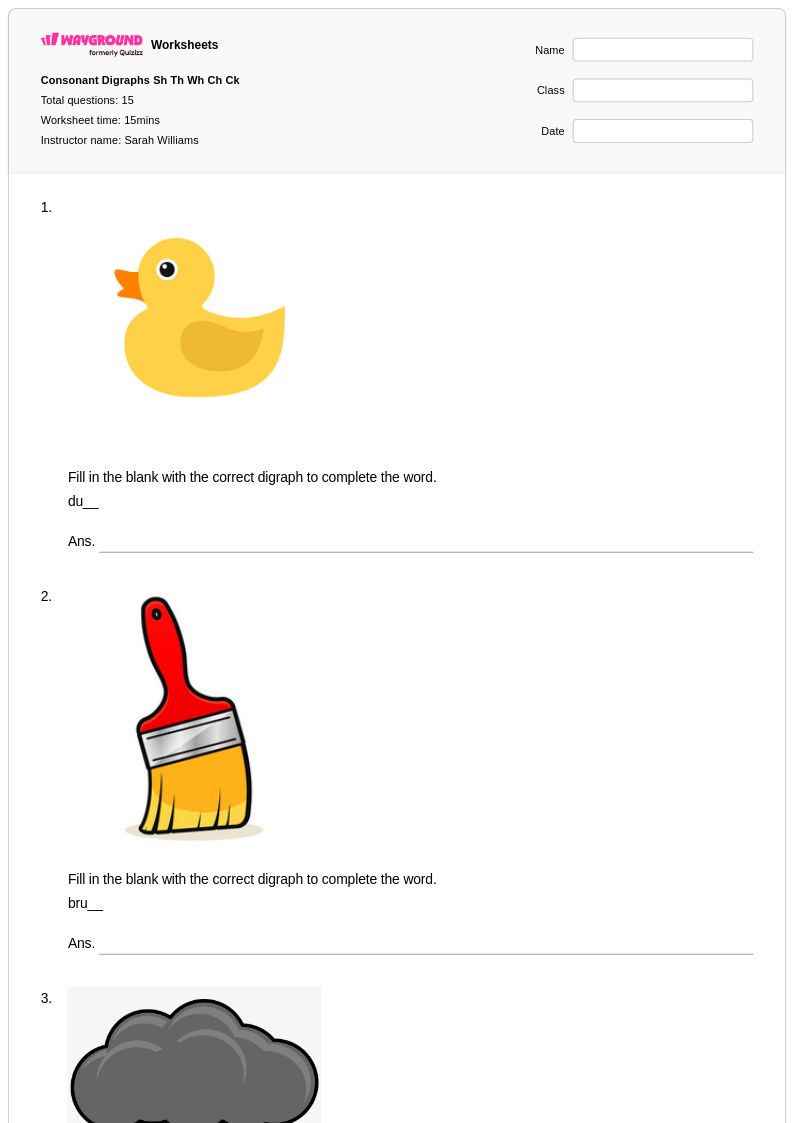
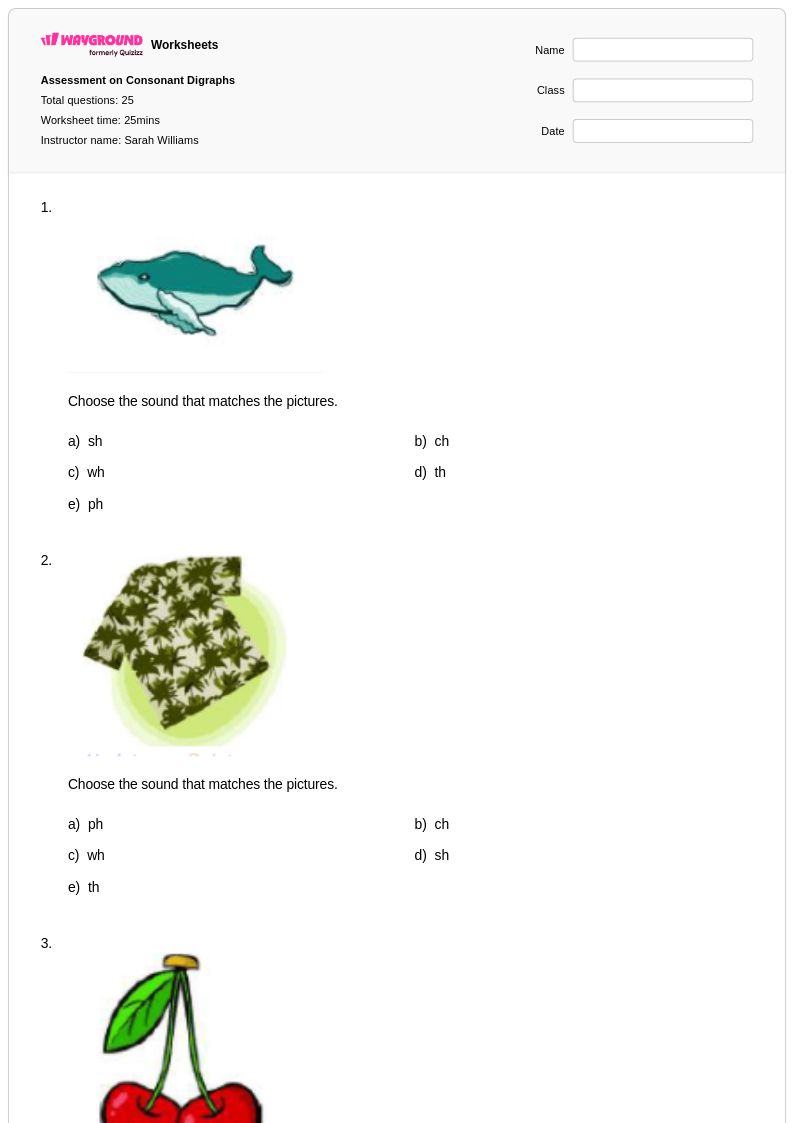
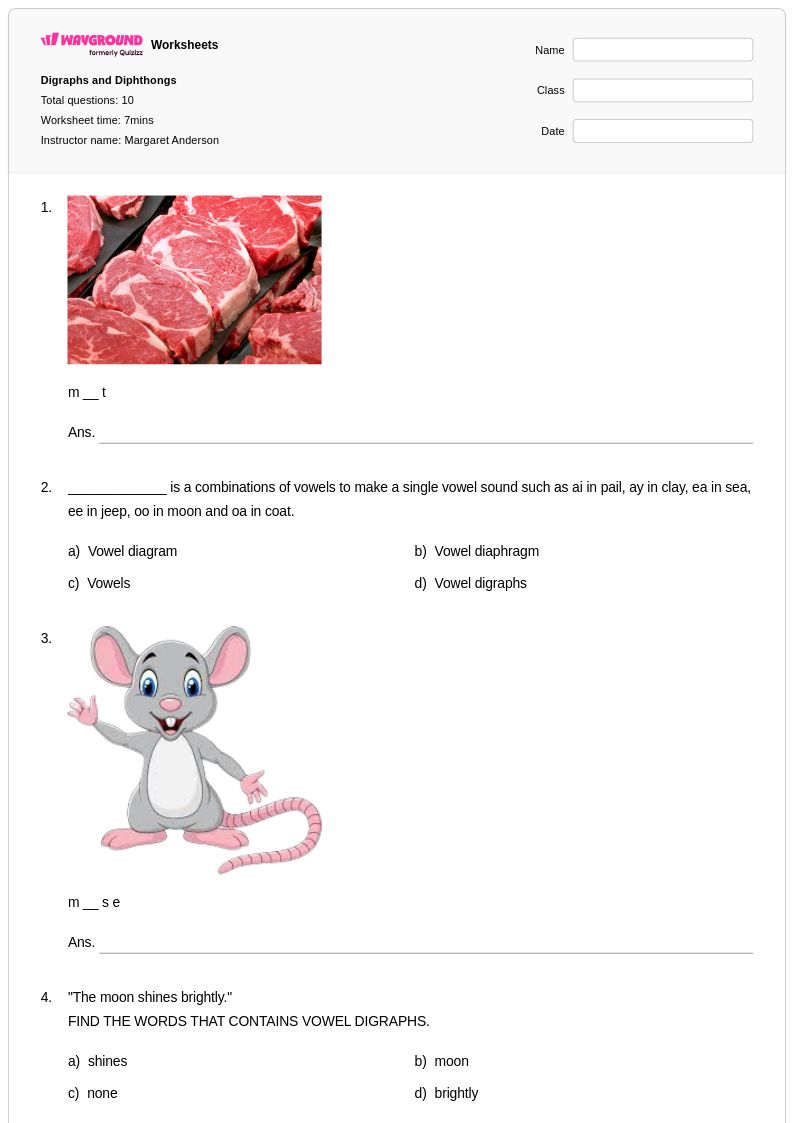
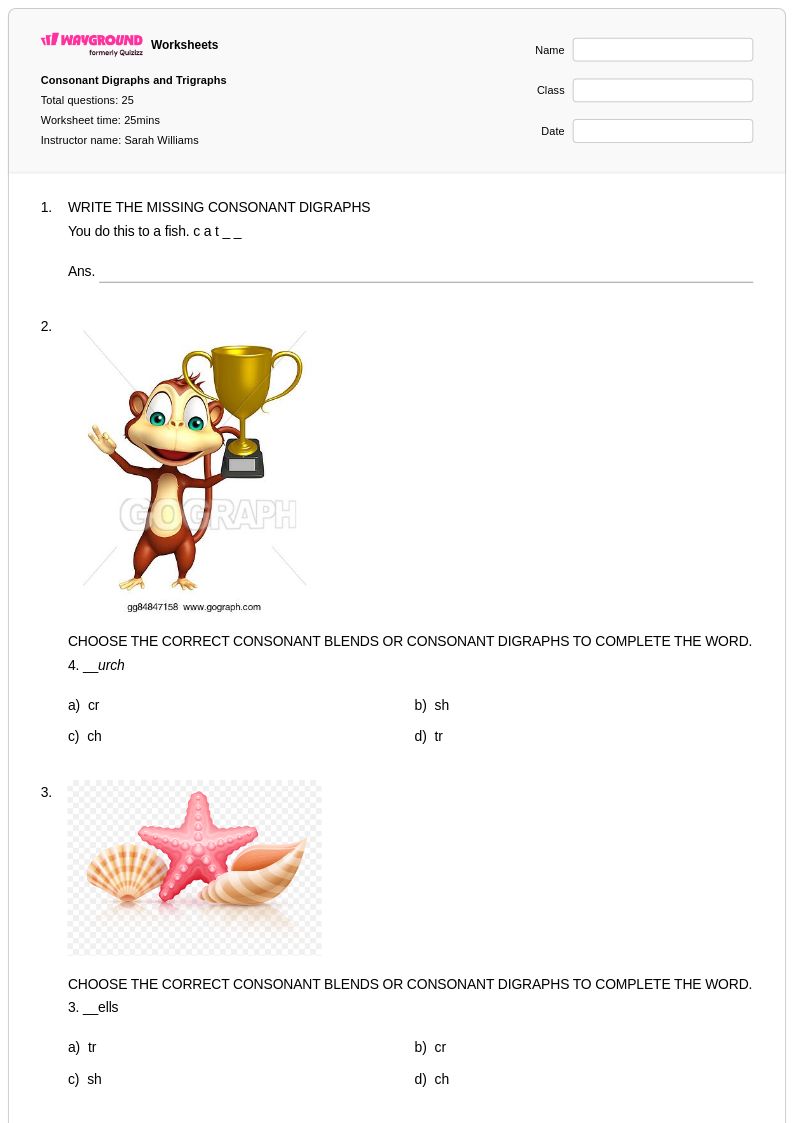
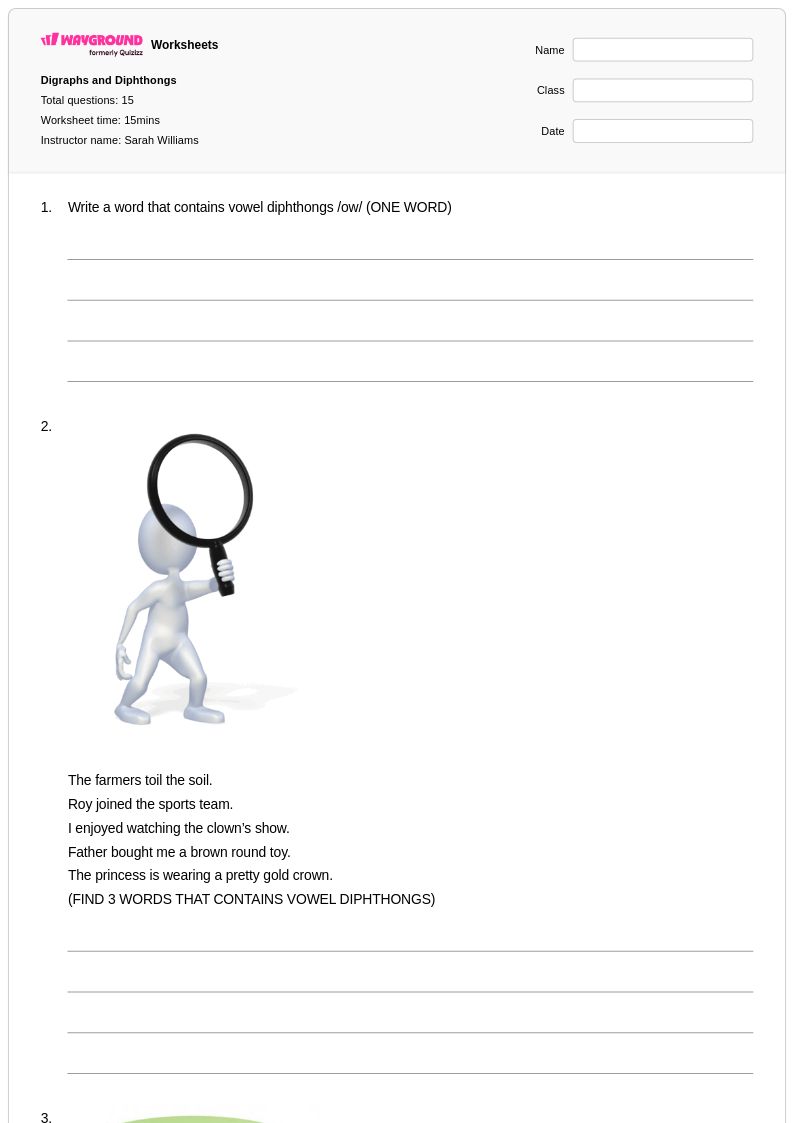
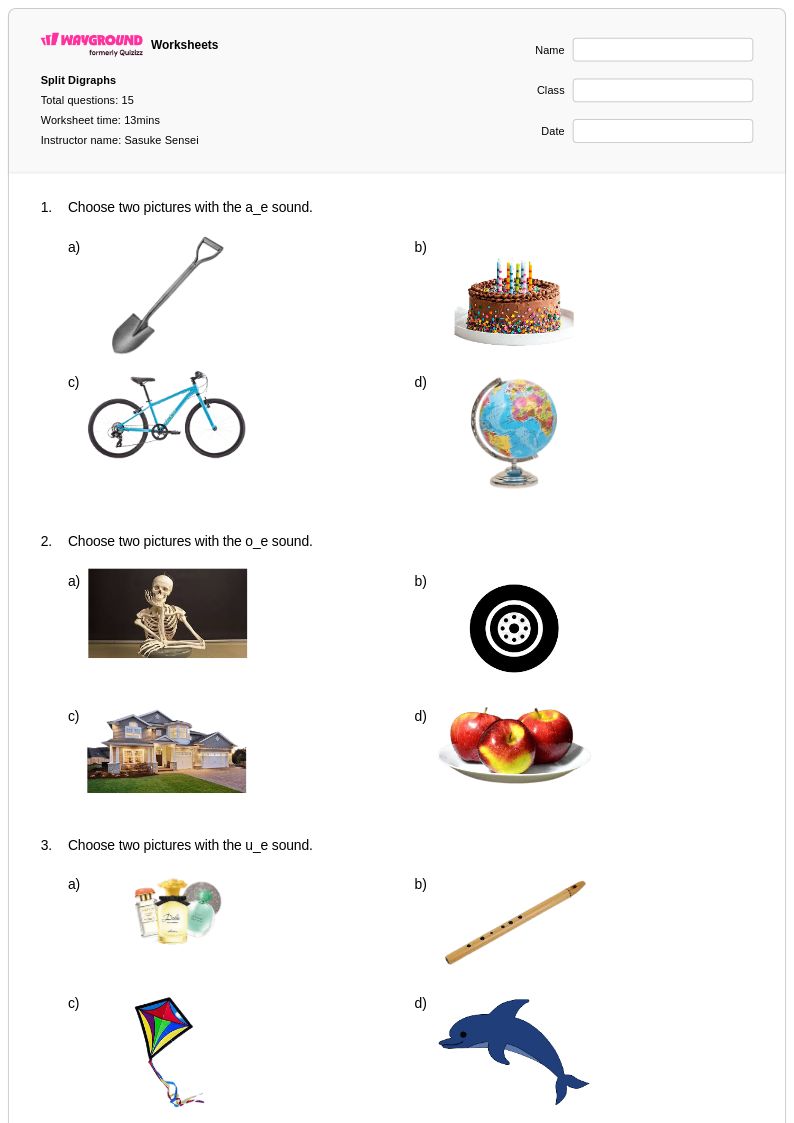
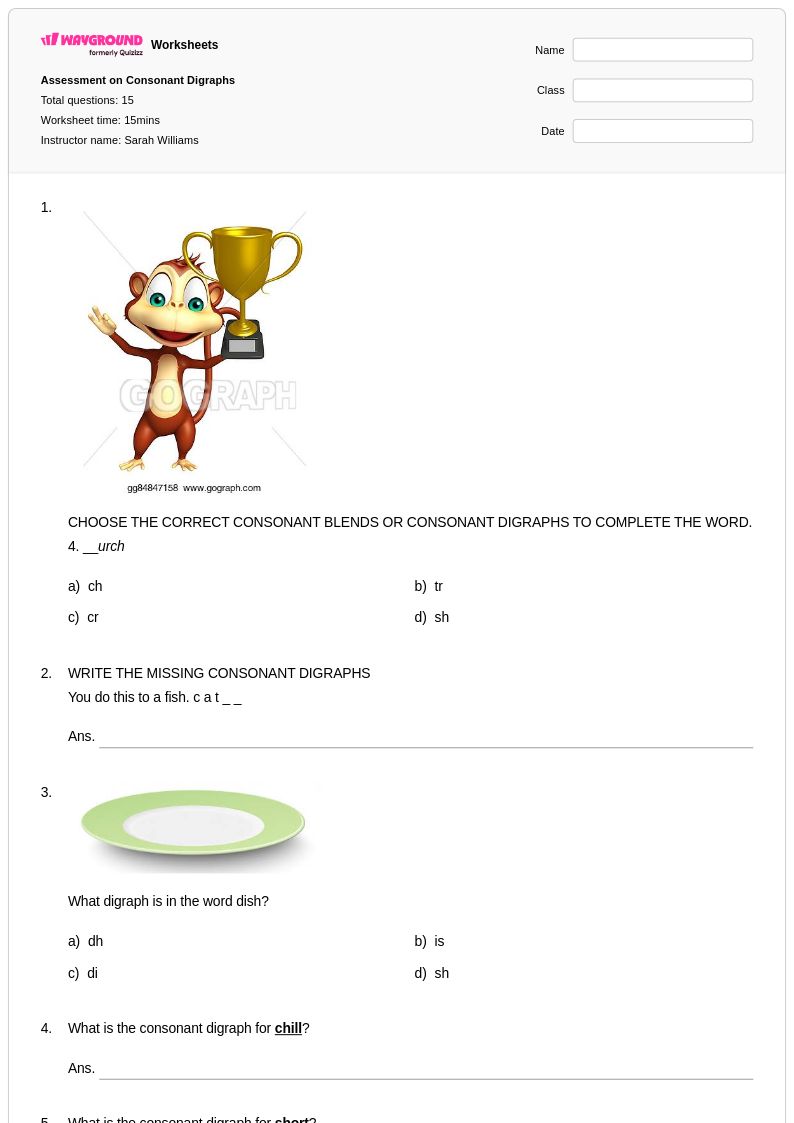
Hearing digraphs worksheets for Class 3 students available through Wayground (formerly Quizizz) provide essential phonemic awareness practice that strengthens students' ability to identify and distinguish digraph sounds in spoken language. These comprehensive resources focus on developing auditory discrimination skills as young learners recognize consonant digraphs like ch, sh, th, wh, and ph within words they hear, building the foundation necessary for successful reading and spelling development. Each worksheet collection includes carefully structured practice problems that progress from simple sound identification to more complex auditory processing tasks, with complete answer keys provided to support accurate assessment and immediate feedback. Teachers can access these free printables in convenient PDF format, ensuring consistent quality whether used for whole-class instruction, small group intervention, or individual skill reinforcement.
Wayground's extensive library contains millions of teacher-created hearing digraphs resources specifically designed to meet Class 3 phonics standards and accommodate diverse learning needs in elementary classrooms. The platform's advanced search and filtering capabilities allow educators to quickly locate worksheets that align with specific curriculum requirements and student ability levels, while built-in differentiation tools enable seamless customization for remediation or enrichment purposes. These versatile materials are available in both printable and digital formats, giving teachers the flexibility to implement hearing digraphs practice across various instructional settings, from traditional paper-and-pencil activities to interactive digital learning experiences. The comprehensive collection supports systematic lesson planning by providing educators with reliable, standards-aligned resources that effectively develop students' phonological processing skills and auditory recognition of digraph patterns.
FAQs
How do I teach students to hear and recognize digraphs?
Start by isolating the target digraph sound and contrasting it with individual letter sounds so students can hear the difference. Use minimal pair exercises — for example, comparing 'ship' and 'sip' to highlight the 'sh' digraph — before moving to word sorting and listening activities. Repeated exposure through read-alouds, chanting, and sound-spotting games builds the auditory discrimination students need before they can reliably decode digraphs in print.
What exercises help students practice identifying digraphs by sound?
Sound identification tasks, where students listen to a word and signal whether they hear a target digraph, are highly effective for building auditory awareness. Audio-visual matching exercises that pair spoken words with pictures or written digraphs reinforce the connection between what students hear and what they see on the page. Incorporating listening comprehension problems that embed digraphs in context helps students recognize these patterns in natural speech rather than in isolation.
What mistakes do students commonly make when learning to hear digraphs?
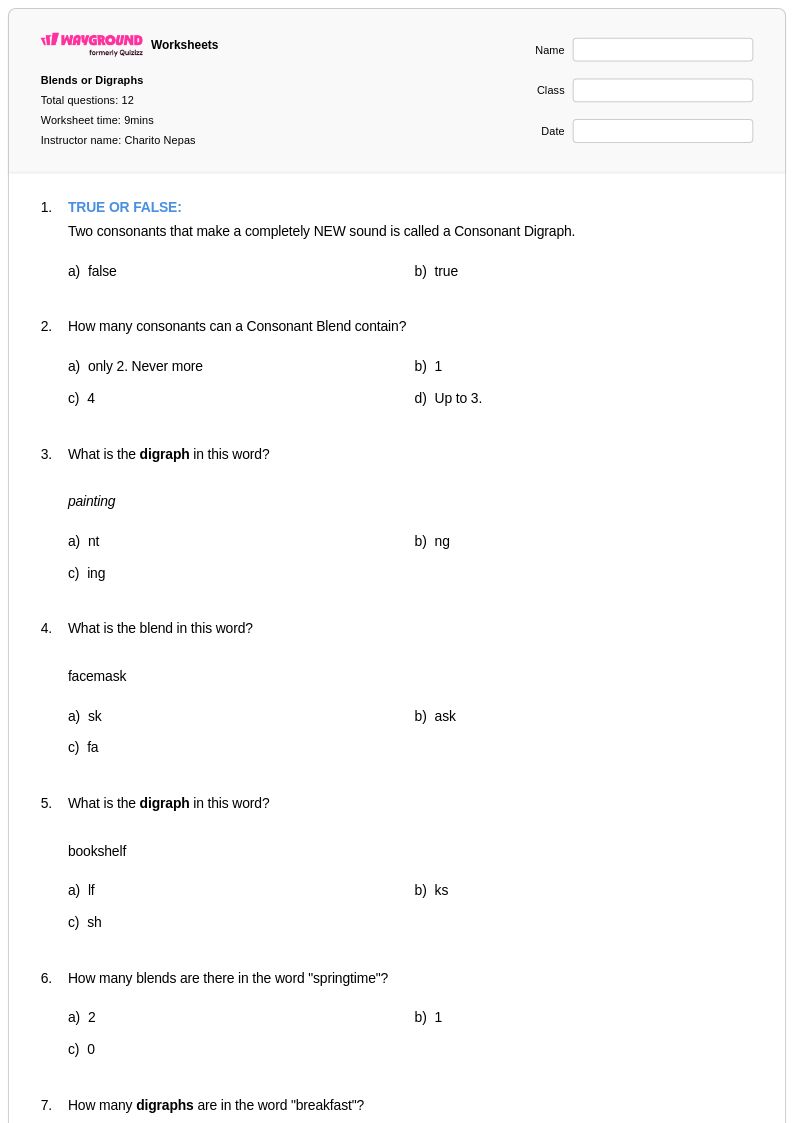
The most common error is treating a digraph as two separate sounds — for example, pronouncing 'th' as a 't' followed by an 'h' rather than as a single sound. Students also frequently confuse digraphs with blends, since both involve two-letter combinations, but blends preserve both individual sounds while digraphs produce an entirely new one. Consistently returning to auditory discrimination practice, where students compare digraph words to non-digraph words, helps correct these misunderstandings.
Which digraphs should I teach first?
Most phonics sequences introduce 'sh', 'ch', and 'th' first because they appear frequently in high-utility words students encounter early in reading. 'Wh' and 'ph' are typically introduced after students have solidified the more common digraphs. Prioritizing digraphs that appear in words already in a student's spoken vocabulary makes it easier for them to connect the auditory pattern to meaning.
How do I use Wayground's hearing digraphs worksheets in my classroom?
Wayground's hearing digraphs worksheets are available as printable PDFs for direct classroom use and in digital formats for technology-integrated settings, so they fit both traditional and blended instruction. Teachers can also host the worksheets as a live or assigned quiz on Wayground, giving students immediate feedback on their answers. The included answer keys make these resources practical for independent practice stations, small-group intervention, or homework assignments without requiring additional teacher prep.
How can I differentiate hearing digraphs instruction for students who are struggling?
For students who need additional support, reduce the number of digraph choices they are distinguishing at one time so they can build confidence before expanding to a fuller set. On Wayground, teachers can apply accommodations such as Read Aloud, which provides audio support for students who benefit from hearing questions read to them, and reduced answer choices to lower cognitive load for individual students without disrupting the rest of the class. Extended time can also be assigned per student for paced, low-pressure practice.