
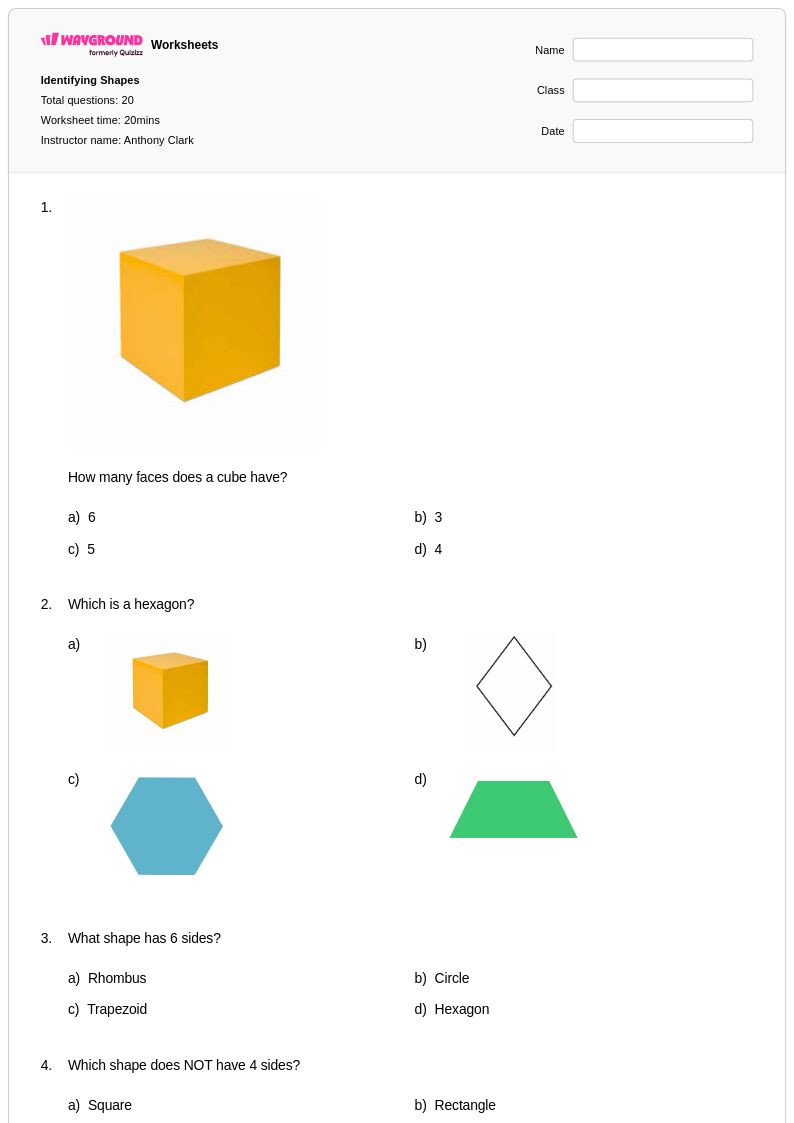
20 Q
1st - Uni
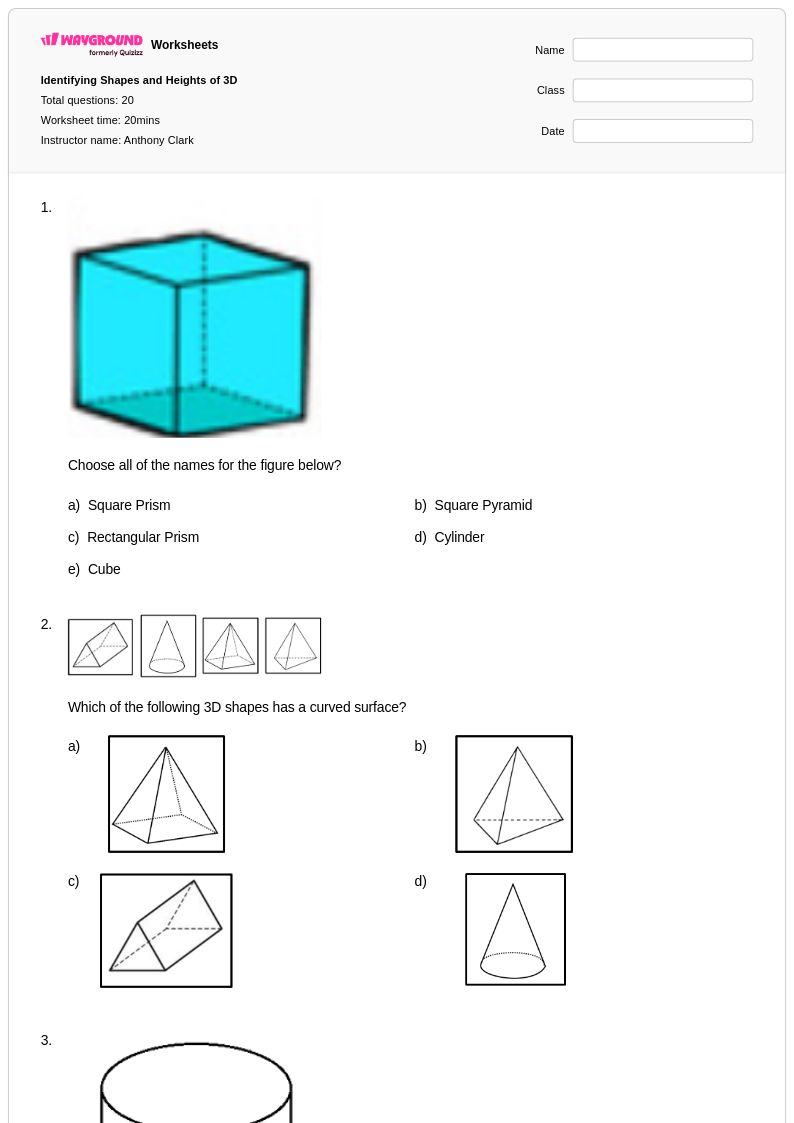
20 Q
3rd - Uni
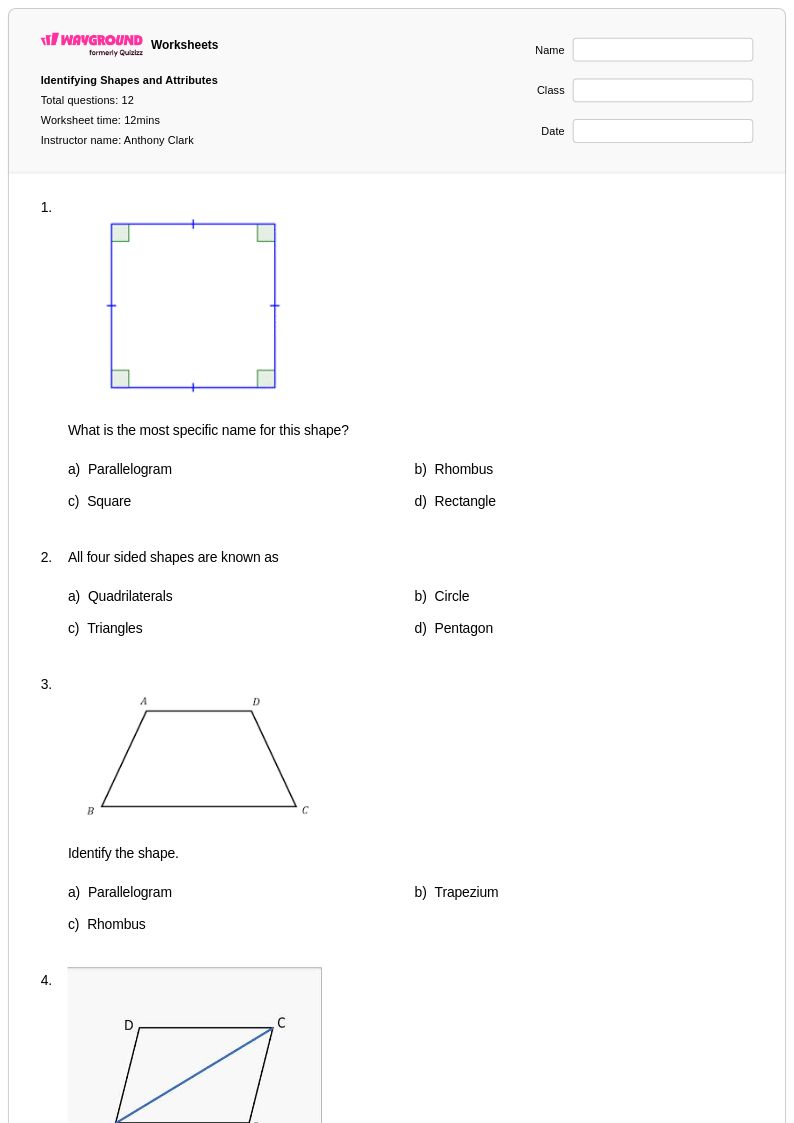
12 Q
3rd - Uni
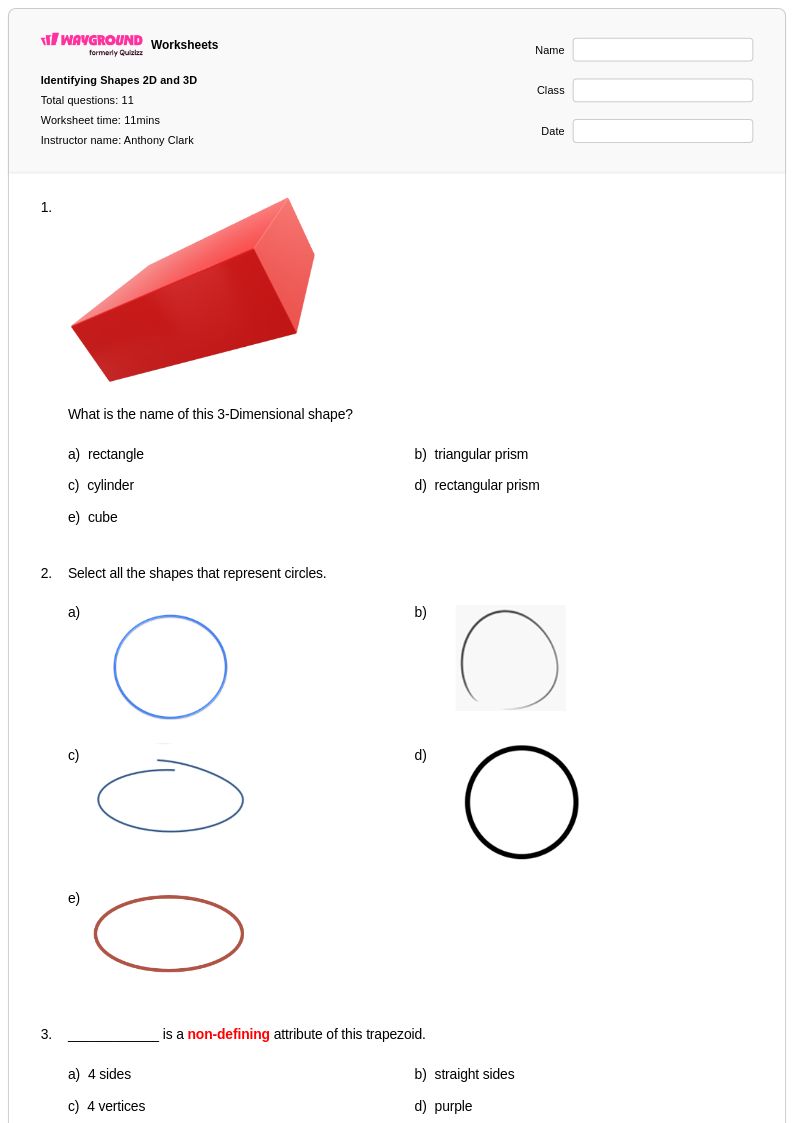
11 Q
1st - Uni
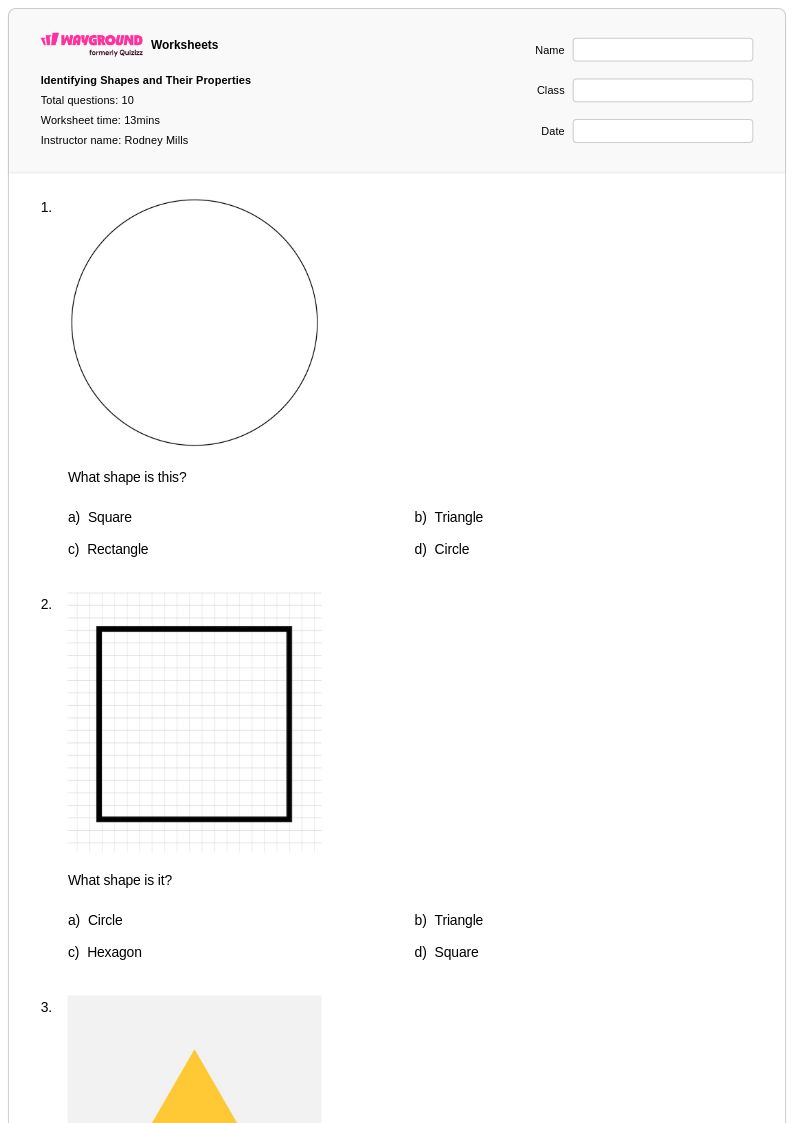
10 Q
1st - 5th
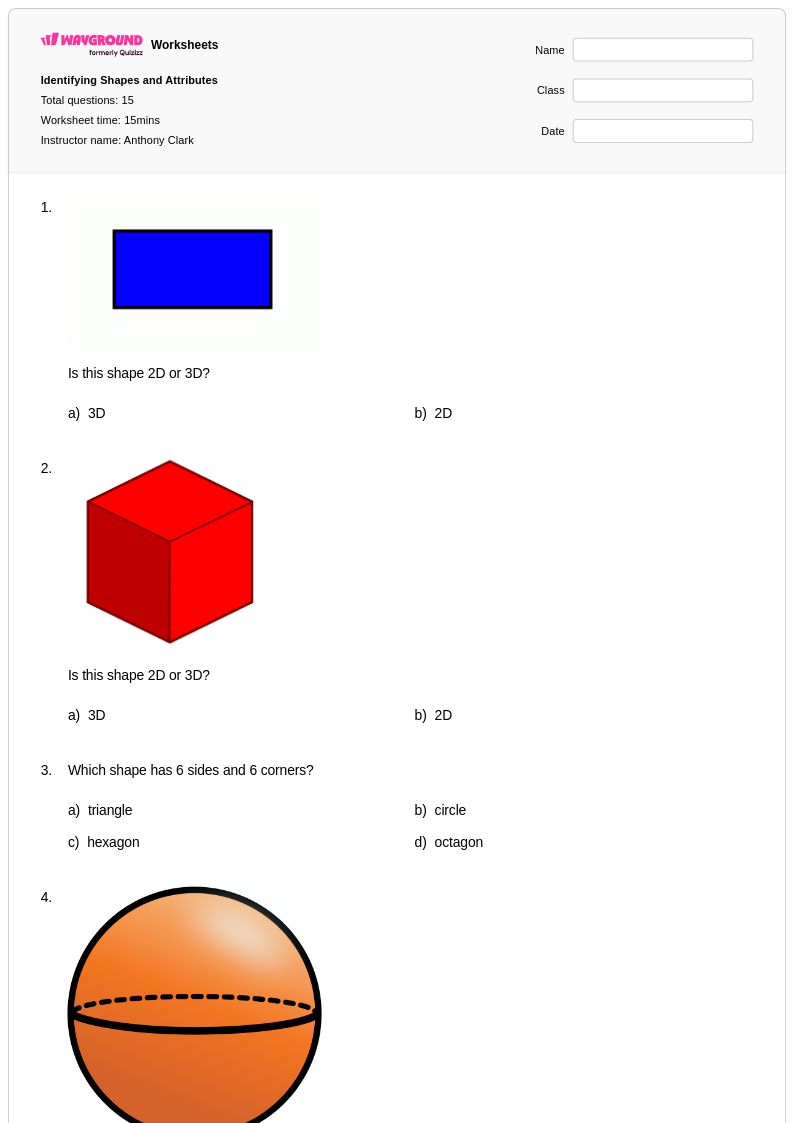
15 Q
3rd - Uni
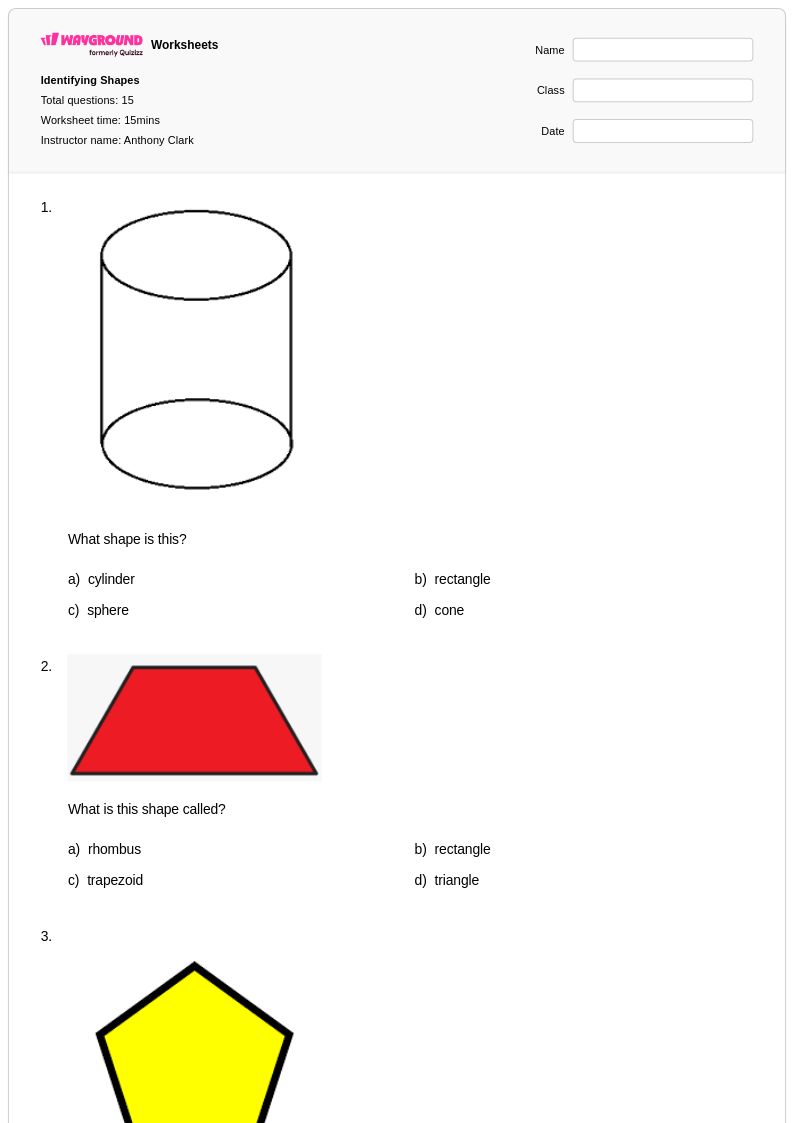
15 Q
1st - Uni
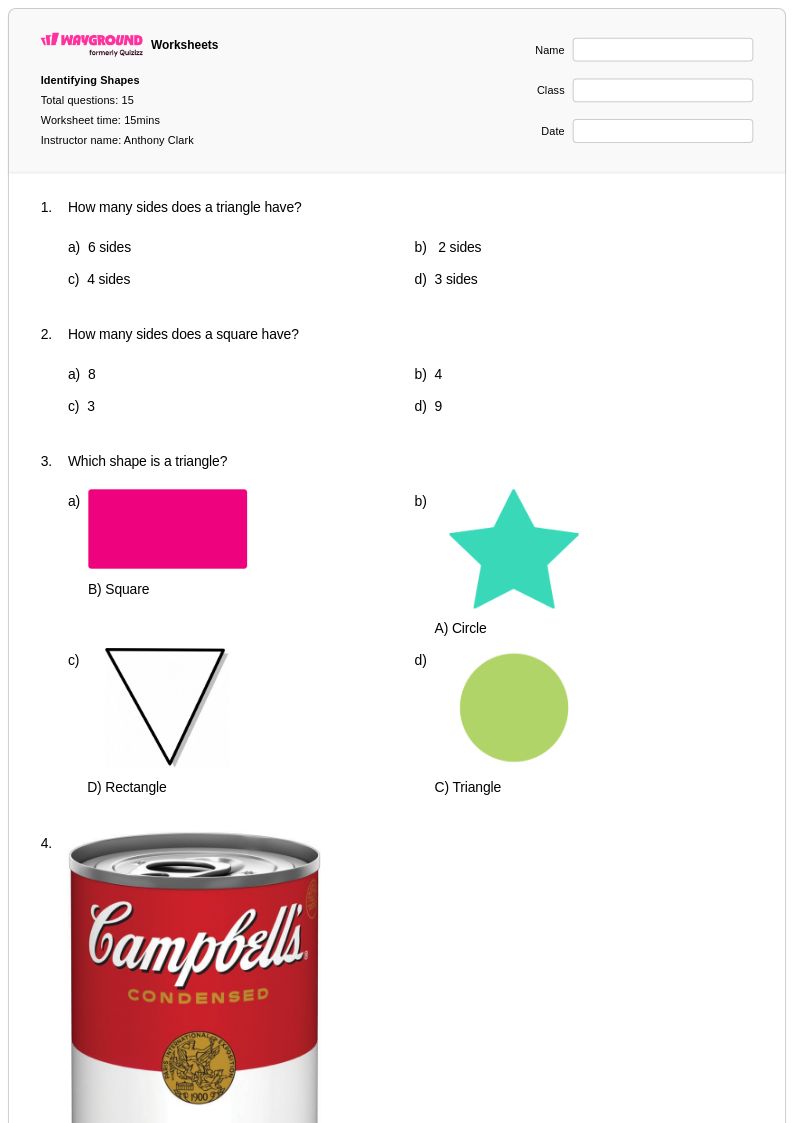
15 Q
1st - Uni
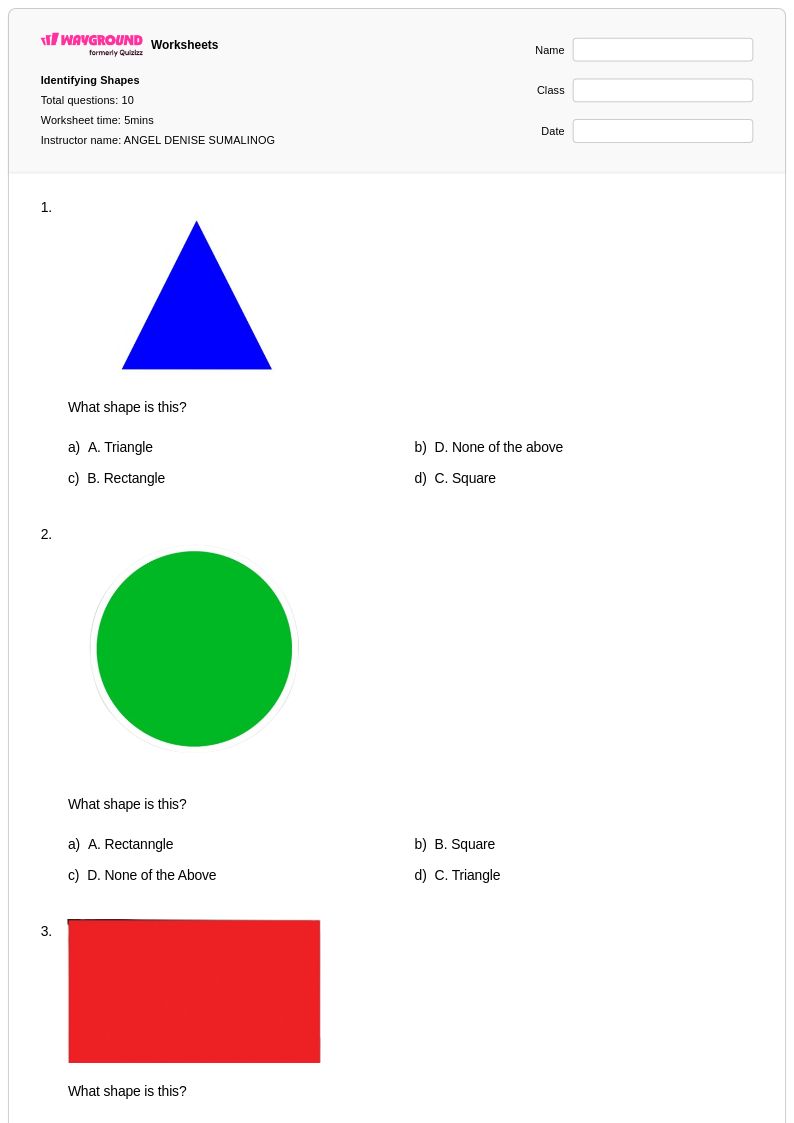
10 Q
1st - Uni
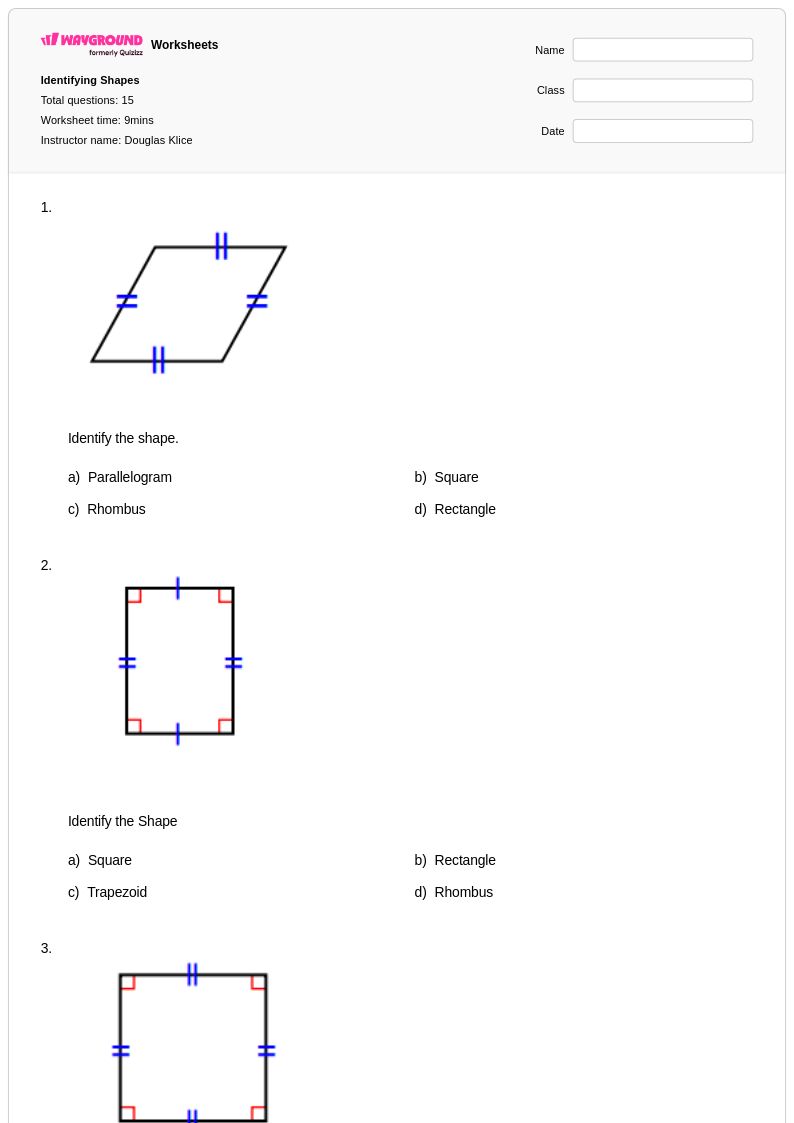
15 Q
4th - 5th
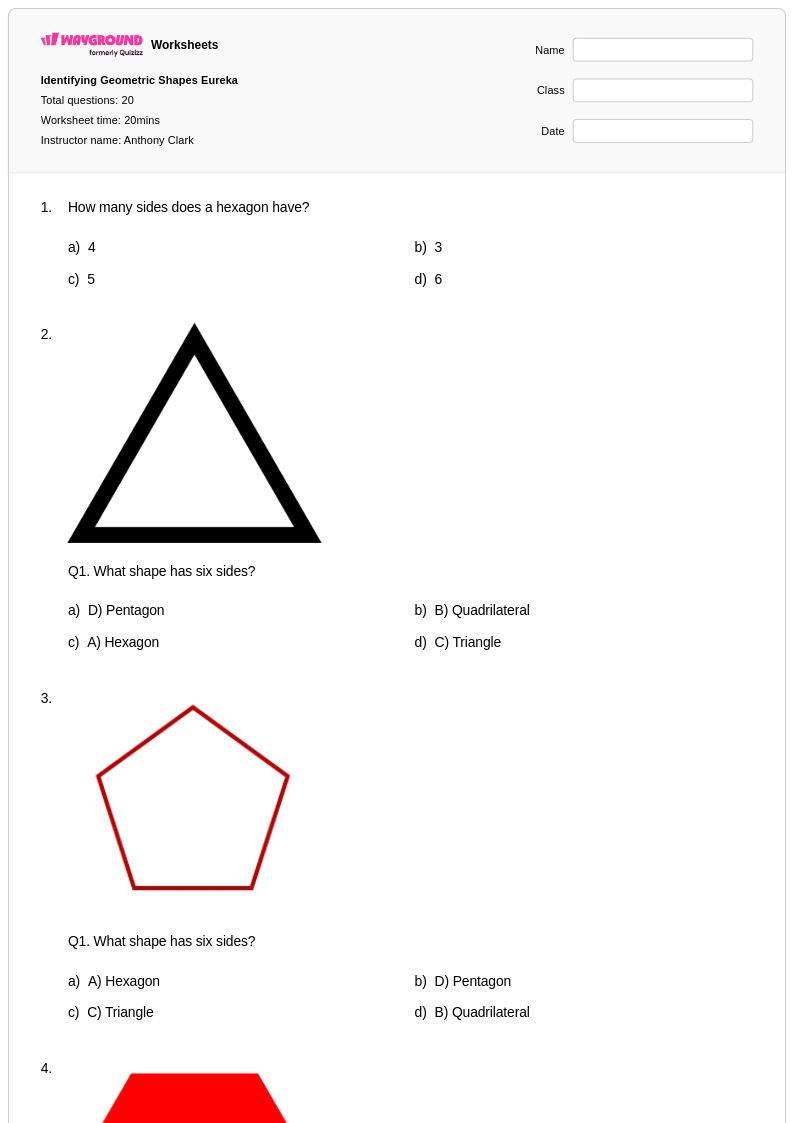
20 Q
2nd - Uni
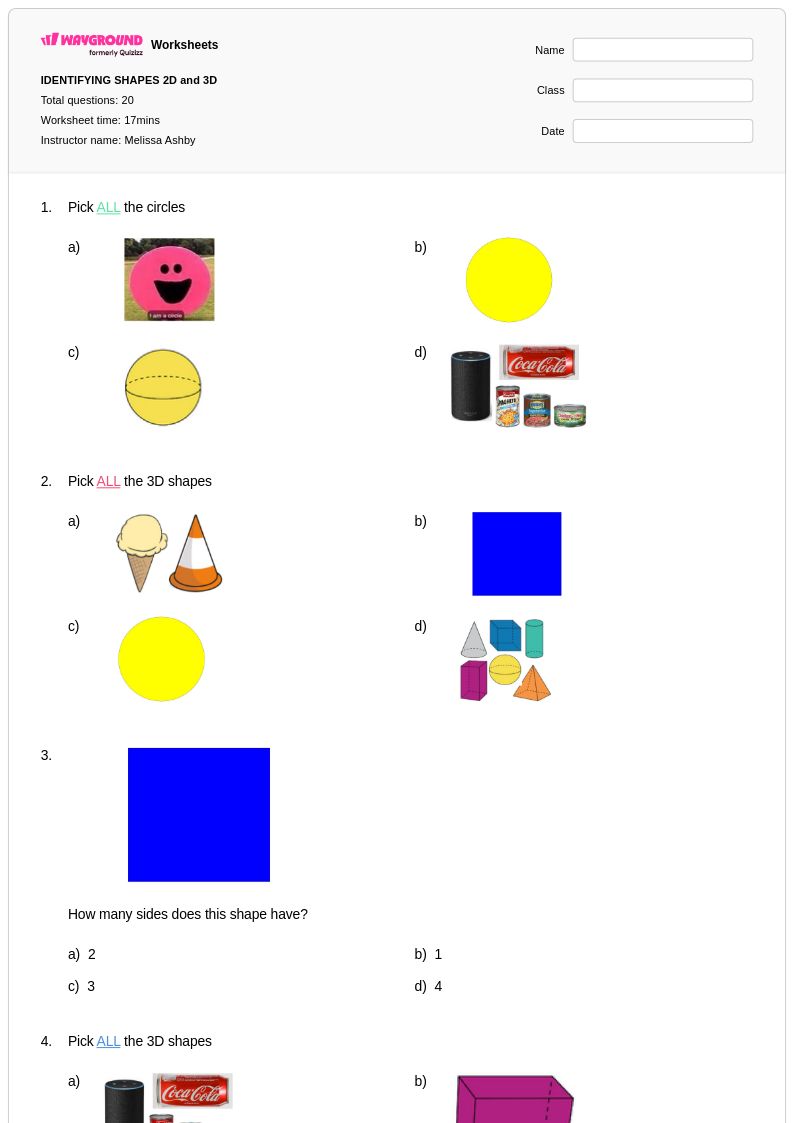
20 Q
1st - 12th
20 Q
1st - Uni
15 Q
3rd - Uni
22 Q
1st - 5th
15 Q
1st - Uni
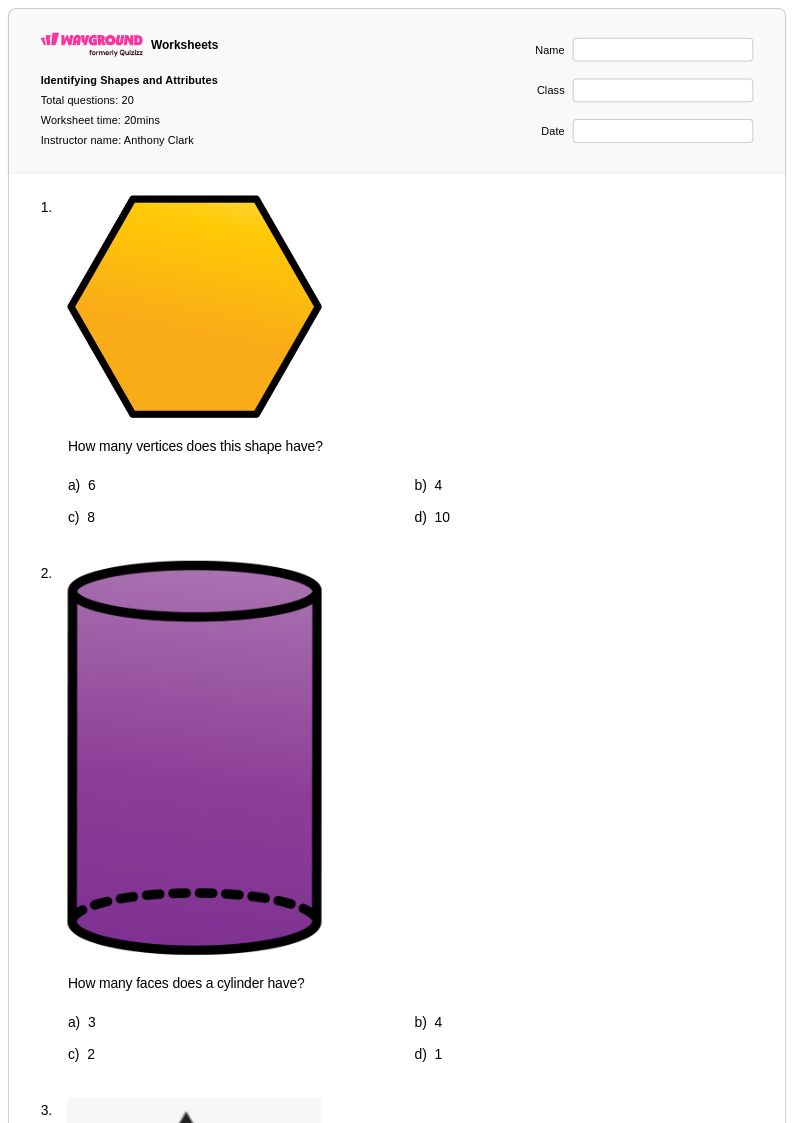
20 Q
3rd - Uni
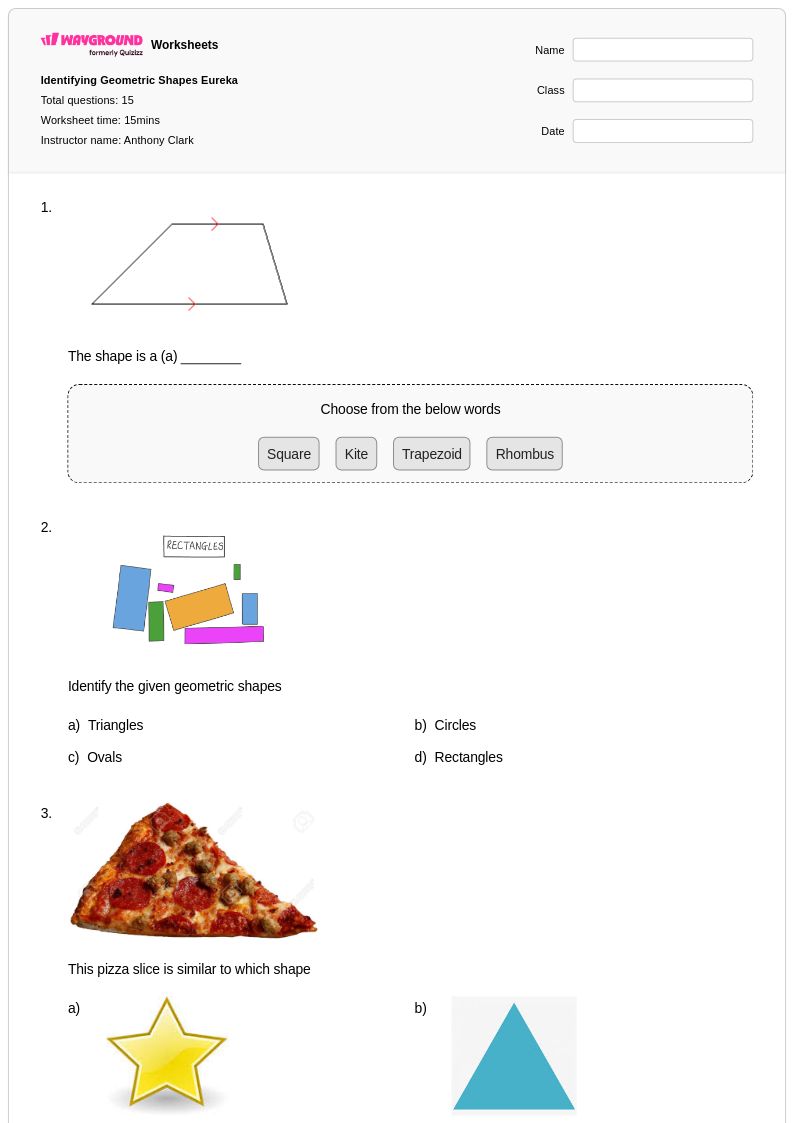
15 Q
2nd - Uni
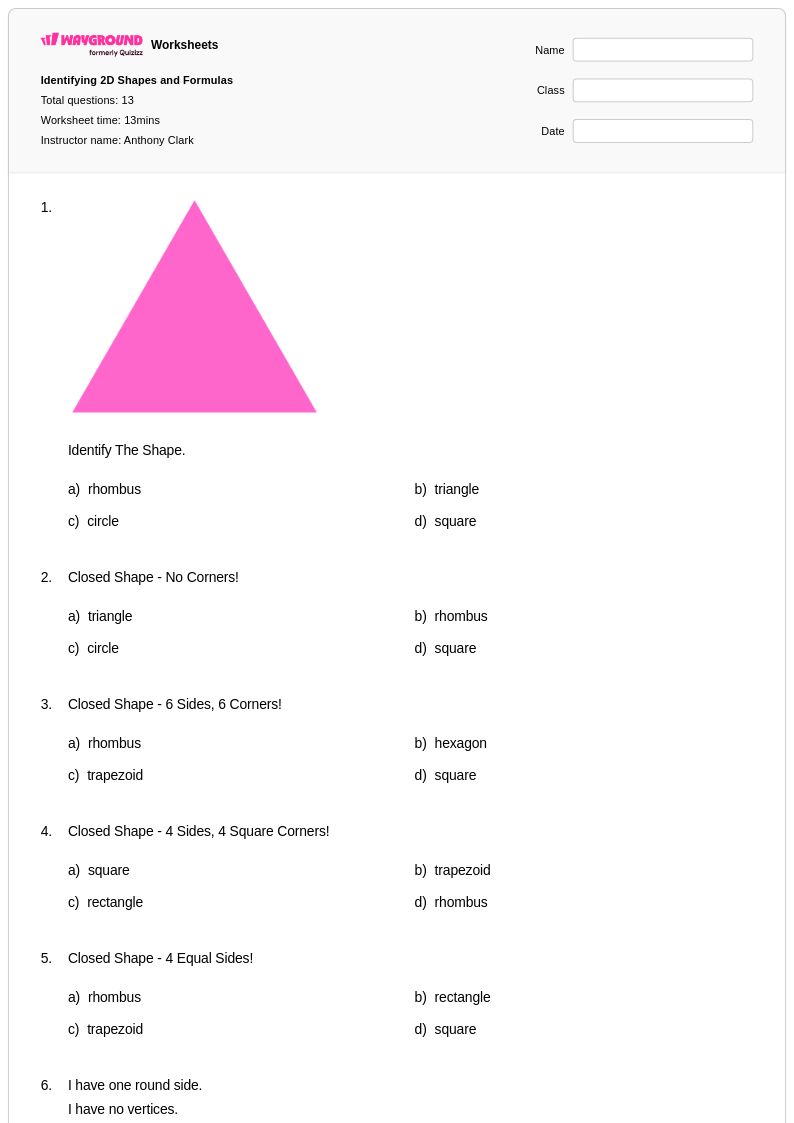
13 Q
1st - Uni
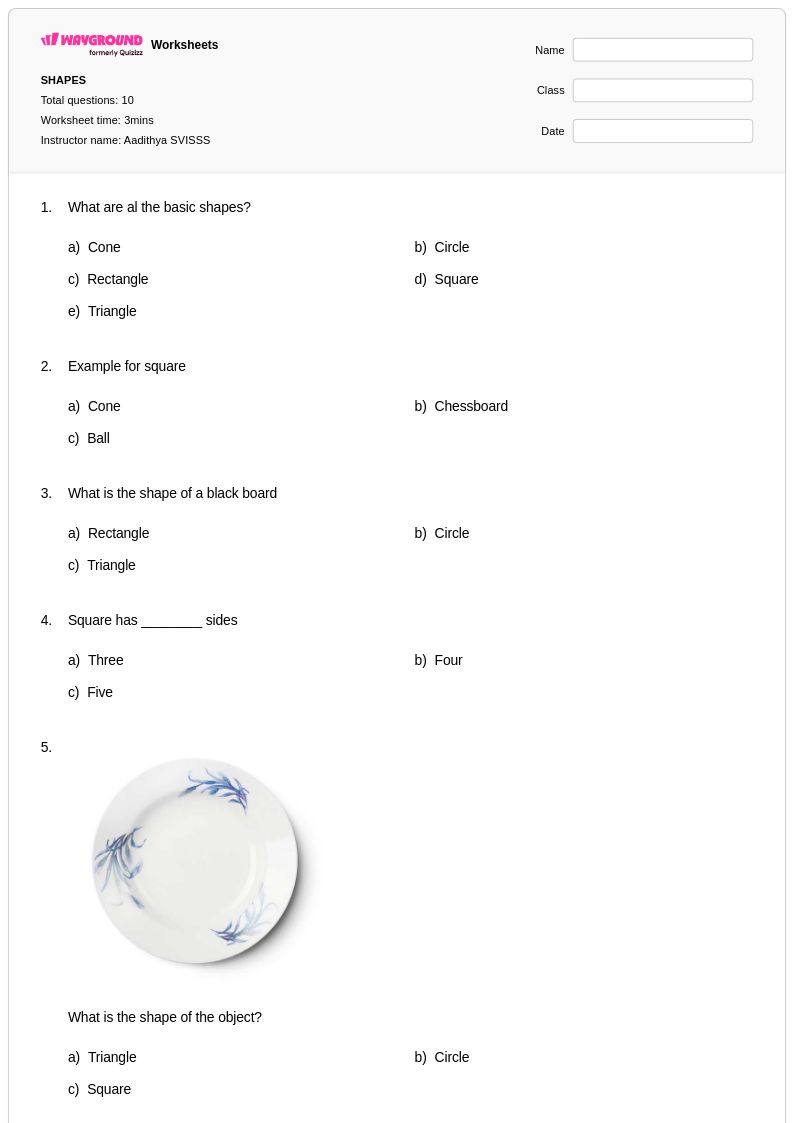
10 Q
3rd - 4th
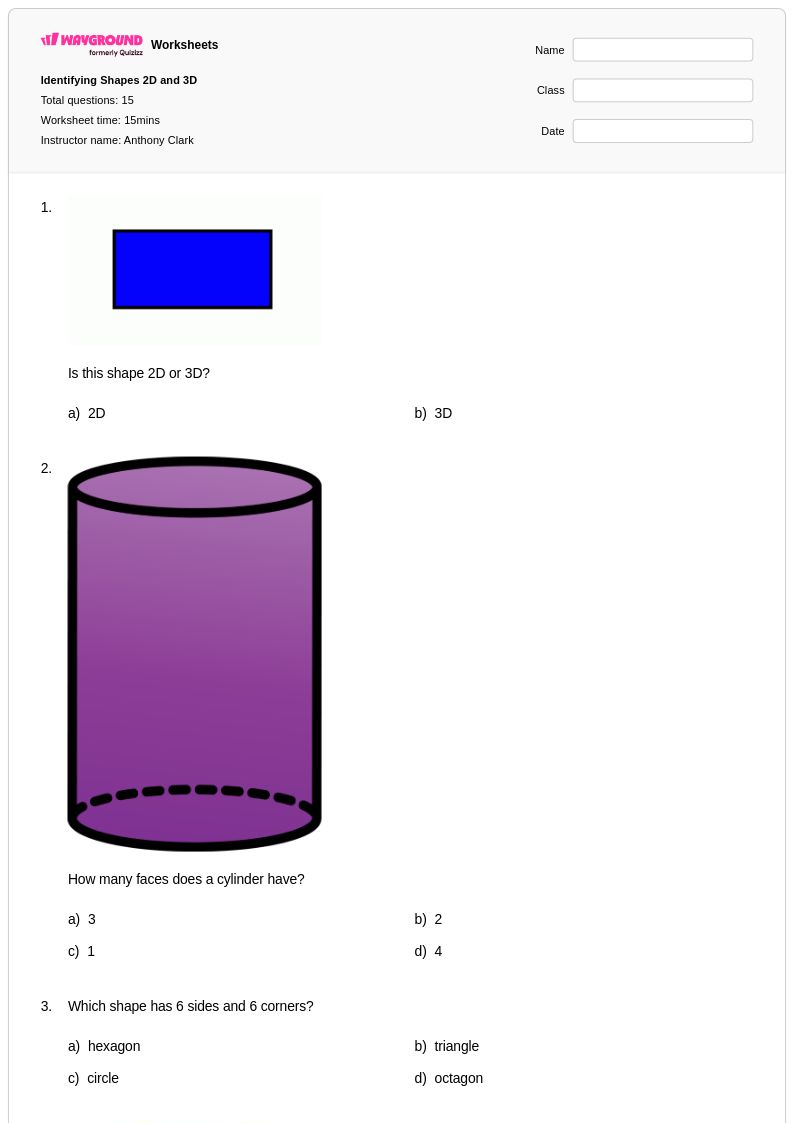
15 Q
1st - Uni
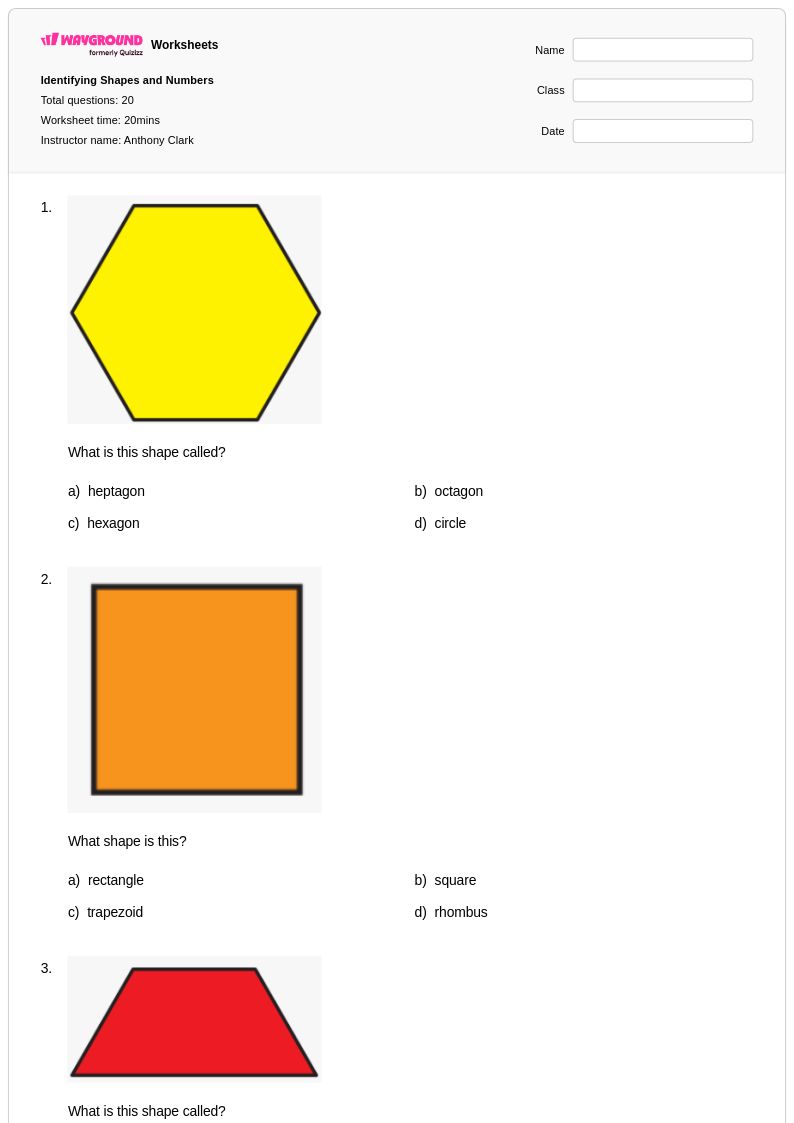
20 Q
1st - Uni
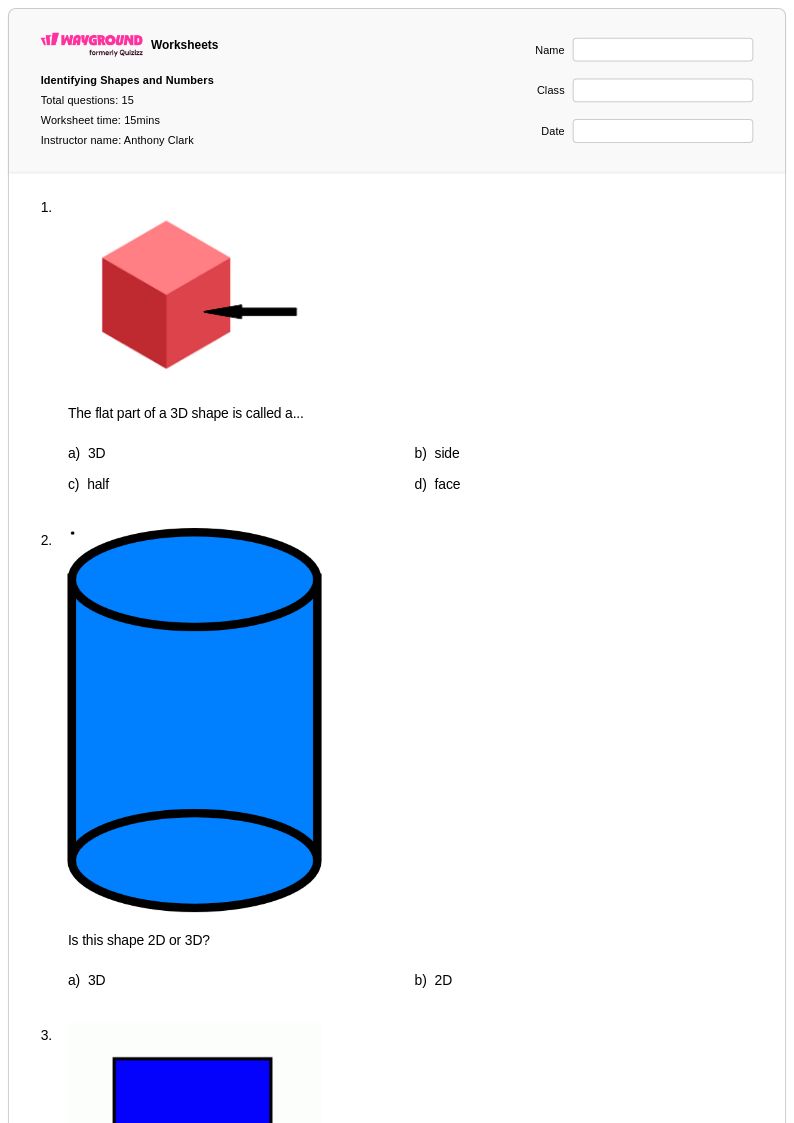
15 Q
1st - Uni
Explore Other Subject Worksheets for class 4
Explore printable Identifying Shapes worksheets for Class 4
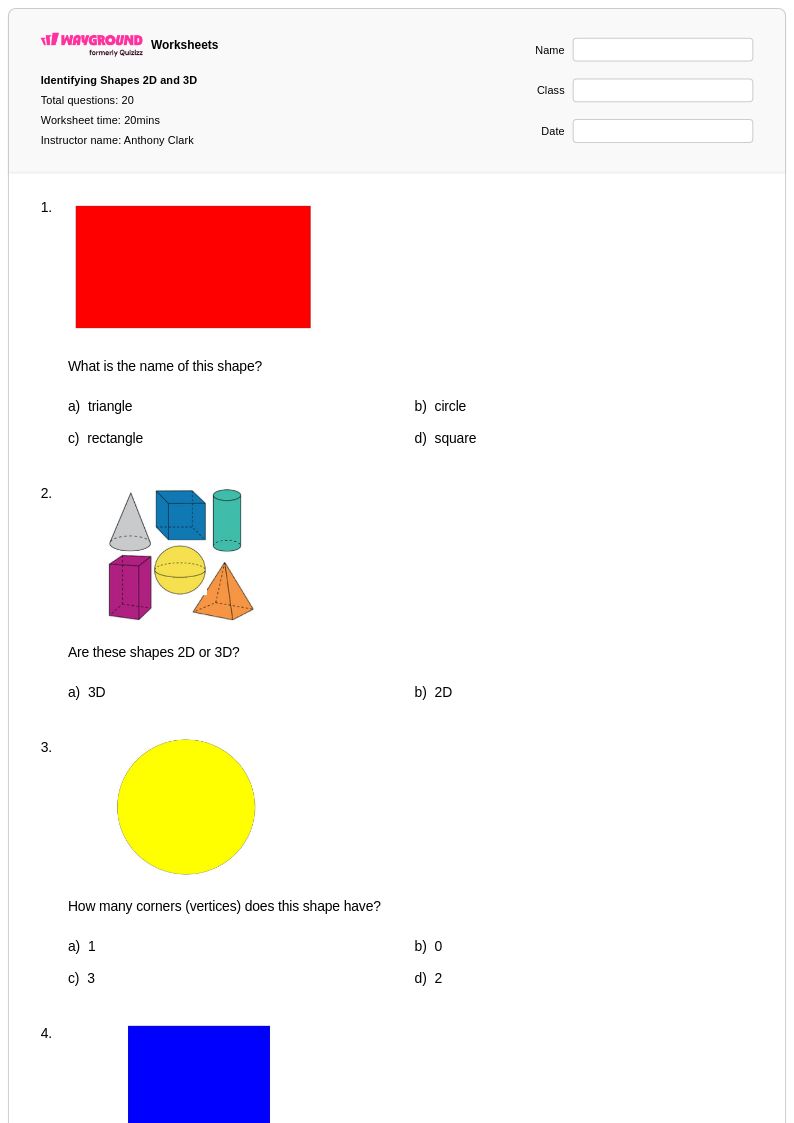
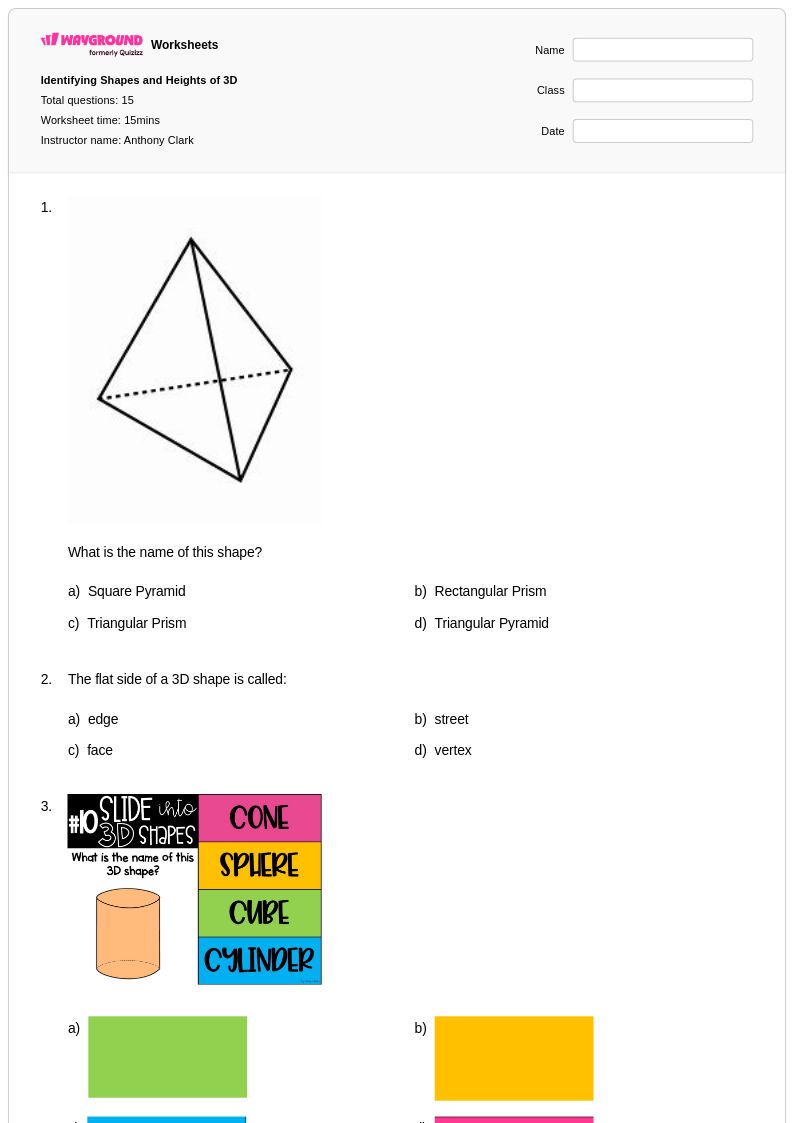
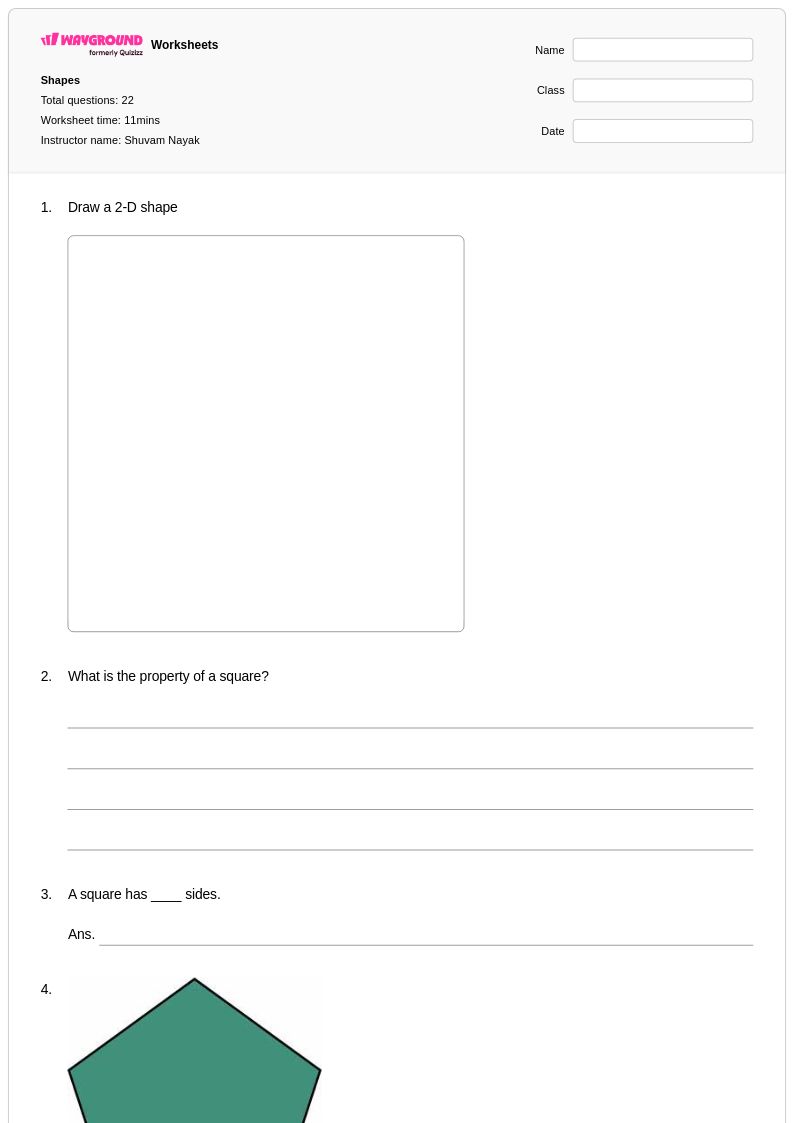
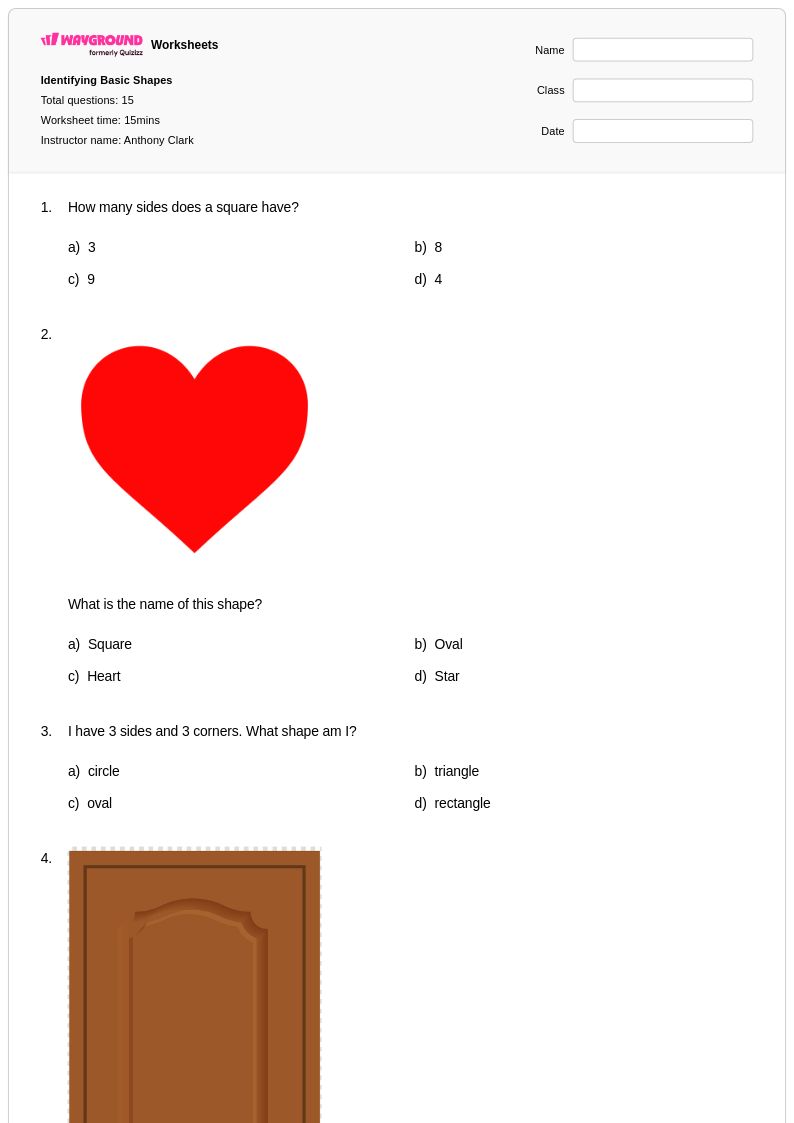
Identifying shapes worksheets for Class 4 students provide essential practice in recognizing and distinguishing between fundamental 2D geometric forms including circles, squares, rectangles, triangles, parallelograms, and other polygons. Through Wayground's comprehensive collection of identifying shapes resources, fourth-grade students develop critical visual discrimination skills while strengthening their understanding of geometric properties such as sides, angles, and vertices. These printable worksheets feature varied practice problems that challenge students to classify shapes based on their attributes, identify shapes within complex figures, and differentiate between similar geometric forms. Each worksheet includes a complete answer key and is available as a free pdf download, making it convenient for teachers to incorporate shape identification activities into their mathematics instruction and assessment routines.
Wayground's extensive library of identifying shapes worksheets draws from millions of teacher-created resources, offering educators powerful search and filtering capabilities to locate materials perfectly suited to their Class 4 geometry curriculum needs. The platform's standards-aligned content supports differentiated instruction through customizable worksheets that can be modified to accommodate various learning levels within the classroom. Teachers benefit from flexible formatting options that include both printable pdf versions for traditional paper-and-pencil practice and digital formats for interactive learning experiences. This versatile collection enables educators to efficiently plan comprehensive geometry lessons, provide targeted remediation for students struggling with shape recognition concepts, offer enrichment activities for advanced learners, and deliver consistent skill practice that builds foundational understanding of 2D geometric shapes essential for future mathematical learning.
FAQs
How do I teach fourth graders to identify 2D shapes by their properties?
What exercises help Grade 4 students practice identifying shapes?
What mistakes do fourth graders make when identifying shapes?
How can I use these identifying shapes worksheets in class?
How does identifying shapes fit into the Grade 4 Common Core math progression?
How can I differentiate shape-identification practice in a mixed-ability class?