Free Printable Inflected Endings Worksheets for Class 3
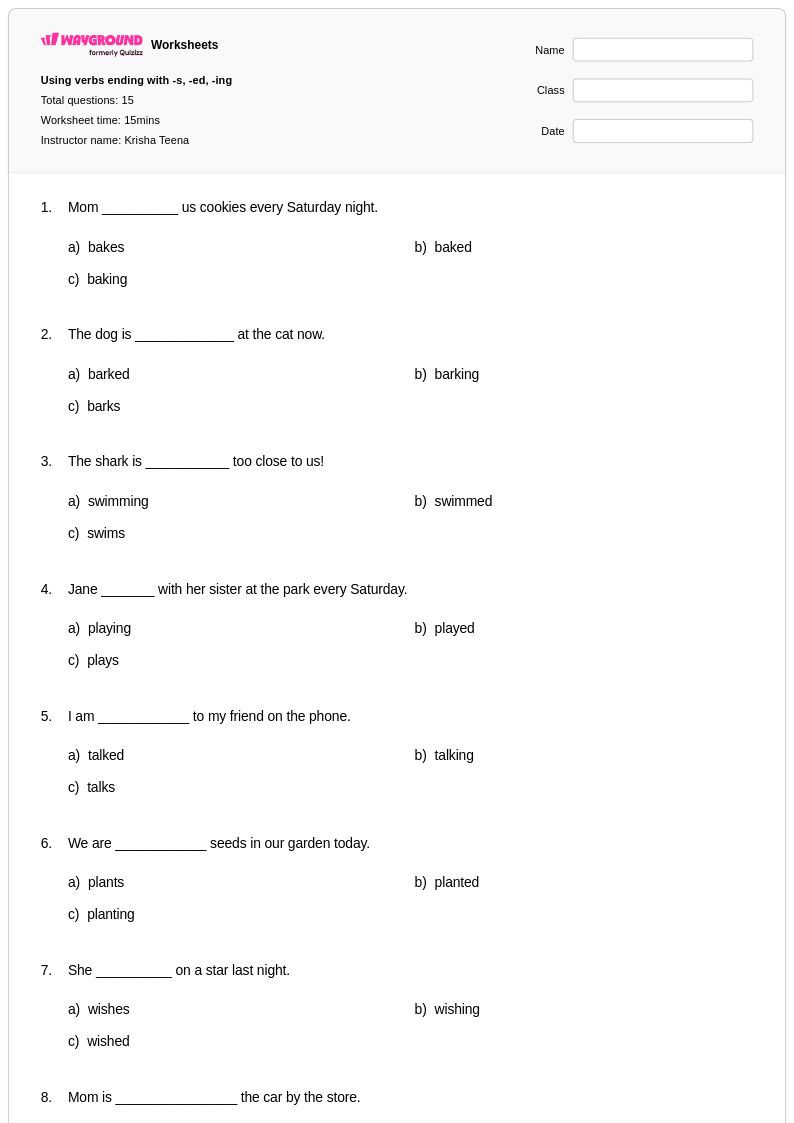
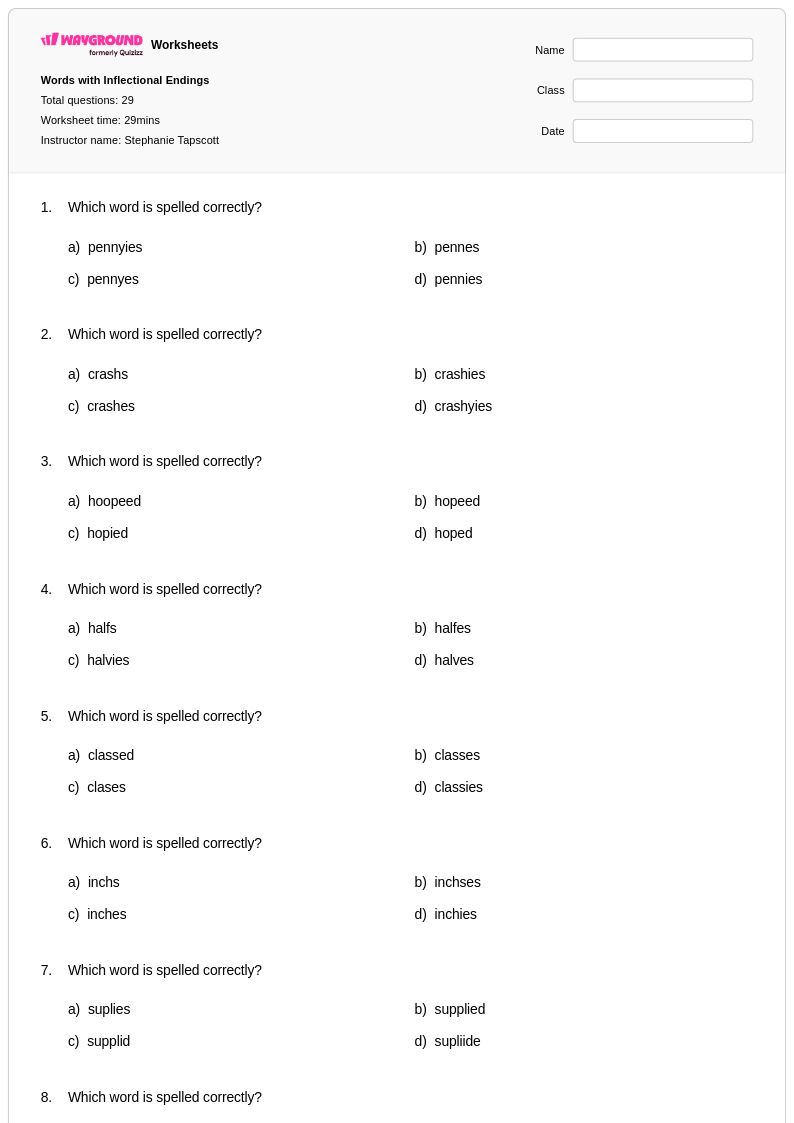
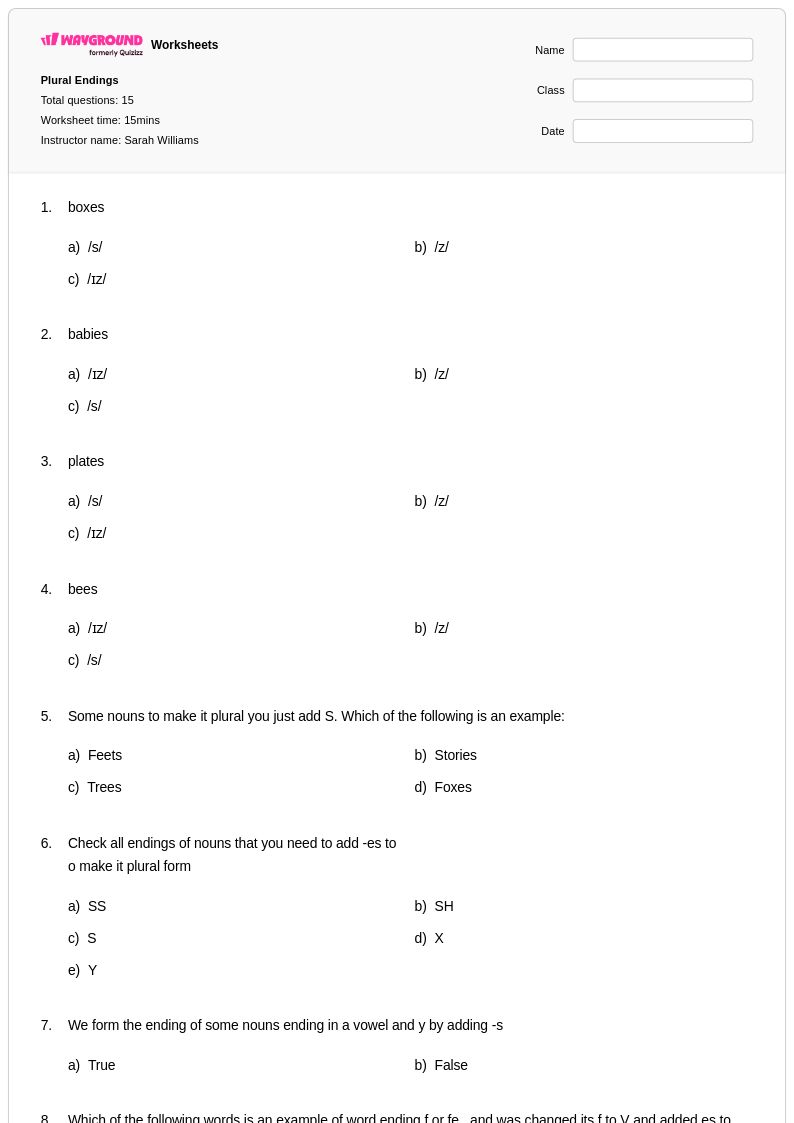
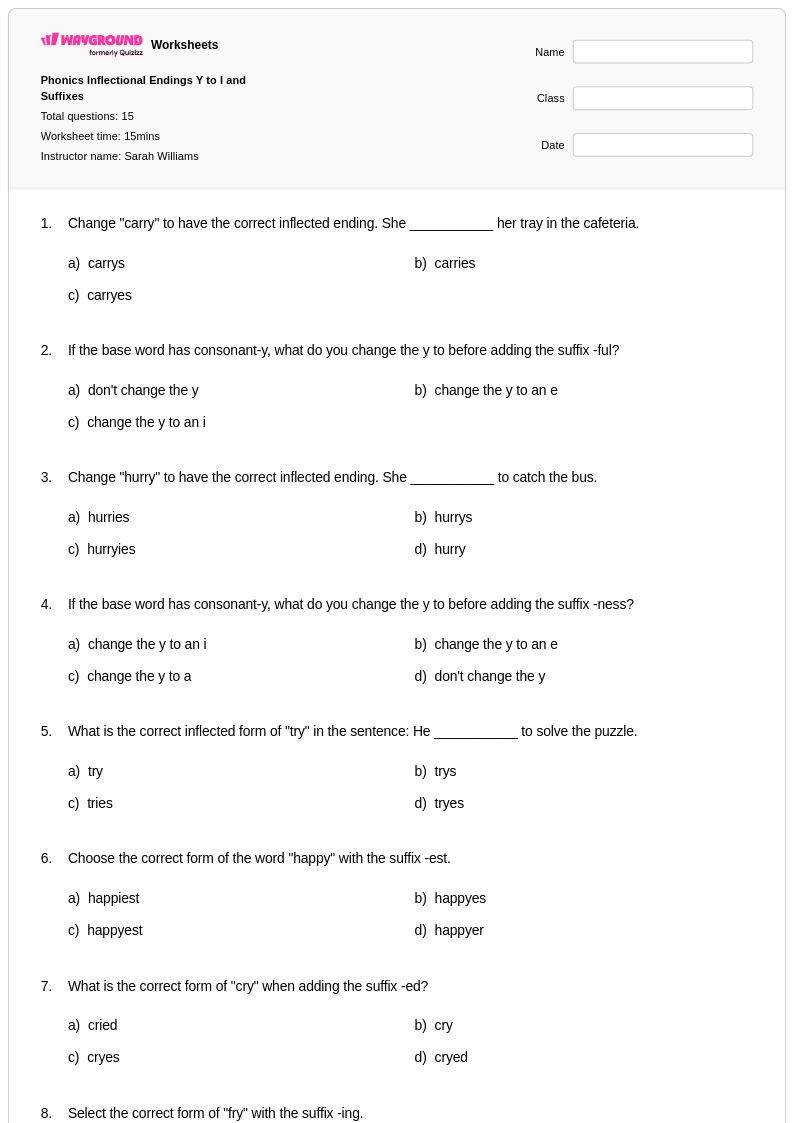
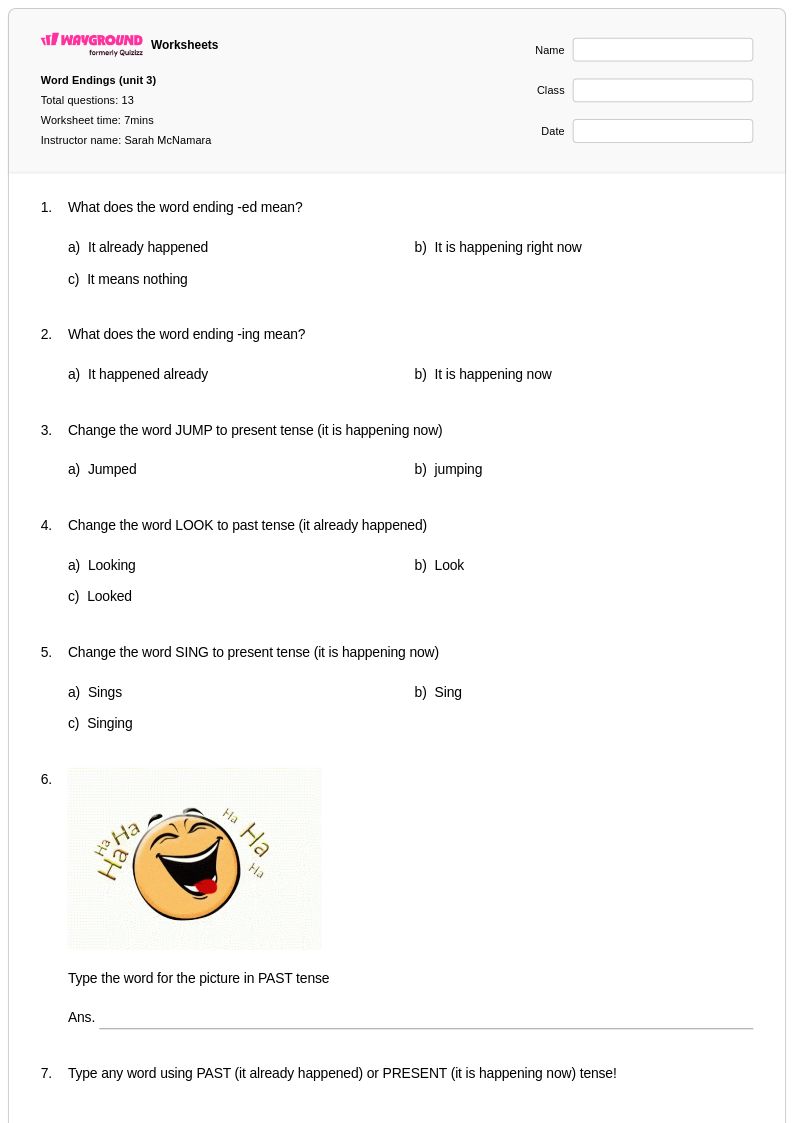
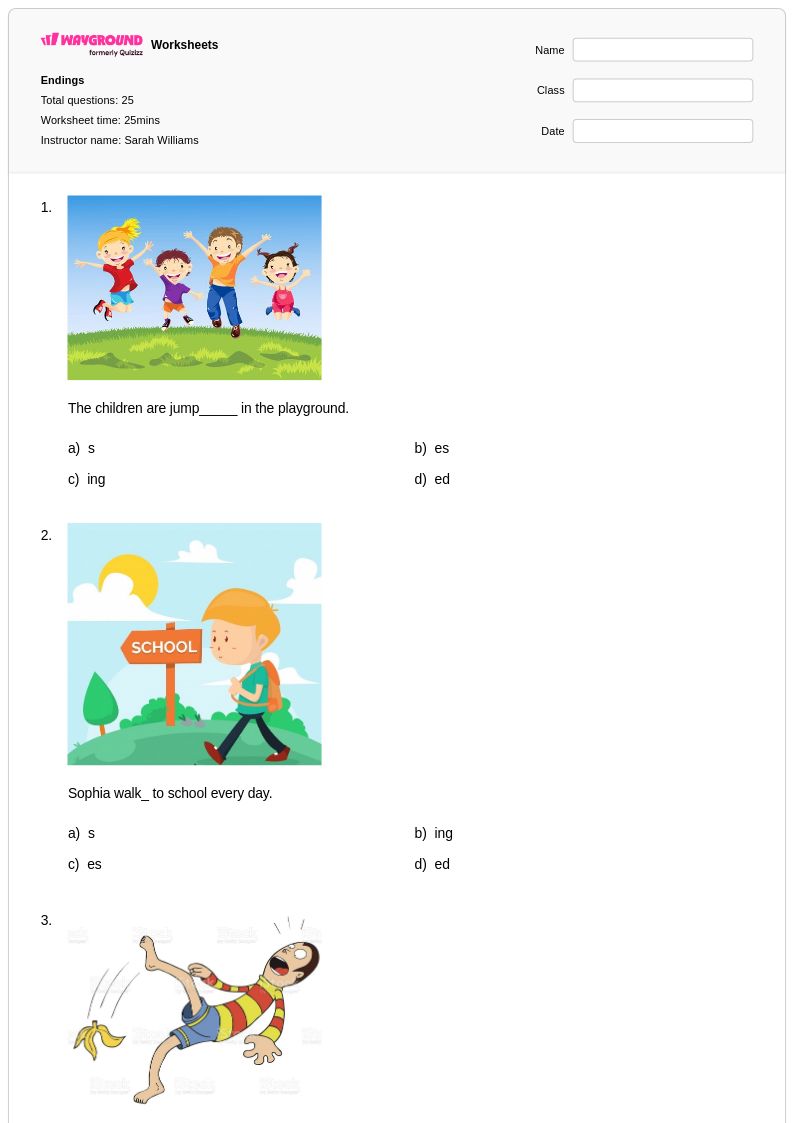
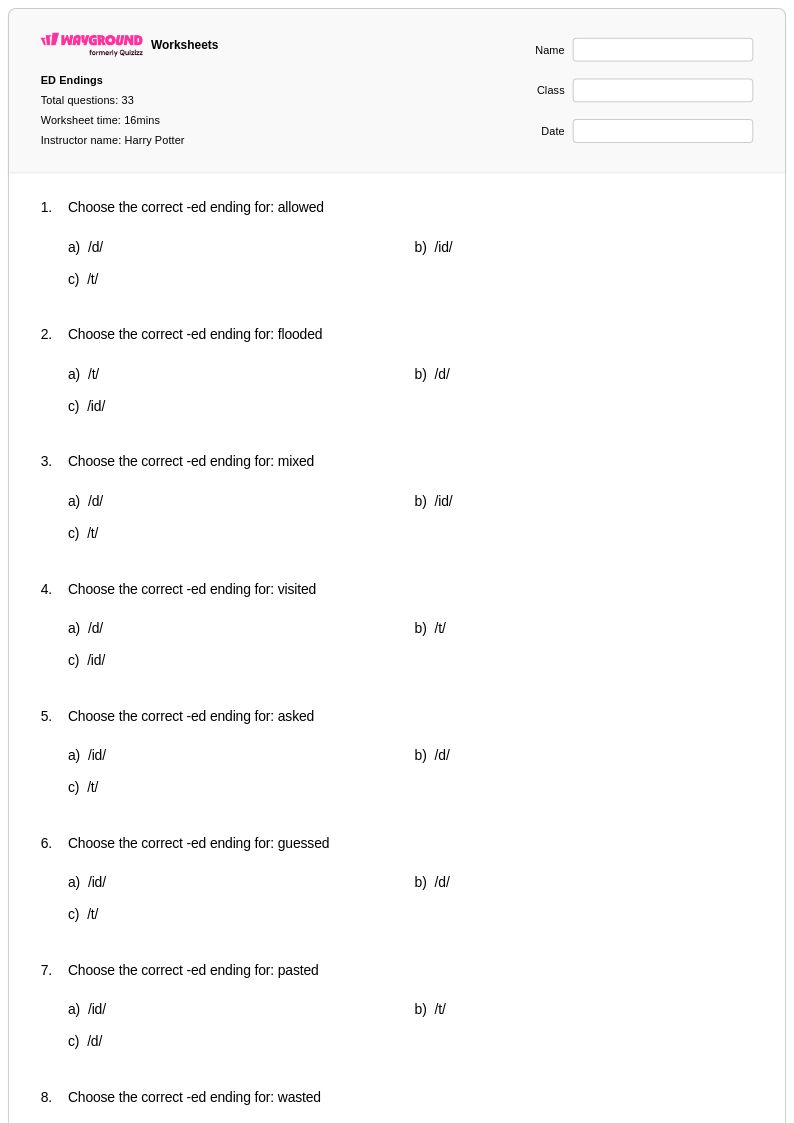
Class 3 inflected endings worksheets from Wayground help students master adding suffixes like -ed, -ing, and -s to base words through engaging printables, practice problems, and comprehensive answer keys.
Explore printable Inflected Endings worksheets for Class 3
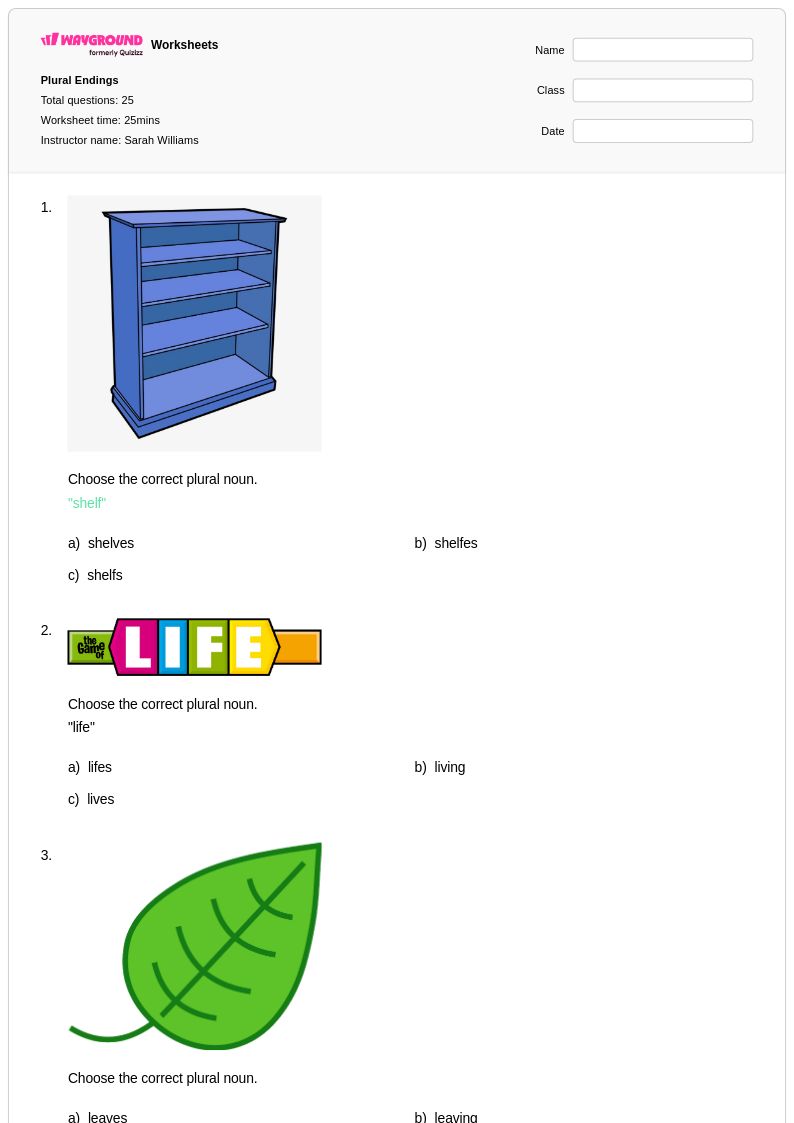
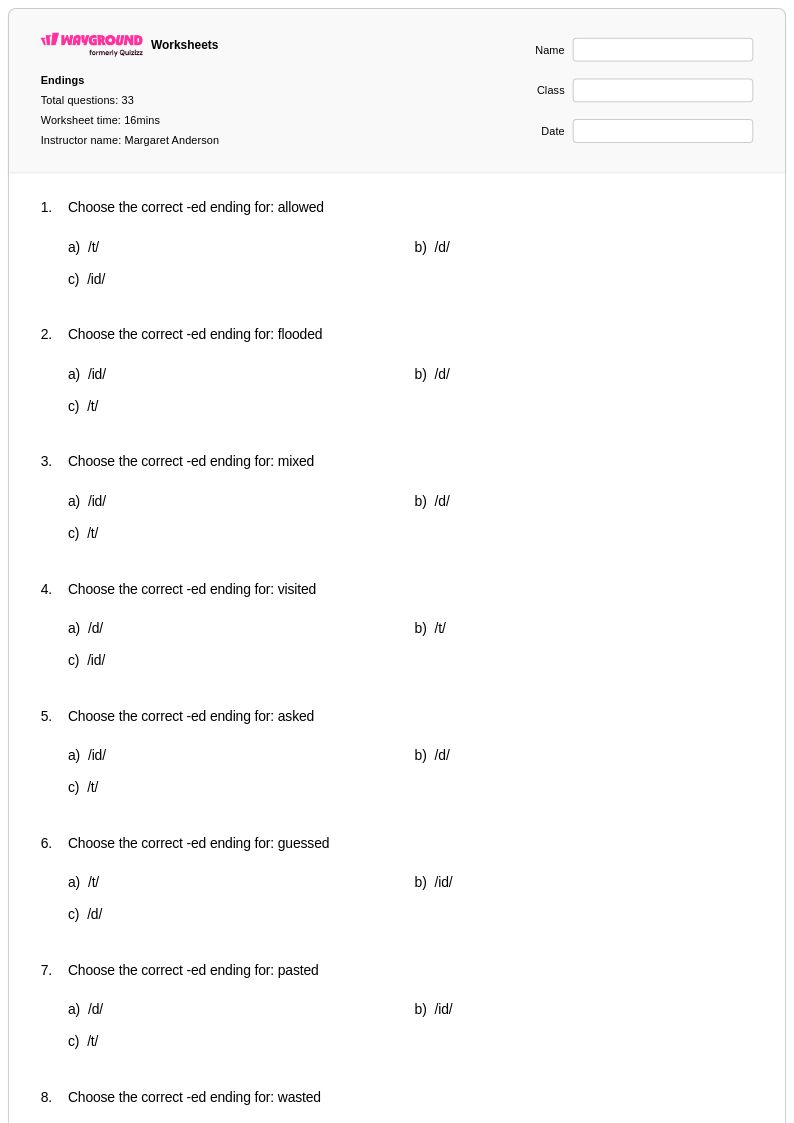
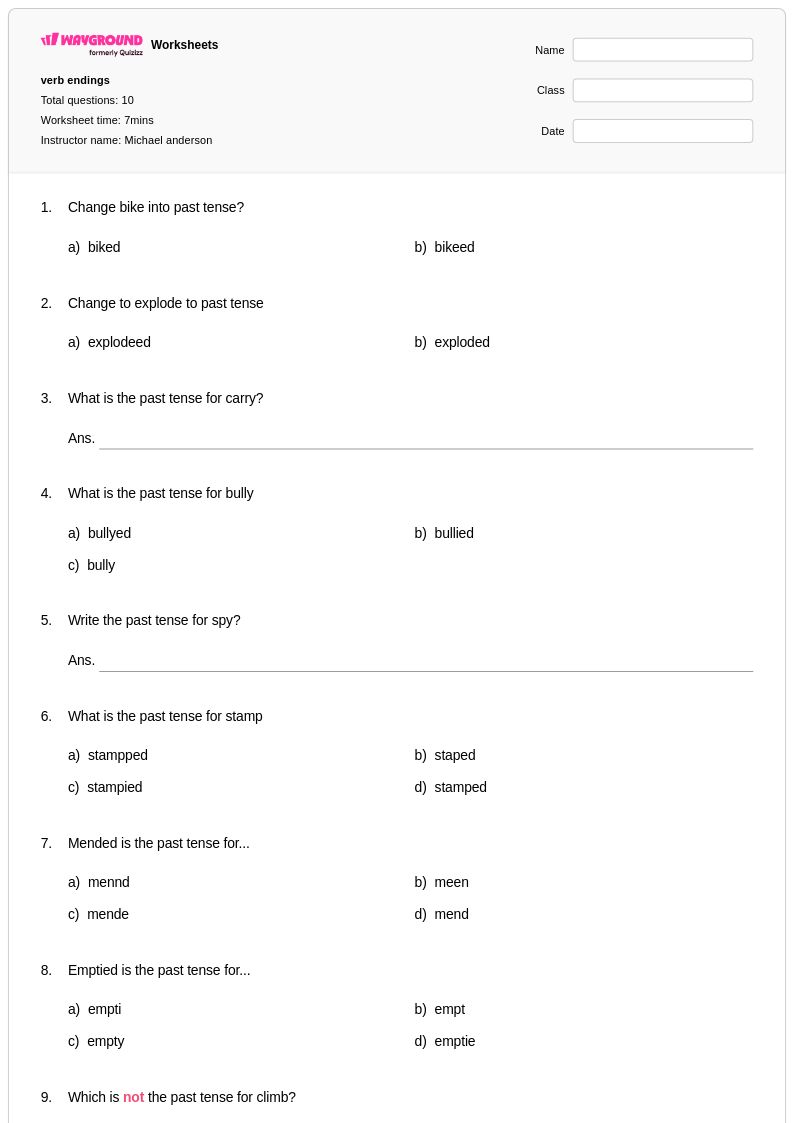
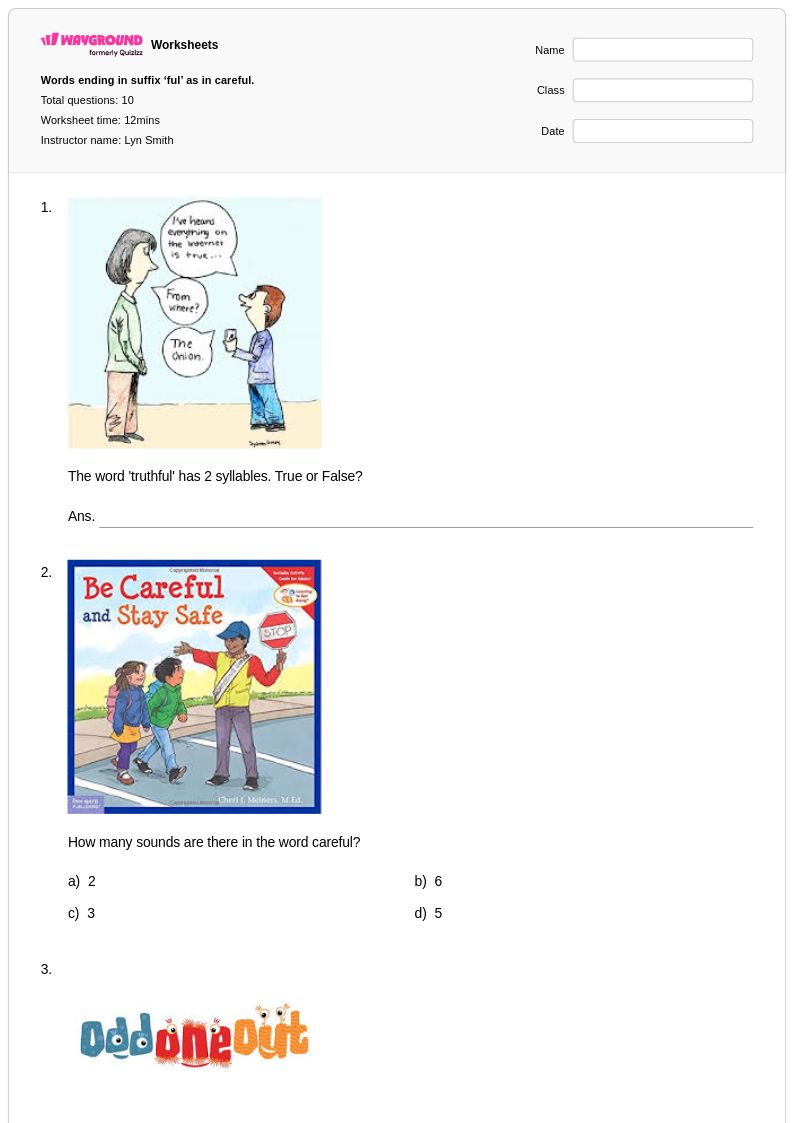
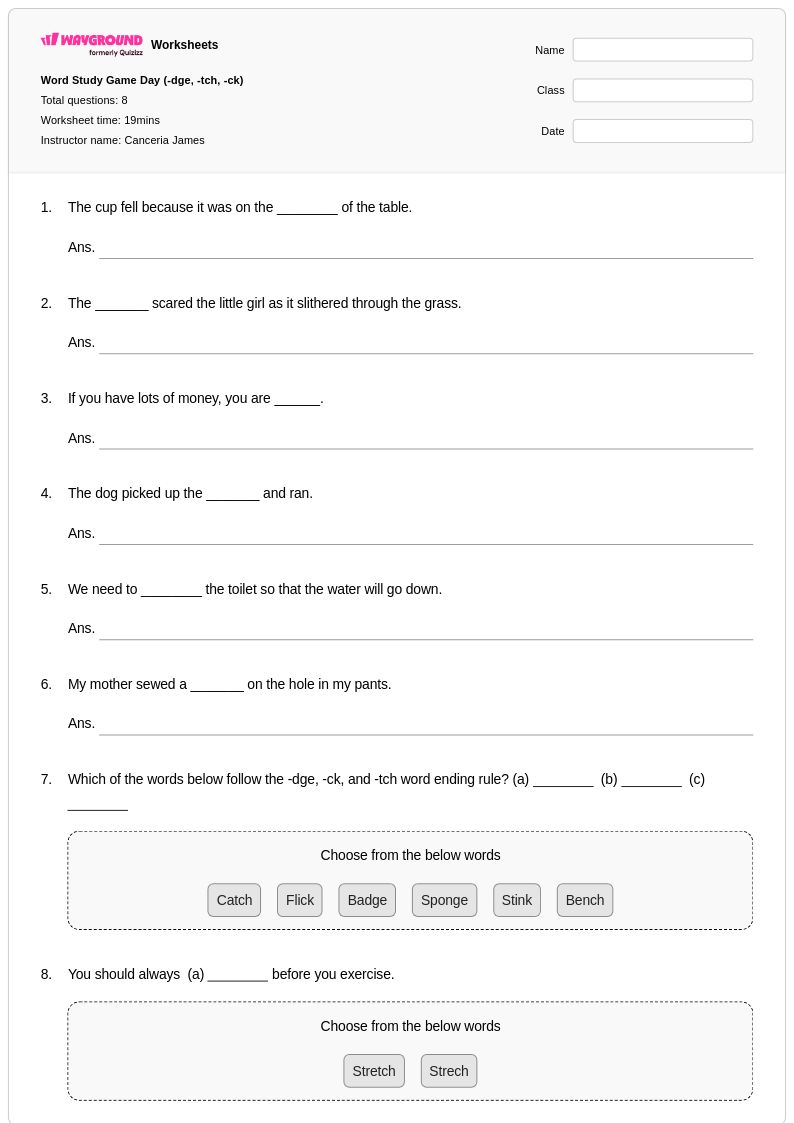
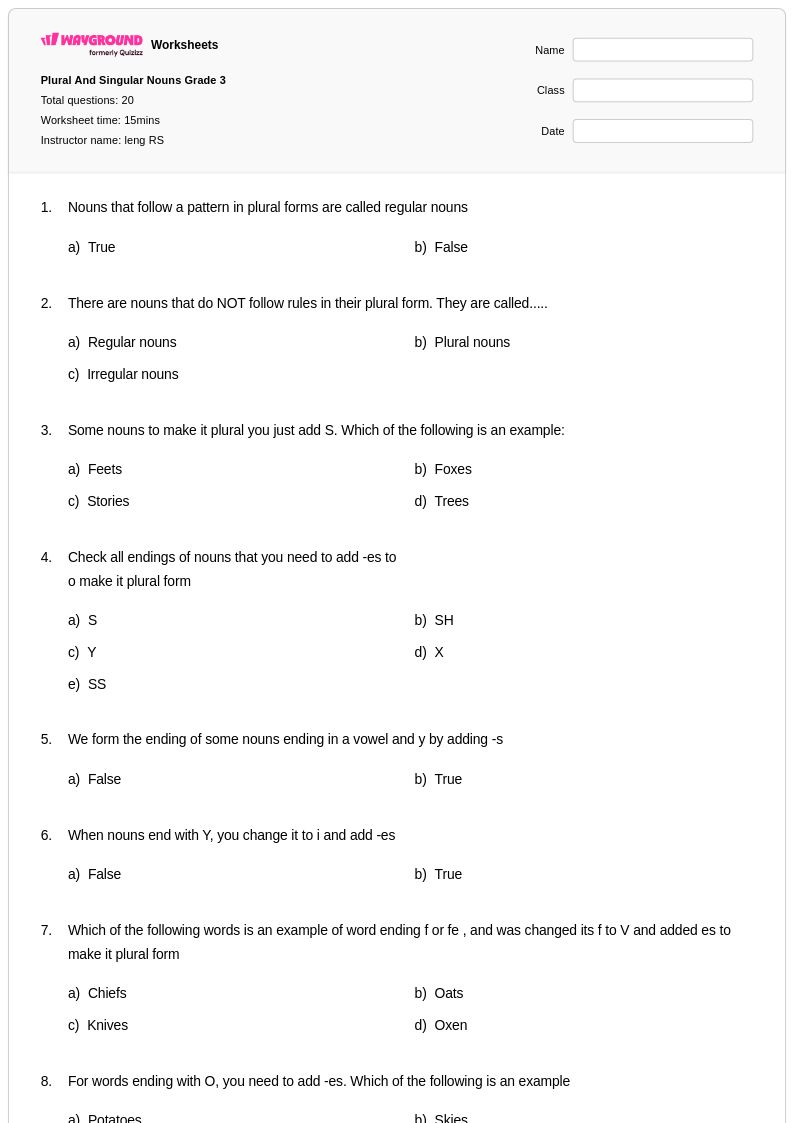
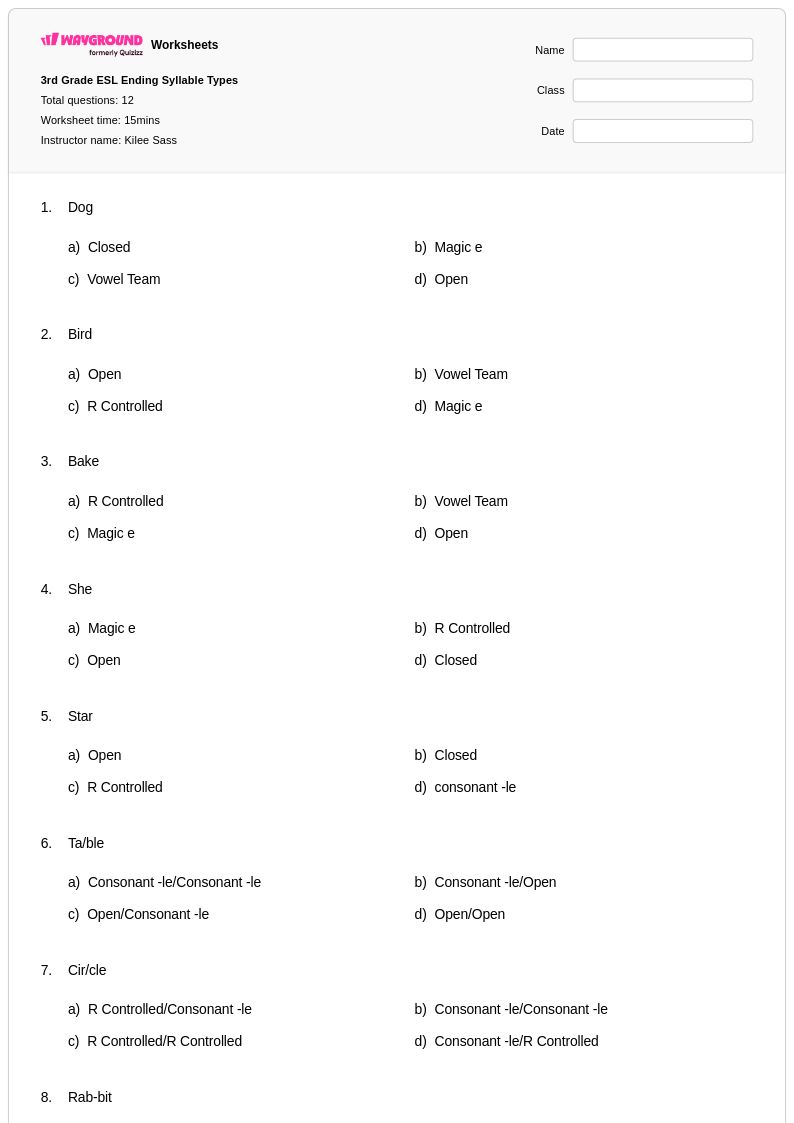
Inflected endings worksheets for Class 3 students available through Wayground (formerly Quizizz) provide comprehensive practice with suffixes that change the form of base words, including -ed, -ing, -s, -es, and comparative endings like -er and -est. These educational resources strengthen students' phonics skills by teaching them to recognize spelling patterns and rules when adding endings to words, such as doubling consonants, dropping silent e, and changing y to i. The printable worksheets feature diverse practice problems that guide third graders through systematic exploration of how inflected endings affect word pronunciation and meaning, with answer keys provided to support independent learning and immediate feedback. These free pdf resources help students master essential decoding skills while building confidence in reading multisyllabic words with various inflected forms.
Wayground (formerly Quizizz) supports teachers with millions of teacher-created inflected endings worksheets specifically designed for Class 3 phonics instruction, offering robust search and filtering capabilities that allow educators to locate resources aligned with specific learning standards and student needs. The platform's differentiation tools enable teachers to customize worksheet difficulty levels and content focus, making it simple to provide targeted remediation for struggling readers or enrichment activities for advanced learners. Available in both printable and digital pdf formats, these inflected endings resources integrate seamlessly into lesson planning, homework assignments, and intervention programs, giving educators flexible options for skill practice that accommodate diverse classroom environments and learning preferences.
FAQs
How do I teach inflected endings to elementary students?
Start by anchoring instruction in base words students already know, then explicitly teach each suffix rule in isolation before combining them. For -ed and -ing, introduce the three core spelling rules in sequence: double the final consonant for short-vowel words ending in a single consonant (run → running), drop the silent e before a vowel suffix (make → making), and change y to i before -ed but not -ing (carry → carried, carrying). Using word-sorting activities and color-coded charts helps students internalize these patterns before applying them independently in writing.
What exercises help students practice inflected endings?
Effective practice exercises include add-the-suffix activities where students apply -ed, -ing, -s, -es, or -er to a given base word and justify the spelling change, as well as error-correction tasks where students identify and fix misspelled inflected words. Sentence-completion and cloze passages that require students to select the correctly inflected form of a word build contextual application. These exercise types appear in inflected endings worksheets on Wayground, which include practice problems and complete answer keys in printable PDF and digital formats.
What spelling mistakes do students commonly make with inflected endings?
The most frequent errors involve misapplying or forgetting the doubling rule — students often write 'runing' instead of 'running' or over-generalize doubling to words where it does not apply, such as 'openning' instead of 'opening.' Forgetting to drop the silent e before a vowel suffix is another persistent error (e.g., 'makeing' instead of 'making'), as is failing to change y to i before -ed (e.g., 'carryed' instead of 'carried'). Targeted error-analysis exercises, where students explain why a word is misspelled, are particularly effective at breaking these habits.
How can I differentiate inflected endings practice for students at different skill levels?
For students who are still building foundational decoding skills, start with high-frequency base words and a single suffix rule at a time, using visual cue cards to support recall. More advanced students can work with multisyllabic base words and mixed-suffix tasks that require them to apply multiple spelling rules within the same activity. On Wayground, teachers can customize worksheets to target specific suffix rules or skill levels, and the platform supports individual student accommodations such as read aloud, reduced answer choices, and extended time, so differentiation can be managed without disrupting the rest of the class.
How do I use inflected endings worksheets in my classroom?
Inflected endings worksheets work well as guided practice during phonics instruction, as independent seatwork following direct teaching, or as targeted small-group intervention for students who need additional support with specific suffix rules. Wayground's inflected endings worksheets are available as printable PDFs for traditional classroom distribution and in digital formats for technology-integrated environments, and teachers can also host them as a quiz directly on Wayground to collect student responses and review results efficiently.
How do inflected endings connect to reading fluency and comprehension?
When students can automatically recognize inflected endings, they decode words faster and with less cognitive effort, which frees working memory for comprehension. For example, a reader who stumbles on 'planned' or 'replied' because they do not recognize the base word loses the thread of meaning in a sentence. Systematic inflected endings instruction is therefore considered a core component of structured literacy programs because it builds both decoding accuracy and reading rate simultaneously.