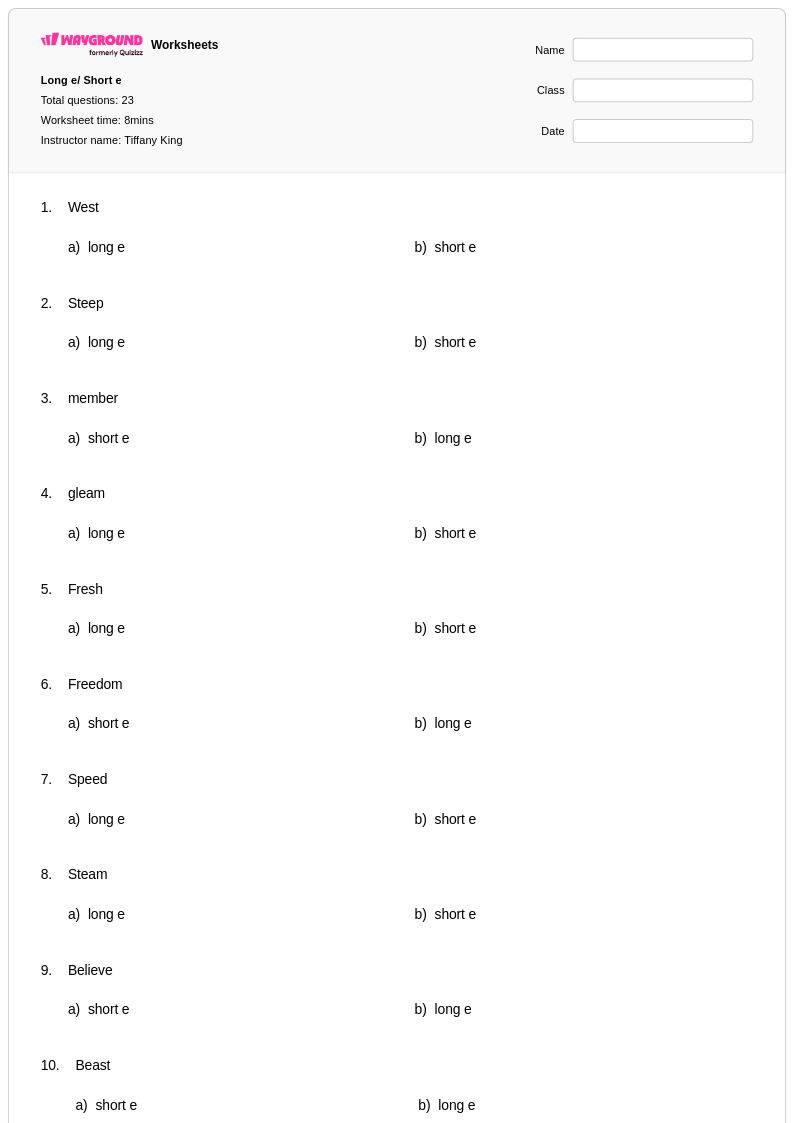
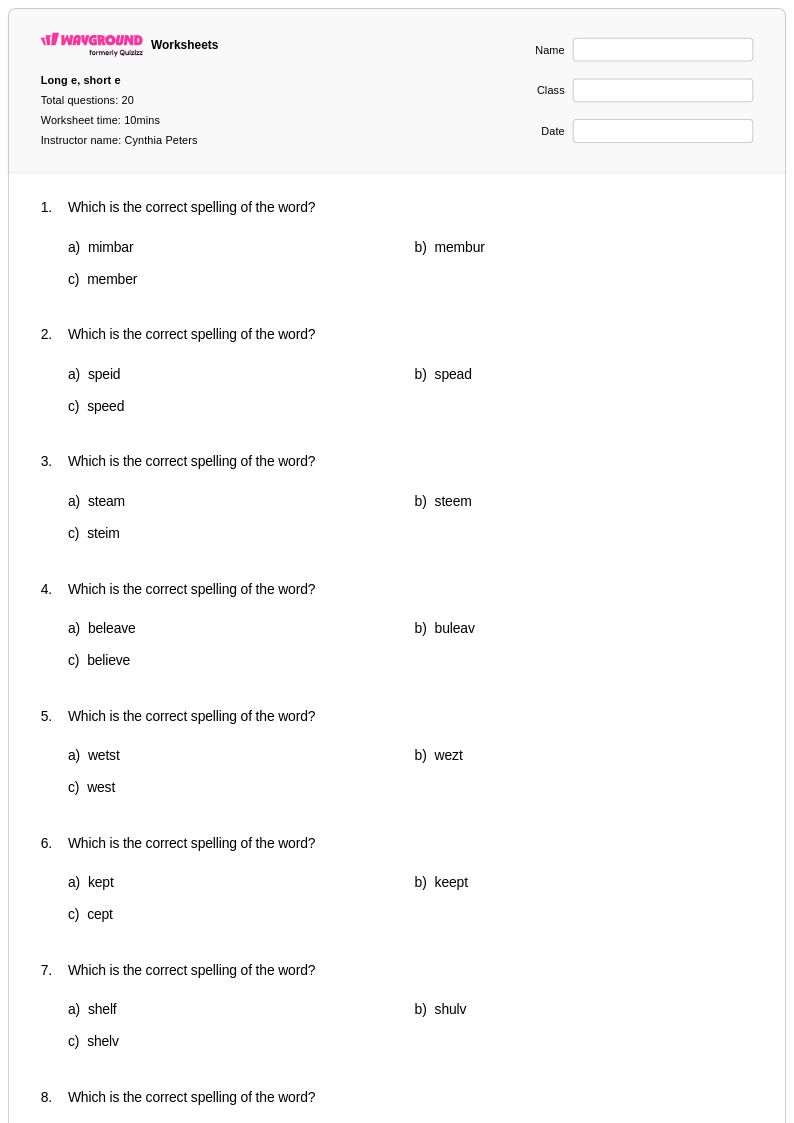
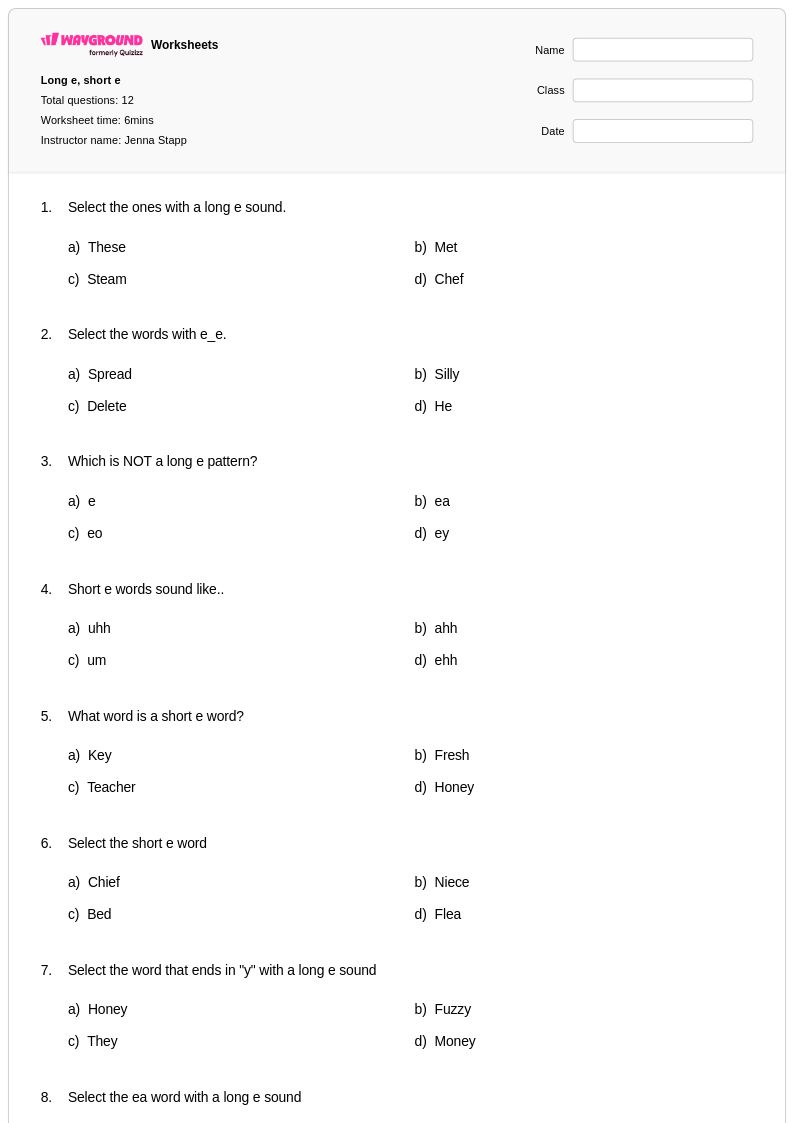
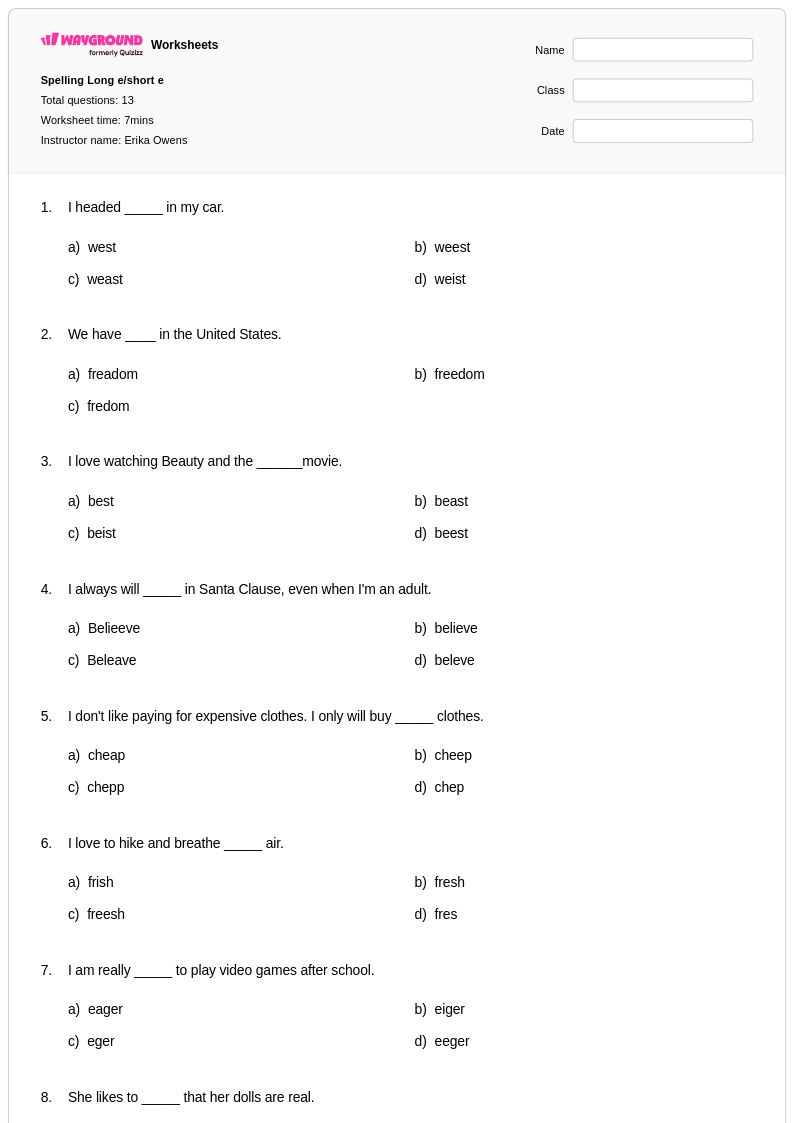
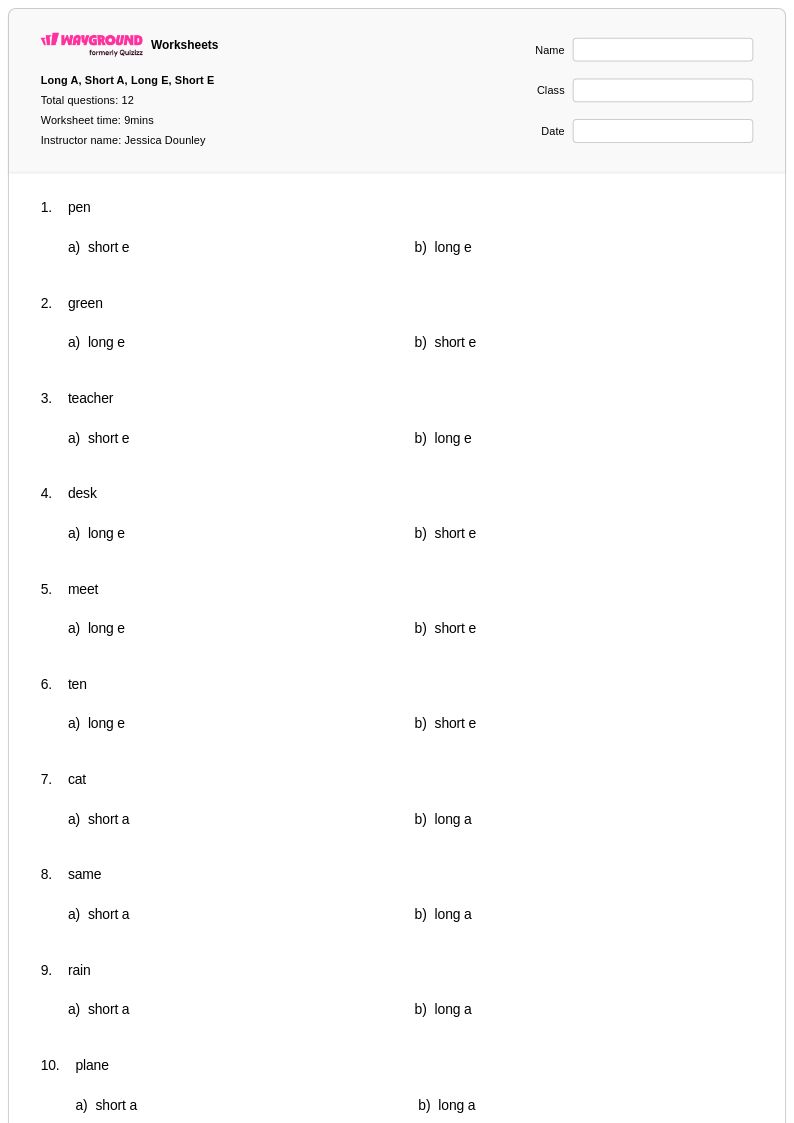
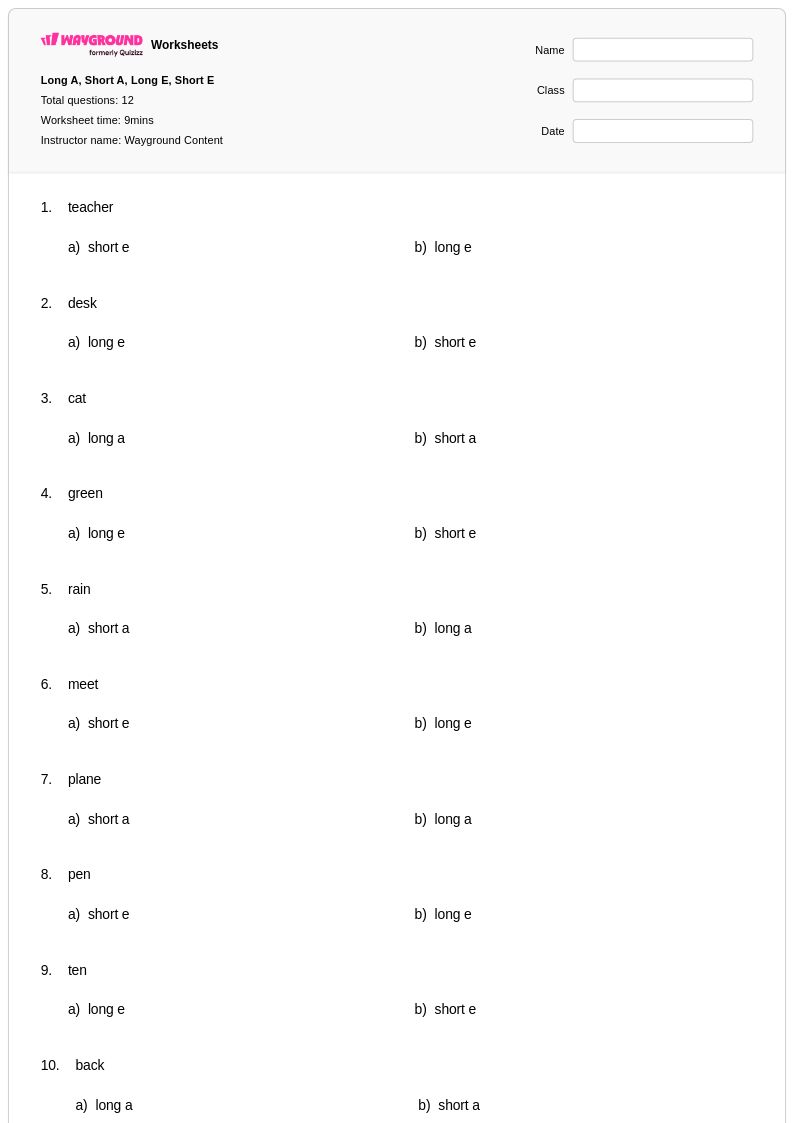
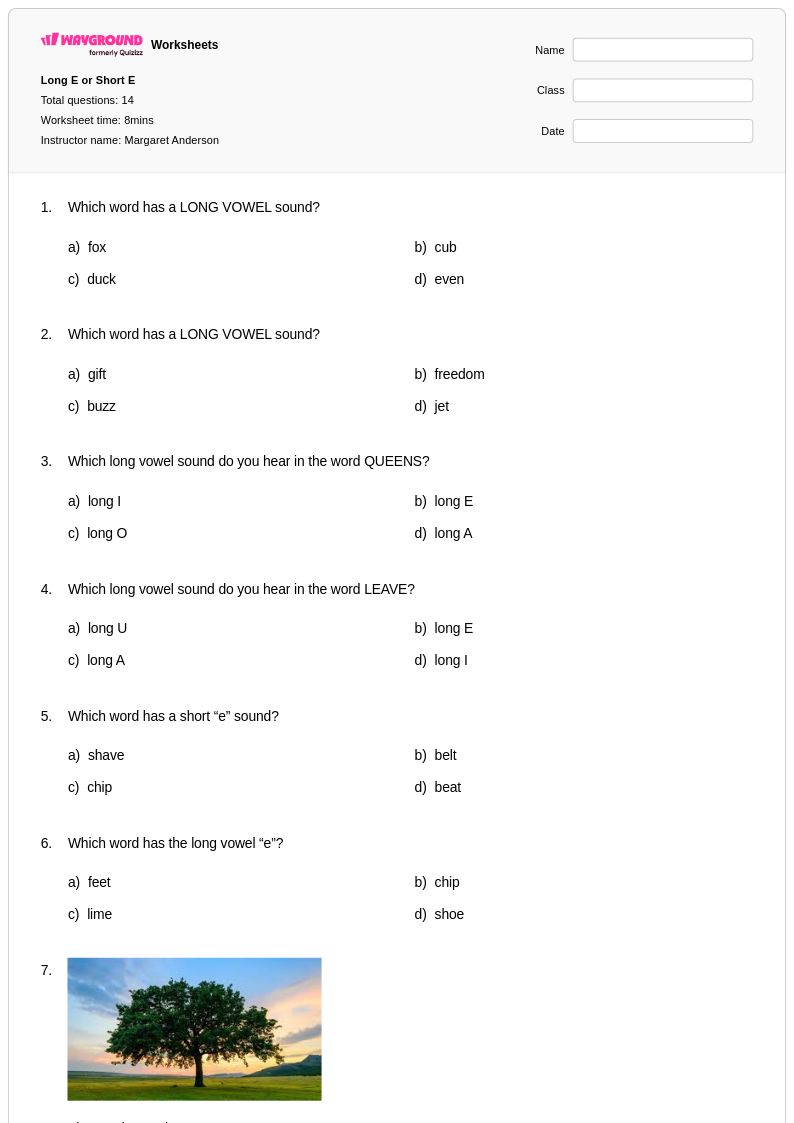
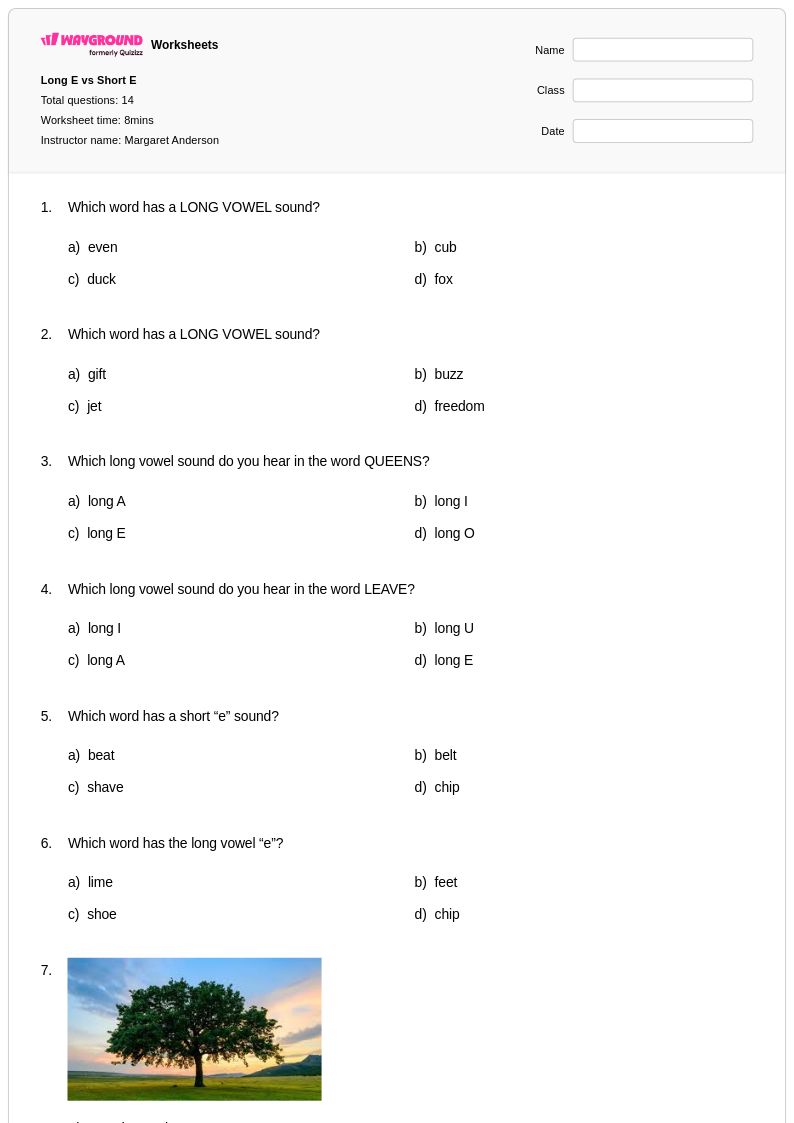
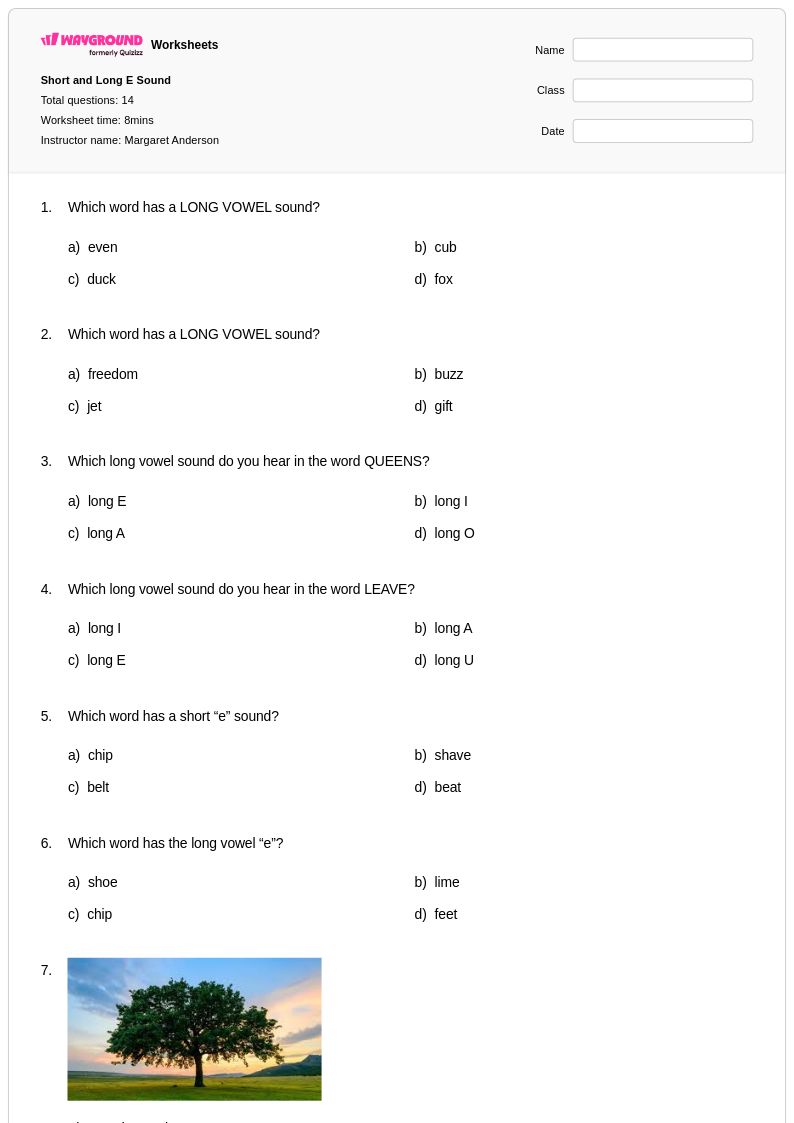
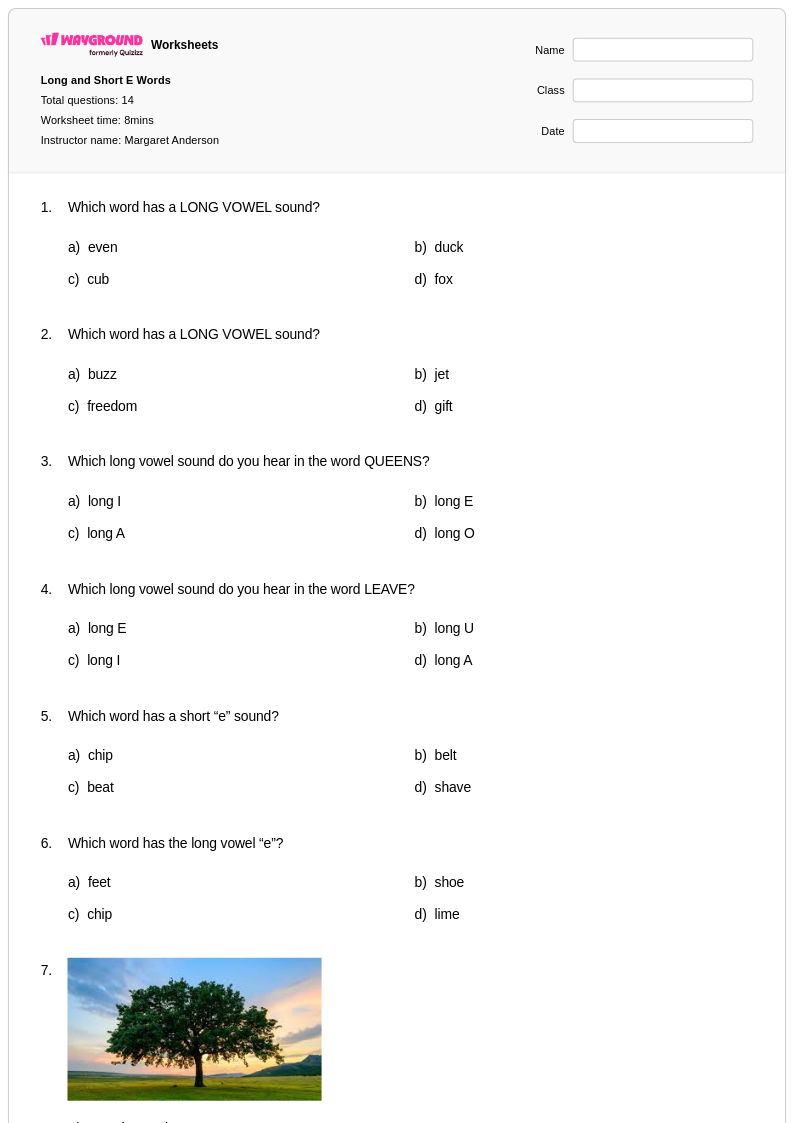
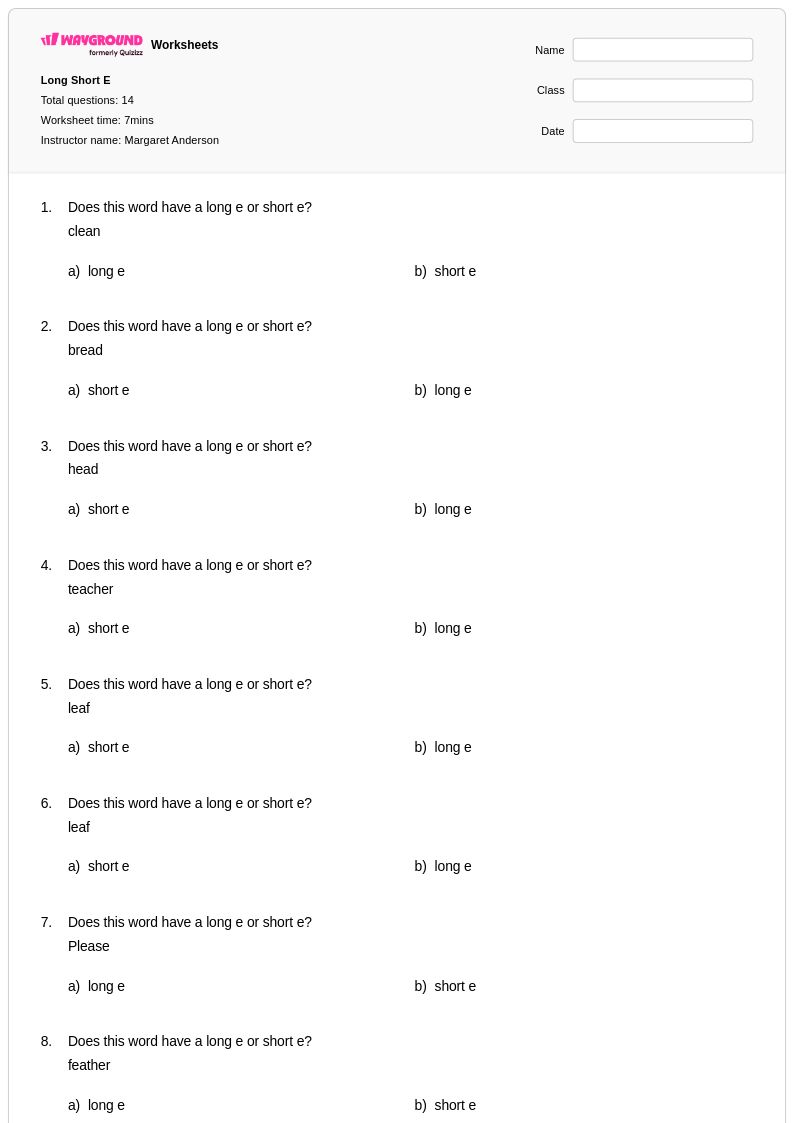
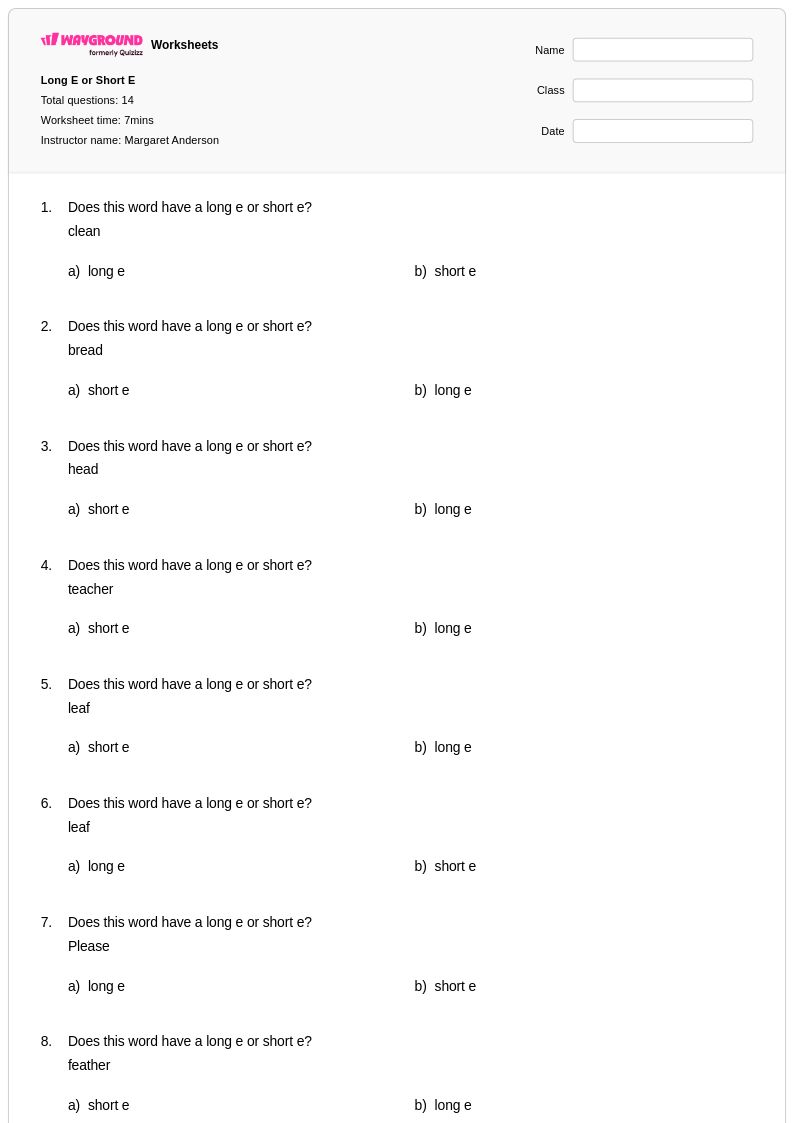
Explore Wayground's collection of free Long E and Short E vowel worksheets with printables, practice problems, and answer keys to help students master vowel sound recognition and pronunciation skills.
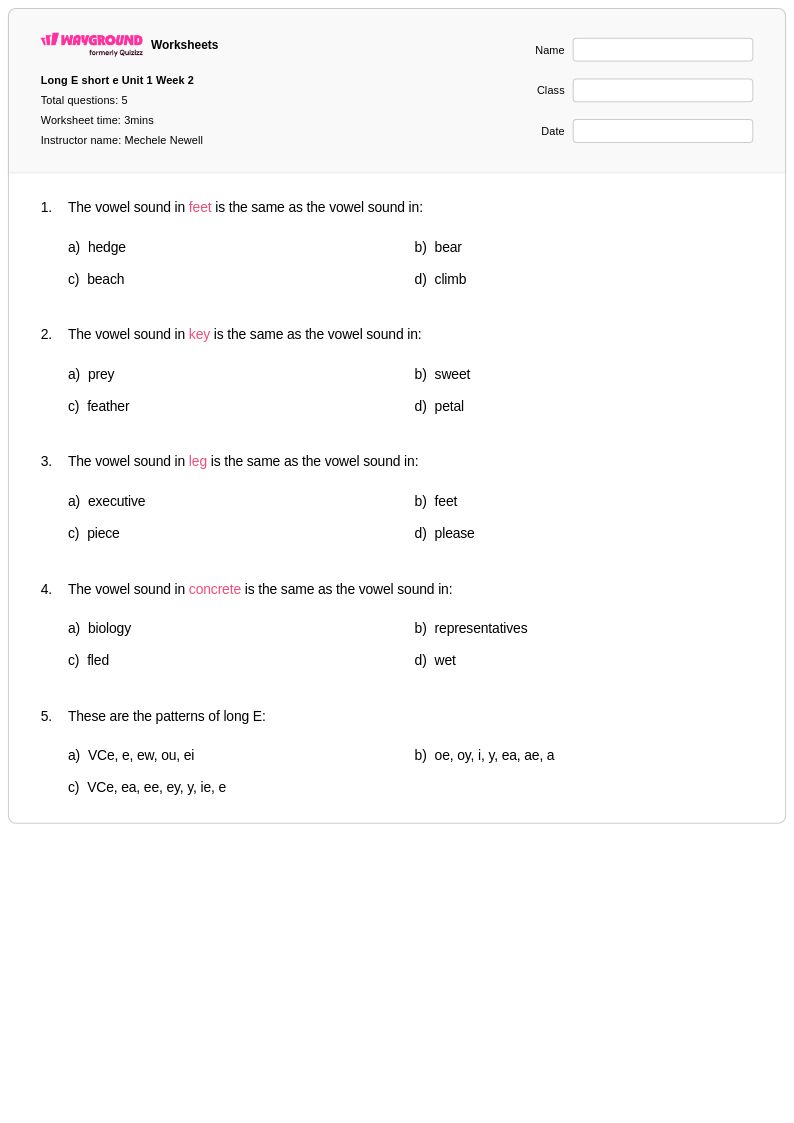
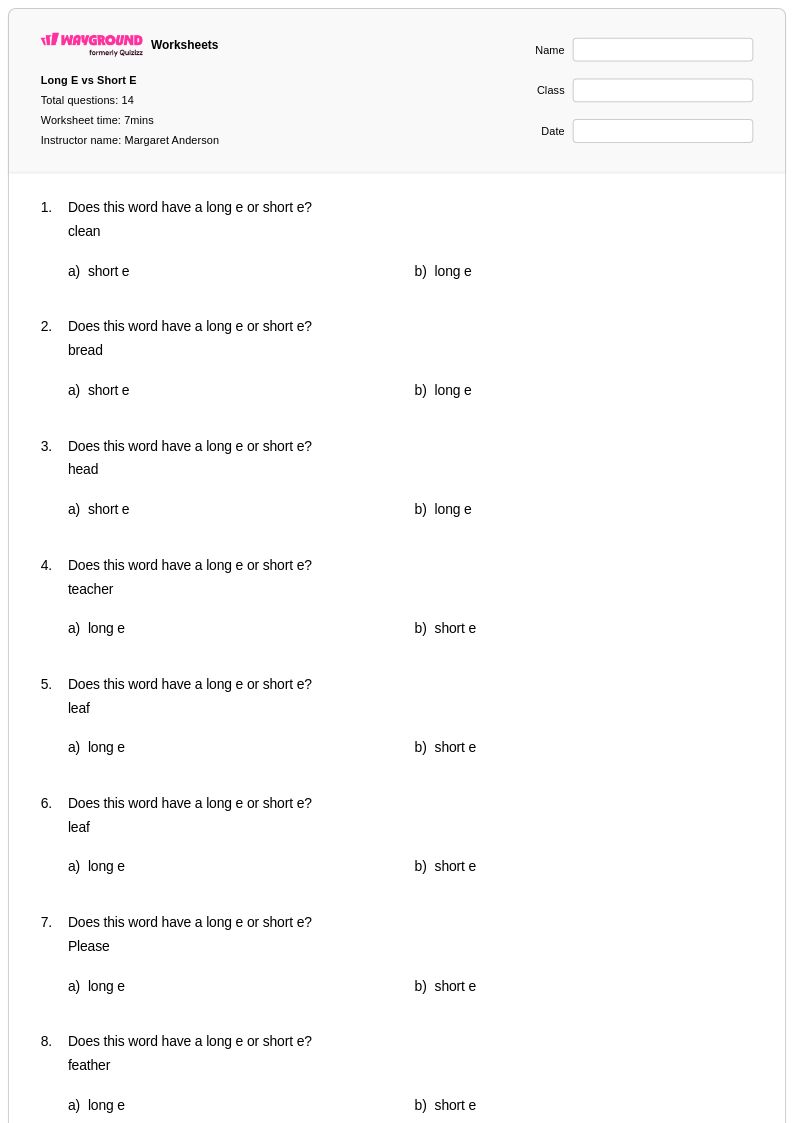
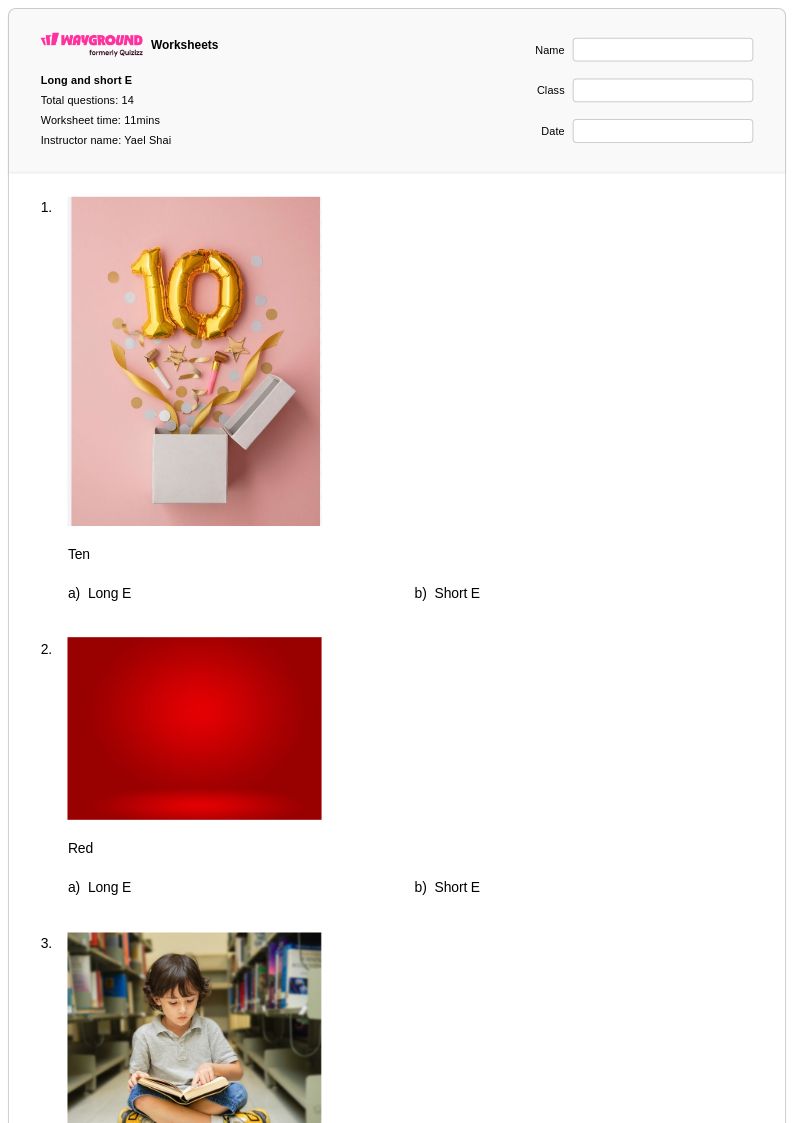
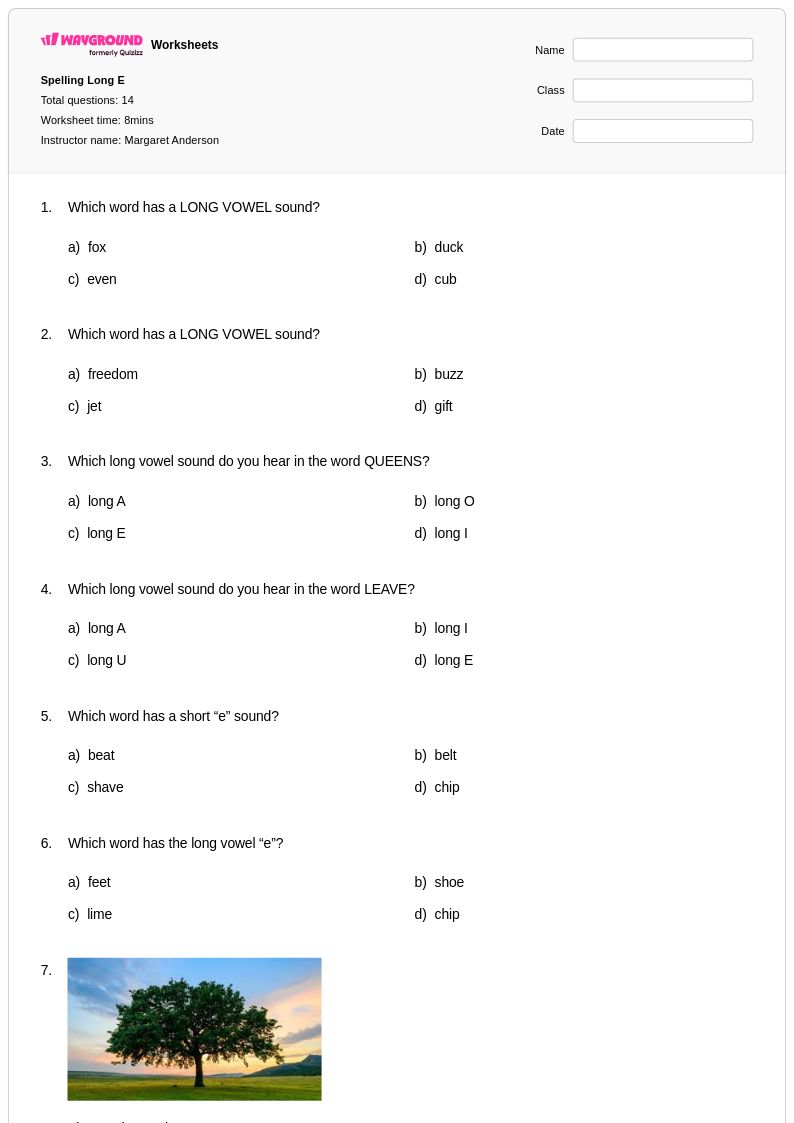
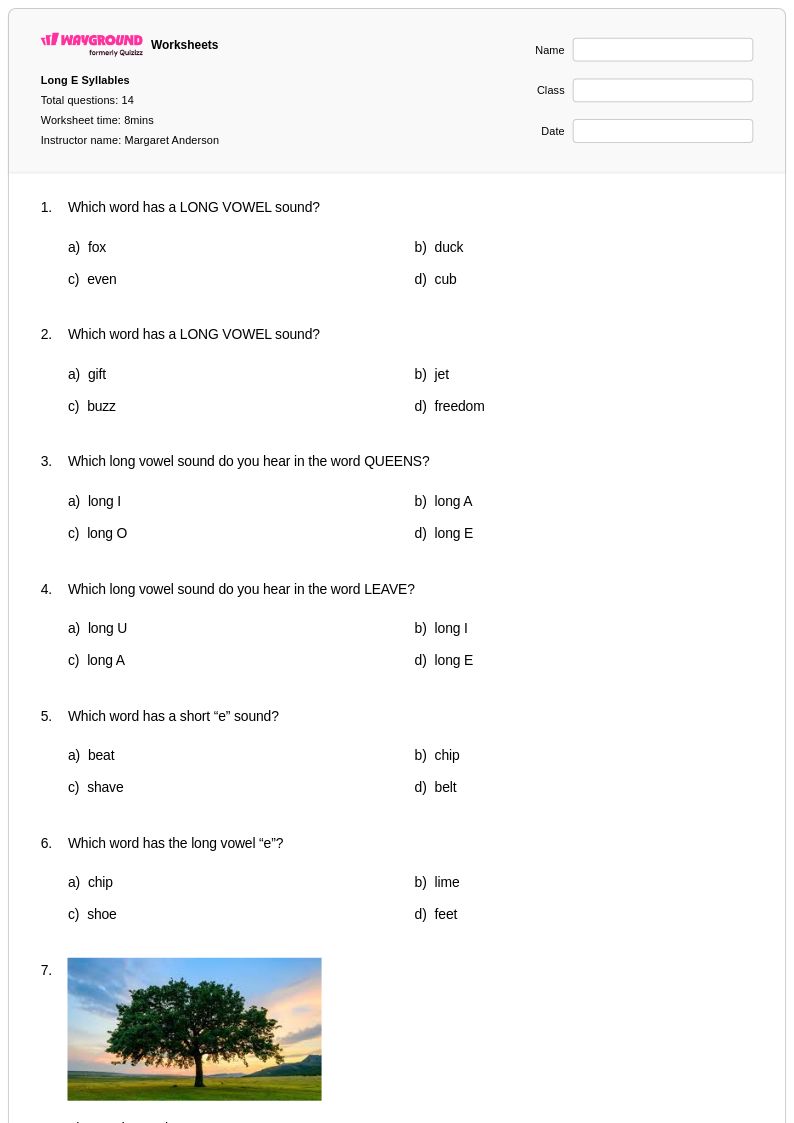
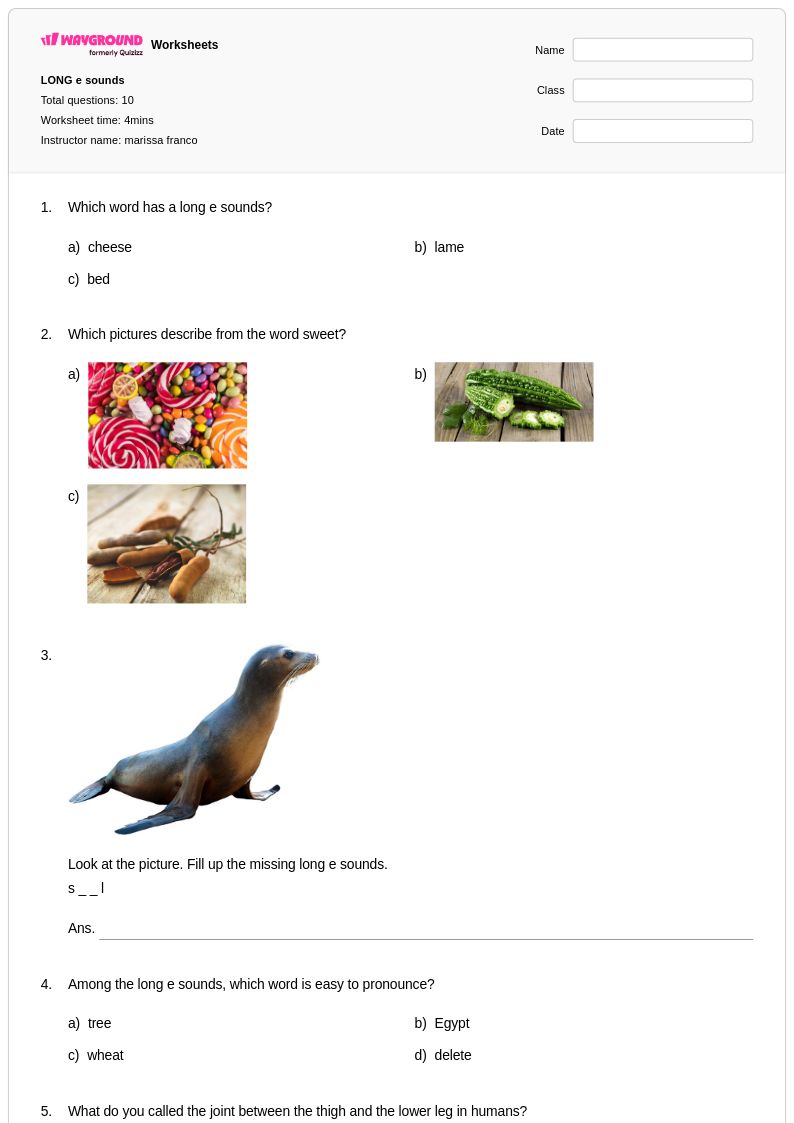
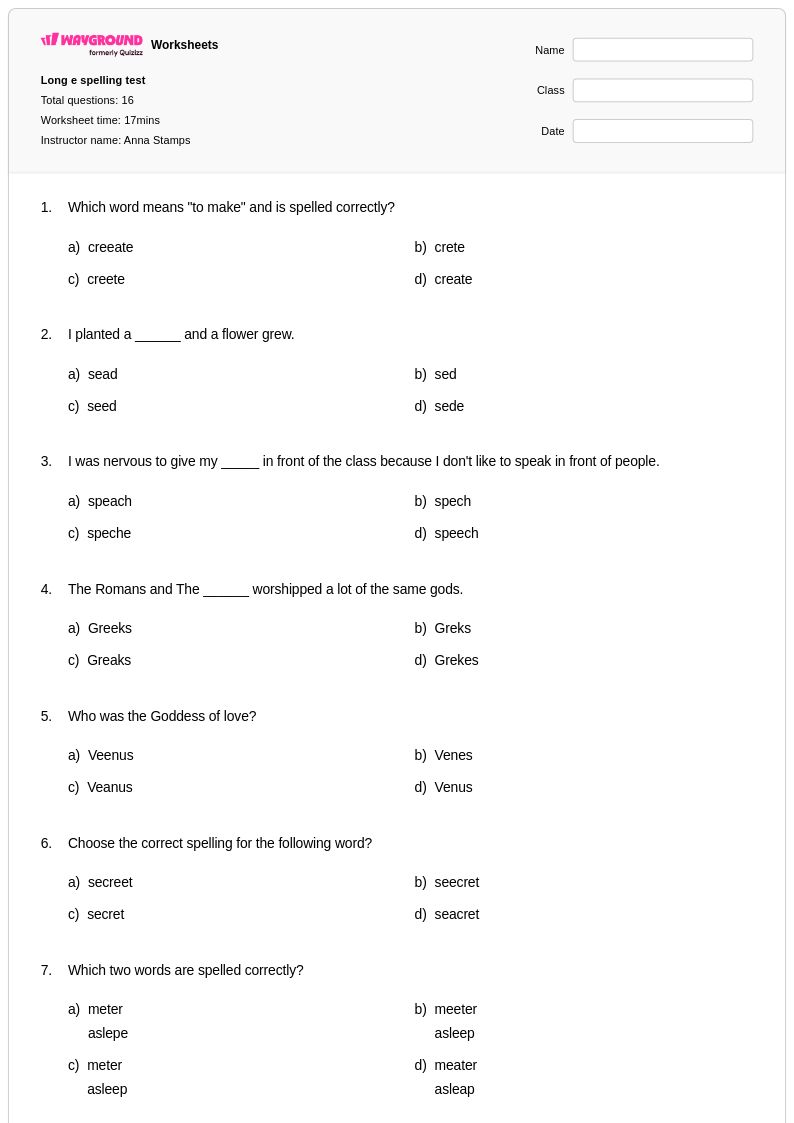
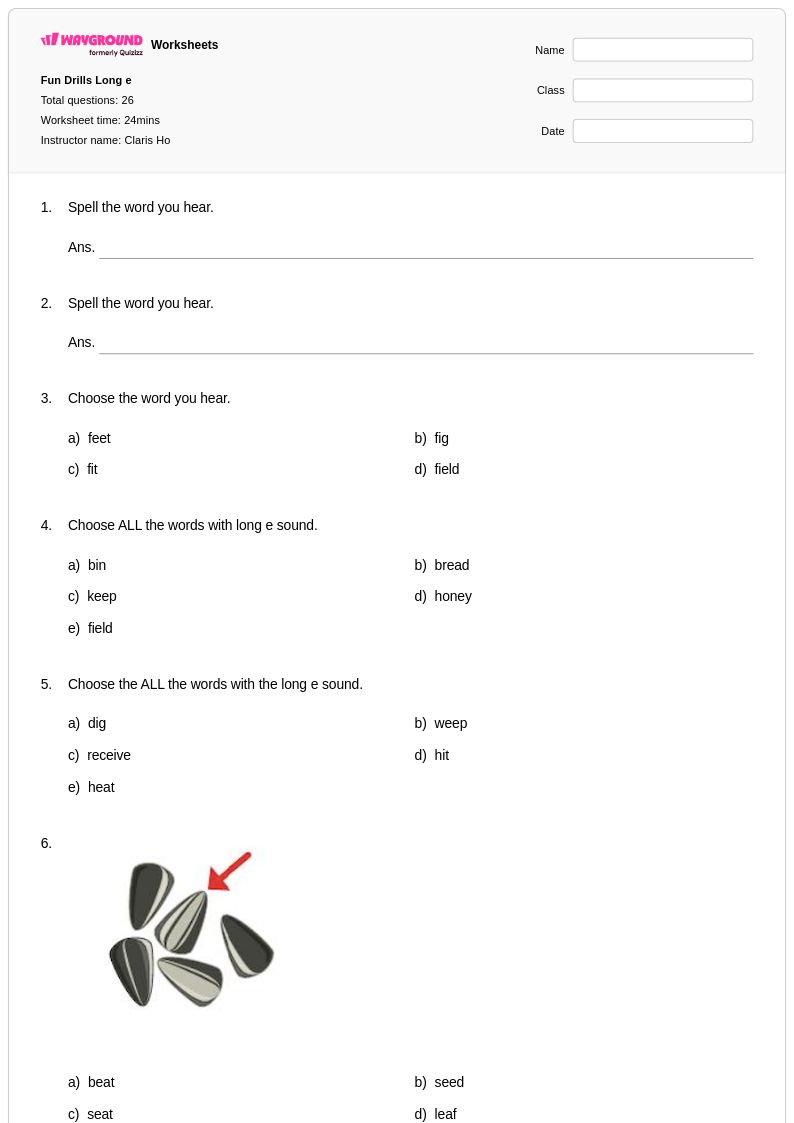
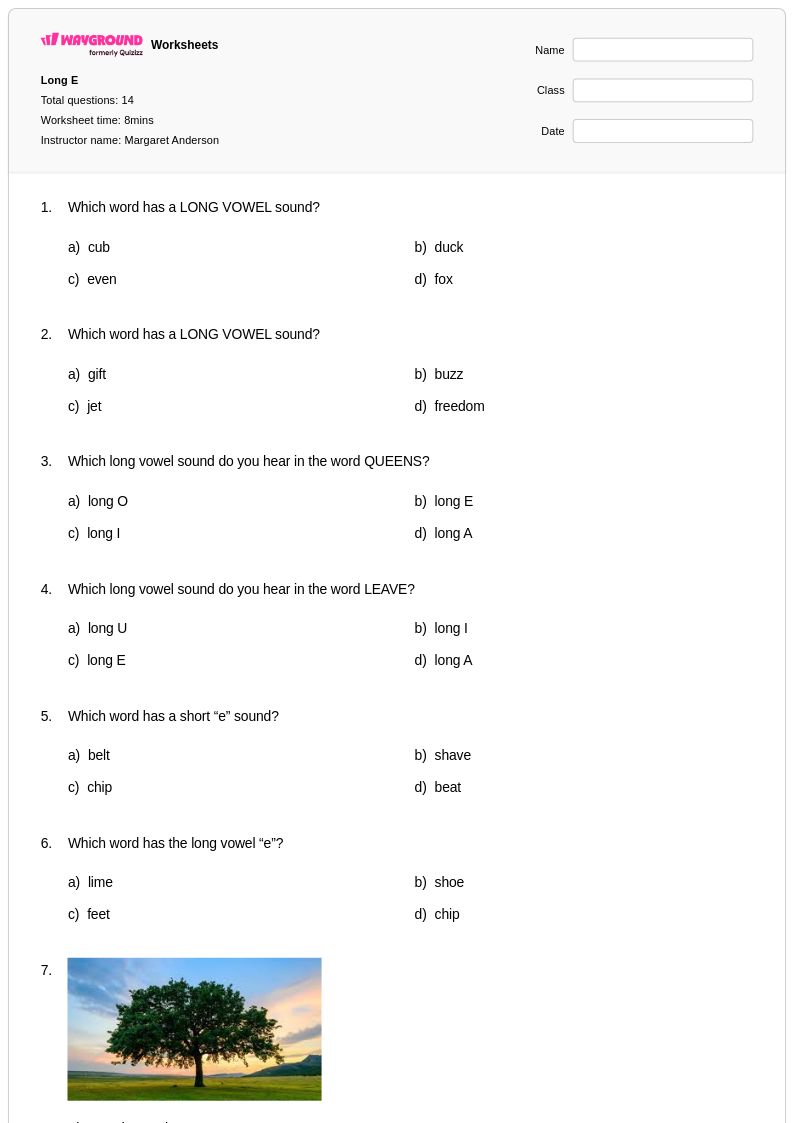
Long E and short E vowel sound worksheets available through Wayground (formerly Quizizz) provide comprehensive practice for students learning to distinguish between these fundamental phonetic patterns. These educational resources strengthen critical reading and spelling skills by helping learners recognize when the letter E produces its extended sound as in "tree" and "beach" versus its shortened sound in words like "pet" and "red." The worksheets feature systematic practice problems that guide students through identifying, sorting, and applying both vowel sounds in various contexts, from single-syllable words to more complex vocabulary. Teachers can access these materials as free printables with accompanying answer keys, making assessment and independent practice seamless while building phonemic awareness essential for reading fluency.
Wayground (formerly Quizizz) empowers educators with millions of teacher-created Long E and short E vowel worksheets that support differentiated instruction across diverse learning needs. The platform's robust search and filtering capabilities allow teachers to locate materials aligned with specific phonics standards and customize content difficulty levels for targeted remediation or enrichment activities. These versatile resources are available in both printable PDF formats for traditional classroom use and digital versions for interactive learning experiences, enabling flexible lesson planning that accommodates various teaching styles and student preferences. The extensive worksheet collection facilitates systematic skill practice while providing educators with reliable tools for reinforcing vowel sound recognition through engaging, research-based phonics instruction.
FAQs
How do I teach students the difference between long E and short E sounds?
Begin by anchoring each sound to high-frequency anchor words students already know — 'tree' and 'beach' for long E, 'pet' and 'red' for short E. Use minimal pairs (e.g., 'feet' vs. 'fed') to train students' ears to hear the contrast before asking them to read or spell. Once students can identify the sounds in isolation, move them into word-sorting activities that require categorizing unfamiliar words by vowel sound. Consistent, repeated exposure across reading and writing tasks is key to automaticity.
What are good exercises for practicing long E and short E vowel sounds?
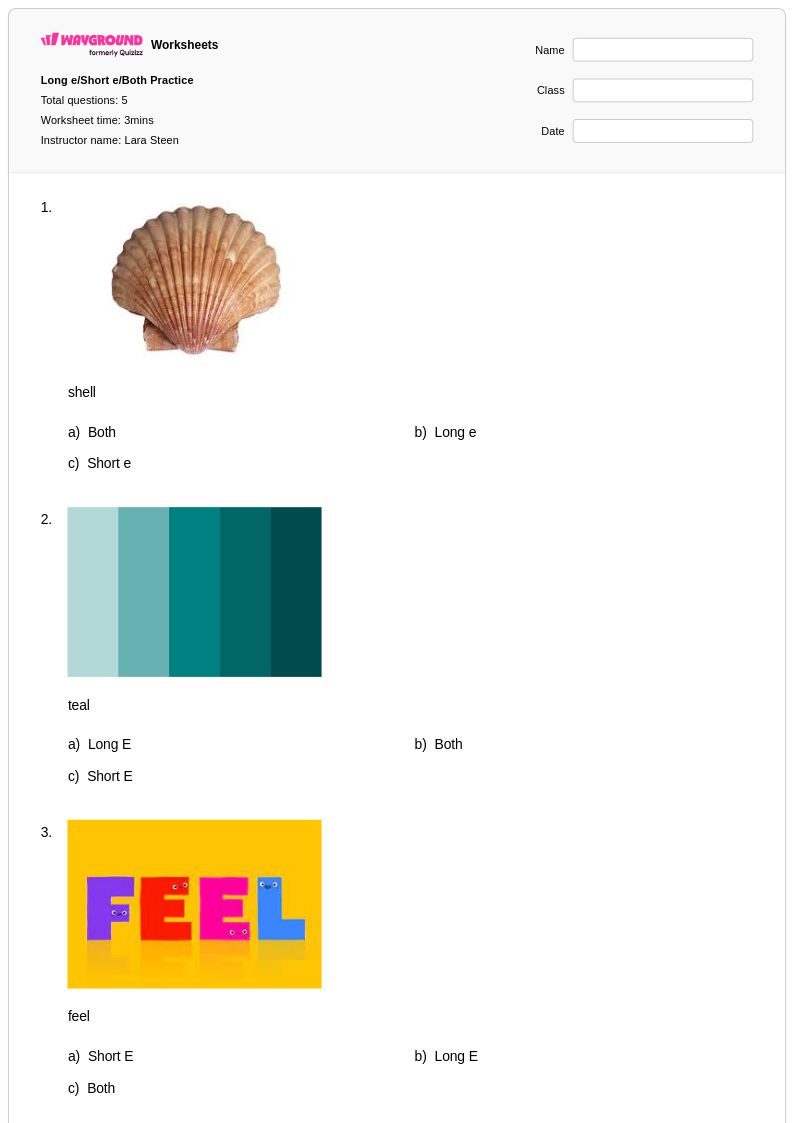
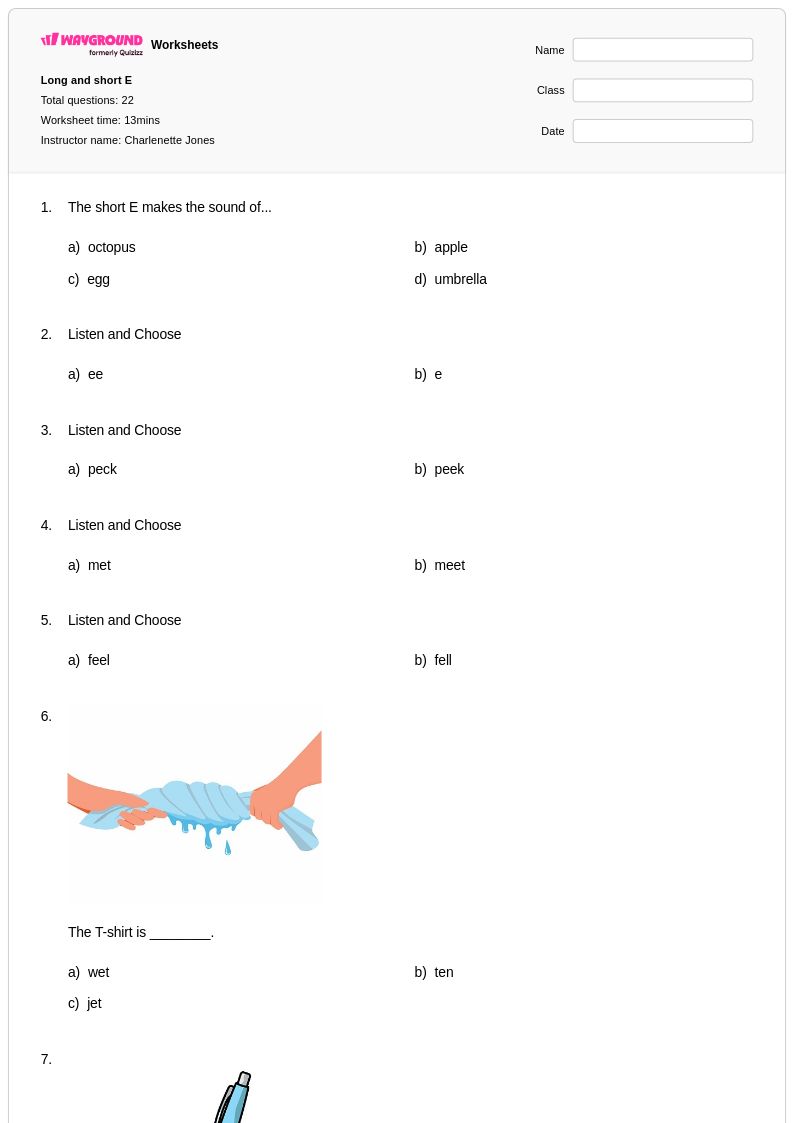
Word sorts are among the most effective exercises because they require students to actively categorize words rather than passively observe them. Picture-to-word matching, fill-in-the-blank sentences, and read-aloud drills that isolate the vowel sound also build reliable recognition. Worksheets that move students from single-syllable words to more complex vocabulary provide the scaffolded progression needed to transfer skills across reading contexts.
What mistakes do students commonly make when distinguishing long E from short E?
Students frequently misread vowel team spellings like 'ea' as a short E sound, particularly in words like 'bread' where the vowel team does produce a short E — this inconsistency can create confusion when they encounter 'beach' or 'bean.' They also tend to overapply the silent-E rule, assuming any word ending in E produces a long vowel sound. Another common error is conflating long E with the short I sound in connected speech, especially for English language learners. Targeted practice with sorting and context-based identification helps address these patterns directly.
How can I use long E and short E worksheets to support different learners in my classroom?
Differentiation for long E and short E practice can focus on word complexity — struggling readers benefit from single-syllable CVC and vowel team words before advancing to multisyllabic vocabulary. On Wayground, teachers can apply individual accommodations such as read aloud, which plays an audio reading of each question for students who need phonetic support, or reduced answer choices to lower cognitive load for students who need scaffolding. These settings can be assigned per student without other students being notified, making differentiation discreet and manageable.
How do I use Wayground's long E and short E worksheets in my classroom?
Wayground's long E and short E worksheets are available as printable PDFs for traditional classroom use and in digital formats for technology-integrated or hybrid learning environments. Teachers can also host them directly as a quiz on Wayground, enabling real-time student interaction and instant results. All worksheets include answer keys, so they work equally well for guided practice, independent work, or take-home assignments without requiring additional teacher prep.