
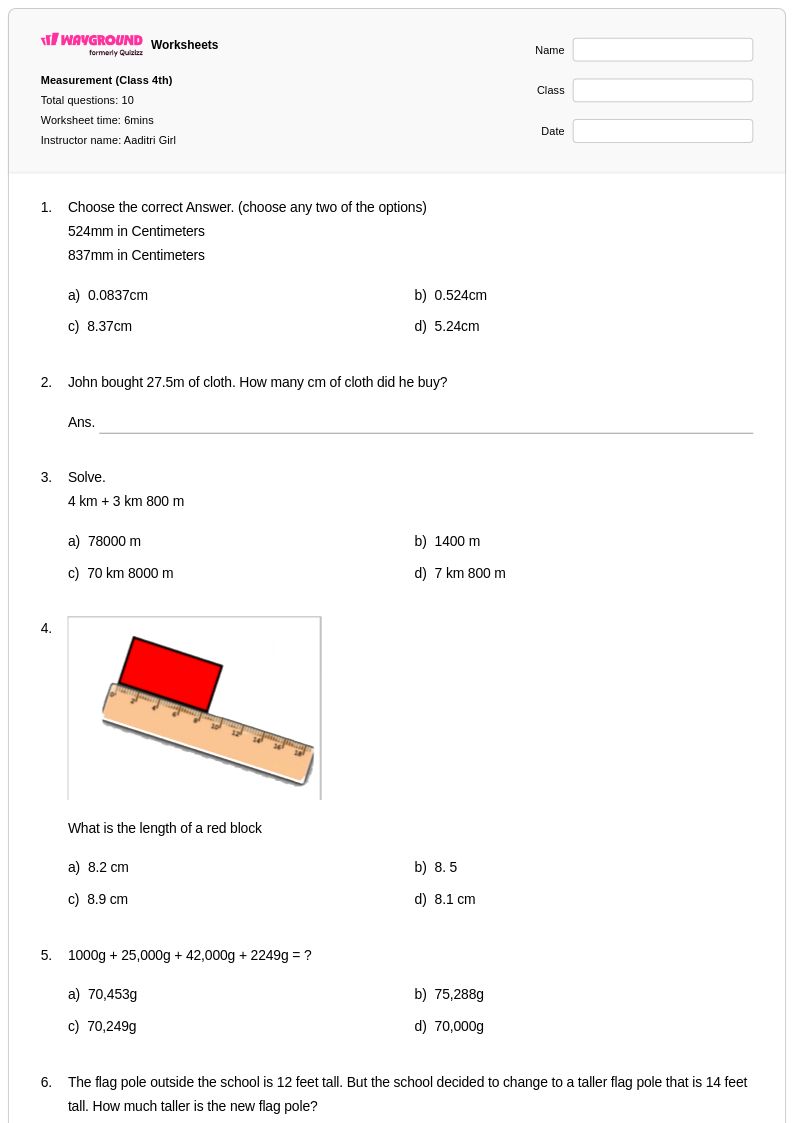
10 Q
4th
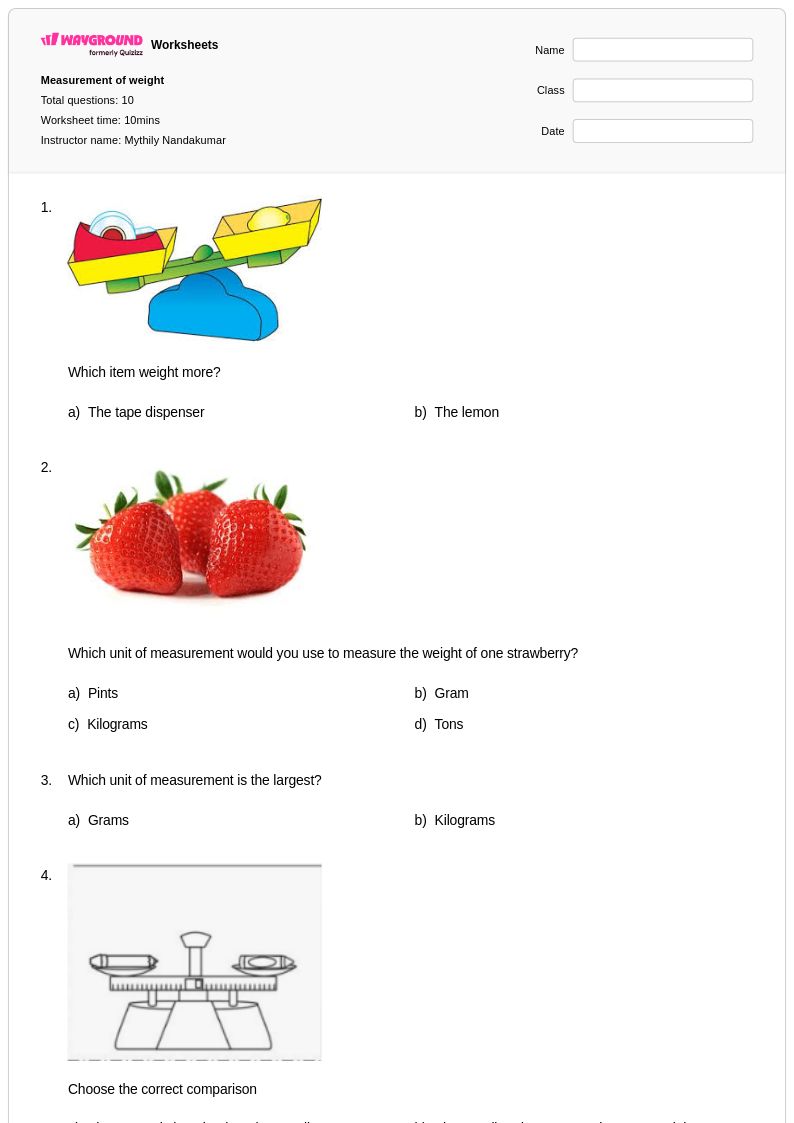
10 Q
2nd
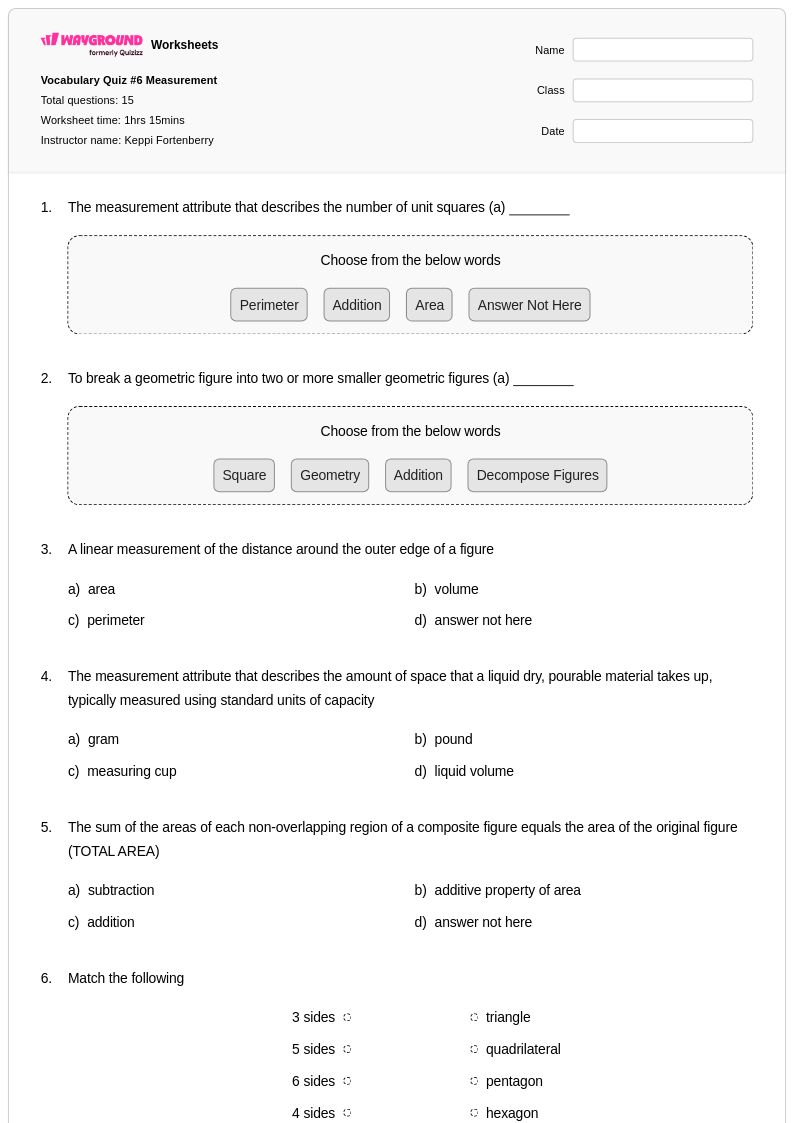
15 Q
3rd
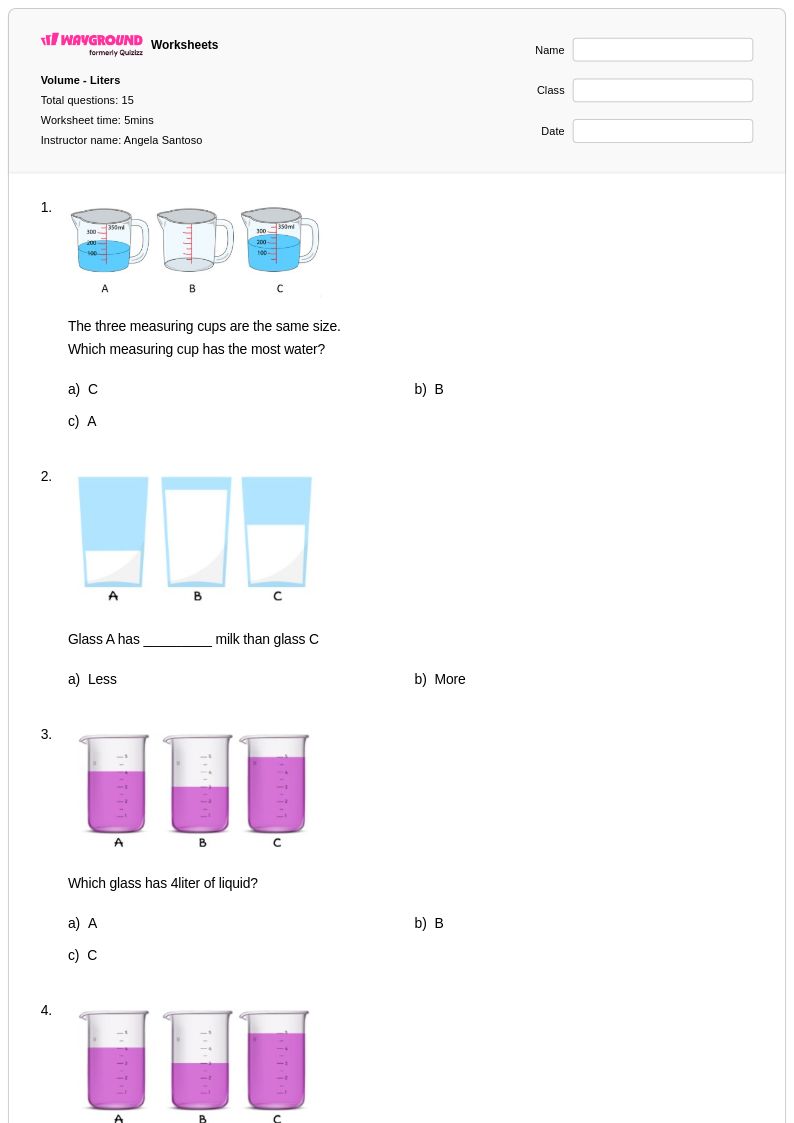
15 Q
2nd
15 Q
5th
15 Q
4th
10 Q
3rd
20 Q
4th - Uni
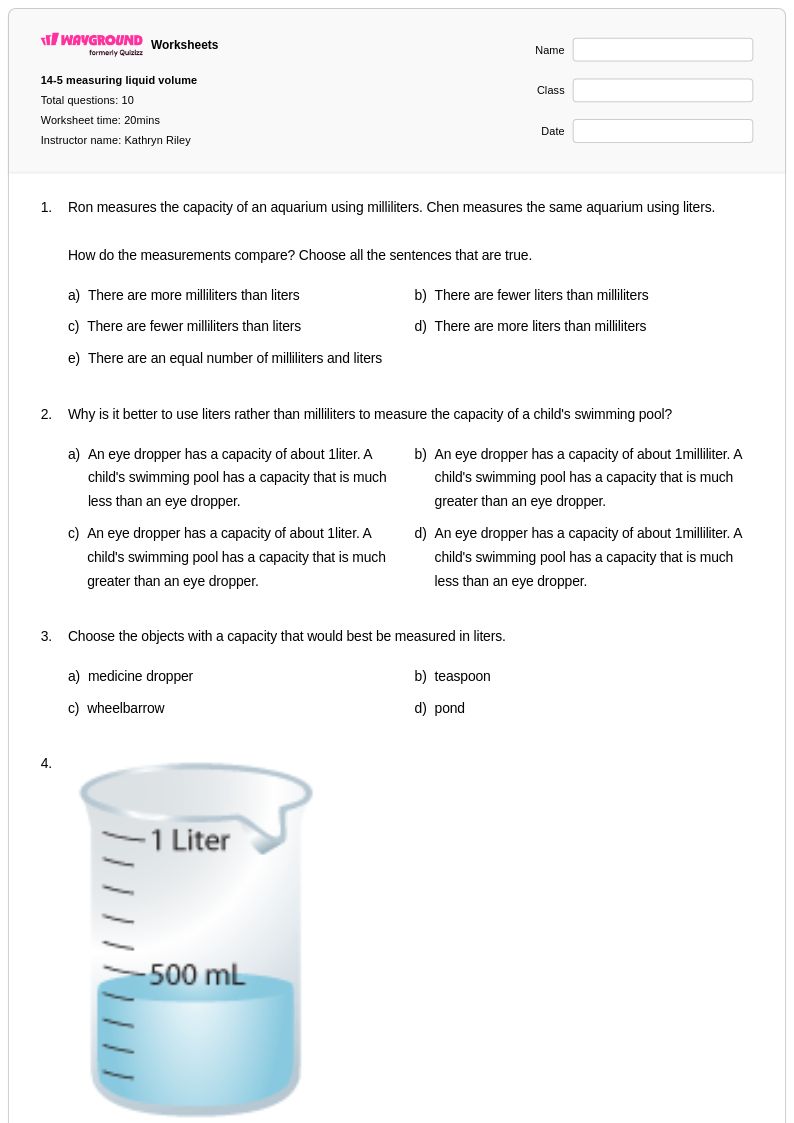
10 Q
3rd
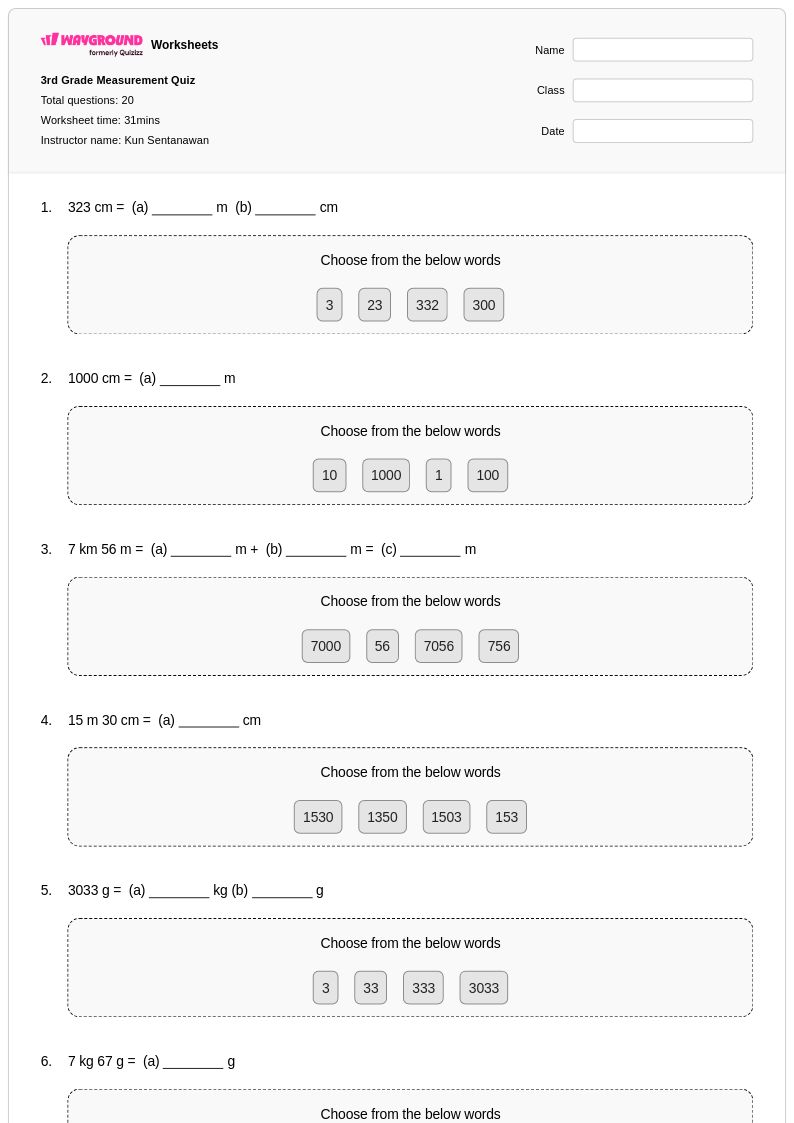
20 Q
3rd
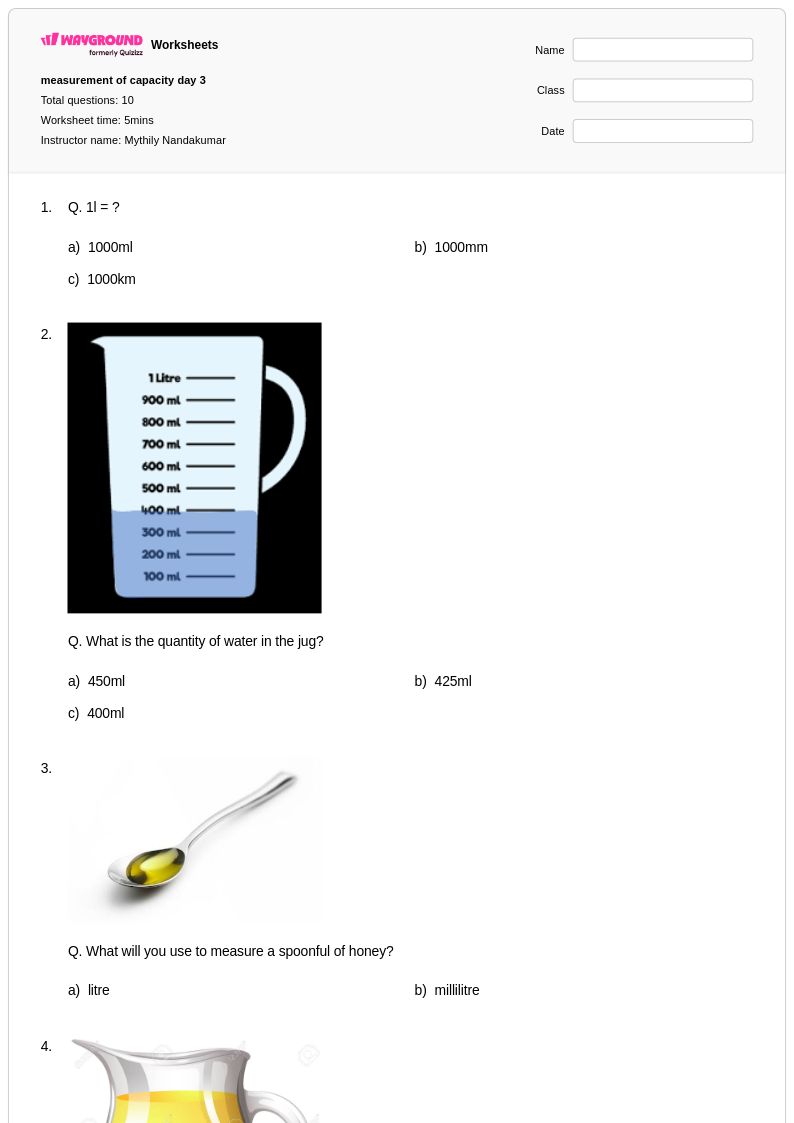
10 Q
2nd
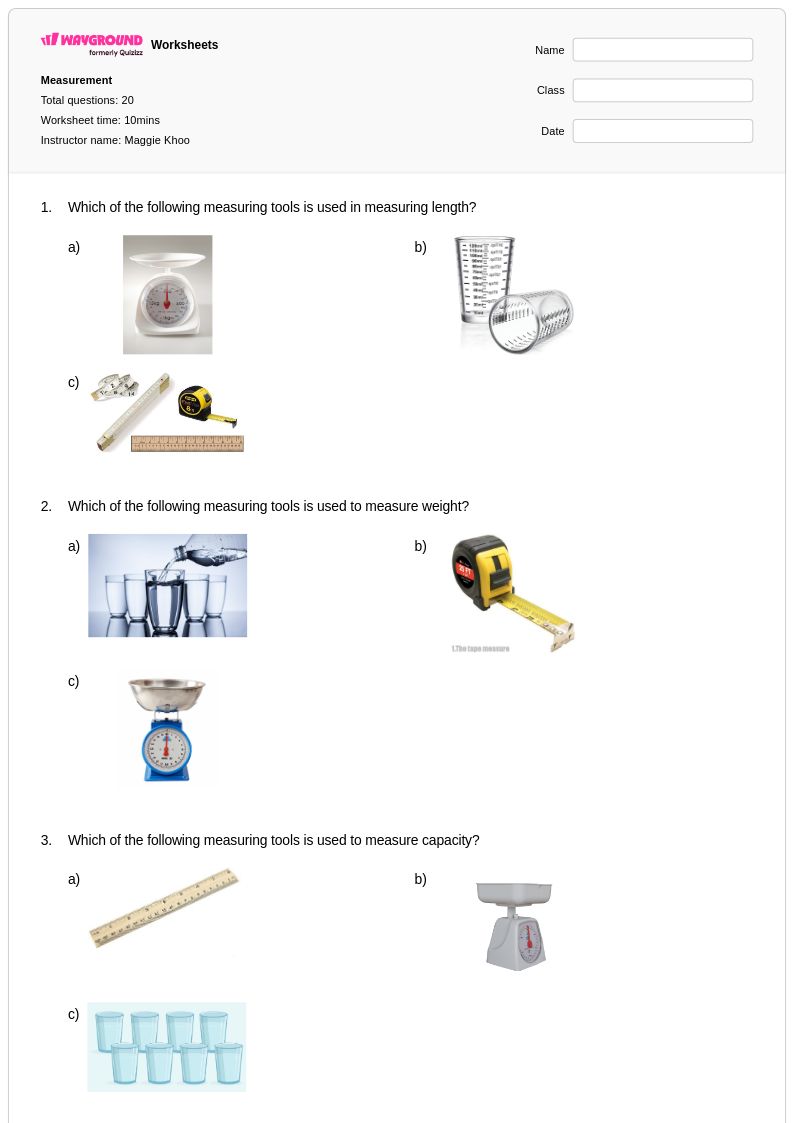
20 Q
1st - 2nd
10 Q
1st - 5th
11 Q
5th
26 Q
1st
20 Q
4th
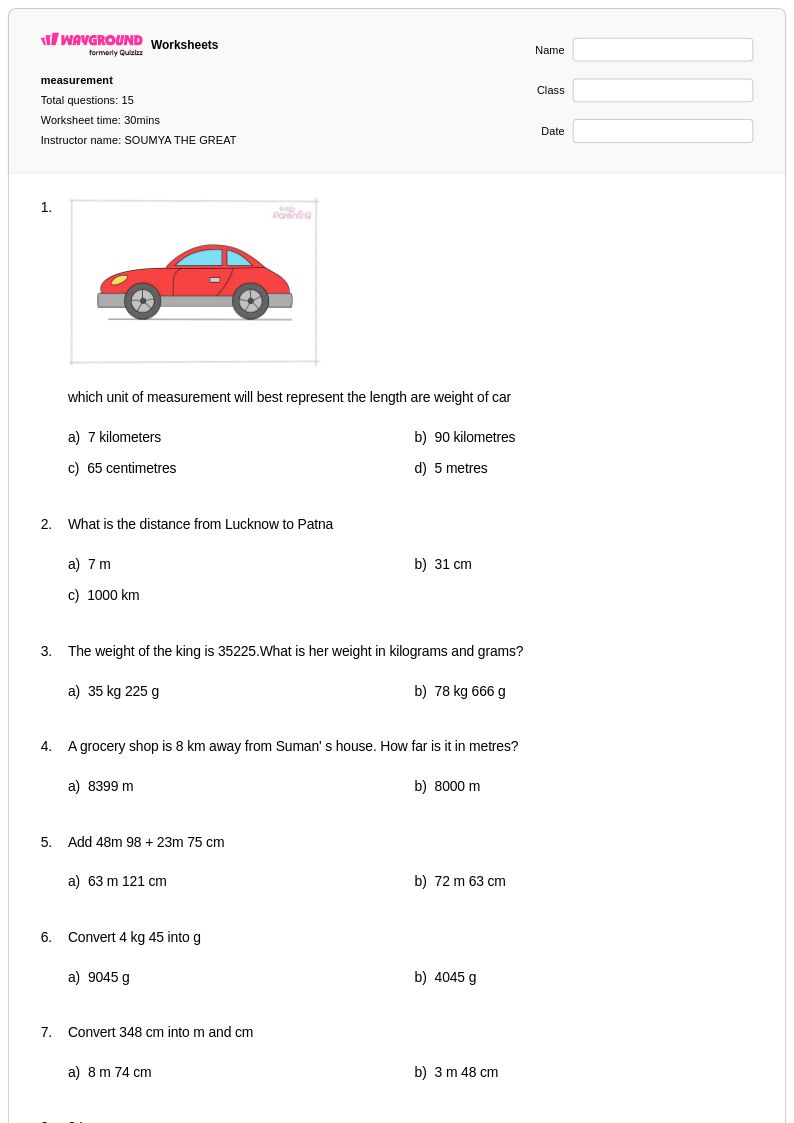
15 Q
3rd
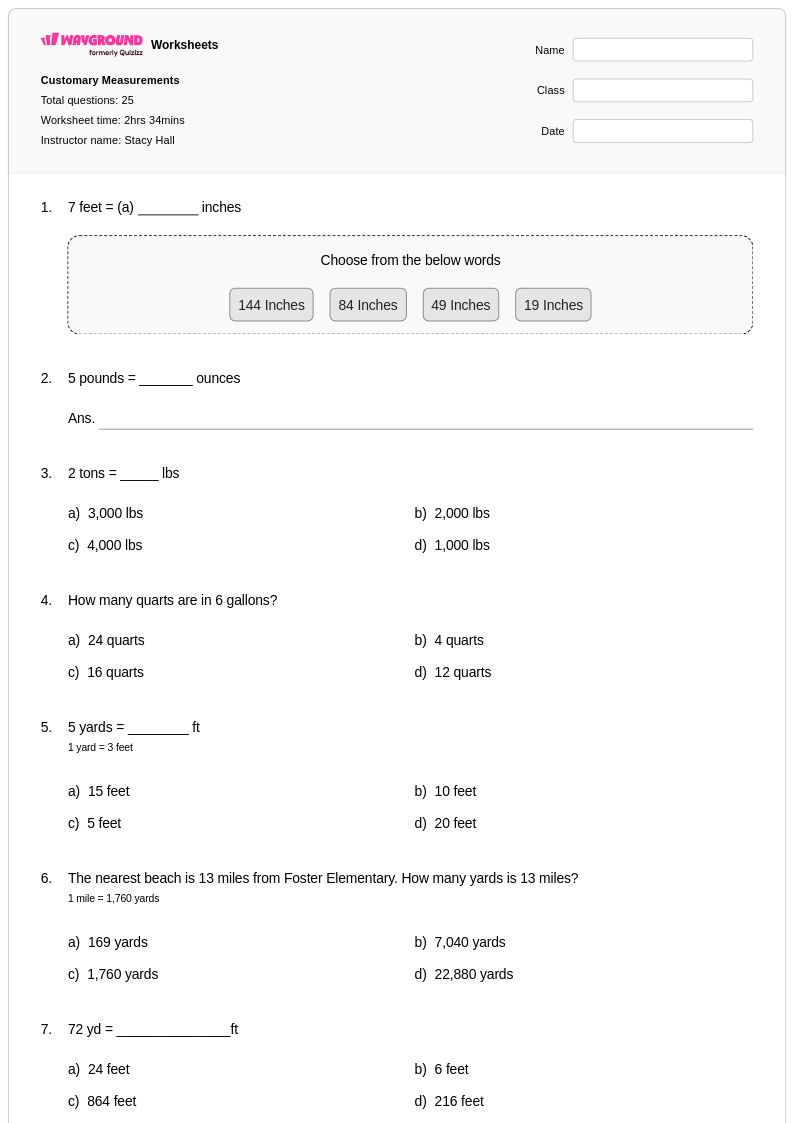
25 Q
4th
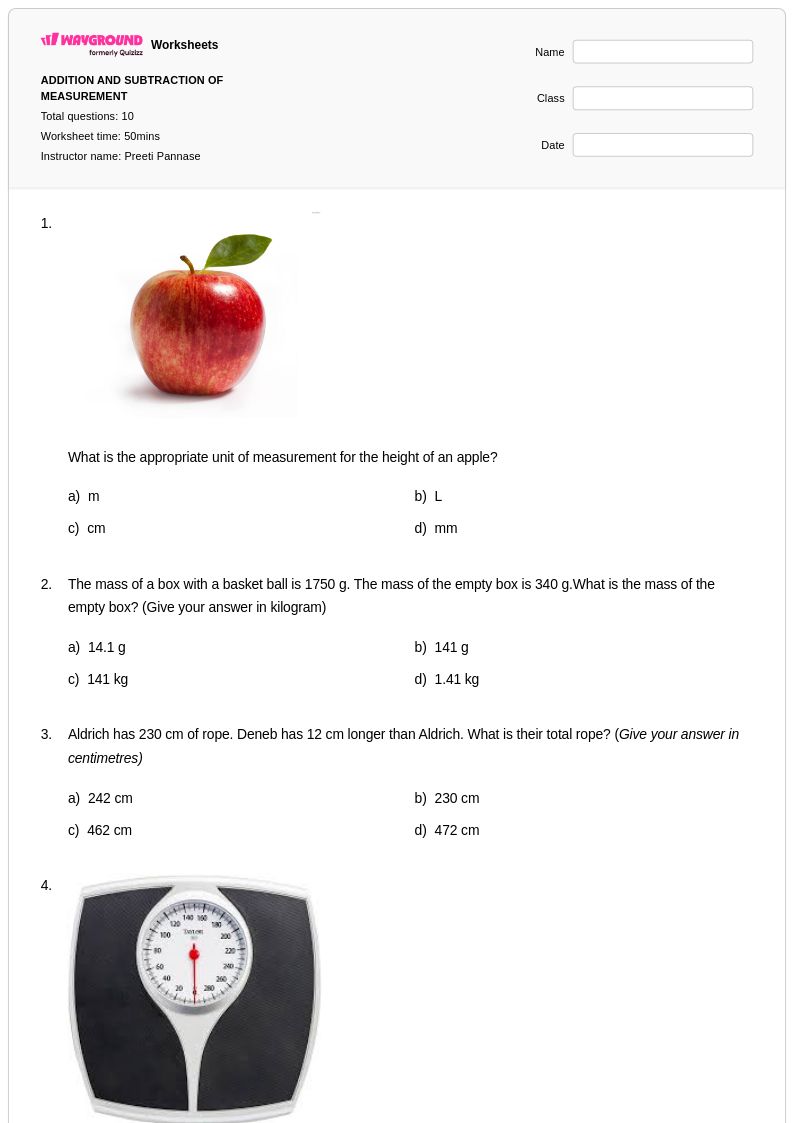
10 Q
3rd
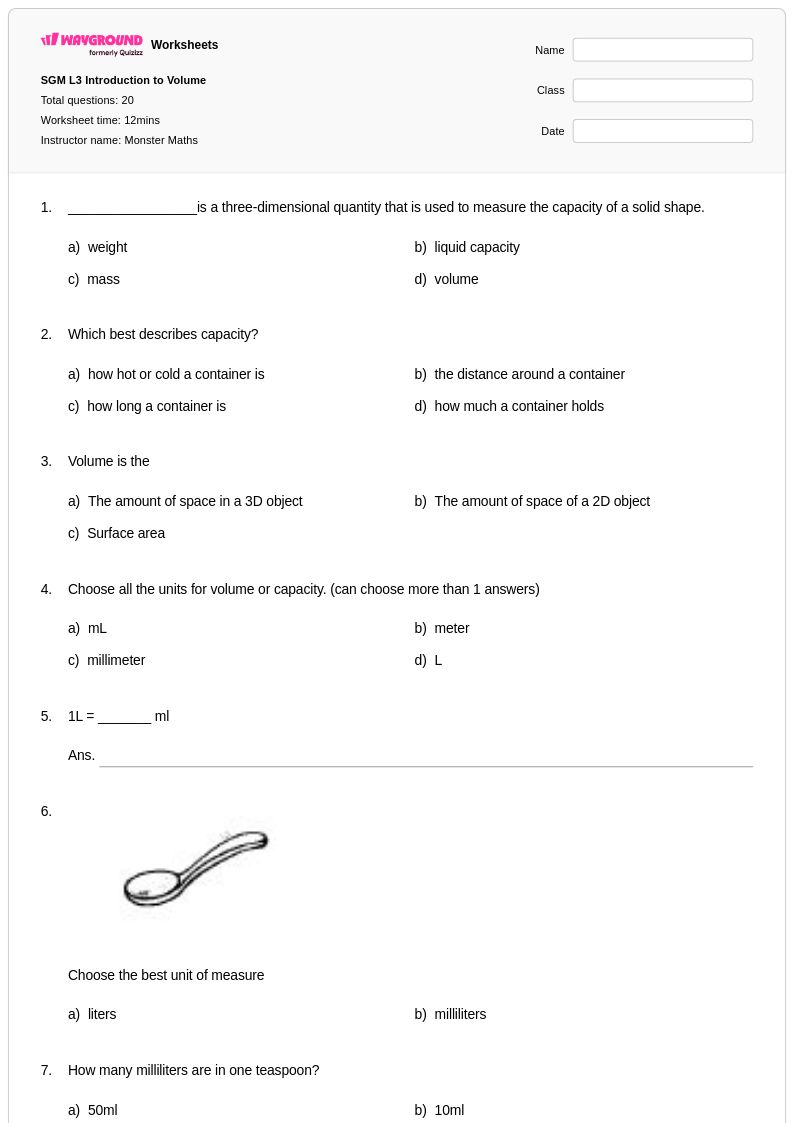
20 Q
3rd
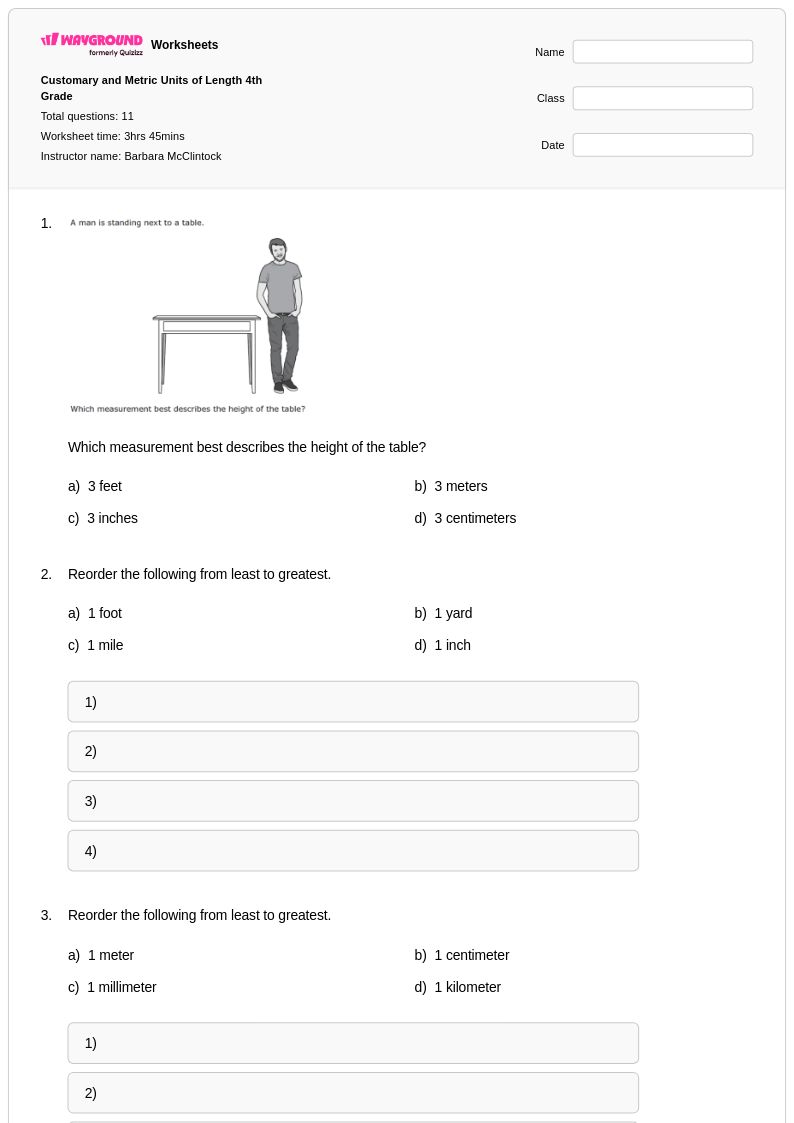
11 Q
4th
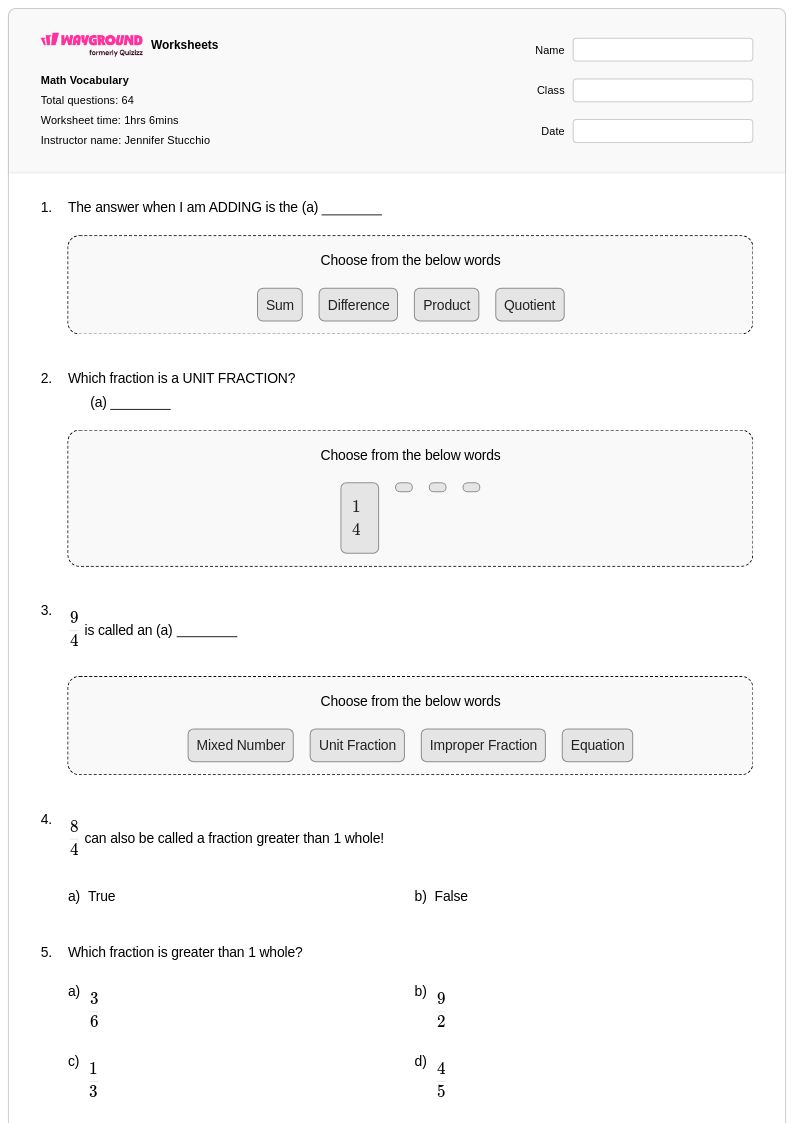
64 Q
4th
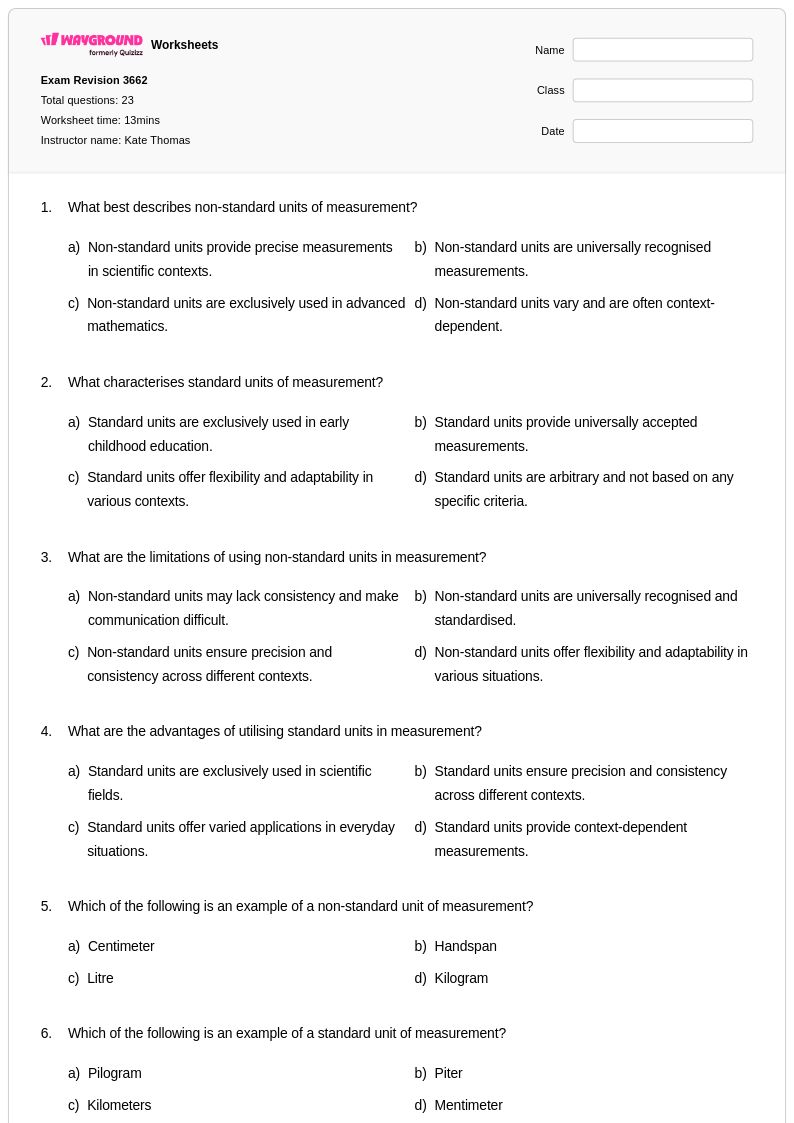
23 Q
Uni
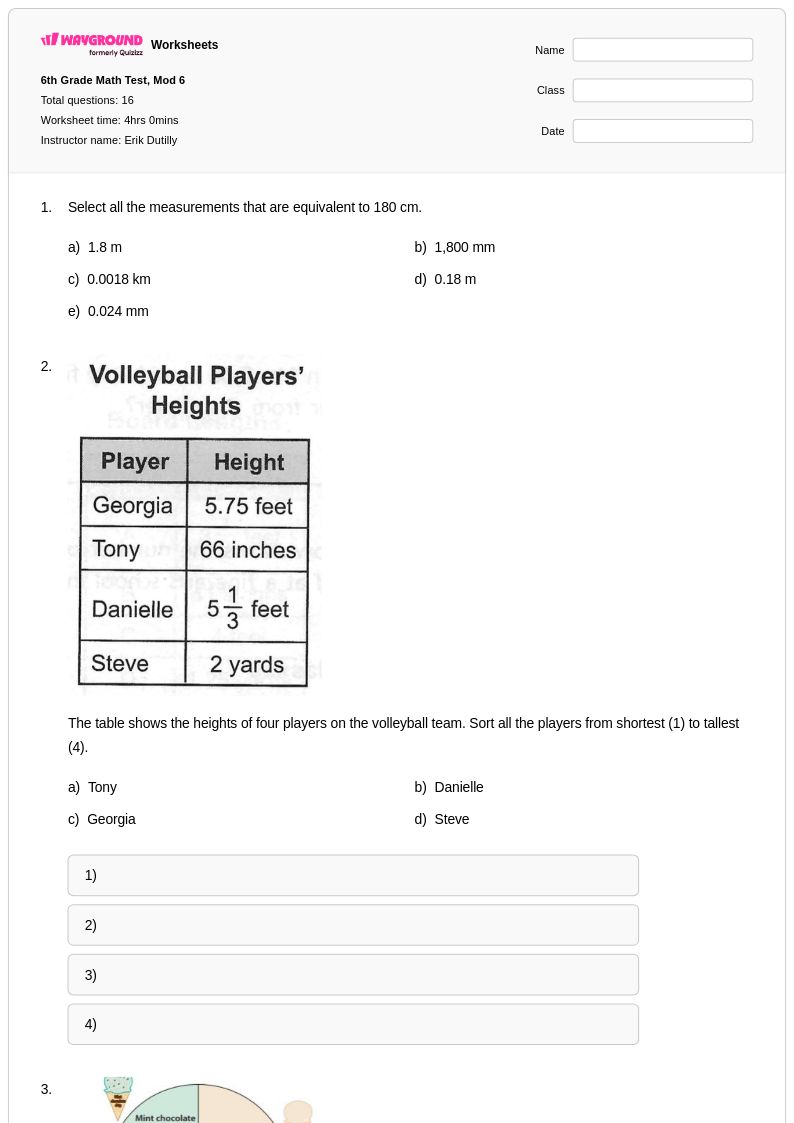
16 Q
6th - Uni
Explore Measurement and Capacity Worksheets by Grades
Explore Other Subject Worksheets for kindergarten
Explore printable Measurement and Capacity worksheets for Kindergarten
Measurement and capacity worksheets for kindergarten students available through Wayground (formerly Quizizz) introduce young learners to fundamental concepts of volume through hands-on, visual activities designed for early childhood development. These comprehensive printables focus on building foundational skills in comparing sizes, understanding concepts like full and empty, and exploring how different containers hold varying amounts of materials. Each worksheet incorporates age-appropriate practice problems that encourage students to observe, compare, and describe volume relationships using everyday objects and familiar containers. The collection includes free resources with accompanying answer keys in convenient pdf format, enabling educators to implement structured measurement activities that develop spatial reasoning and mathematical vocabulary essential for kindergarten-level learning.
Wayground (formerly Quizizz) empowers teachers with an extensive library of millions of teacher-created measurement and capacity resources specifically curated for kindergarten instruction. The platform's robust search and filtering capabilities allow educators to quickly locate worksheets aligned with developmental standards and learning objectives, while differentiation tools enable customization for diverse learning needs and abilities. These versatile resources are available in both printable and digital formats, including downloadable pdf versions that support flexible classroom implementation whether for whole-group instruction, small-group practice, or individual skill reinforcement. Teachers can seamlessly integrate these materials into lesson planning for initial concept introduction, targeted remediation for struggling learners, or enrichment activities that extend understanding of volume and capacity concepts beyond grade-level expectations.
FAQs
What measurement concepts do kindergarteners learn?
How do I teach capacity to kindergarten students?
What are good practice activities for kindergarten capacity?
What should I look for when assessing a kindergartener's understanding of capacity?
How can I use these kindergarten measurement worksheets?
How does this align with early math standards?