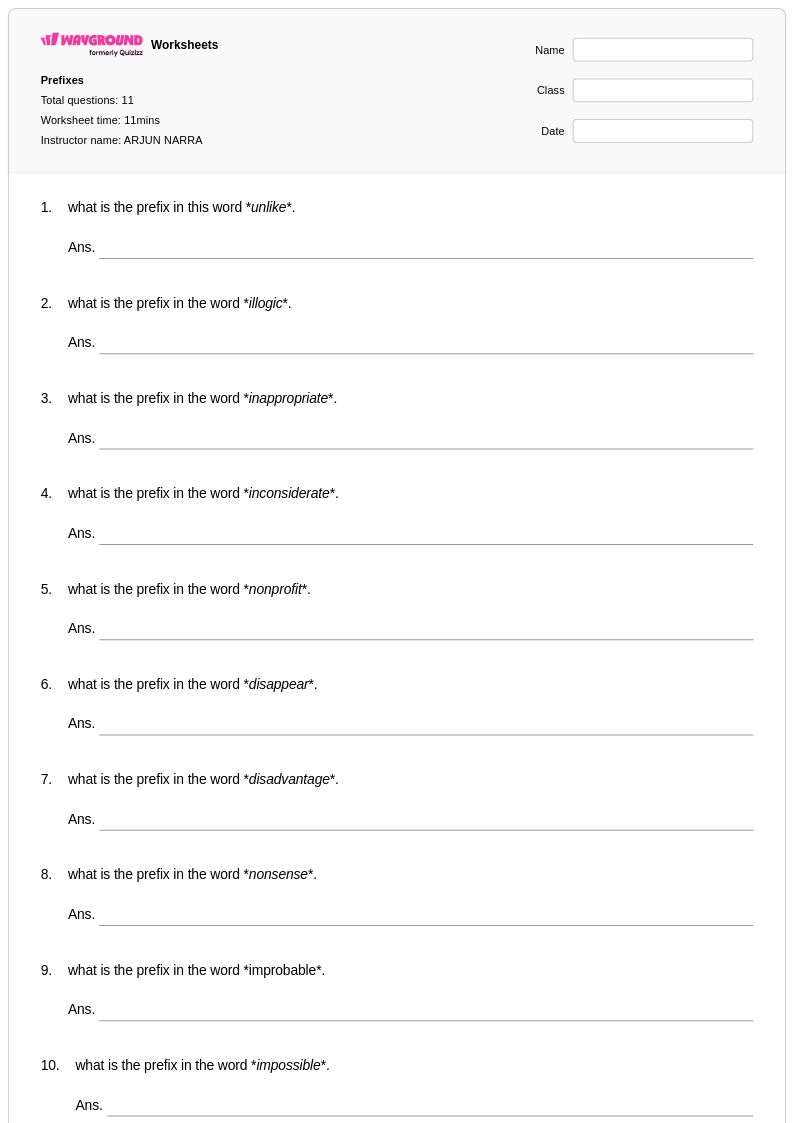
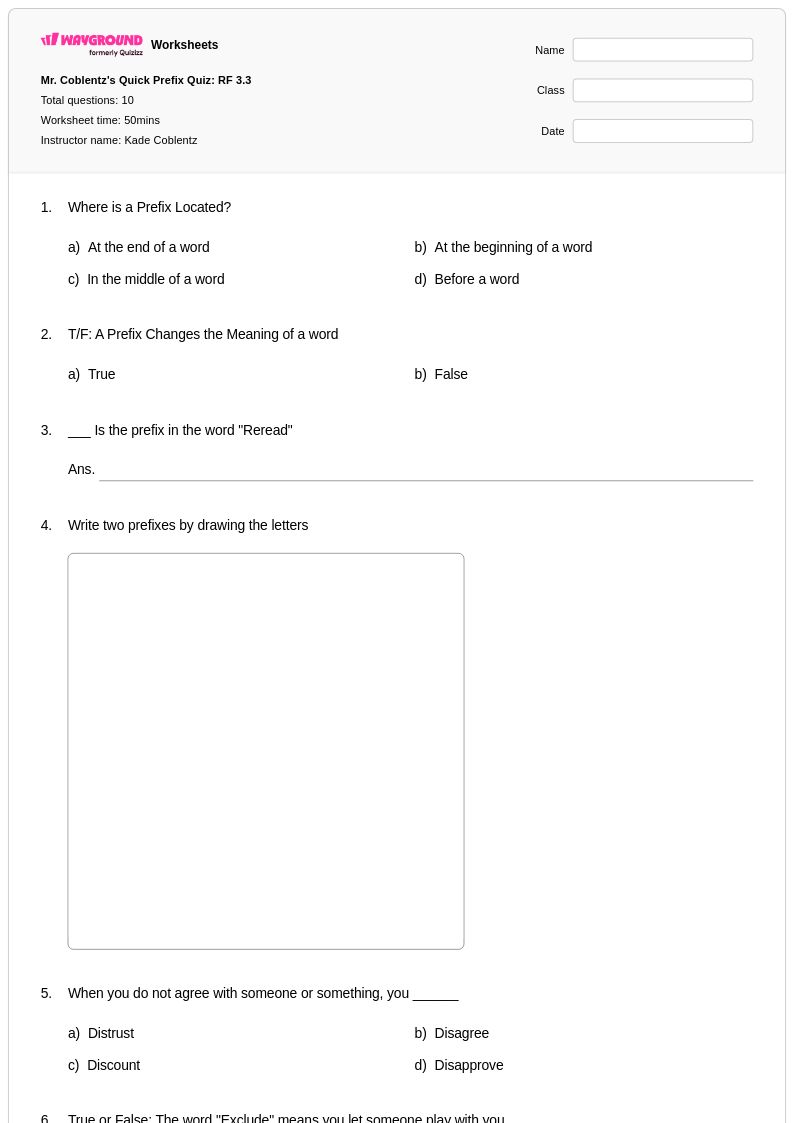
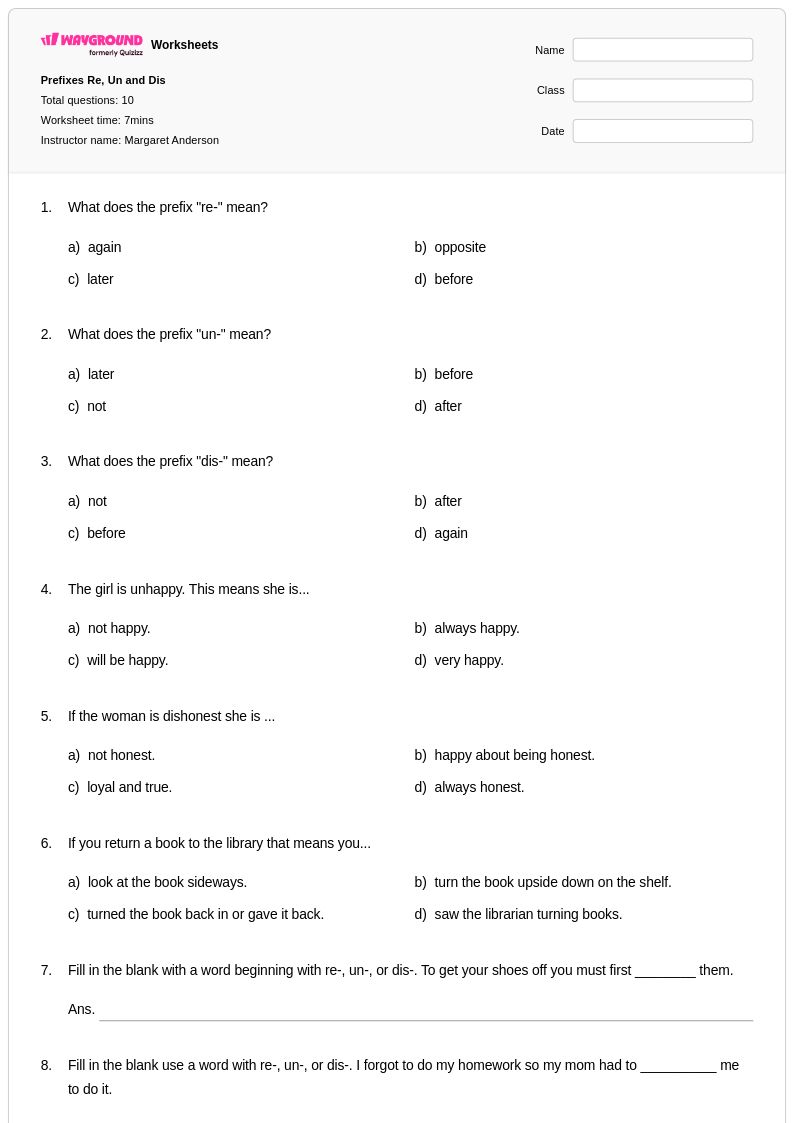
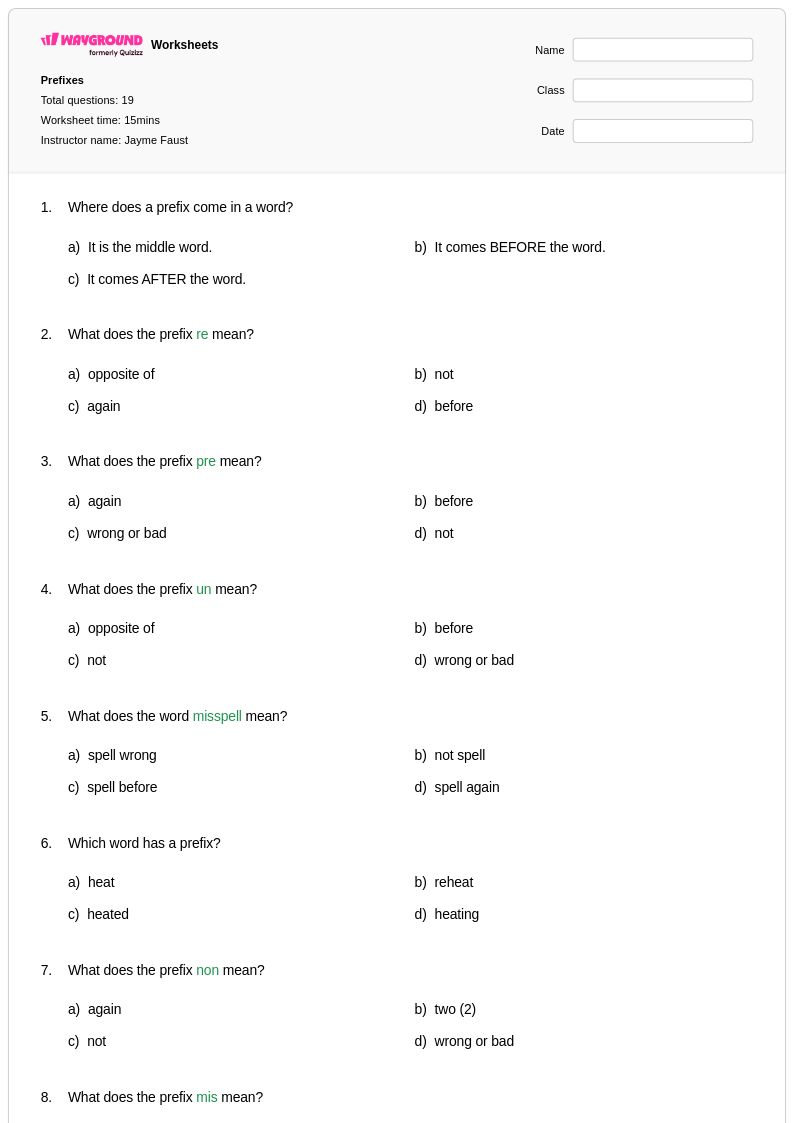
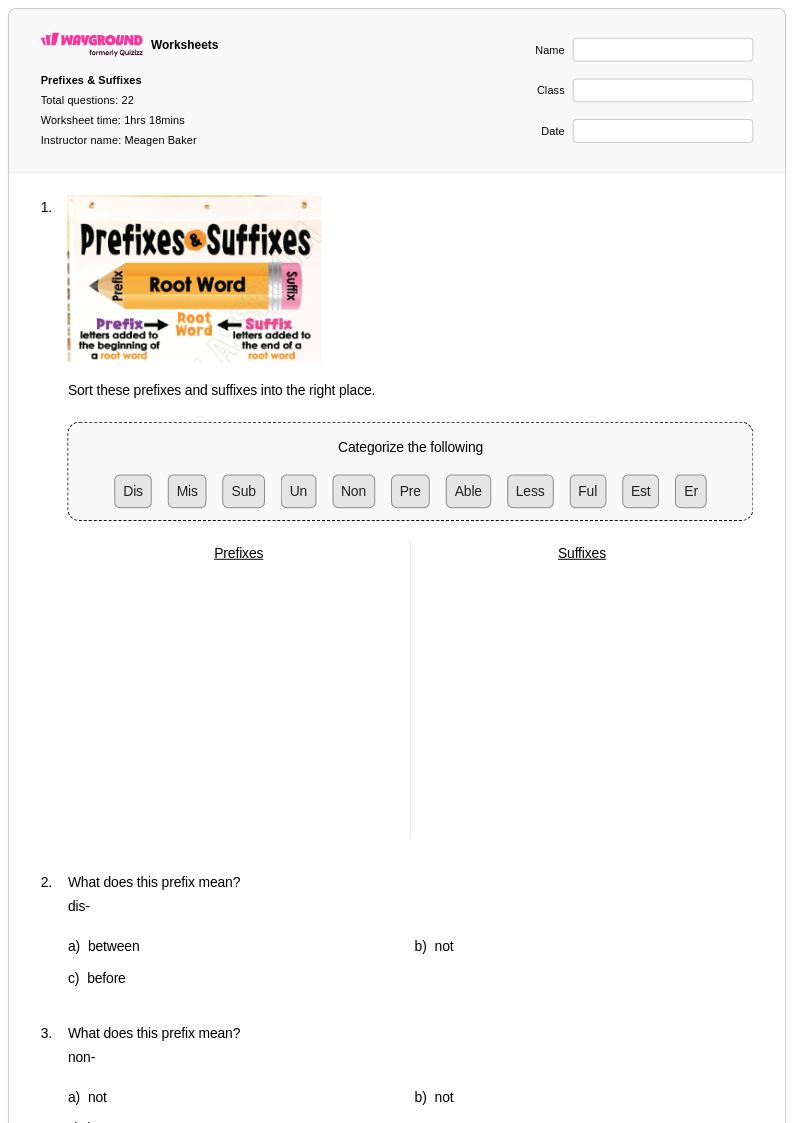
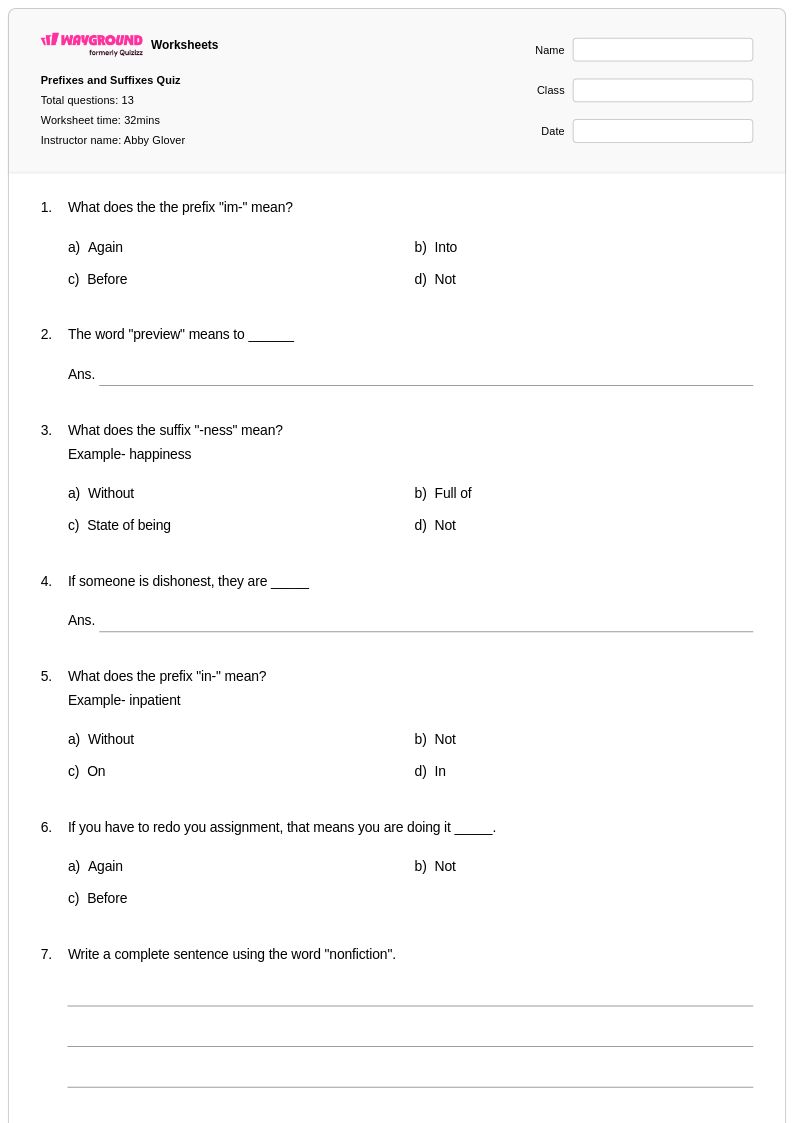
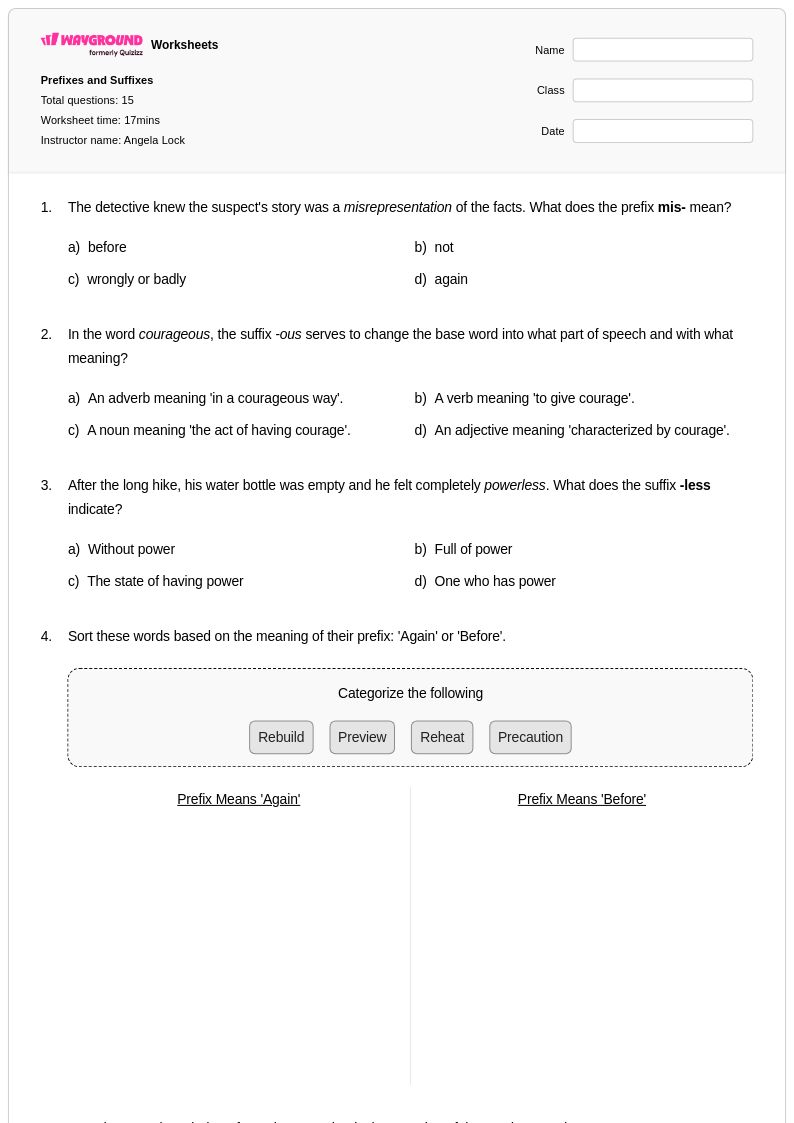
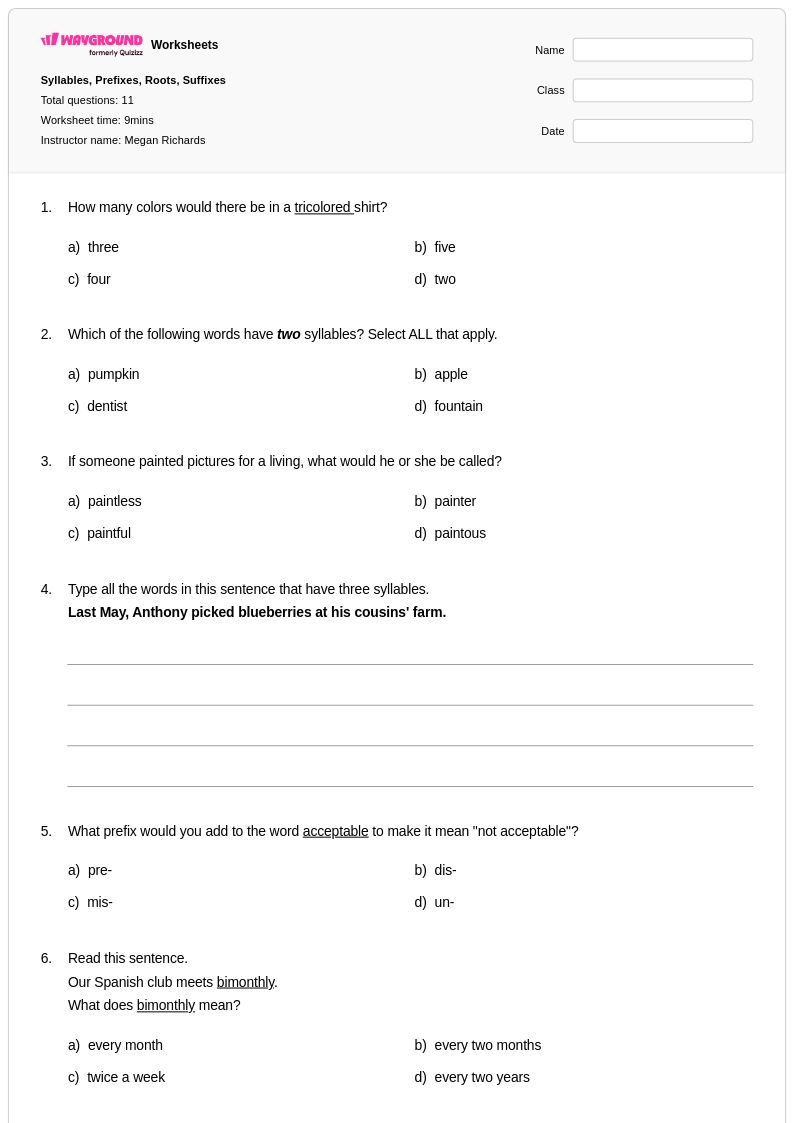
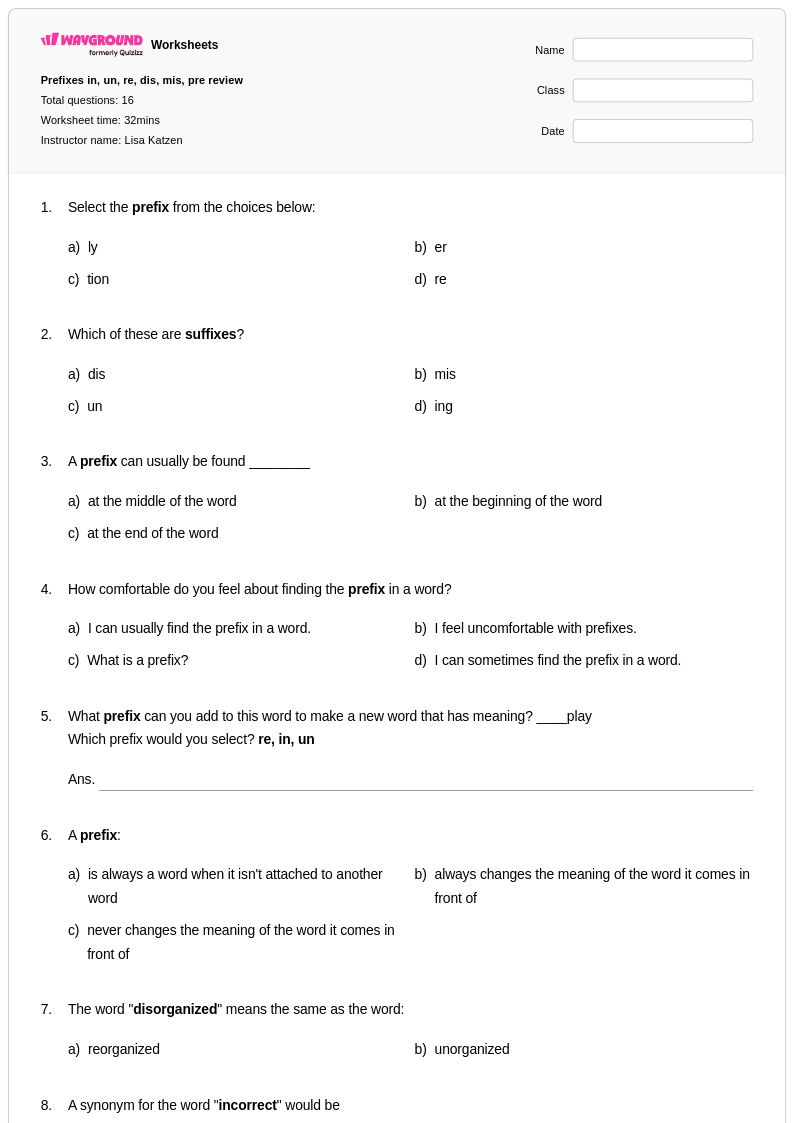
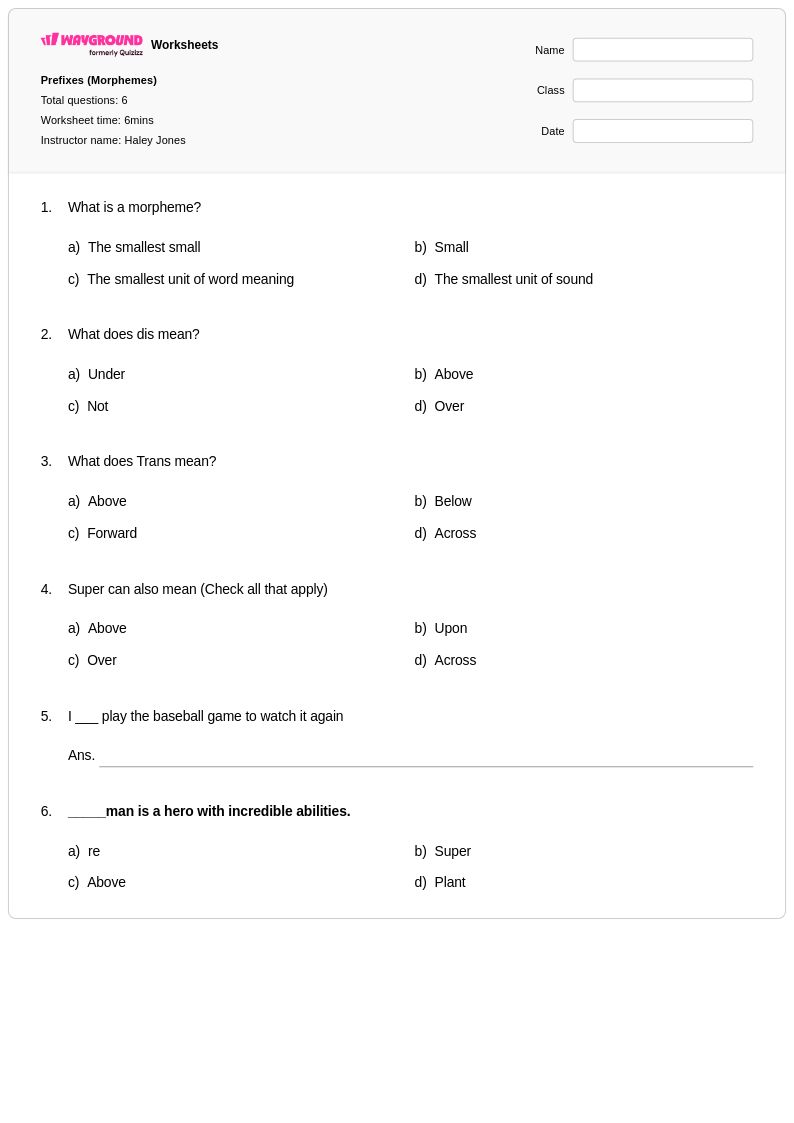
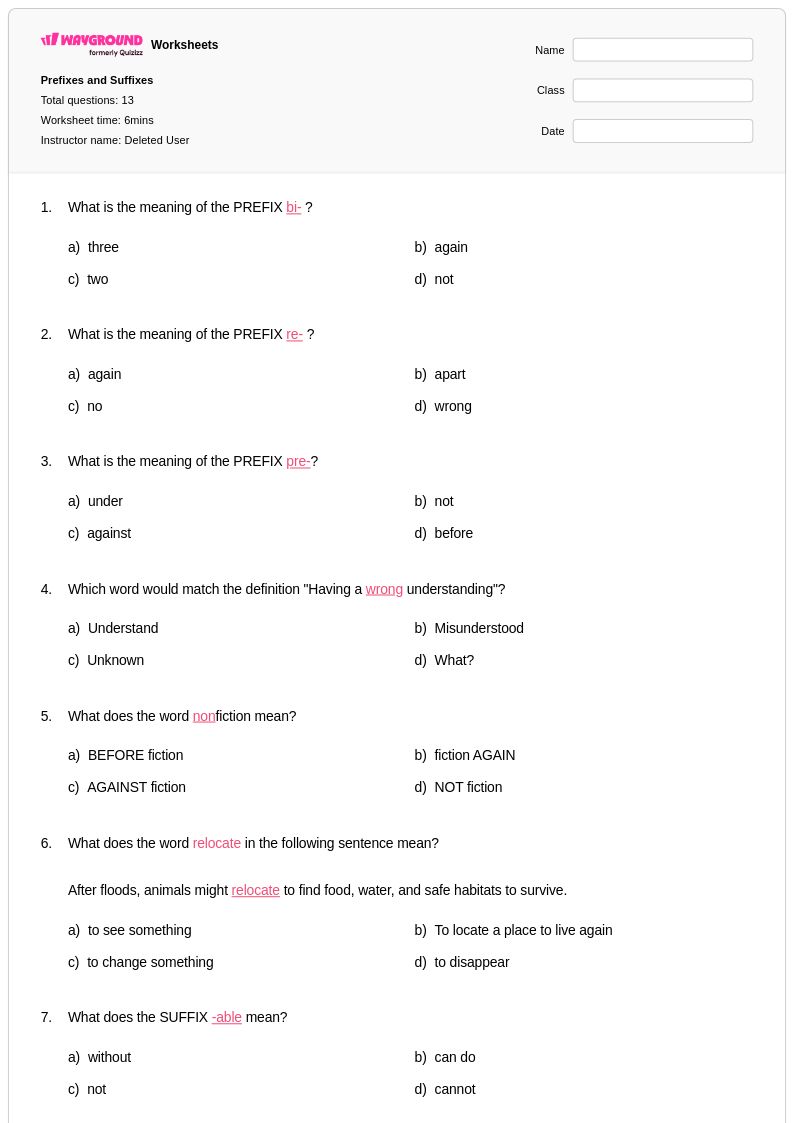
Discover free Class 3 prefixes worksheets and printables that help students master word patterns through engaging practice problems, complete with answer keys and downloadable PDFs from Wayground.
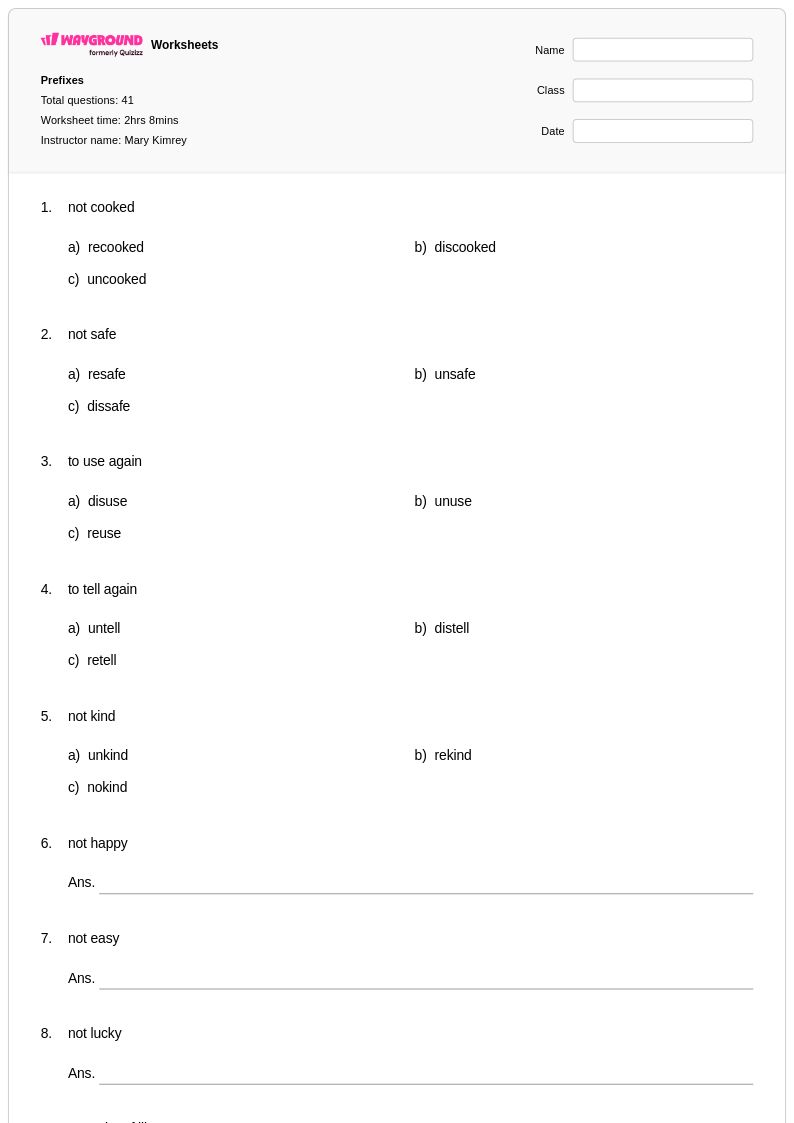
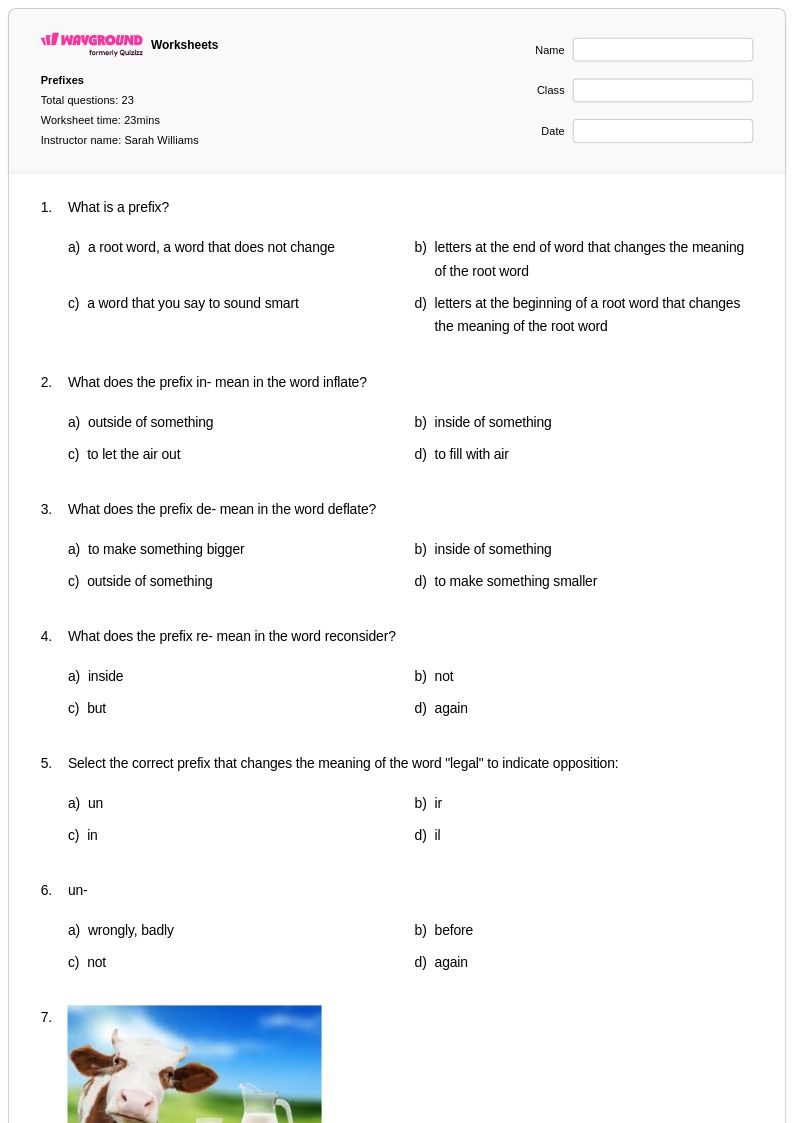
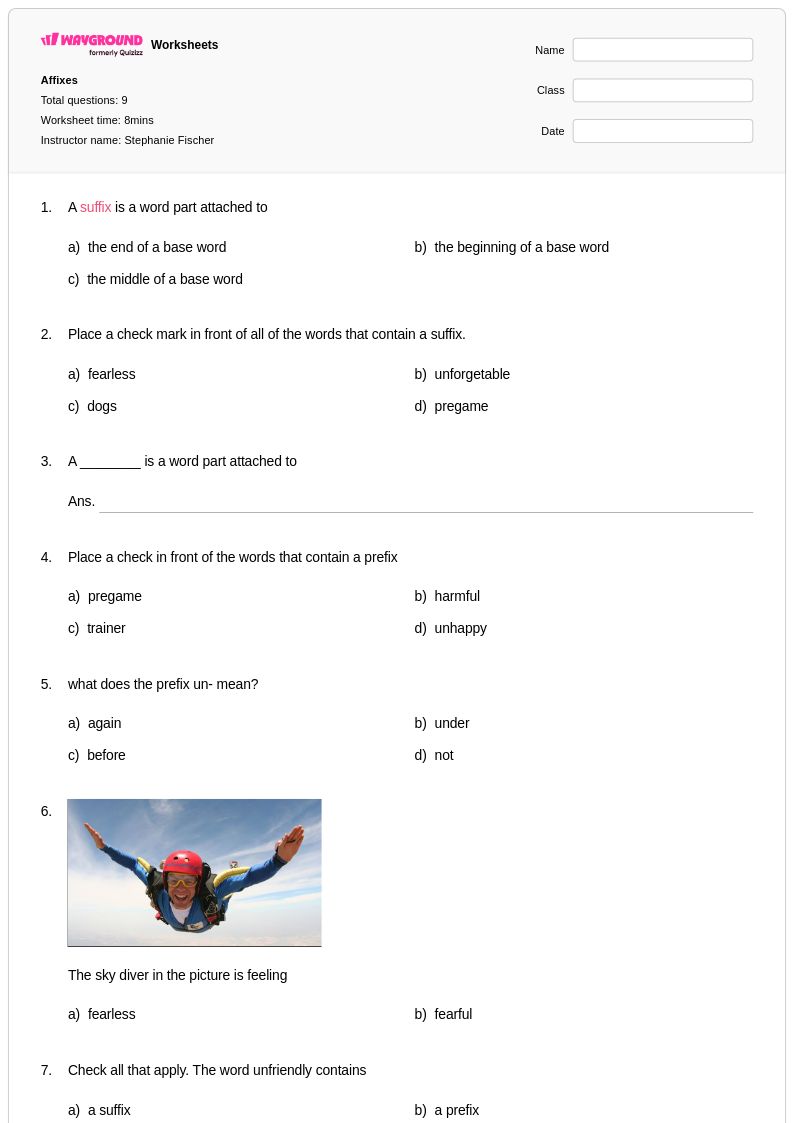
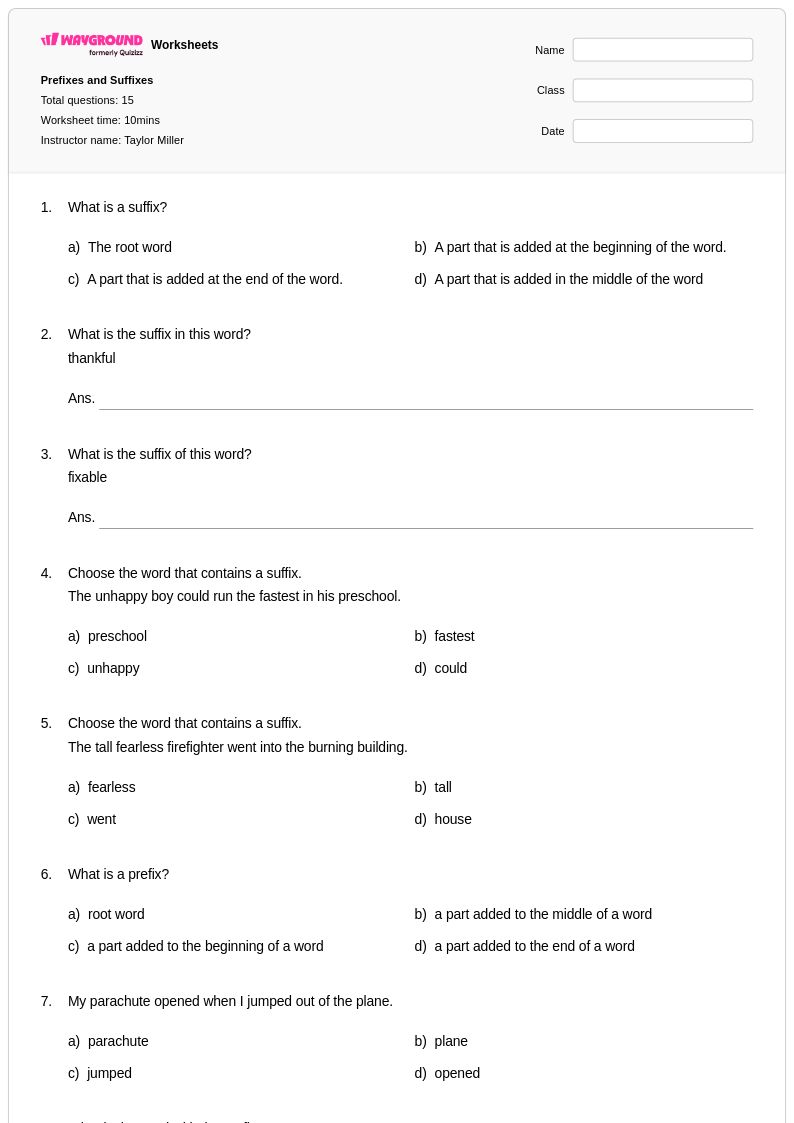
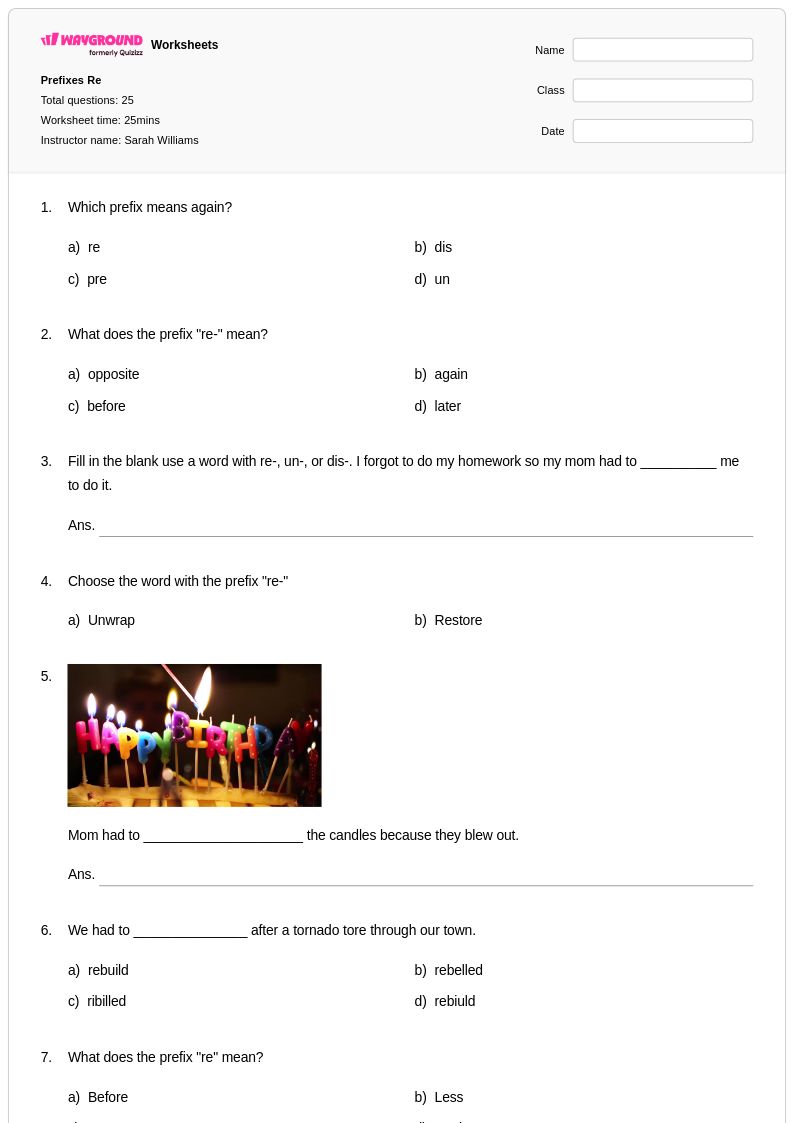
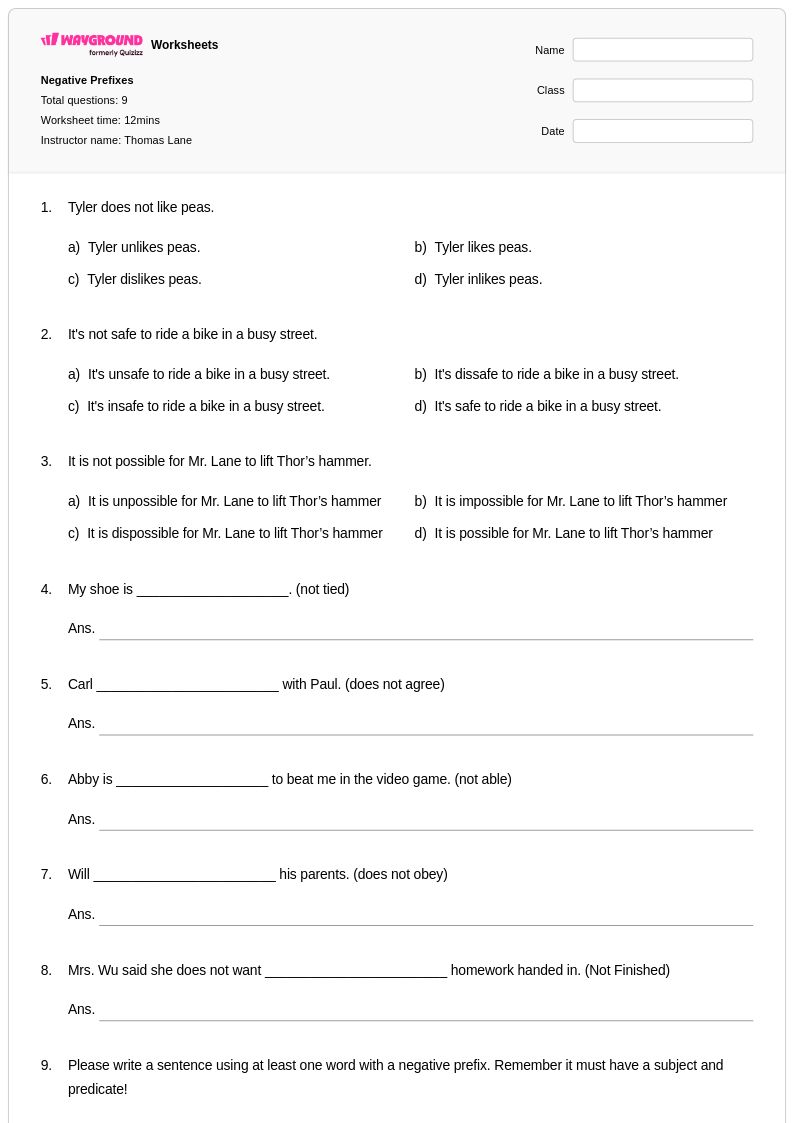
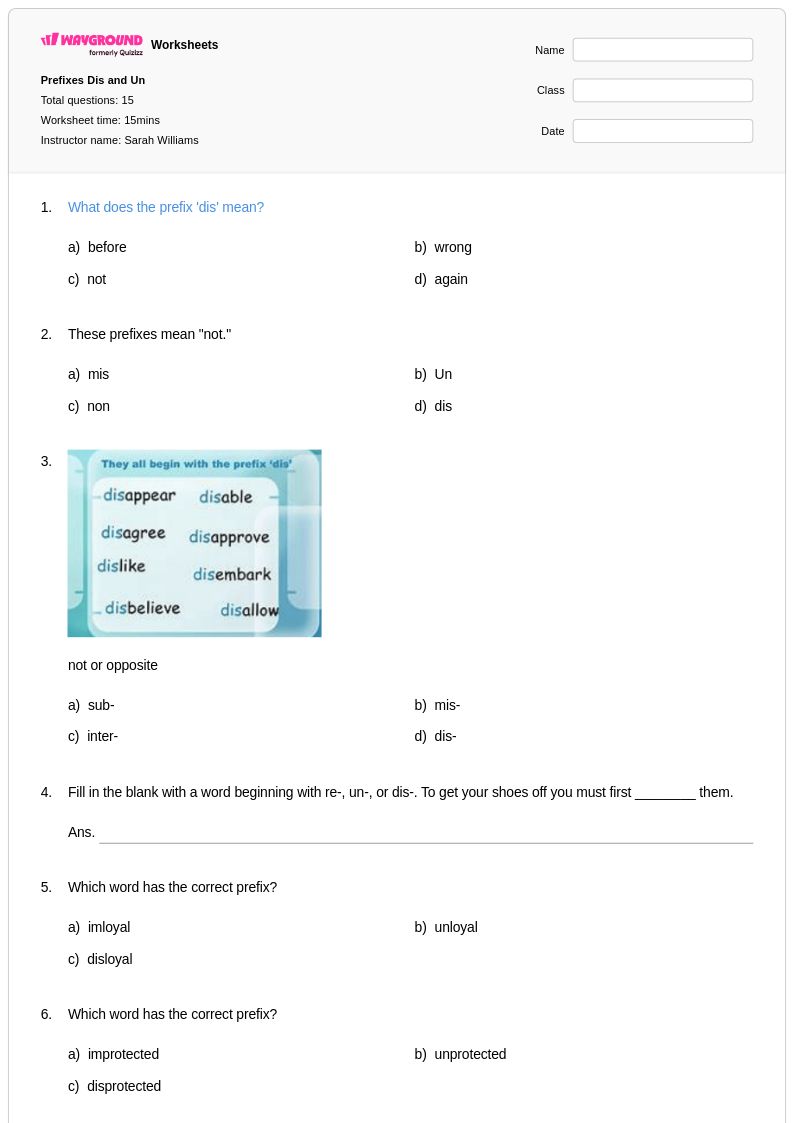
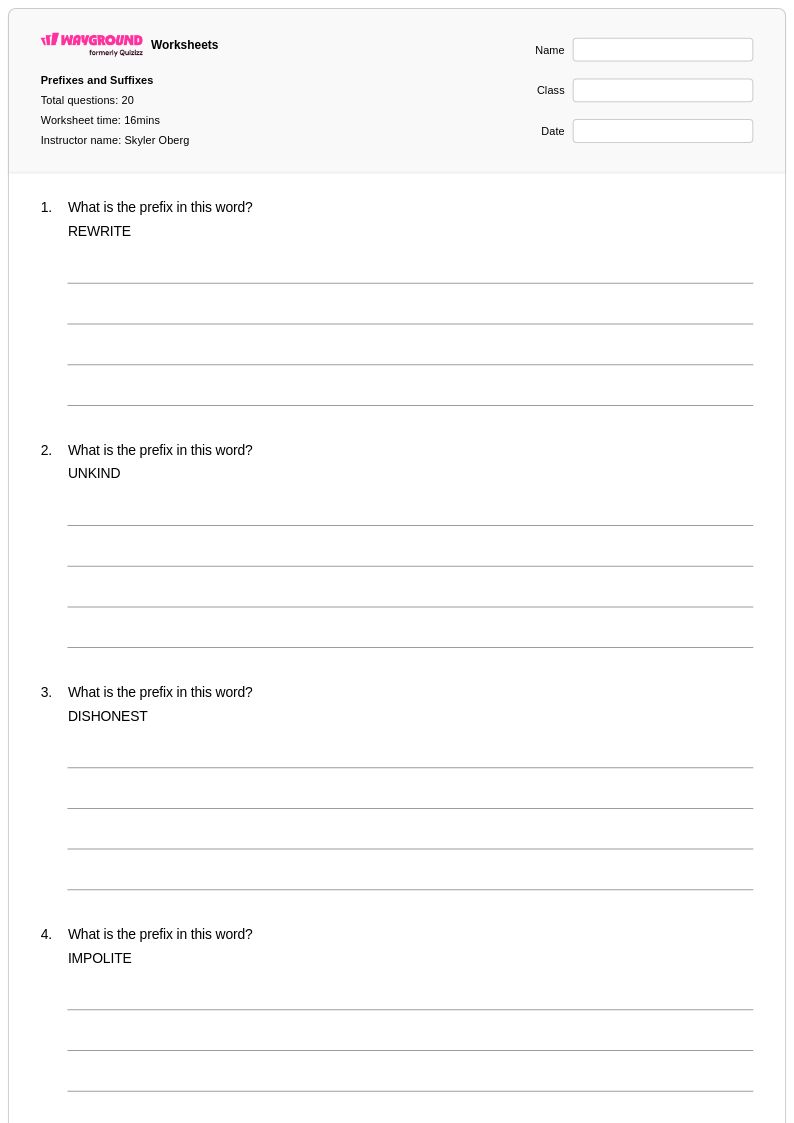
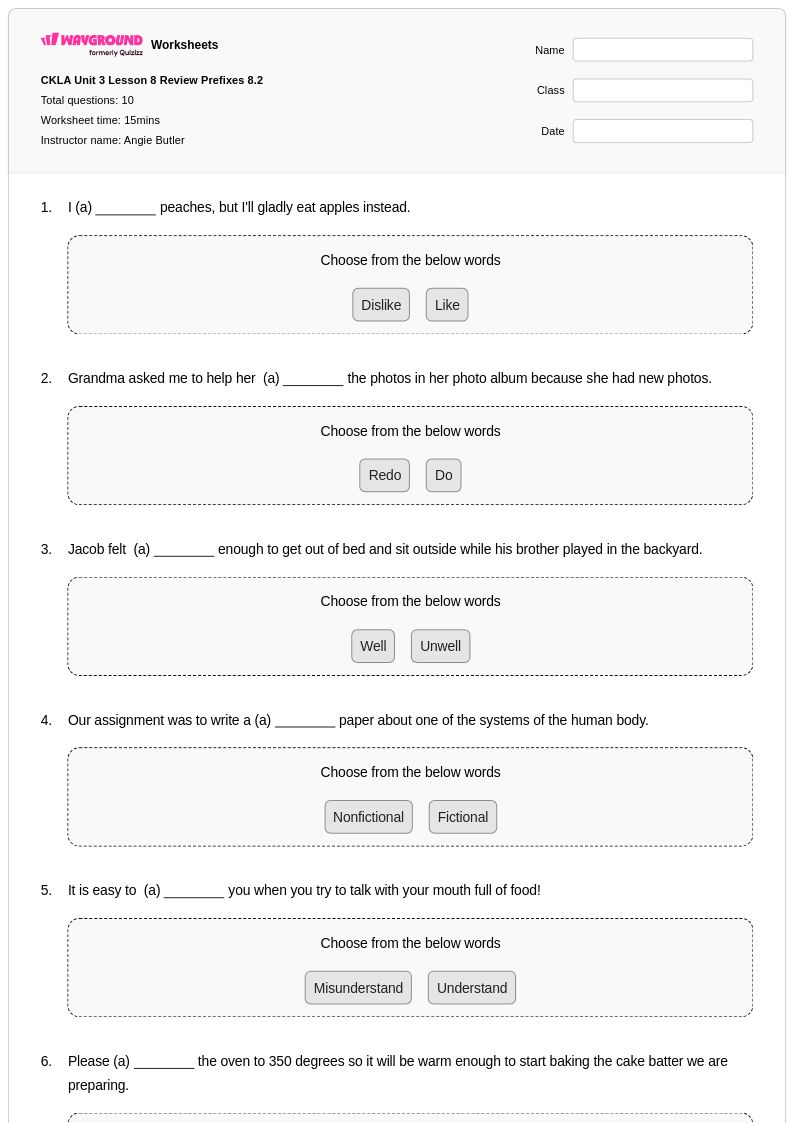
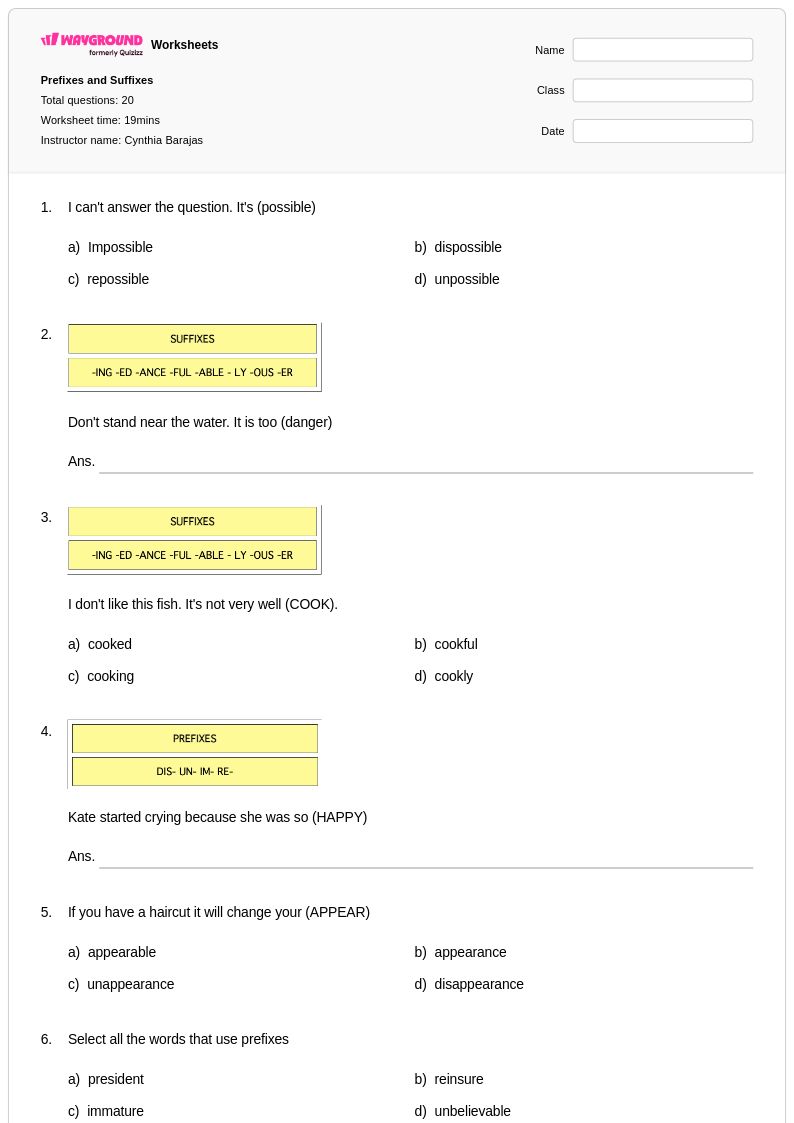
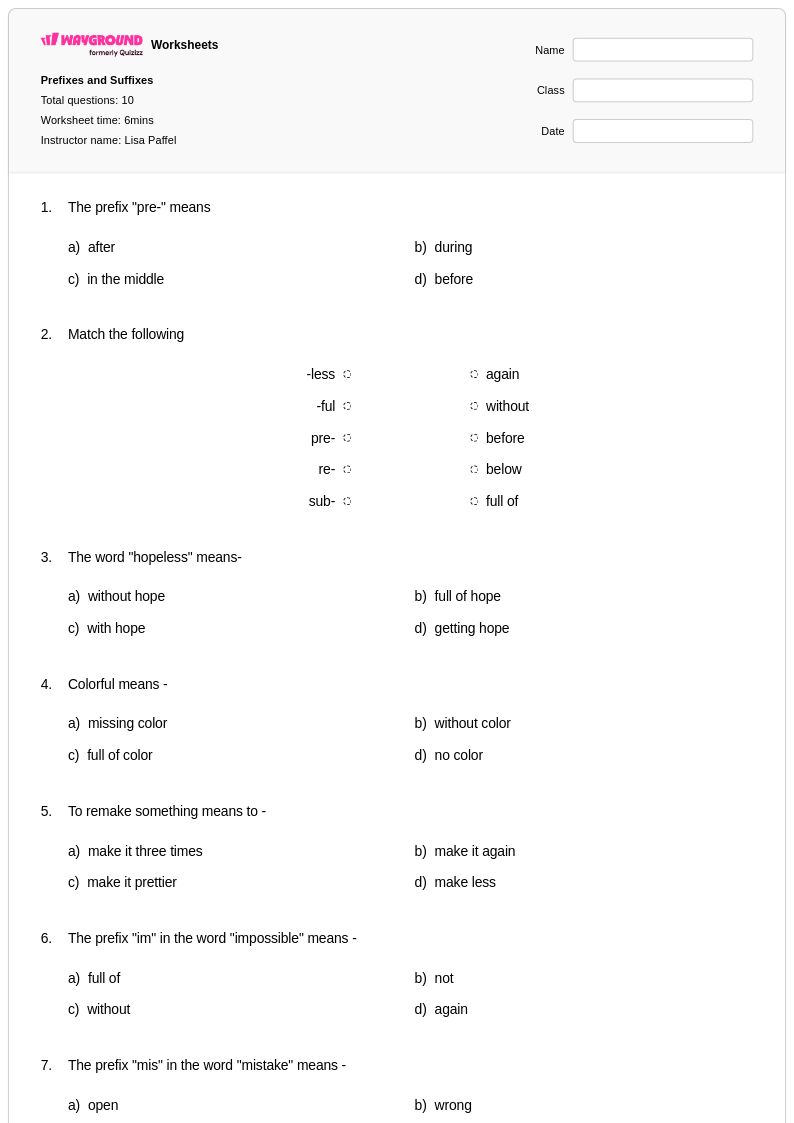
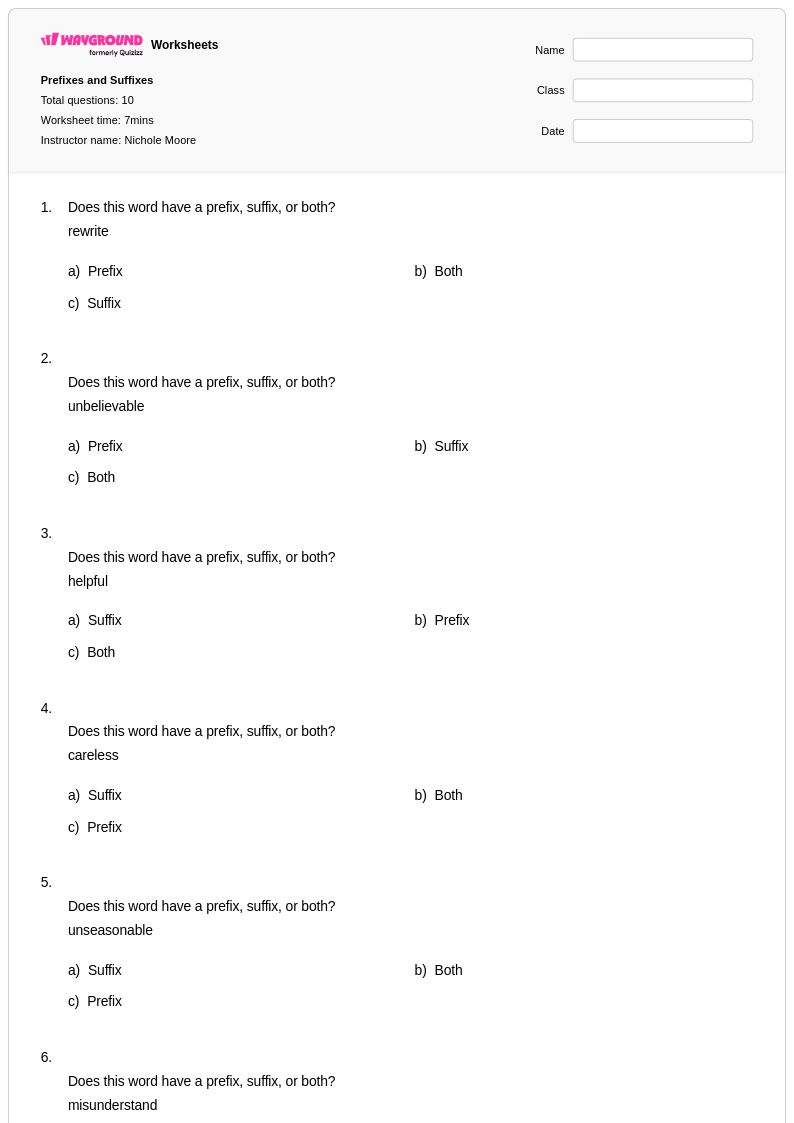
Prefixes worksheets for Class 3 students available through Wayground (formerly Quizizz) provide comprehensive practice in understanding how these word-building elements transform meaning and create new vocabulary. These educational resources focus on common prefixes such as un-, re-, pre-, dis-, and mis-, helping third-grade learners recognize patterns in word construction and develop stronger reading comprehension skills. The worksheets feature engaging practice problems that guide students through identifying prefixes, understanding their meanings, and applying this knowledge to decode unfamiliar words. Each resource includes a complete answer key and is available as free printables in pdf format, making them accessible for both classroom instruction and home practice. These materials strengthen foundational literacy skills by teaching students to break down complex words into manageable parts, significantly improving their ability to tackle challenging vocabulary across all subject areas.
Wayground (formerly Quizizz) empowers educators with an extensive collection of millions of teacher-created prefix worksheets specifically designed for Class 3 instruction. The platform's robust search and filtering capabilities allow teachers to quickly locate resources that align with curriculum standards and match their students' specific learning needs. These differentiation tools enable instructors to customize worksheets for various skill levels, supporting both remediation for struggling learners and enrichment opportunities for advanced students. Available in both printable pdf format and interactive digital versions, these resources offer flexibility for diverse classroom environments and learning preferences. Teachers can efficiently plan targeted vocabulary instruction, provide focused skill practice, and assess student progress using these comprehensive materials that seamlessly integrate into existing English language arts curricula.
FAQs
How do I teach prefixes effectively in the classroom?
Start by anchoring prefix instruction in meaning: teach students that a prefix is a word part added to the beginning of a root word that changes its meaning, then group prefixes by semantic family (negation prefixes like un-, in-, dis-; time prefixes like pre-, post-; repetition prefixes like re-). Use word sorts and word-building activities so students actively construct and deconstruct words rather than passively memorizing lists. Connecting prefix study to texts students are already reading helps transfer recognition skills into real comprehension gains.
What exercises help students practice identifying prefixes?
Effective practice exercises include prefix identification drills where students underline or circle the prefix in a given word, word construction tasks where students attach a prefix to a root word and write the new meaning, and fill-in-the-blank sentences that require choosing the correctly prefixed word. Sorting activities that group words by shared prefix reinforce pattern recognition, while error-correction tasks, where students identify a misused prefix in a sentence, push higher-order thinking. Layering these formats across a unit ensures students encounter prefixes in multiple contexts.
What mistakes do students commonly make when working with prefixes?
The most frequent error is misidentifying letter clusters as prefixes when they are actually part of the root word itself, for example treating 'un' in 'uncle' or 're' in 'reach' as prefixes. Students also commonly confuse homophones or near-homophones created by prefixing, such as 'uninterested' versus 'disinterested'. A third common error is double-negation confusion: students sometimes strip a prefix from a word that has no positive base form in modern English, such as assuming 'inept' means the opposite of 'ept'. Explicit instruction on these boundaries, paired with targeted practice, reduces these errors significantly.
How can I differentiate prefix instruction for struggling readers or advanced students?
For struggling readers, narrow the focus to two or three high-frequency prefixes at a time (un-, re-, pre-) and use visuals or color-coding to mark prefix boundaries within words. On Wayground, teachers can enable Read Aloud so questions and word prompts are read to students who need decoding support, and Reduced Answer Choices can lower cognitive load for students who find multiple-option tasks overwhelming. For advanced students, extend practice to Latin and Greek-origin prefixes and require students to generate original sentences or identify prefixes in grade-level content-area texts.
How do I use Wayground's prefixes worksheets in my classroom?
Wayground's prefix worksheets are available as both printable PDFs and in digital formats, so they work equally well as take-home practice, in-class independent work, or technology-integrated assignments. Teachers can also host a worksheet directly as a quiz on Wayground, allowing students to complete it digitally while the platform tracks responses automatically. The included answer keys make grading efficient whether the worksheet is used for formative check-ins, remediation sessions, or independent study.
How do prefixes support broader reading comprehension skills?
Understanding prefixes gives students a decoding strategy for unfamiliar words: rather than skipping an unknown word, a student who recognizes 'mis-' in 'misjudge' can infer meaning from the parts. This morphological awareness reduces over-reliance on context guessing and builds vocabulary breadth systematically across content areas. Research consistently shows that explicit morphology instruction, including prefix study, produces measurable gains in both reading comprehension and spelling accuracy, particularly for students in upper elementary and middle school grades.