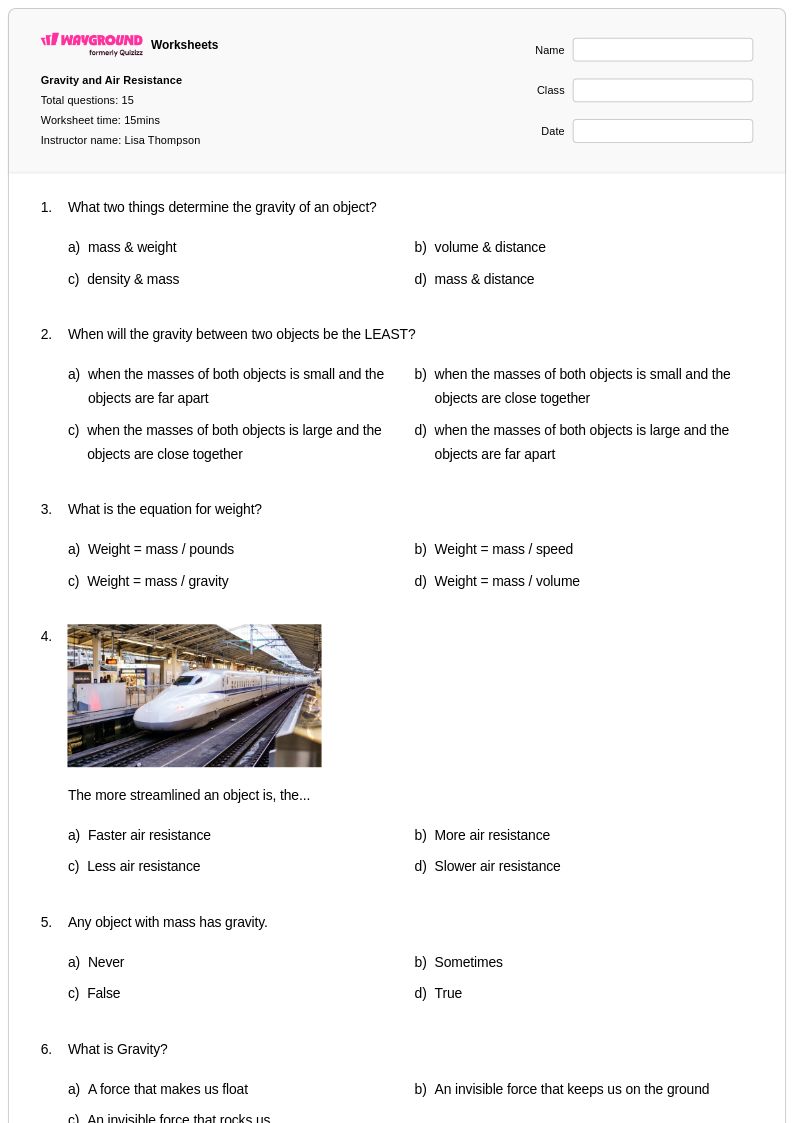
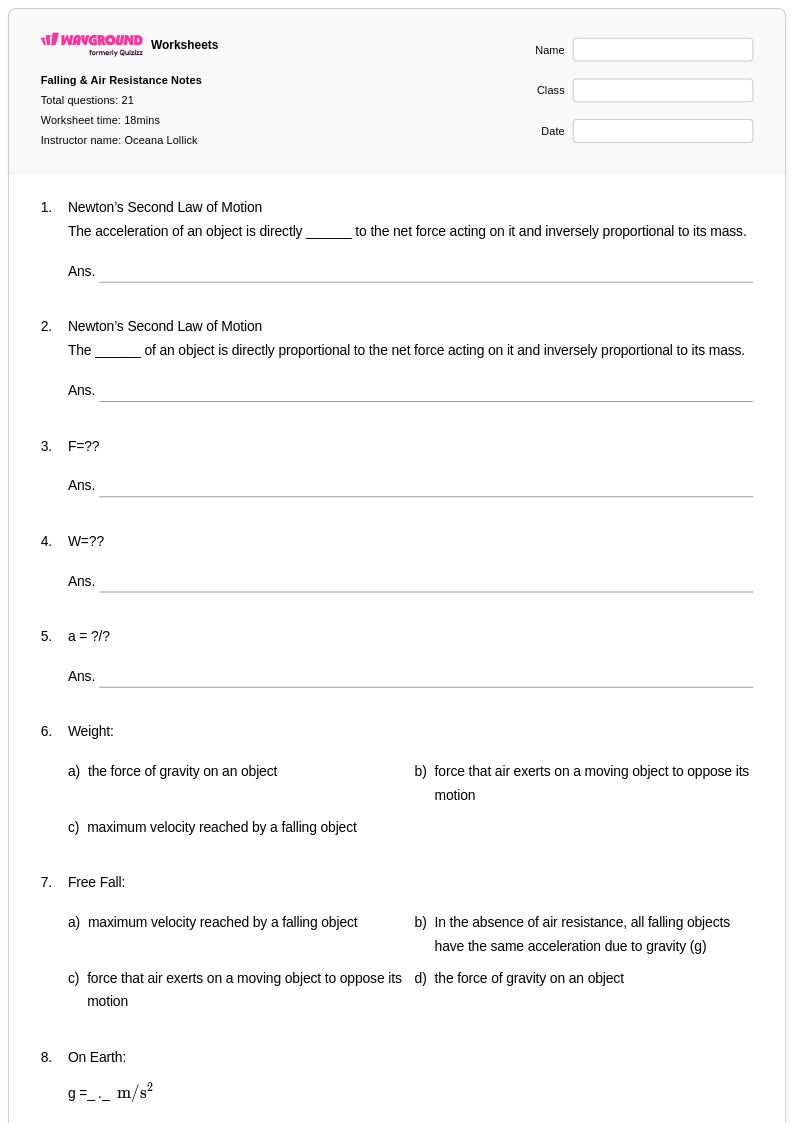
Explore Wayground's free Class 11 resistance worksheets and printables featuring comprehensive practice problems and answer keys to help students master electrical resistance concepts in physics through hands-on PDF exercises.
Explore printable Resistance worksheets for Class 11
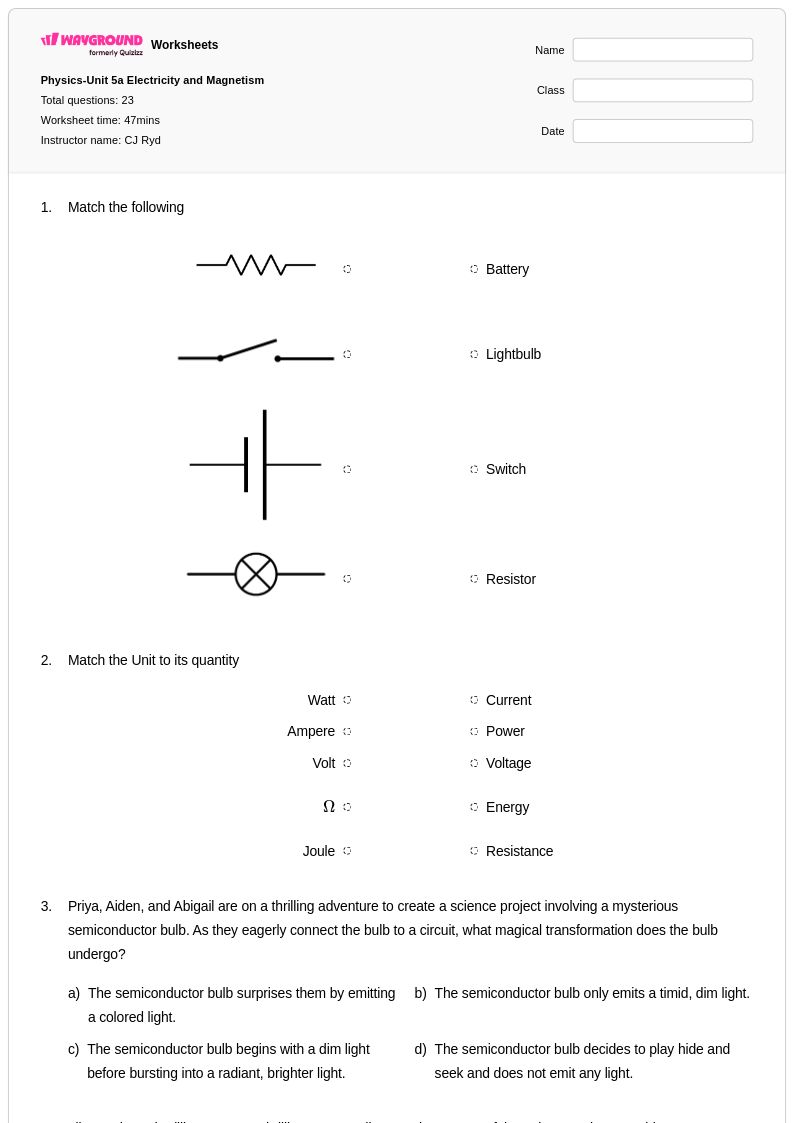
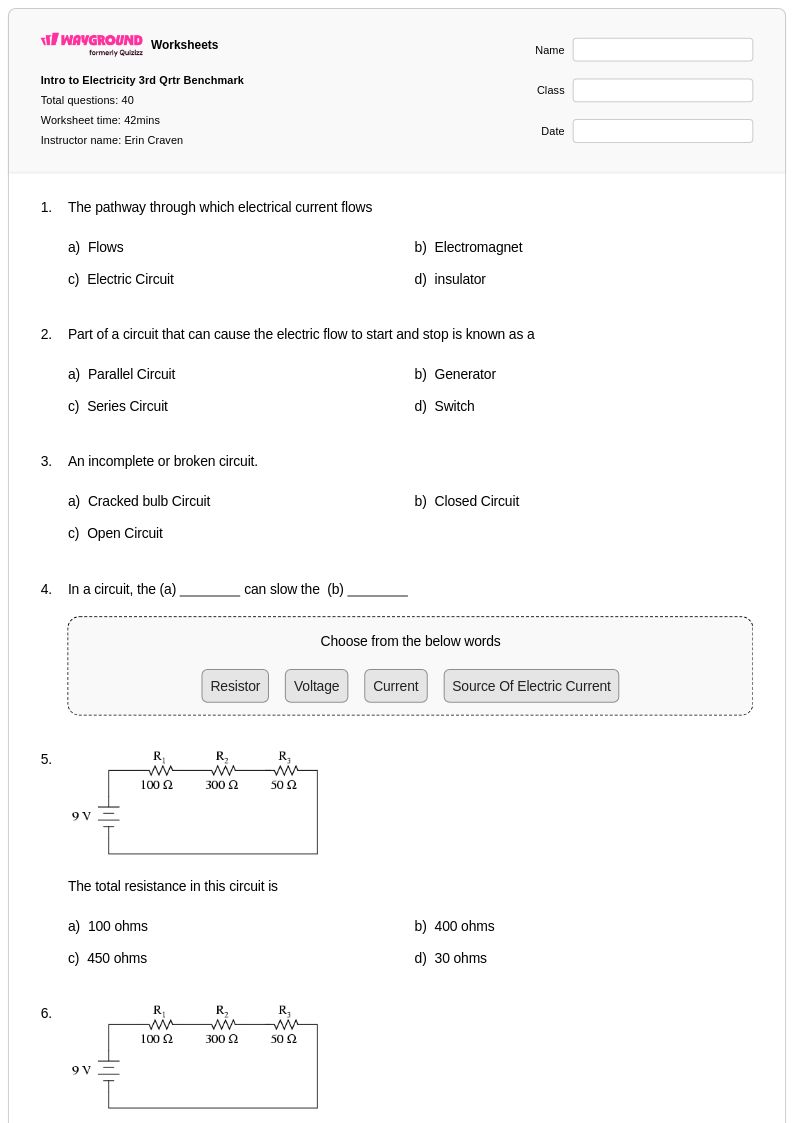
Class 11 resistance worksheets available through Wayground (formerly Quizizz) provide comprehensive practice materials that strengthen students' understanding of electrical resistance principles and applications. These expertly designed resources cover fundamental concepts including Ohm's law calculations, resistor networks in series and parallel configurations, factors affecting resistance such as material properties and temperature, and real-world applications in electrical circuits. Students develop critical problem-solving skills through systematic practice problems that range from basic resistance calculations to complex circuit analysis scenarios. The collection includes detailed answer keys that facilitate self-assessment and independent learning, while printable pdf formats ensure accessibility for both classroom instruction and homework assignments. These free educational resources emphasize conceptual understanding alongside mathematical proficiency, helping students master the quantitative relationships between voltage, current, and resistance that form the foundation of electrical circuit theory.
Wayground (formerly Quizizz) empowers educators with an extensive collection of millions of teacher-created resistance worksheets that streamline lesson planning and enhance instructional effectiveness. The platform's robust search and filtering capabilities allow teachers to quickly locate materials aligned with specific curriculum standards and learning objectives, while differentiation tools enable customization based on individual student needs and skill levels. Teachers can easily modify existing worksheets or create targeted practice sets for remediation and enrichment activities, ensuring that all students receive appropriate challenges regardless of their current understanding level. The availability of both digital and printable pdf formats provides maximum flexibility for diverse classroom environments and teaching preferences. These comprehensive resources support systematic skill building through scaffolded practice opportunities, enabling teachers to efficiently assess student progress and adjust instruction to address specific areas where additional support or advanced challenges may be needed.
FAQs
How do I teach electrical resistance to students who are new to physics?
Start by grounding resistance in a physical analogy students can visualize, such as water flowing through pipes of different widths. Introduce Ohm's Law (V = IR) early and consistently, so students see resistance as part of a three-variable relationship rather than an isolated concept. From there, build toward series and parallel circuit configurations, which require students to apply resistance calculations in more complex contexts. Connecting each step back to real-world circuit behavior helps students move from memorization to genuine understanding.
What practice problems help students get better at resistance calculations?
The most effective practice sequences start with single-resistor Ohm's Law problems, where students solve for each variable in turn, before moving to multi-resistor series and parallel configurations. Problems that require students to find equivalent resistance, then use it to calculate current or voltage, build the layered reasoning that circuit analysis demands. Including problems that mix series and parallel elements in the same circuit is especially valuable for consolidating understanding before assessments.
What mistakes do students commonly make when solving resistance problems?
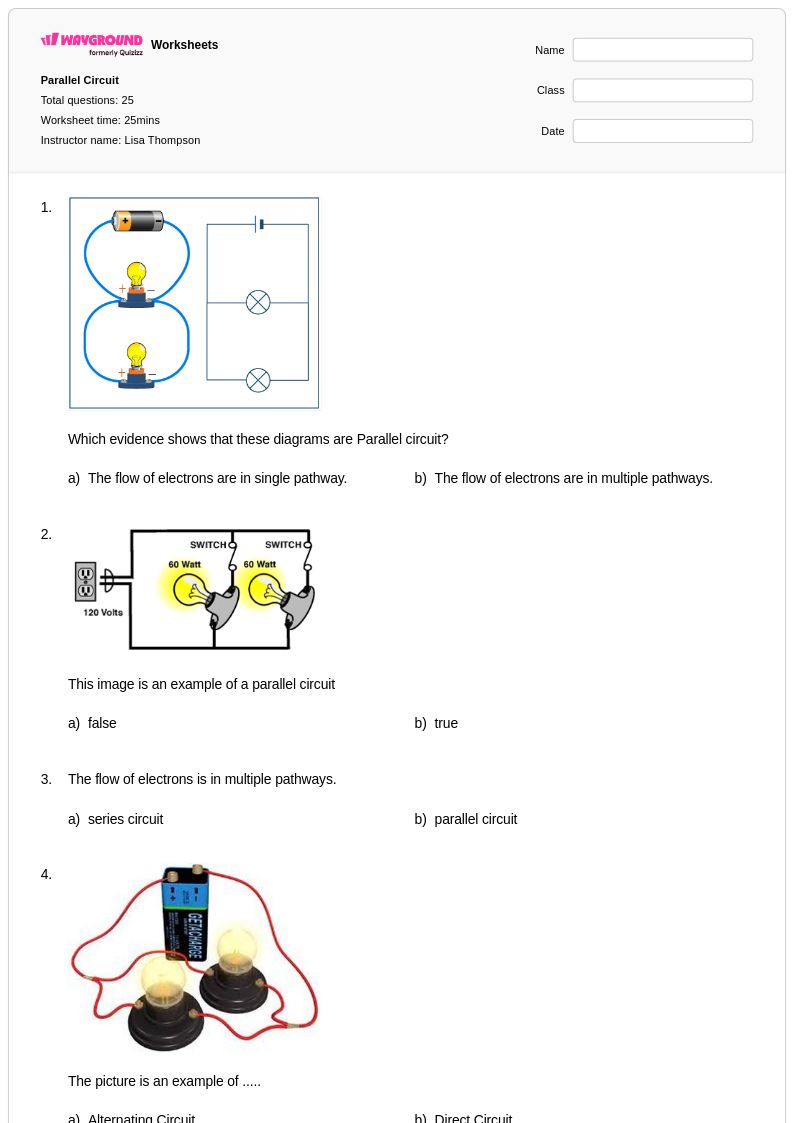
The most persistent error is applying series resistance rules to parallel circuits and vice versa. In parallel circuits, students often add resistance values directly instead of using the reciprocal formula, which produces a result larger than any individual resistor and should itself signal an error. Students also frequently misidentify which components are in series versus parallel when circuits are drawn in non-standard layouts. Building in diagram-reading practice alongside calculation practice helps students catch these errors before they become ingrained.
How can I use Wayground resistance worksheets in my classroom?
Wayground resistance worksheets are available as printable PDFs for traditional classroom use and in digital formats for technology-integrated environments, including the option to host them as a quiz directly on Wayground. This flexibility makes them practical for daily warm-ups, lab follow-ups, or unit review sessions regardless of whether your class is in-person, hybrid, or remote. Complete answer keys are included, reducing grading time and allowing you to focus feedback on the specific resistance concepts where students are struggling.
How do I differentiate resistance worksheets for students at different skill levels?
For students who are still building foundational skills, start with problems that isolate a single variable in Ohm's Law before introducing multi-step circuit problems. For advanced learners, extend practice to include internal resistance, temperature coefficient problems, or circuits with multiple branches. On Wayground, teachers can further support individual students using built-in accommodation tools such as reduced answer choices to lower cognitive load, extended time, or read-aloud settings for students who need them, all configurable at the student level without affecting the rest of the class.
How do I assess whether students truly understand resistance versus just memorizing the formula?
Assessment questions that require explanation alongside calculation are the most reliable indicator of true understanding. Ask students to predict what happens to total current in a circuit when a resistor is added in series versus parallel, and have them justify their answer before calculating. Problems that present an incorrect solution and ask students to identify and correct the error are also highly effective, since diagnosing mistakes requires a deeper conceptual model than simply executing a procedure.