
Recommended Topics for you
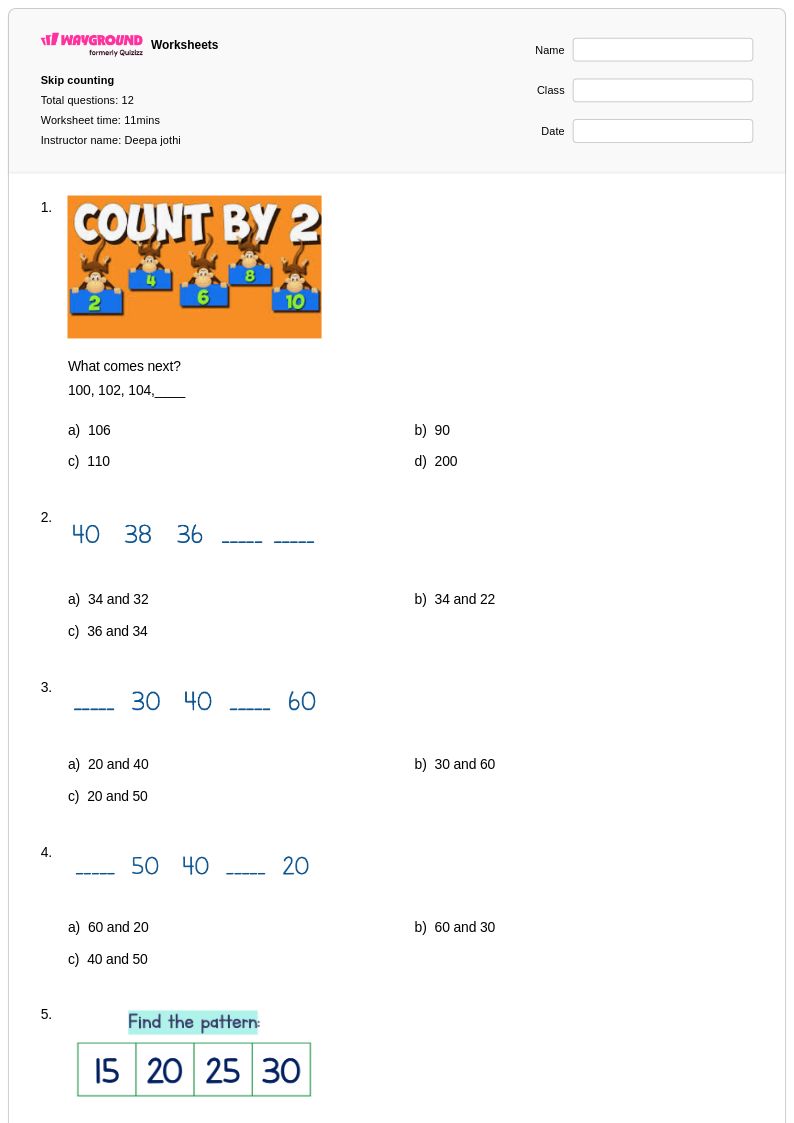
12 Q
2nd
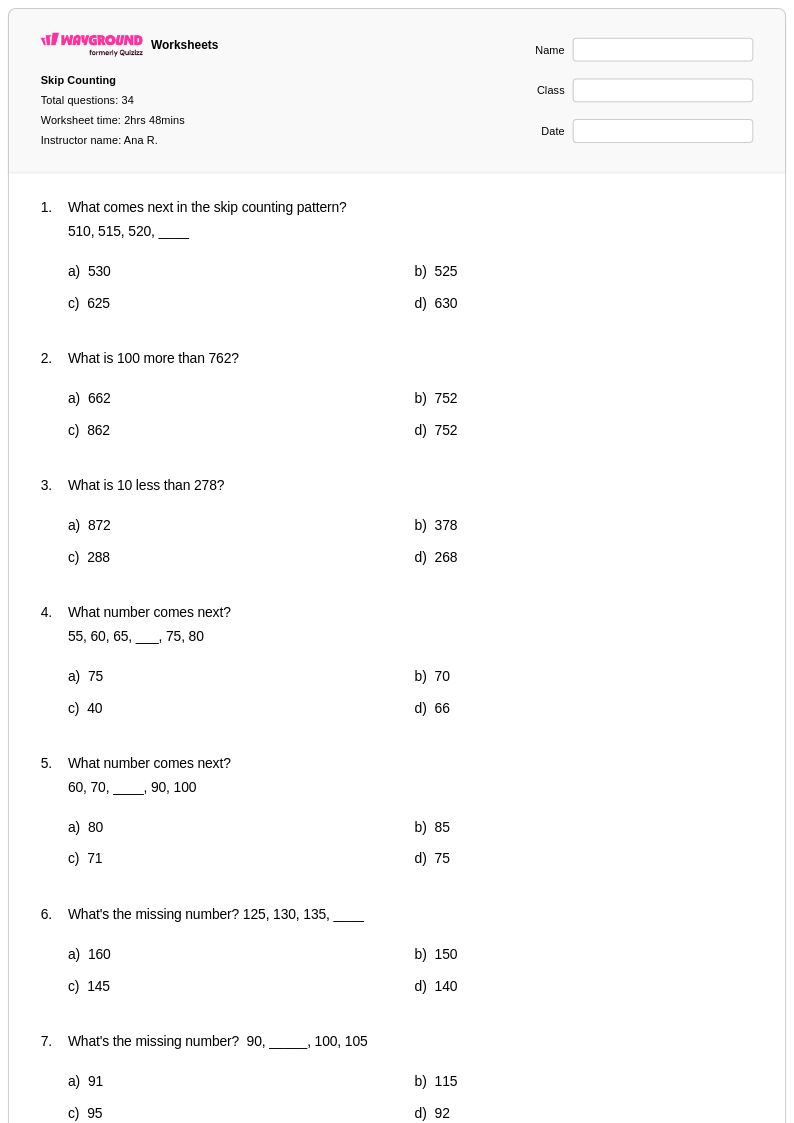
34 Q
2nd
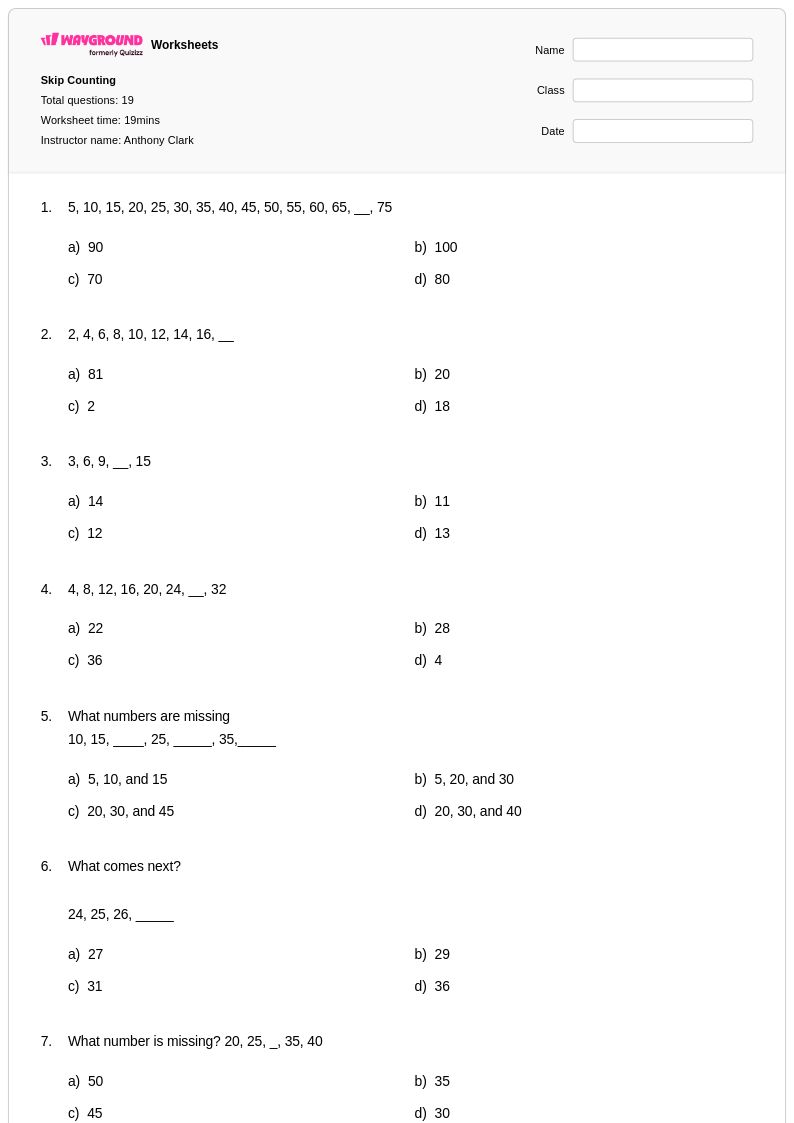
19 Q
2nd - Uni
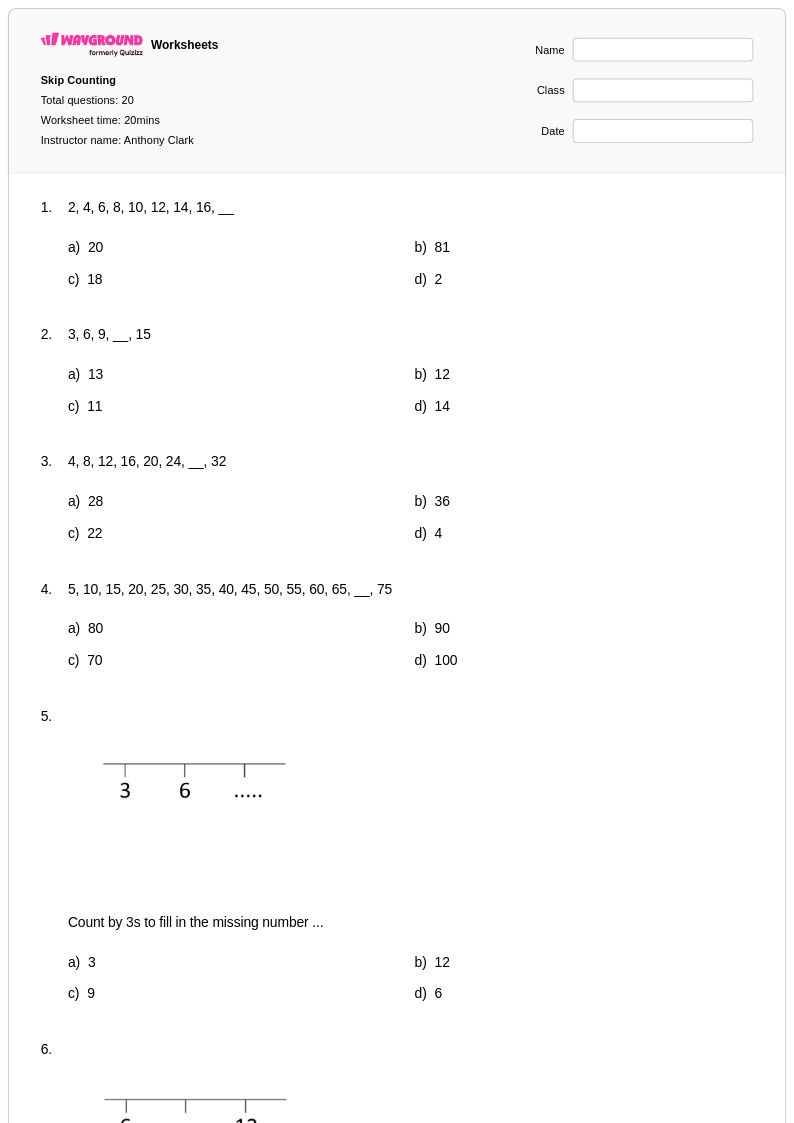
20 Q
3rd - Uni
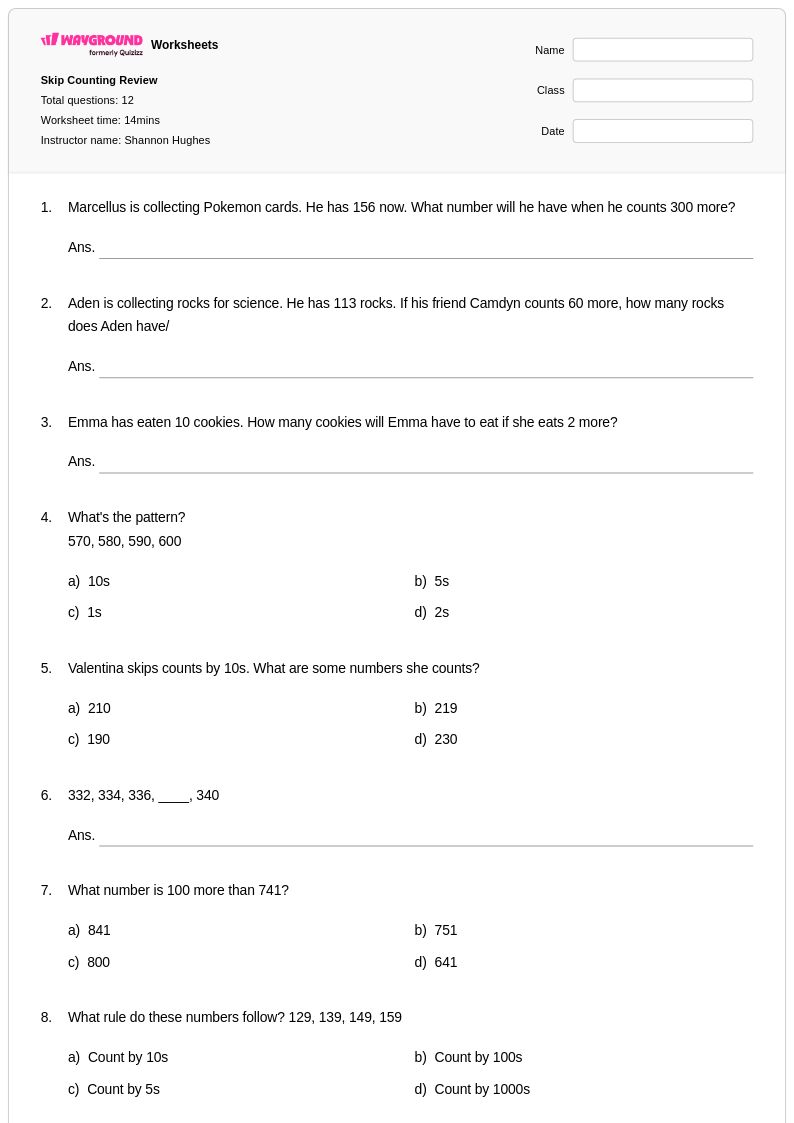
12 Q
2nd
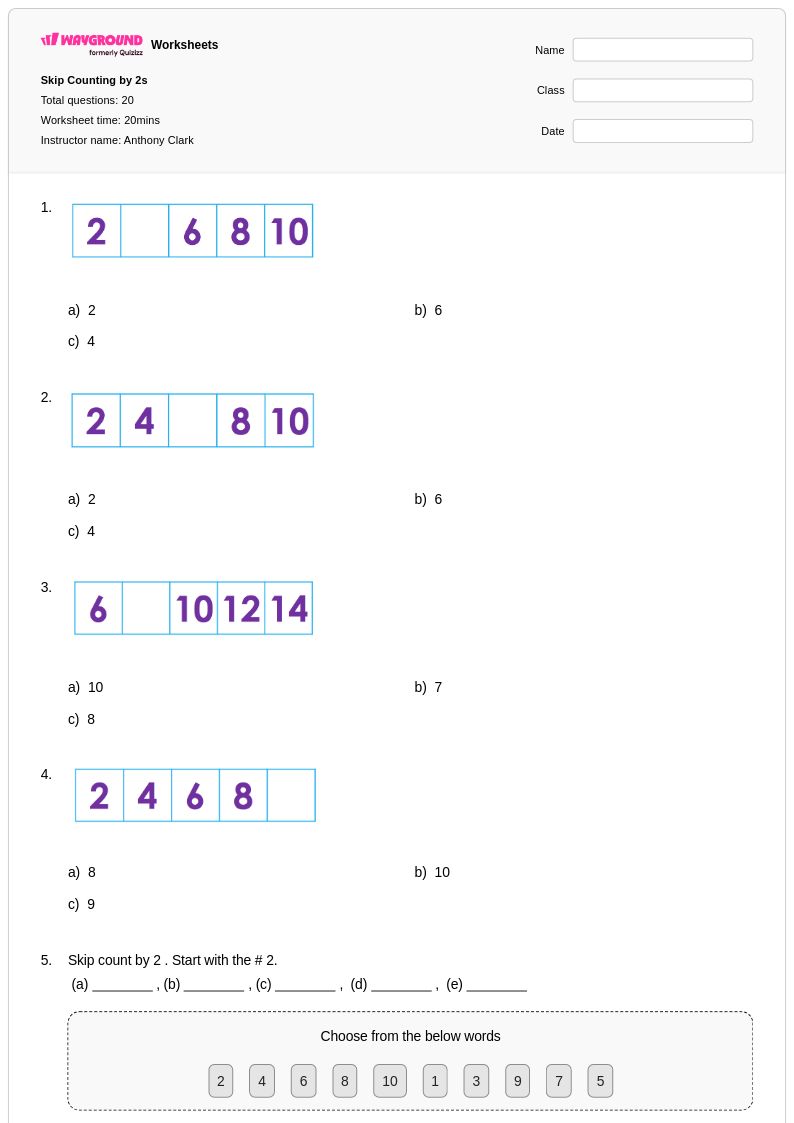
20 Q
2nd - Uni
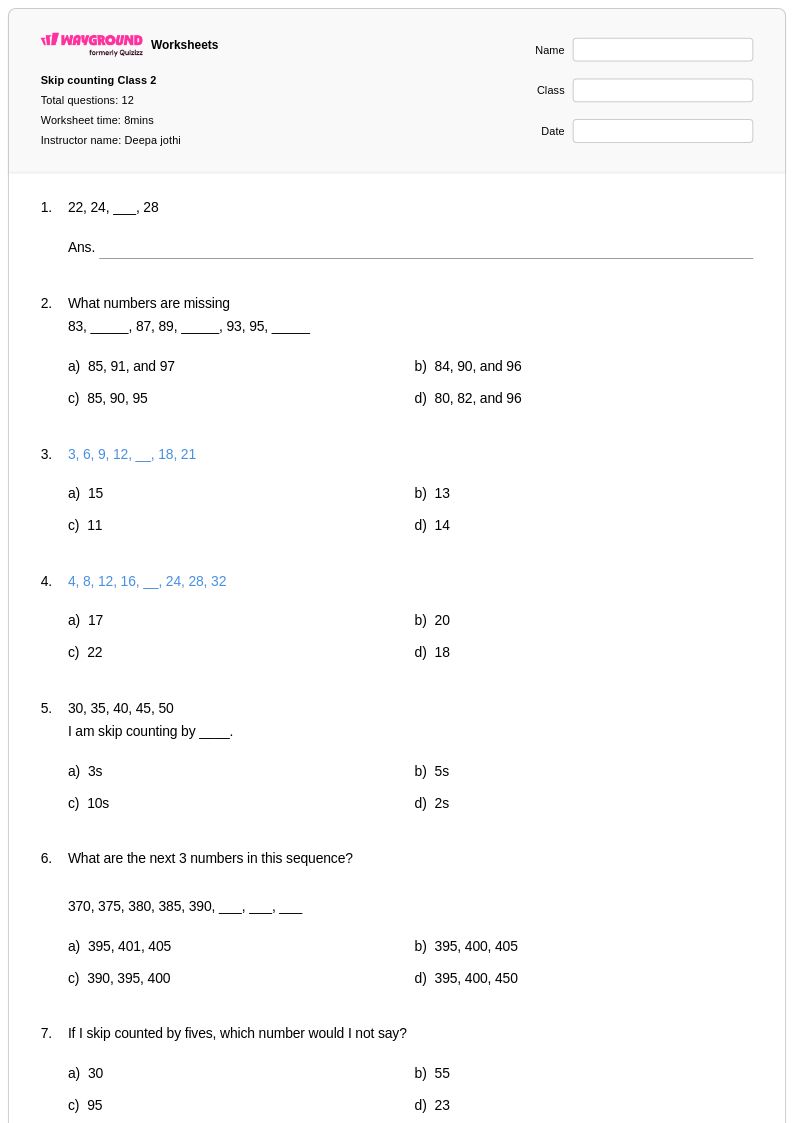
12 Q
2nd
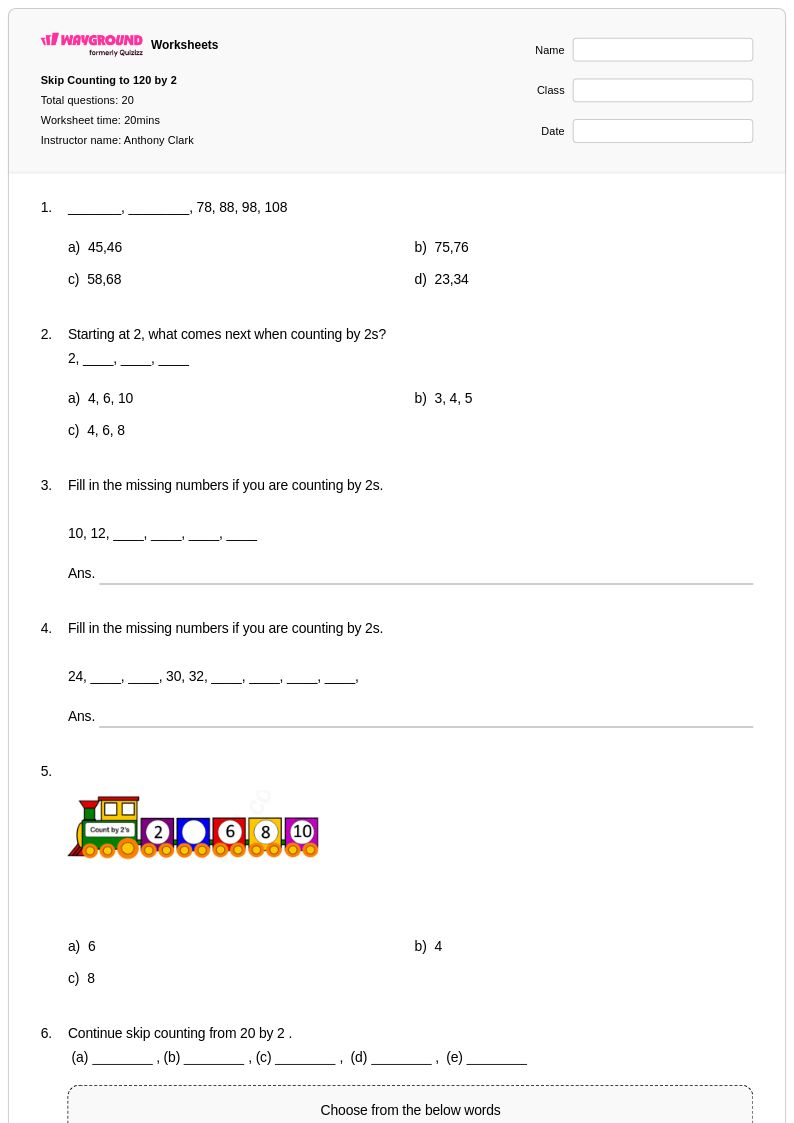
20 Q
2nd - Uni
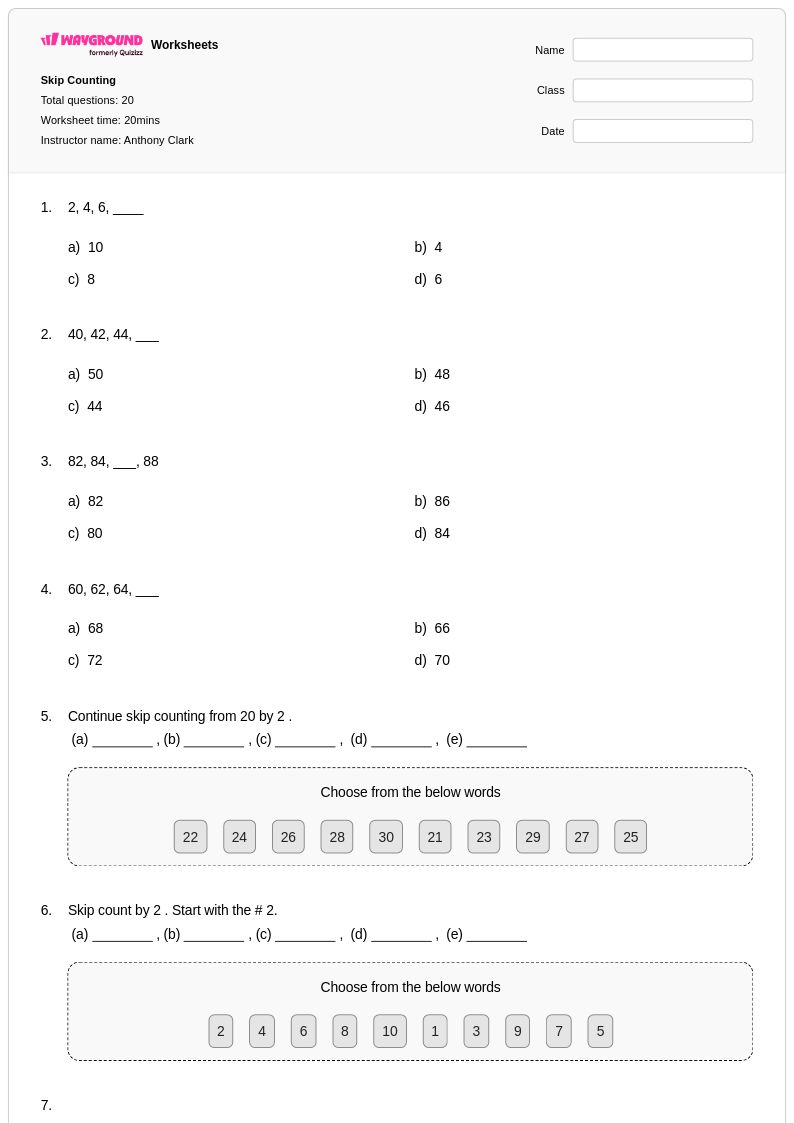
20 Q
2nd - Uni
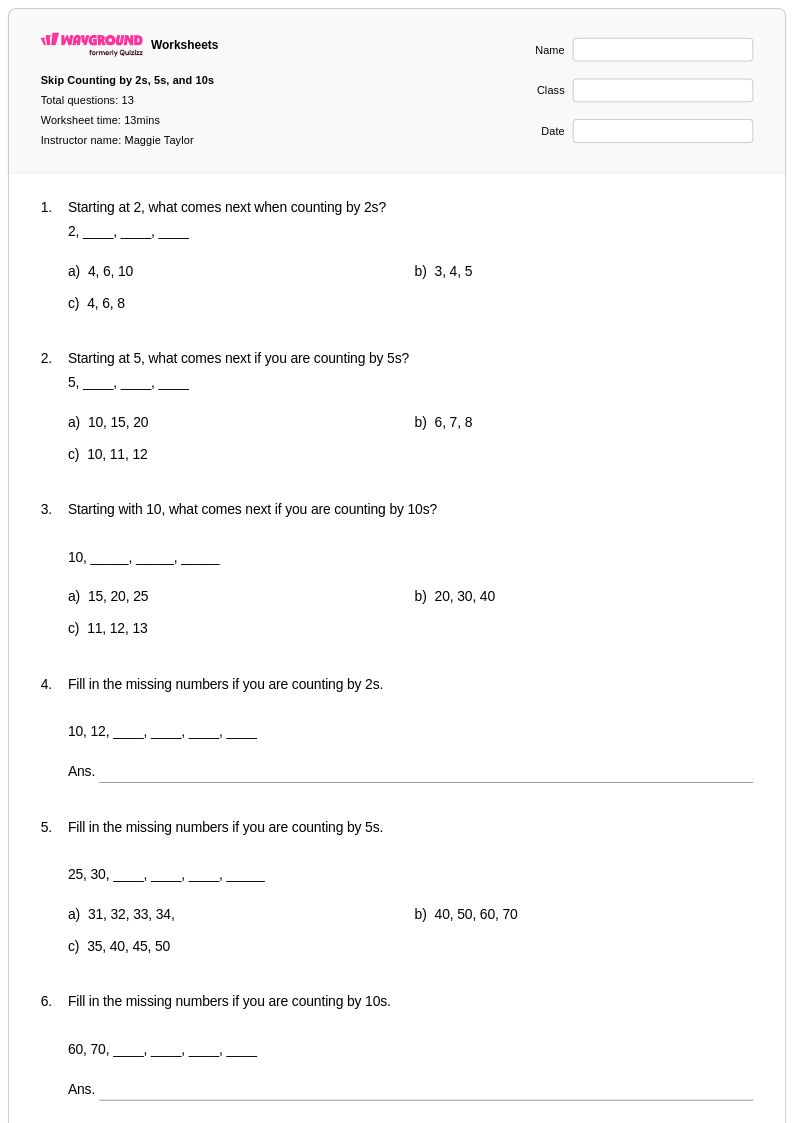
13 Q
2nd
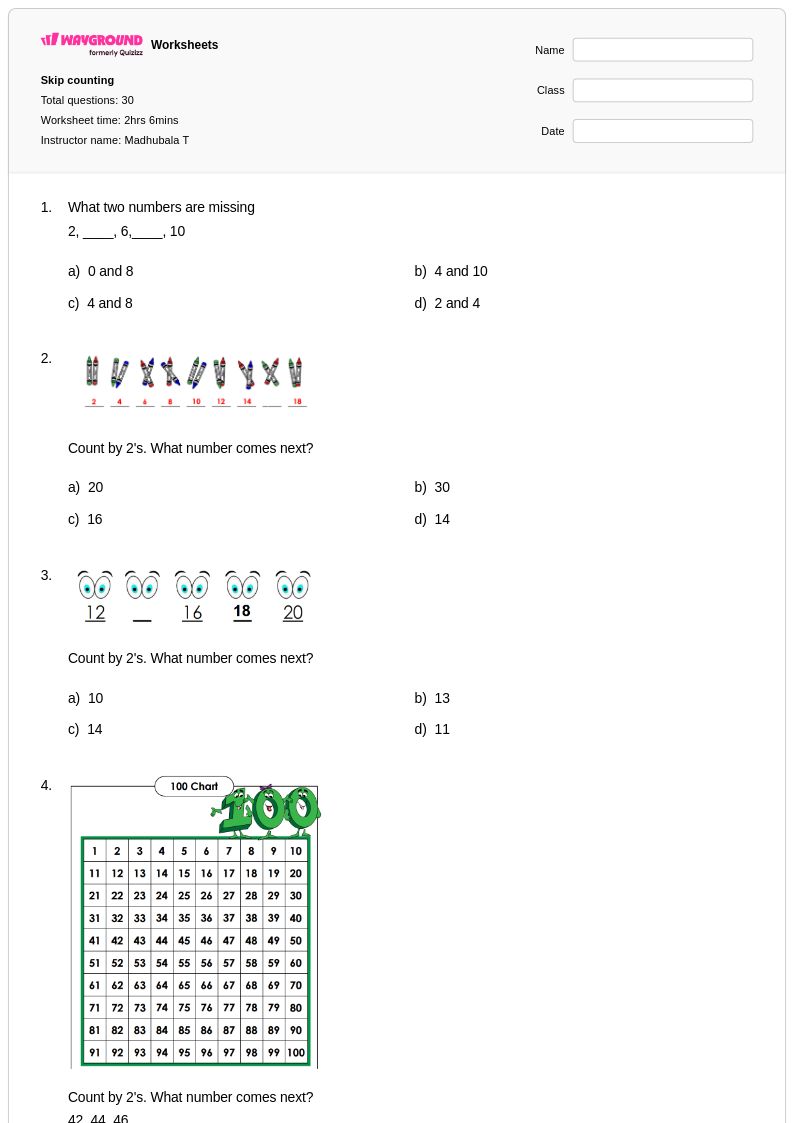
30 Q
2nd
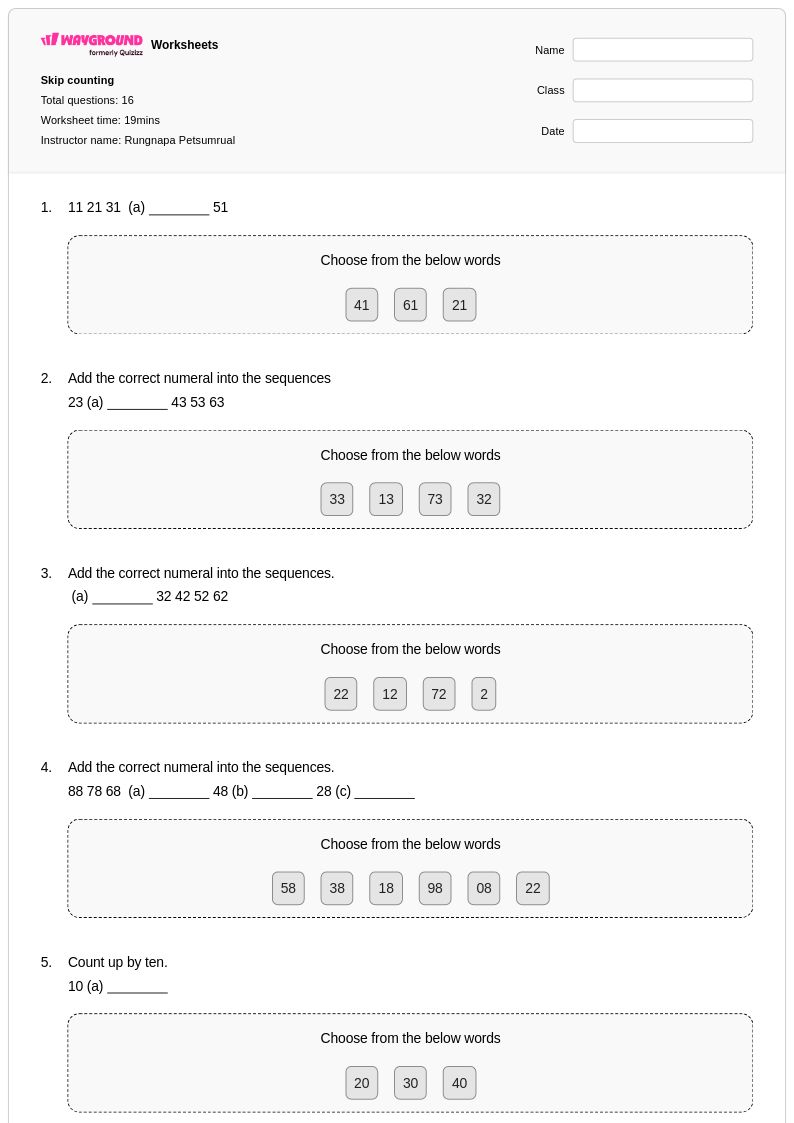
16 Q
1st
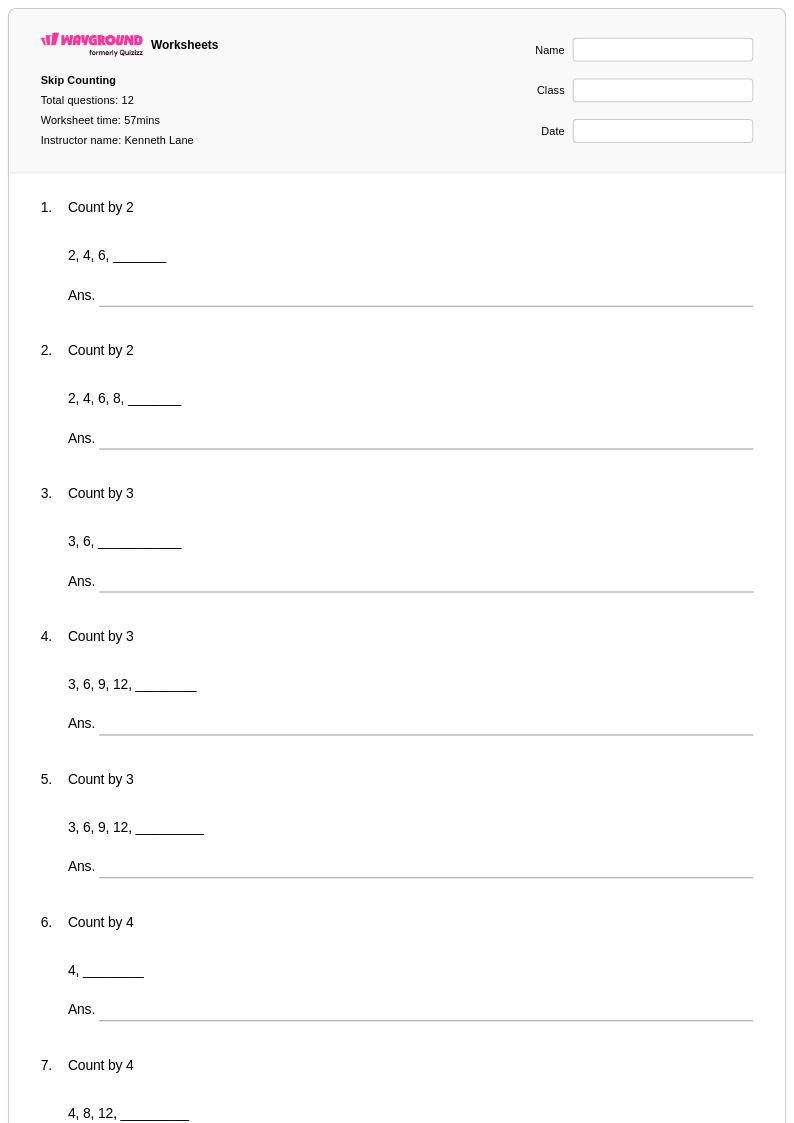
12 Q
3rd
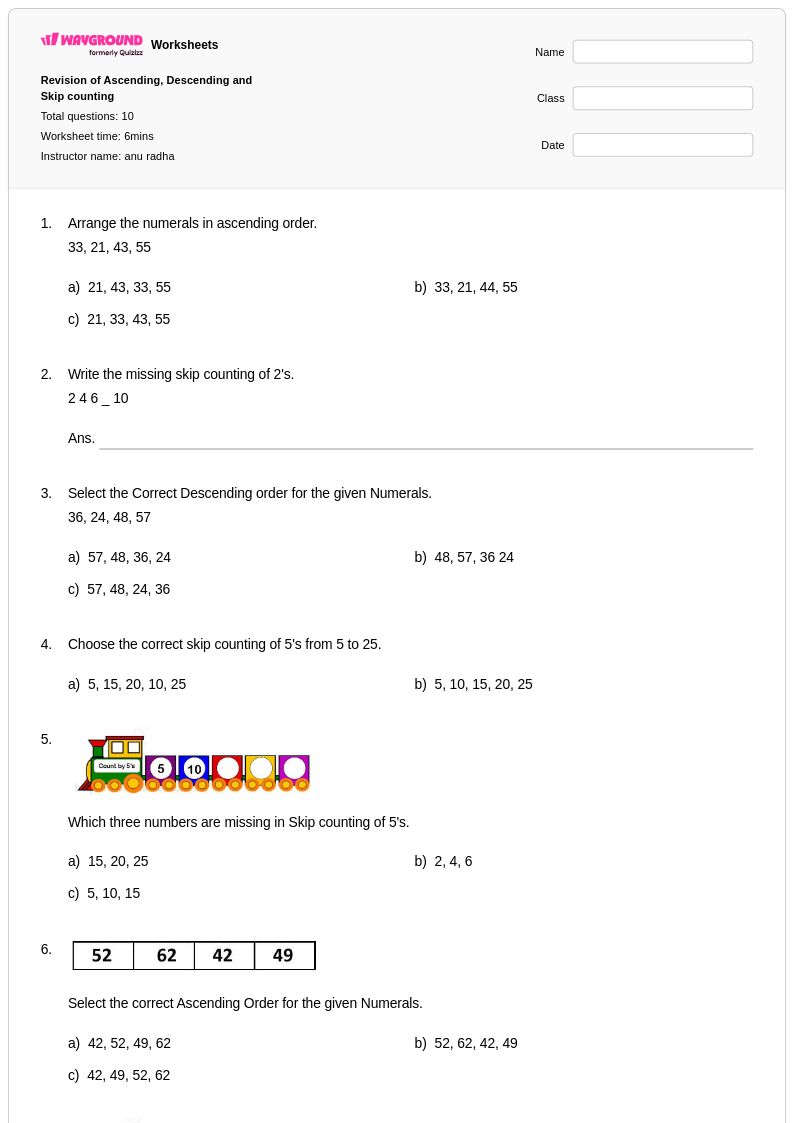
10 Q
KG
20 Q
2nd - Uni
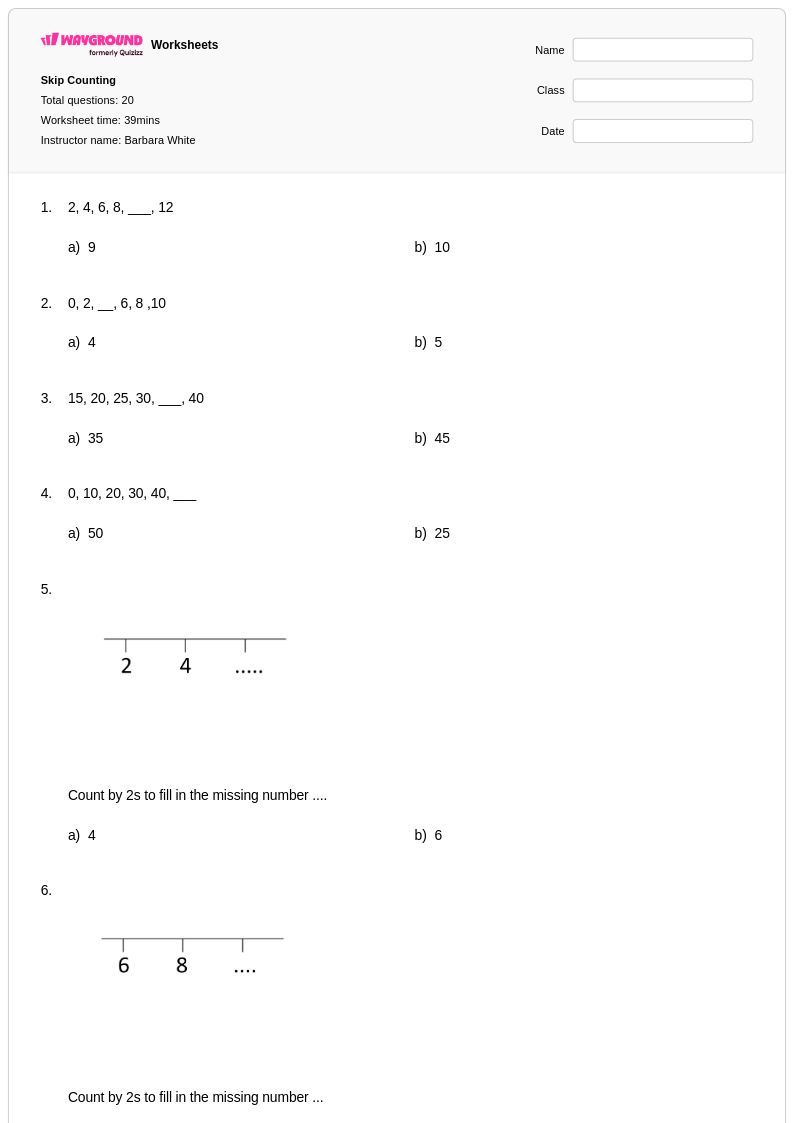
20 Q
1st
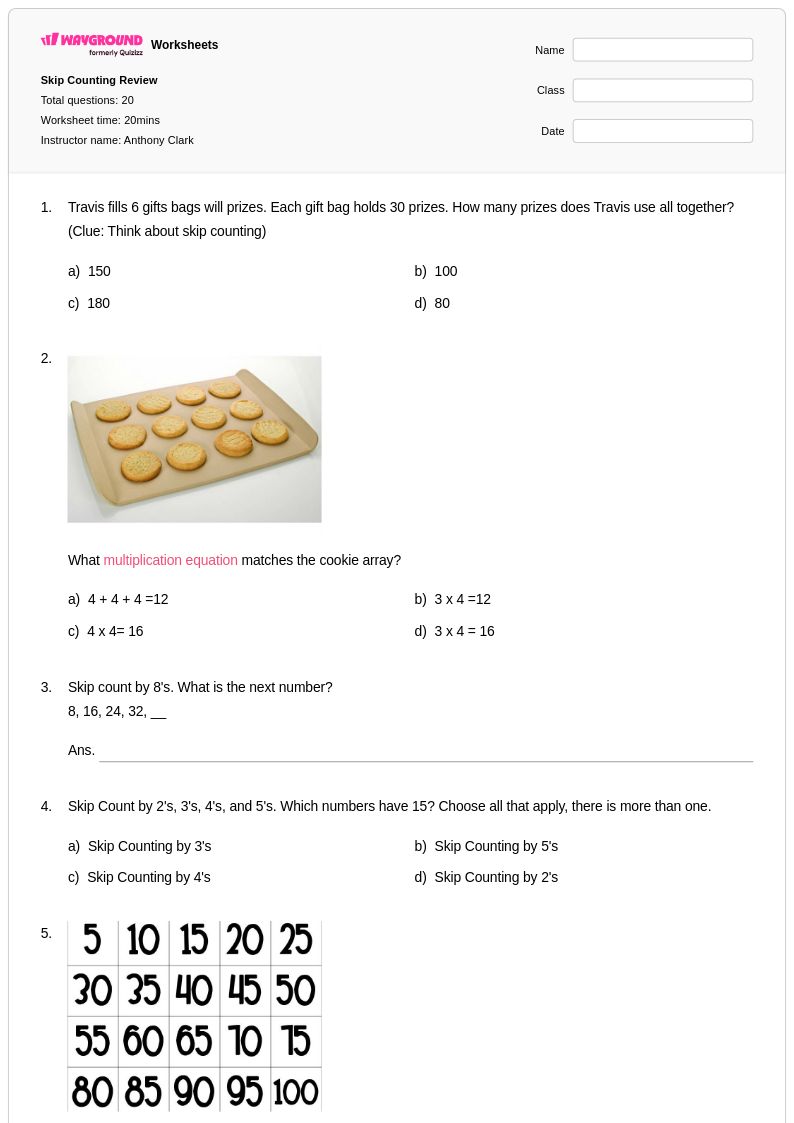
20 Q
3rd - Uni
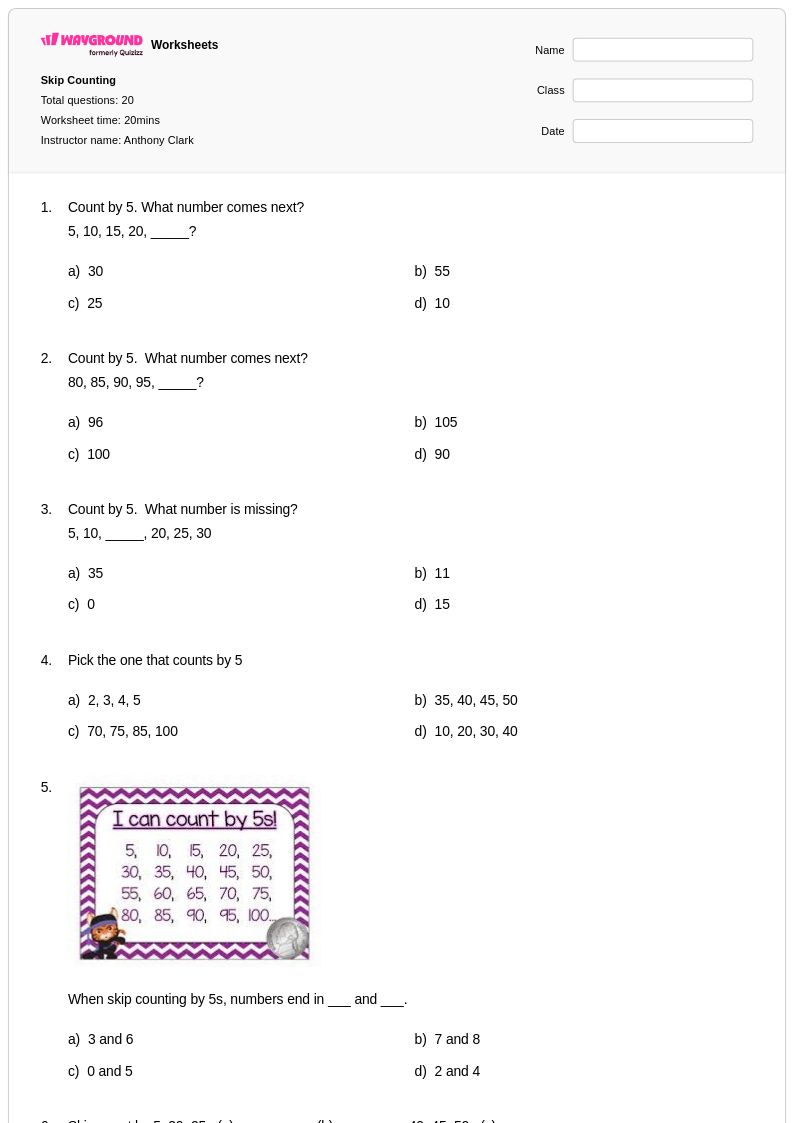
20 Q
2nd - Uni
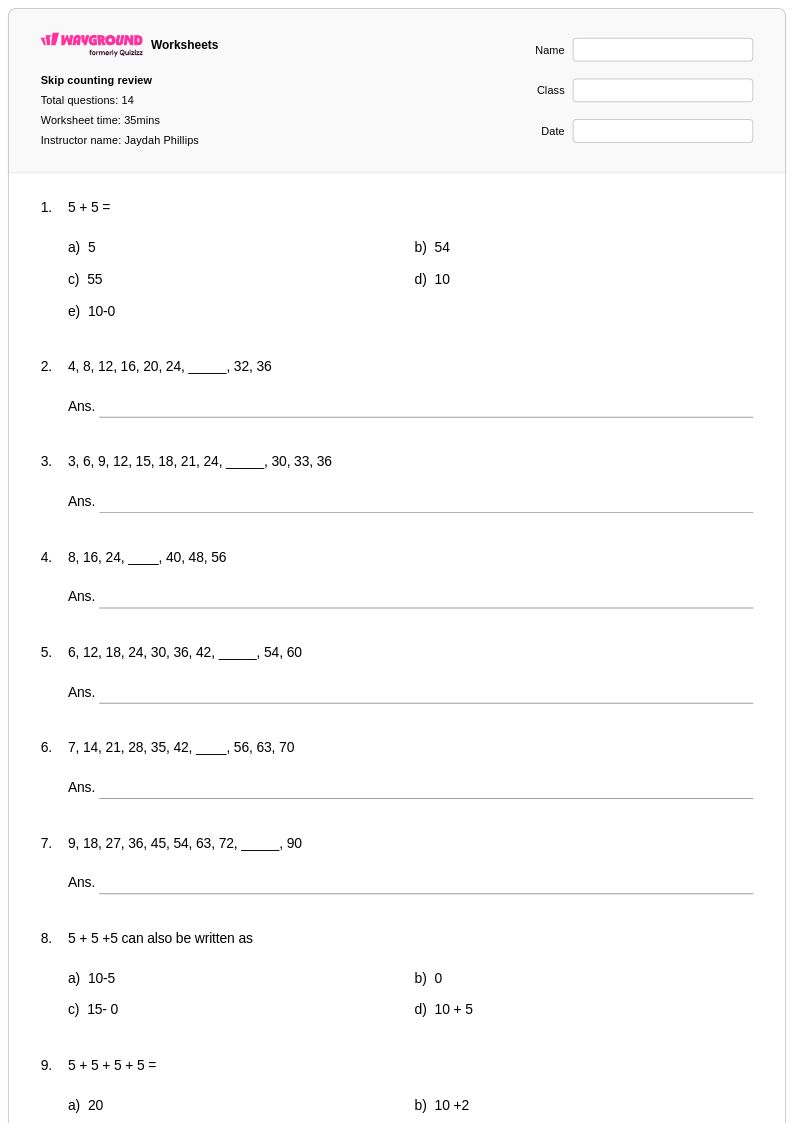
14 Q
1st
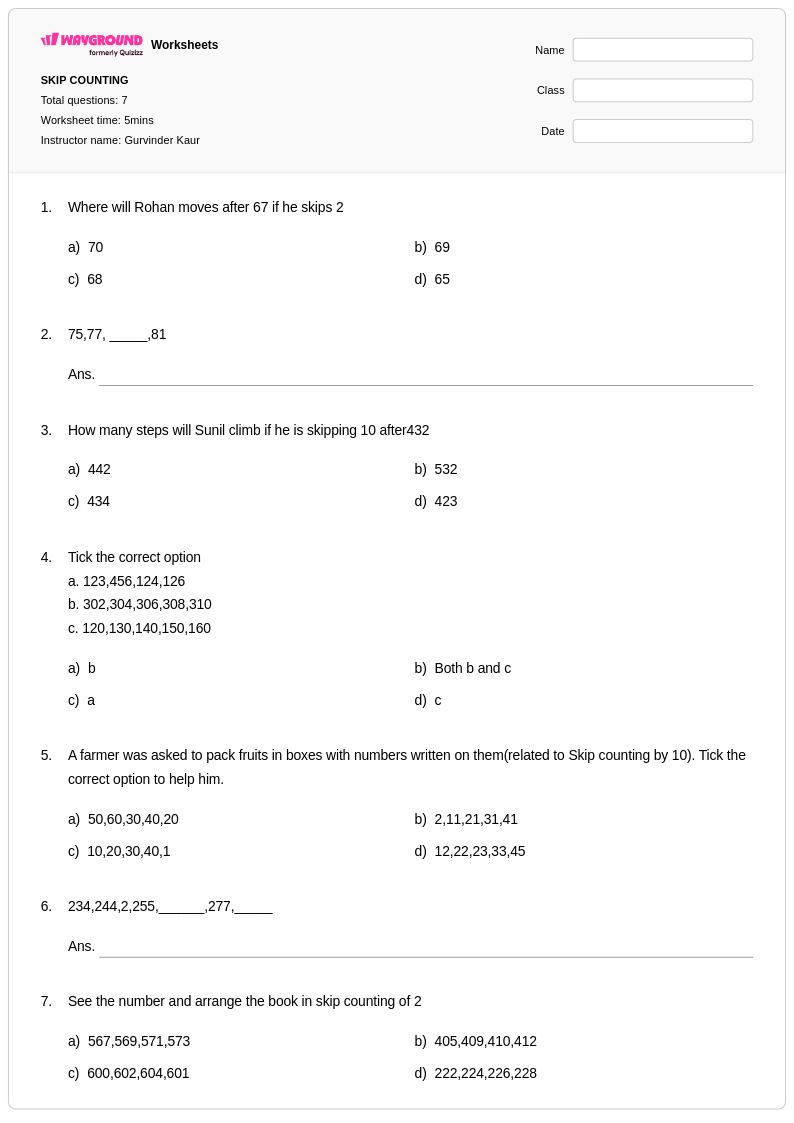
7 Q
2nd
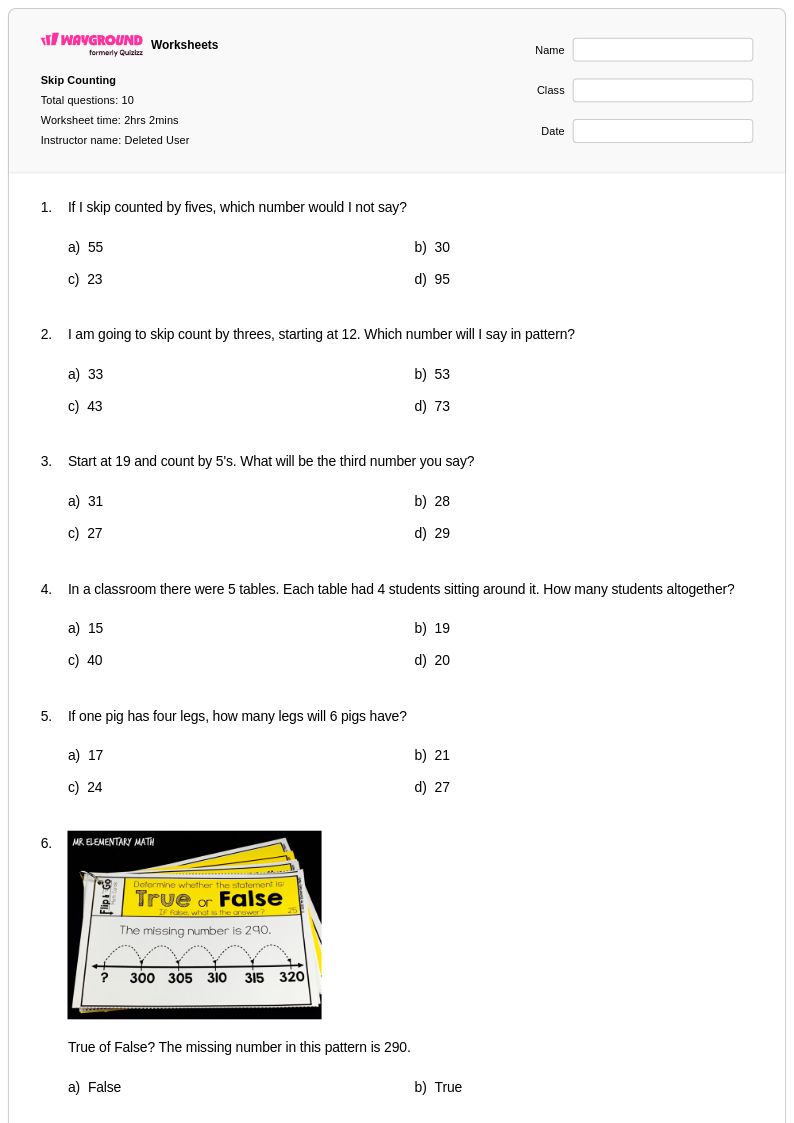
10 Q
3rd
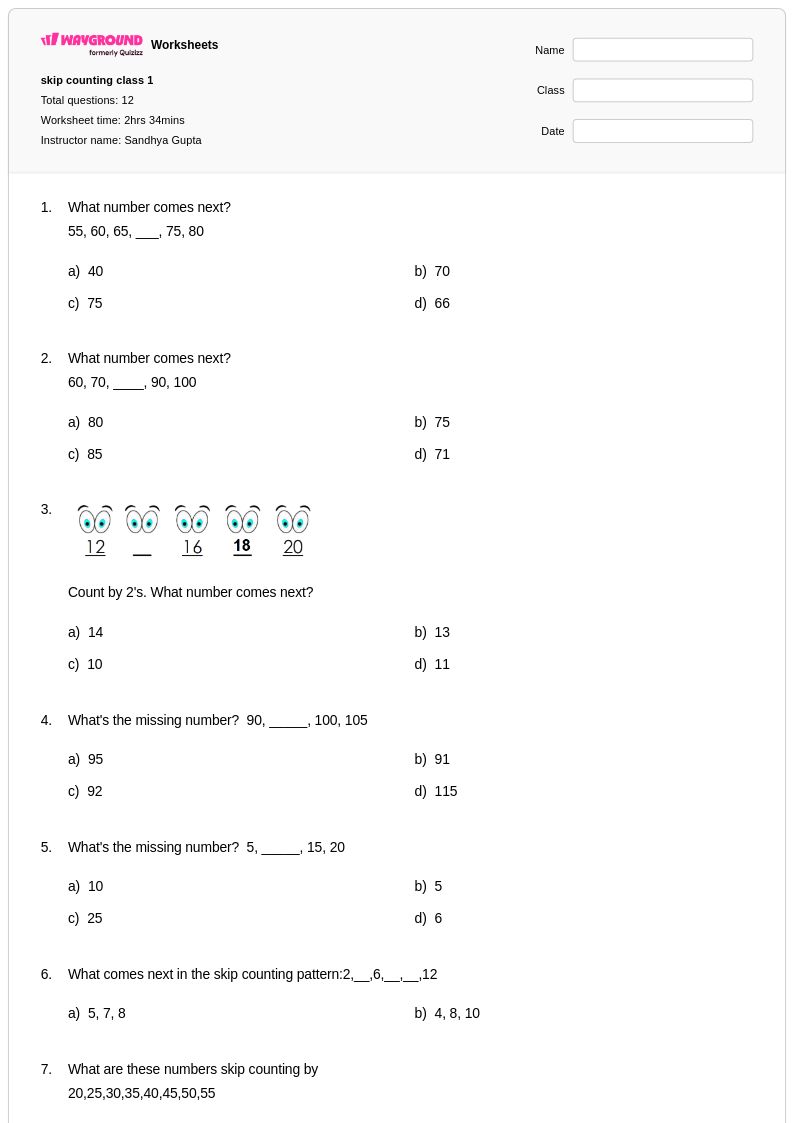
12 Q
1st
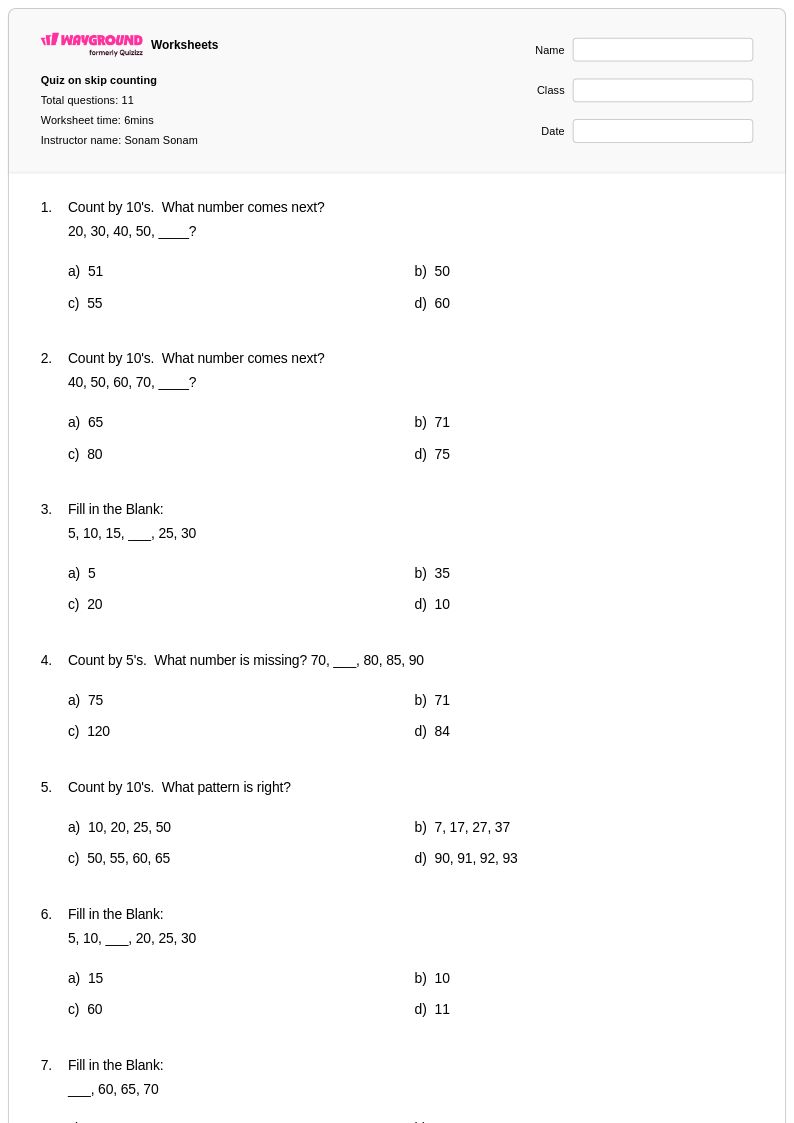
11 Q
1st
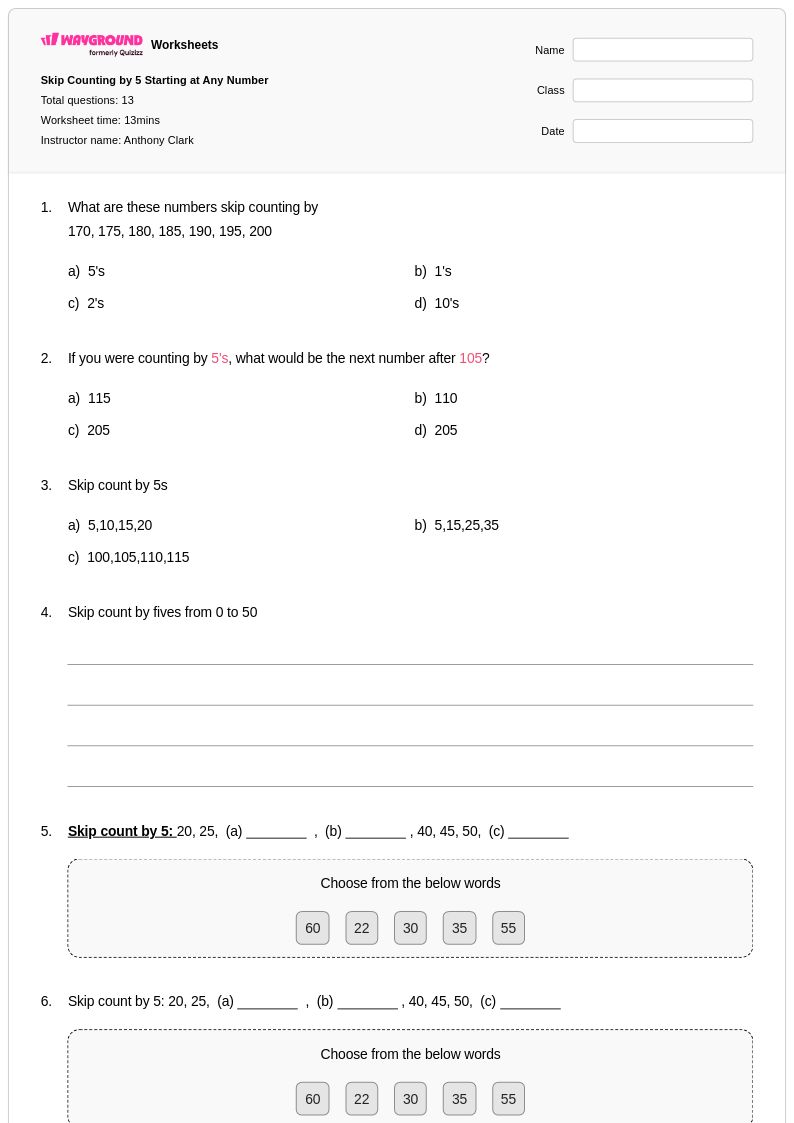
13 Q
2nd - Uni
Explore Skip Counting Worksheets by Grades
Explore Skip Counting Worksheets for kindergarten by Topic
Explore Other Subject Worksheets for kindergarten
Explore printable Skip Counting worksheets for Kindergarten
Skip counting worksheets for kindergarten students available through Wayground (formerly Quizizz) provide foundational practice in recognizing and extending number patterns through systematic counting sequences. These carefully designed printable resources help young learners develop essential mathematical skills including pattern recognition, number sequence understanding, and early multiplication readiness through engaging activities that involve counting by 2s, 5s, and 10s. Each worksheet collection includes comprehensive answer keys and offers free access to a variety of practice problems that reinforce skip counting concepts through visual aids, number lines, and interactive exercises that make learning both effective and enjoyable for kindergarten-age children.
Wayground (formerly Quizizz) empowers educators with millions of teacher-created skip counting resources that support comprehensive kindergarten mathematics instruction through robust search and filtering capabilities aligned with educational standards. Teachers can easily differentiate instruction by selecting from various difficulty levels and customizing worksheets to meet individual student needs, whether for remediation, enrichment, or regular skill practice sessions. The platform's flexible format options include both printable PDF versions for traditional classroom use and digital formats for interactive learning experiences, enabling educators to seamlessly integrate skip counting practice into their lesson planning while providing students with consistent opportunities to strengthen their number pattern recognition and early mathematical reasoning abilities.
FAQs
How can I introduce skip counting to kindergarteners?
What are good skip counting activities for kindergarten?
What are the skip counting expectations for kindergarten?
What are common challenges for kindergarteners learning to skip count?
How can I use these kindergarten skip counting worksheets?