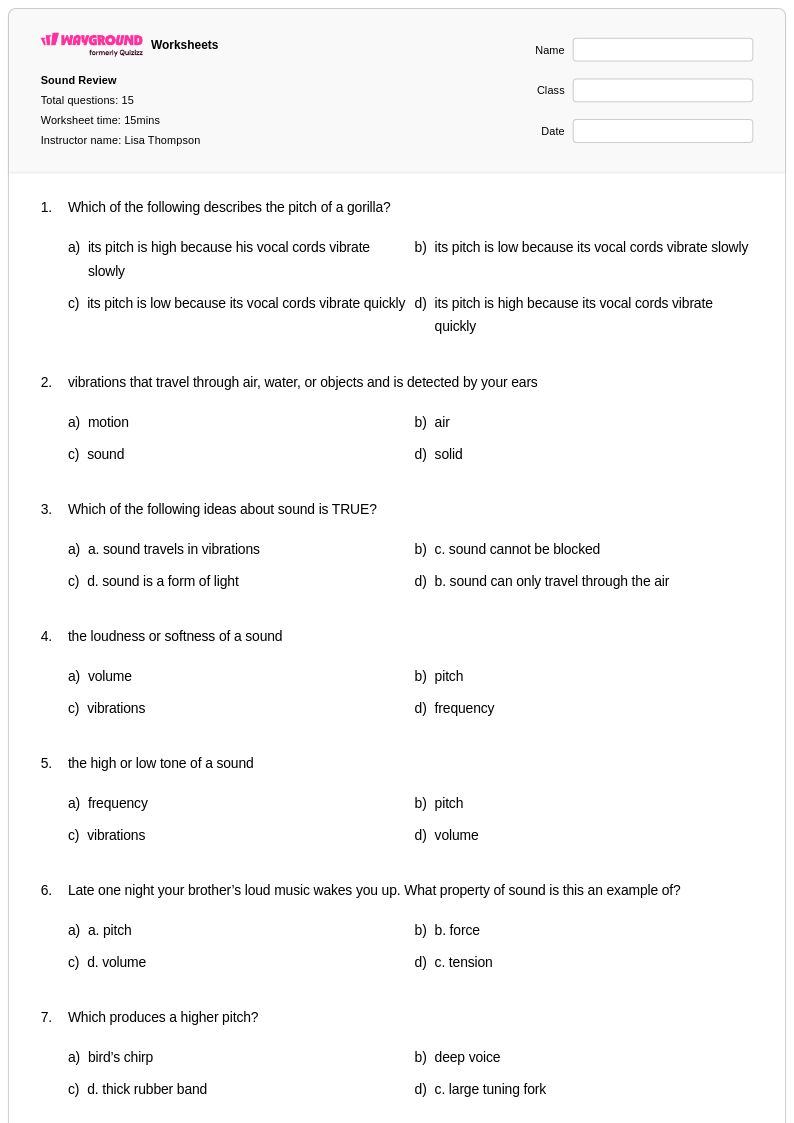
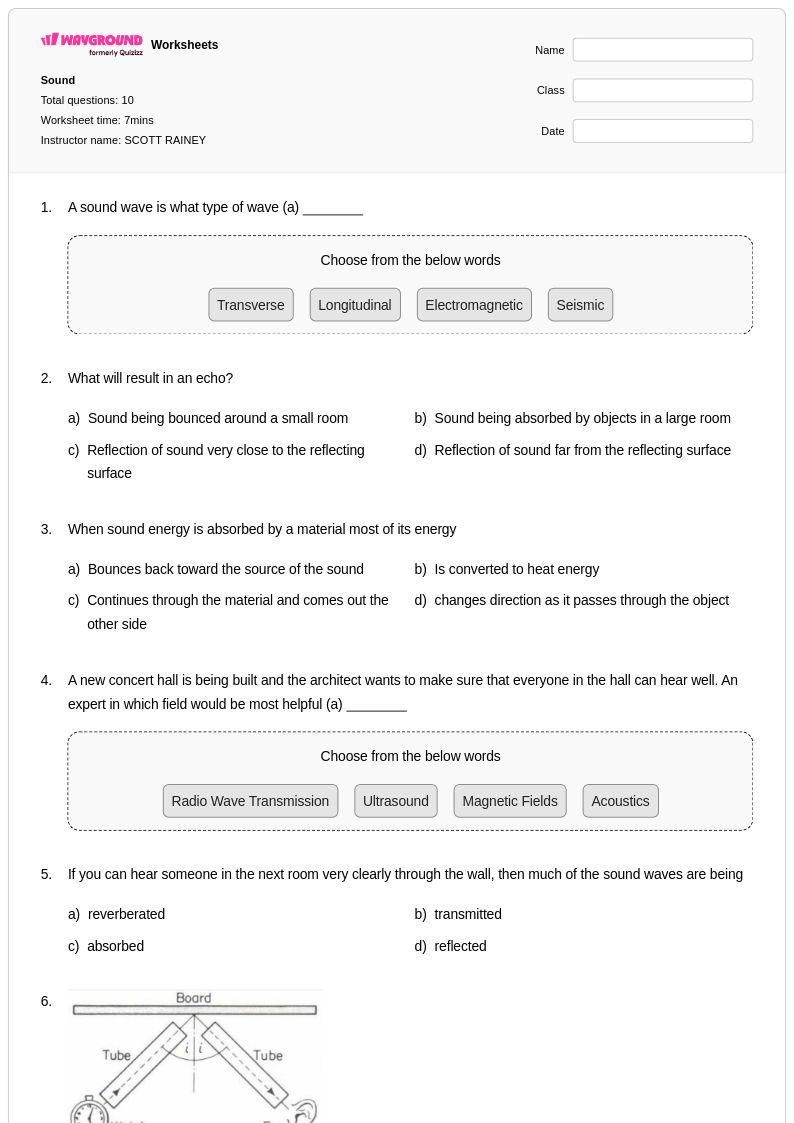
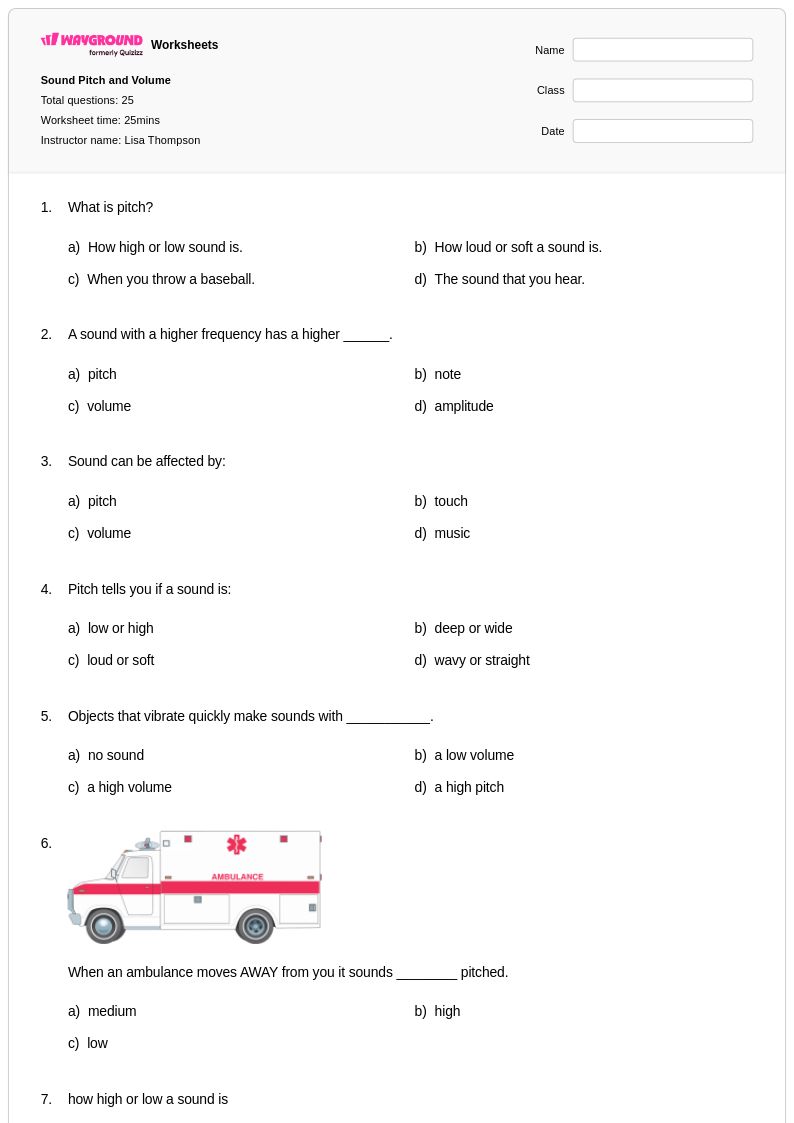
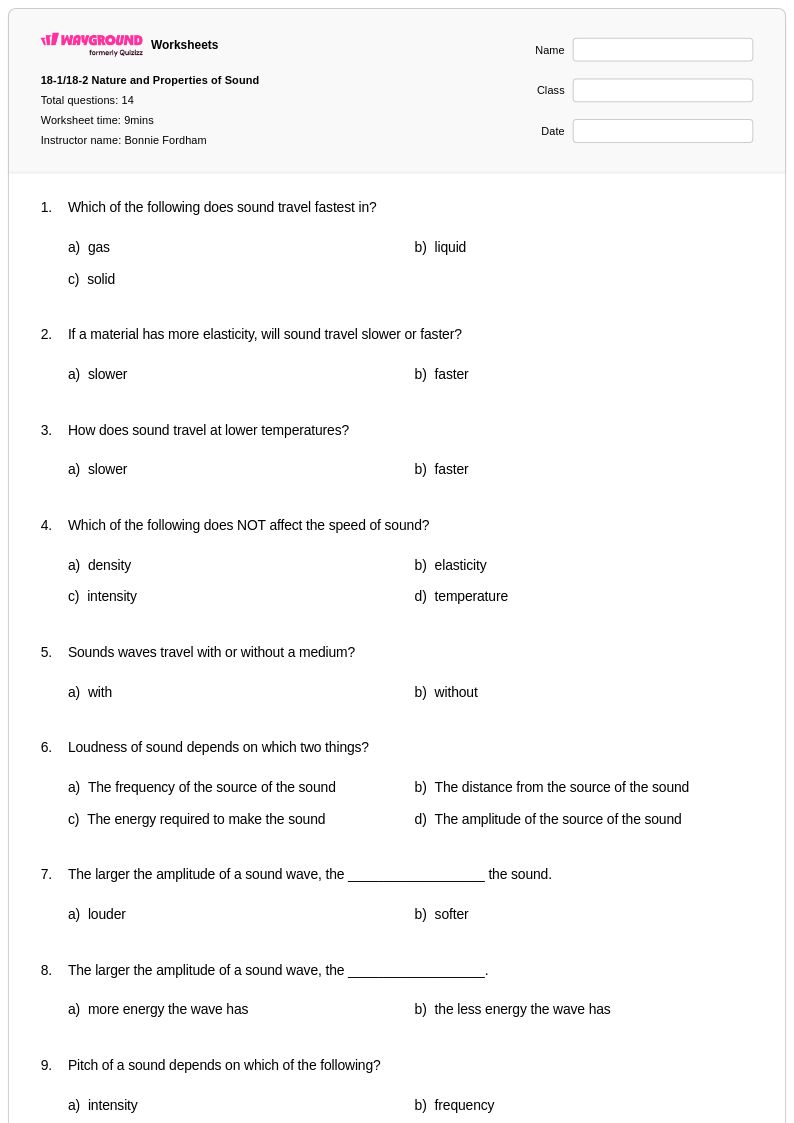
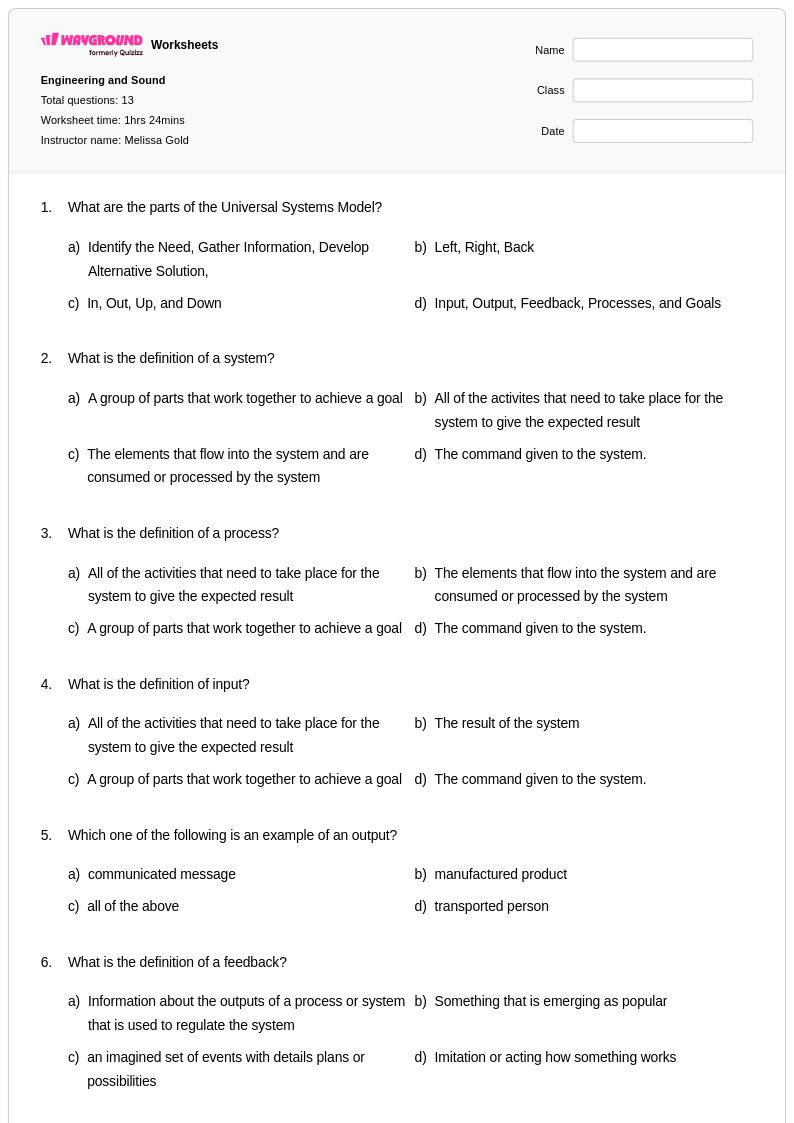
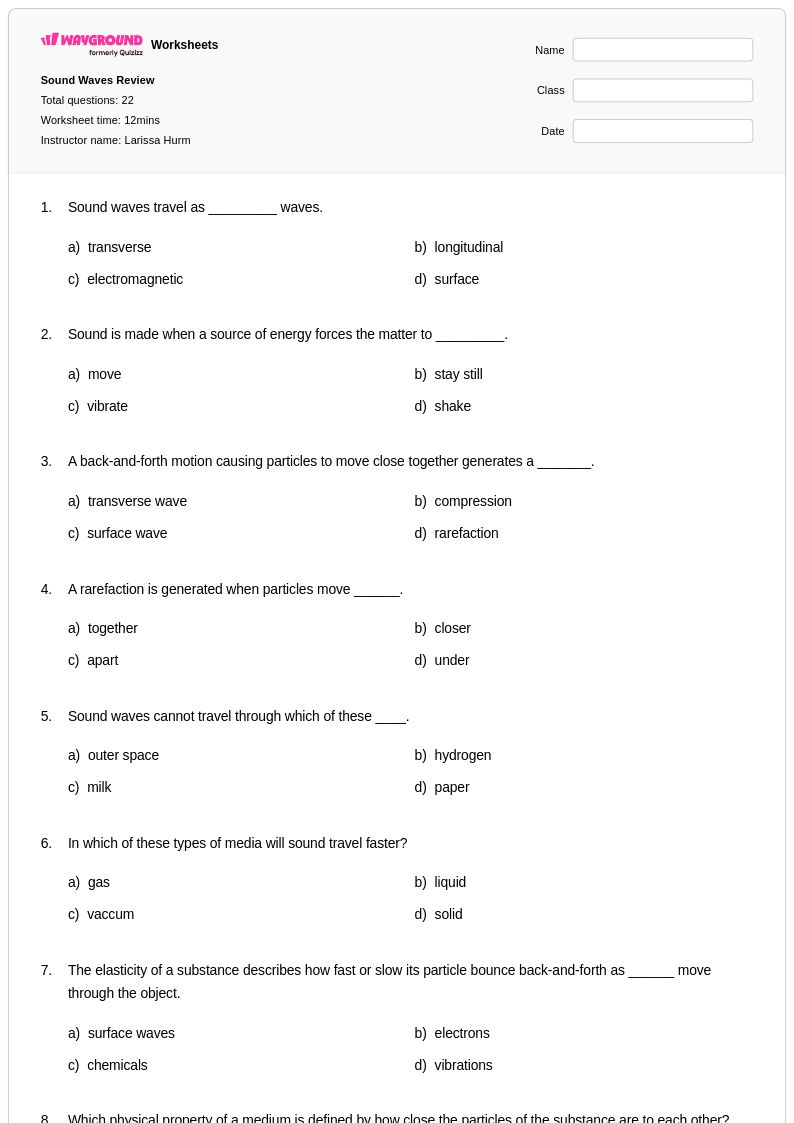
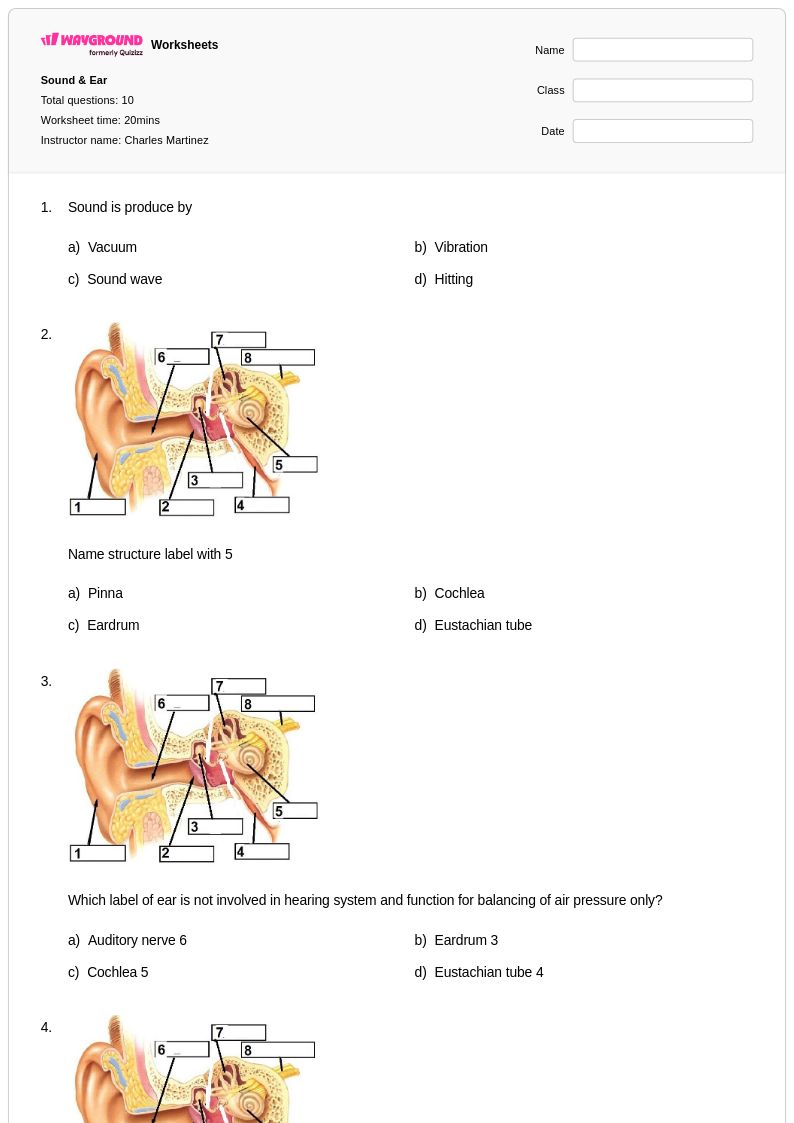
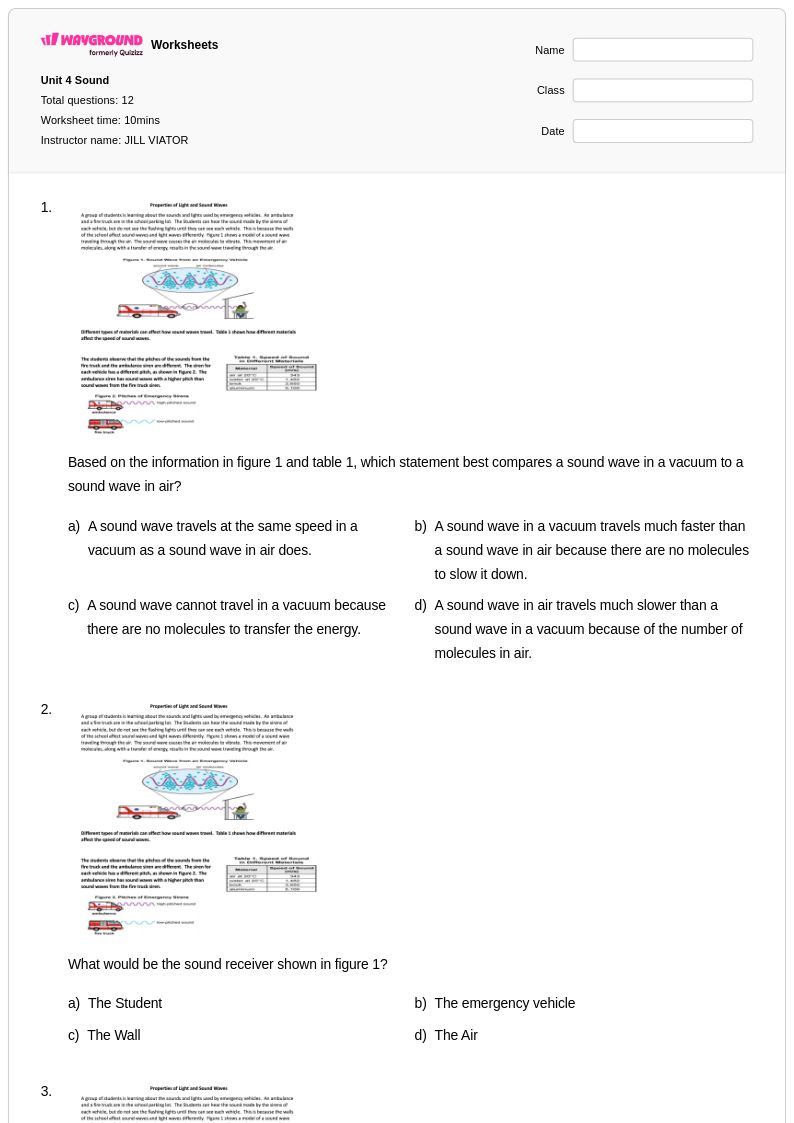
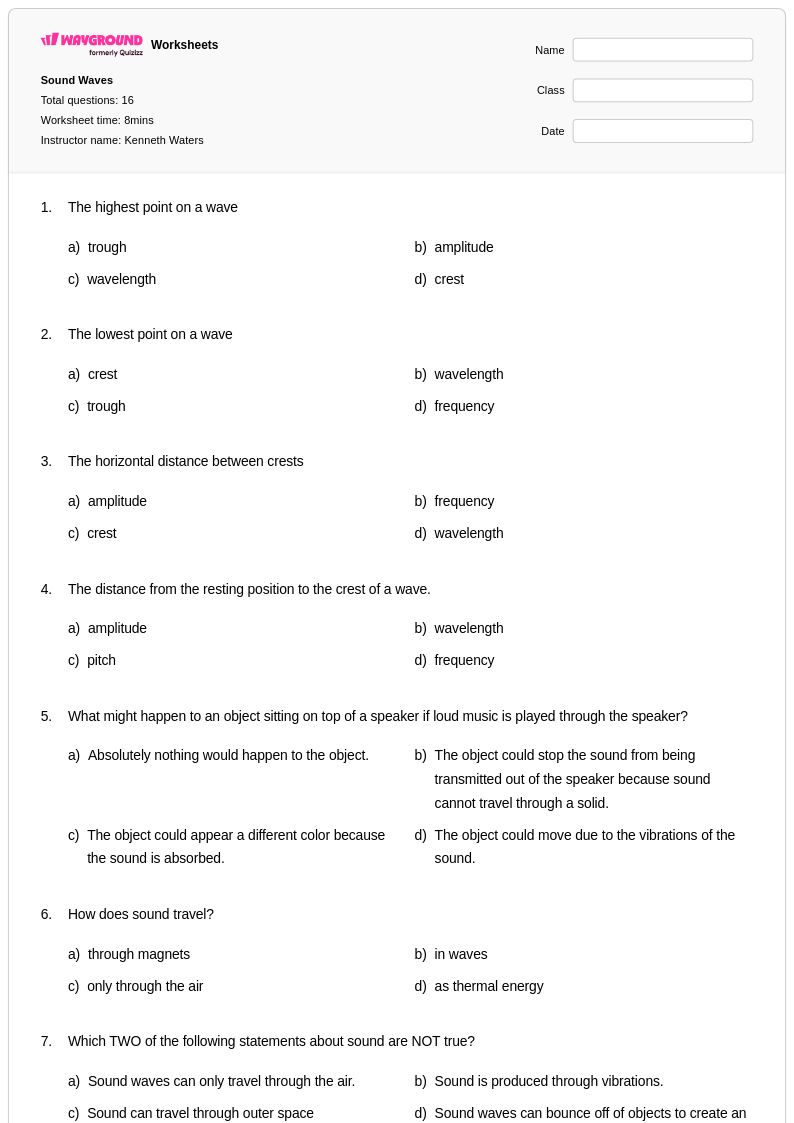
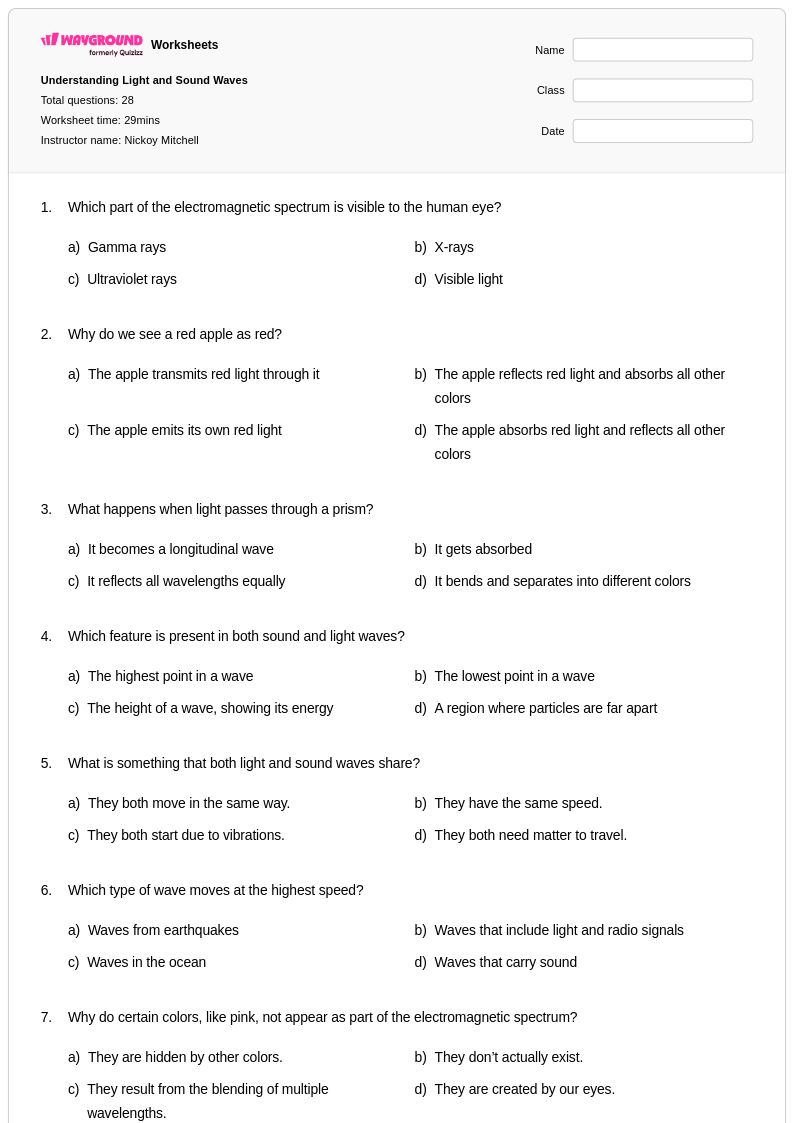
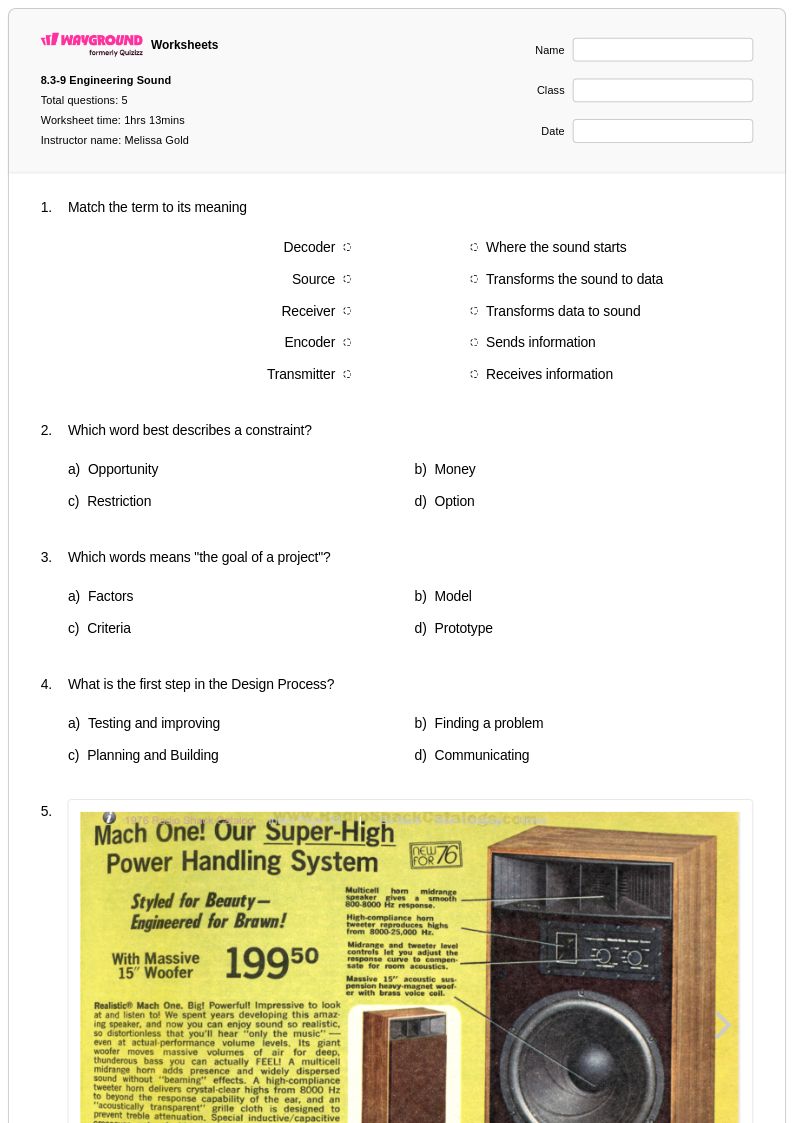
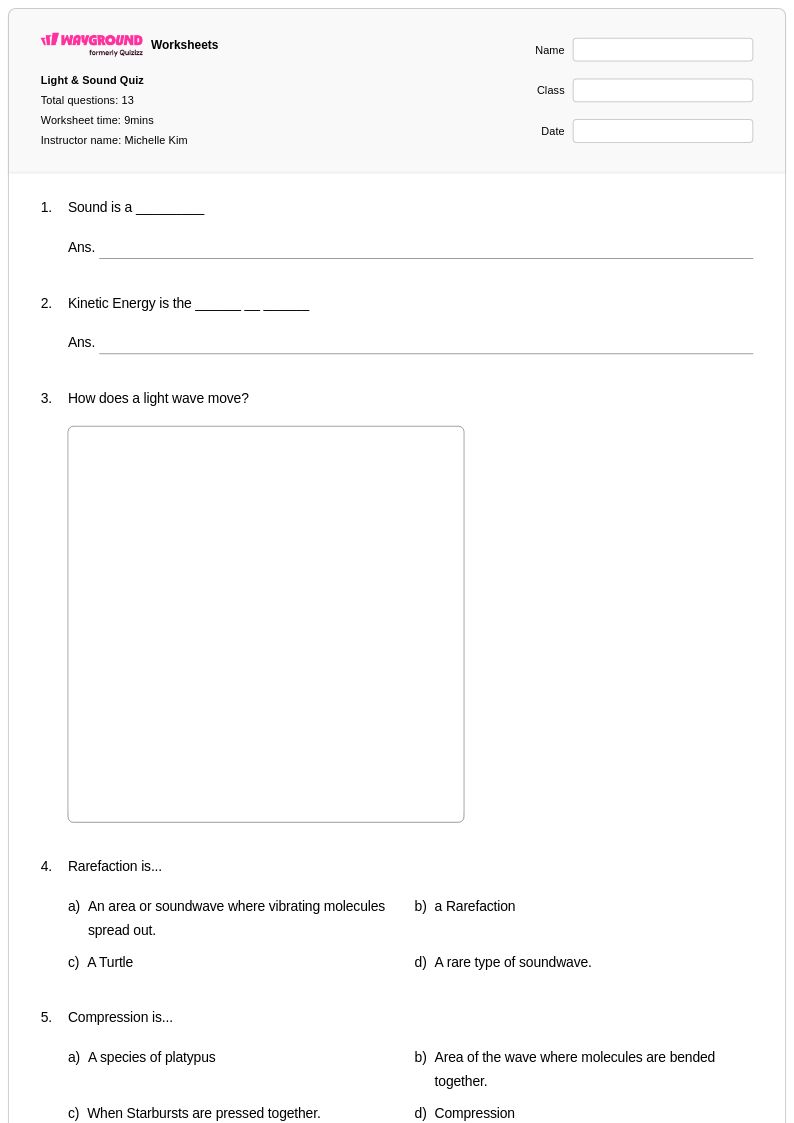
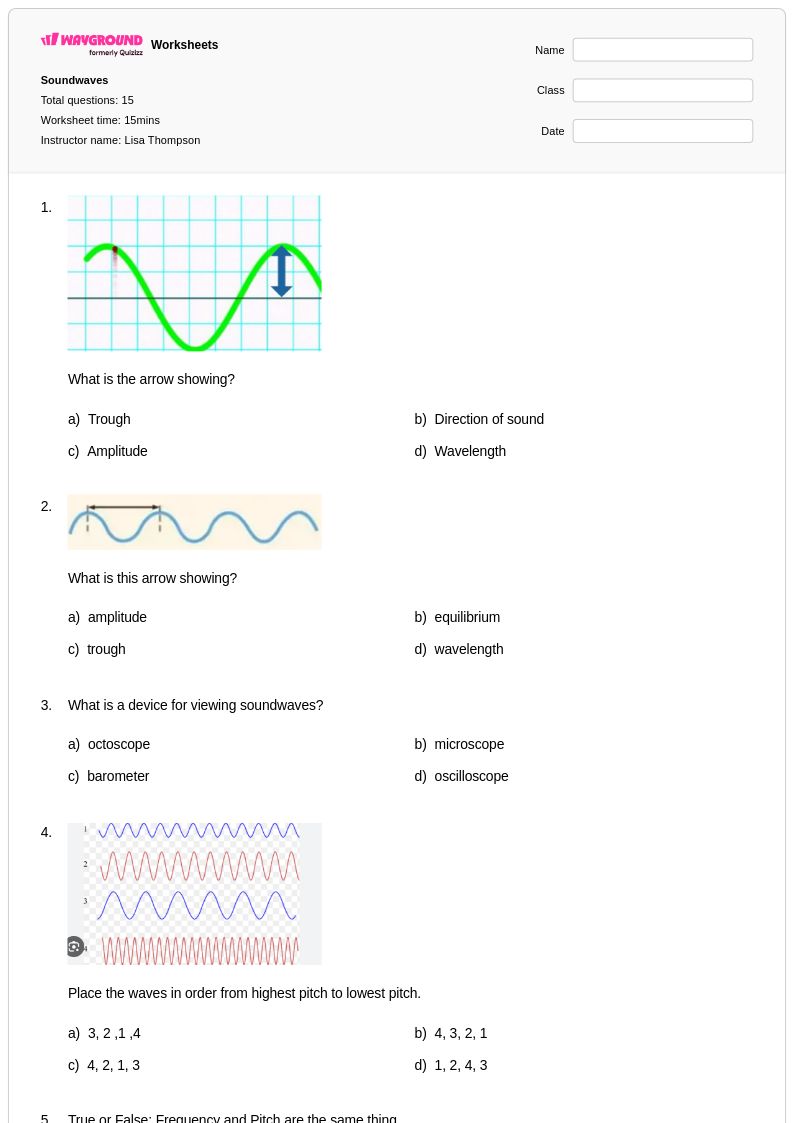
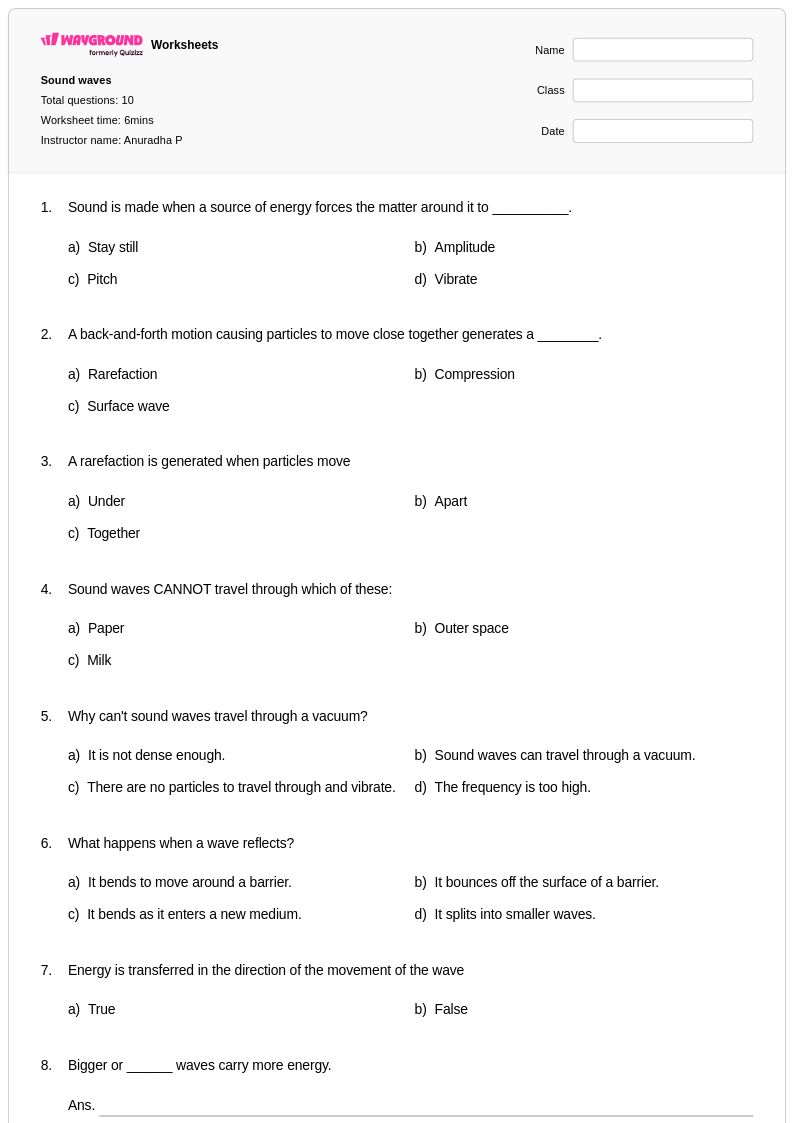
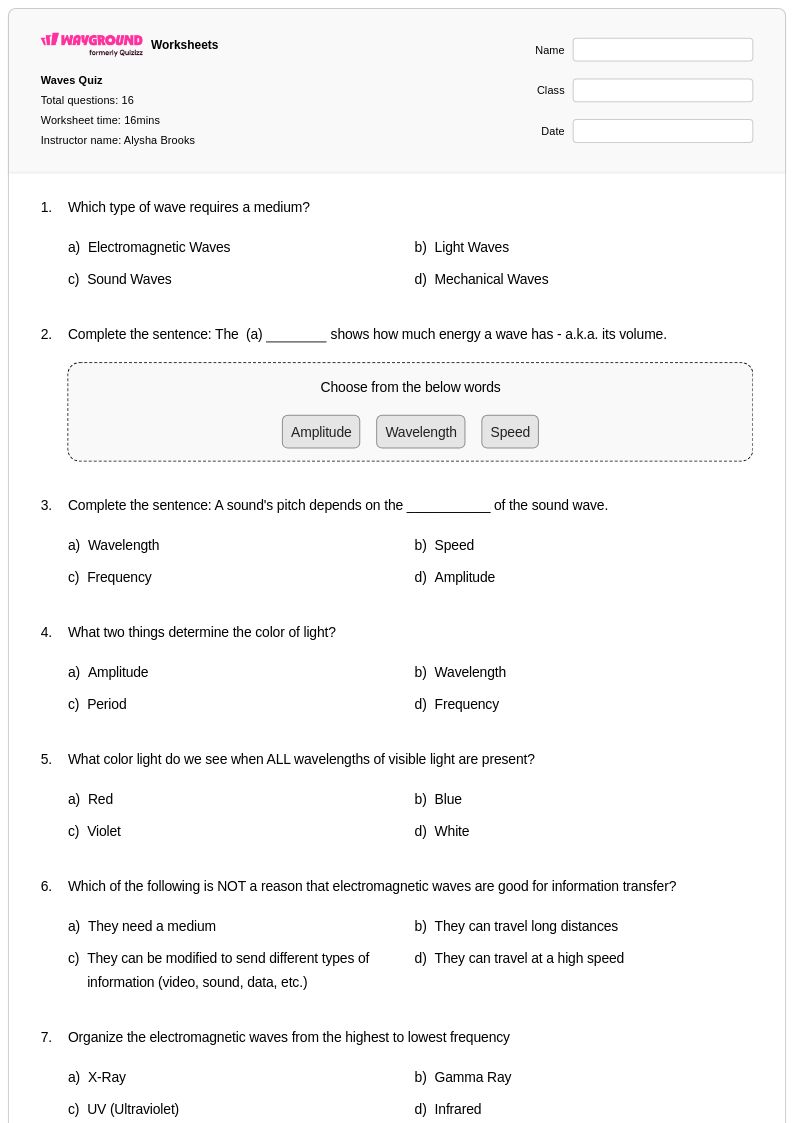
Explore free Class 6 sound worksheets and printables that help students master wave properties, frequency, and acoustics through engaging practice problems with comprehensive answer keys.
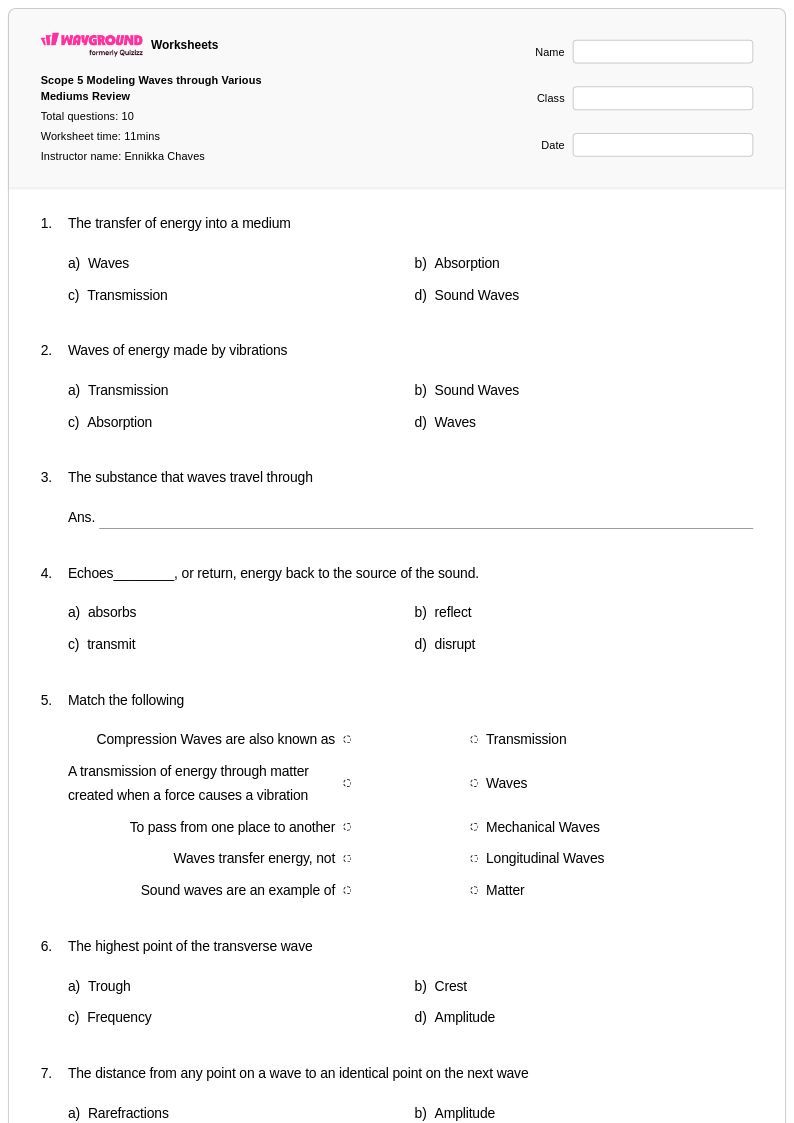
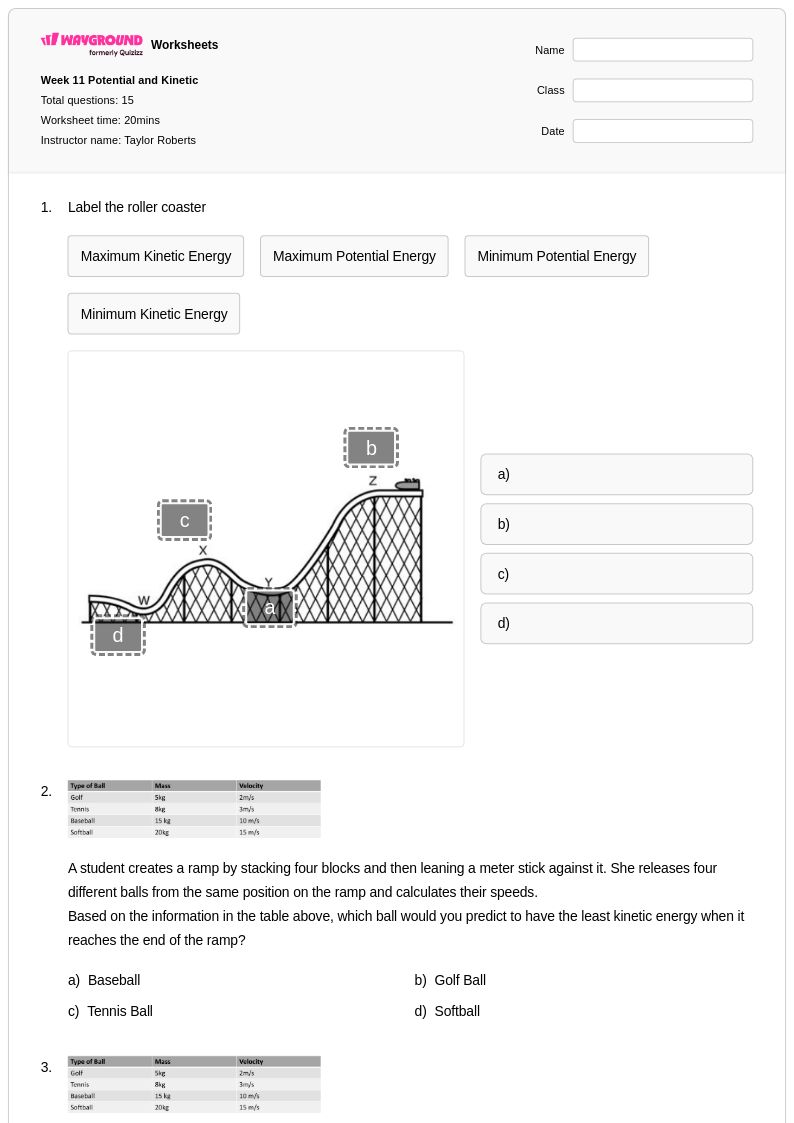
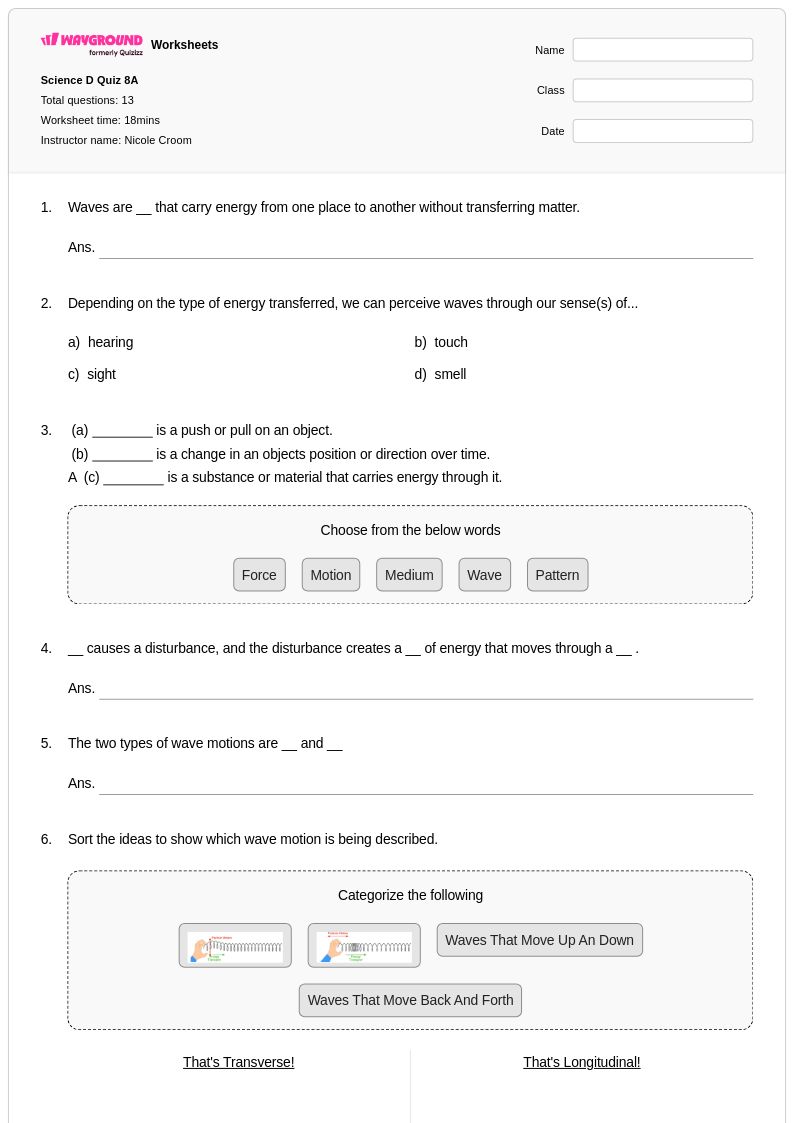
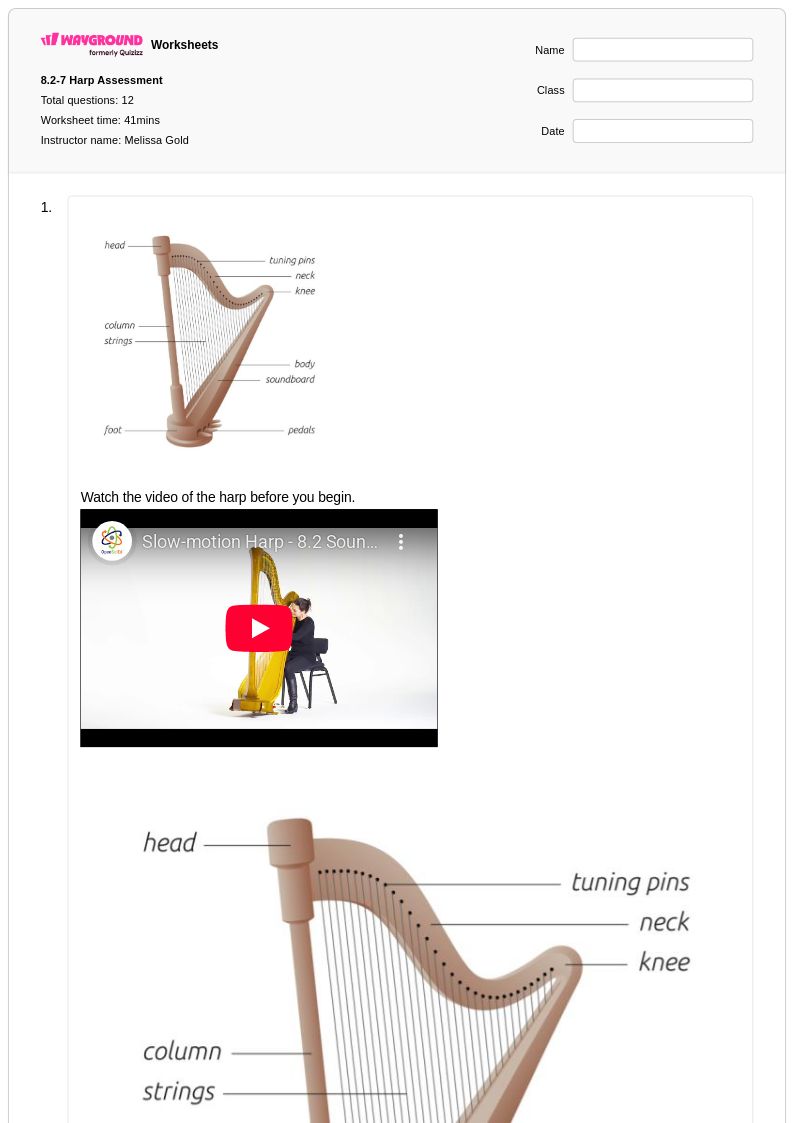
Sound worksheets for Class 6 students available through Wayground (formerly Quizizz) provide comprehensive coverage of fundamental acoustic principles that sixth graders encounter in their physics studies. These educational resources focus on essential concepts including sound wave properties, vibration and frequency relationships, how sound travels through different materials, and the science behind pitch and volume variations. The worksheets strengthen critical thinking skills through hands-on practice problems that challenge students to analyze real-world sound phenomena, from musical instruments to everyday noise. Each worksheet collection includes detailed answer keys and is available as free printables in convenient pdf format, making it easy for educators to incorporate sound-based learning activities into their classroom instruction and homework assignments.
Wayground (formerly Quizizz) empowers teachers with access to millions of educator-created sound physics resources specifically designed for Class 6 learners. The platform's robust search and filtering capabilities allow instructors to quickly locate worksheets that align with specific curriculum standards and learning objectives related to acoustic science. Teachers can customize existing materials or create differentiated versions to accommodate diverse learning needs, whether for remediation support or enrichment challenges. The flexible format options include both printable pdf versions for traditional classroom use and digital formats for interactive learning environments, streamlining lesson planning while providing multiple pathways for students to practice and master sound-related physics concepts through engaging, standards-aligned activities.
FAQs
How do I teach sound waves to middle or high school students?
Start by grounding students in the mechanical nature of sound: it requires a medium to travel and moves as a longitudinal pressure wave. From there, build toward wave properties like frequency, amplitude, and wavelength before introducing phenomena like the Doppler effect and resonance. Using visual diagrams alongside practice problems helps students connect abstract wave behavior to real-world acoustics, such as why sound changes pitch as a source moves toward or away from a listener.
What exercises help students practice sound wave concepts?
Effective practice includes problems that require students to calculate wave frequency and wavelength, compare sound behavior in different media (such as air versus water), and analyze how pitch and volume relate to wave properties. Exercises involving the Doppler effect and sound interference patterns push students toward higher-order application of these concepts. Mixing calculation problems with interpretation questions ensures students develop both procedural fluency and conceptual understanding.
What mistakes do students commonly make when learning about sound physics?
A frequent misconception is that sound travels faster in less dense media — students often assume sound moves faster in air than in solids, when the opposite is true. Students also commonly confuse amplitude with frequency, misidentifying loudness and pitch as the same property. Another common error is treating sound as a transverse wave rather than a longitudinal one, which leads to incorrect diagram interpretations.
How can I differentiate sound wave instruction for students at different skill levels?
For foundational learners, focus on identifying wave parts — crests, troughs, amplitude, and wavelength — before moving to calculations. Advanced students can tackle Doppler effect problems, resonance scenarios, and multi-step acoustic challenges. On Wayground, teachers can customize worksheets to match varying skill levels, and digital sessions support accommodations like read aloud for students who need audio support or reduced answer choices to lower cognitive load for struggling learners.
How do I use Wayground's sound worksheets in my classroom?
Wayground's sound worksheets are available as printable PDFs for traditional classroom use and in digital interactive formats for technology-integrated environments. Teachers can also host worksheets as a live quiz on Wayground, making them suitable for formative assessment or whole-class review. All worksheets include complete answer keys, reducing prep time and making it easy to provide immediate feedback.
How does the Doppler effect connect to broader sound wave concepts students need to know?
The Doppler effect demonstrates how relative motion between a sound source and an observer changes perceived frequency, directly reinforcing students' understanding of the relationship between frequency, pitch, and wave behavior. Teaching it alongside resonance and interference gives students a complete picture of how sound waves interact with both moving sources and physical environments. It is also one of the most commonly assessed sound topics in middle and high school physics courses.