
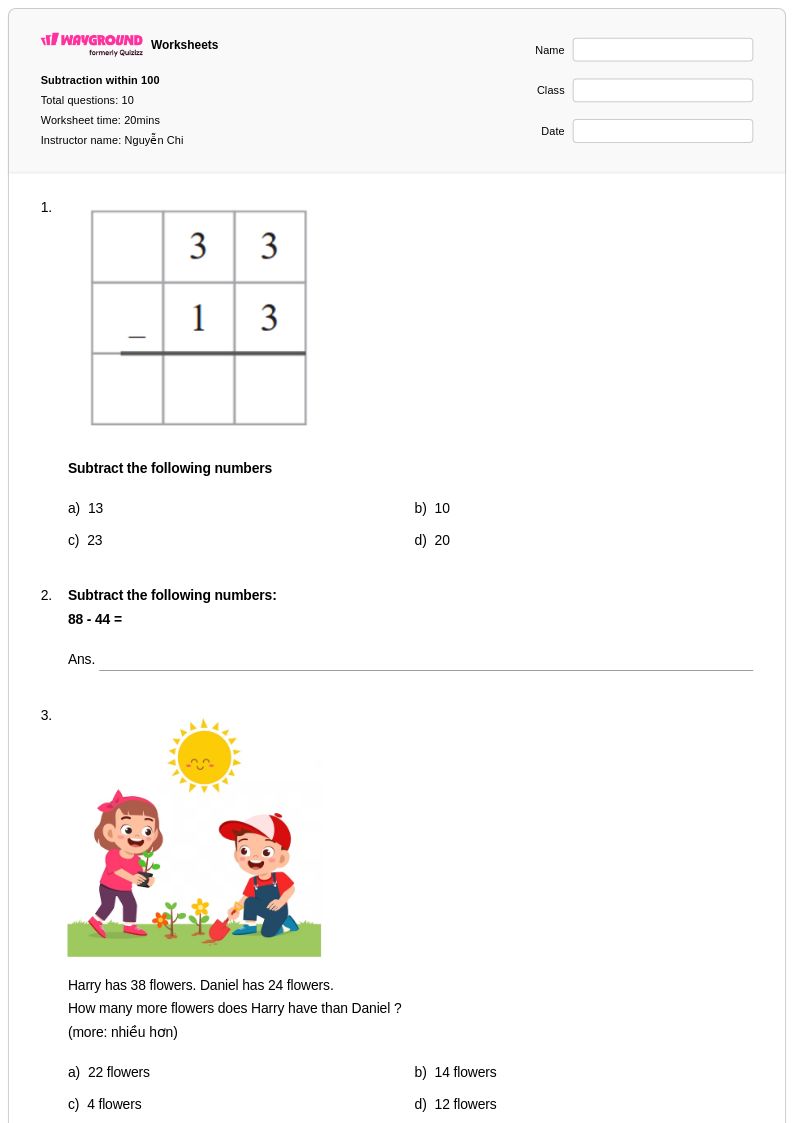
10 Q
1st - 5th
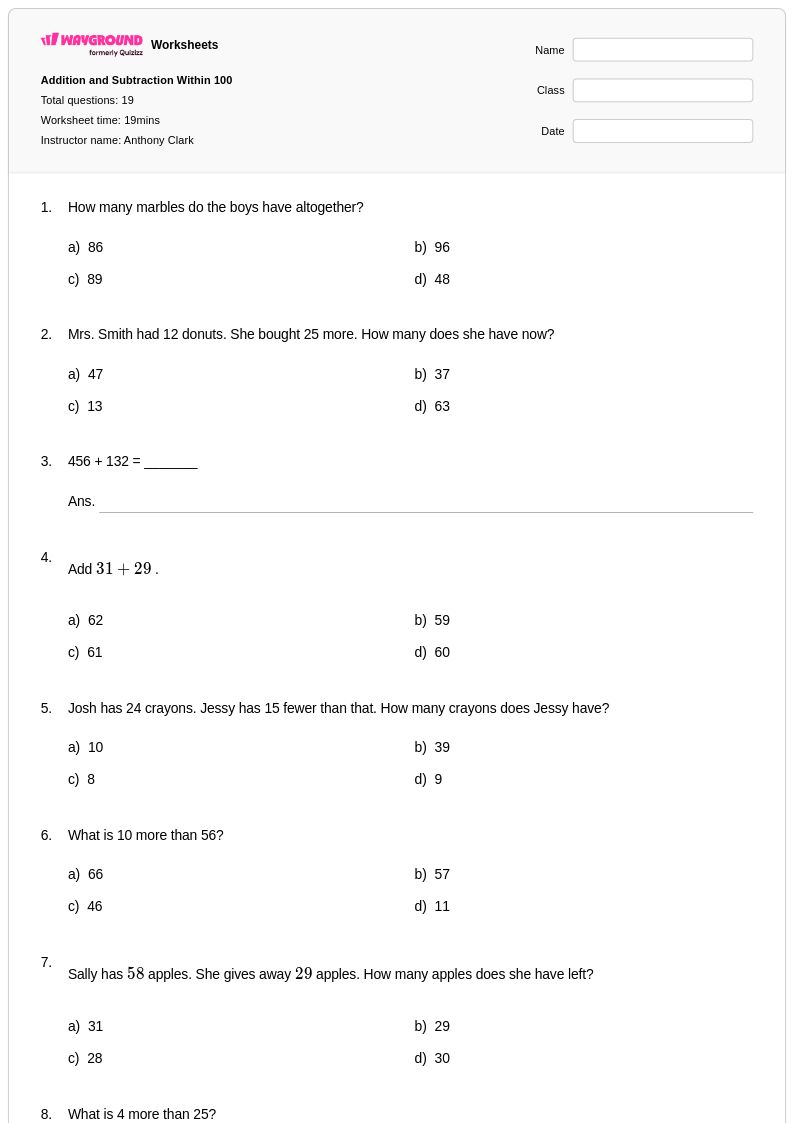
19 Q
1st - Uni
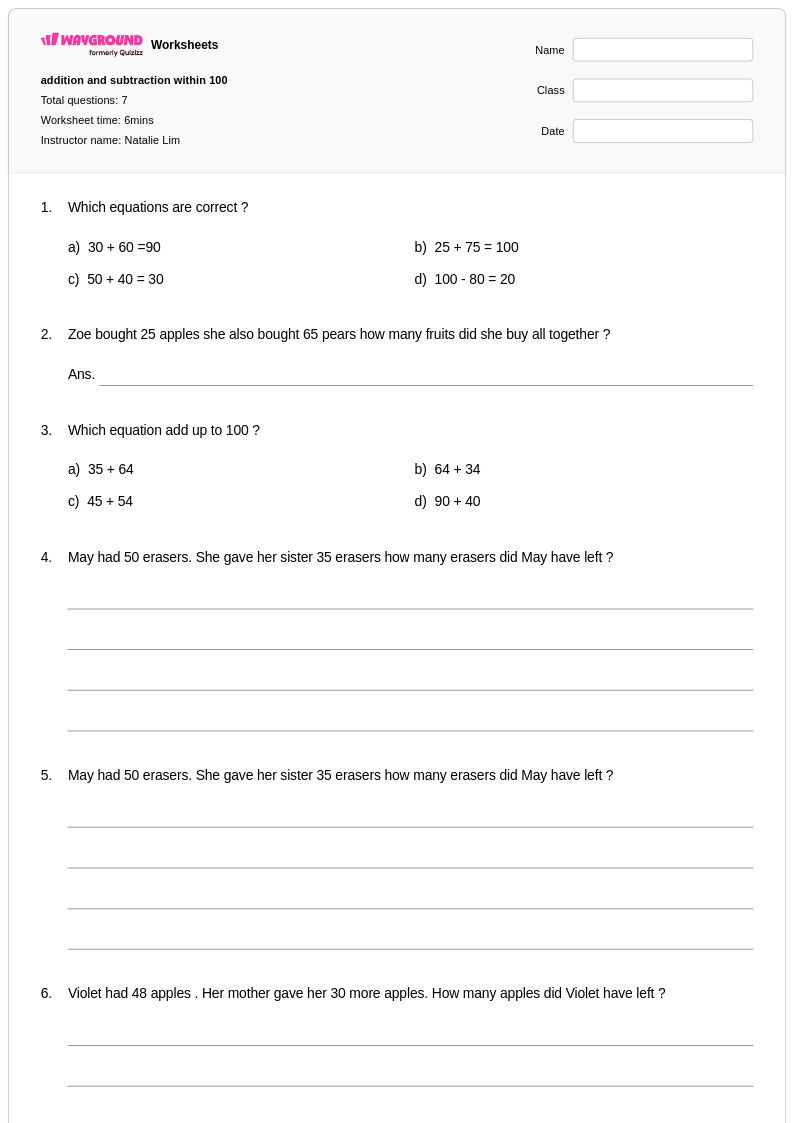
7 Q
1st - 10th
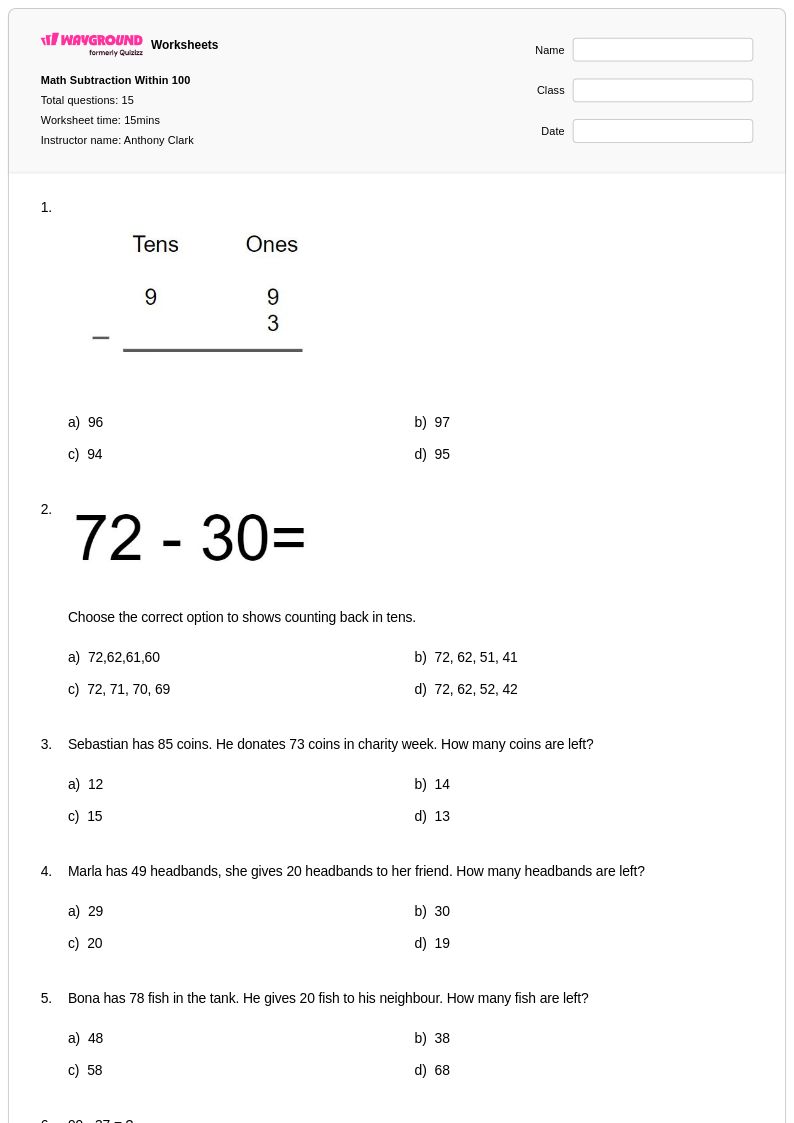
15 Q
2nd - Uni
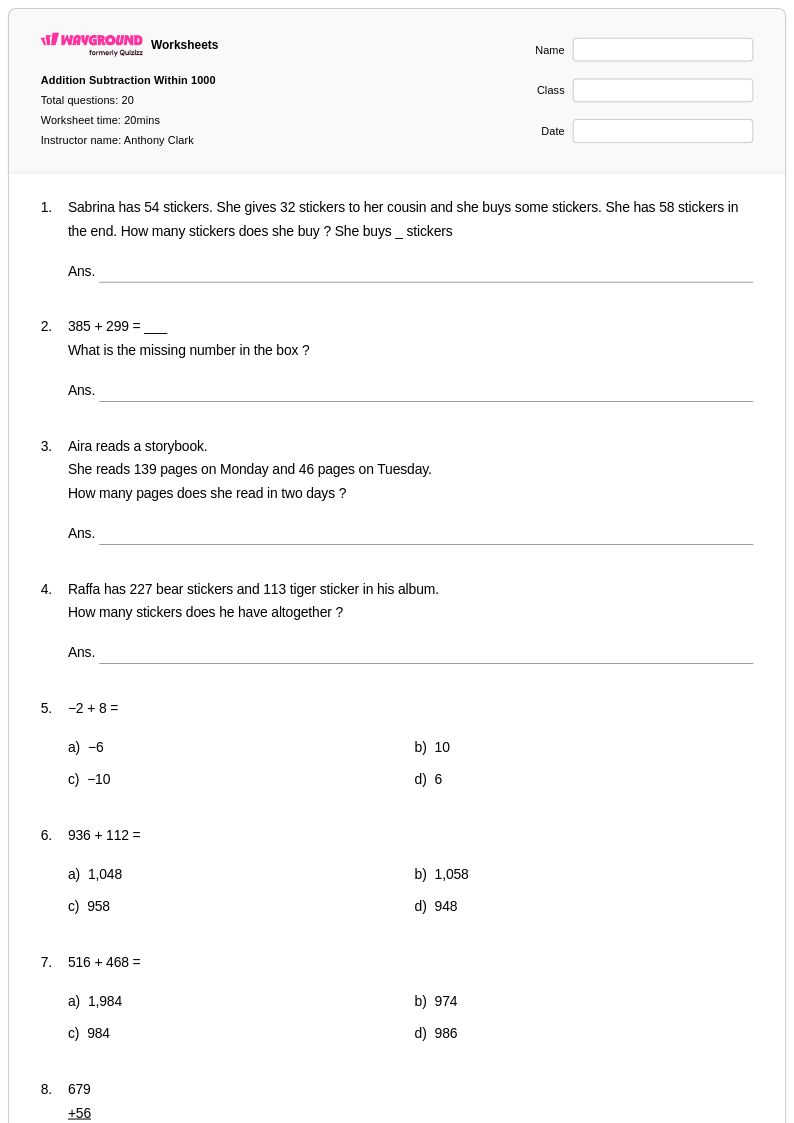
20 Q
3rd - Uni
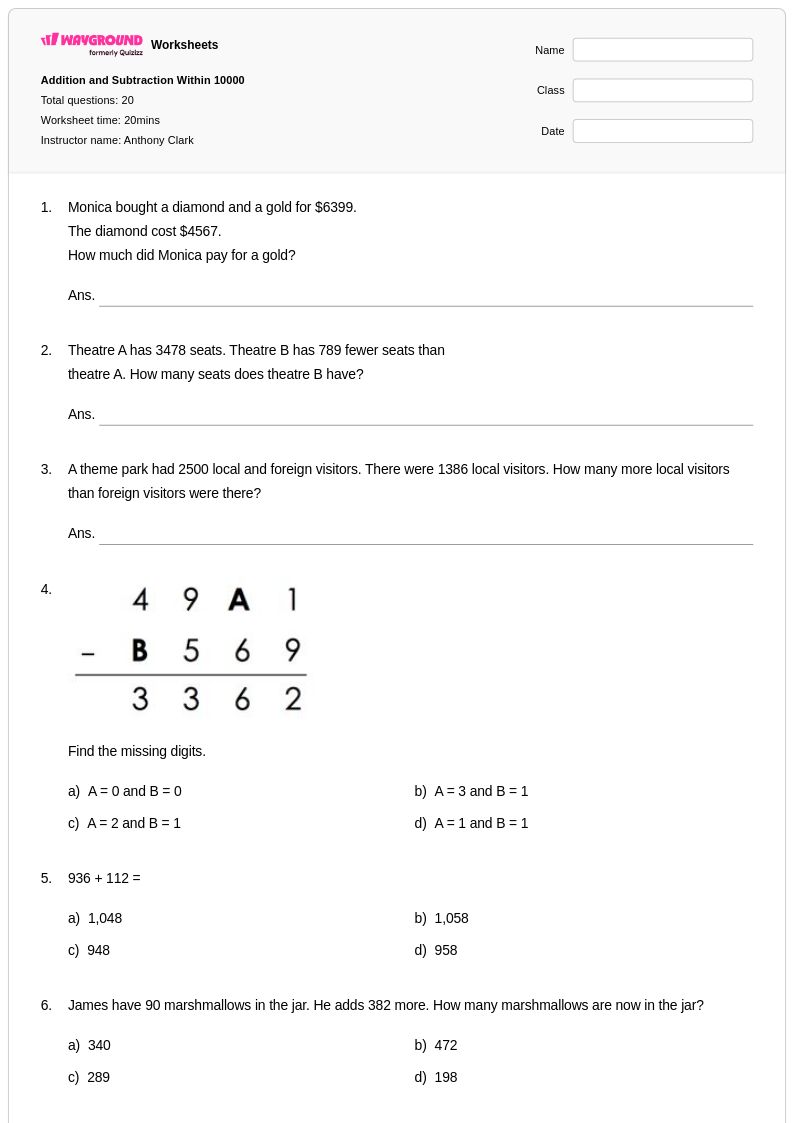
20 Q
3rd - Uni
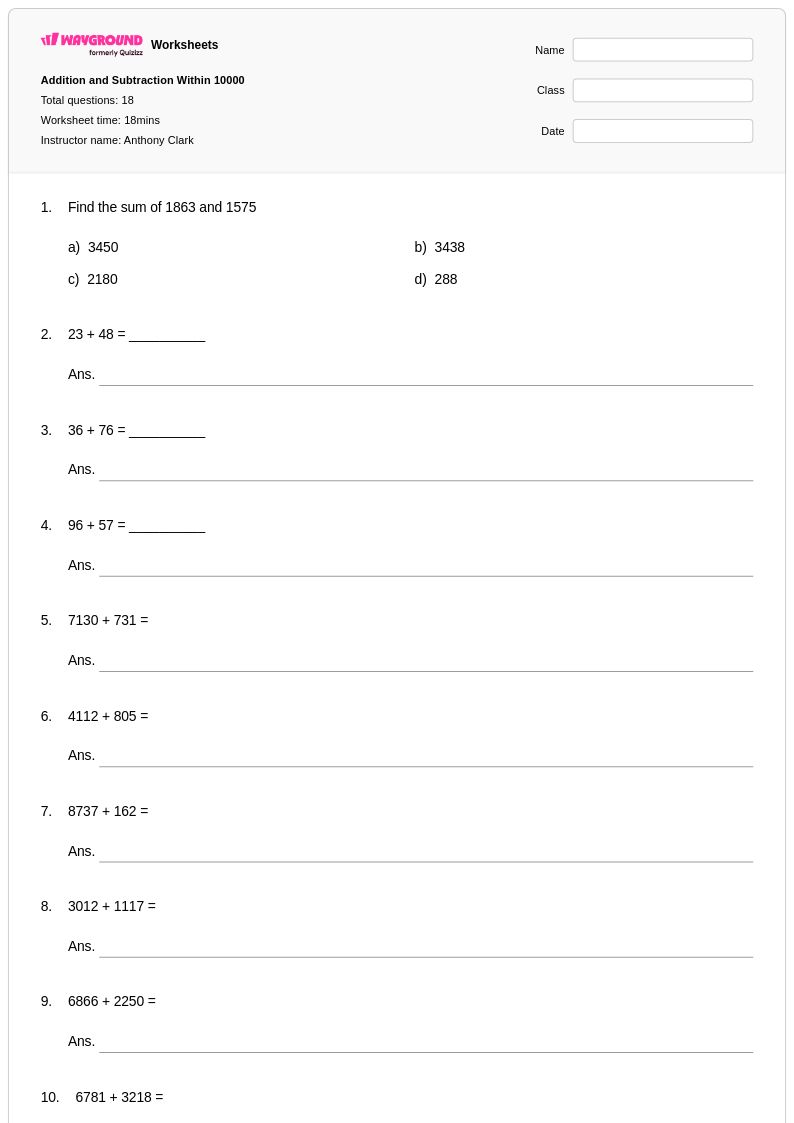
18 Q
3rd - Uni
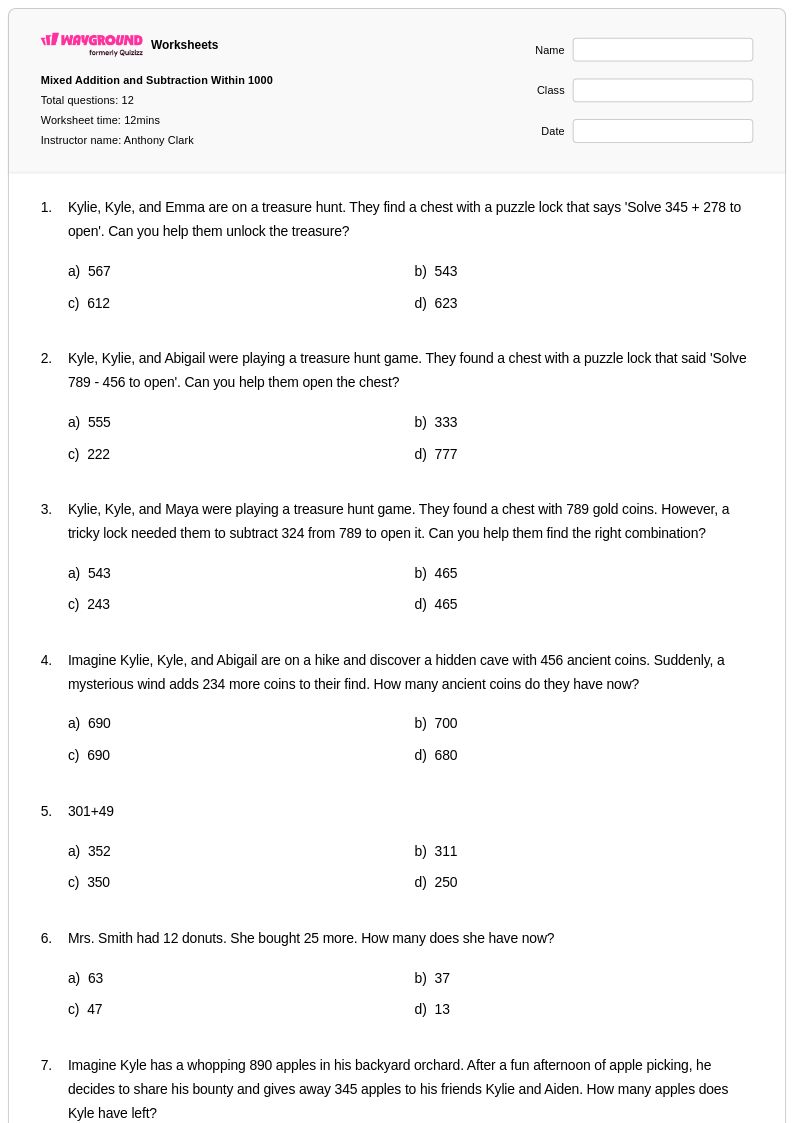
12 Q
1st - Uni
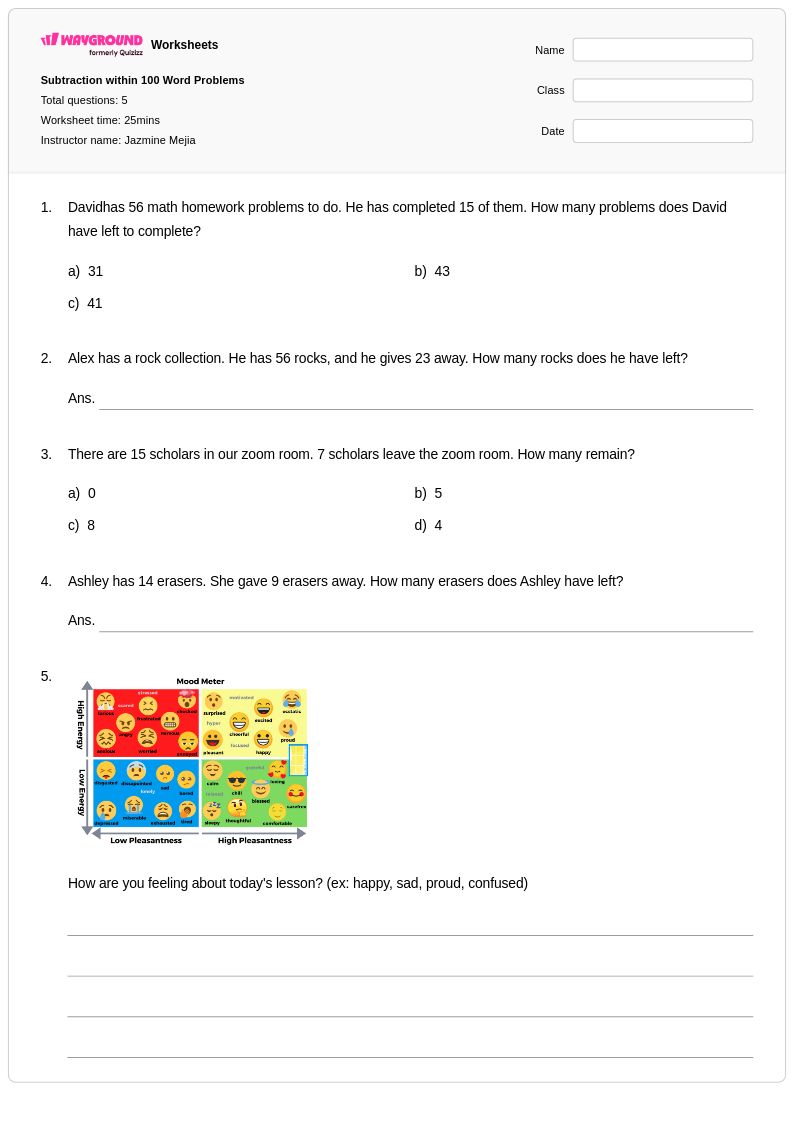
5 Q
2nd - 5th
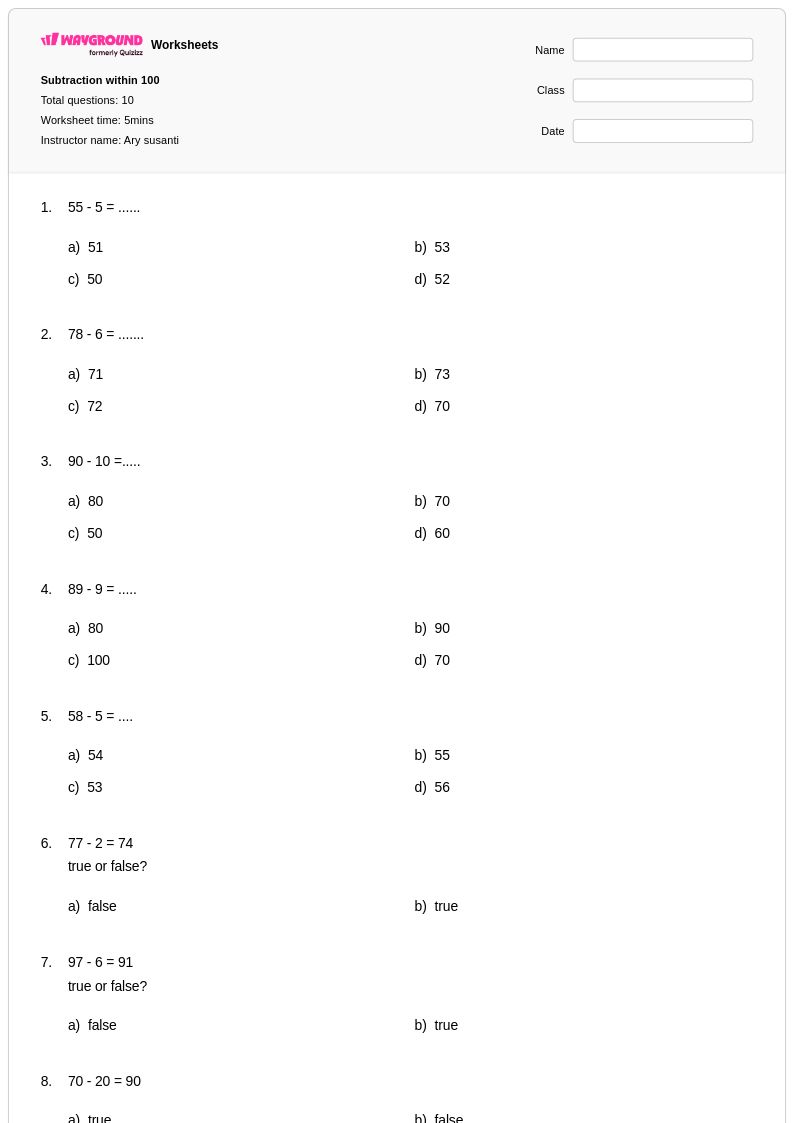
10 Q
1st - 12th
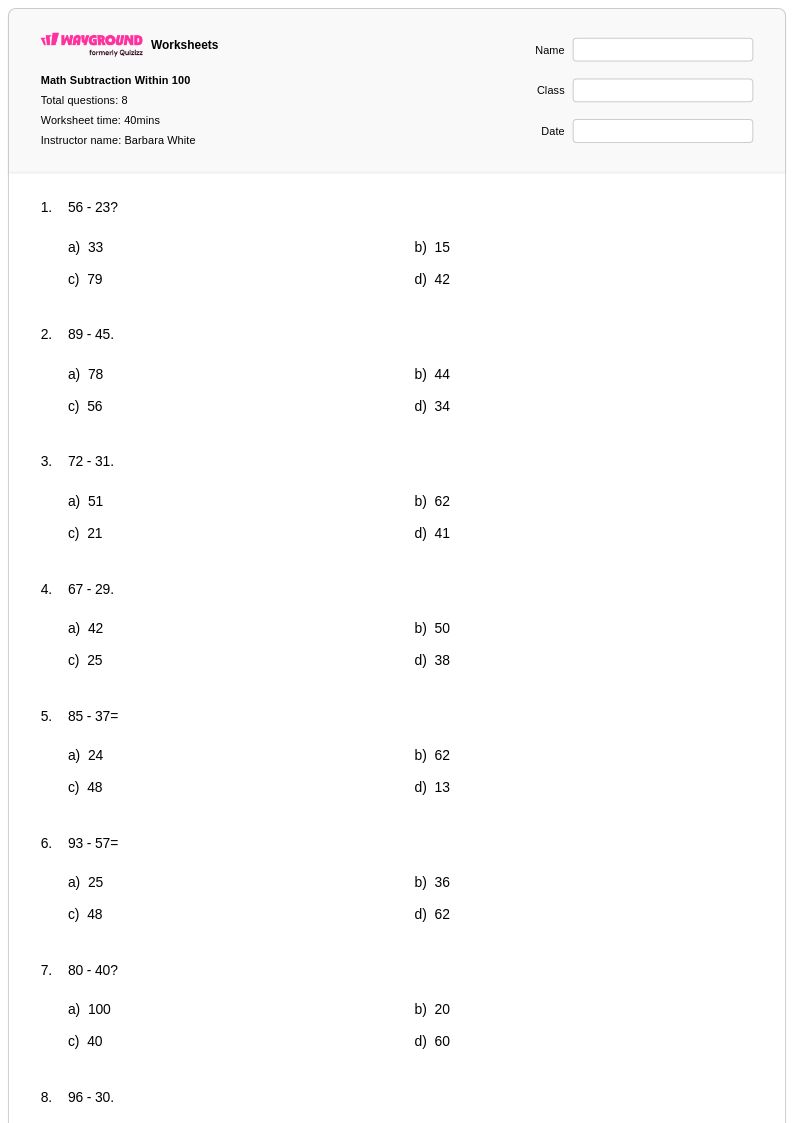
8 Q
5th
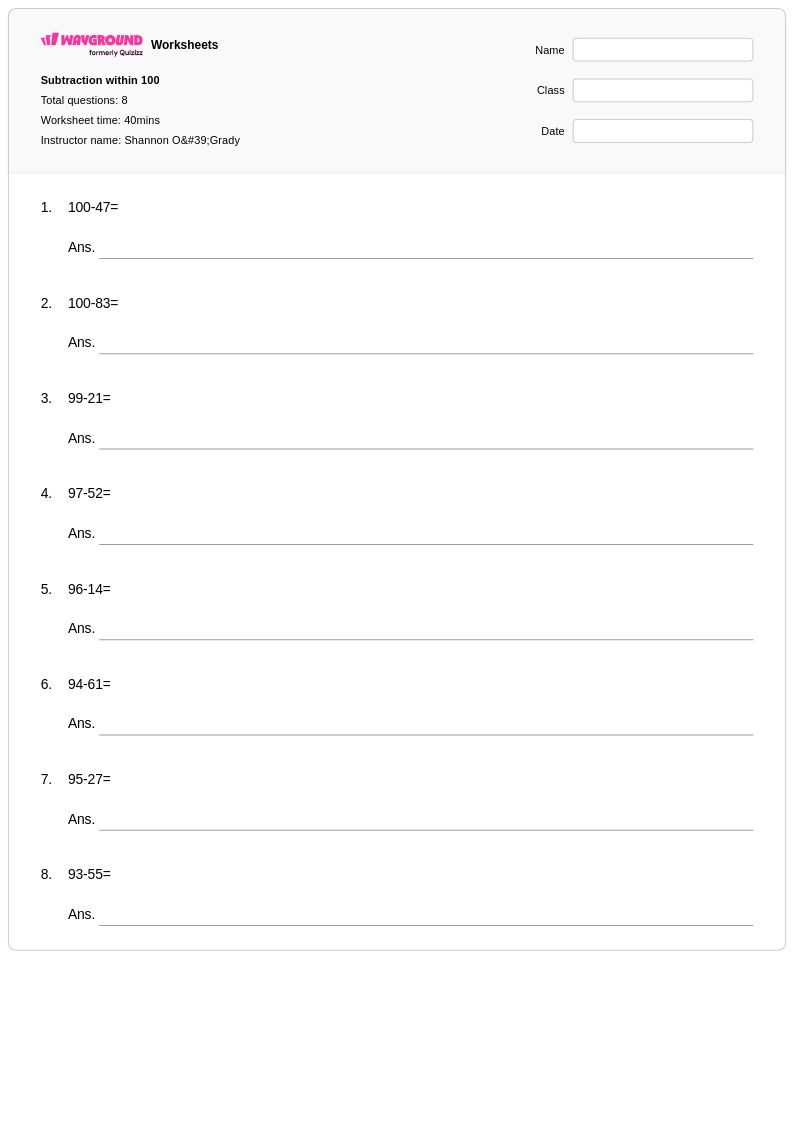
8 Q
2nd - 5th
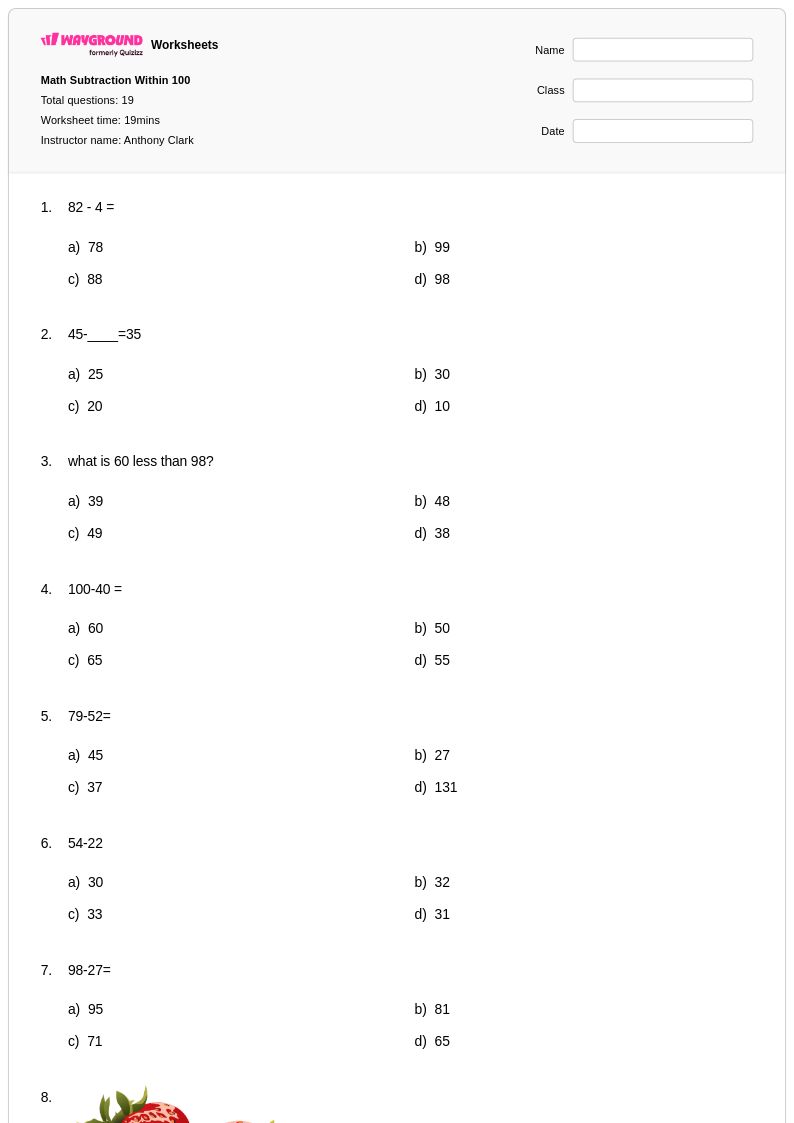
19 Q
2nd - Uni
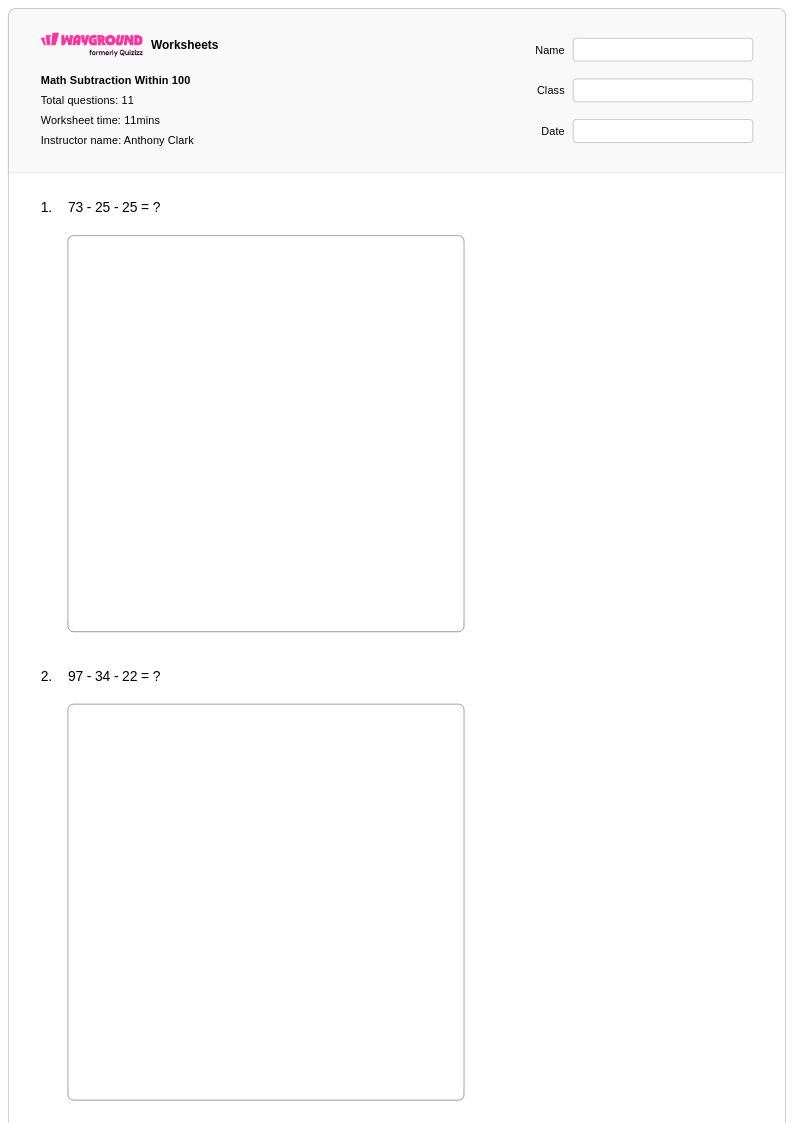
11 Q
2nd - Uni
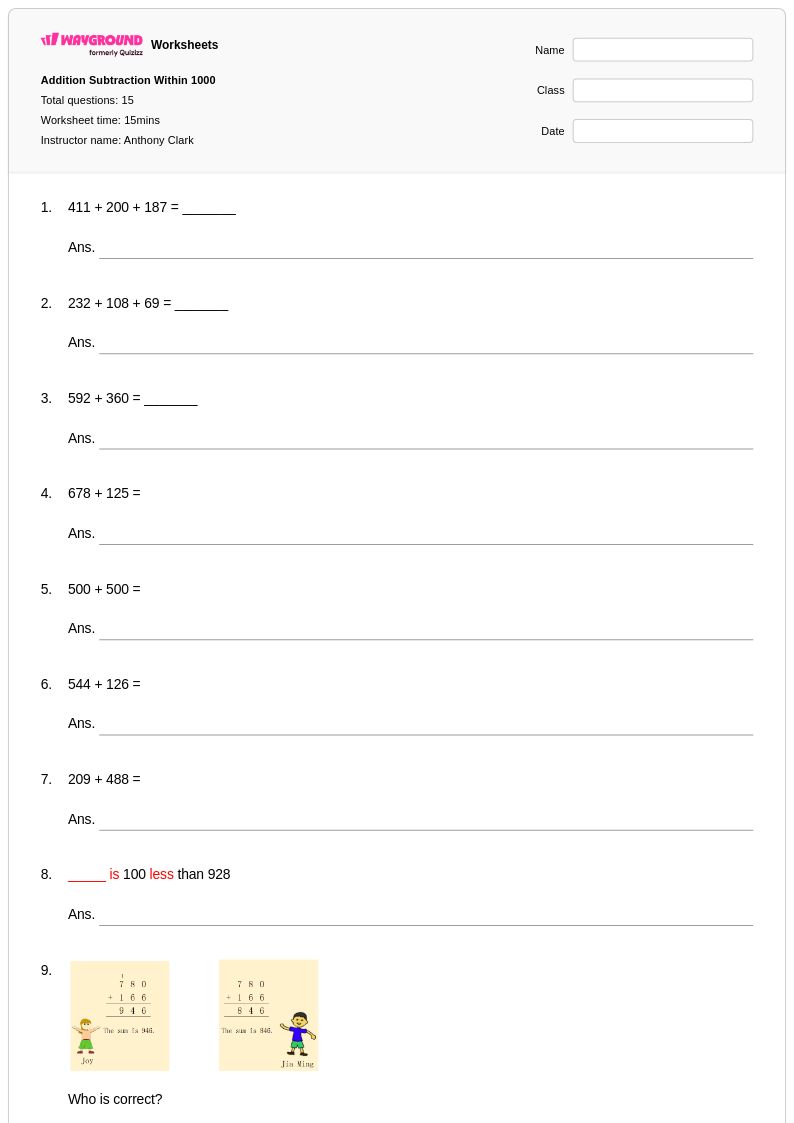
15 Q
3rd - Uni
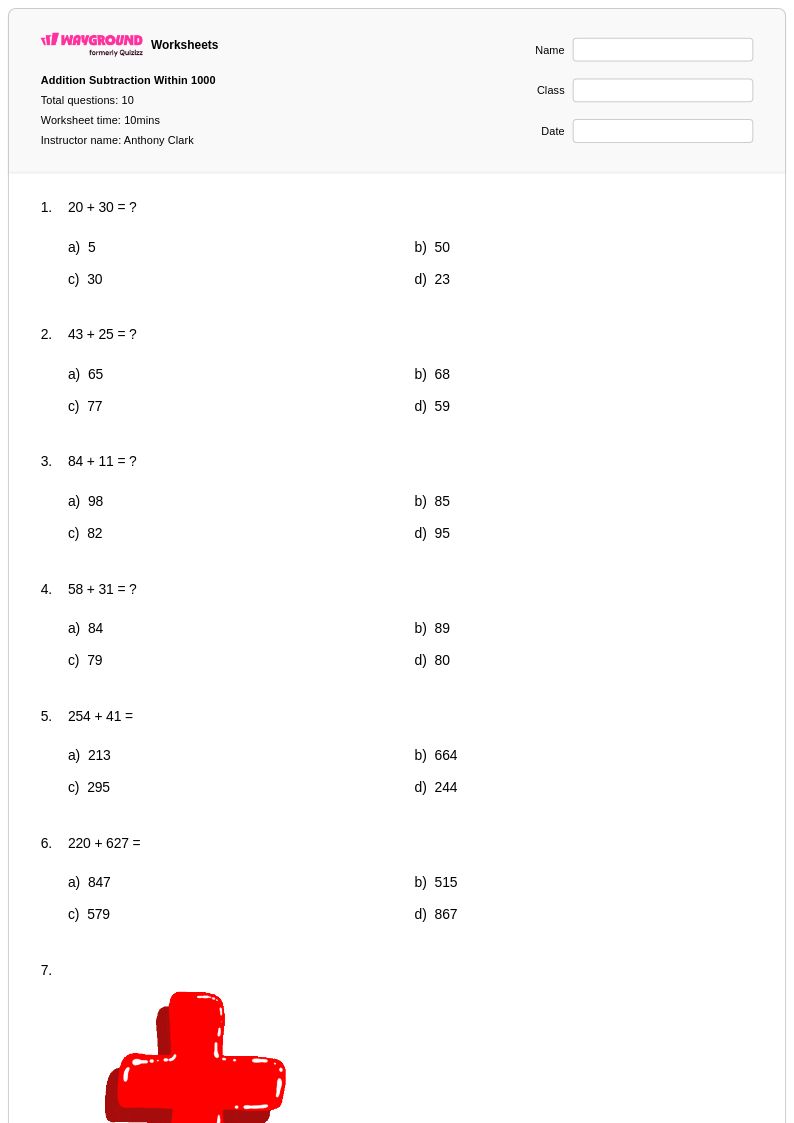
10 Q
3rd - Uni
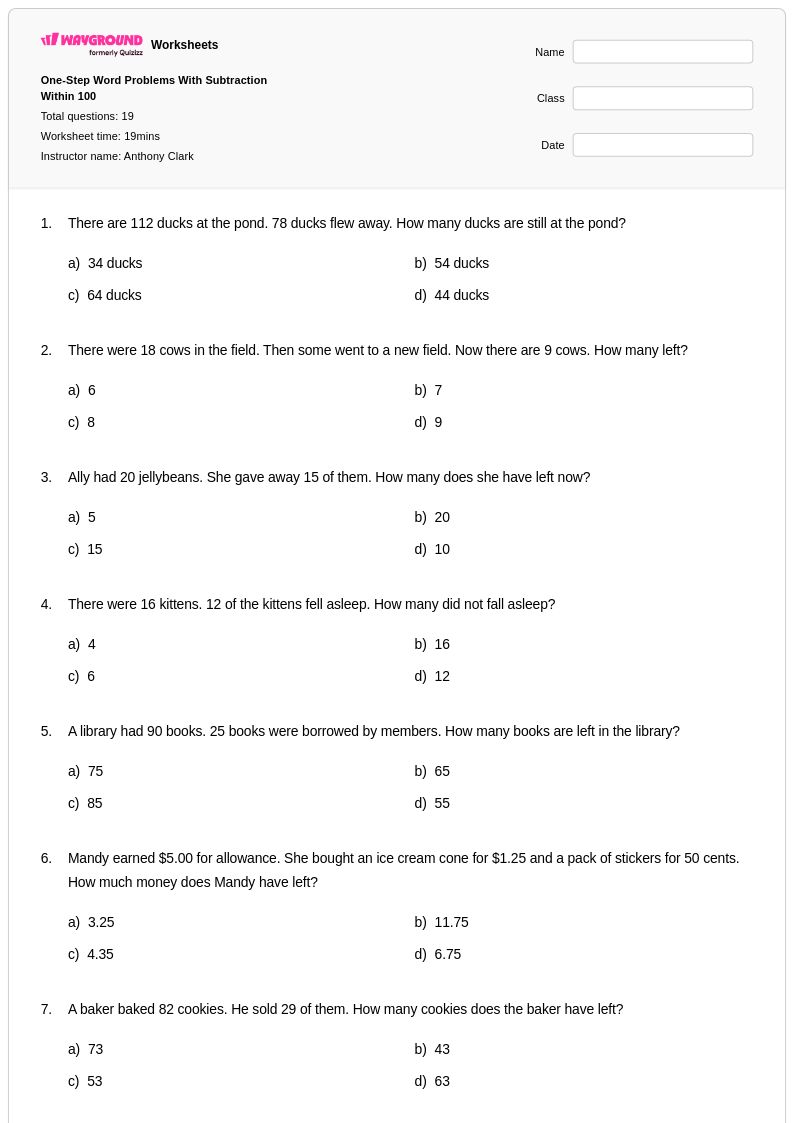
19 Q
3rd - Uni
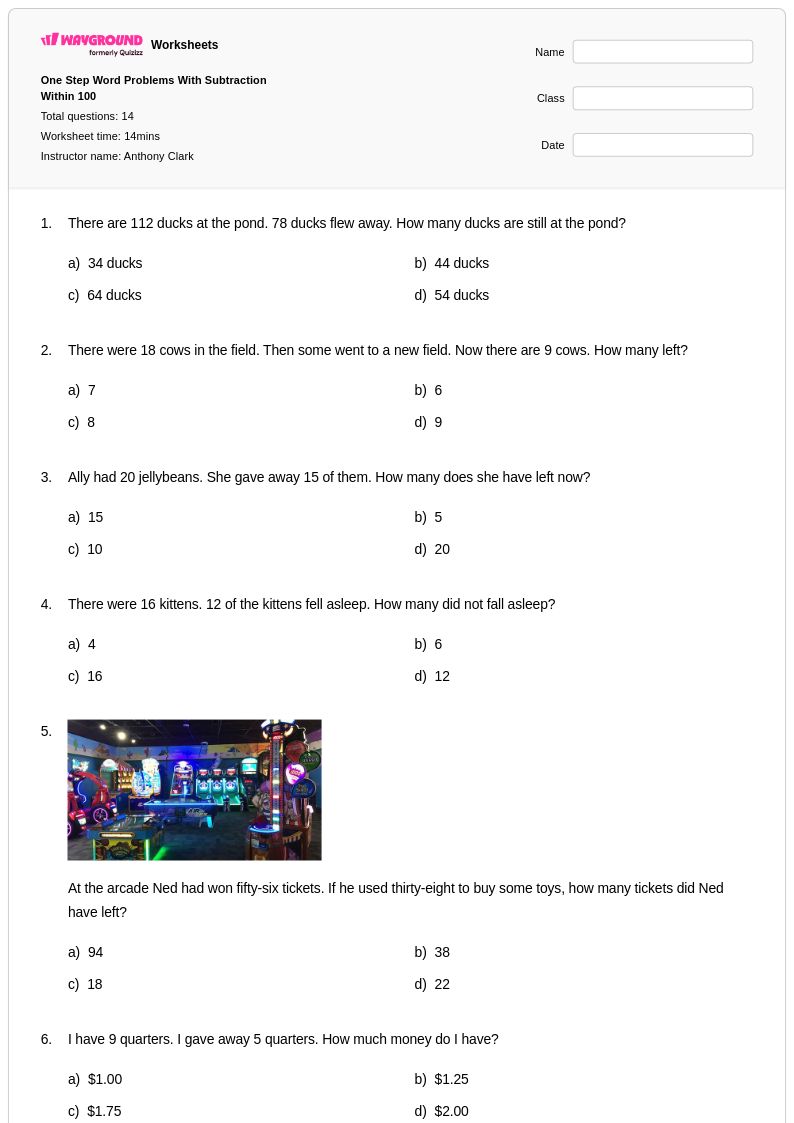
14 Q
3rd - Uni
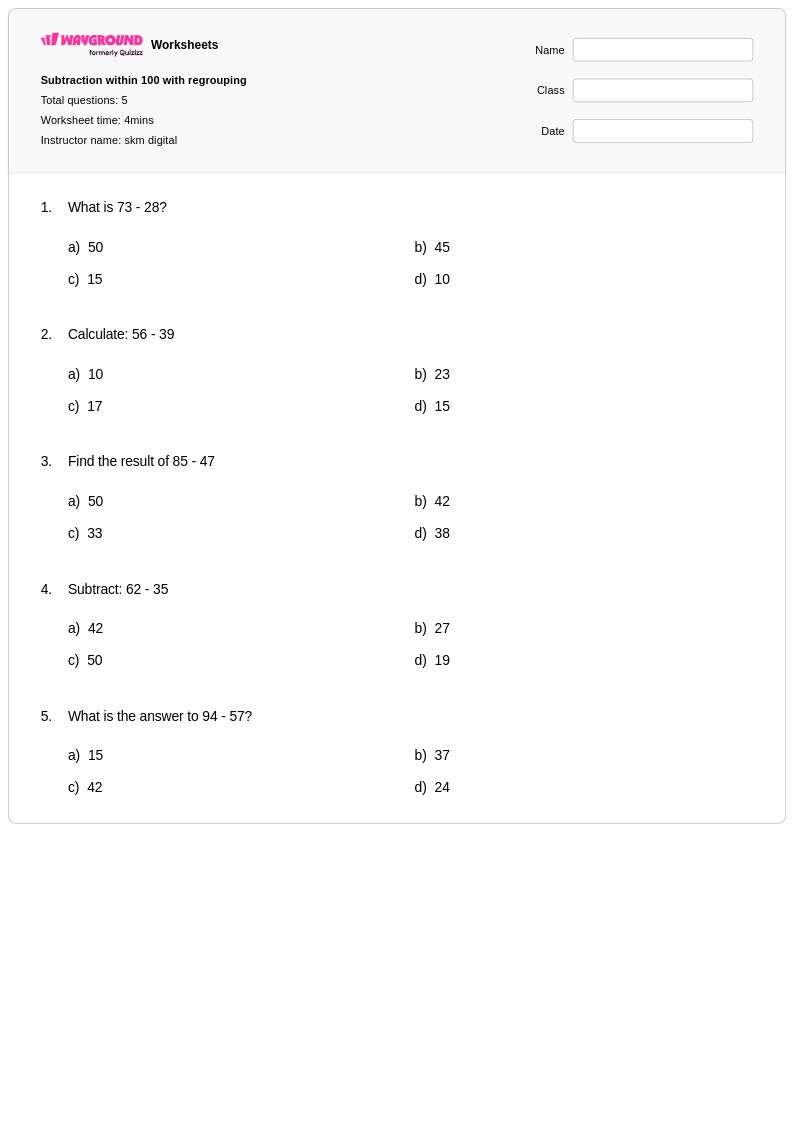
5 Q
1st - 5th
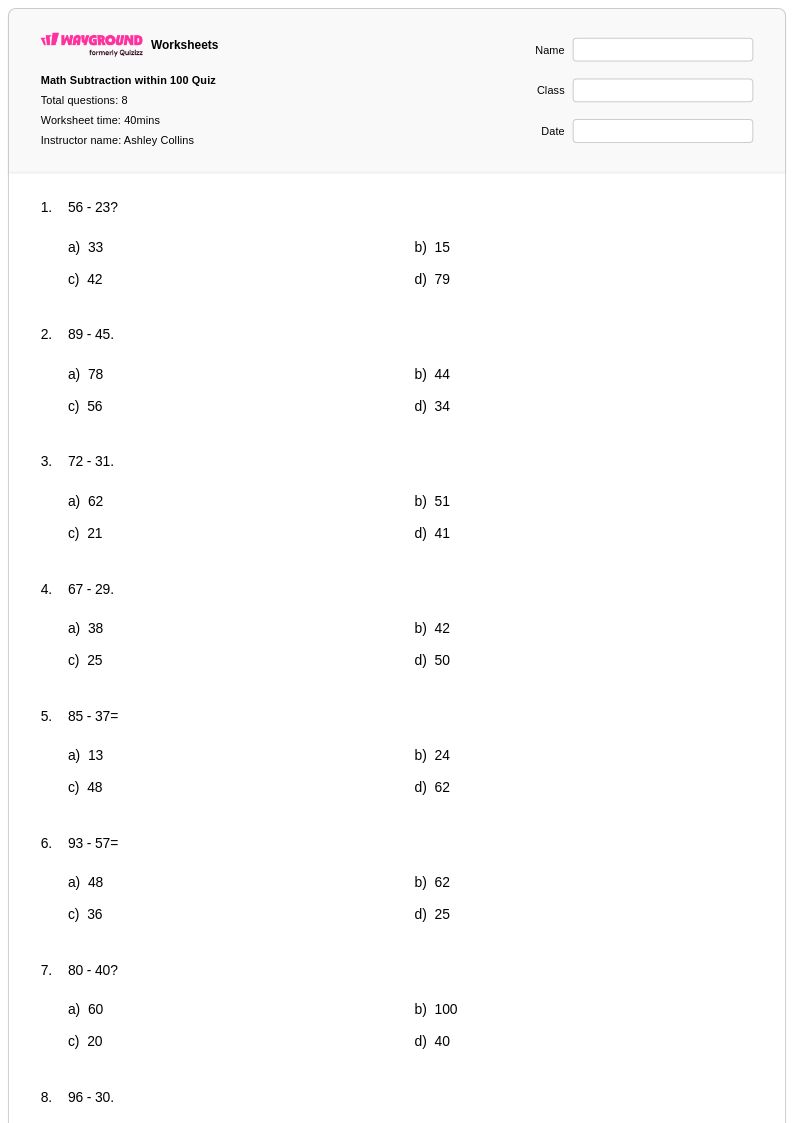
8 Q
5th
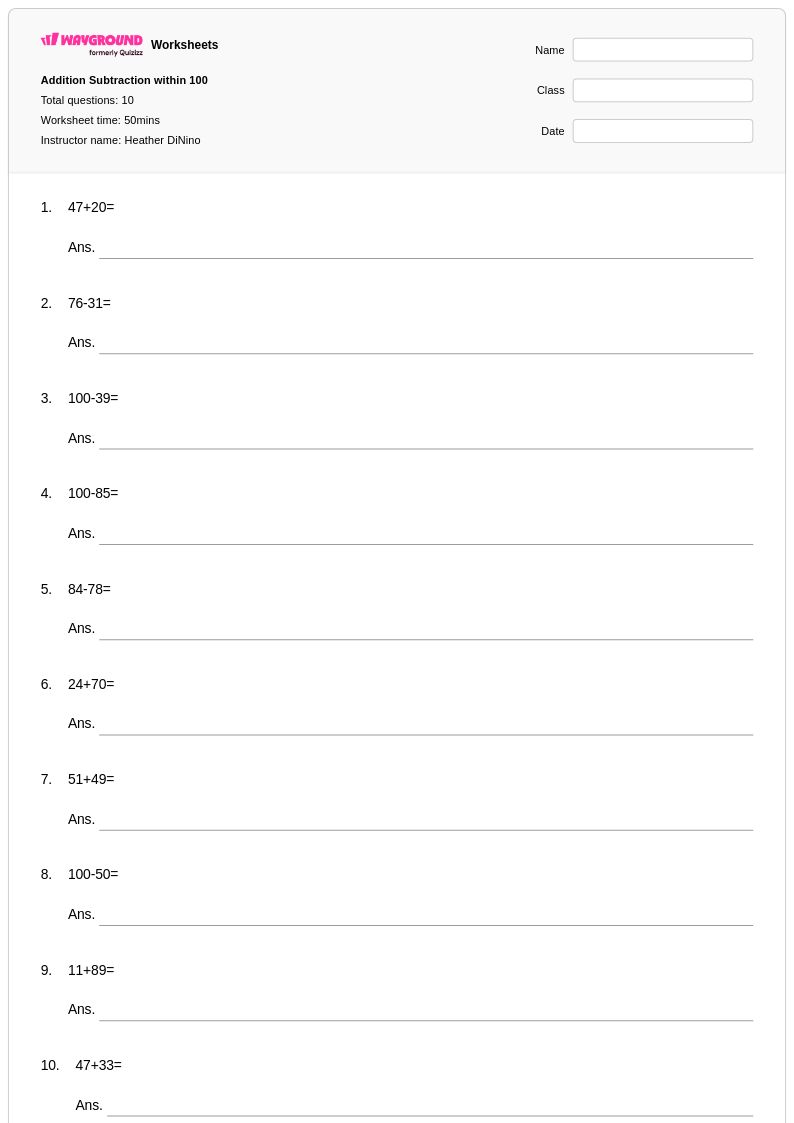
10 Q
1st - 5th
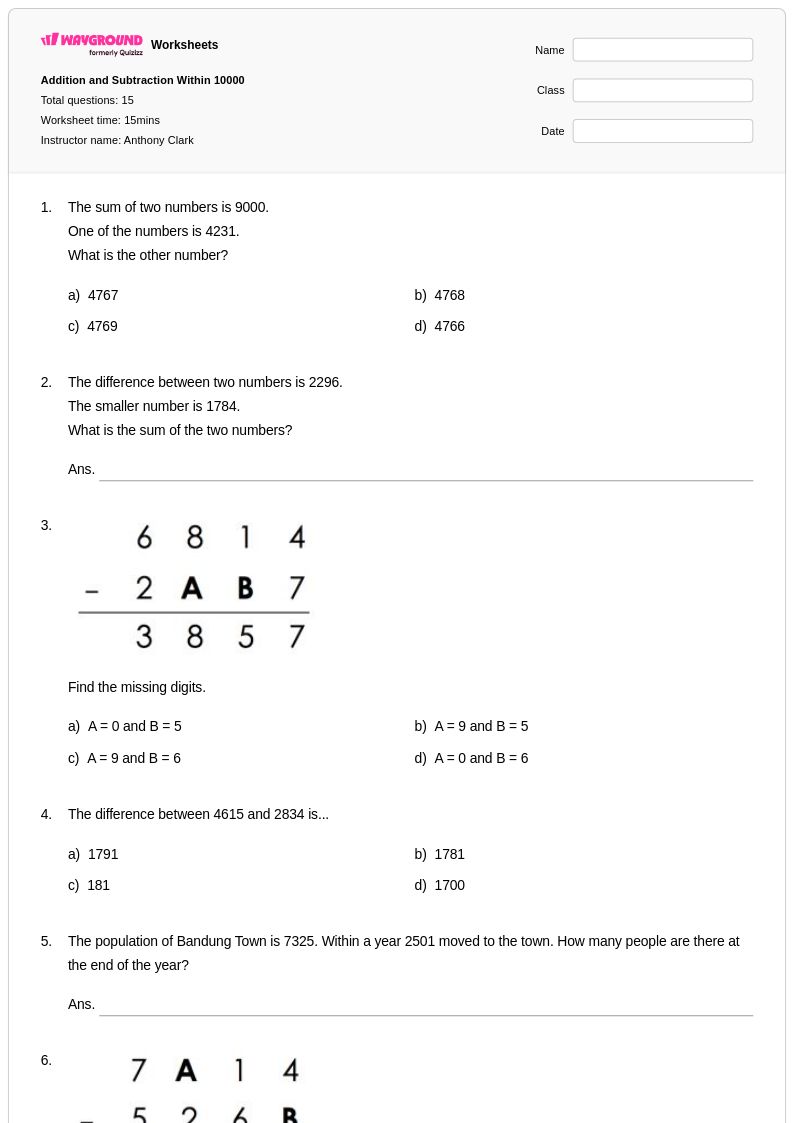
15 Q
3rd - Uni
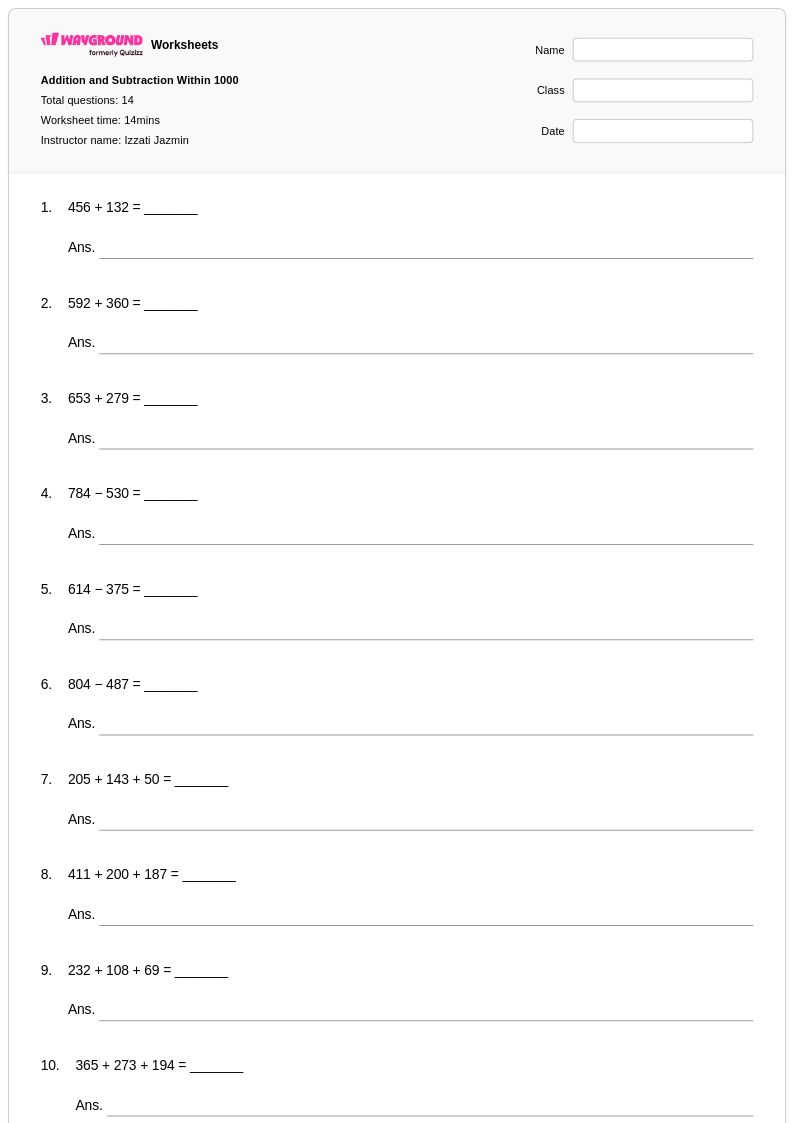
14 Q
2nd - 6th
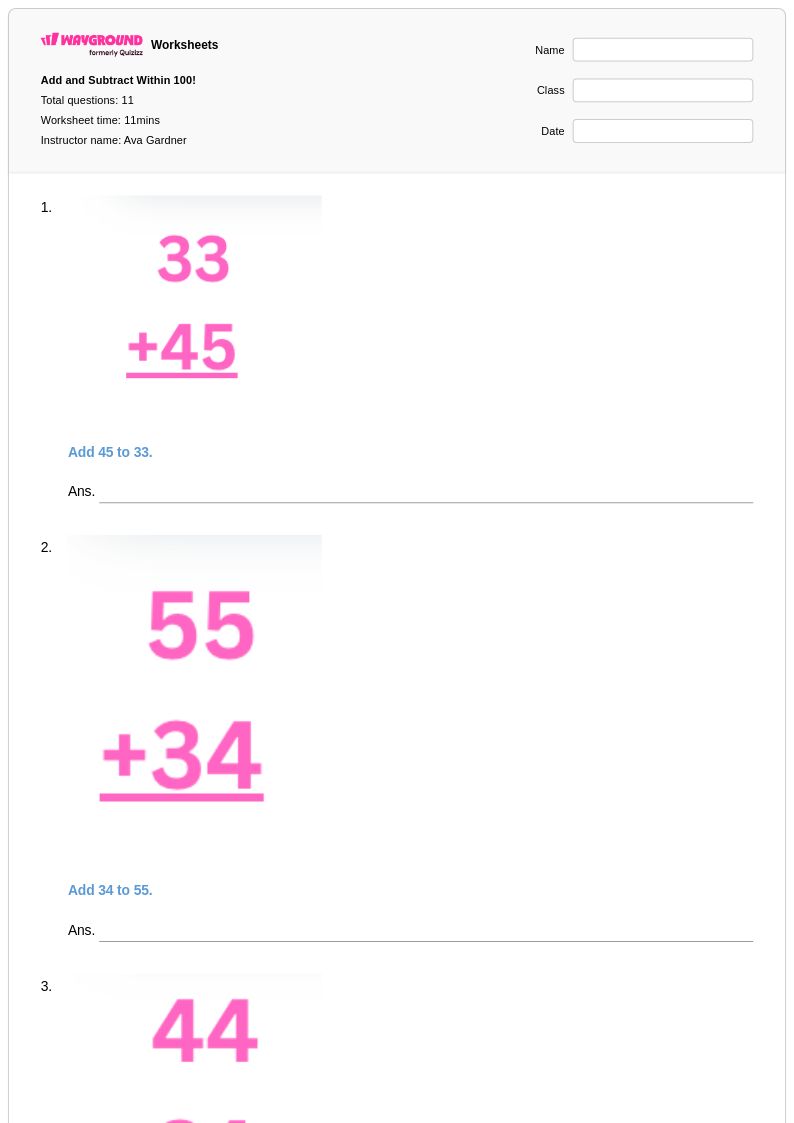
11 Q
2nd - Uni
Explore Other Subject Worksheets for class 5
Explore printable Subtraction Within 100 worksheets for Class 5
Class 5 subtraction within 100 worksheets available through Wayground (formerly Quizizz) provide comprehensive practice for students mastering fundamental arithmetic operations with two-digit numbers. These carefully designed resources strengthen essential mathematical skills including regrouping strategies, mental math techniques, and number sense development within the 0-100 range. Each worksheet collection includes varied practice problems that challenge students to apply different subtraction methods, from traditional algorithms to number line approaches and decomposition strategies. Teachers can access complete answer keys alongside these free printables, ensuring efficient grading and immediate feedback opportunities that support student learning and mathematical confidence.
Wayground (formerly Quizizz) empowers educators with millions of teacher-created subtraction resources that streamline lesson planning and differentiated instruction for Class 5 mathematics. The platform's robust search and filtering capabilities allow teachers to quickly locate worksheets aligned with specific curriculum standards and learning objectives for subtraction within 100. Advanced customization tools enable educators to modify existing materials or create targeted practice sets for remediation and enrichment activities, while flexible formatting options provide both printable pdf versions and interactive digital alternatives. These comprehensive worksheet collections support systematic skill development, allowing teachers to address individual student needs through varied difficulty levels and problem types that reinforce computational fluency and conceptual understanding.