
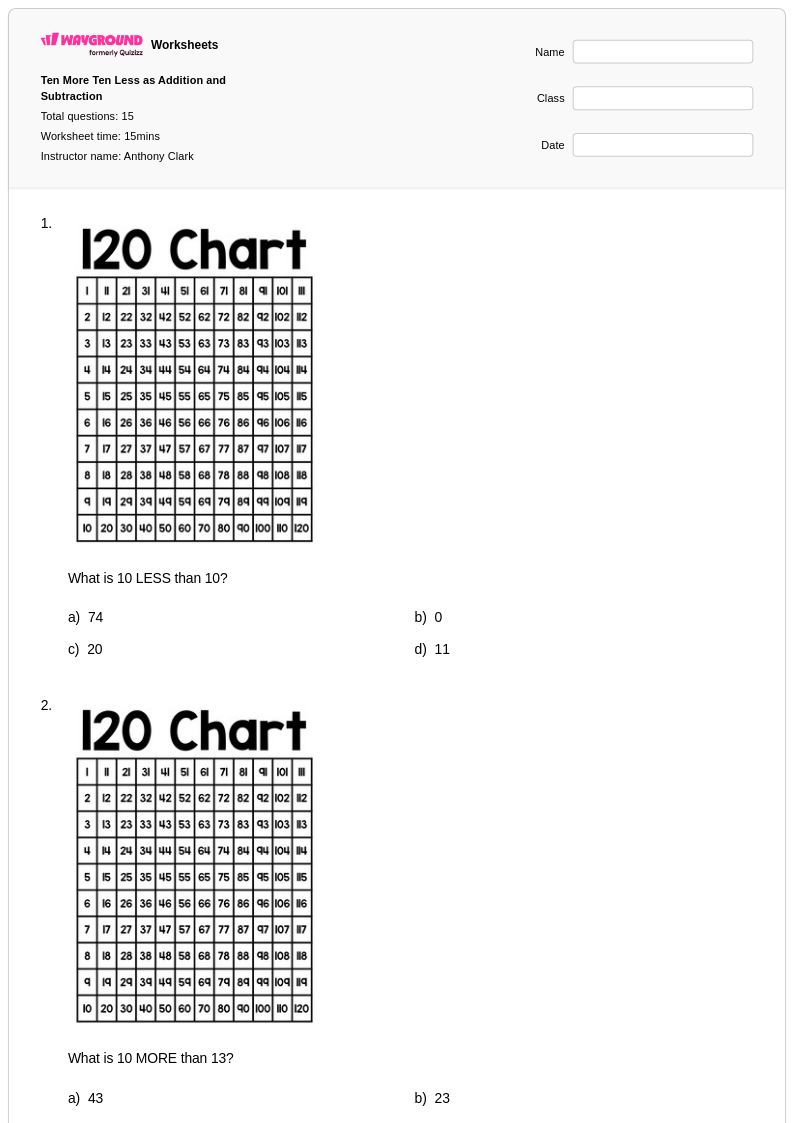
15 Q
1st - Uni
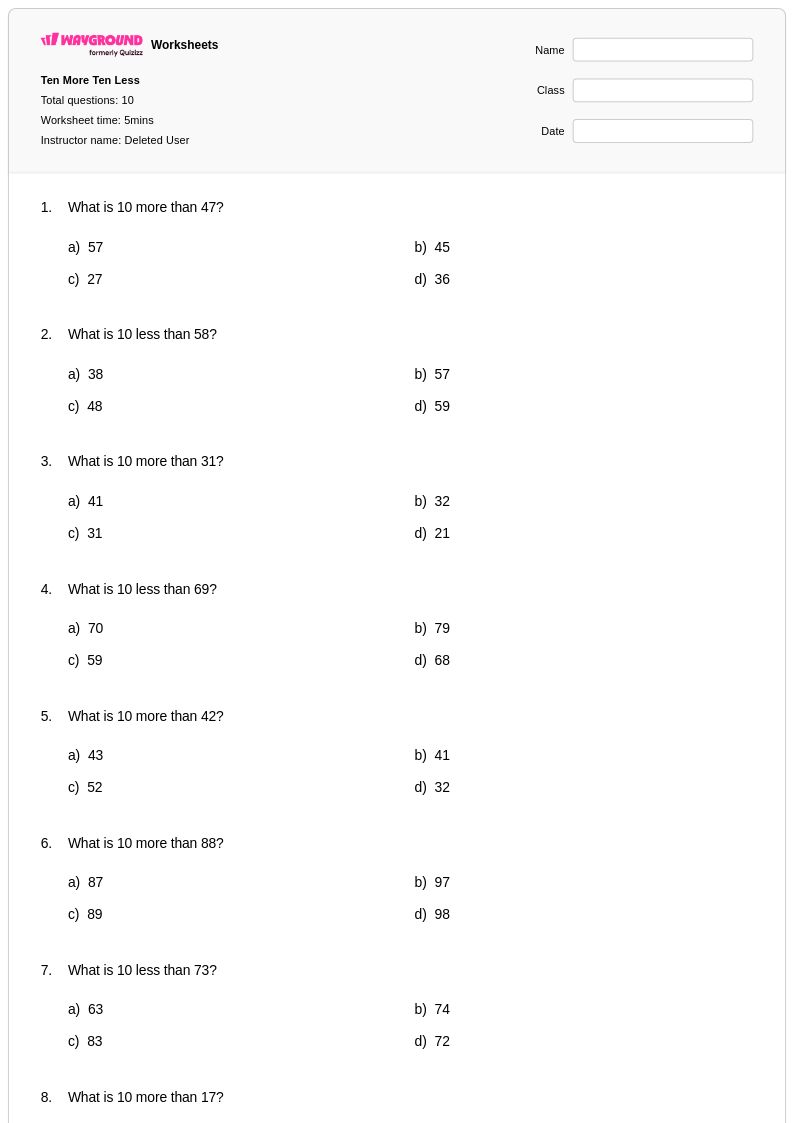
10 Q
1st - Uni
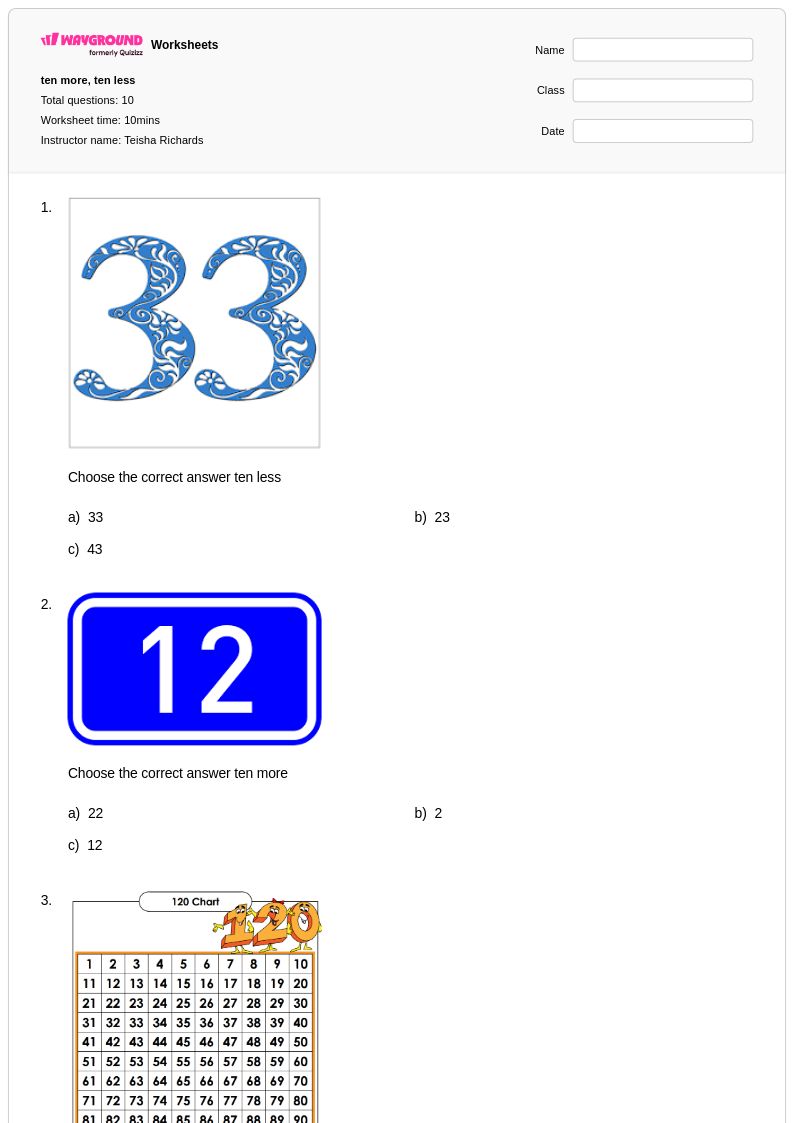
10 Q
1st - 2nd
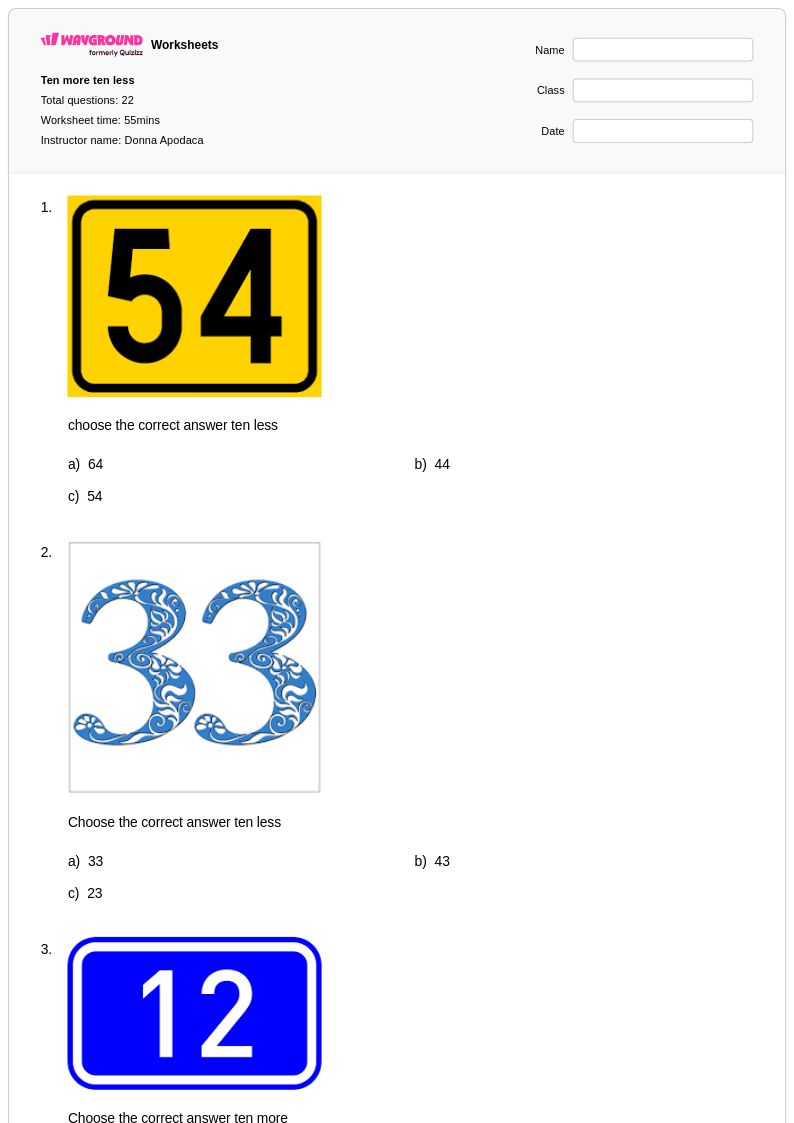
22 Q
1st - 2nd
20 Q
1st - Uni
6 Q
1st - 2nd
15 Q
1st - Uni
15 Q
2nd
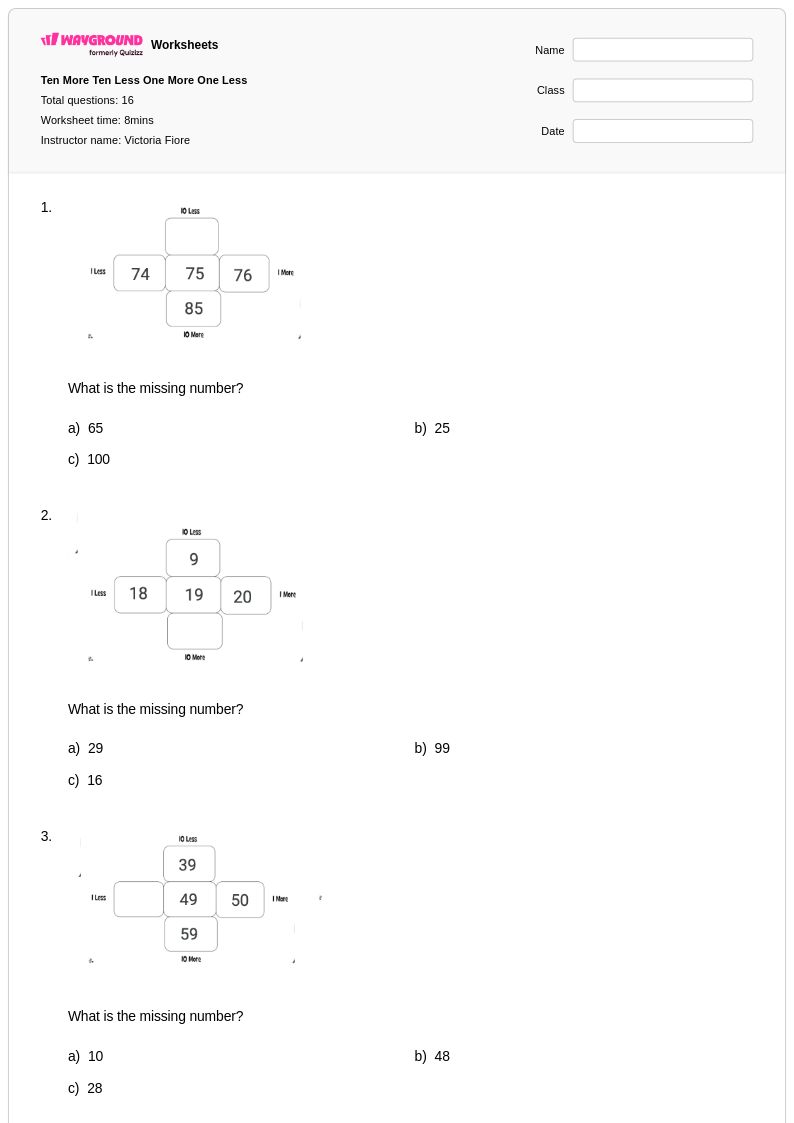
16 Q
1st - 2nd
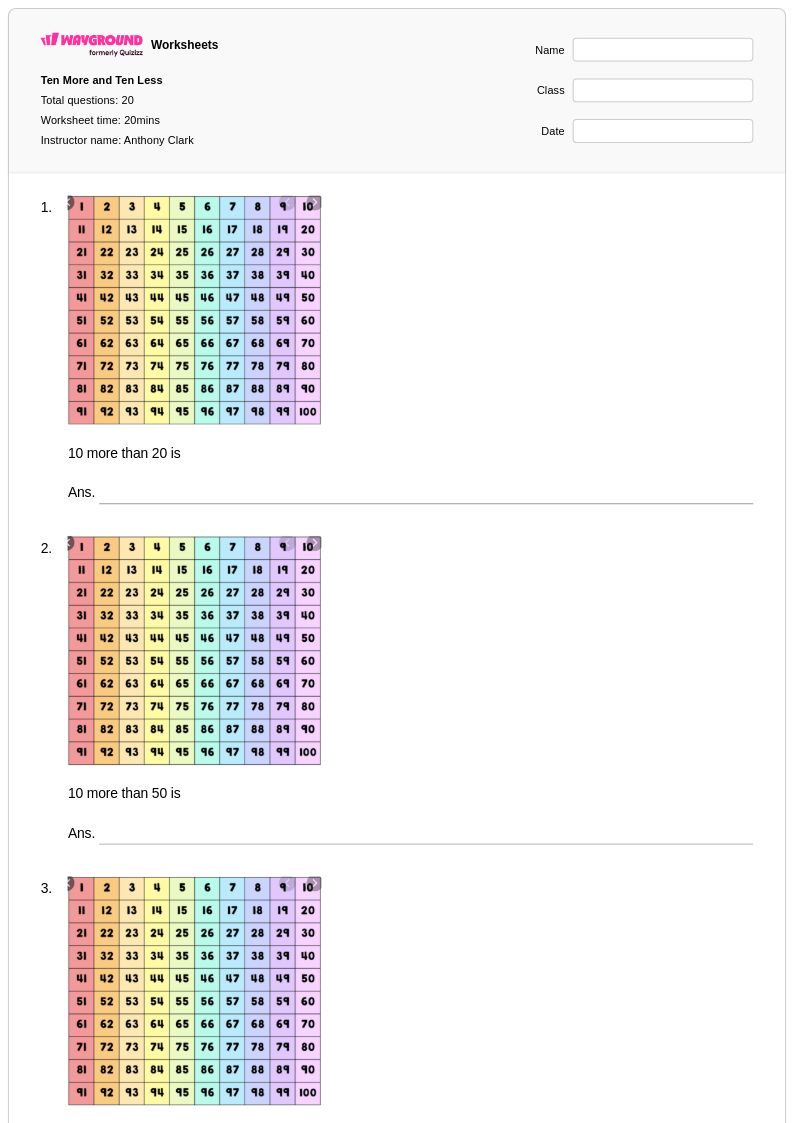
20 Q
1st - Uni
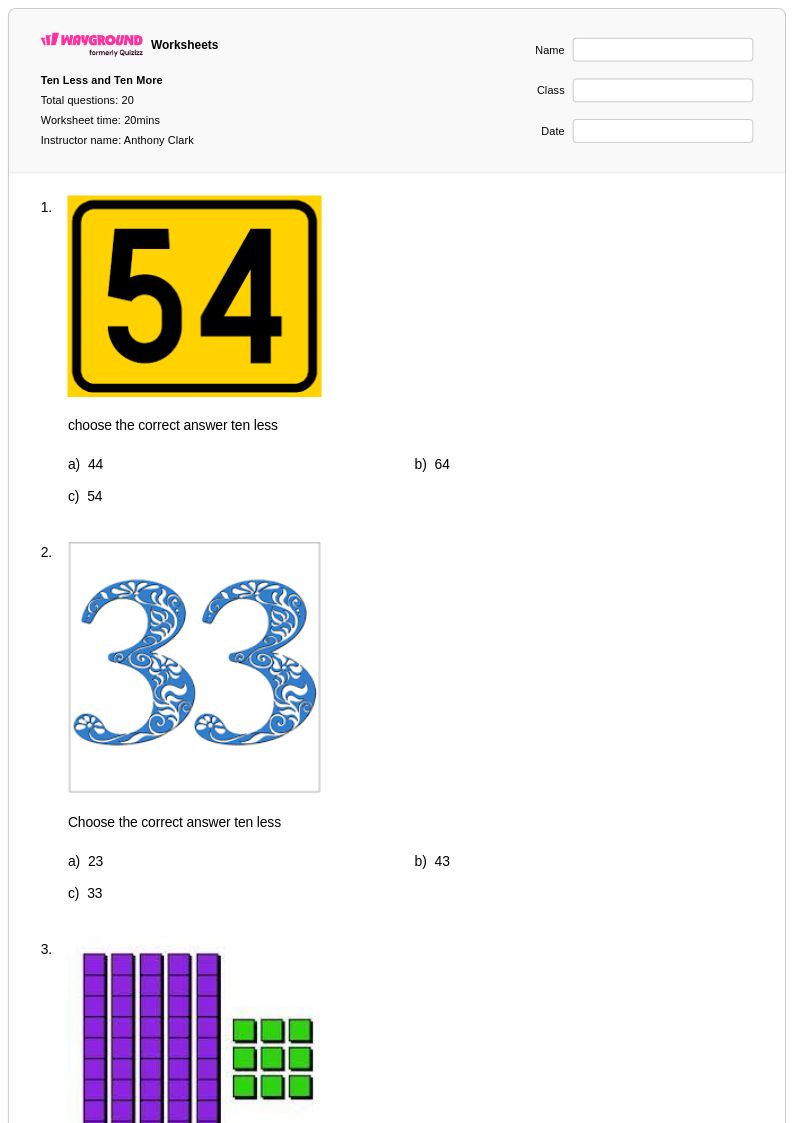
20 Q
1st - Uni
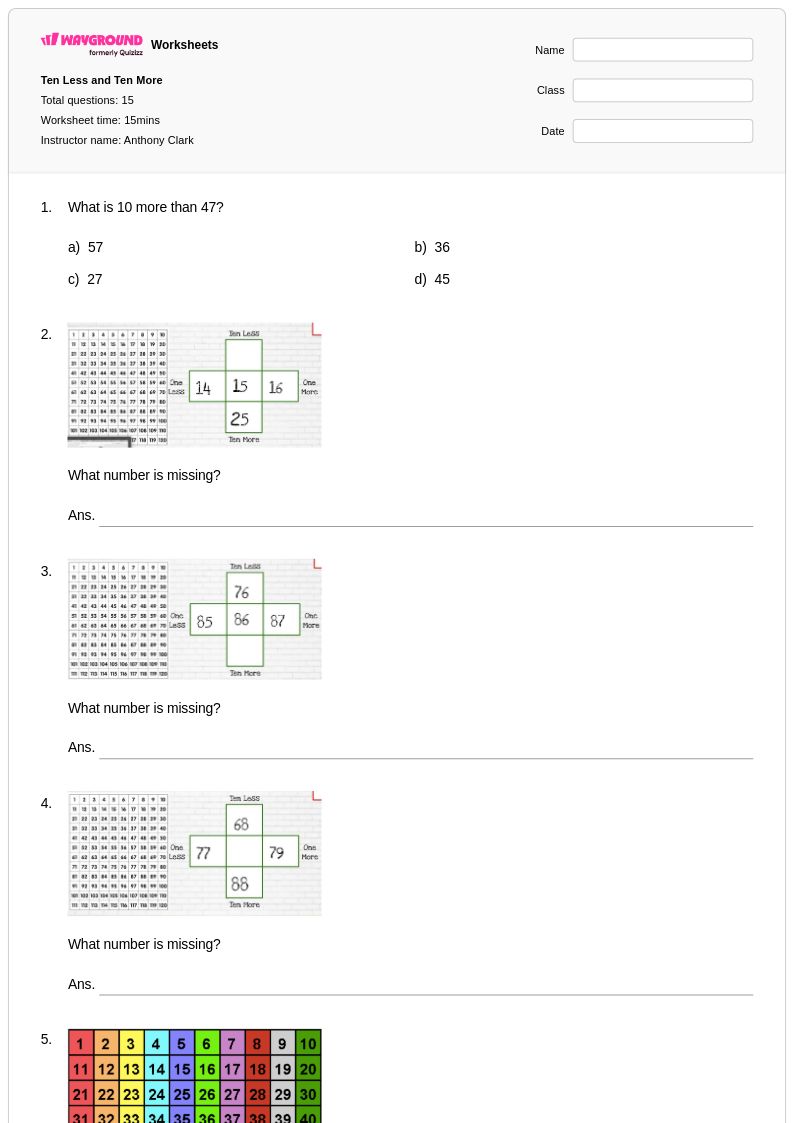
15 Q
1st - Uni
10 Q
2nd
20 Q
1st - Uni
20 Q
2nd - Uni
10 Q
KG - 2nd
20 Q
2nd
22 Q
2nd
20 Q
2nd
15 Q
2nd - Uni
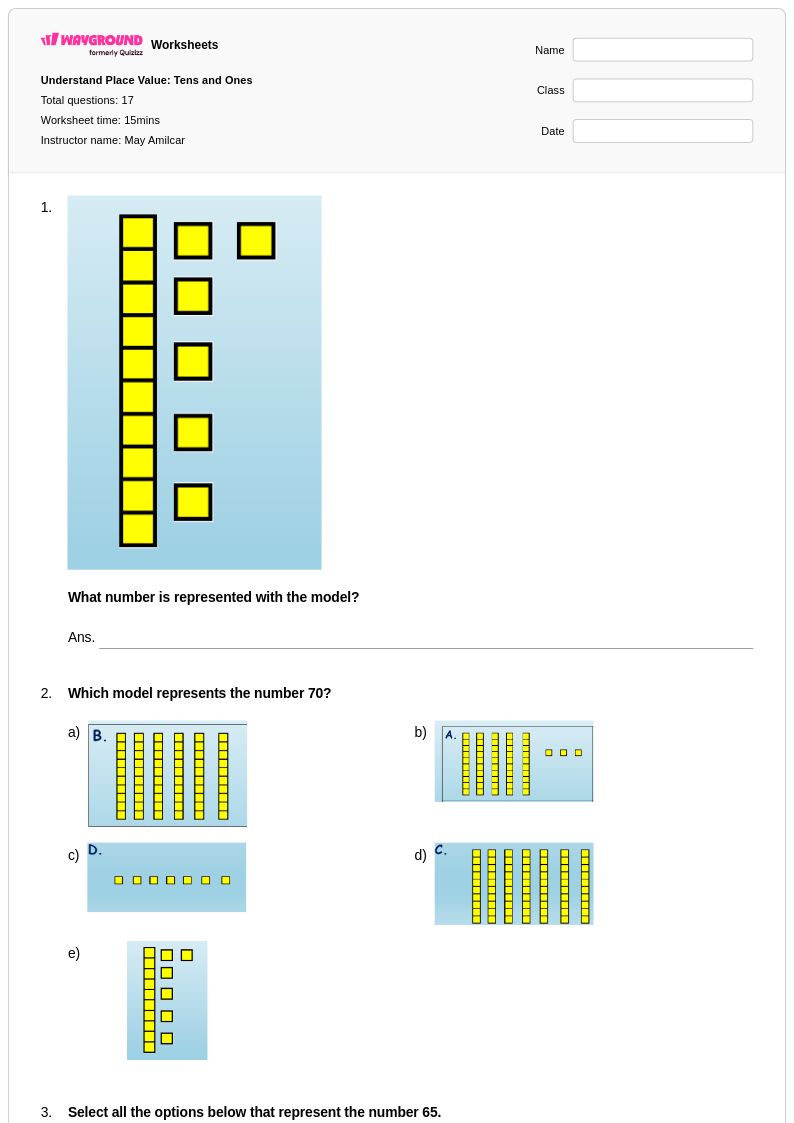
17 Q
1st - 2nd
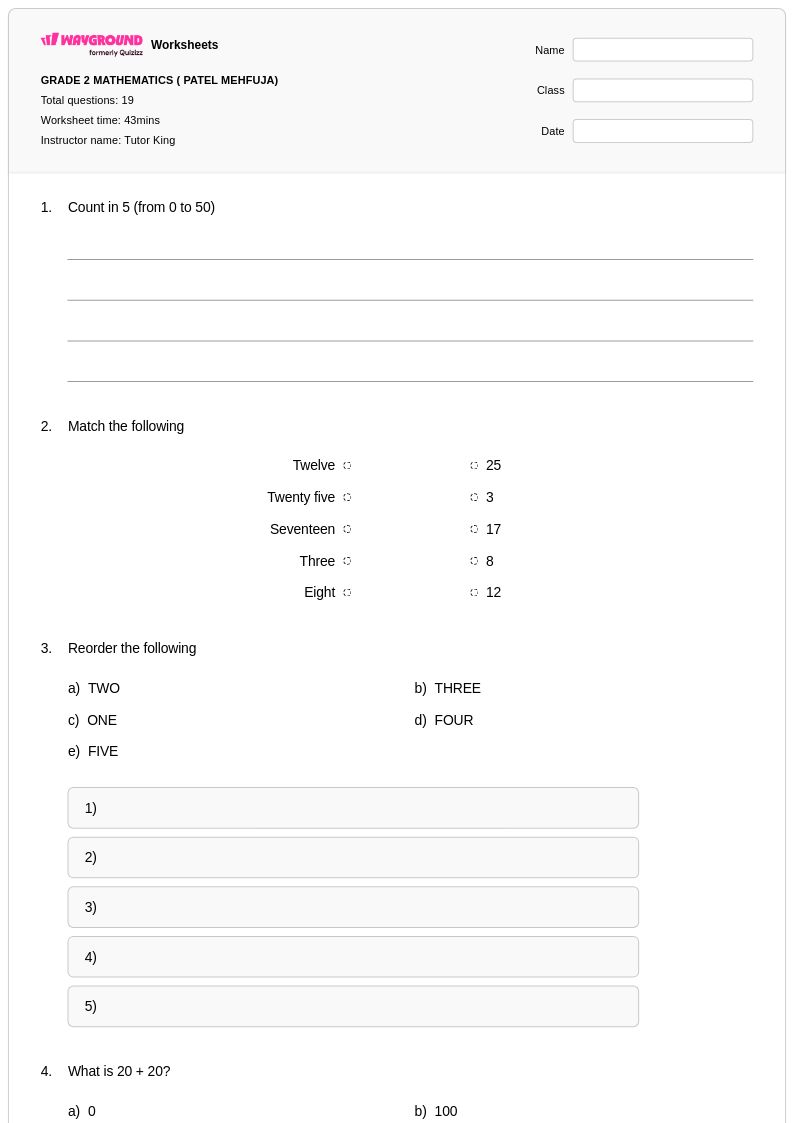
19 Q
2nd
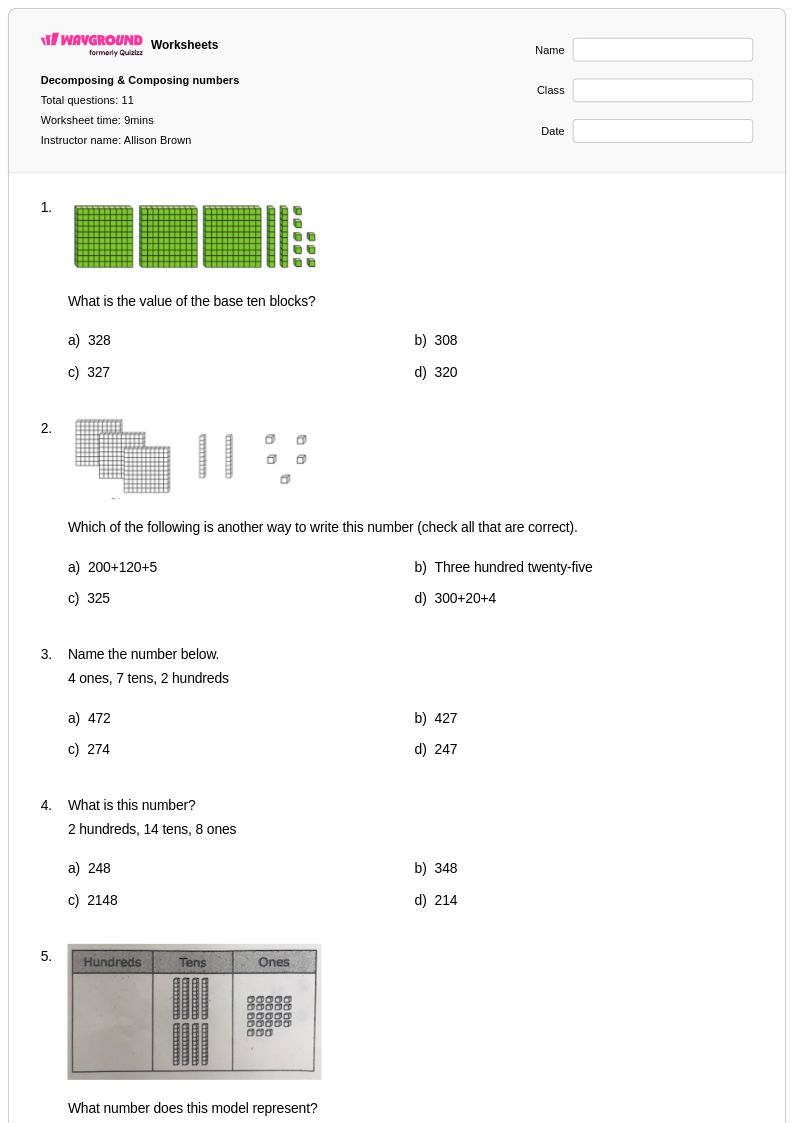
11 Q
2nd
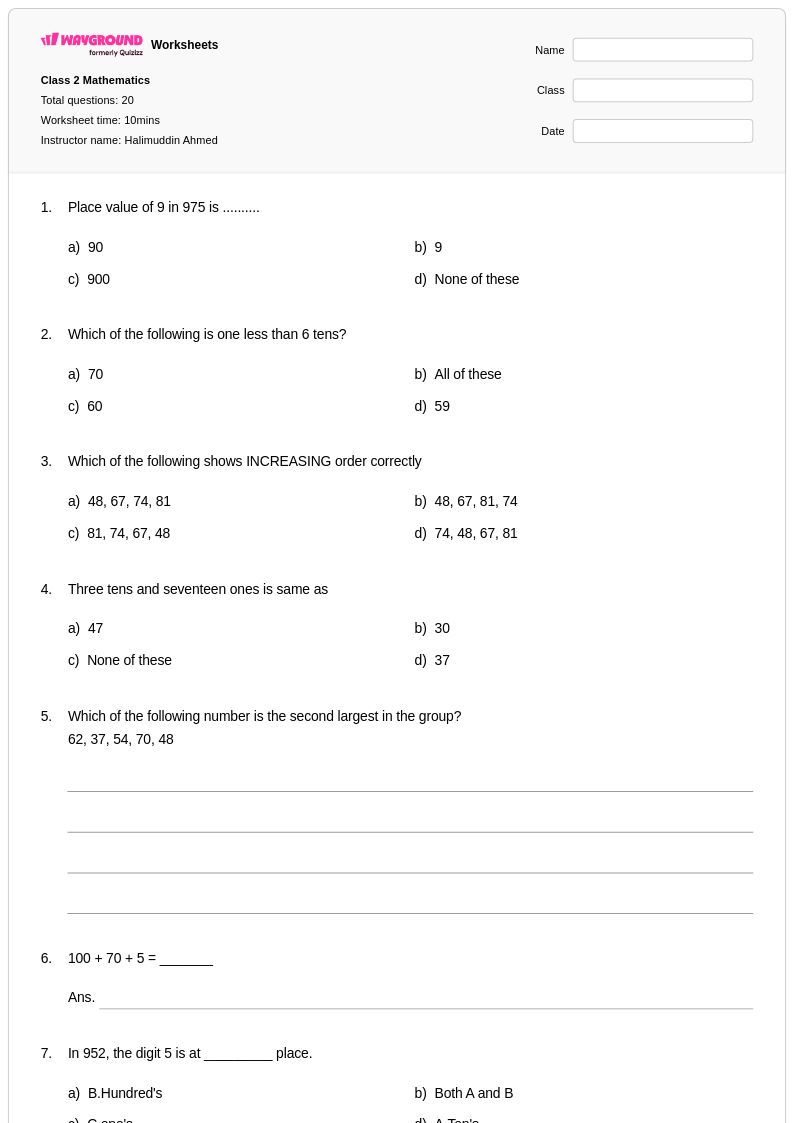
20 Q
2nd
Explore Ten More Ten Less Worksheets by Grades
Explore Other Subject Worksheets for class 2
Explore printable Ten More Ten Less worksheets for Class 2
Ten more ten less worksheets for Class 2 provide essential practice for developing foundational number sense skills that prepare students for more advanced mathematical concepts. These comprehensive printables focus on helping second-grade students understand place value patterns by adding or subtracting ten from given numbers, reinforcing the concept that when ten is added or subtracted, only the tens digit changes while the ones digit remains constant. Wayground's collection includes diverse practice problems that challenge students to identify numbers that are ten more or ten less than target values, complete number sequences, and solve real-world applications involving these fundamental operations. Each worksheet comes with a detailed answer key and is available as a free pdf download, making it simple for educators to incorporate systematic number sense practice into their daily instruction while building students' confidence with two-digit number manipulation.
Wayground, formerly Quizizz, empowers teachers with millions of educator-created resources specifically designed to strengthen Class 2 ten more ten less concepts through robust search and filtering capabilities that align with state mathematics standards. The platform's differentiation tools allow teachers to customize worksheets based on individual student needs, whether for remediation support or enrichment challenges, while maintaining focus on core place value understanding. These versatile resources are available in both printable and digital formats, including downloadable pdfs, enabling seamless integration into classroom instruction, homework assignments, or independent practice sessions. Teachers can efficiently plan targeted skill practice by accessing pre-made materials or adapting existing worksheets to match their specific curriculum requirements, ultimately supporting students' mathematical growth through consistent, standards-aligned number sense development.