
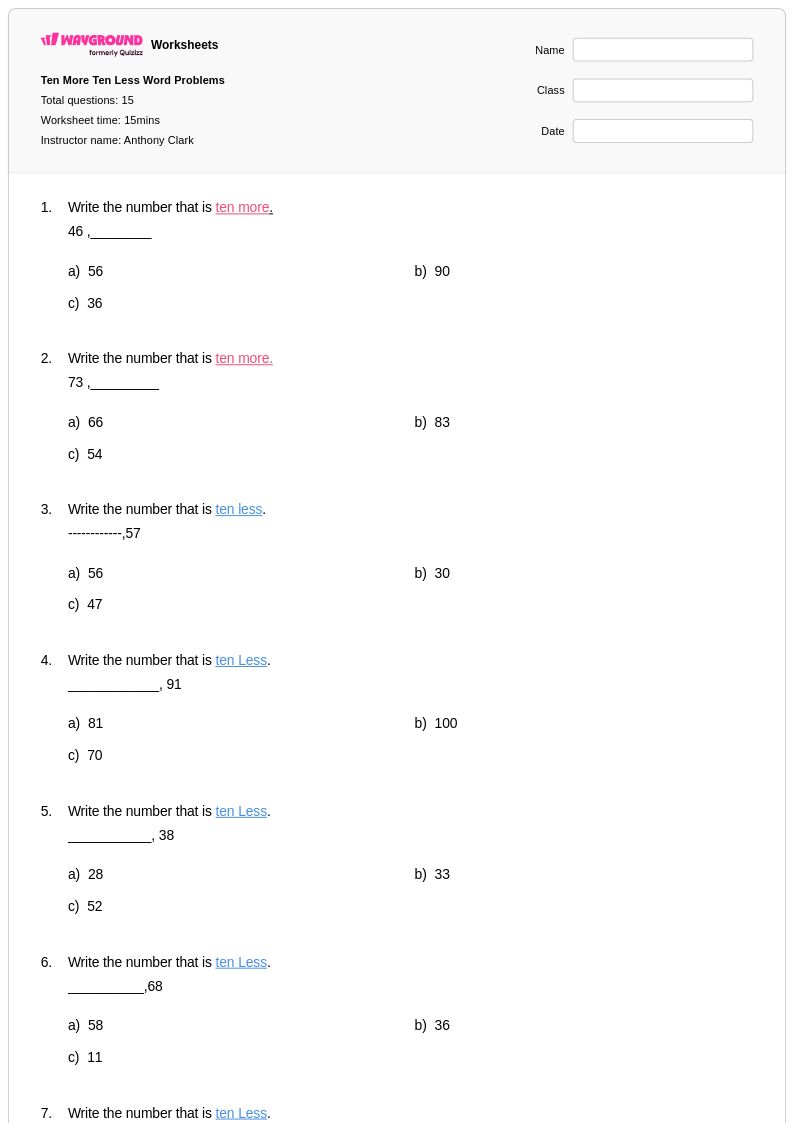
15 Q
1st - Uni
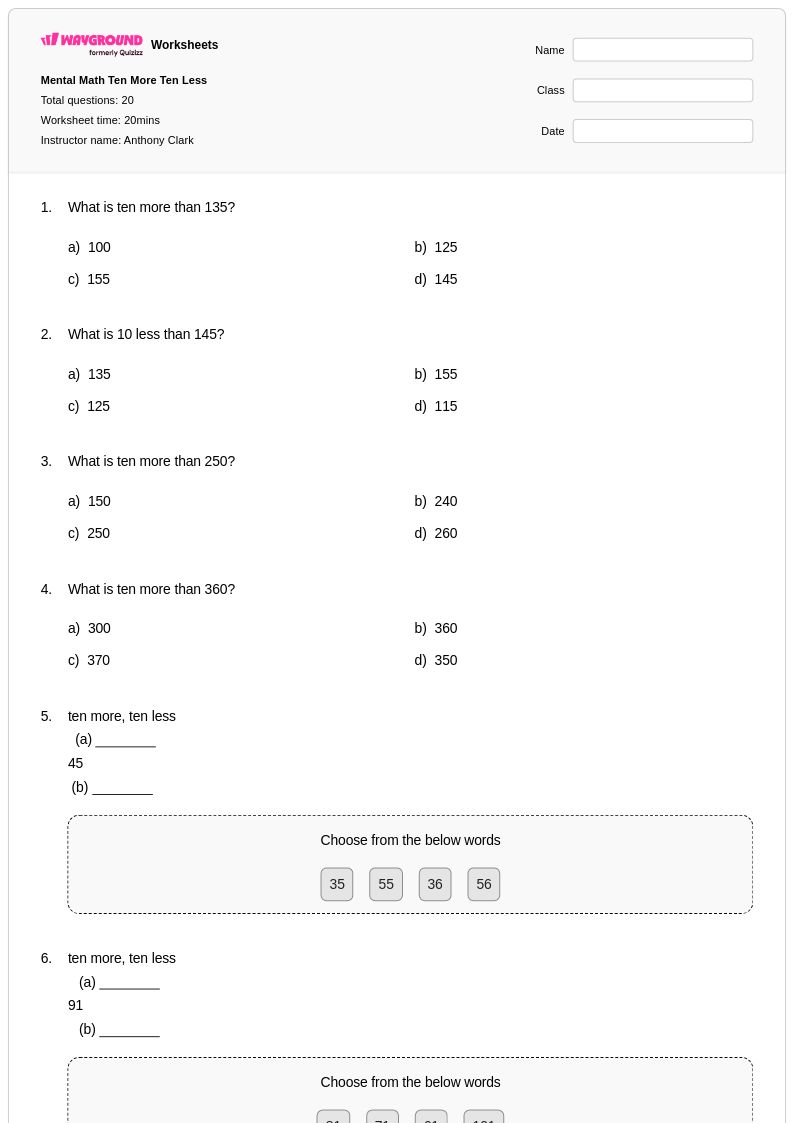
20 Q
1st - Uni
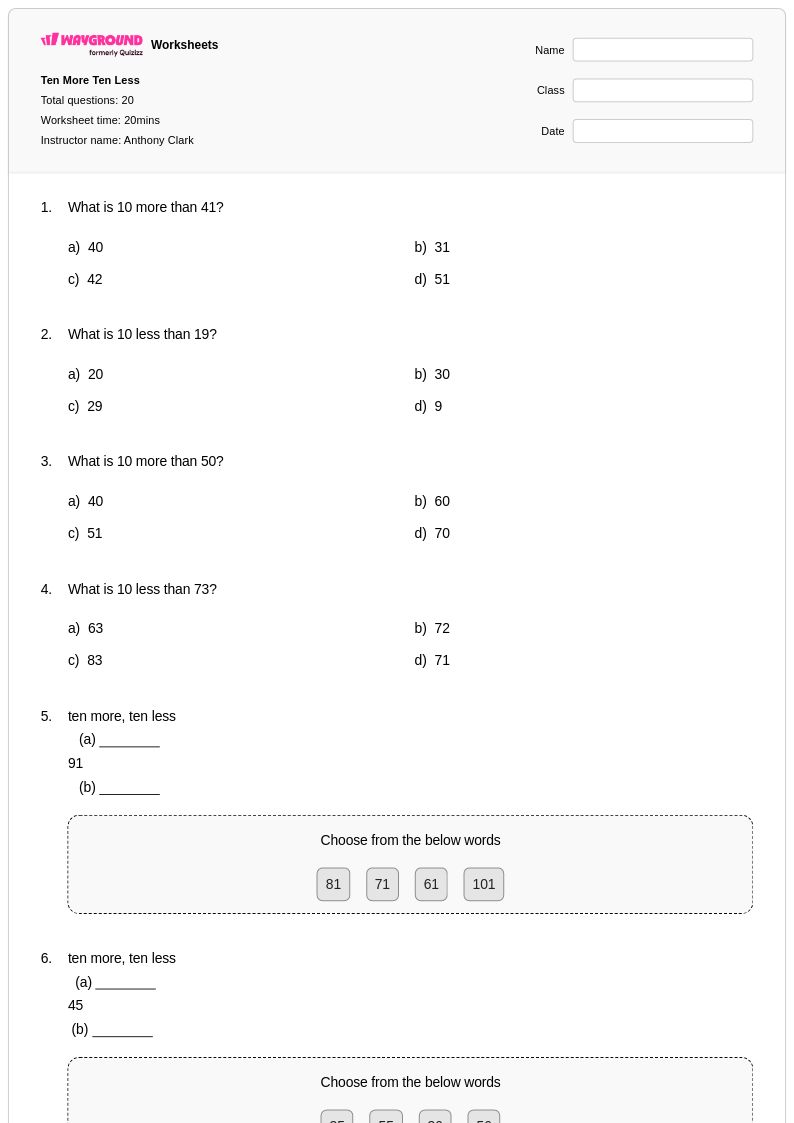
20 Q
1st - Uni
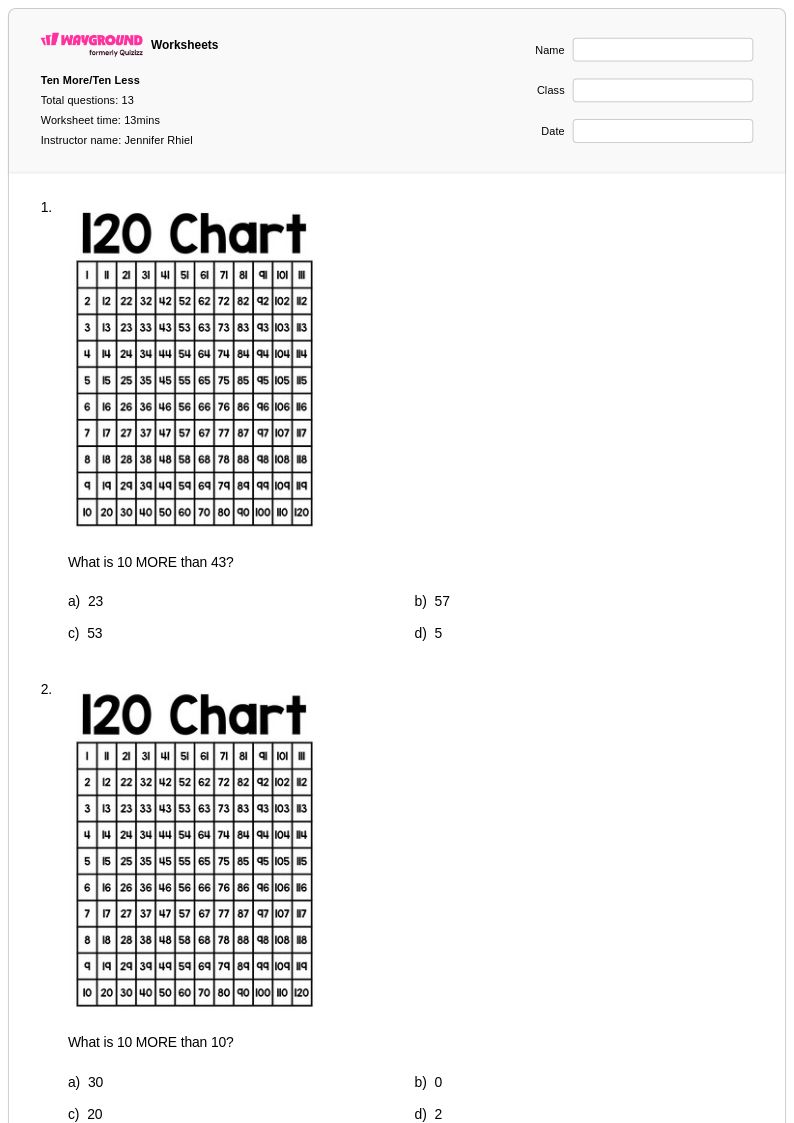
13 Q
1st
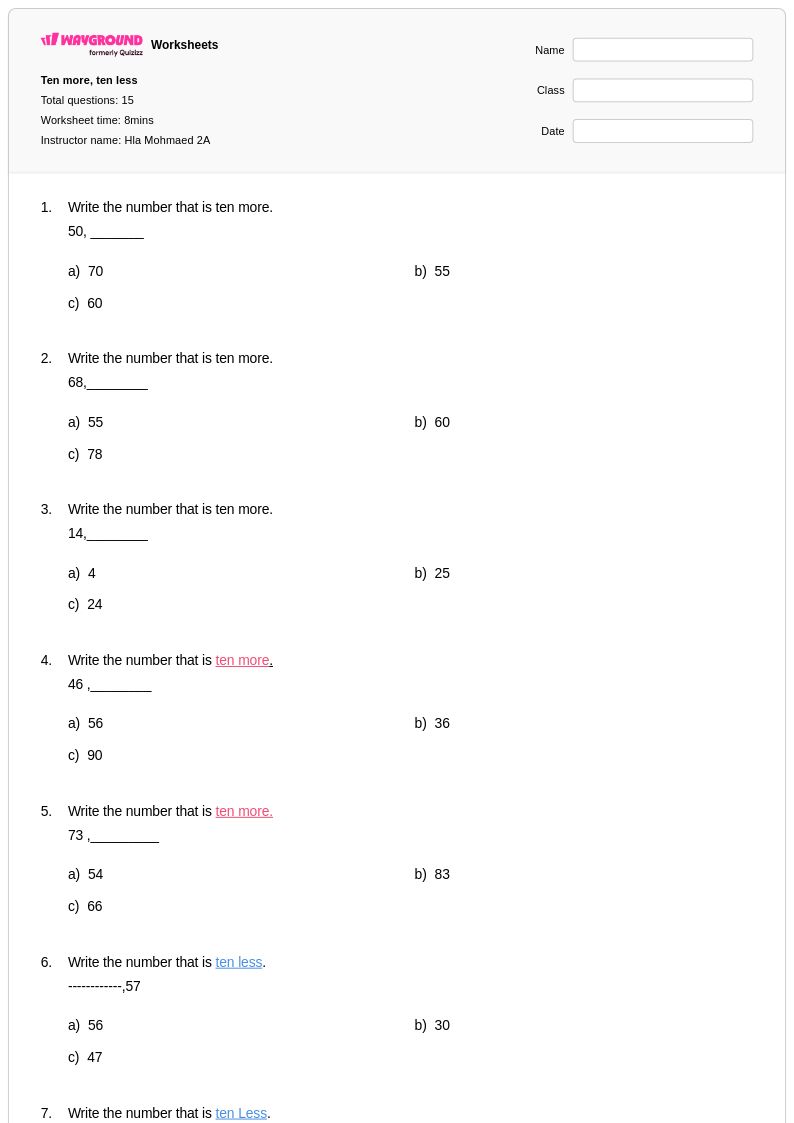
15 Q
1st
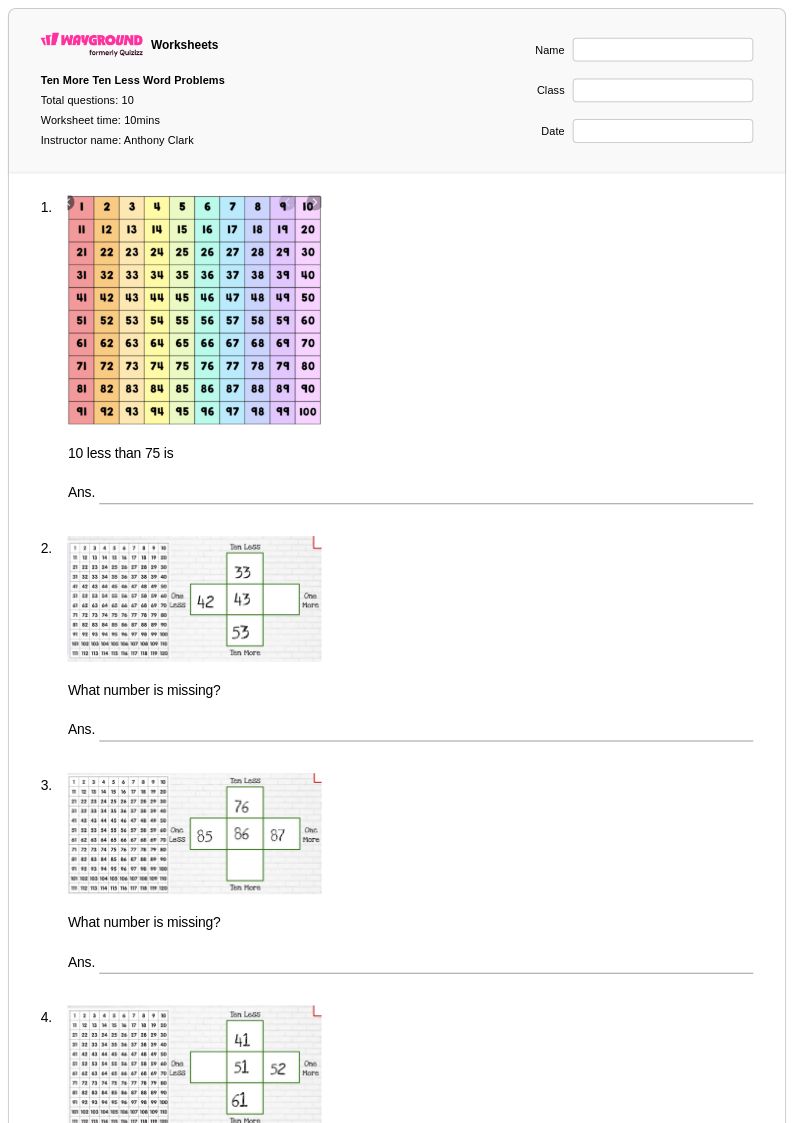
10 Q
1st - Uni
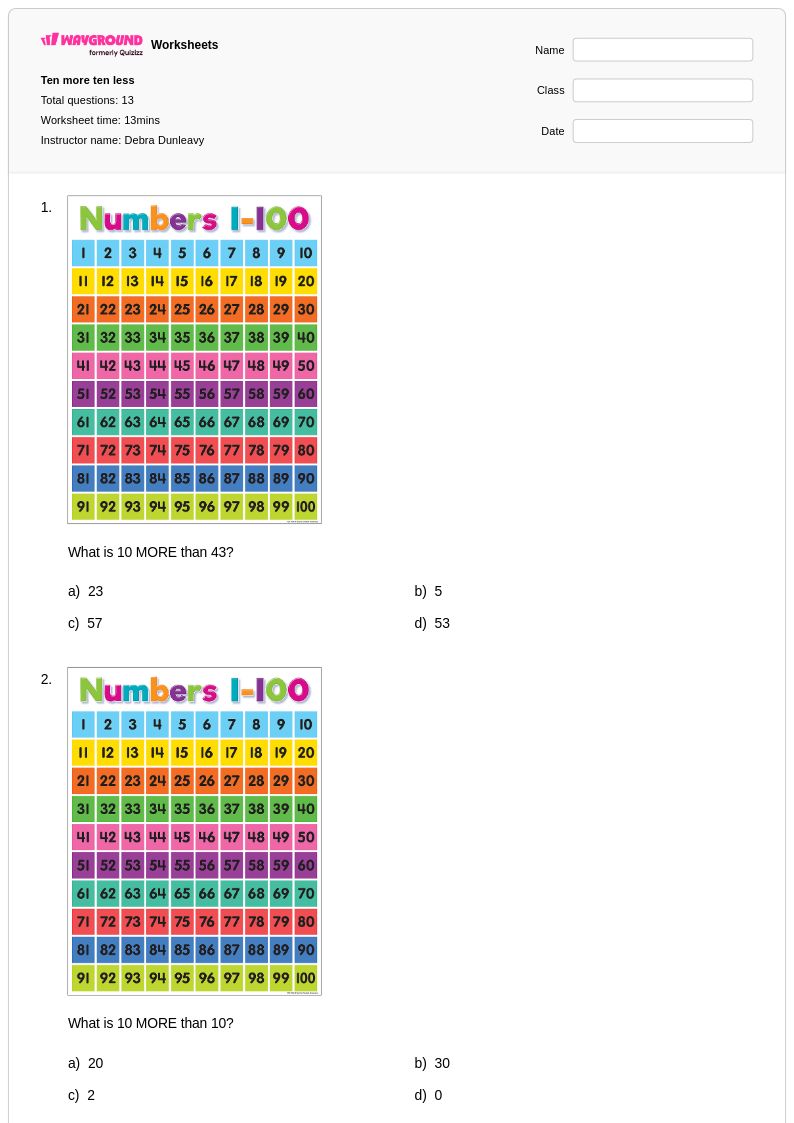
13 Q
1st
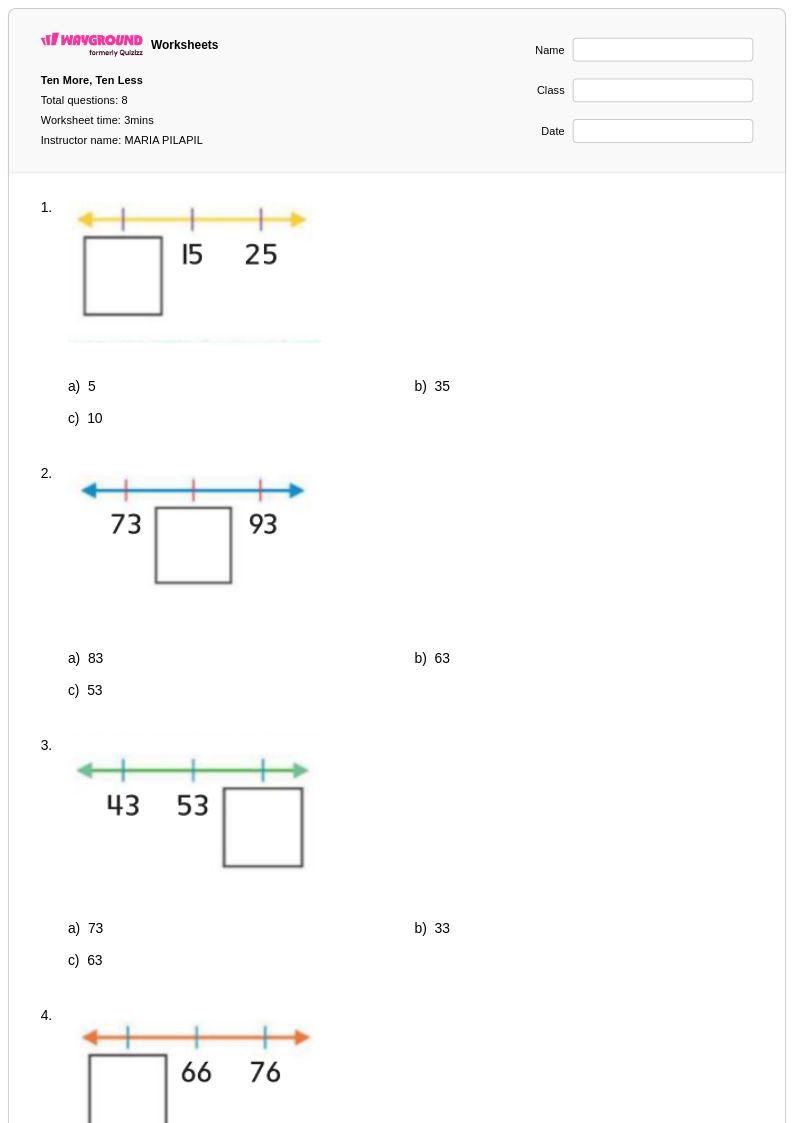
8 Q
1st
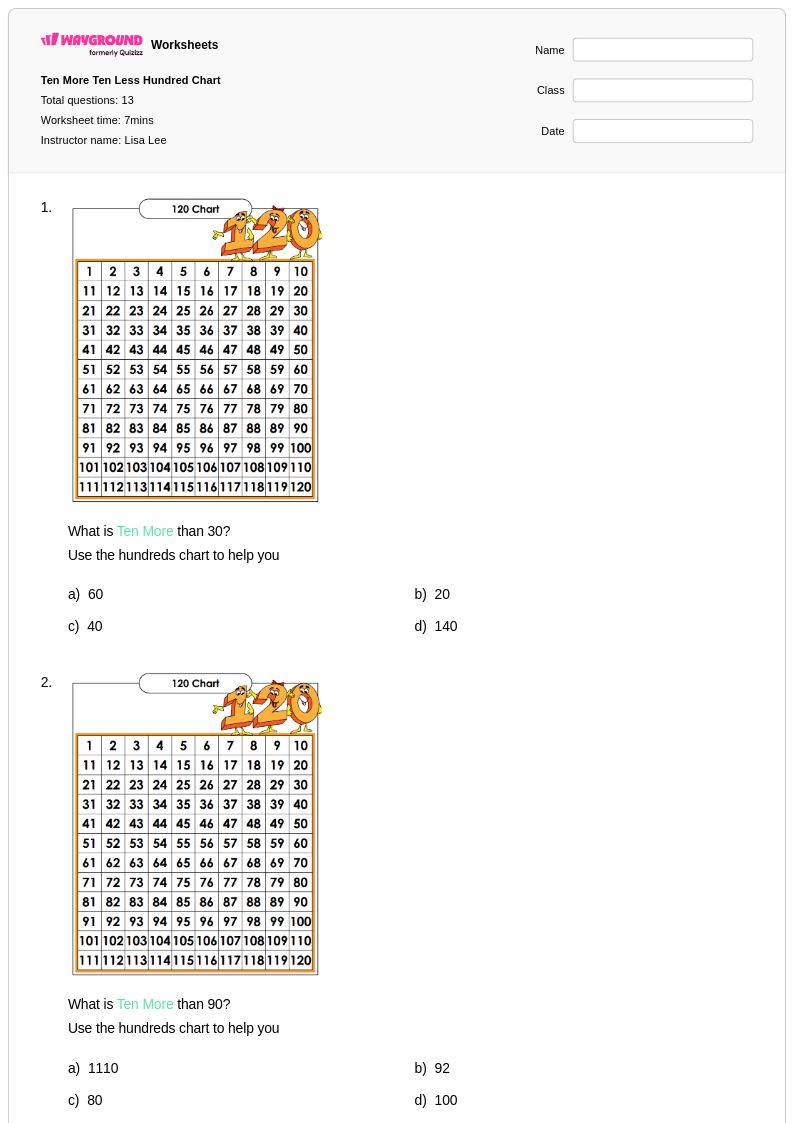
13 Q
KG - 2nd
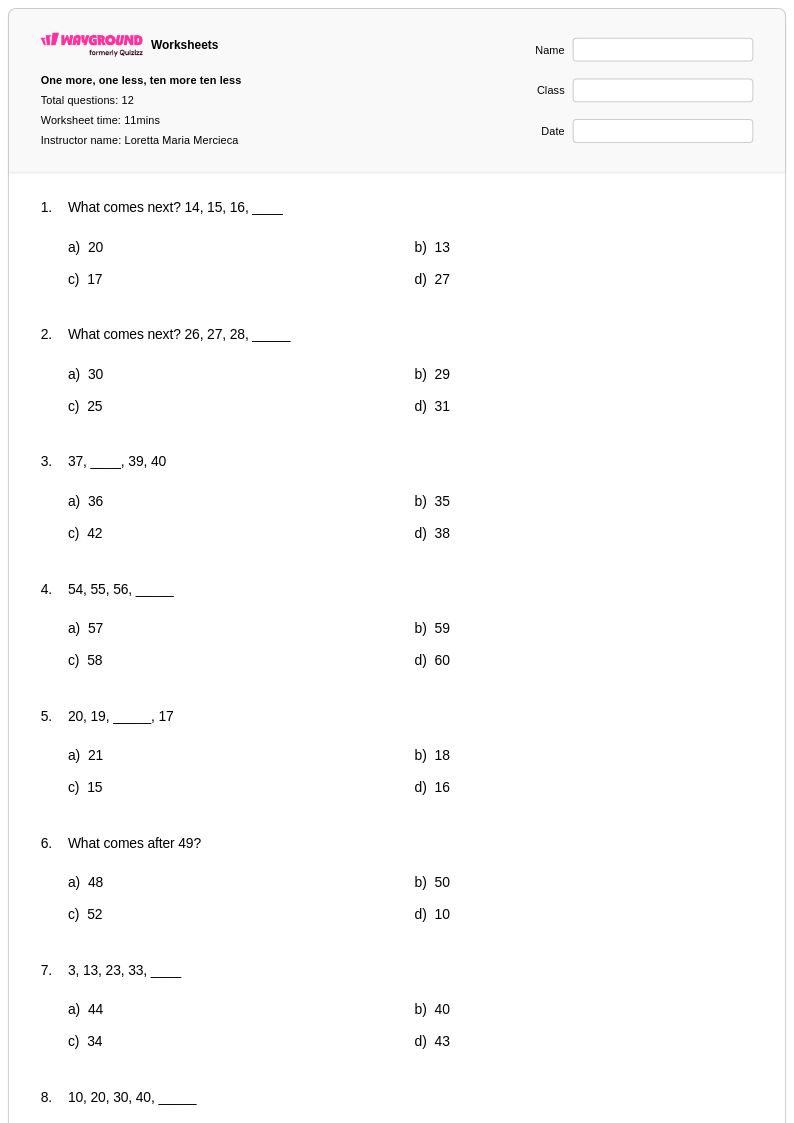
12 Q
2nd
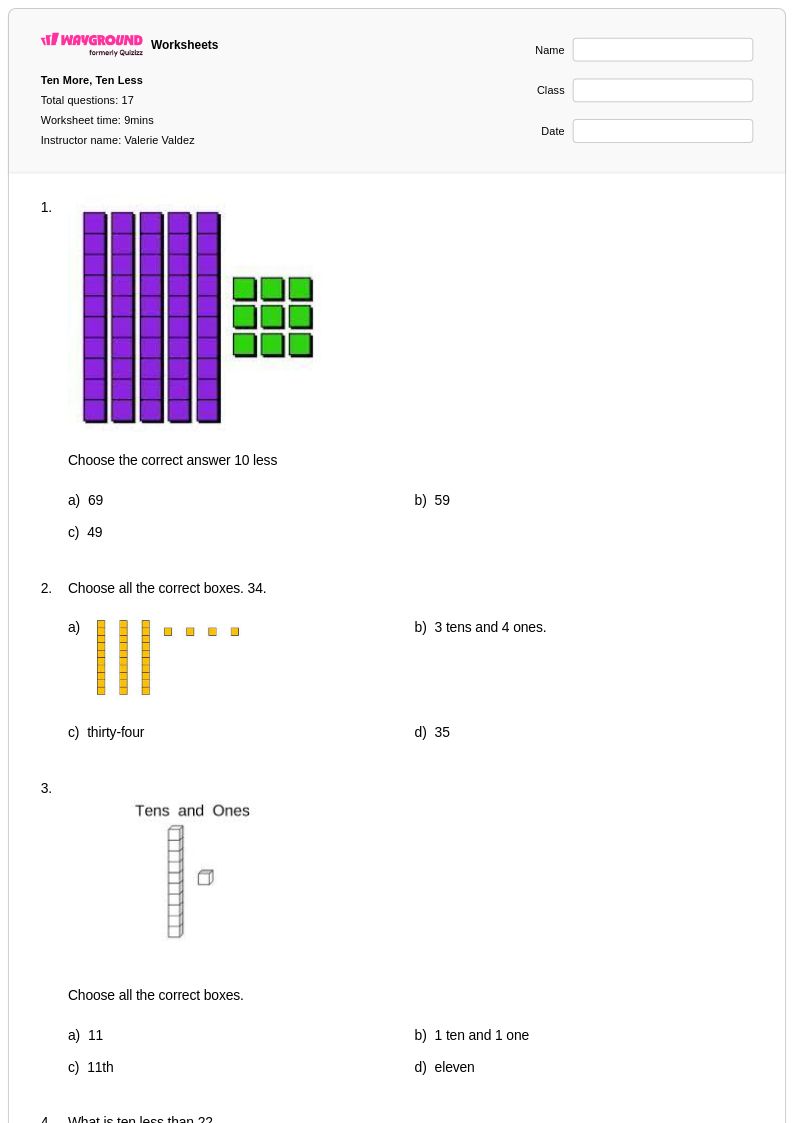
17 Q
2nd
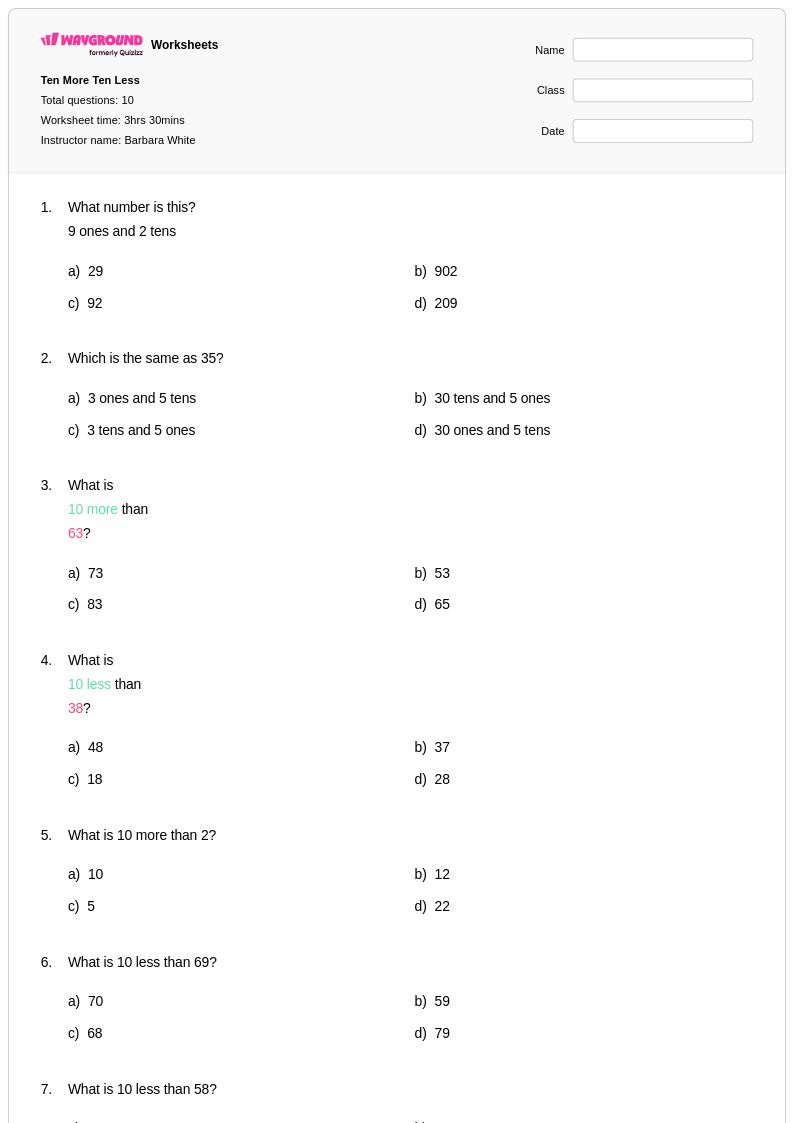
10 Q
1st
10 Q
2nd
10 Q
KG - 2nd
20 Q
KG - 1st
15 Q
2nd - 3rd
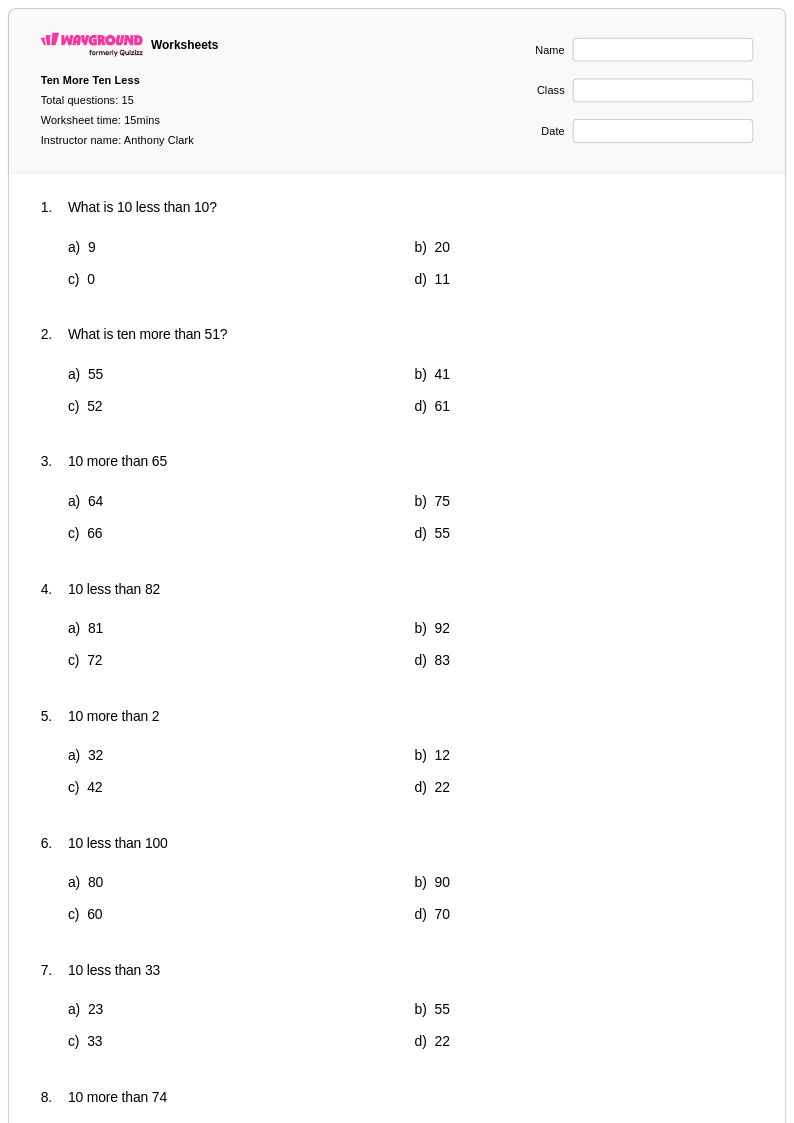
15 Q
1st - Uni
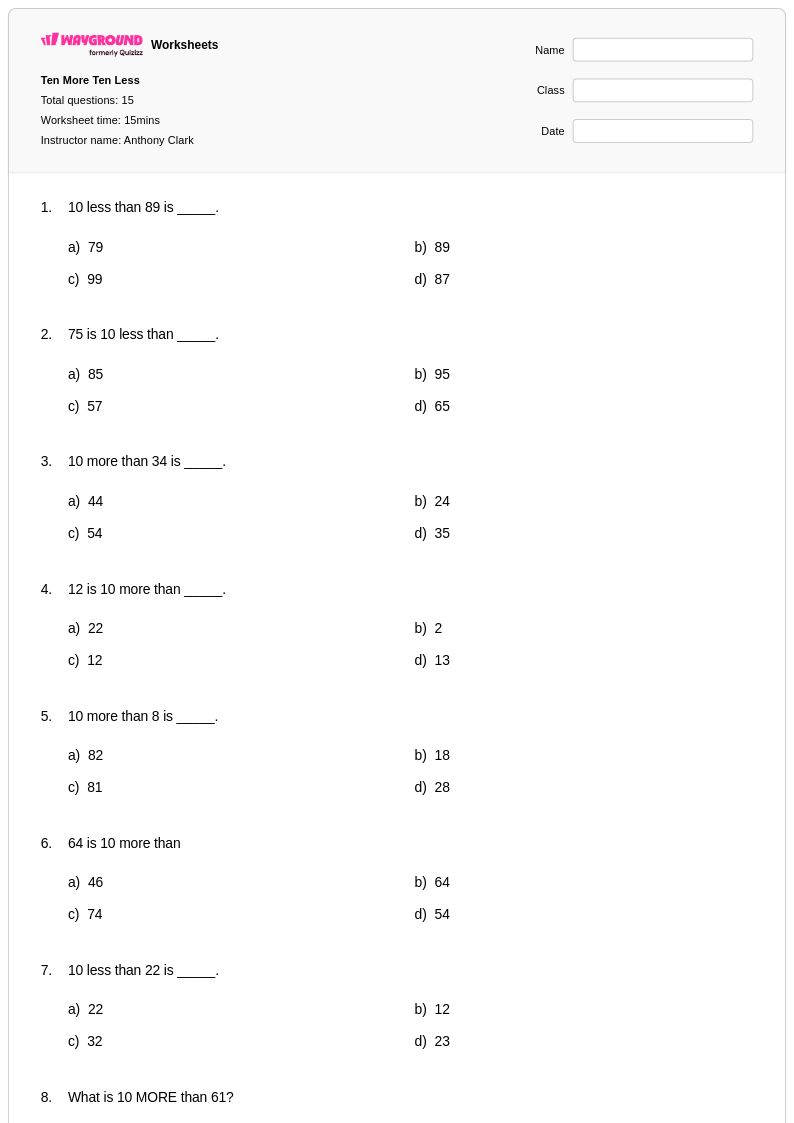
15 Q
1st - Uni
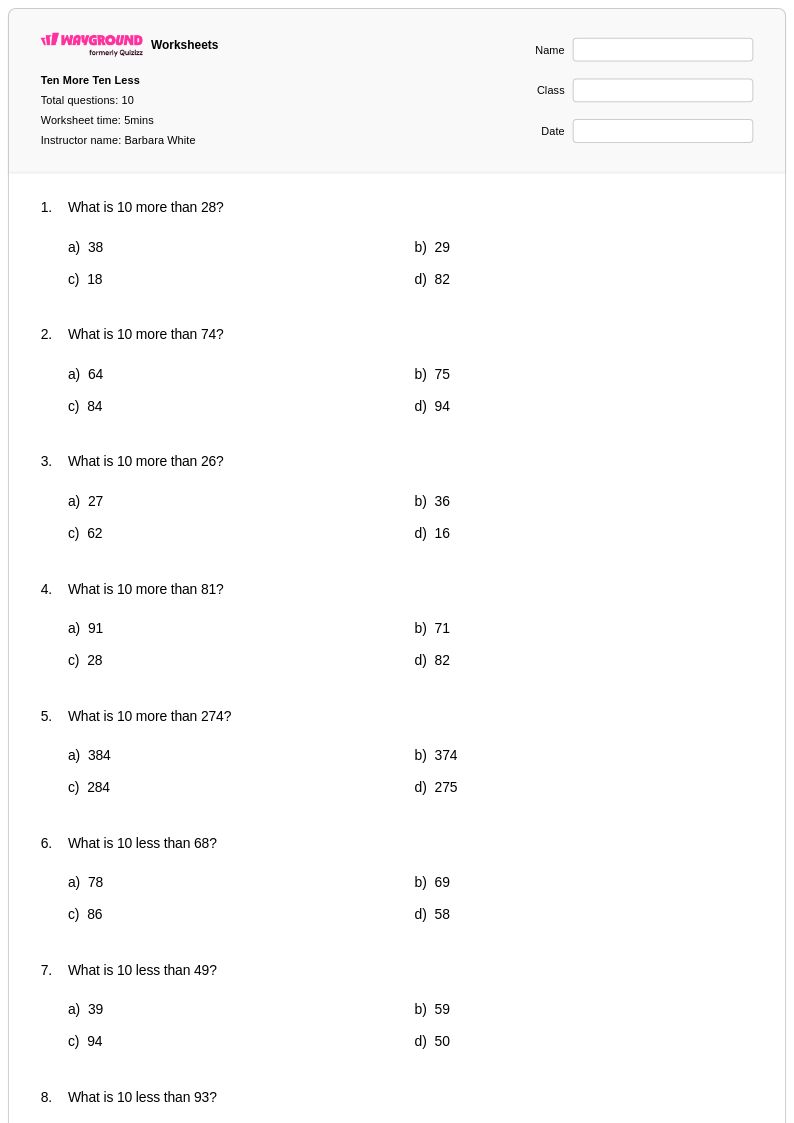
10 Q
1st - 2nd
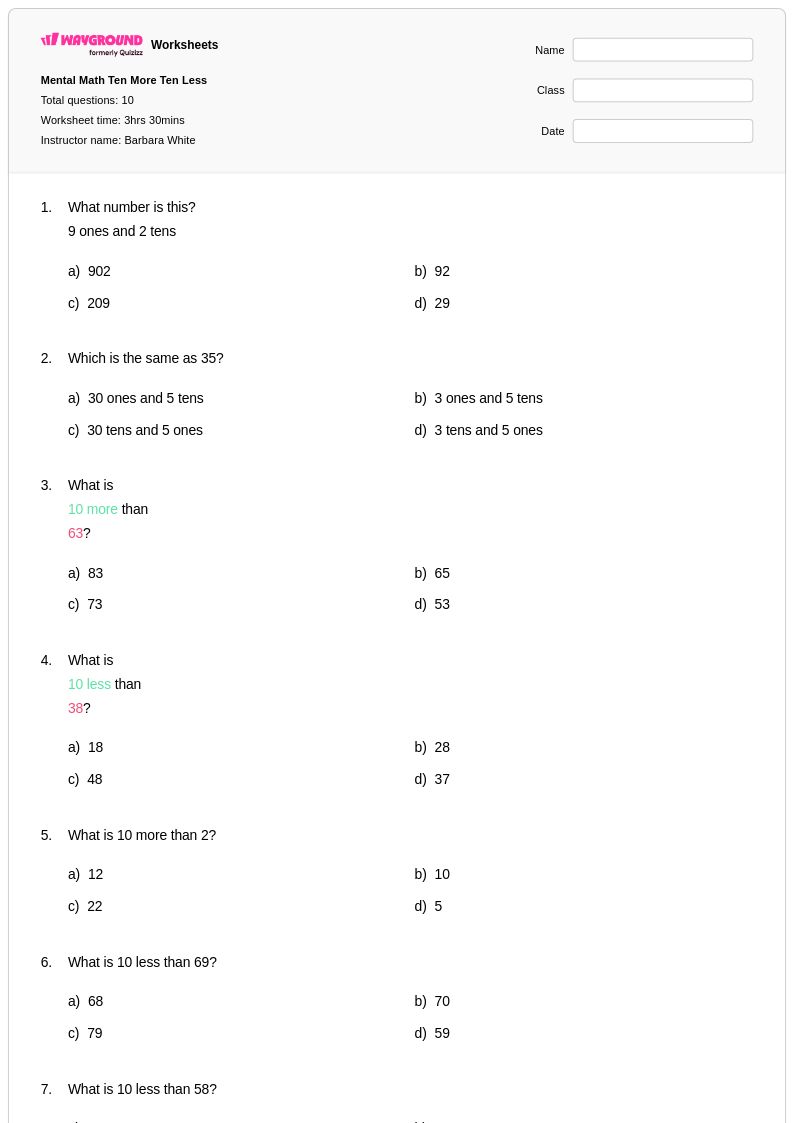
10 Q
1st
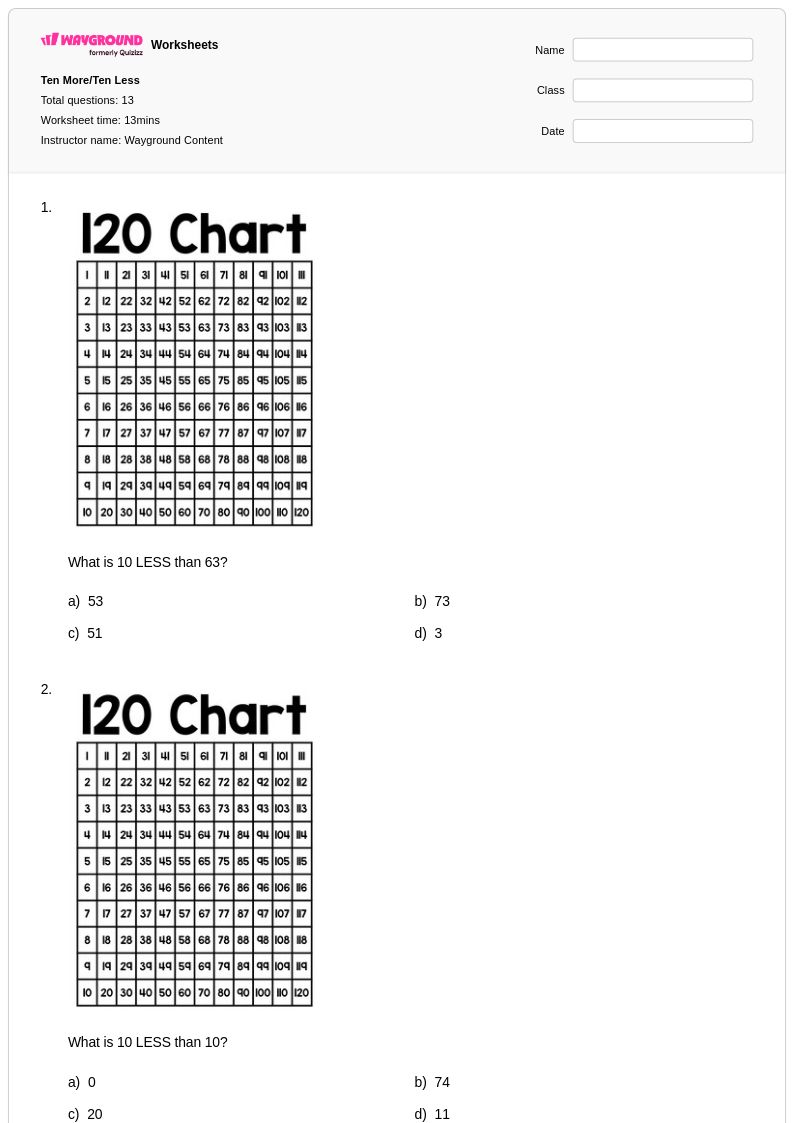
13 Q
1st
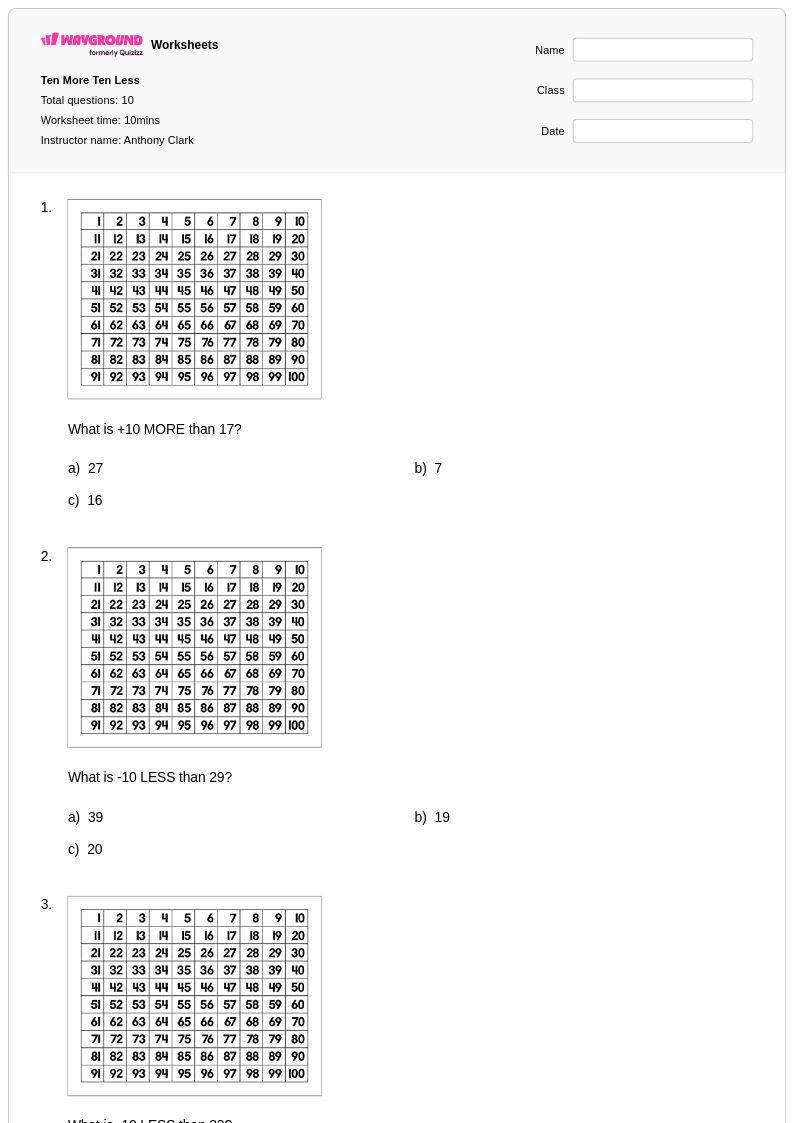
10 Q
1st - Uni
12 Q
1st
15 Q
2nd
Explore Worksheets by Grade
Explore Worksheets by Subjects
Explore printable Ten More Ten Less worksheets
Ten More Ten Less worksheets available through Wayground (formerly Quizizz) provide students with essential practice in developing number sense skills through systematic exploration of addition and subtraction patterns. These comprehensive worksheets focus on helping learners understand the concept of adding or subtracting ten from any given number, strengthening their ability to recognize numerical relationships and patterns within the base-ten system. Students work through carefully designed practice problems that reinforce how adding ten increases the tens digit by one while keeping the ones digit unchanged, and conversely, how subtracting ten decreases the tens digit by one. Each worksheet collection includes detailed answer keys and is available as free printables in convenient PDF format, making it easy for educators to implement immediate skill reinforcement and assessment.
Wayground (formerly Quizizz) empowers teachers with millions of teacher-created Ten More Ten Less worksheet resources that can be easily accessed through robust search and filtering capabilities aligned with educational standards. The platform's differentiation tools allow educators to customize worksheets based on individual student needs, while flexible formatting options provide both printable and digital versions including downloadable PDFs for seamless classroom integration. These comprehensive features support effective lesson planning by enabling teachers to quickly locate appropriate materials for skill practice, targeted remediation for students struggling with place value concepts, and enrichment activities for advanced learners ready to explore more complex numerical patterns. The extensive collection ensures that educators have access to varied problem types and difficulty levels to address diverse learning needs within their Ten More Ten Less instruction.
FAQs
How do I teach ten more and ten less?
What exercises help students practice ten more and ten less?
What mistakes do students make with ten more and ten less?
How can I use a Ten More Ten Less worksheet in class?
How does ten more and ten less fit into the Common Core math progression?
How can I differentiate ten more and ten less practice?