
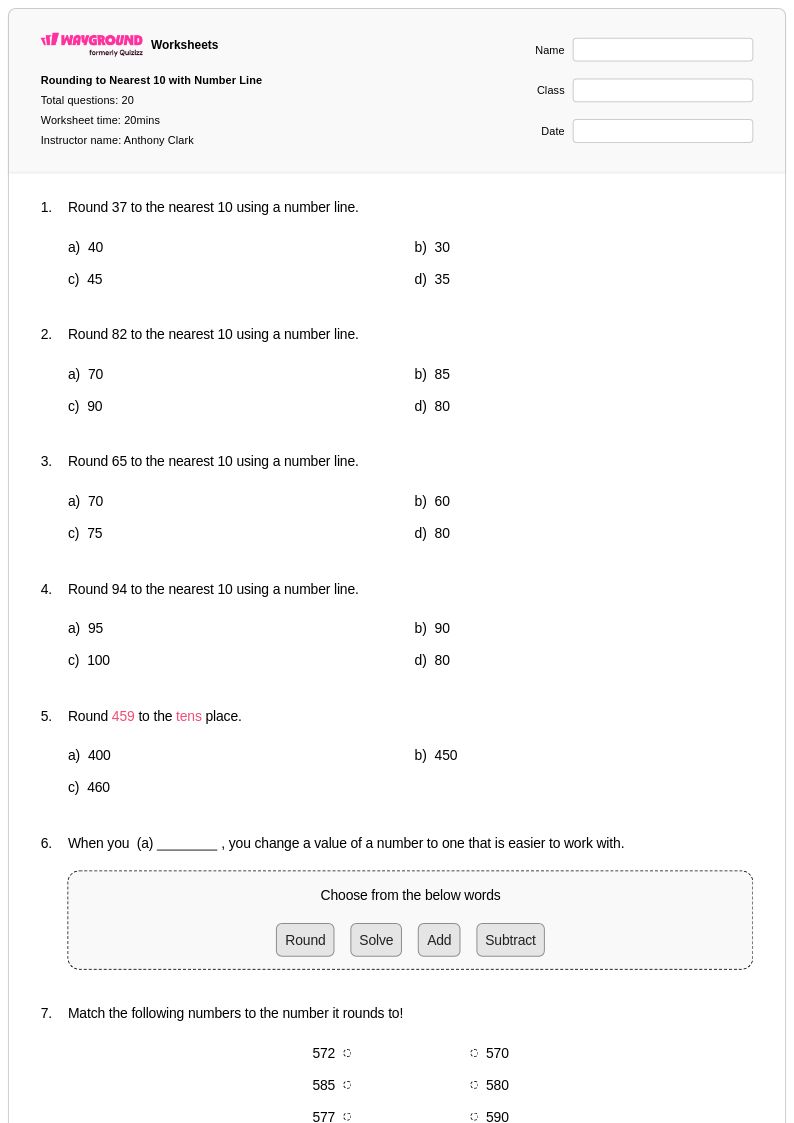
20 Q
3rd - Uni
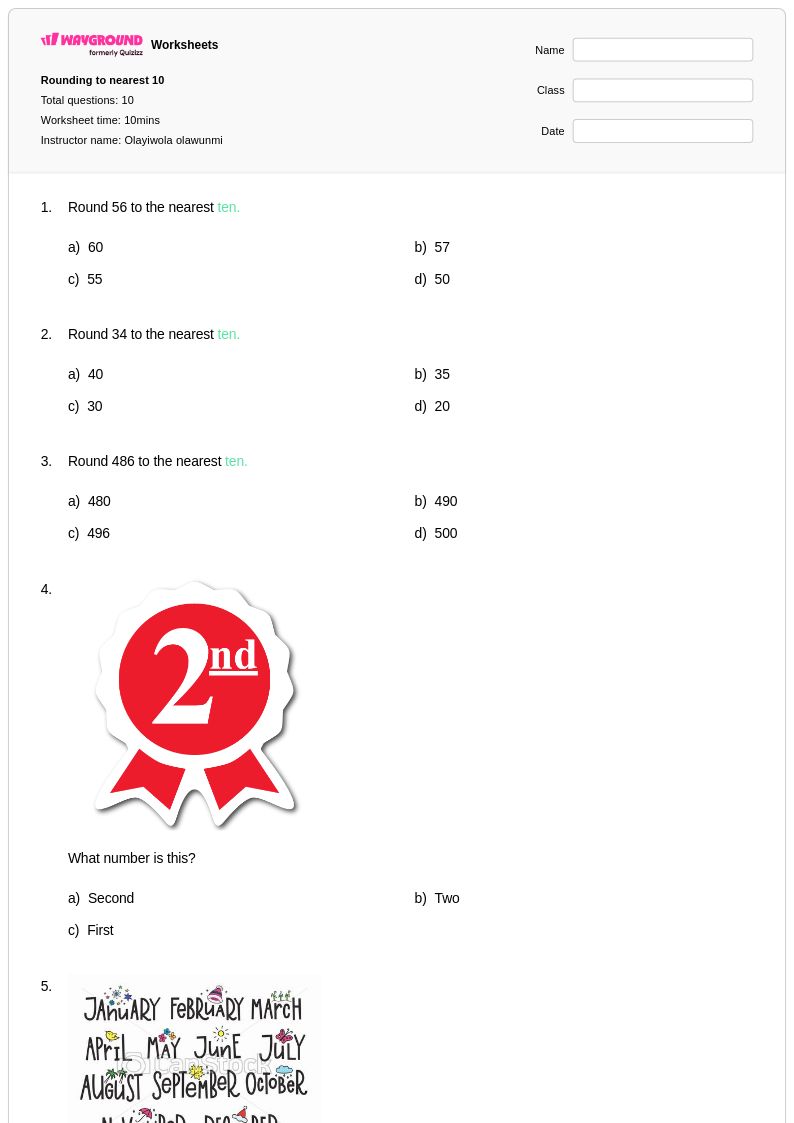
10 Q
1st
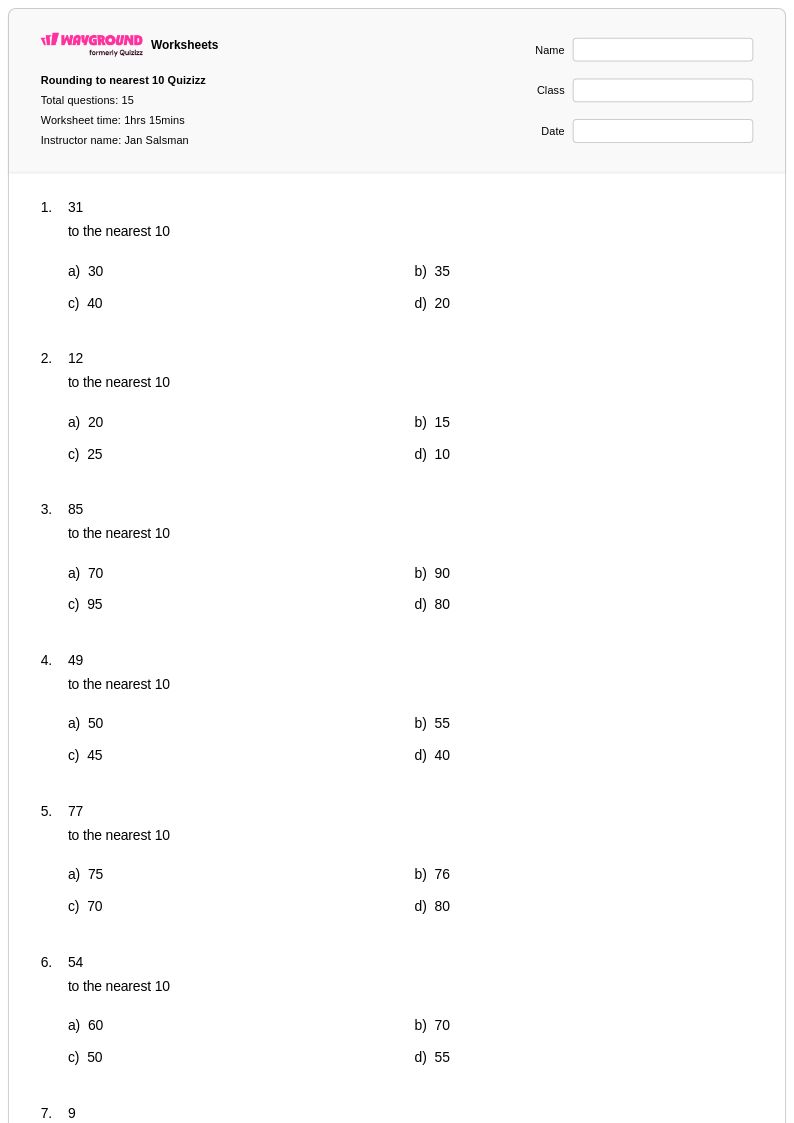
15 Q
3rd
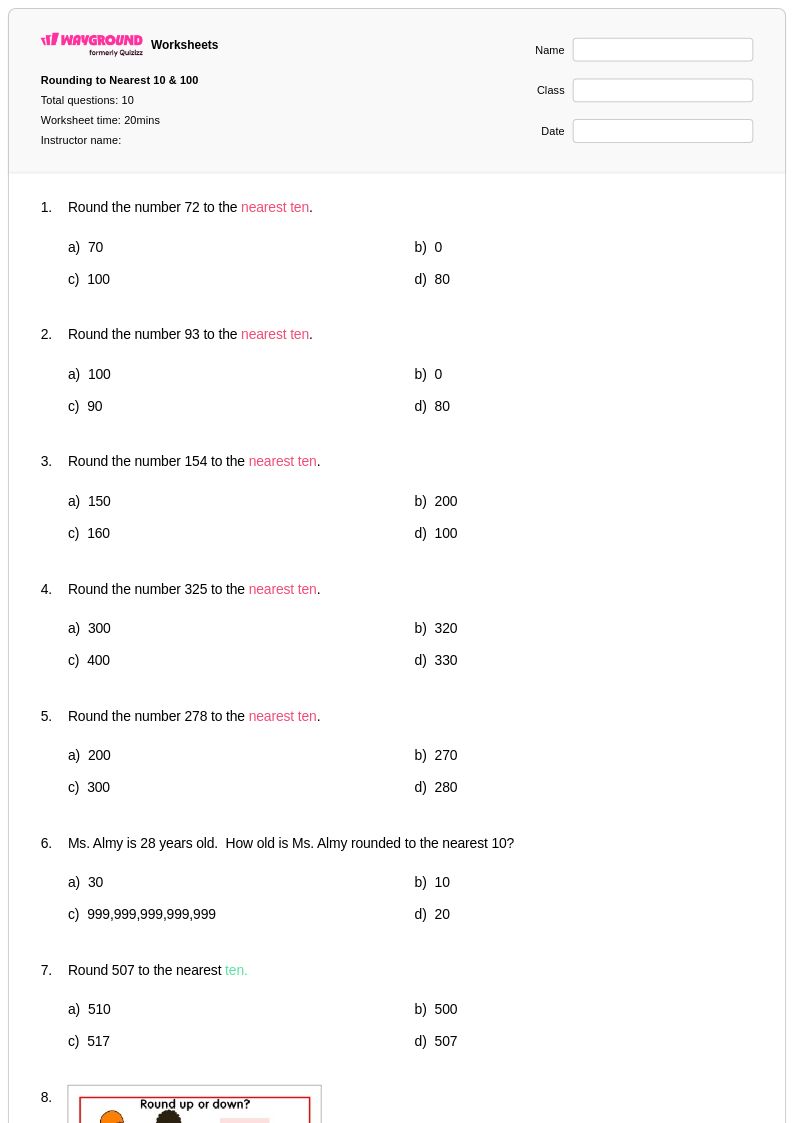
10 Q
3rd
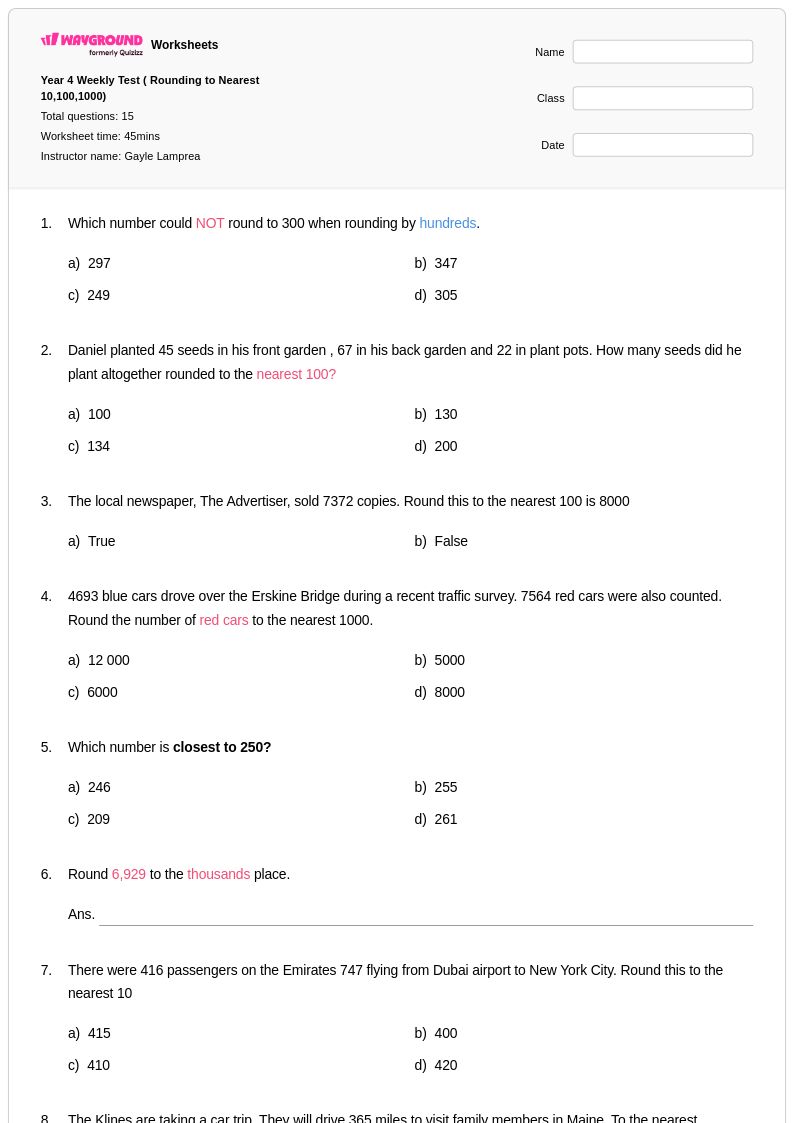
15 Q
4th
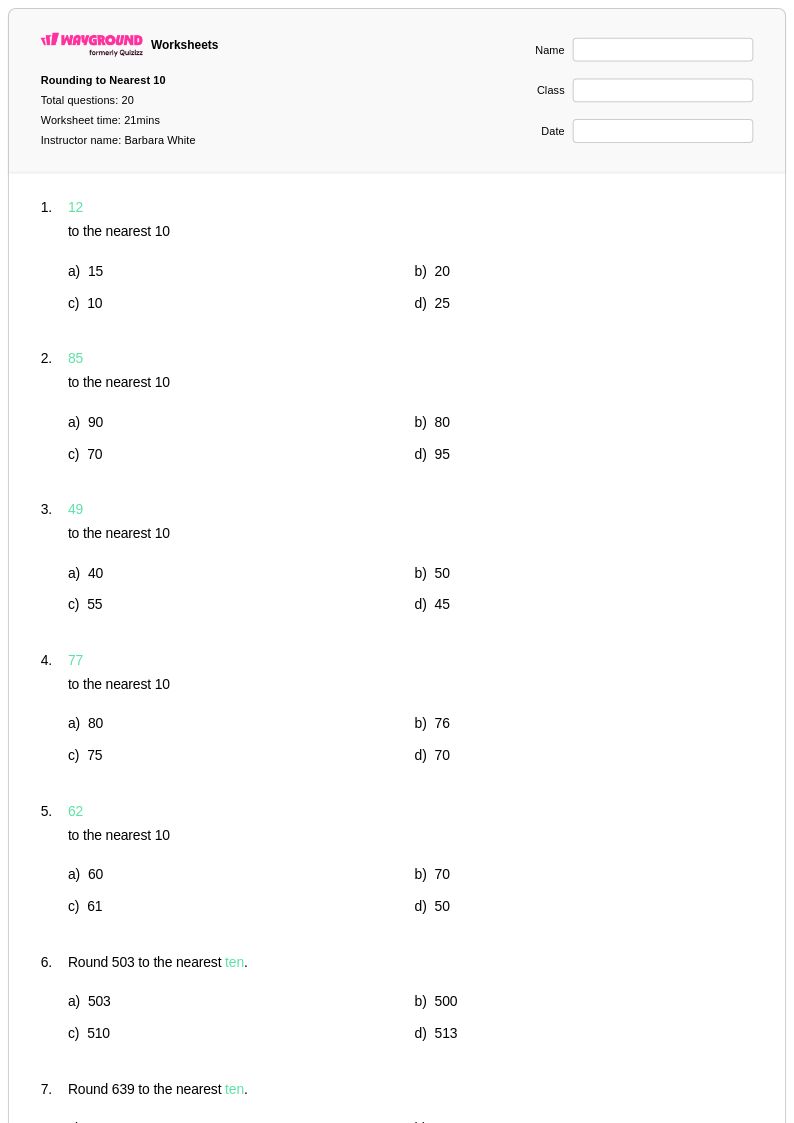
20 Q
2nd - 4th
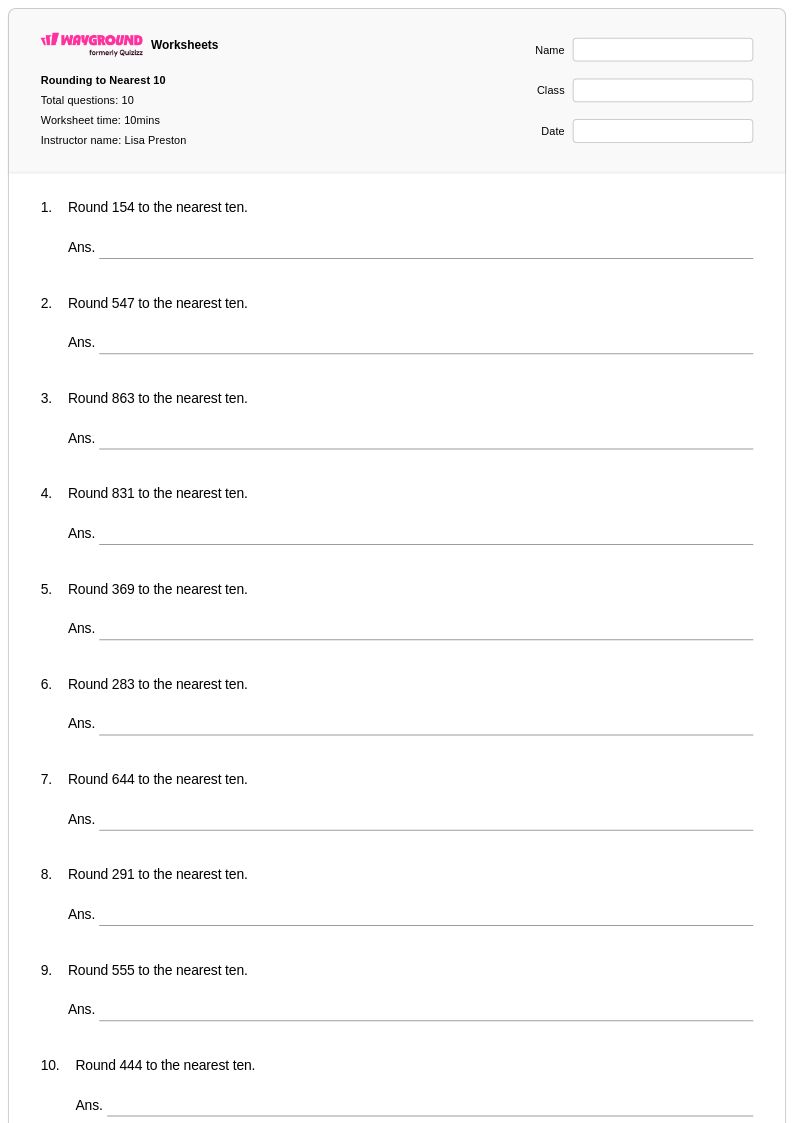
10 Q
3rd
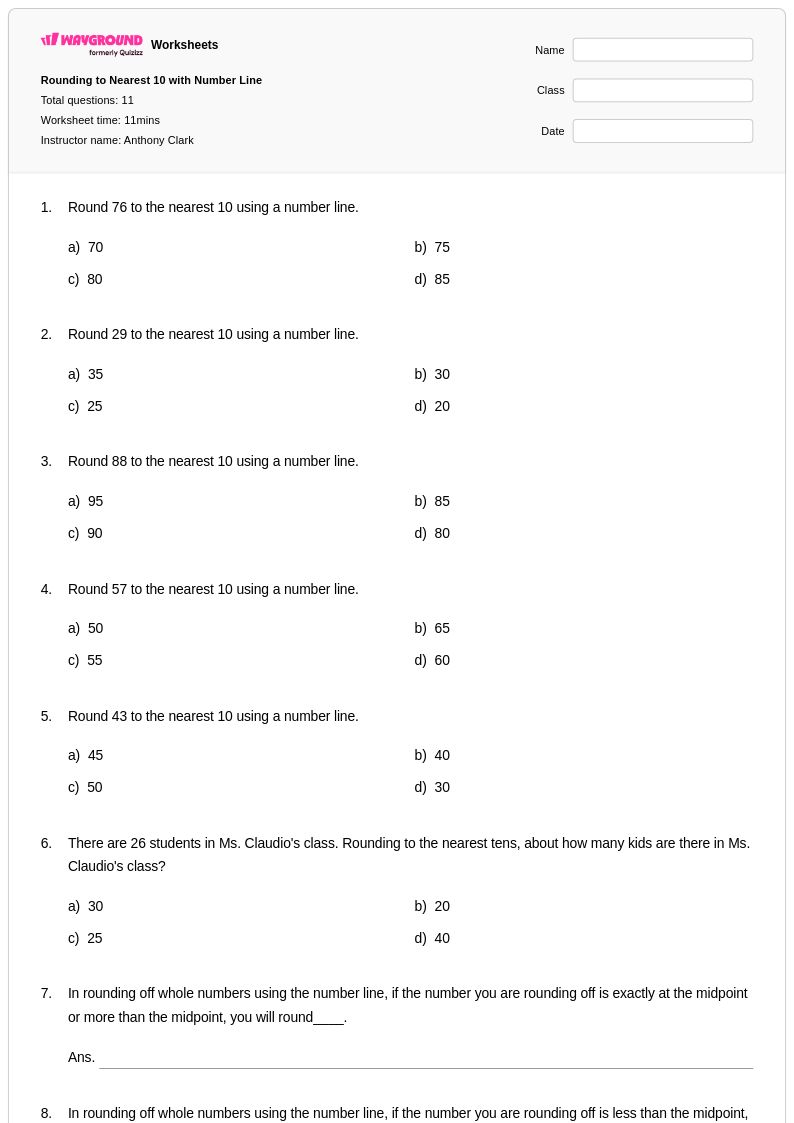
11 Q
3rd - Uni
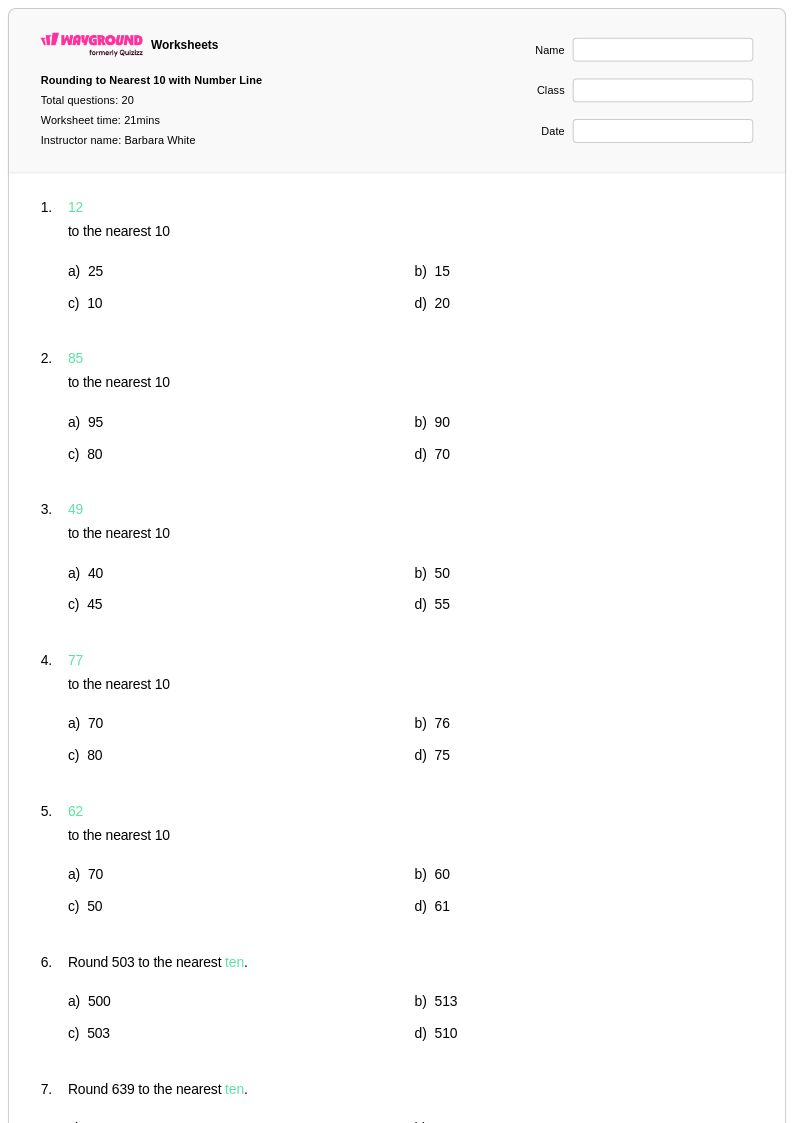
20 Q
2nd - 4th
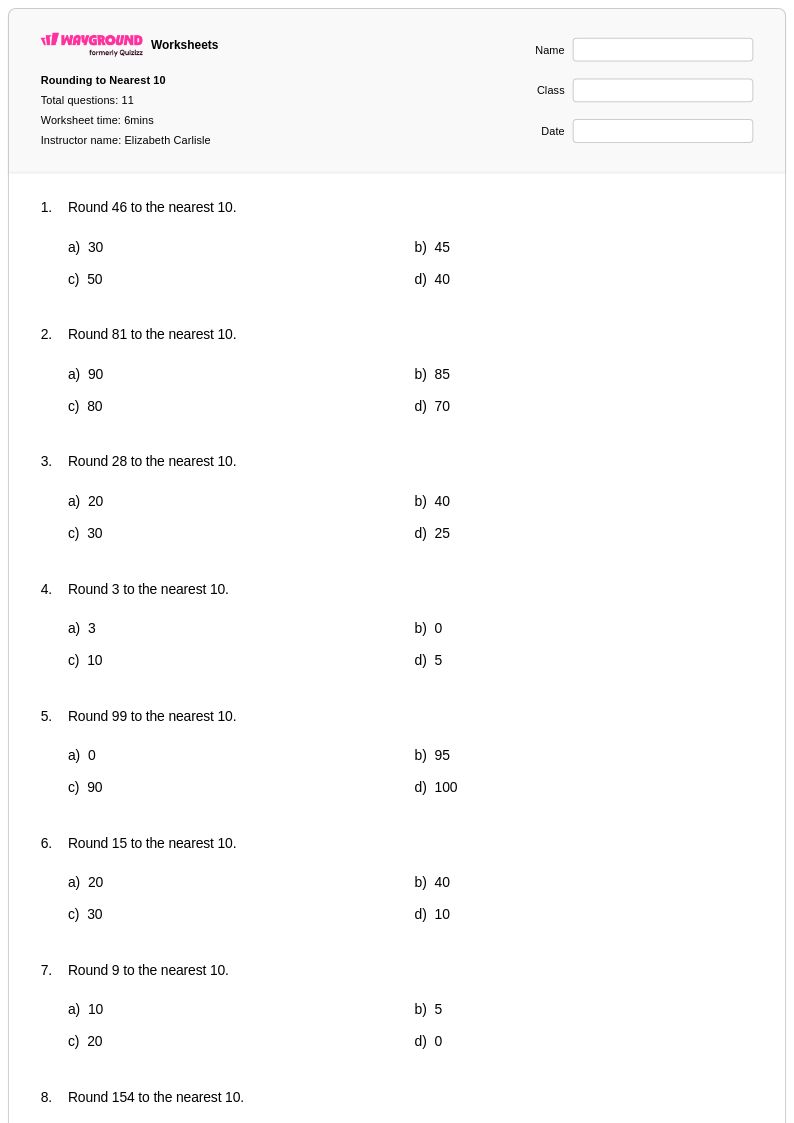
11 Q
2nd - 3rd
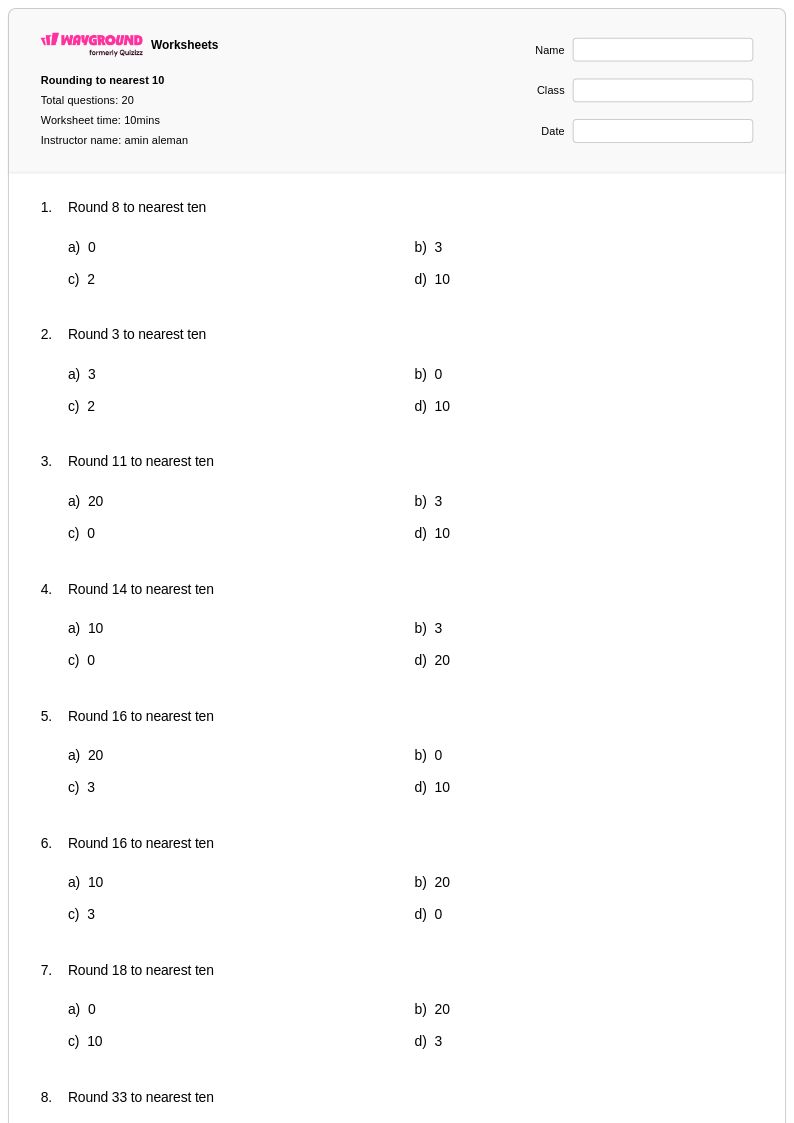
20 Q
2nd
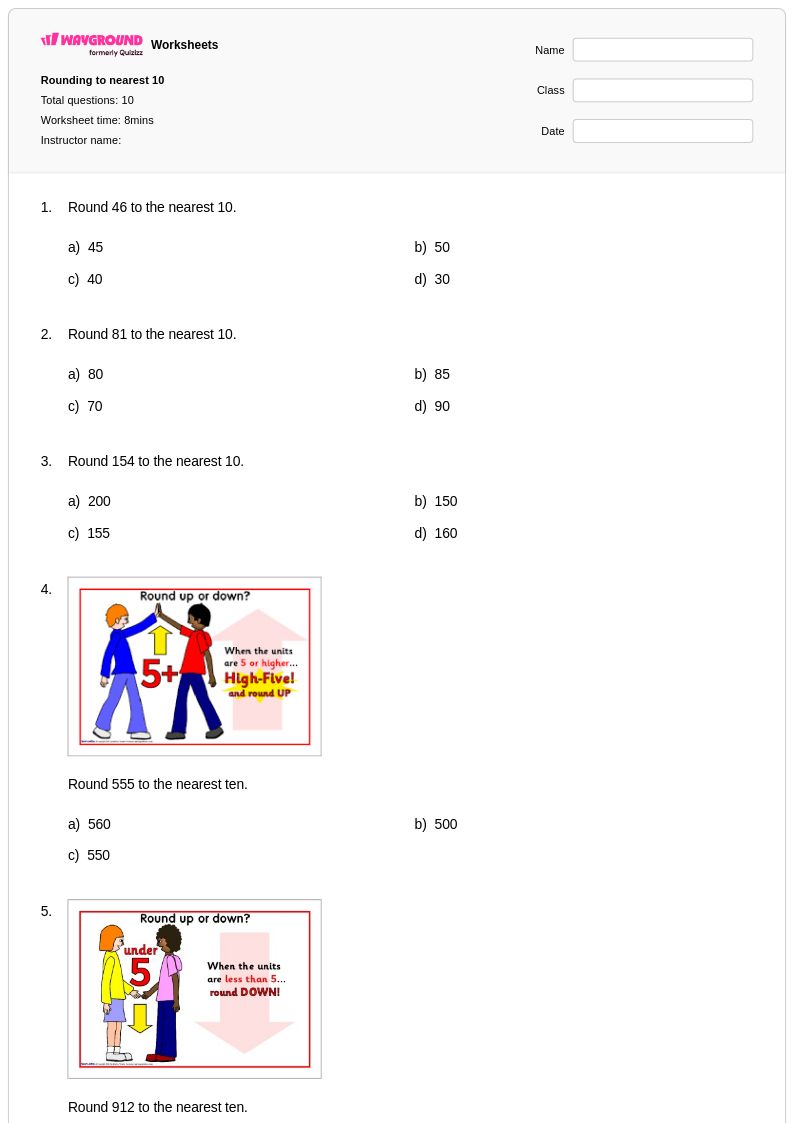
10 Q
3rd
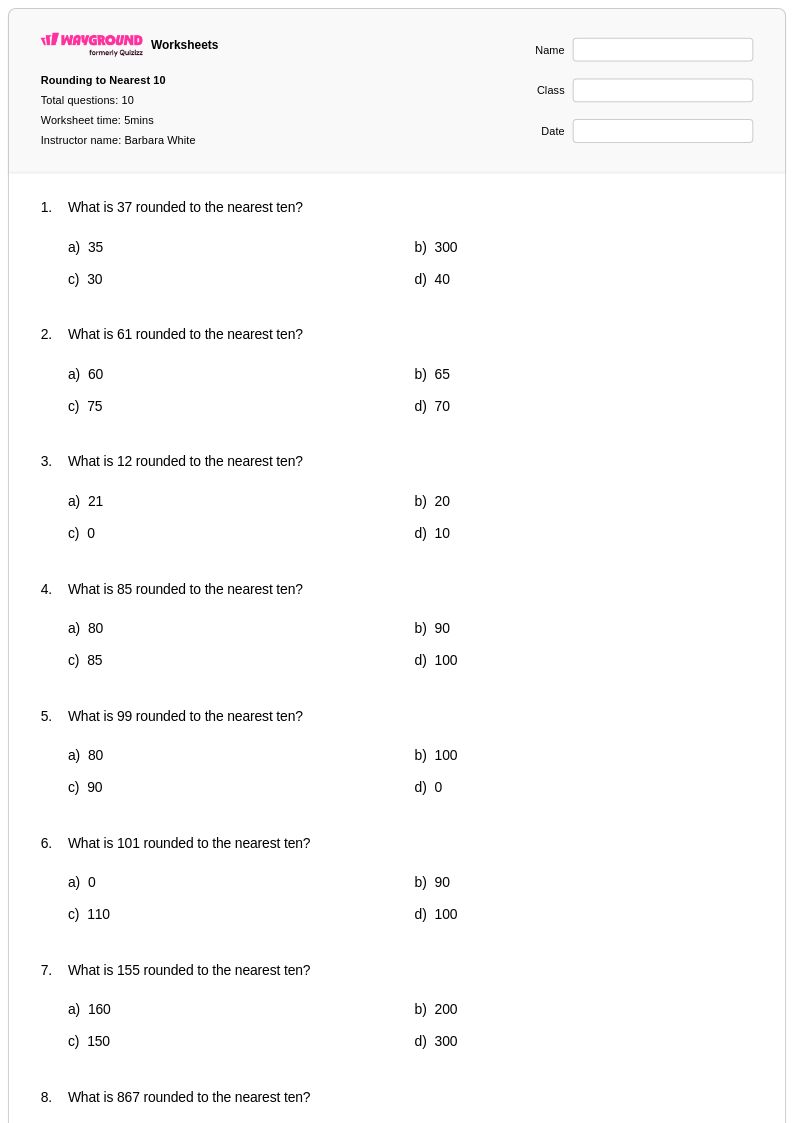
10 Q
3rd
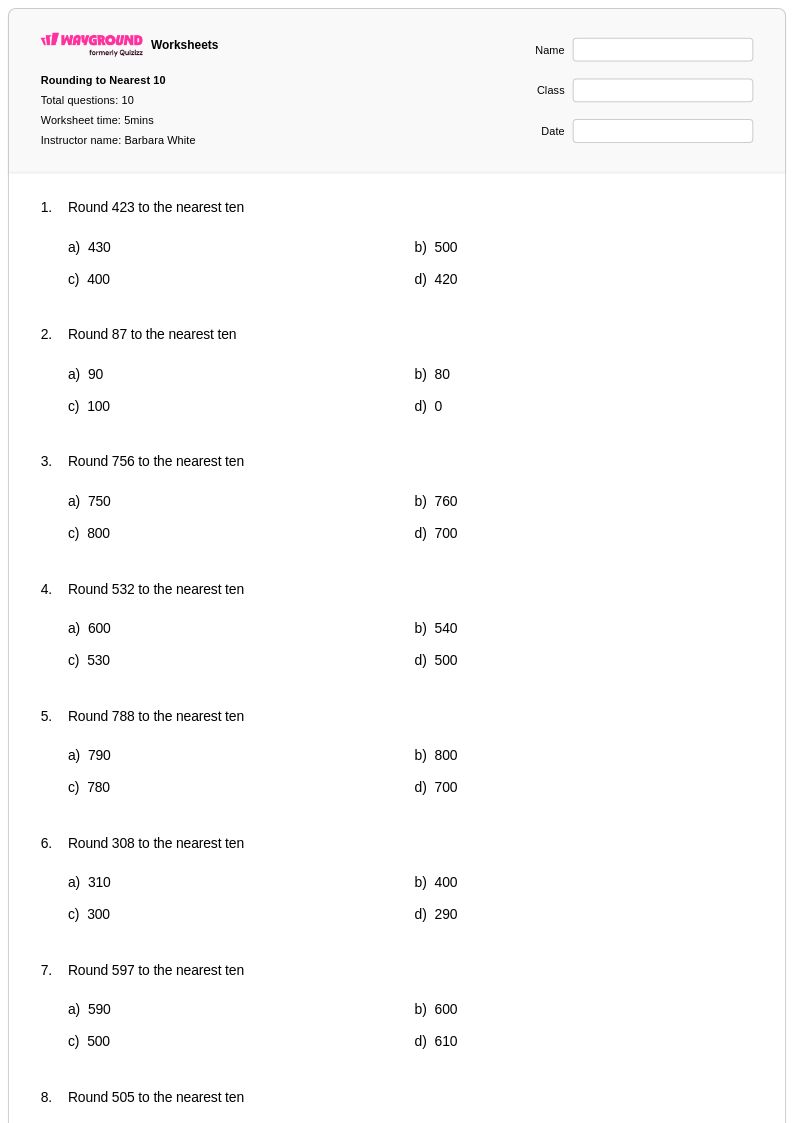
10 Q
3rd
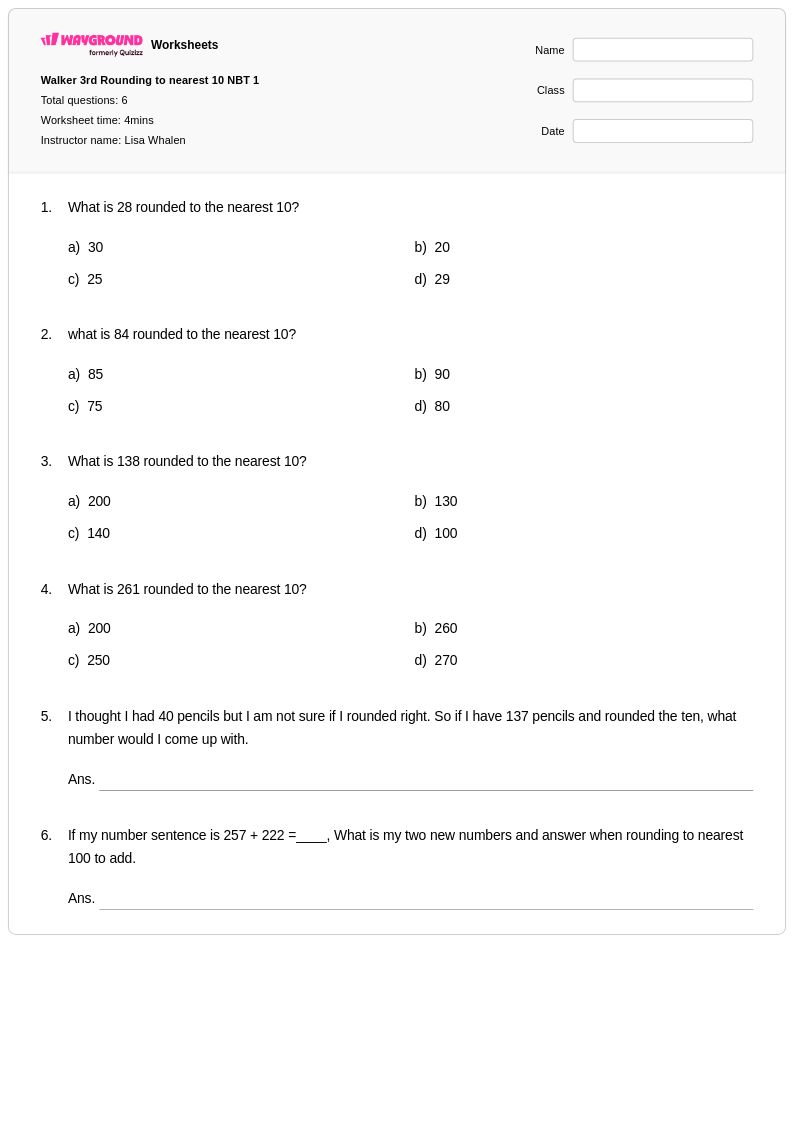
6 Q
3rd
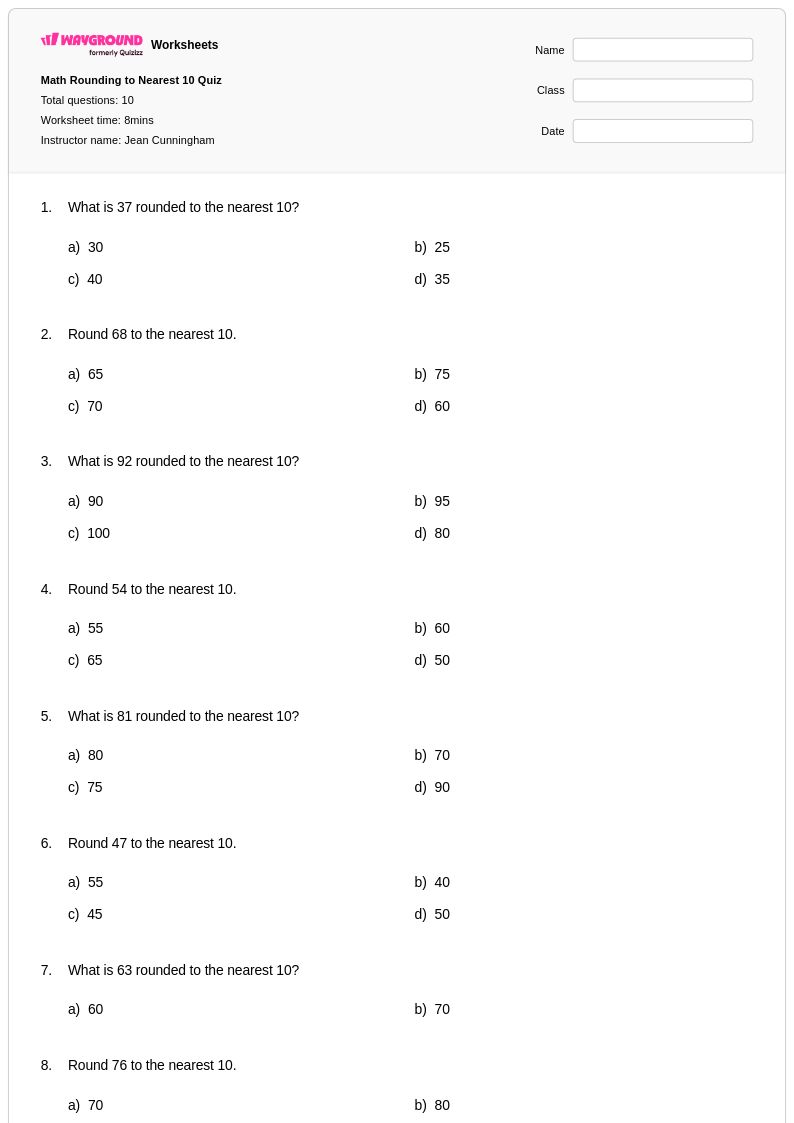
10 Q
2nd
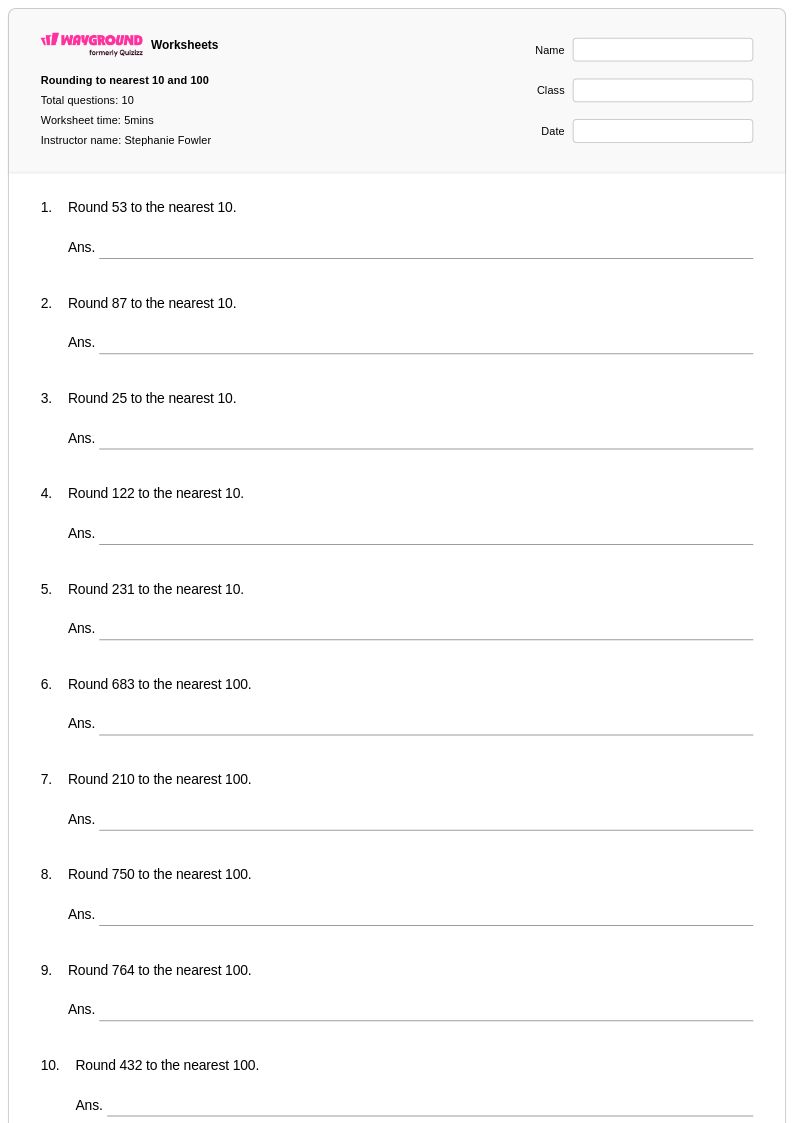
10 Q
3rd
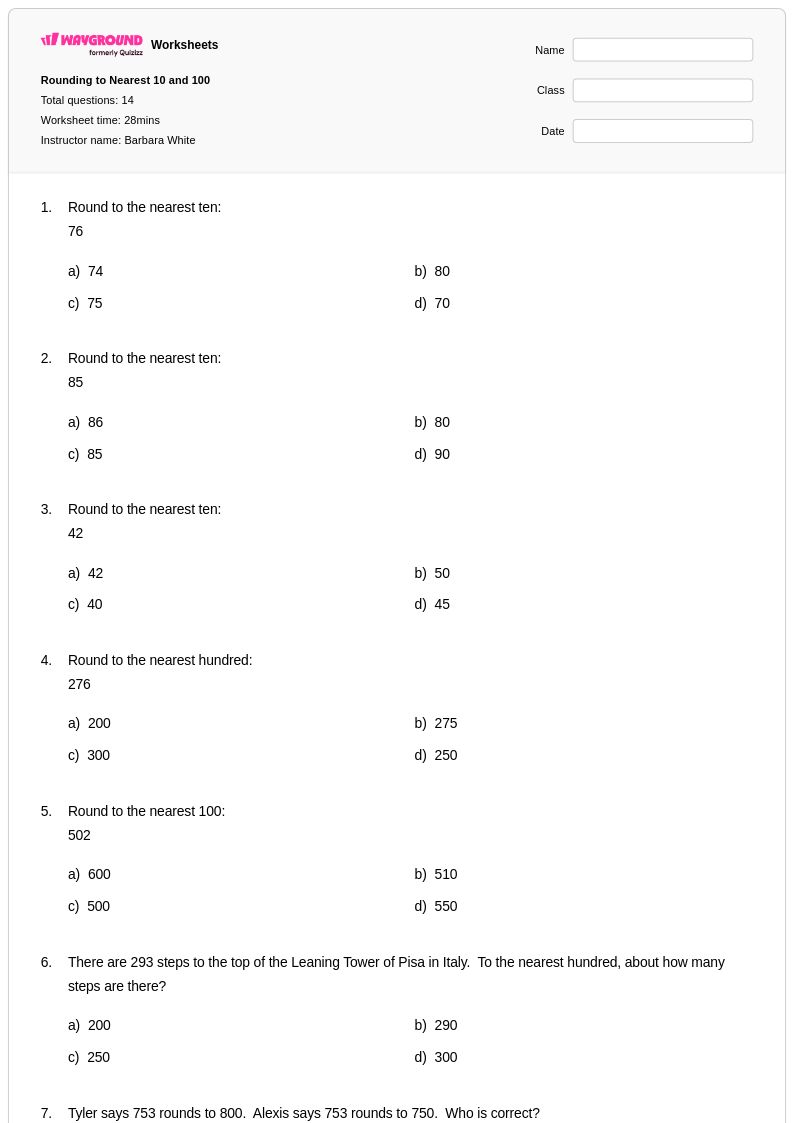
14 Q
3rd
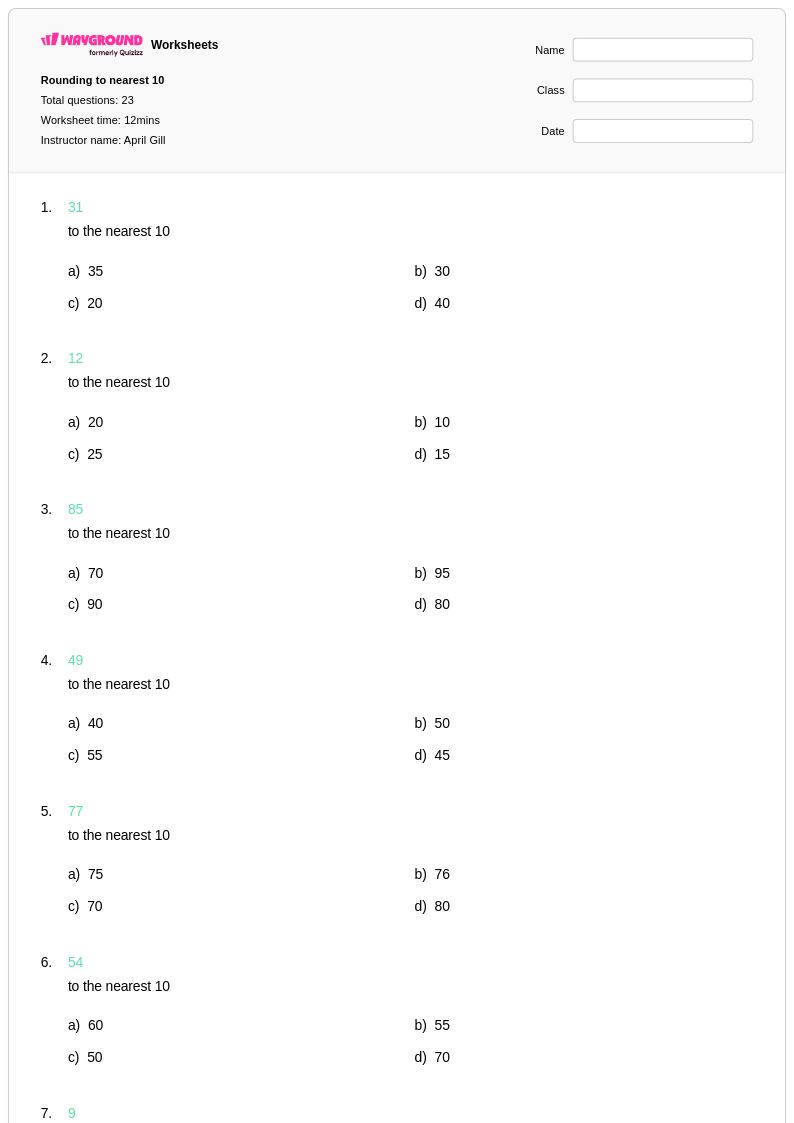
23 Q
2nd - 3rd
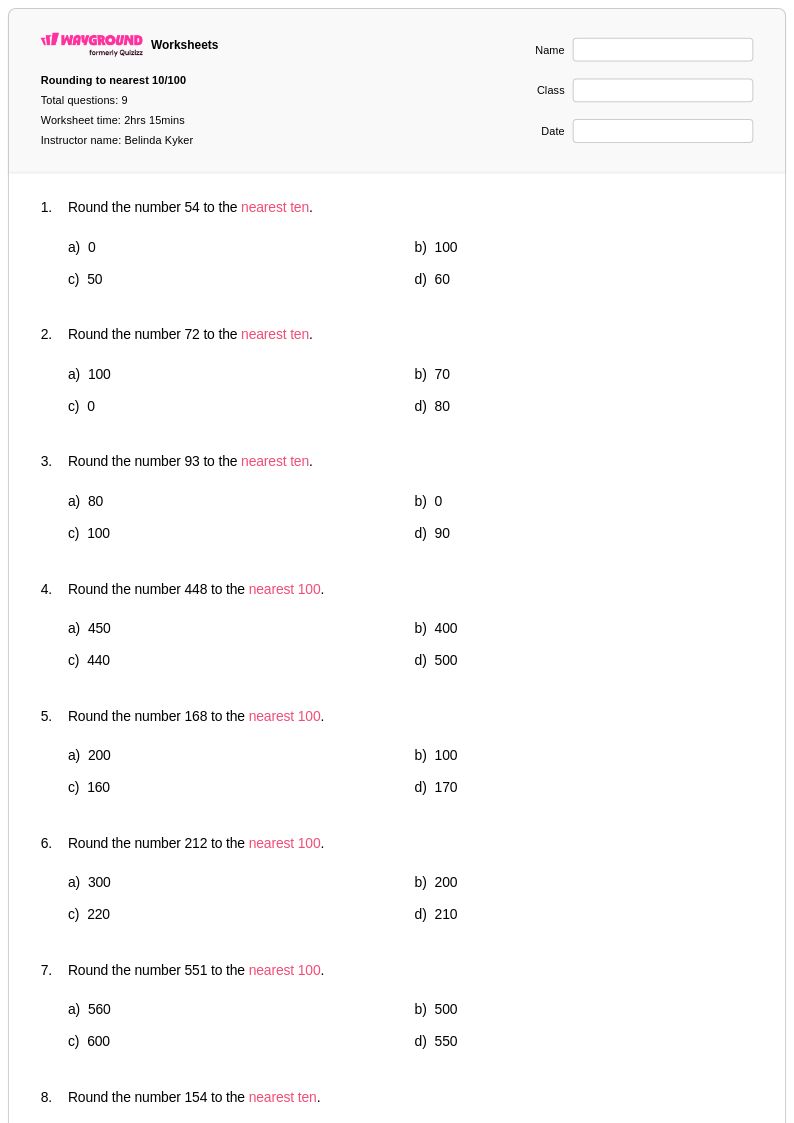
9 Q
3rd
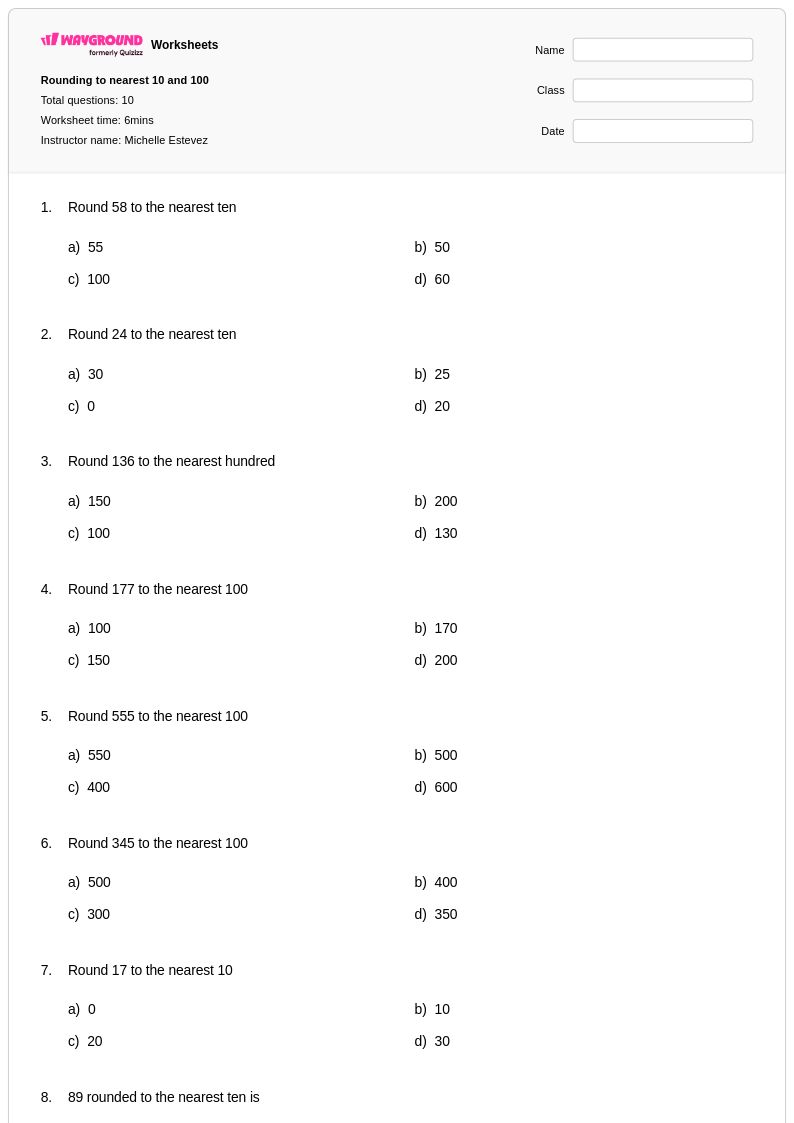
10 Q
3rd
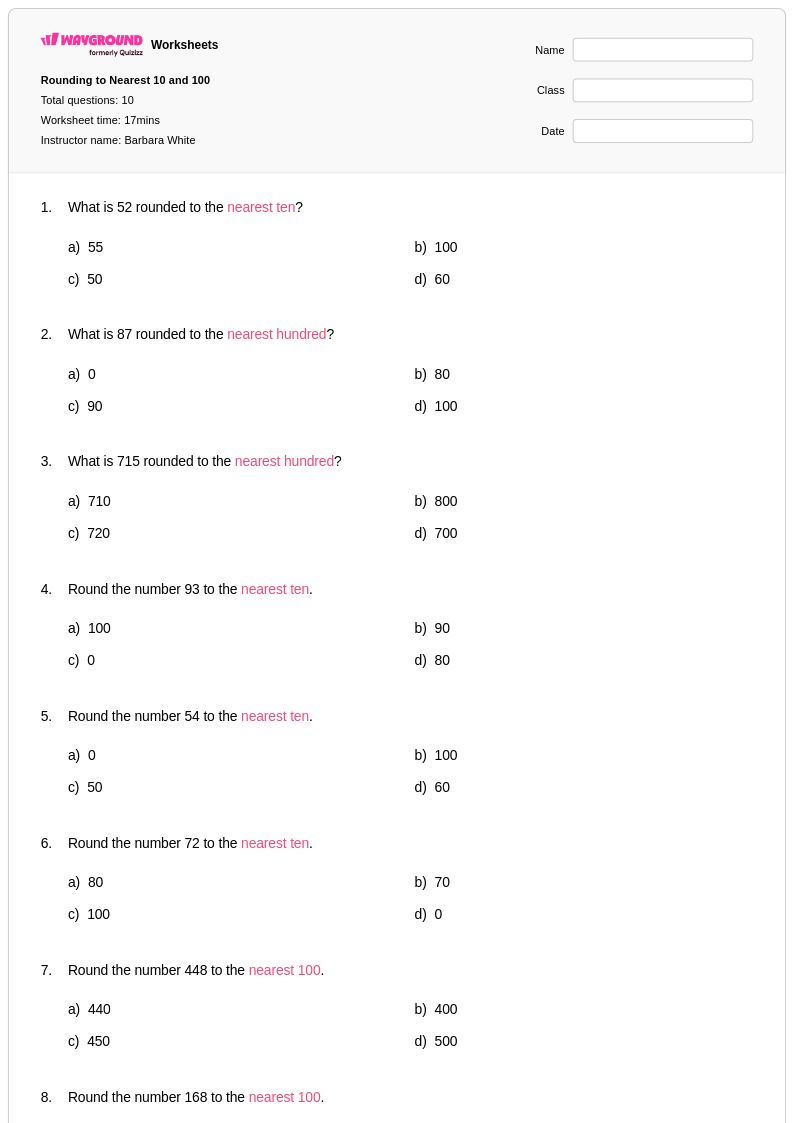
10 Q
3rd
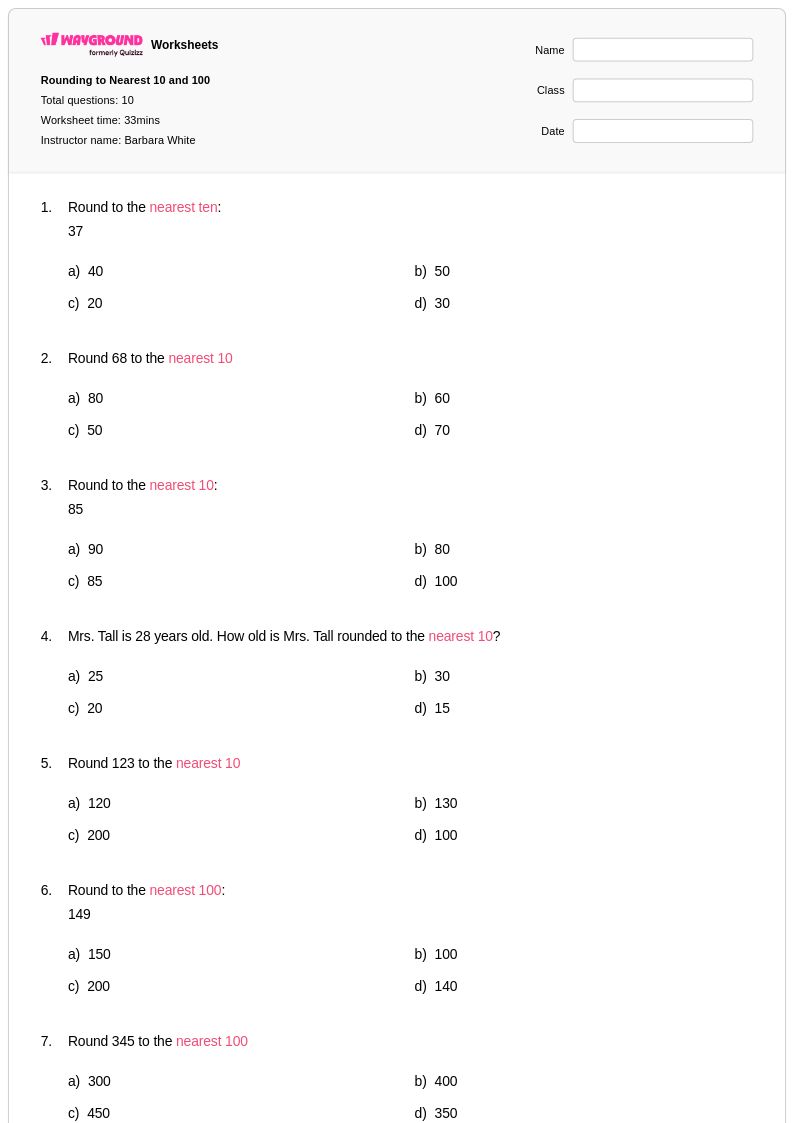
10 Q
3rd
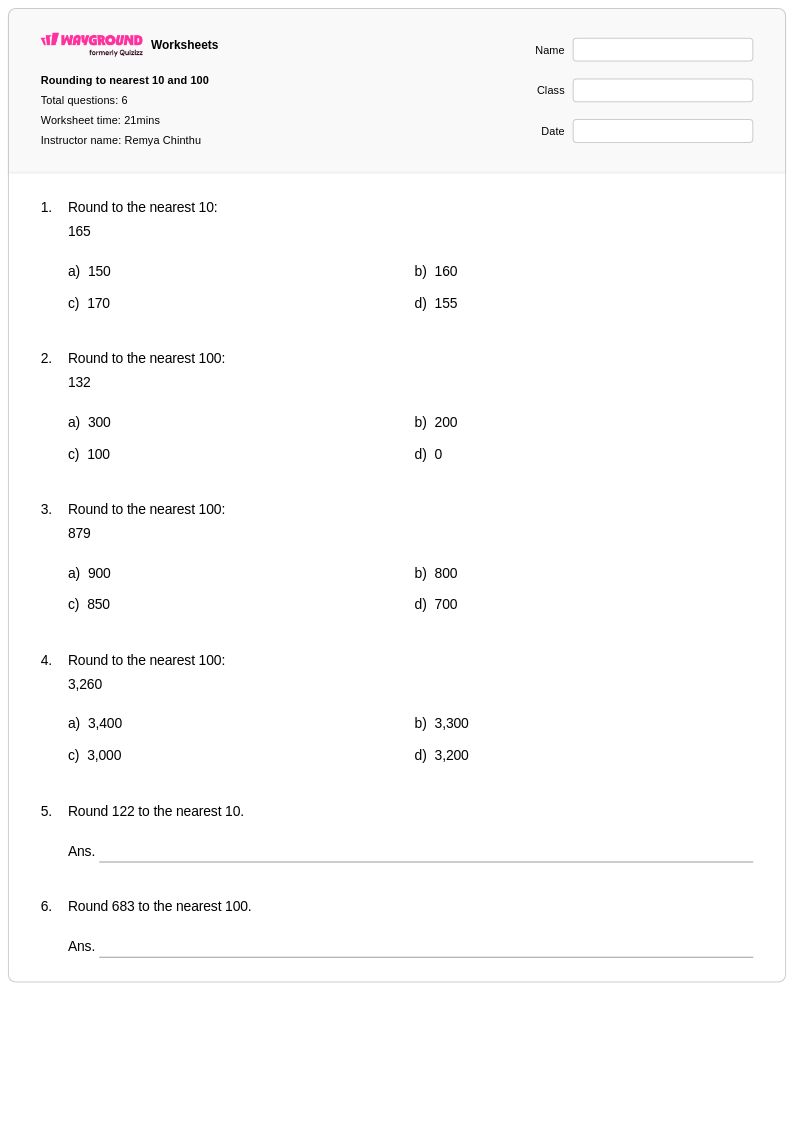
6 Q
4th
Explore Worksheets by Subjects
Explore printable Rounding to Nearest 10 worksheets
Rounding to the nearest 10 worksheets available through Wayground (formerly Quizizz) provide students with essential practice in developing foundational number sense skills that form the building blocks of mathematical reasoning. These comprehensive worksheets guide learners through the systematic process of identifying which multiple of 10 a given number is closest to, reinforcing the critical concept that numbers ending in 1-4 round down while numbers ending in 5-9 round up. Students work through carefully scaffolded practice problems that begin with two-digit numbers and progress to larger values, strengthening their ability to visualize number placement on mental number lines and make quick, accurate estimations. Each worksheet collection includes detailed answer keys and is available as free printables in convenient PDF format, allowing educators to seamlessly integrate this fundamental skill practice into daily instruction, homework assignments, or assessment preparation.
Wayground (formerly Quizizz) empowers educators with access to millions of teacher-created resources specifically designed to support rounding instruction, featuring robust search and filtering capabilities that help teachers locate worksheets perfectly aligned with their classroom needs and educational standards. The platform's differentiation tools enable instructors to customize worksheet difficulty levels, ensuring that struggling learners receive appropriate support while advanced students encounter enriching challenges that deepen their understanding of place value relationships. Teachers can access these rounding worksheets in both printable and digital formats, including downloadable PDFs, making them ideal for traditional classroom settings, remote learning environments, or hybrid instructional models. This flexibility supports comprehensive lesson planning while providing targeted remediation opportunities and skill reinforcement that helps students master the essential mathematical reasoning required for estimation, mental math, and more complex numerical operations.
FAQs
What's a good way to introduce rounding to the nearest 10?
What kind of practice helps students master rounding to the nearest 10?
What's the most common mistake students make when rounding to the nearest 10?
How can I use this rounding worksheet in my class?
How does rounding to the nearest 10 fit into the math curriculum?
How can I support students who struggle with rounding?