
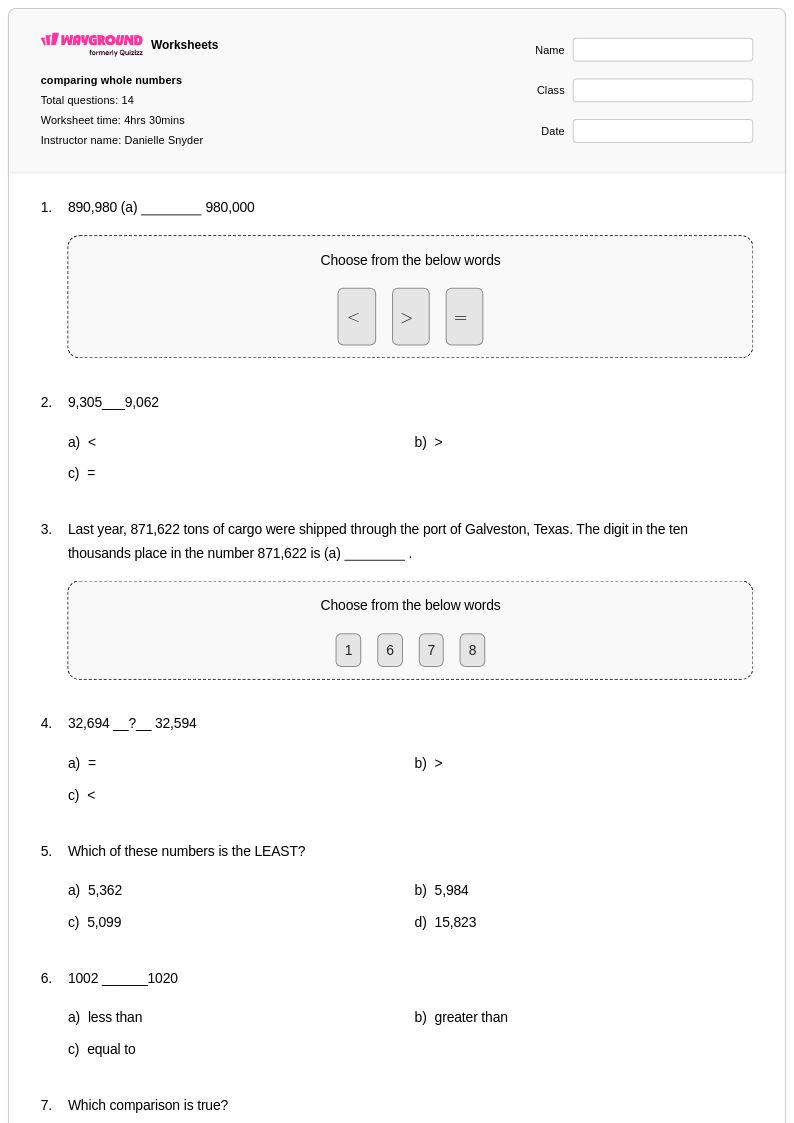
14 Q
5th
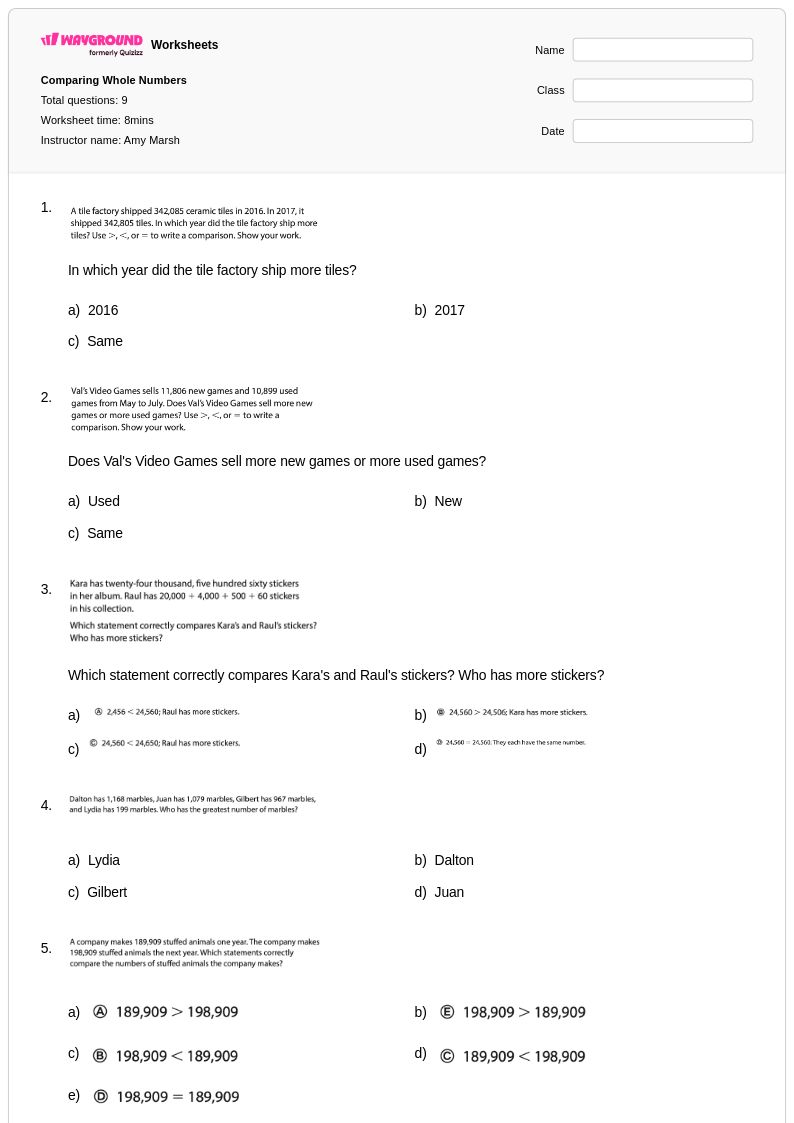
9 Q
4th
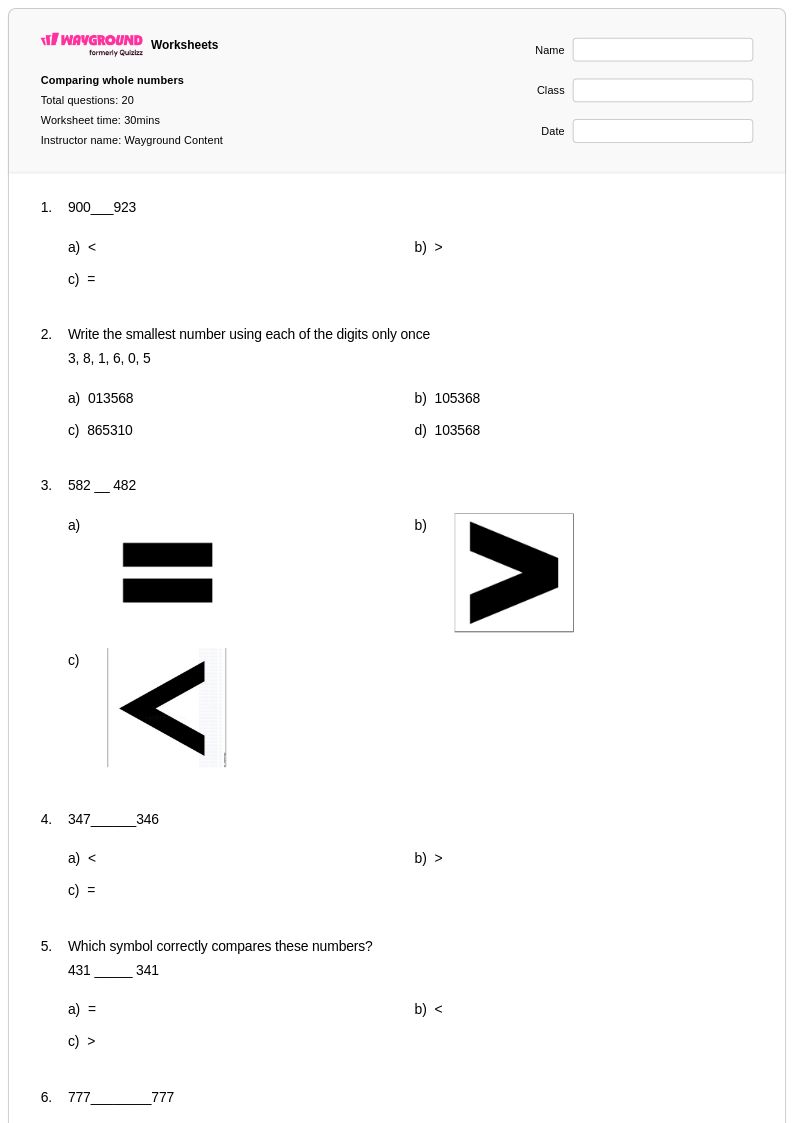
20 Q
2nd
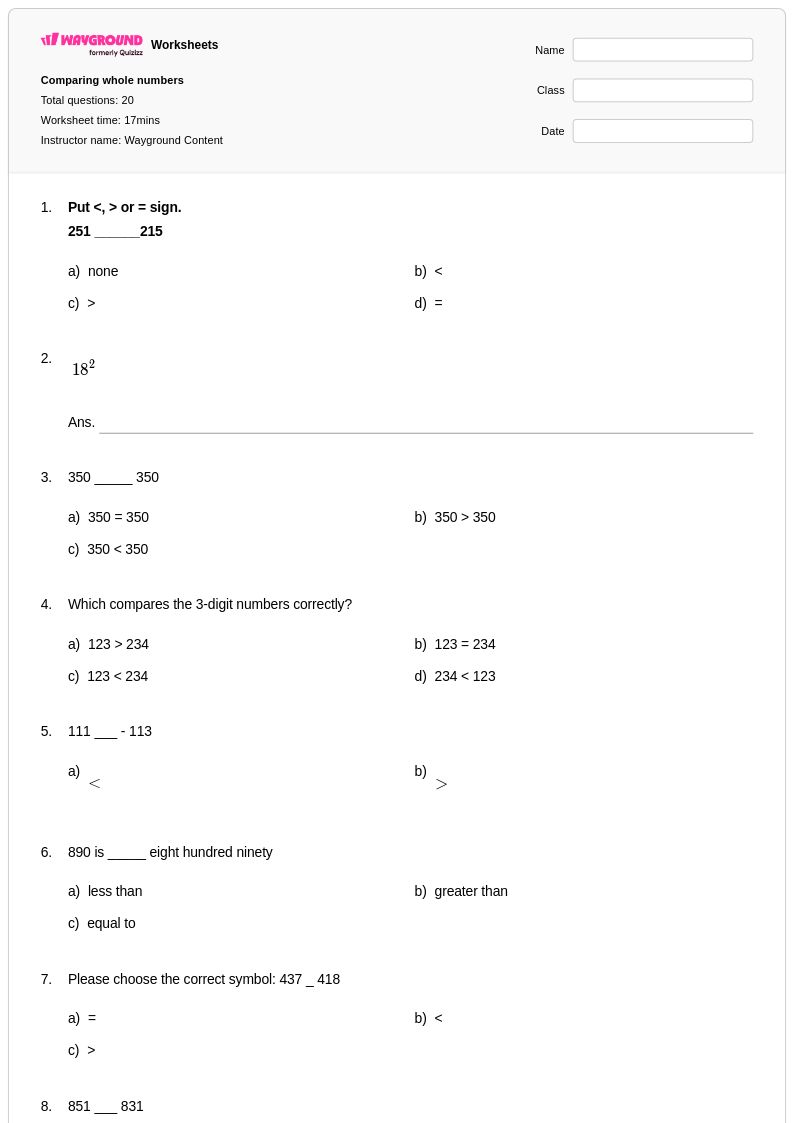
20 Q
2nd
20 Q
2nd
20 Q
2nd
20 Q
4th
20 Q
1st
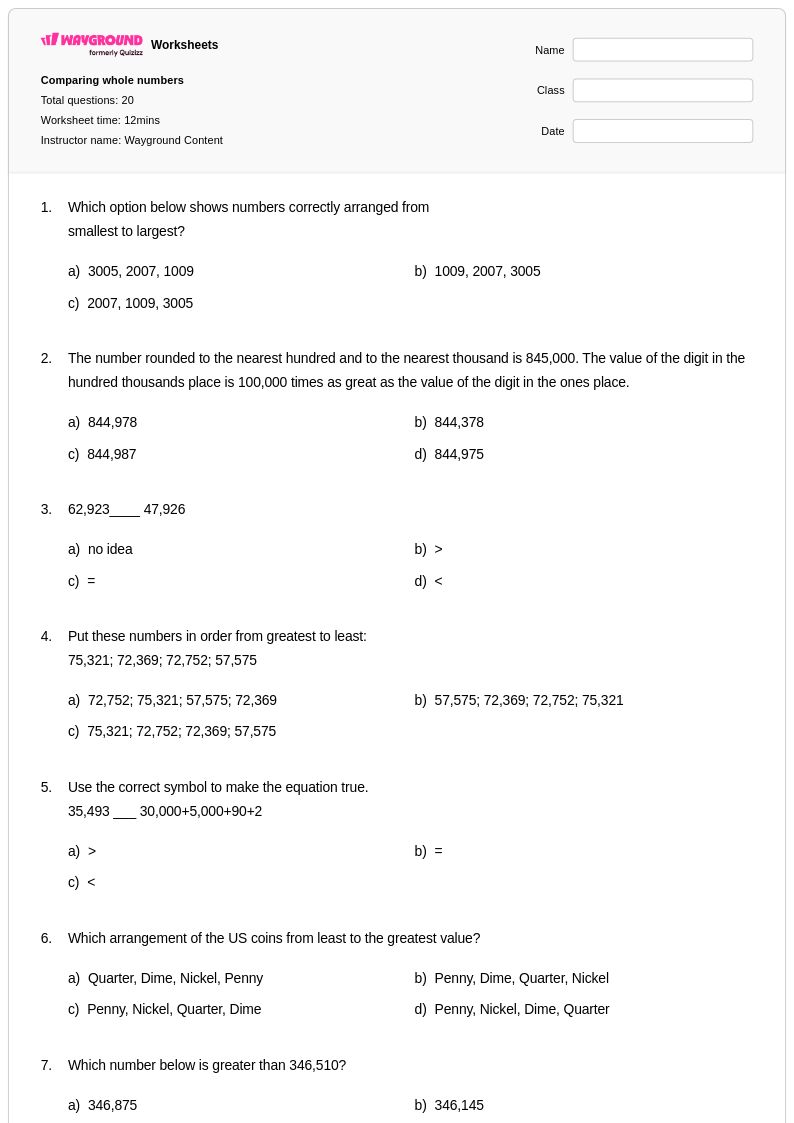
20 Q
4th
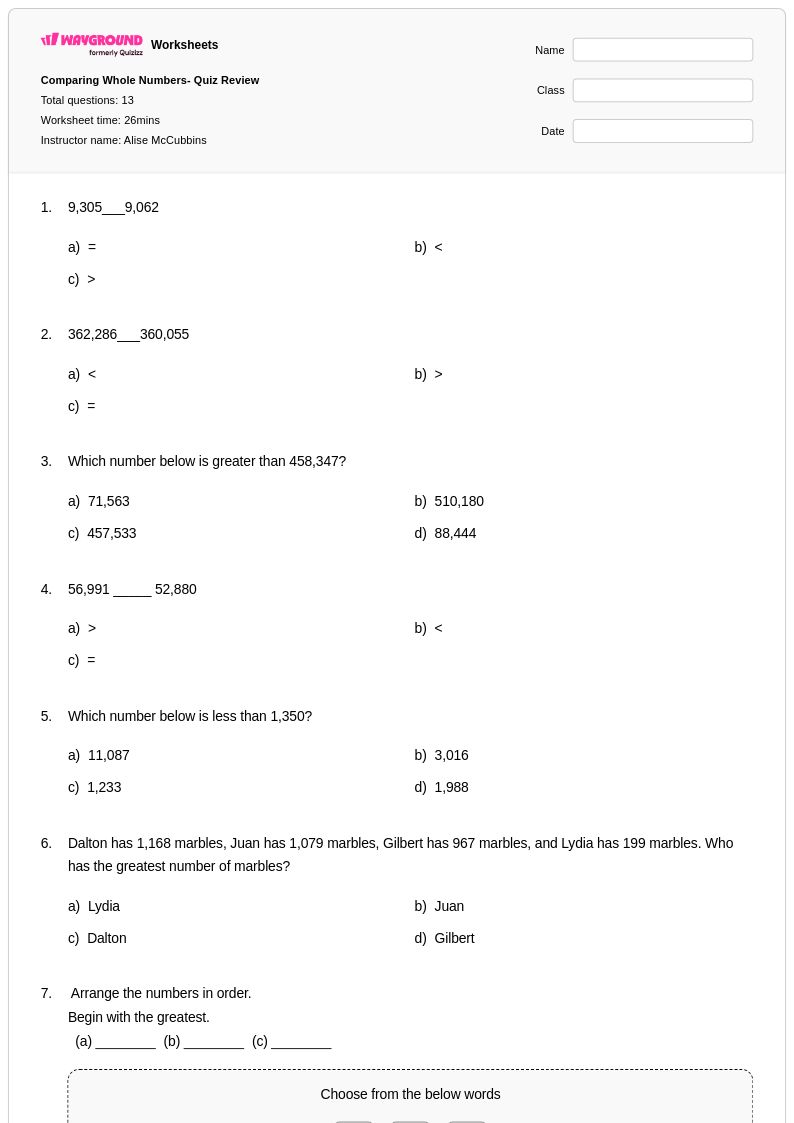
13 Q
4th
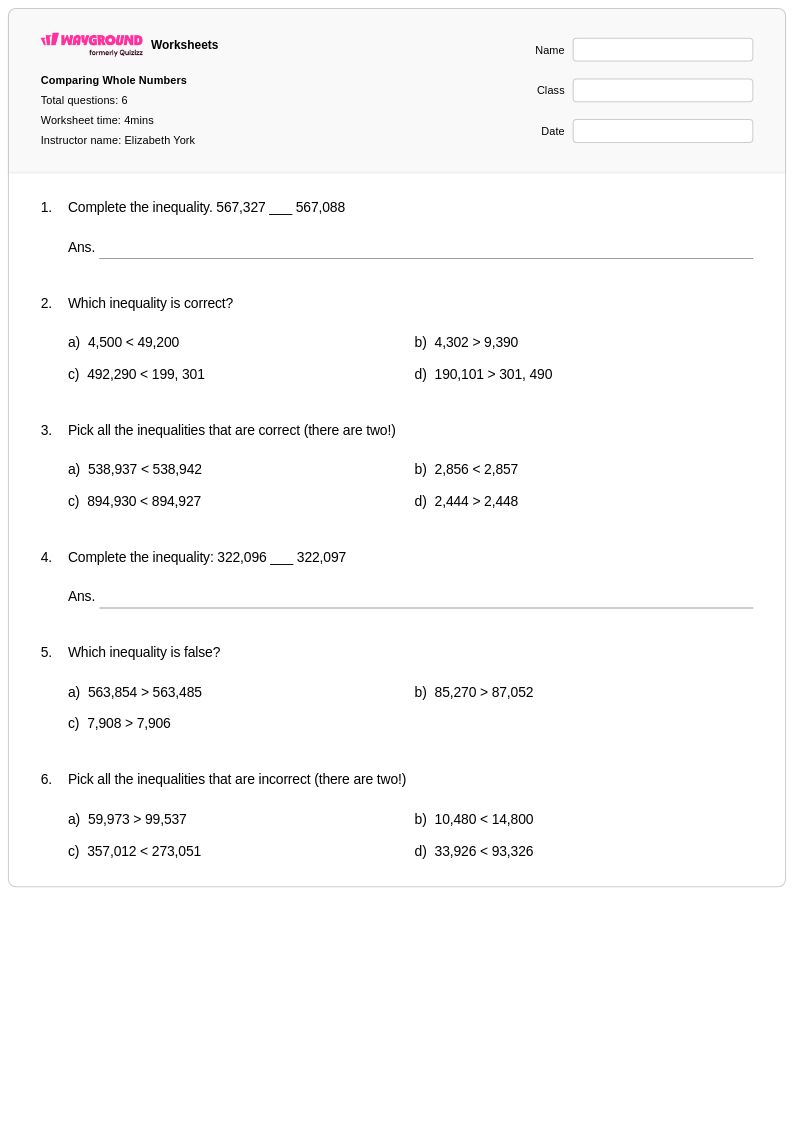
6 Q
4th
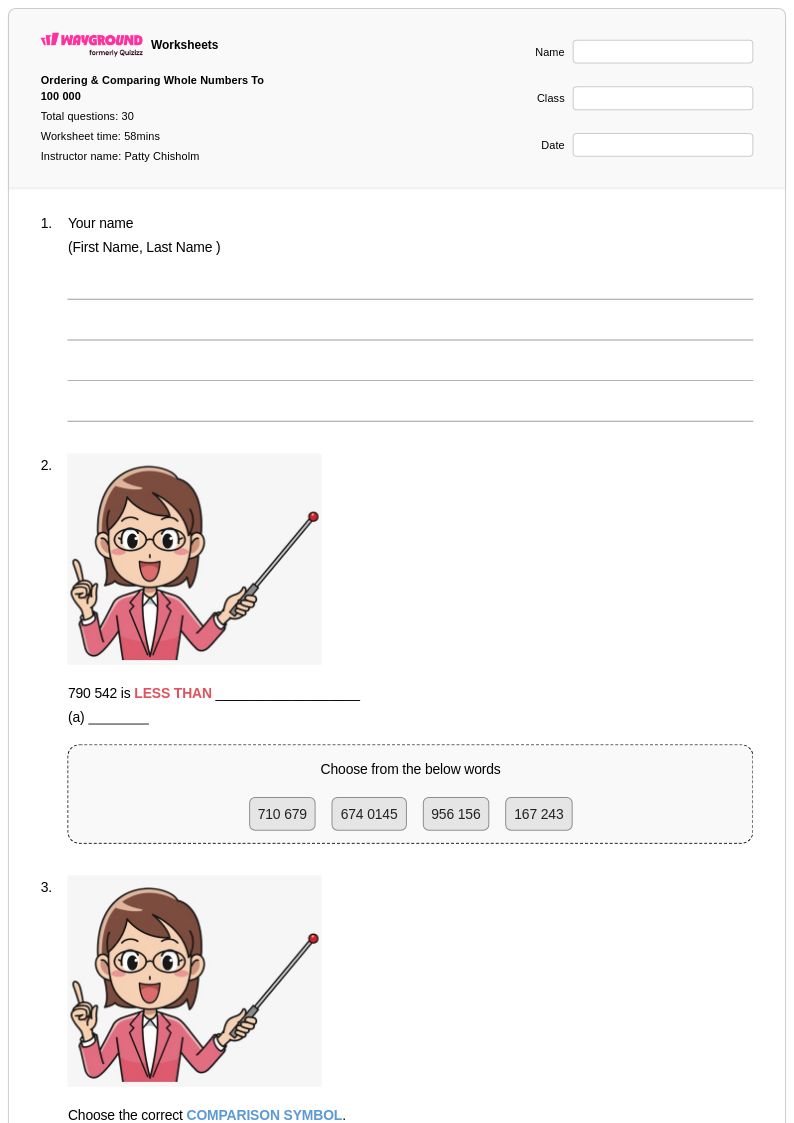
30 Q
6th - 8th
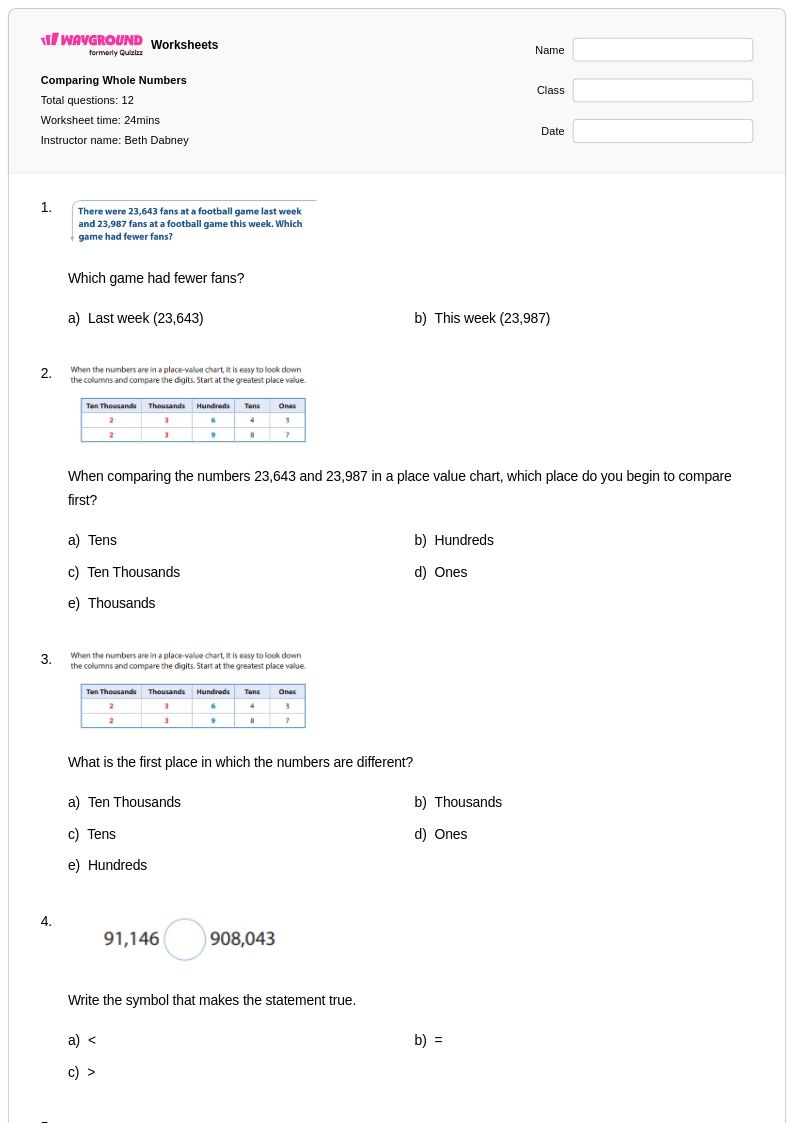
12 Q
4th
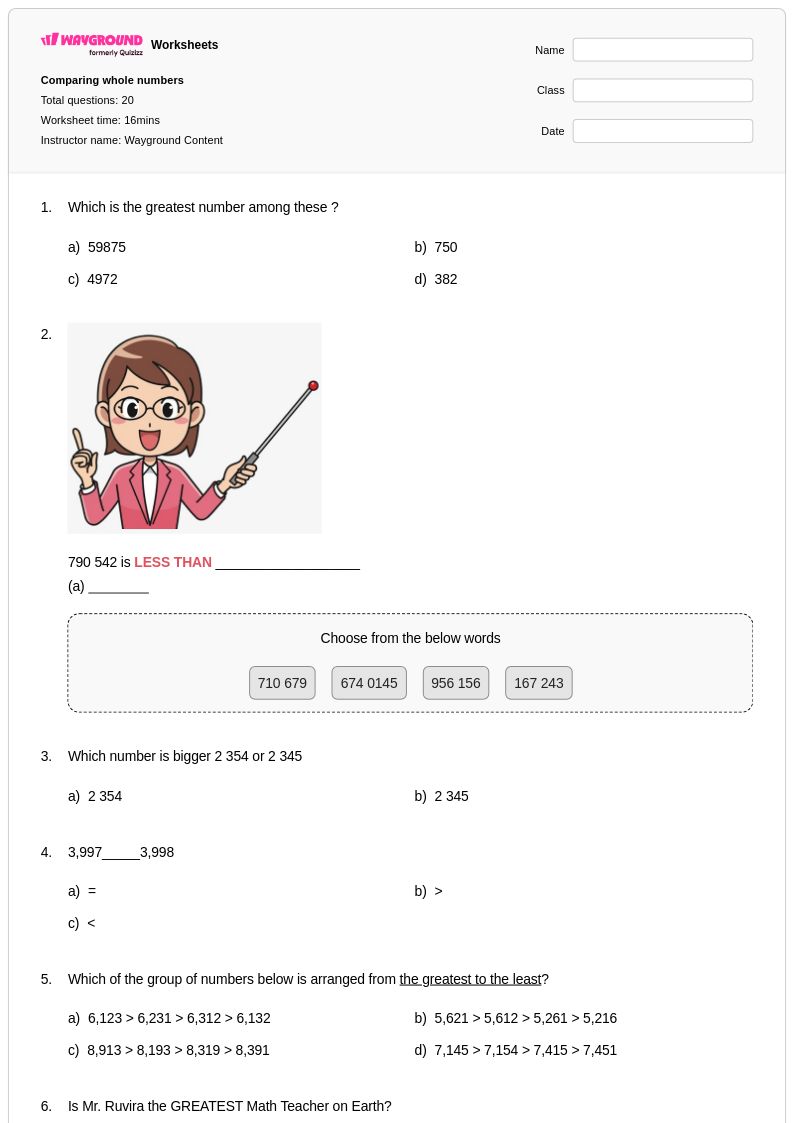
20 Q
4th
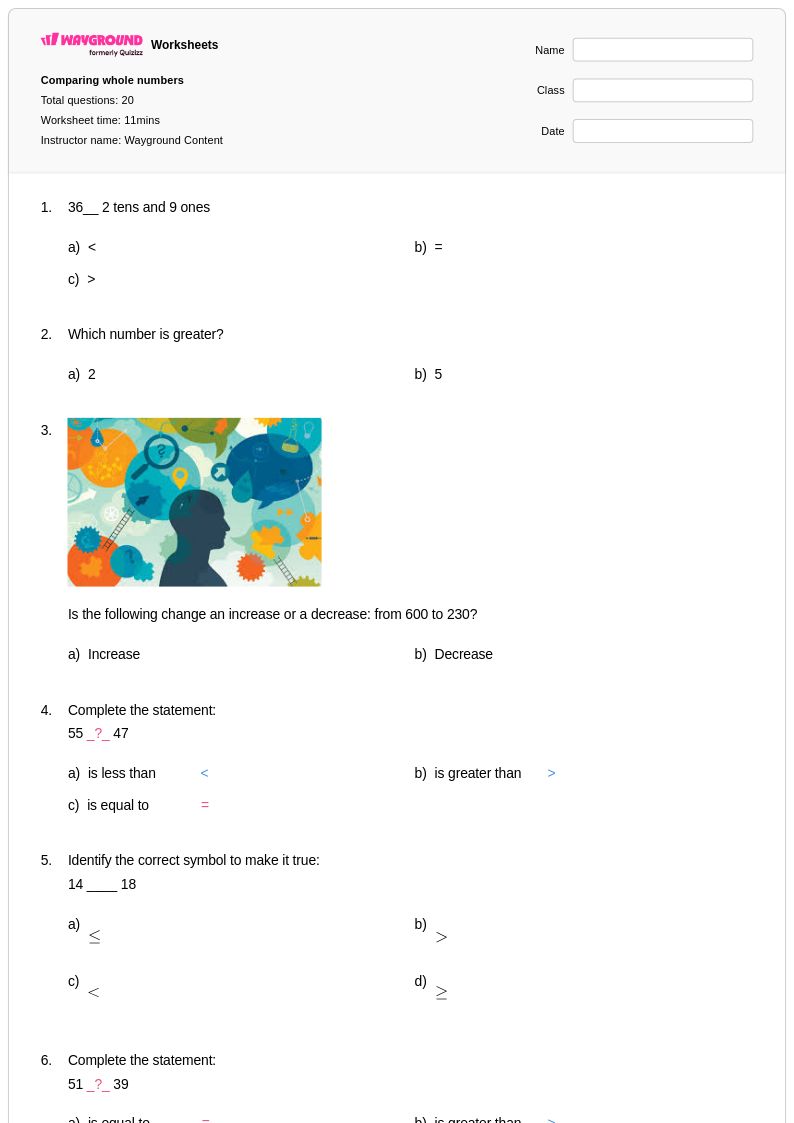
20 Q
1st
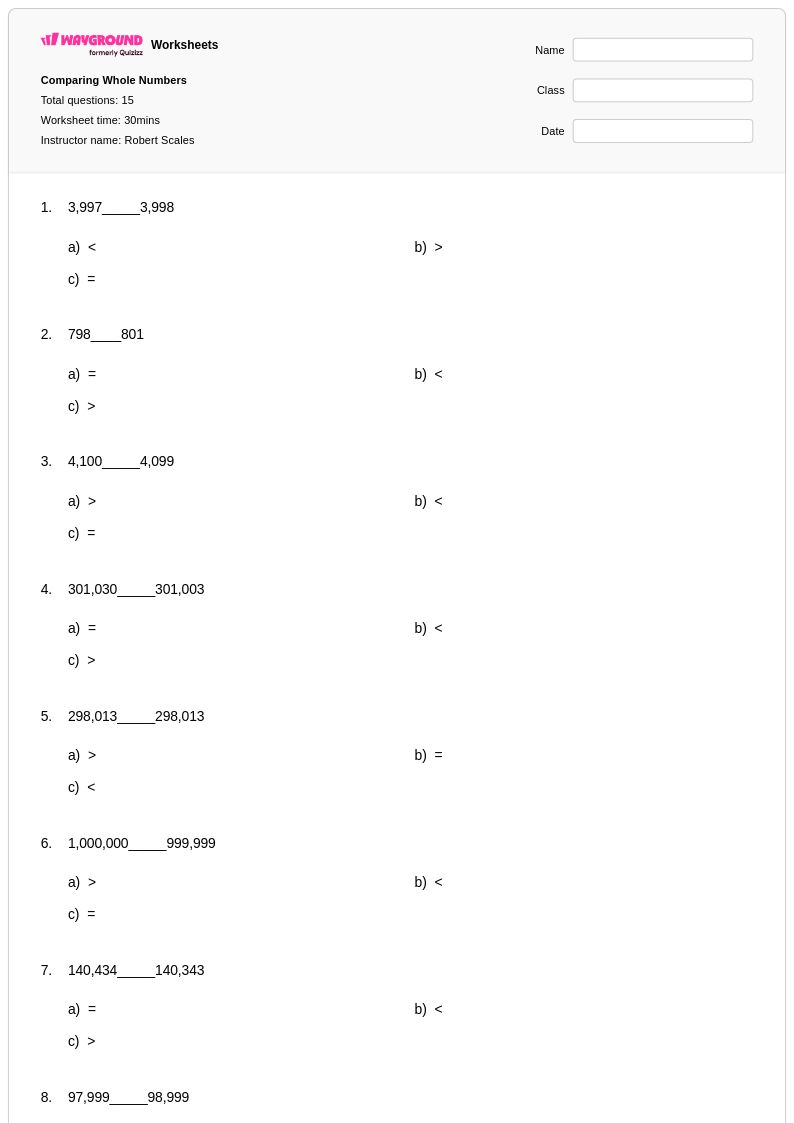
15 Q
4th - 5th
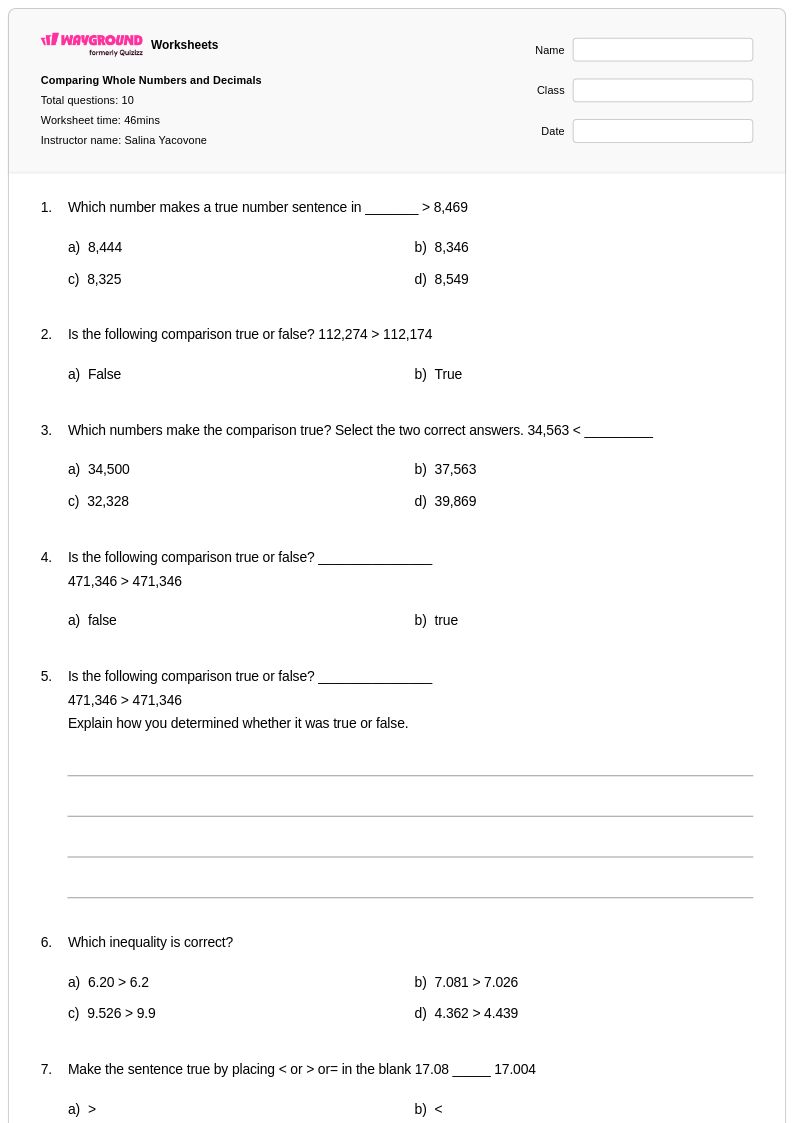
10 Q
5th
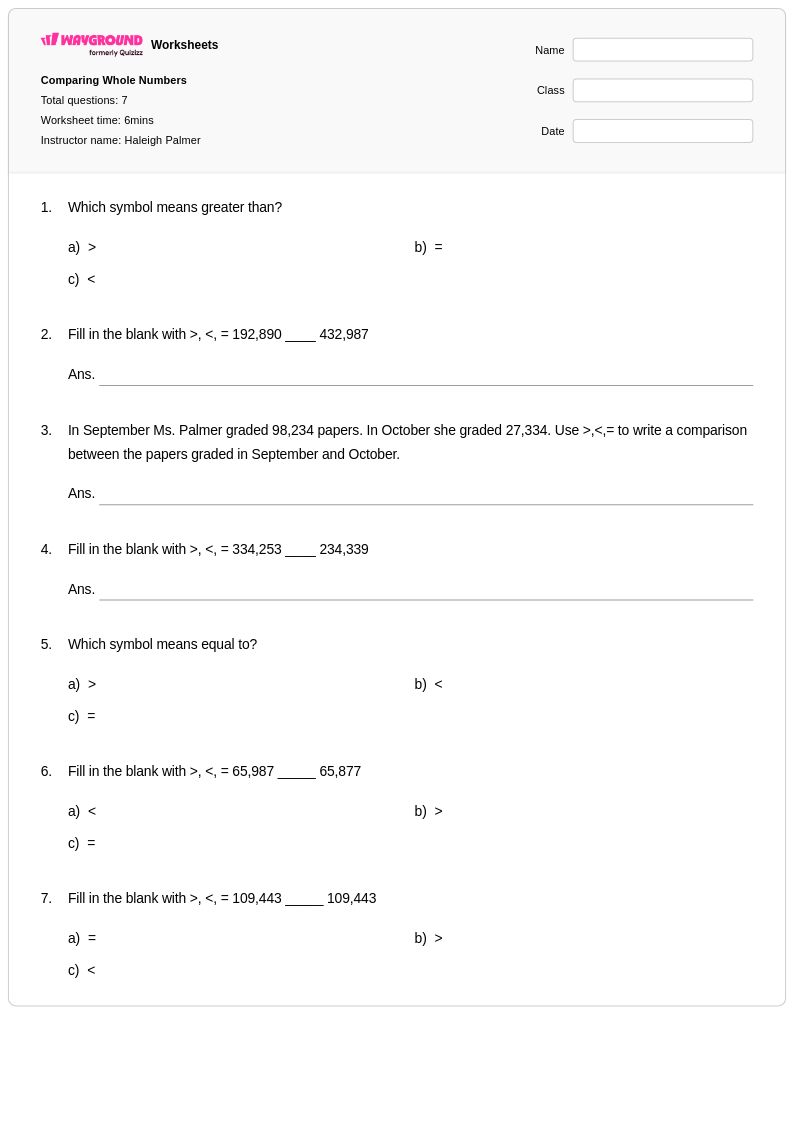
7 Q
4th
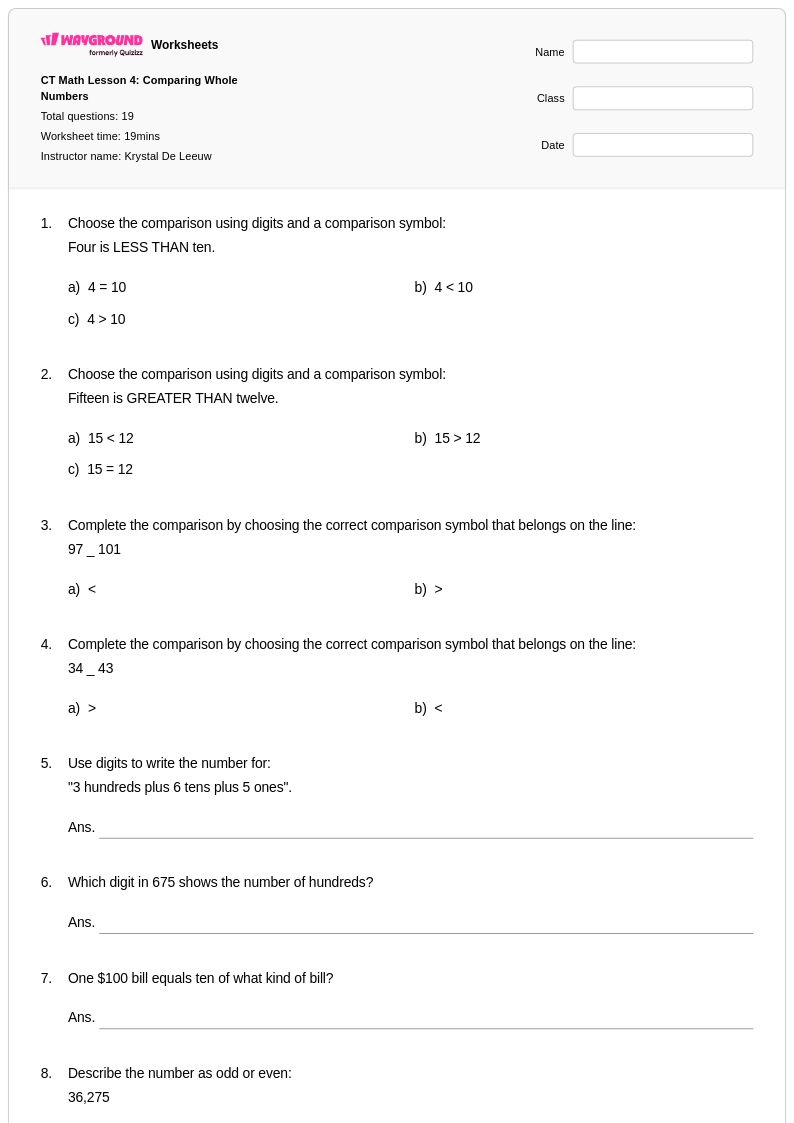
19 Q
5th - 9th
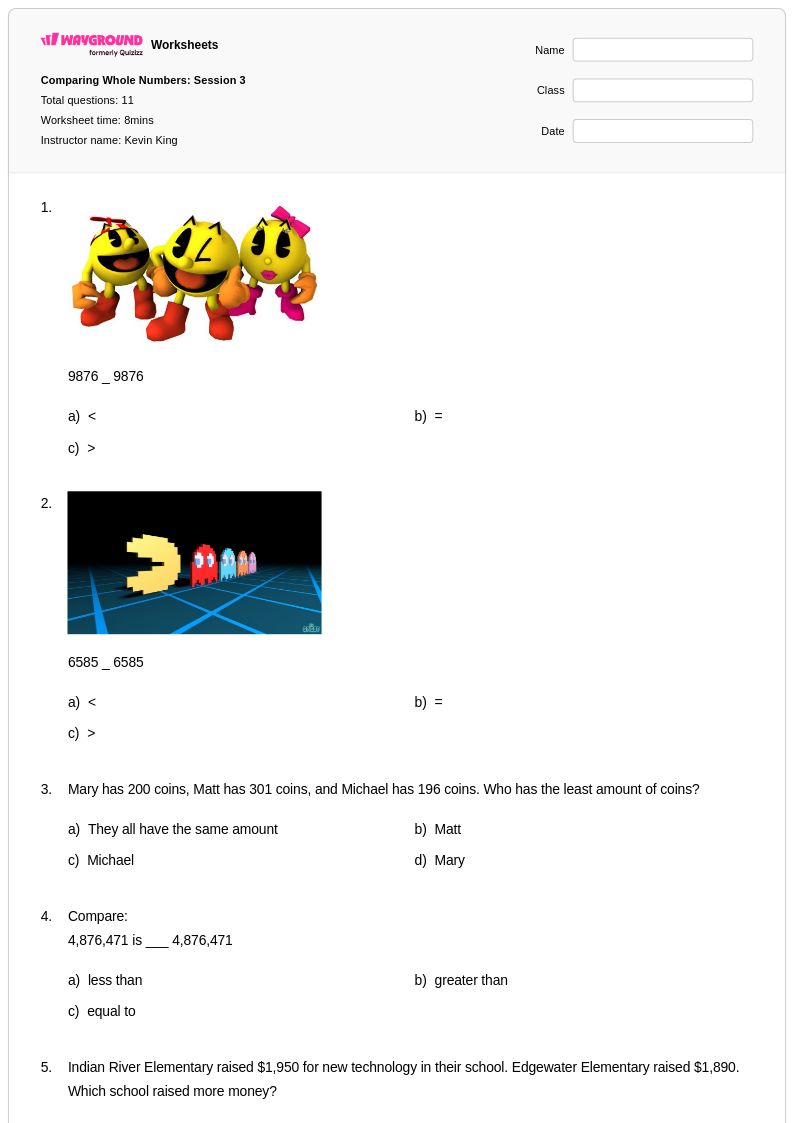
11 Q
4th
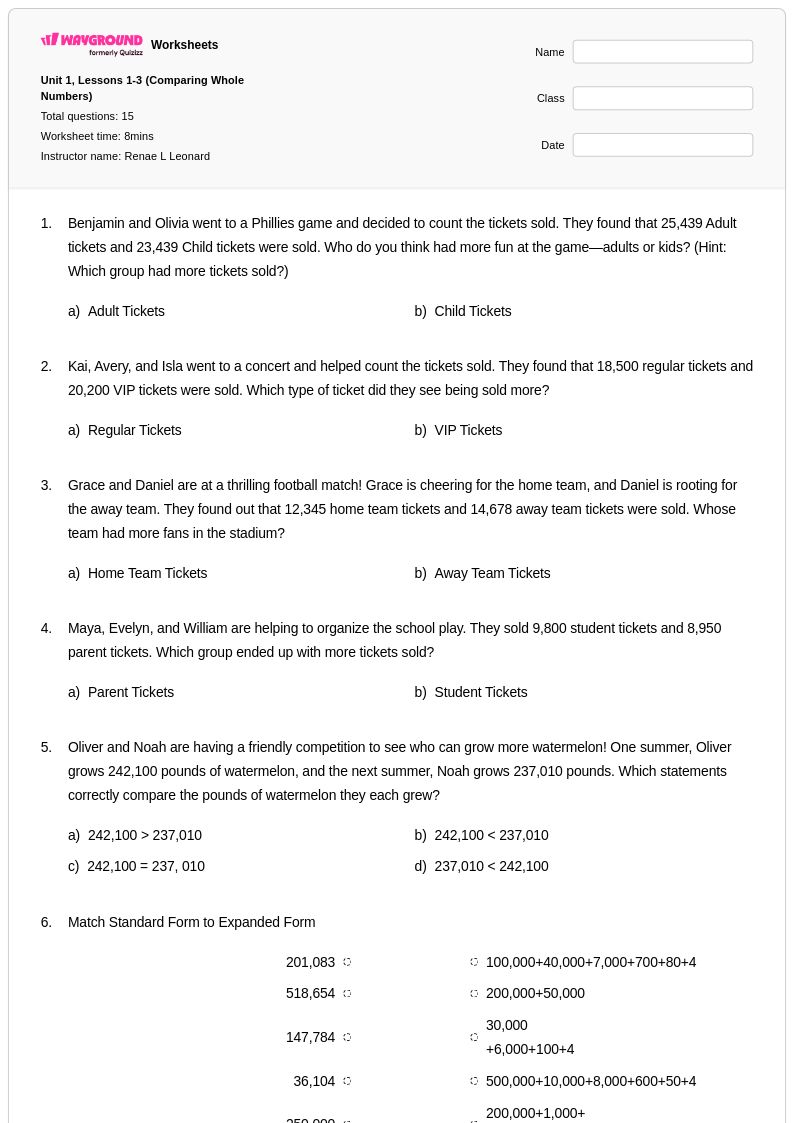
15 Q
4th

20 Q
4th
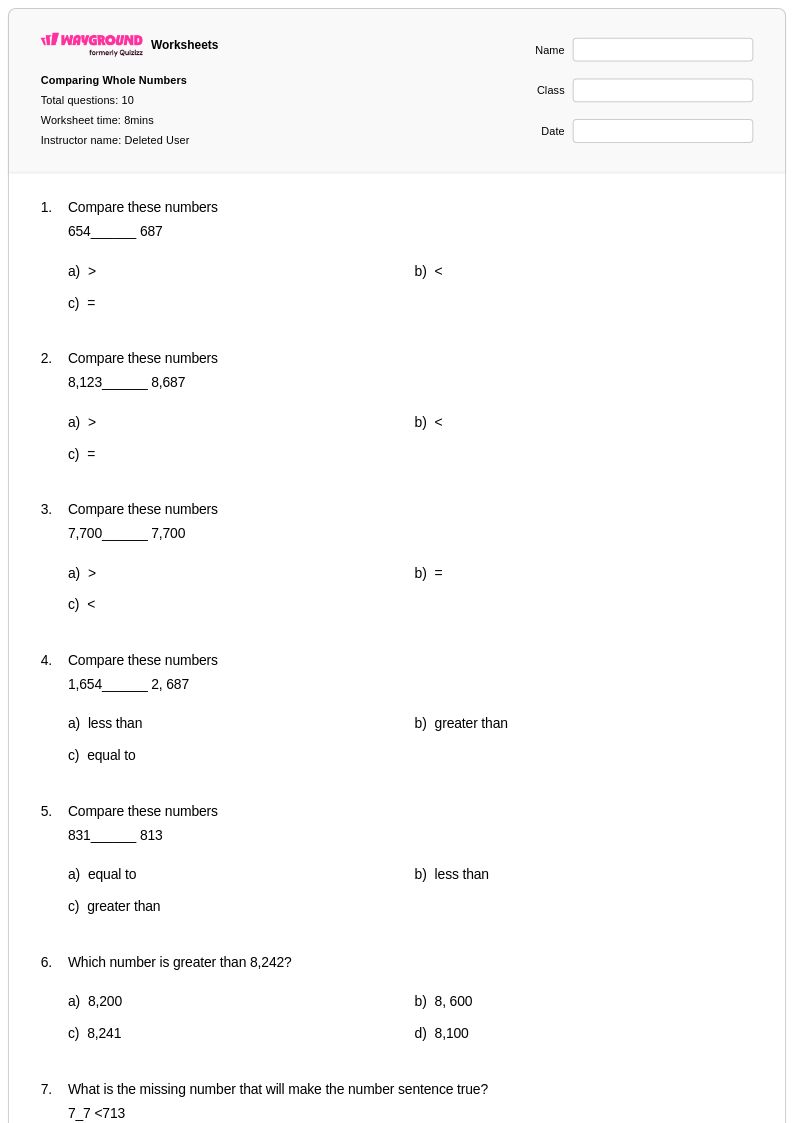
10 Q
3rd
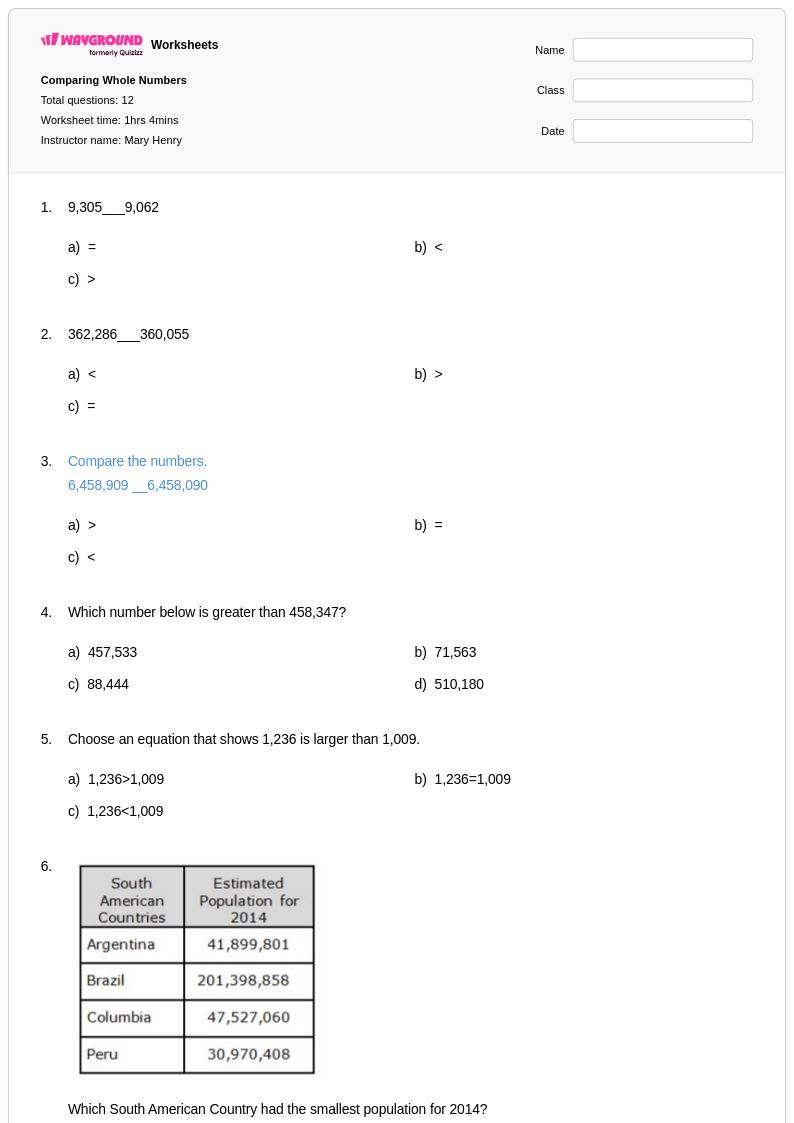
12 Q
4th
Explore Worksheets by Subjects
Explore printable Comparing Whole Numbers worksheets
Comparing whole numbers worksheets available through Wayground (formerly Quizizz) provide essential practice for developing foundational mathematical reasoning skills. These comprehensive resources help students master the critical ability to analyze numerical relationships by determining which numbers are greater than, less than, or equal to others across various ranges and contexts. The worksheets systematically build competency in ordering numbers, understanding place value significance, and applying comparison symbols correctly. Each printable resource includes carefully structured practice problems that progress from basic single-digit comparisons to more complex multi-digit scenarios, with complete answer keys provided to support both independent study and guided instruction. These free educational materials strengthen number sense development while building the logical thinking patterns essential for advanced mathematical concepts.
Wayground (formerly Quizizz) empowers educators with millions of teacher-created comparing whole numbers worksheets that streamline lesson planning and differentiated instruction. The platform's robust search and filtering capabilities allow teachers to quickly locate resources aligned with specific learning standards and student ability levels, making it simple to find appropriate materials for remediation, core instruction, or enrichment activities. Teachers can customize existing worksheets or create entirely new versions to match their classroom needs, with all resources available in both digital and printable PDF formats for maximum flexibility. This extensive collection supports diverse teaching approaches by providing multiple practice opportunities that help students develop confidence with numerical comparisons while allowing educators to track progress and adjust instruction based on individual student needs.
FAQs
How do I teach students to compare whole numbers?
What exercises help students practice comparing whole numbers?
What mistakes do students make when comparing whole numbers?
How can I use Wayground’s comparing whole numbers worksheets?
How does comparing whole numbers fit into the Common Core math progression?
How can I differentiate comparing whole numbers practice?