
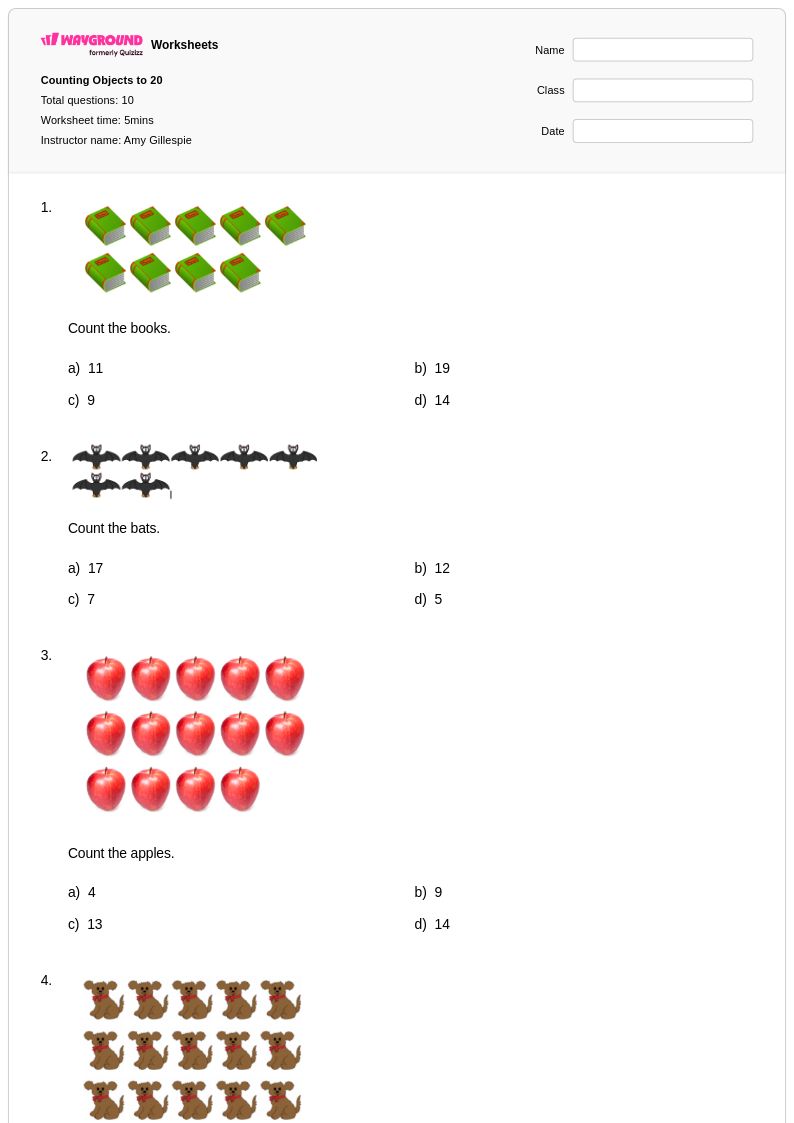
10 T
KG
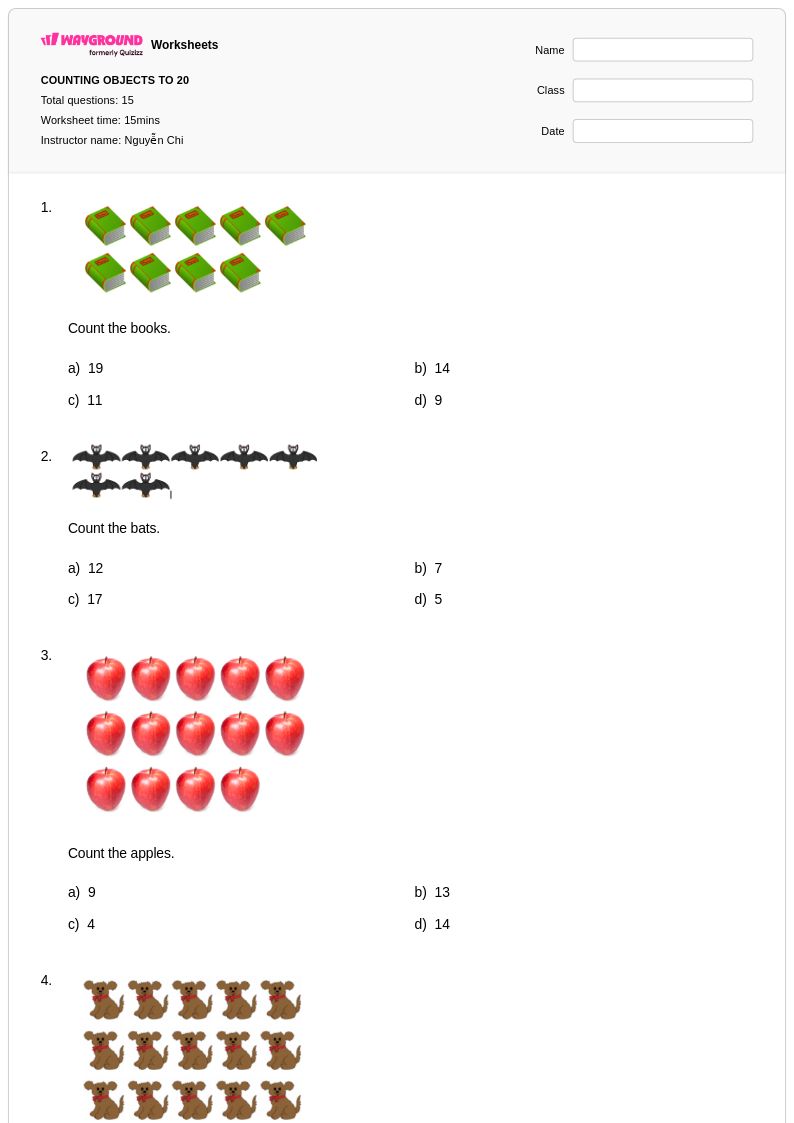
15 T
1st - 3rd
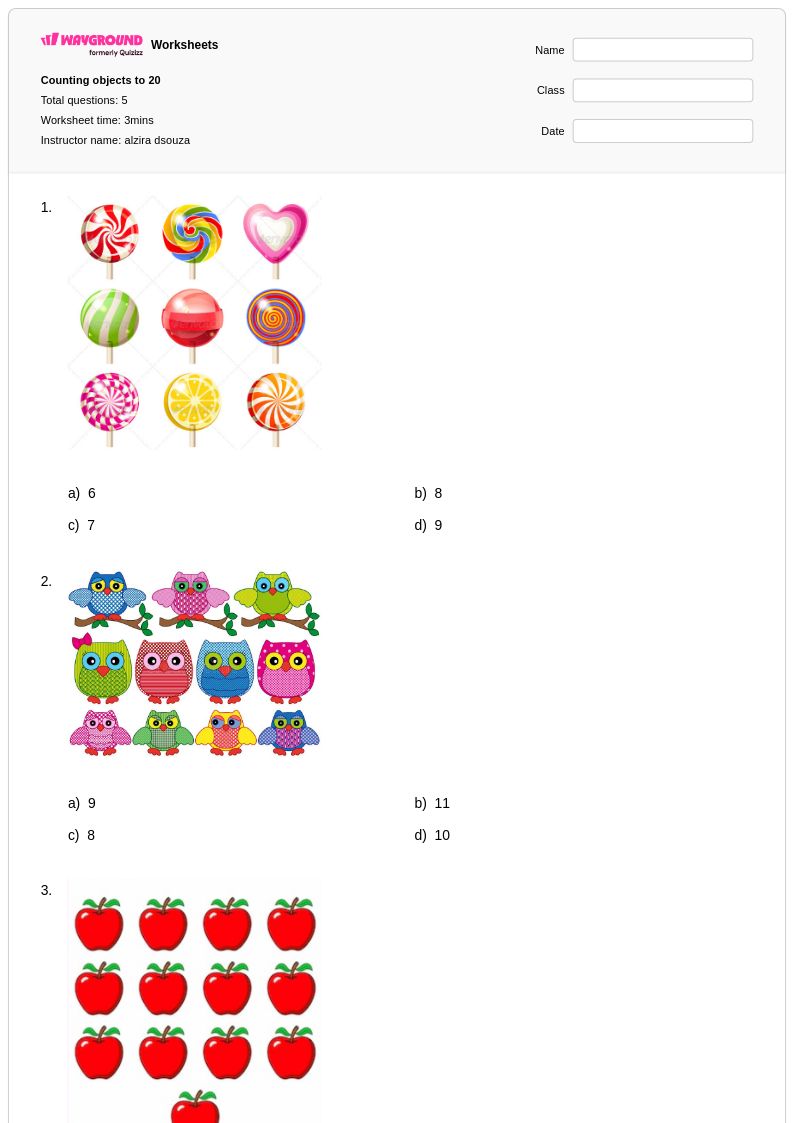
5 T
1st
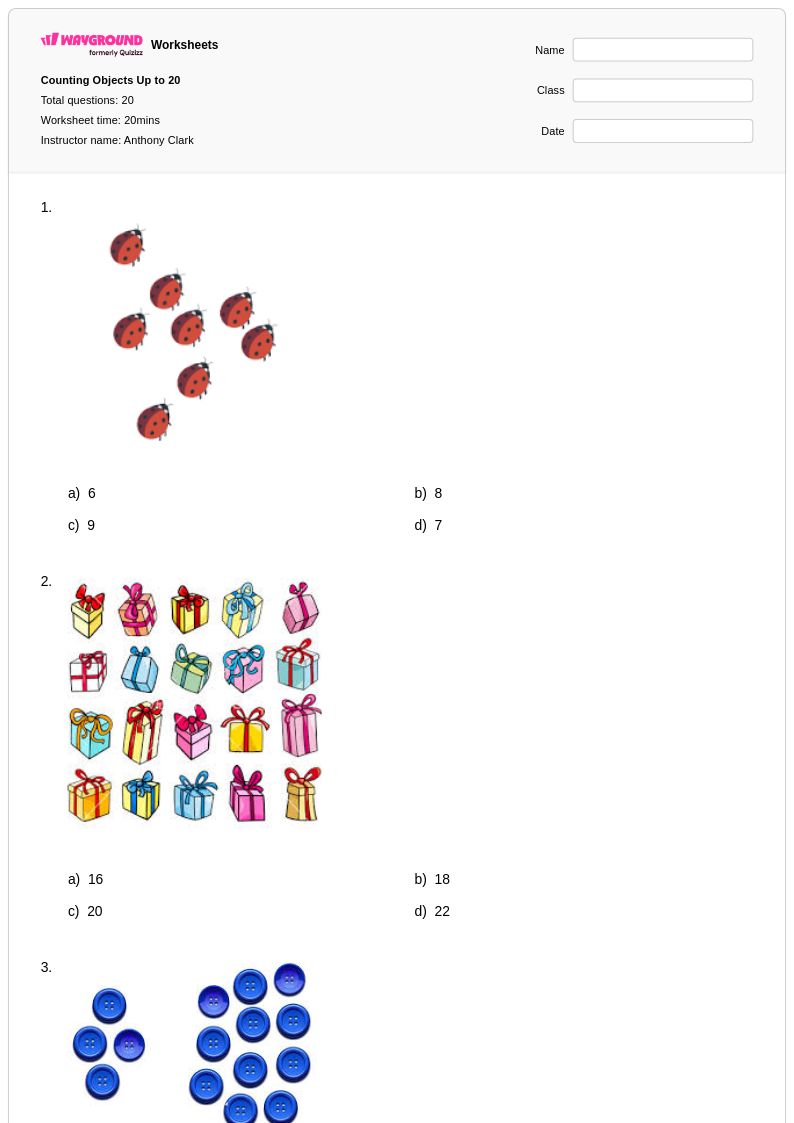
20 T
1st - Uni
20 T
1st - Uni
10 T
1st - Uni
10 T
KG
10 T
1st
10 T
KG
20 T
KG
9 T
1st
12 T
1st
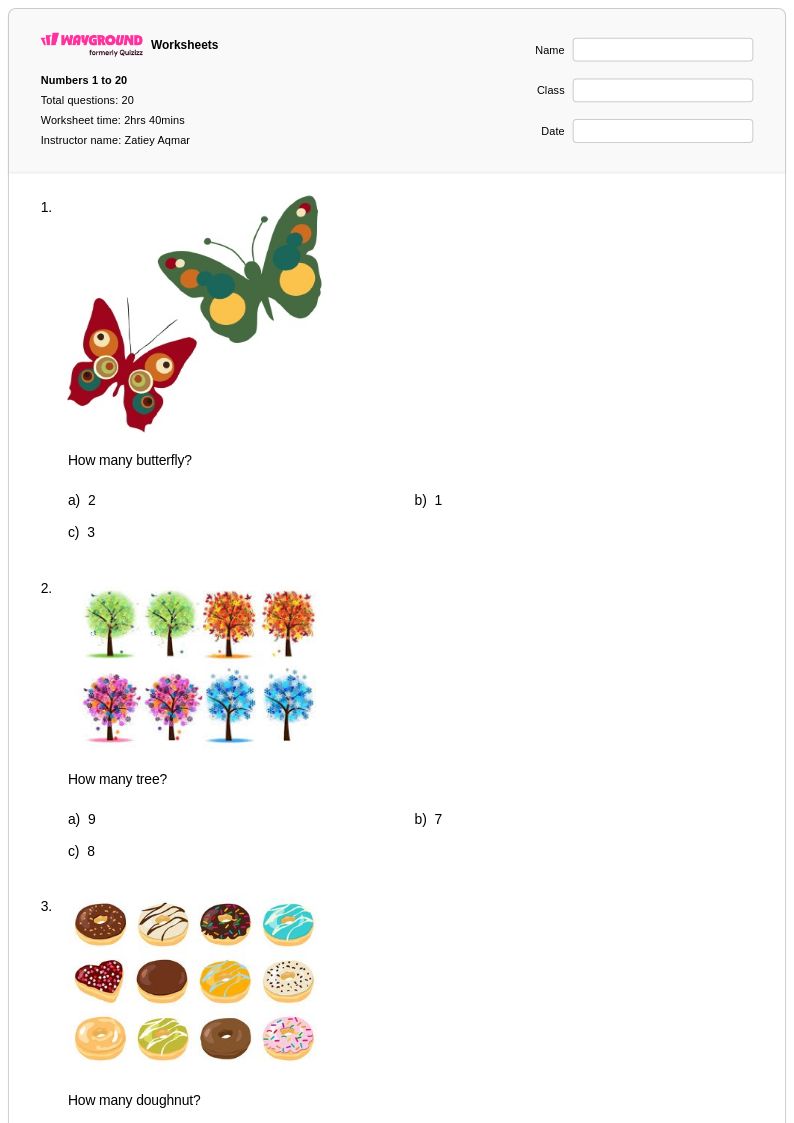
20 T
5th - 6th
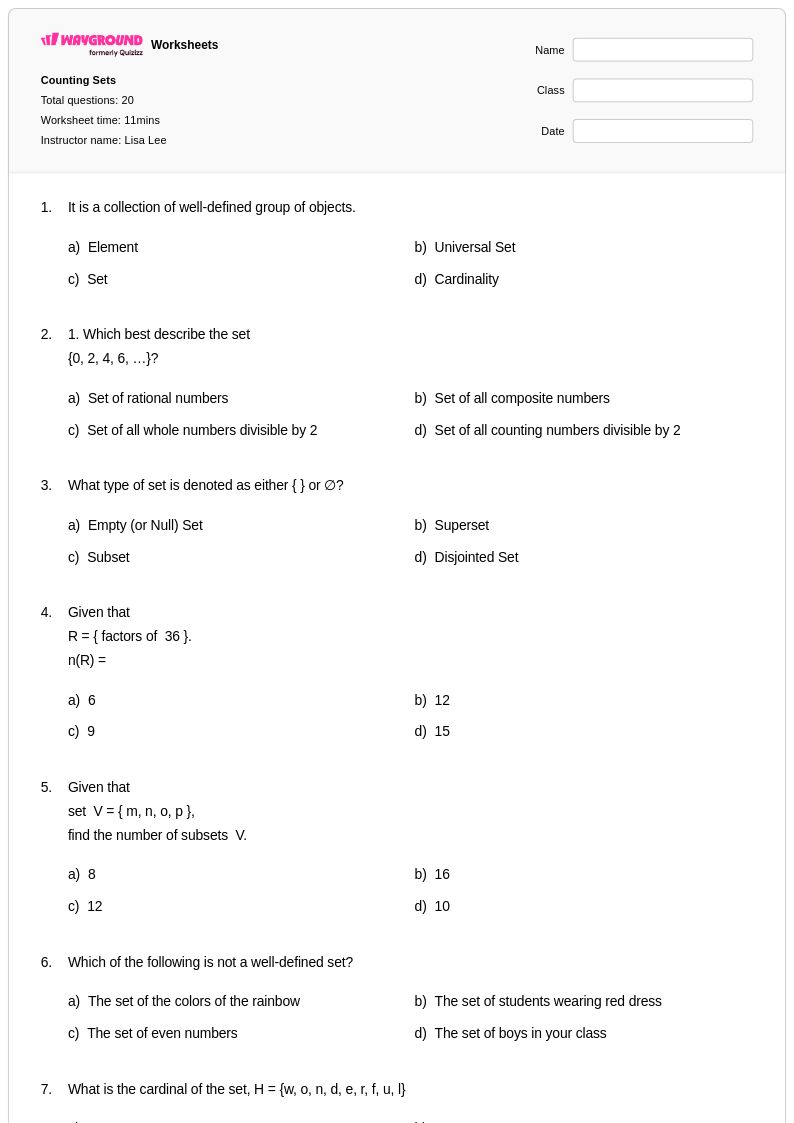
20 T
7th - Uni
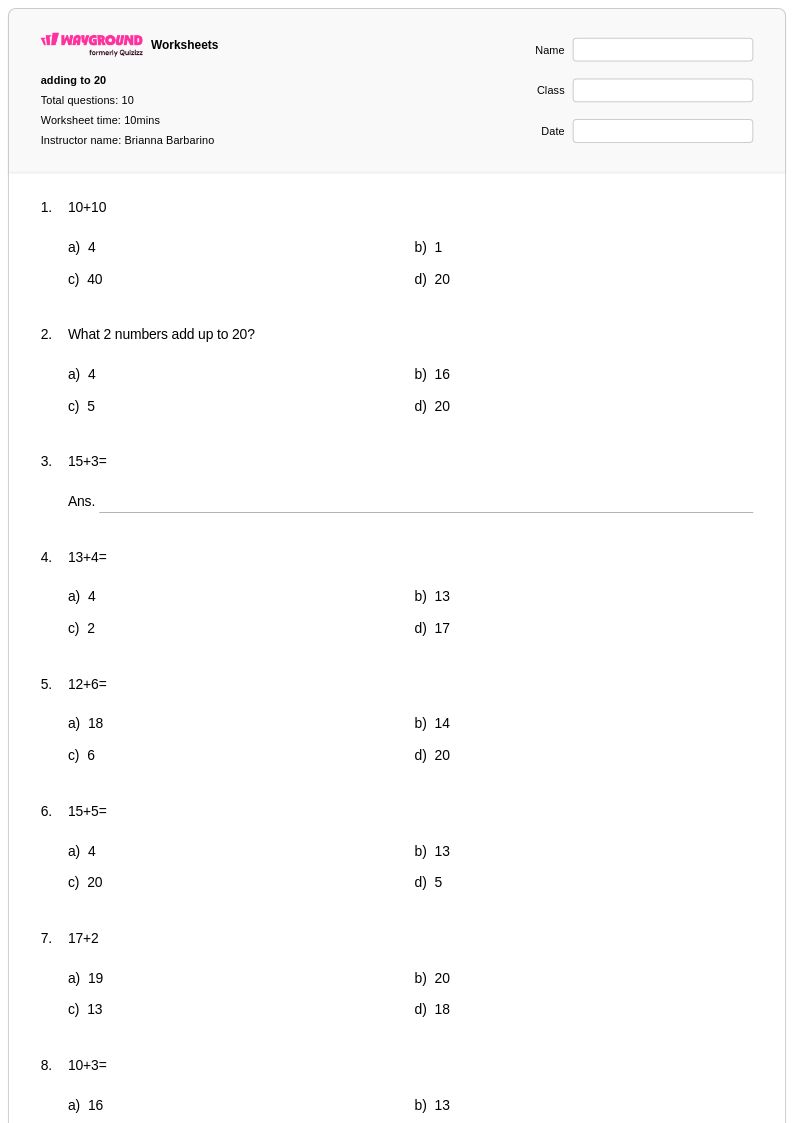
10 T
1st
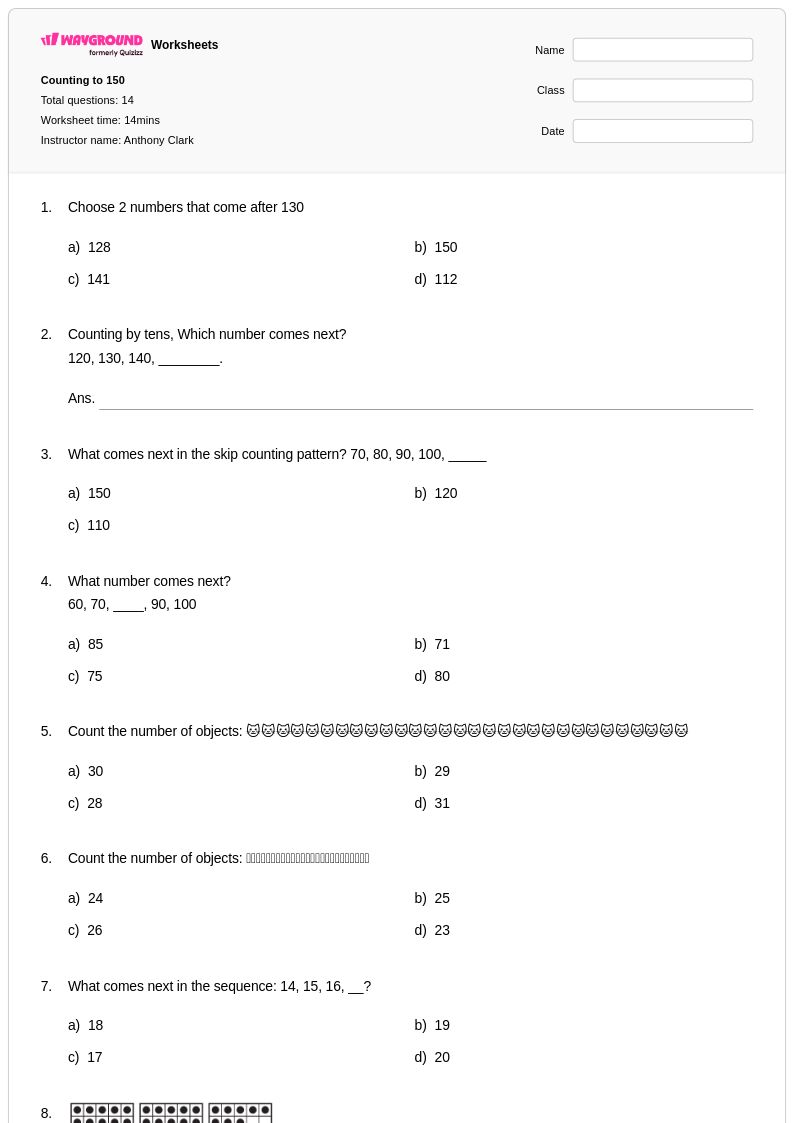
14 T
1st - Uni
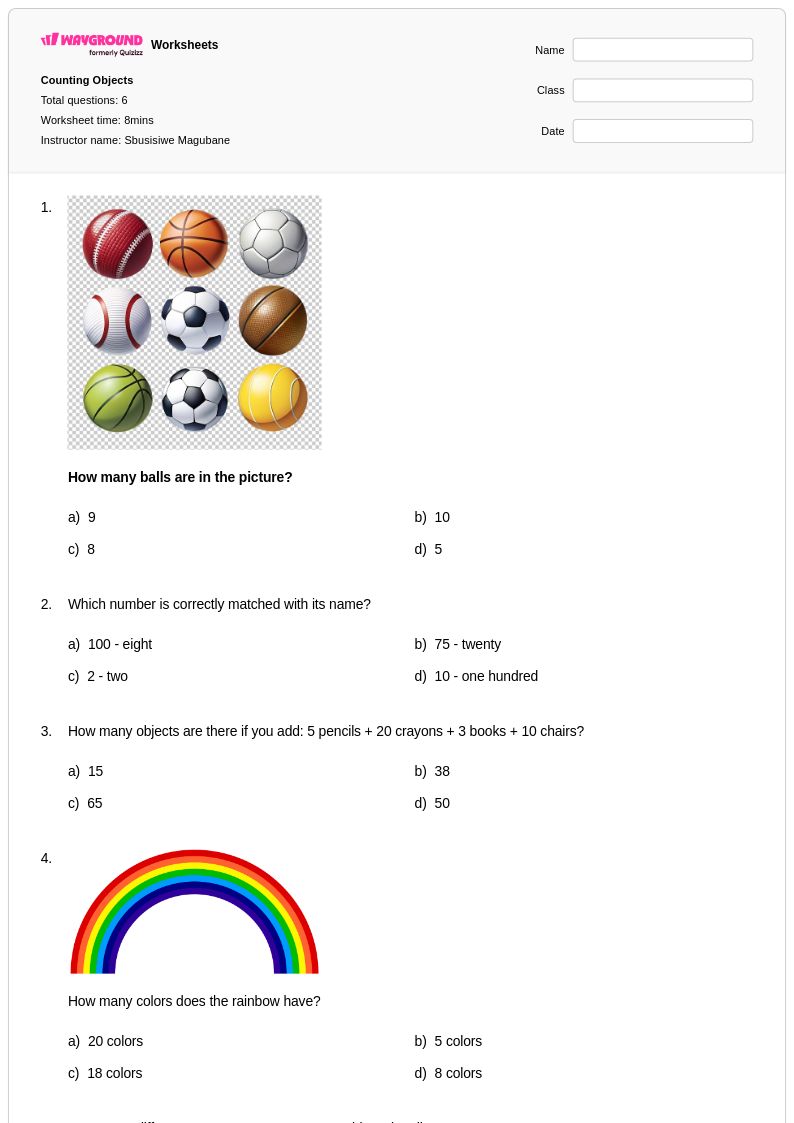
6 T
2nd
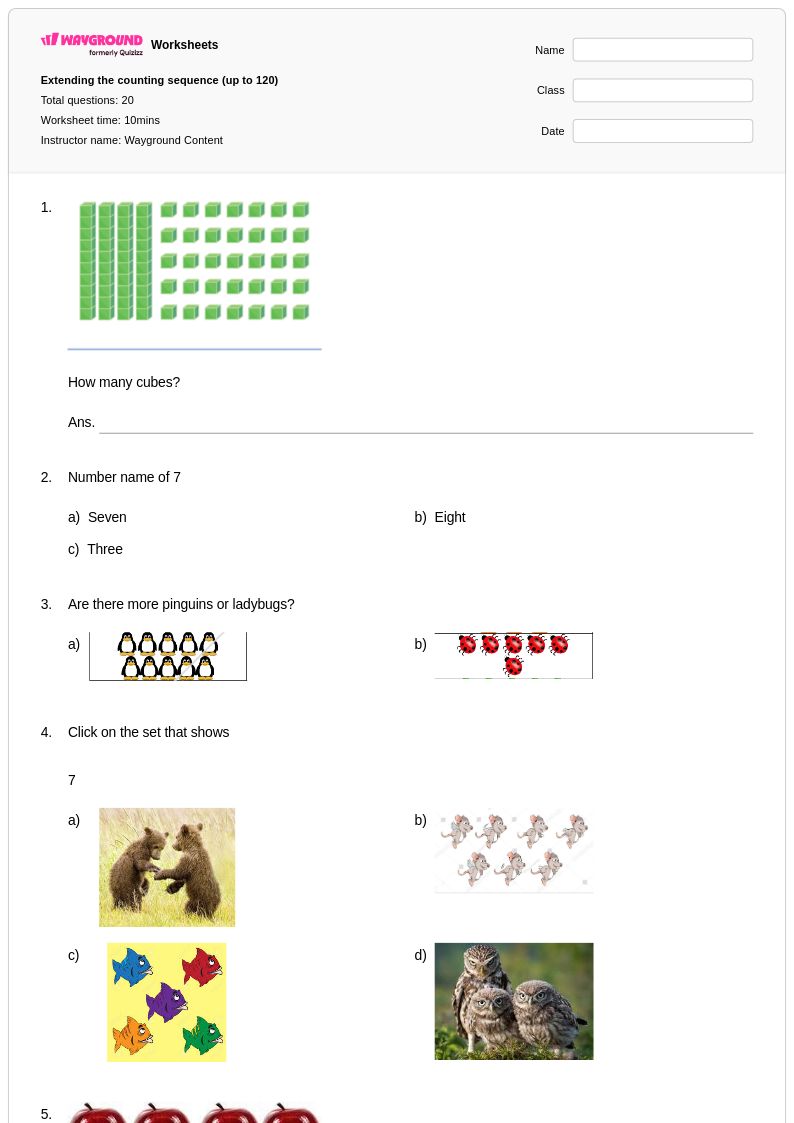
20 T
1st
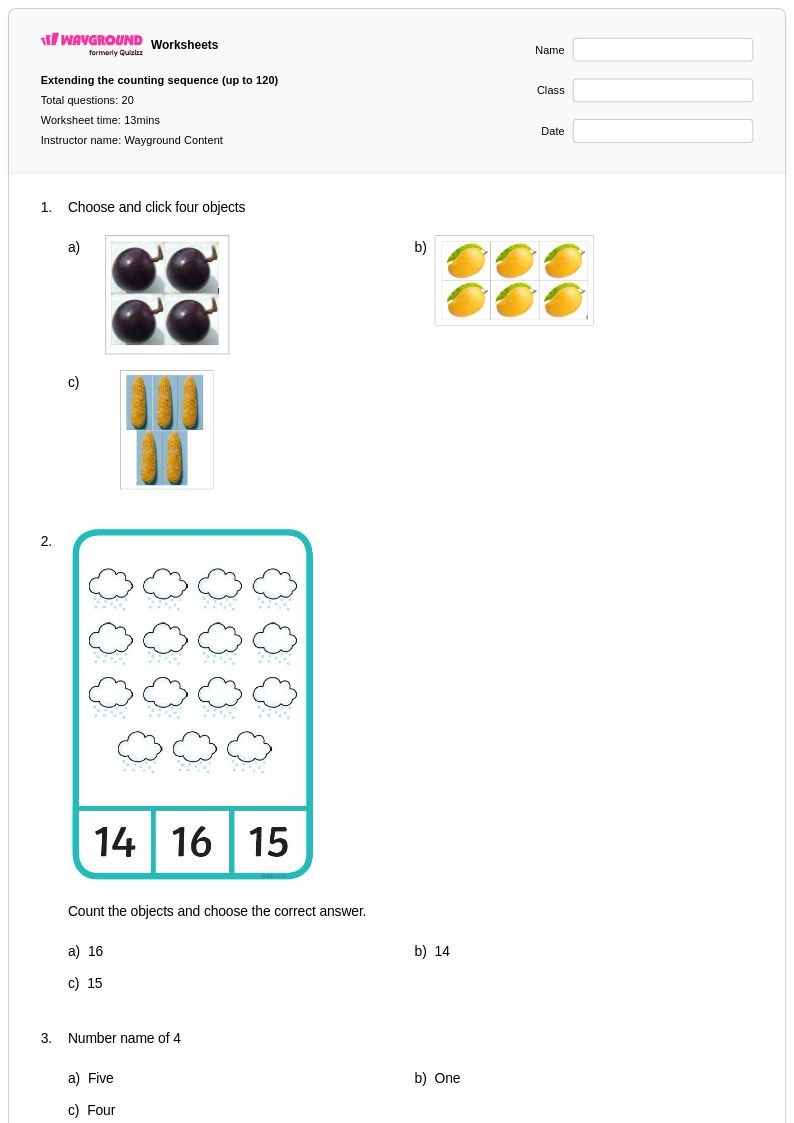
20 T
1st
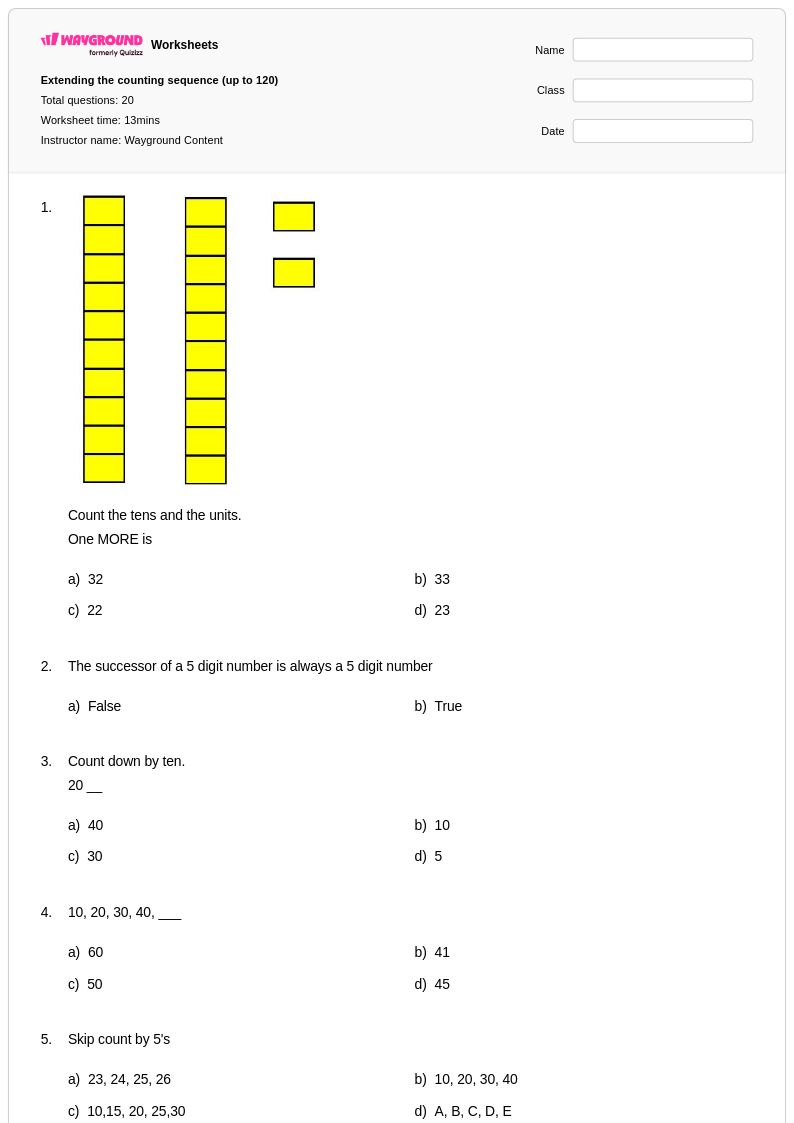
20 T
1st
8 T
2nd
11 T
2nd
22 T
KG - 1st
Jelajahi Lembar Kerja berdasarkan Kelas
Jelajahi Lembar Kerja berdasarkan Subjek
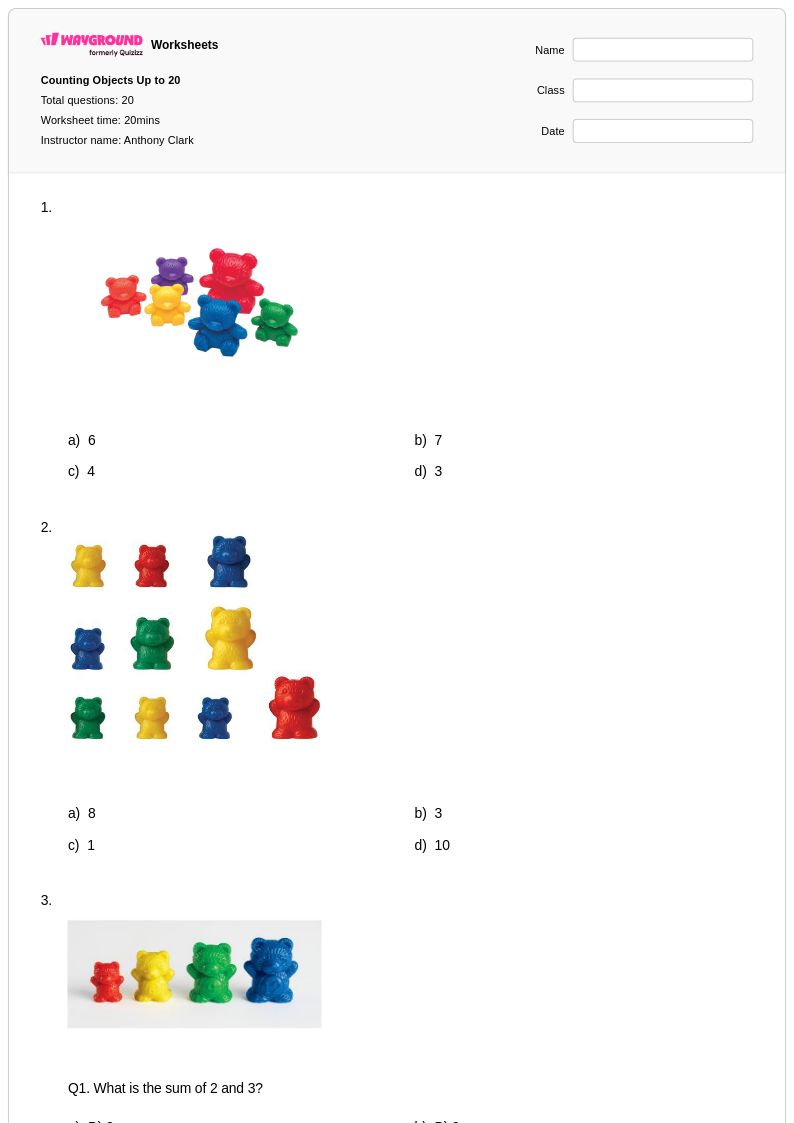
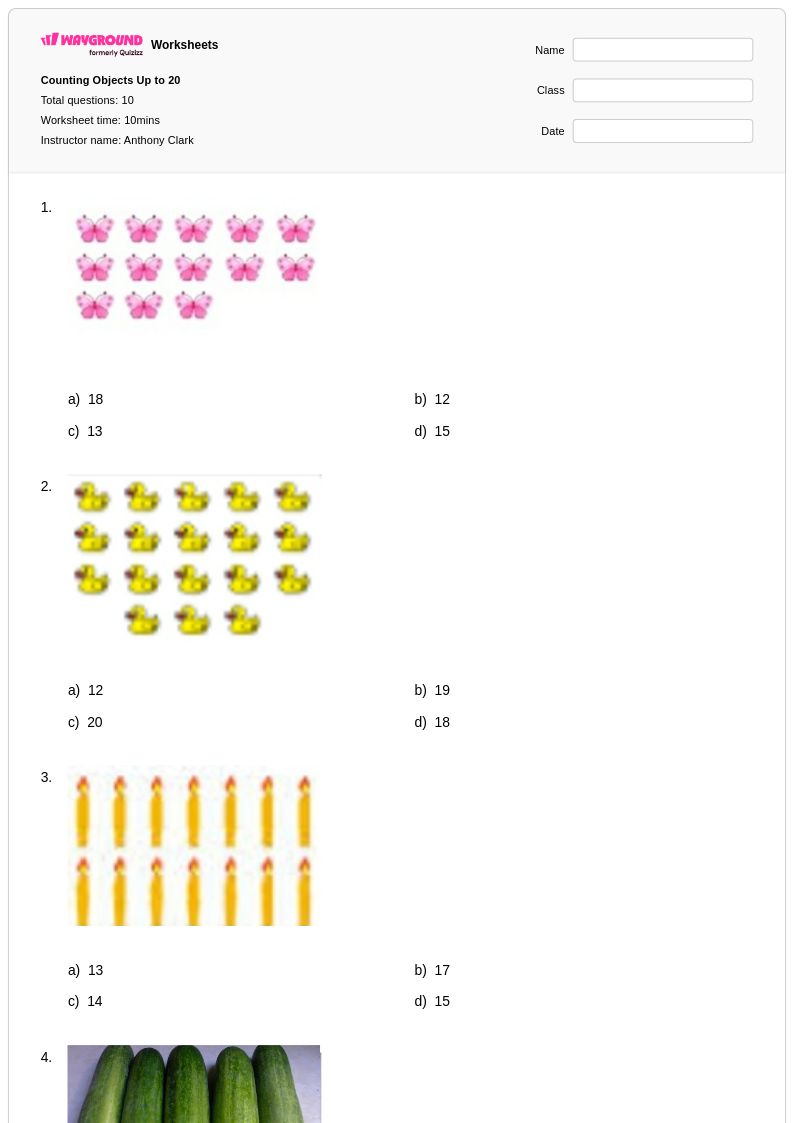
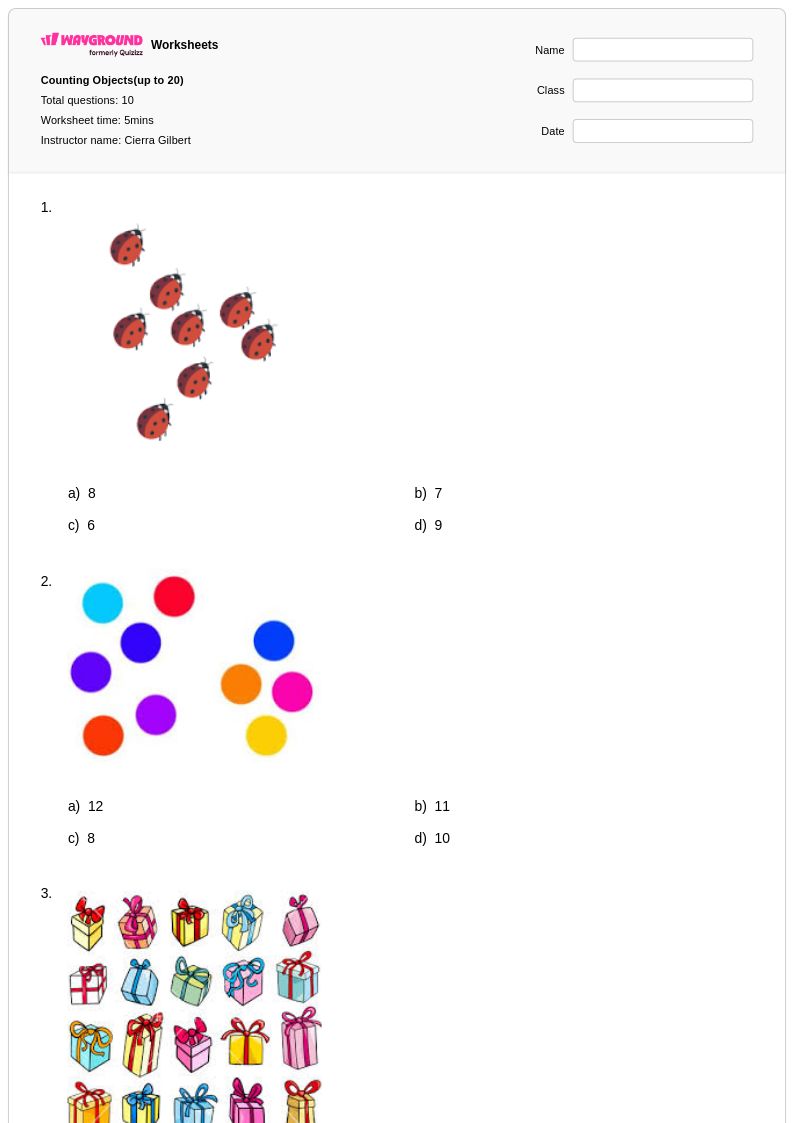
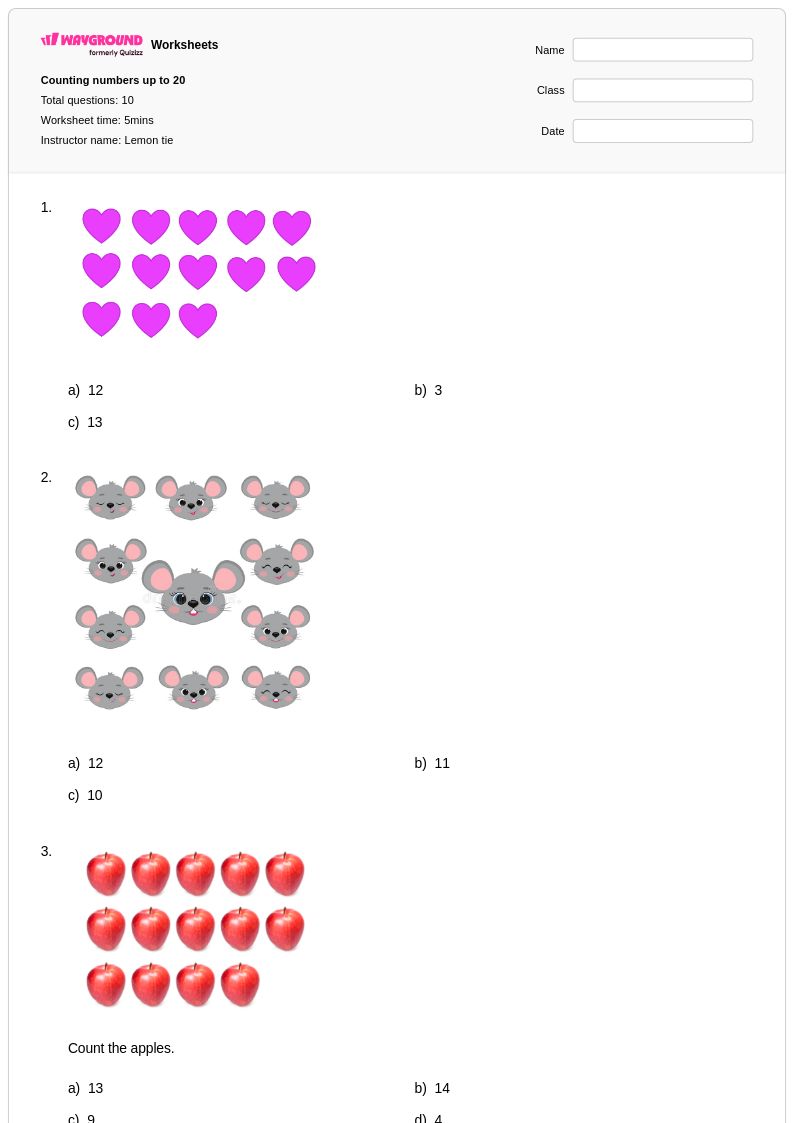
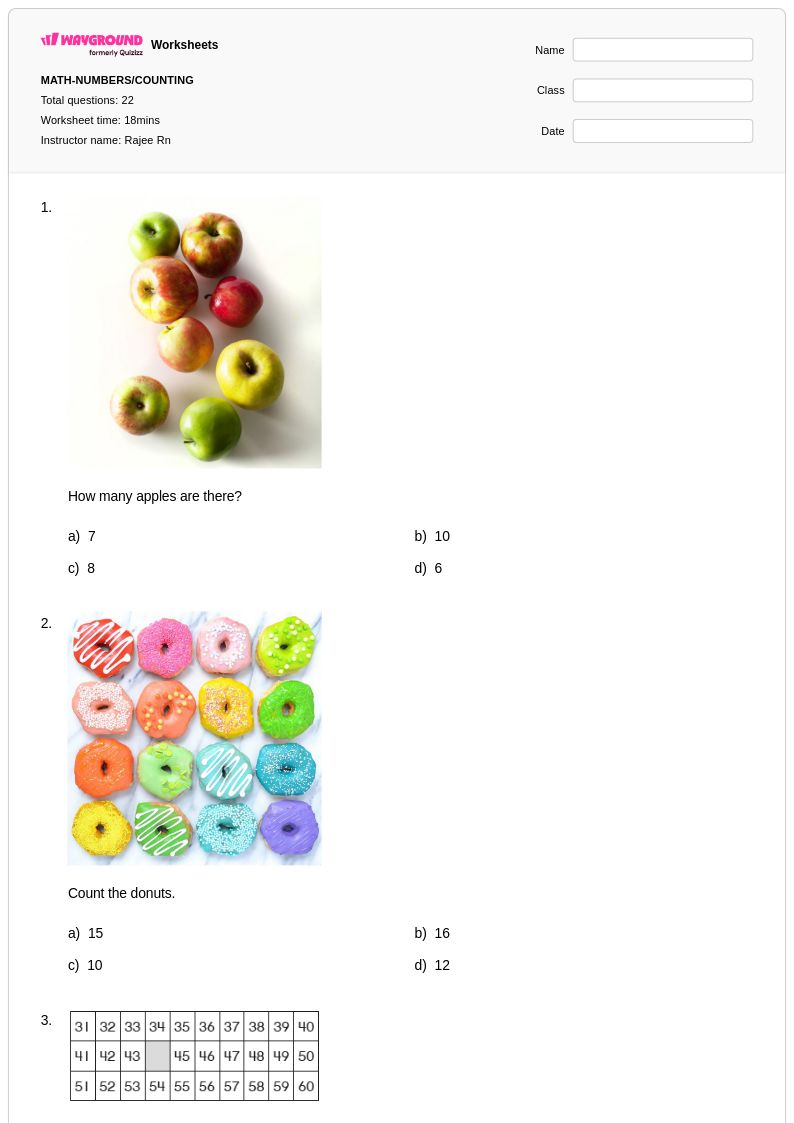
Explore printable Counting Objects to 20 worksheets
Counting objects to 20 worksheets available through Wayground (formerly Quizizz) provide essential foundational practice for developing early mathematical understanding and number recognition skills. These comprehensive worksheet collections focus on building students' ability to accurately count discrete objects, establish one-to-one correspondence, and strengthen their grasp of quantity relationships within the critical range of 1 to 20. The practice problems systematically guide learners through various counting scenarios, from simple arrangements of familiar objects to more complex groupings that challenge spatial reasoning and attention to detail. Each printable resource includes carefully designed exercises that progress in difficulty, accompanied by answer keys that support both independent practice and guided instruction, making these free educational materials invaluable for reinforcing counting proficiency.
Wayground (formerly Quizizz) empowers educators with millions of teacher-created counting objects to 20 worksheets that streamline lesson planning and support differentiated instruction across diverse learning environments. The platform's robust search and filtering capabilities enable teachers to quickly locate resources aligned with specific curriculum standards and individual student needs, while built-in differentiation tools allow for seamless customization of difficulty levels and problem types. These flexible worksheet collections are available in both digital and printable PDF formats, facilitating easy distribution whether students are learning in traditional classrooms, hybrid settings, or remote environments. Teachers can effectively utilize these resources for targeted skill practice, remediation for struggling learners, enrichment activities for advanced students, and formative assessment opportunities that inform instructional decisions and support mathematical growth.
FAQs
How do I teach students to count objects to 20?
What exercises help students practice counting objects to 20?
What mistakes do students commonly make when counting objects to 20?
How can I use a counting objects to 20 worksheet on Wayground?
How does counting objects to 20 fit into the Common Core math progression?
How can I differentiate counting objects to 20 practice?