
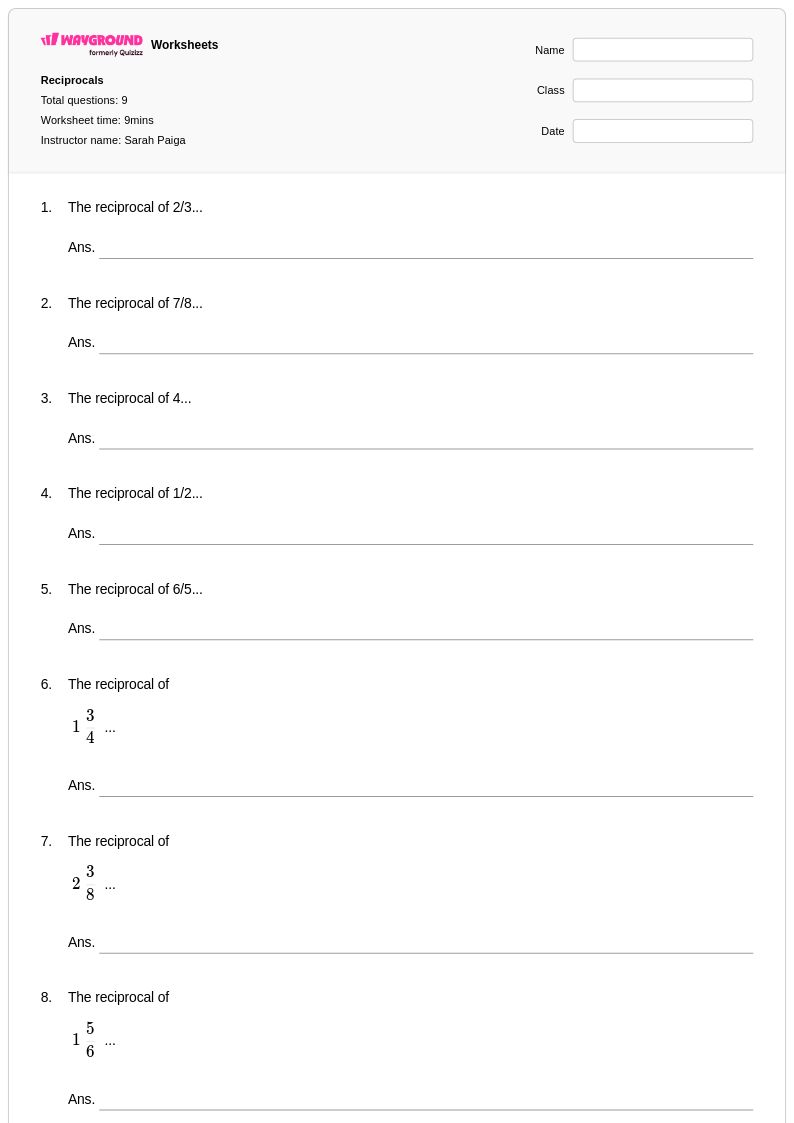
9 Q
6th
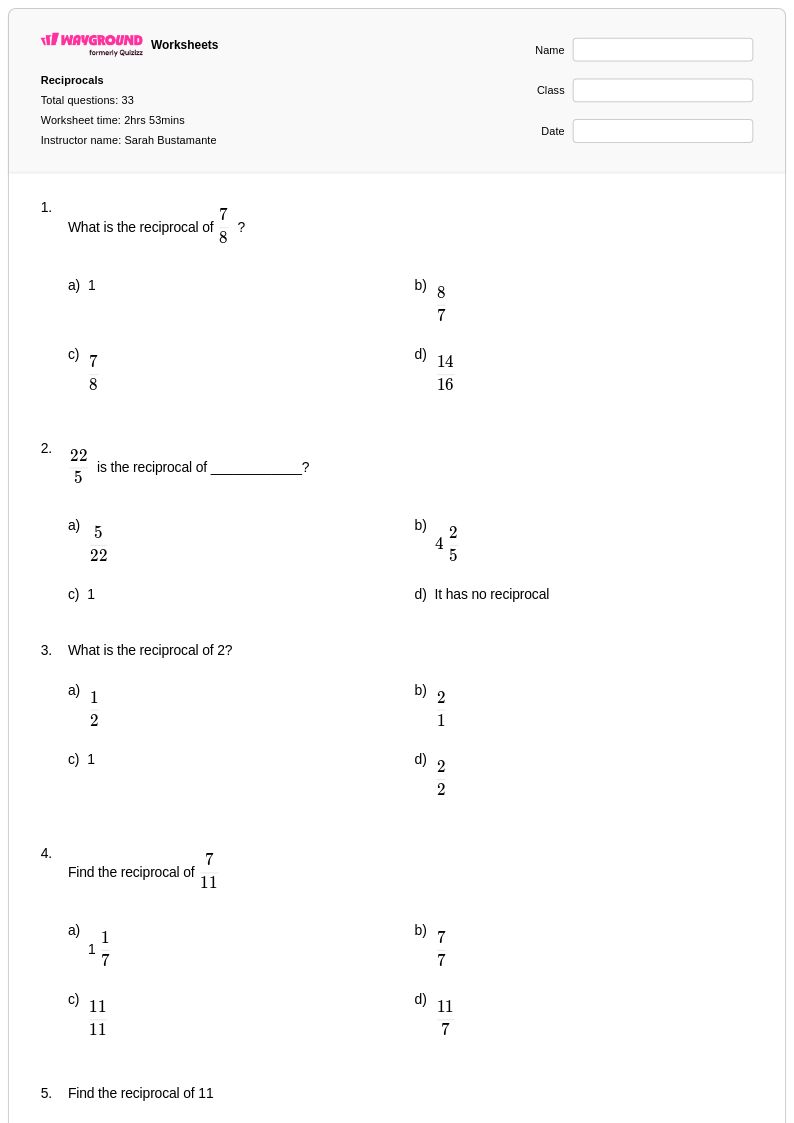
33 Q
6th
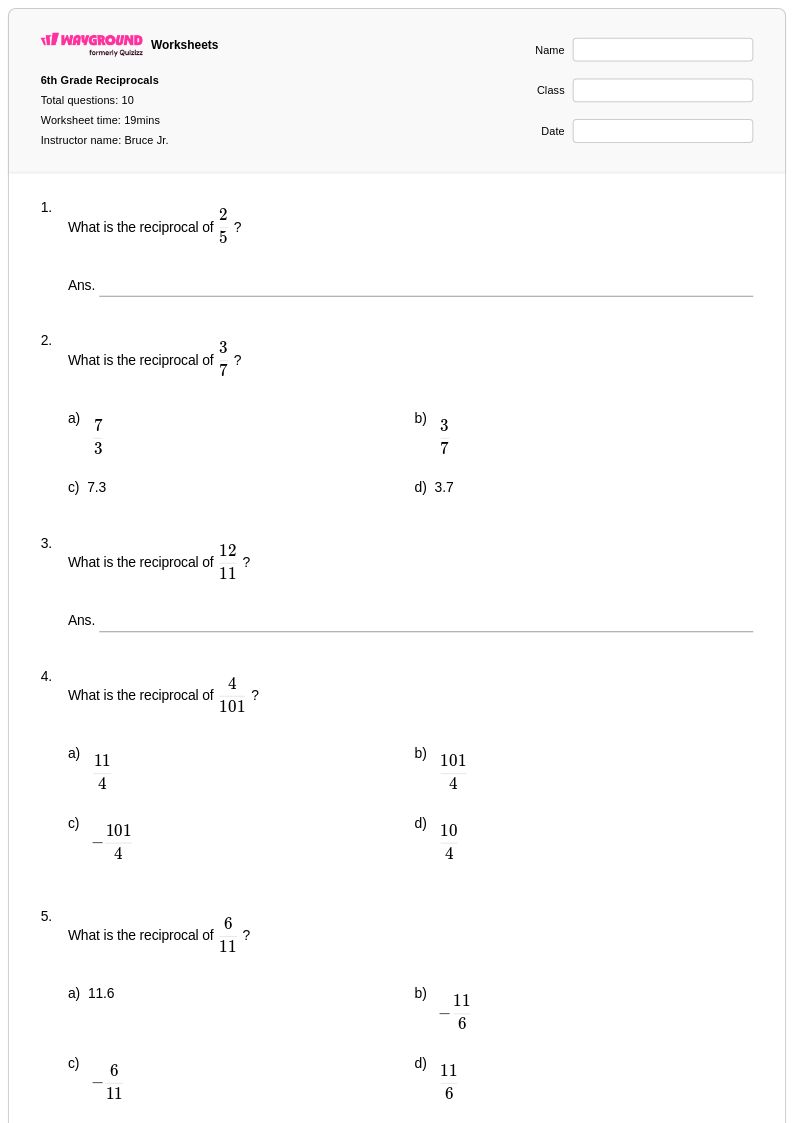
10 Q
6th - 7th
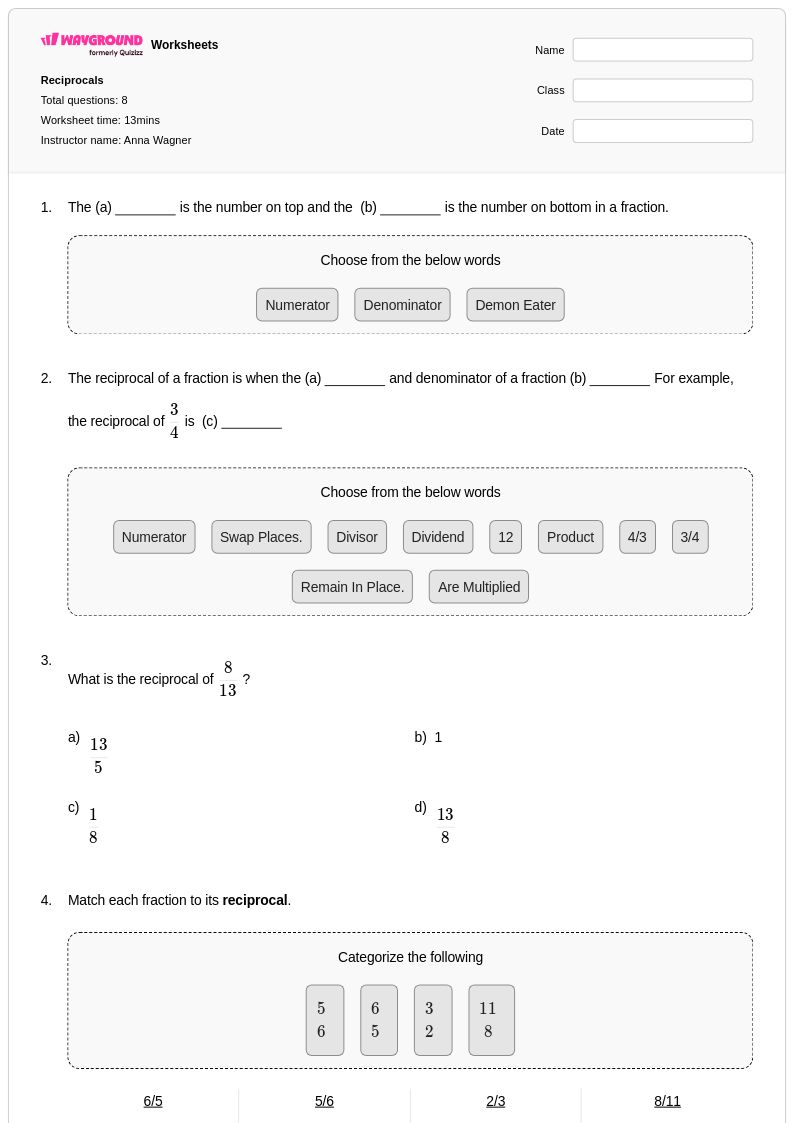
8 Q
6th
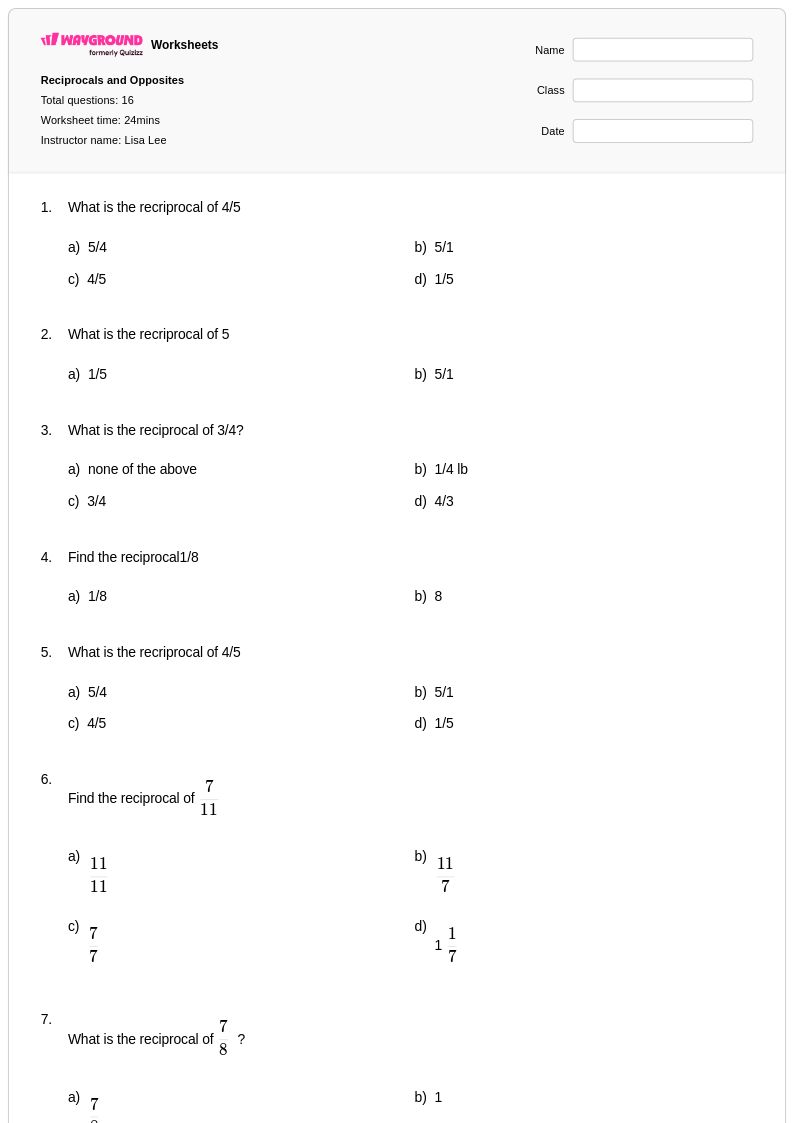
16 Q
6th
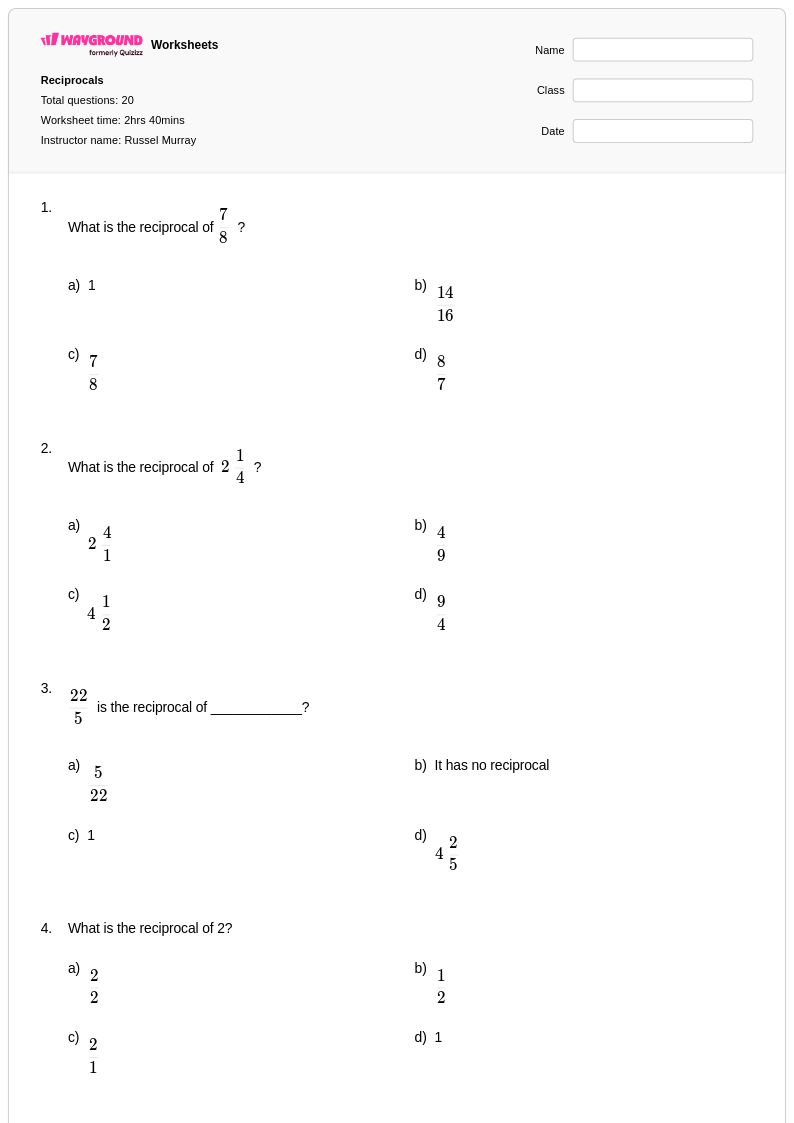
20 Q
6th
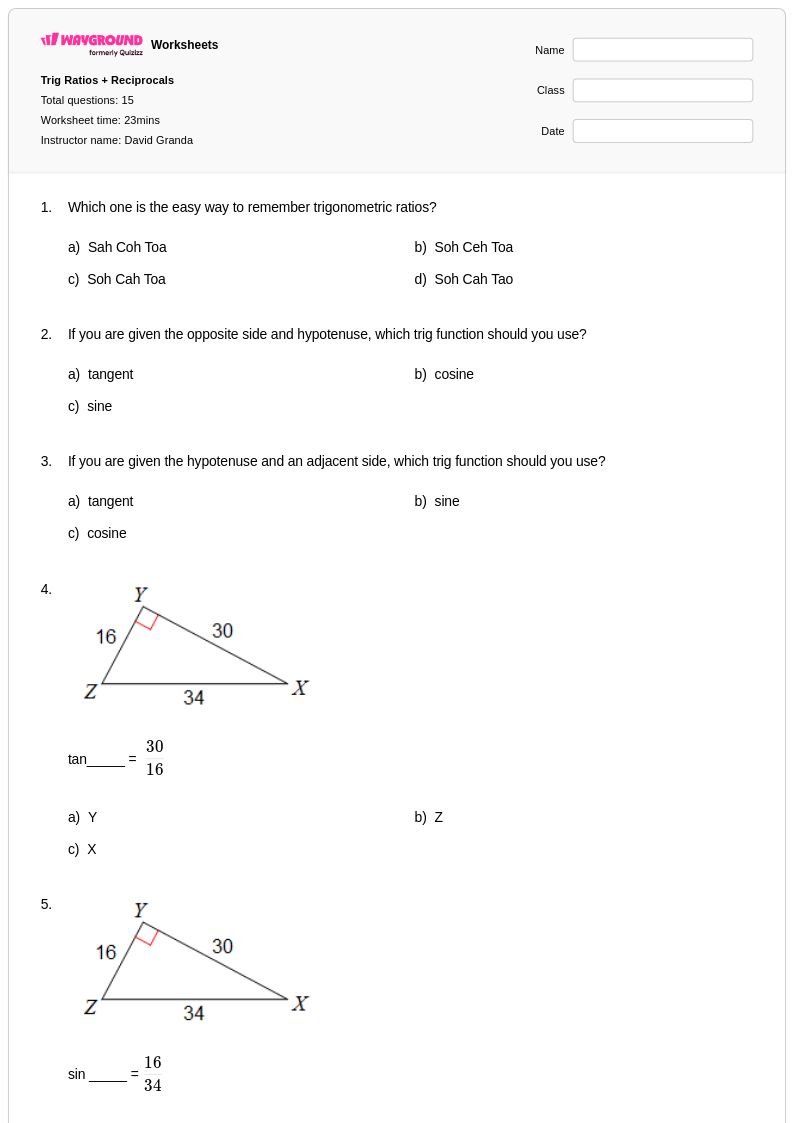
15 Q
9th - 12th
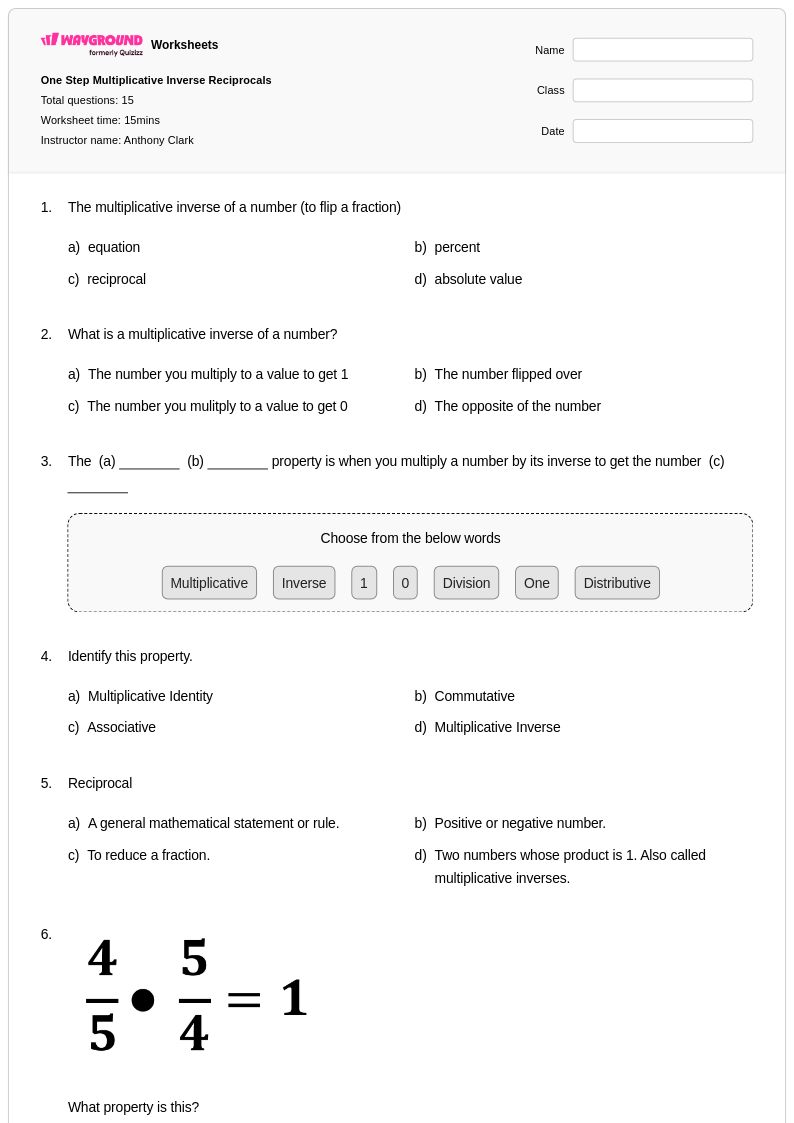
15 Q
8th - Uni
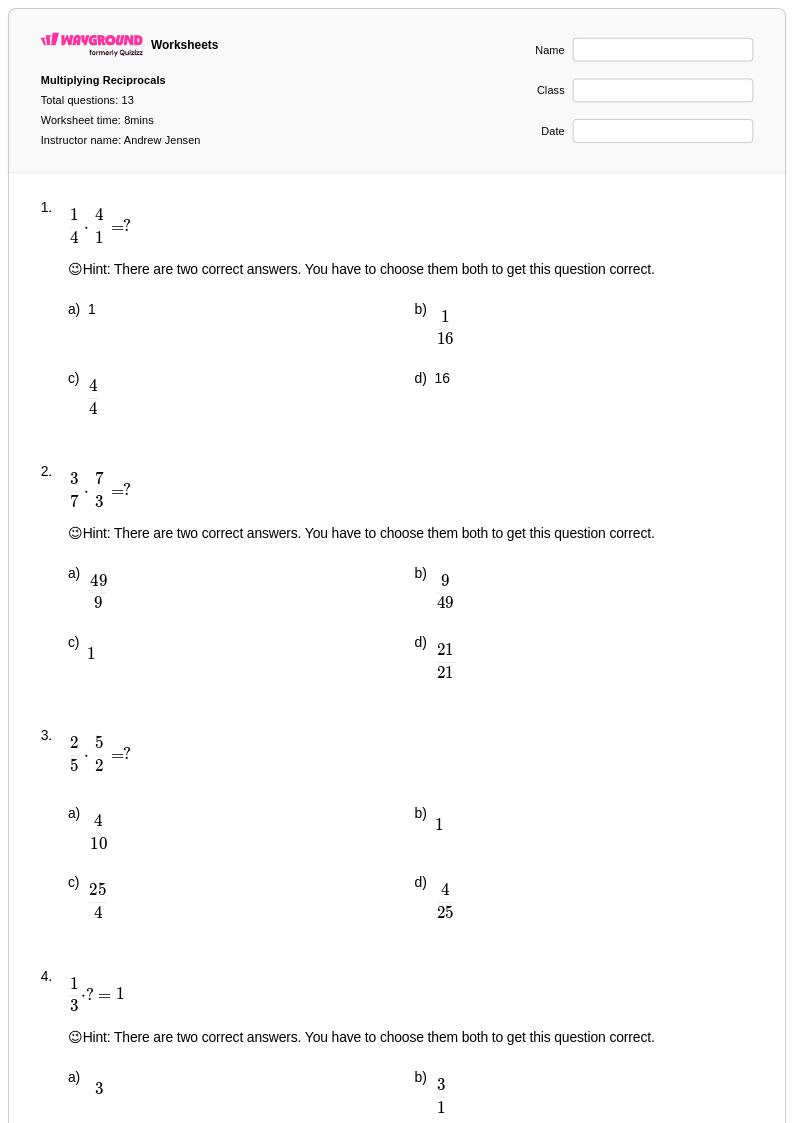
13 Q
5th - 8th
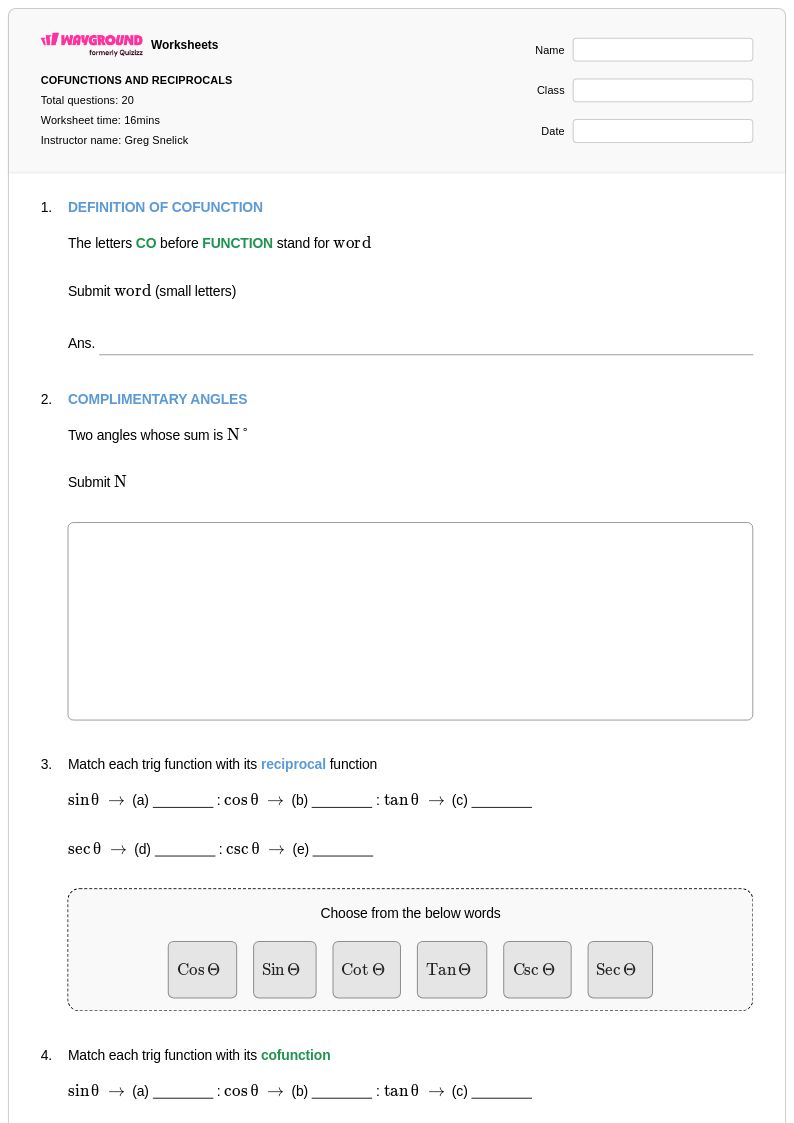
20 Q
9th - 12th
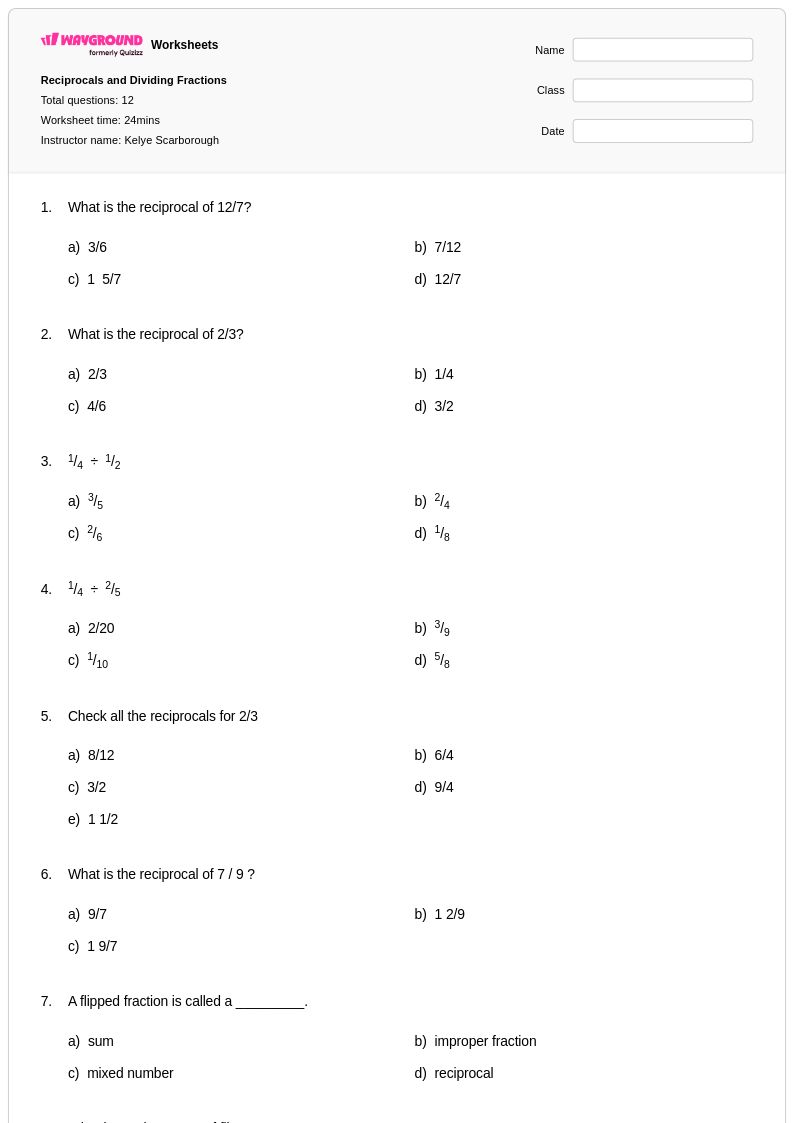
12 Q
5th
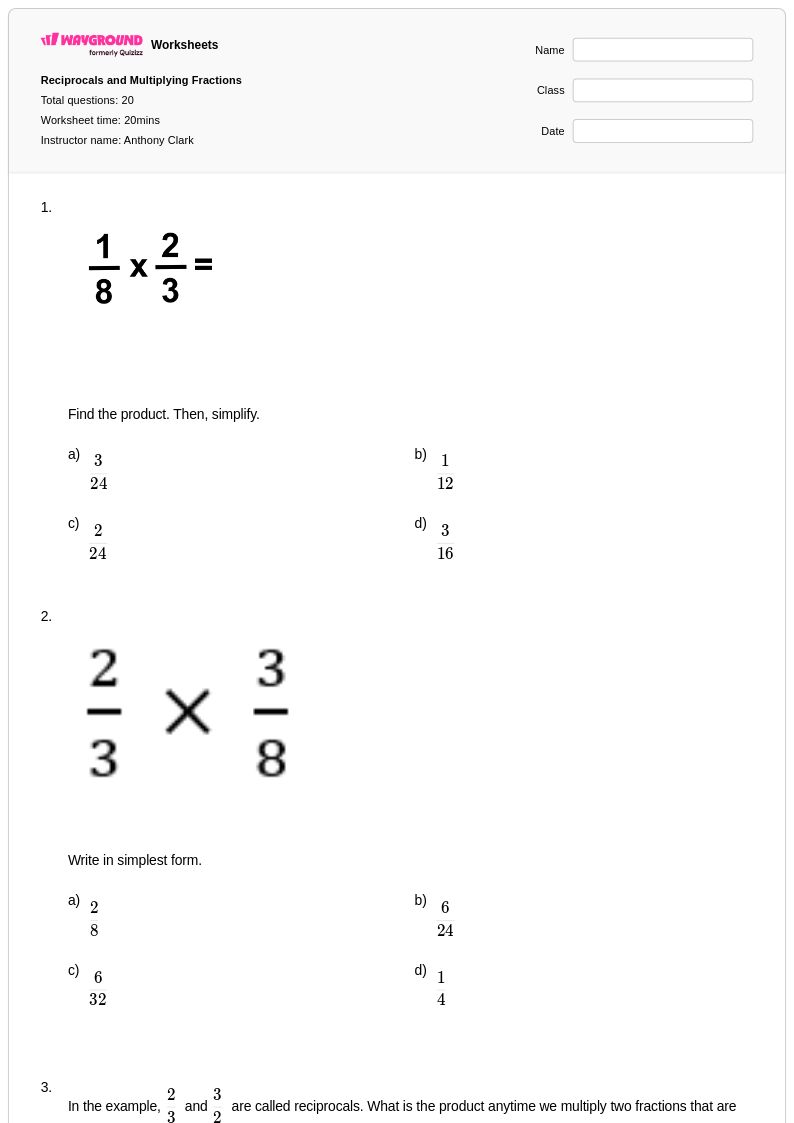
20 Q
6th - Uni
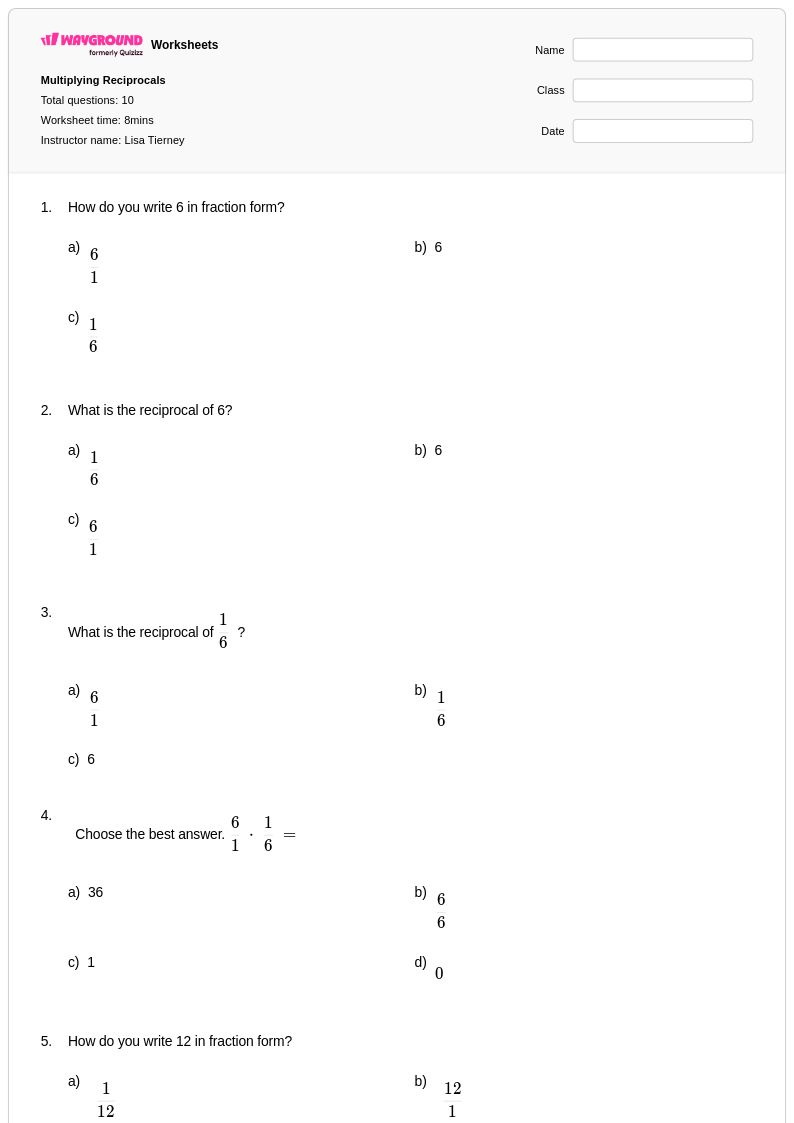
10 Q
6th
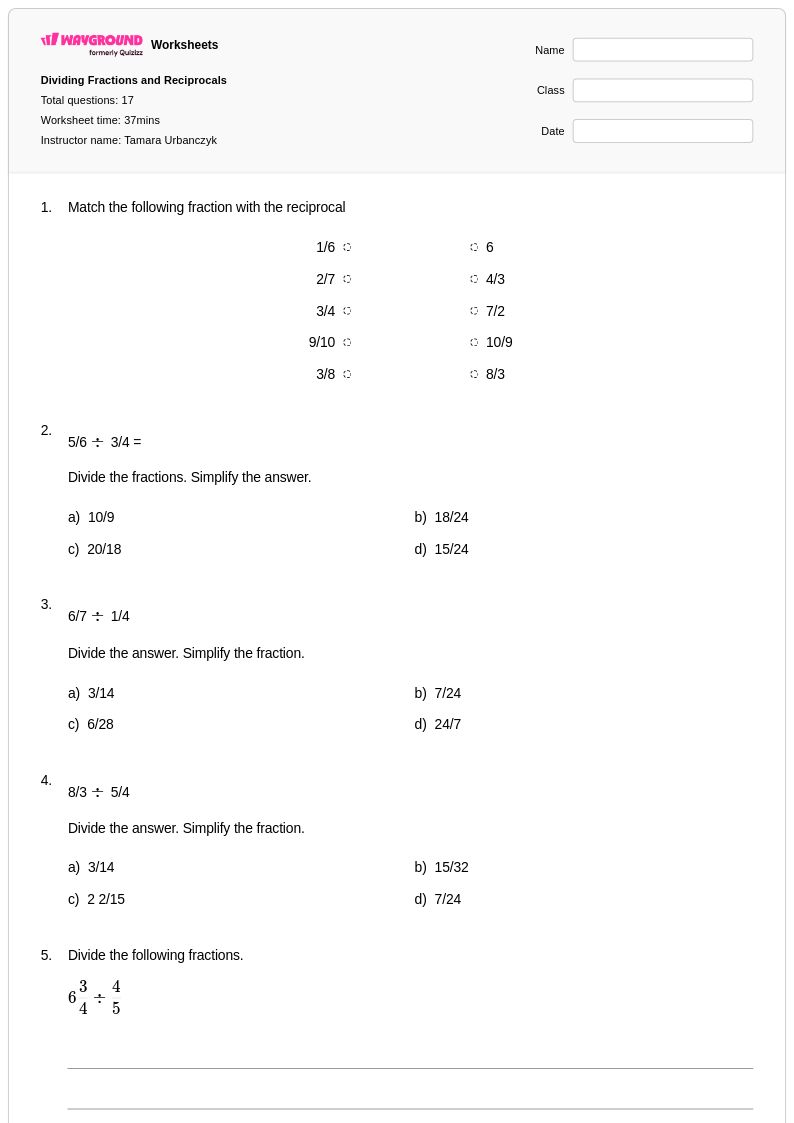
17 Q
8th
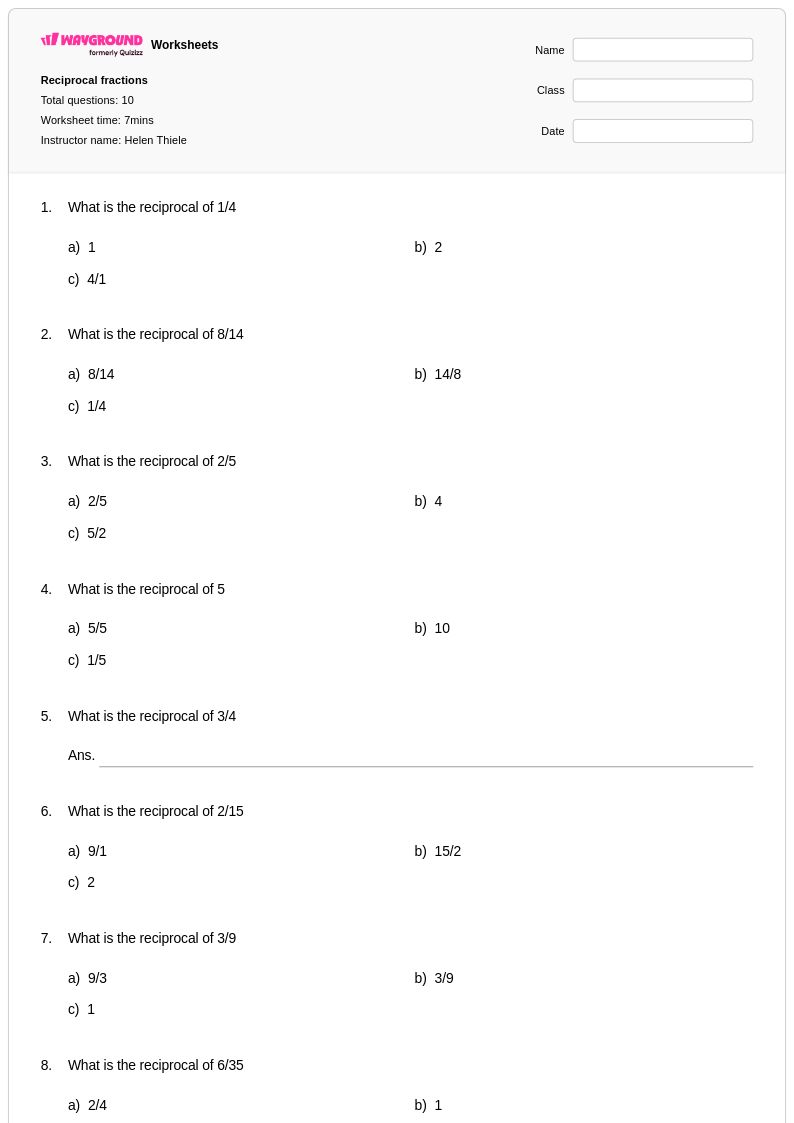
10 Q
4th - 6th
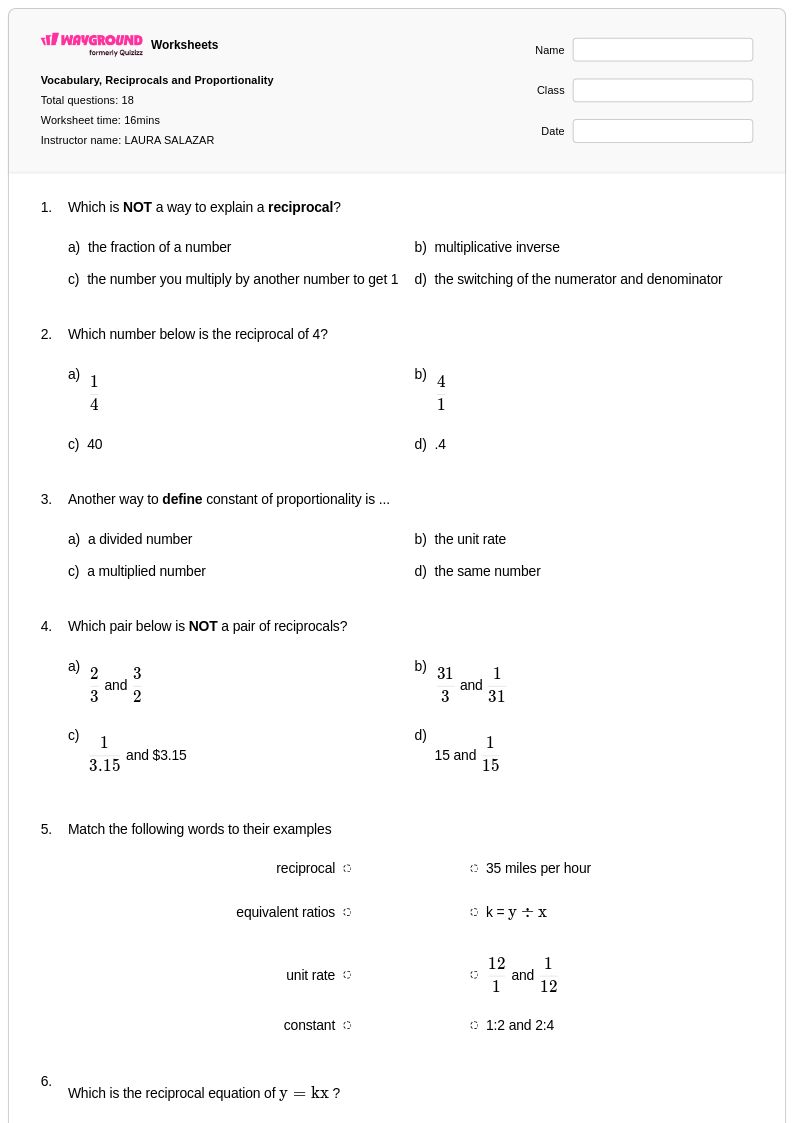
18 Q
6th - 8th
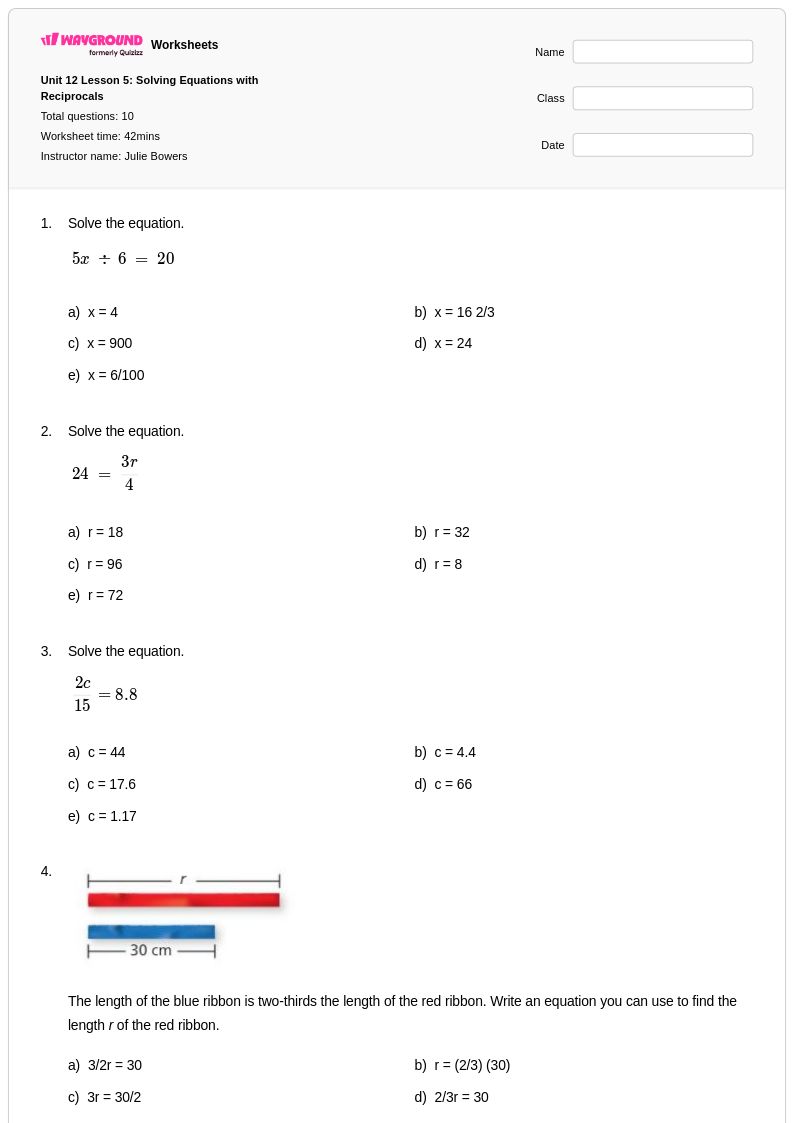
10 Q
6th
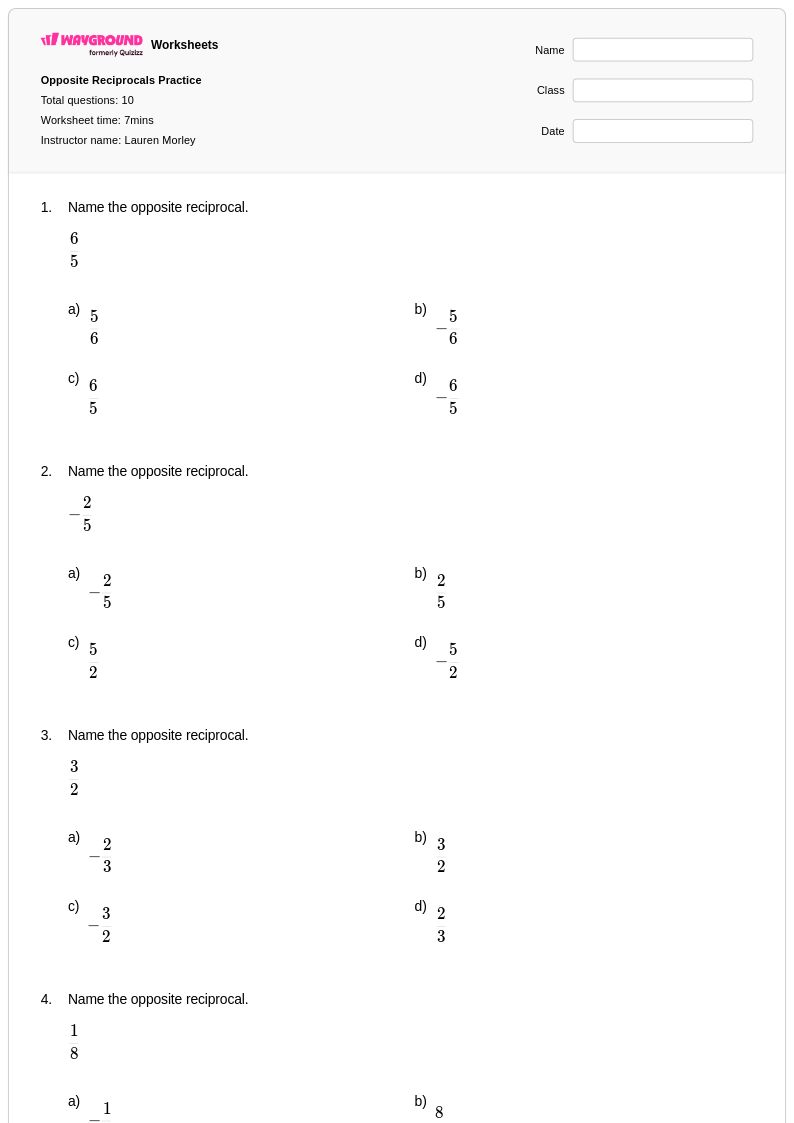
10 Q
9th
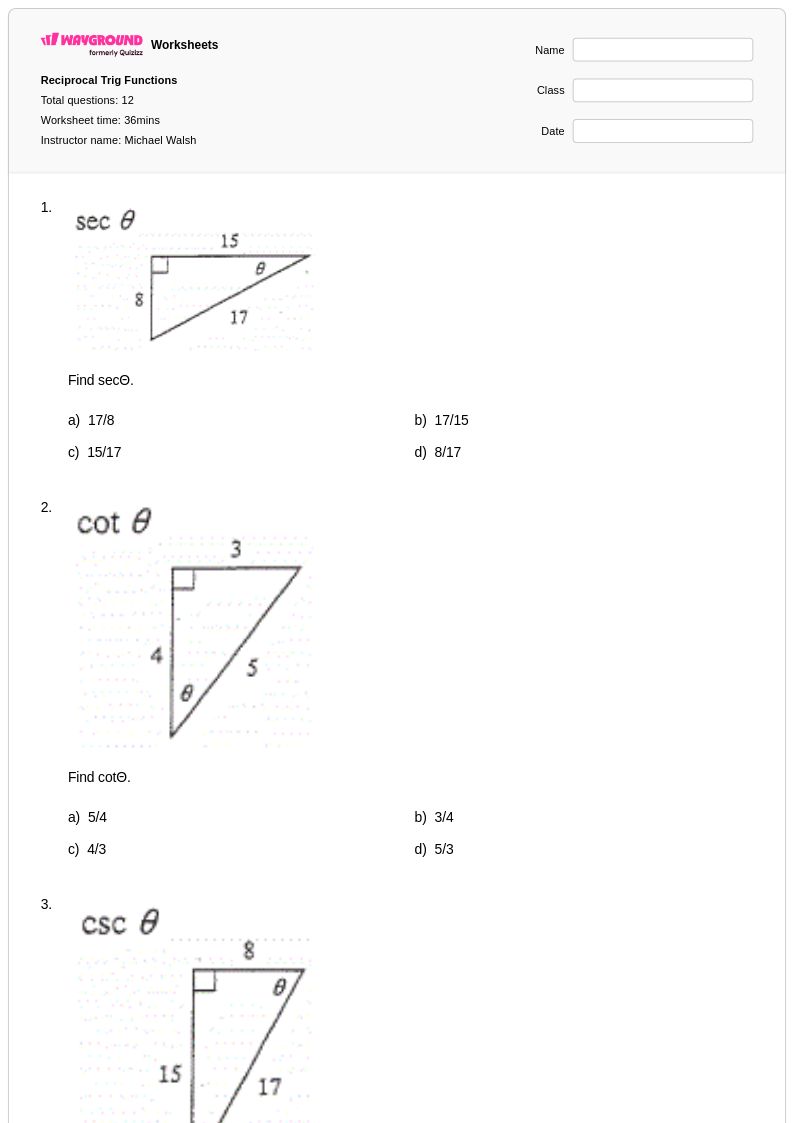
12 Q
9th - 12th
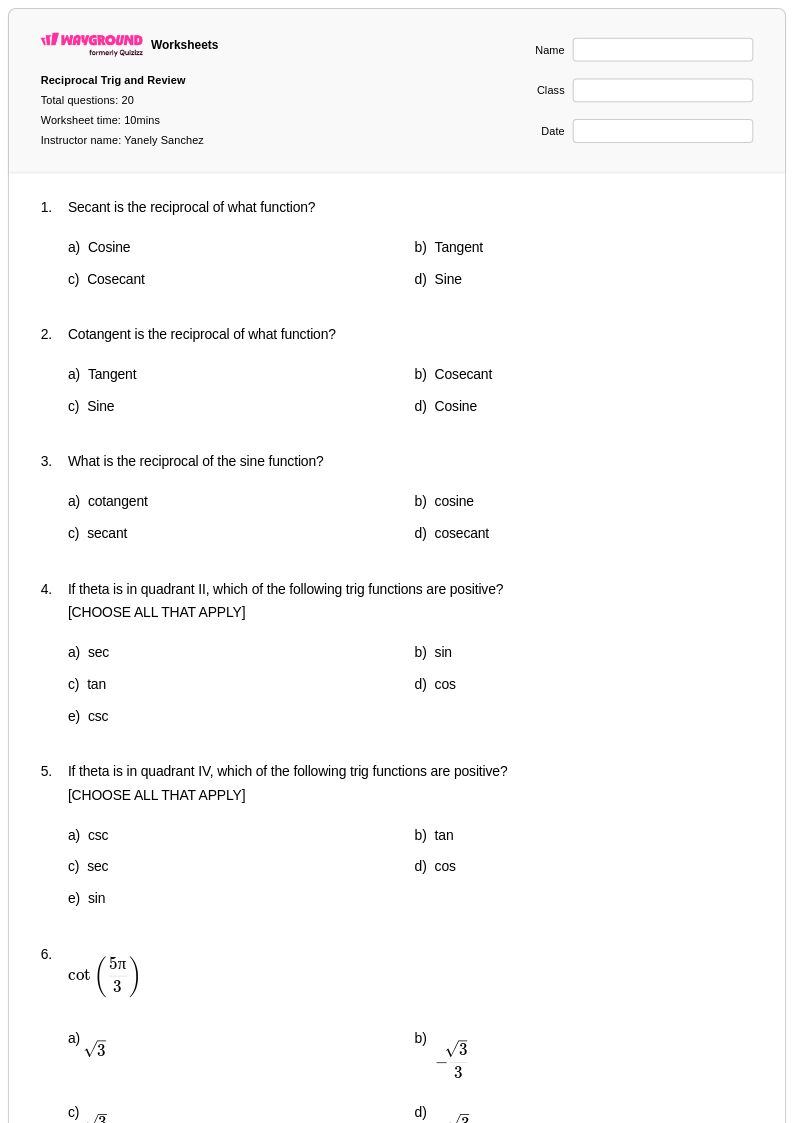
20 Q
12th
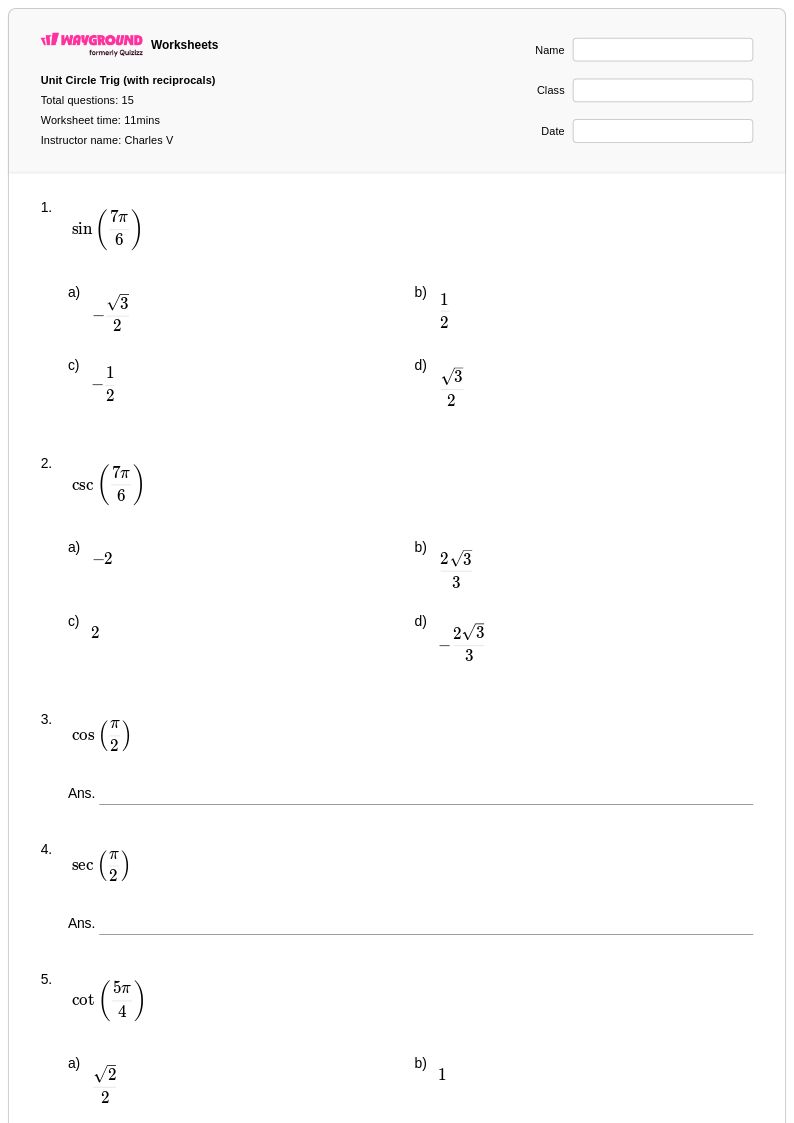
15 Q
9th - 12th
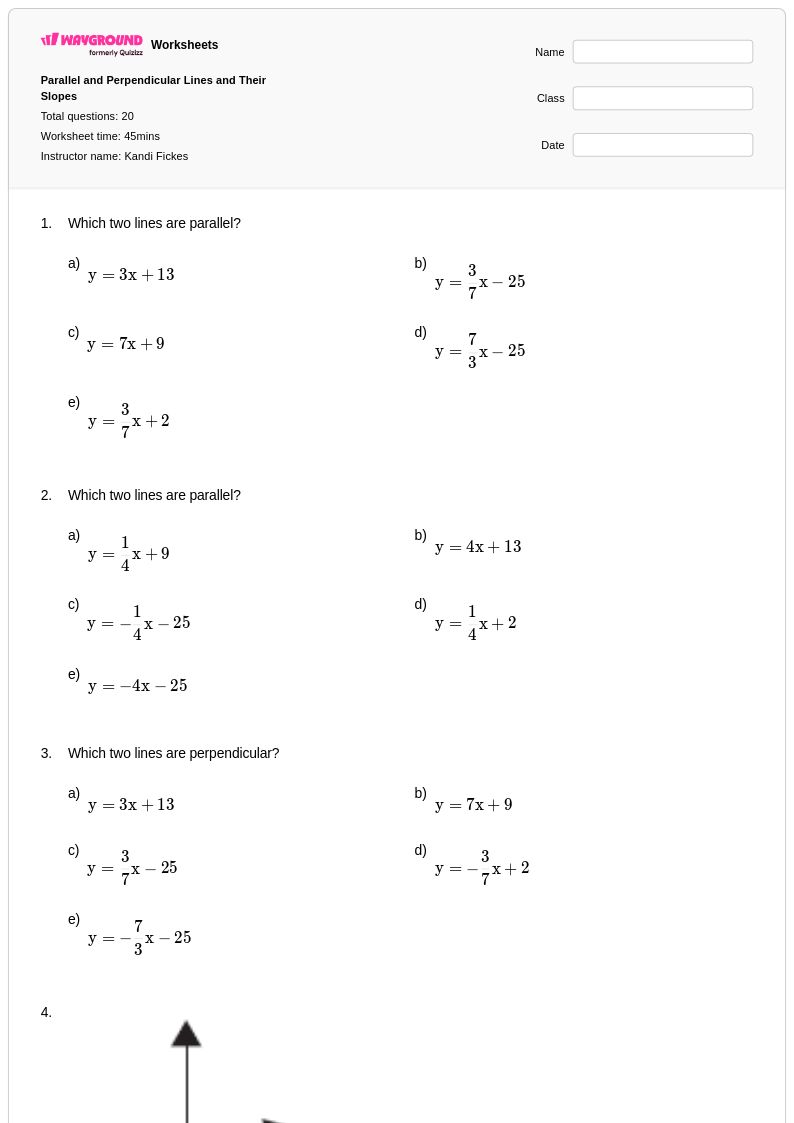
20 Q
8th
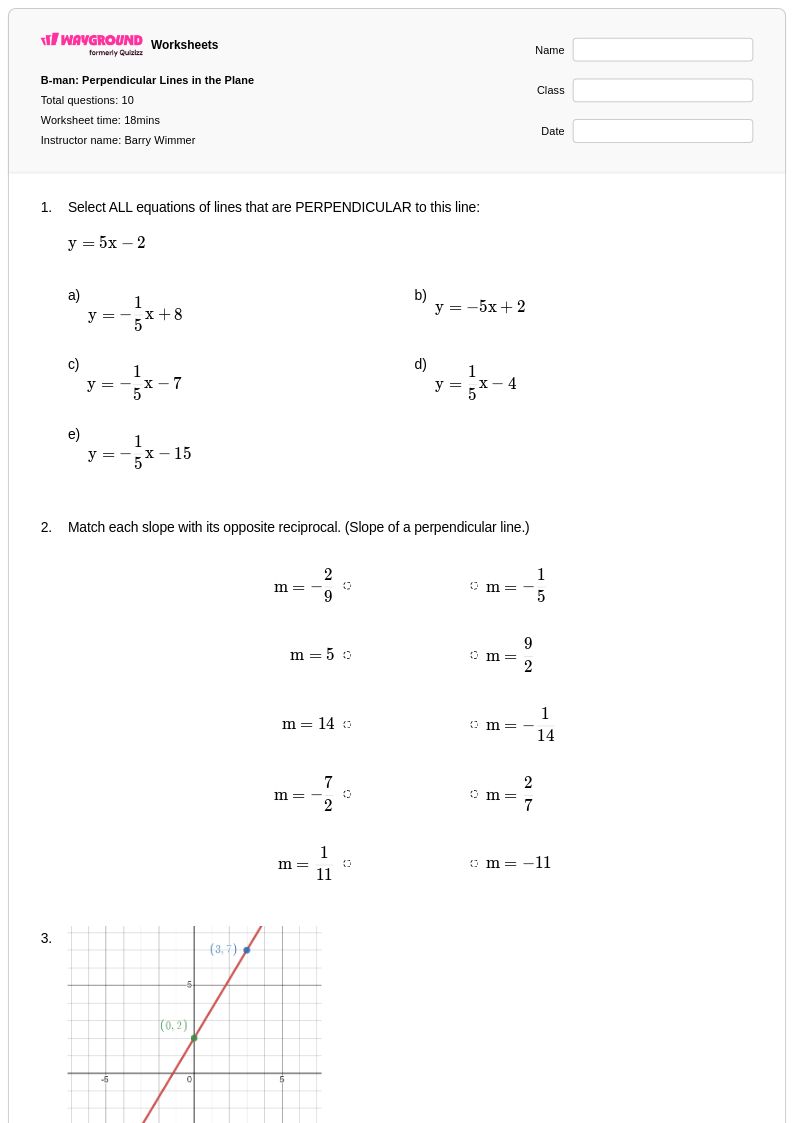
10 Q
9th - 12th
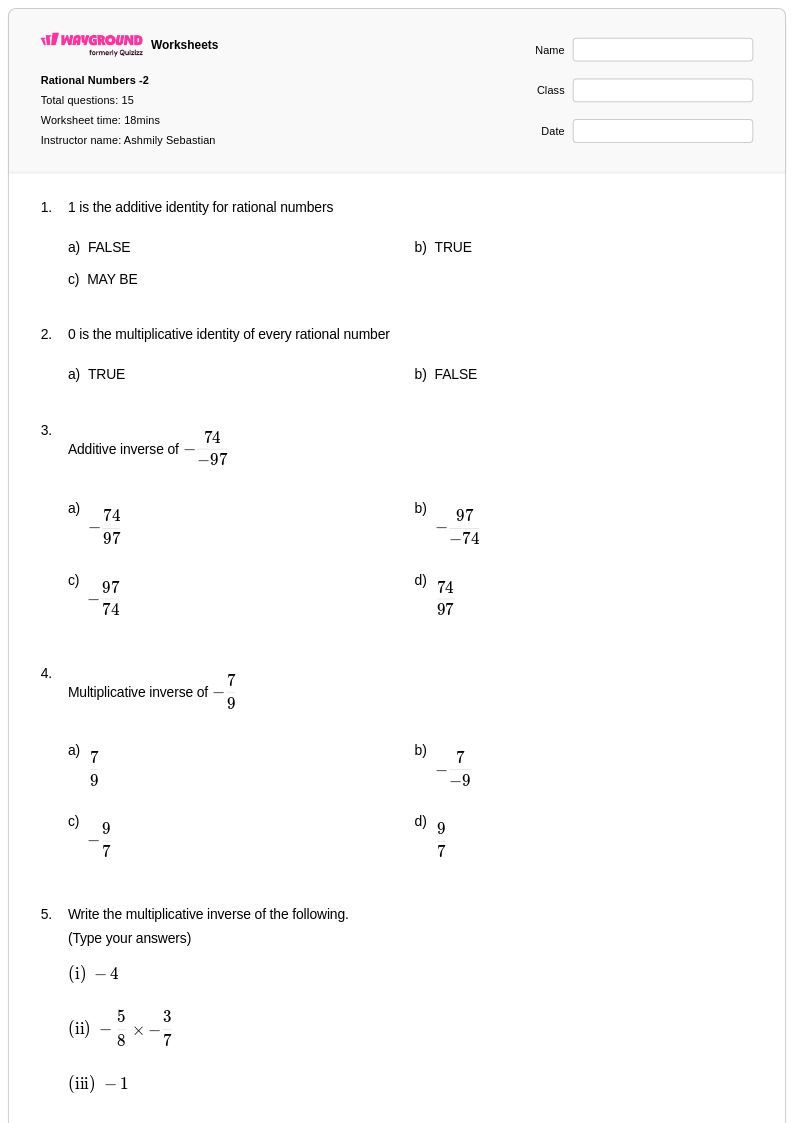
15 Q
7th - 8th
Explore Worksheets by Subjects
Explore printable Reciprocals worksheets
Reciprocals worksheets available through Wayground (formerly Quizizz) provide comprehensive practice opportunities for students to master this fundamental mathematical concept. These carefully designed resources help students understand that reciprocals are pairs of numbers whose product equals one, such as 3/4 and 4/3, or 5 and 1/5. The worksheets strengthen essential skills including identifying reciprocals of whole numbers, fractions, and mixed numbers, while also reinforcing the relationship between multiplication and division. Students work through varied practice problems that build confidence in recognizing reciprocal patterns and applying this knowledge to solve equations. Each worksheet collection includes detailed answer keys and is available as free printable pdf resources, making it convenient for both classroom instruction and independent study.
Wayground (formerly Quizizz) empowers teachers with an extensive library of millions of teacher-created reciprocals worksheets that streamline lesson planning and differentiated instruction. The platform's robust search and filtering capabilities allow educators to quickly locate materials that align with specific learning objectives and mathematical standards. Teachers can easily customize existing worksheets or create new ones to match their students' varying skill levels, whether for remediation of basic reciprocal concepts or enrichment activities involving complex fraction relationships. The flexible format options include both printable pdf versions for traditional paper-and-pencil work and digital formats for interactive learning experiences. These comprehensive tools enable educators to provide targeted skill practice, assess student understanding, and adapt instruction based on individual learning needs.
FAQs
How do I introduce the concept of reciprocals?
What types of problems are included in these reciprocals worksheets?
What are common student mistakes when finding reciprocals?
How can I use this reciprocals worksheet with my students?
How do reciprocals fit into the math curriculum?
How can I support students who struggle with finding reciprocals?