
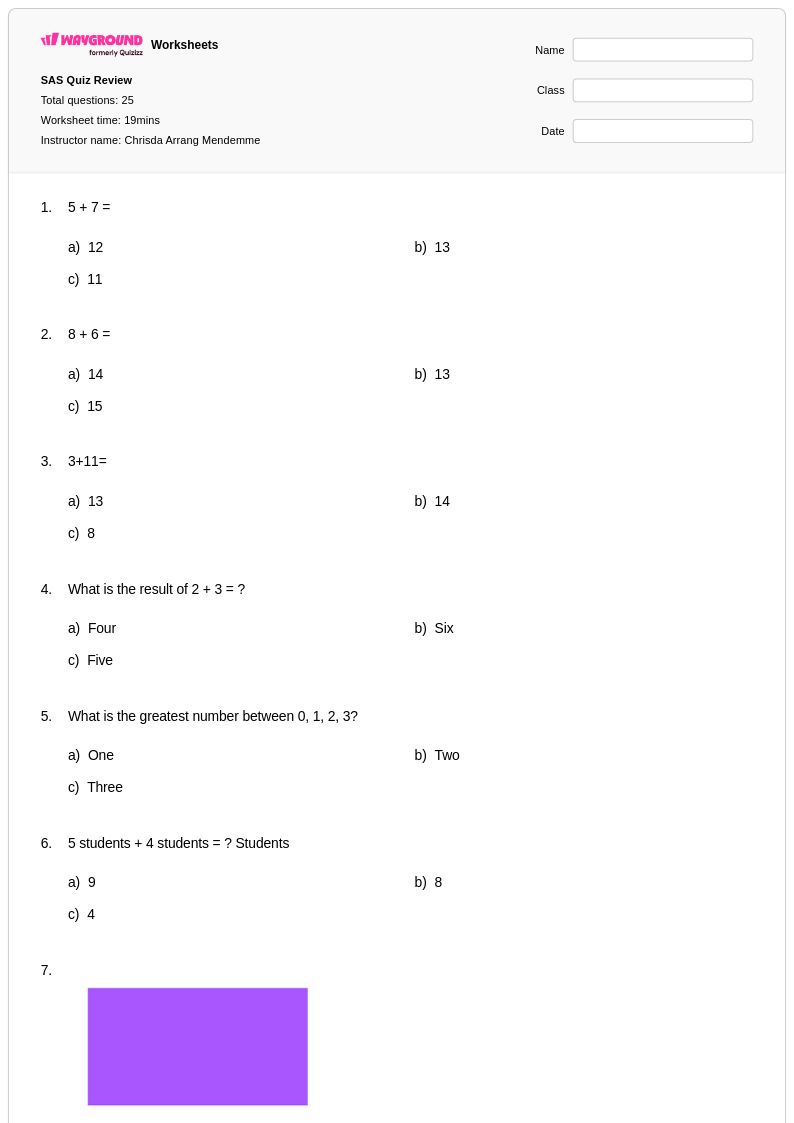
25 Q
1st
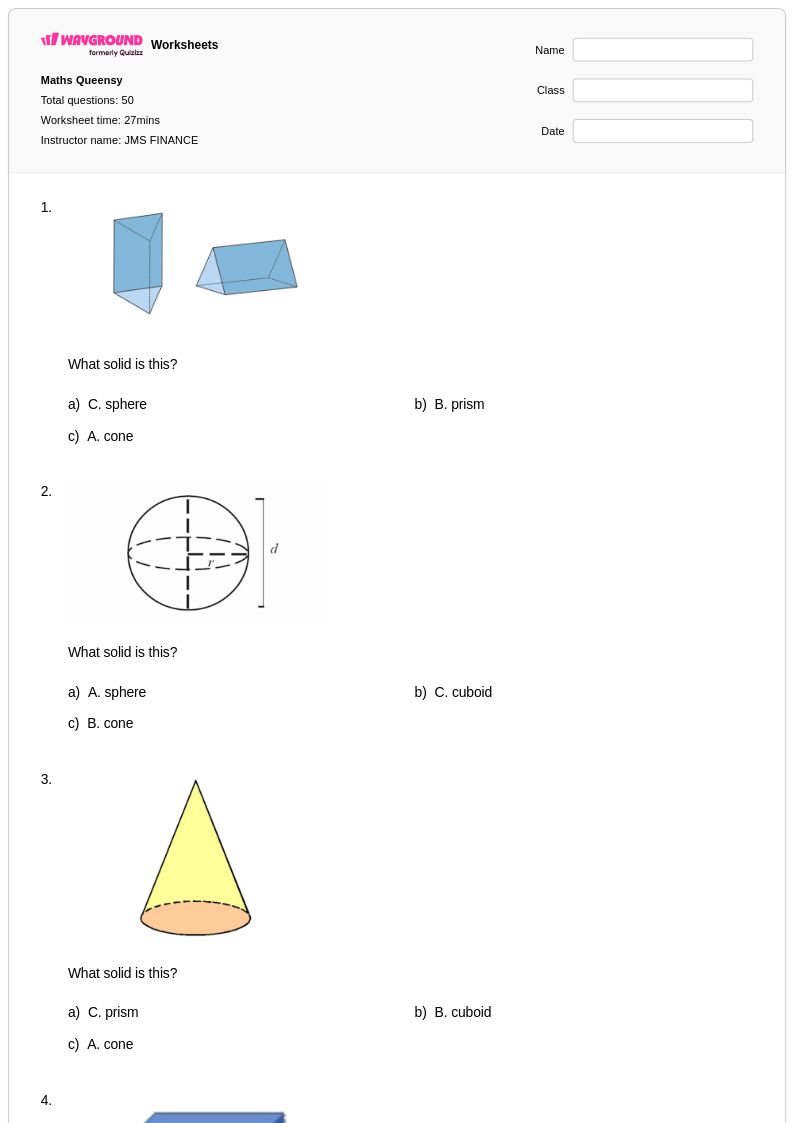
50 Q
1st
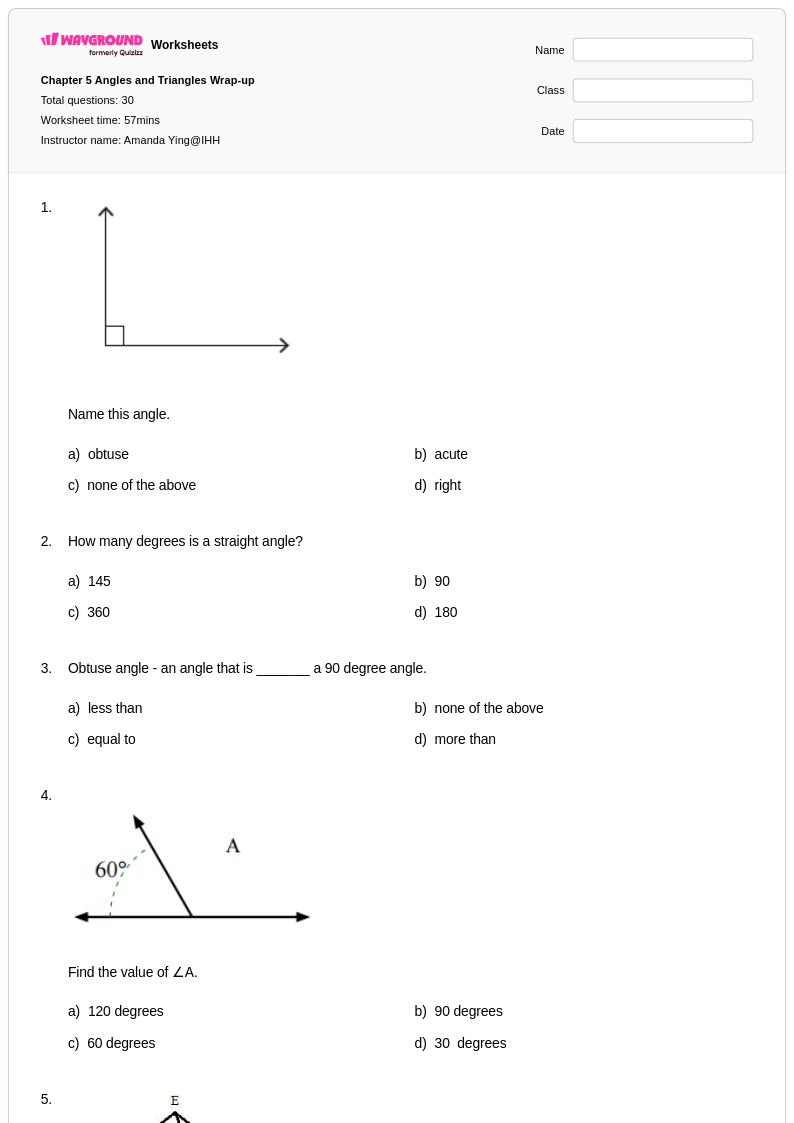
30 Q
1st - 5th
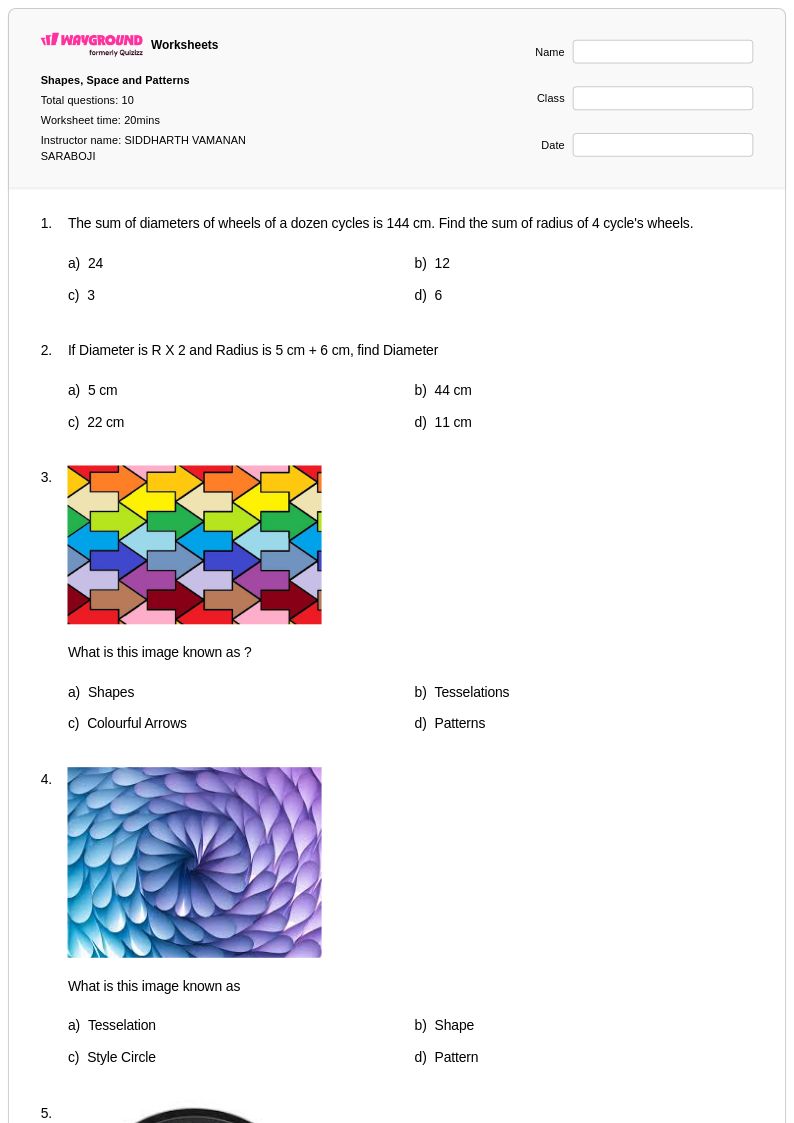
10 Q
1st - 6th
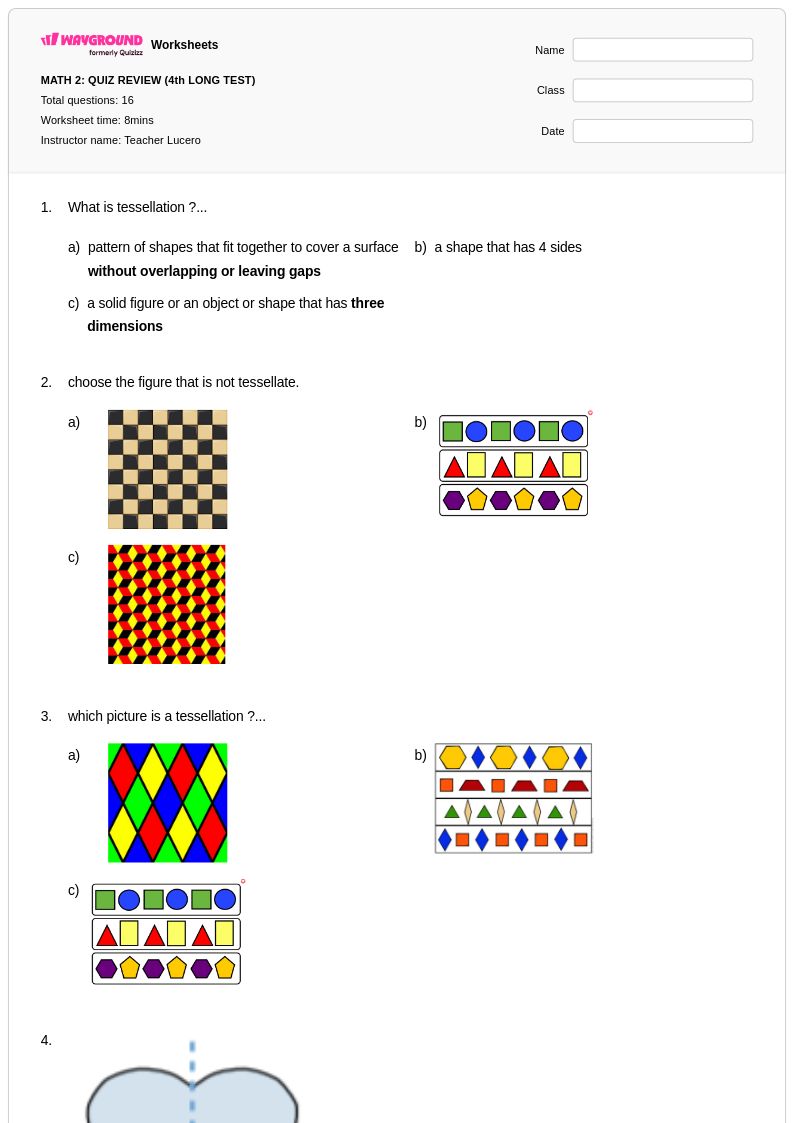
16 Q
1st - 3rd
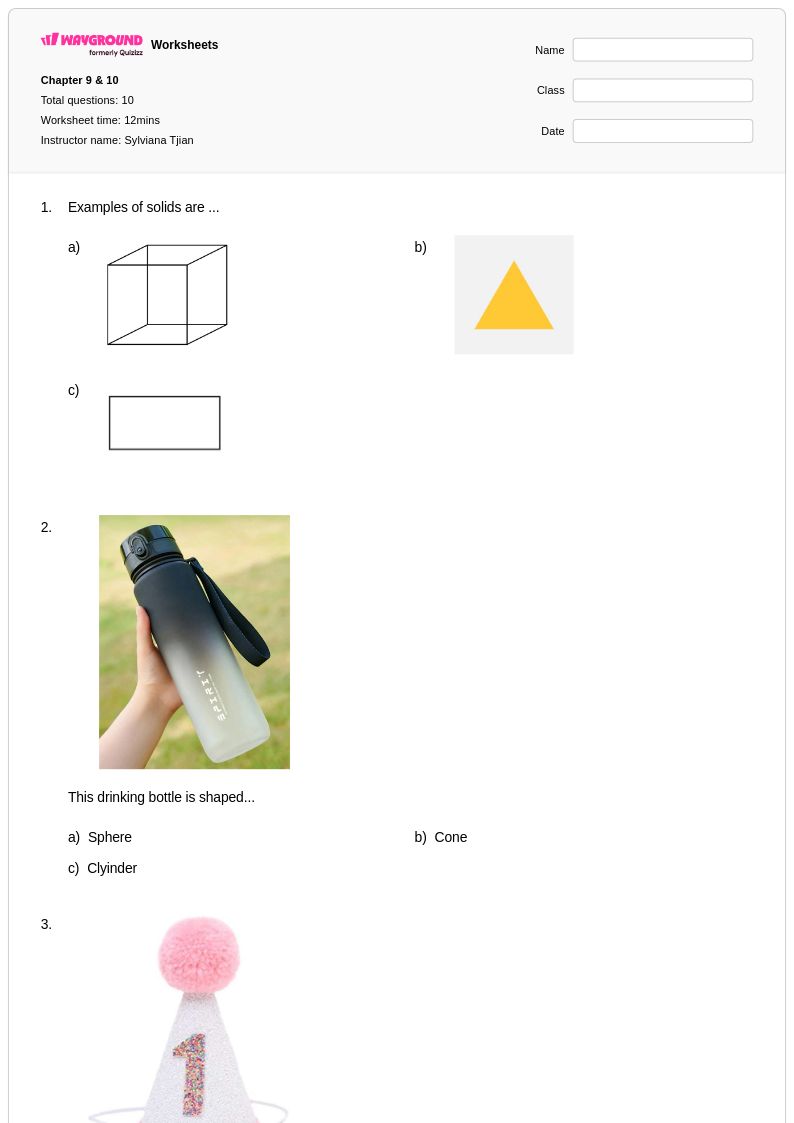
10 Q
1st
20 Q
1st - 5th
10 Q
1st - 5th
60 Q
1st - 5th
35 Q
1st
20 Q
KG - 3rd
5 Q
1st - 5th
20 Q
1st - 2nd
14 Q
1st
30 Q
KG - PD
50 Q
1st - 5th
30 Q
1st - 5th
10 Q
1st - 2nd
30 Q
1st
8 Q
1st
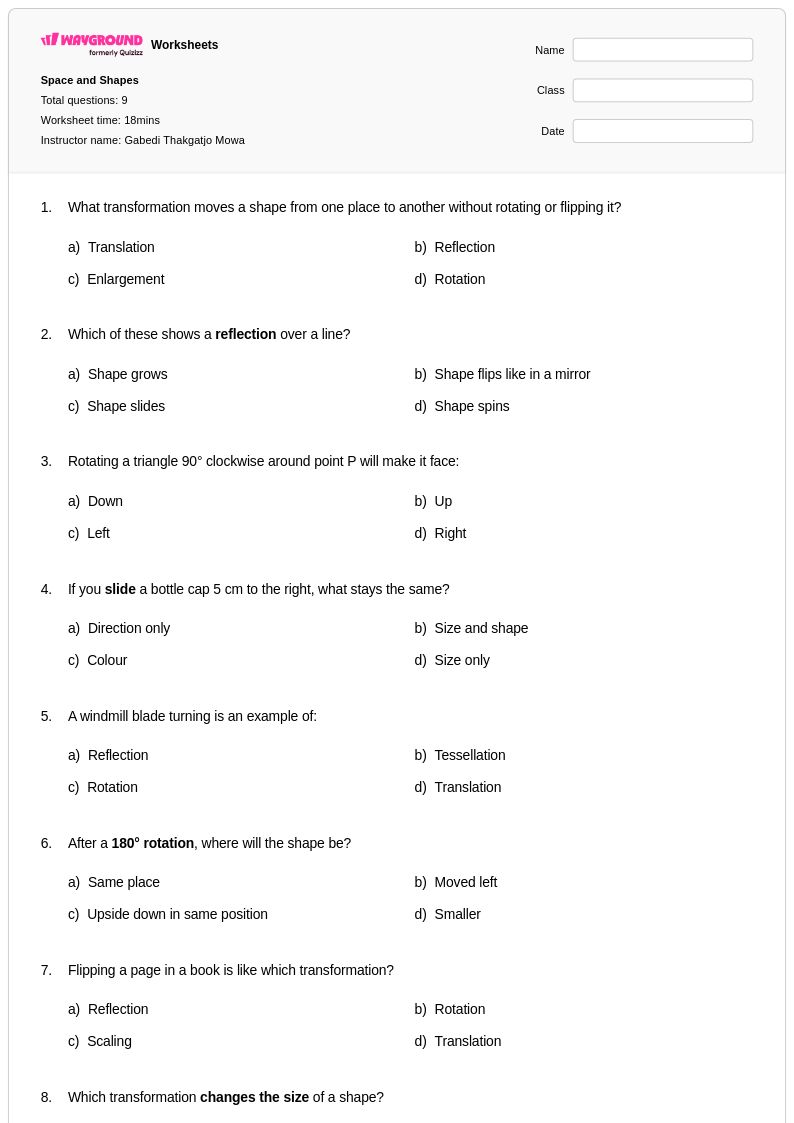
9 Q
1st - 5th
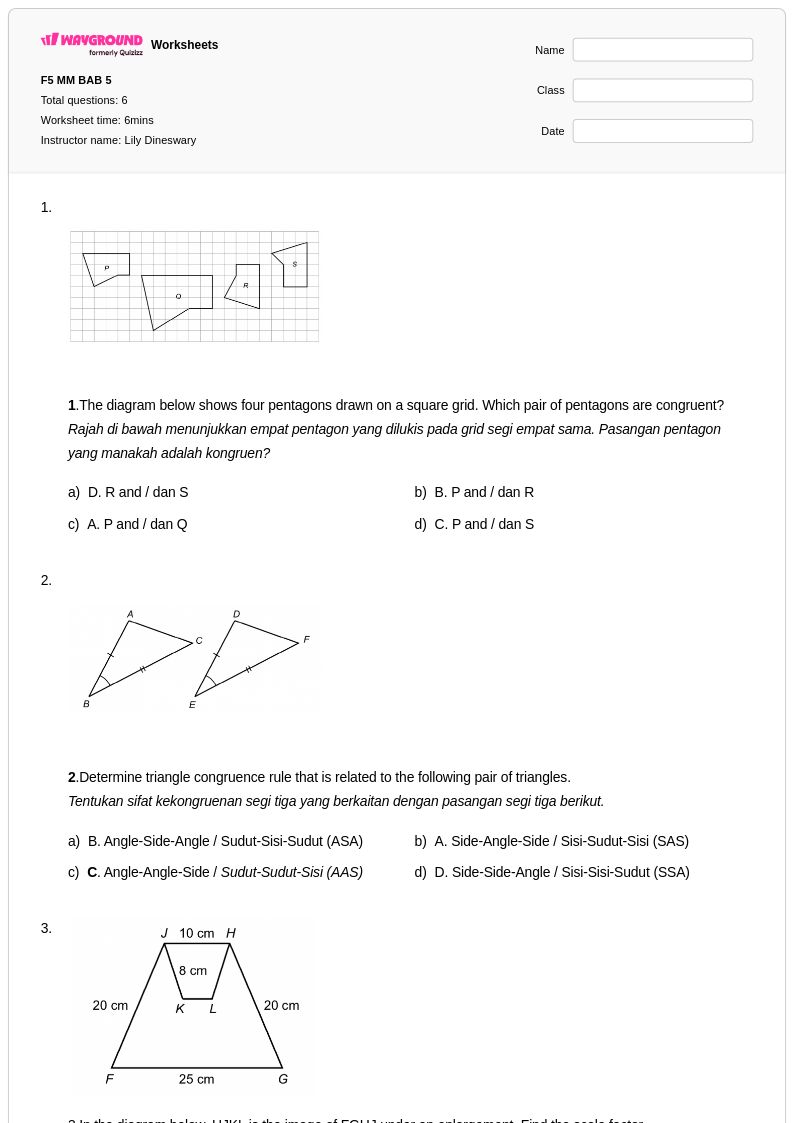
6 Q
1st
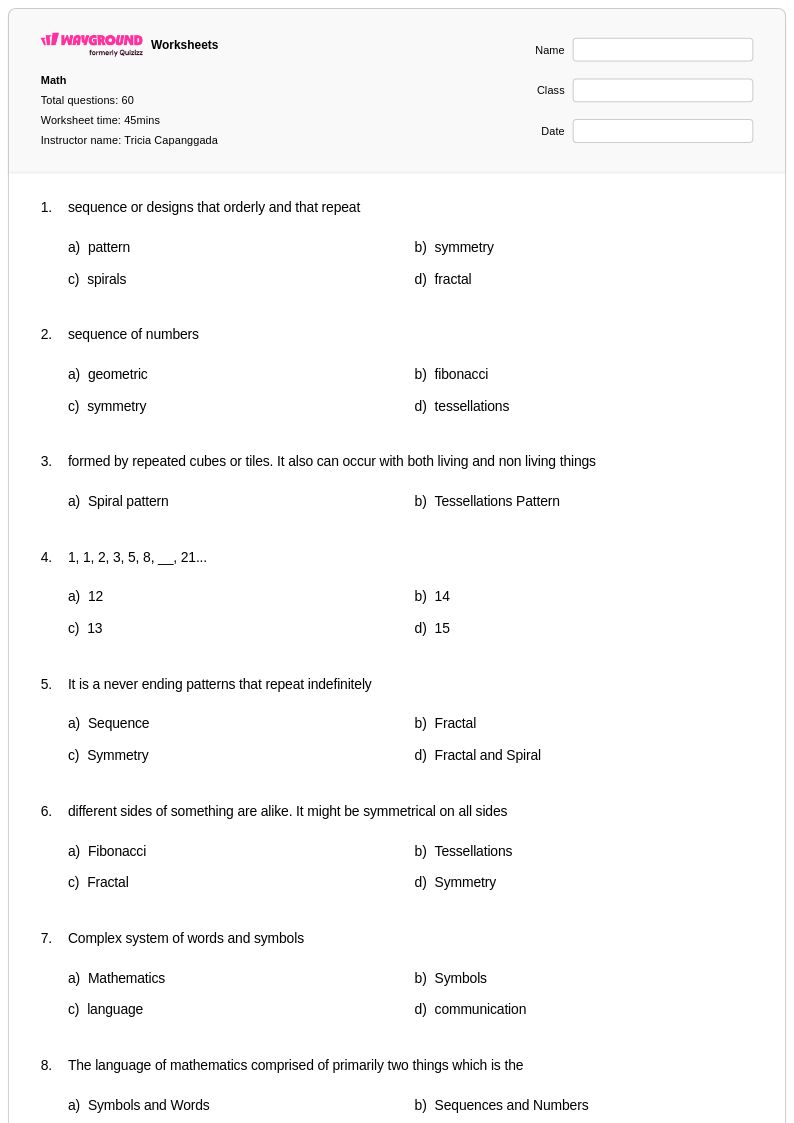
60 Q
1st
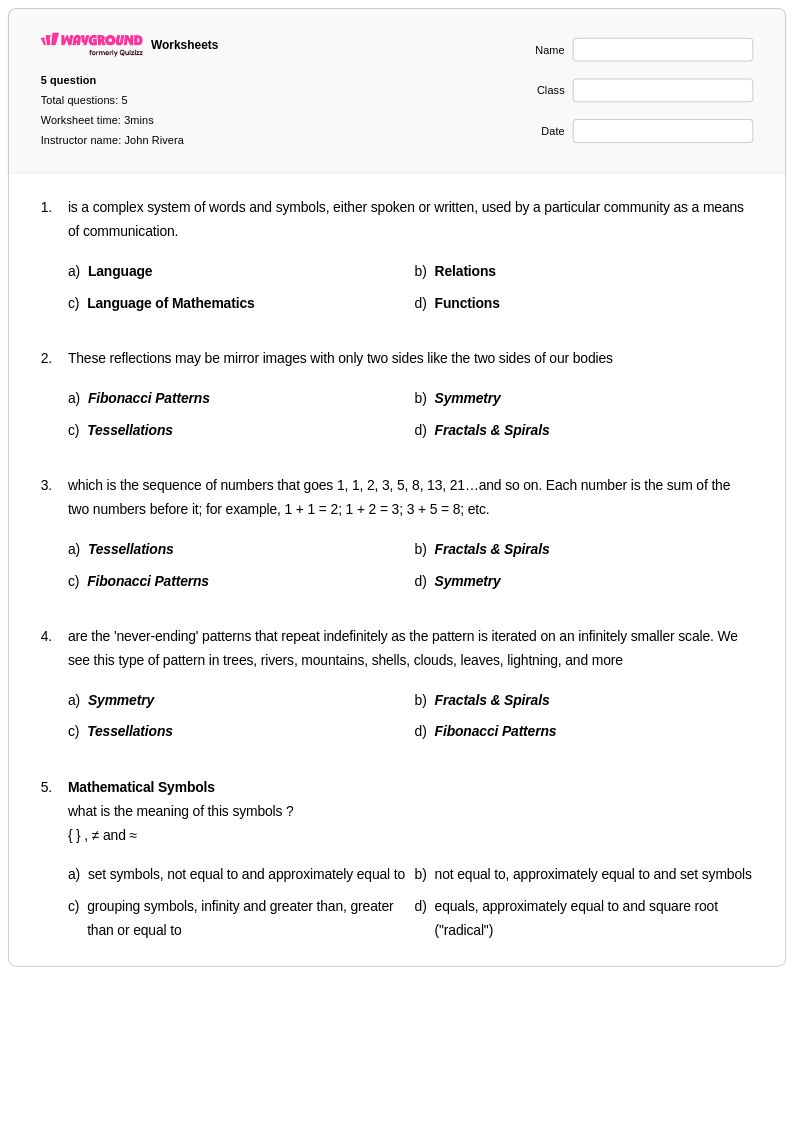
5 Q
1st
Explore Other Subject Worksheets for class 1
Explore printable Tessellation worksheets for Class 1
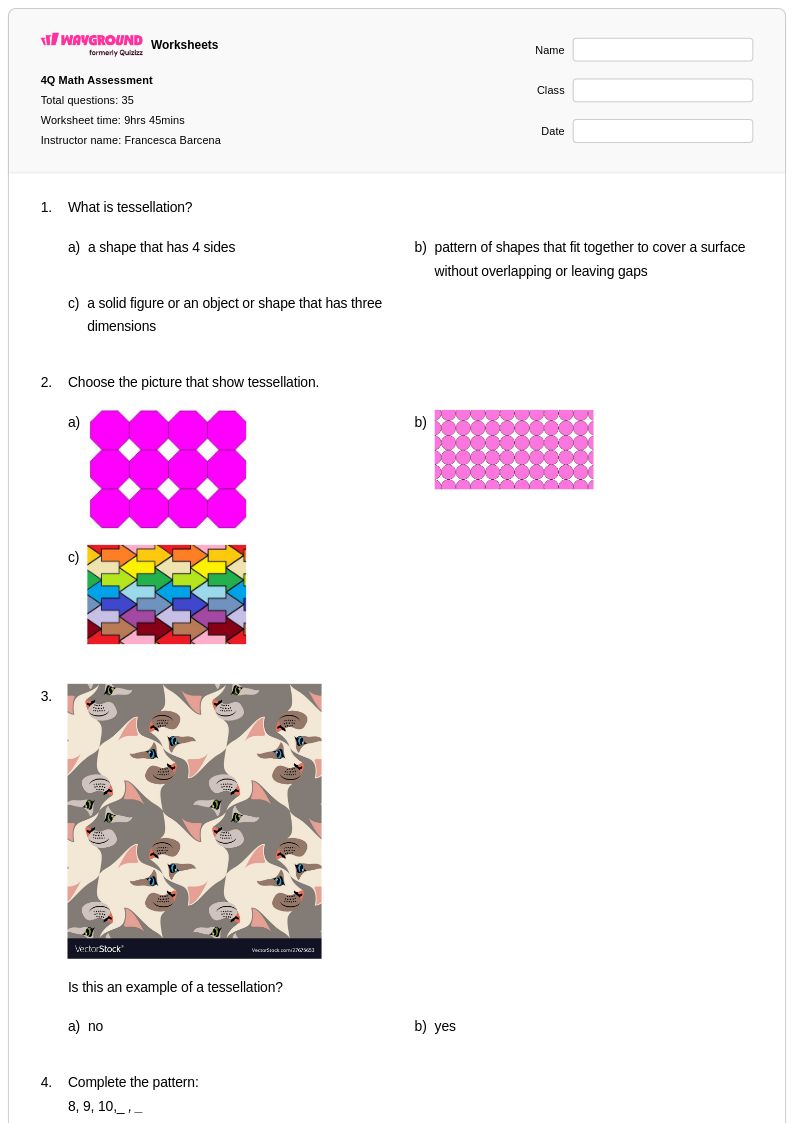
Tessellation worksheets for Class 1 through Wayground (formerly Quizizz) introduce young learners to the fundamental mathematical concept of repeating patterns that cover surfaces without gaps or overlaps. These carefully designed printables help first-grade students develop spatial reasoning skills and pattern recognition abilities through engaging activities that explore simple geometric shapes like triangles, squares, and hexagons. The worksheets feature age-appropriate exercises where students identify tessellating patterns, complete missing pieces in tessellation sequences, and create their own basic repeating designs. Each free resource includes comprehensive practice problems that strengthen visual perception and logical thinking skills, with answer key materials provided to support both independent learning and guided instruction in pdf format.
Wayground (formerly Quizizz) empowers educators with an extensive collection of teacher-created tessellation resources specifically aligned to Class 1 mathematical standards and developmental needs. The platform's millions of educational materials feature robust search and filtering capabilities that allow teachers to quickly locate tessellation worksheets matching their specific curriculum requirements and student ability levels. Advanced differentiation tools enable educators to customize content for diverse learners, while the flexible format options support both traditional printable activities and interactive digital assignments. These comprehensive resources facilitate effective lesson planning, targeted skill remediation, and enrichment opportunities, helping teachers create meaningful learning experiences that build students' foundational understanding of geometric patterns and spatial relationships through systematic practice and exploration.
FAQs
How do I introduce tessellations to first graders?
What tessellation activities are appropriate for Grade 1?
What mistakes do first graders make with tessellations?
How can I use a Grade 1 tessellation worksheet on Wayground?
How do Grade 1 tessellations connect to Common Core math?
How can I support first graders who struggle with tessellation patterns?
What grade do students learn about tessellations?