
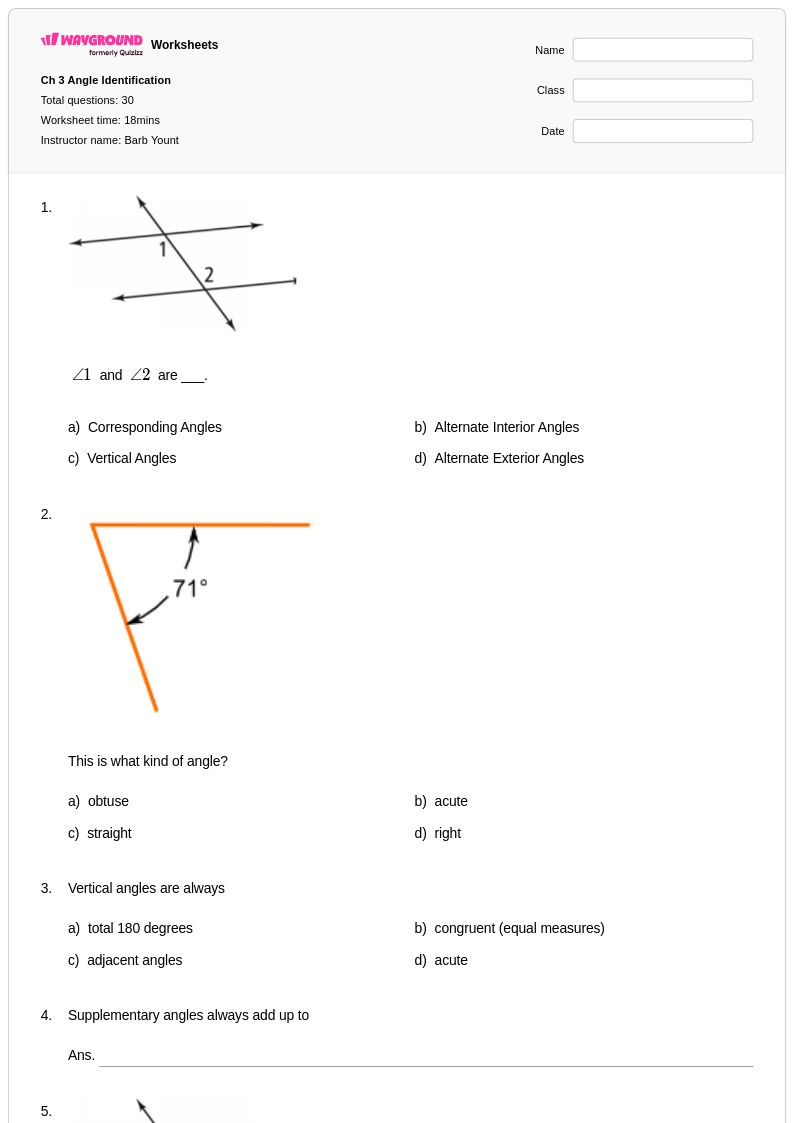
30 Q
8th
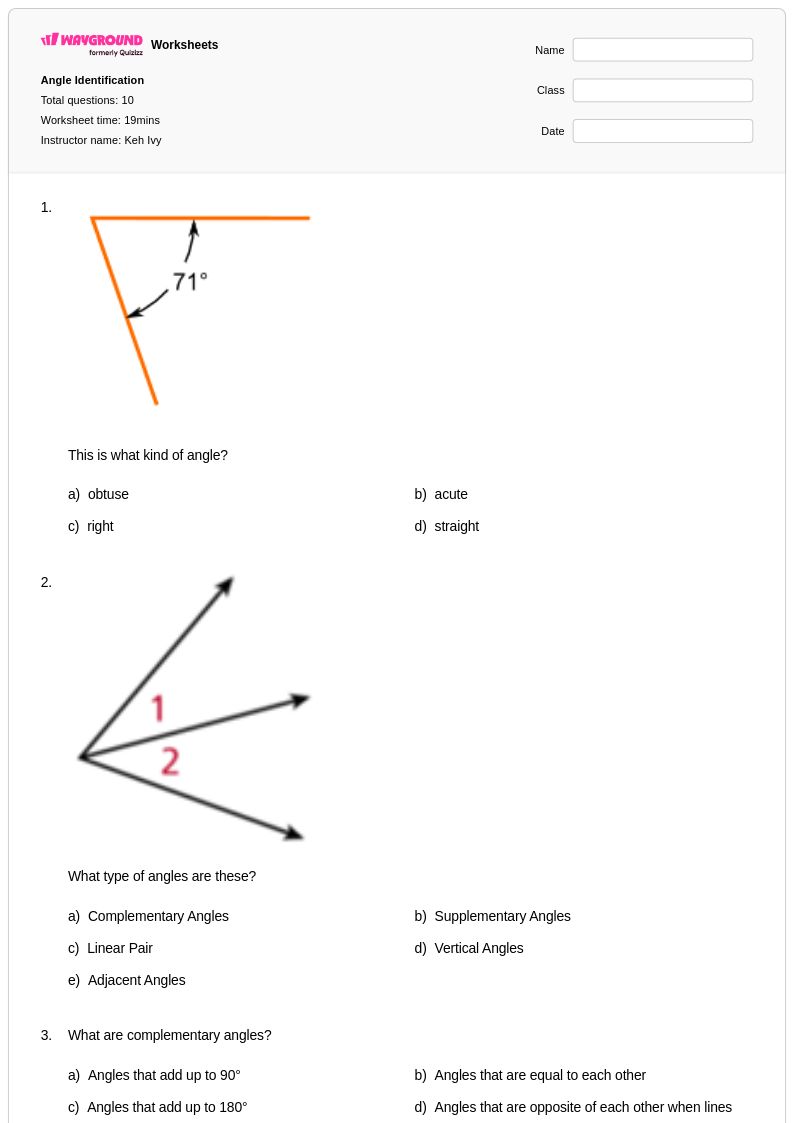
10 Q
5th - 12th
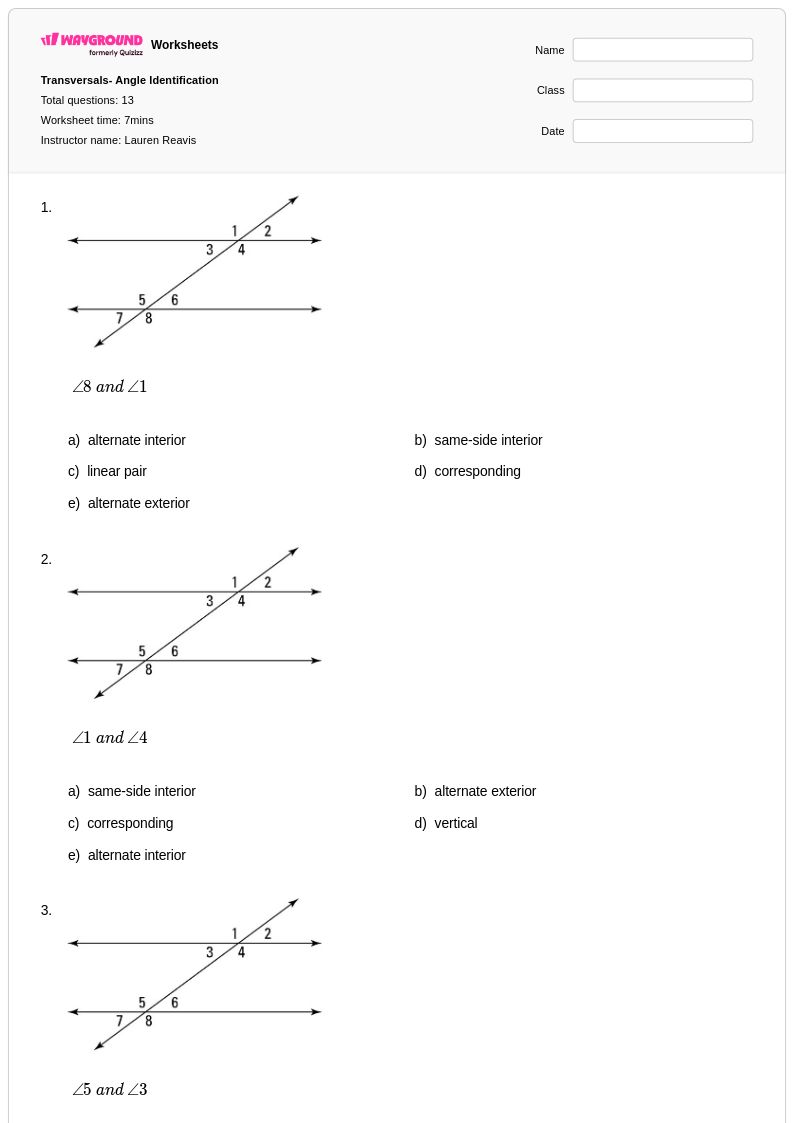
13 Q
8th
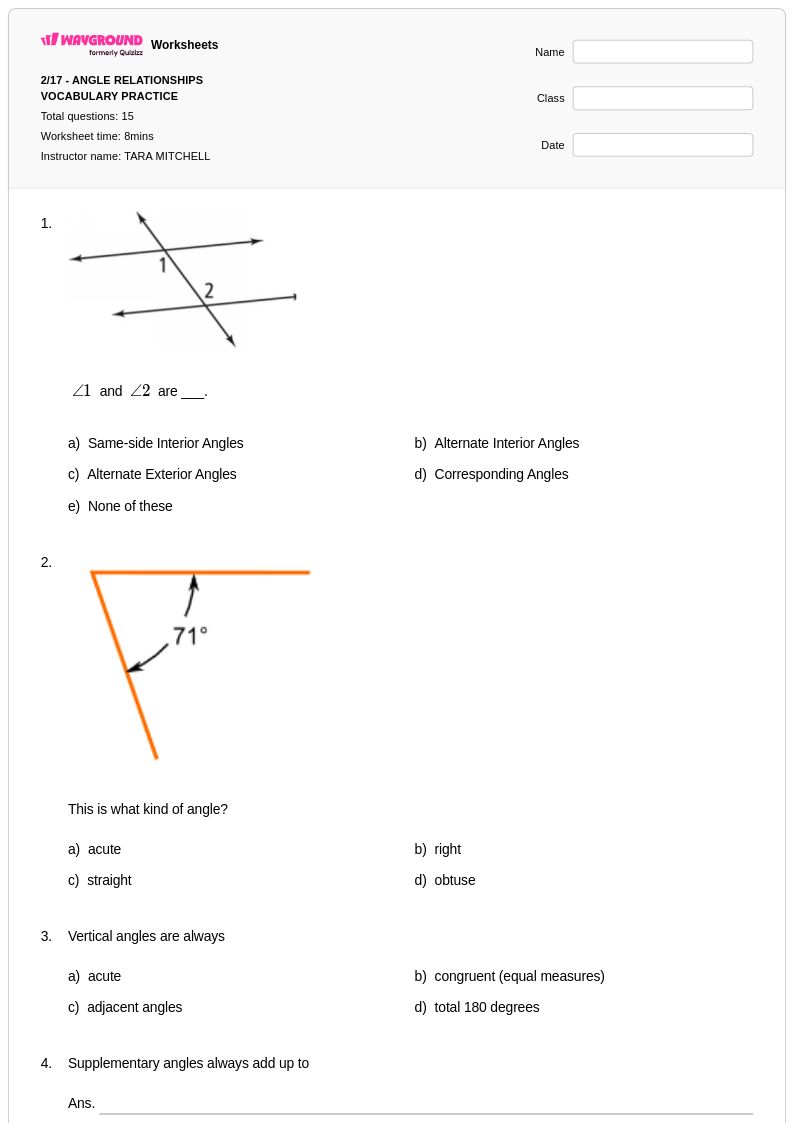
15 Q
8th
22 Q
8th
14 Q
7th - 10th
20 Q
8th
15 Q
7th - Uni
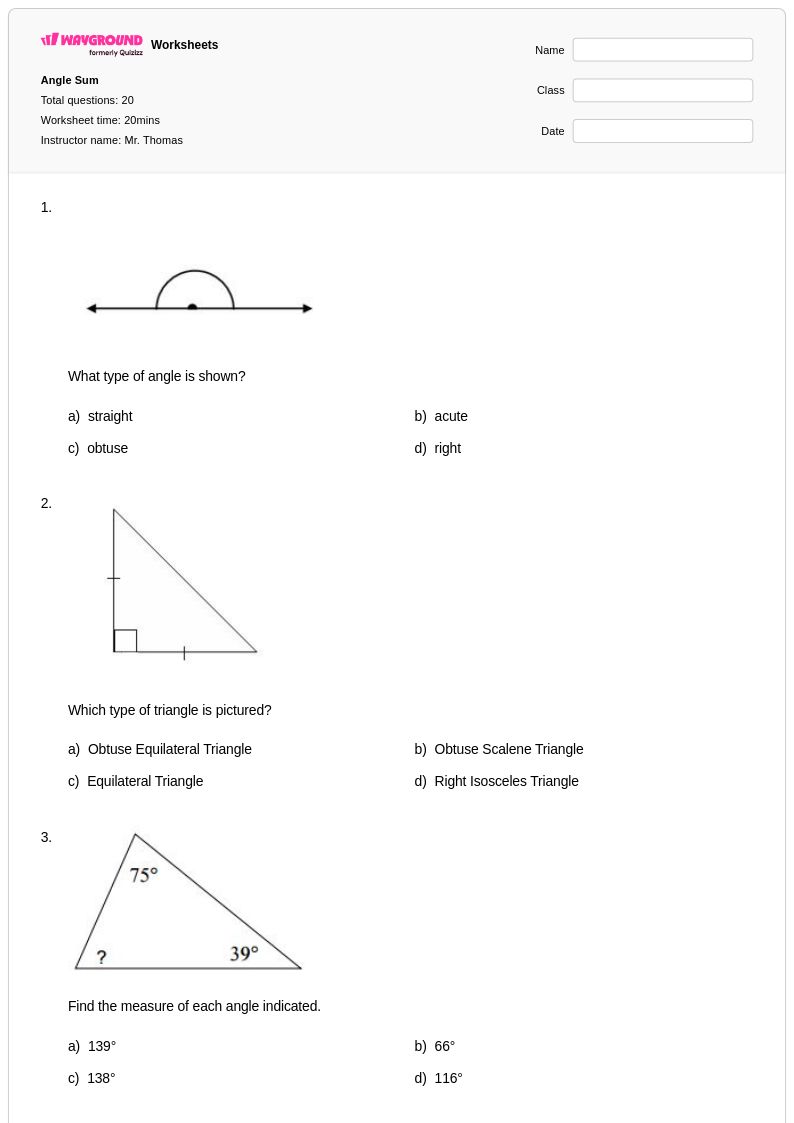
20 Q
8th
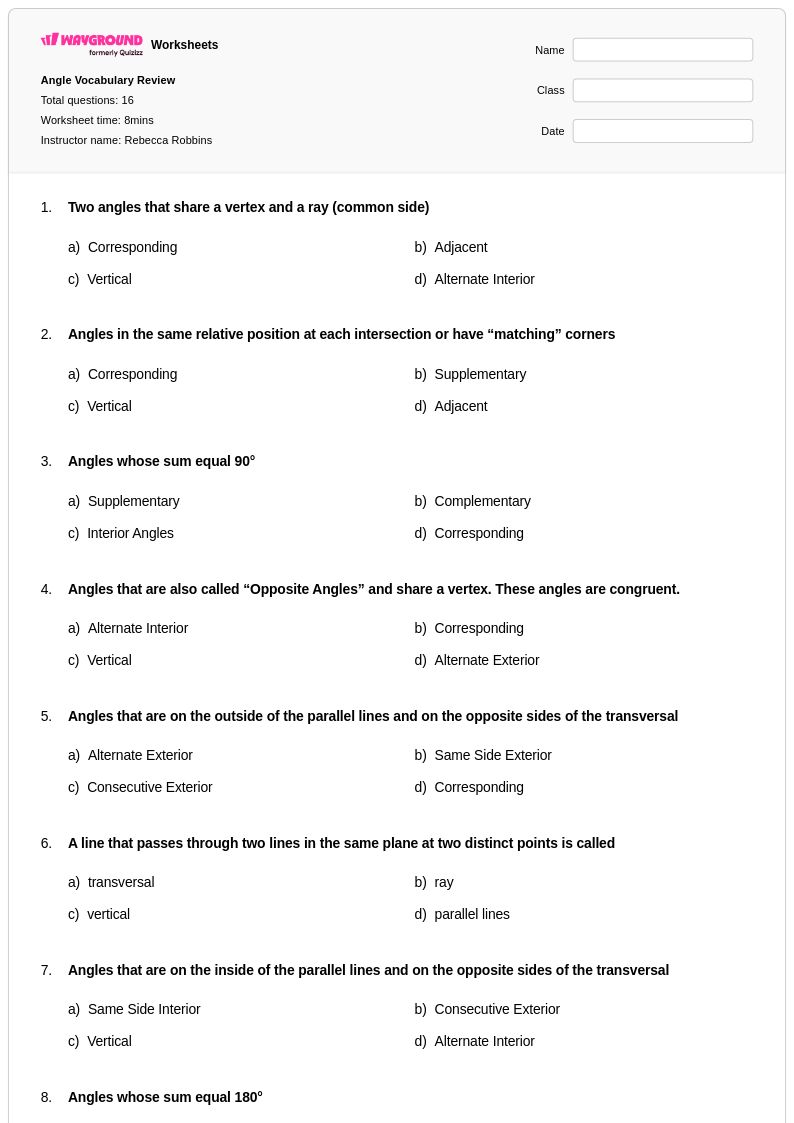
16 Q
8th
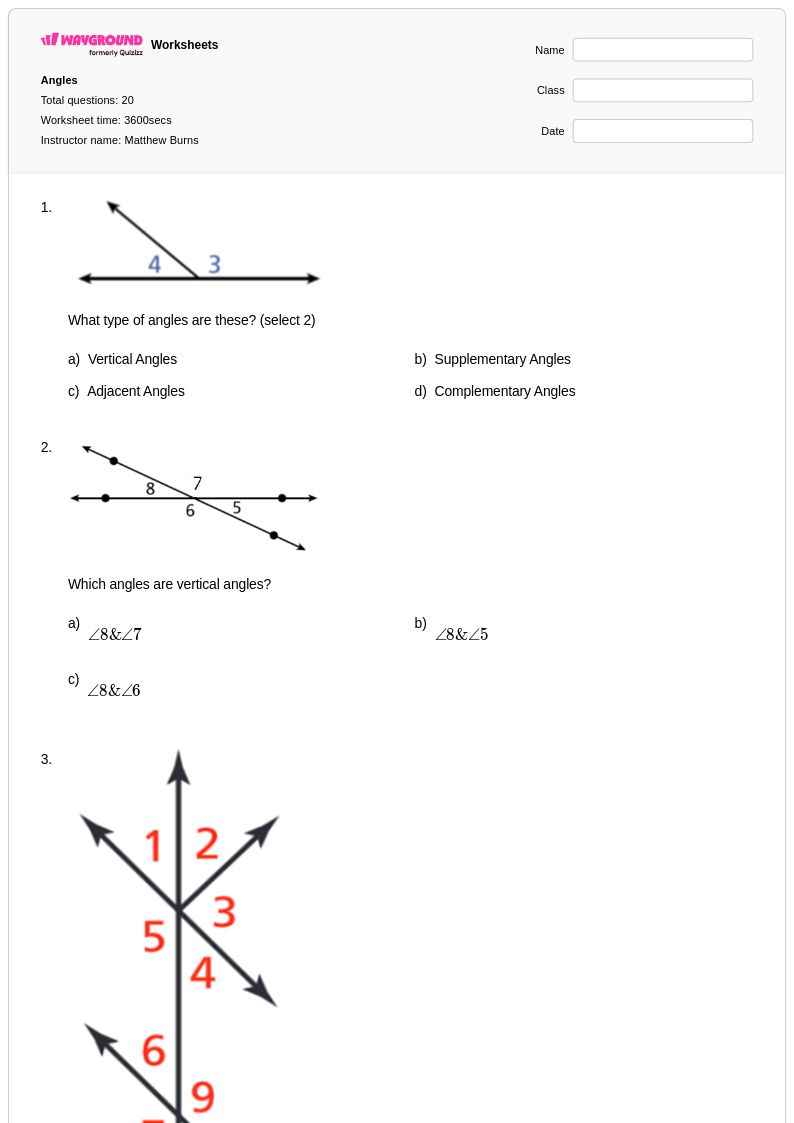
20 Q
8th
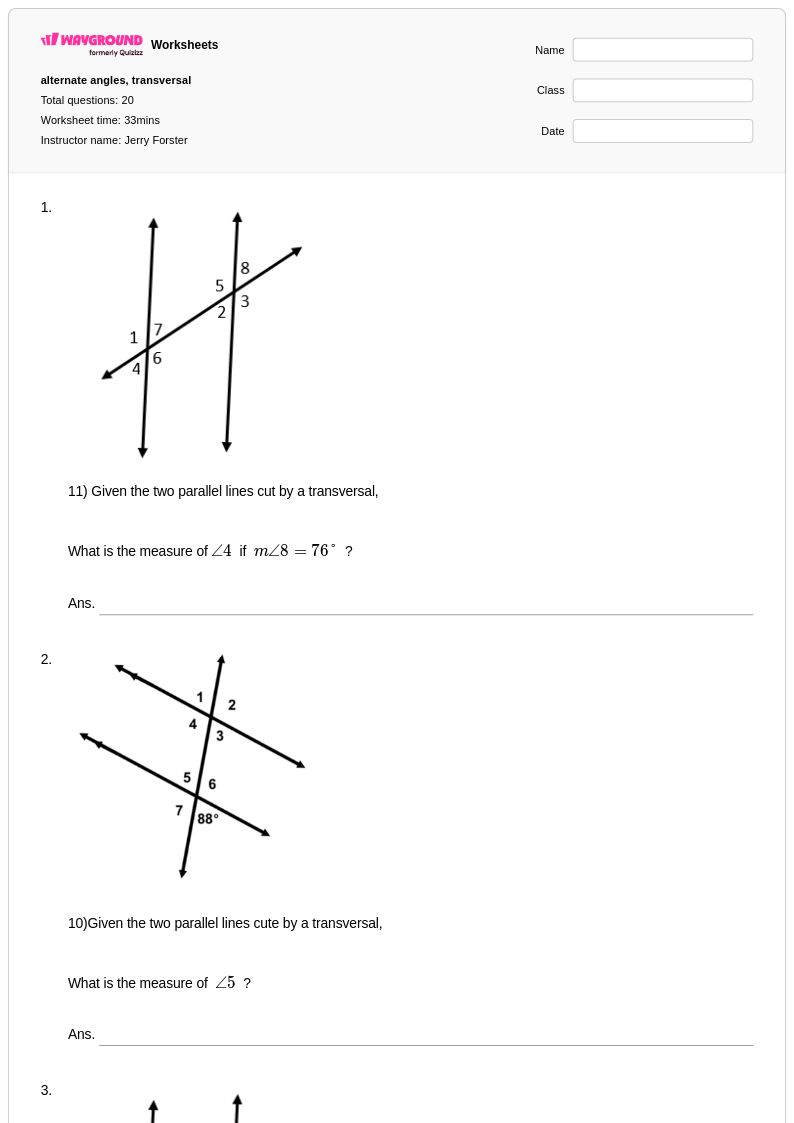
20 Q
8th
10 Q
8th
10 Q
8th - 10th
14 Q
8th - Uni
20 Q
7th - 10th
21 Q
8th
20 Q
8th
23 Q
8th
15 Q
8th - 11th
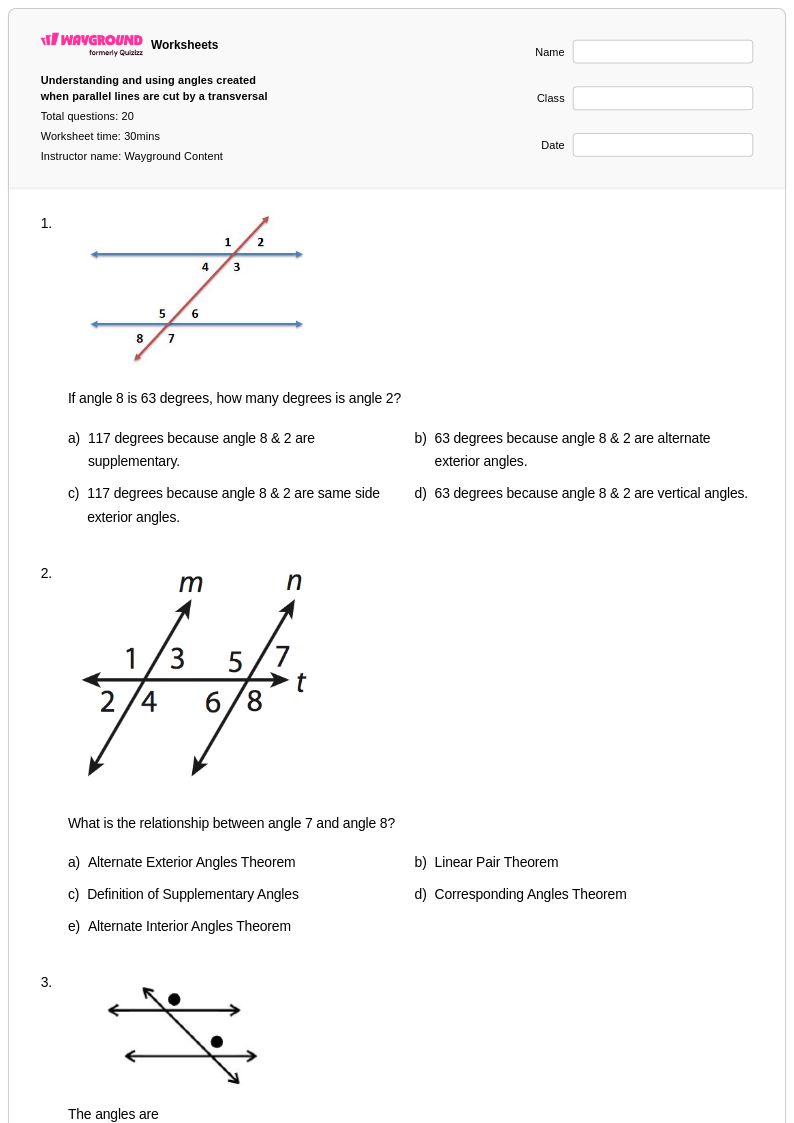
20 Q
8th
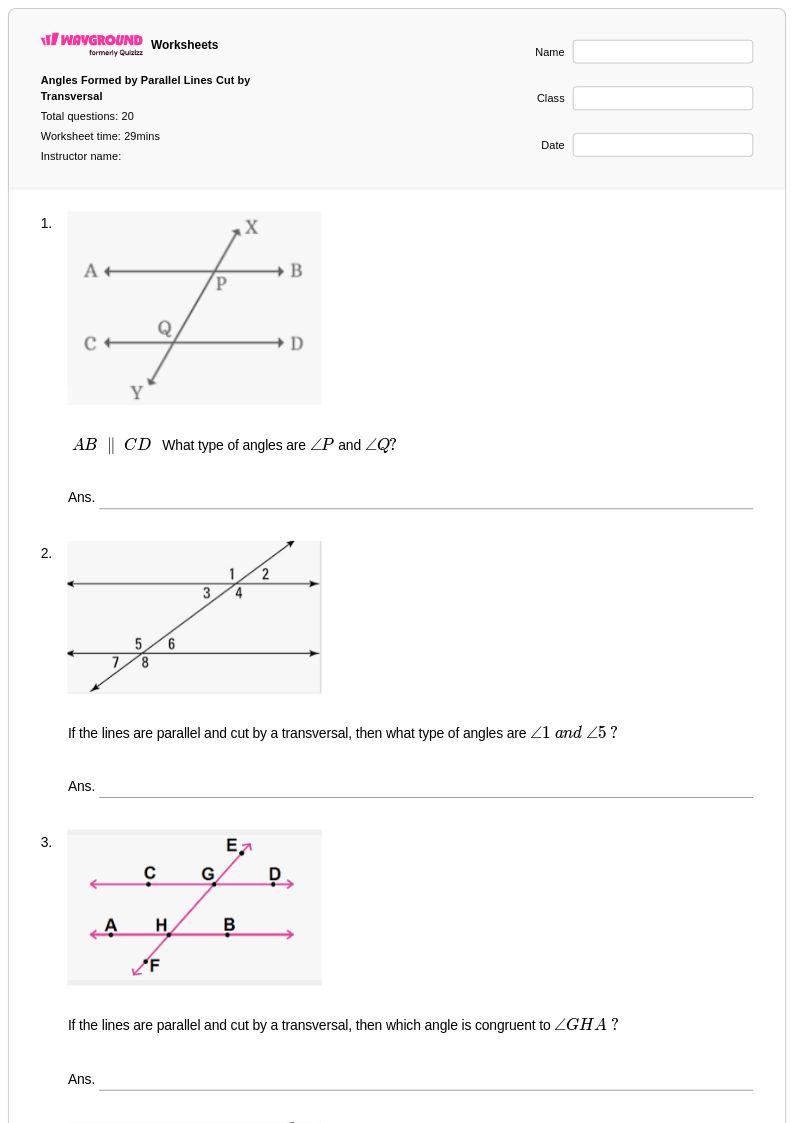
20 Q
8th - 11th
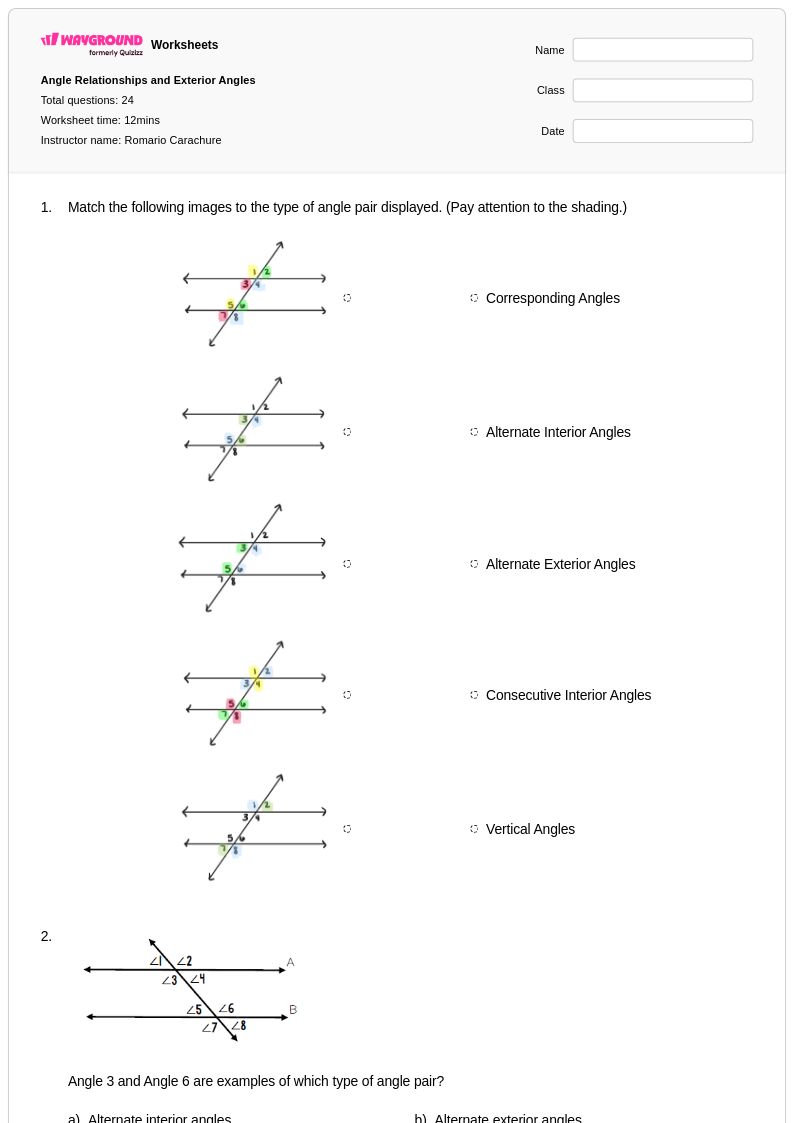
24 Q
8th
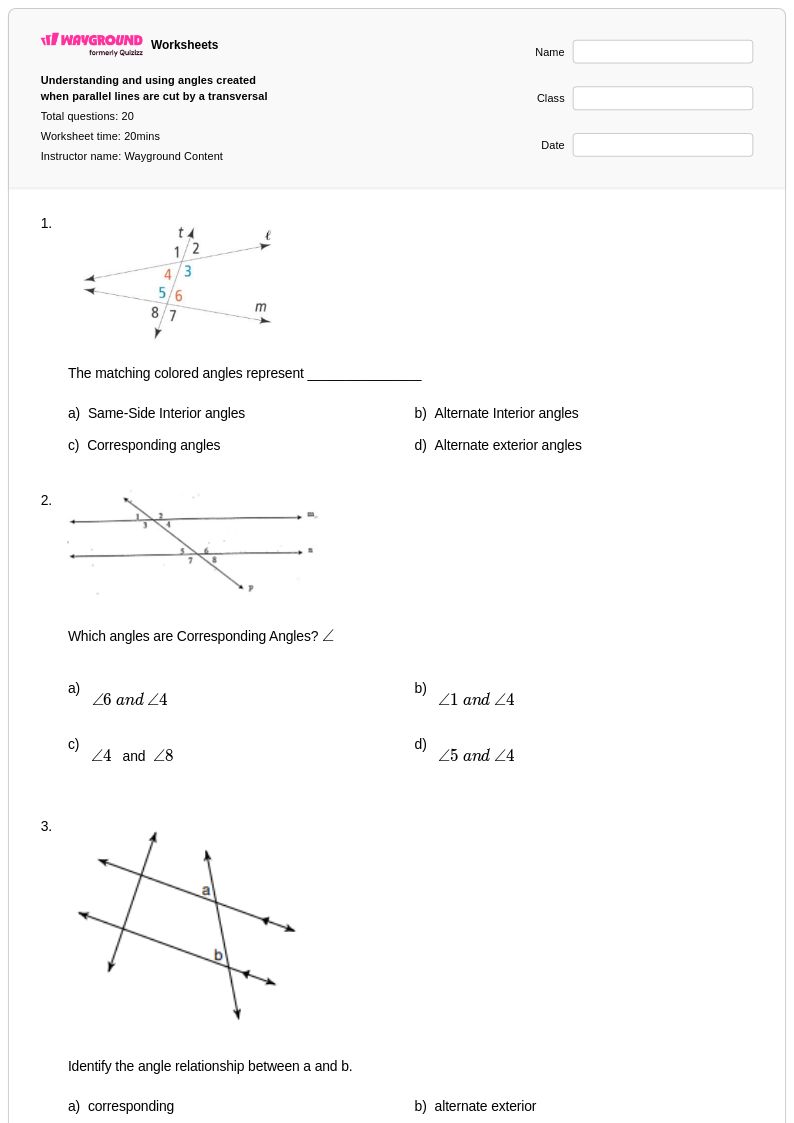
20 Q
8th
Explore Other Subject Worksheets for grade 8
Explore printable Angle Identification worksheets for Grade 8
Grade 8 angle identification worksheets available through Wayground (formerly Quizizz) provide comprehensive practice opportunities for students to master the fundamental skill of recognizing and classifying different types of angles. These carefully designed resources strengthen students' geometric reasoning abilities by presenting systematic exercises that cover acute, obtuse, right, straight, and reflex angles across various contexts and formats. The worksheets feature diverse practice problems that challenge students to identify angles in isolation, within geometric figures, and in real-world applications, ensuring thorough understanding of angle measurement and classification concepts. Each worksheet collection includes detailed answer keys and is available as free printables in convenient PDF format, making them accessible resources for both classroom instruction and independent study.
Wayground (formerly Quizizz) empowers mathematics educators with an extensive library of millions of teacher-created angle identification resources specifically aligned with Grade 8 curriculum standards and learning objectives. The platform's robust search and filtering capabilities allow teachers to quickly locate worksheets that match their specific instructional needs, whether for initial concept introduction, skill reinforcement, or assessment preparation. Advanced differentiation tools enable educators to customize worksheet difficulty levels and problem types to accommodate diverse learning needs within their classrooms, while the flexible format options support both traditional printable assignments and modern digital learning environments. These comprehensive features streamline lesson planning while providing targeted resources for remediation, enrichment activities, and systematic skill practice that builds students' confidence in geometric angle concepts.
FAQs
How do I teach angle identification to Grade 8 students?
What exercises help students practice identifying angles?
What mistakes do students make when classifying angles?
How can I use these angle identification worksheets with my class?
How does angle identification fit into the Common Core math progression?
How can I differentiate angle identification practice?
What grade level is angle identification taught at?