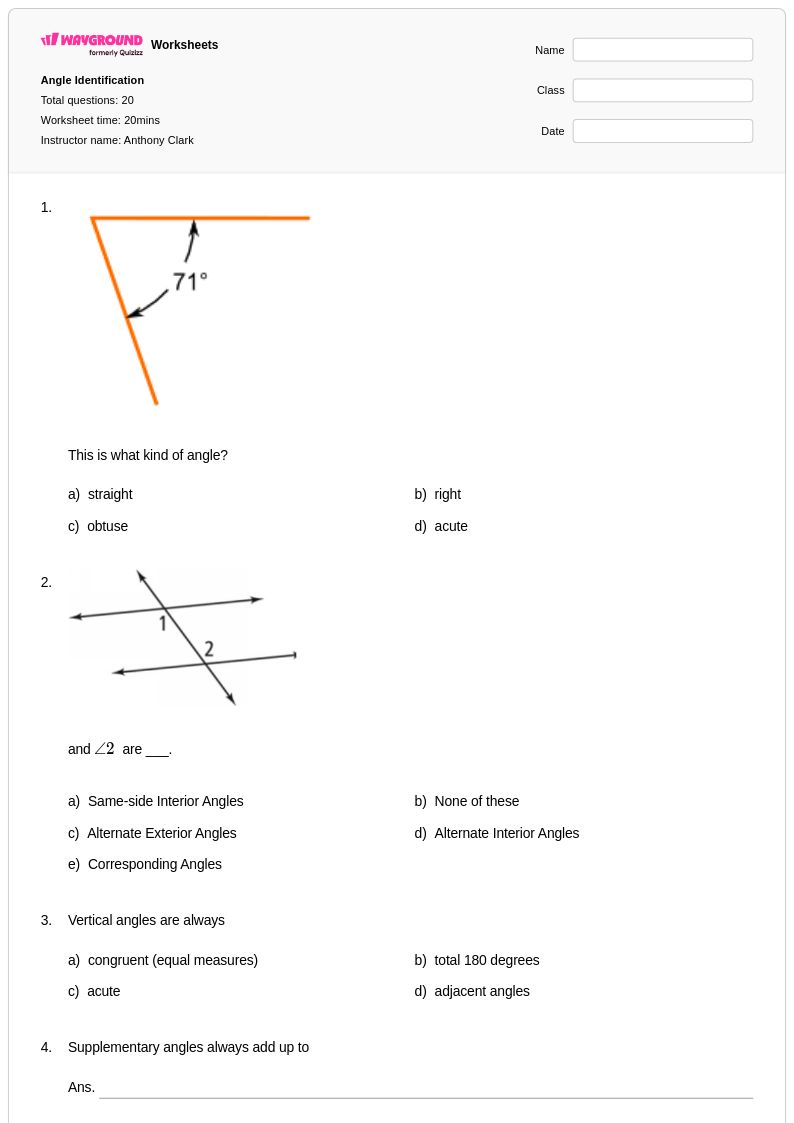
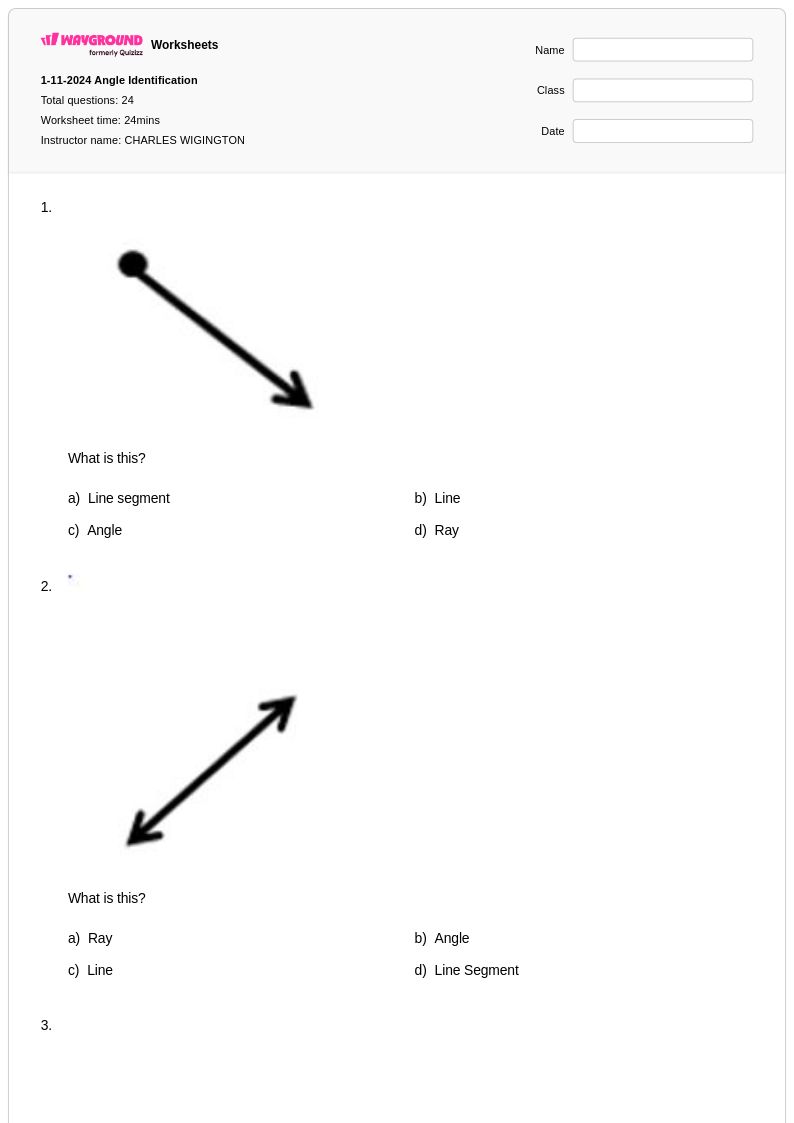
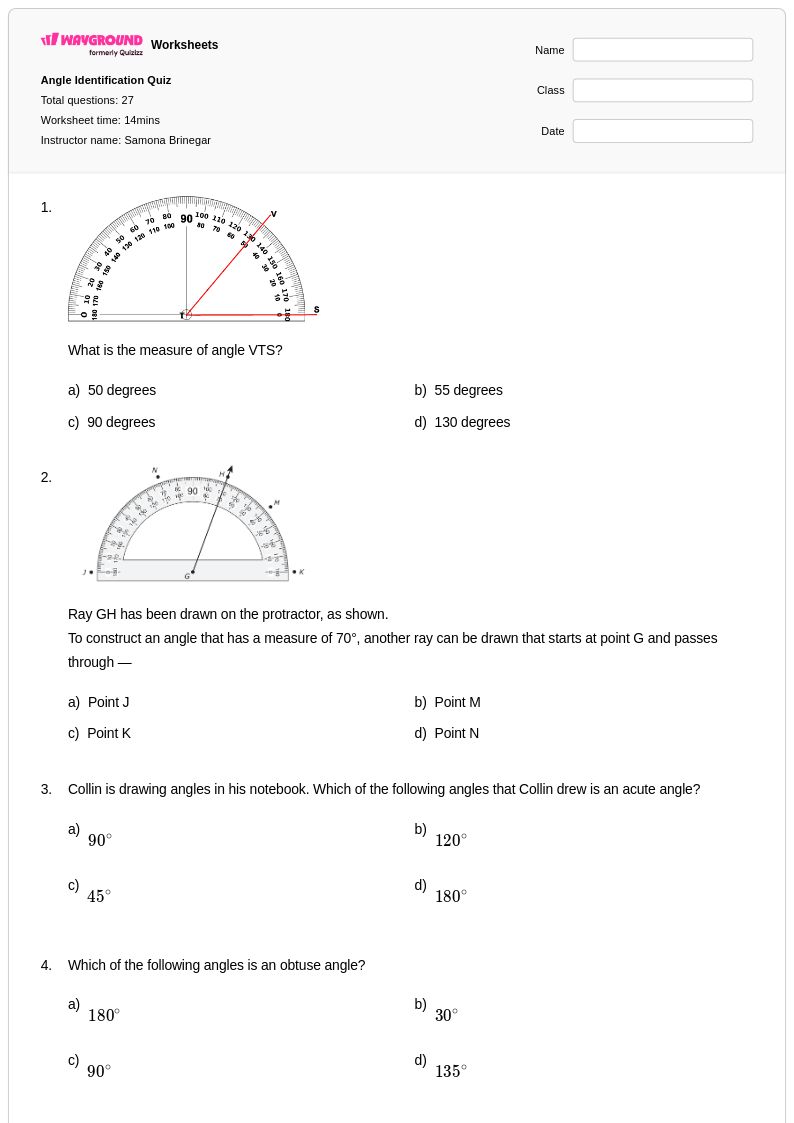
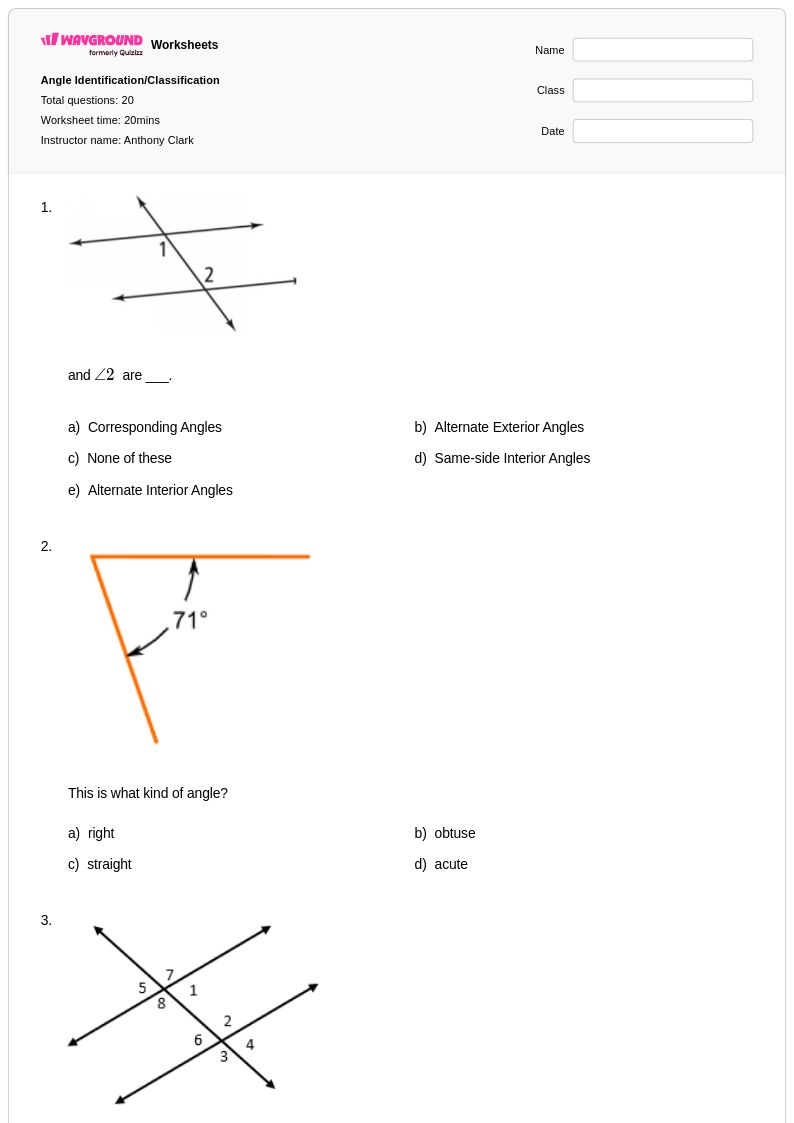
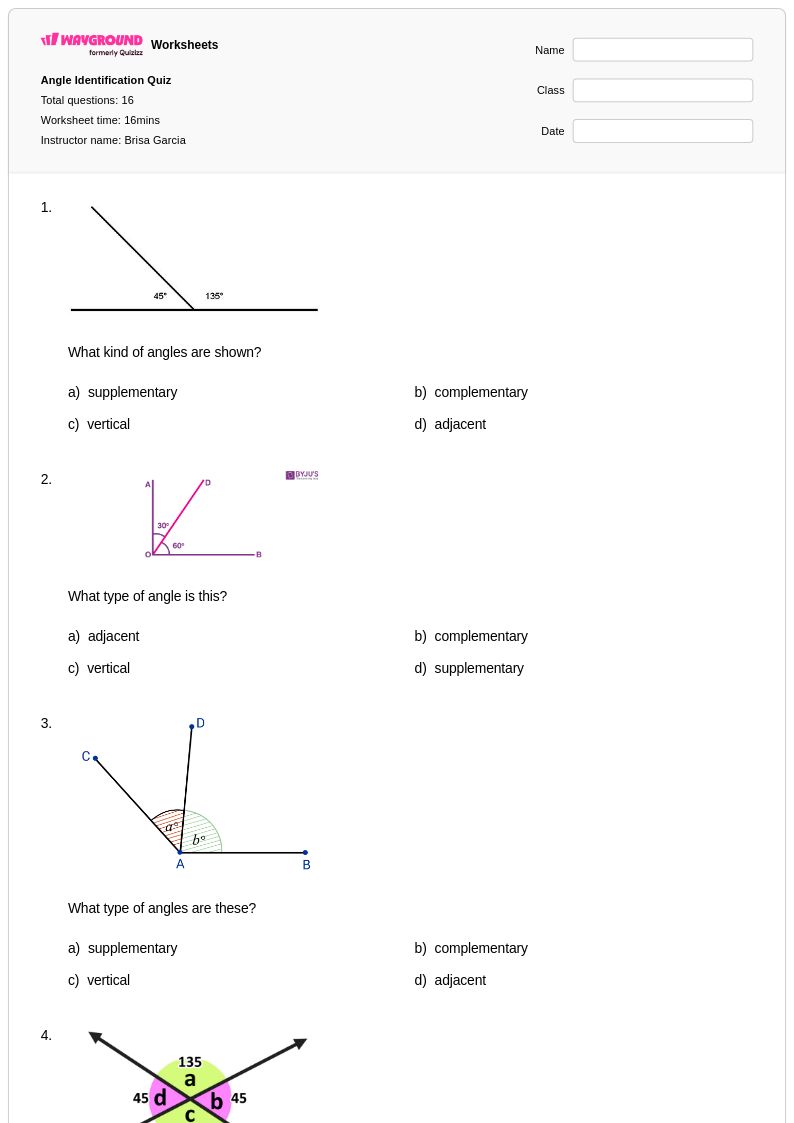
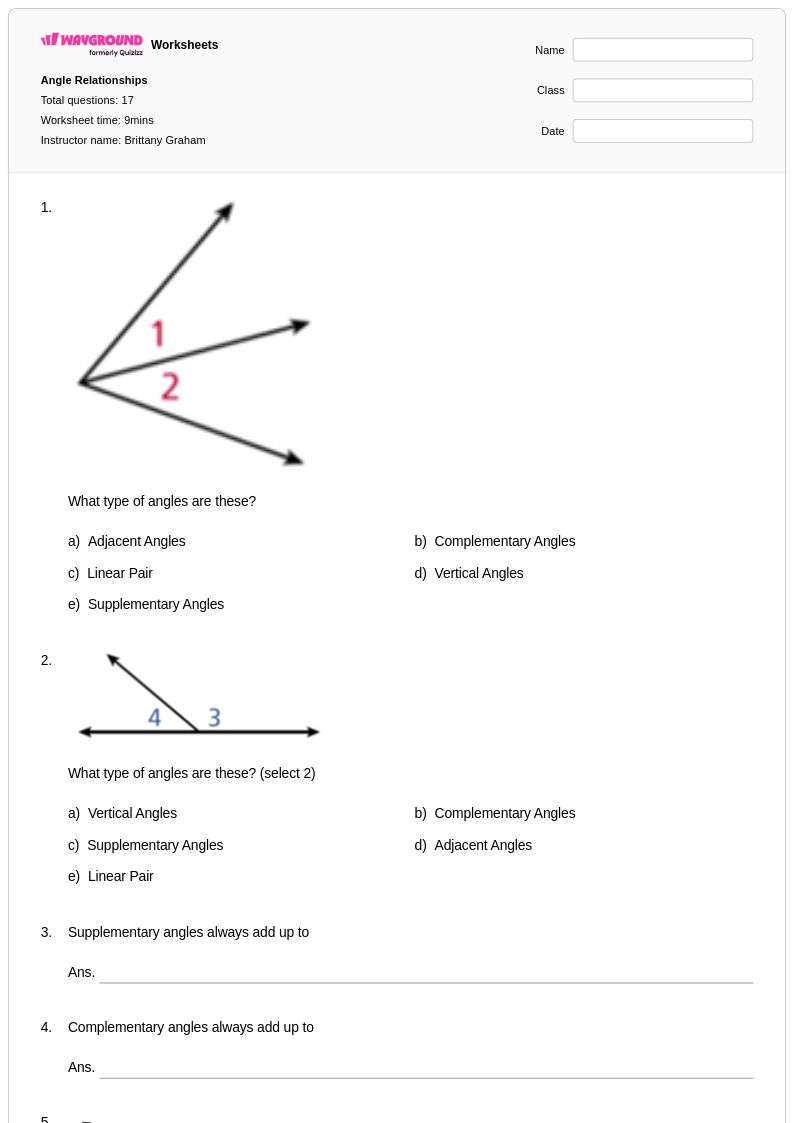
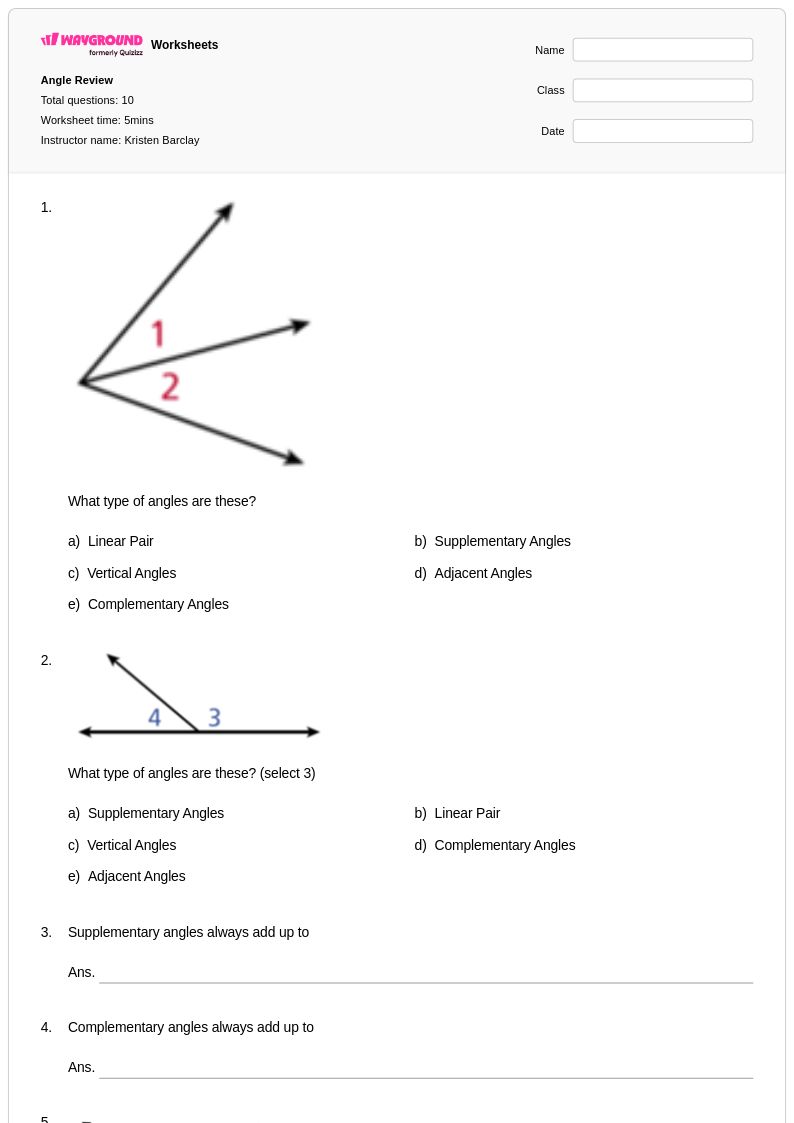
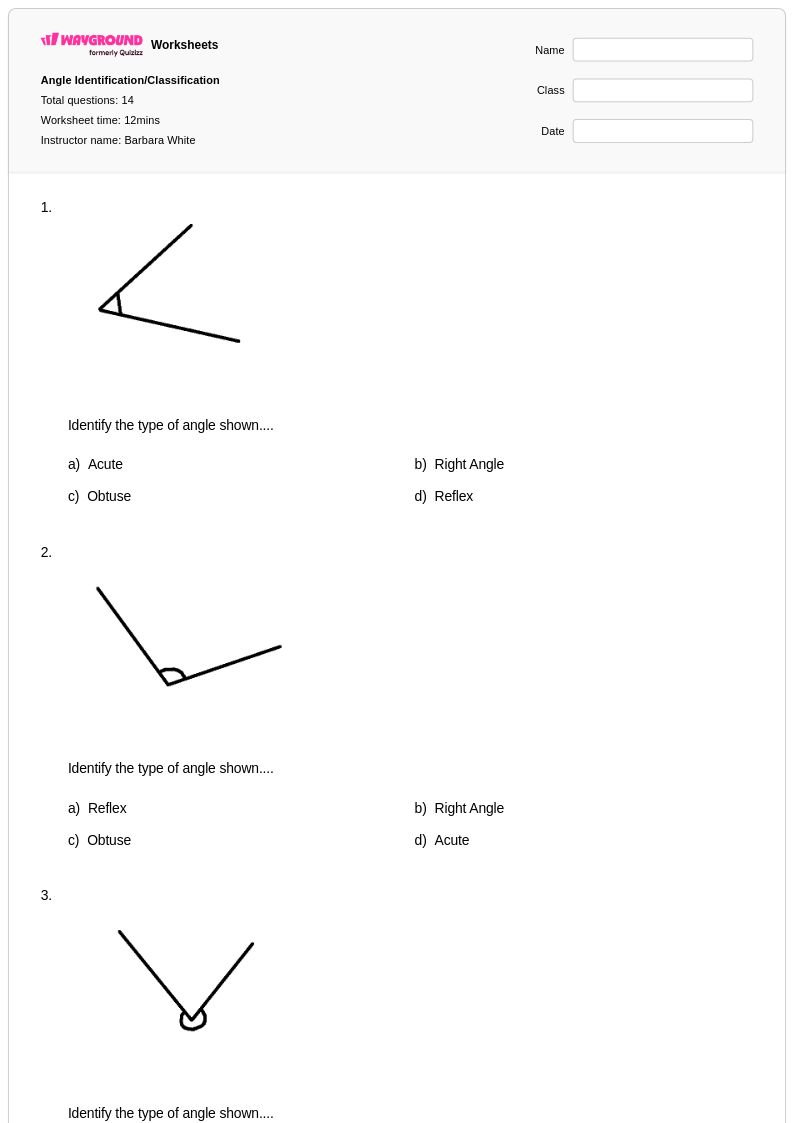
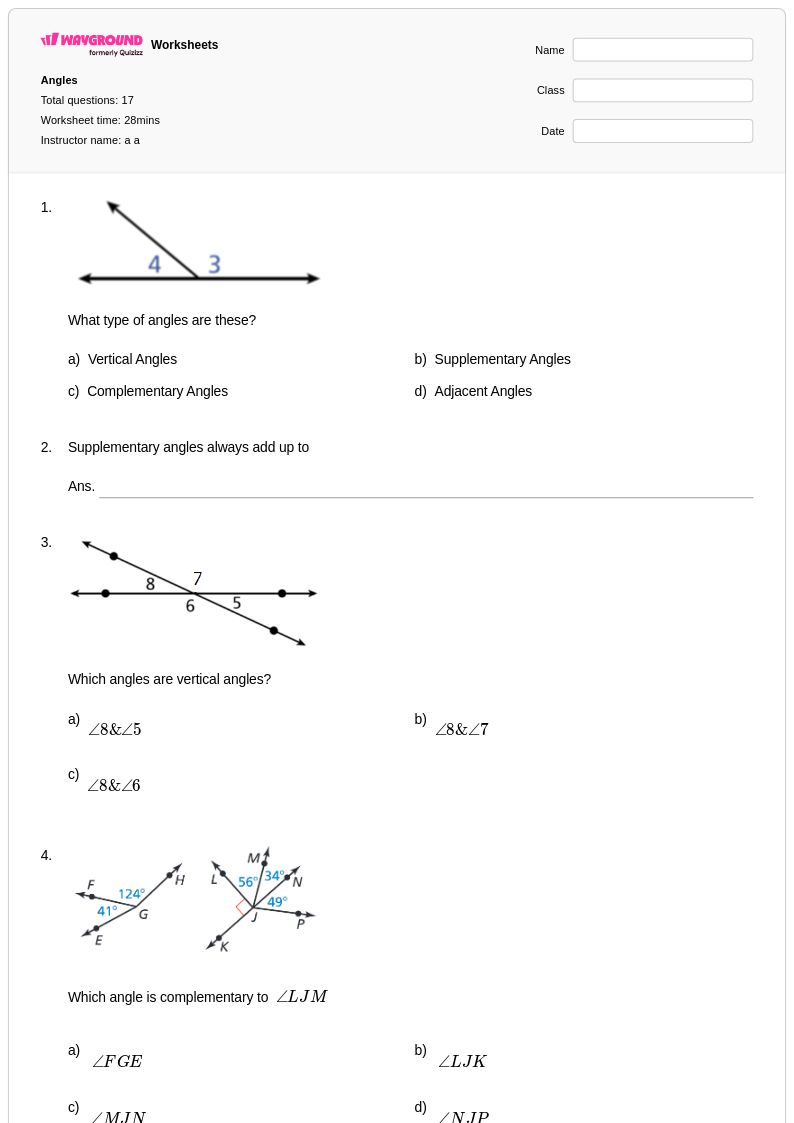
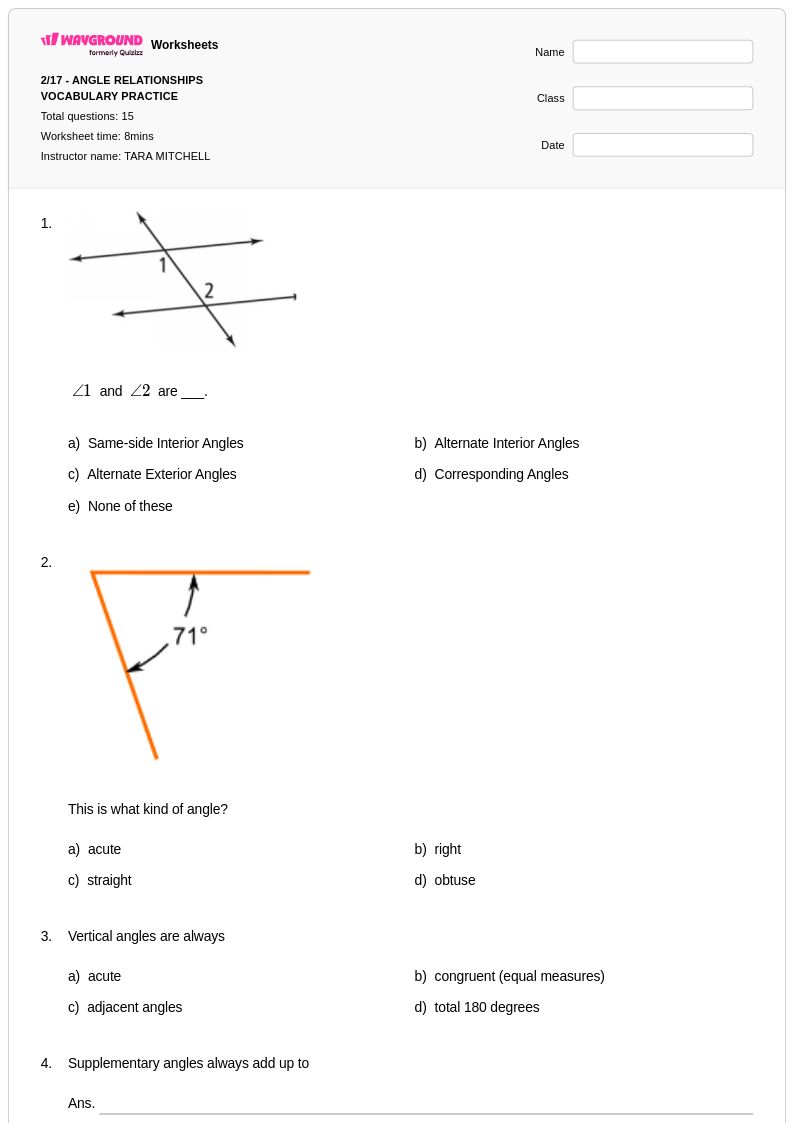
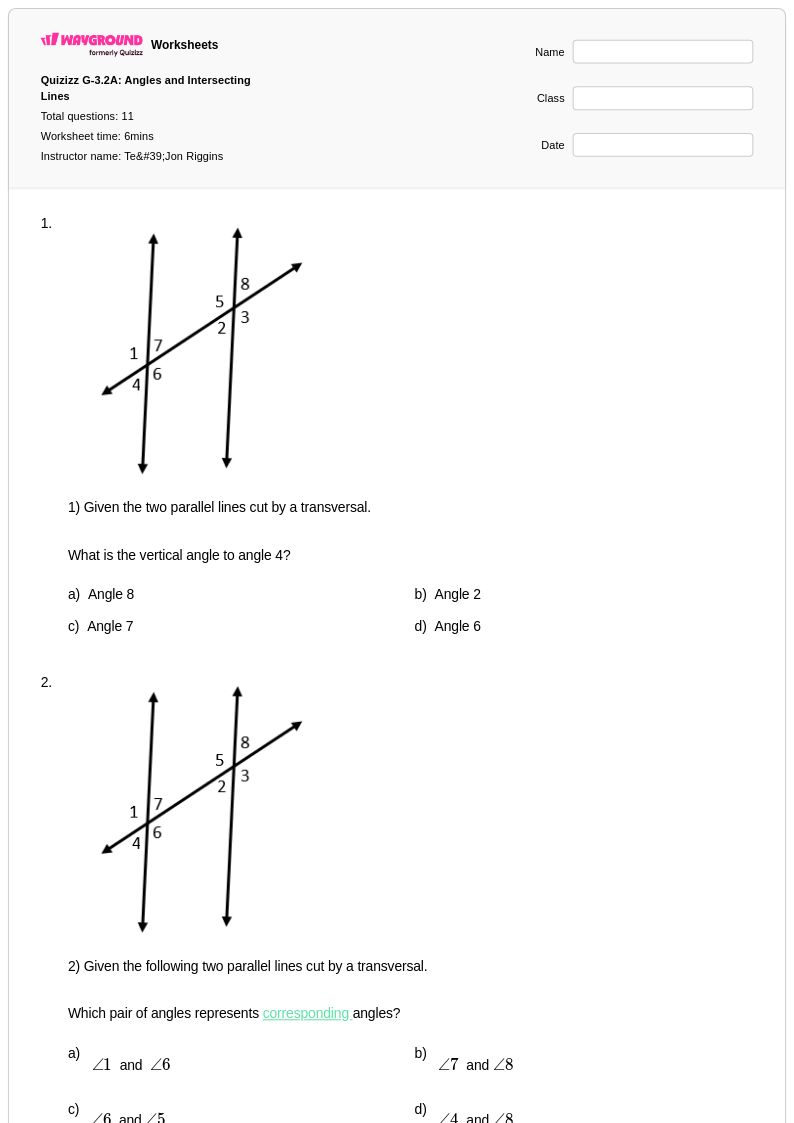
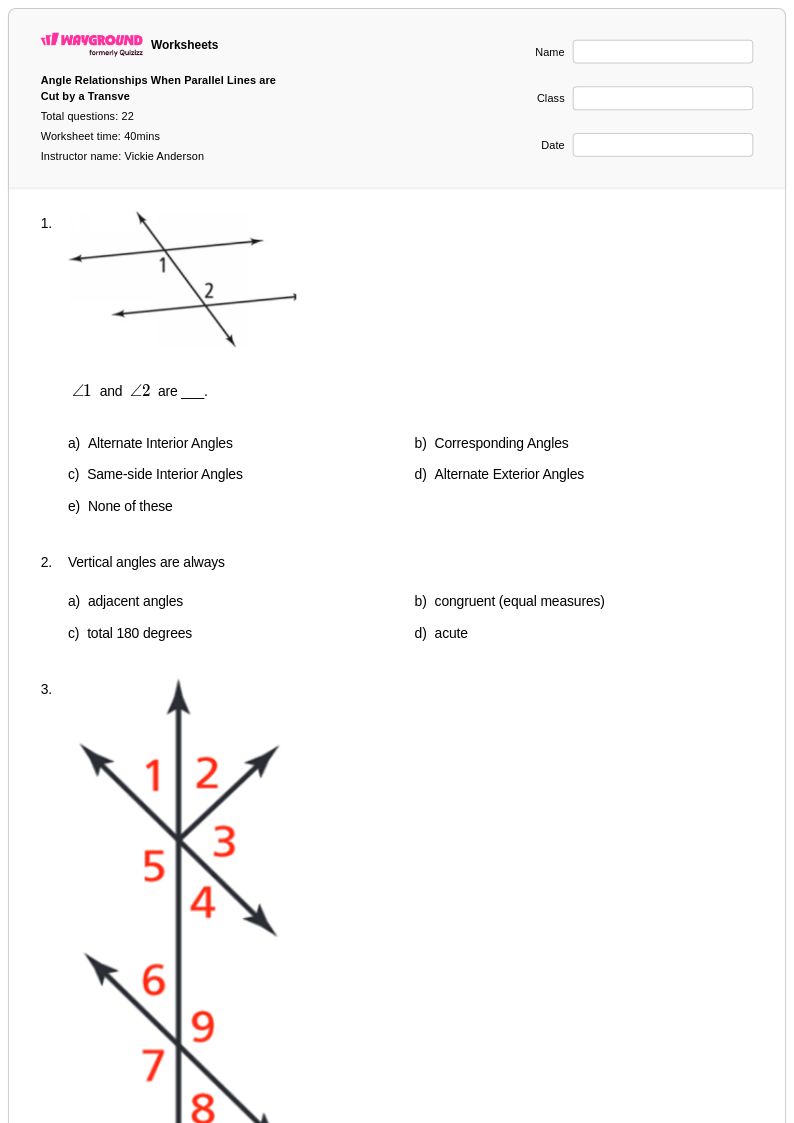
Master angle identification with Wayground's comprehensive collection of free worksheets and printables, featuring practice problems and answer keys to help students recognize and classify different types of angles effectively.
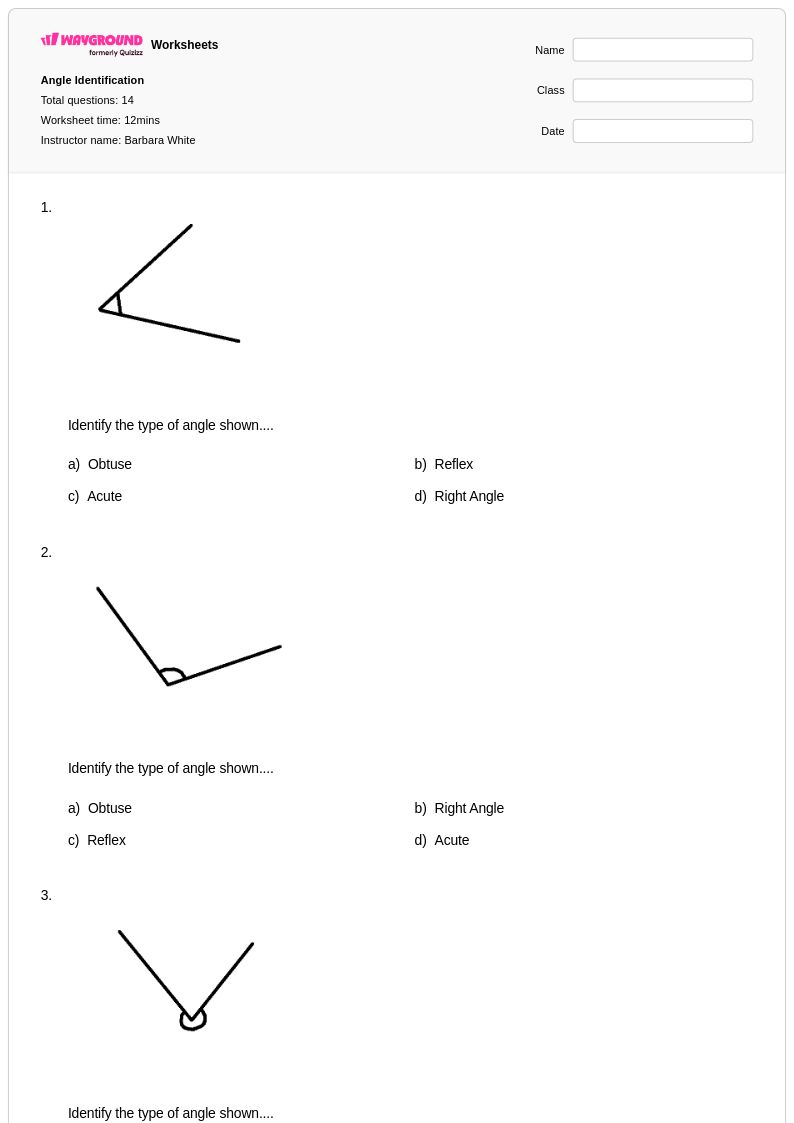
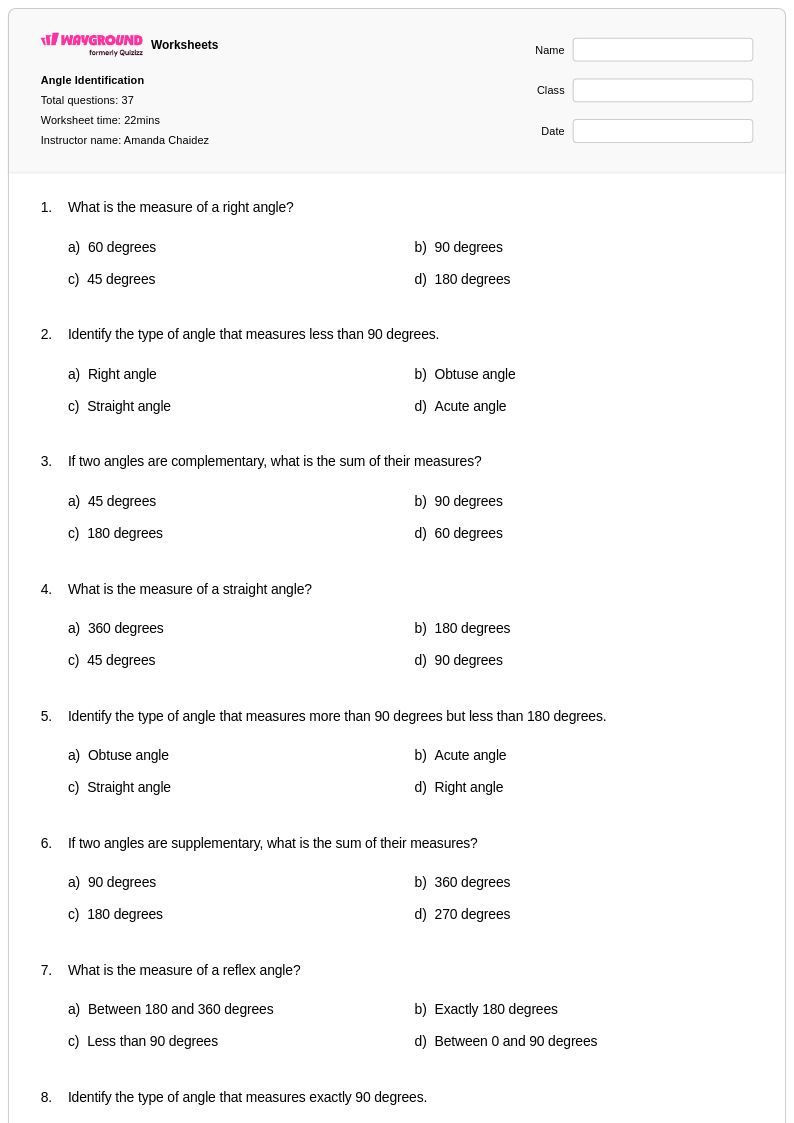
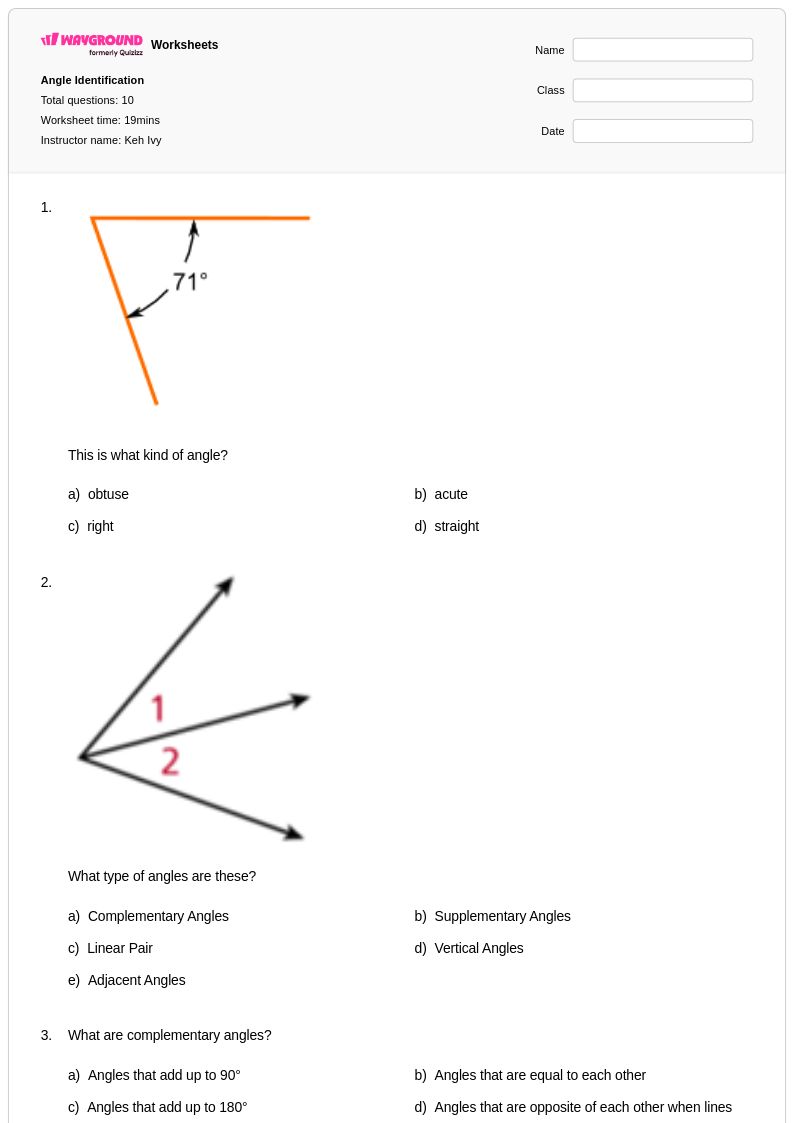
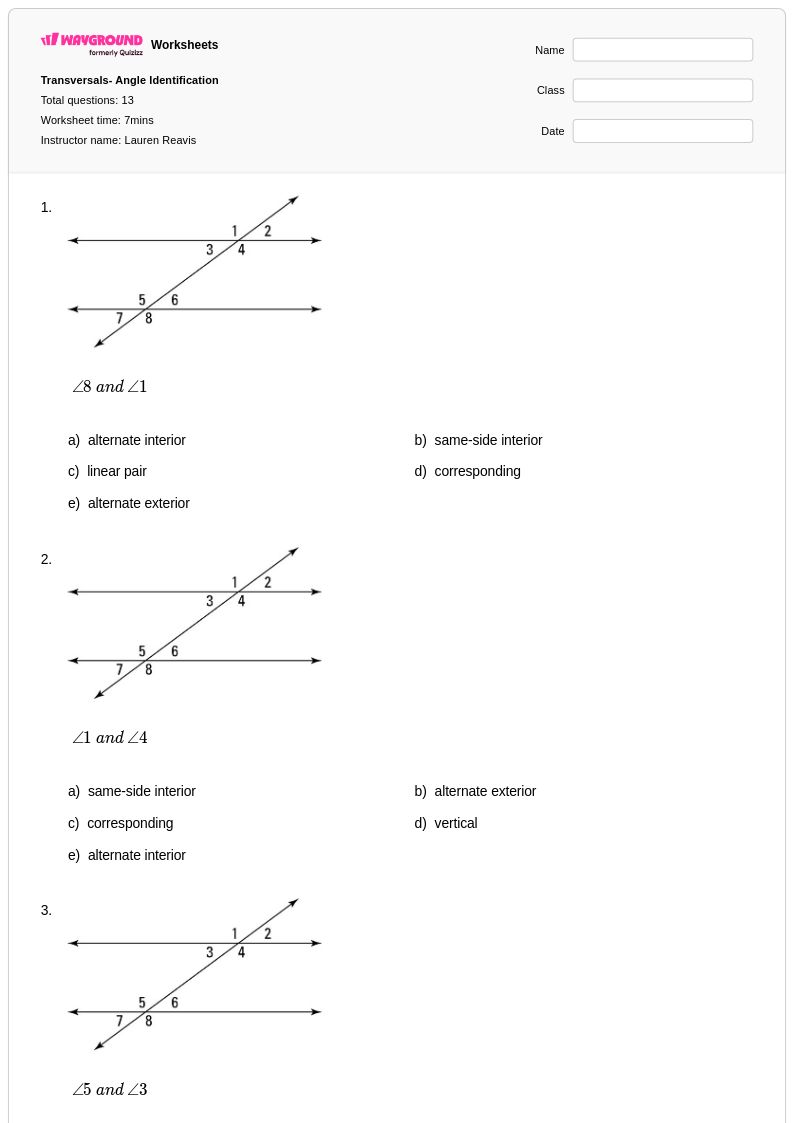
Angle identification worksheets available through Wayground (formerly Quizizz) provide comprehensive practice opportunities for students to develop fundamental geometric reasoning skills. These carefully designed resources strengthen students' ability to recognize, classify, and distinguish between different types of angles including acute, obtuse, right, straight, and reflex angles. The practice problems systematically guide learners through visual angle recognition exercises, measurement activities, and real-world applications that build spatial awareness and mathematical vocabulary. Each worksheet collection includes detailed answer keys that support both independent study and classroom instruction, with free printables available in convenient pdf format for immediate classroom implementation.
Wayground (formerly Quizizz) empowers mathematics educators with access to millions of teacher-created angle identification resources that streamline lesson planning and differentiated instruction. The platform's robust search and filtering capabilities allow teachers to quickly locate worksheets aligned to specific mathematical standards and tailored to diverse learning needs within their classrooms. These versatile tools support systematic skill building through customizable practice sets that can be modified for remediation or enrichment purposes, ensuring every student receives appropriate challenge levels. Available in both printable and digital formats, including downloadable pdf versions, these angle identification worksheets integrate seamlessly into traditional and technology-enhanced learning environments while providing teachers with the flexibility to adapt content for various instructional contexts.
FAQs
How do I teach students to identify different types of angles?
Begin with a right angle as a visual benchmark, then compare acute, obtuse, straight, and reflex angles by their size and rotation. Have students name each angle type, explain the evidence for their classification, and connect examples to objects such as clock hands, open doors, and road intersections.
What exercises help students practice angle identification?
Effective exercises include sorting angle diagrams, matching angles to classification names, estimating before measuring, and finding angles in real-world images. A useful progression moves from clearly oriented examples to rotated, unlabeled, and visually similar angles so students learn to classify by size rather than appearance.
What mistakes do students commonly make when classifying angles?
Students often judge an angle by the length or orientation of its rays instead of the amount of turn between them. They may also confuse obtuse and reflex angles or classify a nearly right angle without measuring, so require them to compare against 90°, 180°, and 360° benchmarks.
How can I use an angle identification worksheet in class?
Wayground angle identification worksheets are available as printable PDFs and digital formats, accommodating different teaching environments and student preferences. Teachers can host a worksheet as a digital quiz on Wayground or print and assign it on paper; physical submissions can then be scanned or captured for grading with the Wayground for Teachers app. Every worksheet includes a complete answer key, and printable copies also support schools seeking more offline practice.
How does angle identification fit into the Common Core math progression?
Angle identification supports the Common Core progression from recognizing geometric attributes to measuring, drawing, and reasoning about angles. Students first distinguish angle types and use benchmark measures, then apply that vocabulary when solving problems involving angle addition, shapes, lines, and later geometric relationships.
How can I differentiate angle identification practice for a mixed-ability class?
Provide learners who need support with fewer angle types, strong visual benchmarks, or alternate worksheet versions using larger text, wider spacing, a dyslexia-friendly font, or translation. In digital sessions, Wayground can assign individual extended time, Read Aloud, reduced answer choices, and reading-mode settings while classmates retain the default experience.