Discover comprehensive linear pair worksheets and free printables that help students master identifying and calculating angles in linear pairs through engaging practice problems with detailed answer keys.
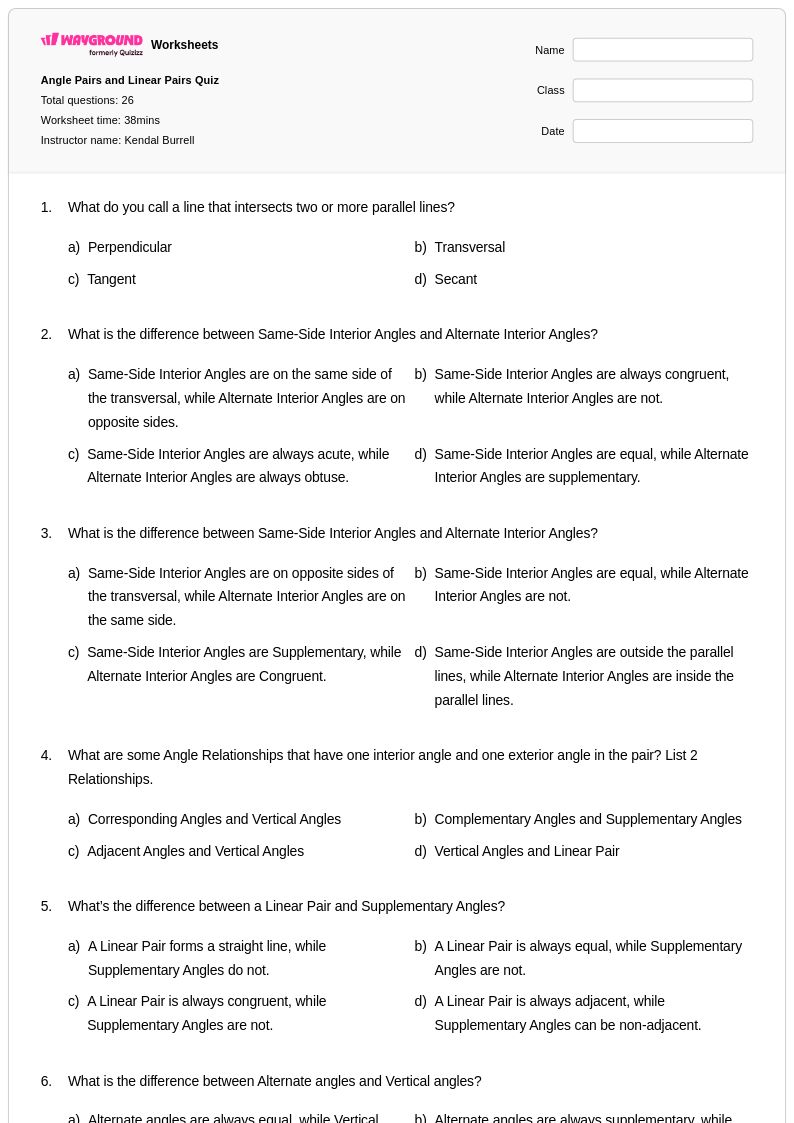
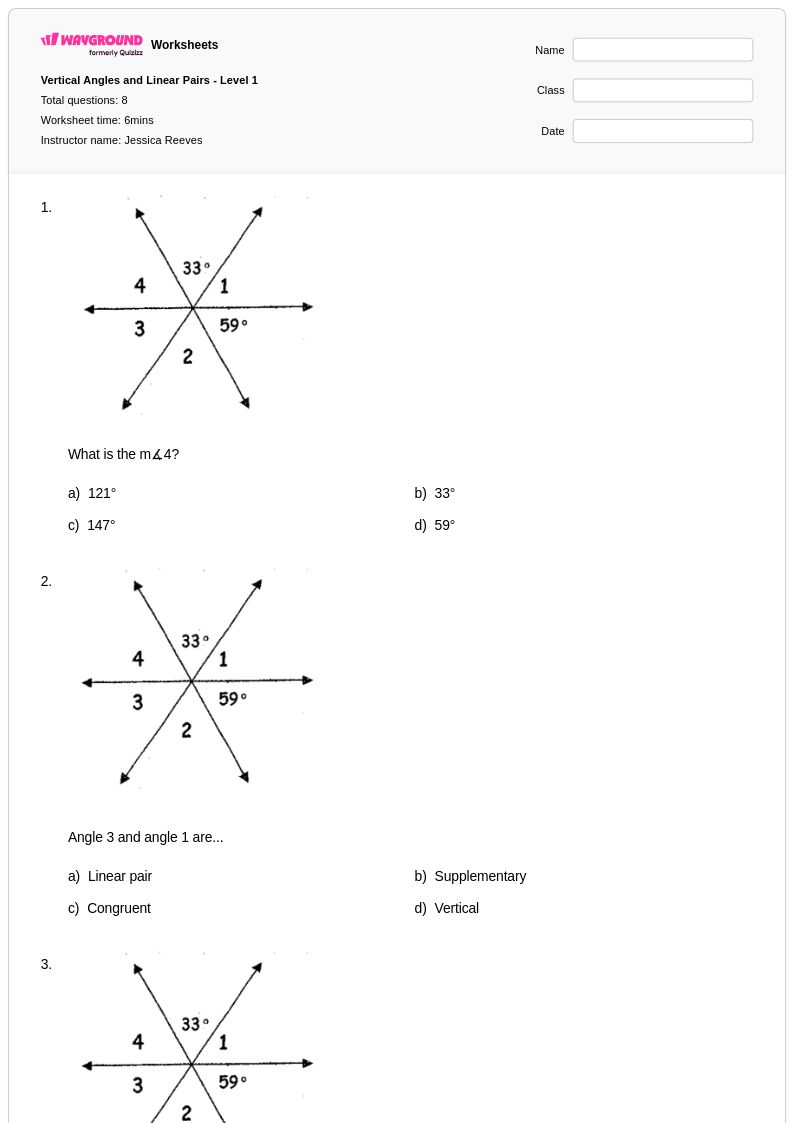
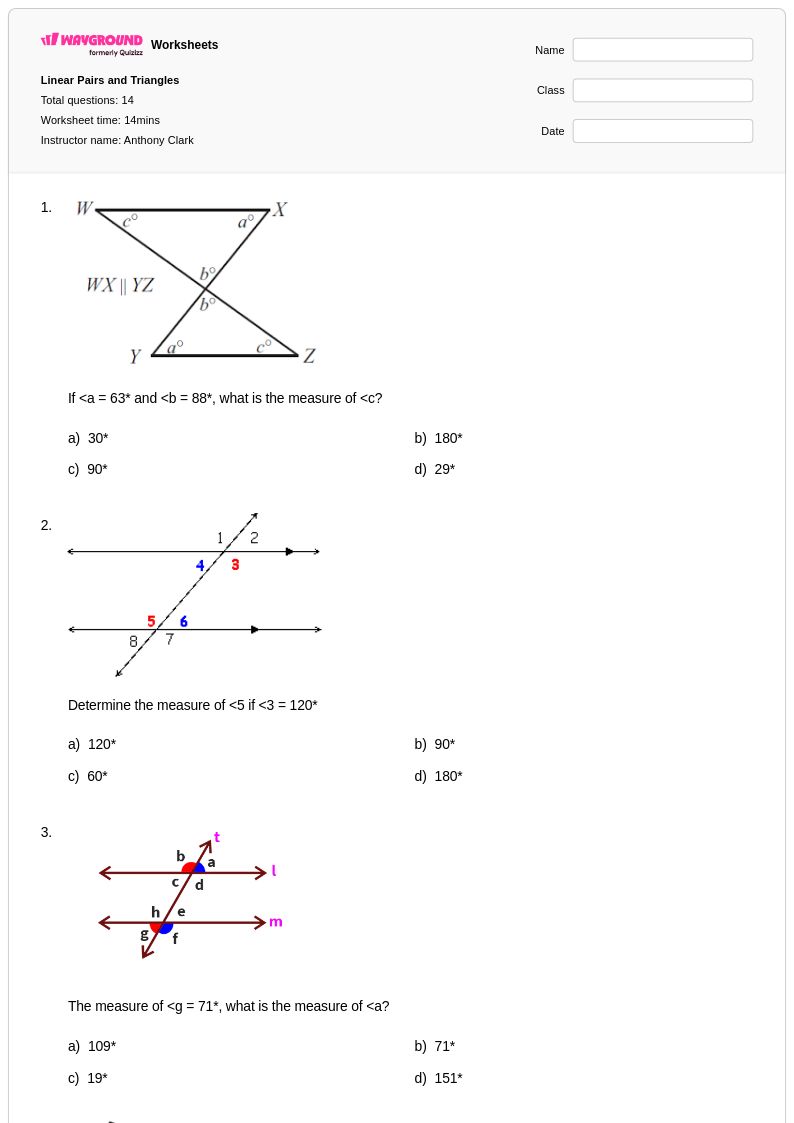
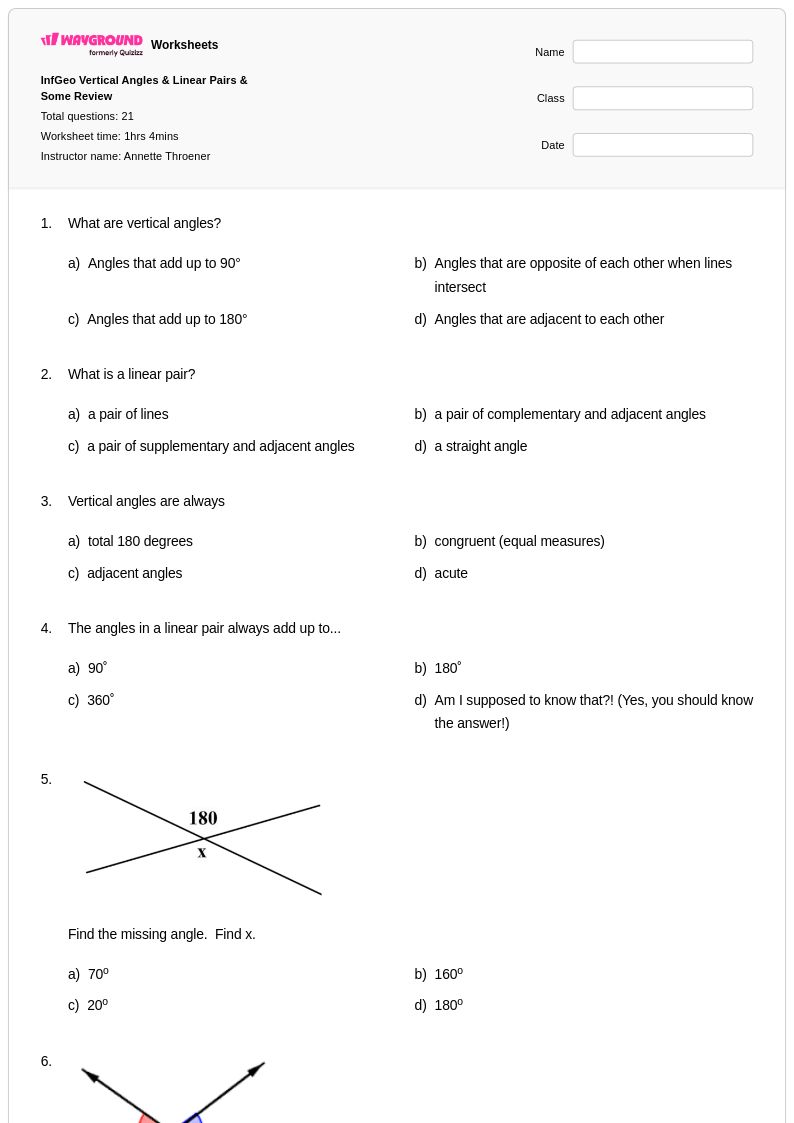
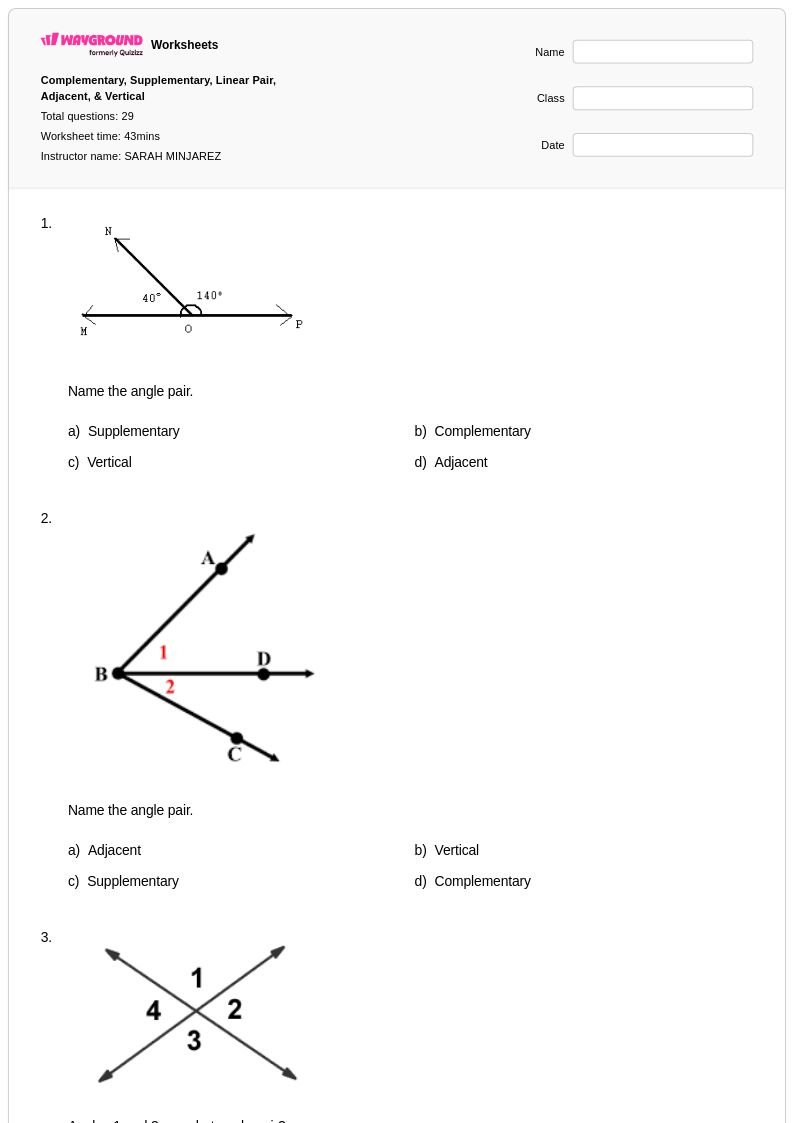
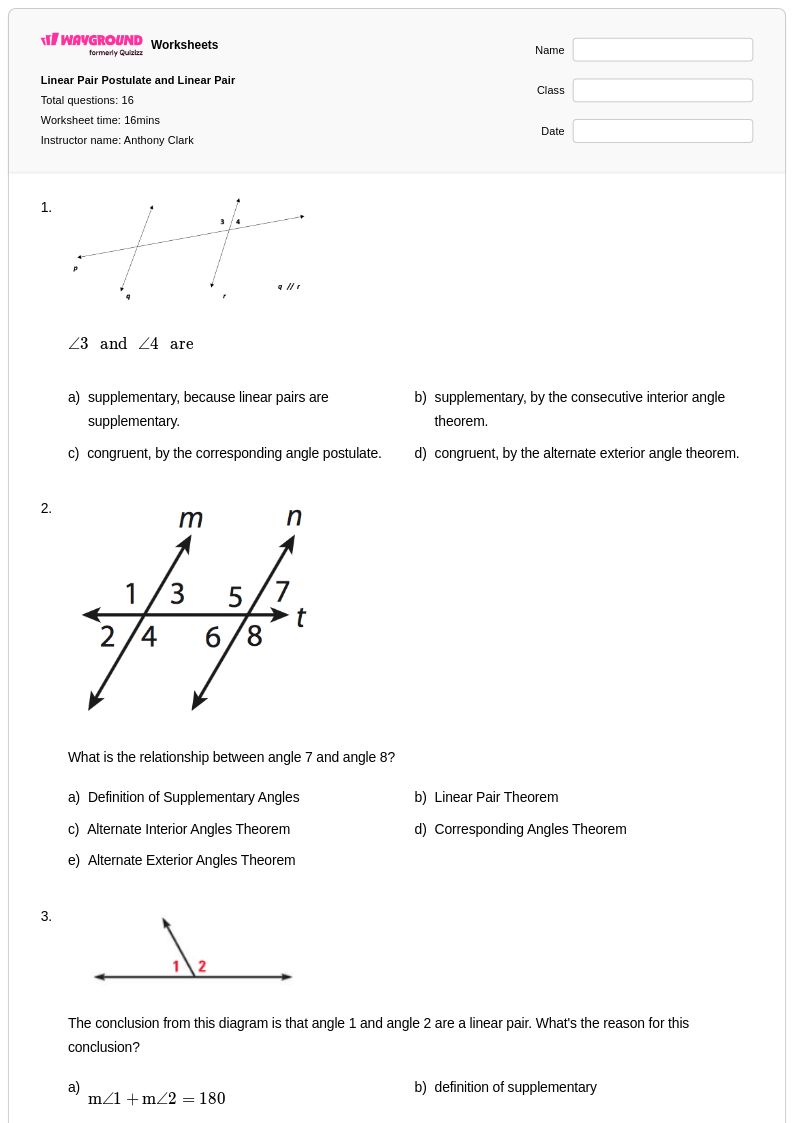
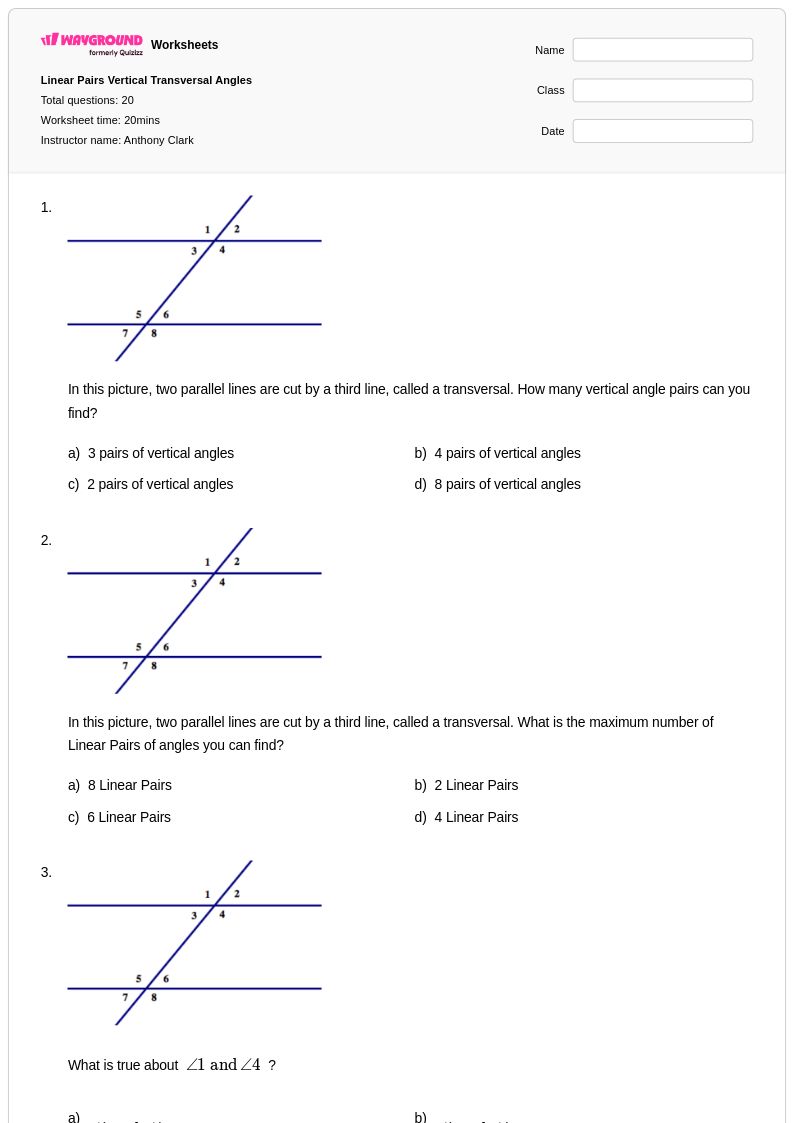
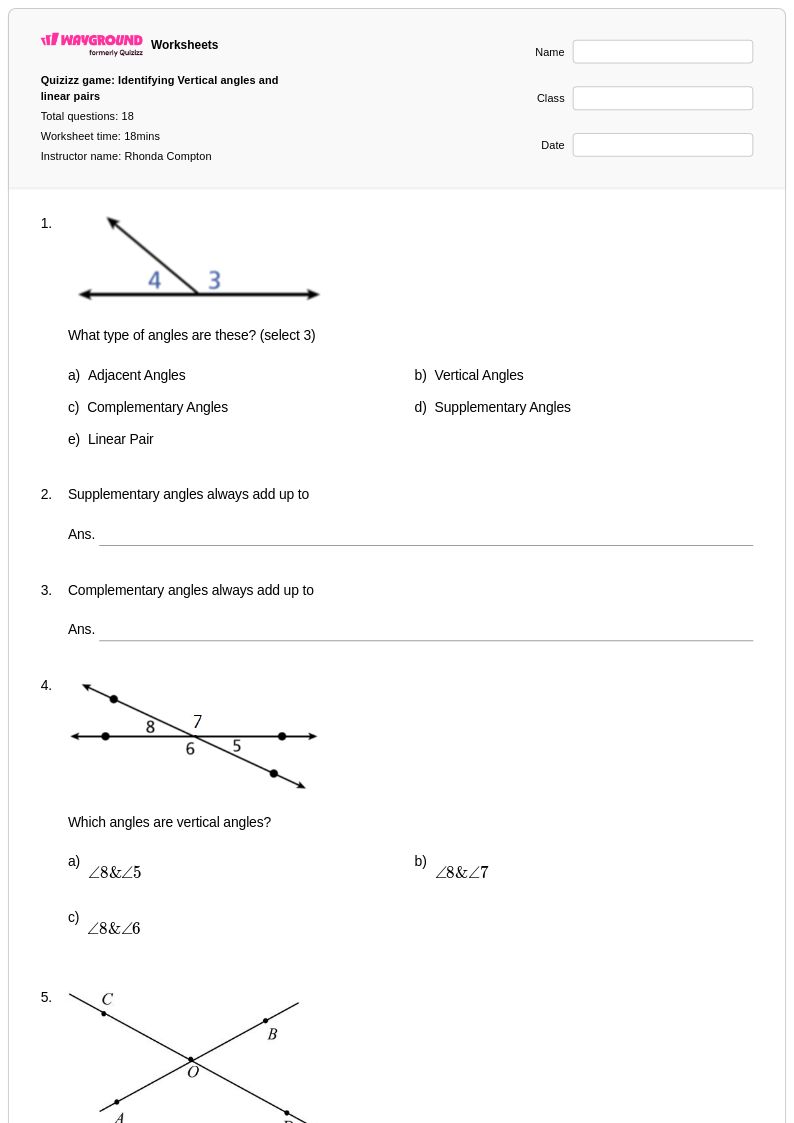
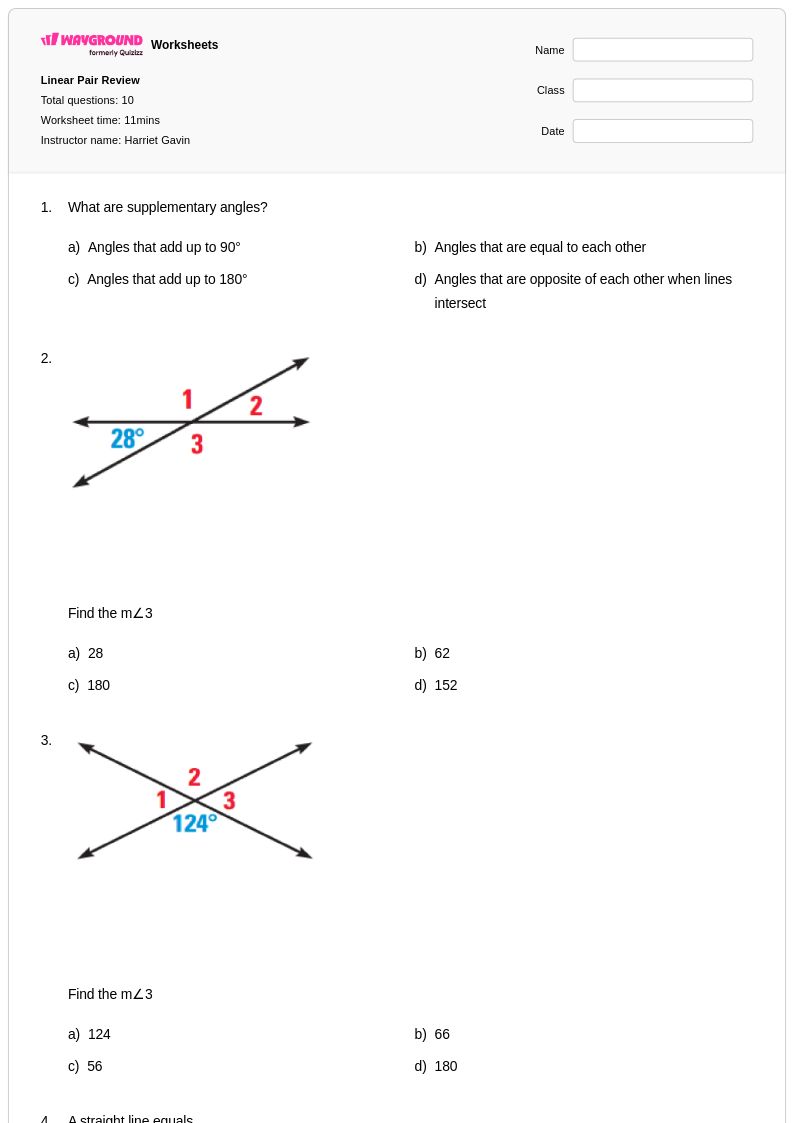
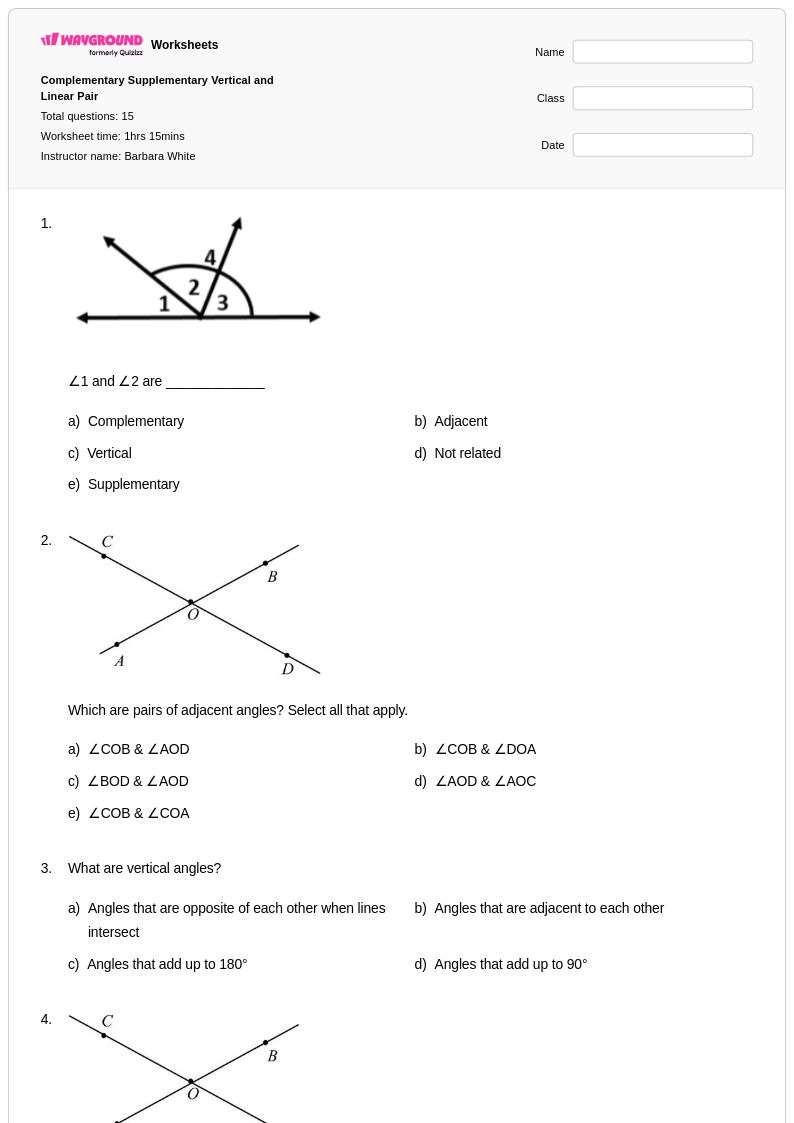
Linear pair worksheets available through Wayground (formerly Quizizz) provide comprehensive practice opportunities for students to master this fundamental angle relationship concept in mathematics. These educational resources focus on developing students' understanding of adjacent angles that form a straight line, with their measures summing to 180 degrees. The worksheets strengthen critical geometric reasoning skills by presenting varied practice problems that require students to identify linear pairs, calculate missing angle measures, and apply linear pair properties in complex geometric figures. Each worksheet collection includes detailed answer keys and is available as free printable pdf resources, ensuring teachers can easily distribute materials and provide immediate feedback to support student learning and comprehension.
Wayground (formerly Quizizz) empowers educators with an extensive library of millions of teacher-created linear pair worksheets, offering robust search and filtering capabilities that allow instructors to quickly locate resources aligned with specific mathematical standards and learning objectives. The platform's differentiation tools enable teachers to customize worksheet difficulty levels and problem types, accommodating diverse student needs from remediation to enrichment activities. These versatile resources are available in both printable pdf formats and interactive digital versions, providing flexibility for various classroom environments and learning preferences. Teachers can efficiently plan targeted skill practice sessions, assess student understanding of linear pair concepts, and implement focused intervention strategies using these carefully curated worksheet collections that support systematic mathematical skill development.
FAQs
How do I teach the concept of a linear pair?
Introduce a linear pair as two angles that are neighbors (adjacent) and sit on a straight line. Use a physical model, like folding a piece of paper to create a straight line and then another fold to intersect it. This helps students visually confirm that the two angles created add up to the 180 degrees of the straight line.
What exercises help students practice identifying linear pairs?
Effective practice moves from simple to complex diagrams. Start with worksheets showing a single straight line intersected by one ray. Then, progress to more complex figures with multiple intersecting lines where students must first identify which angles form a linear pair before solving for a missing value.
What is a common mistake students make with linear pairs?
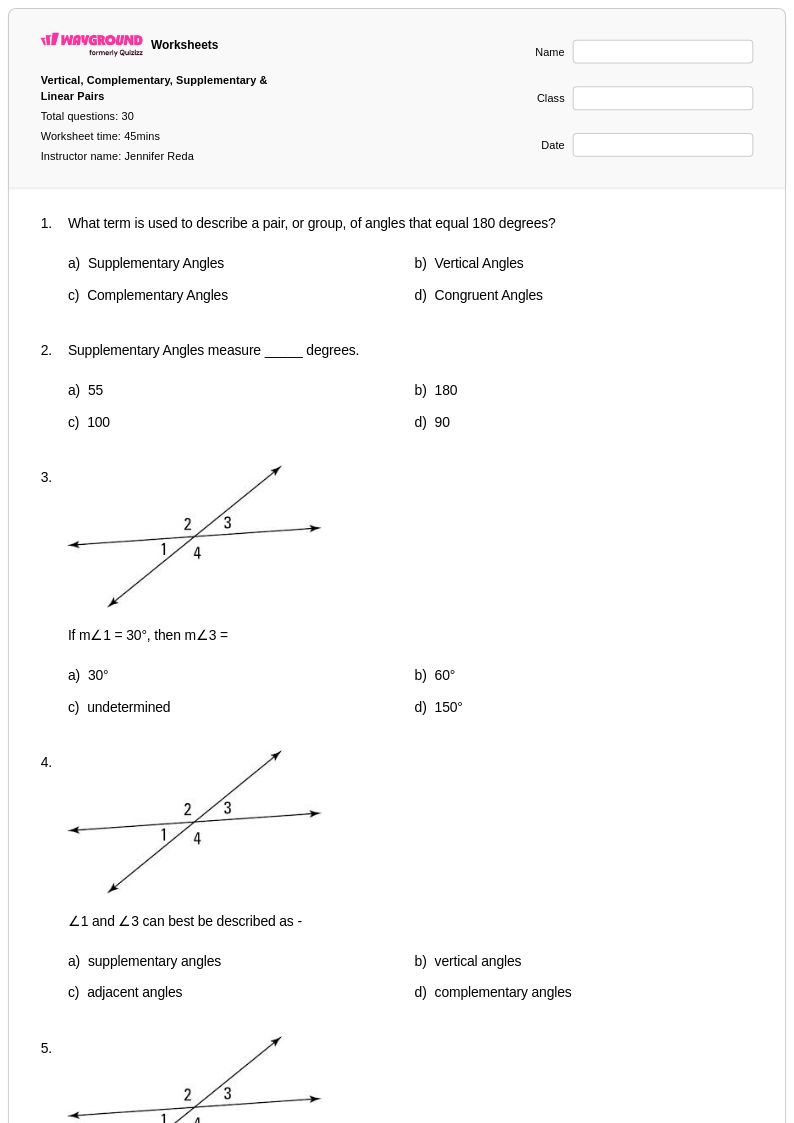
A frequent error is confusing linear pairs with other angle relationships, like complementary or vertical angles. Students may incorrectly assume any two adjacent angles sum to 180 degrees, even if they don't form a straight line. Consistent practice with varied diagrams helps reinforce the visual requirement of a straight line.
How do linear pairs fit into the math curriculum?
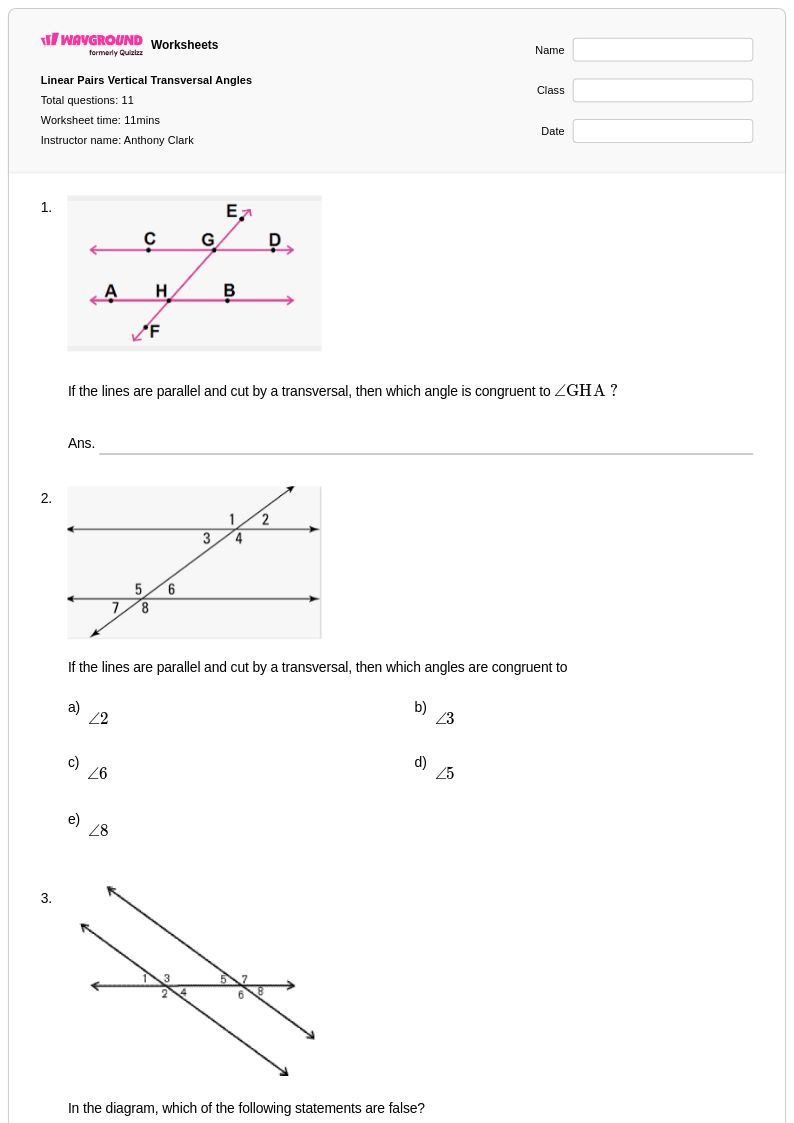
In curricula aligned with Common Core, understanding linear pairs is a key step in developing geometric reasoning. It builds on the concept of supplementary angles and serves as a foundational postulate for proving more complex theorems, such as why vertical angles are congruent or the properties of angles formed by a transversal intersecting parallel lines.
How can I use this linear pair worksheet in my class?
This worksheet can be used for both digital and offline practice. You can host it as an interactive quiz on Wayground for immediate feedback or print the PDF for hands-on work, which helps students who benefit from drawing on diagrams. Every worksheet includes a full answer key for efficient grading.
How can I differentiate practice for linear pairs?
For students needing support, use Wayground's 'Reduced answer choices' feature on digital assignments to lower cognitive load. For an extra challenge, assign problems where angles are represented by algebraic expressions, requiring students to set up and solve a multi-step equation to find the angle measures.