
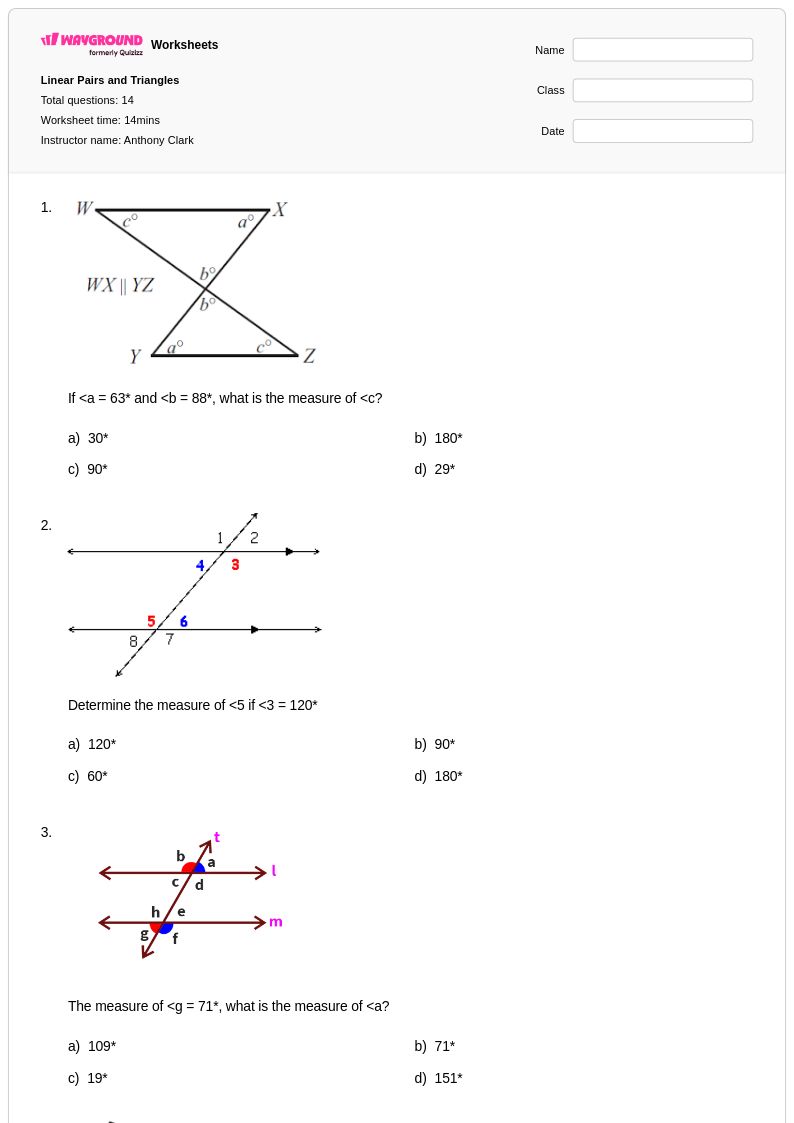
14 Q
8th - Uni
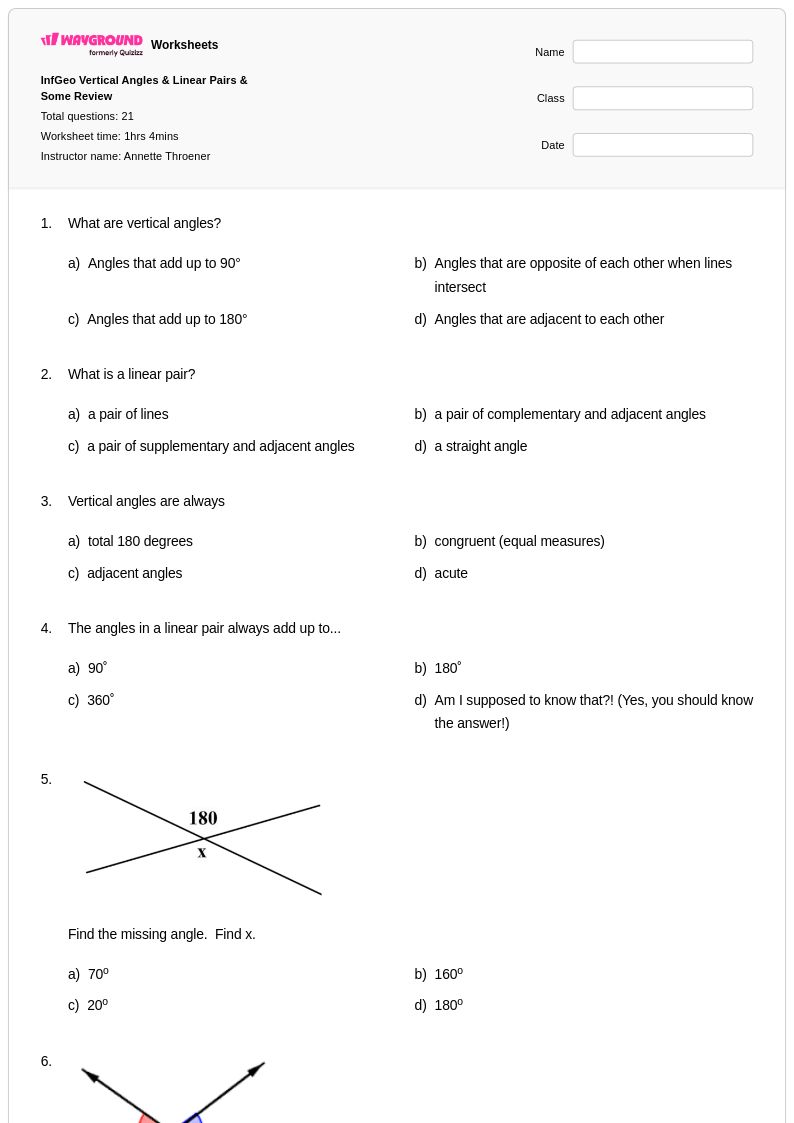
21 Q
7th - 10th
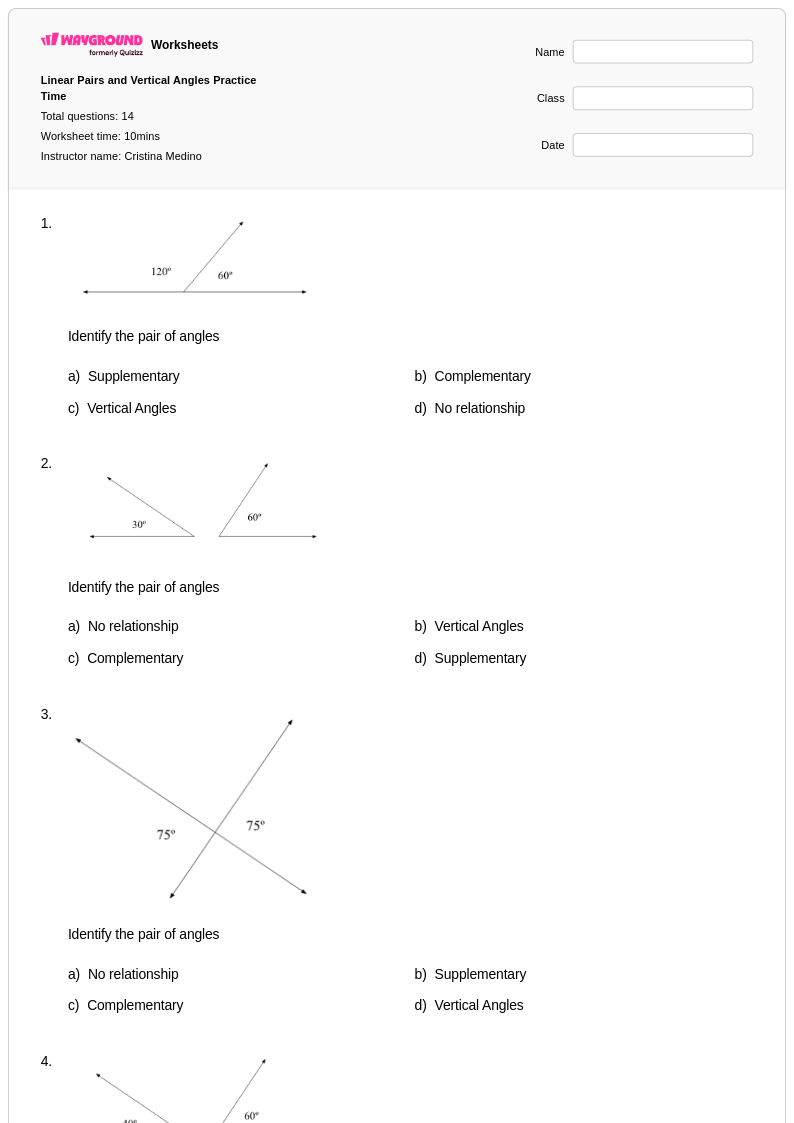
14 Q
8th
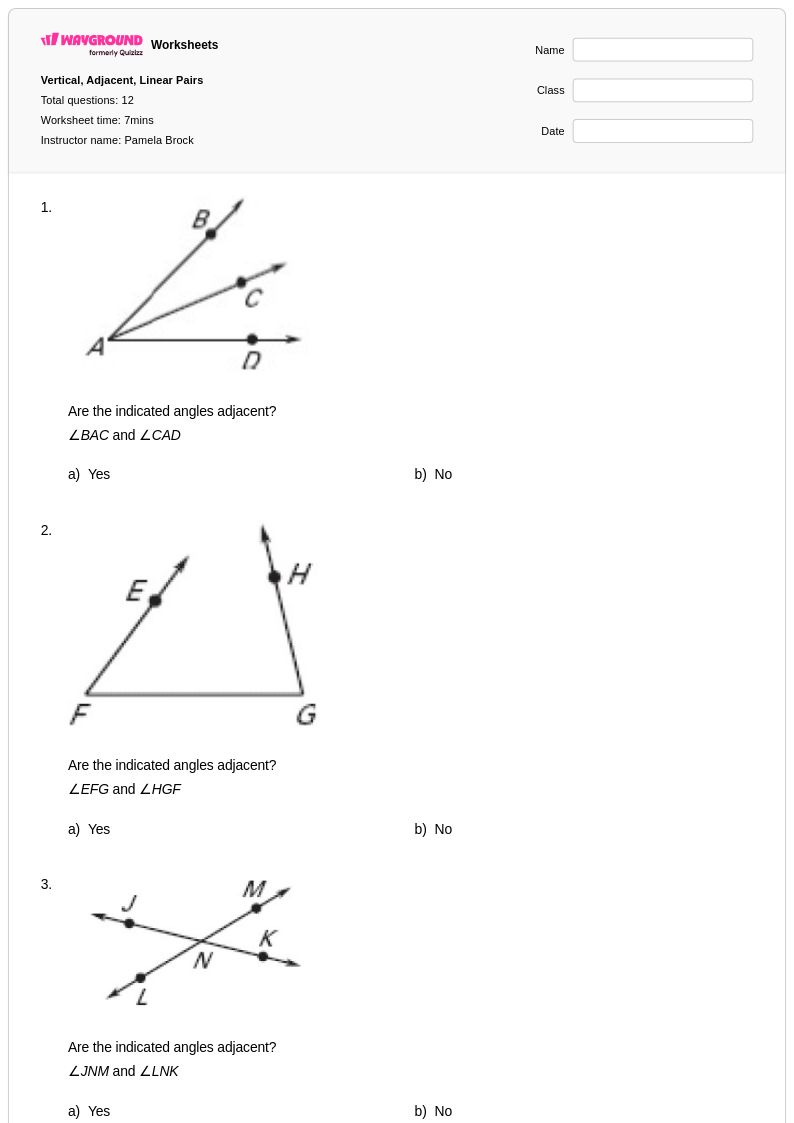
12 Q
6th - 8th
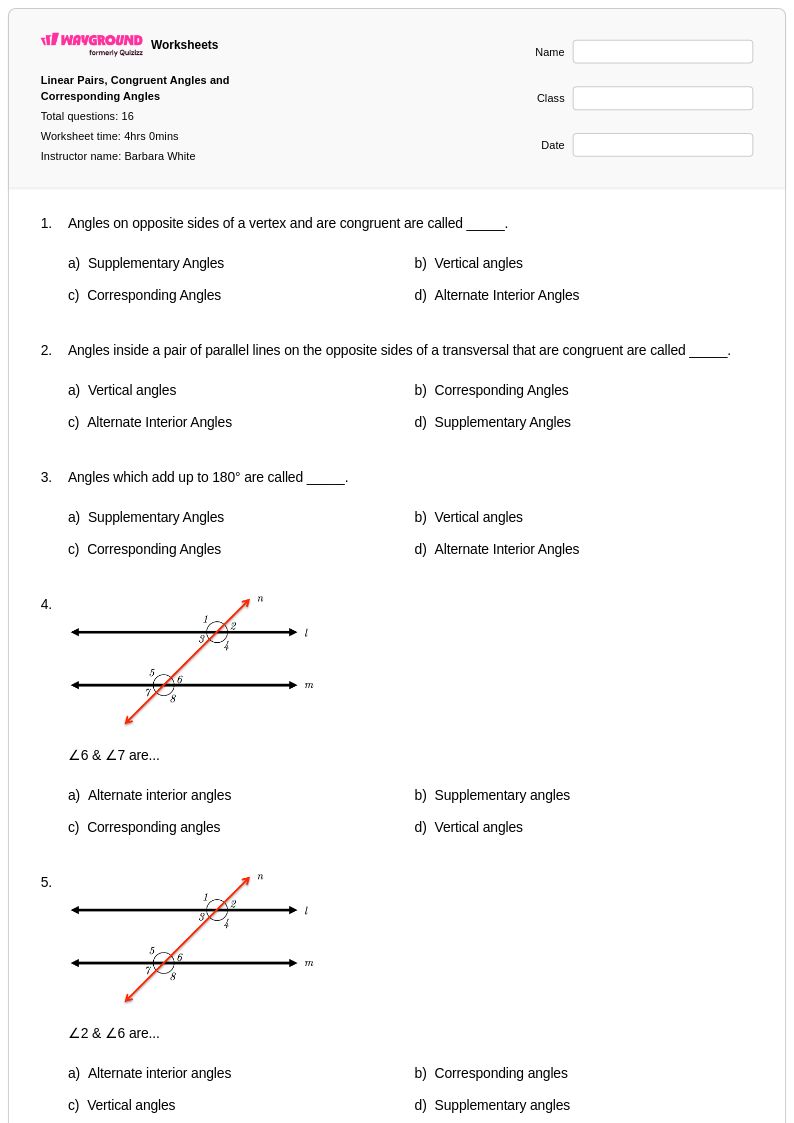
16 Q
8th
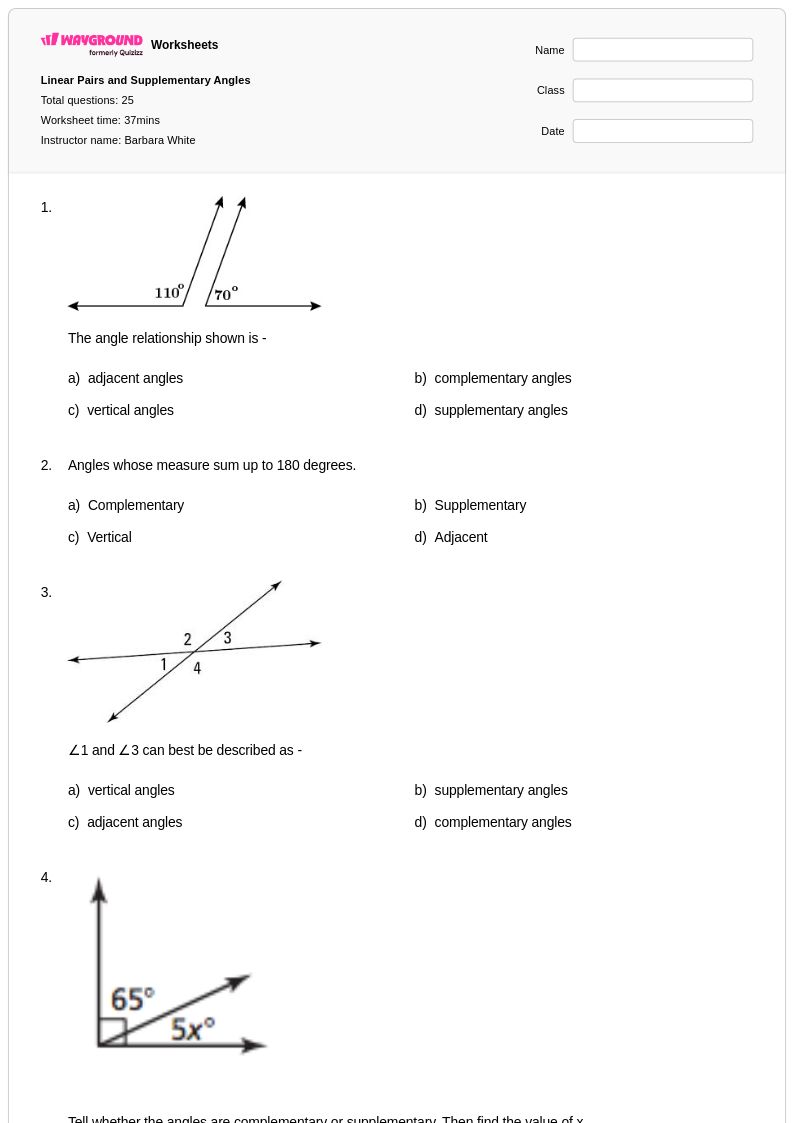
25 Q
6th - 12th
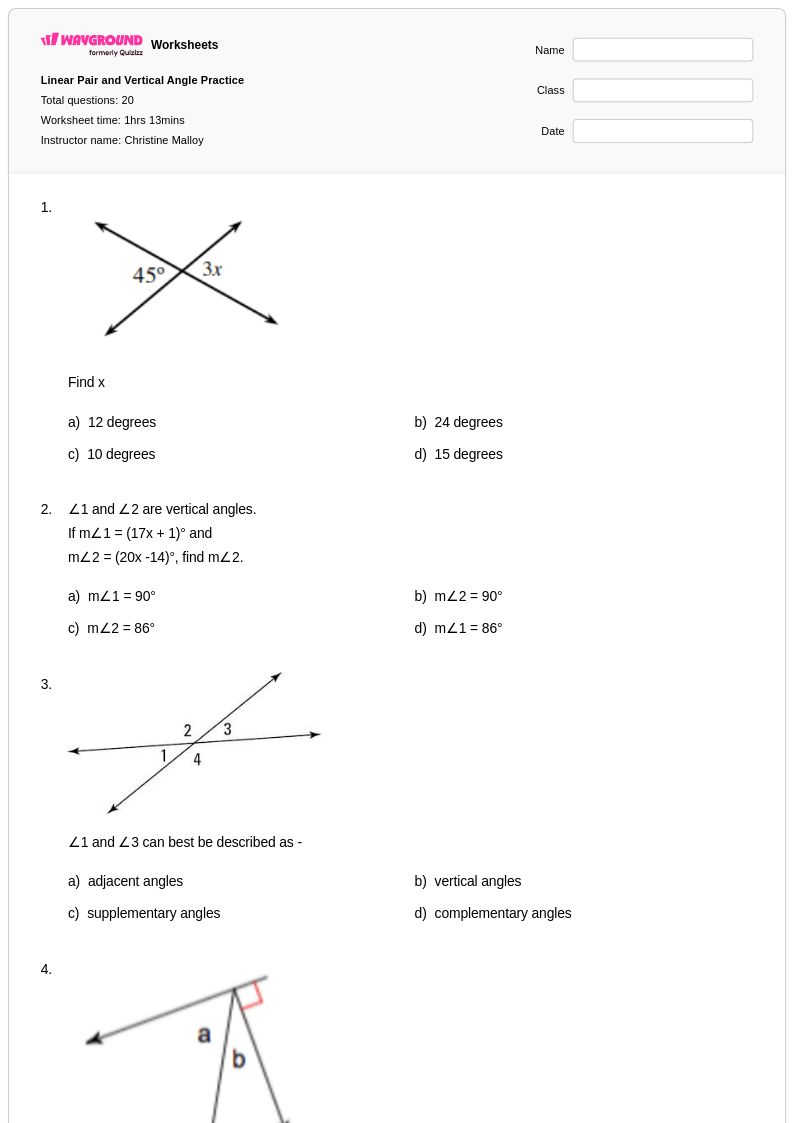
20 Q
7th - 9th
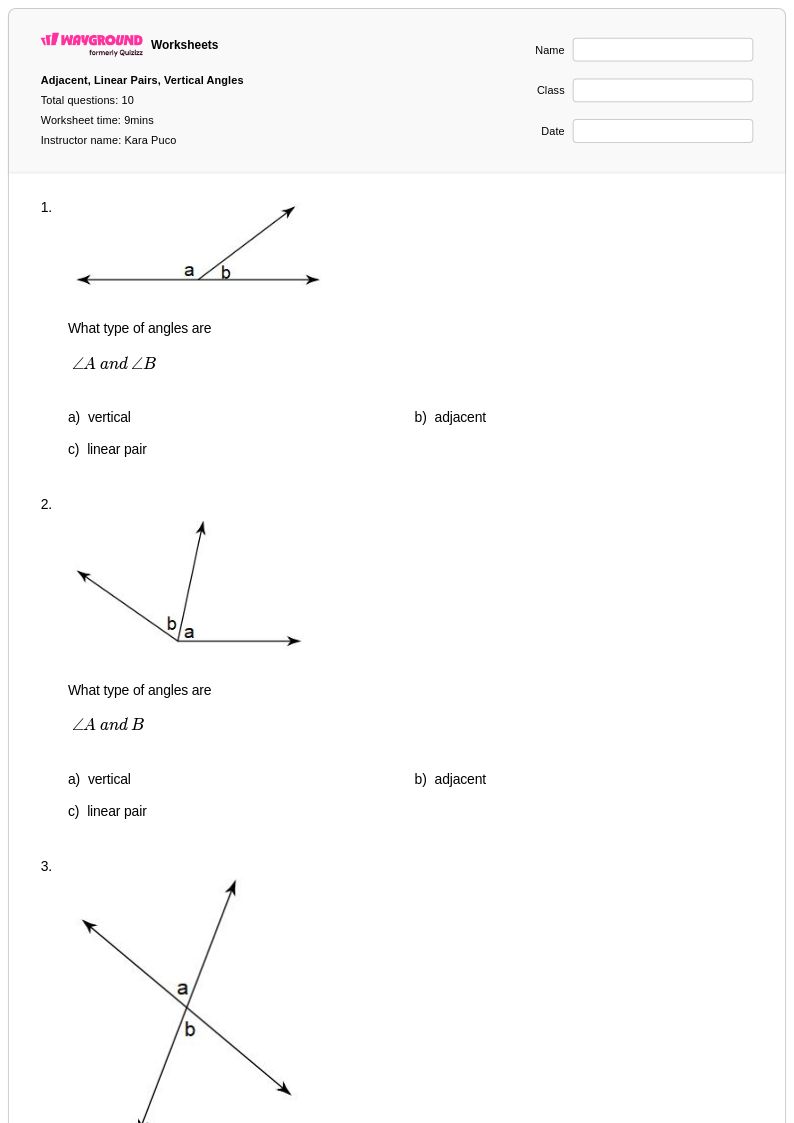
10 Q
8th - 12th
25 Q
6th - 12th
19 Q
7th - 8th
25 Q
6th - 12th
25 Q
6th - 12th
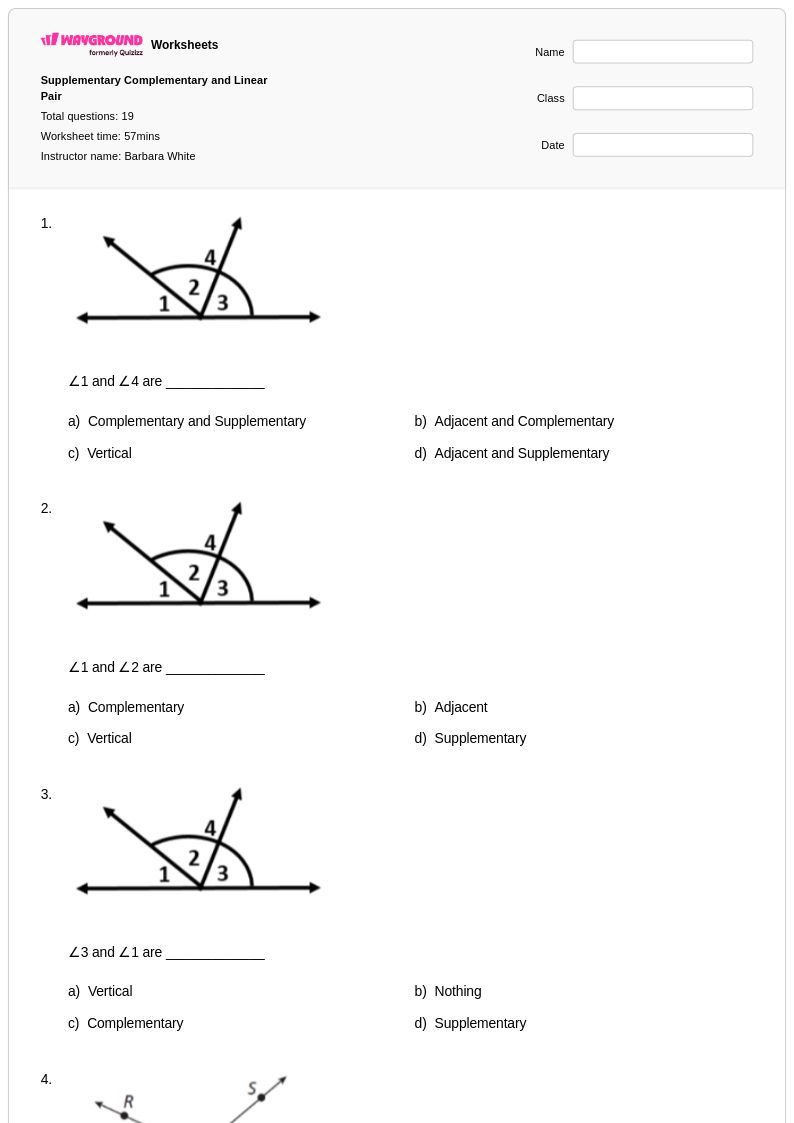
19 Q
7th - 8th
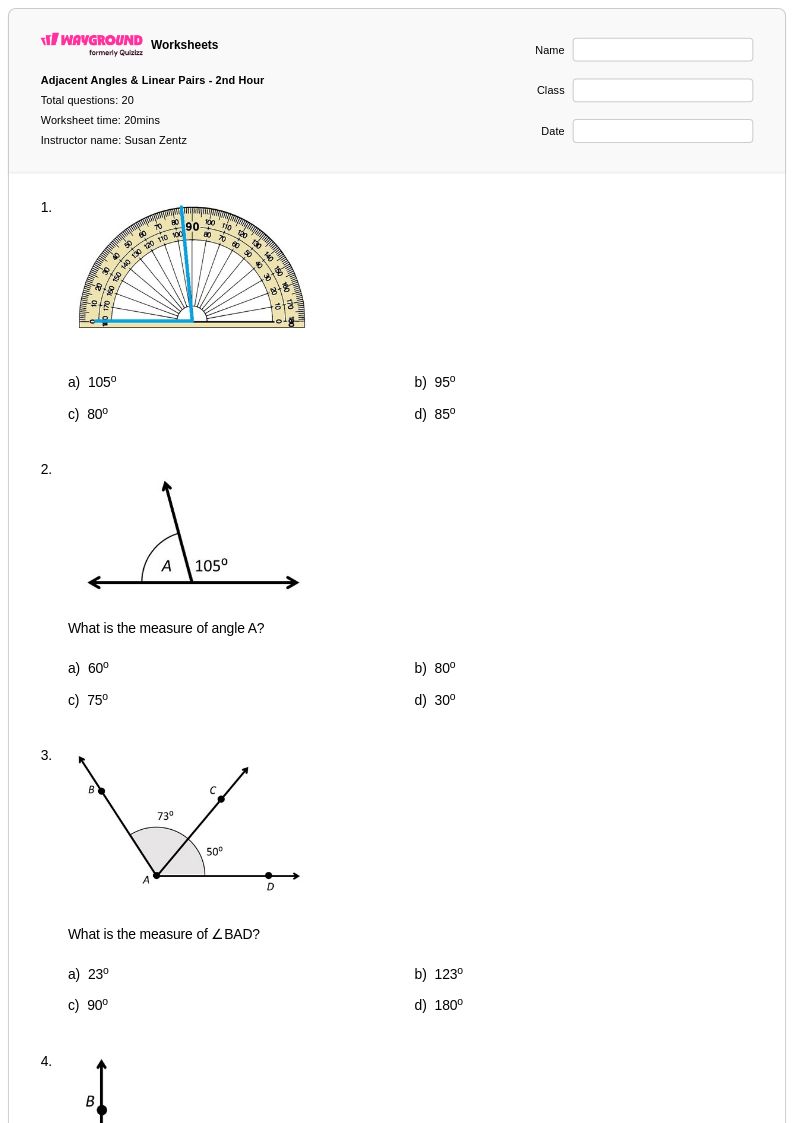
20 Q
8th - 9th
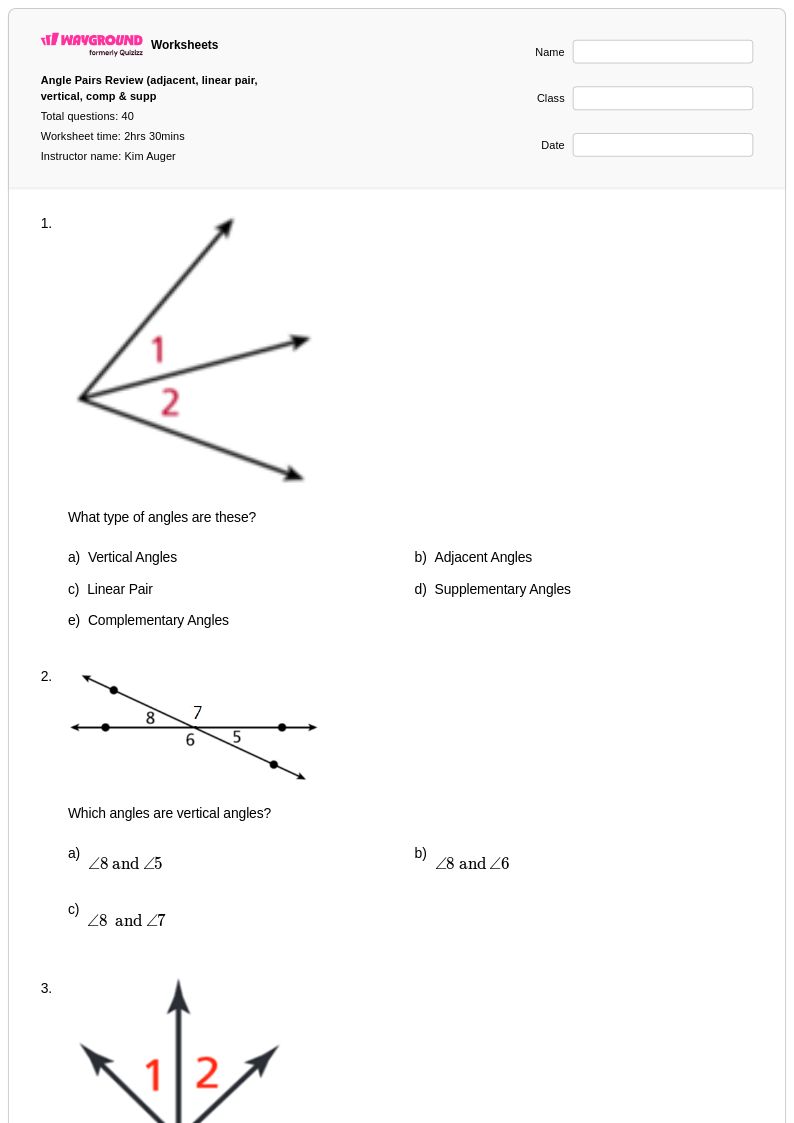
40 Q
7th - 8th
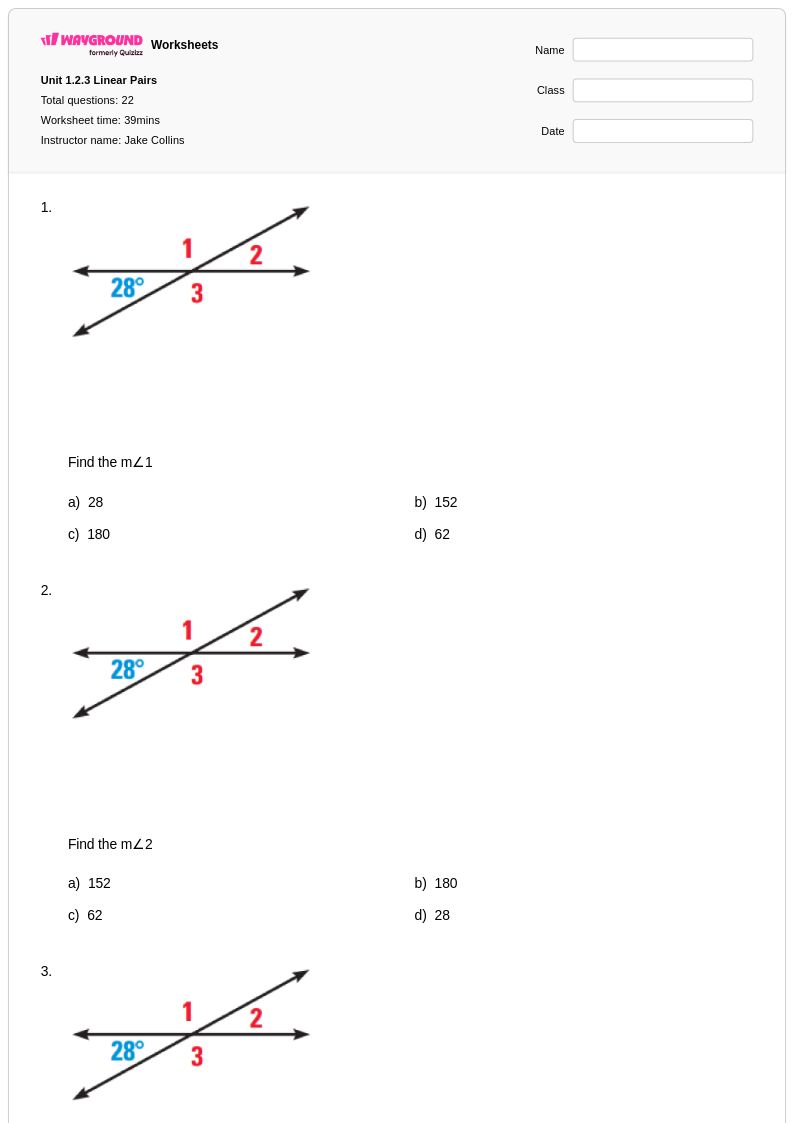
22 Q
8th - 11th
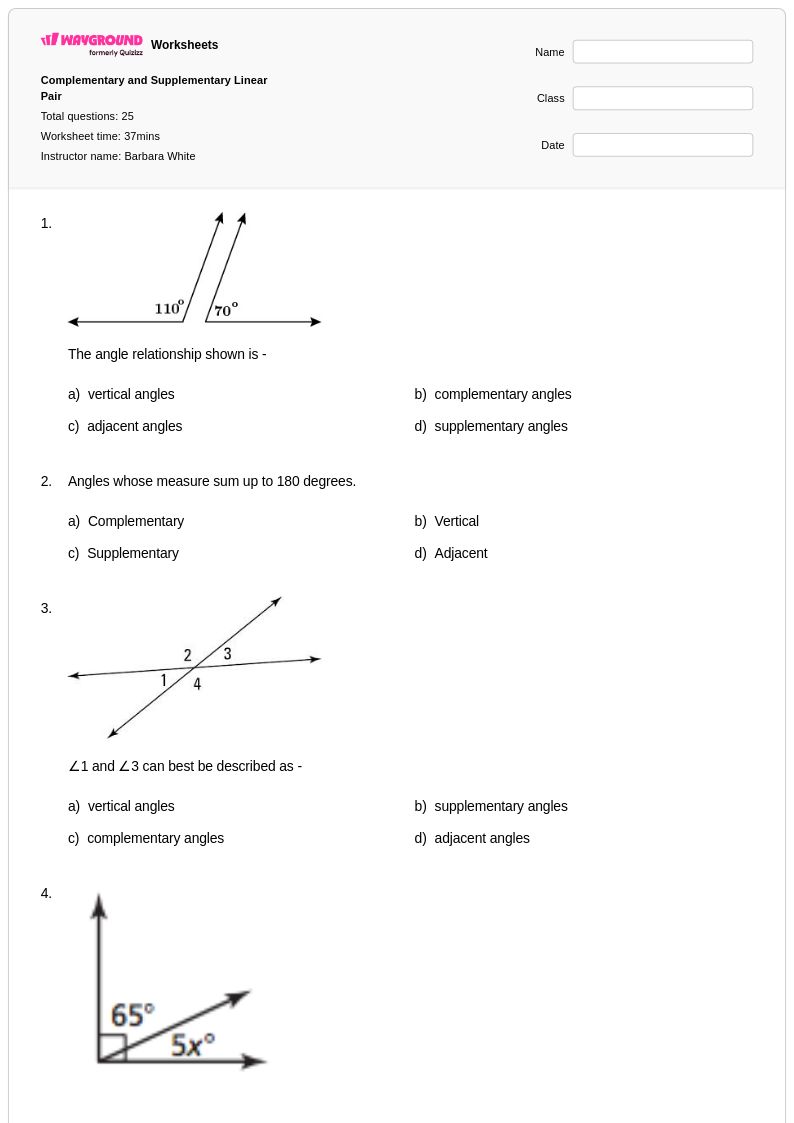
25 Q
6th - 12th
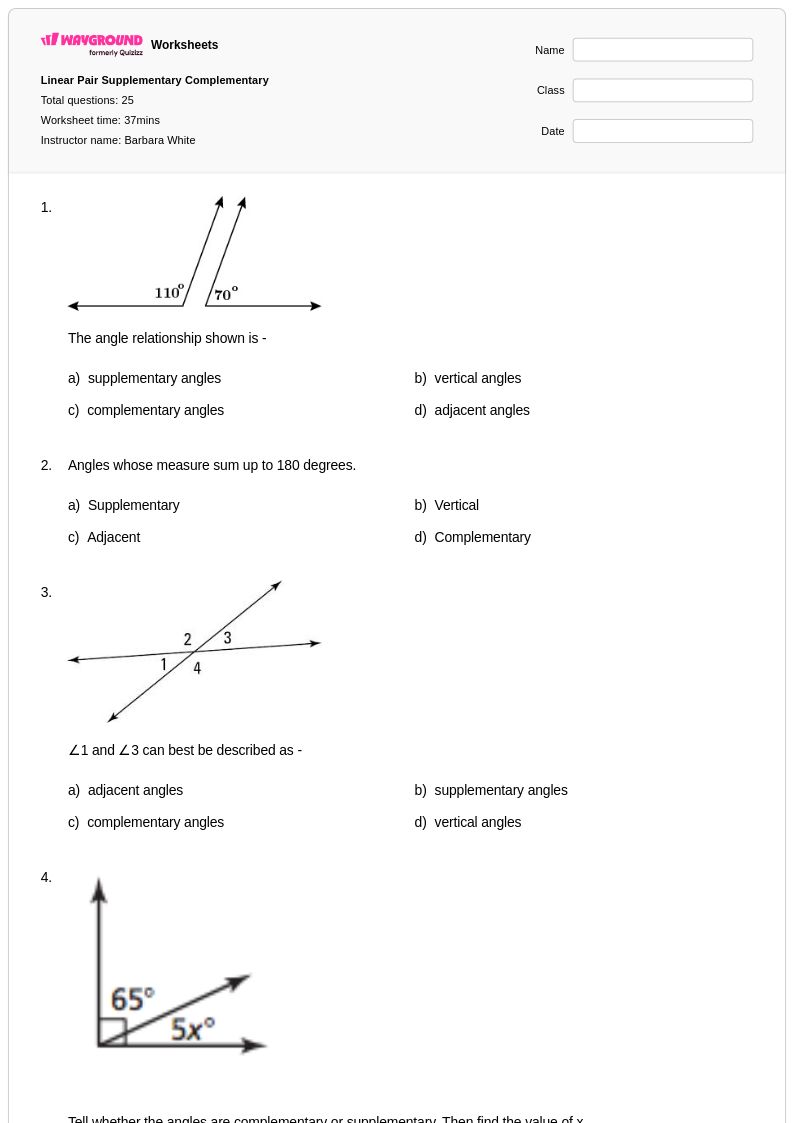
25 Q
6th - 12th
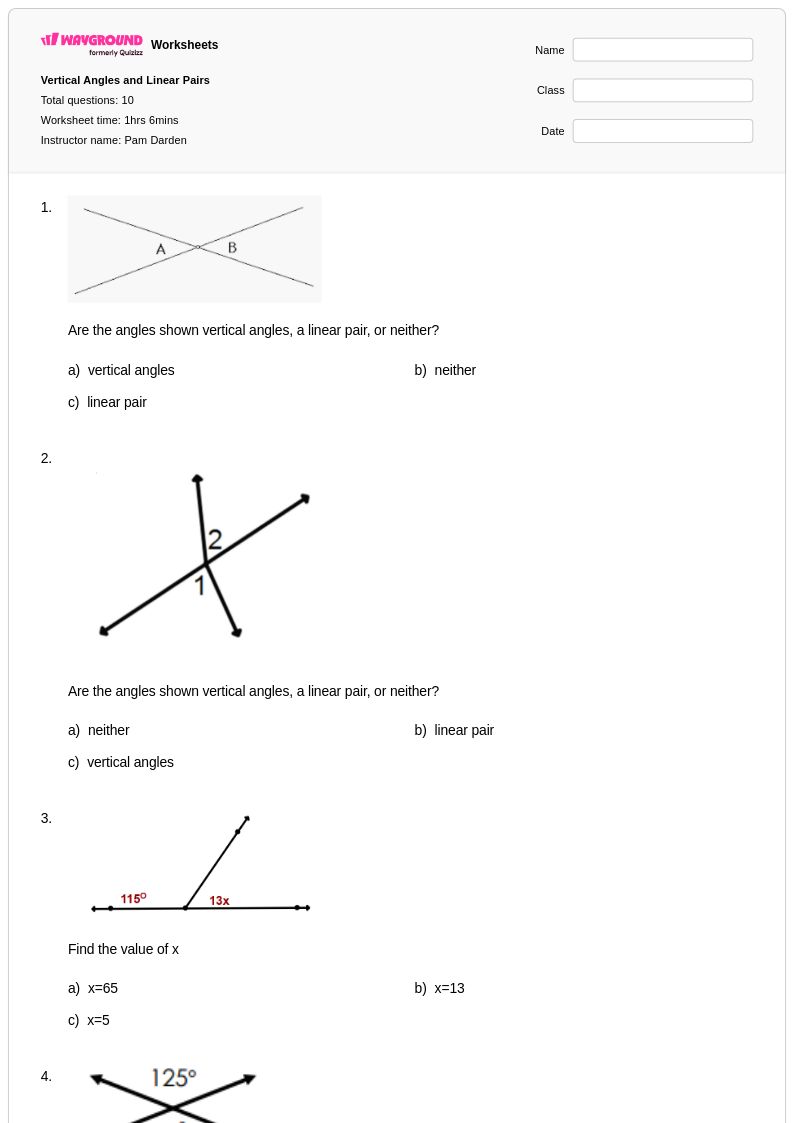
10 Q
6th - 12th
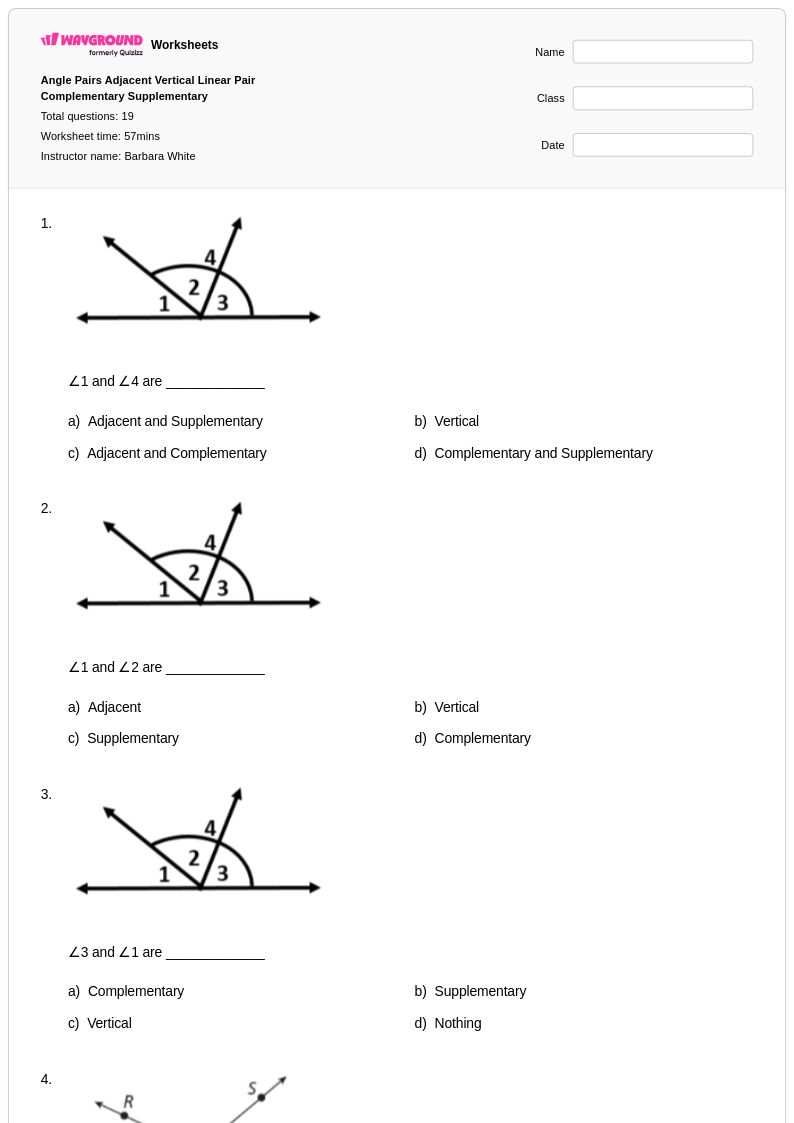
19 Q
7th - 8th
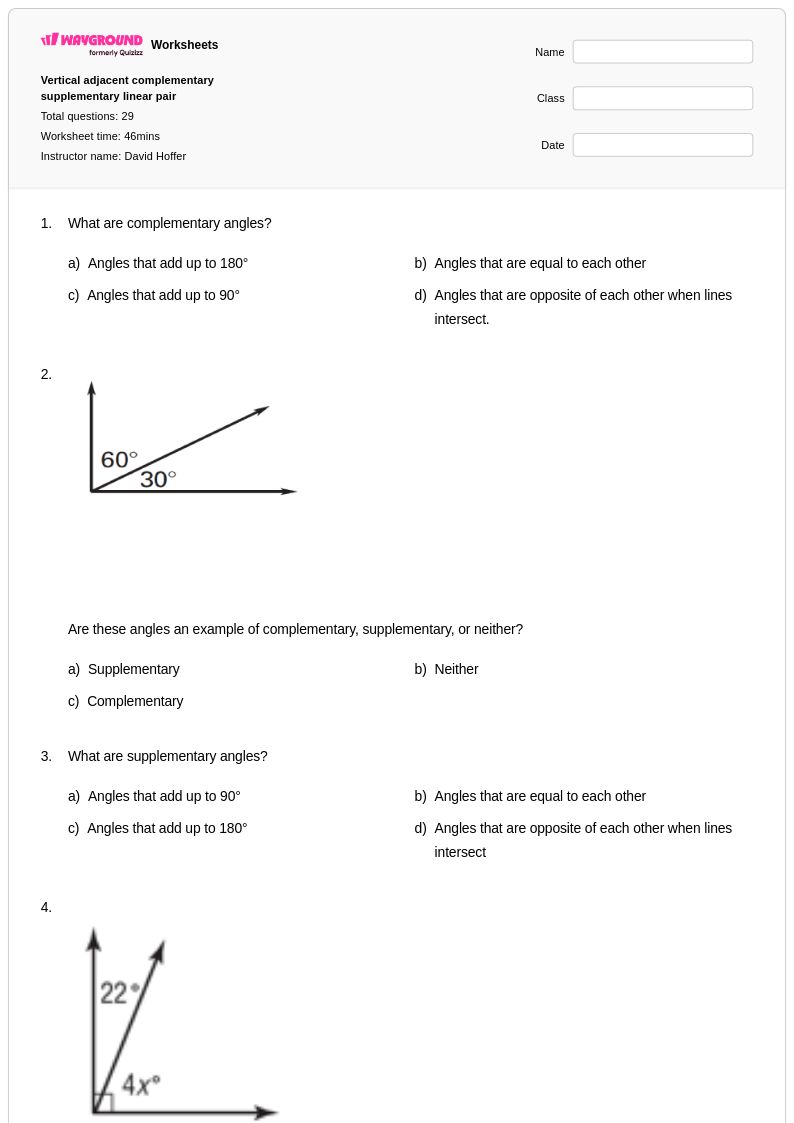
29 Q
8th - 10th
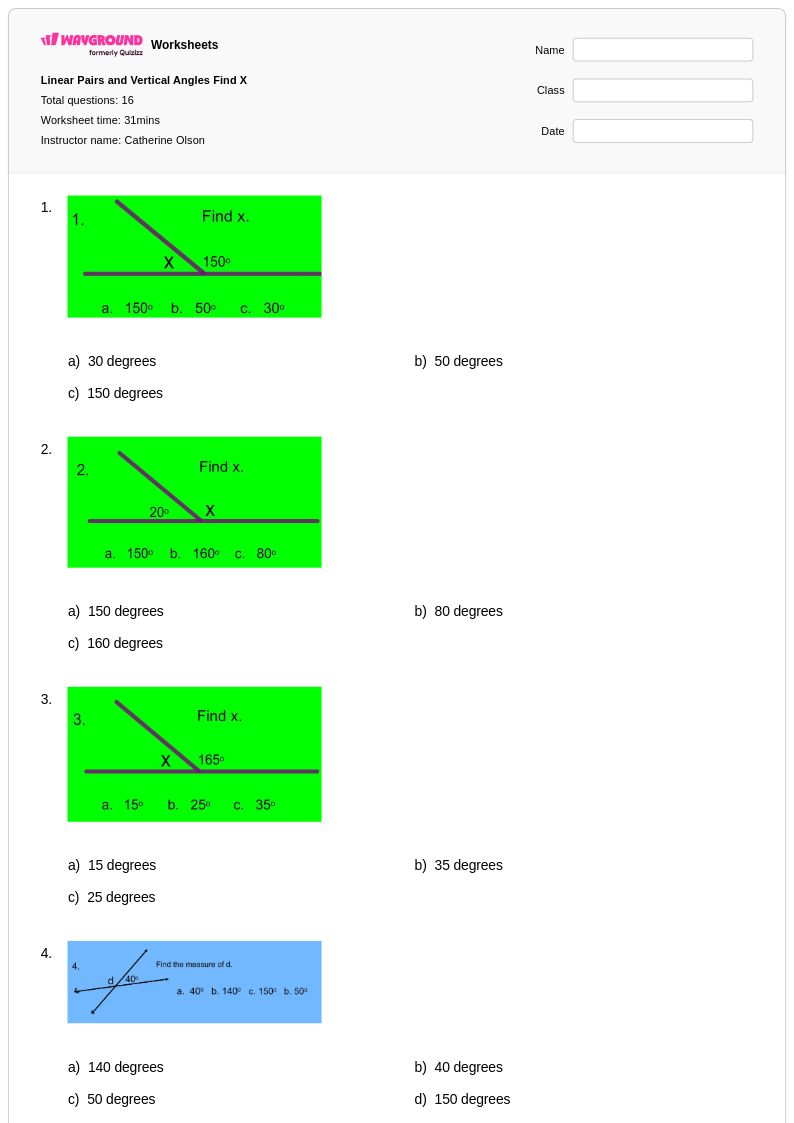
16 Q
8th - 11th
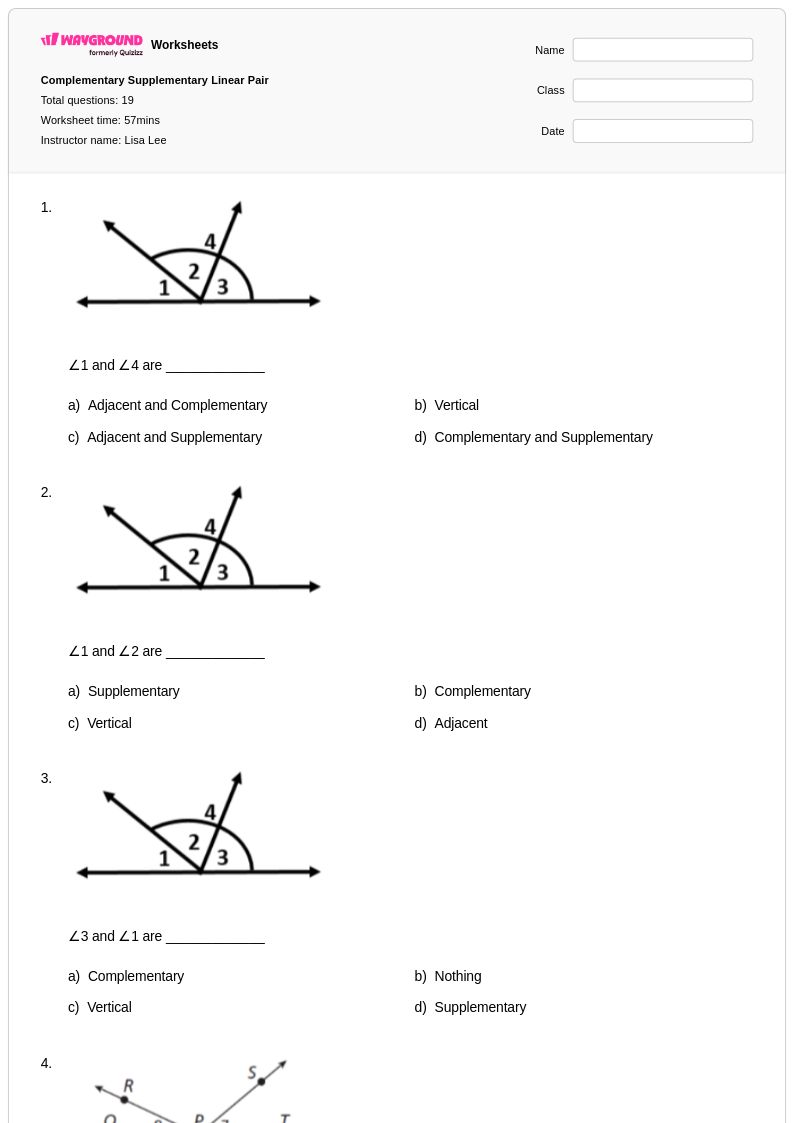
19 Q
7th - 8th
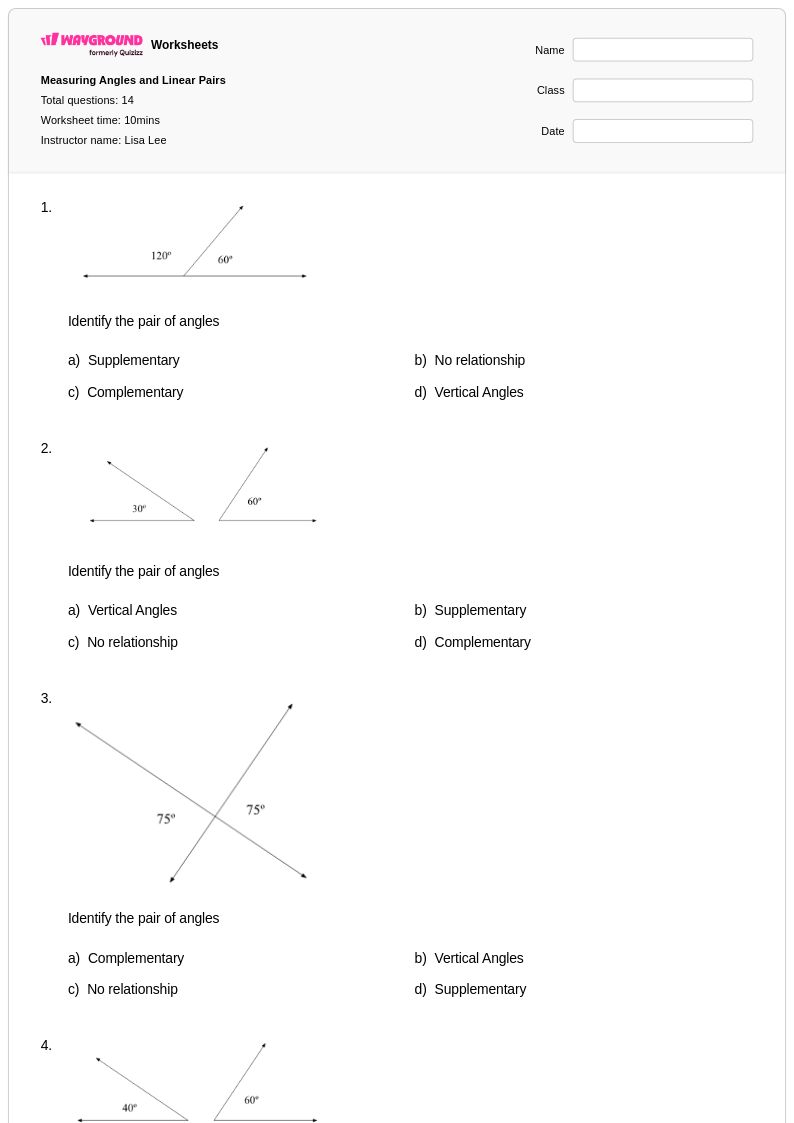
14 Q
8th
Explore Other Subject Worksheets for grade 8
Explore printable Linear Pair worksheets for Grade 8
Linear pair worksheets for Grade 8 mathematics provide students with essential practice in understanding one of geometry's fundamental angle relationships. These comprehensive worksheet collections through Wayground (formerly Quizizz) focus on helping eighth-grade students master the concept that linear pairs are adjacent angles whose non-common sides form a straight line, always summing to 180 degrees. The free printable resources strengthen critical skills including angle identification, algebraic problem-solving with linear pair equations, and geometric reasoning. Students work through diverse practice problems that range from basic linear pair recognition to complex scenarios involving algebraic expressions, with complete answer keys provided in convenient PDF format to support independent learning and immediate feedback.
Wayground (formerly Quizizz) empowers mathematics teachers with millions of educator-created linear pair worksheet resources that streamline lesson planning and differentiated instruction for Grade 8 geometry concepts. The platform's robust search and filtering capabilities allow teachers to quickly locate materials aligned with specific standards and learning objectives, while customization tools enable seamless adaptation of existing worksheets to meet diverse classroom needs. These versatile resources are available in both printable PDF formats for traditional classroom use and digital formats for technology-integrated learning environments, making them ideal for skill practice, targeted remediation, and enrichment activities. Teachers can efficiently assess student understanding of linear pair relationships while providing multiple pathways for students to demonstrate mastery of these essential angle concepts.
FAQs
What is the focus of linear pairs in 8th-grade math?
What's the best way to teach solving linear pair problems with algebra?
What kinds of algebraic problems should 8th graders solve with linear pairs?
What algebraic mistakes do students make with linear pair problems?
How do linear pairs support 8th-grade Common Core standards?
How can I use this worksheet for algebraic geometry practice?
How can I support students who struggle with the algebra in these problems?