
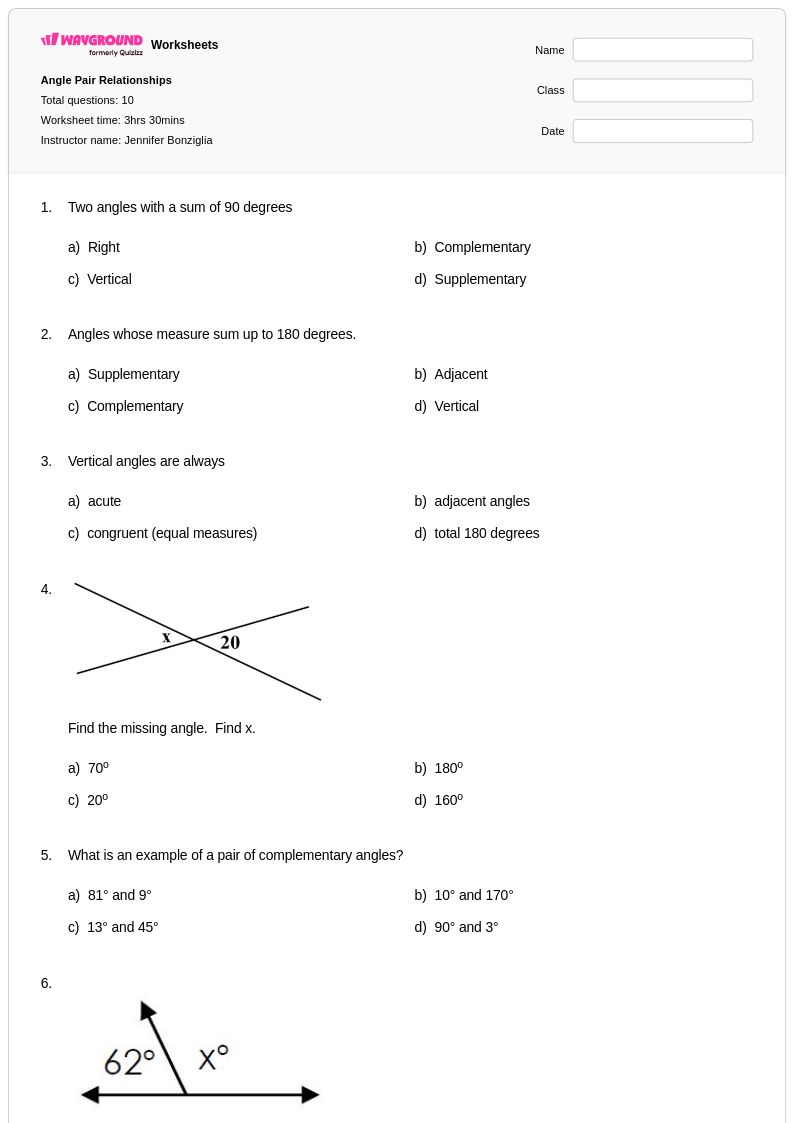
10 Q
10th
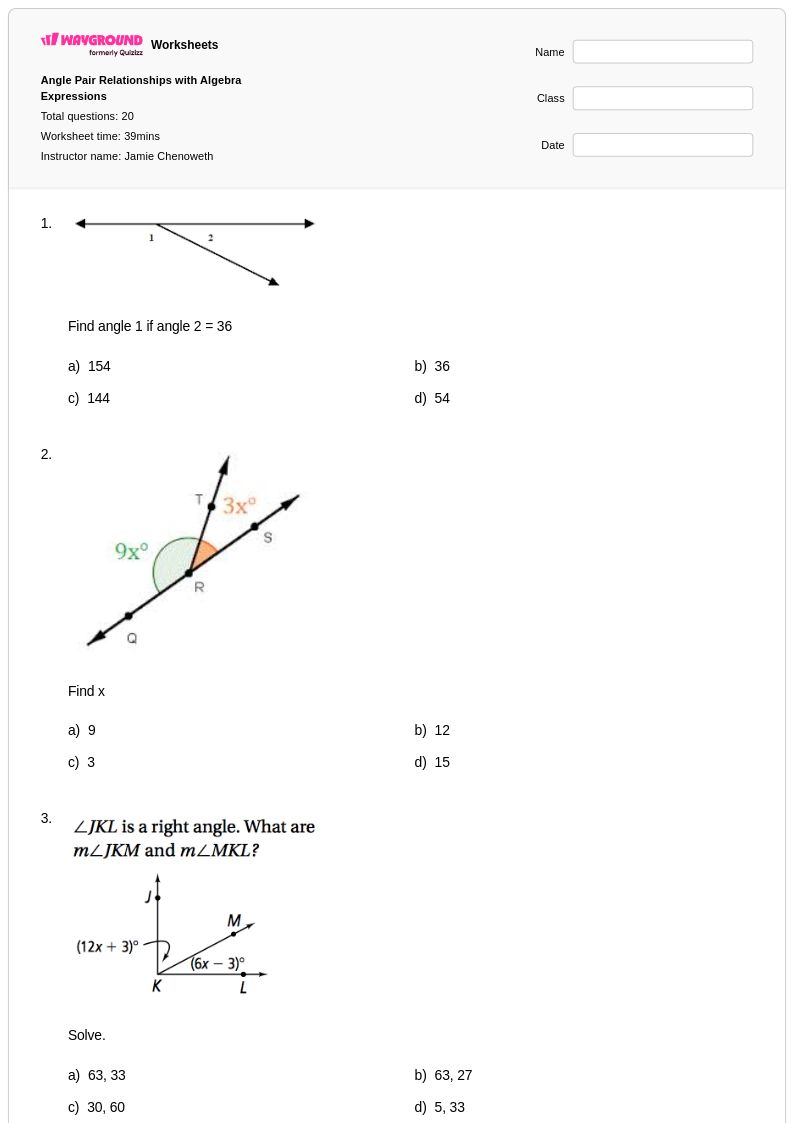
20 Q
9th - 12th
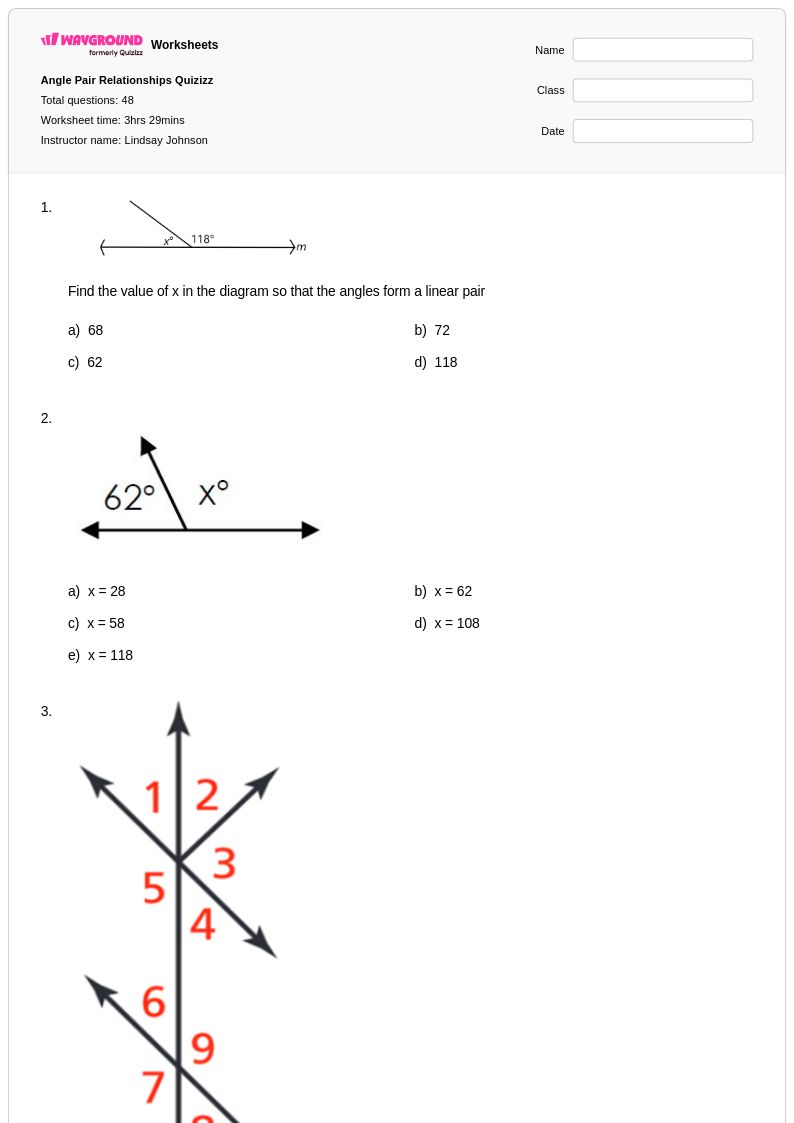
48 Q
10th
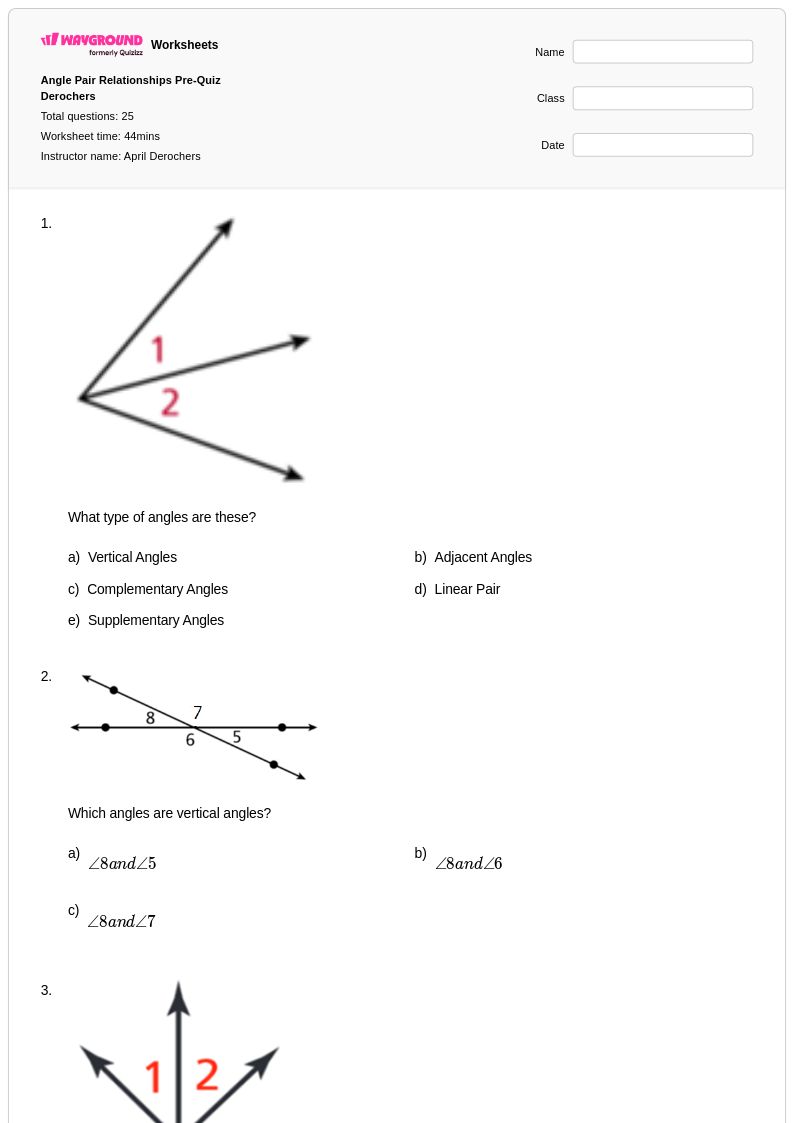
25 Q
10th
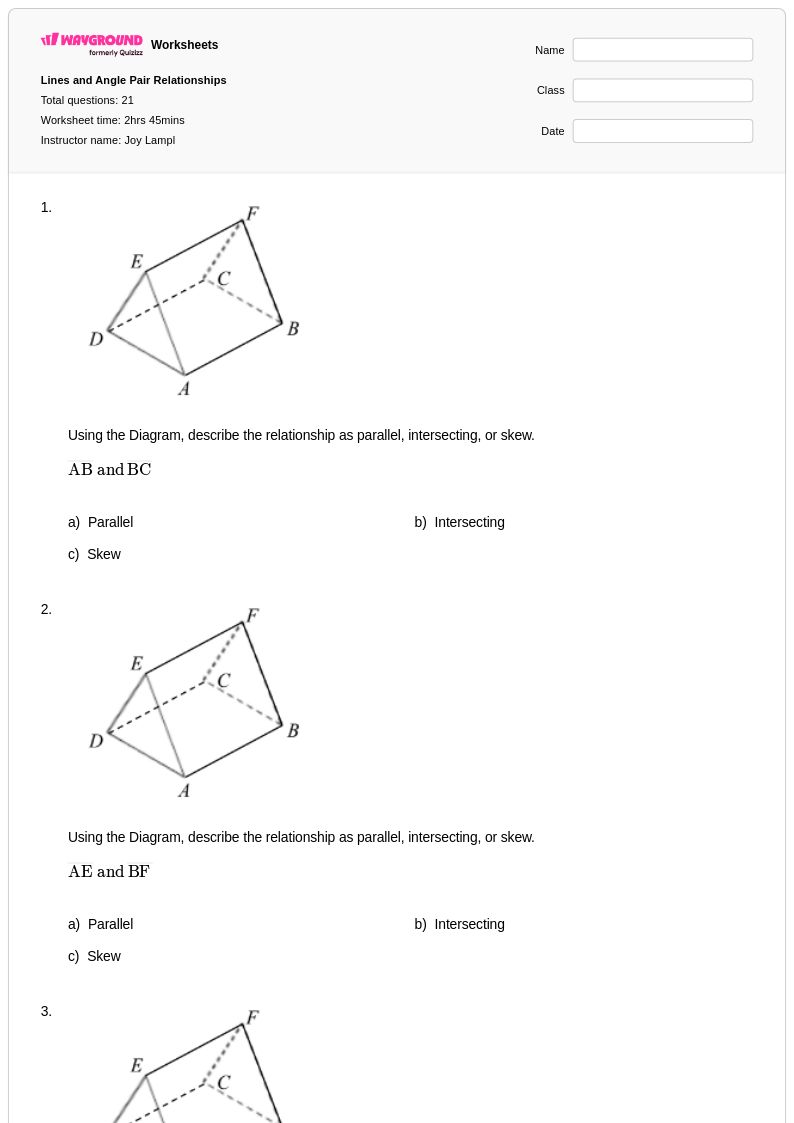
21 Q
9th - 10th
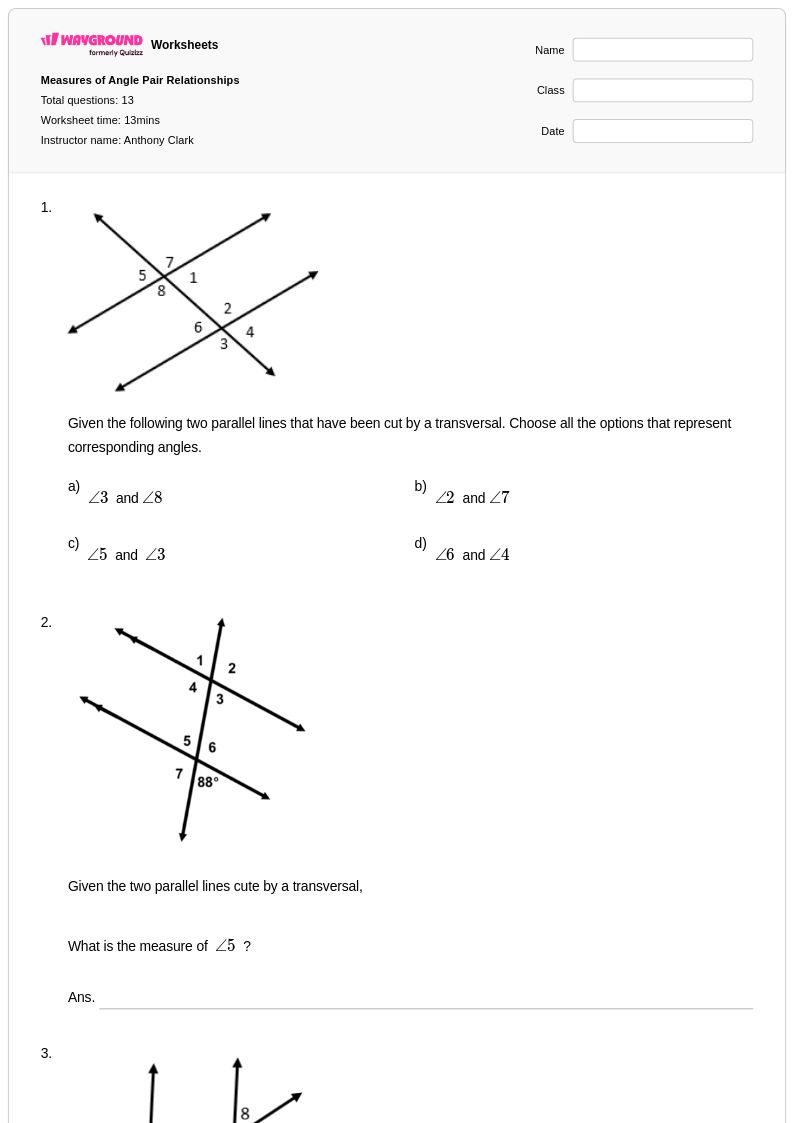
13 Q
8th - Uni
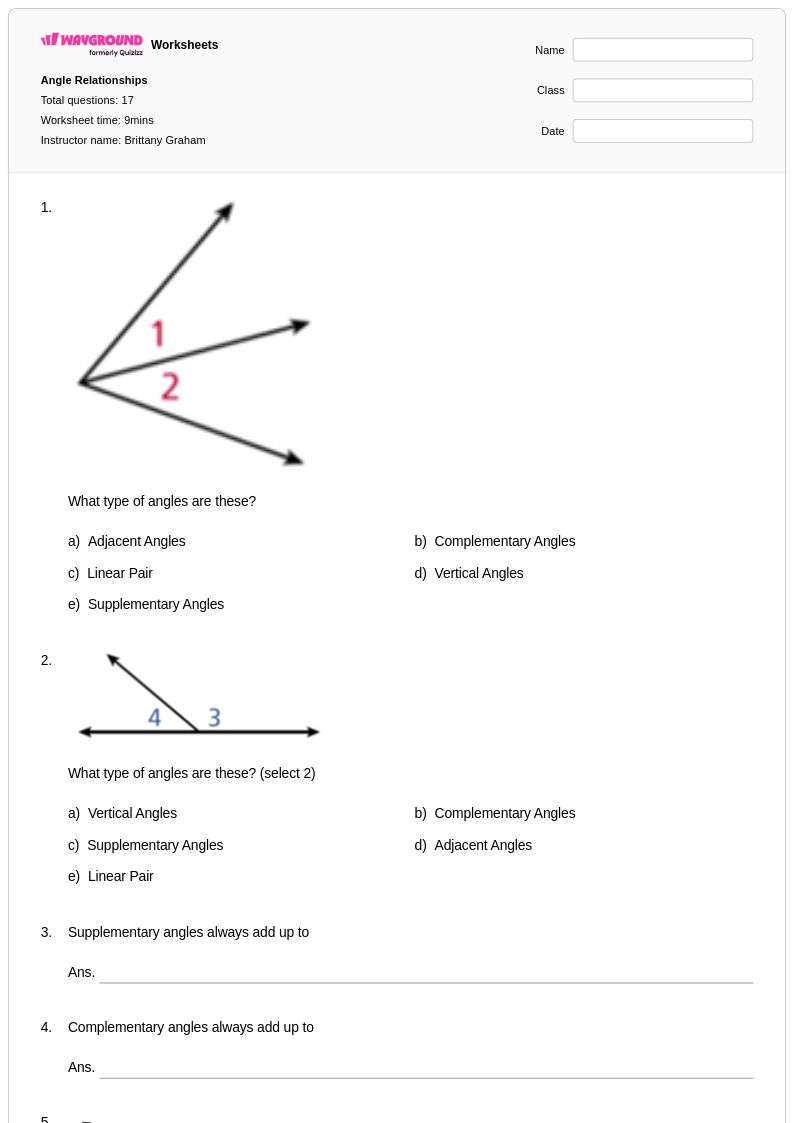
17 Q
9th - 10th
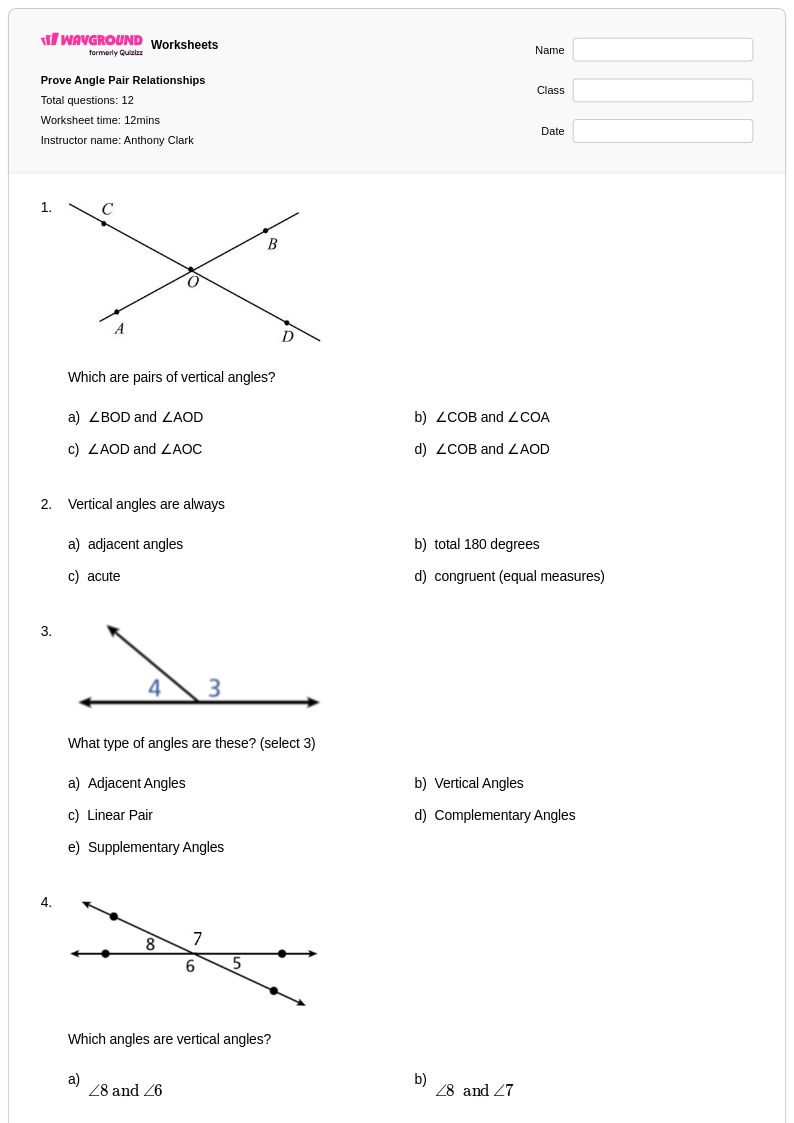
12 Q
10th - Uni
11 Q
9th - 10th
20 Q
10th - Uni
10 Q
9th - 12th
10 Q
9th - 10th
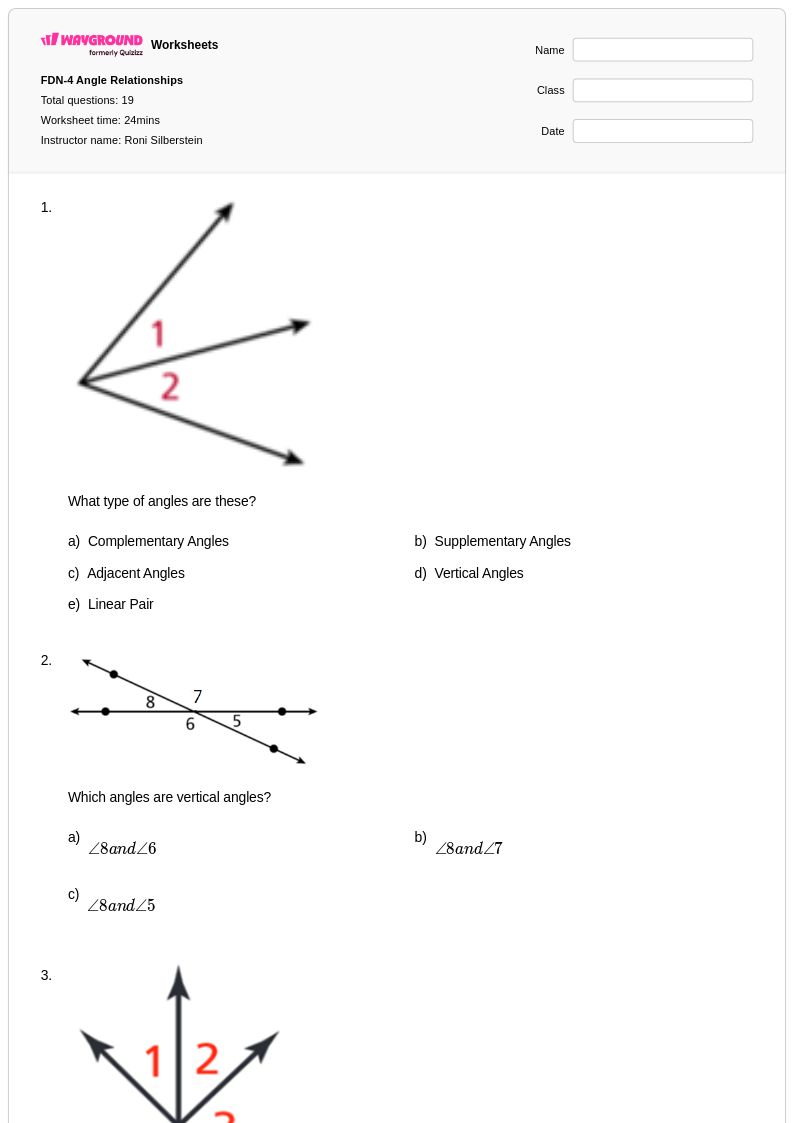
19 Q
10th
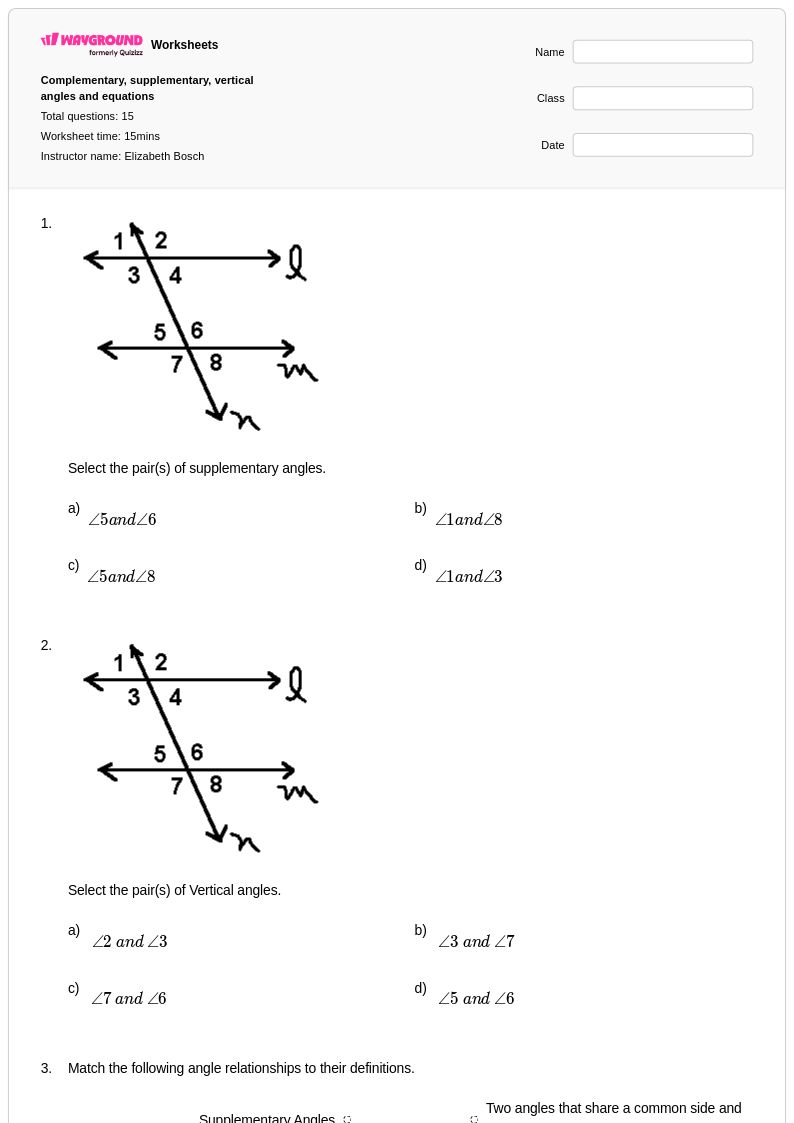
15 Q
7th - Uni
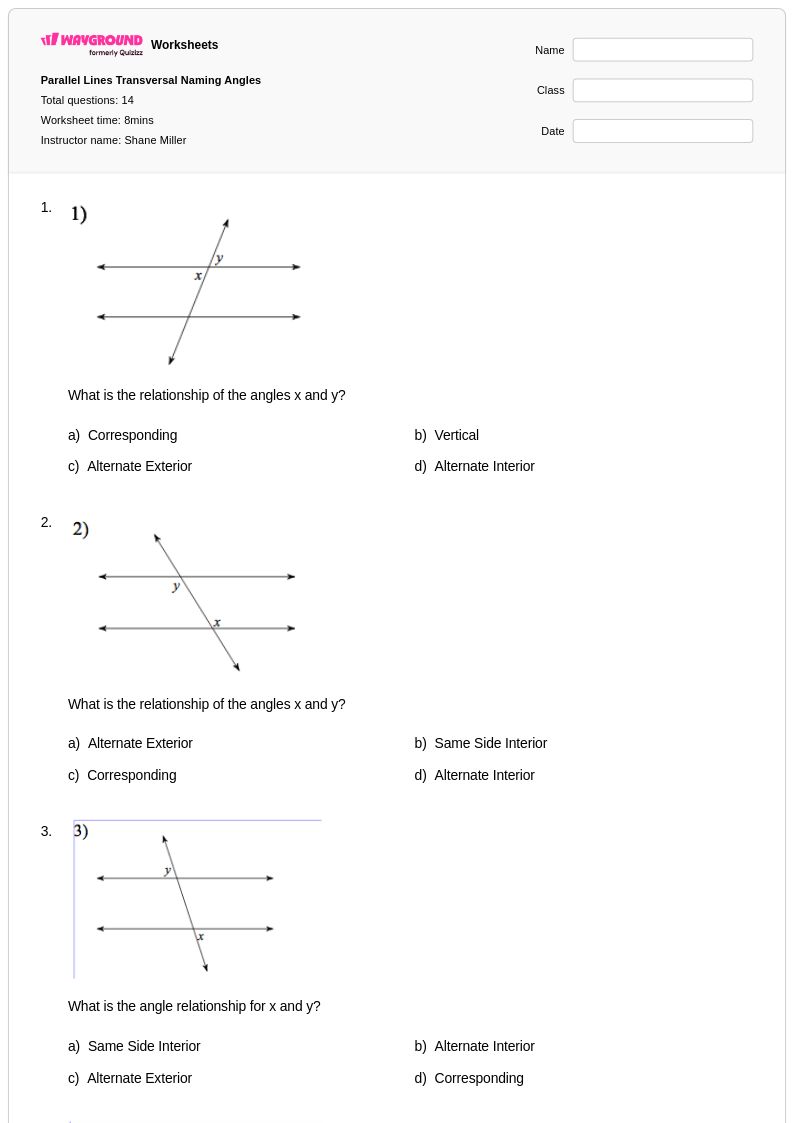
14 Q
7th - 10th
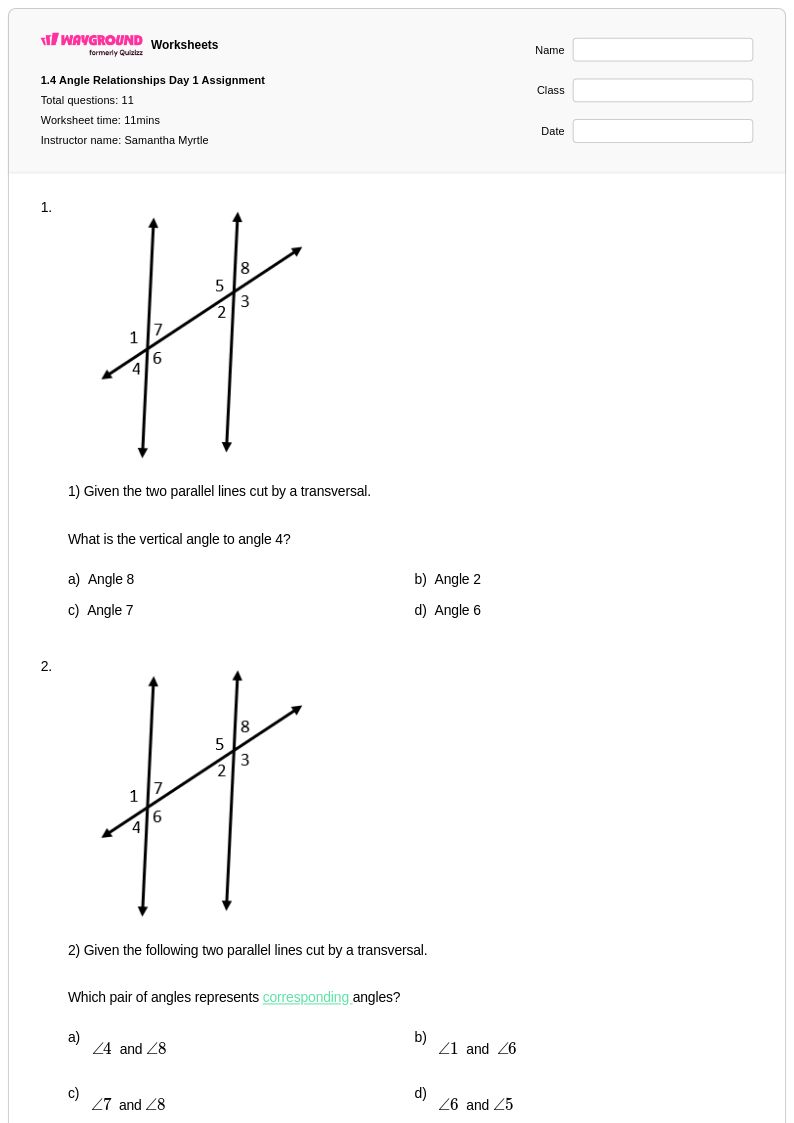
11 Q
9th - 12th
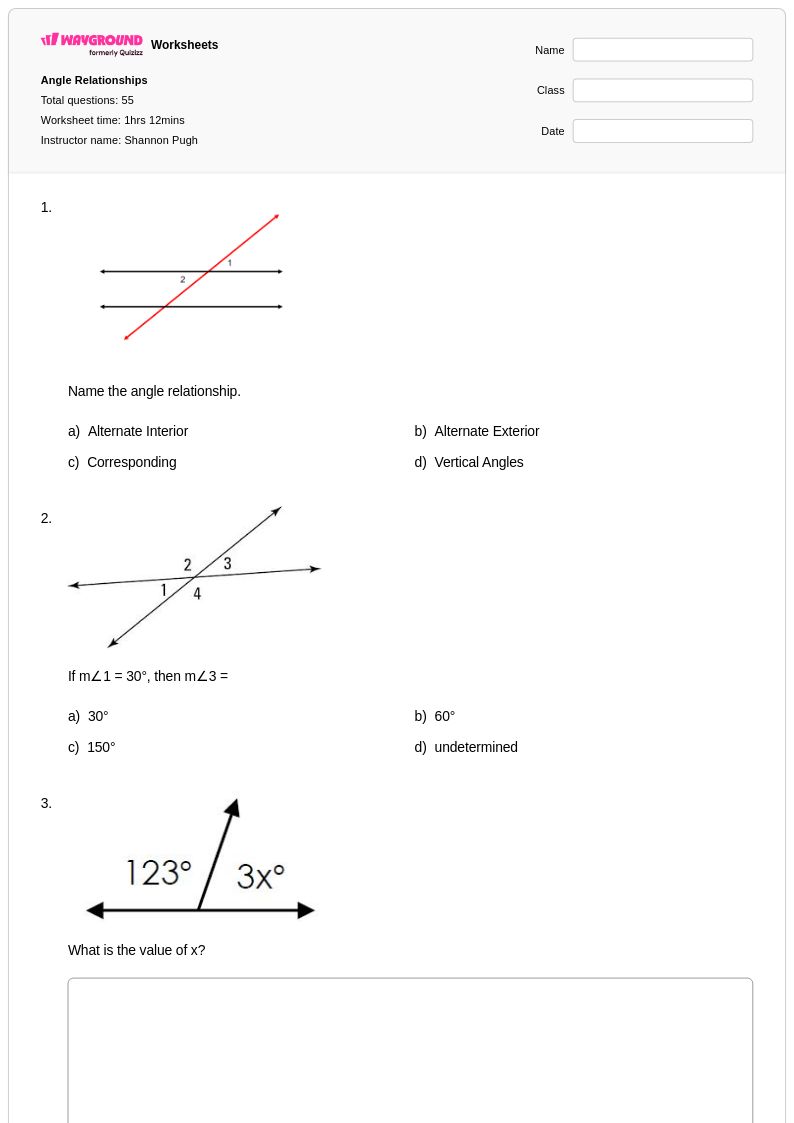
55 Q
9th - 12th
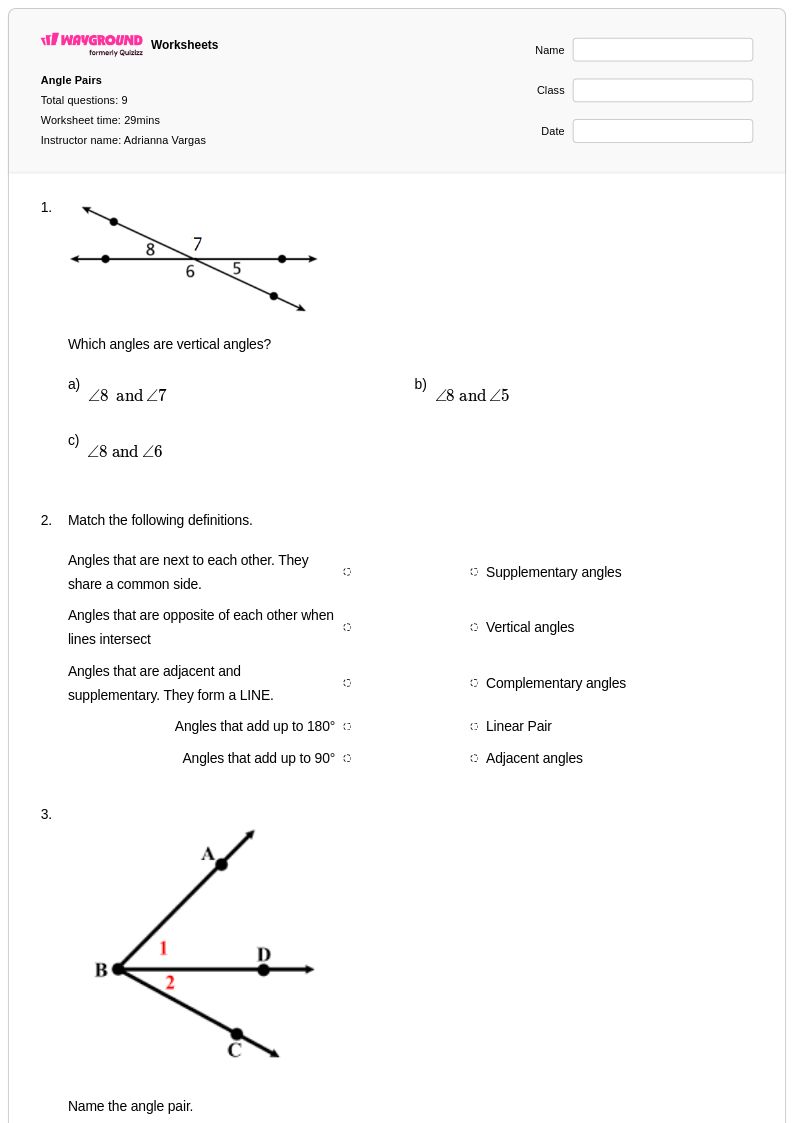
9 Q
10th
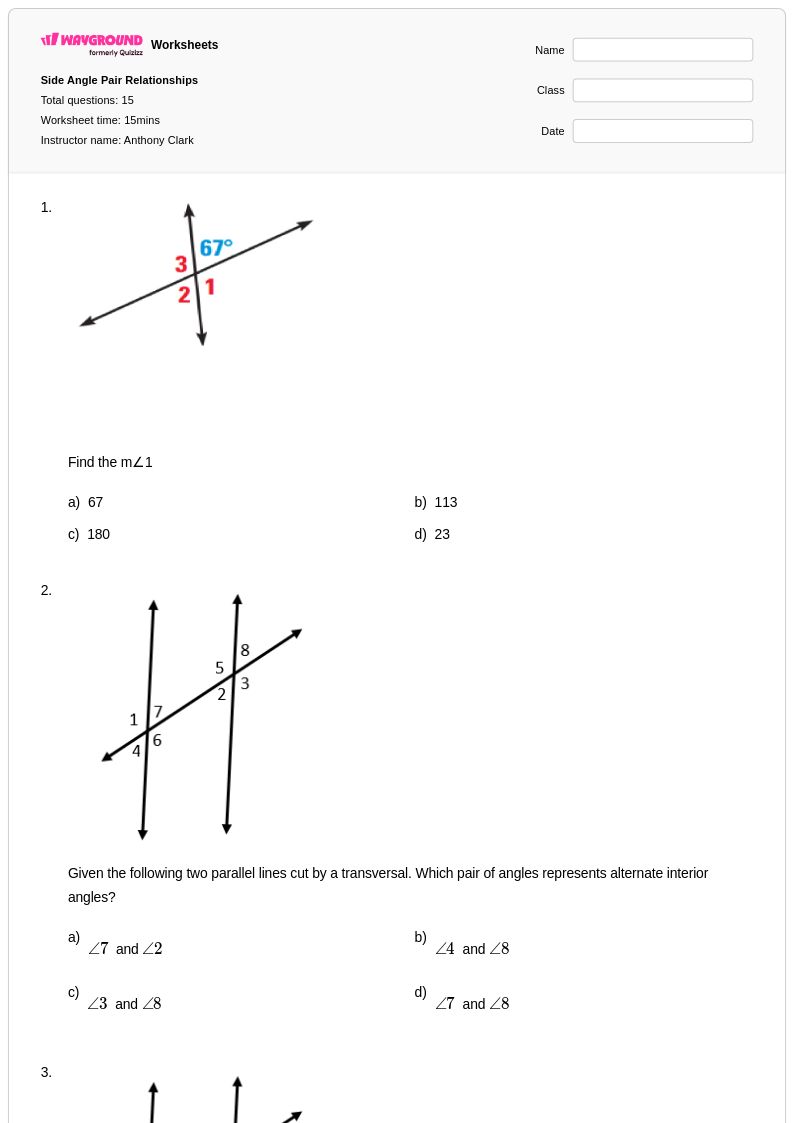
15 Q
10th - Uni
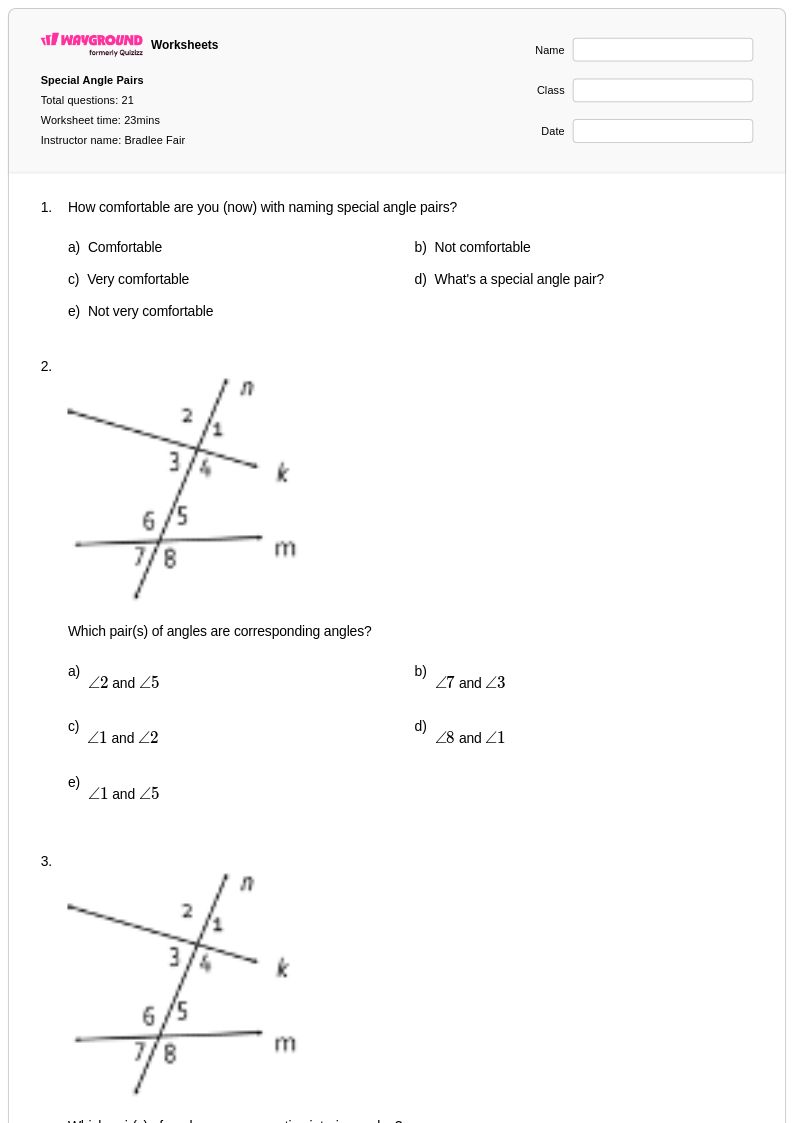
21 Q
9th - 12th
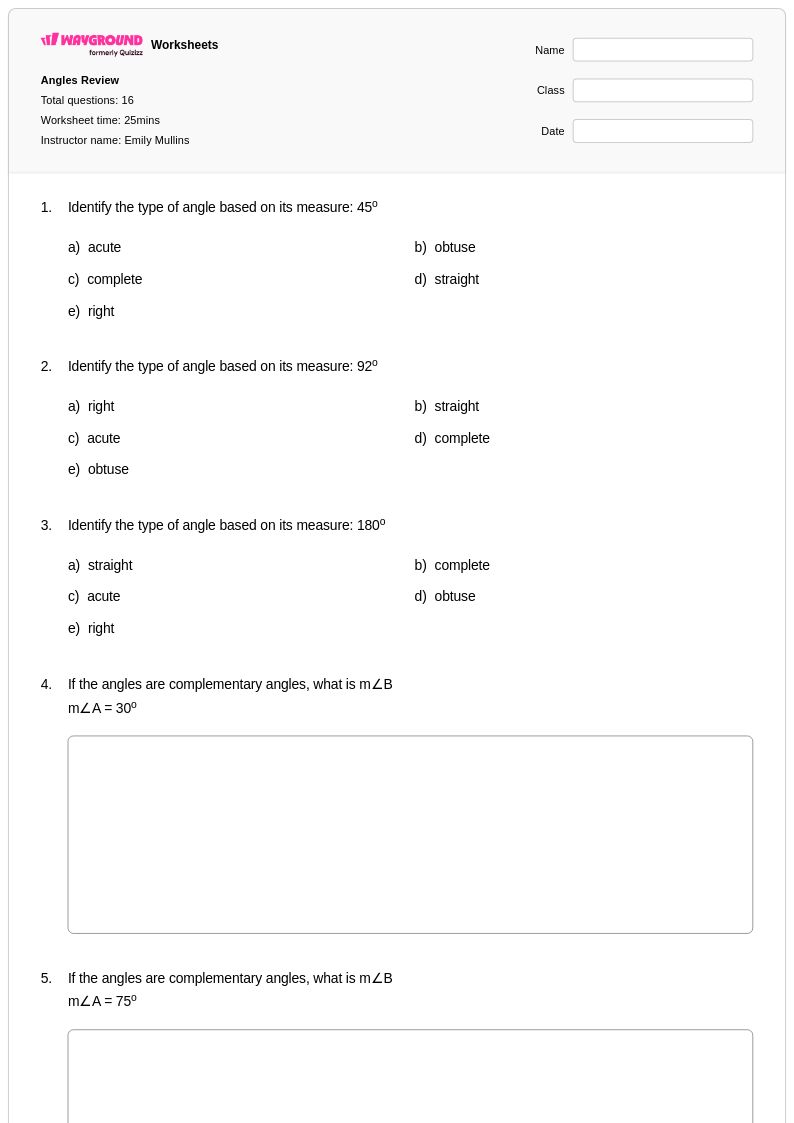
16 Q
10th
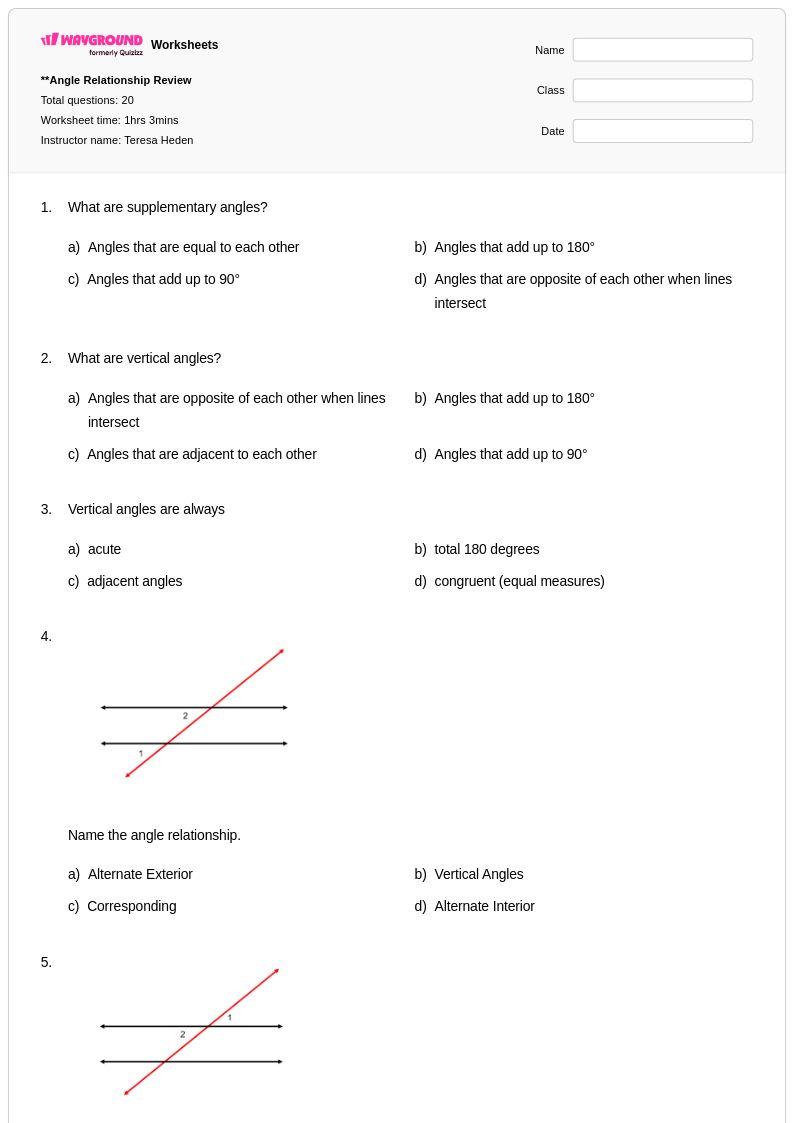
25 Q
10th
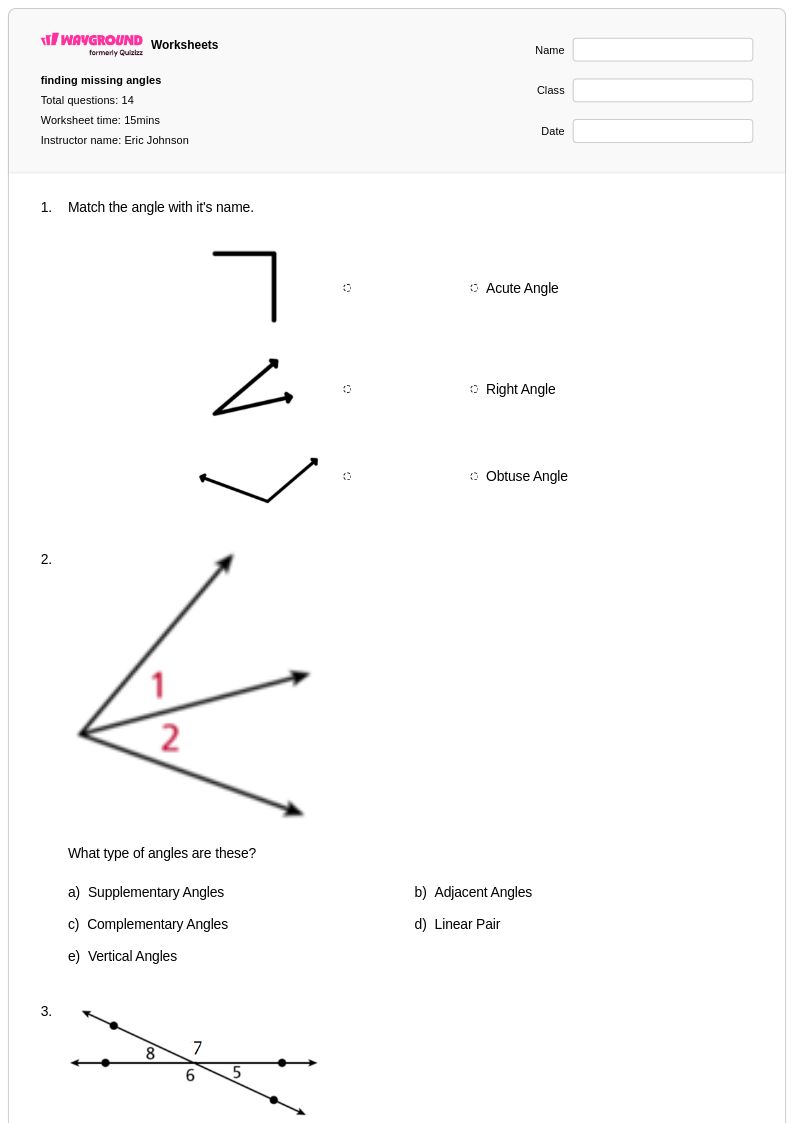
14 Q
8th - Uni
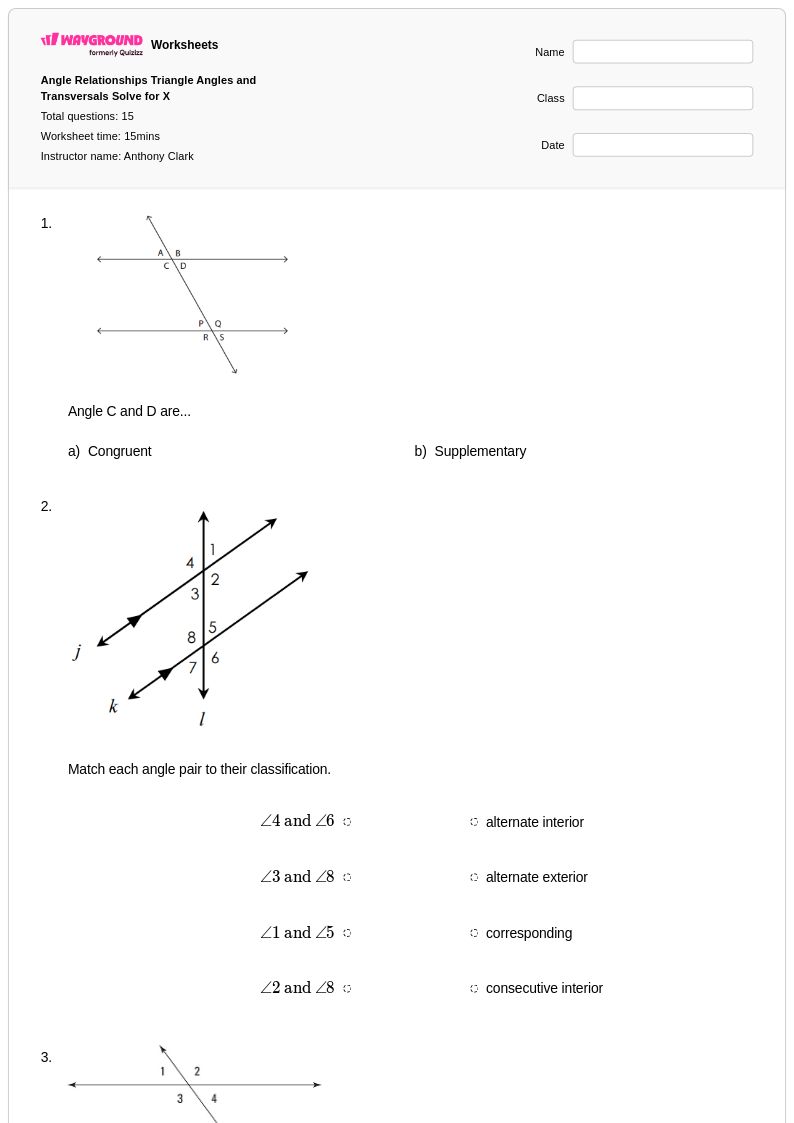
15 Q
8th - Uni
Explore Angle Pair Relationships Worksheets by Grades
Explore Other Subject Worksheets for grade 10
Explore printable Angle Pair Relationships worksheets for Grade 10
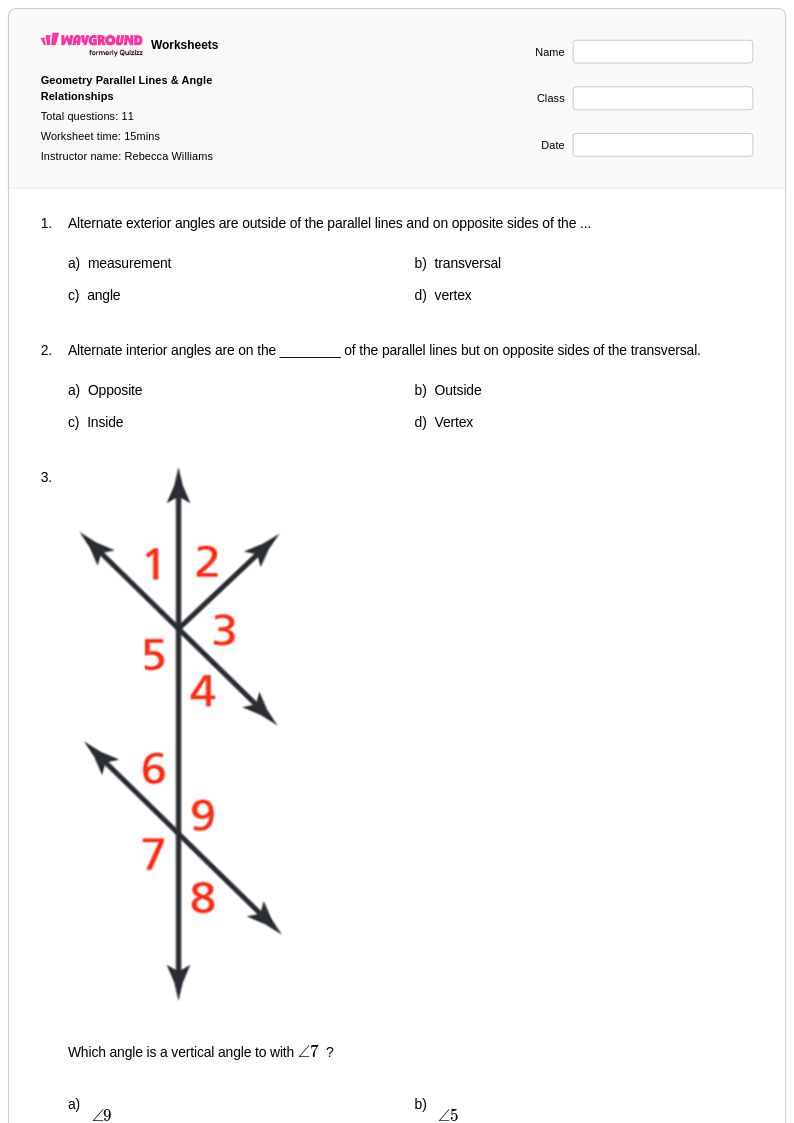
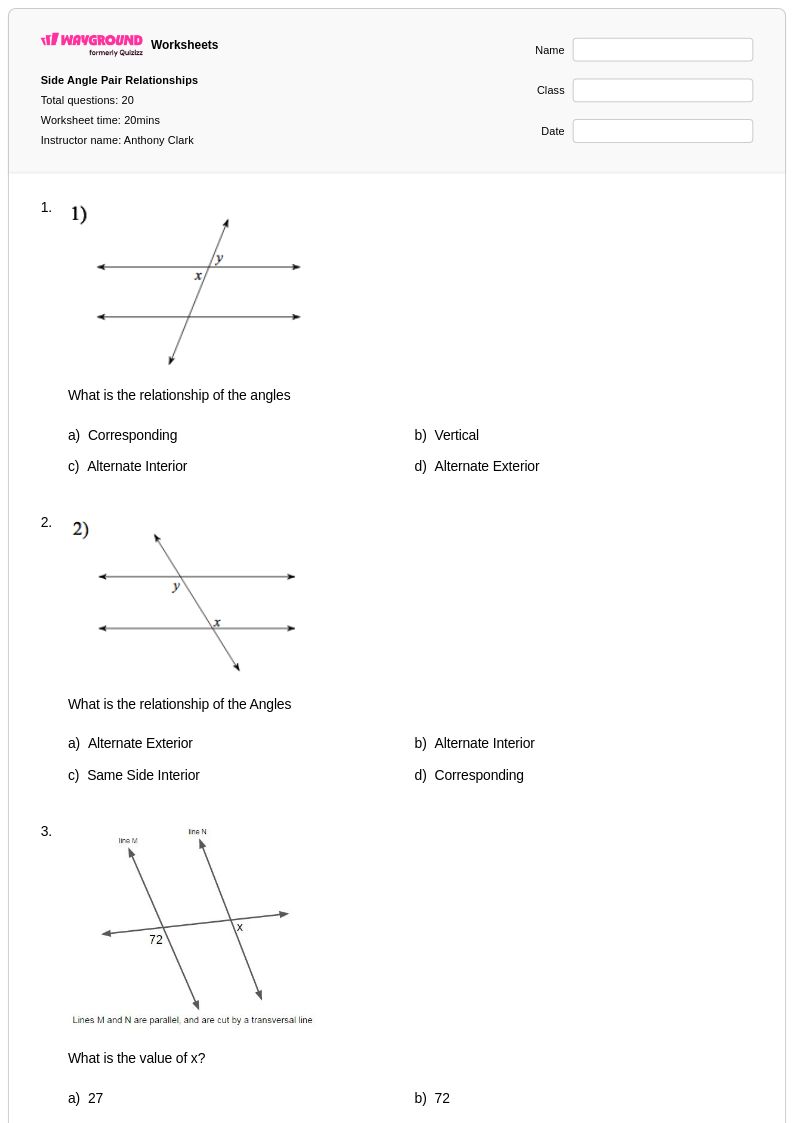
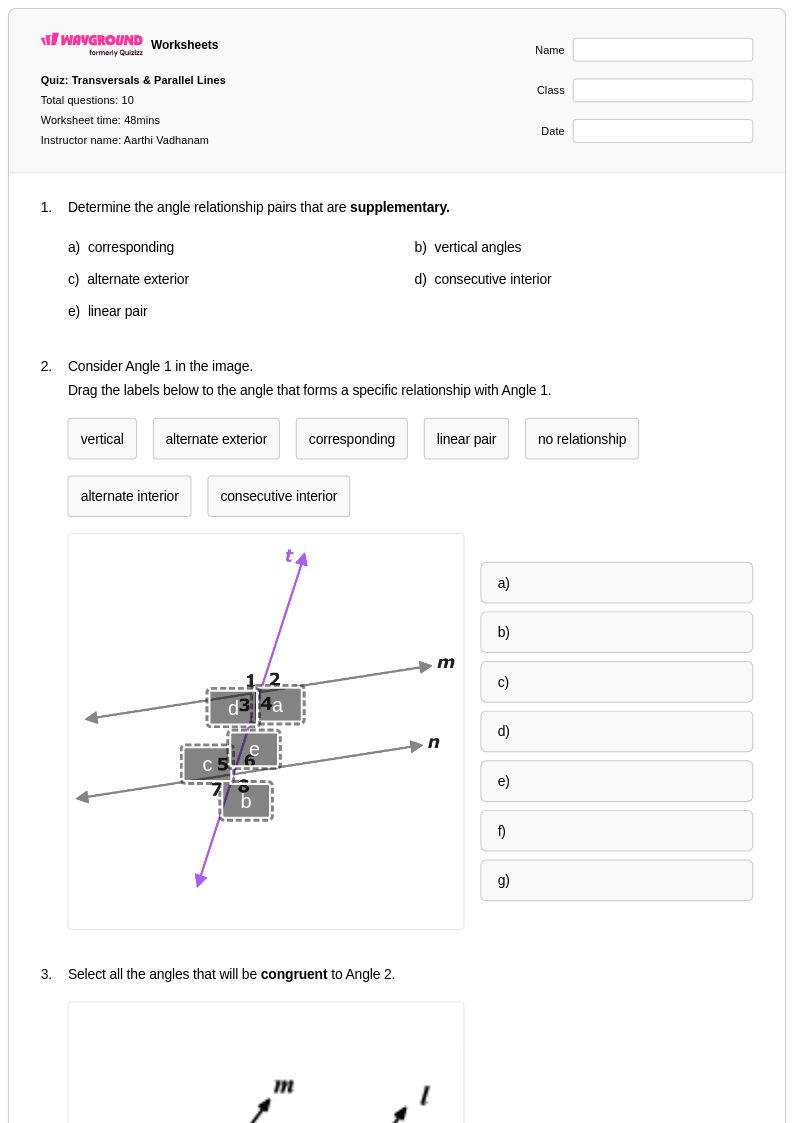
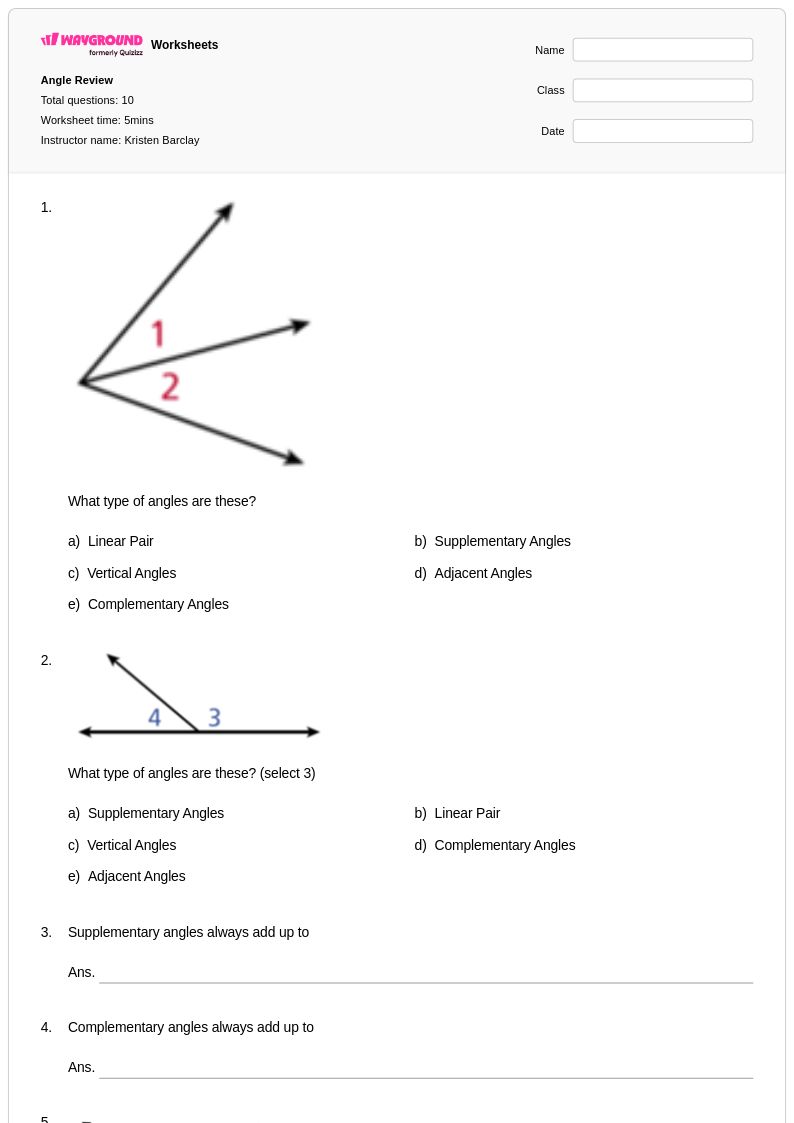
Angle pair relationships form a fundamental cornerstone of Grade 10 geometry, and Wayground's comprehensive worksheet collection provides students with essential practice in identifying and working with complementary angles, supplementary angles, vertical angles, and linear pairs. These expertly crafted worksheets strengthen students' ability to recognize geometric patterns, apply angle theorems, and solve complex problems involving multiple angle relationships within various geometric configurations. Each worksheet includes detailed answer keys and step-by-step solutions, making them valuable resources for independent study and homework assignments. Available as free printables in convenient PDF format, these practice problems progress from basic angle identification to advanced applications involving algebraic expressions and proof-writing skills.
Wayground's extensive mathematics resource library, built from millions of teacher-created materials, offers educators powerful search and filtering capabilities to locate precisely the right angle pair relationship worksheets for their Grade 10 geometry curriculum. Teachers can easily customize these resources to match their students' skill levels, whether providing remediation for struggling learners or enrichment challenges for advanced students. The platform's standards-aligned content ensures that worksheets address specific learning objectives, while flexible formatting options allow seamless integration into both digital classrooms and traditional printable assignments. These differentiation tools enable educators to efficiently plan targeted instruction, assess student understanding, and provide focused skill practice that builds confidence in geometric reasoning and mathematical problem-solving abilities.
FAQs
How should I teach angle pair relationships in Grade 10?
What exercises help tenth graders practice angle pair relationships?
What mistakes do Grade 10 students make with angle pair relationships?
How do I use a Grade 10 angle pair worksheet on Wayground?
How do angle pair relationships support Common Core high school geometry?
How can I differentiate advanced angle relationship worksheets?
What grade do students study angle pair relationships?