Free Printable Animal Adaptations Worksheets for Grade 5
Grade 5 animal adaptations worksheets from Wayground help students explore how animals survive in their environments through engaging printables, practice problems, and comprehensive answer keys.
Explore printable Animal Adaptations worksheets for Grade 5
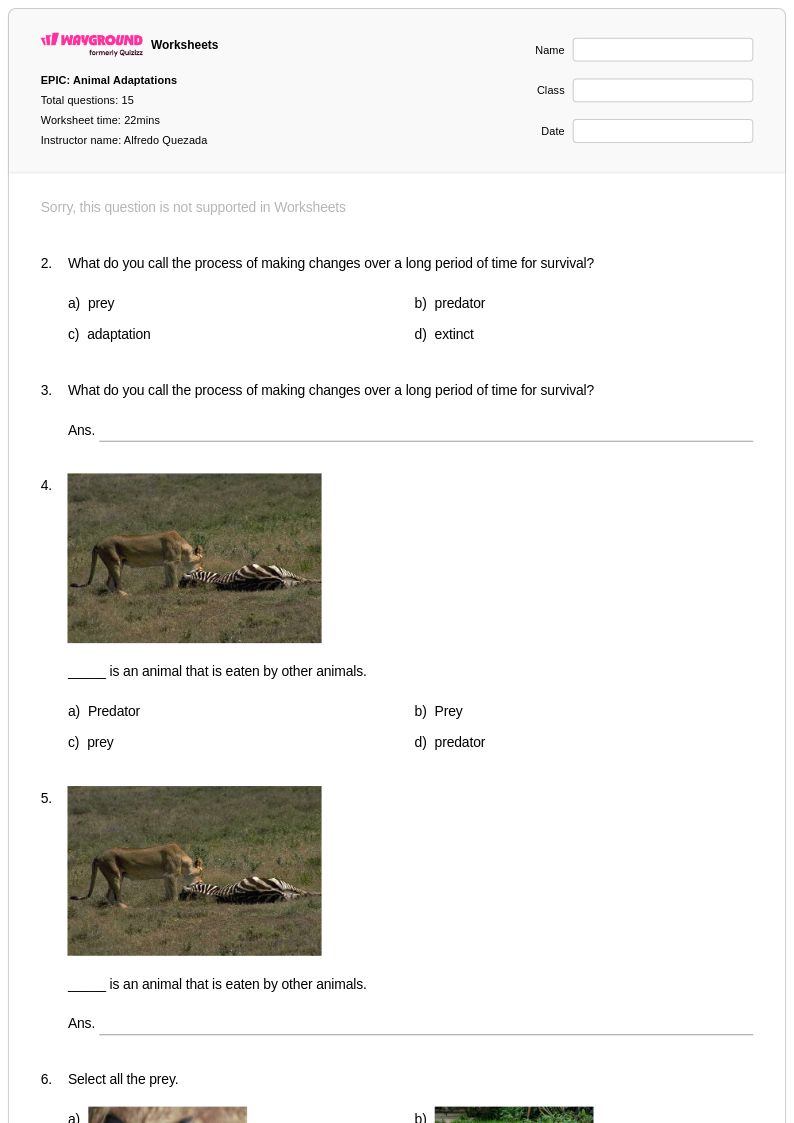
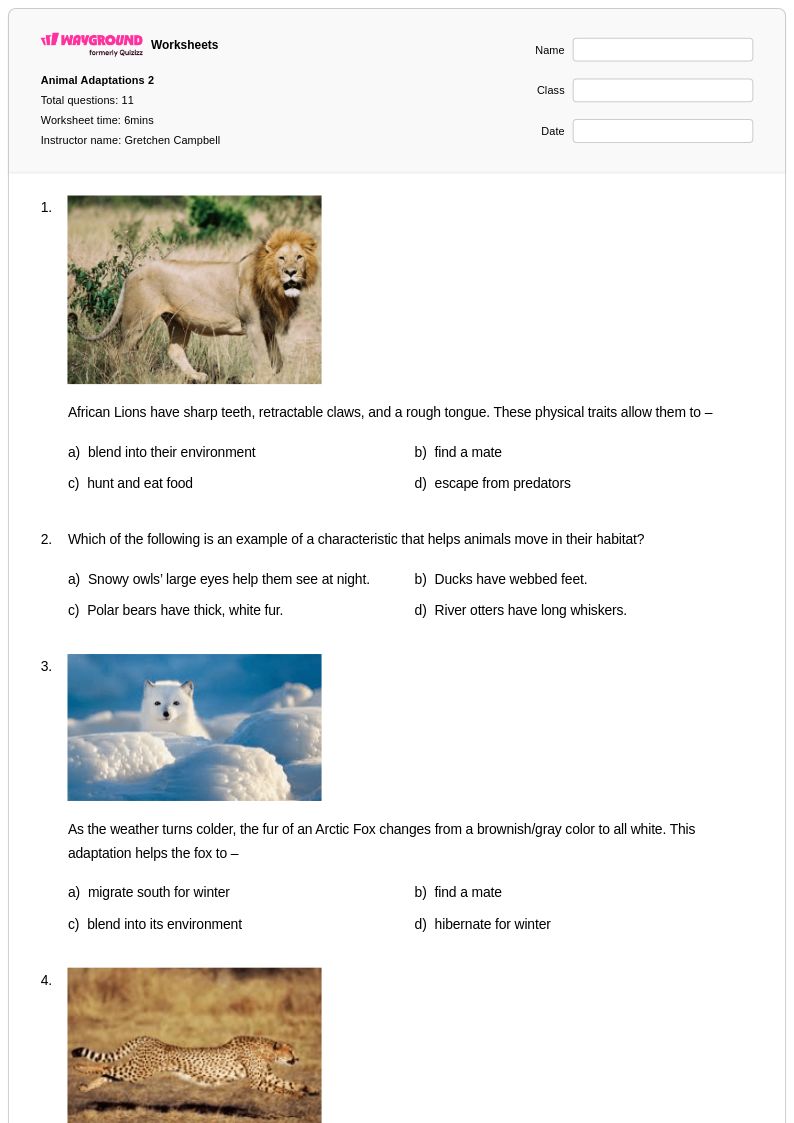
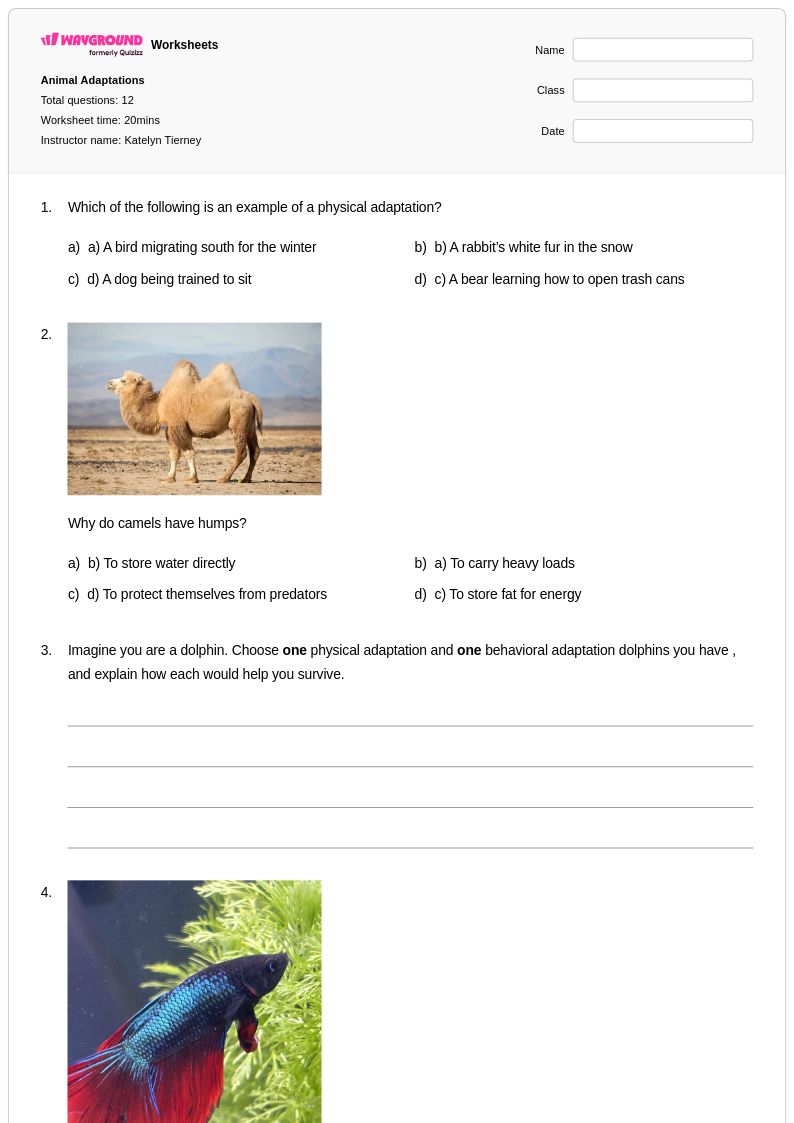
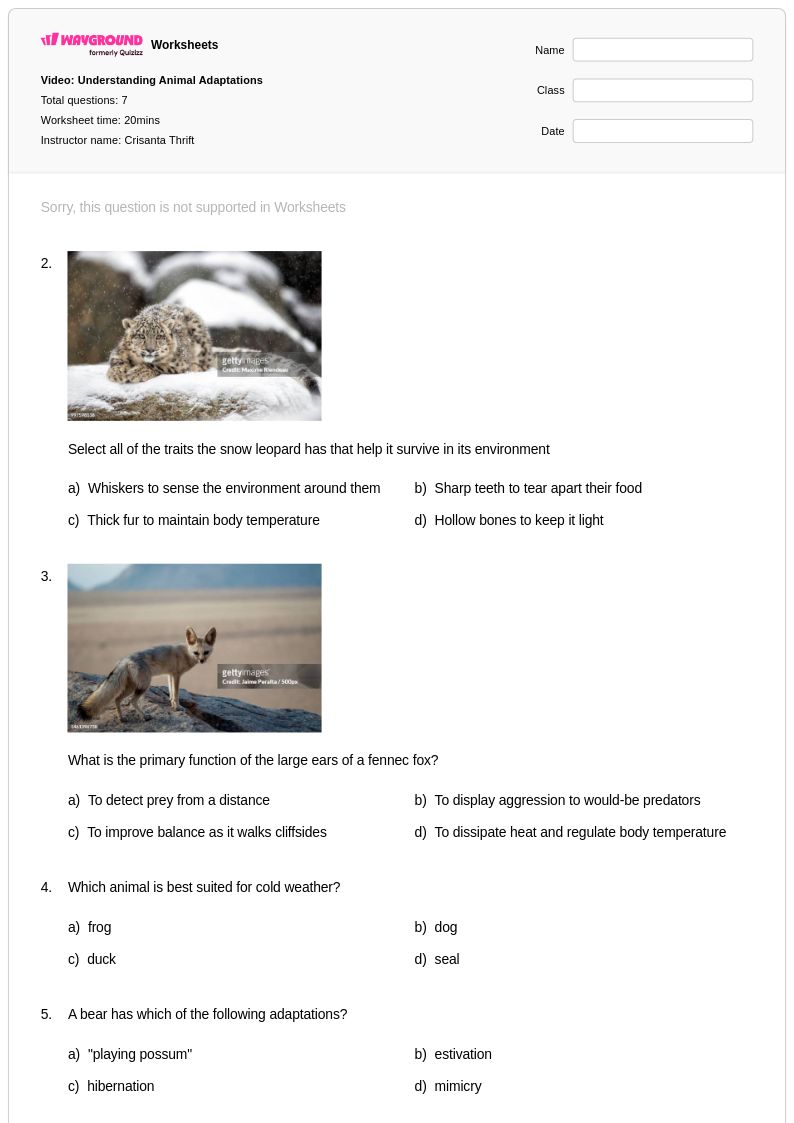
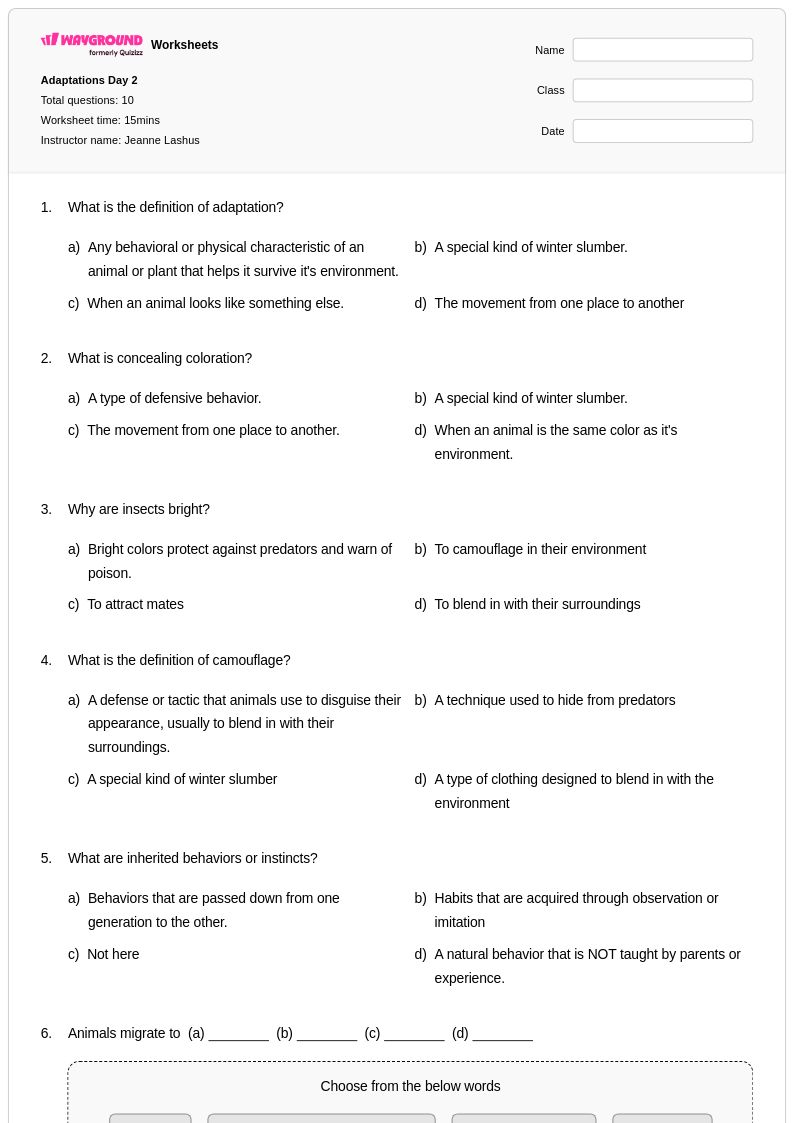
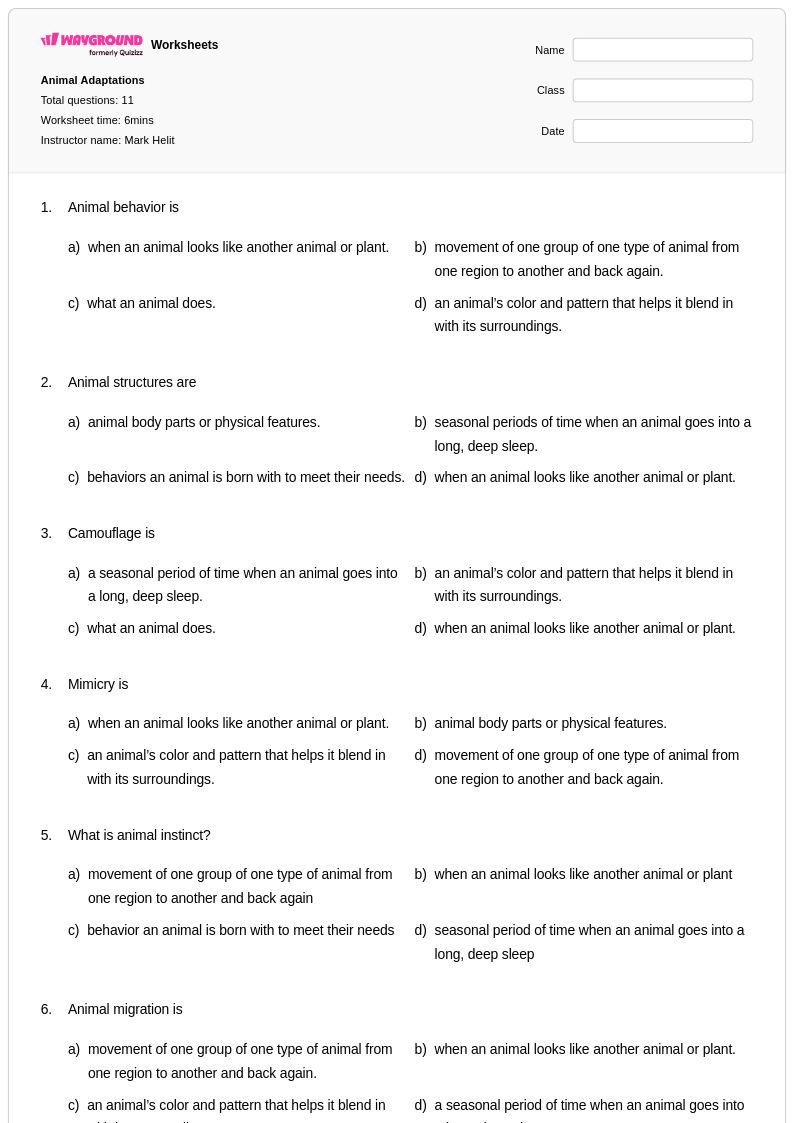
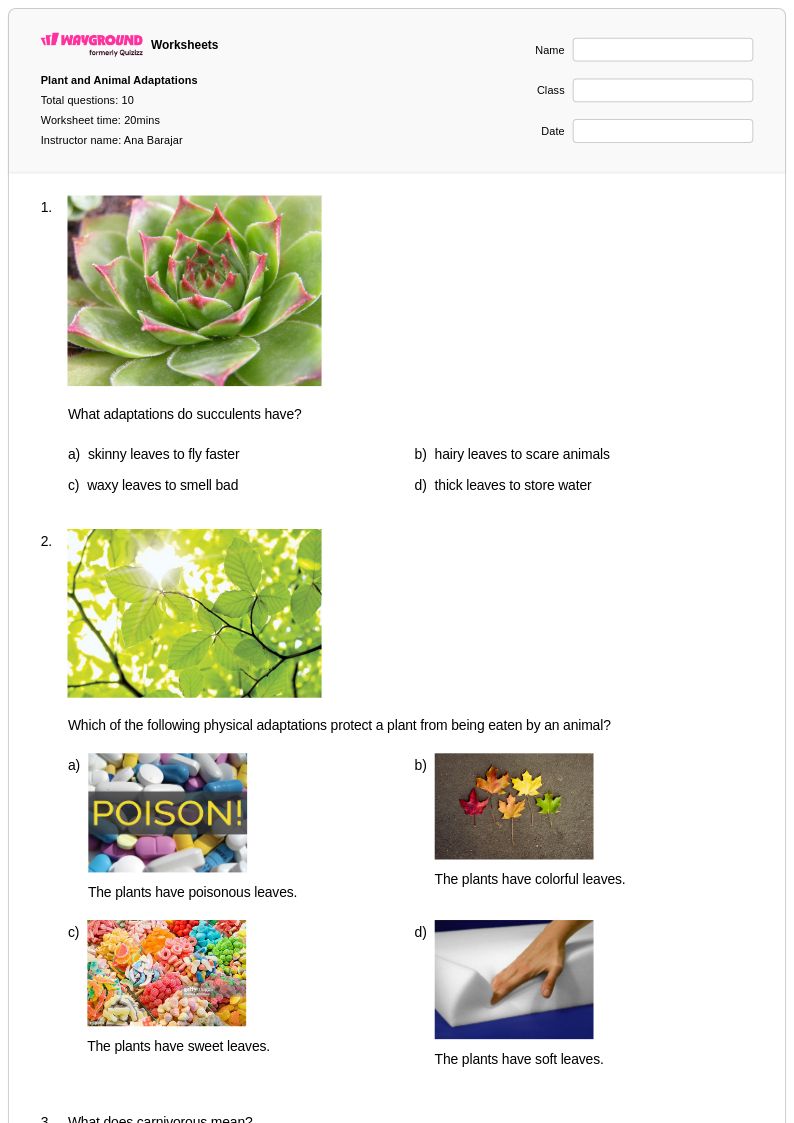
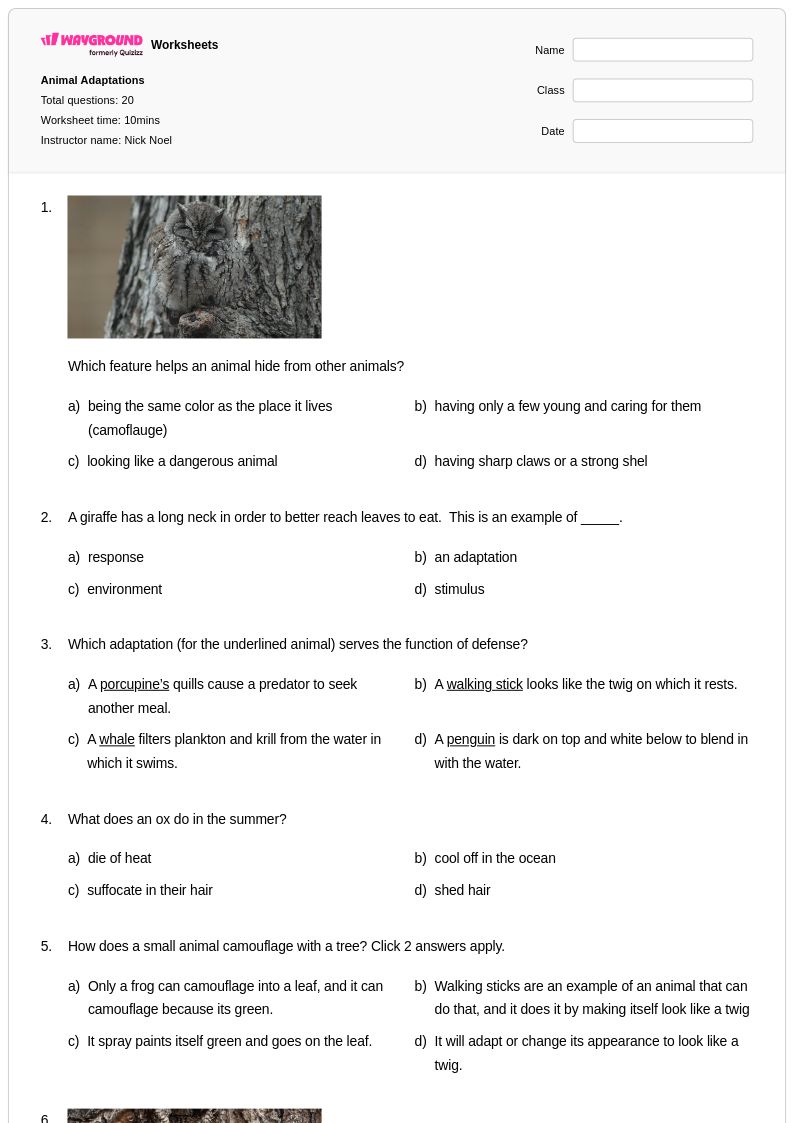
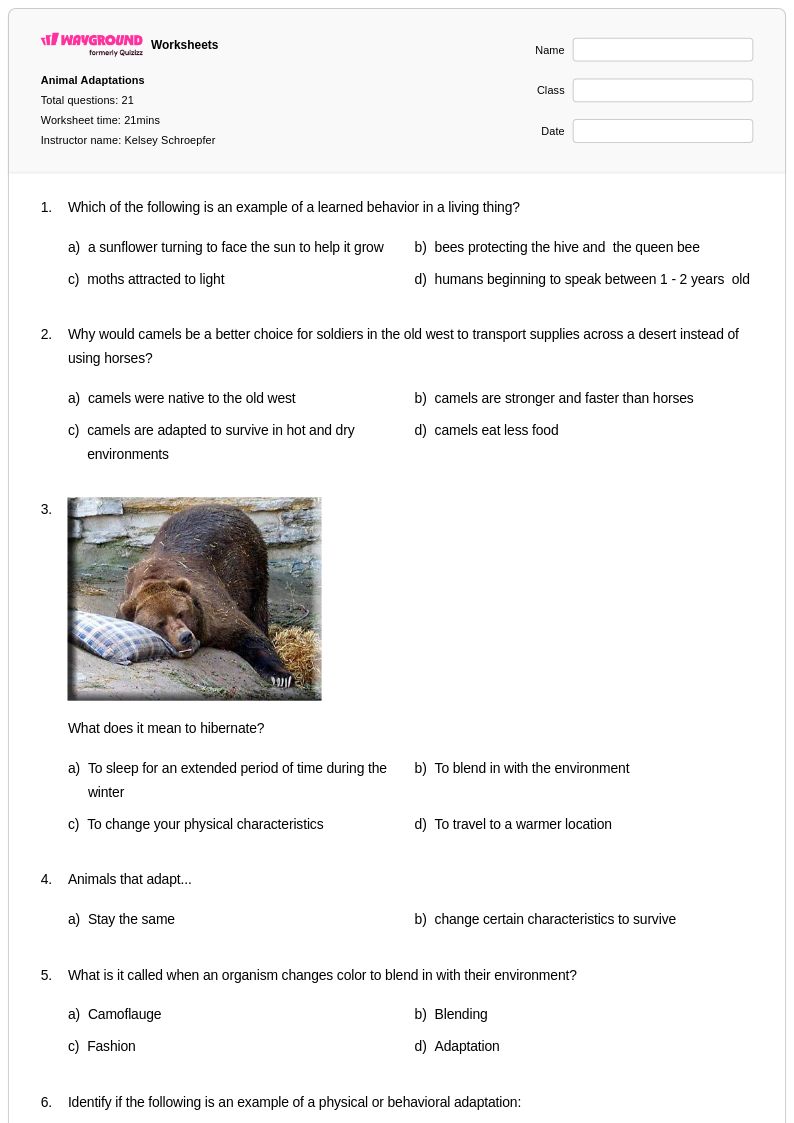
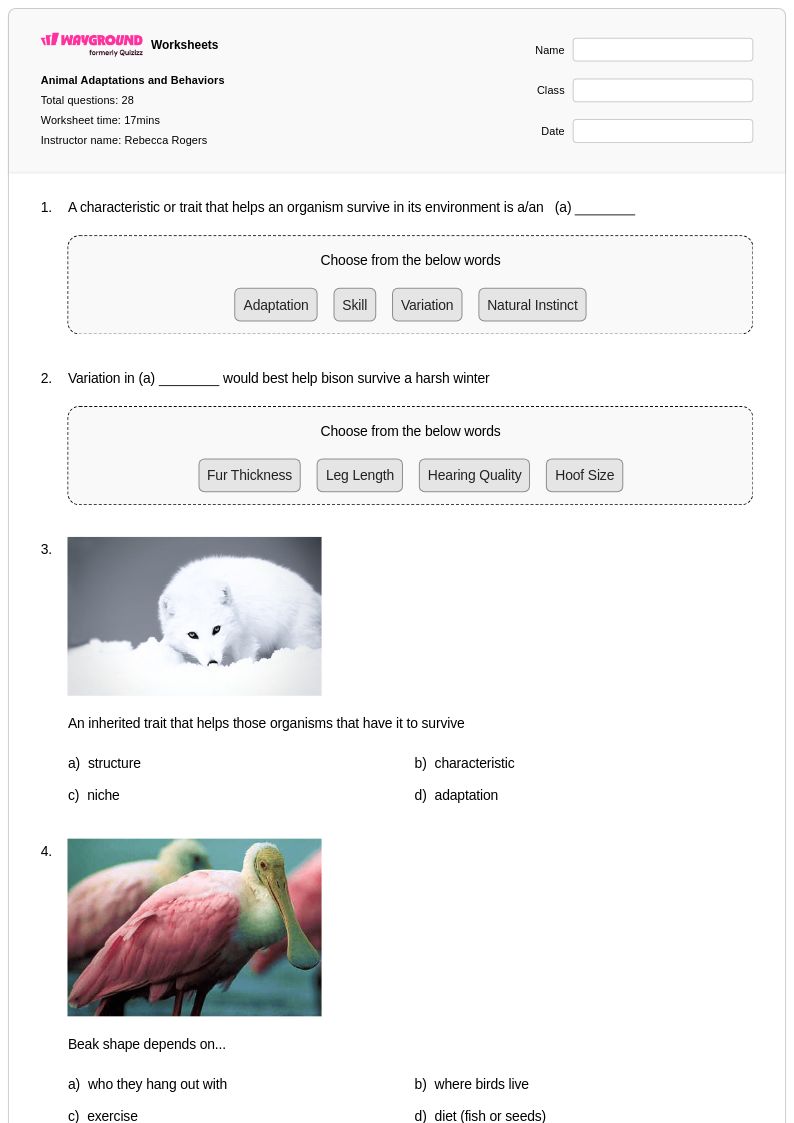
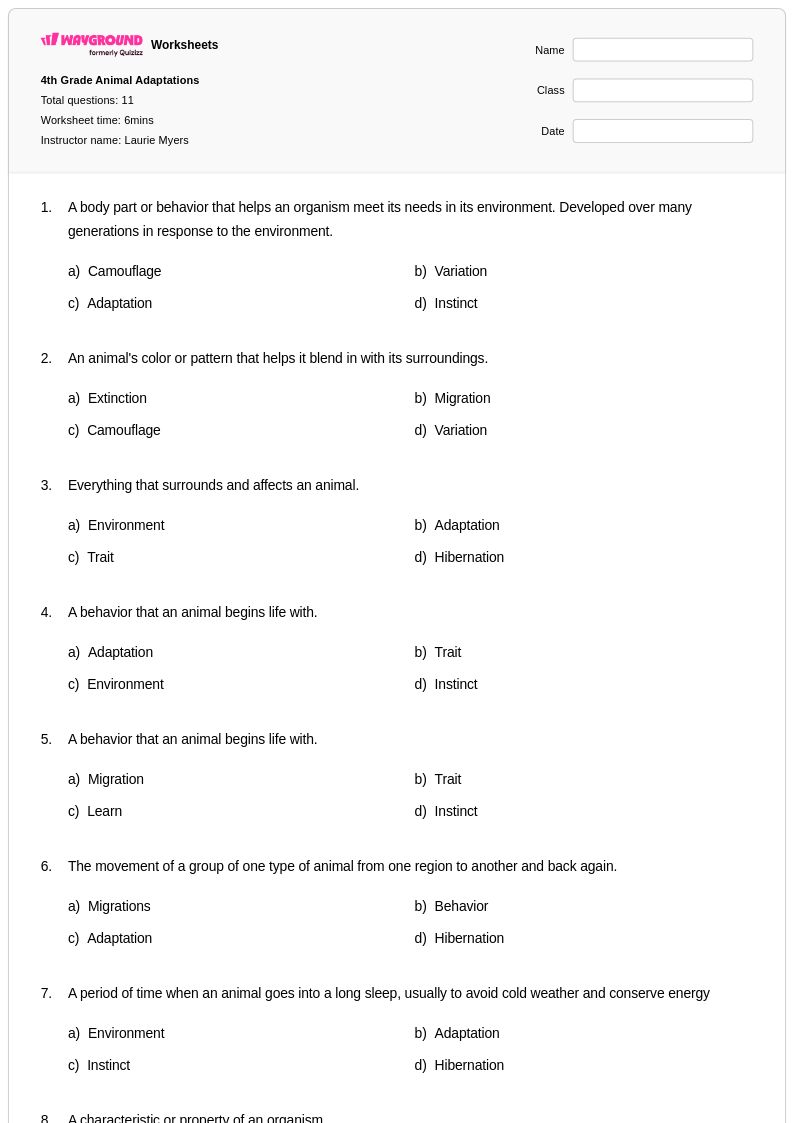
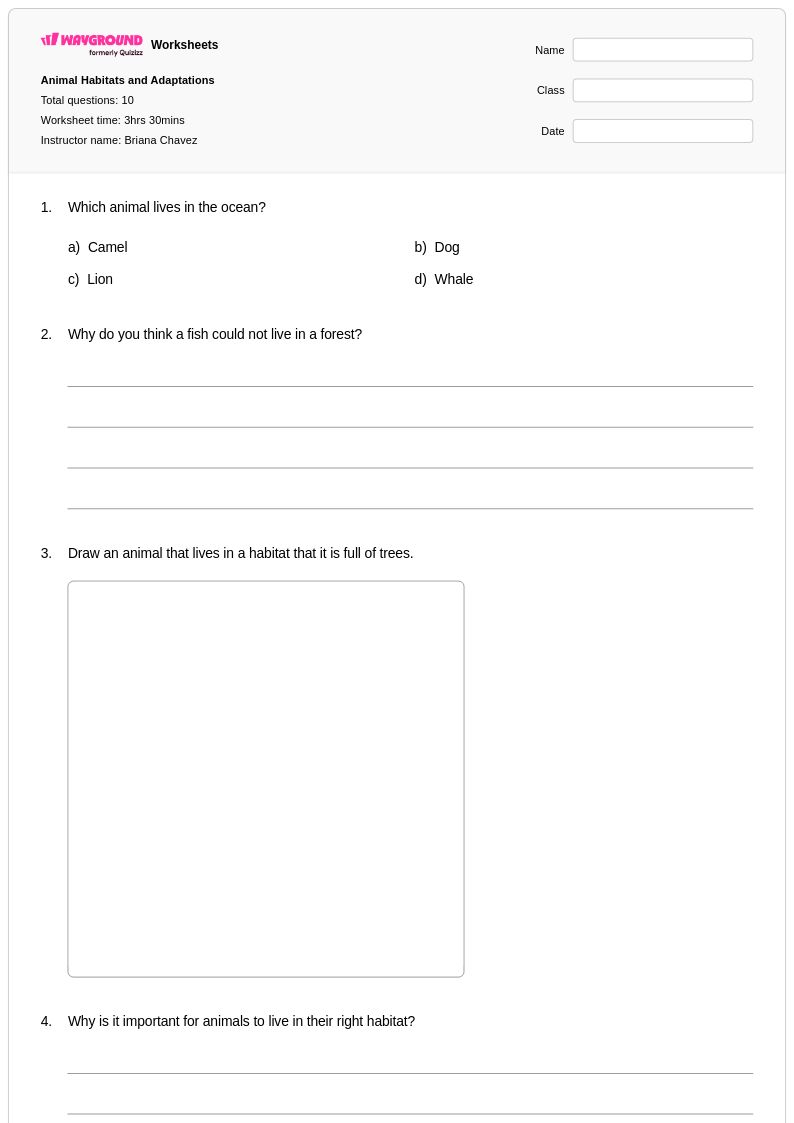
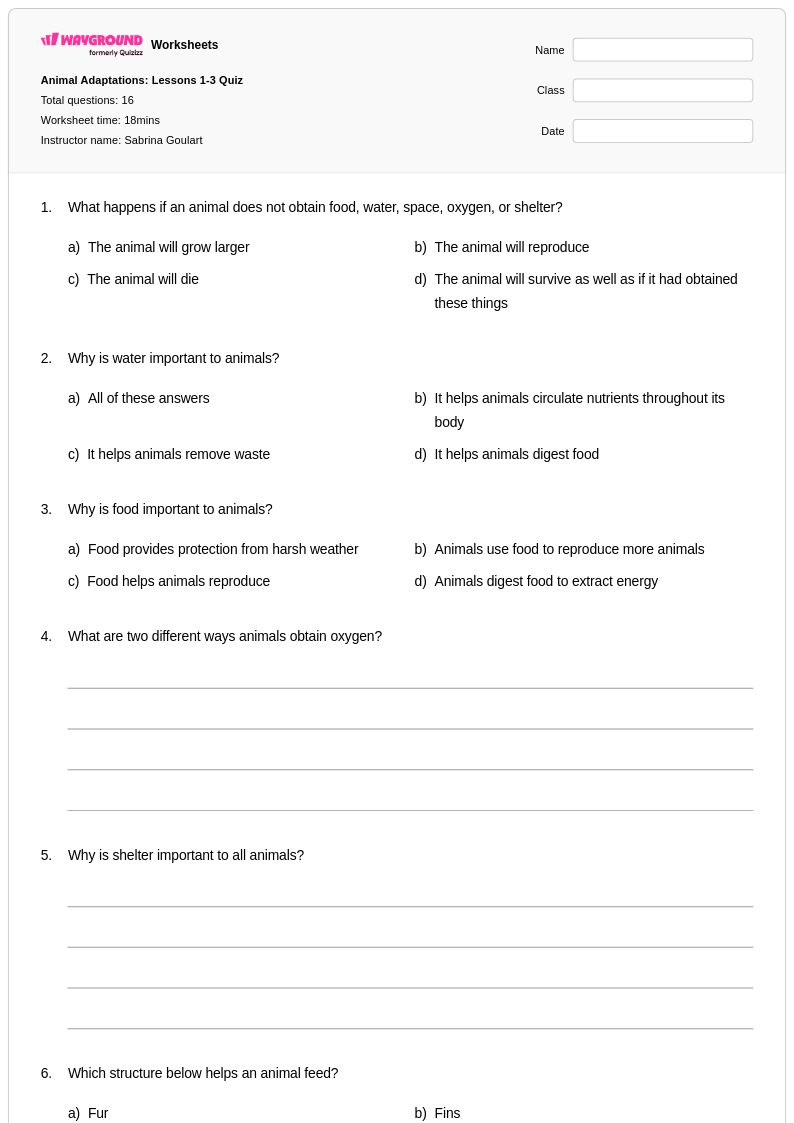
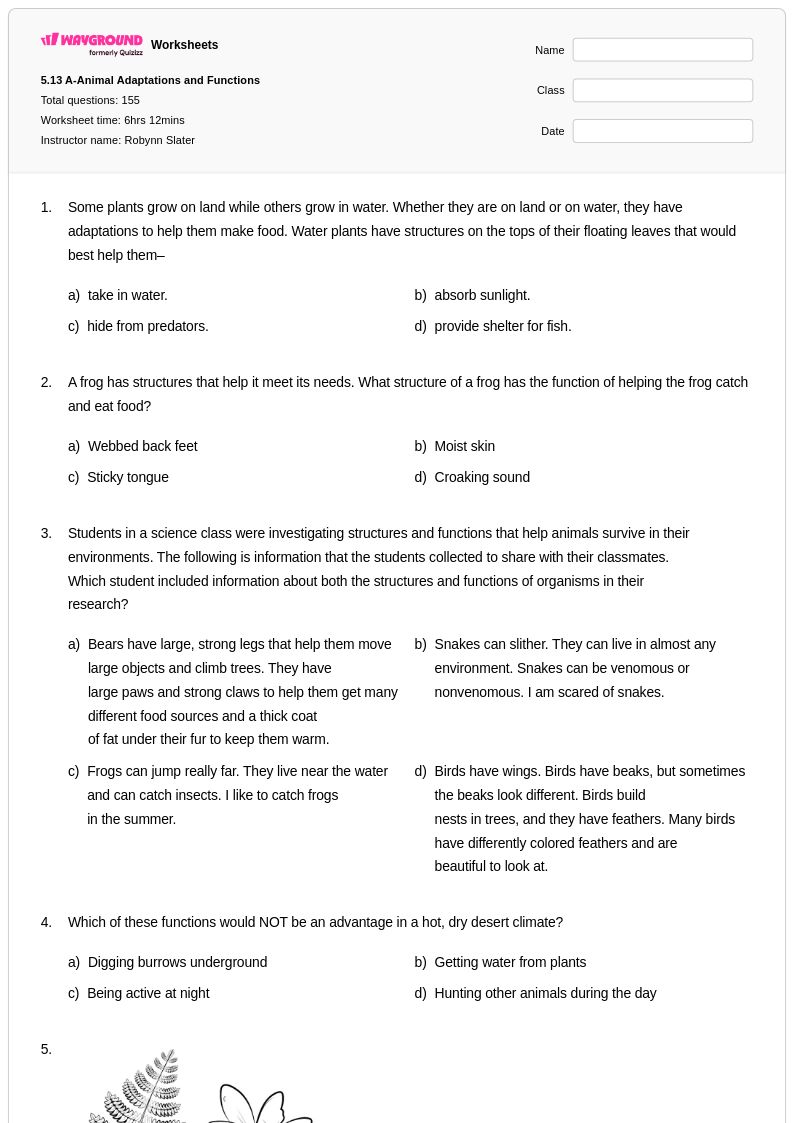
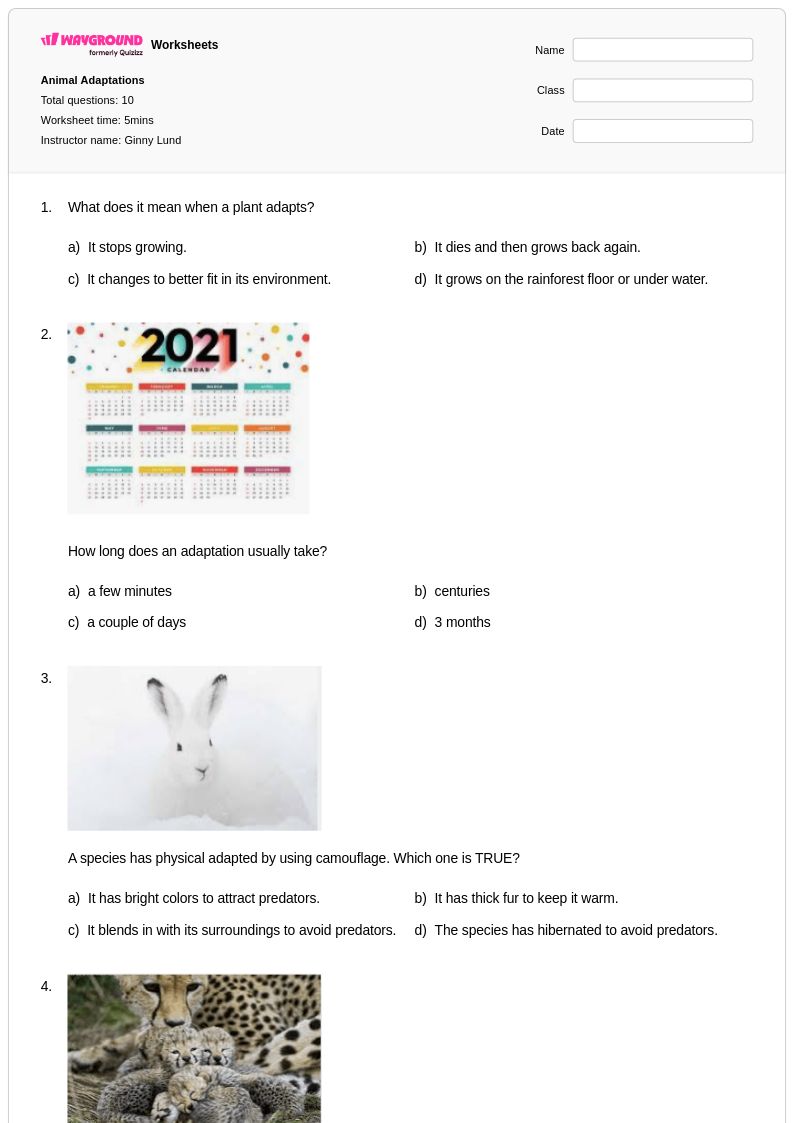
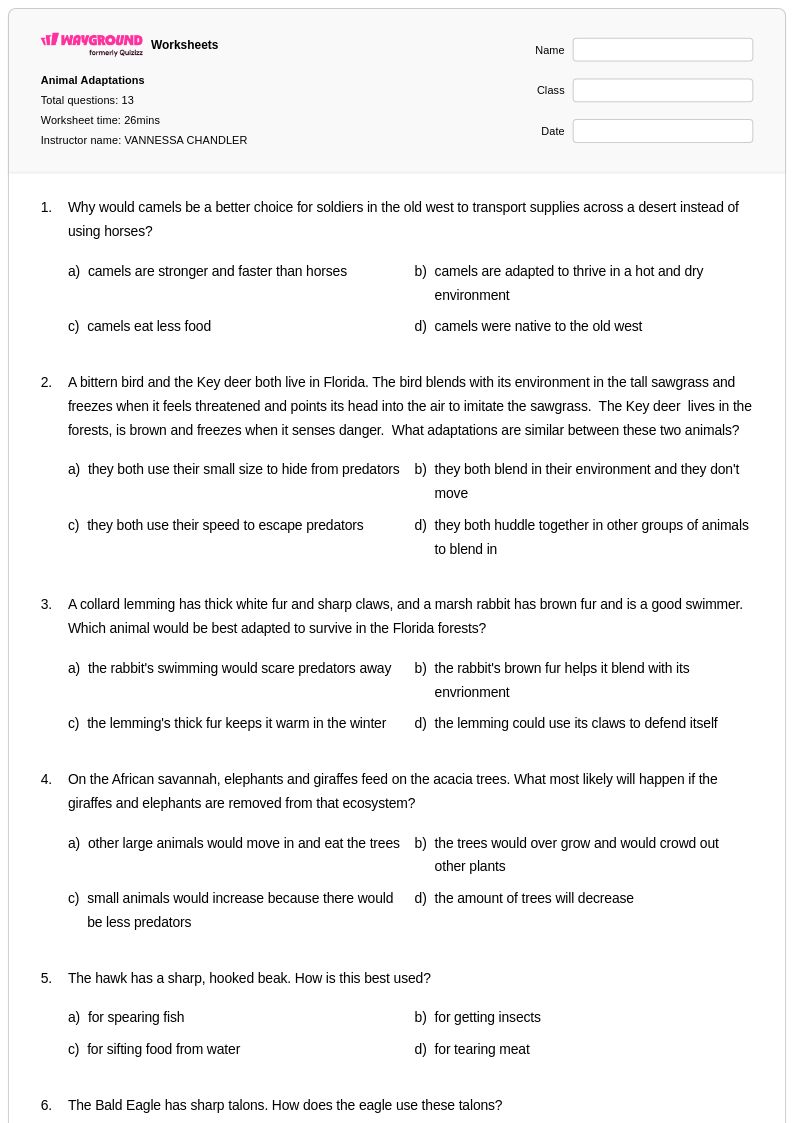
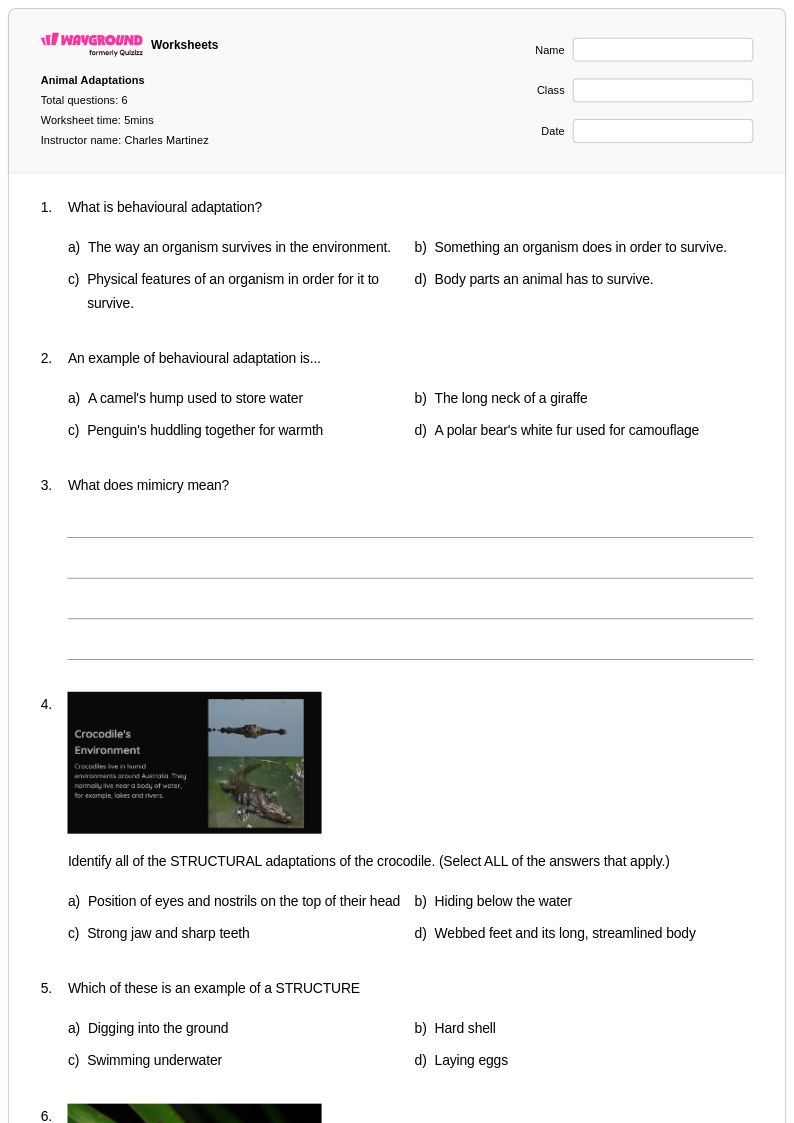
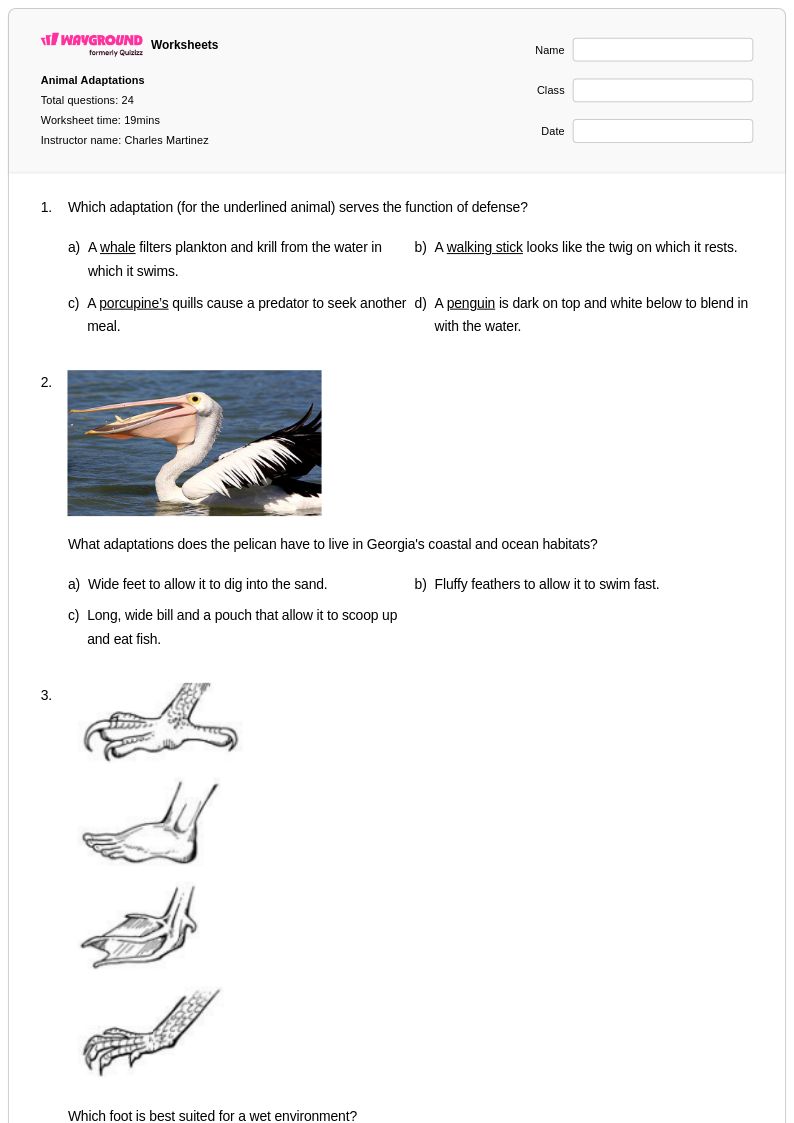
Animal adaptations worksheets for Grade 5 students available through Wayground (formerly Quizizz) provide comprehensive exploration of how animals survive and thrive in their environments through specialized physical and behavioral traits. These expertly designed resources strengthen critical thinking skills as students analyze structural adaptations like a polar bear's thick fur or a bird's beak shape, alongside behavioral adaptations such as migration patterns and hibernation cycles. The worksheets feature engaging practice problems that challenge students to identify adaptation types, predict survival advantages, and connect environmental pressures to evolutionary responses. Each printable resource includes detailed answer keys to support independent learning and assessment, while the free pdf format ensures accessibility for diverse classroom needs and home study scenarios.
Wayground's extensive collection draws from millions of teacher-created resources, offering educators robust search and filtering capabilities to locate animal adaptations materials that align with specific curriculum standards and learning objectives. The platform's differentiation tools enable teachers to customize worksheets for varying ability levels within Grade 5 classrooms, supporting both remediation for struggling learners and enrichment opportunities for advanced students. Available in both printable and digital formats, these resources facilitate flexible lesson planning whether teachers need quick practice activities, comprehensive unit assessments, or targeted skill reinforcement exercises. The standards-aligned content seamlessly integrates into existing biology curricula while providing the adaptability necessary for effective differentiated instruction across diverse learning environments.
FAQs
How do I teach animal adaptations to students?
Start by establishing the three core categories: structural, behavioral, and physiological adaptations. Use concrete, familiar examples first, such as a duck's webbed feet (structural) or a bear's hibernation (behavioral), before moving to less familiar species. Once students can categorize adaptations confidently, shift to higher-order tasks that ask them to explain the survival advantage each trait provides, which builds the analytical thinking that underpins evolutionary reasoning.
What exercises help students practice identifying animal adaptations?
Effective practice tasks ask students to do three things: identify the specific adaptation, classify it as structural, behavioral, or physiological, and explain how it increases survival or reproductive success. Worksheets that present a range of species across different biomes, from desert cacti to arctic foxes, help students generalize the concept rather than memorizing isolated examples. Including both common and unfamiliar organisms challenges students to apply their reasoning rather than recall.
What are the most common mistakes students make when learning about animal adaptations?
The most frequent misconception is that animals consciously choose to adapt, rather than understanding that adaptations arise through natural selection over generations. Students also struggle to distinguish between behavioral and physiological adaptations, often confusing a learned behavior with an inherited biological response. A third common error is describing an adaptation without connecting it to a specific environmental pressure, which means the explanation lacks the cause-and-effect logic central to the concept.
How can I differentiate animal adaptations worksheets for different ability levels?
For struggling learners, reduce the cognitive load by providing a list of adaptation types and asking students to match rather than generate explanations independently. For advanced students, remove scaffolding and require them to compare adaptations across multiple biomes or evaluate trade-offs, such as why a trait that aids survival in one environment would be a disadvantage in another. On Wayground, teachers can assign accommodations such as reduced answer choices or read-aloud support to individual students without other students being notified, keeping differentiation seamless.
How do I use Wayground's animal adaptations worksheets in my classroom?
Wayground's animal adaptations worksheets are available as printable PDFs for traditional classroom use and in digital formats for technology-integrated environments, and can also be hosted as a quiz directly on the platform. Teachers can assign them for independent practice, use them as formative checks after a lesson, or project them for whole-class discussion. Complete answer keys are included with every worksheet, so grading and review require minimal preparation time.
How do I help students understand the difference between structural, behavioral, and physiological adaptations?
Anchor each category to a clear, memorable definition: structural adaptations are physical body features, behavioral adaptations are actions or patterns, and physiological adaptations are internal biological processes. Use a graphic organizer that asks students to sort examples into all three columns, then revisit edge cases, such as camouflage, which is structural, versus color-changing behavior, which is behavioral, to sharpen the distinctions. Sorting tasks with ambiguous examples are particularly effective at deepening conceptual understanding.