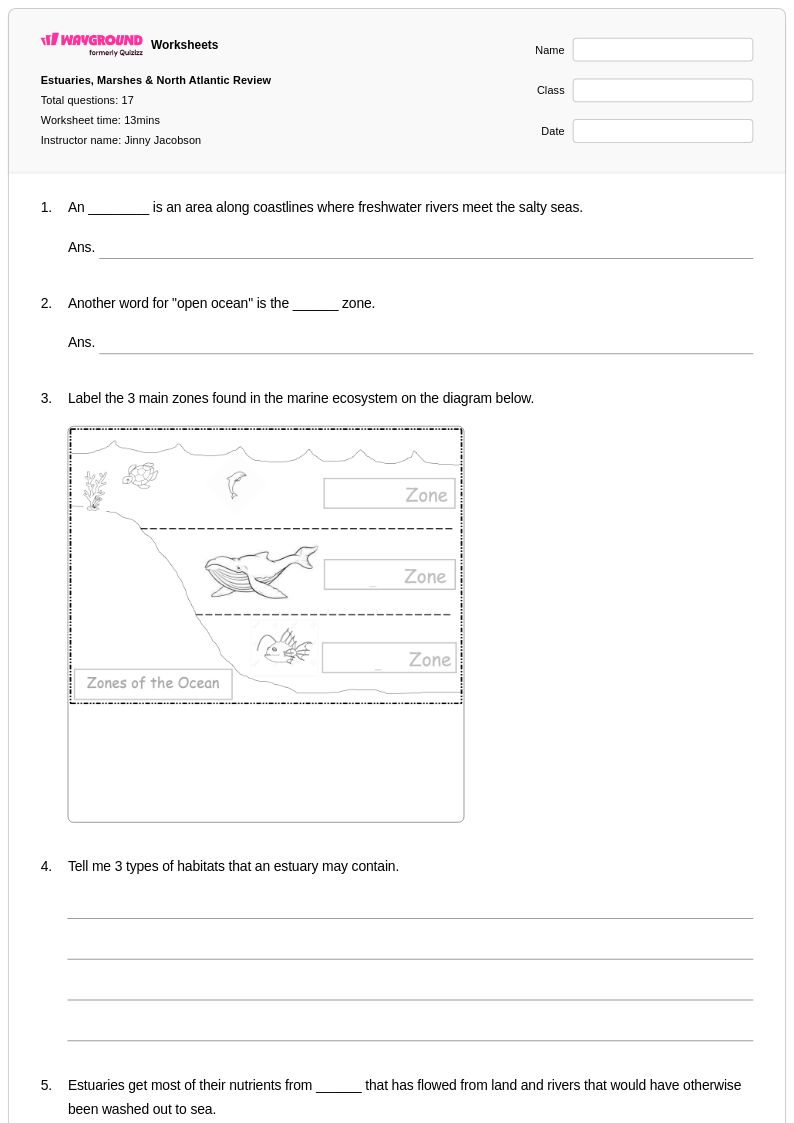
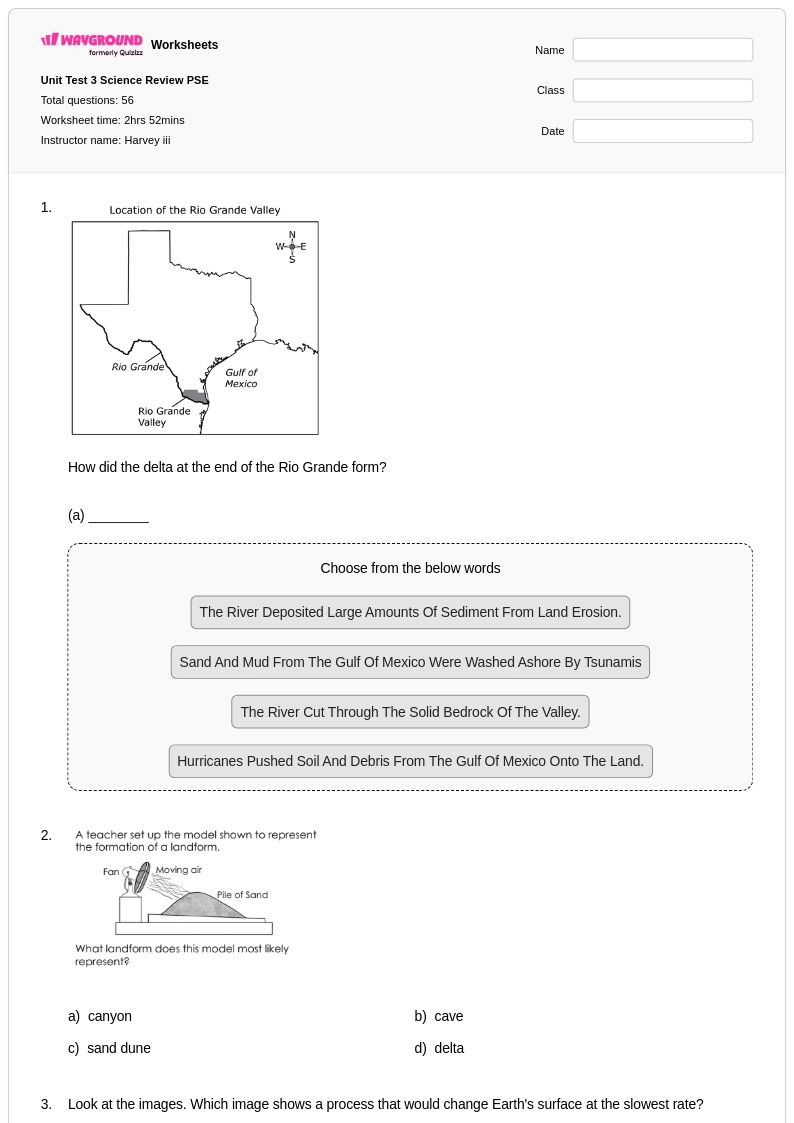
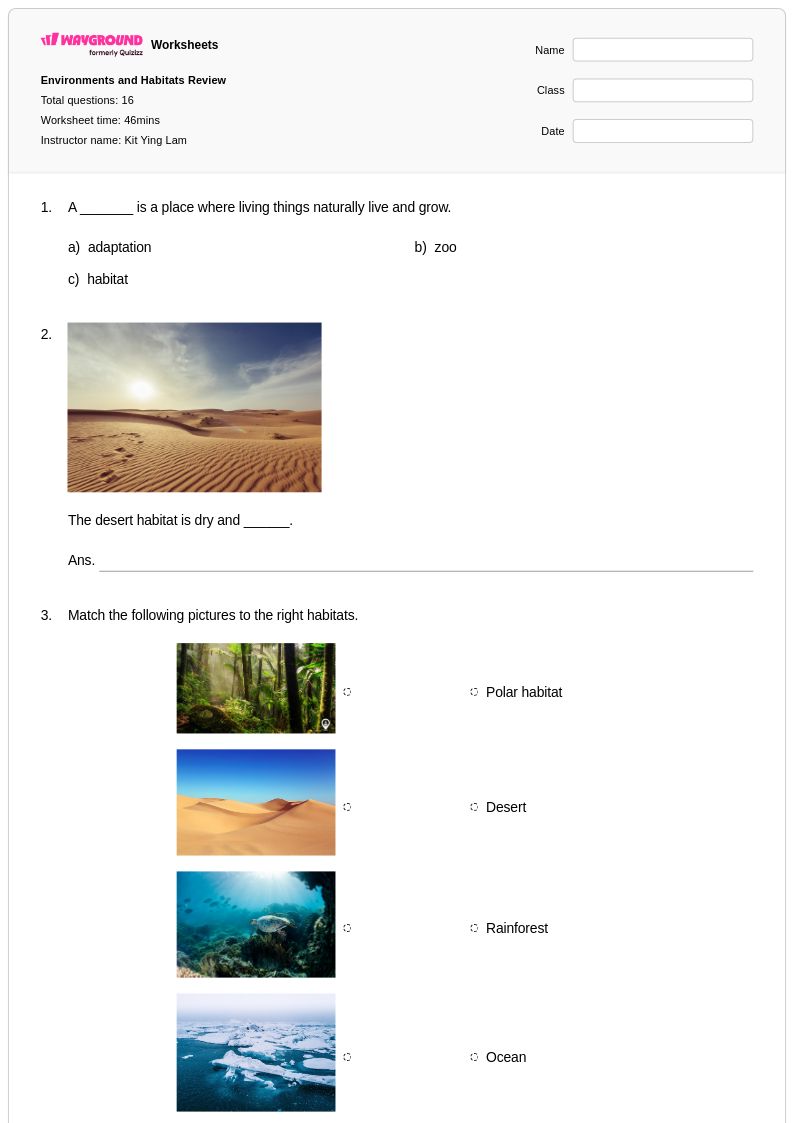
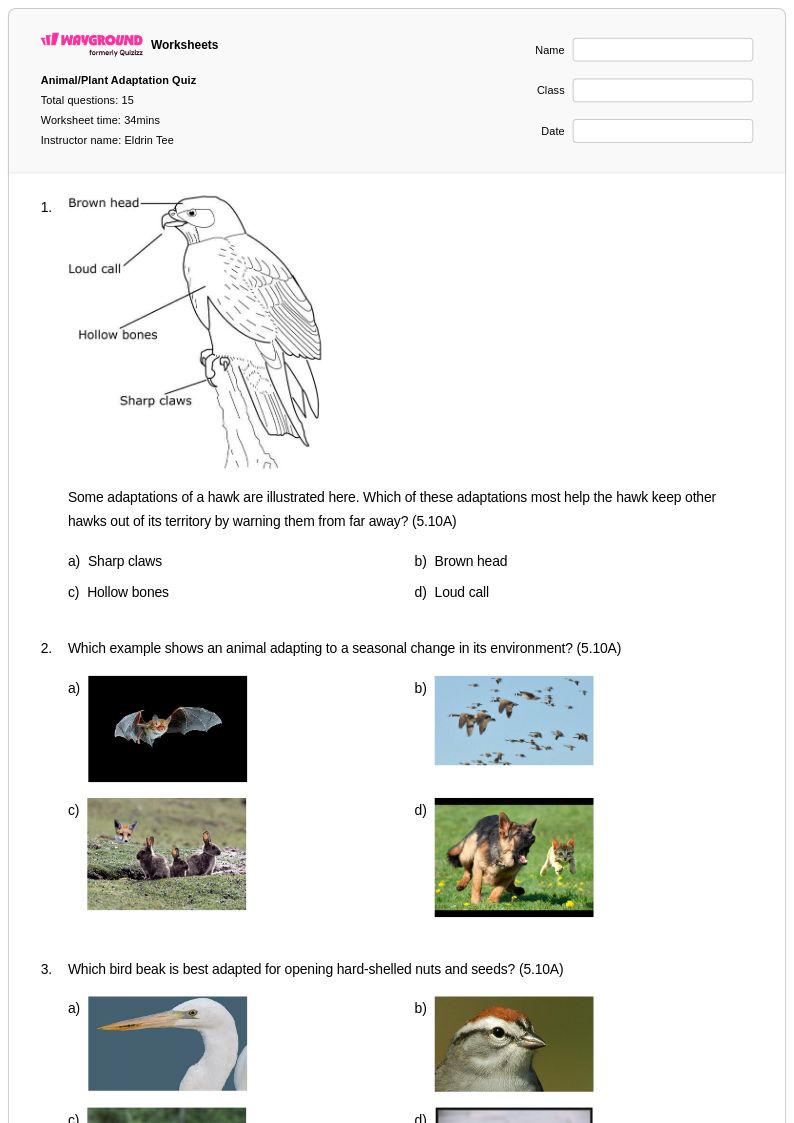
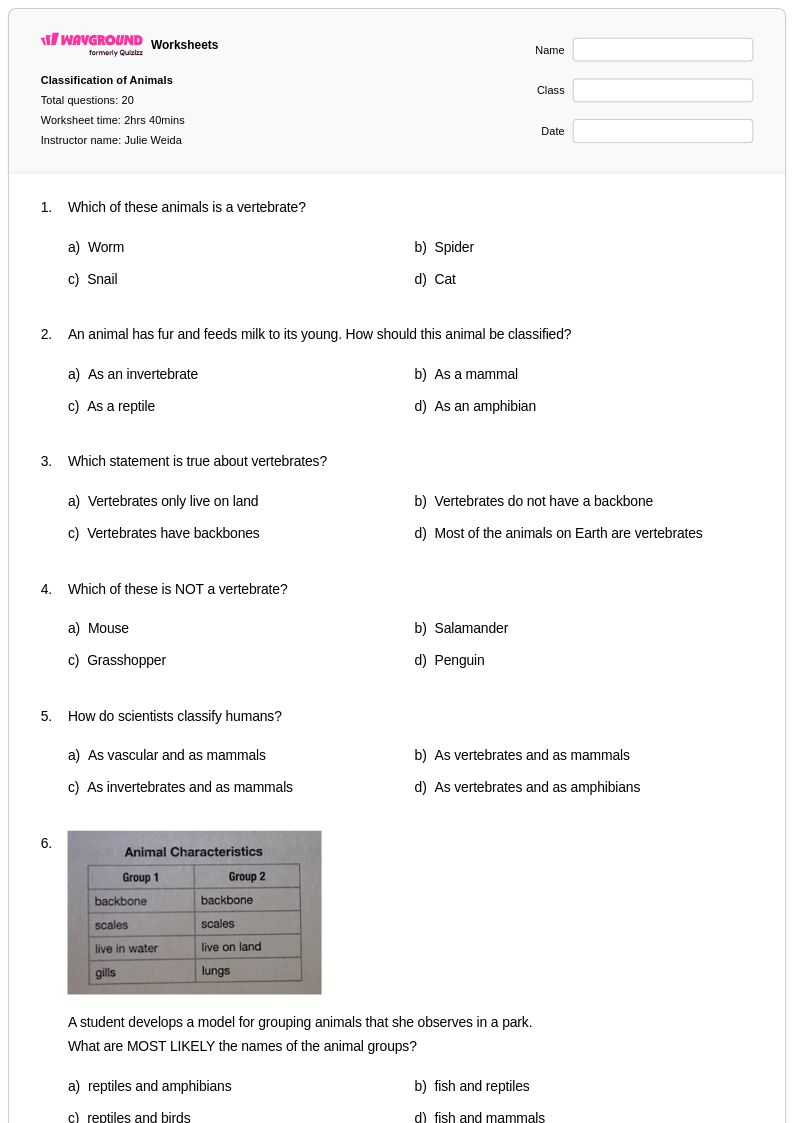
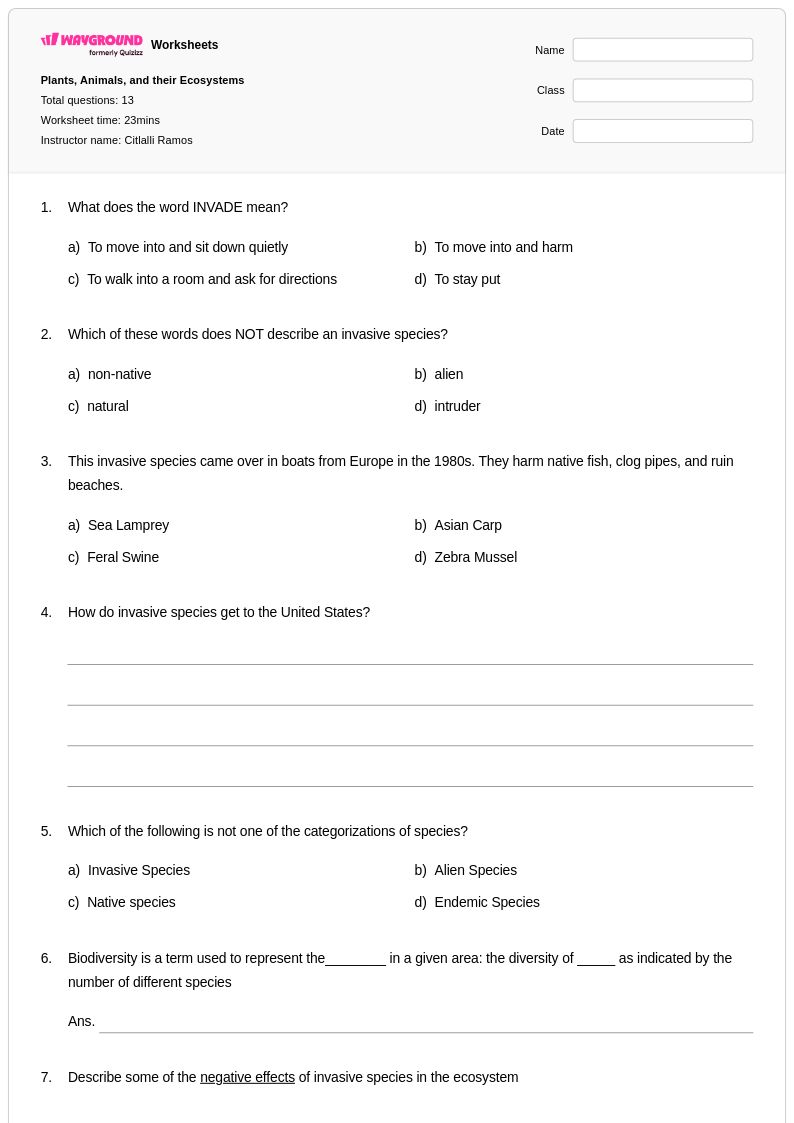
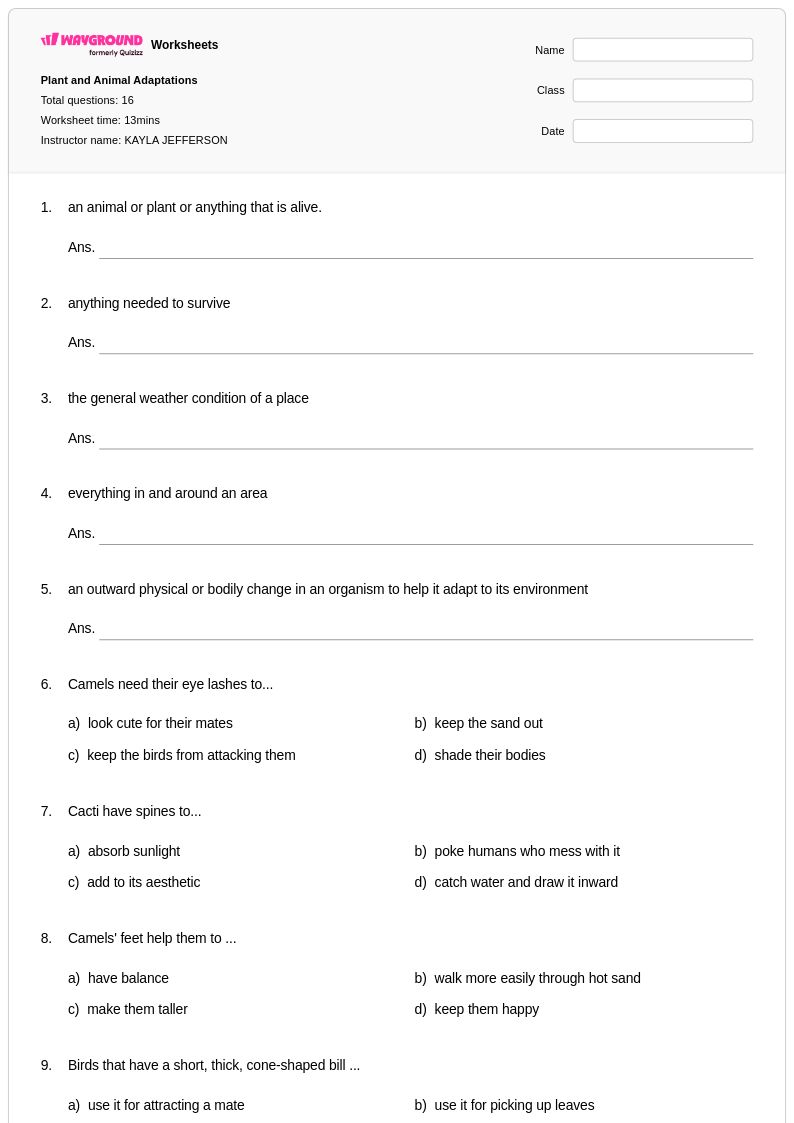
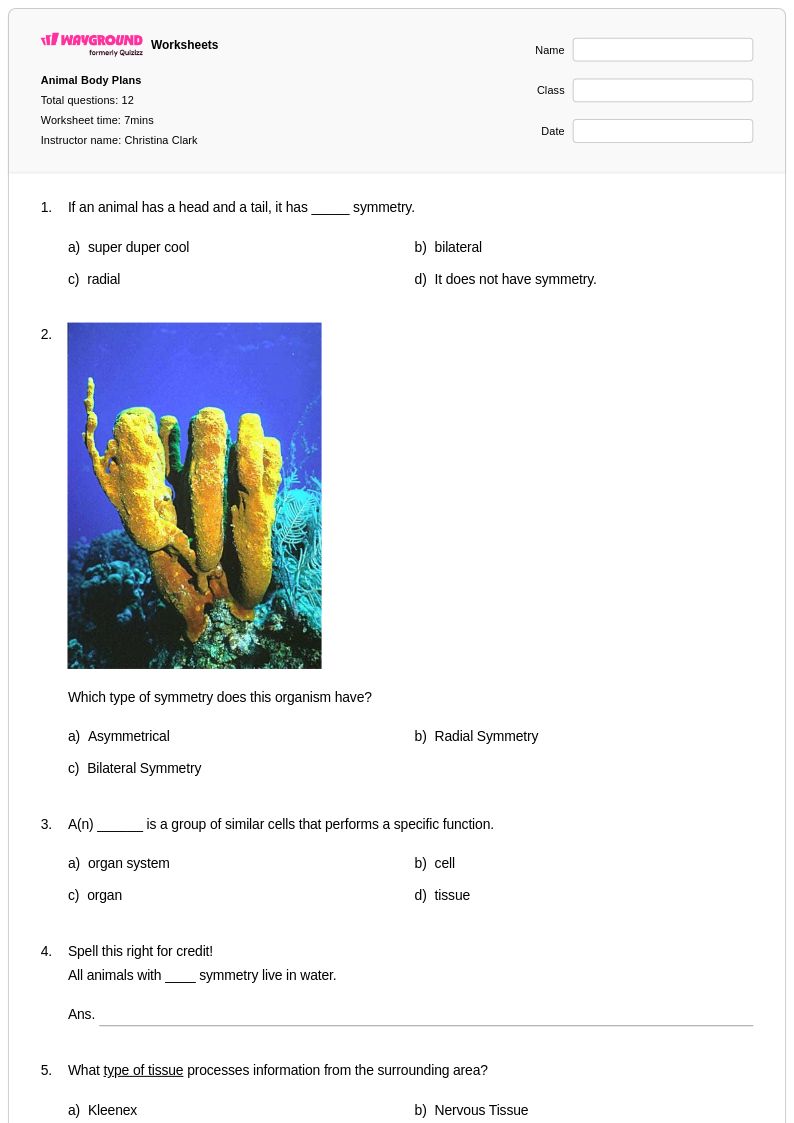
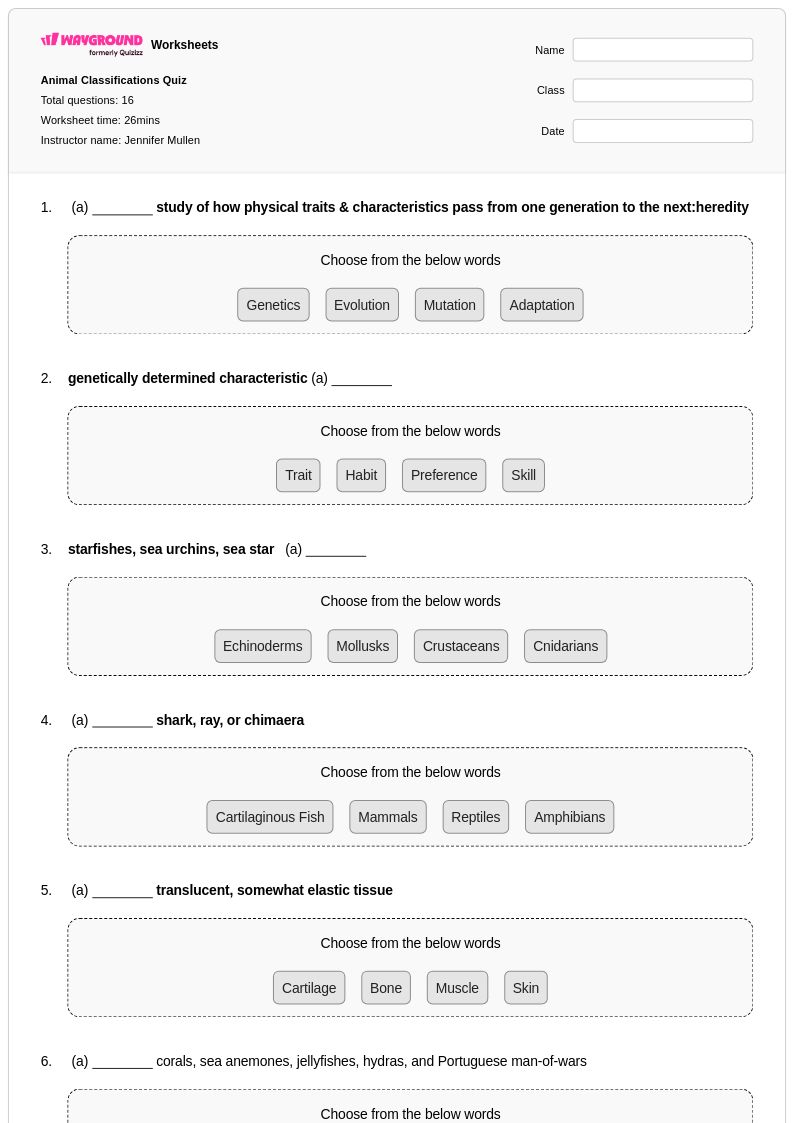
Explore Wayground's free Grade 5 sea animals biology worksheets and printables that help students discover marine life through engaging practice problems and comprehensive answer keys.
Explore printable Sea Animals worksheets for Grade 5
Sea animals worksheets for Grade 5 students available through Wayground (formerly Quizizz) provide comprehensive exploration of marine life ecosystems and the fascinating creatures that inhabit our oceans. These educational resources strengthen critical scientific observation skills, classification abilities, and understanding of aquatic adaptations while students investigate diverse species from microscopic plankton to massive whales. The practice problems guide learners through identifying anatomical features, understanding feeding relationships, and analyzing how different sea animals have evolved specialized characteristics for survival in saltwater environments. Each printable worksheet includes detailed answer keys that support independent learning and self-assessment, while the free pdf format ensures accessibility for both classroom instruction and home study sessions.
Wayground (formerly Quizizz) empowers educators with millions of teacher-created sea animals resources that feature robust search and filtering capabilities, enabling quick location of materials aligned with specific learning standards and curriculum objectives. The platform's differentiation tools allow teachers to customize worksheets based on individual student needs, offering both remediation support for struggling learners and enrichment opportunities for advanced students ready to explore complex marine biology concepts. These versatile materials are available in both printable and digital formats, including downloadable pdf versions, making lesson planning seamless whether instruction occurs in traditional classrooms or remote learning environments. Teachers can efficiently address skill gaps, reinforce key concepts about ocean habitats and marine biodiversity, and provide targeted practice that builds student confidence in biological science fundamentals.
FAQs
How do I teach sea animals and marine biology to elementary students?
Start by anchoring instruction in familiar animals like sharks, dolphins, and sea turtles before expanding to less familiar species. Use visual comparisons to highlight adaptations — how a fish's gills differ from a whale's lungs, for example — to build conceptual understanding of how ocean life survives in aquatic environments. Connecting species to their habitats and food chains helps students see marine ecosystems as interconnected systems rather than isolated facts.
What exercises help students practice identifying sea animals and their adaptations?
Labeling diagrams of fish anatomy, matching animals to their ocean habitats, and completing food chain sequencing activities are all high-value practice formats for this topic. Exercises that ask students to classify sea creatures by traits — vertebrate vs. invertebrate, warm-blooded vs. cold-blooded — reinforce biological vocabulary while building analytical skills. Practice problems that connect physical adaptations to survival behaviors deepen understanding beyond simple identification.
What common mistakes do students make when learning about marine animals?
A frequent misconception is that all sea animals are fish — students often misclassify dolphins, whales, and sea turtles, not recognizing them as mammals or reptiles. Another common error is conflating habitat with classification, assuming that any animal living in the ocean must share the same biological traits. Students also struggle with marine food chains, often placing apex predators at the wrong trophic level or omitting producers like phytoplankton entirely.
How can I use sea animals worksheets to support different learners in my classroom?
Sea animals worksheets on Wayground can be used in digital format with built-in accommodation tools, including Read Aloud for students who need audio support and reduced answer choices to lower cognitive load for struggling learners. Extended time settings can be configured per student, so the same worksheet session works for your whole class without singling anyone out. These settings are saved and reusable, which reduces setup time across repeated lessons on marine biology.
How do I use Wayground's sea animals worksheets in my classroom?
Wayground's sea animals worksheets are available as printable PDFs for traditional classroom use and in digital formats for technology-integrated environments, including the option to host them as a quiz directly on Wayground. Teachers can assign them for direct instruction, independent practice, or homework, and each worksheet includes a complete answer key to simplify grading. The digital format is especially useful for remote or hybrid settings where students need structured practice on marine biology without requiring physical materials.
How do I build a marine food chain lesson using worksheets?
An effective food chain lesson moves from producers to apex predators, requiring students to identify the role of each organism before placing it in sequence. Worksheets that combine diagram labeling with short-answer questions push students to explain why each link matters, not just memorize the order. Introducing concepts like energy transfer and the impact of removing one species strengthens ecological reasoning and prepares students for more advanced biology content.