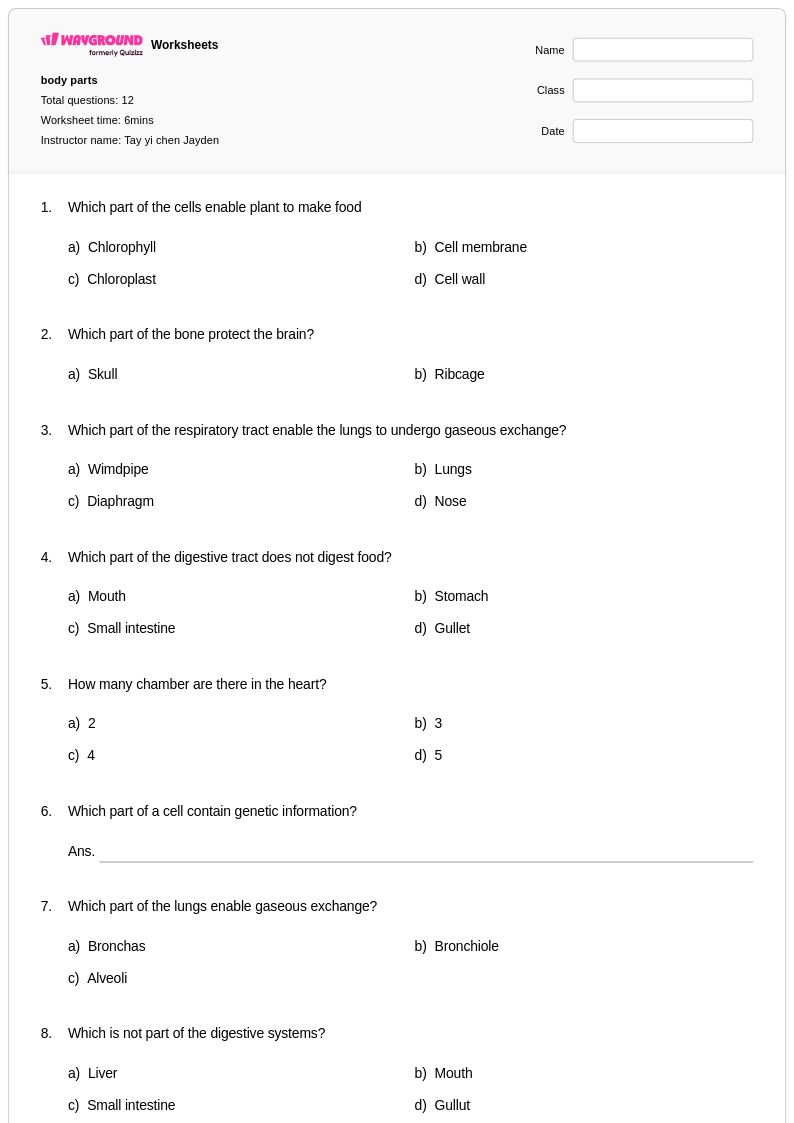
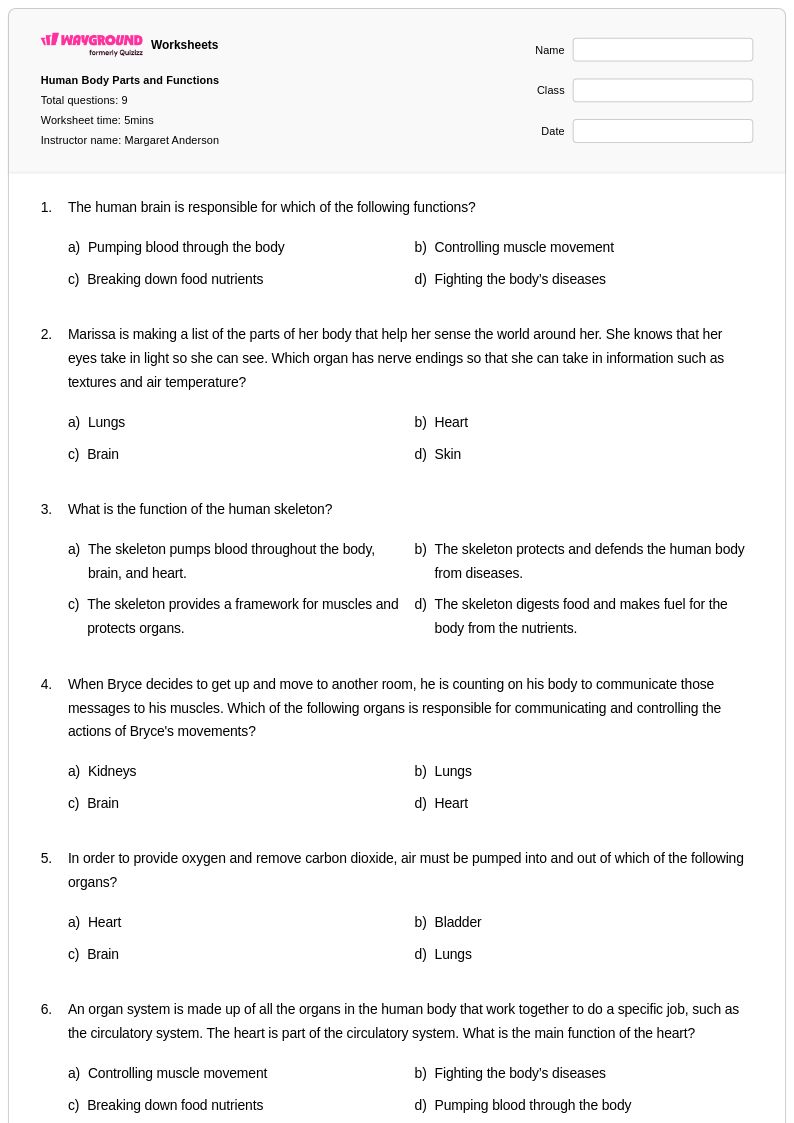
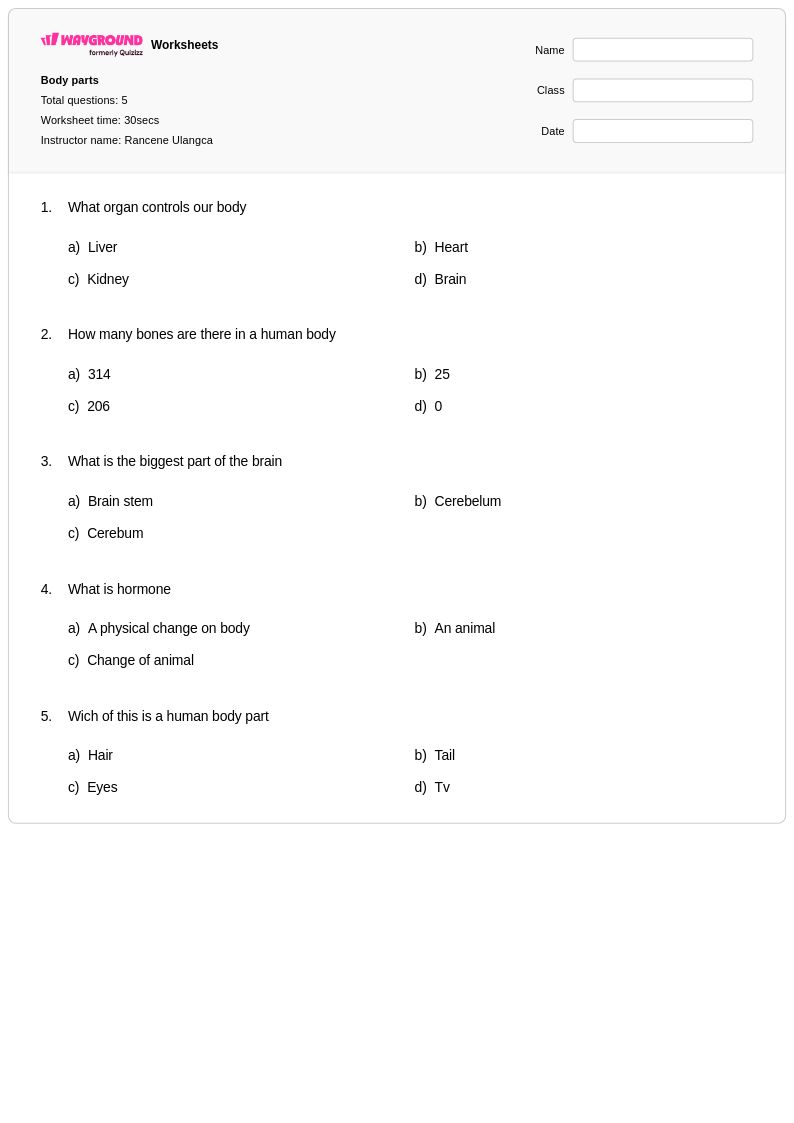
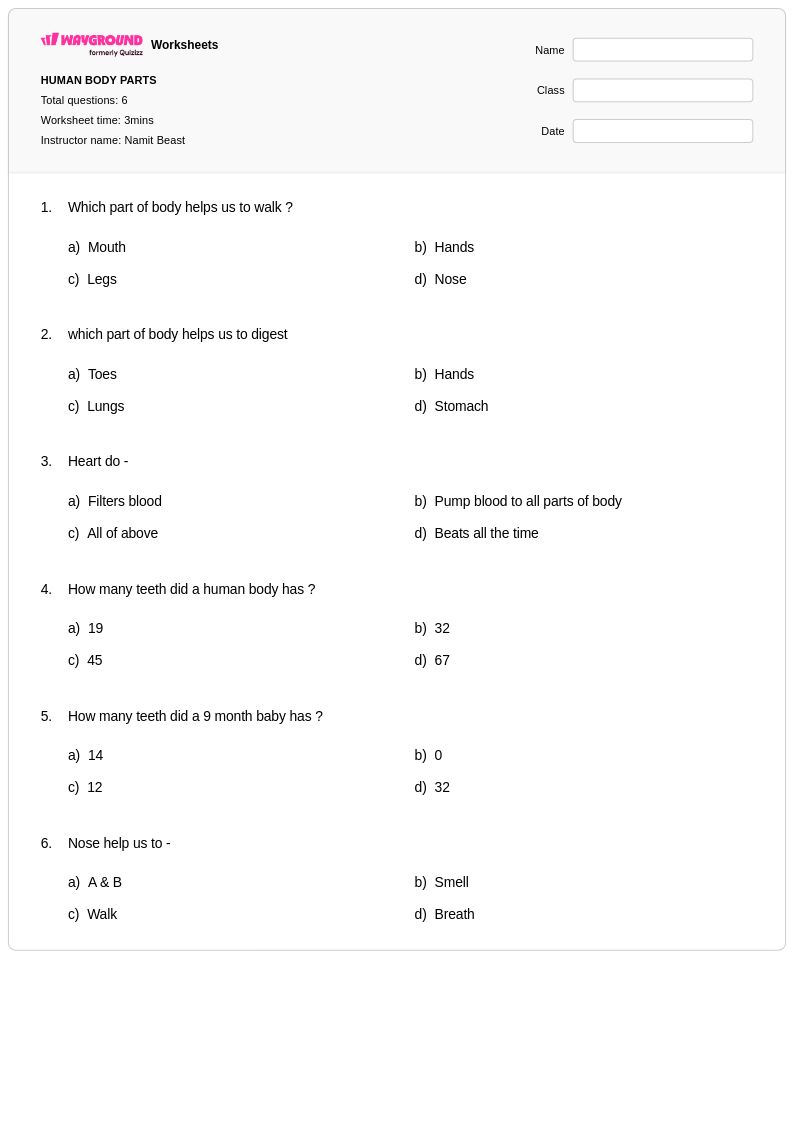
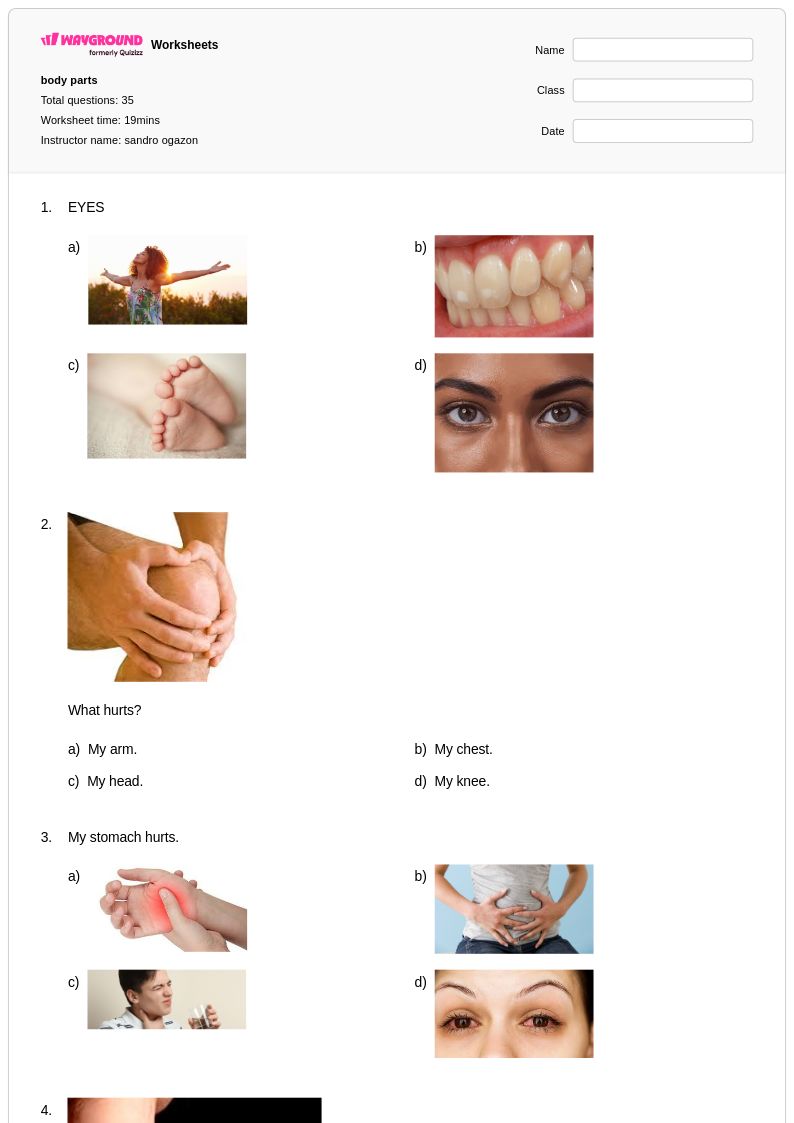
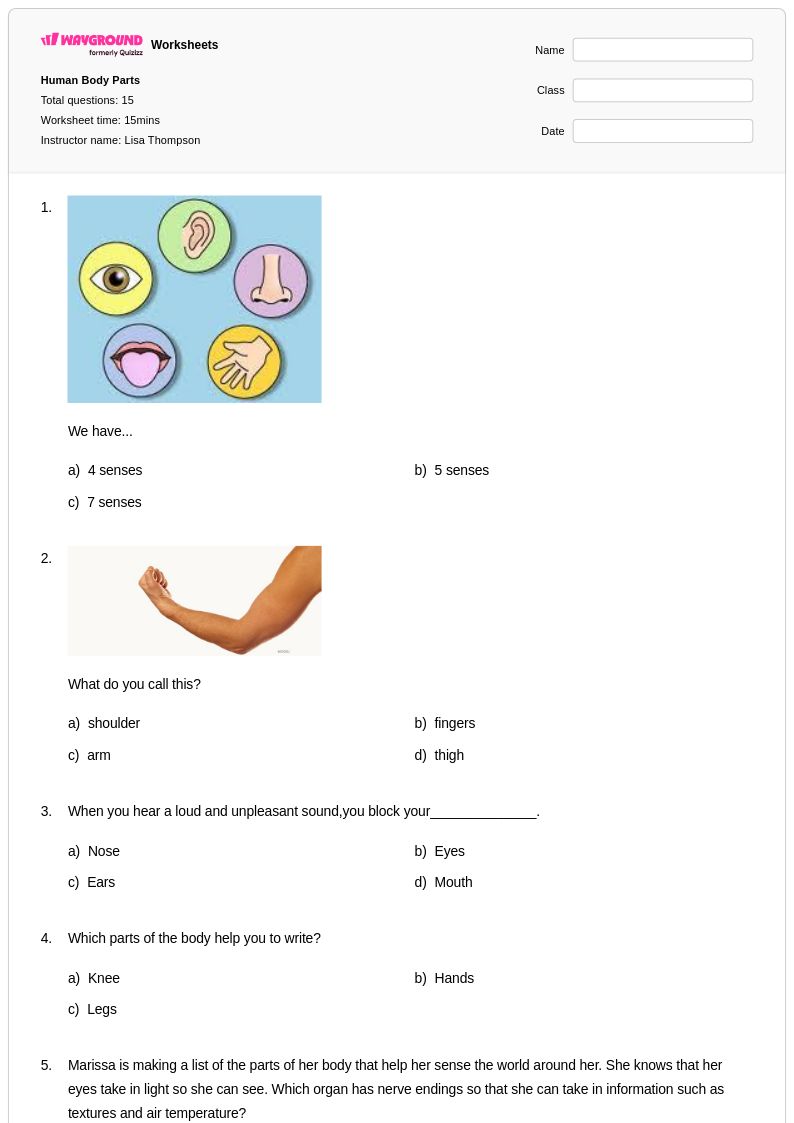
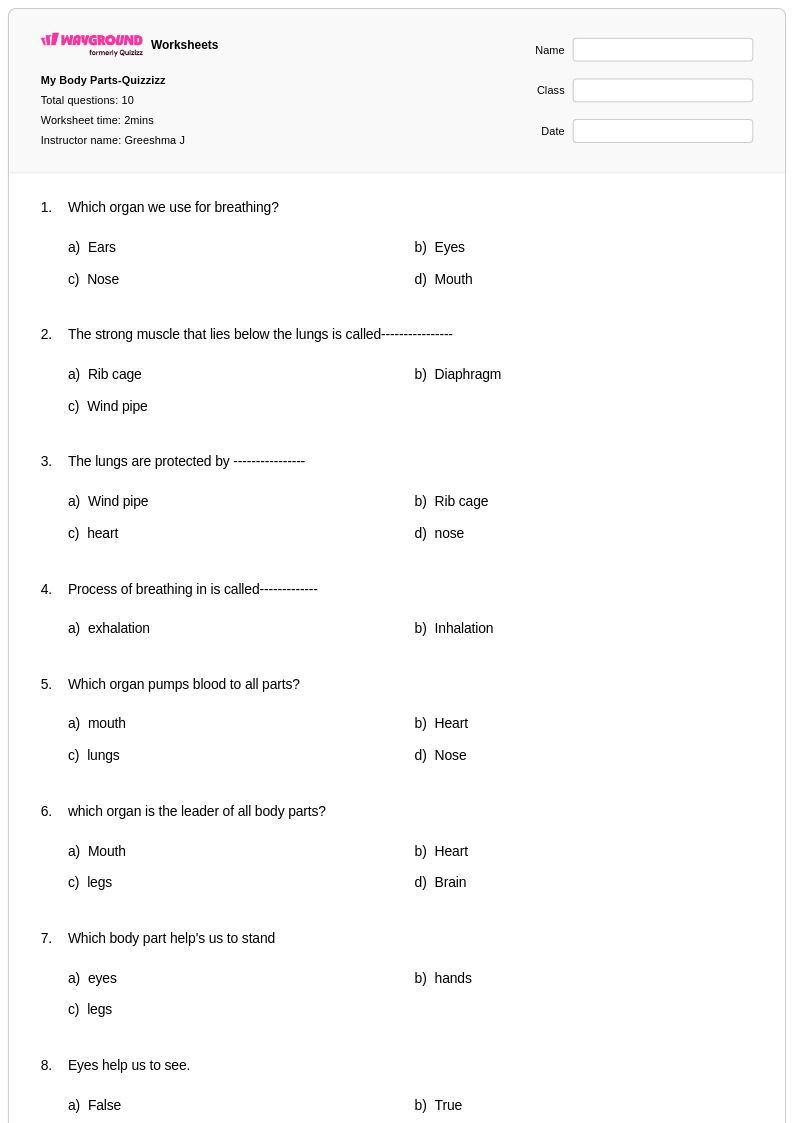
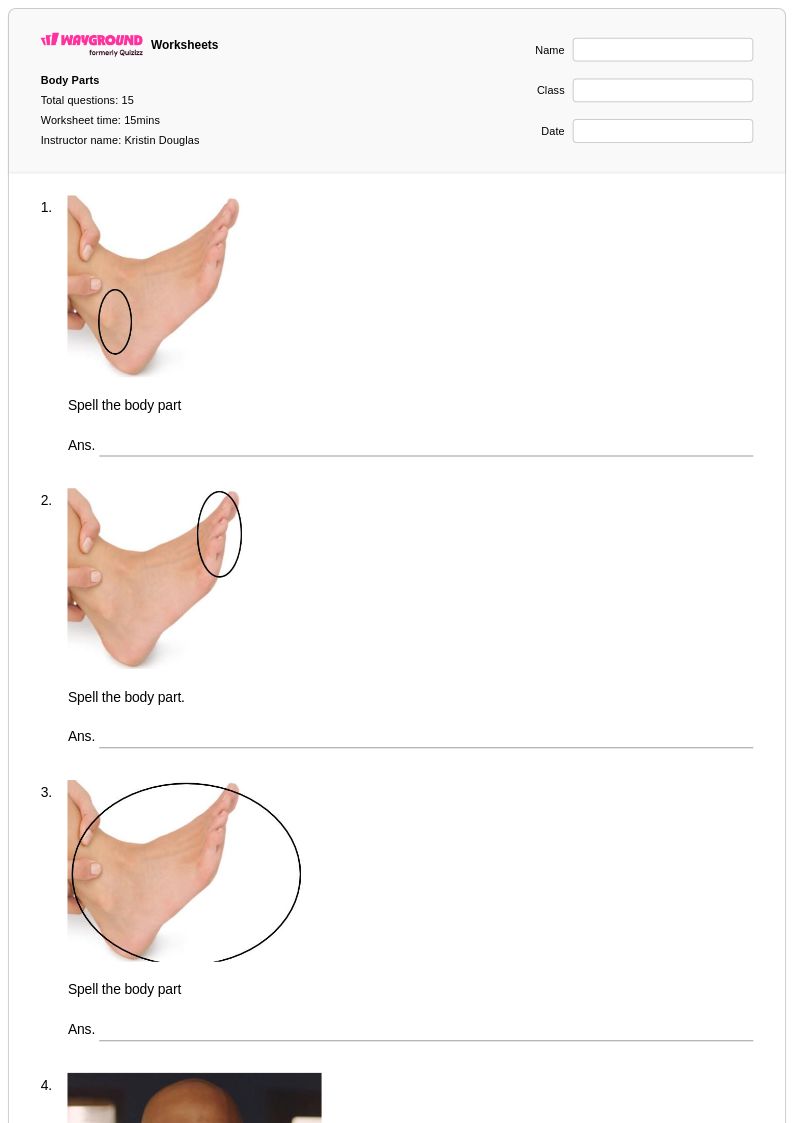
Explore Wayground's free Grade 5 body parts worksheets and printables that help students learn human anatomy through engaging practice problems and activities with complete answer keys.
Explore printable Body Parts worksheets for Grade 5
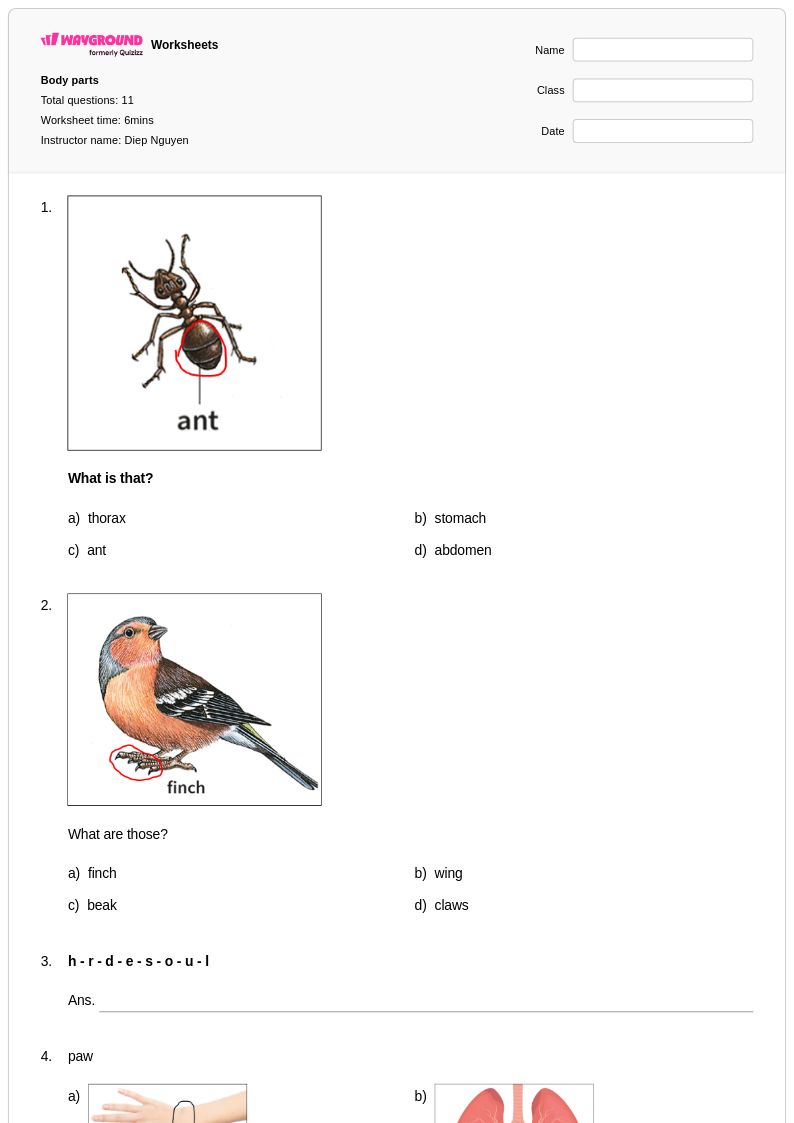
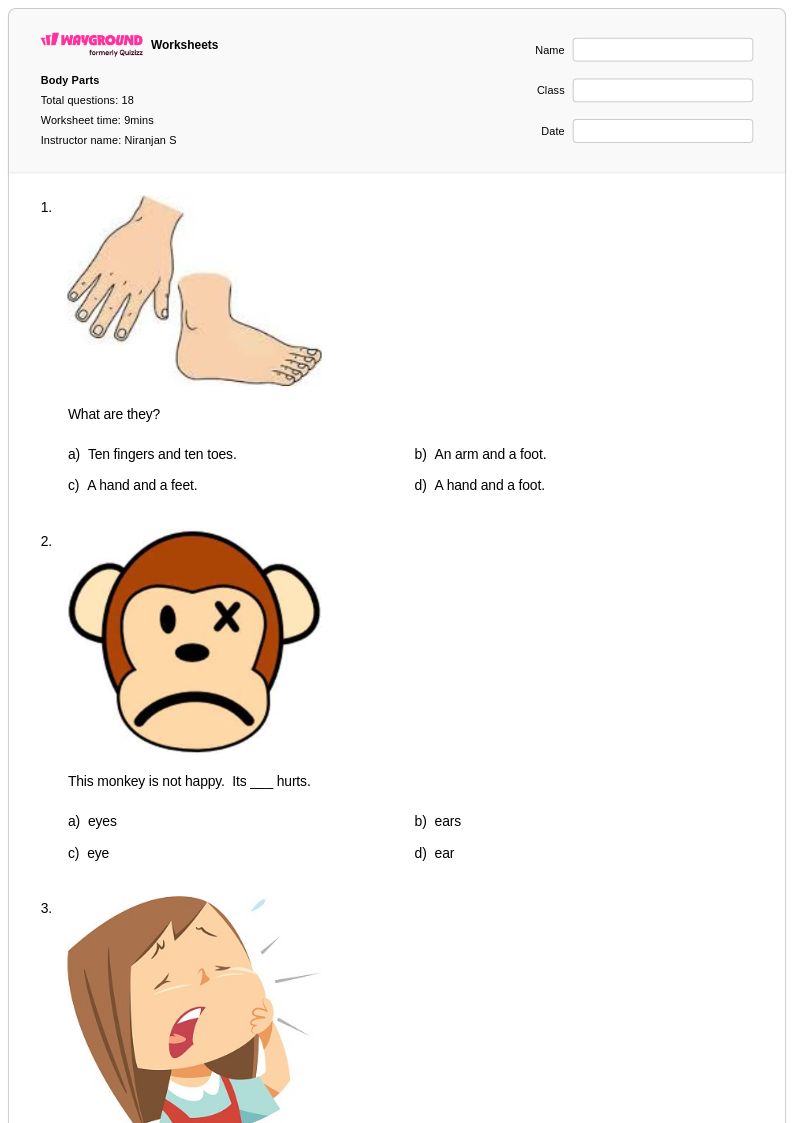
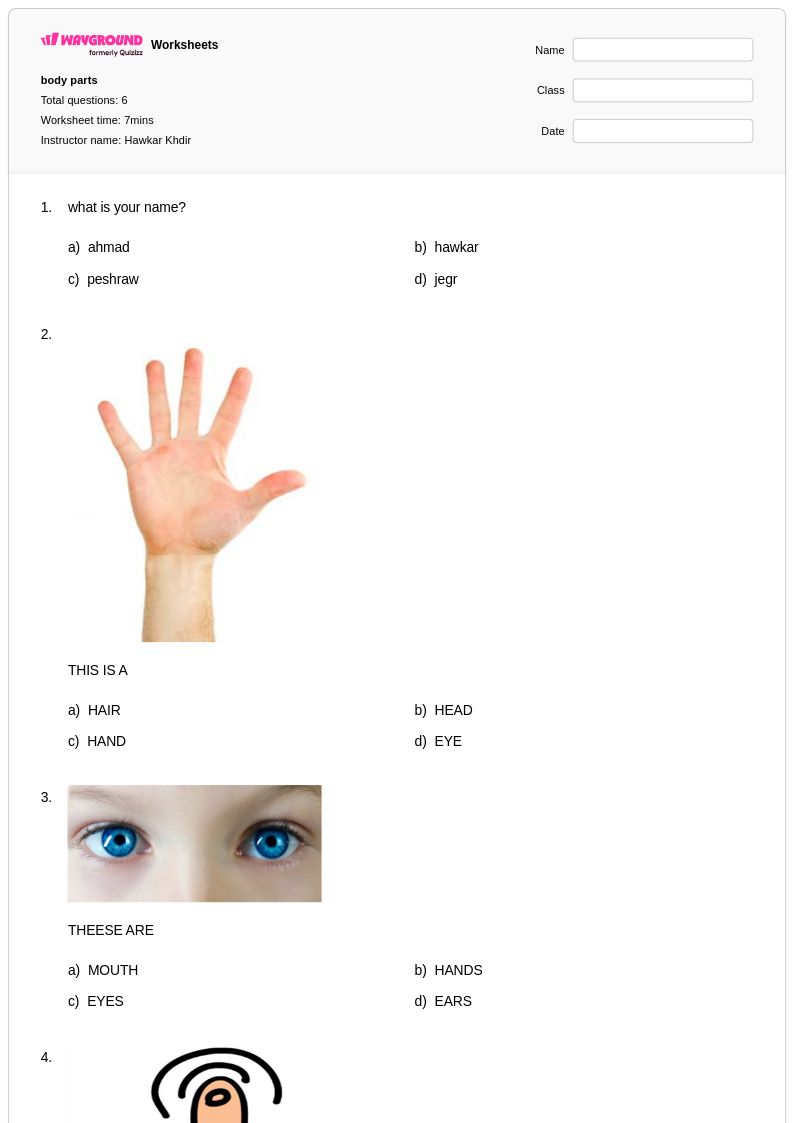
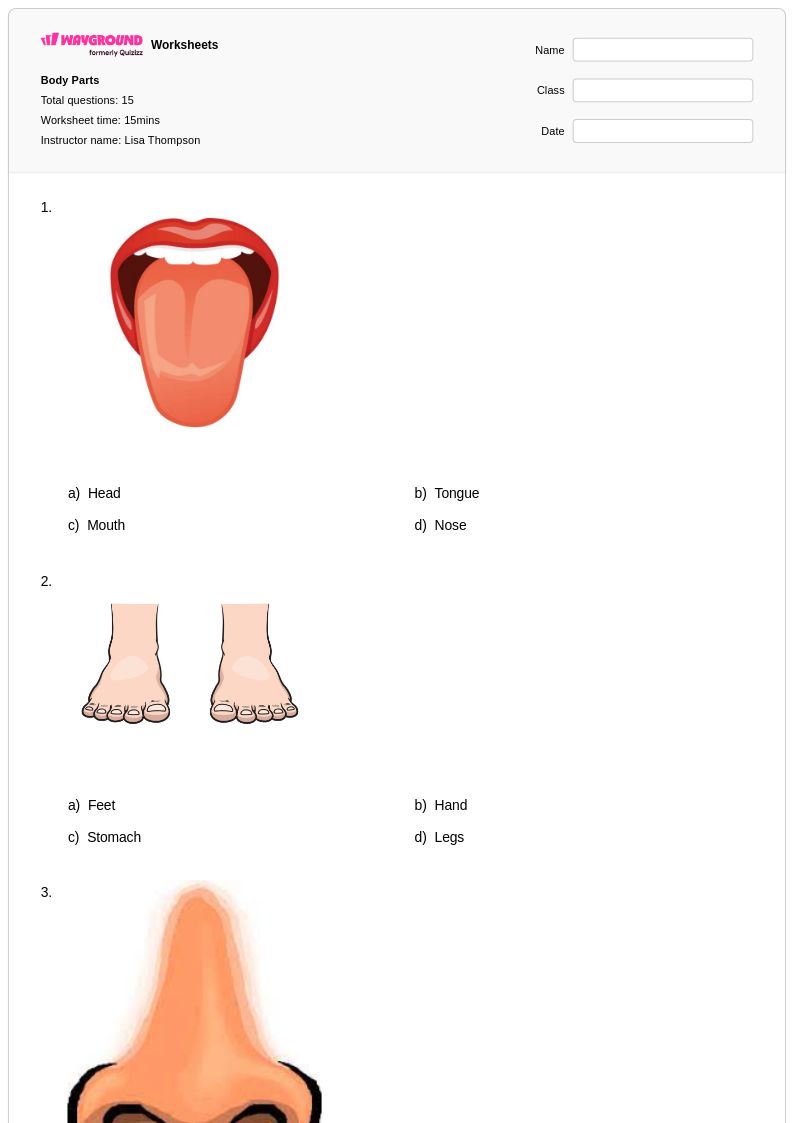
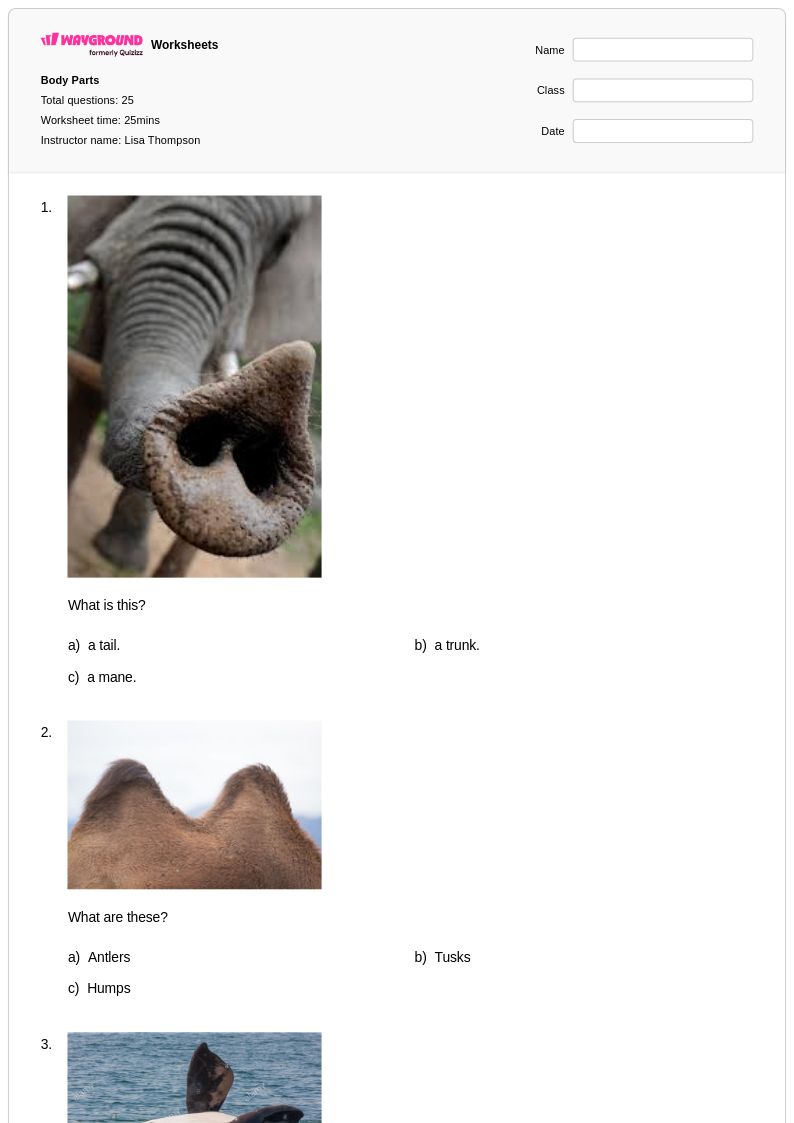
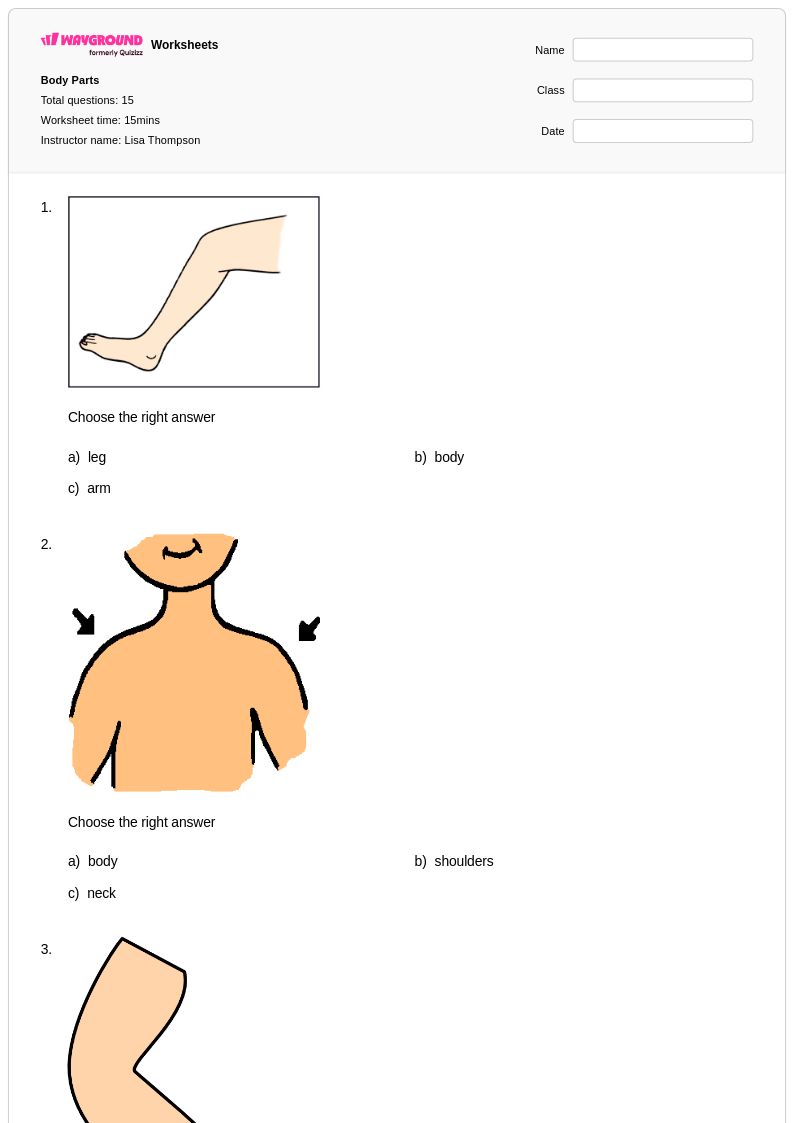
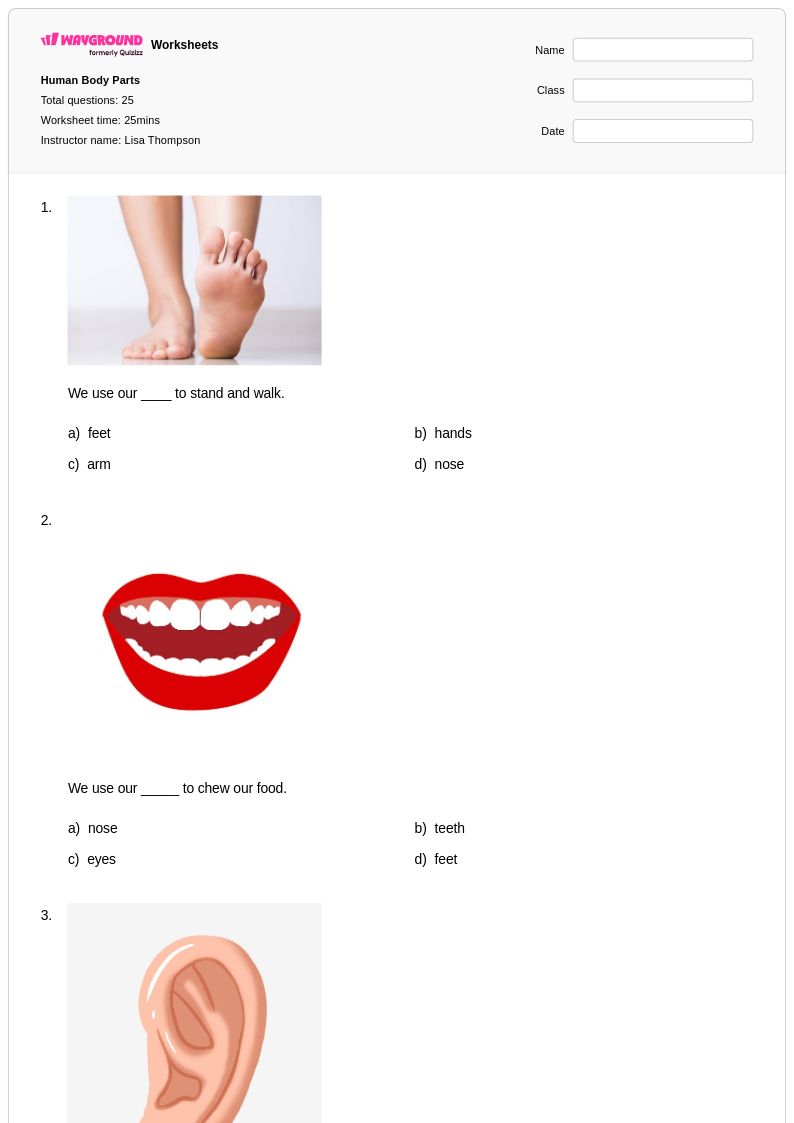
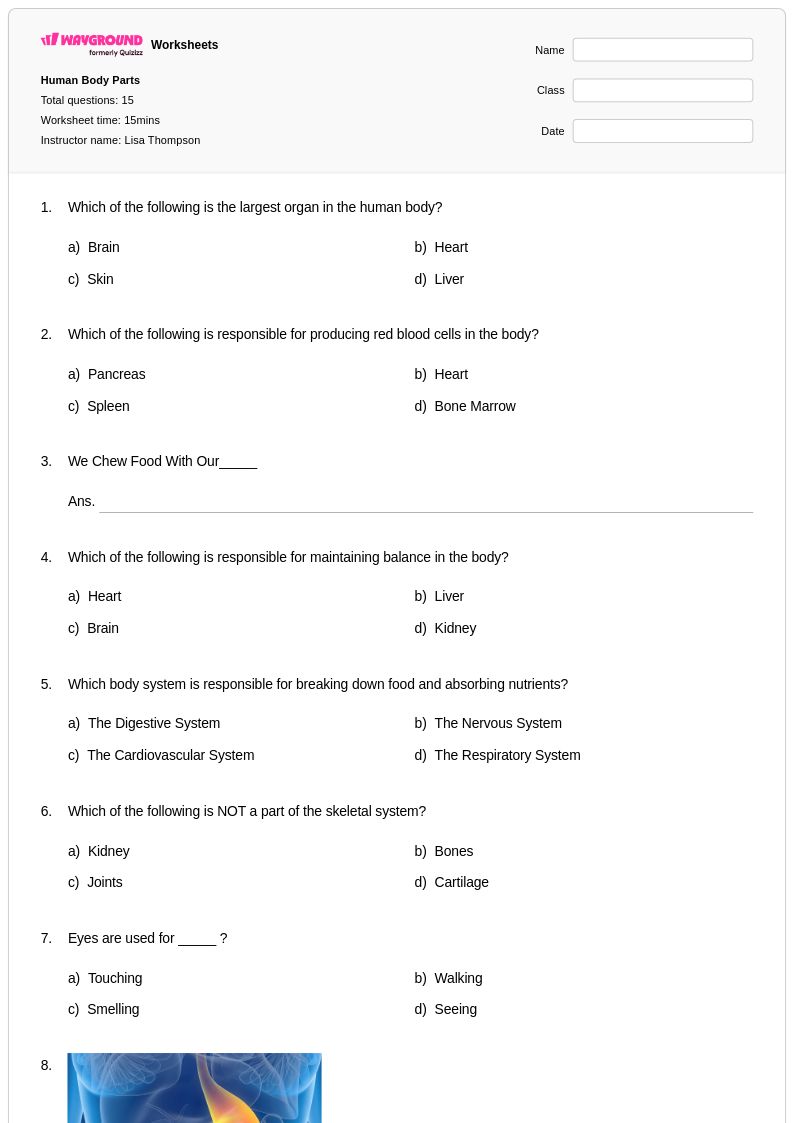
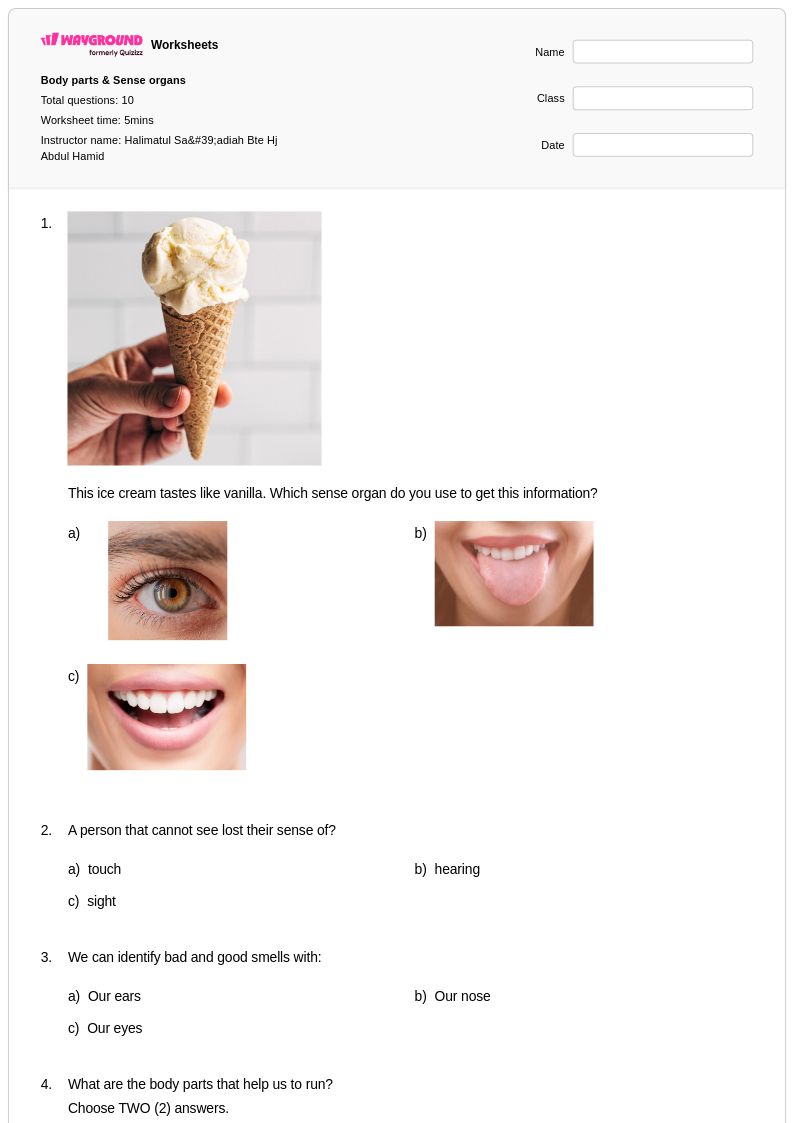
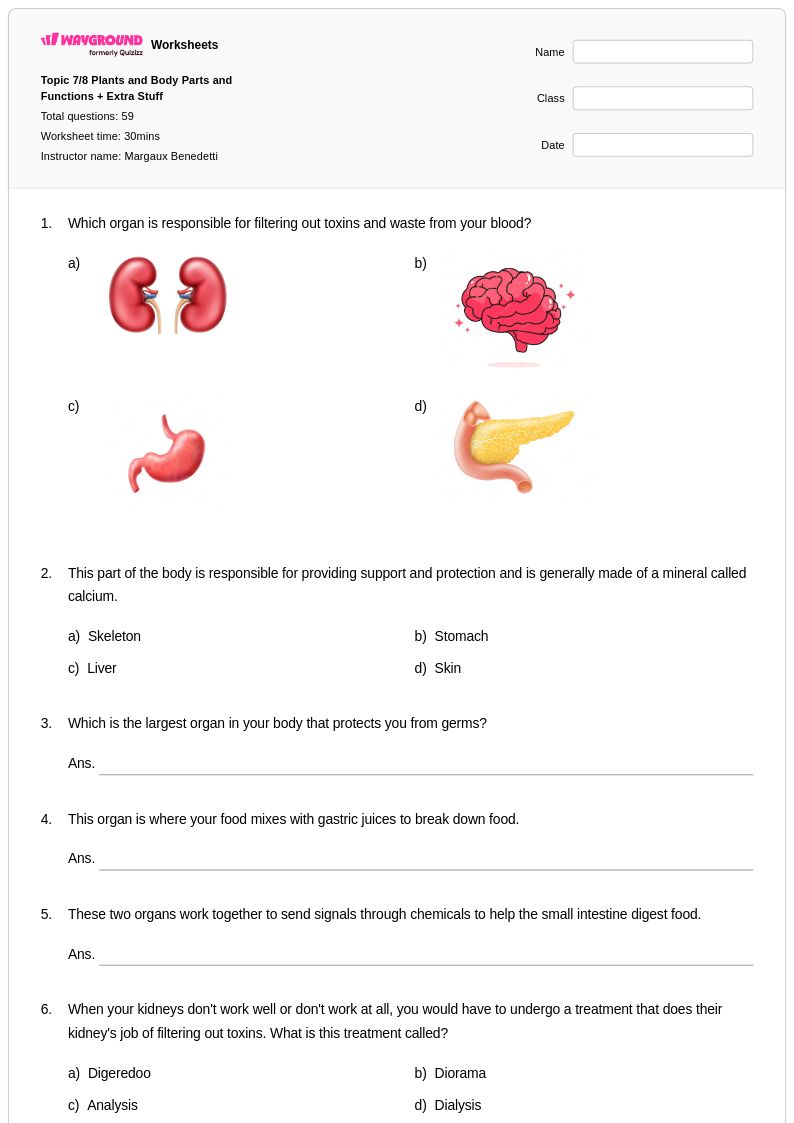
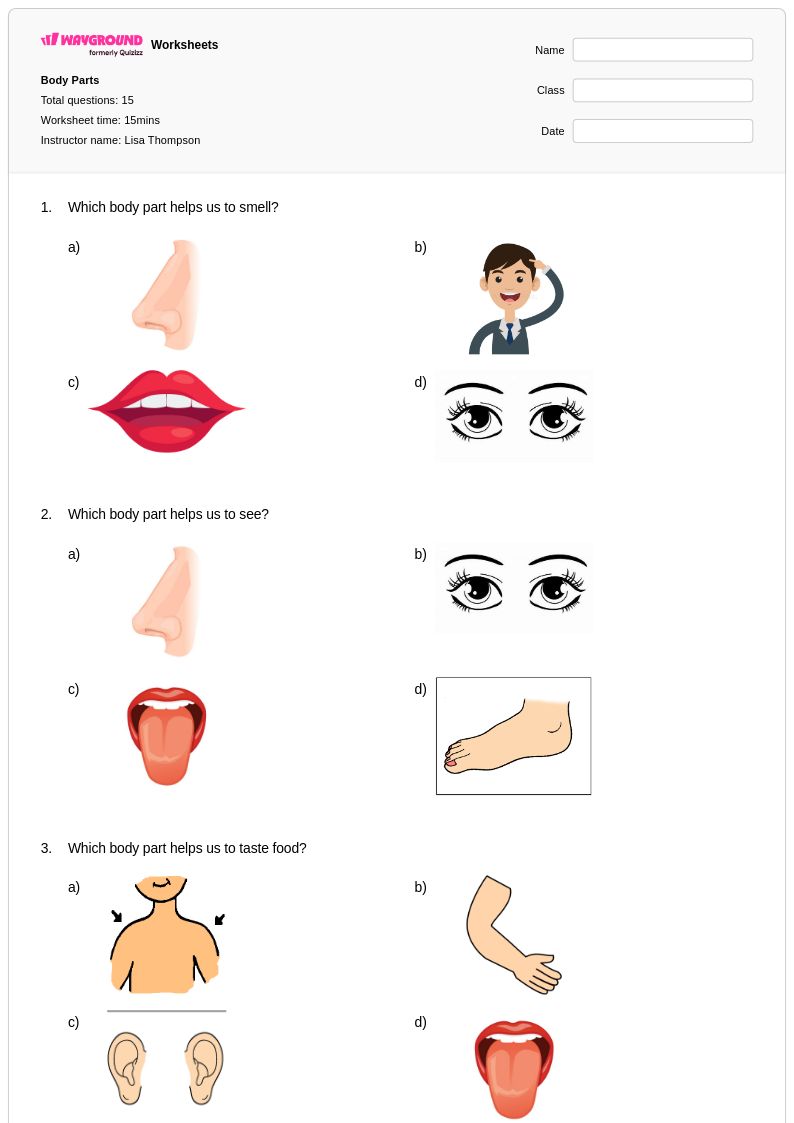
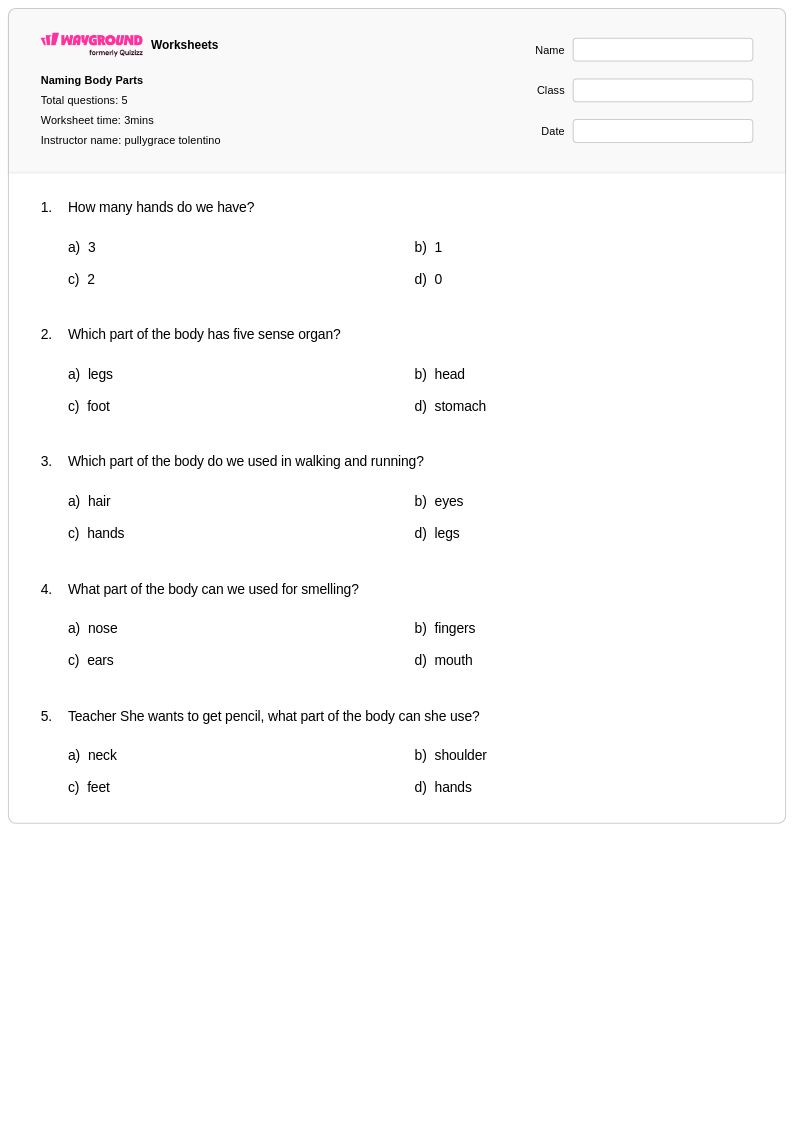
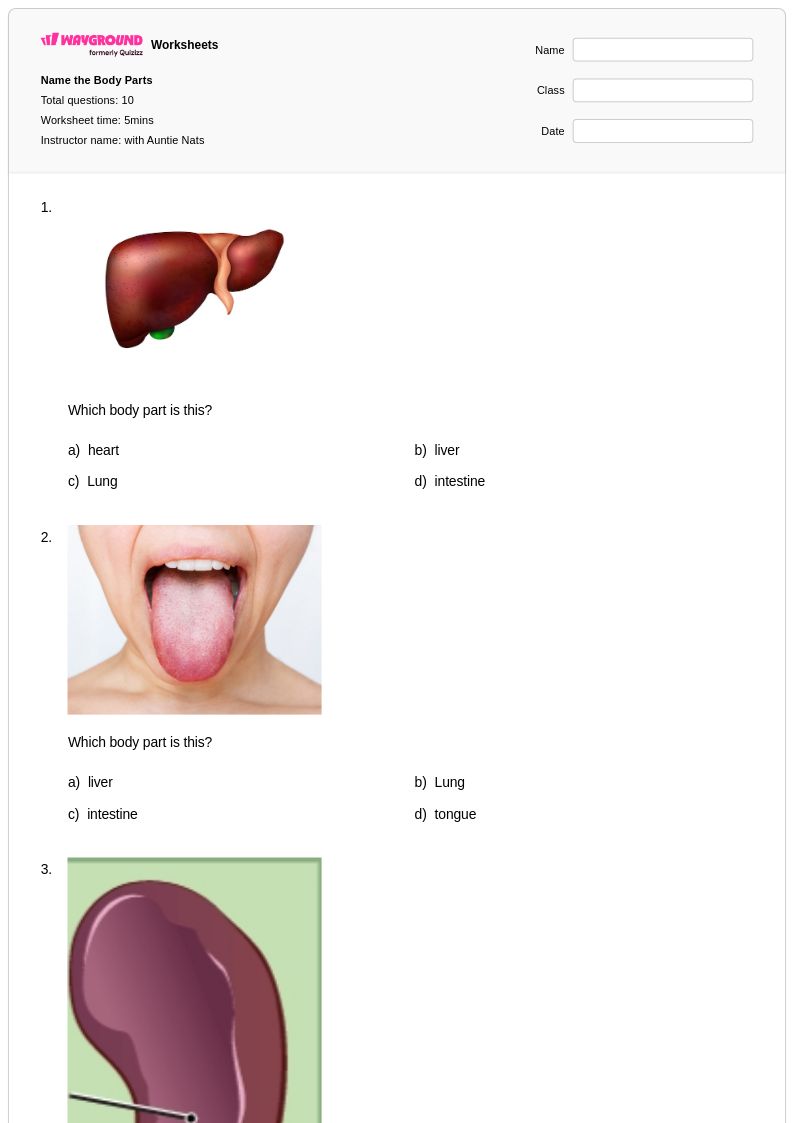
Body parts worksheets for Grade 5 students available through Wayground (formerly Quizizz) provide comprehensive coverage of human anatomy fundamentals that align with elementary science curriculum standards. These educational resources strengthen students' ability to identify, label, and understand the functions of major body systems including the skeletal, muscular, circulatory, respiratory, and digestive systems. The worksheets feature detailed diagrams, vocabulary exercises, and practice problems that help fifth graders develop scientific terminology while building foundational knowledge about how their bodies work. Each printable resource includes answer keys to support independent learning and self-assessment, with free pdf formats making them accessible for both classroom instruction and home study sessions.
Wayground's extensive collection draws from millions of teacher-created resources specifically designed to support educators in delivering effective body parts instruction to Grade 5 learners. The platform's advanced search and filtering capabilities enable teachers to quickly locate worksheets that match their specific curriculum needs, whether focusing on basic organ identification or more complex system interactions. Standards alignment ensures that selected materials support district requirements while differentiation tools allow educators to customize content difficulty levels for diverse learning needs. Teachers can seamlessly integrate these resources into lesson planning for initial instruction, targeted remediation, or enrichment activities, with both digital and printable formats providing flexibility for various classroom environments and individual student practice sessions.
FAQs
How do I teach body parts and human anatomy to students?
Teaching body parts effectively starts with connecting anatomical structures to their functions so students understand why each part matters, not just what it is called. Begin with major organ systems and use labeled diagrams to build visual familiarity before asking students to recall independently. Reinforcing lessons with diagram-labeling activities, function-matching exercises, and classification tasks helps students move from recognition to genuine anatomical literacy.
What worksheets and exercises help students practice identifying body parts?
Effective practice for body parts includes labeling blank anatomical diagrams, matching organs or structures to their functions, and classifying body parts by system or location. Exercises that ask students to analyze how different structures work together, such as tracing how the respiratory and circulatory systems interact, build deeper understanding beyond simple memorization. Varied practice formats prevent rote learning and prepare students for application-level questions.
What mistakes do students commonly make when learning about body parts?
A frequent misconception is confusing organs that are spatially close but belong to different systems, such as the trachea and esophagus, or the kidneys and adrenal glands. Students also tend to treat body parts as isolated units rather than recognizing their interdependence within systems, which limits their ability to reason about physiological processes. Targeted labeling and function-matching exercises can directly address both of these error patterns.
How can I differentiate body parts worksheets for students at different skill levels?
For struggling learners, provide word banks with diagram-labeling tasks to reduce retrieval demands while still reinforcing anatomical vocabulary. More advanced students benefit from open-ended tasks that require them to explain functional relationships between structures or compare how different organisms approach the same biological problem. On Wayground, teachers can apply accommodations such as reduced answer choices or read-aloud support to individual students without disrupting the rest of the class, making differentiation practical at scale.
How do I use body parts worksheets from Wayground in my classroom?
Body parts worksheets on Wayground are available as printable PDFs for traditional classroom use and in digital formats for technology-integrated environments, giving teachers flexibility depending on their setup. Each worksheet includes a complete answer key, which supports efficient grading and allows teachers to provide immediate feedback. Teachers can also host worksheets as a quiz directly on Wayground, enabling interactive, self-paced practice for students in both in-person and remote learning contexts.
How do I assess whether students have mastered human body part identification?
Reliable assessment of body part knowledge should move beyond simple recall and include tasks where students explain the function of a structure, identify it within a diagram without labels, or describe how removing it would affect a body system. Common gaps to check for include inability to distinguish between similar-sounding structures, such as arteries and veins, and confusion between organ names and the systems they belong to. Short diagnostic tasks embedded in worksheets can surface these gaps before summative assessment.