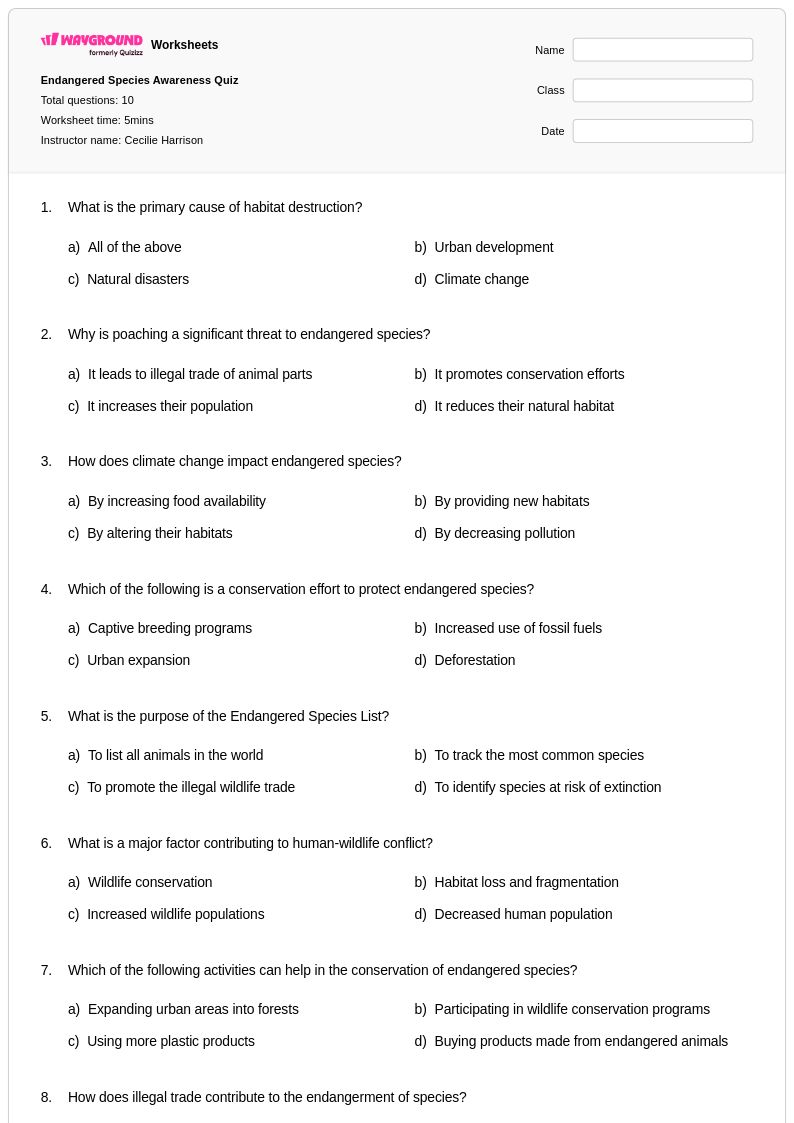
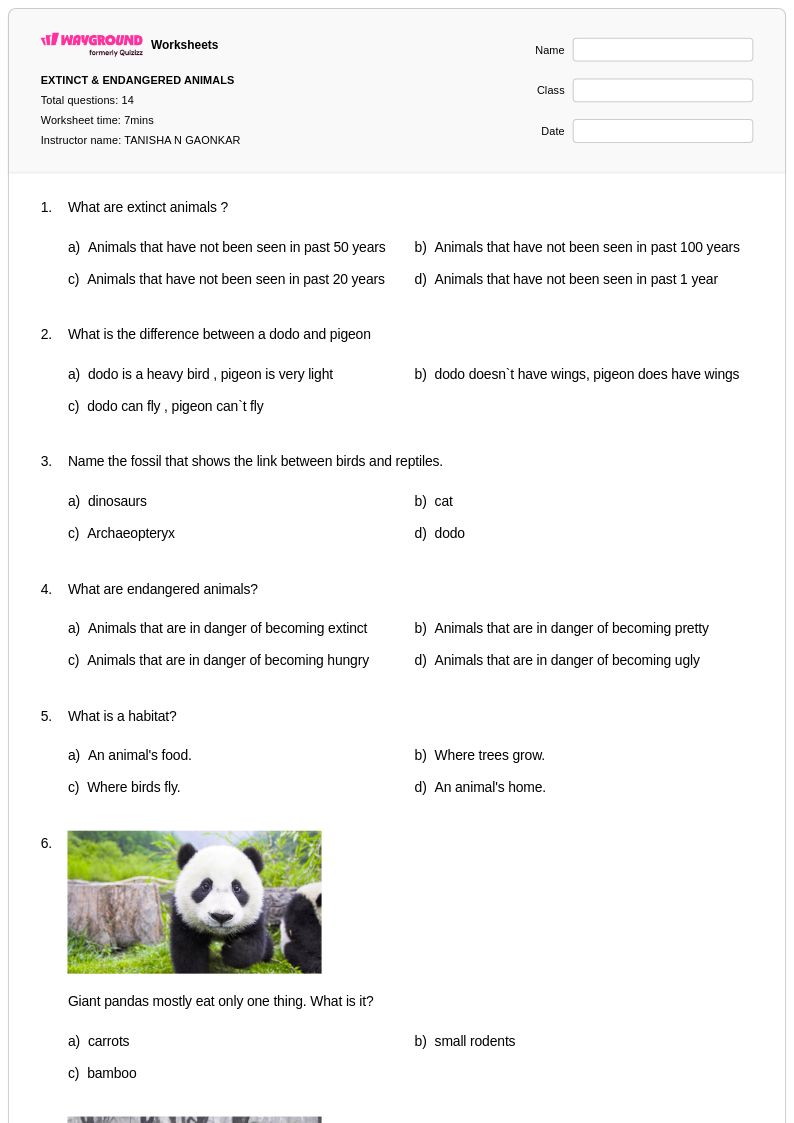
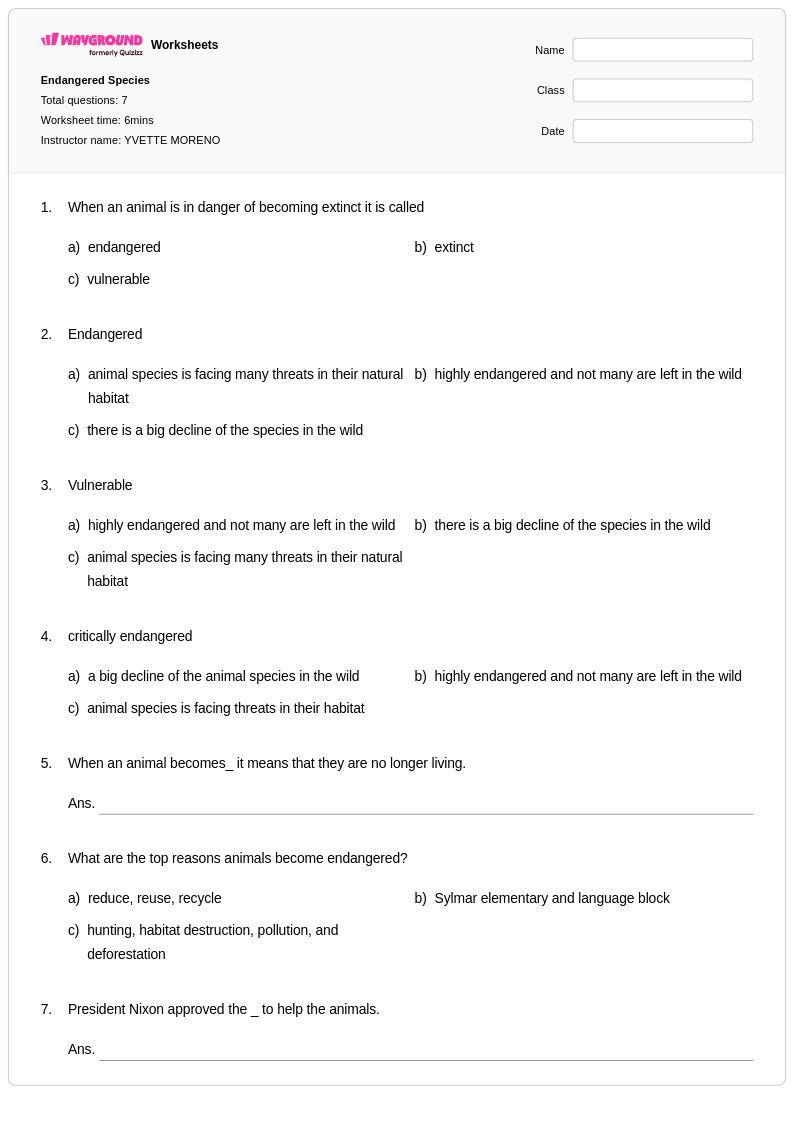
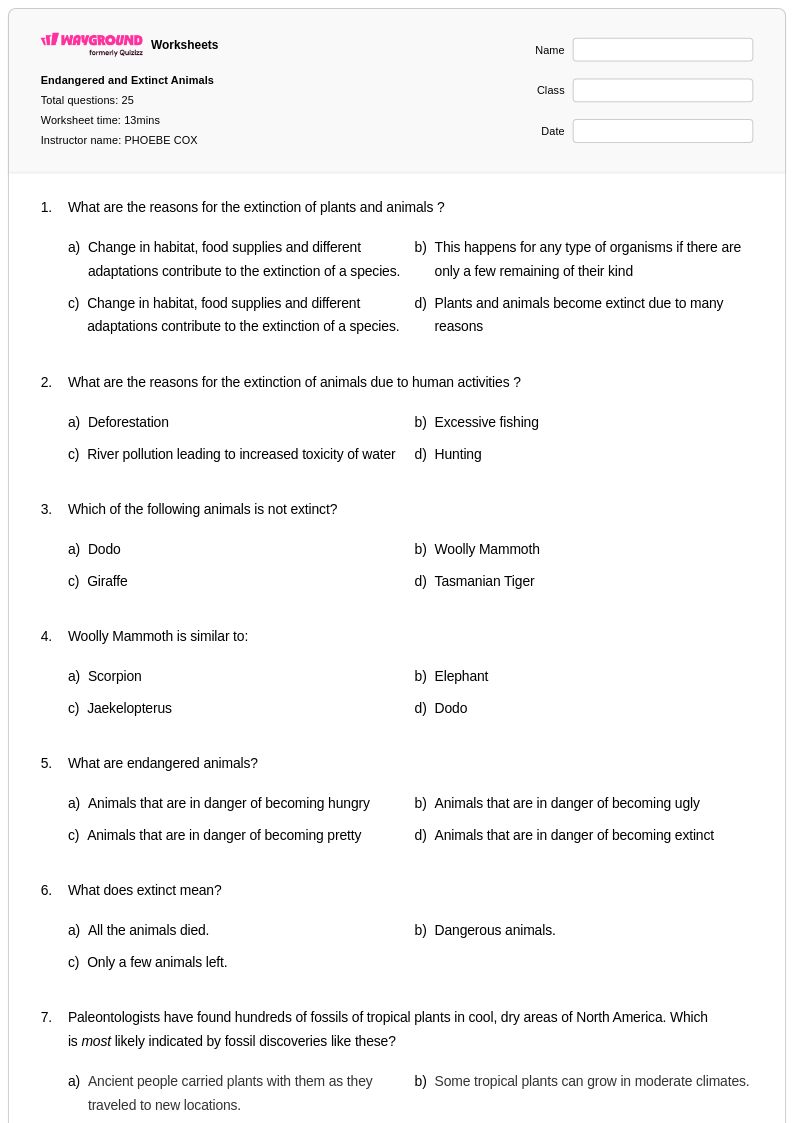
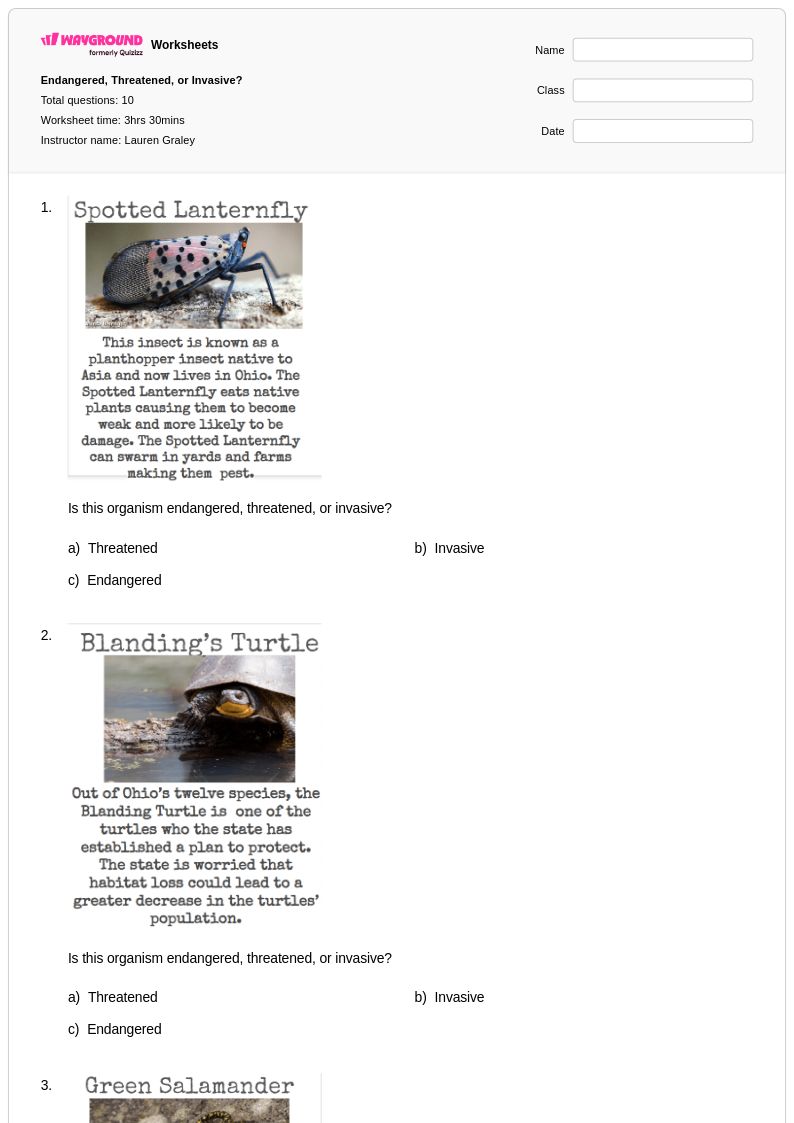
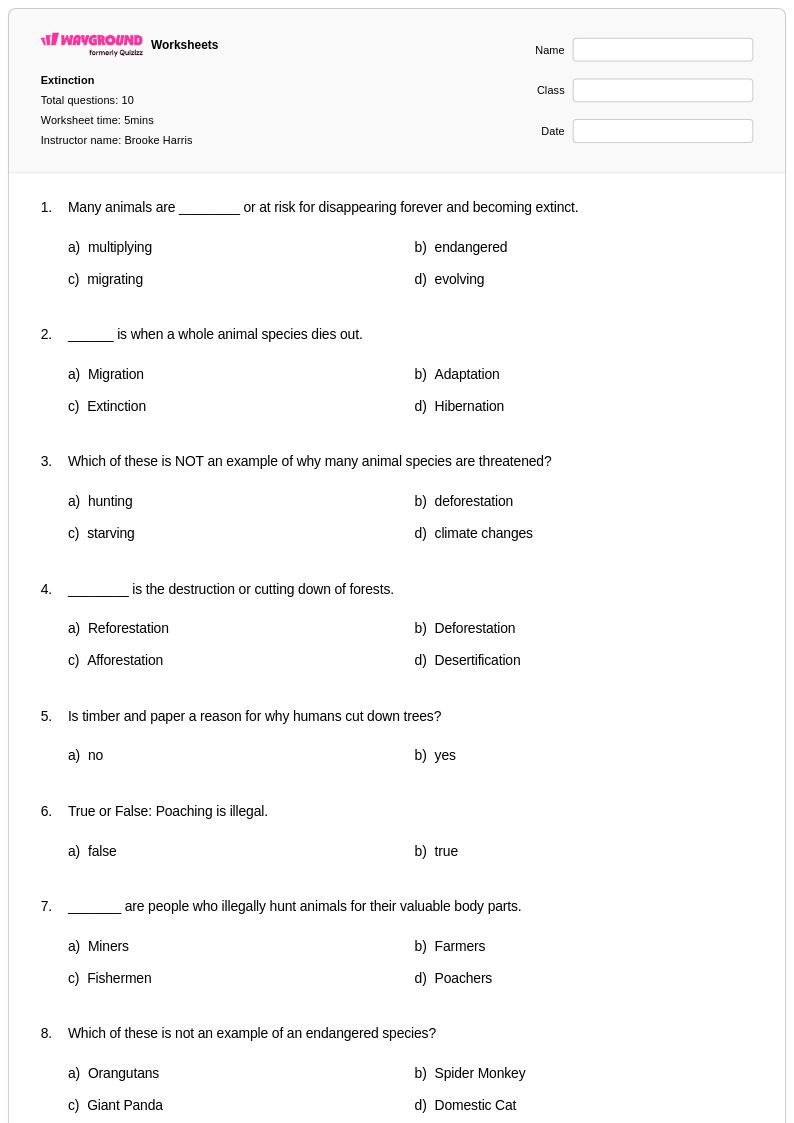
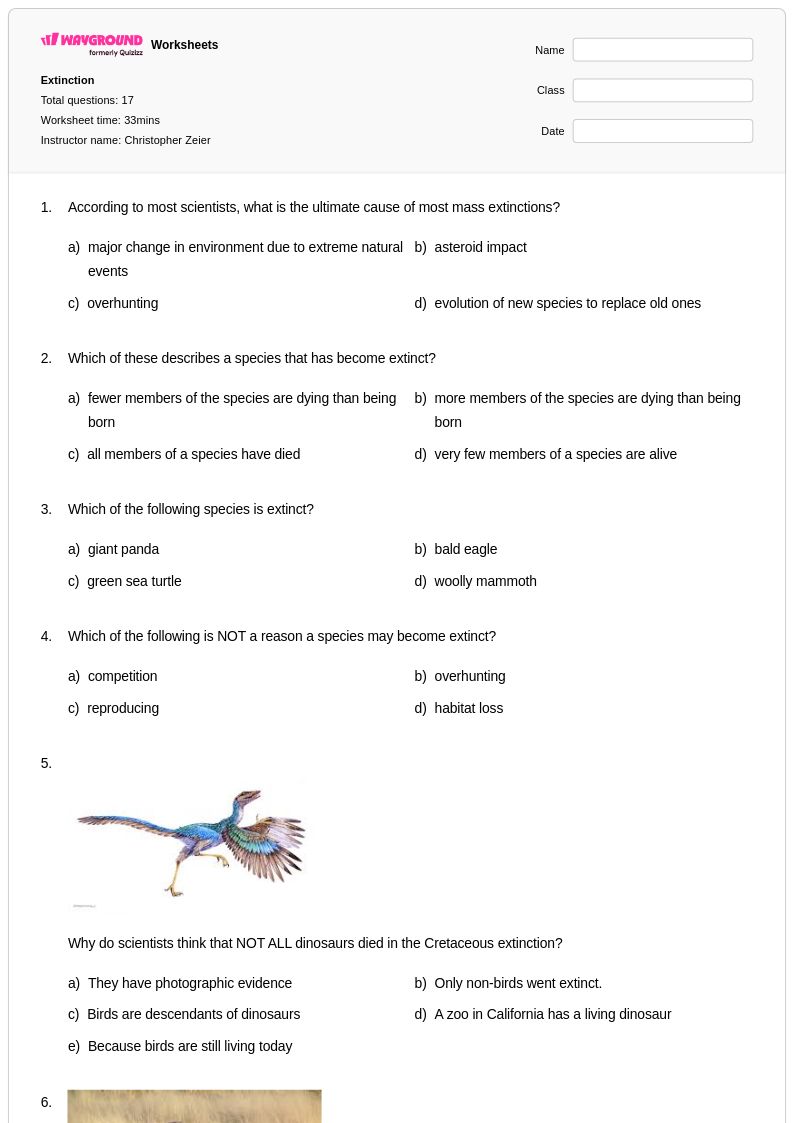
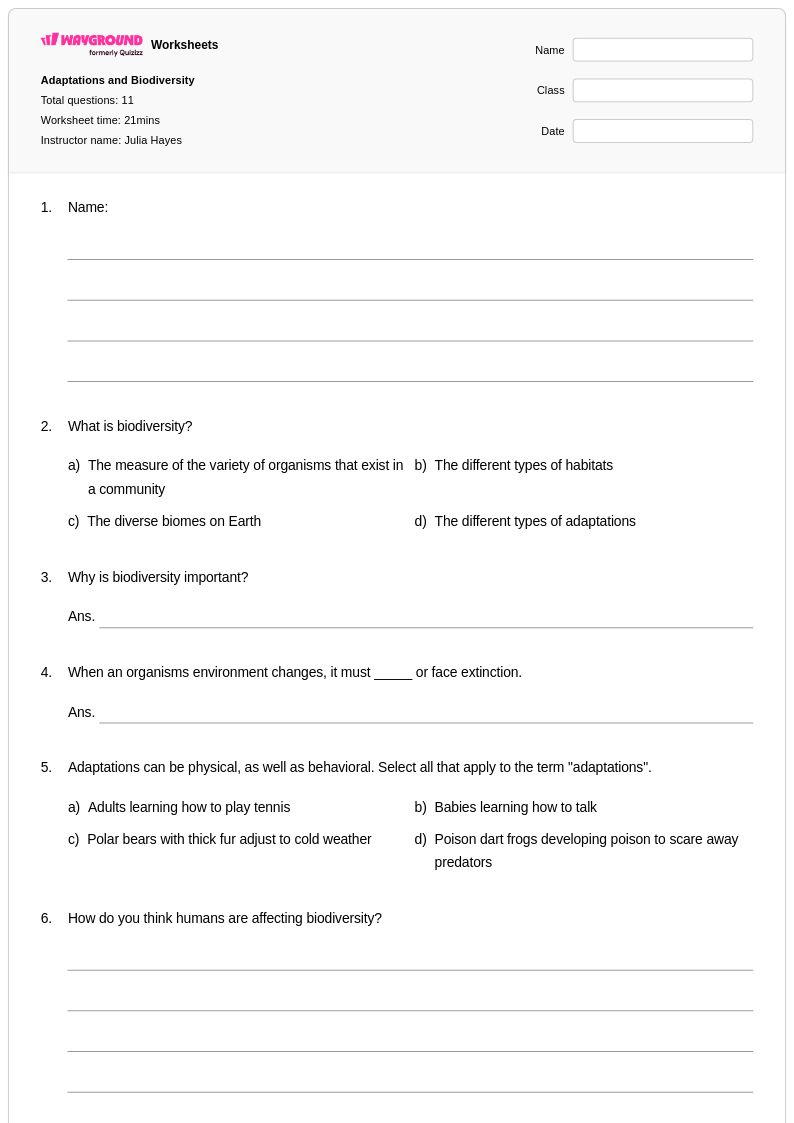
Free Printable Endangered Species Worksheets for Grade 5
Explore Wayground's free Grade 5 endangered species worksheets and printables that help students learn about wildlife conservation, habitat protection, and species preservation through engaging practice problems and comprehensive answer keys.
Explore printable Endangered Species worksheets for Grade 5
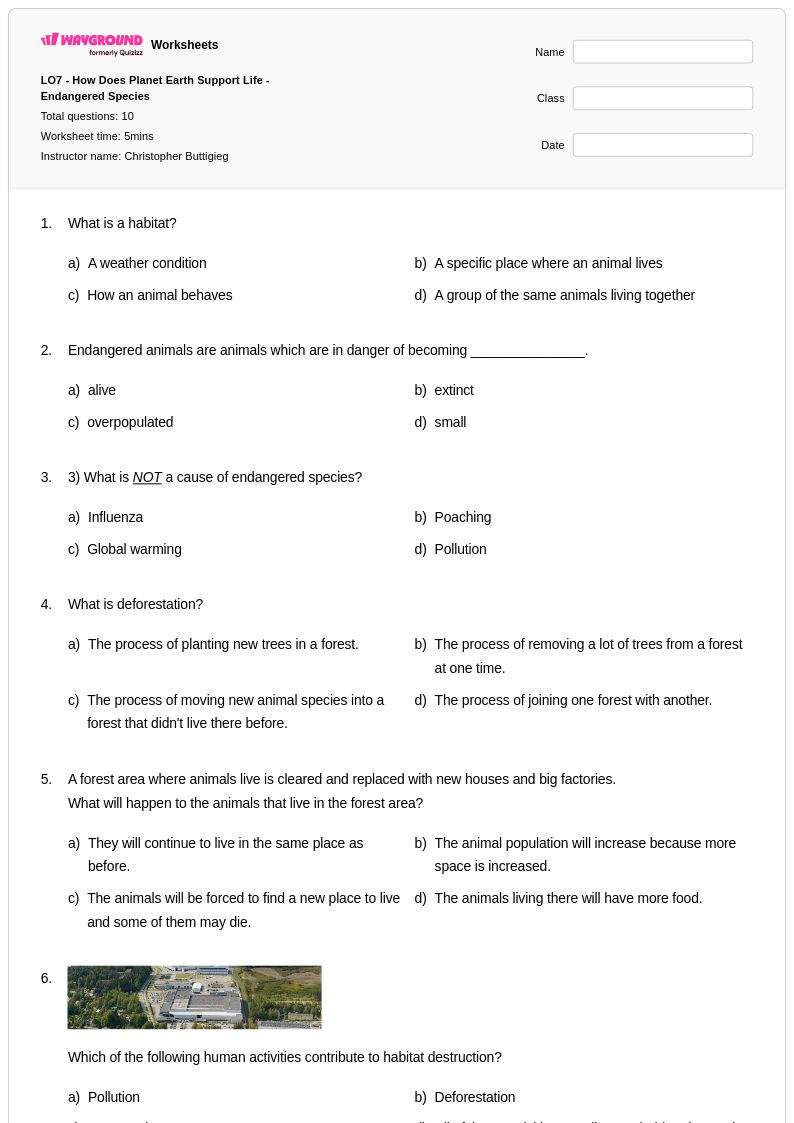
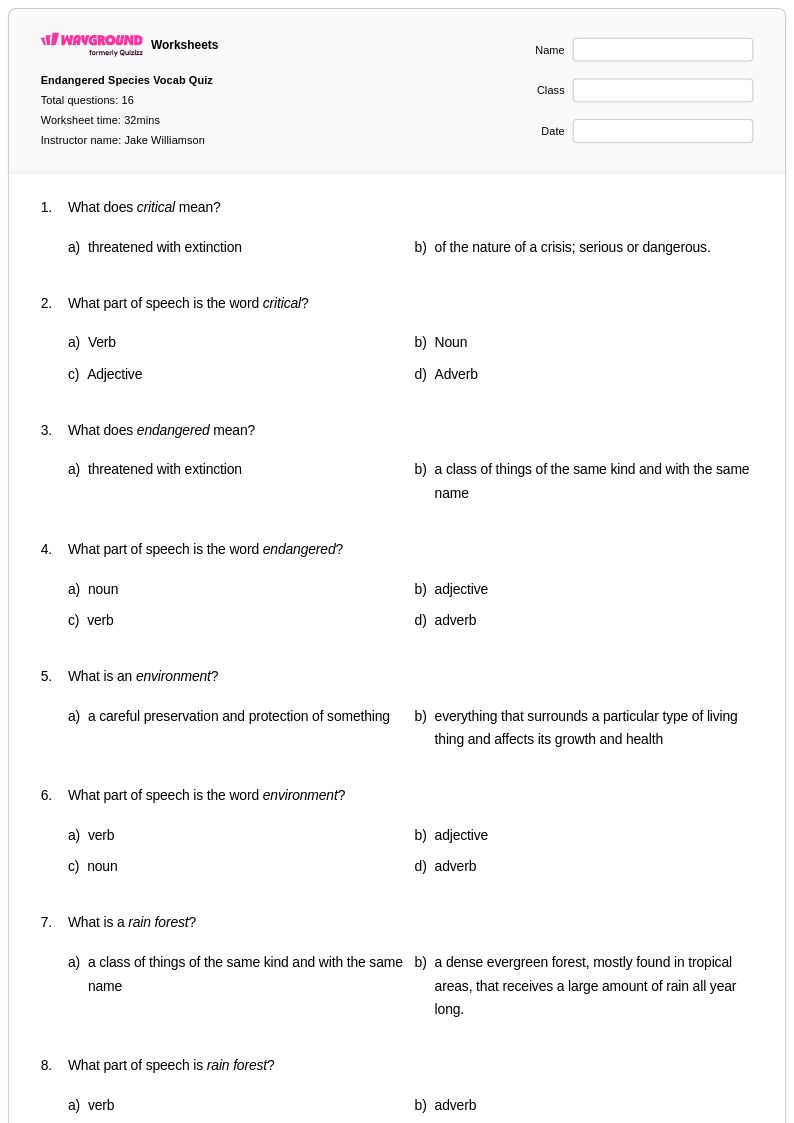
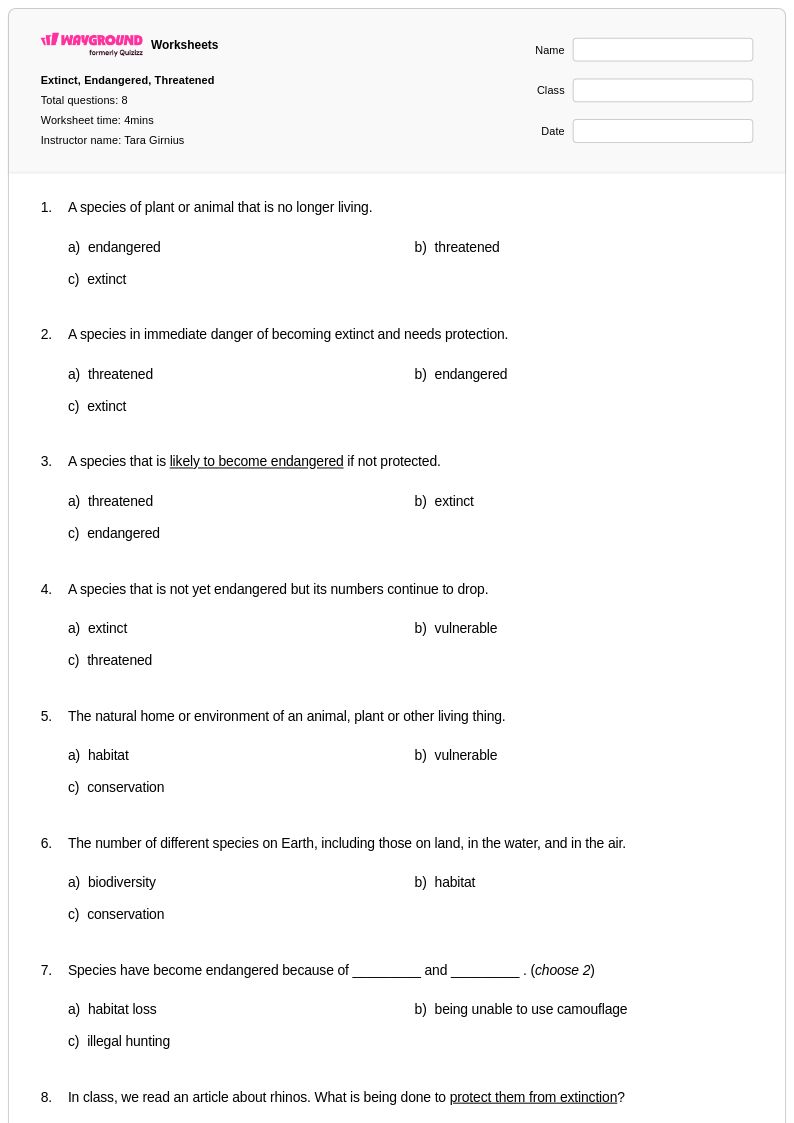
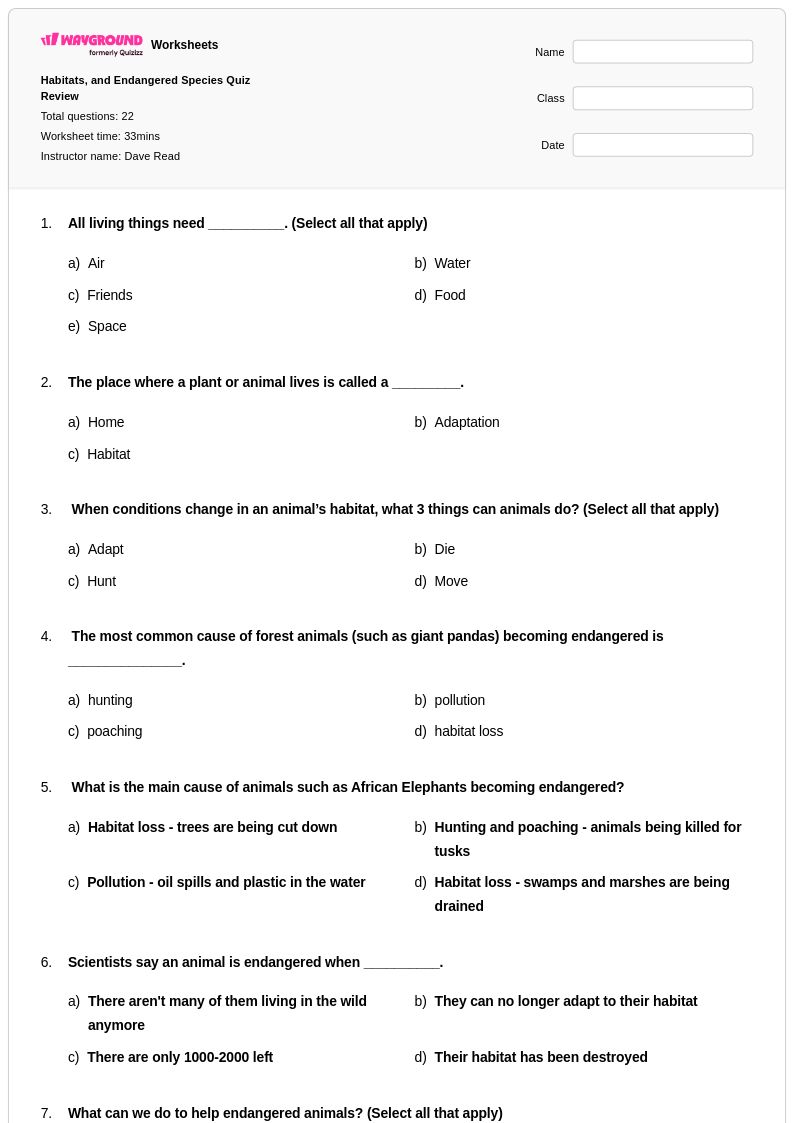
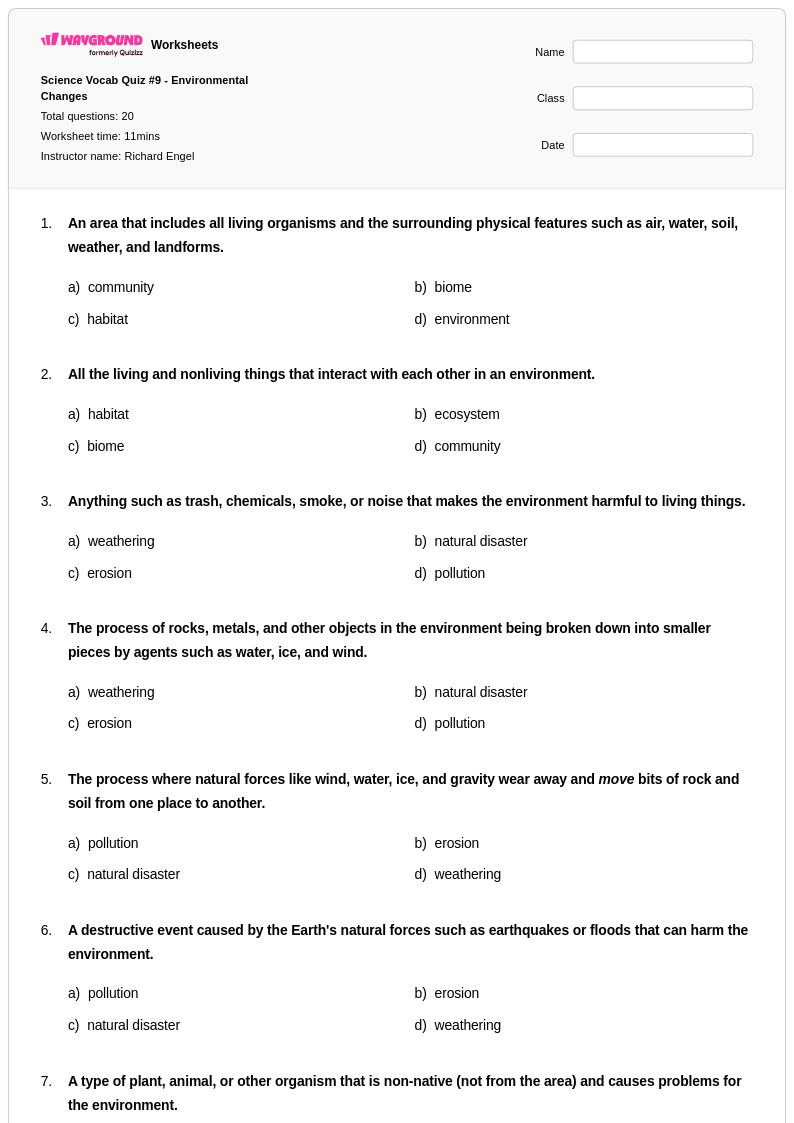
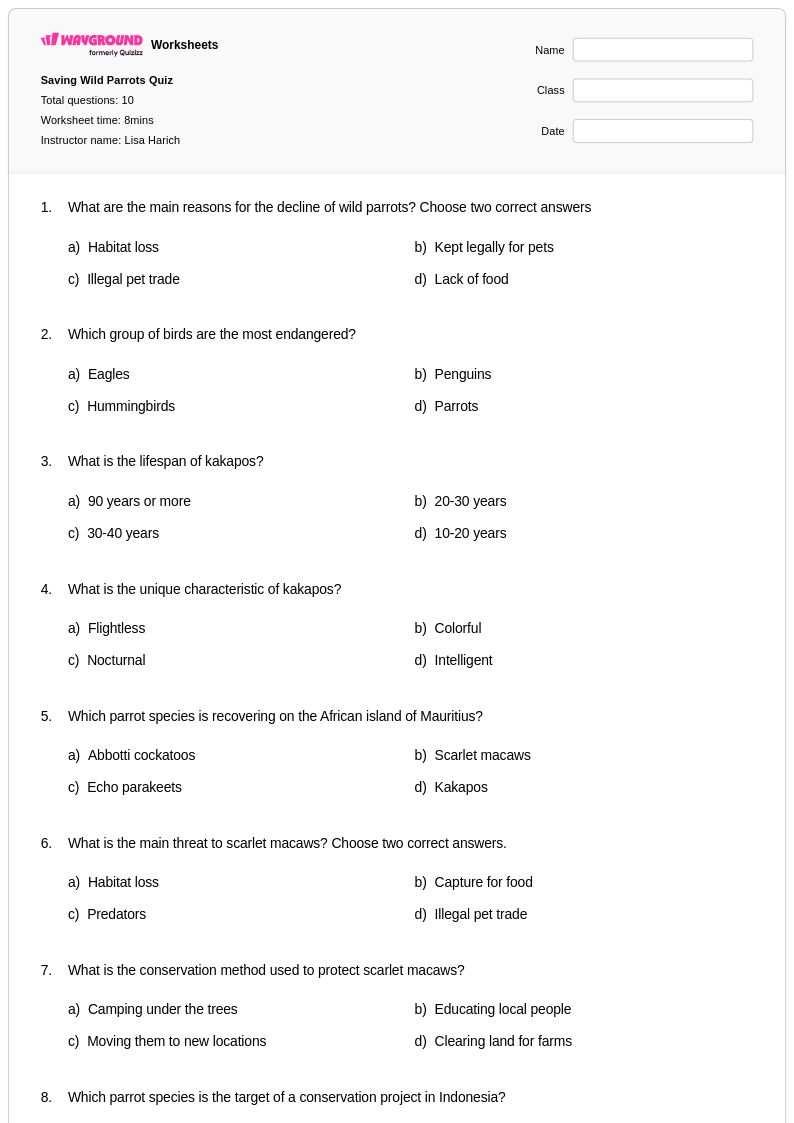
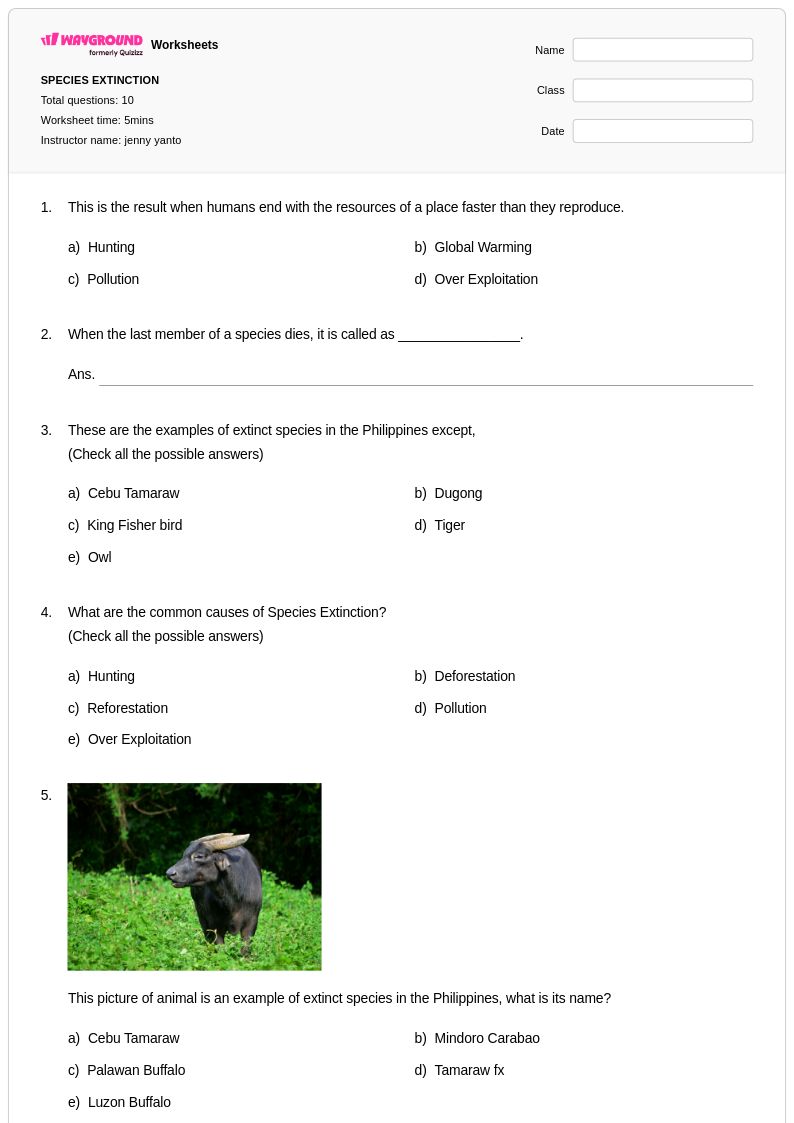
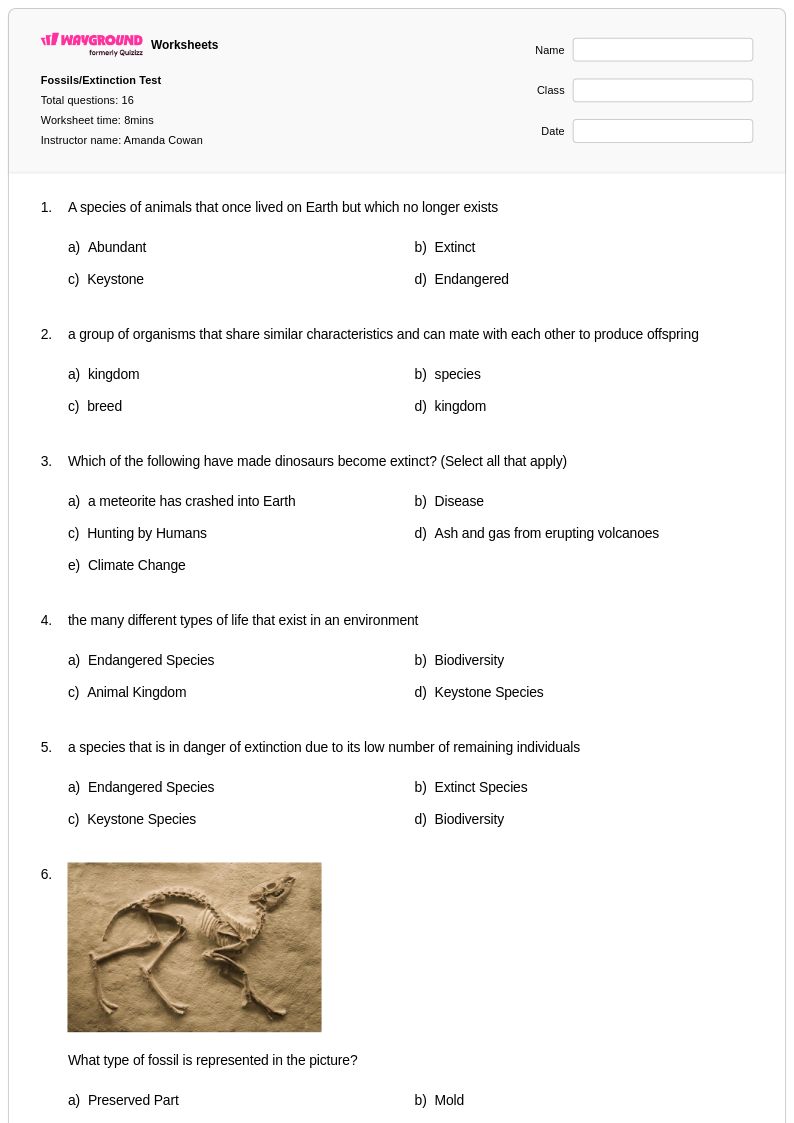
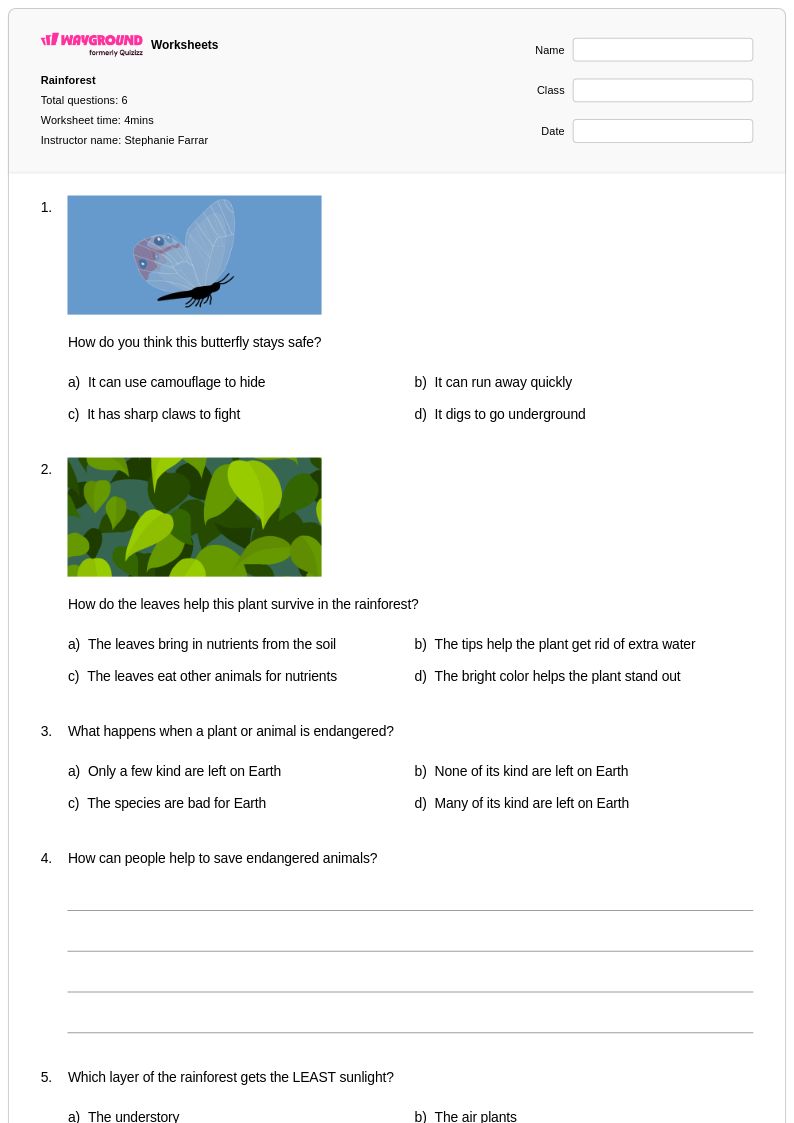
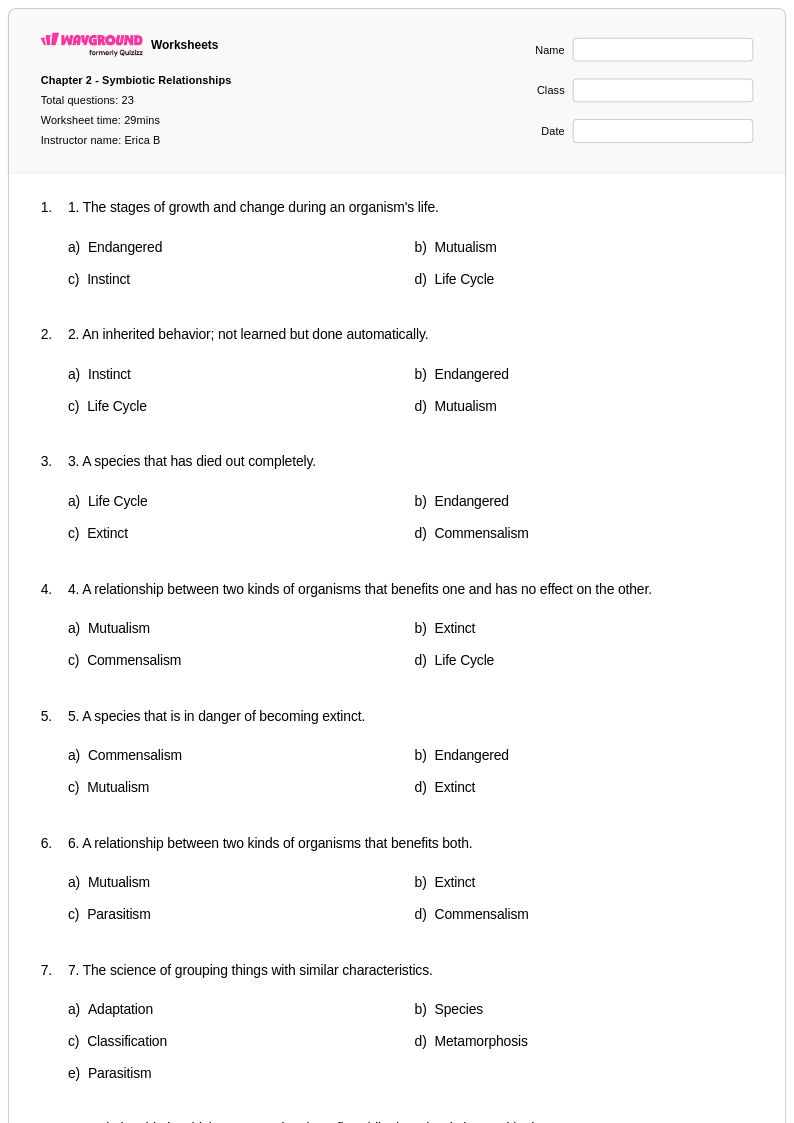
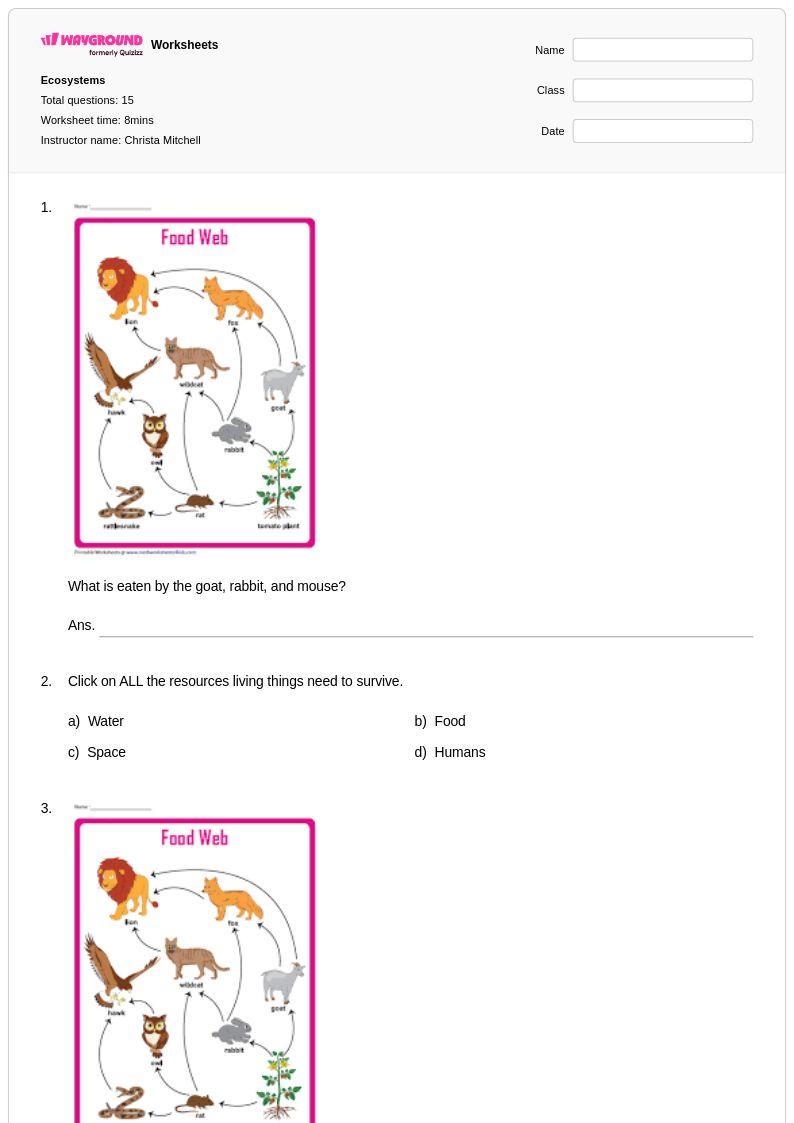
Endangered species worksheets for Grade 5 students provide essential learning opportunities to explore wildlife conservation, habitat protection, and biodiversity concepts through engaging scientific inquiry. These comprehensive educational resources strengthen critical thinking skills as students analyze factors contributing to species decline, examine conservation success stories, and evaluate human impact on ecosystems. The worksheet collections include detailed answer keys for immediate feedback, free printable pdf formats for classroom flexibility, and varied practice problems that challenge students to apply scientific reasoning when studying threatened animals and their environments. Students develop research skills while investigating real-world conservation cases, learning to identify endangered species characteristics, and understanding the interconnected relationships within food webs and ecological systems.
Wayground, formerly Quizizz, supports educators with an extensive library of millions of teacher-created endangered species resources specifically designed for Grade 5 science instruction. The platform's robust search and filtering capabilities enable teachers to quickly locate standards-aligned materials that match their curriculum requirements, while differentiation tools allow for seamless customization to meet diverse learning needs within the classroom. These versatile worksheet collections are available in both printable and digital pdf formats, providing flexibility for various instructional settings and enabling teachers to effectively plan lessons, provide targeted remediation for struggling learners, offer enrichment opportunities for advanced students, and deliver consistent skill practice that reinforces endangered species concepts. The comprehensive resource database empowers educators to create meaningful learning experiences that build environmental awareness and scientific literacy while addressing individual student learning objectives.
FAQs
How do I teach endangered species and wildlife conservation in a biology class?
Start by grounding students in the core drivers of species decline: habitat destruction, invasive species, overexploitation, pollution, and climate change. Use real case studies of endangered animals to make abstract ecological concepts concrete, then build toward conservation strategies like protected areas, captive breeding, and habitat restoration. Connecting population dynamics to human decision-making helps students see conservation biology as both a science and a policy issue.
What worksheets or activities help students practice endangered species concepts?
Effective practice activities include interpreting population data graphs for threatened species, analyzing case studies of conservation successes and failures, and evaluating human impacts on specific ecosystems. Worksheets that ask students to examine food web disruptions when a keystone species declines build systems-level thinking. Tasks that connect habitat loss to biodiversity metrics reinforce understanding of why certain species are more vulnerable to extinction than others.
What mistakes do students commonly make when learning about endangered species?
A common misconception is that a species must be nearly extinct before it qualifies as endangered, when in fact classification systems like the IUCN Red List use population trends, habitat range, and reproductive rates. Students also frequently conflate 'threatened' and 'endangered' as interchangeable terms rather than distinct conservation status categories. Another error is attributing species decline to a single cause rather than recognizing the compounding interaction of multiple pressures.
How do I use Wayground's endangered species worksheets in my classroom?
Wayground's endangered species worksheets are available as printable PDFs for traditional classroom use and in digital formats for technology-integrated environments, so they work across in-person, hybrid, and remote settings. Teachers can also host the worksheets as a live or assigned quiz directly on Wayground, which adds an interactive layer to student practice. All worksheets include complete answer keys, reducing prep time for teachers.
How can I differentiate endangered species lessons for students at different ability levels?
For struggling learners, simplified case studies with guided reading scaffolds and reduced answer choices can lower the cognitive load of complex ecological concepts. Advanced students benefit from open-ended analysis tasks that require them to evaluate conservation policy trade-offs or compare extinction risk factors across multiple species. On Wayground, teachers can apply individual accommodations such as read aloud support or extended time to specific students without disrupting the rest of the class.
How do I assess student understanding of endangered species and conservation biology?
Strong assessments move beyond simple recall to test whether students can apply concepts, such as predicting how habitat fragmentation affects a specific species' population viability or explaining why removing a top predator destabilizes an ecosystem. Data interpretation tasks using real population graphs are particularly effective at revealing whether students understand trend analysis versus isolated data points. Including both cause-and-effect reasoning questions and conservation solution prompts gives a fuller picture of student understanding.