
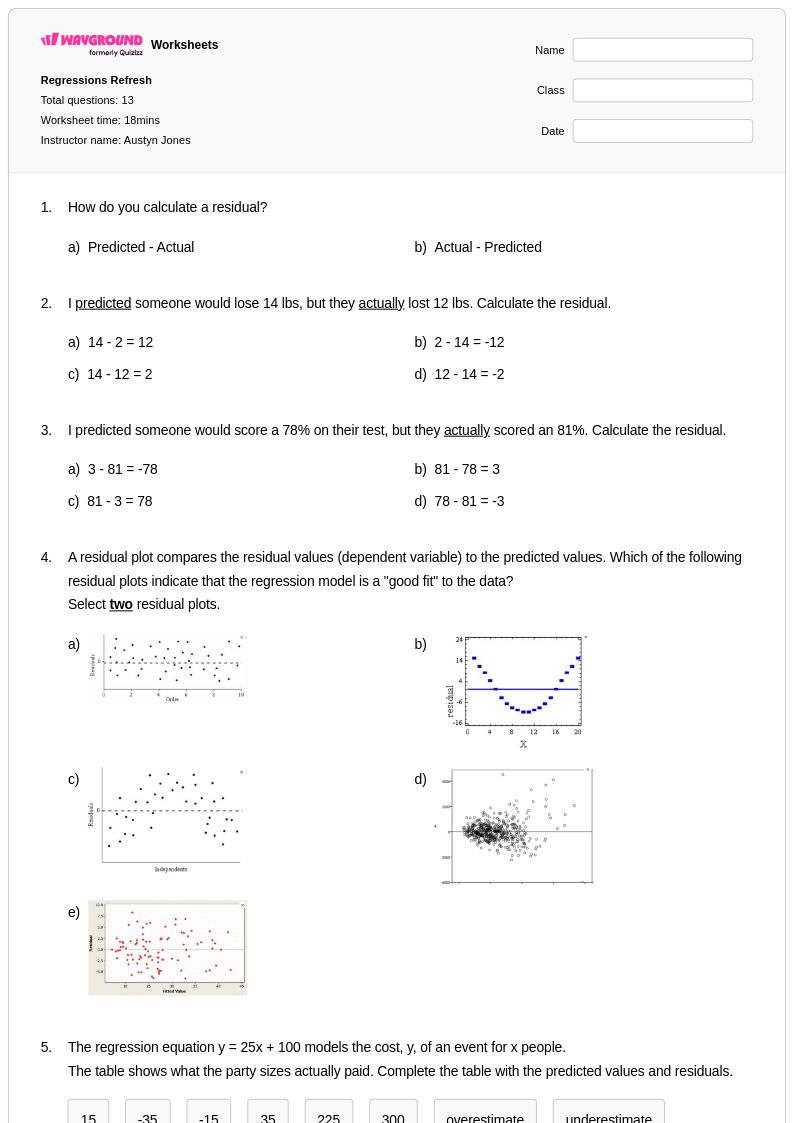
13 Q
9th - 12th
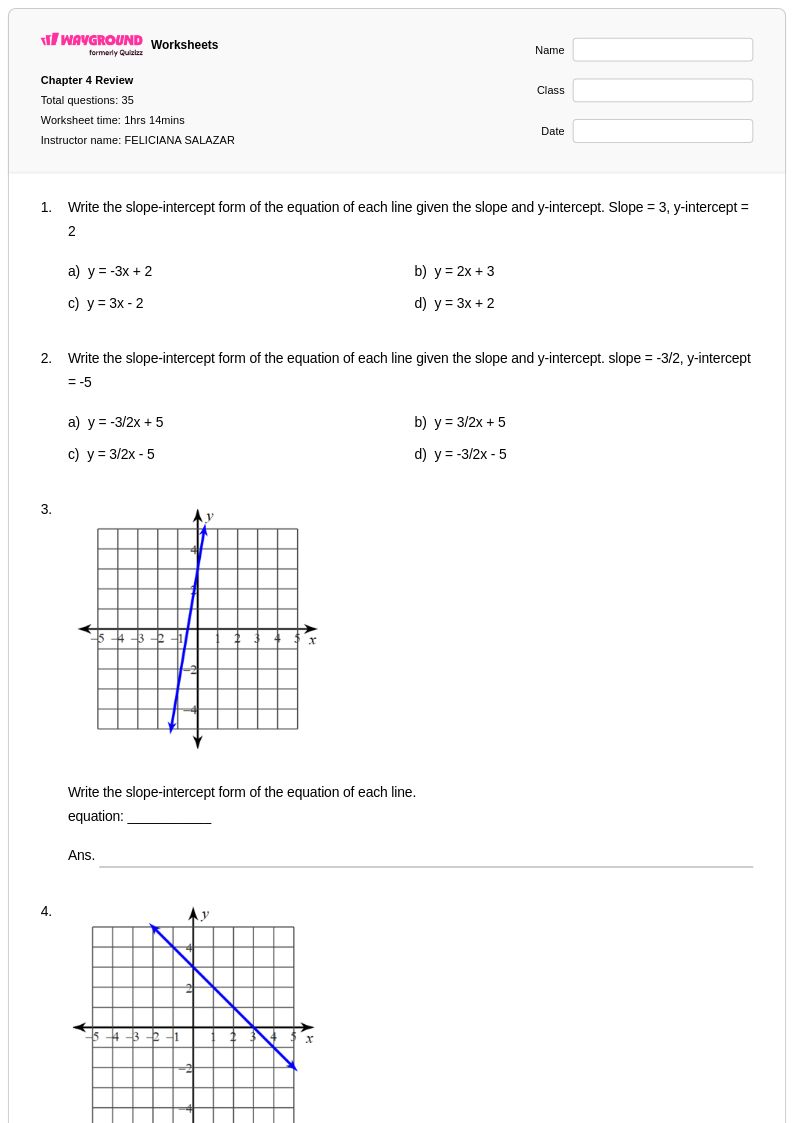
35 Q
9th
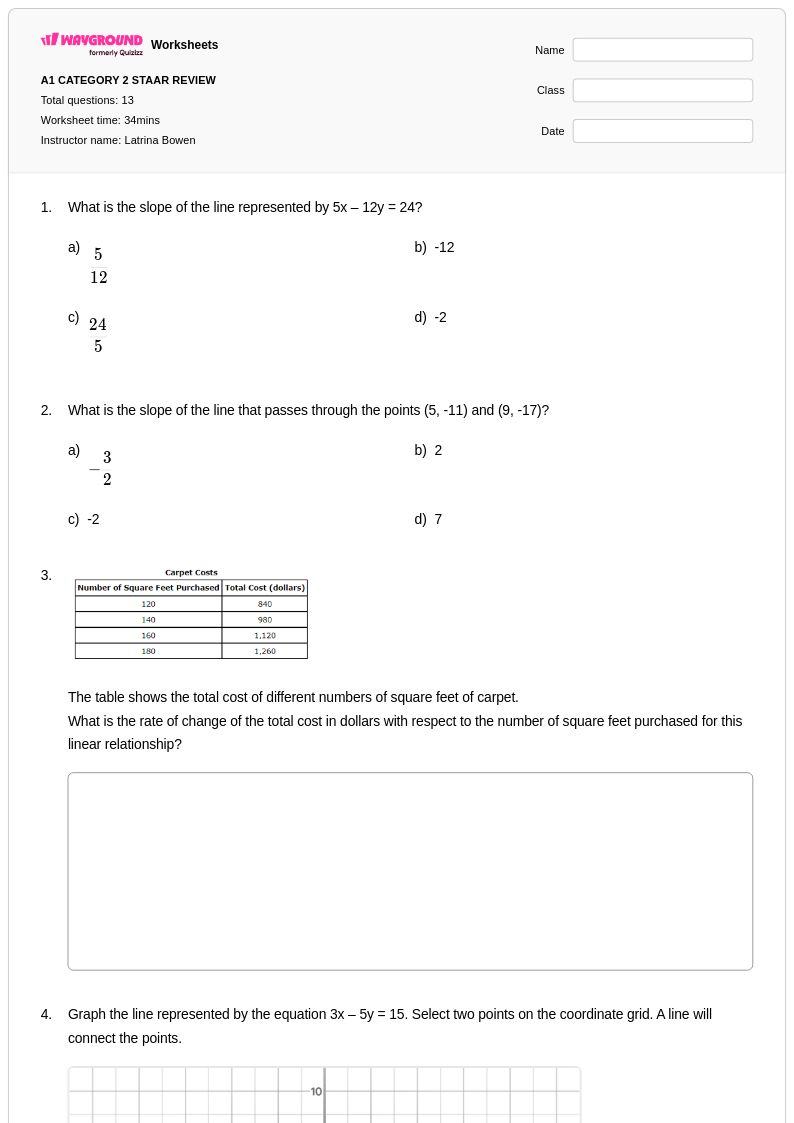
13 Q
9th
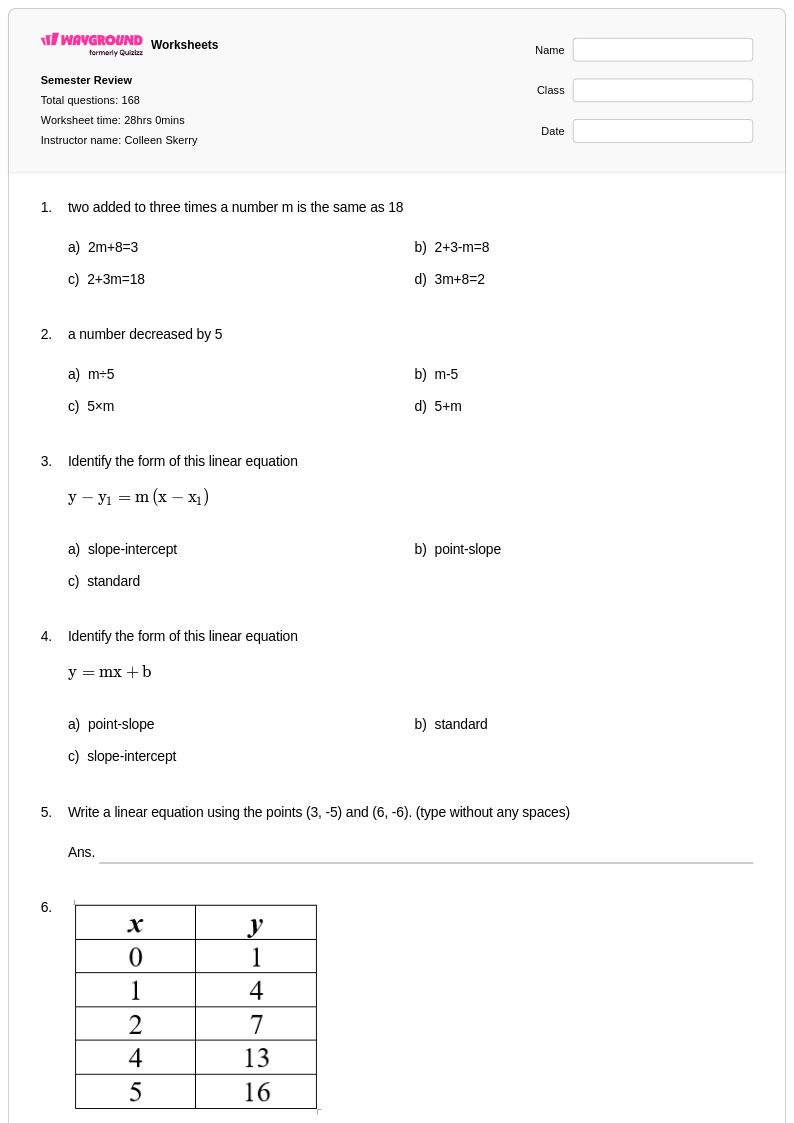
168 Q
9th
21 Q
9th
18 Q
9th
18 Q
9th - 12th
40 Q
9th
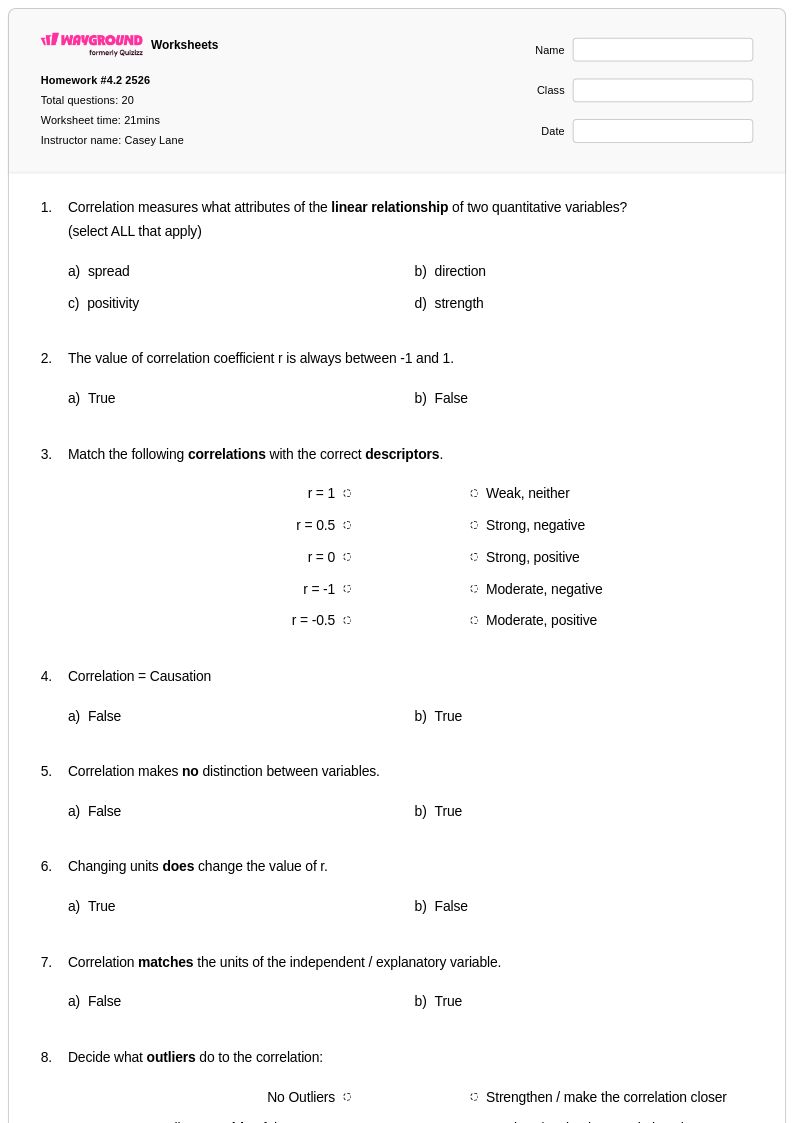
20 Q
9th - 12th
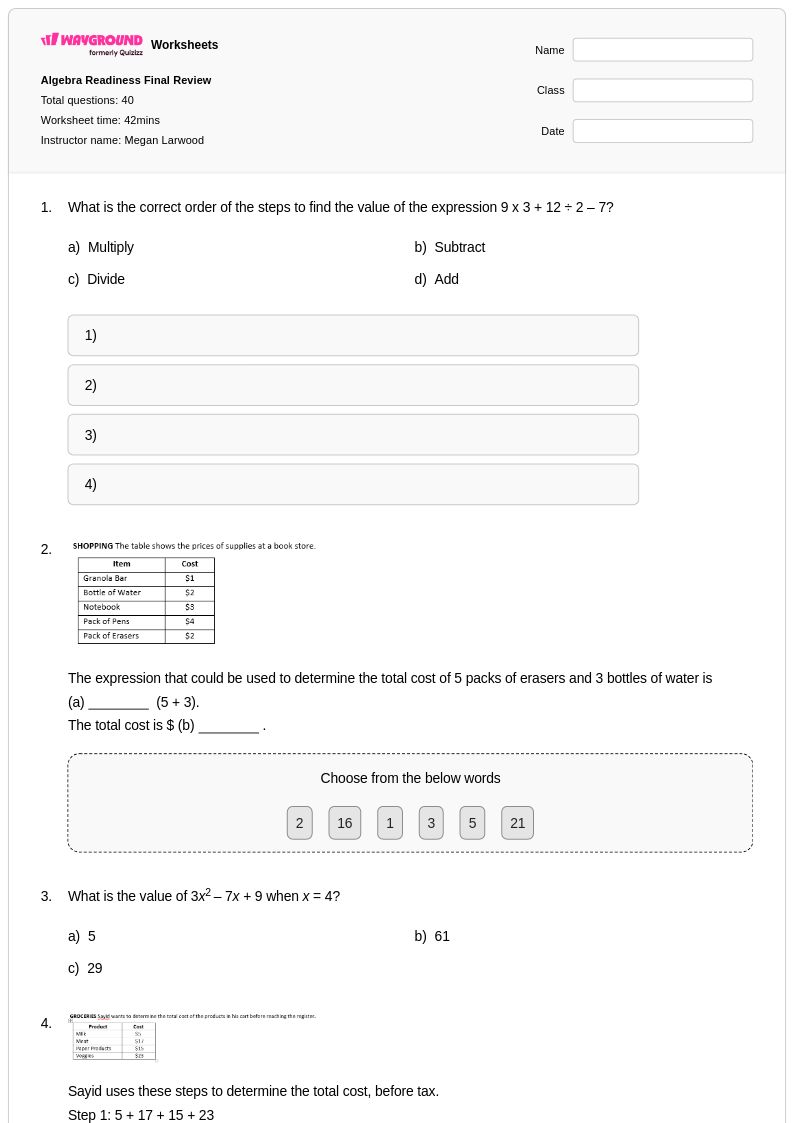
40 Q
9th - 12th
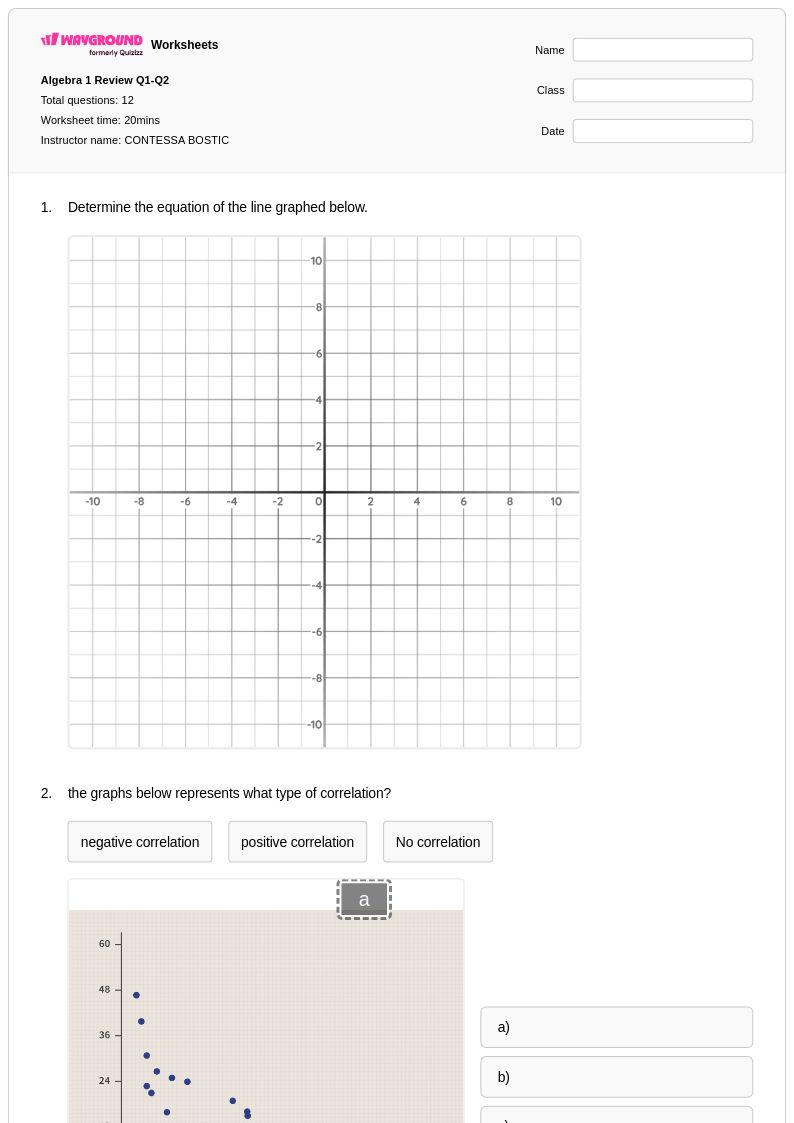
12 Q
9th - 12th
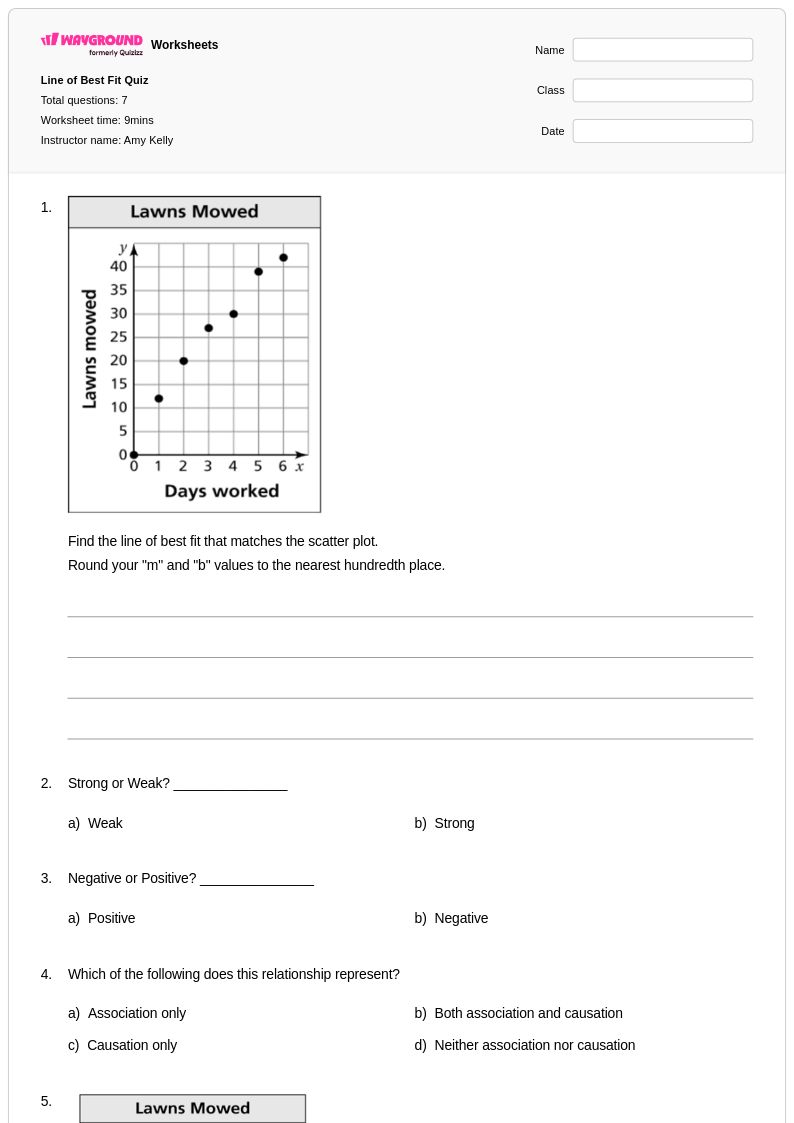
7 Q
9th
20 Q
9th
29 Q
9th - 12th
11 Q
9th
24 Q
9th - 12th
20 Q
9th - 12th
28 Q
9th
14 Q
7th - 12th
12 Q
9th
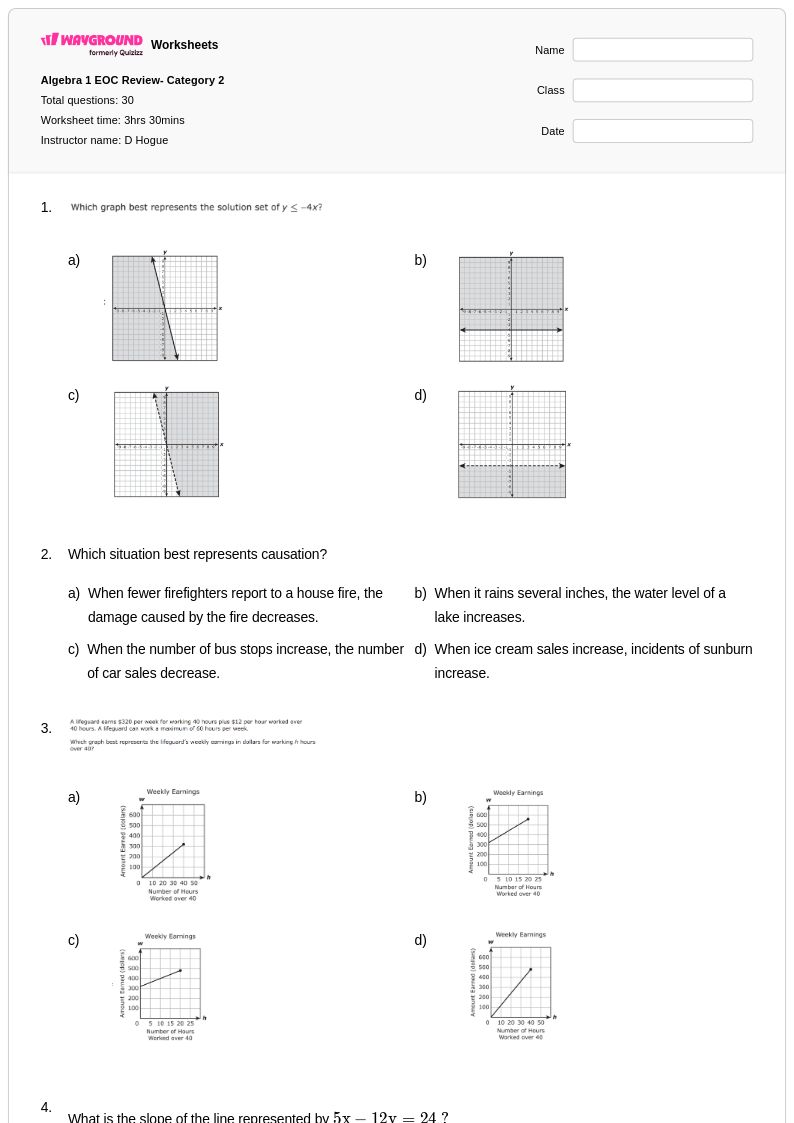
30 Q
9th
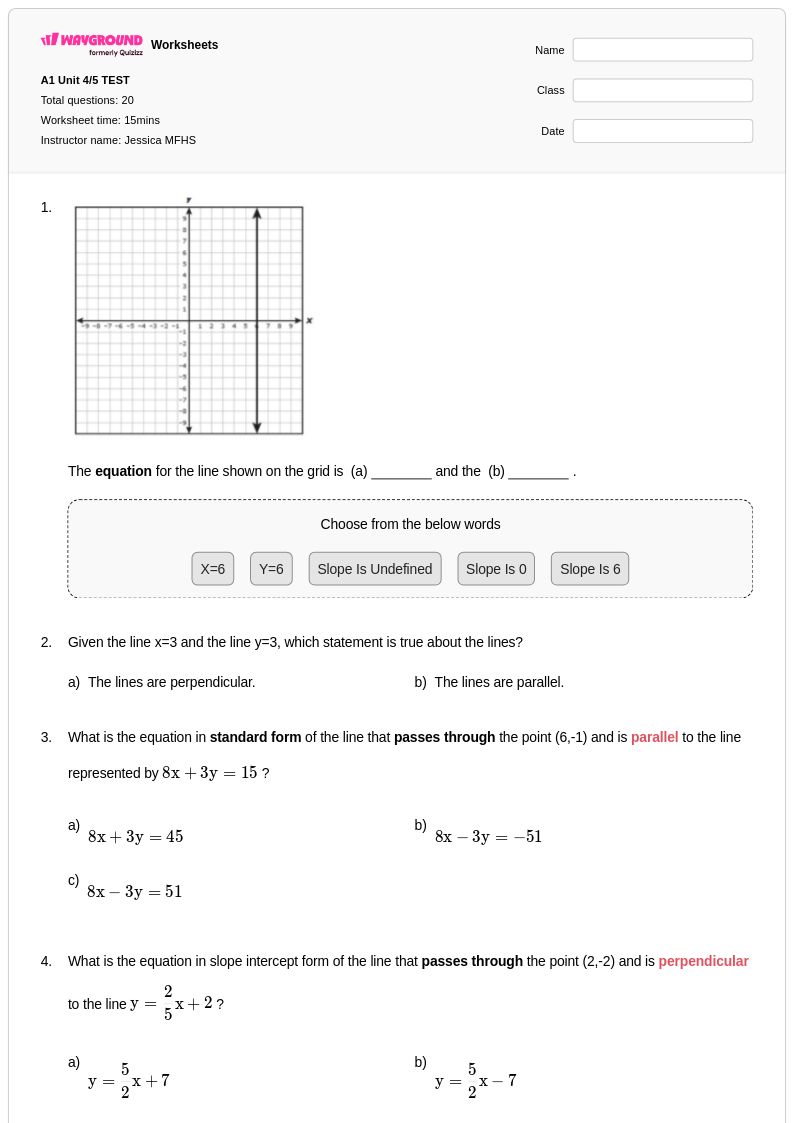
20 Q
9th
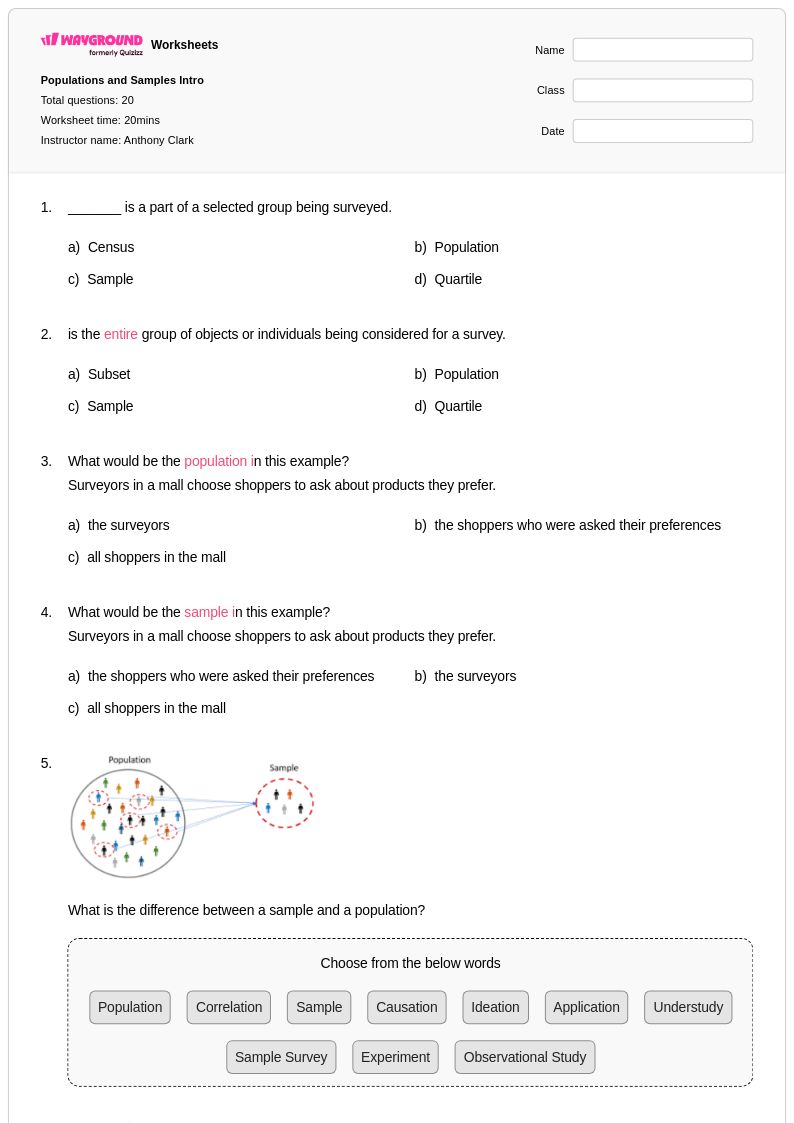
20 Q
7th - Uni
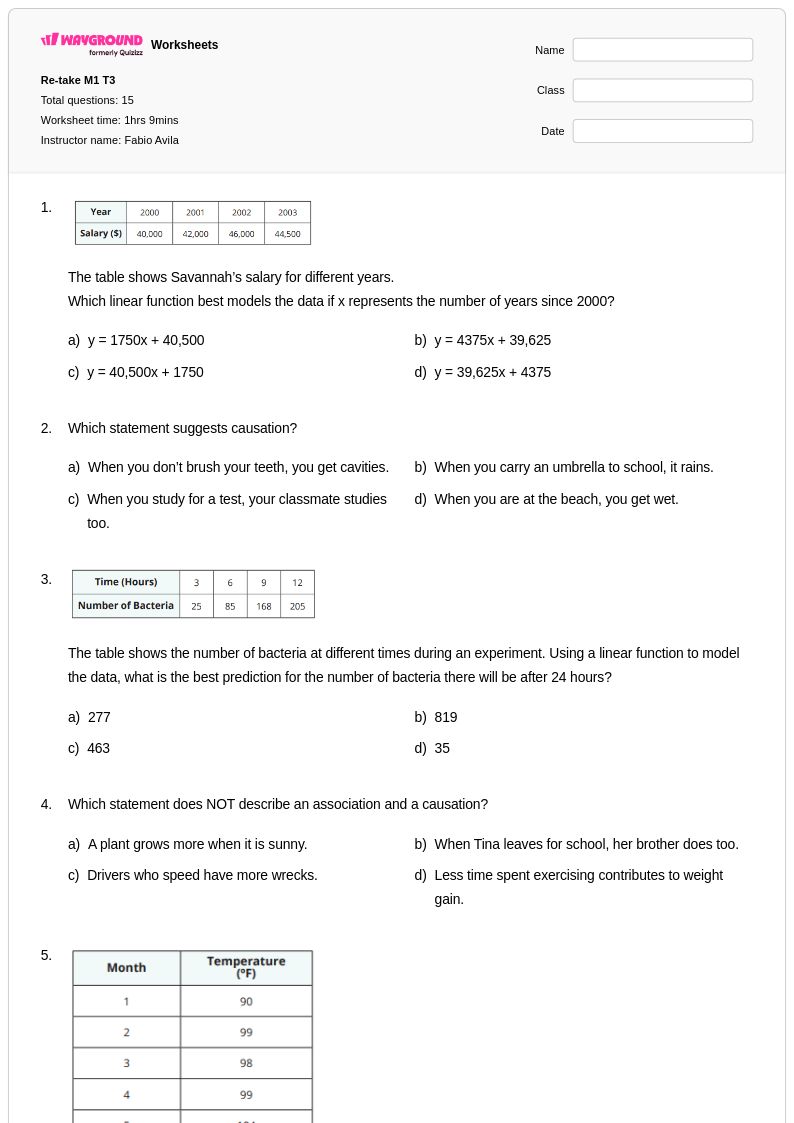
15 Q
8th - 10th
Explore Other Subject Worksheets for grade 9
Explore printable Causation and Correlation worksheets for Grade 9
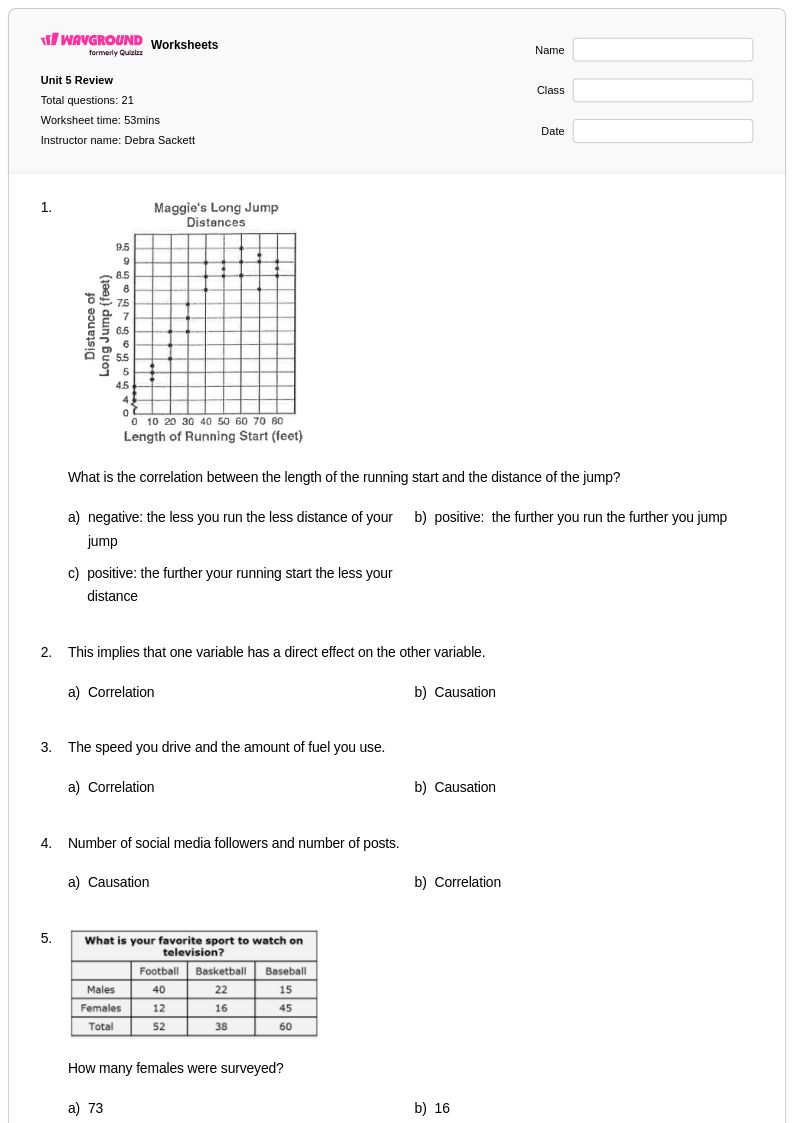
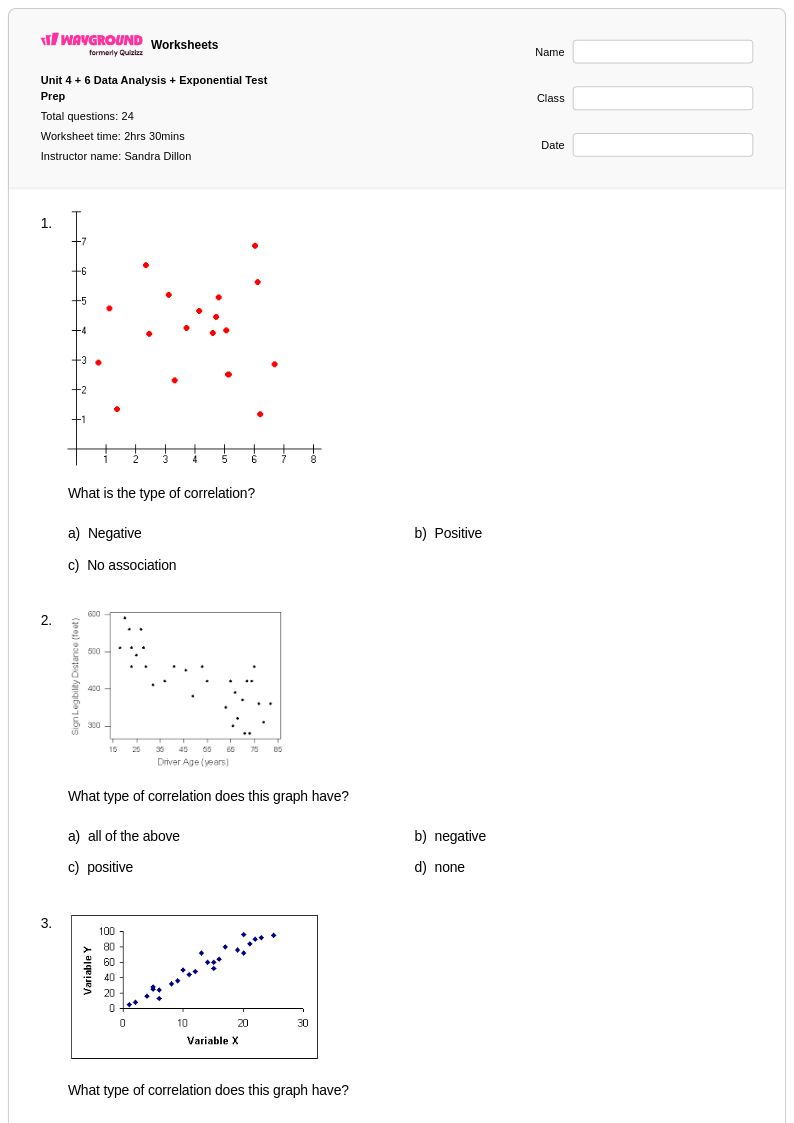
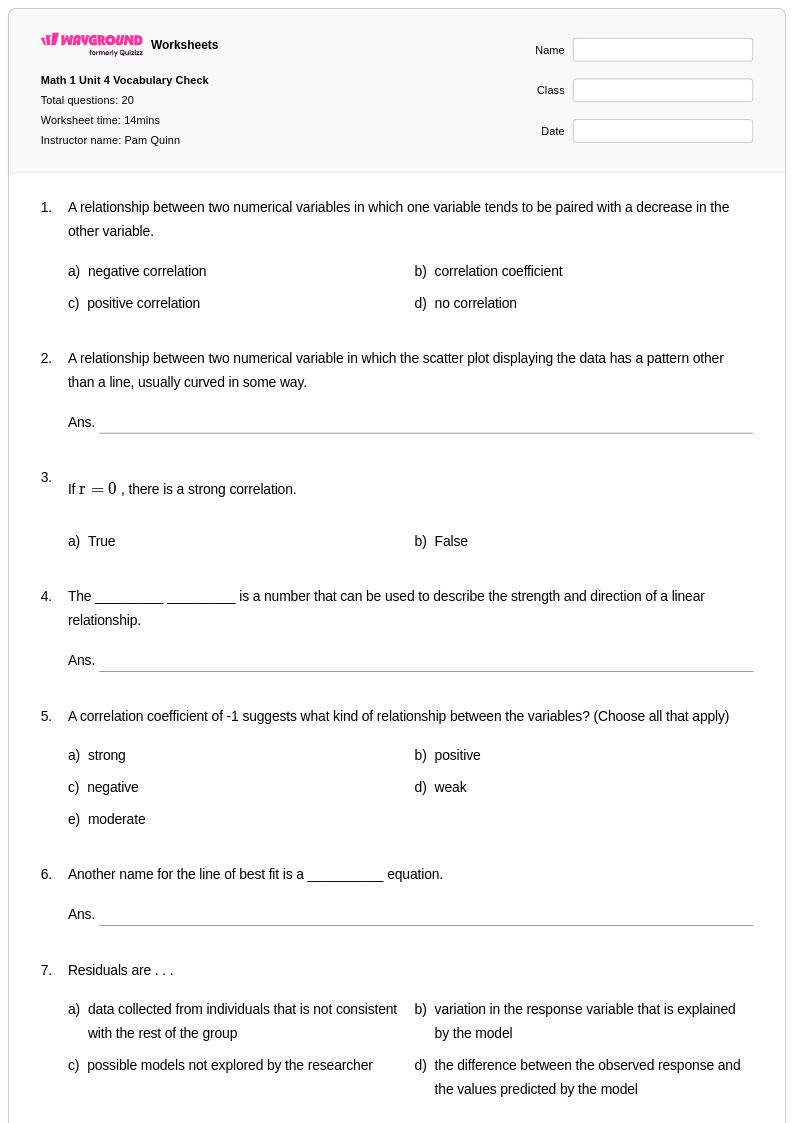
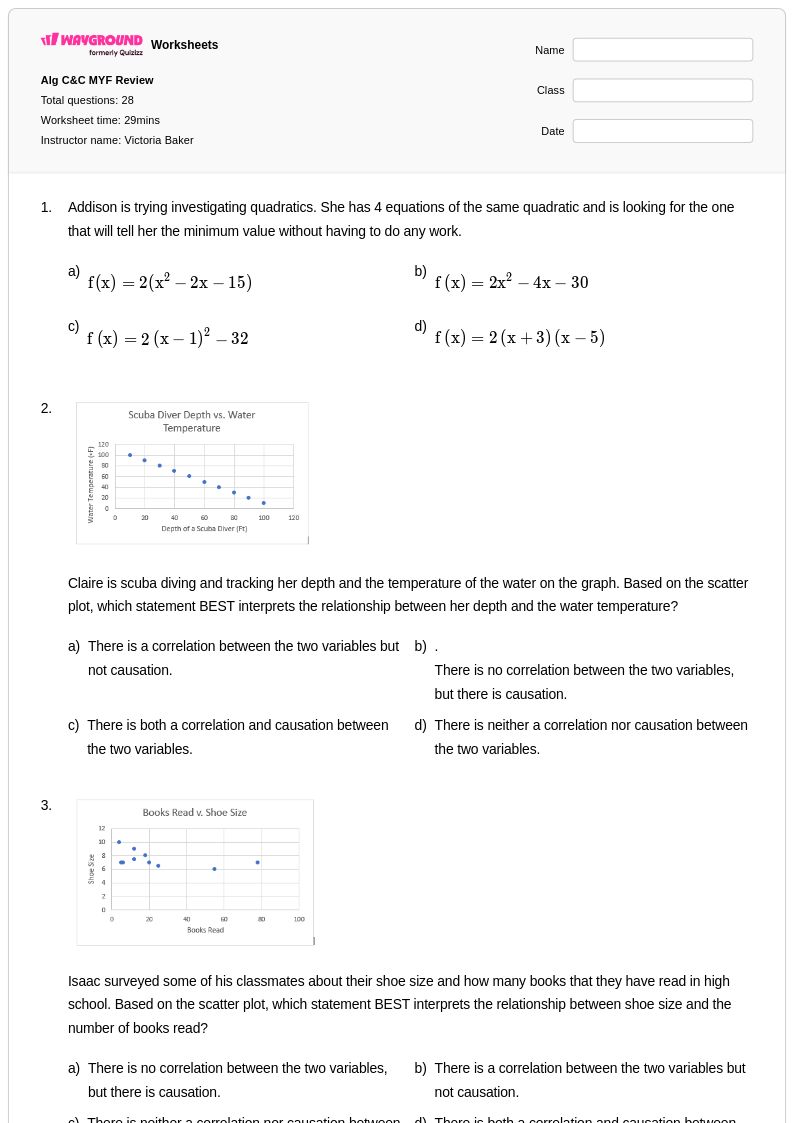
Causation and correlation worksheets for Grade 9 mathematics provide students with essential practice in distinguishing between statistical relationships and true cause-and-effect connections. These comprehensive worksheet collections available through Wayground help ninth-grade students develop critical thinking skills by analyzing data sets, interpreting scatter plots, and evaluating whether observed correlations indicate genuine causal relationships or merely coincidental patterns. Each worksheet features carefully designed practice problems that guide students through real-world scenarios, from examining the relationship between study time and test scores to analyzing health data trends. Complete answer keys accompany these free printables, enabling students to check their understanding of concepts like lurking variables, confounding factors, and the fundamental principle that correlation does not imply causation.
Wayground's extensive library draws from millions of teacher-created resources specifically designed to support Grade 9 probability and statistics instruction. The platform's robust search and filtering capabilities allow educators to quickly locate worksheets that align with specific curriculum standards and match their students' varied learning needs. Teachers can easily differentiate instruction by selecting from multiple difficulty levels and problem types, while the flexible customization tools enable modifications to suit individual classroom requirements. These causation and correlation worksheets are available in both printable PDF formats for traditional paper-based learning and digital formats for technology-enhanced instruction, making them invaluable for lesson planning, targeted remediation of statistical reasoning gaps, enrichment activities for advanced learners, and regular skill practice to reinforce these fundamental mathematical concepts.
FAQs
How do I teach causation and correlation to Grade 9 students?
What exercises help Grade 9 students practice correlation versus causation?
What mistakes do students make when distinguishing correlation from causation?
How can I use a Grade 9 causation and correlation worksheet in class?
How does causation and correlation fit into the Grade 9 math curriculum?
How can I differentiate causation and correlation practice?
What grade do students learn correlation and causation?