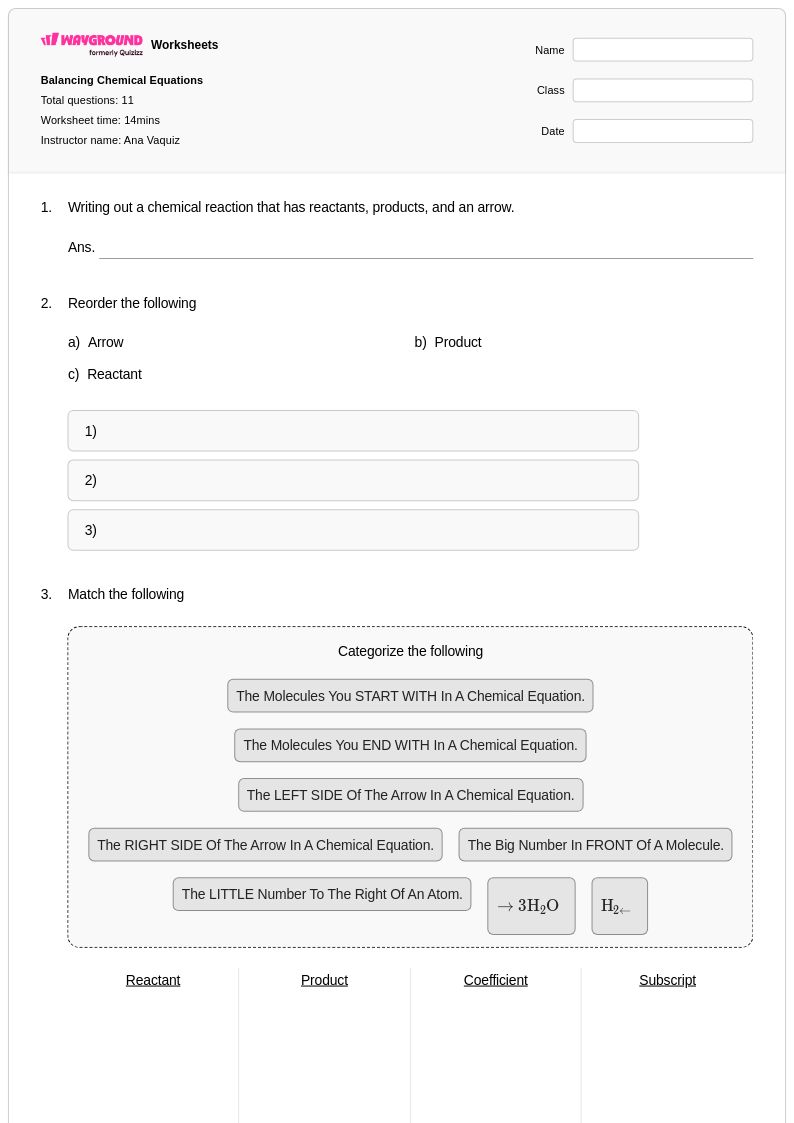
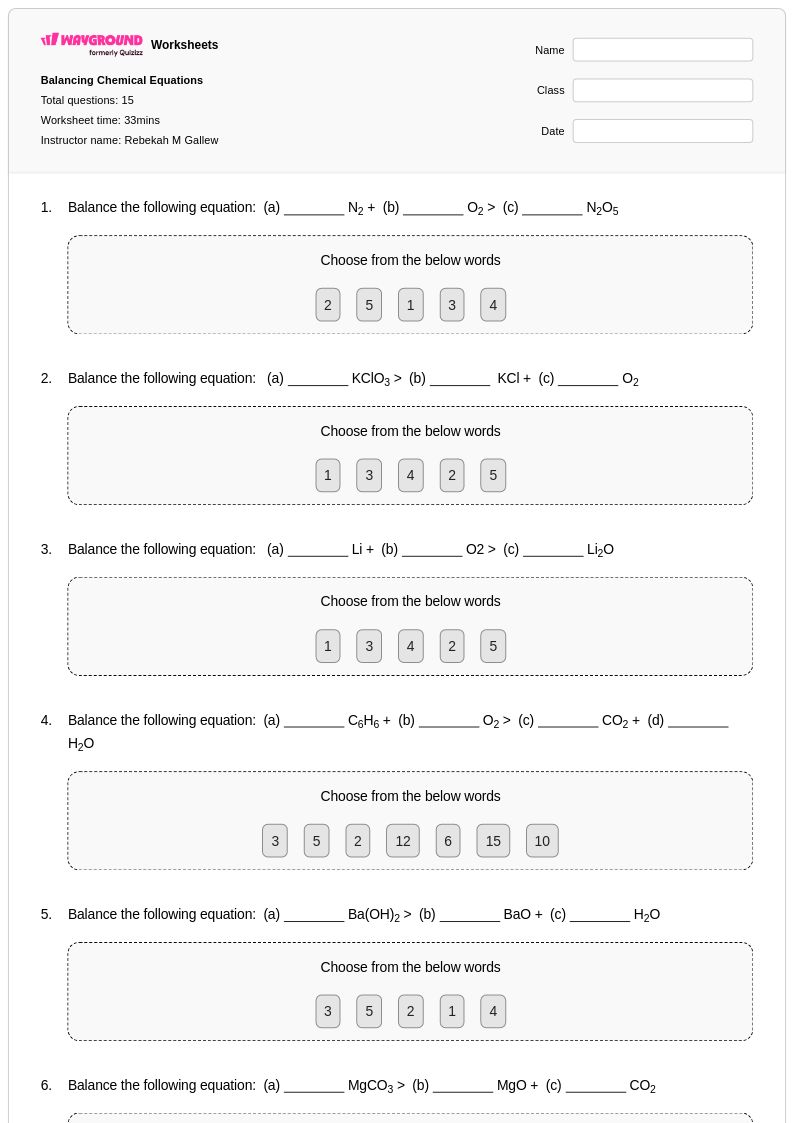
Free chemical equations worksheets and printables help students master balancing reactions, identifying reactants and products, and solving practice problems with comprehensive answer keys included.
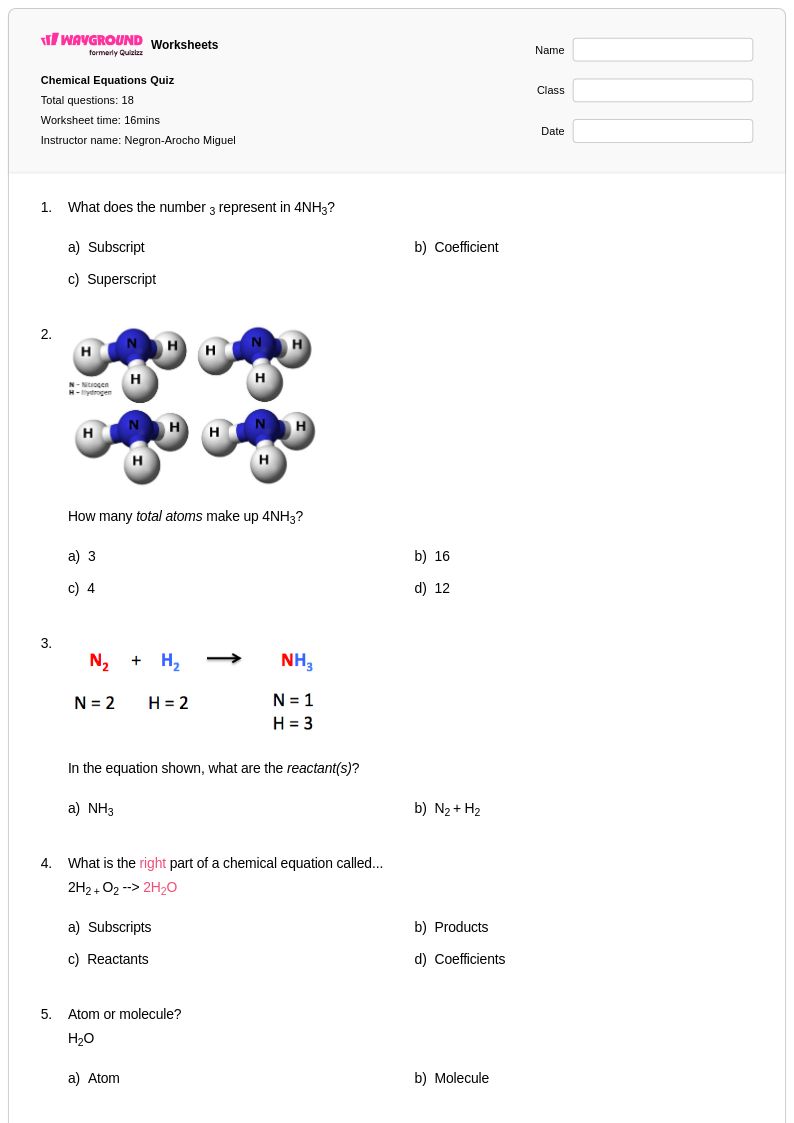
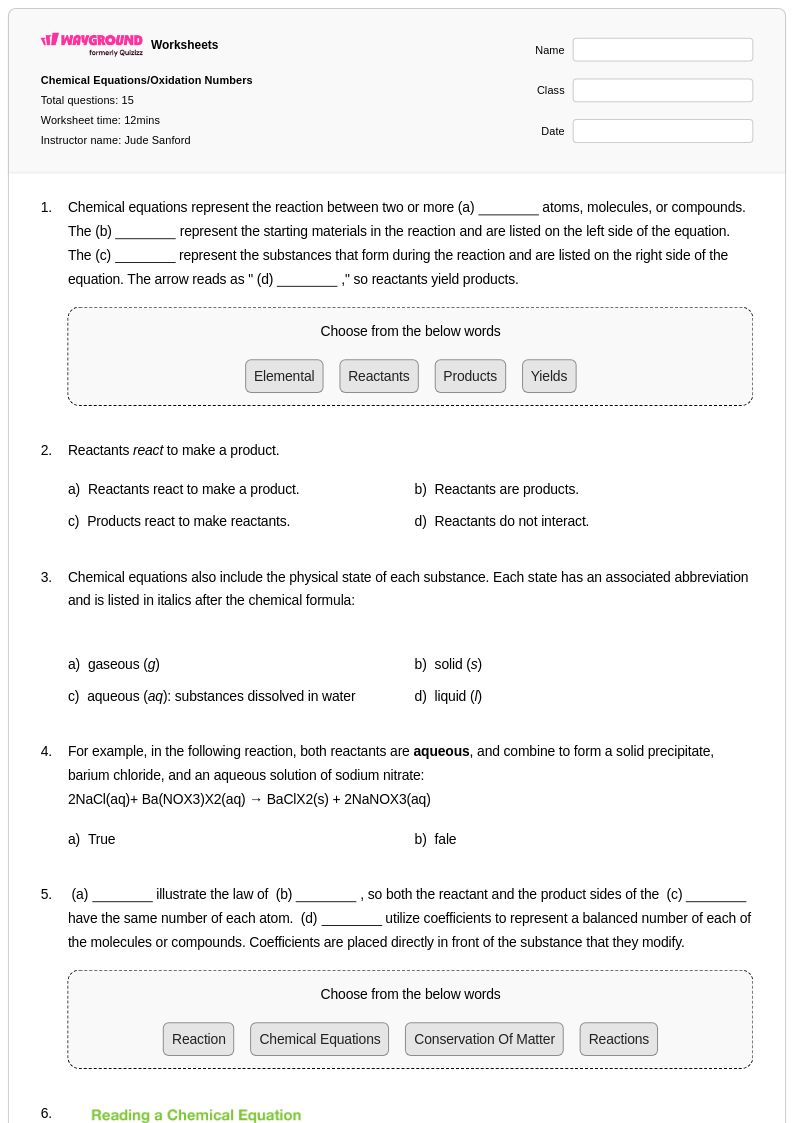
Chemical equations worksheets available through Wayground (formerly Quizizz) provide comprehensive practice opportunities for students to master the fundamental skill of representing chemical reactions symbolically. These expertly crafted resources strengthen essential competencies including balancing equations, identifying reactants and products, understanding stoichiometric relationships, and applying conservation of mass principles. The worksheets feature diverse practice problems ranging from simple synthesis reactions to complex multi-step equations, with each resource including detailed answer keys to support independent learning and self-assessment. Available as free printables and downloadable pdf files, these materials offer structured pathways for students to develop proficiency in translating word problems into balanced chemical equations and interpreting the quantitative relationships inherent in chemical transformations.
Wayground (formerly Quizizz) empowers educators with millions of teacher-created chemical equations worksheets that can be easily discovered through robust search and filtering capabilities aligned to curriculum standards. The platform's differentiation tools enable teachers to customize content complexity and problem types to meet diverse learning needs, while flexible formatting options provide both printable and digital delivery methods including pdf downloads for seamless classroom integration. These comprehensive worksheet collections support strategic lesson planning by offering pre-made resources for initial instruction, targeted remediation materials for students struggling with equation balancing concepts, and enrichment activities for advanced learners ready to tackle more sophisticated chemical processes. Teachers can efficiently identify worksheets that address specific learning objectives, from basic formula writing to advanced redox equations, ensuring that skill practice aligns precisely with instructional goals and student readiness levels.
FAQs
How do I teach students to balance chemical equations?
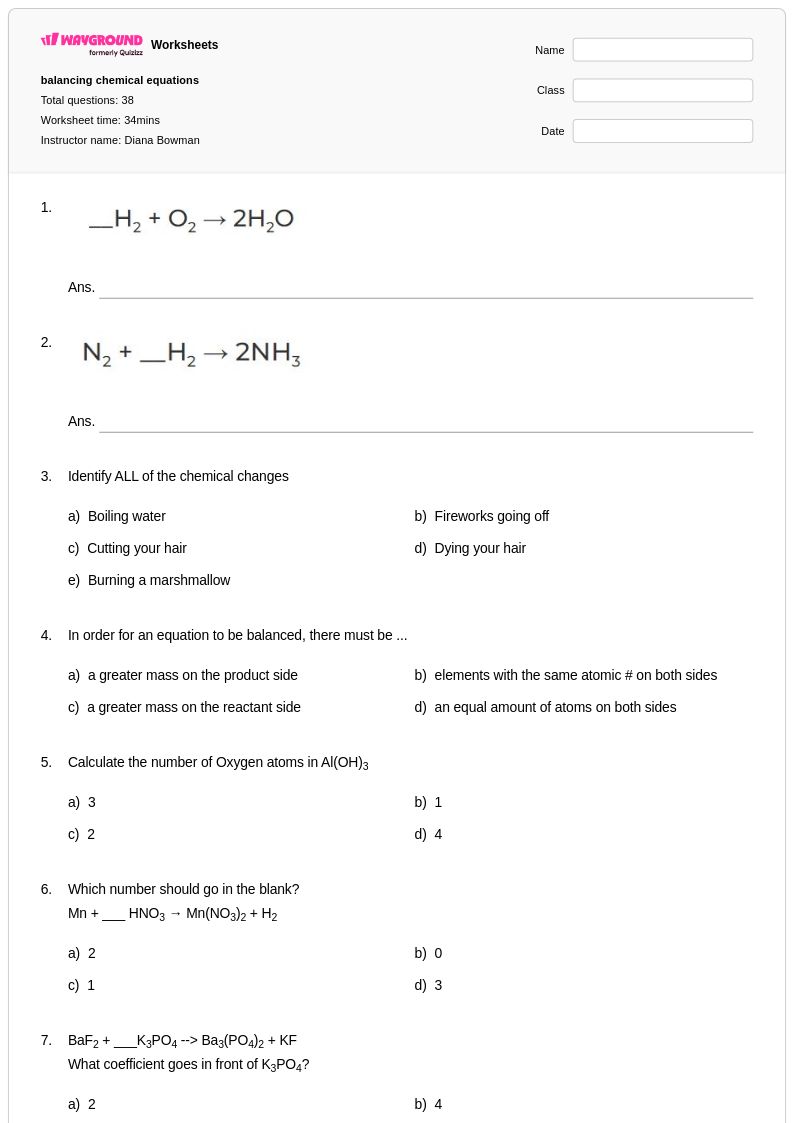
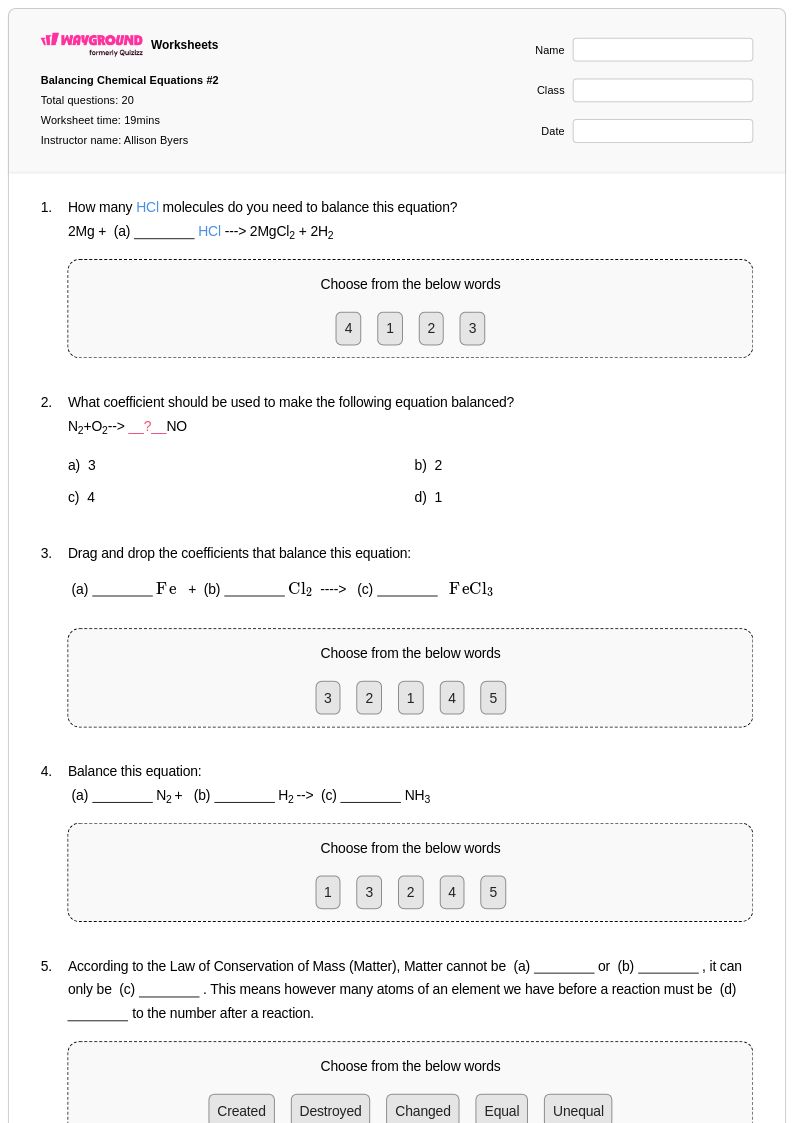
Start by reinforcing the law of conservation of mass before introducing balancing as a procedural skill. Teach students to identify all elements on both sides of the equation, then adjust coefficients systematically rather than changing subscripts. Beginning with simple synthesis and decomposition reactions builds confidence before progressing to more complex multi-step equations.
What exercises help students practice balancing chemical equations?
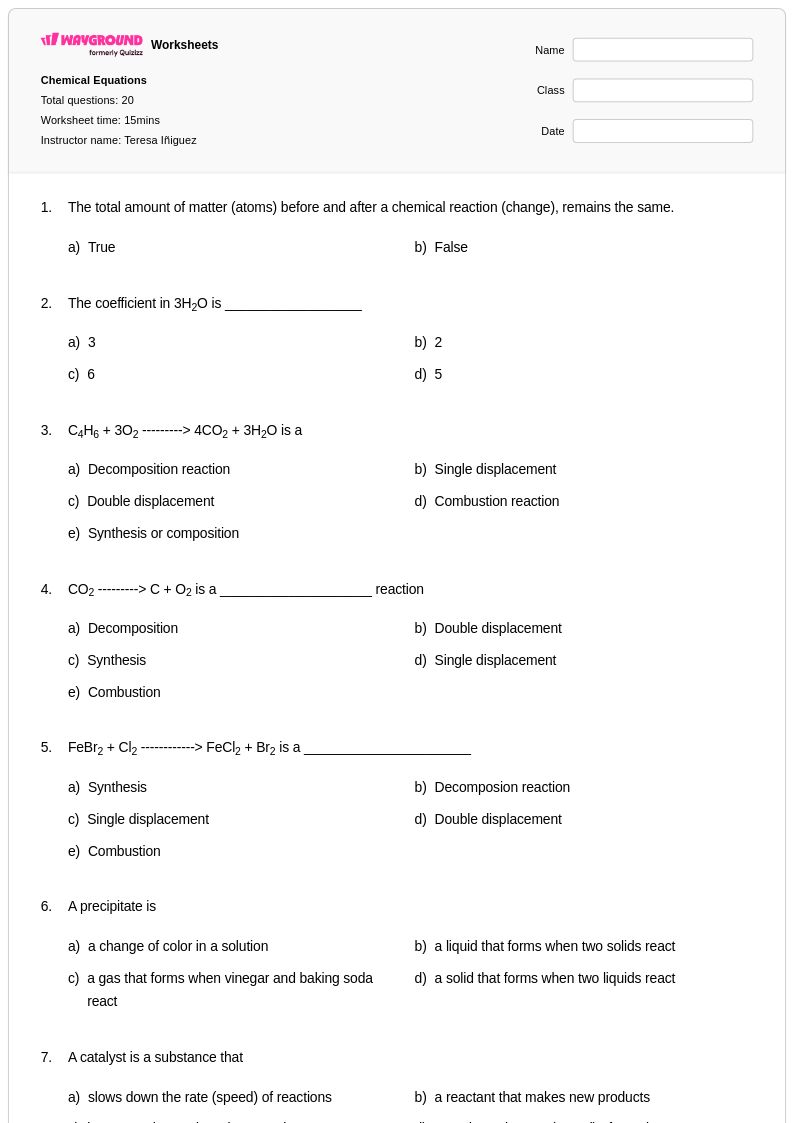
Structured practice problems that progress from single-replacement reactions to more complex equations give students the repetition needed to internalize balancing rules. Worksheets that require students to identify reactants and products, write word equations symbolically, and apply stoichiometric relationships are especially effective because they target the full range of skills tied to this concept.
What mistakes do students commonly make when balancing chemical equations?
The most common error is changing subscripts instead of coefficients to balance an equation, which alters the chemical identity of the compounds involved. Students also frequently overlook polyatomic ions, treating them as individual atoms rather than as a unit. Another persistent misconception is assuming that a visually symmetrical equation is automatically balanced without checking every element.
How do I differentiate chemical equations practice for students at different skill levels?
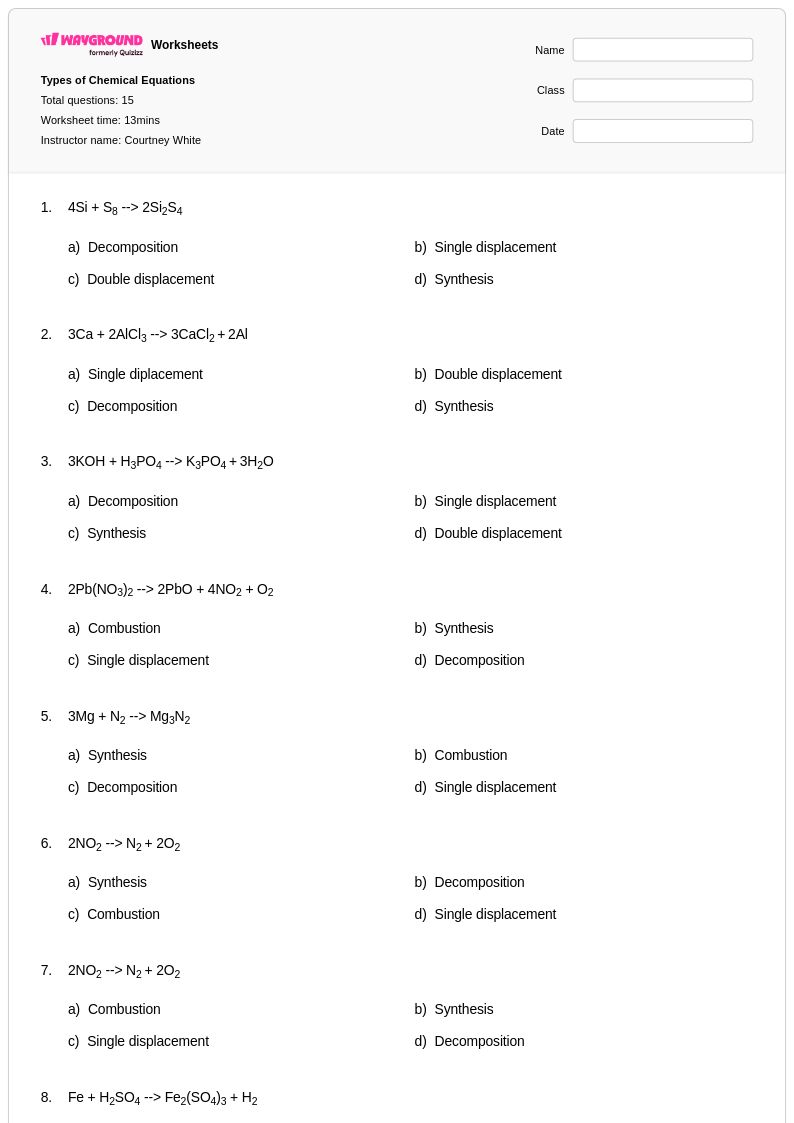
Providing tiered problem sets is the most effective approach: beginners work with simple synthesis or decomposition reactions, while advanced students tackle combustion, redox, or multi-step equations. On Wayground, teachers can apply accommodations such as reduced answer choices to lower cognitive load for struggling students or enable Read Aloud for students who benefit from audio support, all without other students being notified.
How do I use Wayground's chemical equations worksheets in my classroom?
Wayground's chemical equations worksheets are available as printable PDFs for traditional classroom use and in digital formats for technology-integrated environments, giving teachers flexibility regardless of their setup. Teachers can also host worksheets as a quiz directly on Wayground, making it easy to assign practice digitally and track student performance. Each worksheet includes a complete answer key, supporting both teacher-led instruction and independent student review.
How do I help students understand the difference between reactants and products in a chemical equation?
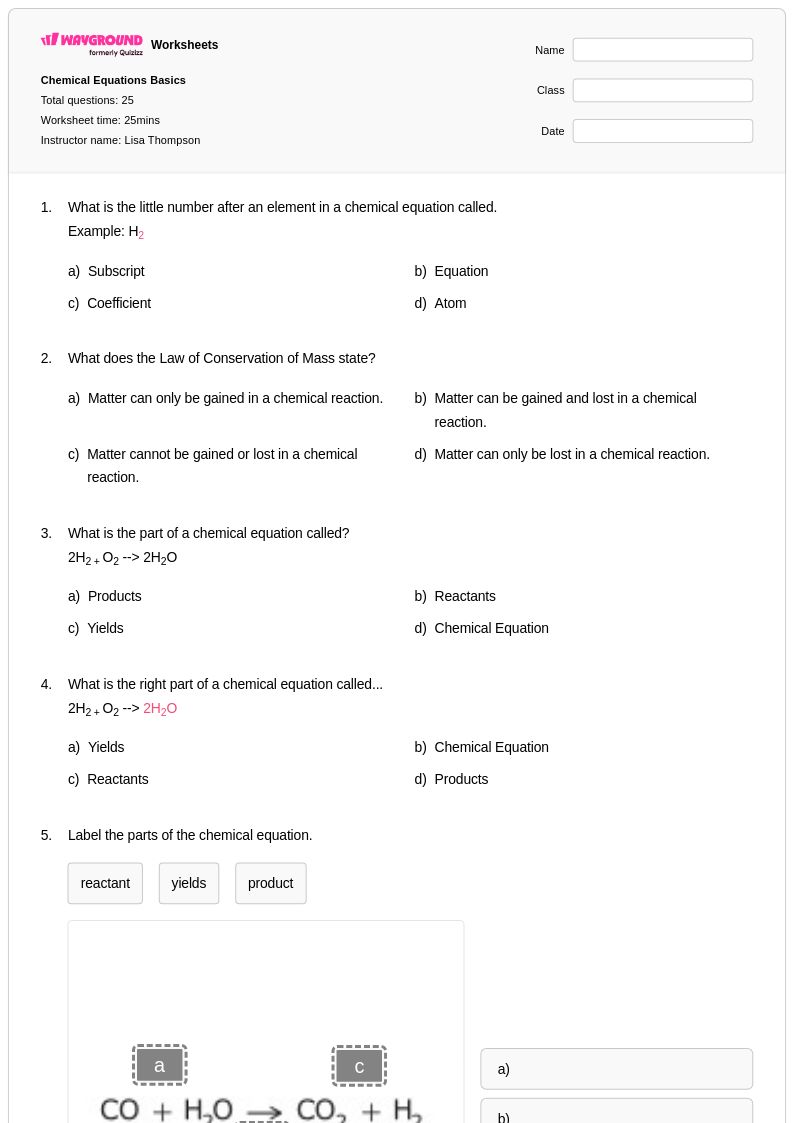
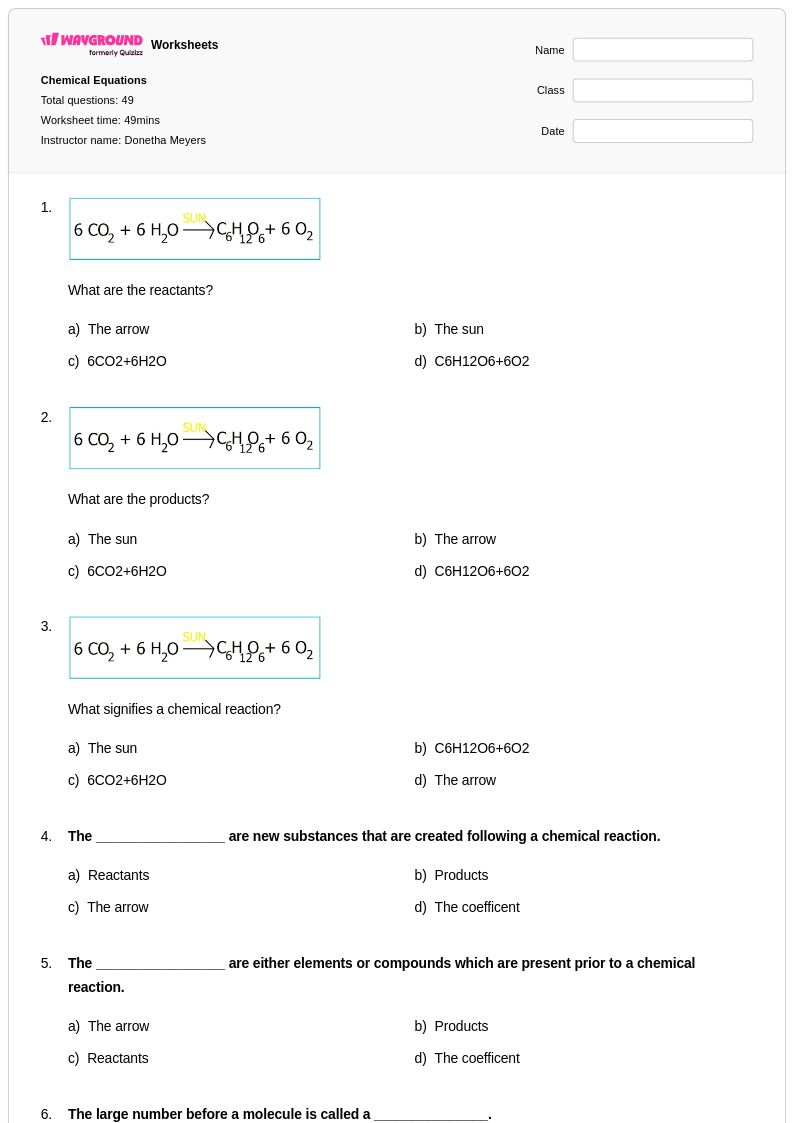
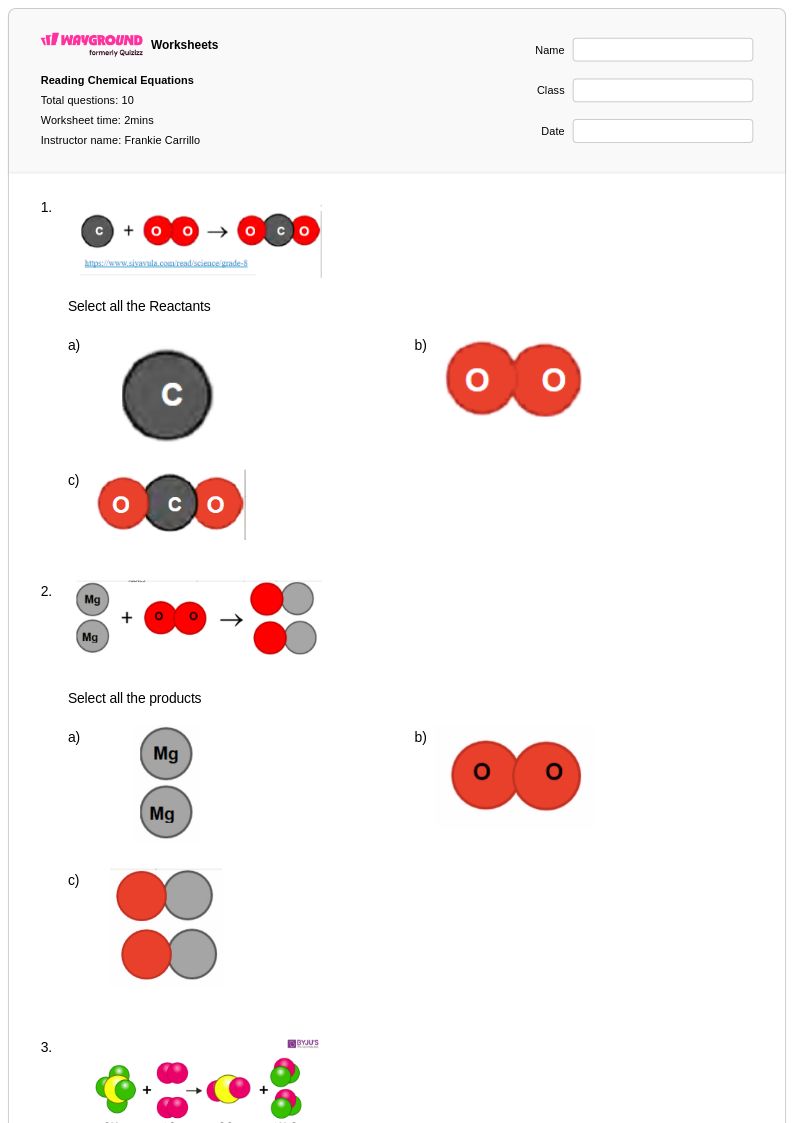
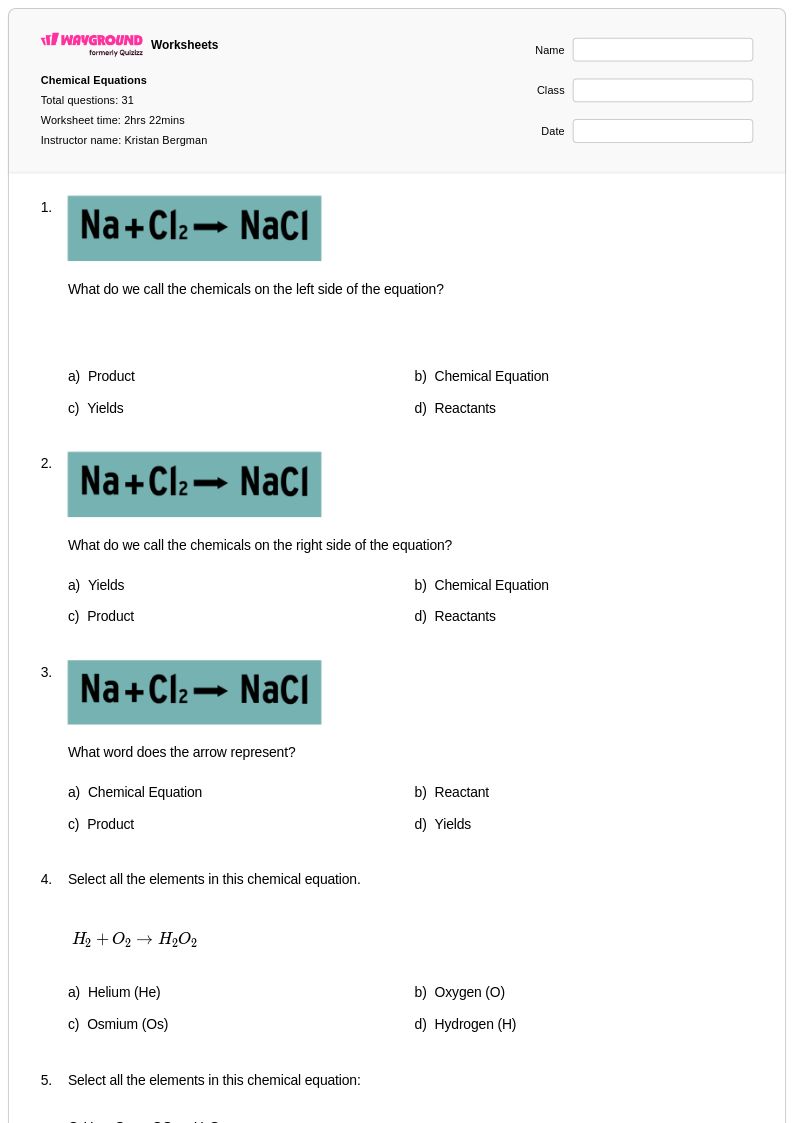
Explicitly teaching students to read a chemical equation like a sentence helps: the reactants on the left are what you start with, and the products on the right are what is formed. Using physical demonstrations or particulate-level diagrams alongside symbolic equations reinforces the connection between the representation and the actual chemical change, which is where many students initially struggle.
How can I use chemical equations worksheets for remediation?
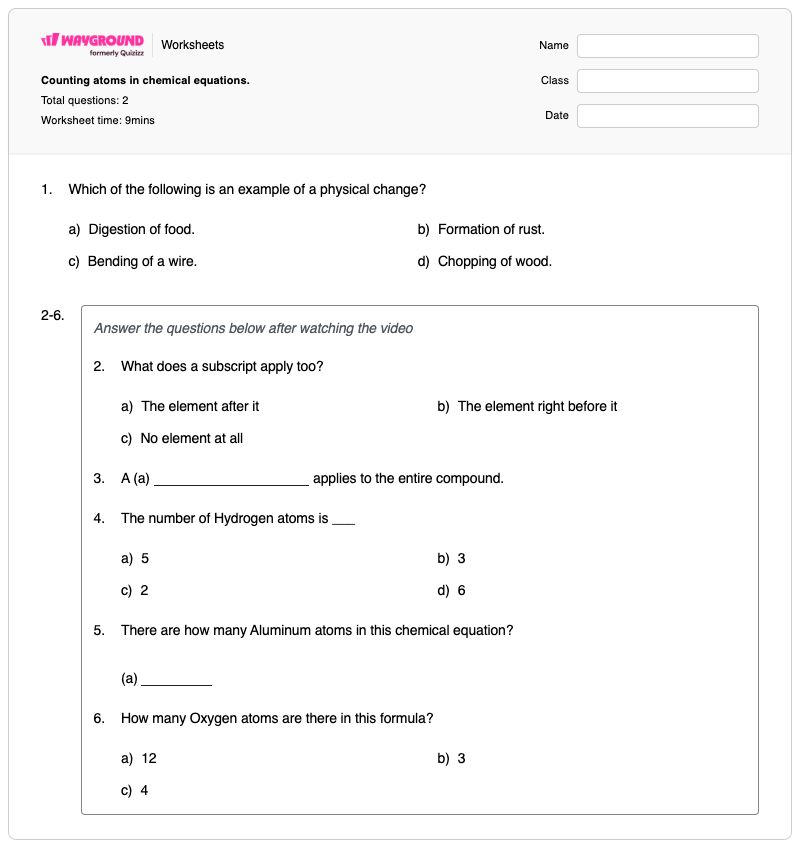
For students struggling with equation balancing, targeted remediation should isolate specific sticking points, such as counting atoms in polyatomic ions or balancing equations with diatomic elements. Worksheets that include step-by-step scaffolding or worked examples alongside practice problems are particularly useful because they allow students to self-correct and build procedural fluency without requiring constant teacher intervention.