Free Printable Combustion Reaction Worksheets for Grade 10
Free Grade 10 combustion reaction worksheets and printables help students master chemical equations, identify reactants and products, and solve practice problems with detailed answer keys available as downloadable PDFs.
Explore printable Combustion Reaction worksheets for Grade 10
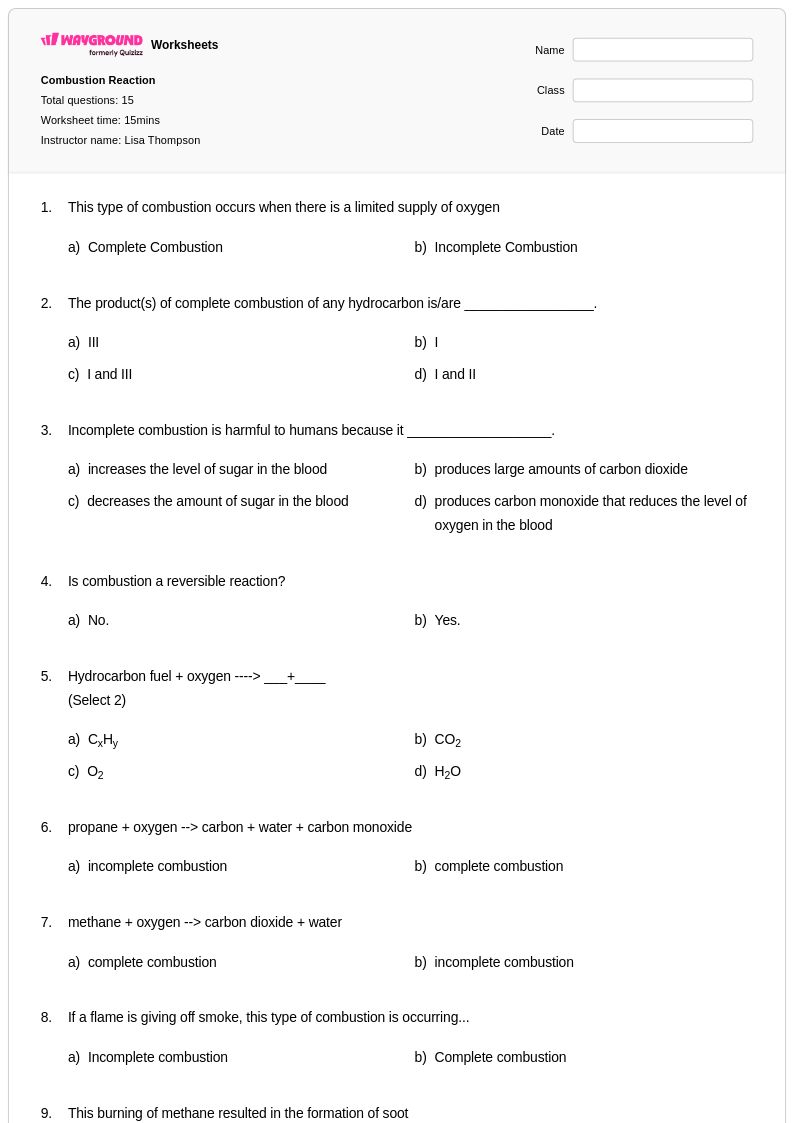
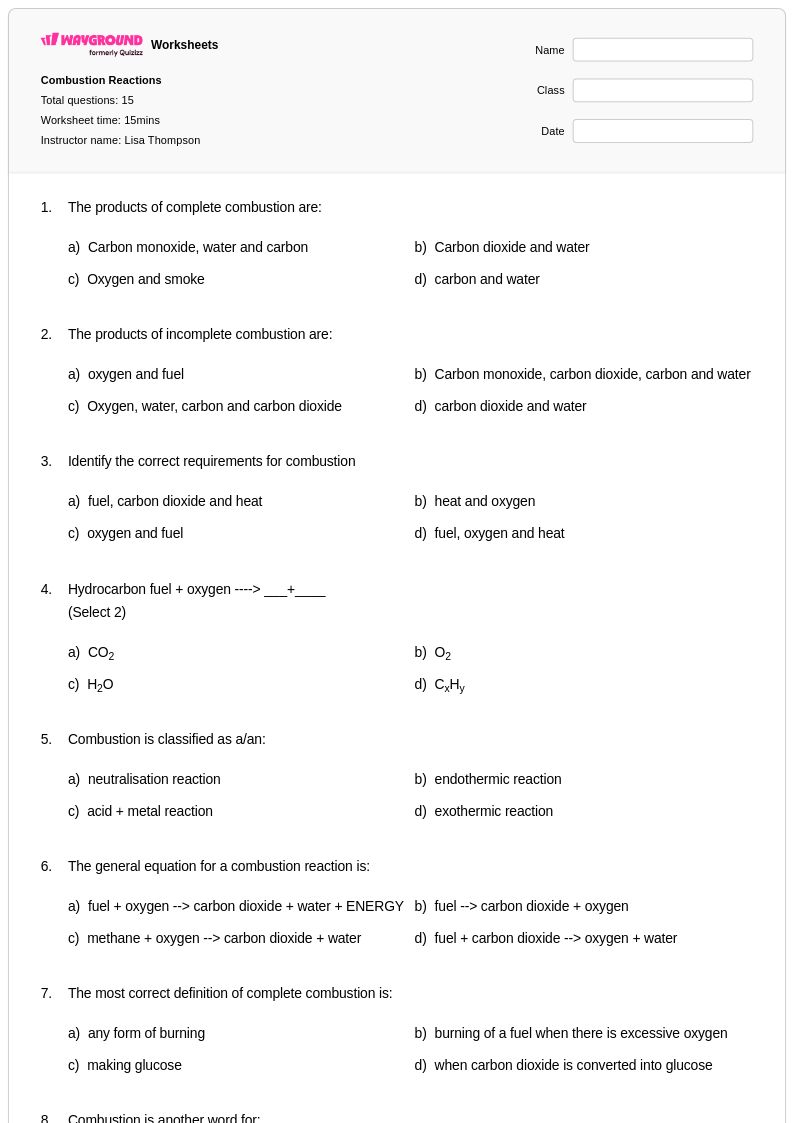
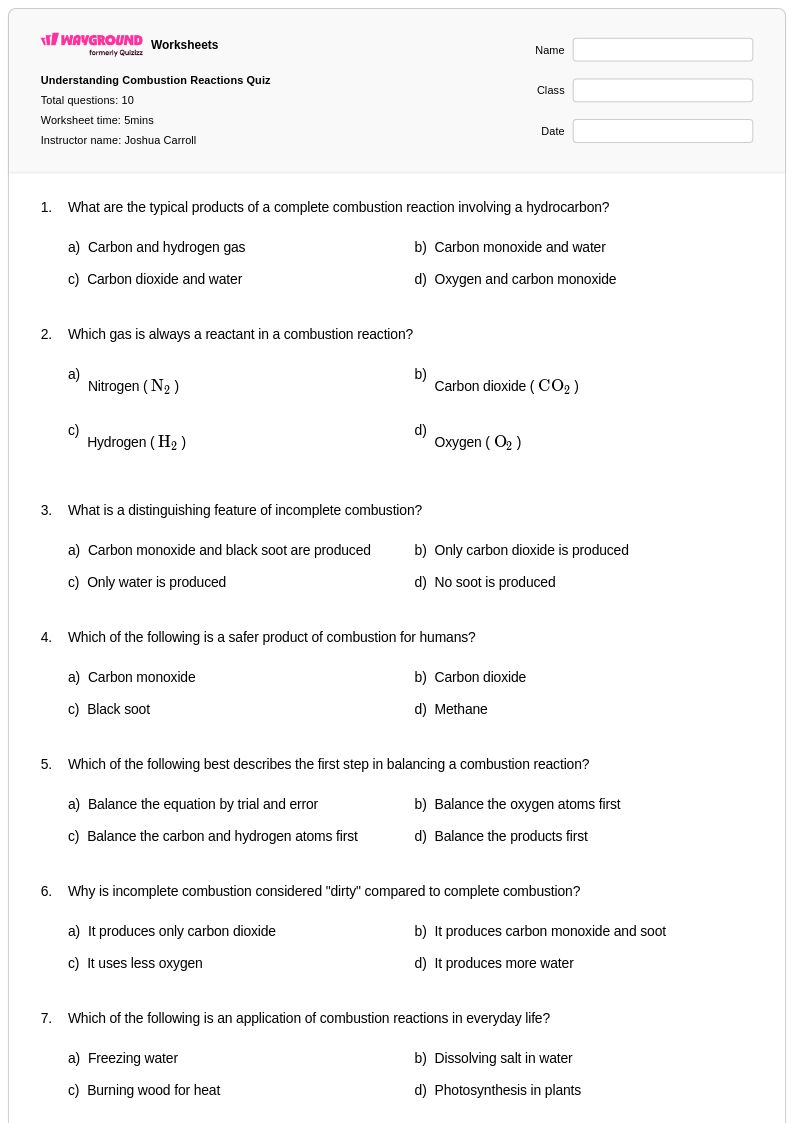
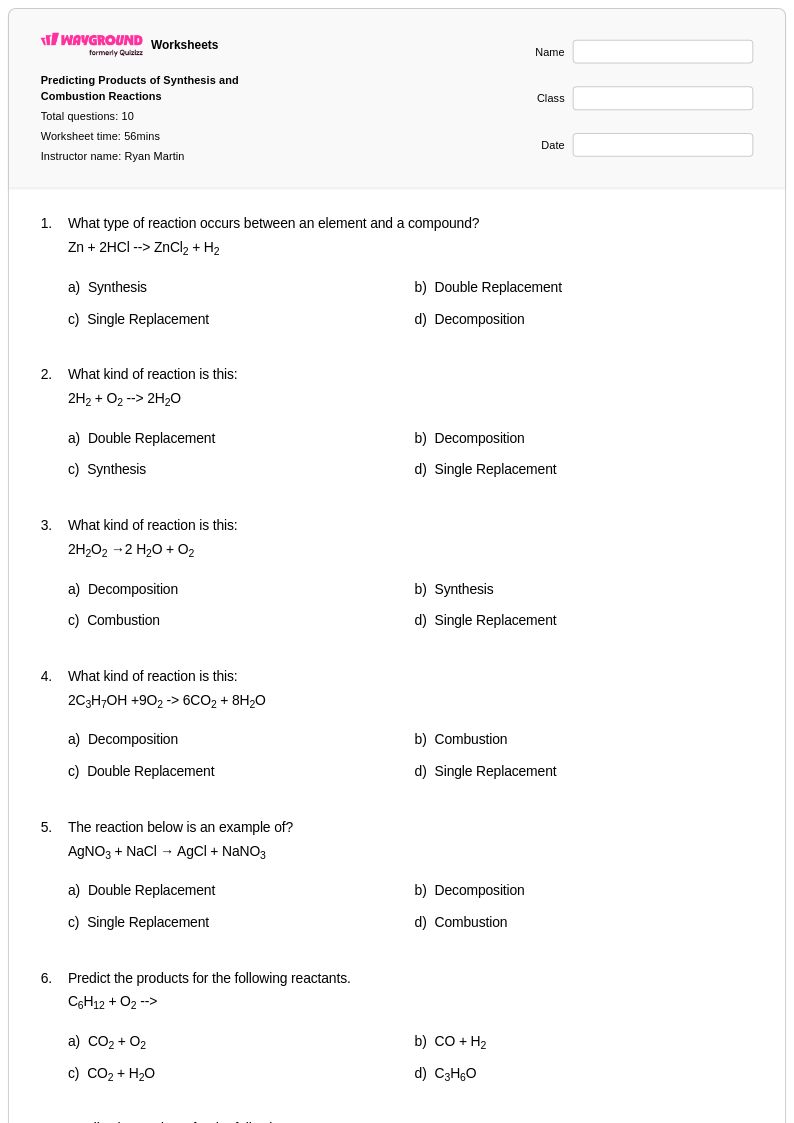
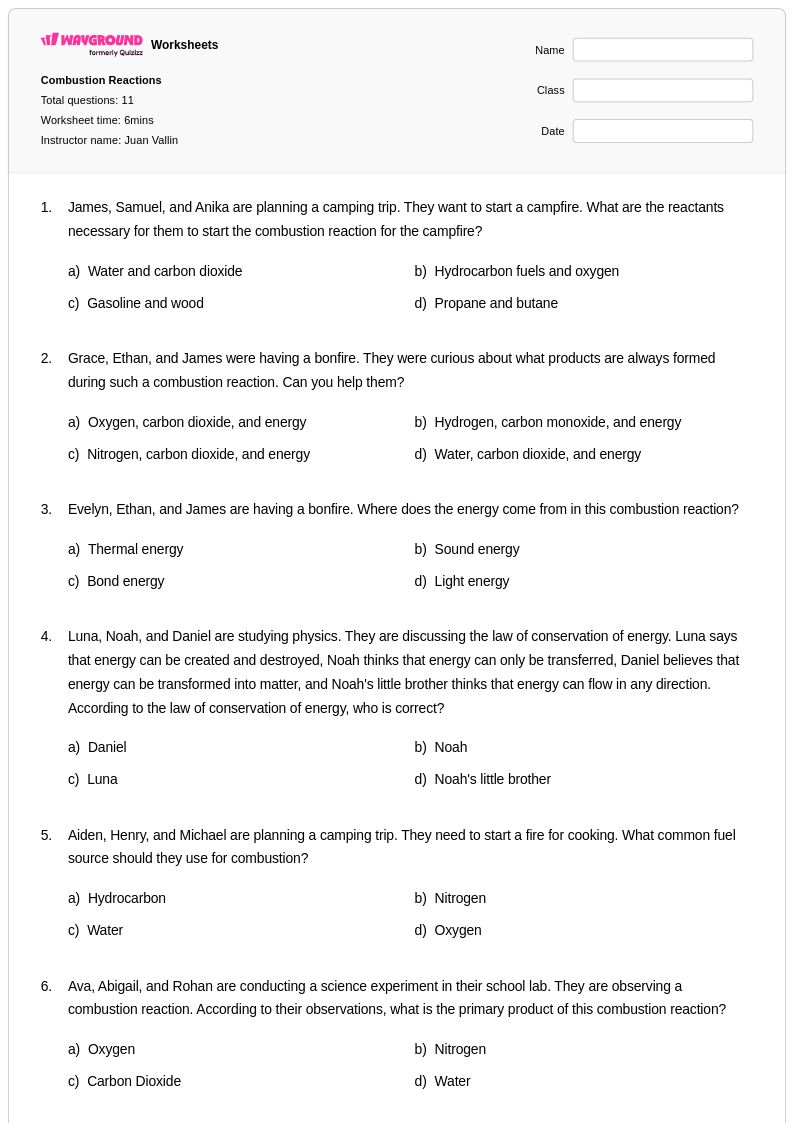
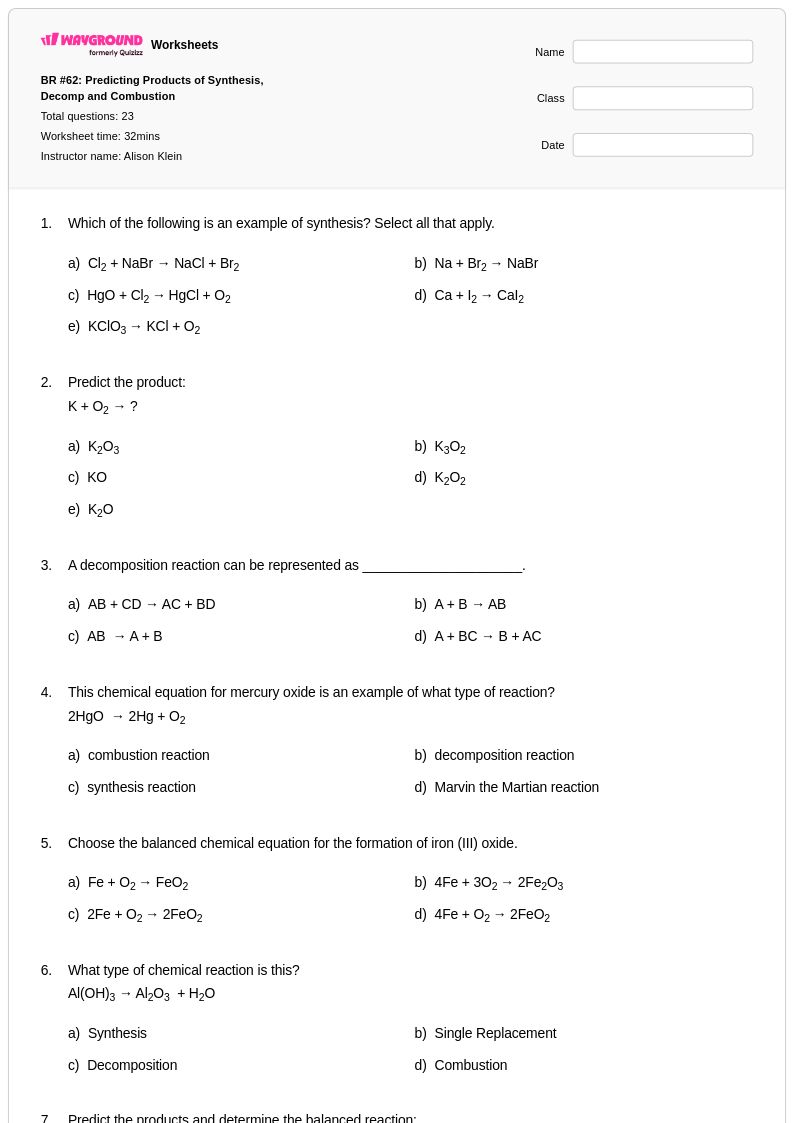
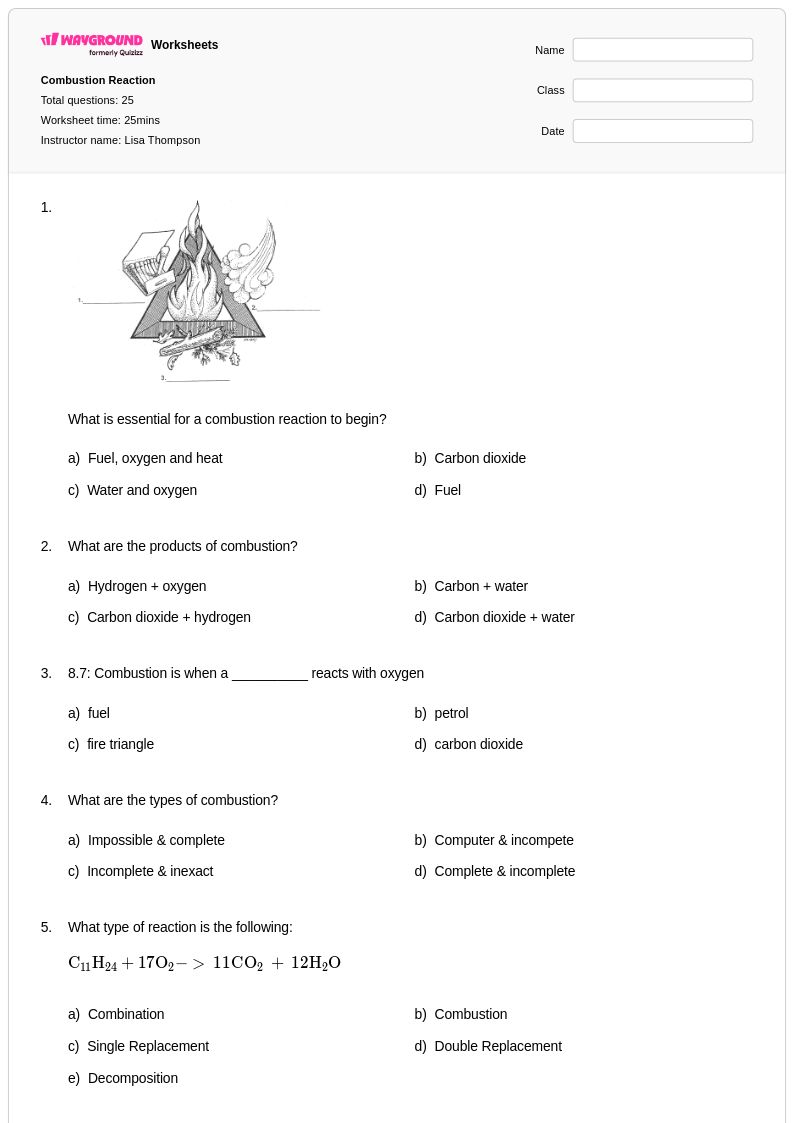
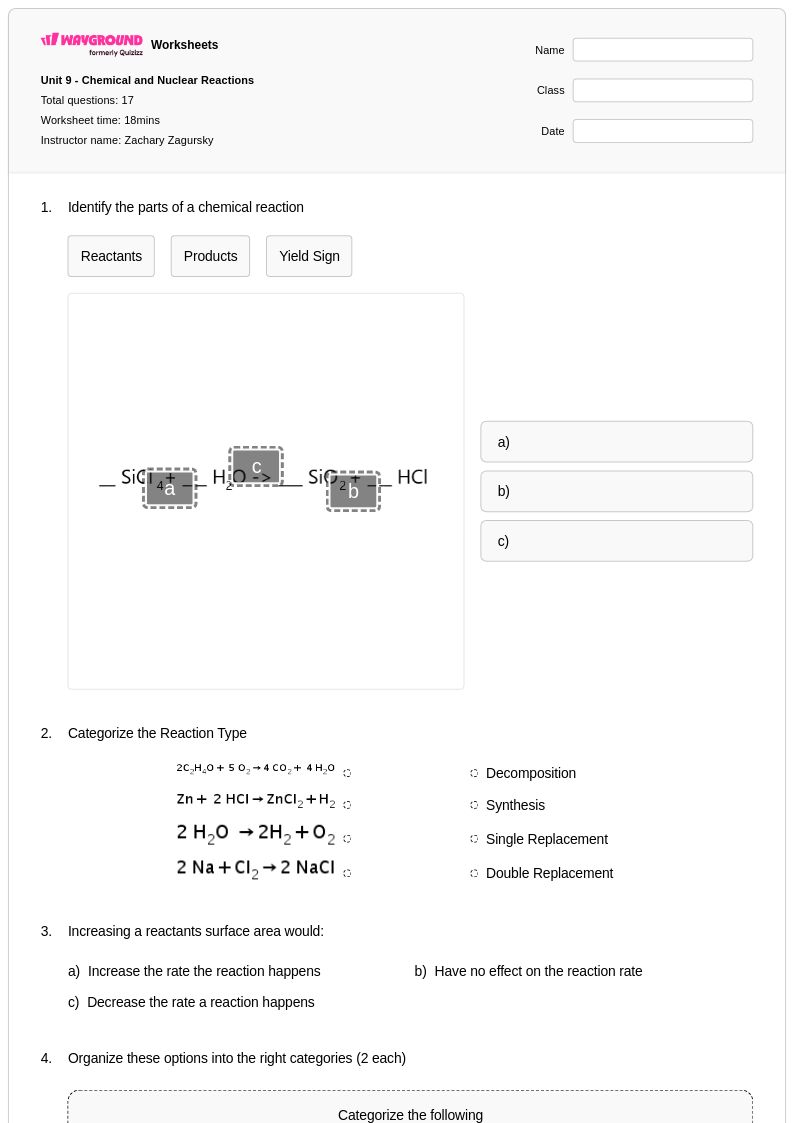
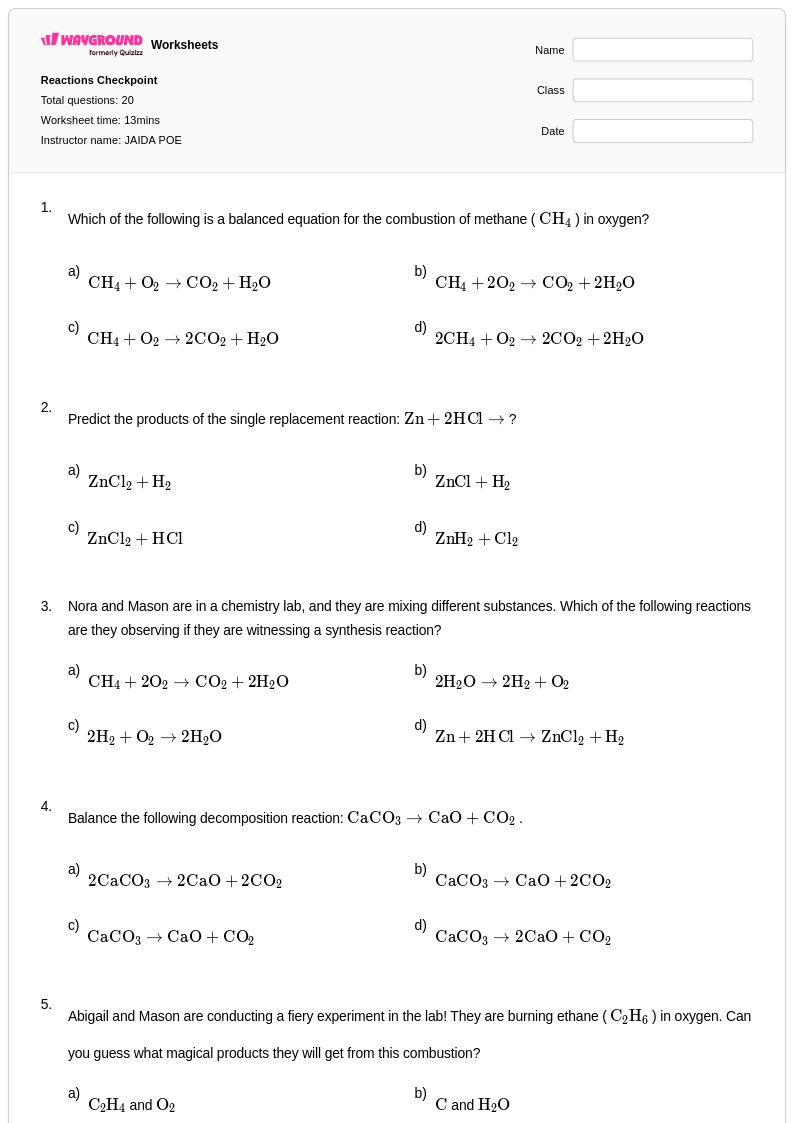
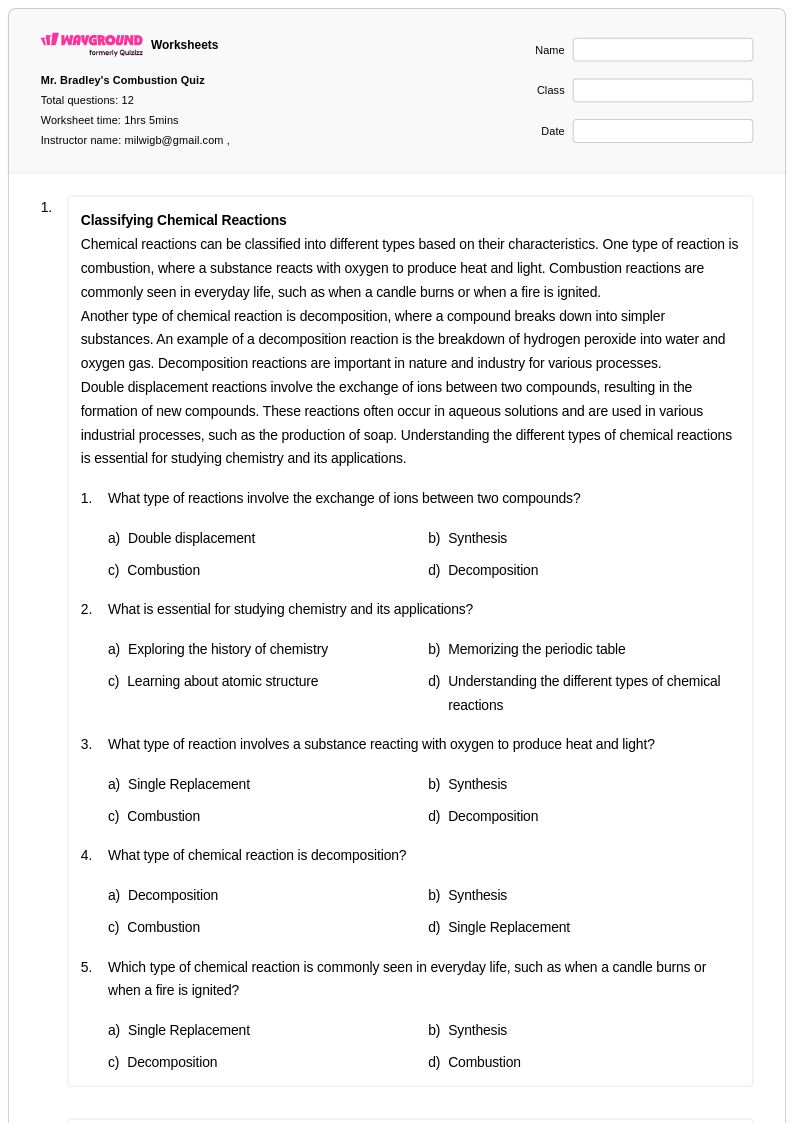
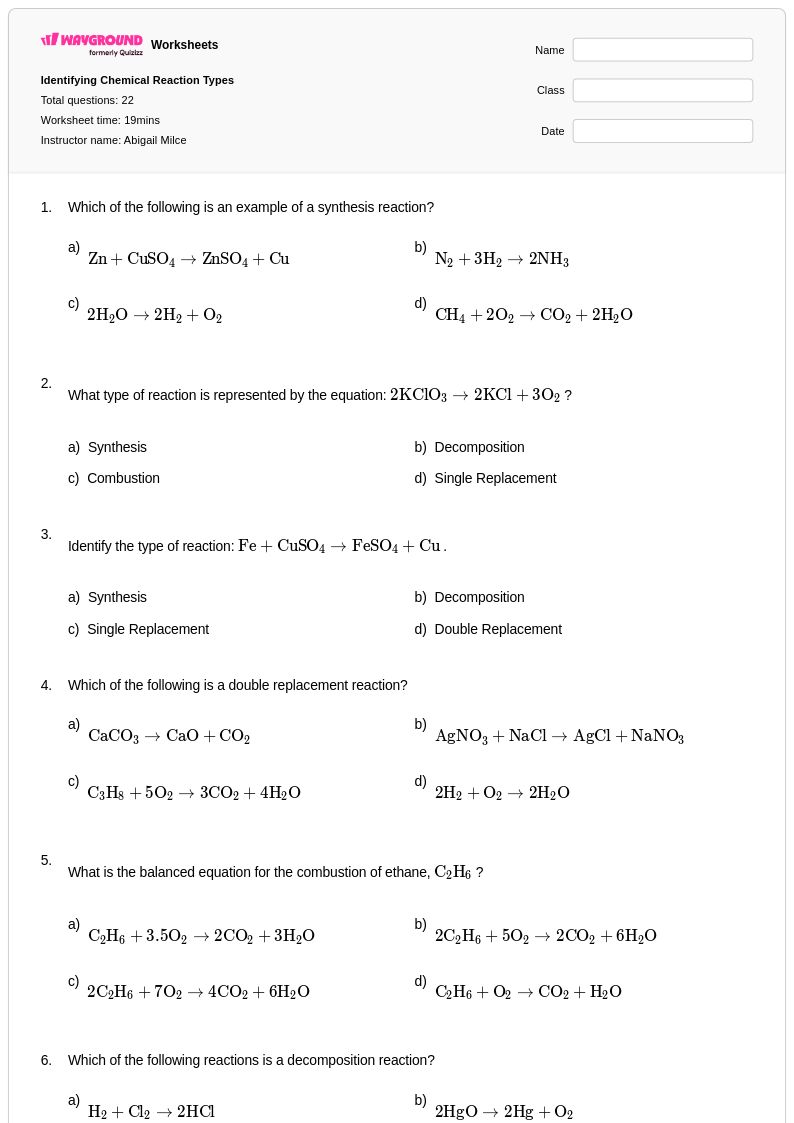
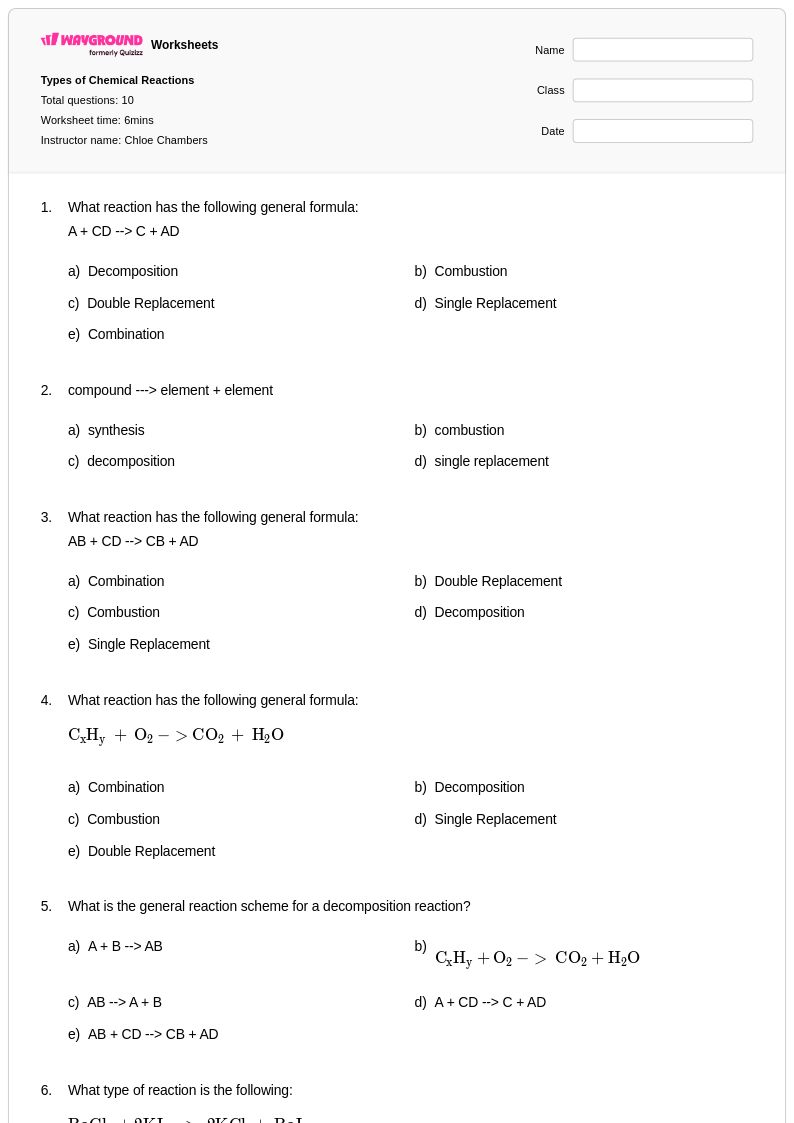
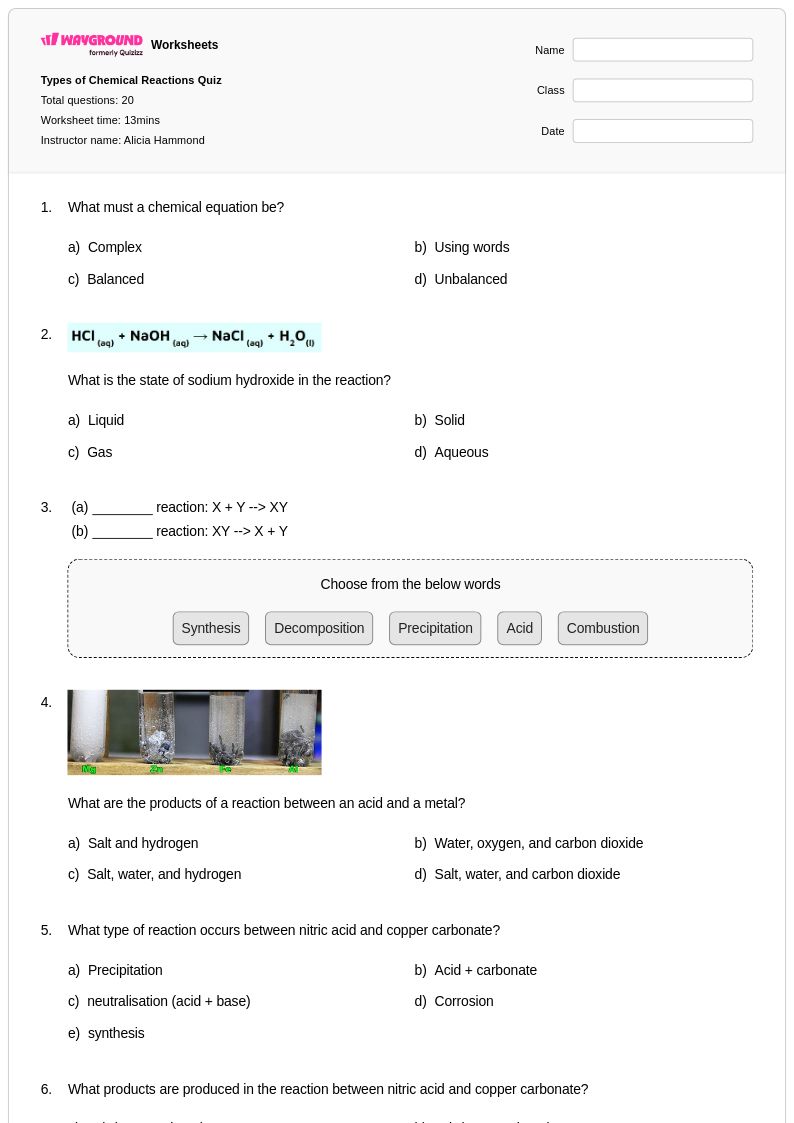
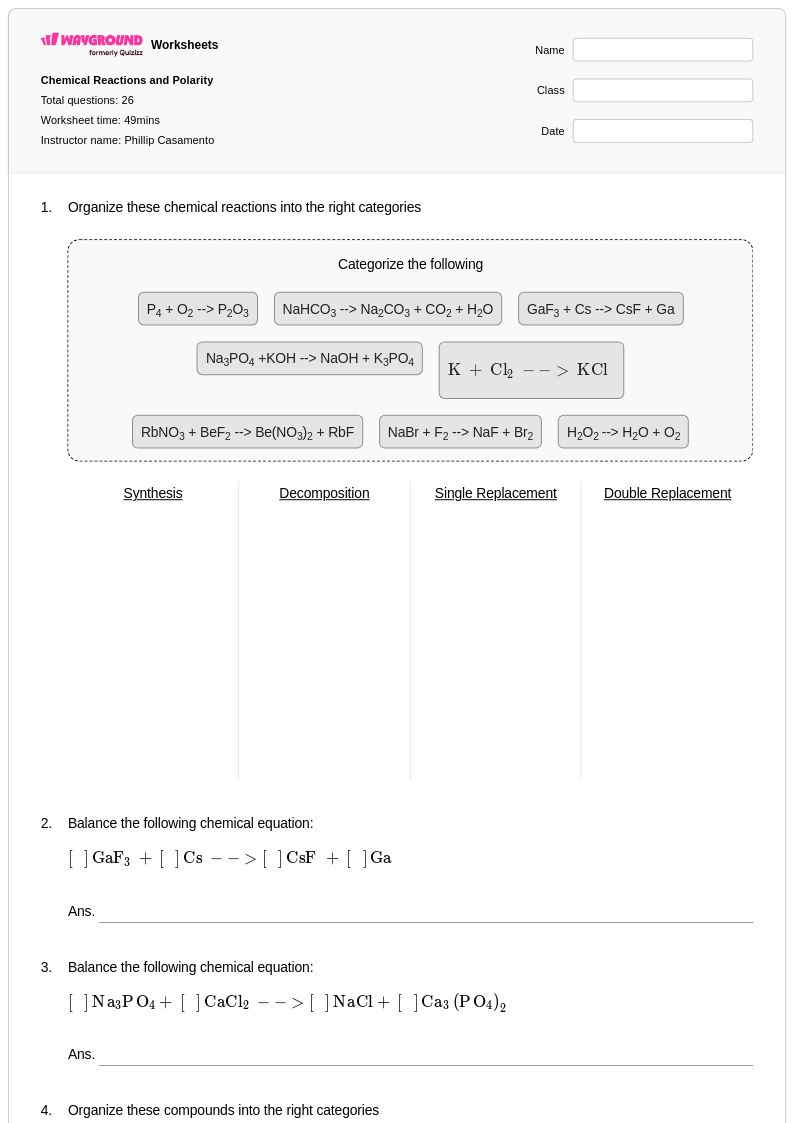
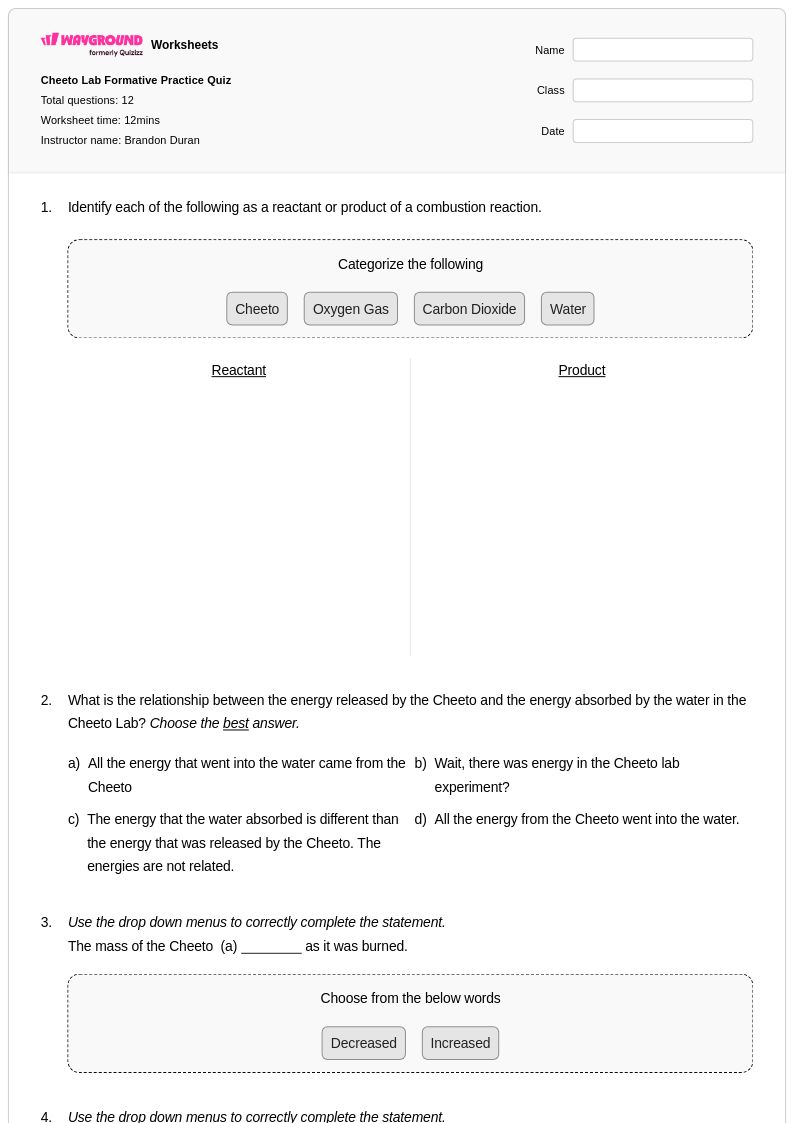
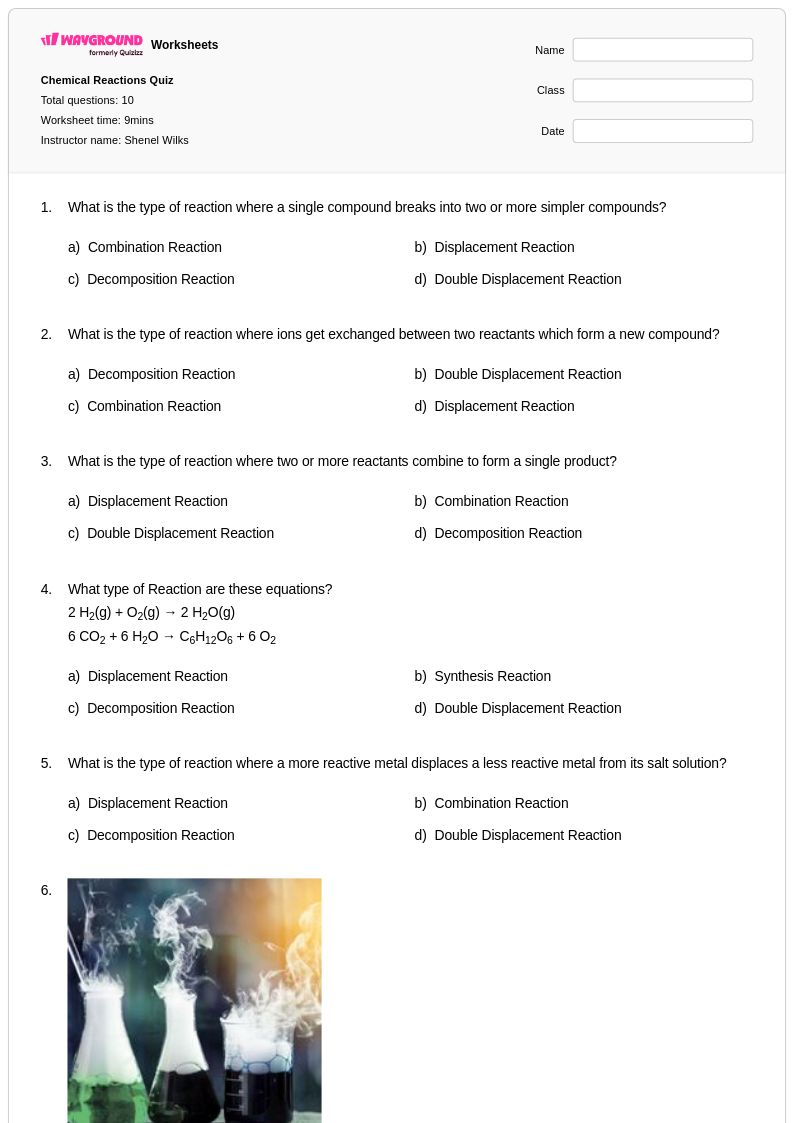
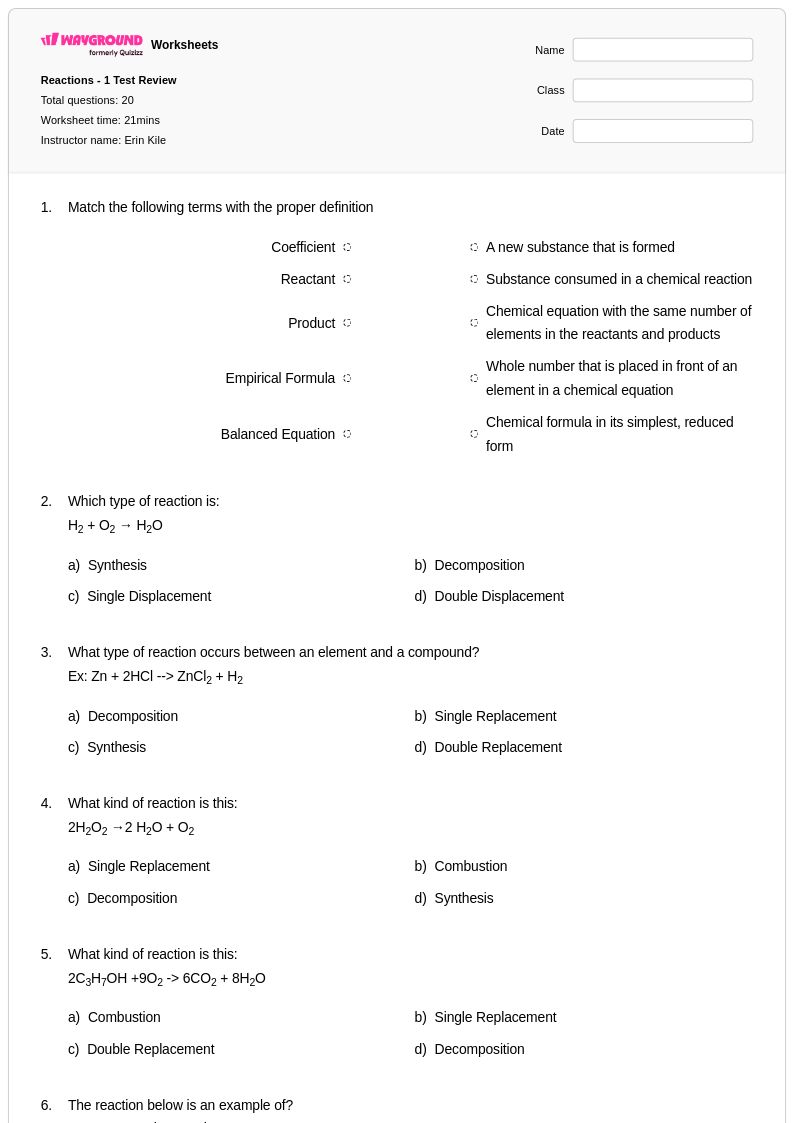
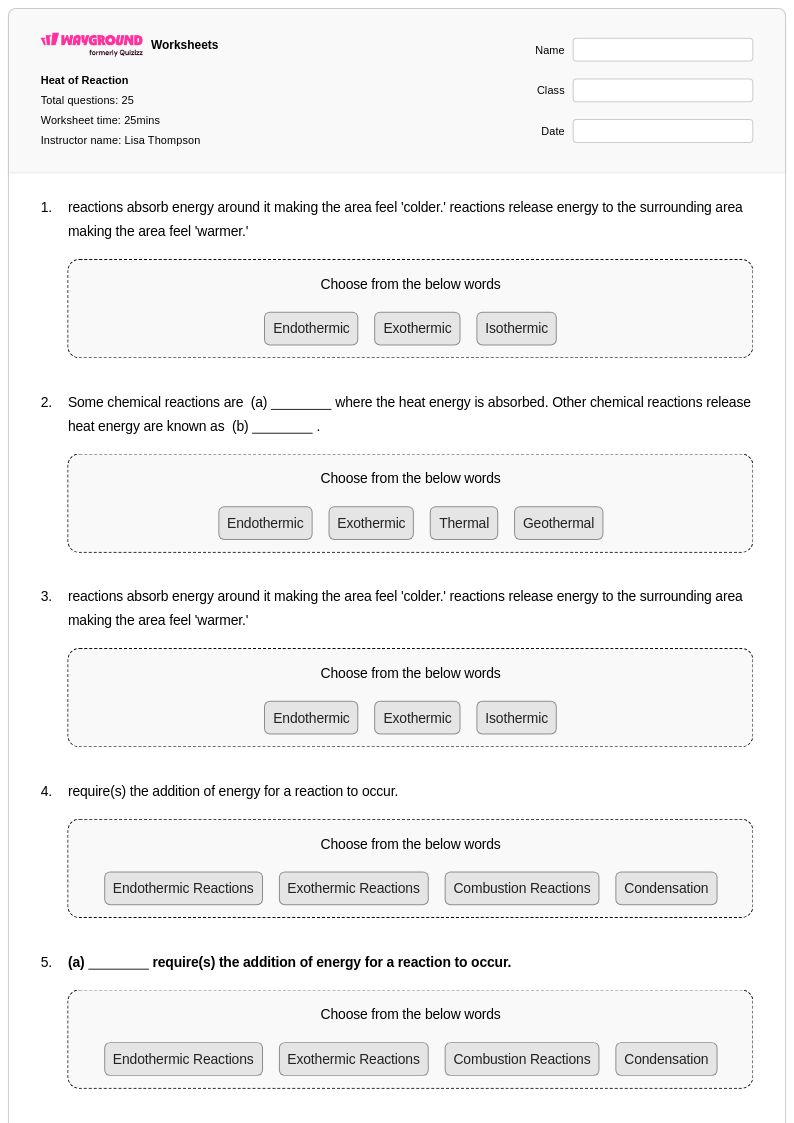
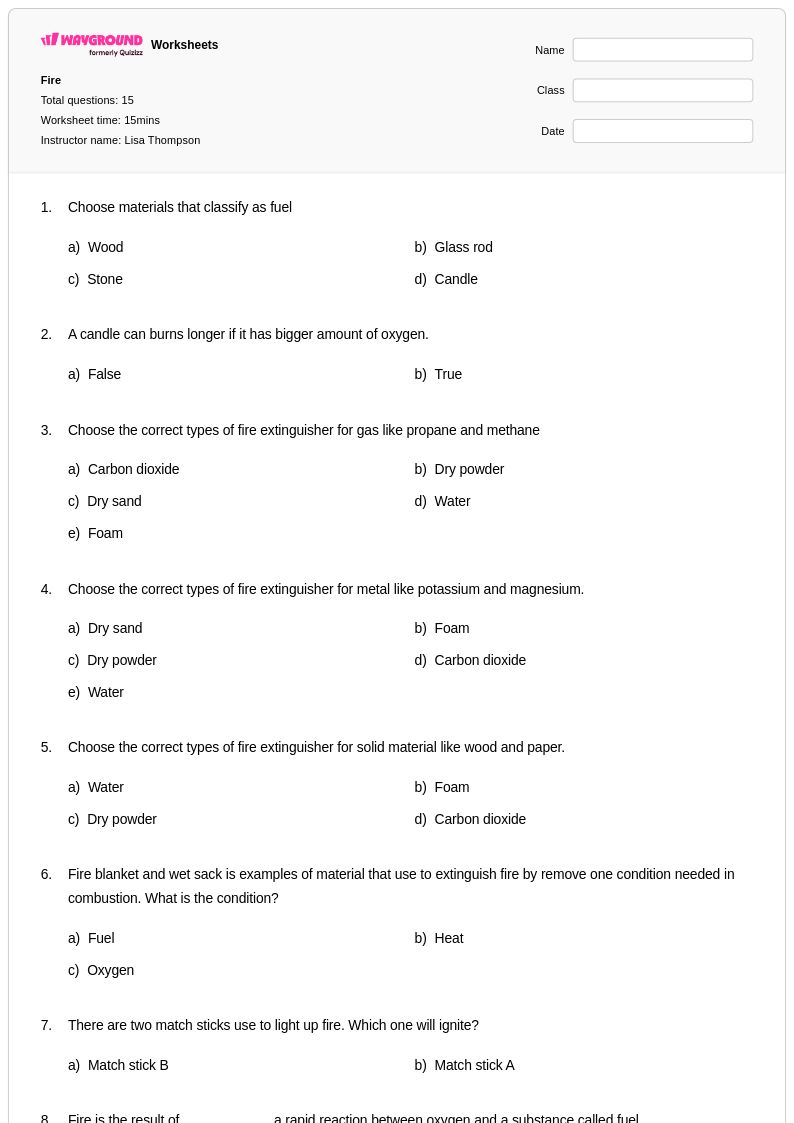
Combustion reaction worksheets for Grade 10 students available through Wayground (formerly Quizizz) provide comprehensive coverage of this fundamental chemistry concept, helping students master the principles of exothermic reactions where substances combine with oxygen to produce heat, light, and new chemical compounds. These expertly designed practice problems guide students through identifying reactants and products in combustion equations, balancing chemical equations for complete and incomplete combustion, and calculating energy changes during these reactions. The worksheet collections strengthen critical analytical skills including recognizing combustion patterns in hydrocarbons, predicting products based on fuel types, and understanding real-world applications from engine combustion to cellular respiration. Each resource includes detailed answer keys and is available as free printable PDFs, enabling students to work through problems systematically while building confidence in chemical equation interpretation and stoichiometric calculations.
Wayground (formerly Quizizz) empowers educators with access to millions of teacher-created combustion reaction worksheet resources, featuring robust search and filtering capabilities that allow instructors to locate materials perfectly aligned with Grade 10 chemistry standards and specific learning objectives. The platform's differentiation tools enable teachers to customize worksheet difficulty levels, ensuring both struggling students and advanced learners can engage meaningfully with combustion concepts at their appropriate challenge level. These flexible resources are available in both printable PDF formats for traditional classroom use and digital formats for online learning environments, supporting seamless lesson planning and implementation. Teachers utilize these comprehensive worksheet collections for targeted skill practice, remediation of challenging concepts like balancing complex combustion equations, and enrichment activities that connect combustion chemistry to environmental science and energy production, ultimately creating more effective and personalized learning experiences for their students.
FAQs
How do I teach combustion reactions to chemistry students?
Start by establishing the foundational rule that combustion requires a fuel source and oxygen, always producing carbon dioxide and water in complete reactions. Use familiar real-world examples like burning methane in a gas stove or gasoline in an engine to anchor abstract chemical equations in observable phenomena. From there, progress from word equations to balanced chemical equations, ensuring students can identify reactants and products before moving into stoichiometric calculations. Distinguishing complete from incomplete combustion early prevents persistent conceptual confusion later.
What practice problems best reinforce combustion reaction skills?
The most effective practice problems for combustion reactions combine equation balancing with stoichiometric calculations and energy analysis in sequence. Students benefit from working through hydrocarbon combustion equations of increasing complexity, from methane to longer-chain alkanes, before tackling incomplete combustion scenarios that produce carbon monoxide instead of carbon dioxide. Including real-world application problems around fuel efficiency and environmental impact helps students connect chemical equations to tangible outcomes, deepening retention and transfer.
What misconceptions do students commonly have about combustion reactions?
One of the most common misconceptions is that all combustion reactions produce only carbon dioxide and water, which overlooks incomplete combustion and the role of oxygen availability. Students also frequently forget to balance oxygen atoms last when writing combustion equations, leading to systematic errors across stoichiometry problems. Another persistent error is treating combustion as a physical change rather than a chemical one, particularly when students observe only fire or heat without tracking molecular-level reactant and product changes.
How do I differentiate combustion reaction instruction for mixed-ability chemistry classes?
For students who struggle, begin with complete combustion of simple hydrocarbons like methane and propane, using structured equation templates before introducing open-ended balancing. Advanced students can be challenged with incomplete combustion analysis, multi-step stoichiometry, or evaluating real-world fuel efficiency trade-offs. On Wayground, teachers can apply individual accommodations such as read aloud for students who need audio support, reduced answer choices to lower cognitive load, and extended time per question, all configurable per student without affecting the experience of others.
How can I use Wayground's combustion reaction worksheets in my classroom?
Wayground's combustion reaction worksheets are available as printable PDFs for traditional classroom use and in digital formats for technology-integrated learning environments, including the option to host them as a live quiz on Wayground. This flexibility makes them suitable for in-class guided practice, homework assignments, or remote learning. Each worksheet includes detailed answer keys and step-by-step solutions, so teachers can use them for initial instruction, formative assessment, or targeted remediation depending on where students are in the unit.
How do I help students balance combustion equations without making systematic errors?
Teach students a consistent balancing sequence: balance carbon atoms first, then hydrogen, and save oxygen for last. This order works reliably for hydrocarbon combustion because oxygen appears in both products, making it easier to reconcile once the other atoms are set. Requiring students to write out the unbalanced skeleton equation before attempting to balance it reduces careless errors and builds the habit of identifying all reactants and products before manipulating coefficients.