Free Printable Valence Electrons Worksheets for Grade 10
Explore Grade 10 valence electrons worksheets and printables from Wayground that help students master electron configuration concepts through practice problems, free PDF resources, and comprehensive answer keys.
Explore printable Valence Electrons worksheets for Grade 10
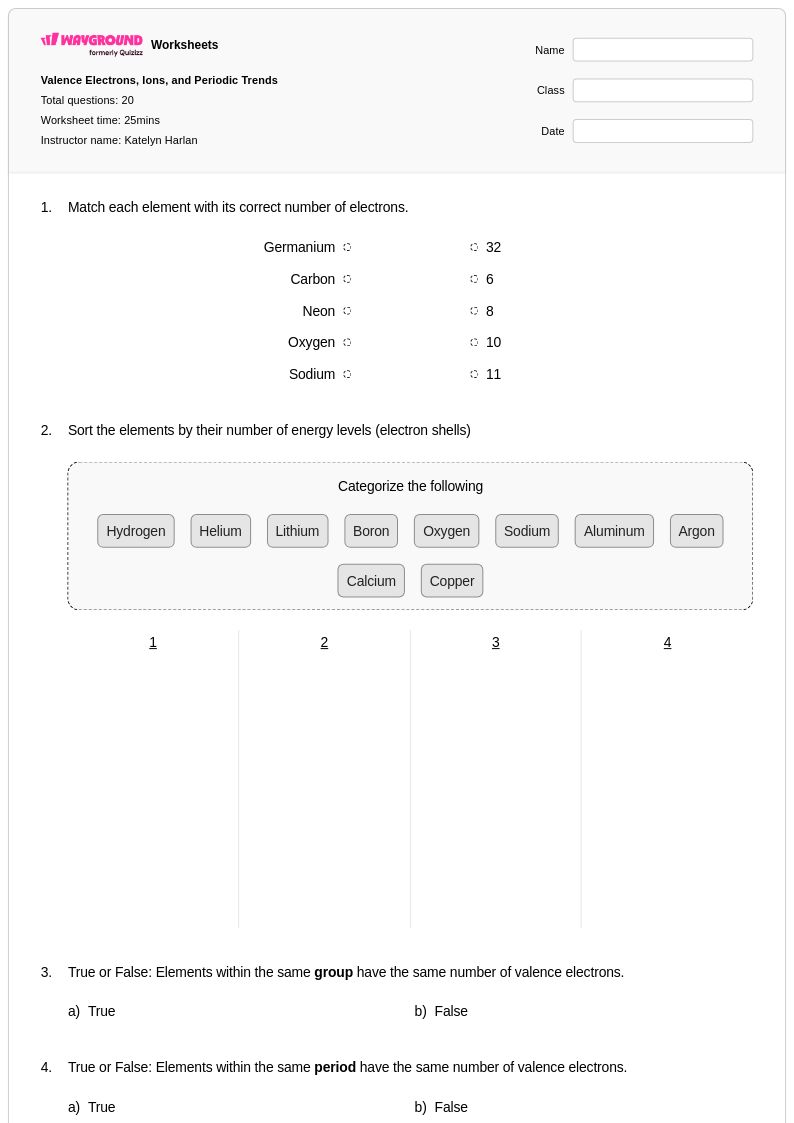
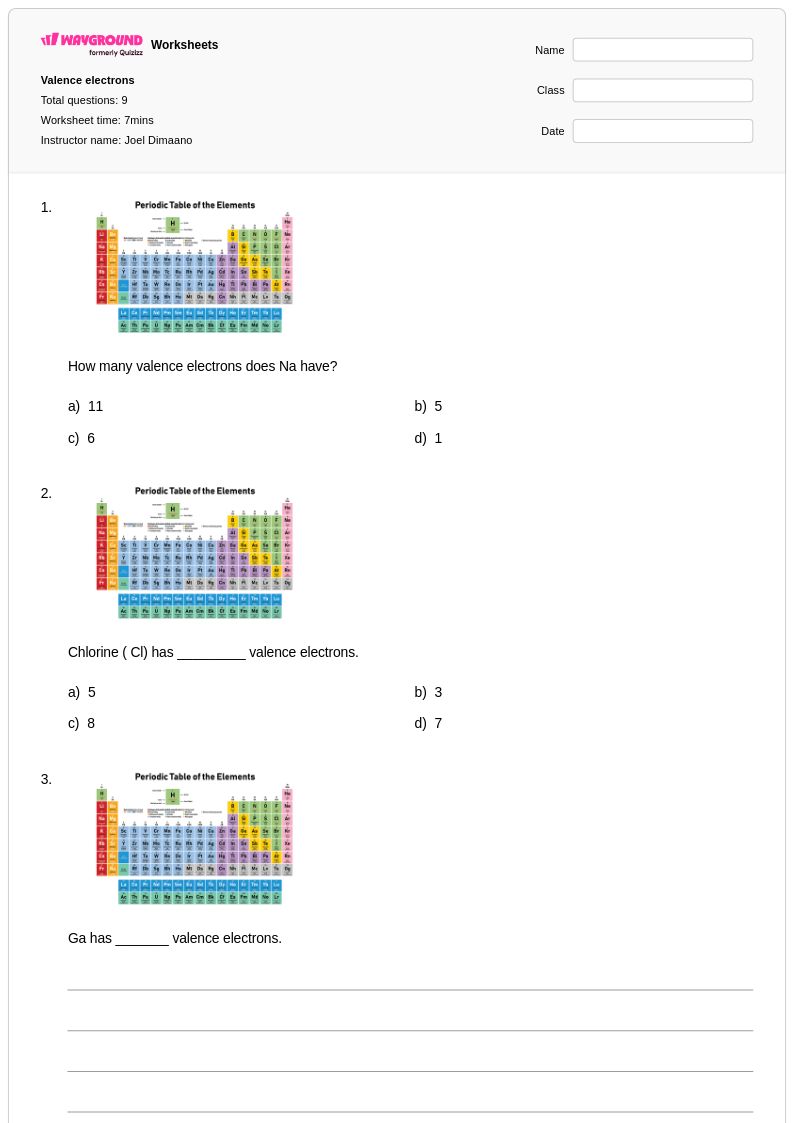
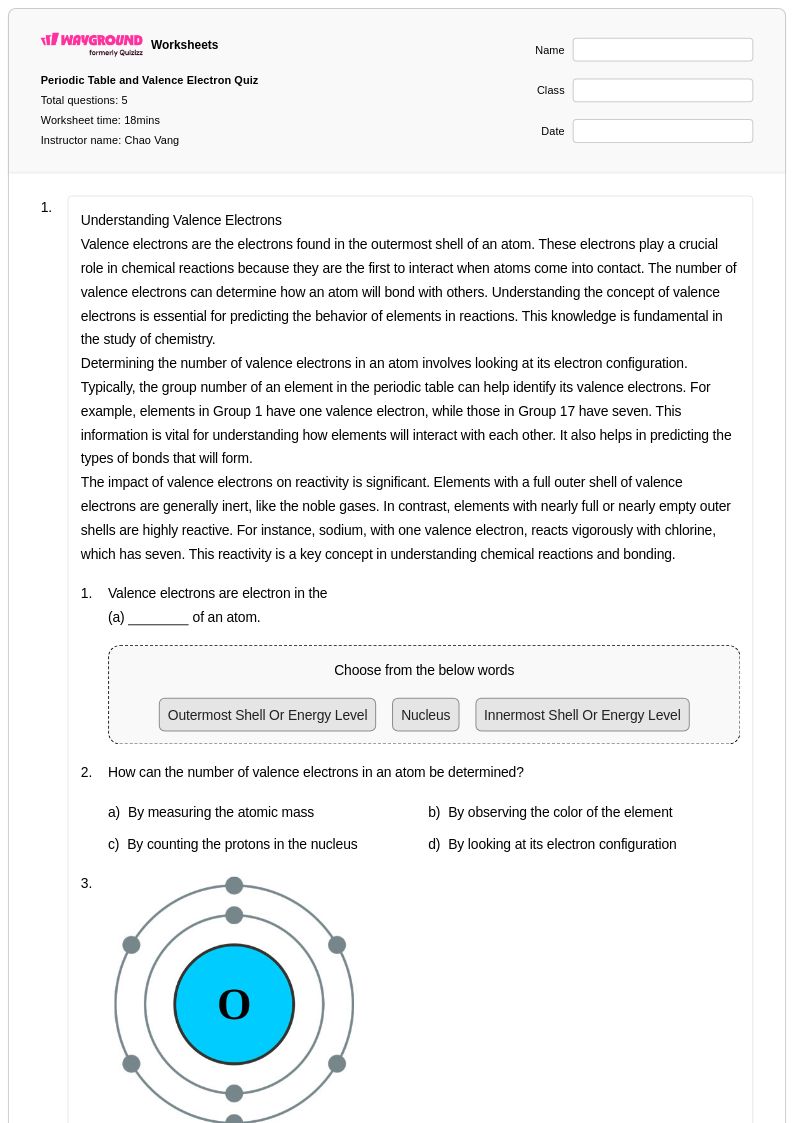
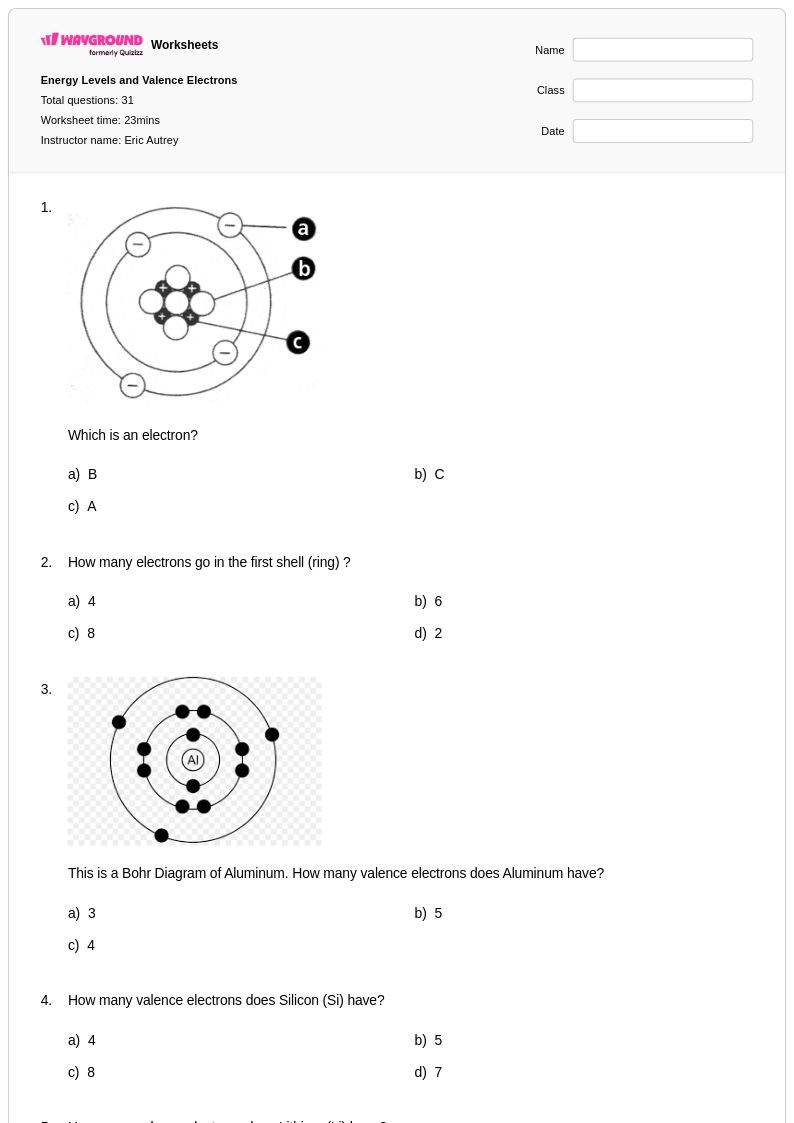
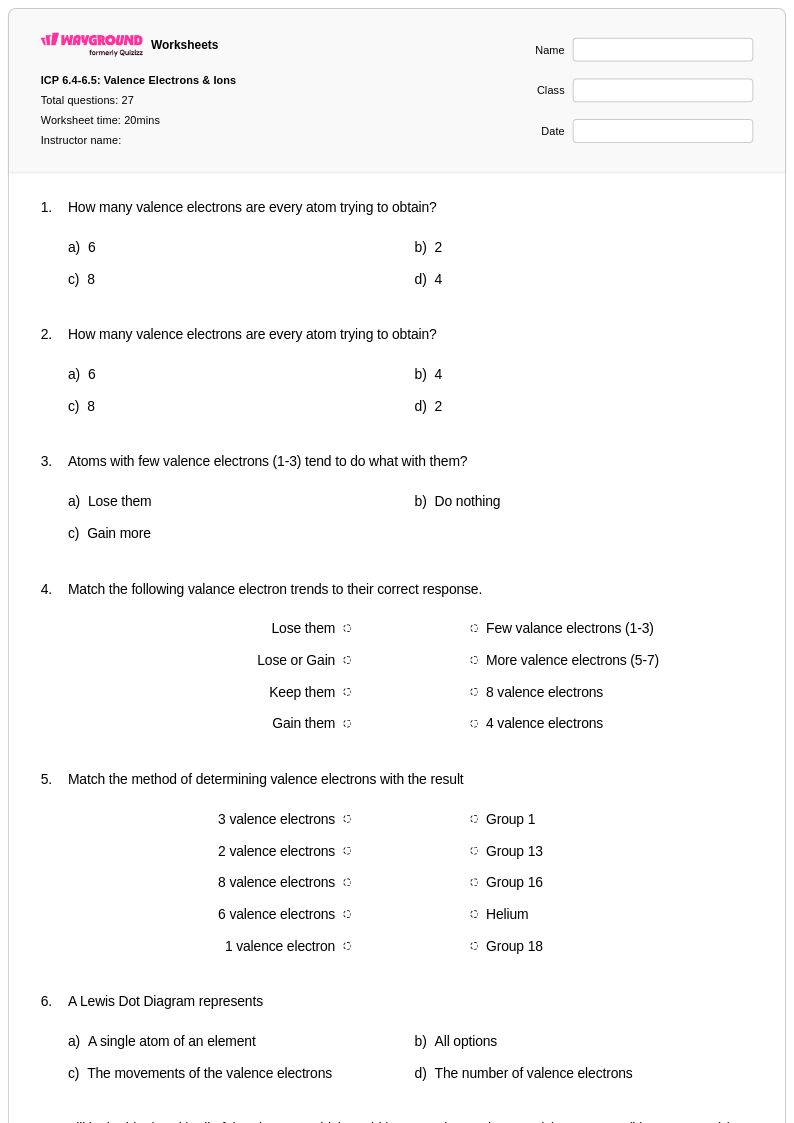
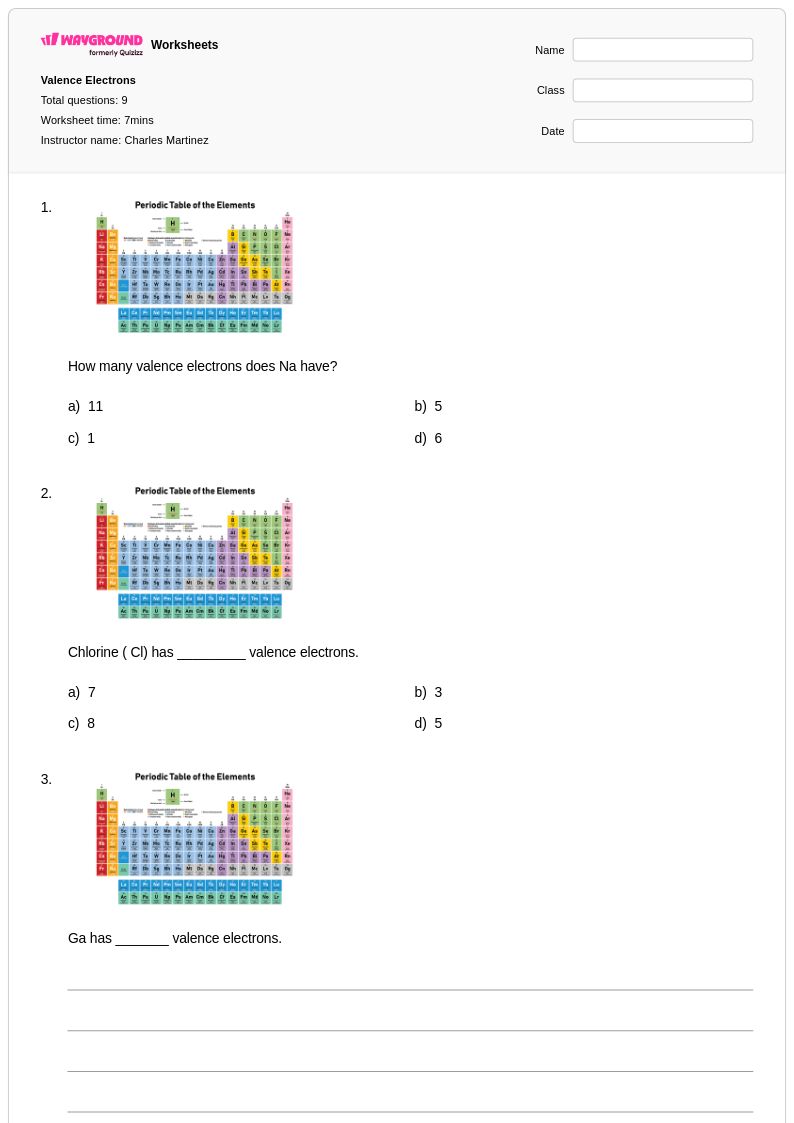
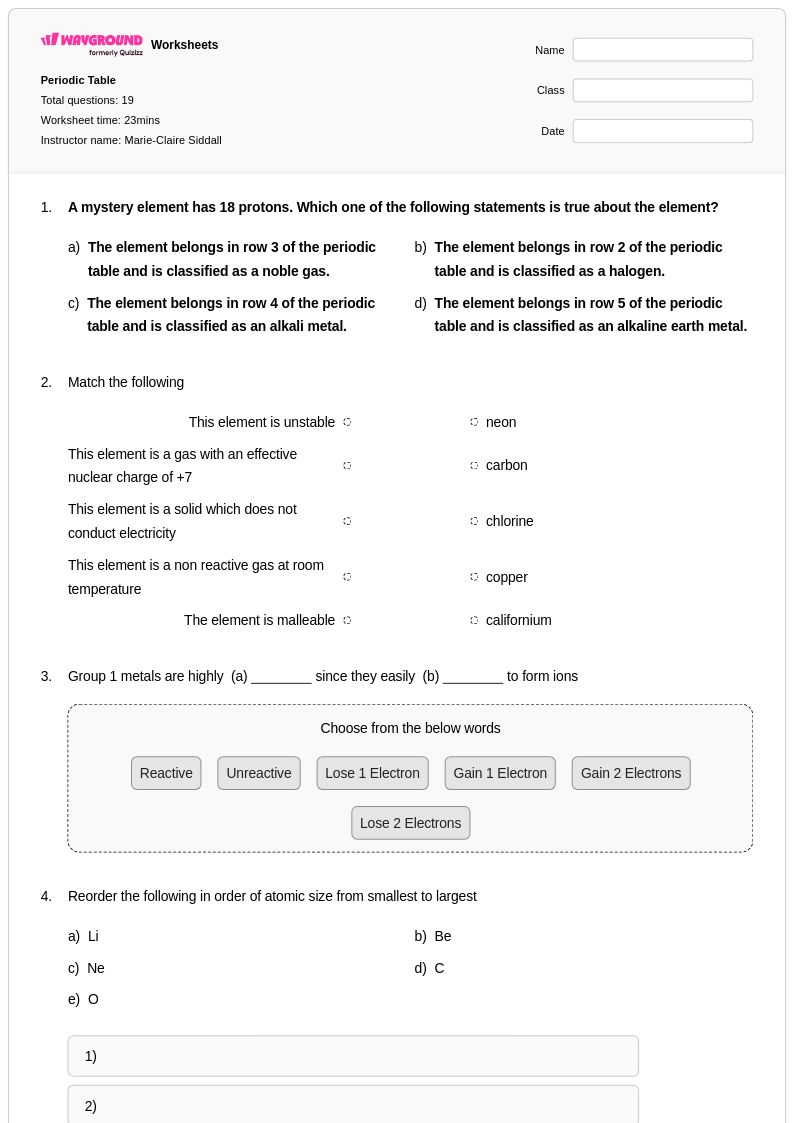
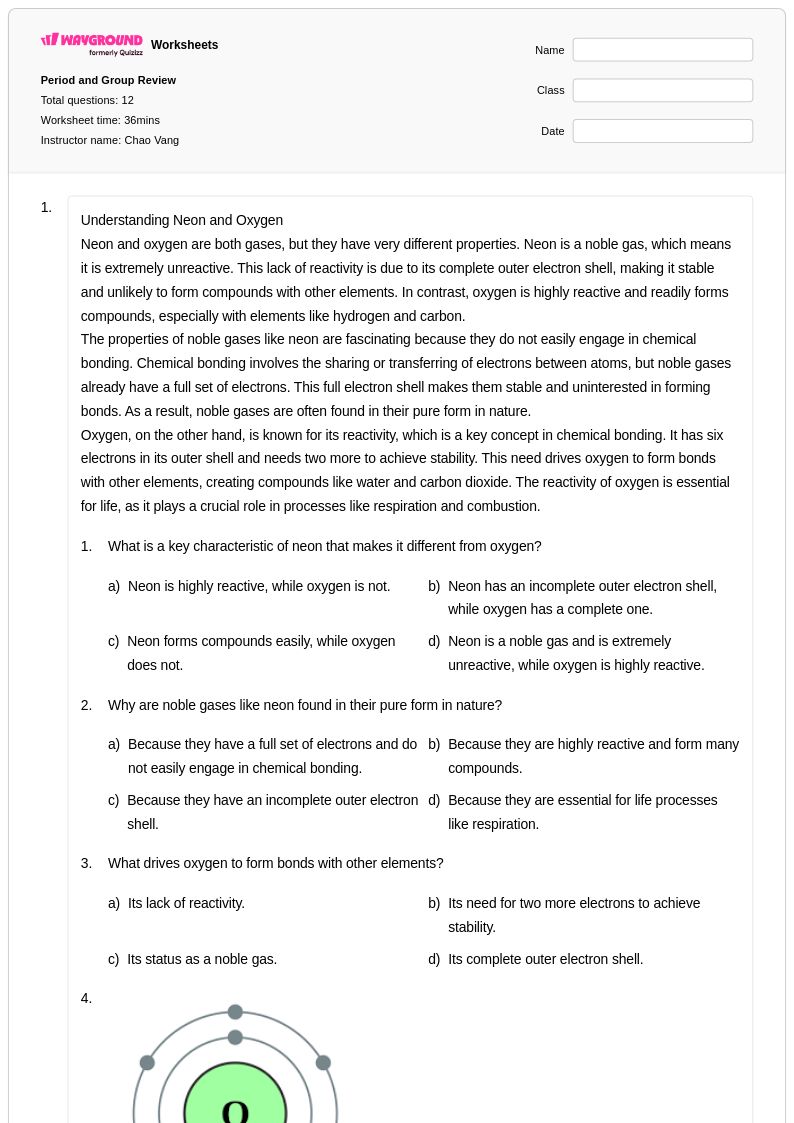
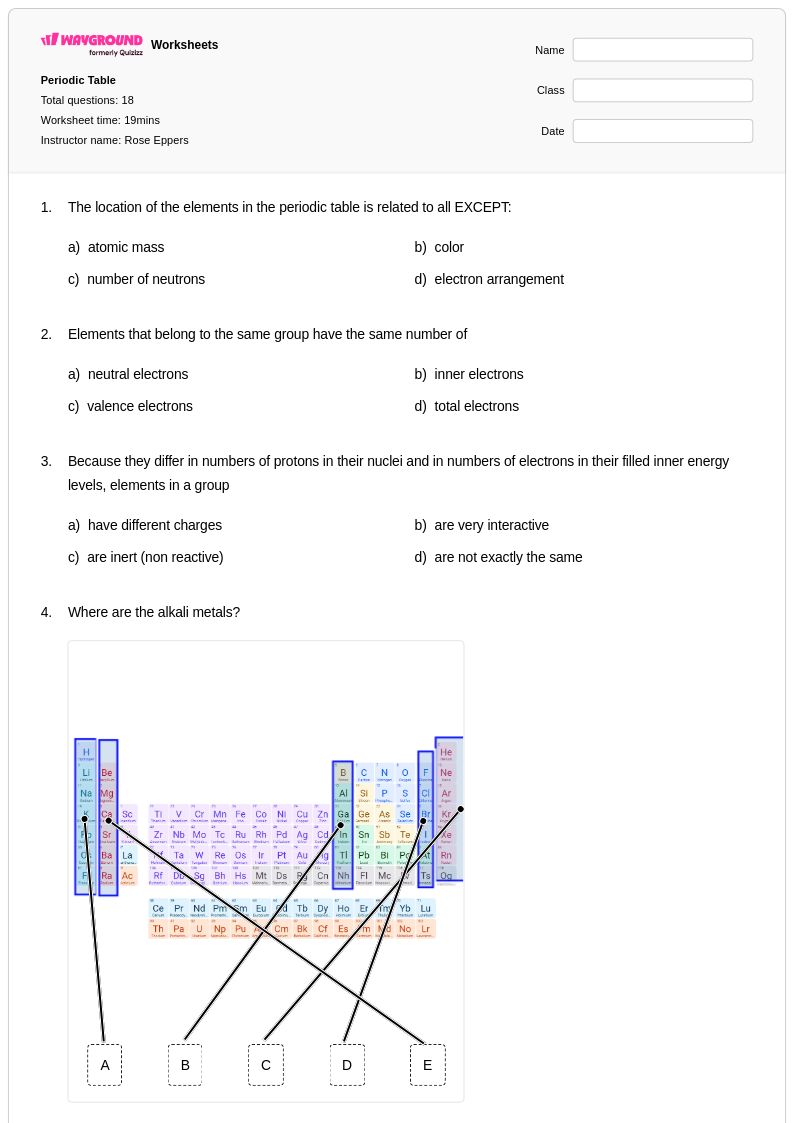
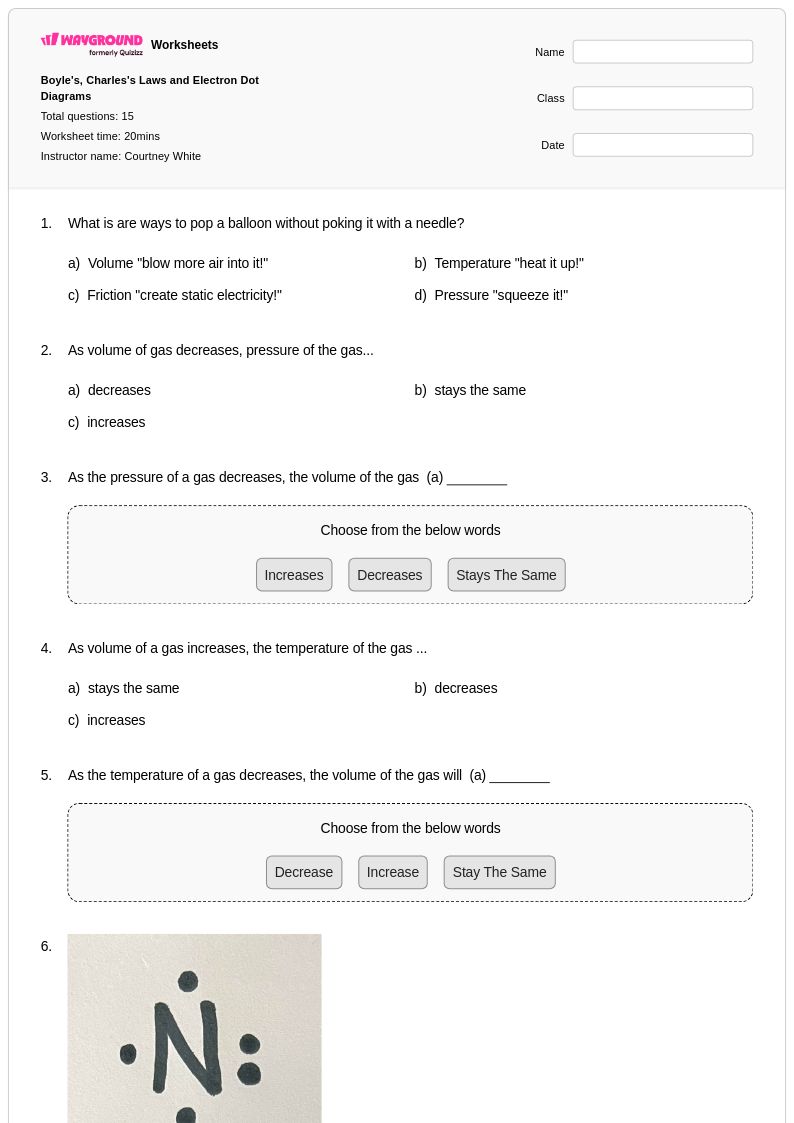
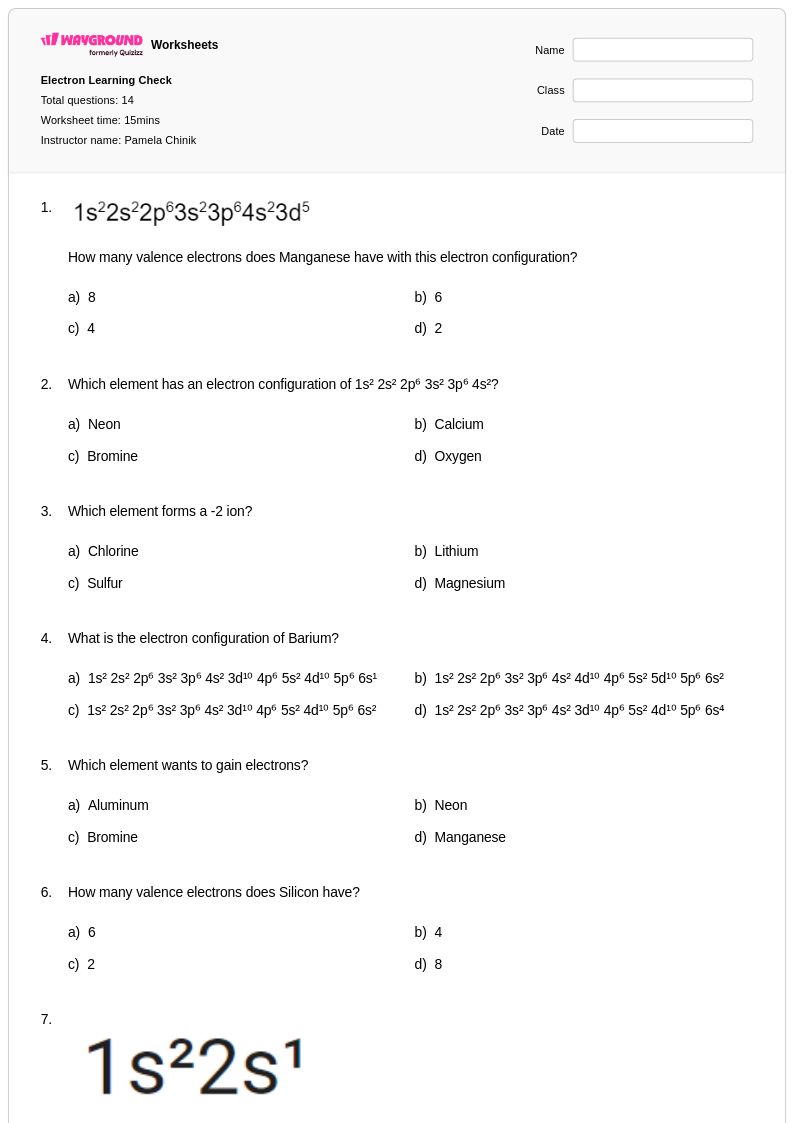
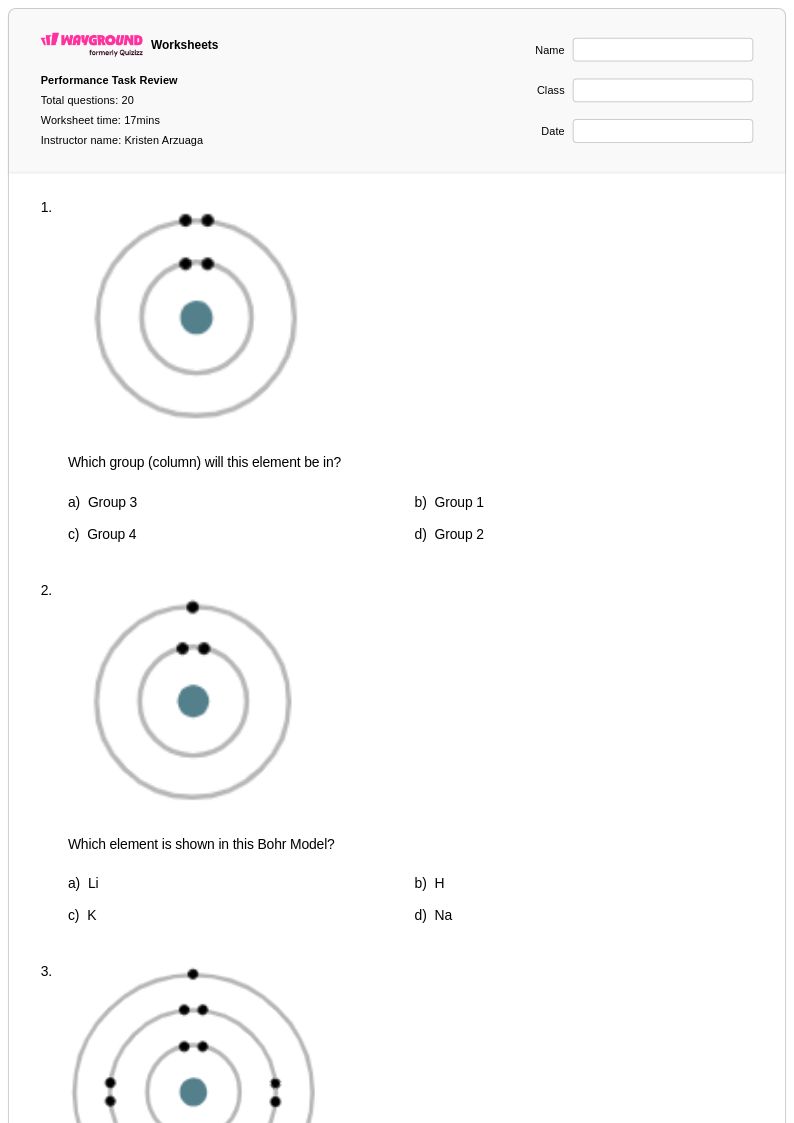
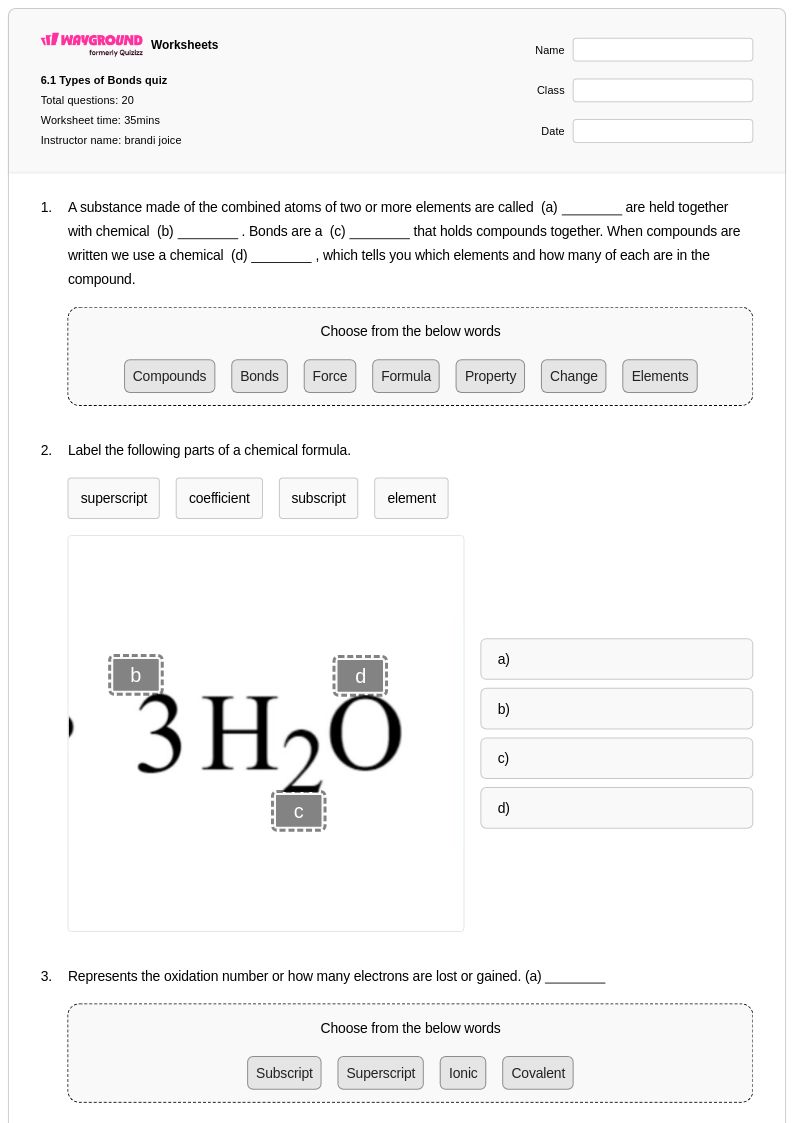
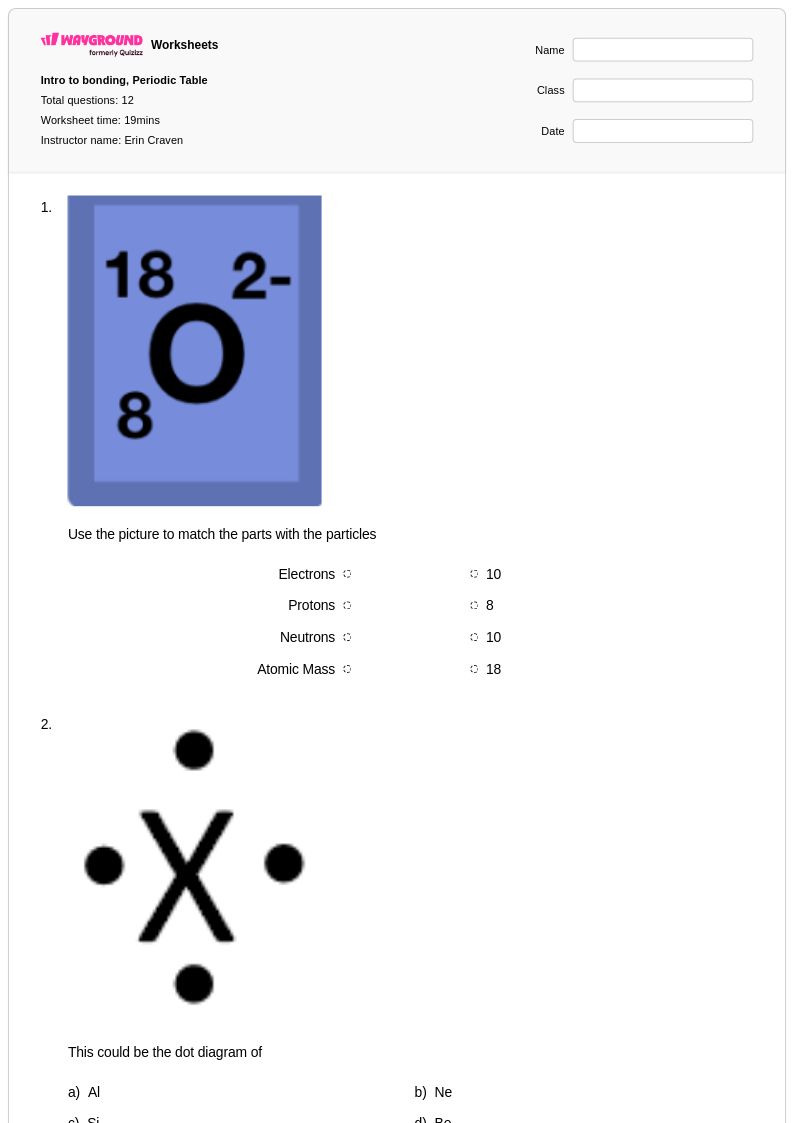
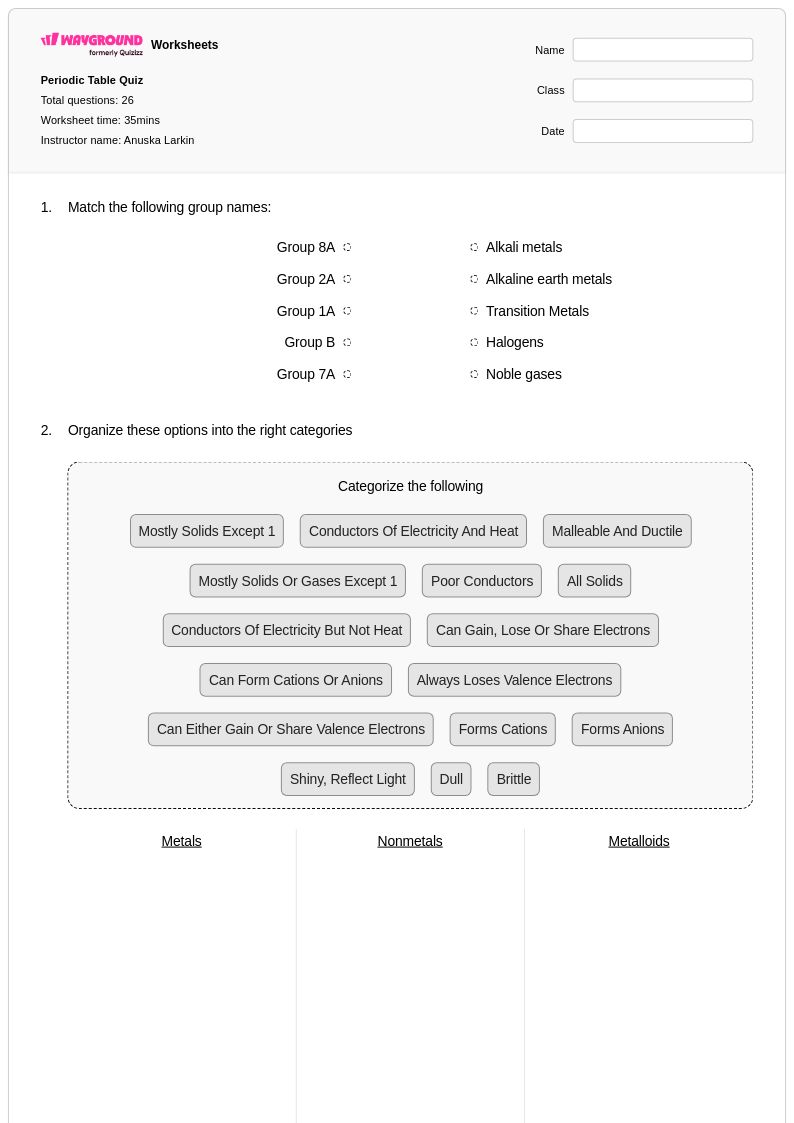
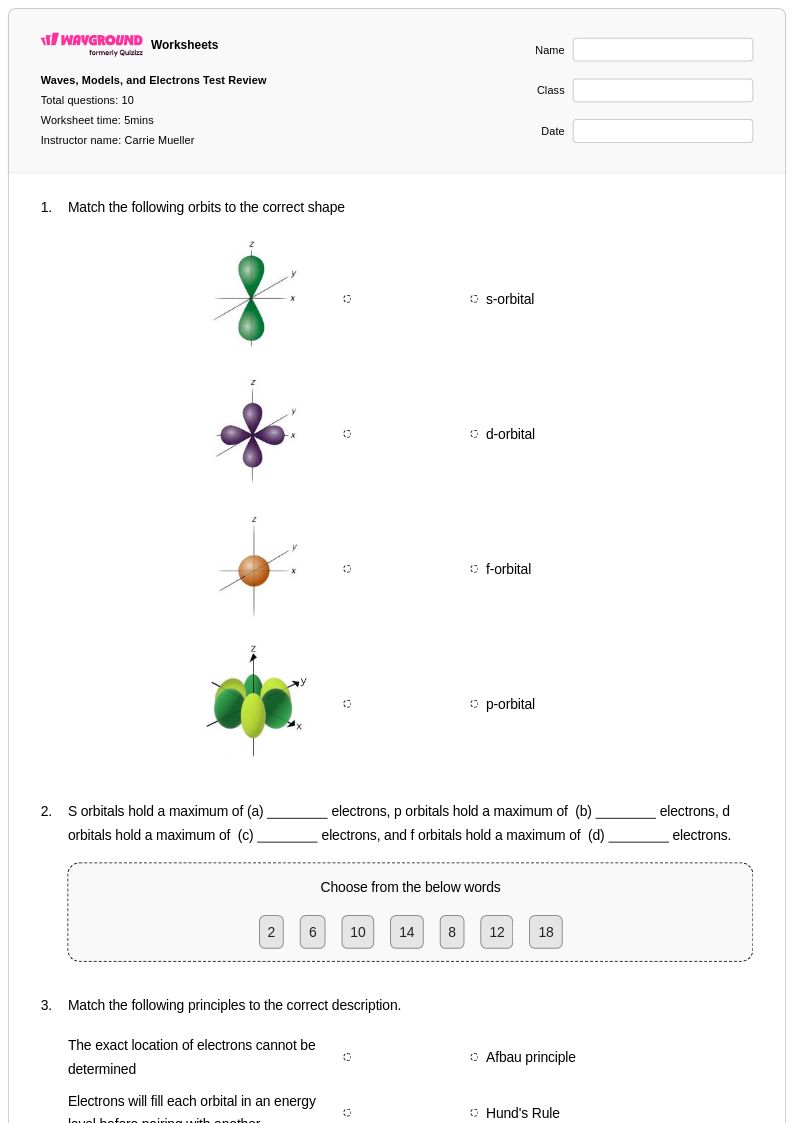
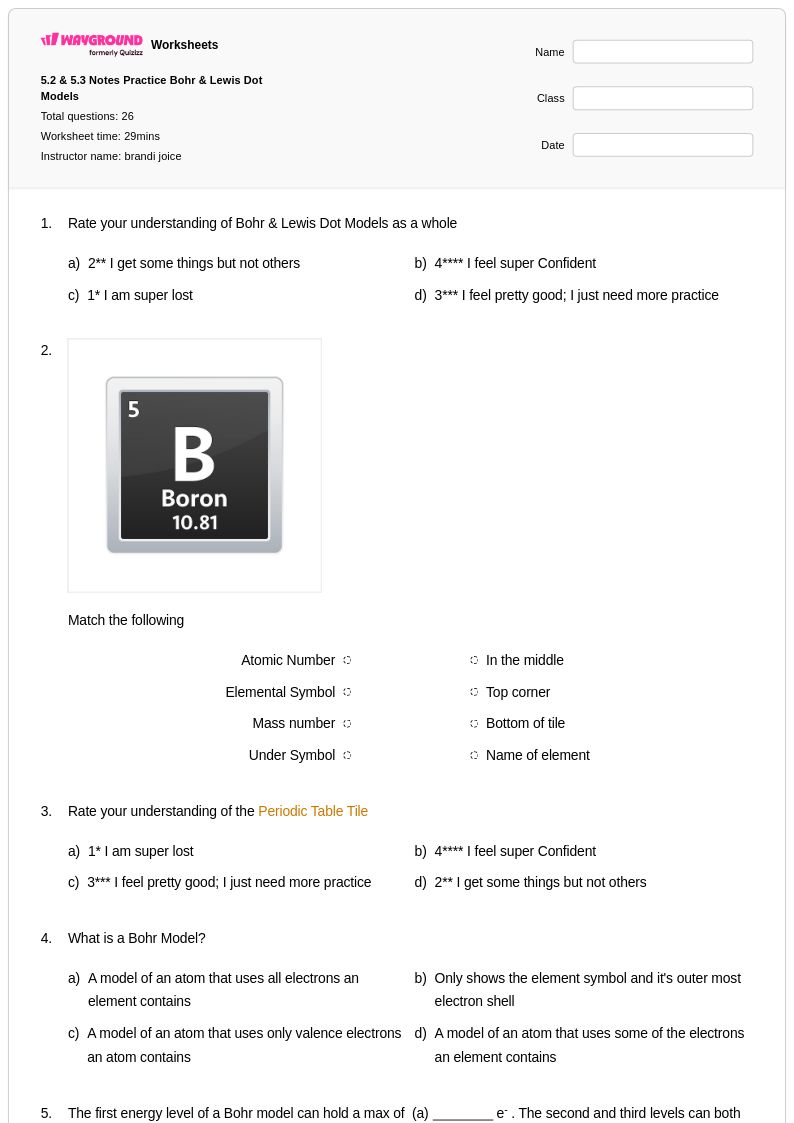
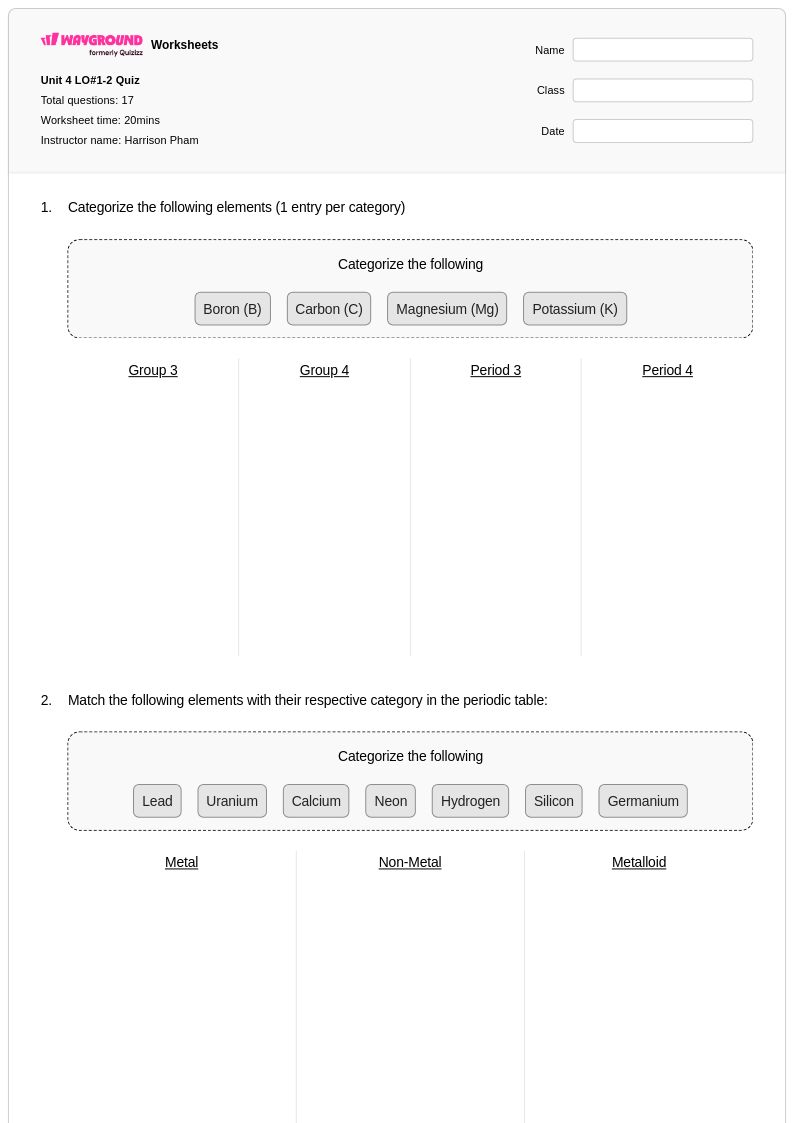
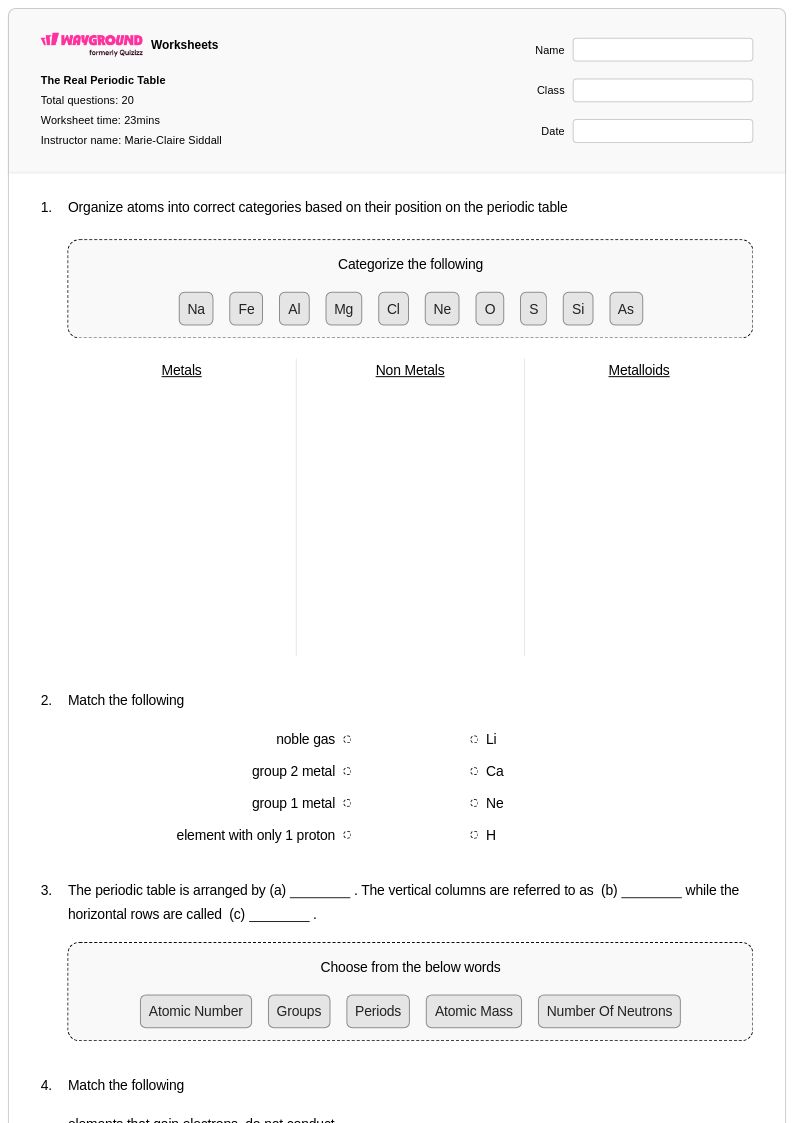
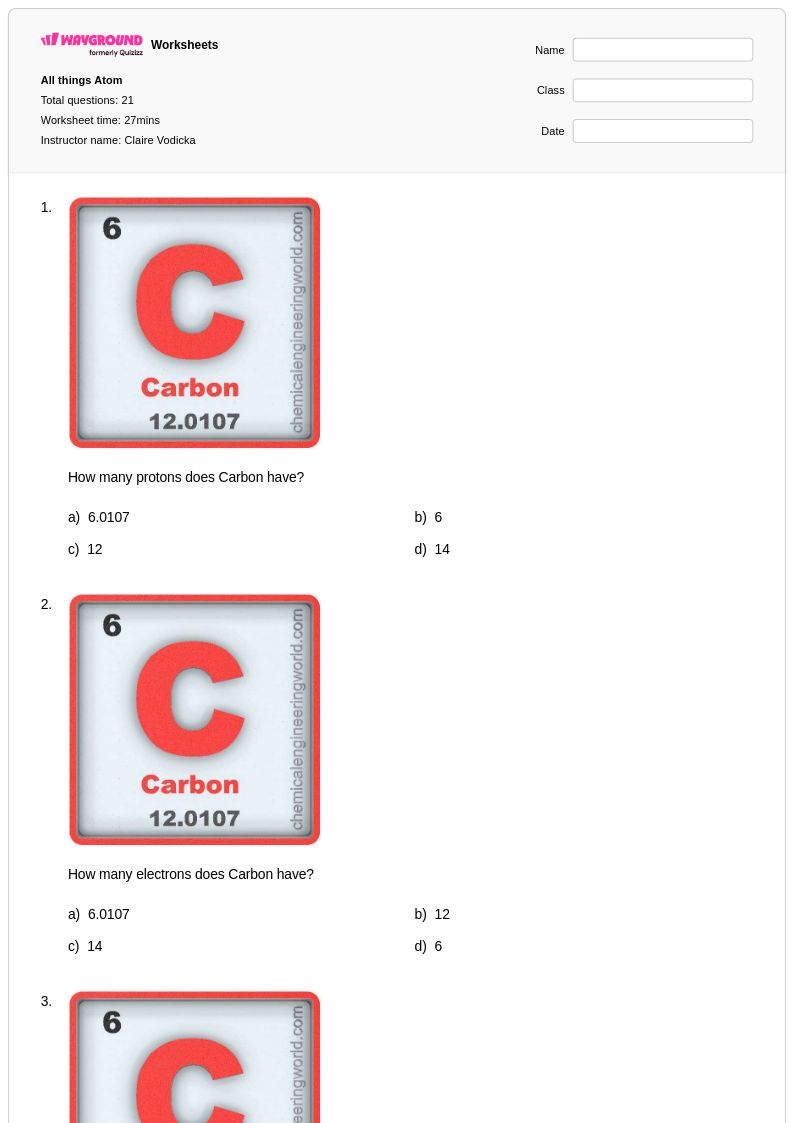
Valence electrons represent one of the most fundamental concepts in Grade 10 chemistry, serving as the foundation for understanding chemical bonding, molecular structure, and reactivity patterns. Wayground's extensive collection of valence electron worksheets provides students with comprehensive practice problems that reinforce their ability to determine electron configurations, identify valence electrons across different elements and groups, and predict chemical behavior based on outer shell electrons. These carefully crafted printables include detailed answer keys and step-by-step solutions that help students master essential skills such as writing Lewis dot structures, understanding periodic trends in valence electrons, and connecting electron arrangements to chemical properties. The free pdf resources range from basic electron counting exercises to advanced problems involving transition metals and complex ions, ensuring students develop both conceptual understanding and practical problem-solving abilities in this critical chemistry topic.
Wayground, formerly Quizizz, empowers educators with millions of teacher-created resources specifically designed to support valence electron instruction at the Grade 10 level. The platform's robust search and filtering capabilities allow teachers to quickly locate worksheets aligned with specific chemistry standards and learning objectives, while differentiation tools enable customization for students with varying skill levels and learning needs. These versatile resources are available in both printable pdf formats for traditional classroom use and digital formats for seamless integration into online learning environments. Teachers can efficiently plan comprehensive lesson sequences, provide targeted remediation for struggling students, offer enrichment opportunities for advanced learners, and create focused skill practice sessions that build student confidence in electron configuration and valence electron determination across all elements of the periodic table.
FAQs
How do I teach valence electrons to chemistry students?
Start by grounding students in atomic structure — specifically the relationship between an element's period, group, and electron shell configuration — before introducing valence electrons as the outermost shell electrons that drive chemical behavior. Use the periodic table as a visual anchor: students should recognize that the group number directly indicates valence electron count for main-group elements. From there, connect valence electrons to reactivity and bonding so students understand why this concept matters beyond memorization.
What exercises help students practice identifying valence electrons?
Effective practice moves students from simple identification to application. Begin with exercises where students determine valence electron counts from group numbers for representative elements, then progress to drawing Lewis dot structures, predicting ionic charges, and explaining bonding behavior. Practice problems that require students to compare elements across the same group reinforce the pattern-based logic that makes valence electron concepts transferable to new elements and compounds.
What common mistakes do students make when working with valence electrons?
The most frequent error is confusing total electrons with valence electrons, particularly for elements in the third period and beyond. Students also commonly misapply the group-number shortcut to transition metals, which do not follow the same pattern as main-group elements. Another persistent misconception is treating all eight electrons in a full outer shell as equally reactive — students need explicit instruction that it is specifically the valence electrons that participate in bonding and determine an element's chemical properties.
How does understanding valence electrons connect to chemical bonding concepts?
Valence electrons are the foundation of all bonding theory — they determine whether an element will gain, lose, or share electrons to achieve a stable configuration. Students who can fluently identify valence electron counts are better positioned to predict ionic versus covalent bonding, explain electronegativity differences, and interpret Lewis structures accurately. Teaching valence electrons as a predictive tool rather than a memorization task makes the transition to bonding units significantly smoother.
How can I use Wayground's valence electrons worksheets in my chemistry class?
Wayground's valence electrons worksheets are available as printable PDFs for traditional classroom use and in digital formats for technology-integrated environments, including the option to host them as a quiz directly on Wayground. Teachers can search, filter, and customize worksheets to match their current unit and student readiness level, making them practical for direct instruction support, independent practice, homework, or assessment prep. Each worksheet includes a complete answer key, reducing grading prep time and making self-paced or station-based learning more manageable.
How can I support struggling students on valence electron worksheets without slowing down the rest of the class?
Wayground's accommodation tools let you apply targeted support to individual students without disrupting the rest of the class. For students who need additional accessibility support, you can enable Read Aloud so questions are read to them, reduce the number of answer choices to lower cognitive load, or grant extended time per question — all configurable per student. These settings are saved and reusable across future sessions, so setup is a one-time investment that pays off across your entire chemistry unit.