Free Printable Net Ionic Equation Worksheets for Grade 10
Grade 10 net ionic equation worksheets provide comprehensive printables and practice problems to help students master chemical reaction equations, complete with answer keys and free PDF downloads for effective chemistry learning.
Explore printable Net Ionic Equation worksheets for Grade 10
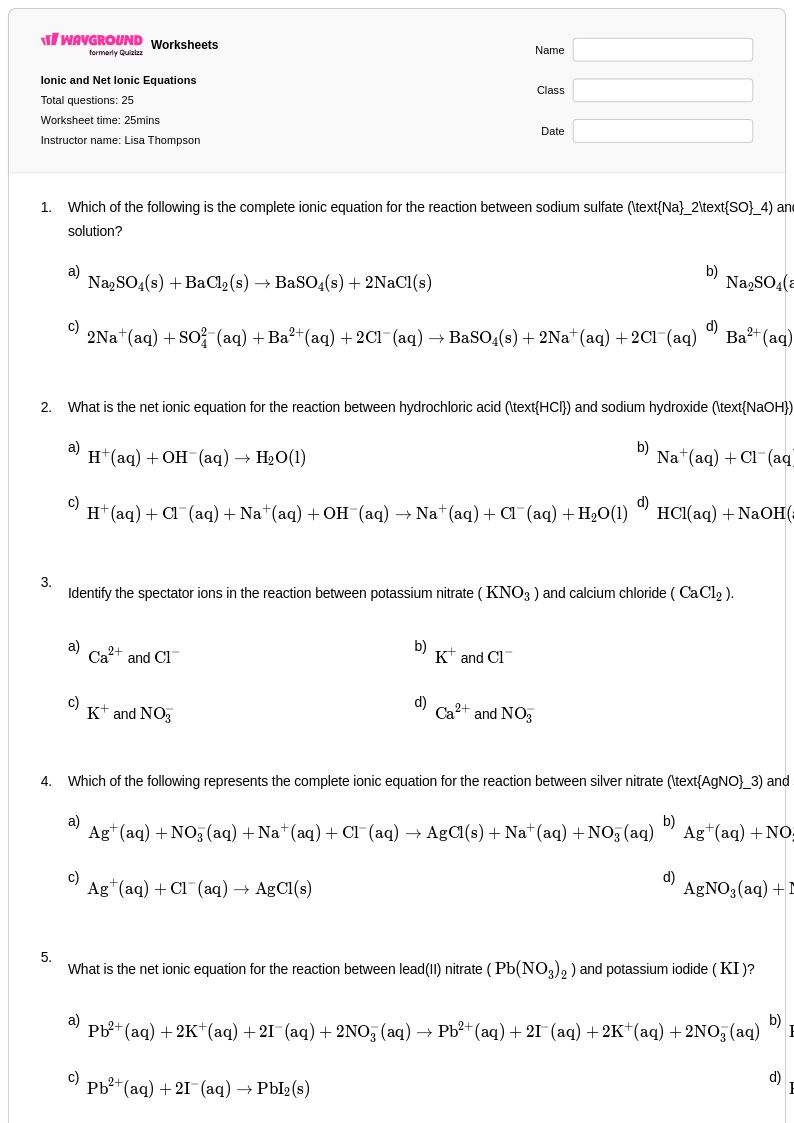
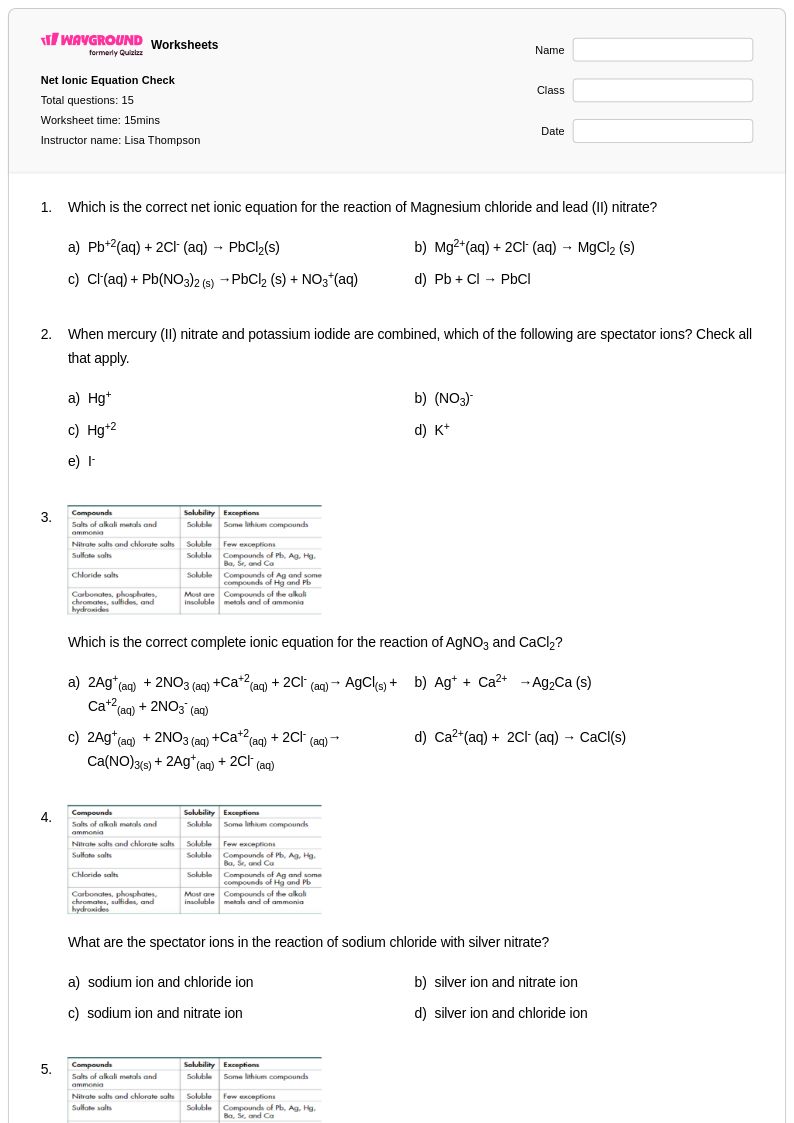
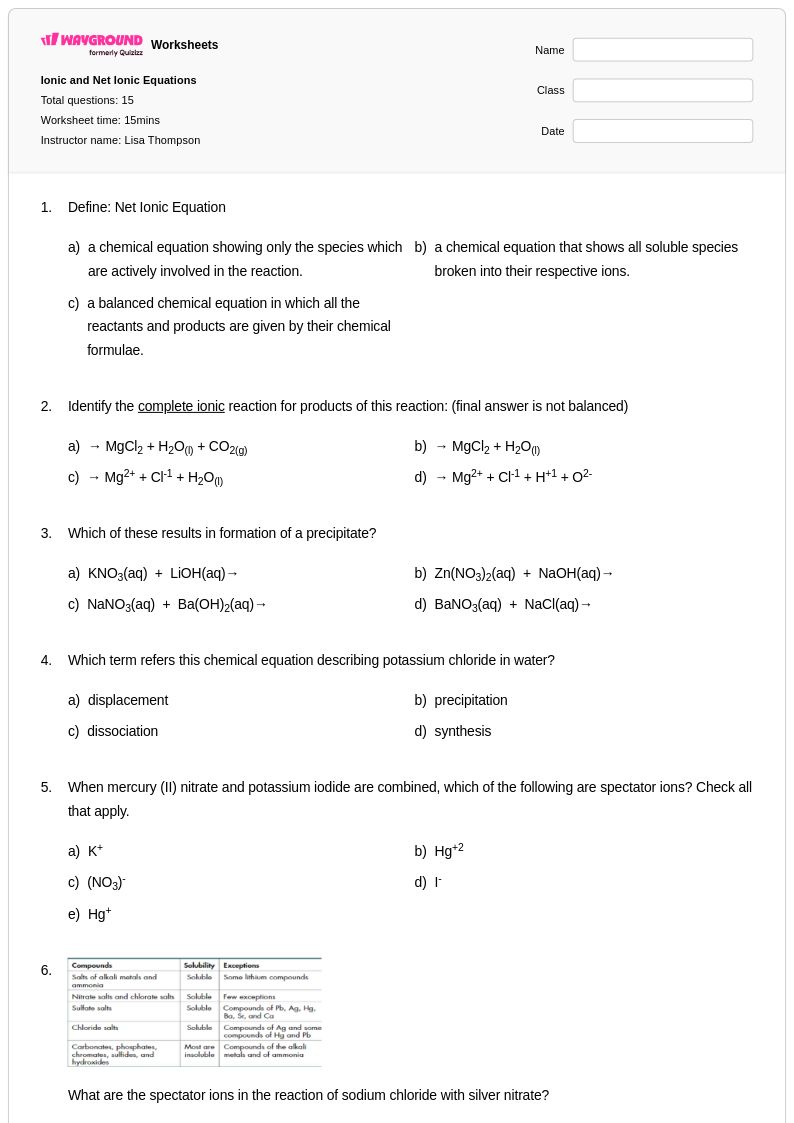
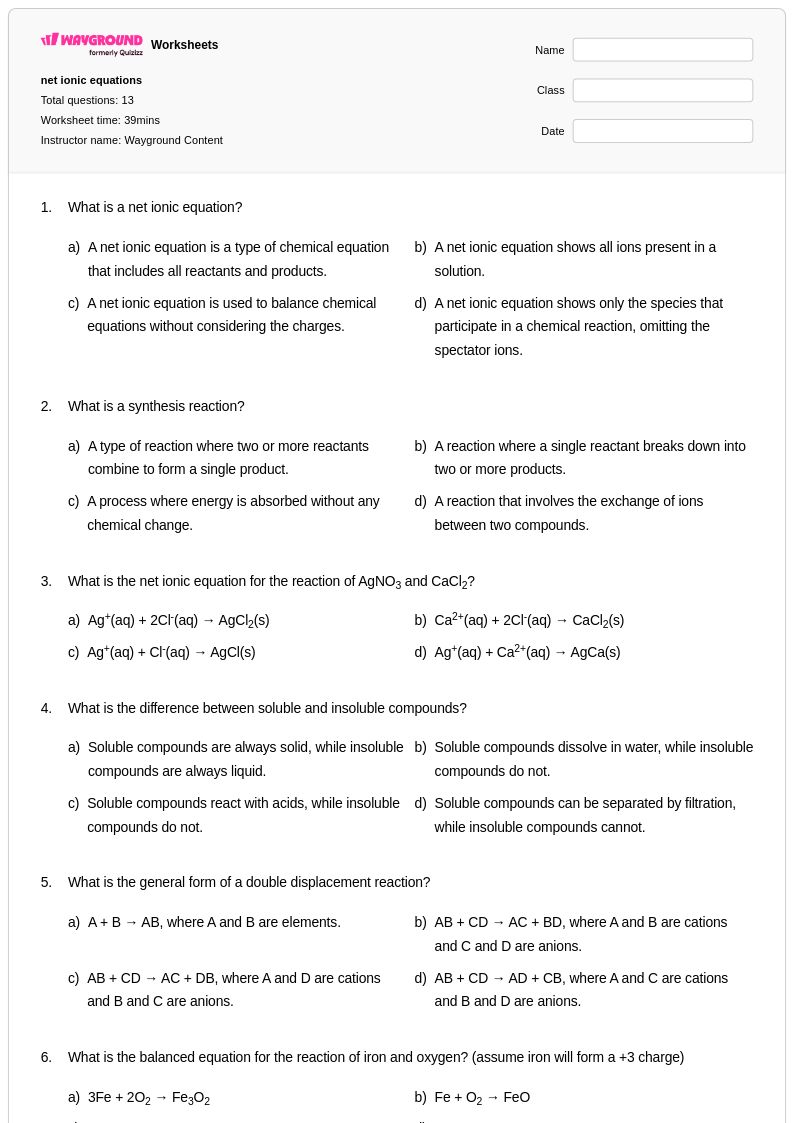
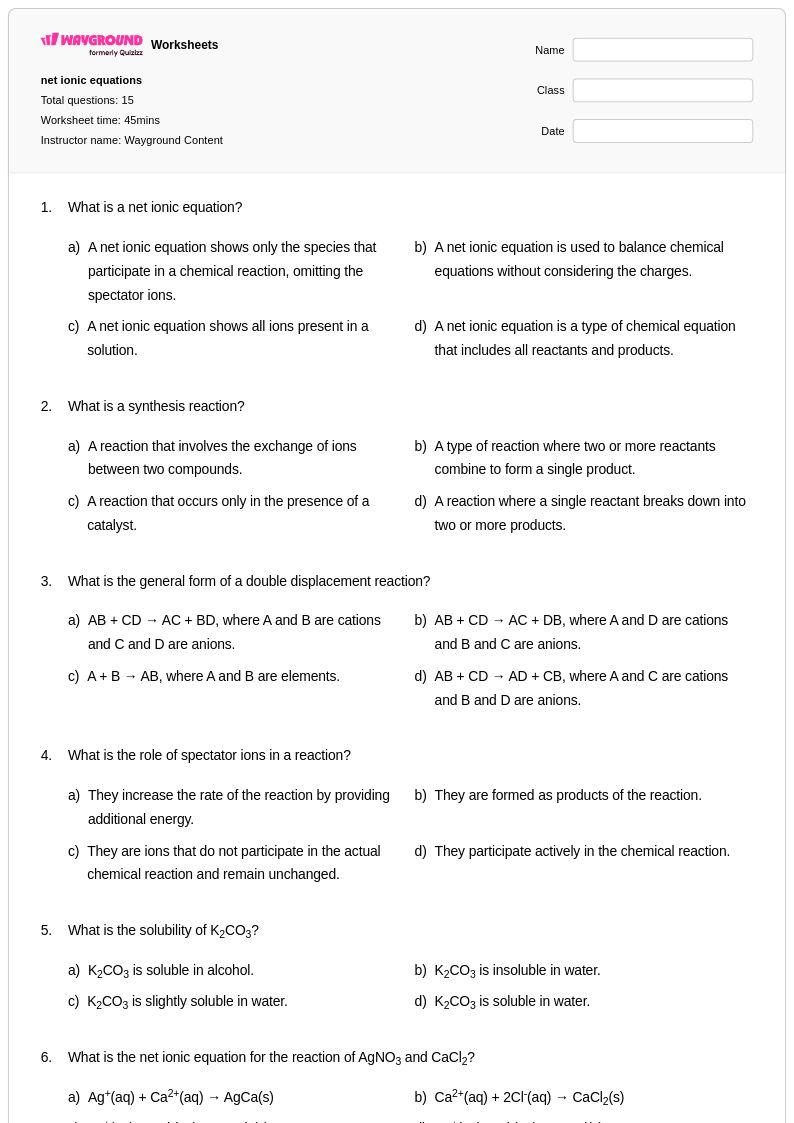
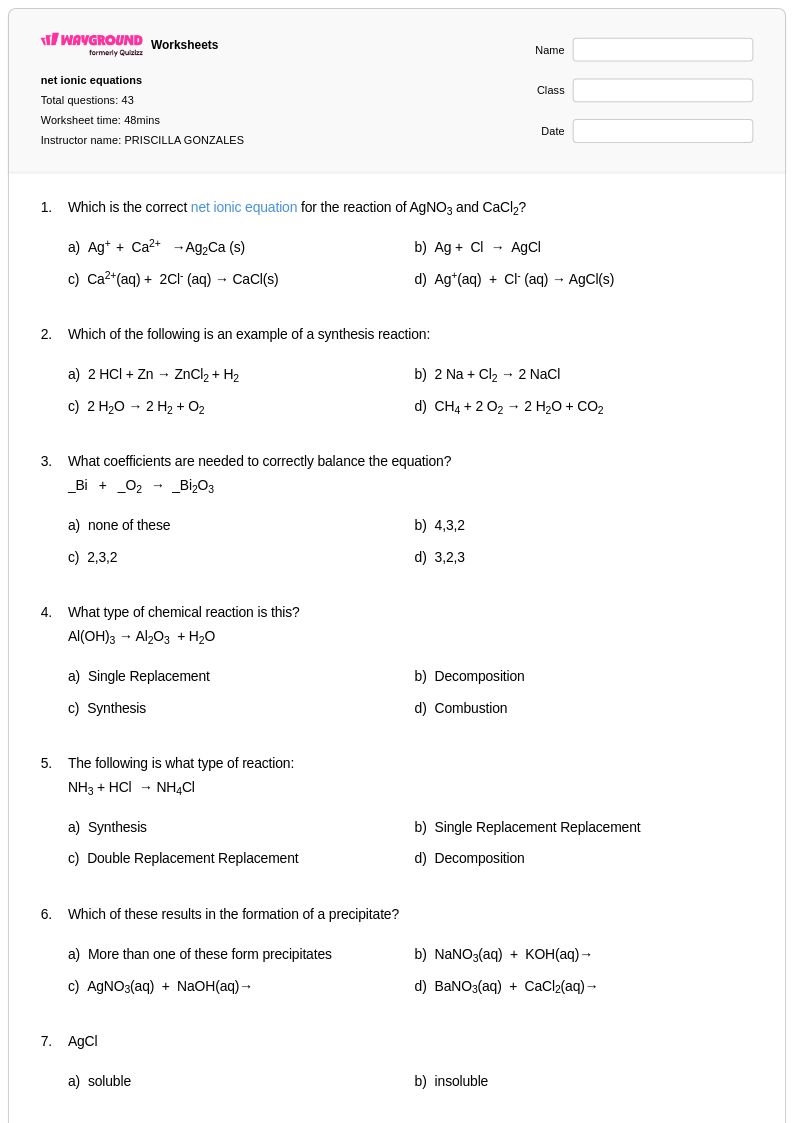
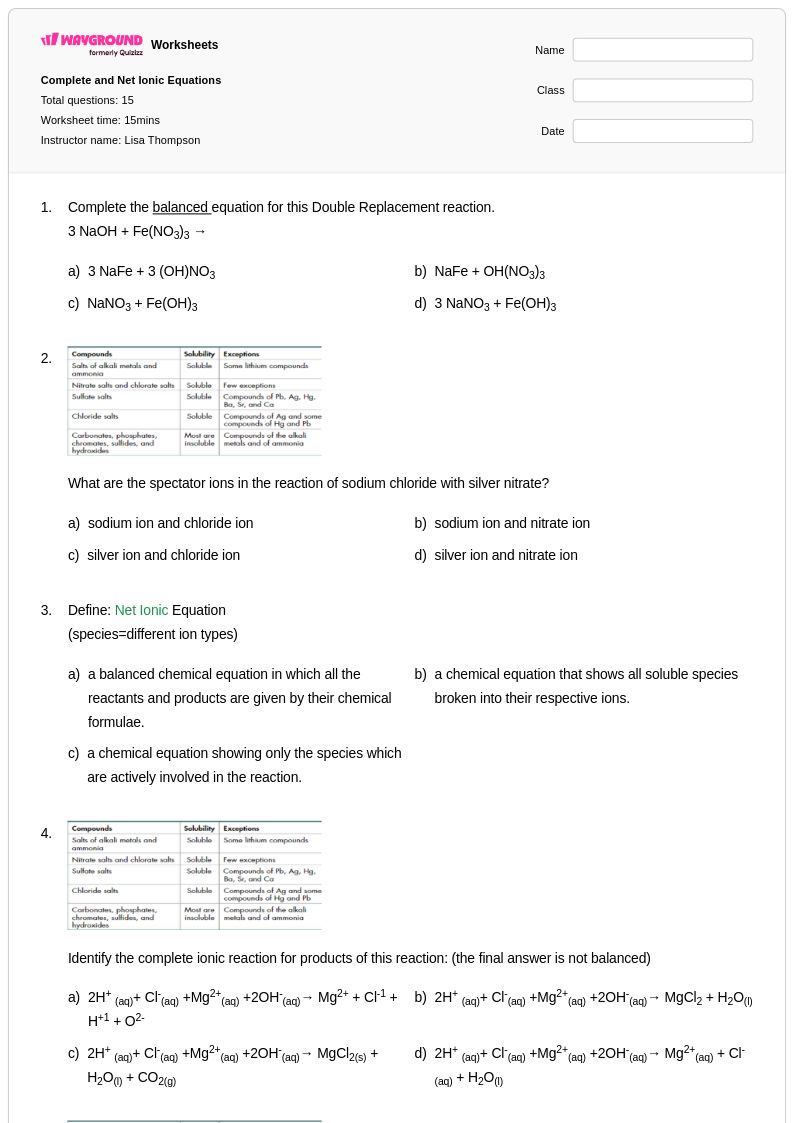
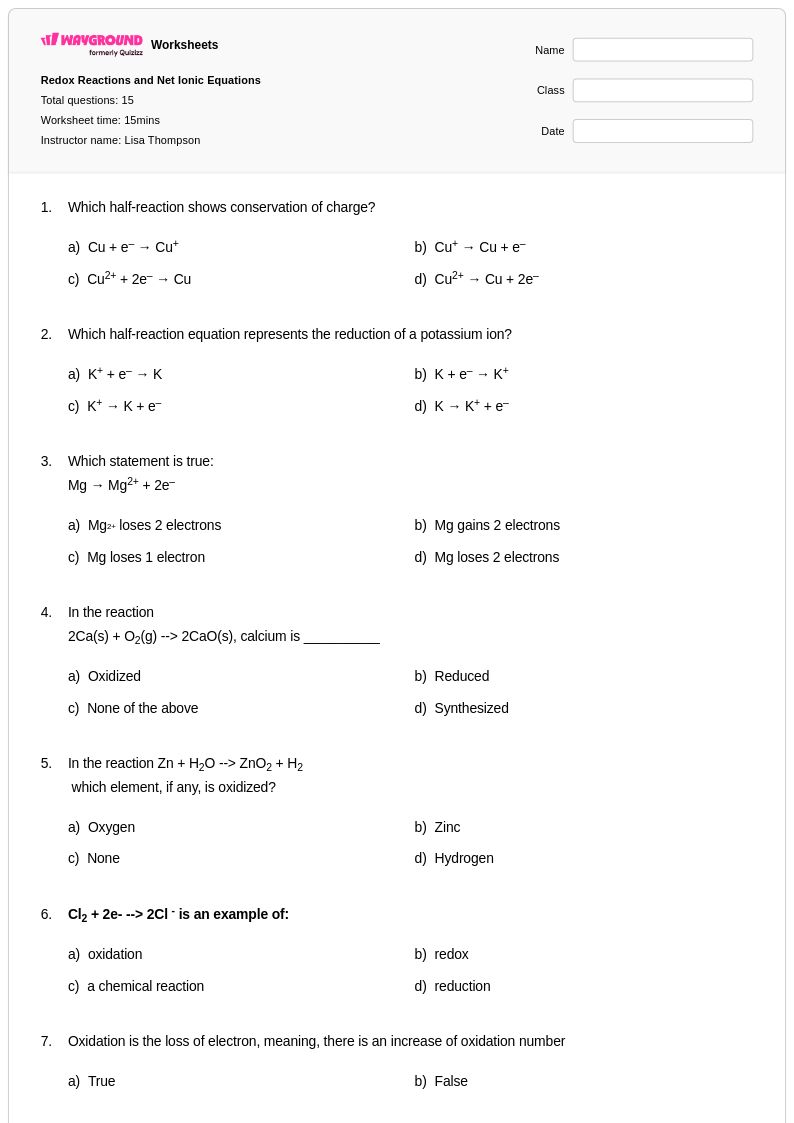
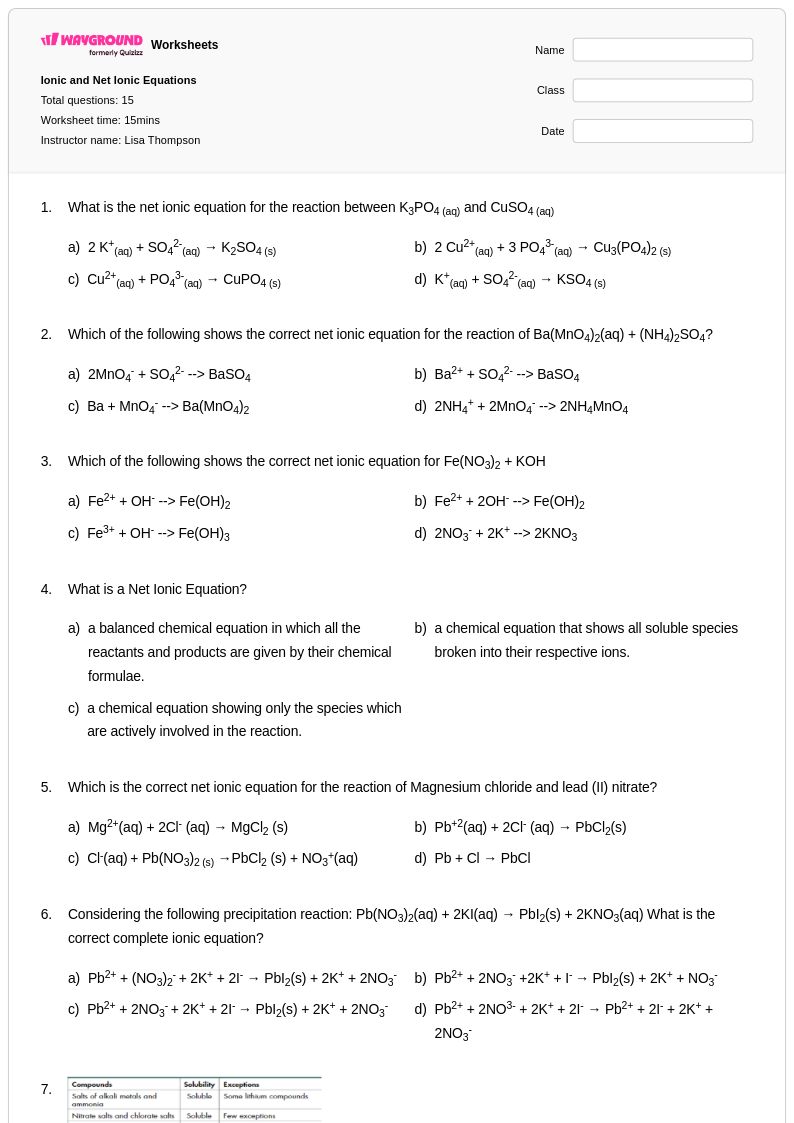
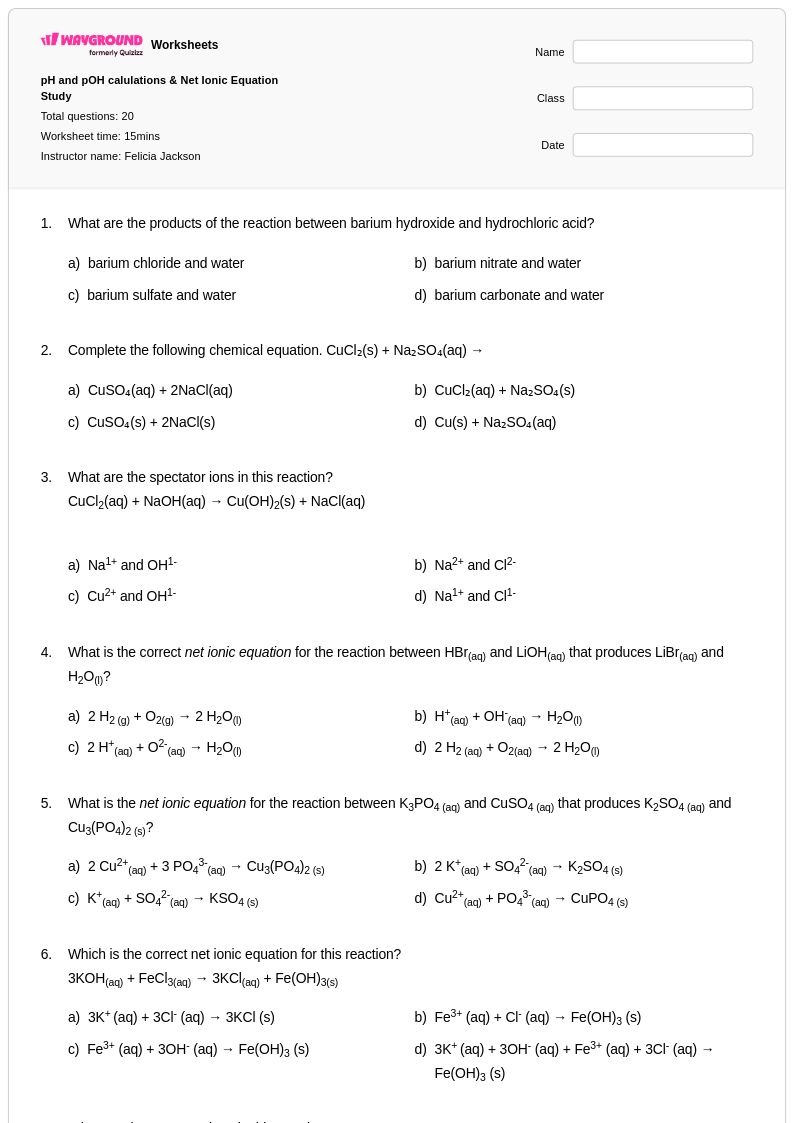
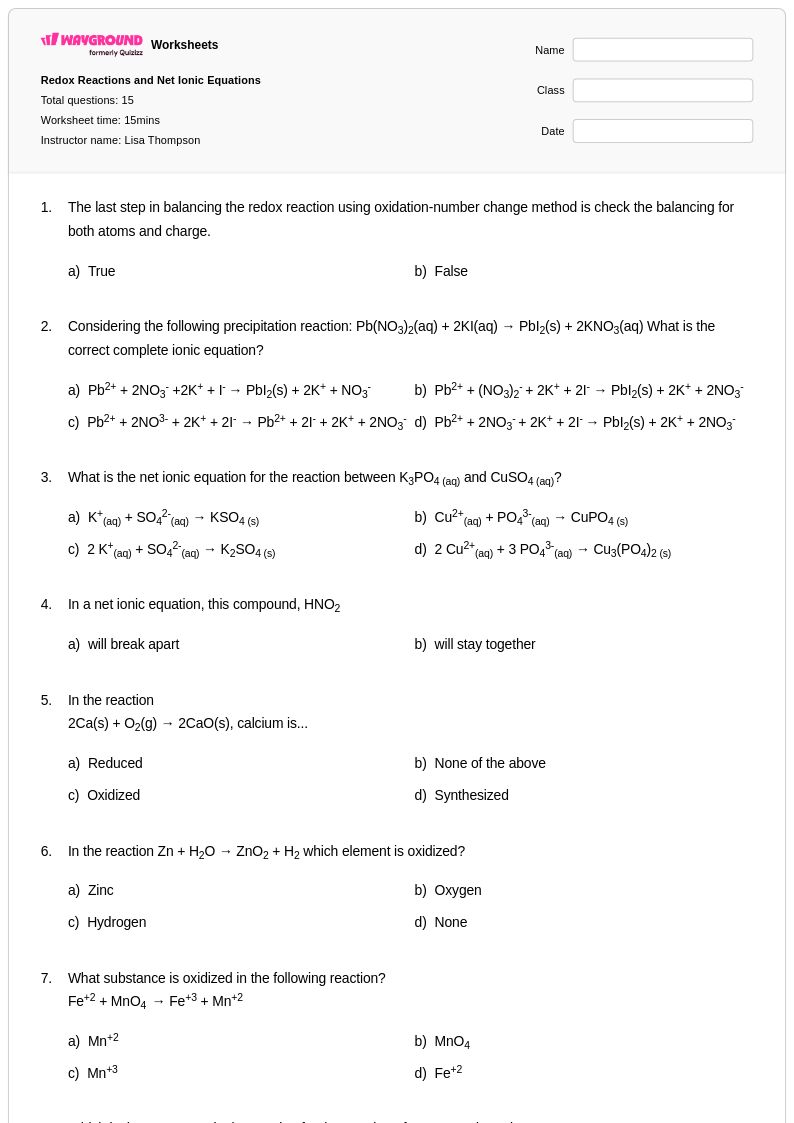
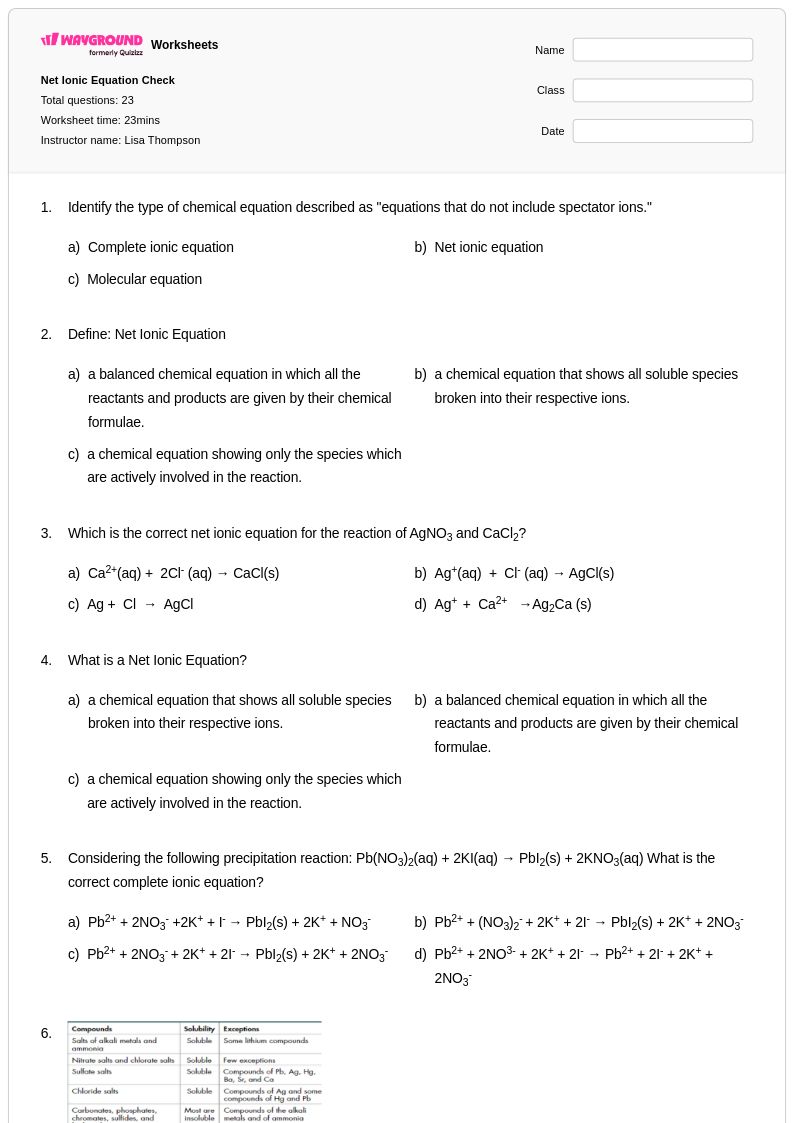
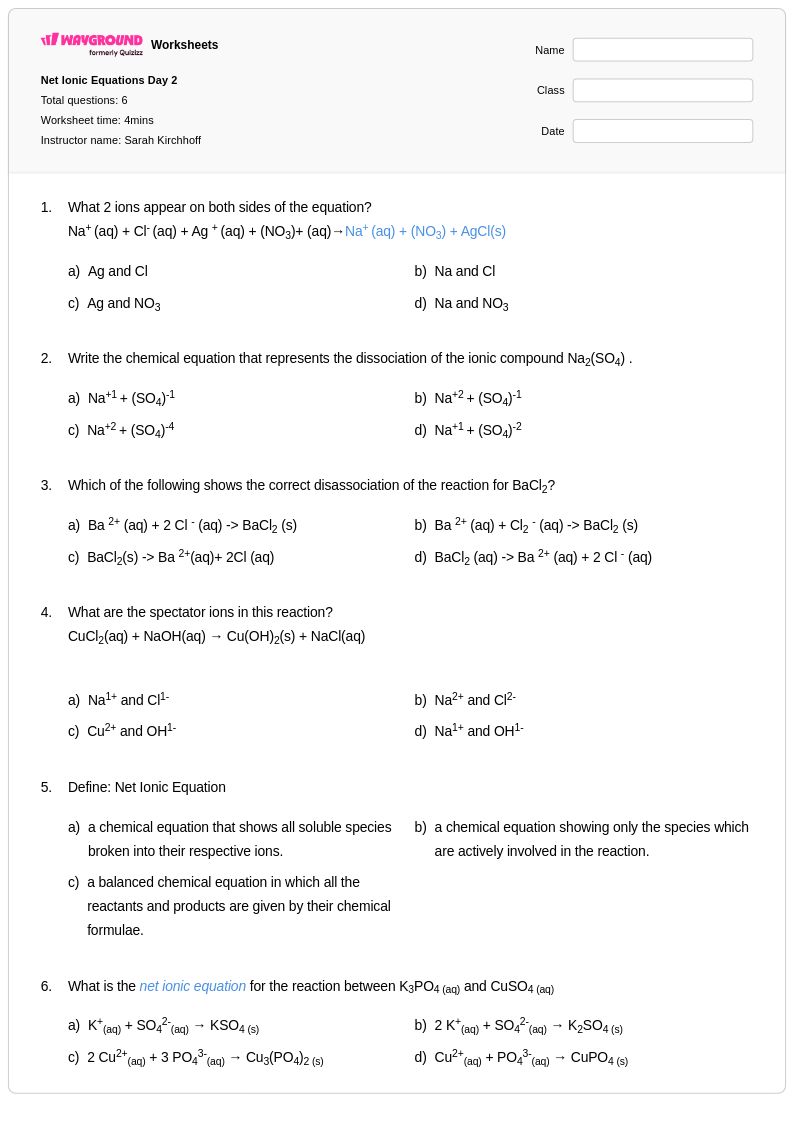
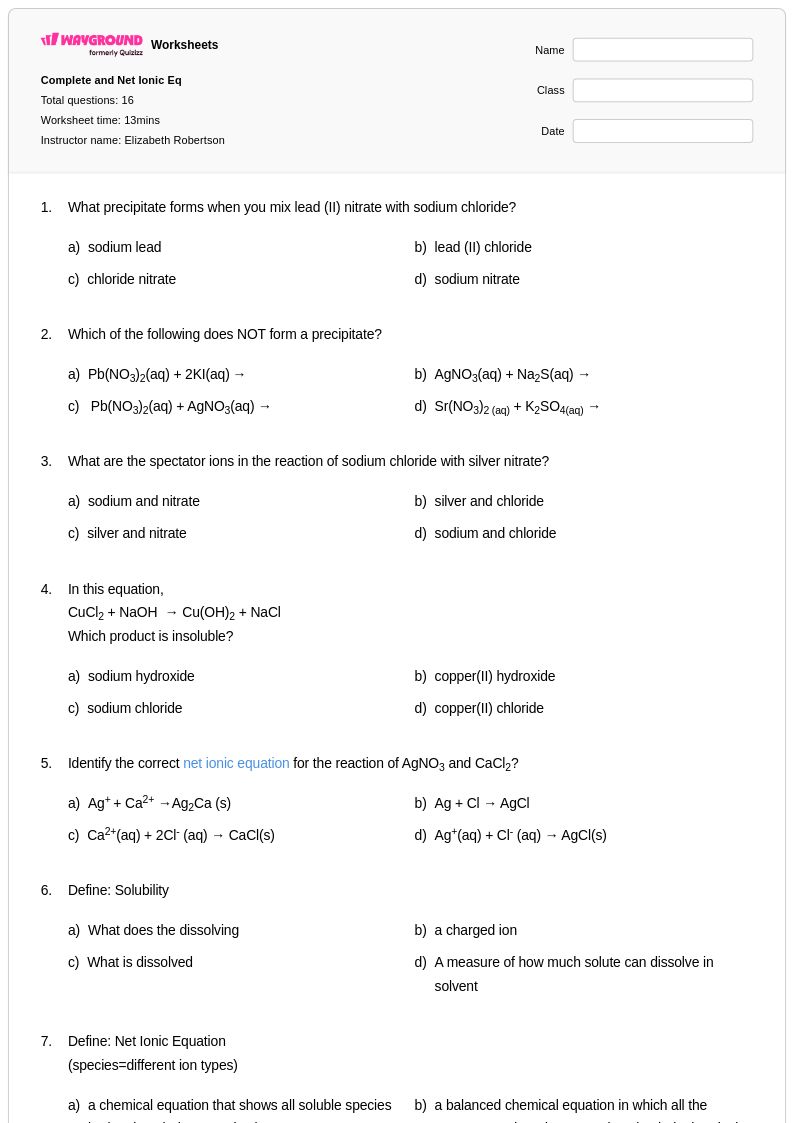
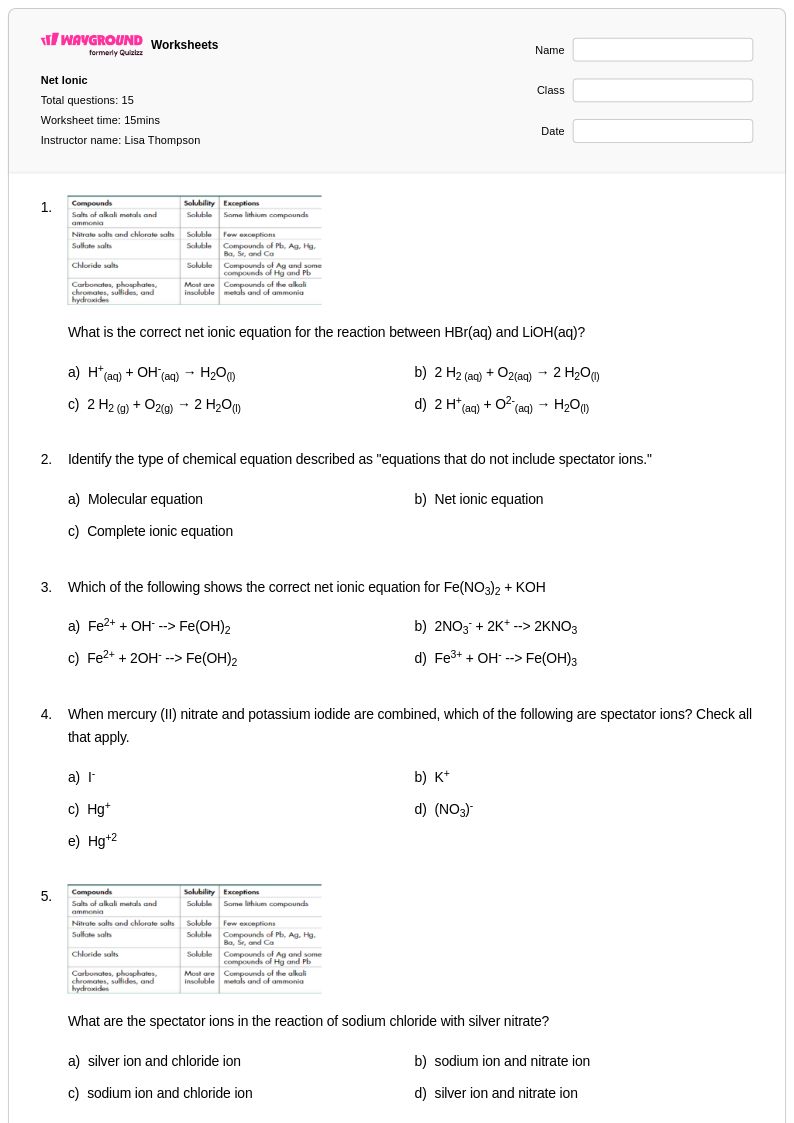
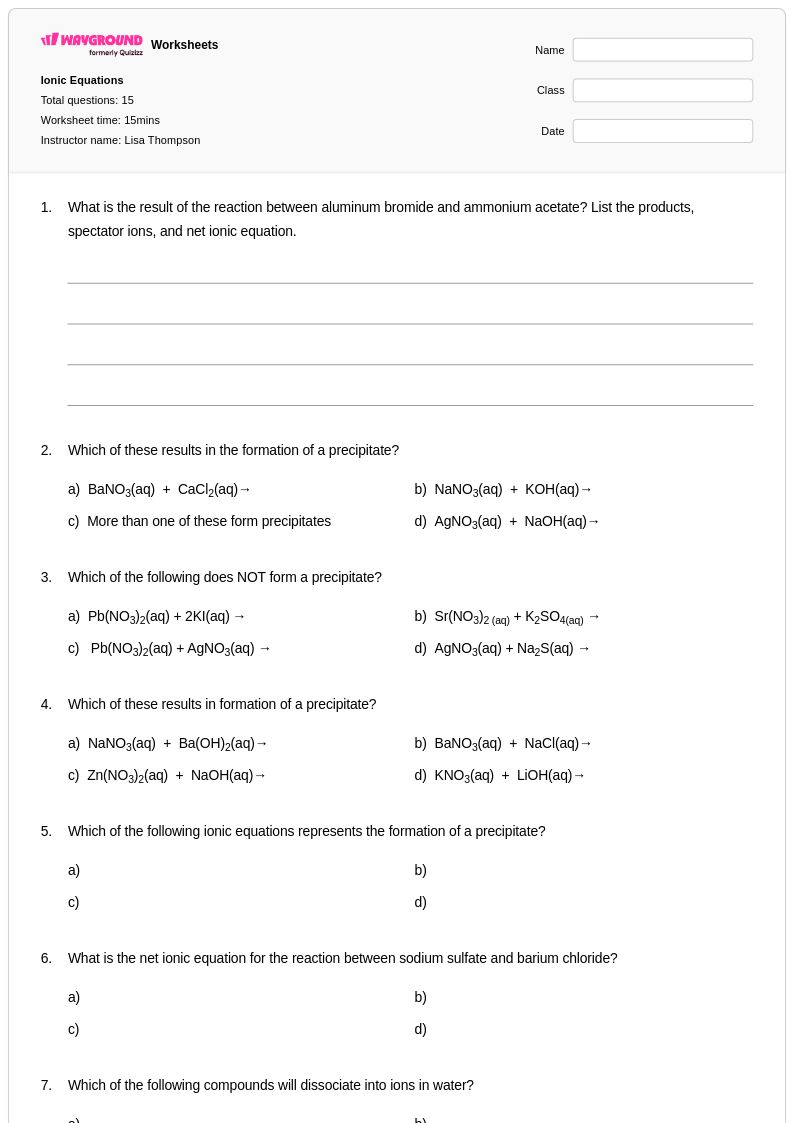
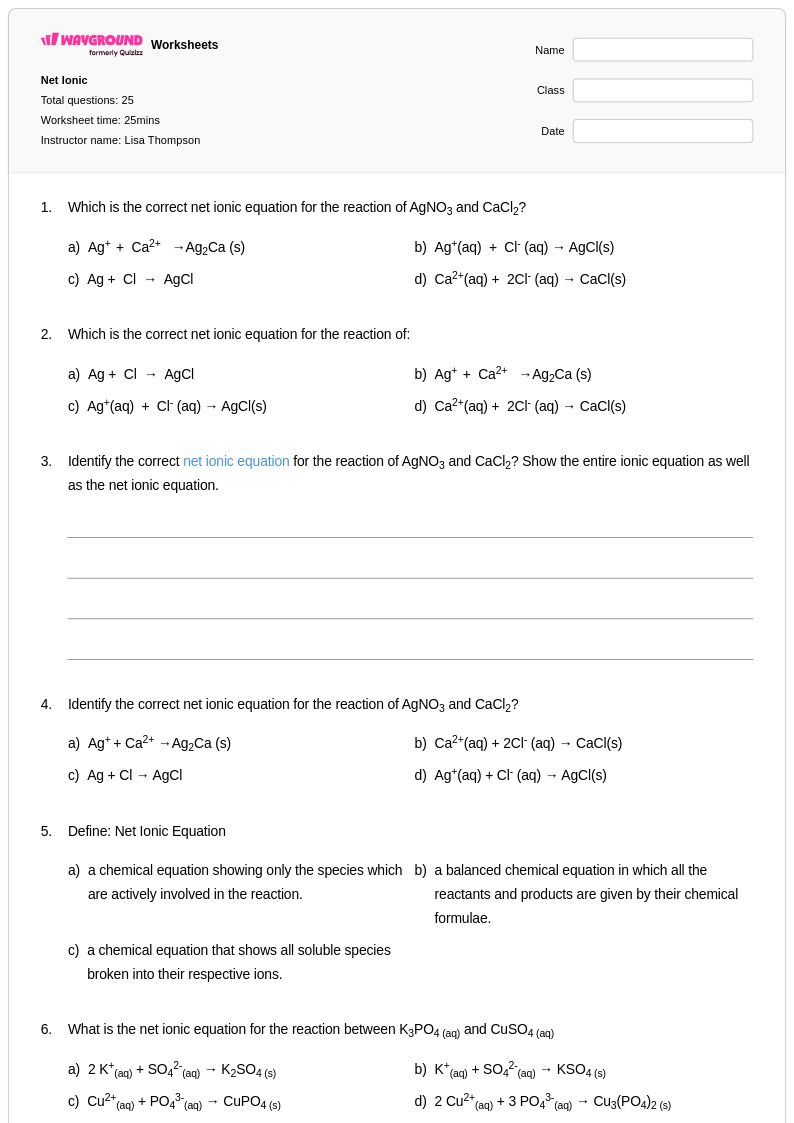
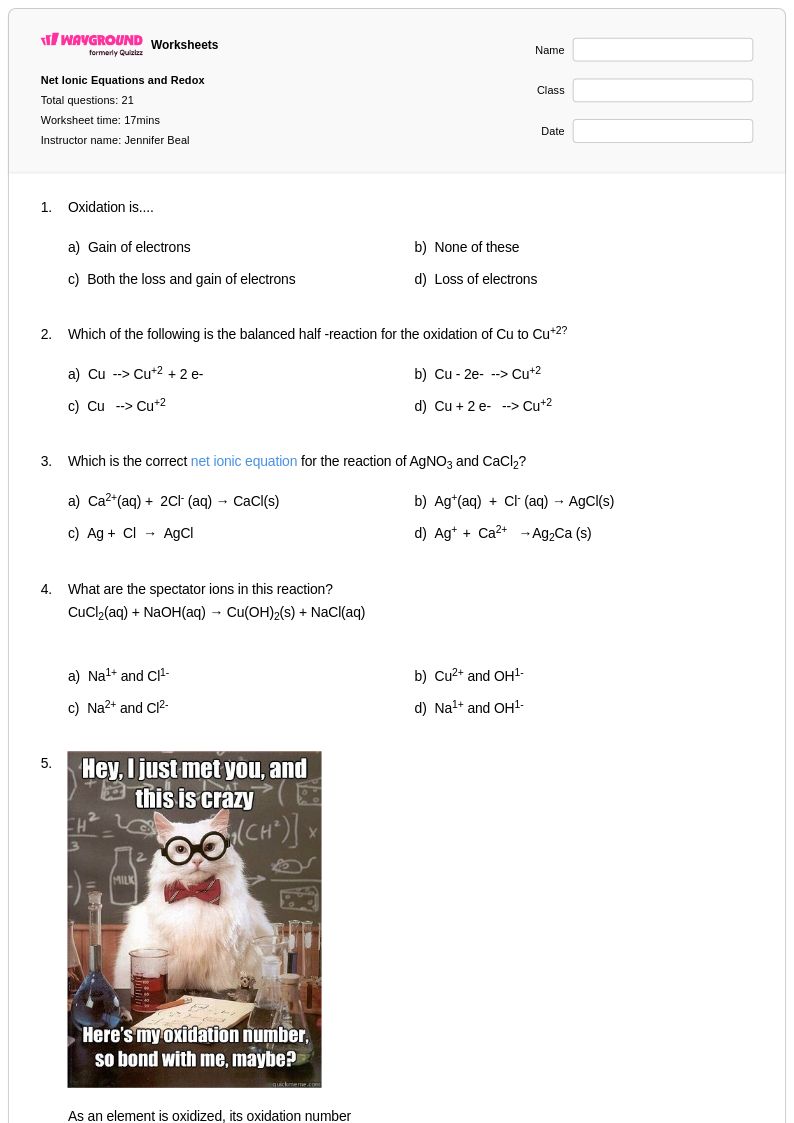
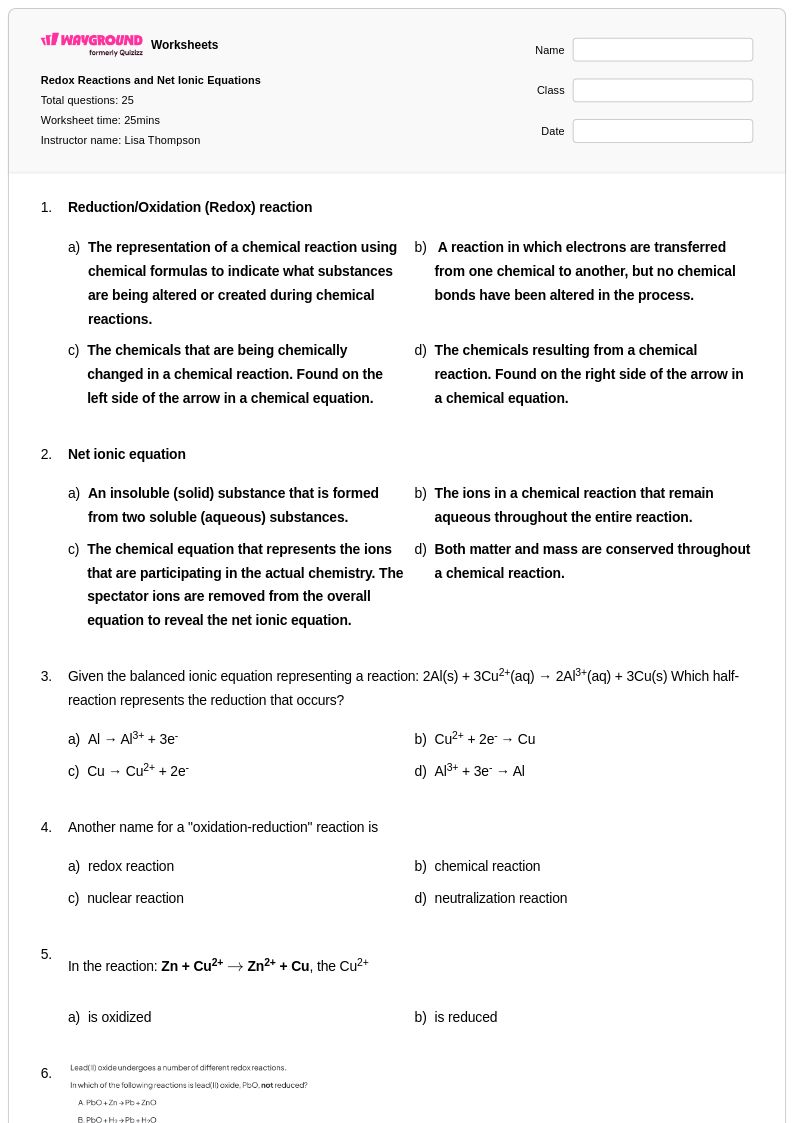
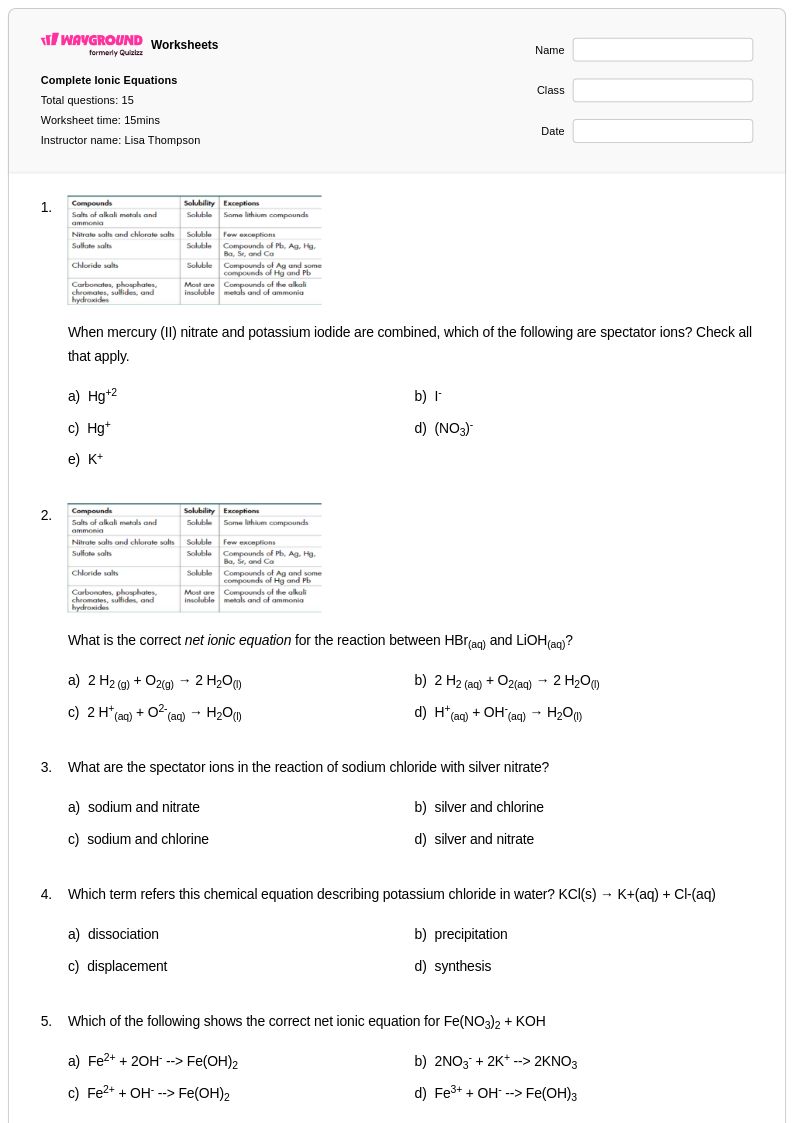
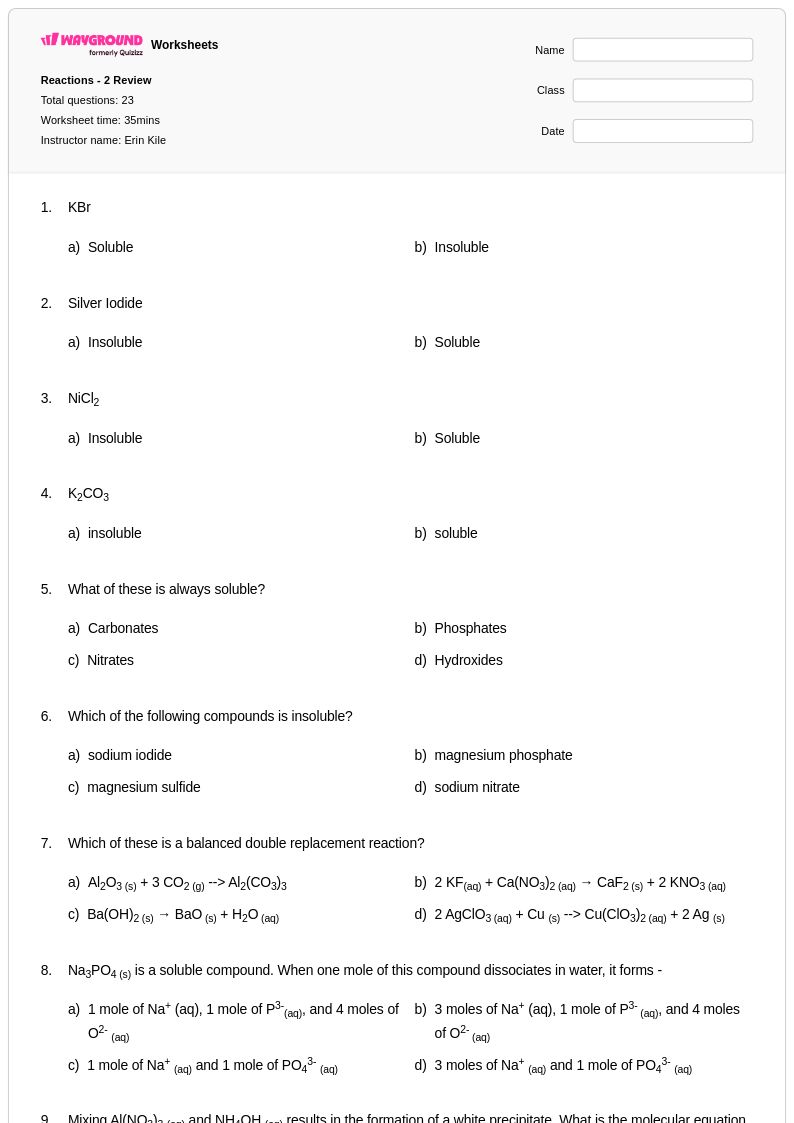
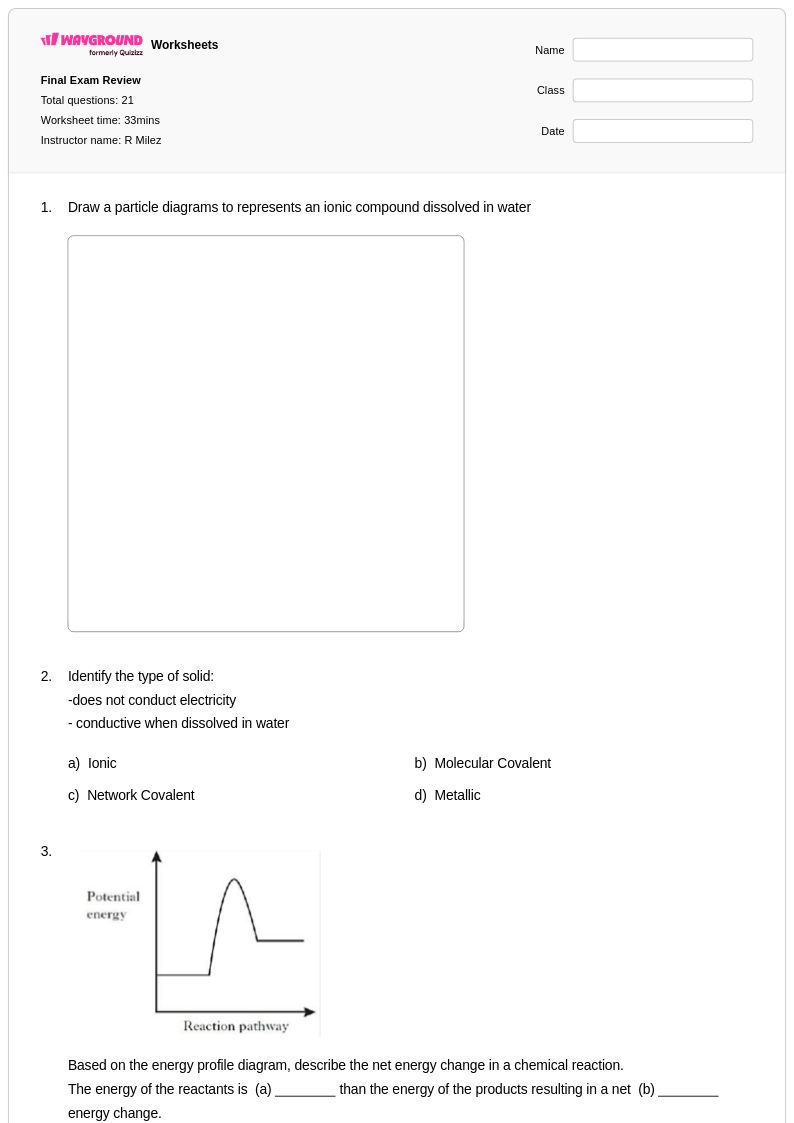
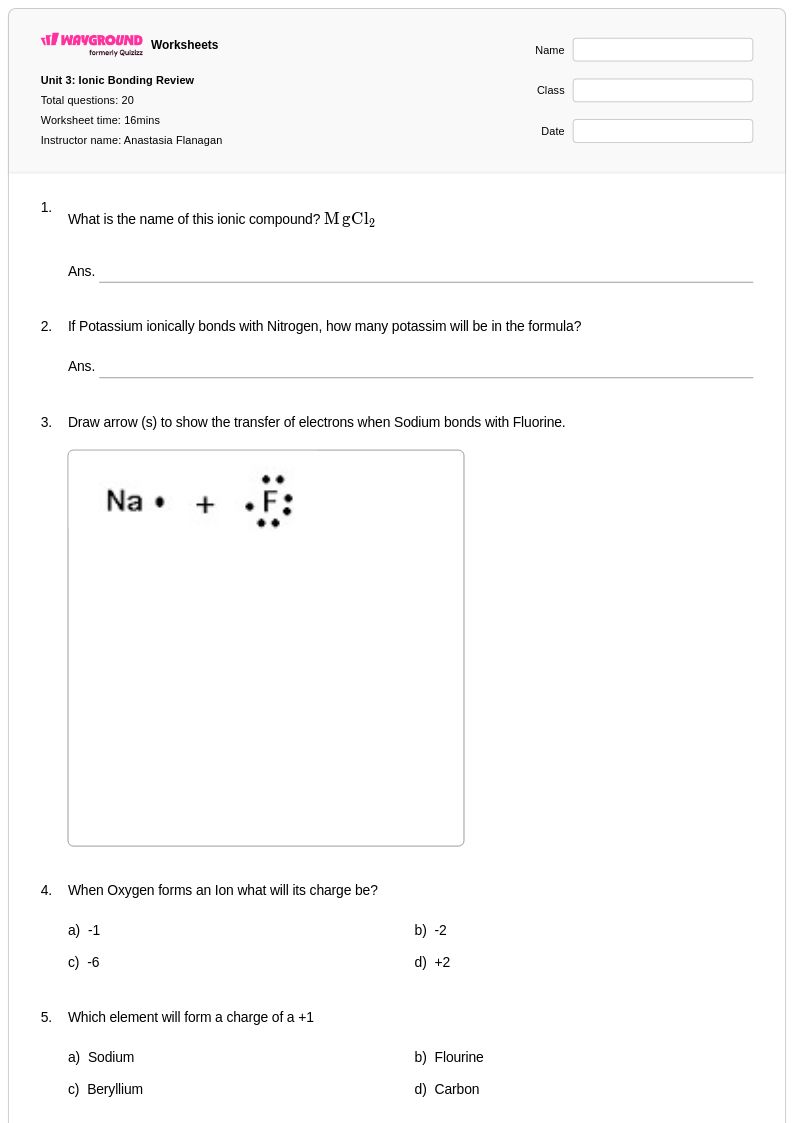
Net ionic equations represent a fundamental concept in Grade 10 chemistry that challenges students to identify and write chemical reactions by focusing only on the species that actually participate in the reaction. Wayground's comprehensive collection of net ionic equation worksheets provides students with systematic practice in determining spectator ions, writing complete ionic equations, and simplifying them to show only the essential chemical changes. These carefully designed practice problems strengthen critical thinking skills as students learn to analyze precipitation reactions, acid-base neutralizations, and other ionic processes. The worksheets include detailed answer keys that guide students through the step-by-step process of balancing equations, identifying soluble and insoluble compounds, and applying solubility rules. Available as free printables and downloadable pdf resources, these materials offer structured practice that builds confidence in manipulating chemical formulas and understanding the underlying principles of ionic chemistry.
Wayground, formerly Quizizz, empowers chemistry teachers with an extensive library of millions of teacher-created resources specifically designed to support Grade 10 net ionic equation instruction. The platform's advanced search and filtering capabilities allow educators to quickly locate worksheets that align with specific curriculum standards and match their students' skill levels. Teachers can easily customize existing materials or create differentiated versions to address varying learning needs, whether for remediation with struggling students or enrichment activities for advanced learners. The flexible format options include both printable worksheets for traditional classroom use and digital versions that integrate seamlessly with modern learning management systems. These comprehensive tools streamline lesson planning by providing ready-to-use practice materials, formative assessments, and skill-building exercises that help students master the complexities of writing and interpreting net ionic equations while developing deeper conceptual understanding of chemical reactions.
FAQs
How do I teach net ionic equations to chemistry students?
Start by ensuring students are solid on the foundational skills: writing and balancing molecular equations, identifying strong acids, strong bases, and soluble salts, and applying solubility rules. From there, guide students through a three-step process: write the complete molecular equation, dissociate all strong electrolytes into their ions to get the complete ionic equation, then cancel spectator ions to reveal the net ionic equation. Scaffolding this process with worked examples before moving to independent practice helps students internalize the logic rather than memorizing steps.
What types of reactions should I use when introducing net ionic equations?
Begin with simple precipitation reactions, where the concept of spectator ions is most visually intuitive — students can clearly see which ions form a solid precipitate and which remain dissolved. Once students are comfortable, progress to strong acid-strong base neutralization reactions, then introduce more complex scenarios like weak acid dissociation and redox processes. Sequencing reaction types by complexity gives students a sense of progression and prevents early overwhelm.
What common mistakes do students make when writing net ionic equations?
The most frequent errors include failing to dissociate strong electrolytes (writing NaCl instead of Na⁺ and Cl⁻), incorrectly applying solubility rules and therefore misidentifying which species remain aqueous versus which precipitate, and forgetting to cancel spectator ions that appear on both sides. Students also commonly write a net ionic equation when no reaction actually occurs, not recognizing that 'no reaction' is a valid and important outcome. Drilling solubility rules and building habit around checking both sides for matching ions reduces most of these errors.
How do I help students who struggle with solubility rules when writing net ionic equations?
Solubility rules are the gatekeeping skill for net ionic equations — students who can't apply them reliably will struggle at every subsequent step. Provide a reference chart until rules are internalized, and use repetitive low-stakes practice that isolates solubility identification before combining it with the full equation-writing process. On Wayground, teachers can enable the Read Aloud accommodation for students who benefit from hearing questions read to them, and can reduce answer choices for students who need a lower-cognitive-load entry point while they build confidence with the underlying chemistry.
What practice exercises are most effective for mastering net ionic equations?
The most effective practice combines worked examples, error-correction tasks, and generative problem-solving. Have students first identify and cancel spectator ions on pre-written complete ionic equations before asking them to write full net ionic equations from scratch — this isolates the most conceptually demanding step. Mixing reaction types (precipitation, acid-base, redox) within a single practice set also builds the flexibility students need to apply their skills on assessments.
How do I use Wayground's net ionic equation worksheets in my chemistry class?
Wayground's net ionic equation worksheets are available as printable PDFs for traditional classroom use and in digital formats for technology-integrated environments, including the option to host them as an interactive quiz directly on Wayground. Teachers can assign worksheets for in-class practice, independent review, or homework, and all worksheets include complete answer keys so students can self-check their work. The platform also allows teachers to customize existing worksheets or build new practice sets tailored to specific curriculum standards or skill levels.