Free Printable Ionic Compound Formulas Worksheets for Grade 10
Master Grade 10 ionic compound formulas with Wayground's comprehensive collection of free worksheets, featuring printable PDFs, practice problems, and answer keys to help students confidently write and balance chemical formulas.
Explore printable Ionic Compound Formulas worksheets for Grade 10
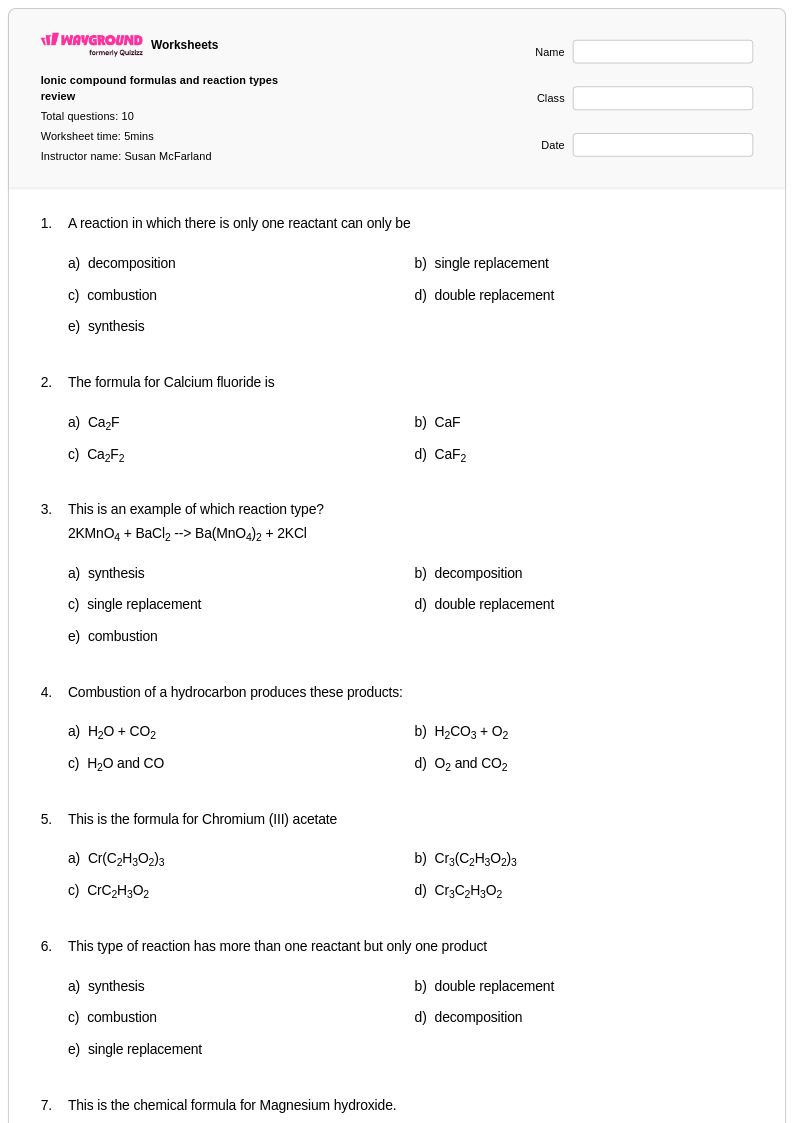
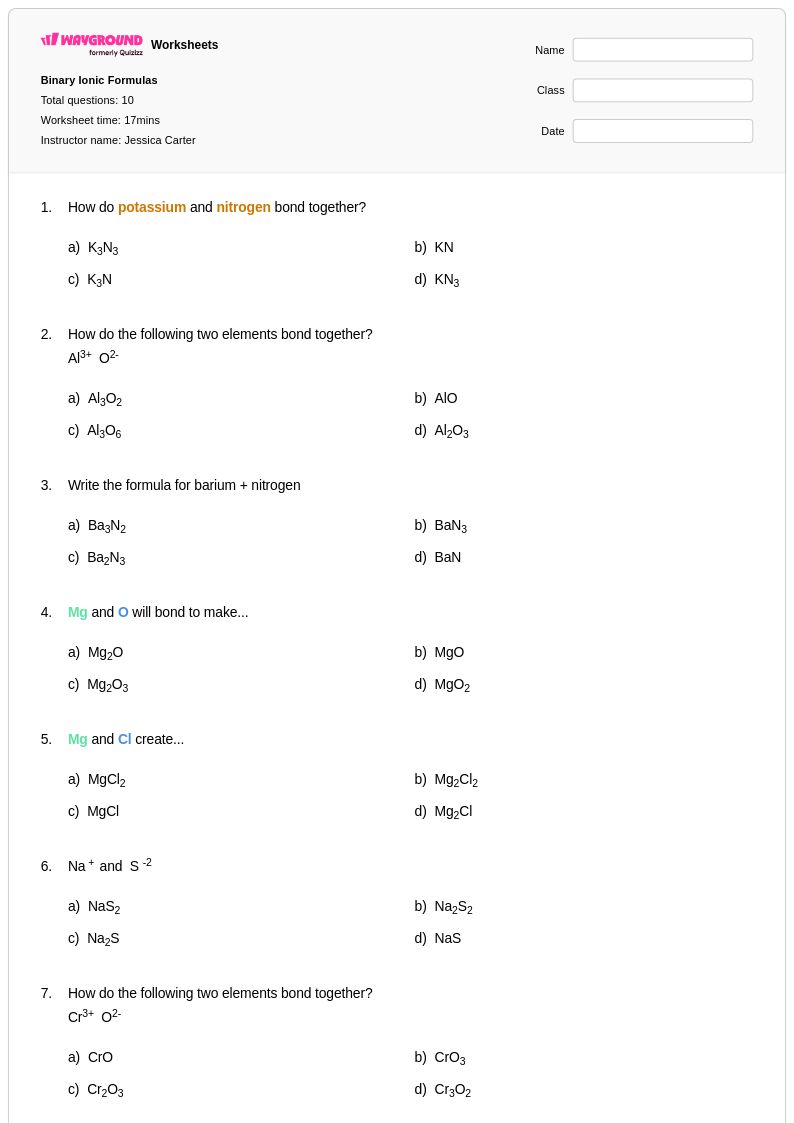
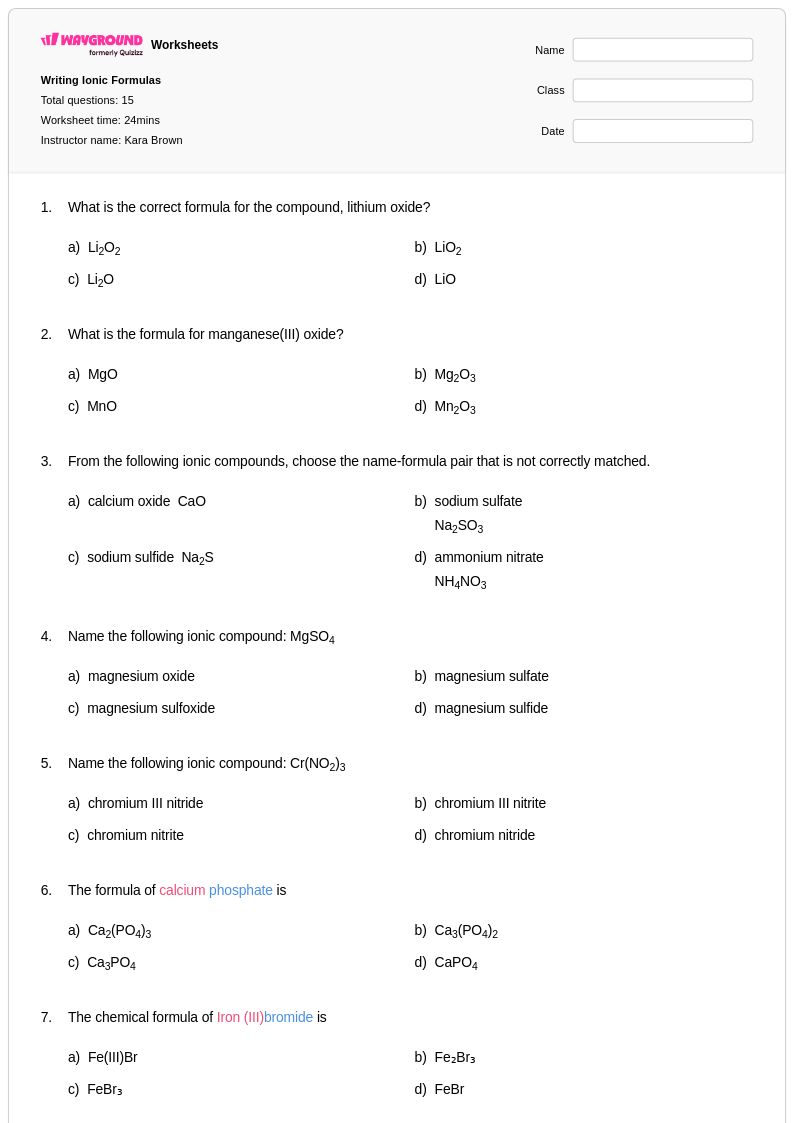
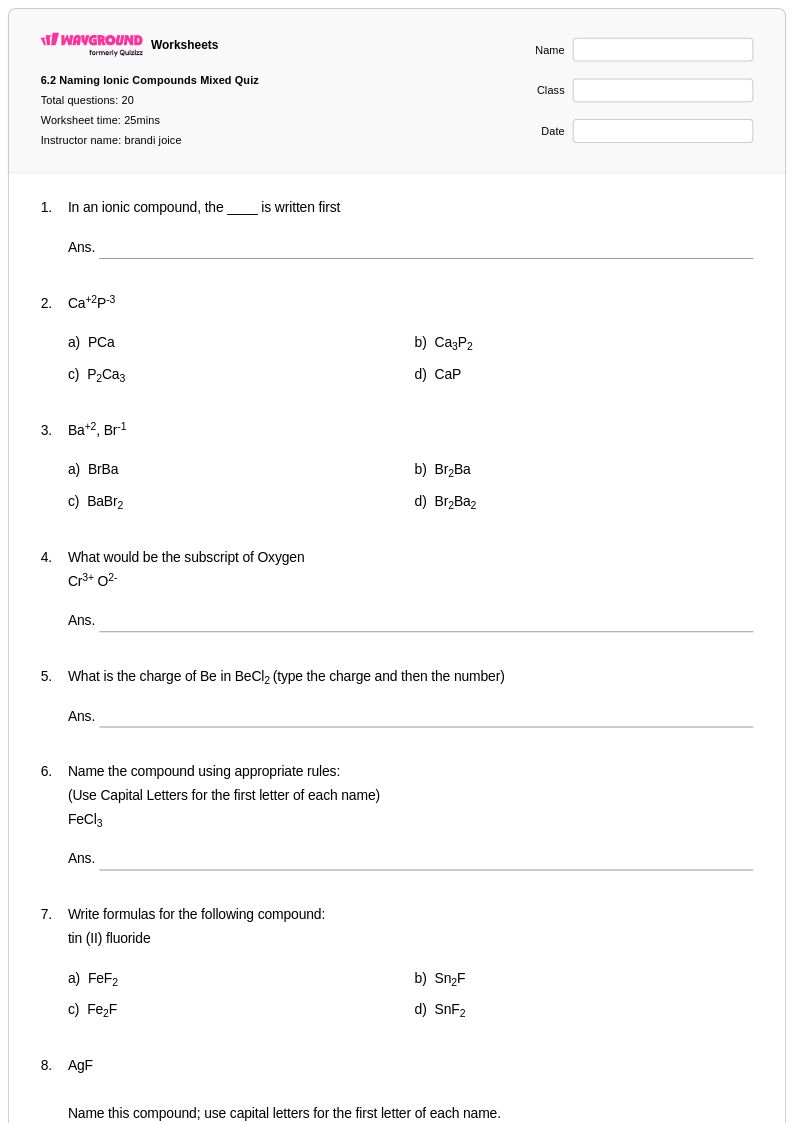
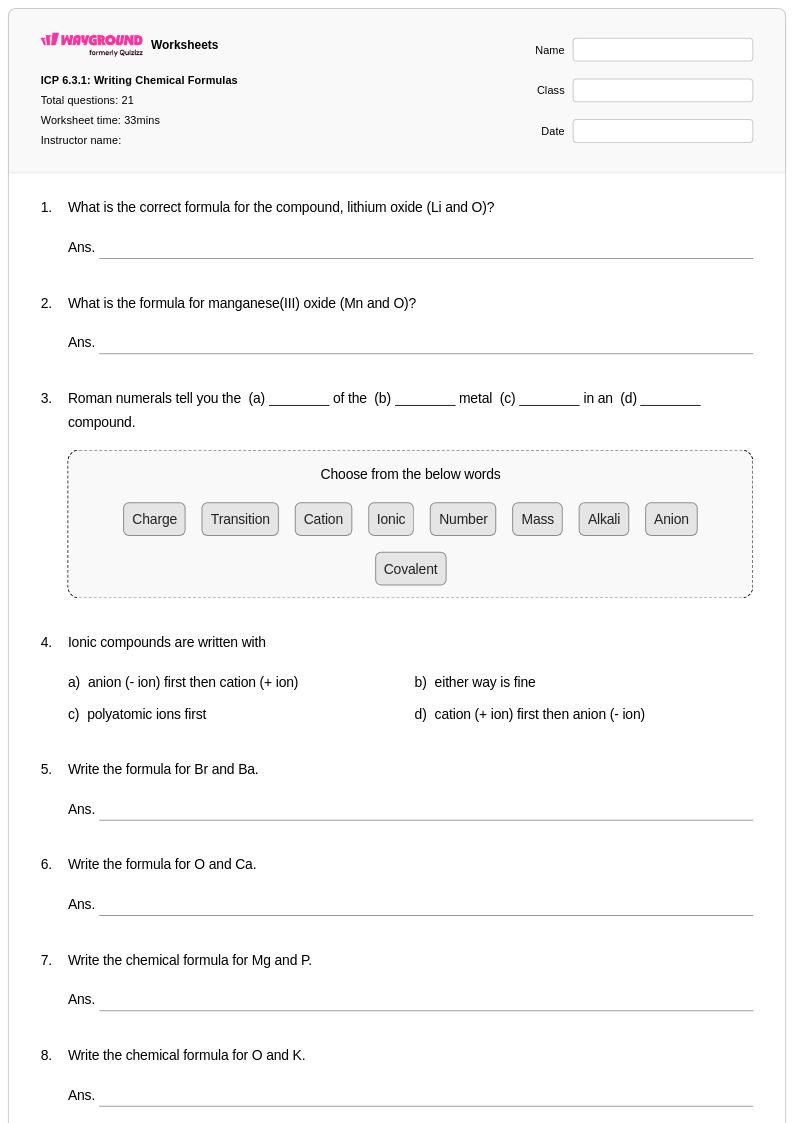
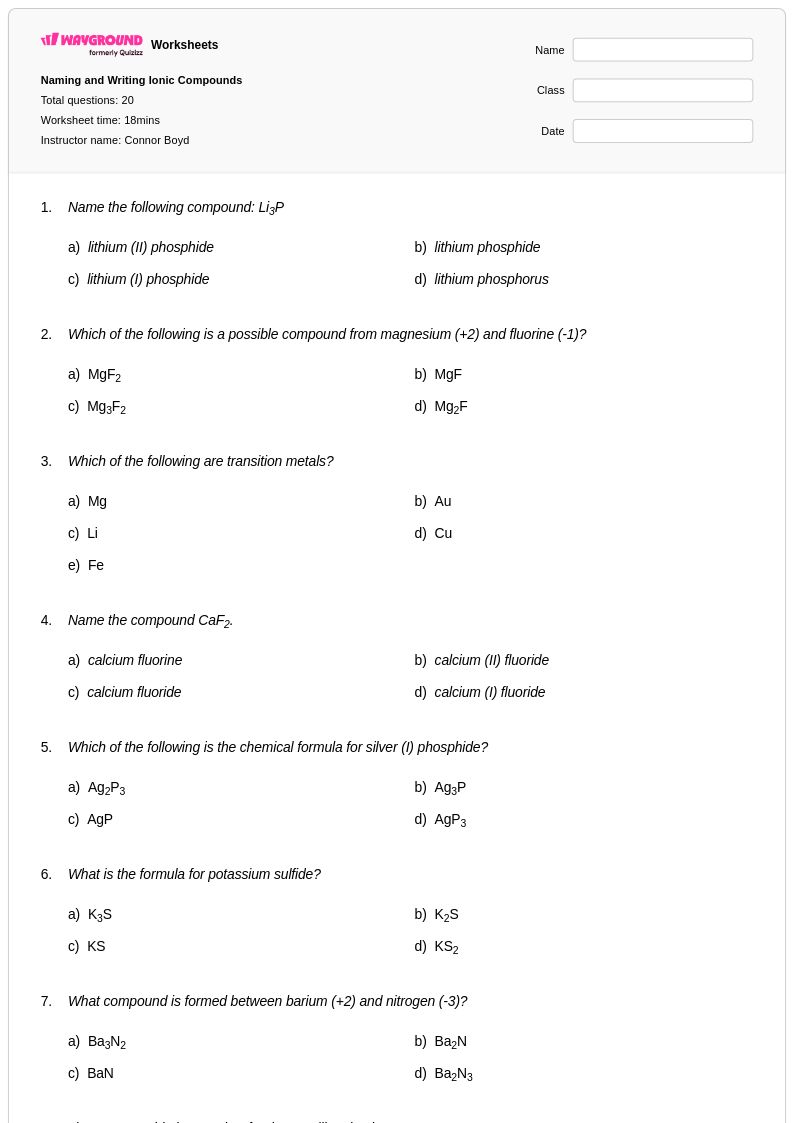
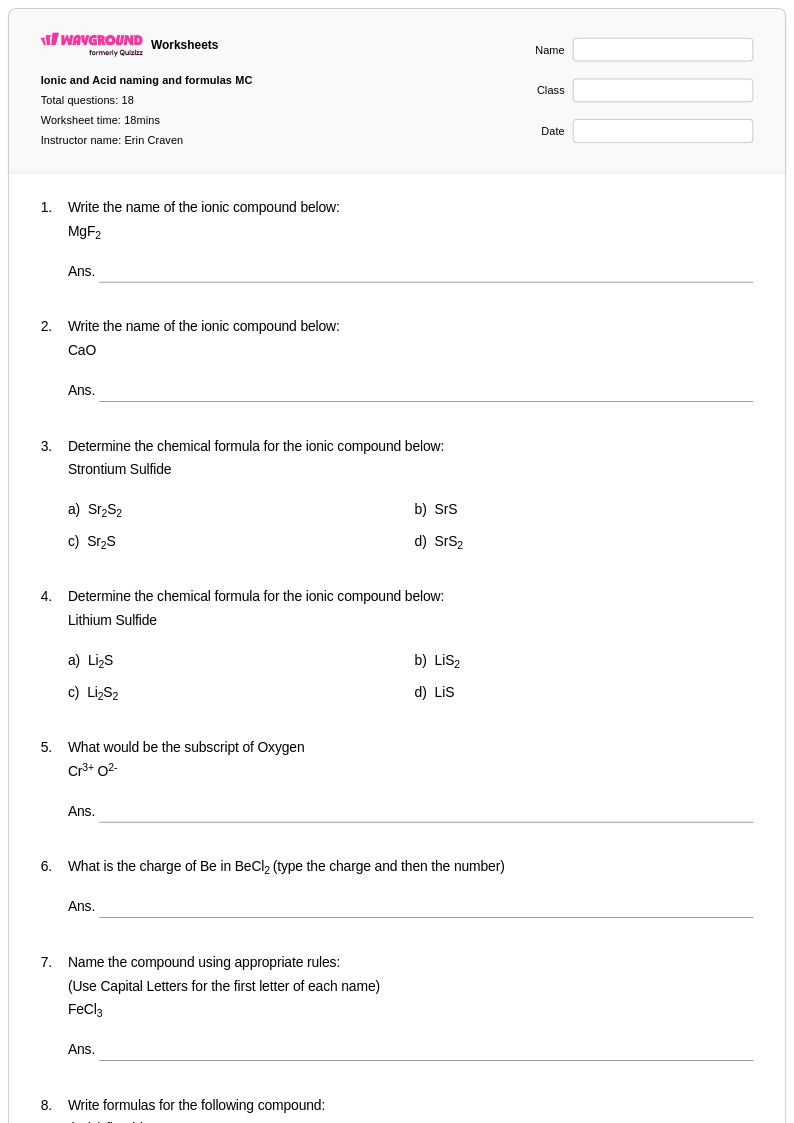
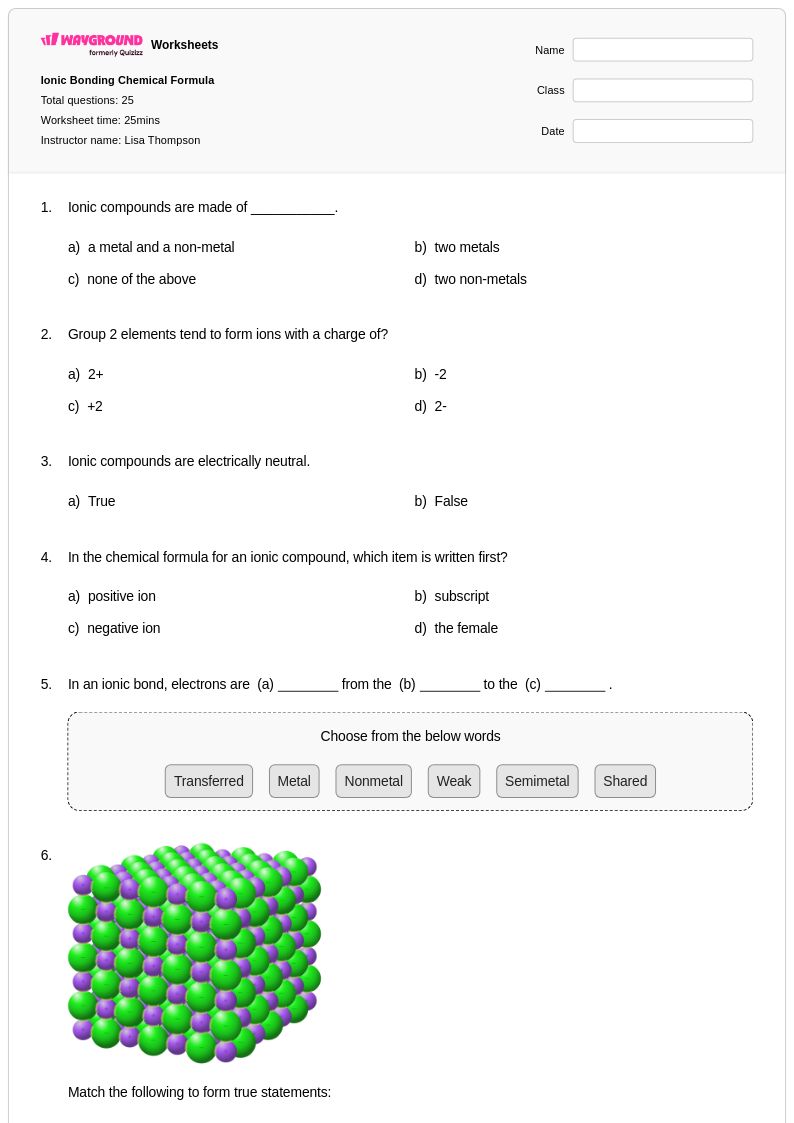
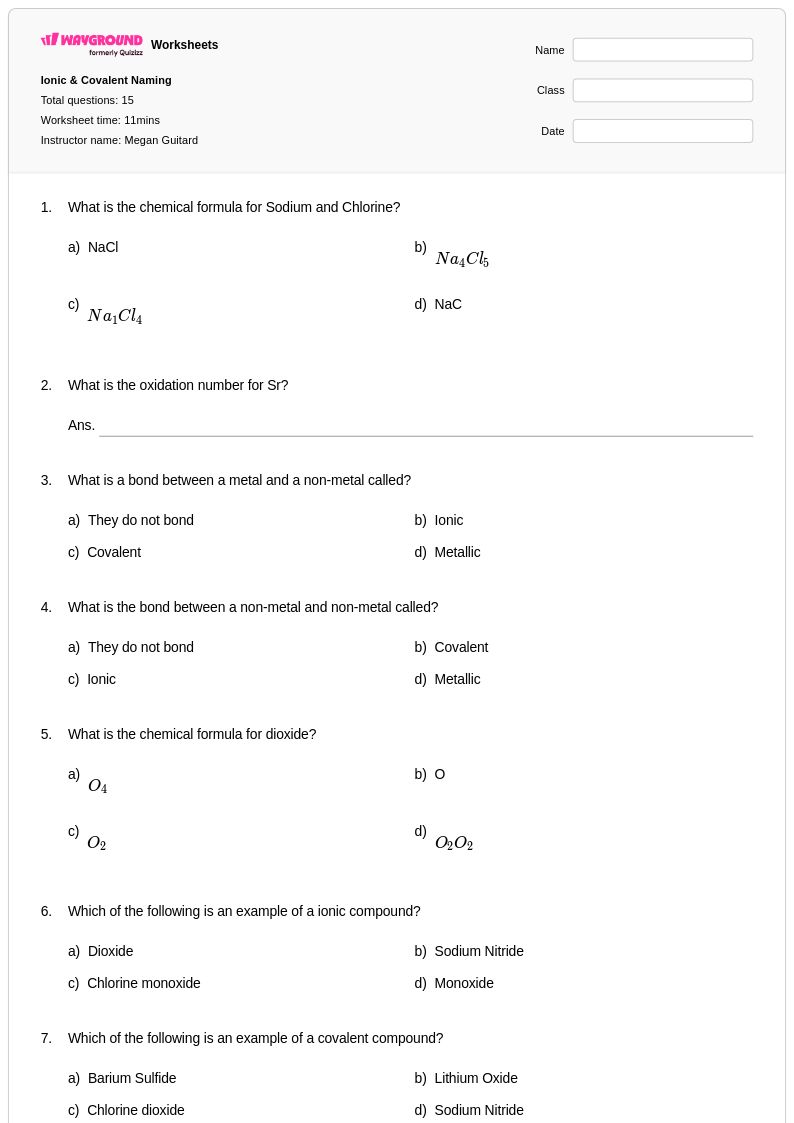
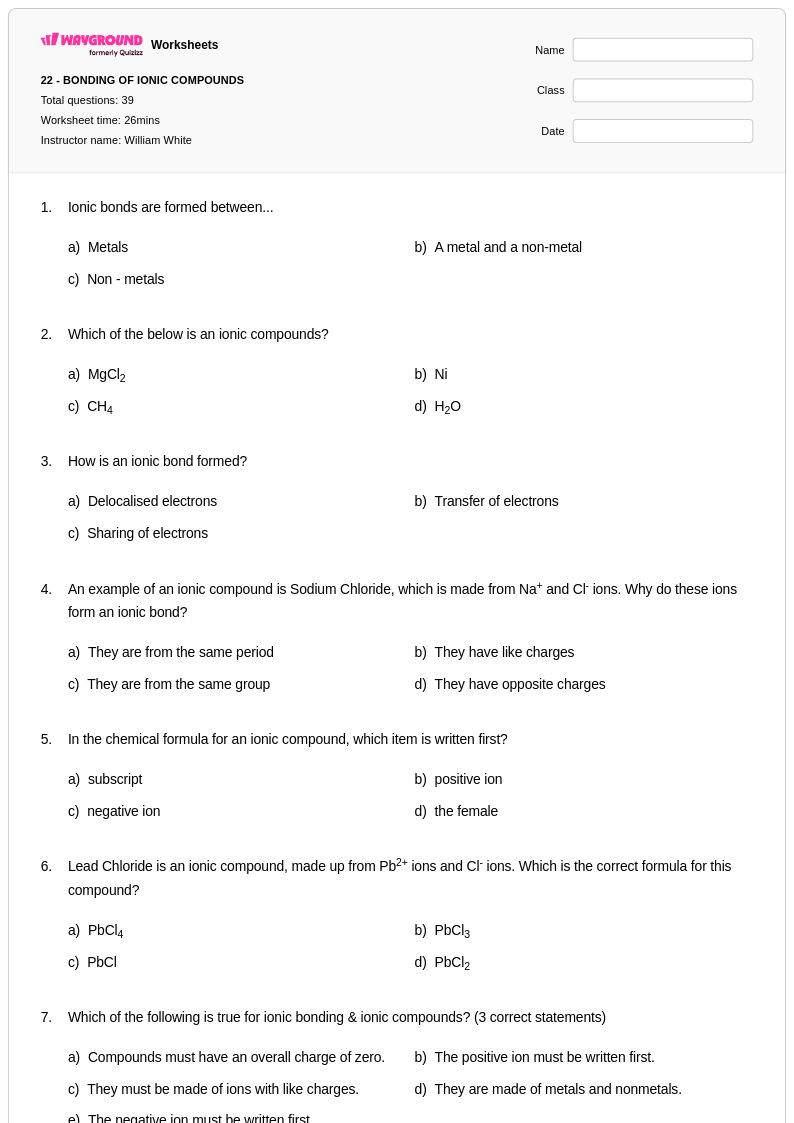
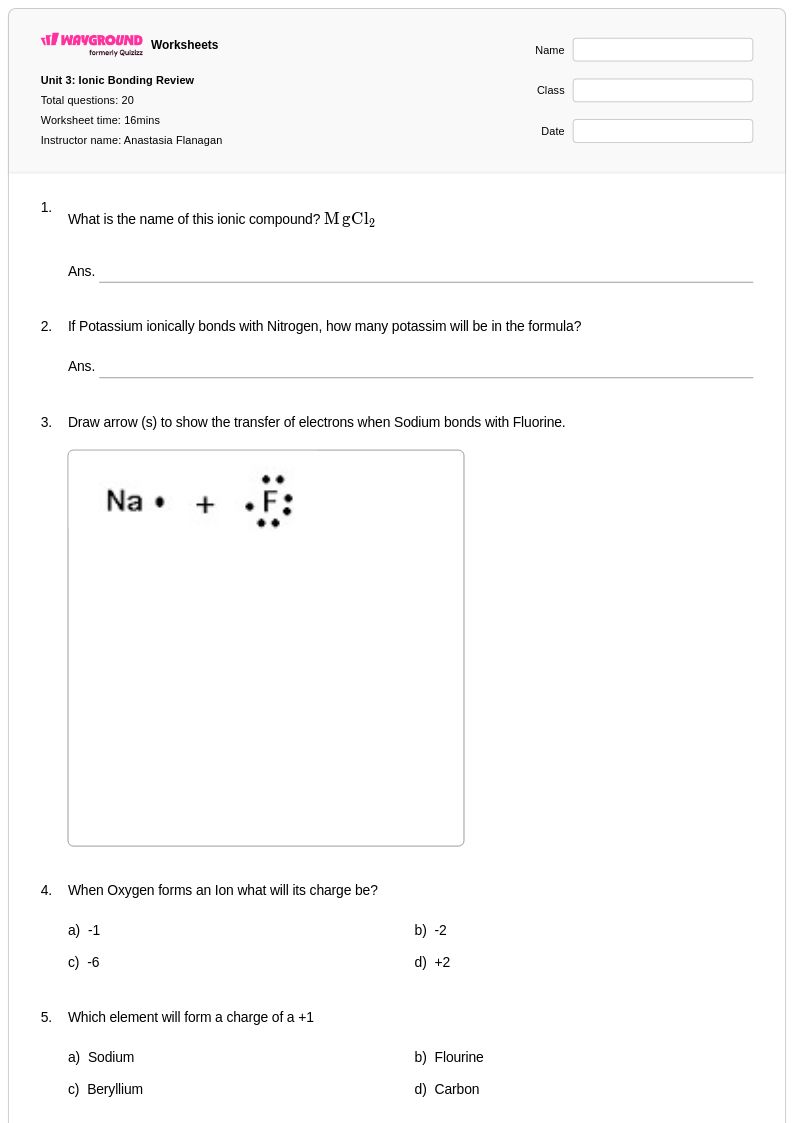
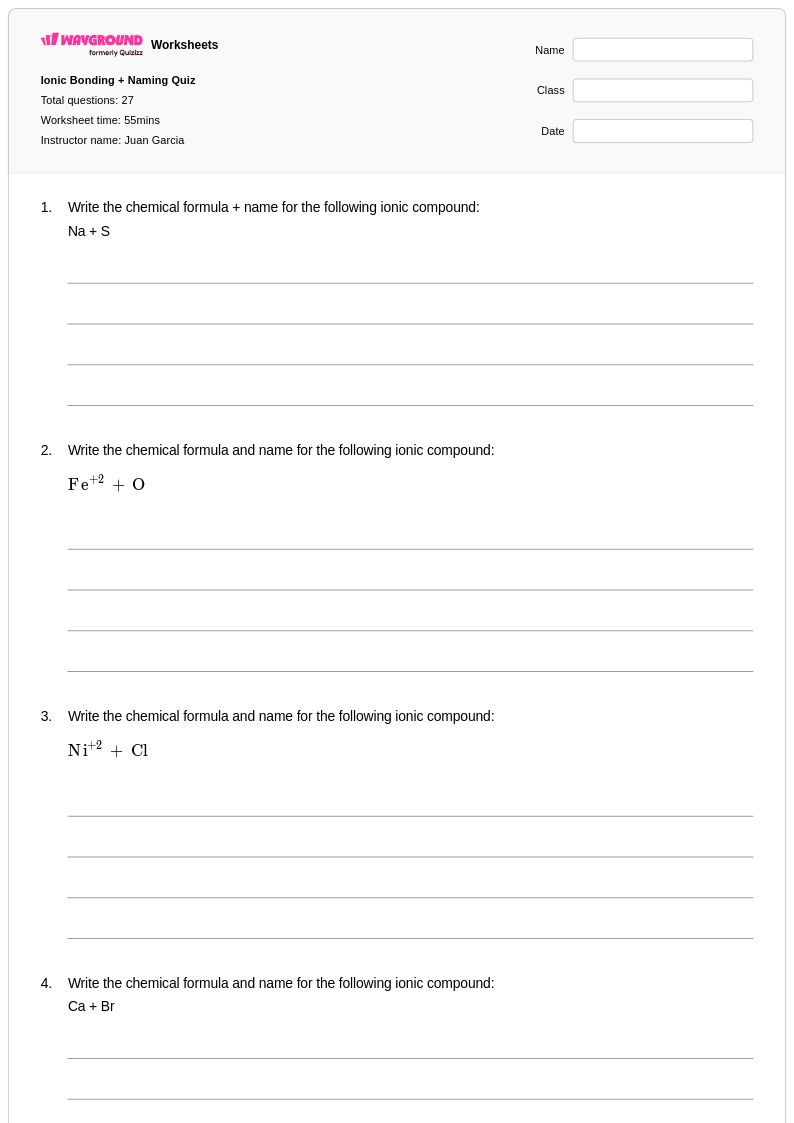
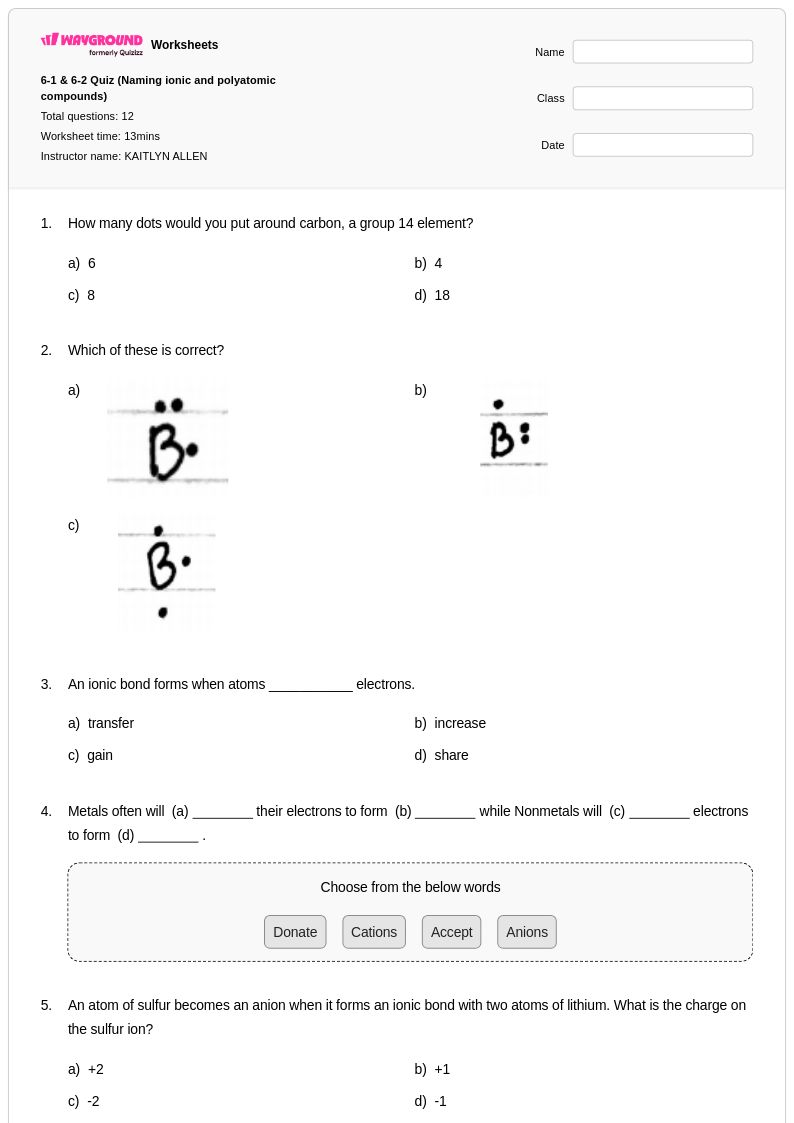
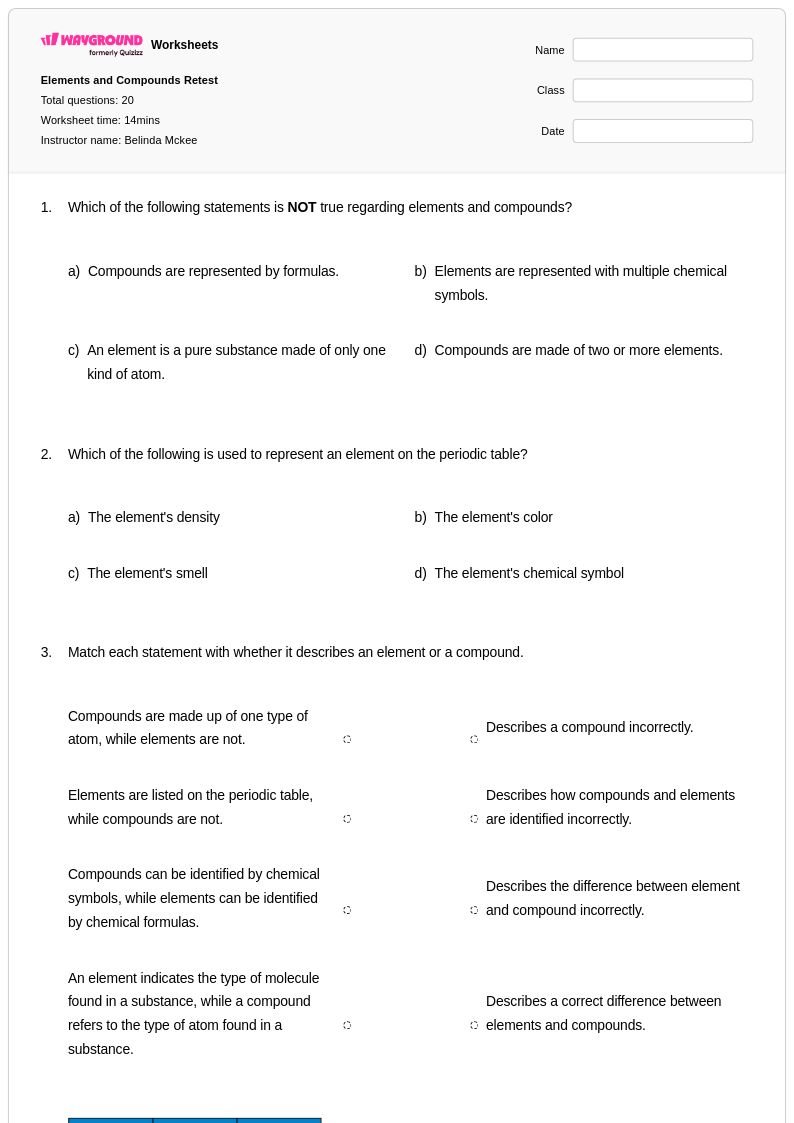
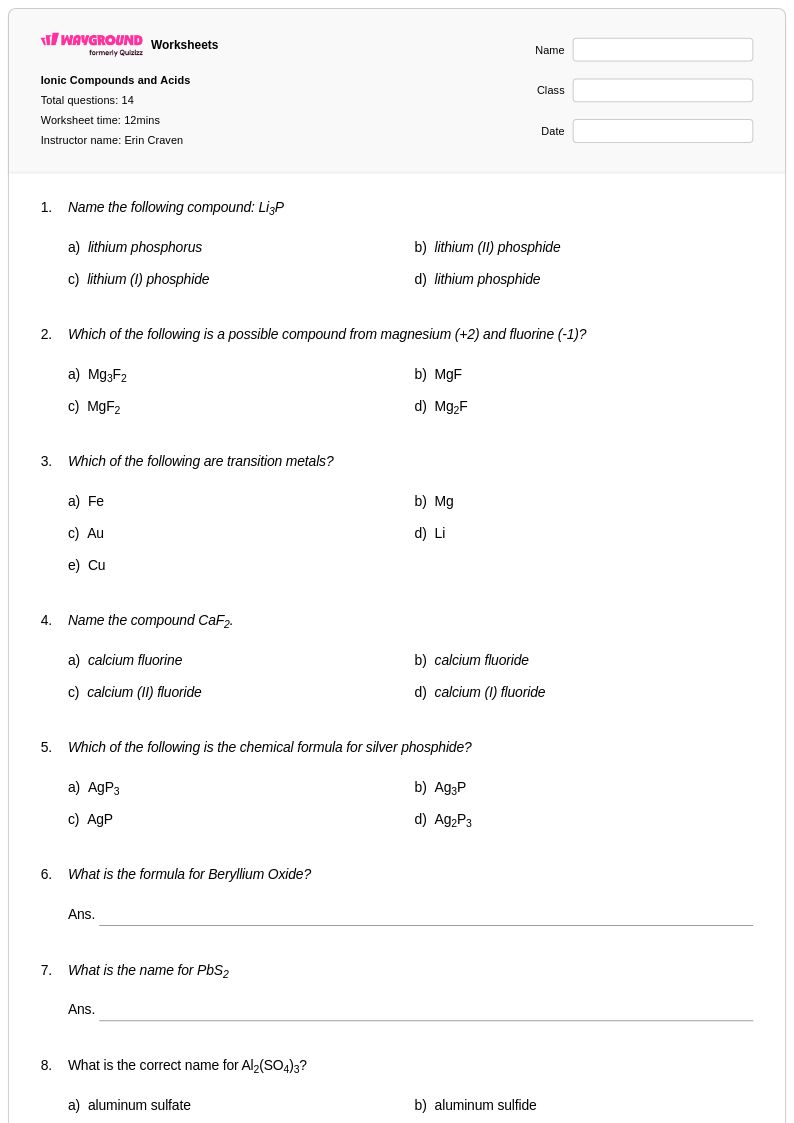
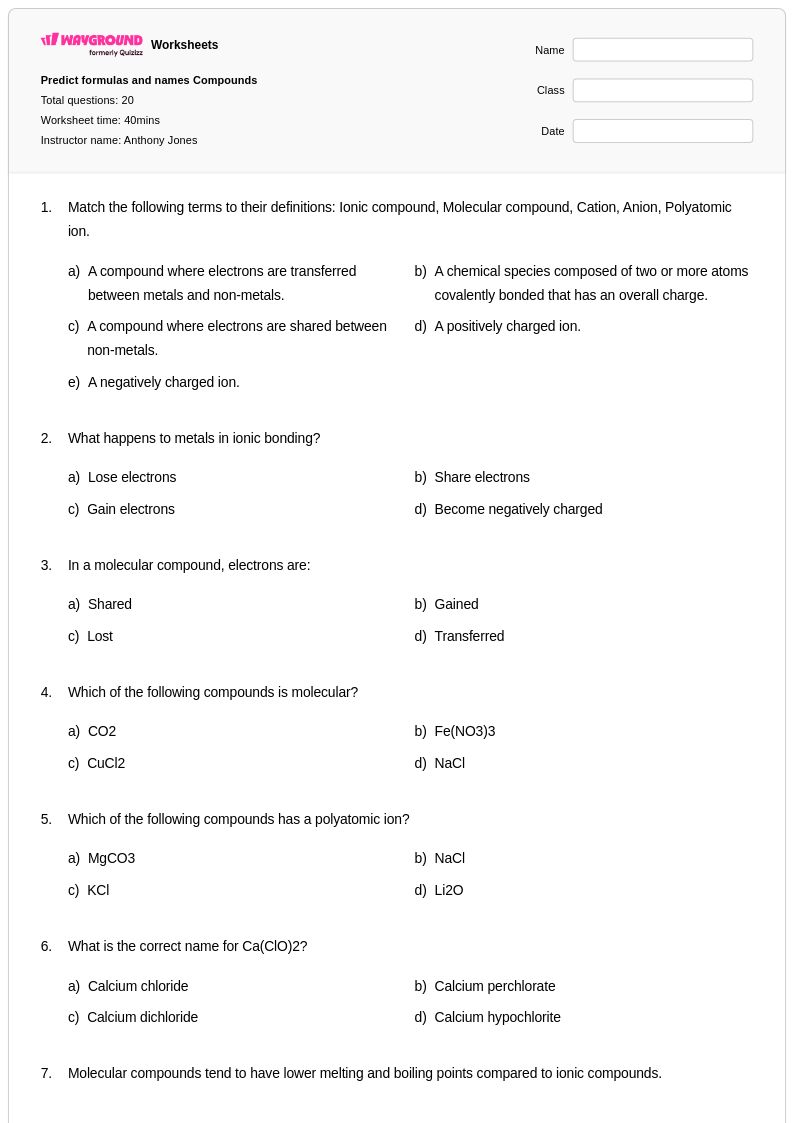
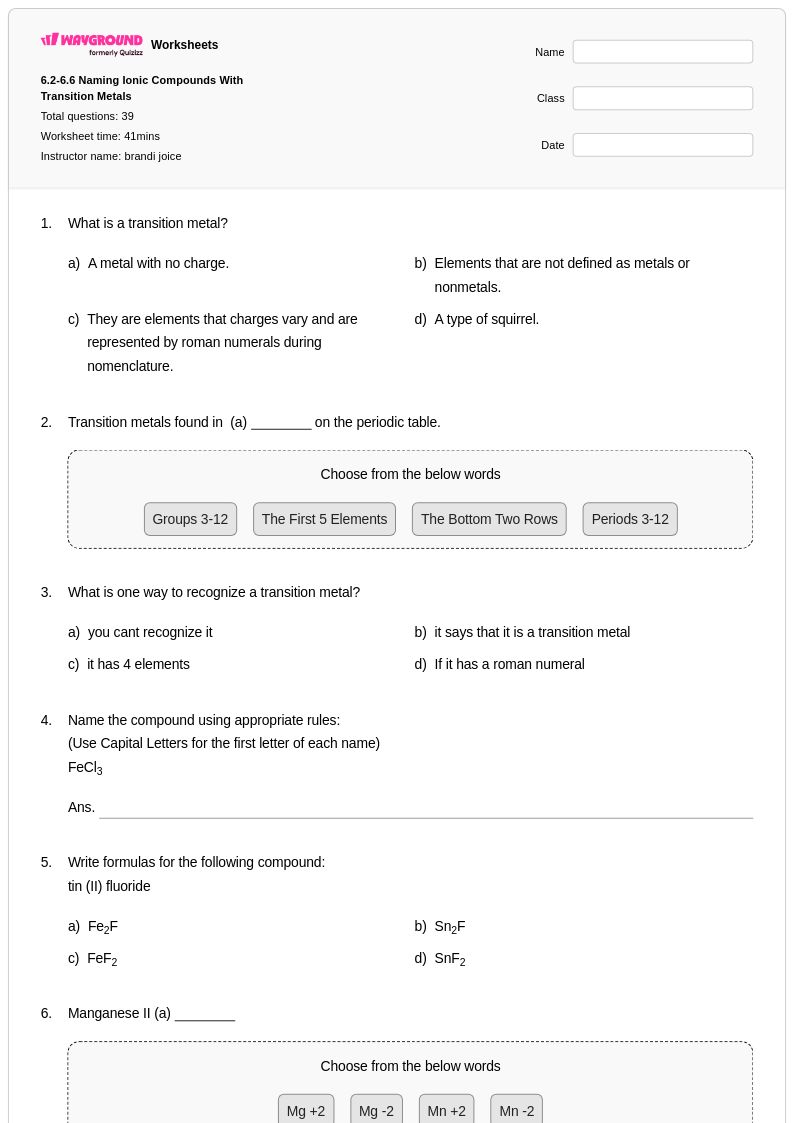
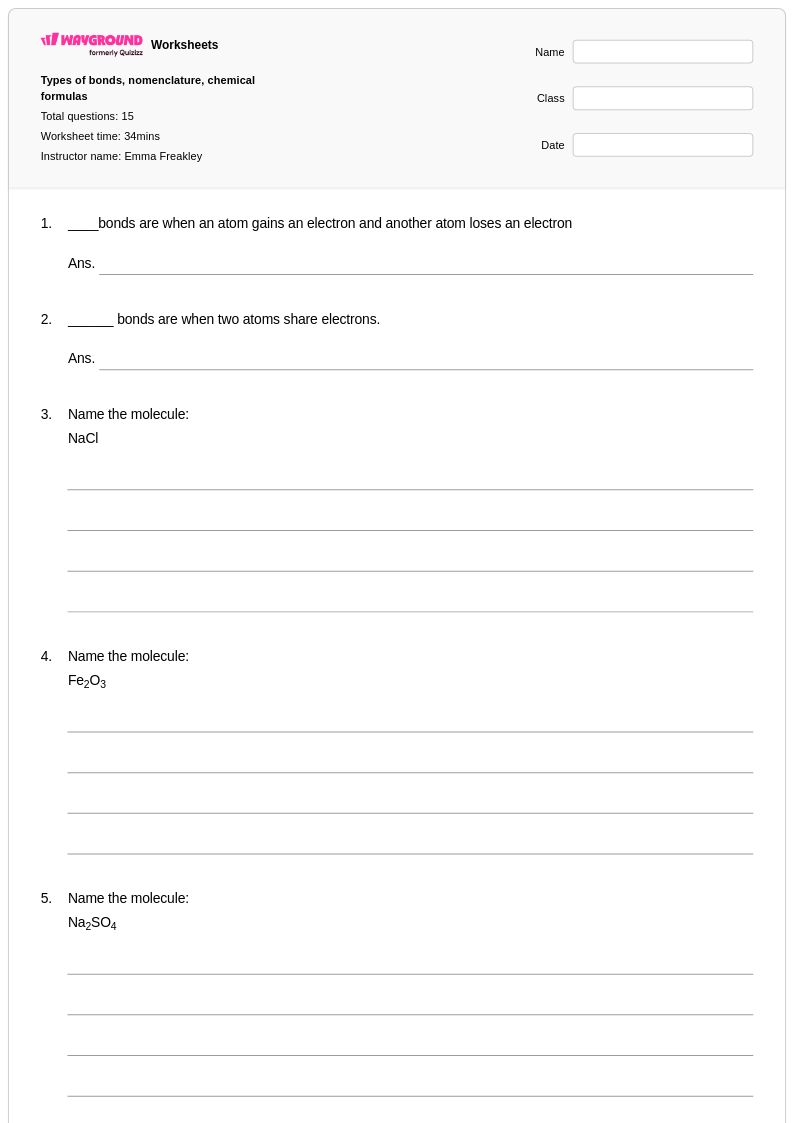
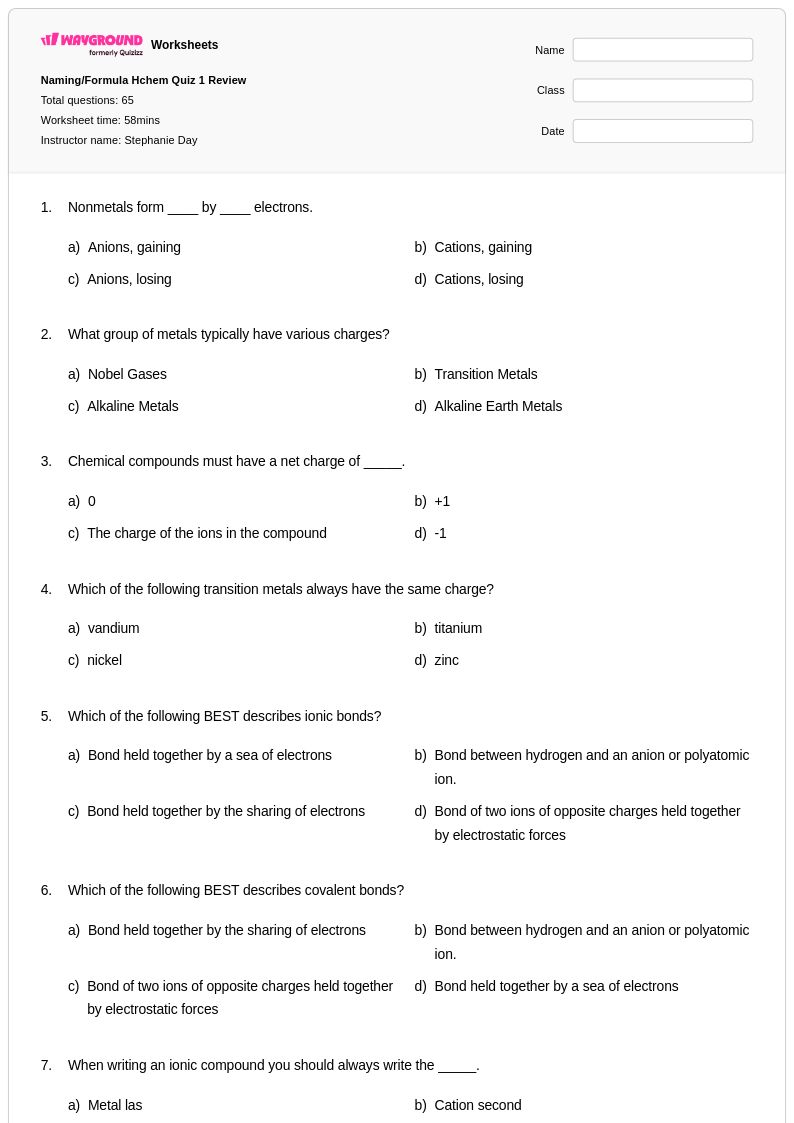
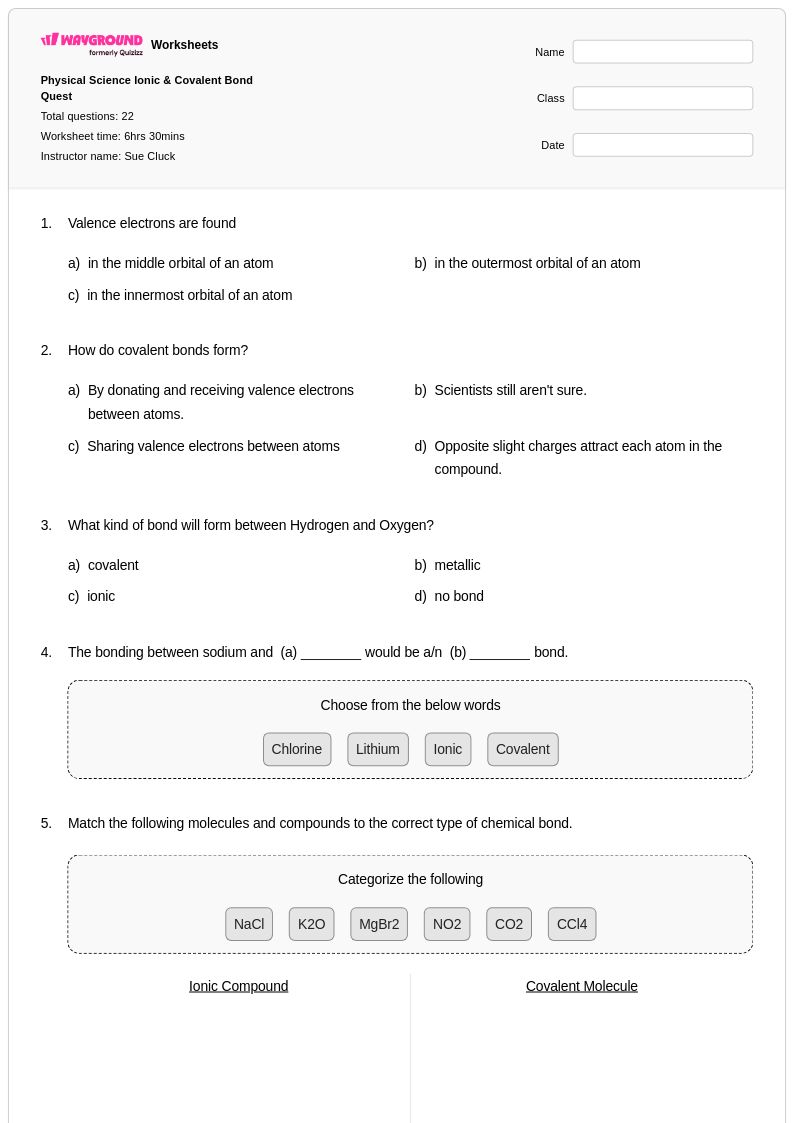
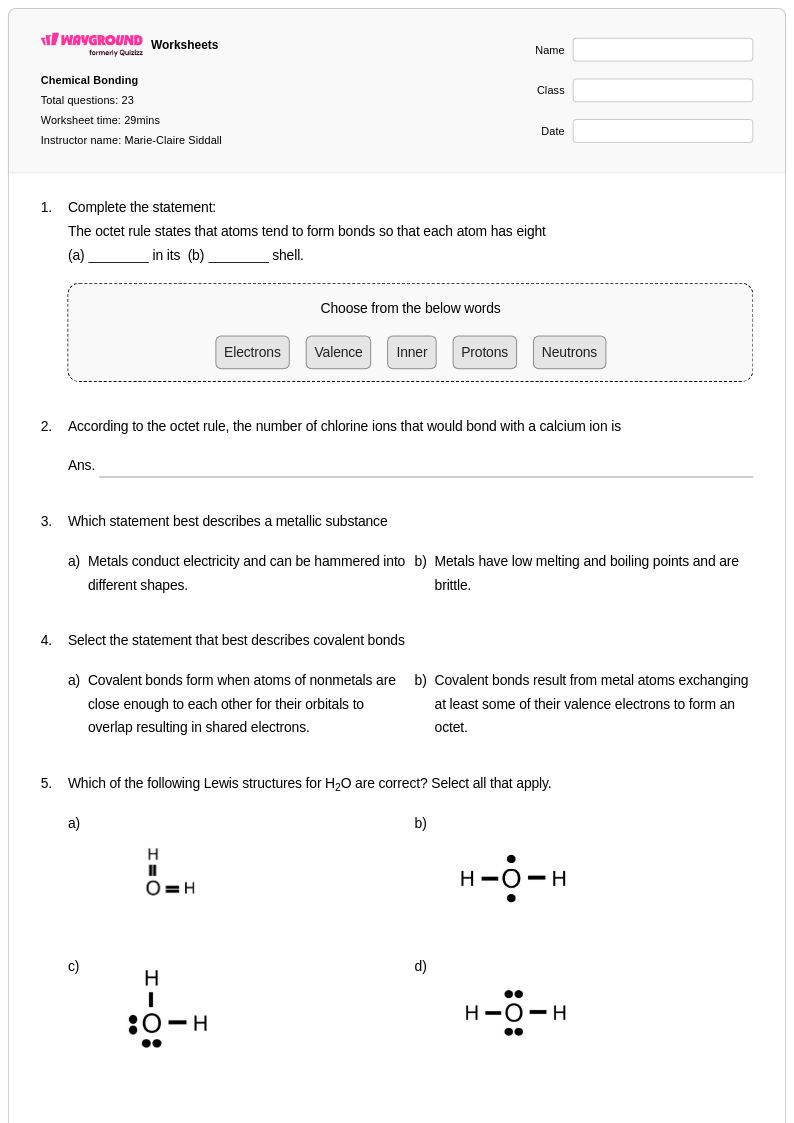
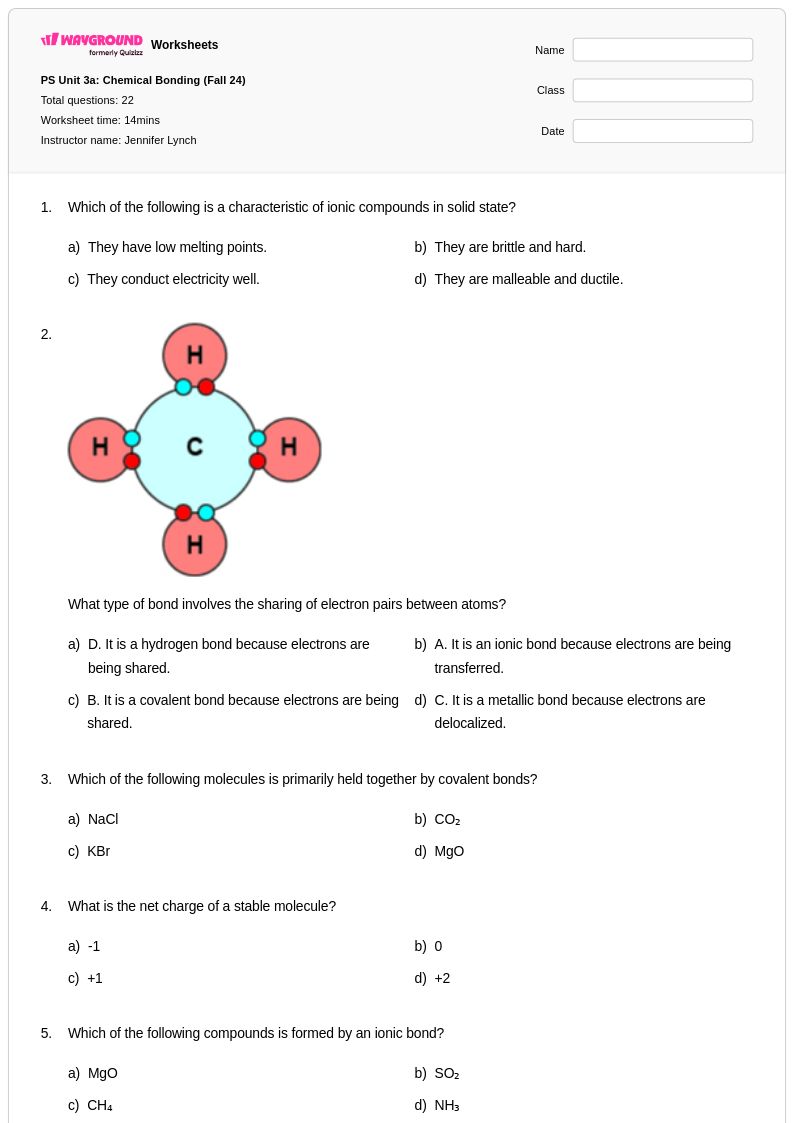
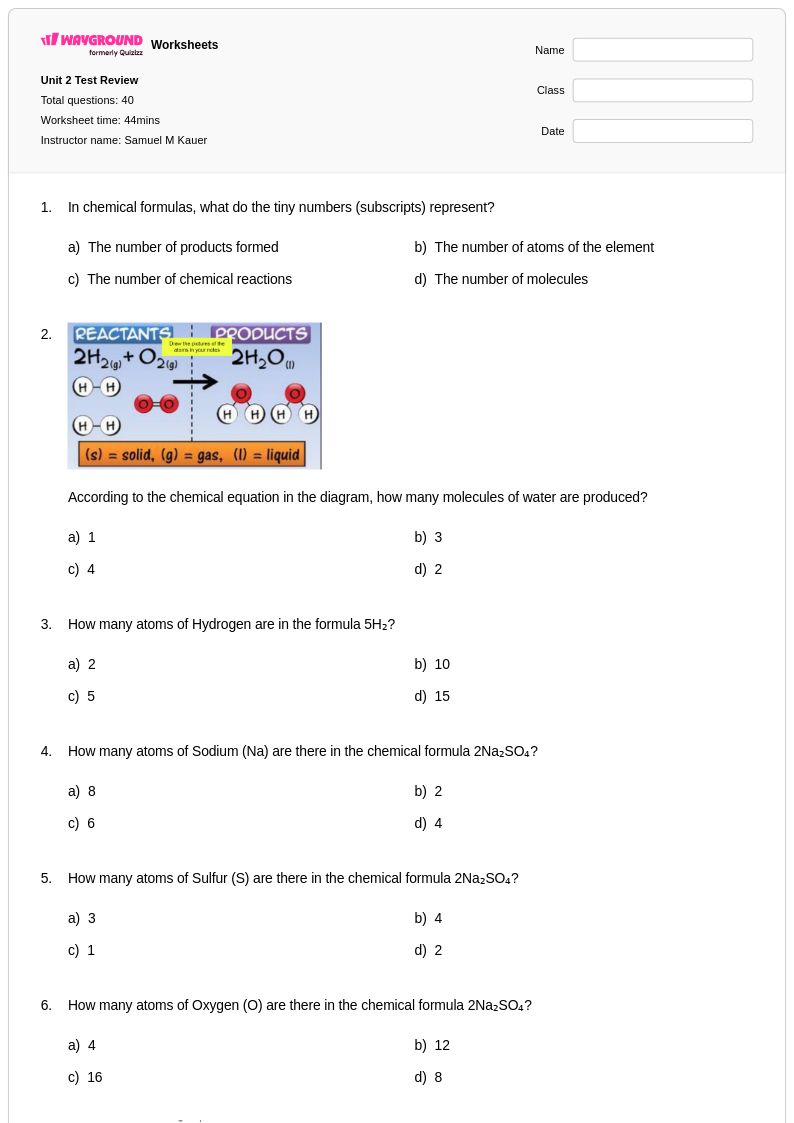
Ionic compound formulas represent a fundamental concept in Grade 10 chemistry that requires students to master the systematic approach to writing chemical formulas based on ionic charges and the principle of electrical neutrality. Wayground's comprehensive collection of ionic compound formula worksheets provides students with extensive practice in determining correct formulas for compounds formed between metals and nonmetals, polyatomic ions, and transition metals with variable charges. These carefully designed printables strengthen essential skills including identifying ion charges, applying the crisscross method, simplifying formulas to lowest terms, and recognizing common polyatomic ions. Each worksheet comes with a detailed answer key that allows students to check their work independently, while the variety of practice problems progresses from simple binary compounds to more complex scenarios involving transition metals and polyatomic ions, ensuring students build confidence through scaffolded learning experiences available in convenient pdf format.
Wayground, formerly Quizizz, empowers chemistry teachers with millions of teacher-created resources specifically focused on ionic compound formulas and related Grade 10 chemistry concepts. The platform's robust search and filtering capabilities enable educators to quickly locate worksheets that align with specific curriculum standards and match their students' current skill levels, whether they need introductory practice with simple ionic compounds or advanced work with complex polyatomic combinations. Teachers can easily customize existing worksheets to meet their classroom's unique needs, create differentiated versions for various learning levels, and access materials in both printable and digital formats including downloadable pdf files. This flexibility proves invaluable for lesson planning, targeted remediation for struggling students, enrichment activities for advanced learners, and consistent skill practice that reinforces the systematic thinking required to master ionic compound formula writing throughout the academic year.
FAQs
How do I teach students to write ionic compound formulas?
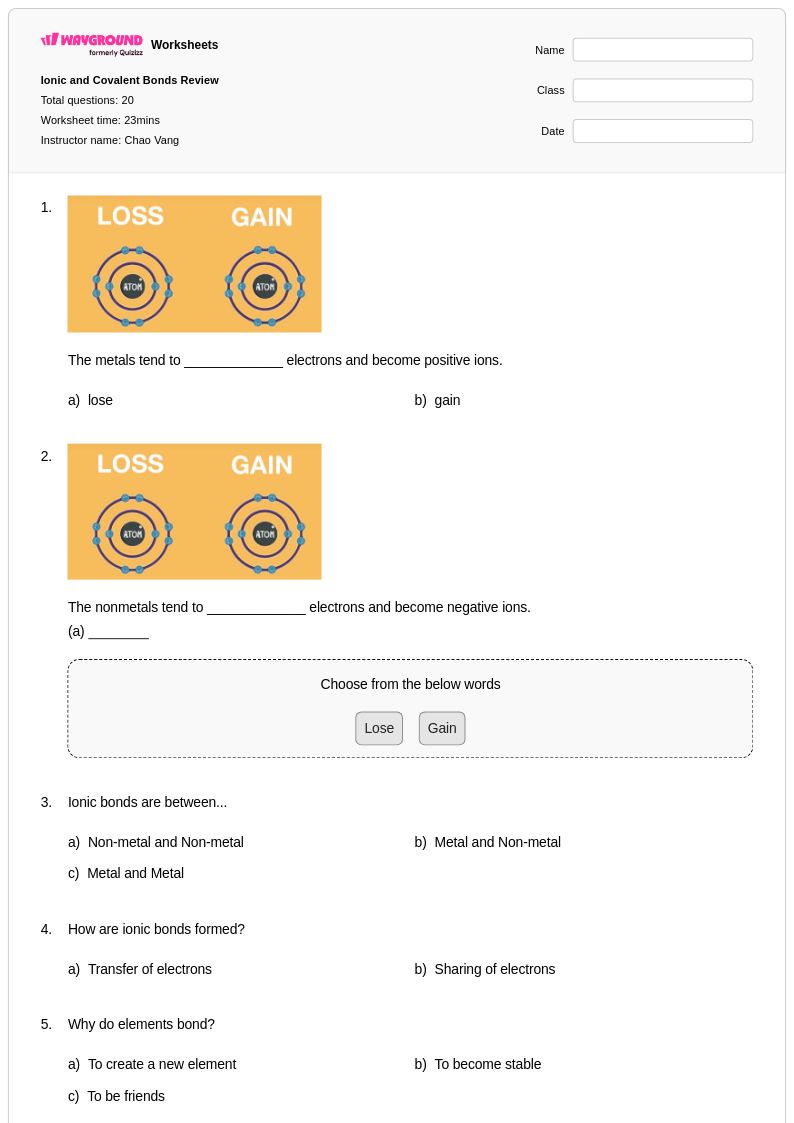
Start by ensuring students understand that ionic compounds form when a metal transfers electrons to a nonmetal, creating oppositely charged ions. Teach the principle of electrical neutrality first — the total positive charge must equal the total negative charge in any ionic compound. From there, introduce the crisscross method as a systematic shortcut: swap the absolute values of each ion's charge and use them as subscripts, then simplify if needed. Building from single-charge ions toward polyatomic ions and then transition metals with variable charges gives students a scaffolded progression that reduces overwhelm.
What exercises help students practice writing ionic compound formulas?
Effective practice should move through three phases: identifying ion charges from given names, applying the crisscross method to write formulas, and then verifying electrical neutrality in the result. Worksheets that include a mix of binary ionic compounds, polyatomic ions such as sulfate or nitrate, and transition metals with variable charges give students broad exposure to the formula-writing process. Step-by-step problem sets with detailed answer keys are especially useful because students can self-correct and identify exactly where their reasoning broke down.
What mistakes do students commonly make when writing ionic compound formulas?
The most frequent error is forgetting to reduce subscripts to the lowest whole-number ratio — for example, writing Ca₂O₂ instead of CaO. Students also commonly misapply the crisscross method by using the ion's charge sign rather than its absolute value, producing incorrect subscripts. Another persistent mistake involves polyatomic ions: students forget to enclose the polyatomic ion in parentheses when a subscript greater than 1 is needed, writing NO₃₂ instead of (NO₃)₂. Targeted practice with each of these error types — not just general formula writing — helps students internalize the correct procedure.
How do I help struggling students who can't remember ion charges?
Students who struggle with formula writing are often blocked at the earlier step of recalling ion charges rather than the formula-writing process itself. Providing a reference chart of common ions during initial practice removes that barrier and lets students focus on learning the crisscross method without cognitive overload. Once the procedure is solid, gradually reduce reliance on the chart through repeated low-stakes practice. On Wayground, teachers can apply reduced answer choices for selected students, which lowers cognitive load on digital assignments while the rest of the class works with full options — and other students are not notified of the accommodation.
How can I use Wayground's ionic compound formulas worksheets in my classroom?
Wayground's ionic compound formula worksheets are available as printable PDFs for traditional classroom use and in digital formats for technology-integrated environments, giving teachers flexibility depending on their setup. In digital mode, teachers can host the worksheet as a quiz directly on Wayground, enabling real-time tracking of student responses. The included answer keys make these resources equally effective as independent practice, homework, or in-class review. Wayground also supports accommodations such as extended time and read aloud, which can be assigned to individual students for digital sessions without disrupting the rest of the class.
How do I differentiate ionic compound formula practice for students at different skill levels?
Differentiation for this topic works best when problem sets are organized by compound type rather than arbitrary difficulty labels. Begin lower-proficiency students with binary ionic compounds involving fixed-charge metals before introducing polyatomic ions or transition metals with variable charges. Higher-proficiency students benefit from mixed sets that require them to identify compound type before selecting the correct formula-writing approach. Wayground's filtering tools allow teachers to locate worksheets aligned to specific learning objectives, and platform accommodations such as reduced answer choices can be applied to individual students in digital sessions to provide targeted support.