Enhance Grade 10 students' understanding of molecular polarity with Wayground's comprehensive collection of free chemistry worksheets, featuring printable PDFs, practice problems, and detailed answer keys to master polar and nonpolar compounds.
Explore printable Polarity worksheets for Grade 10
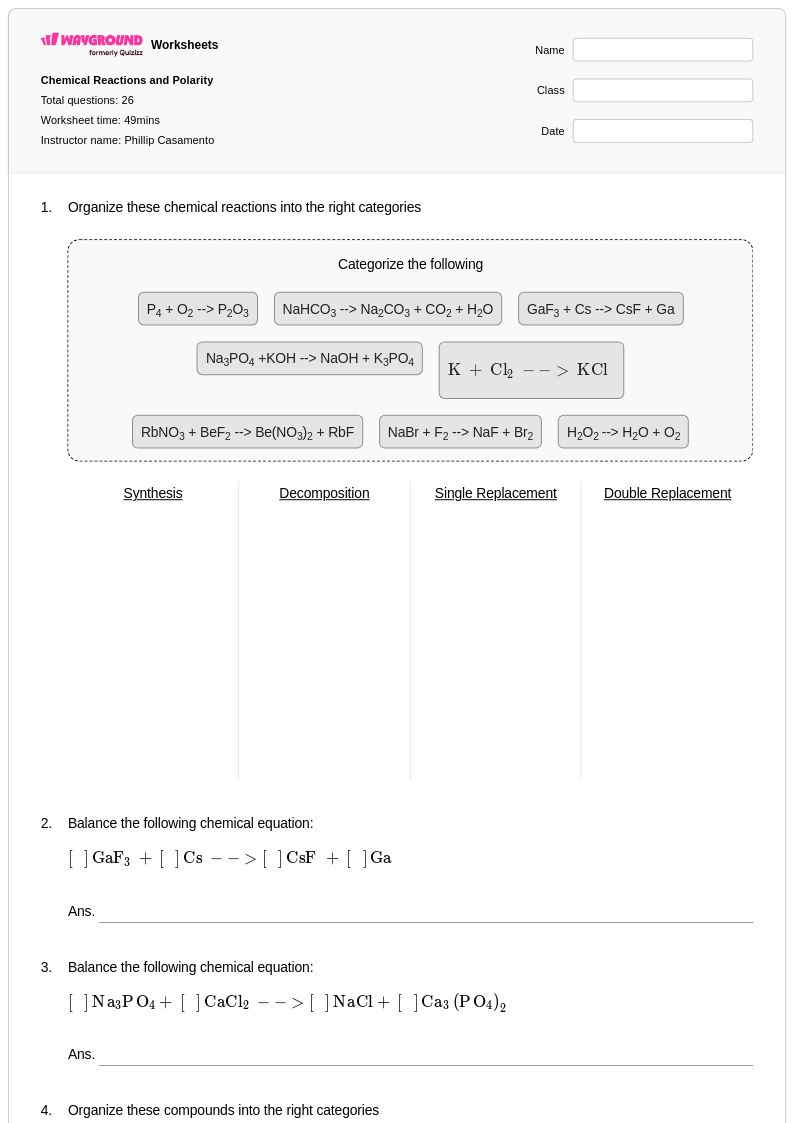
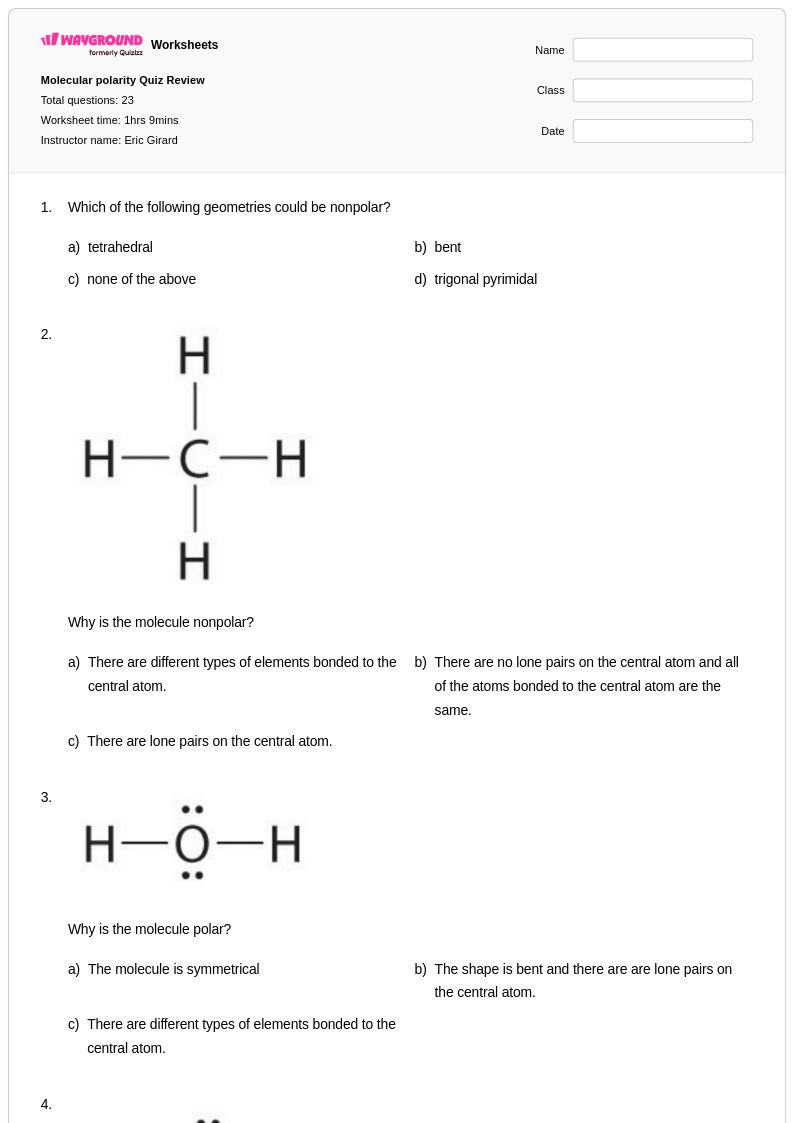
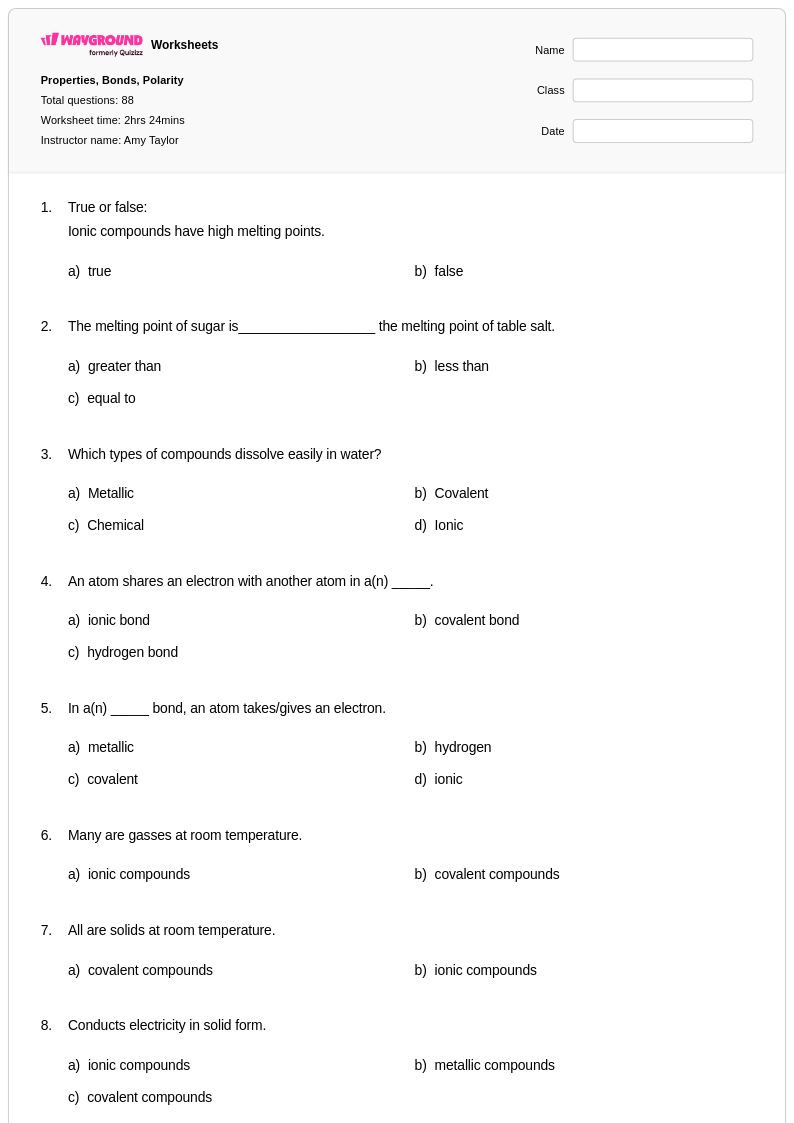
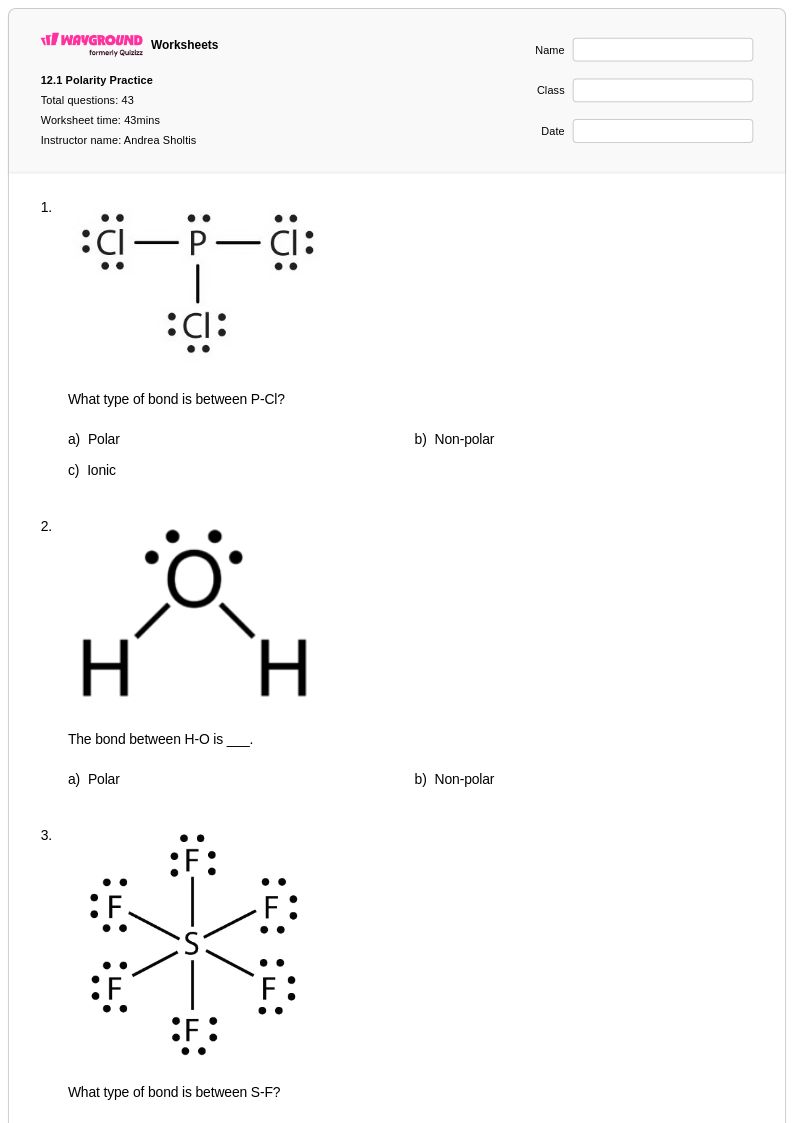
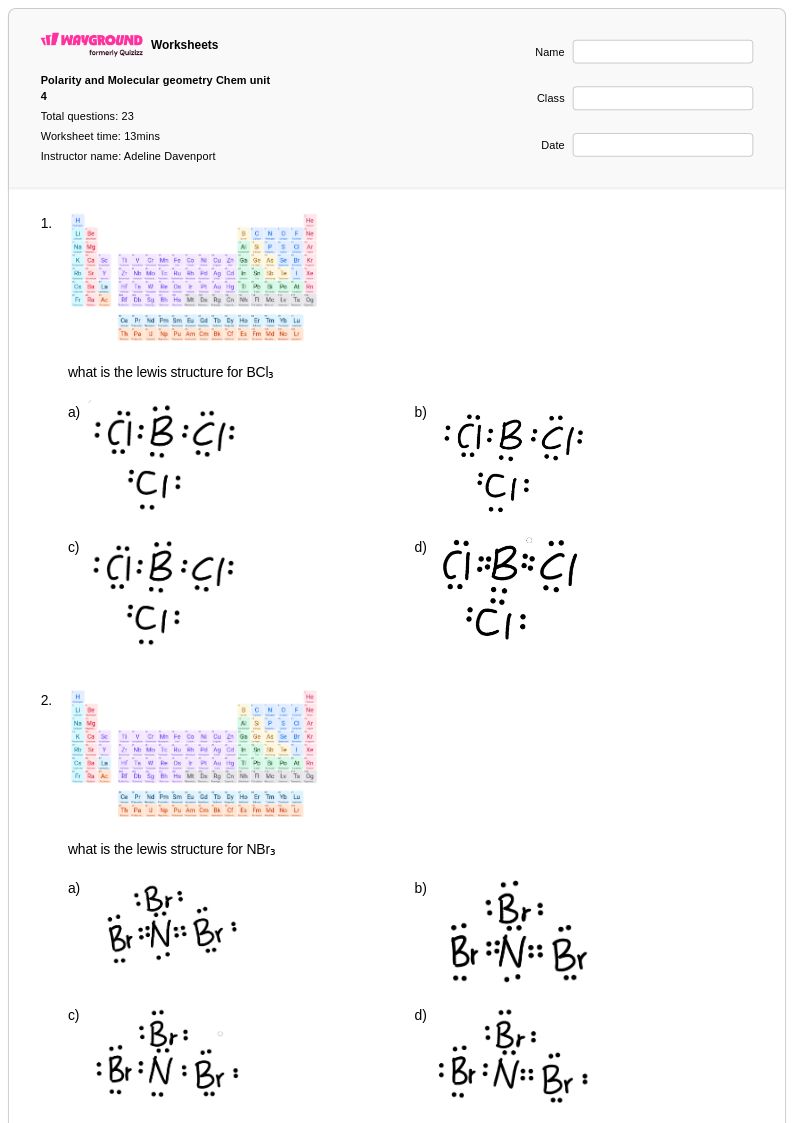
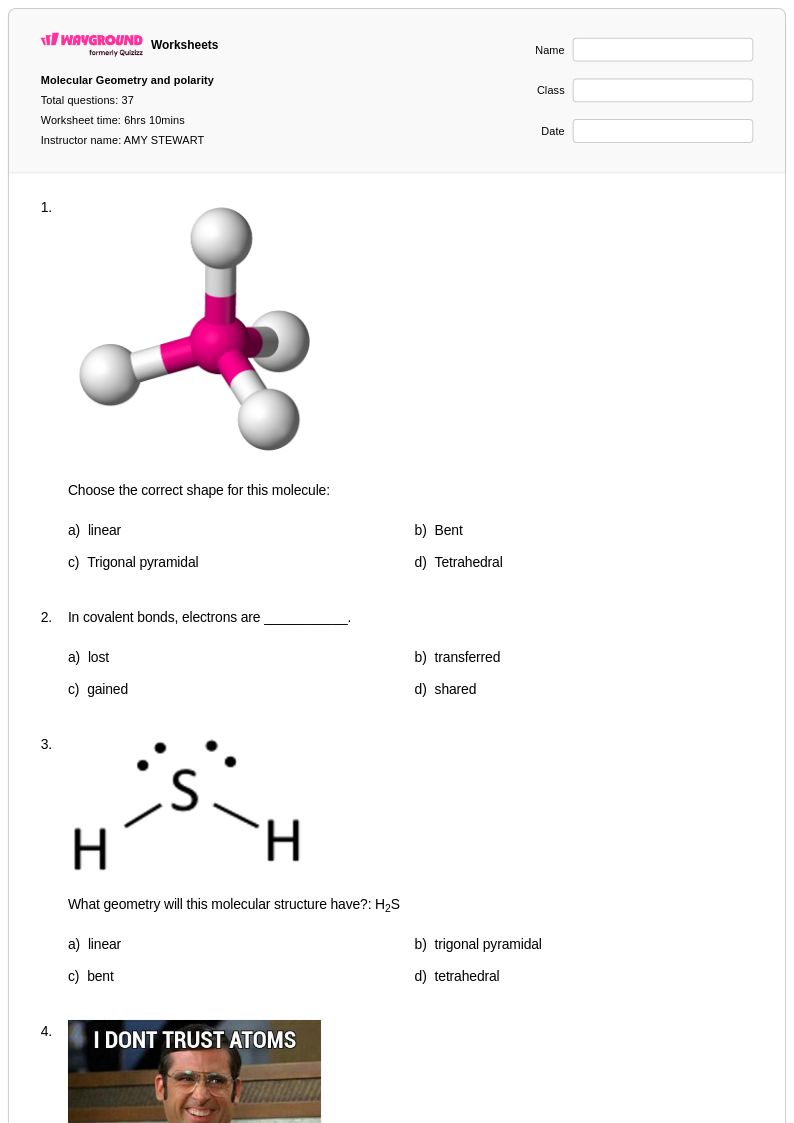
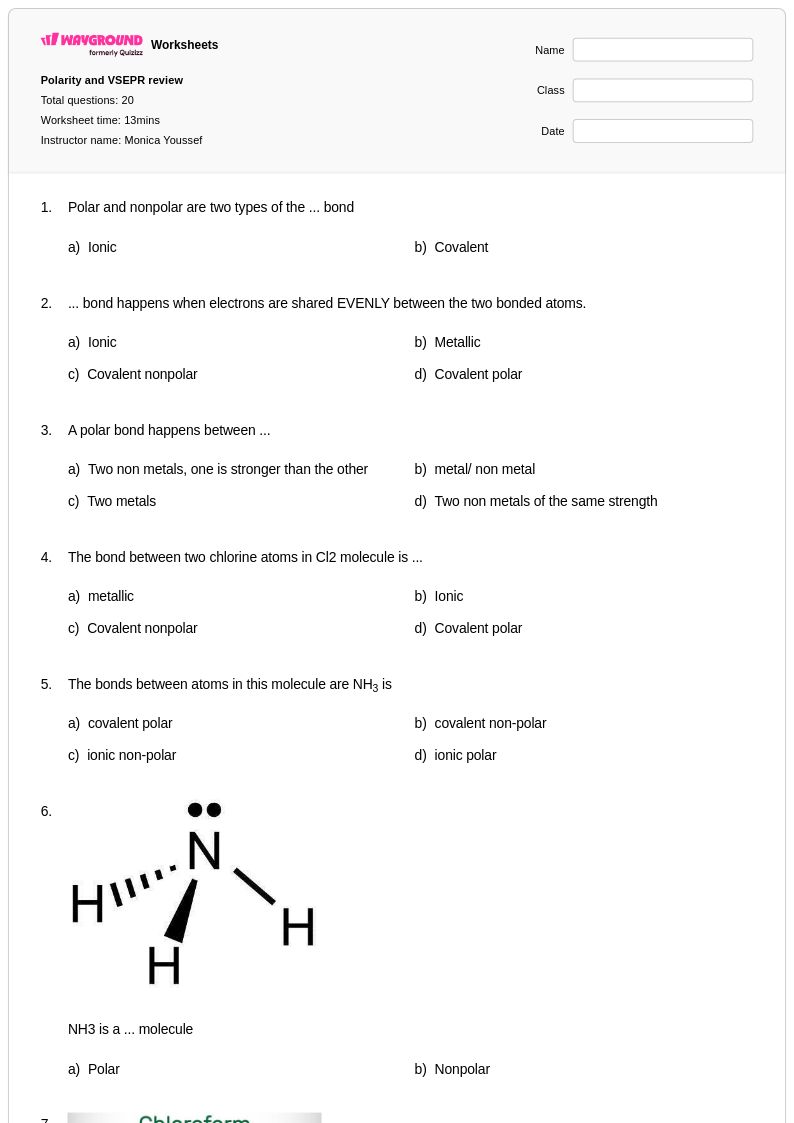
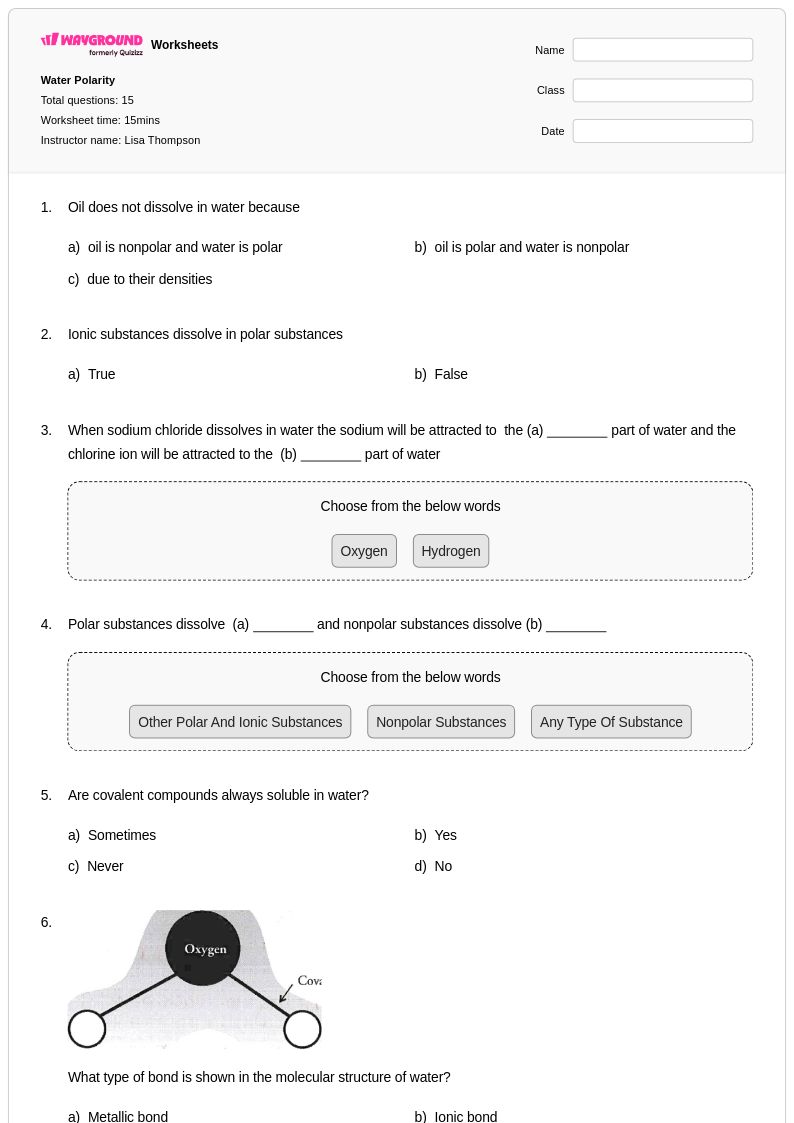
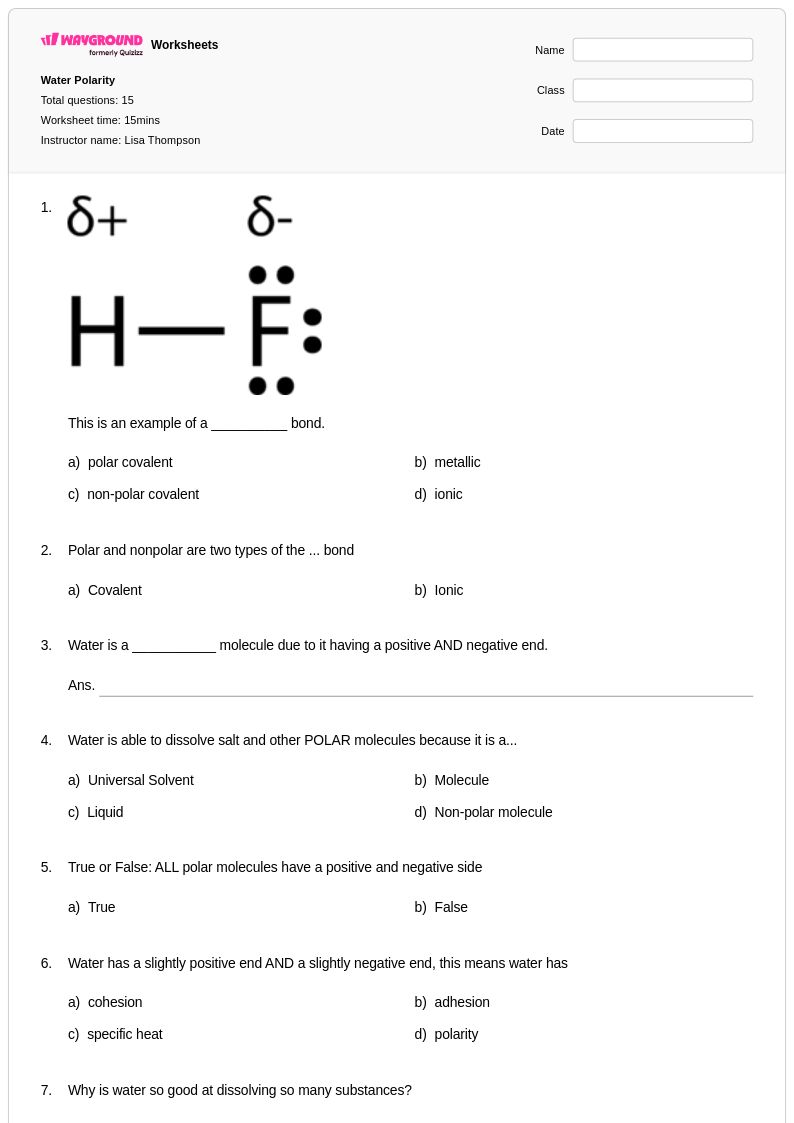
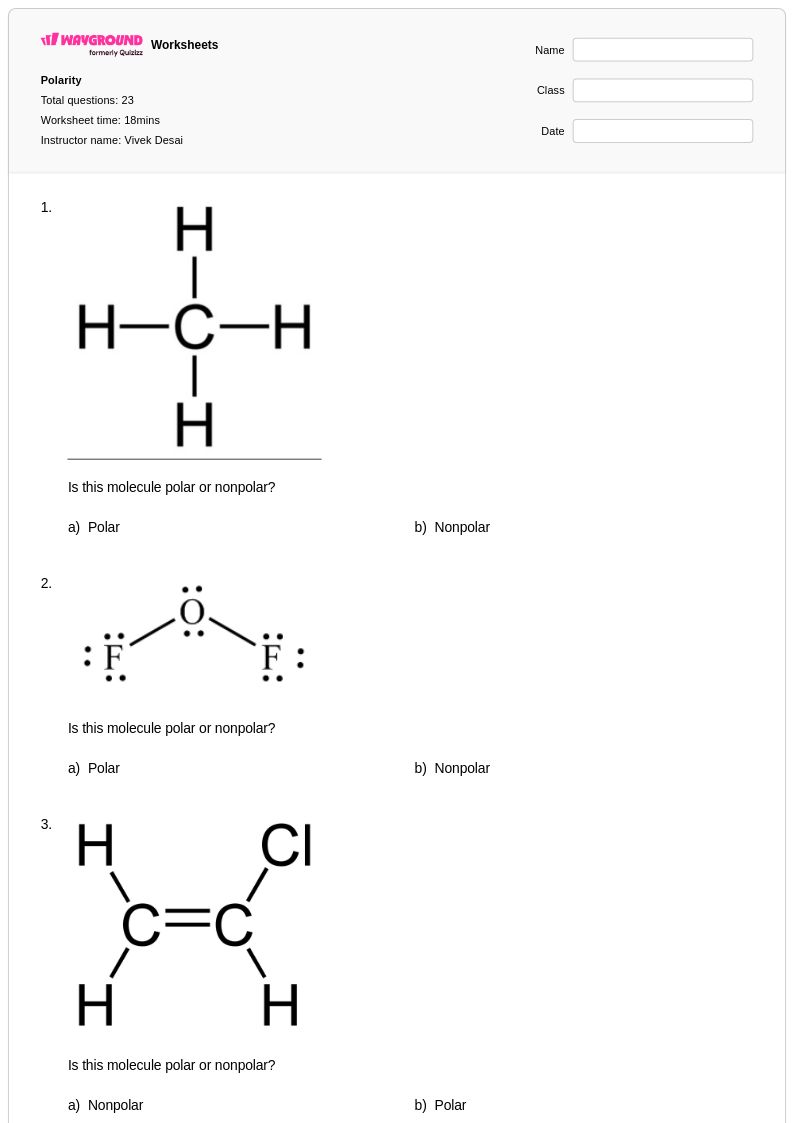
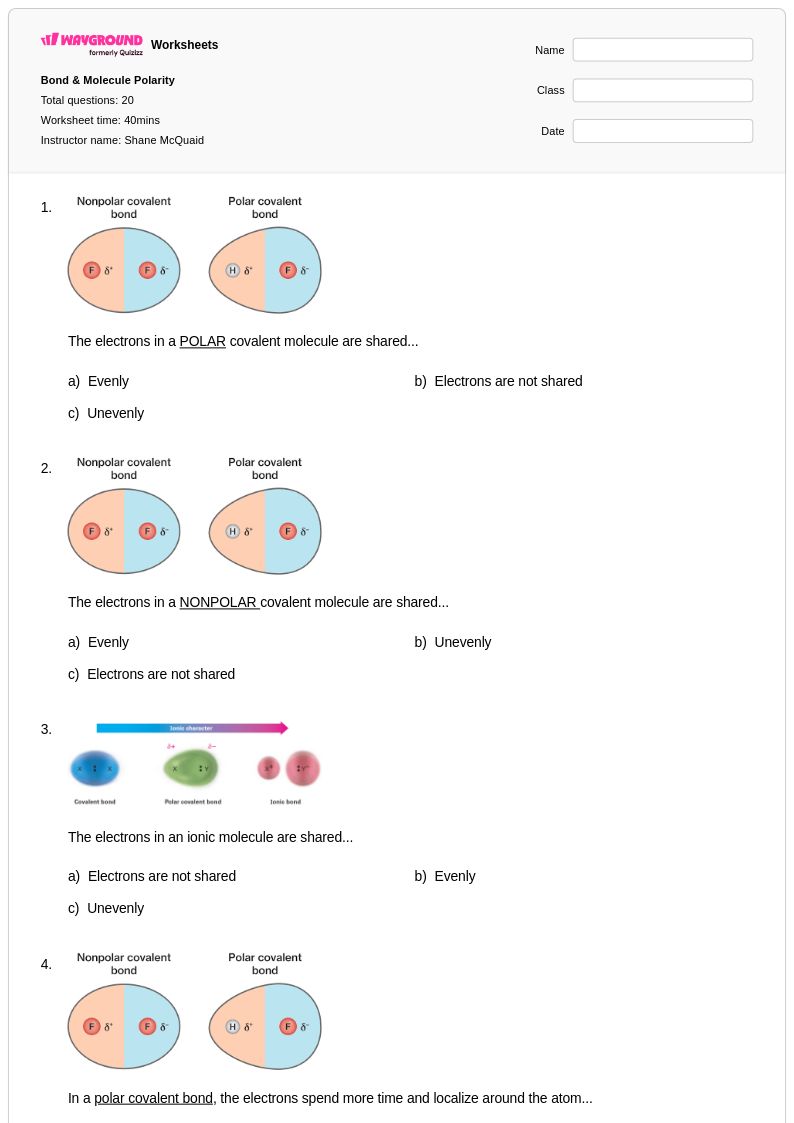
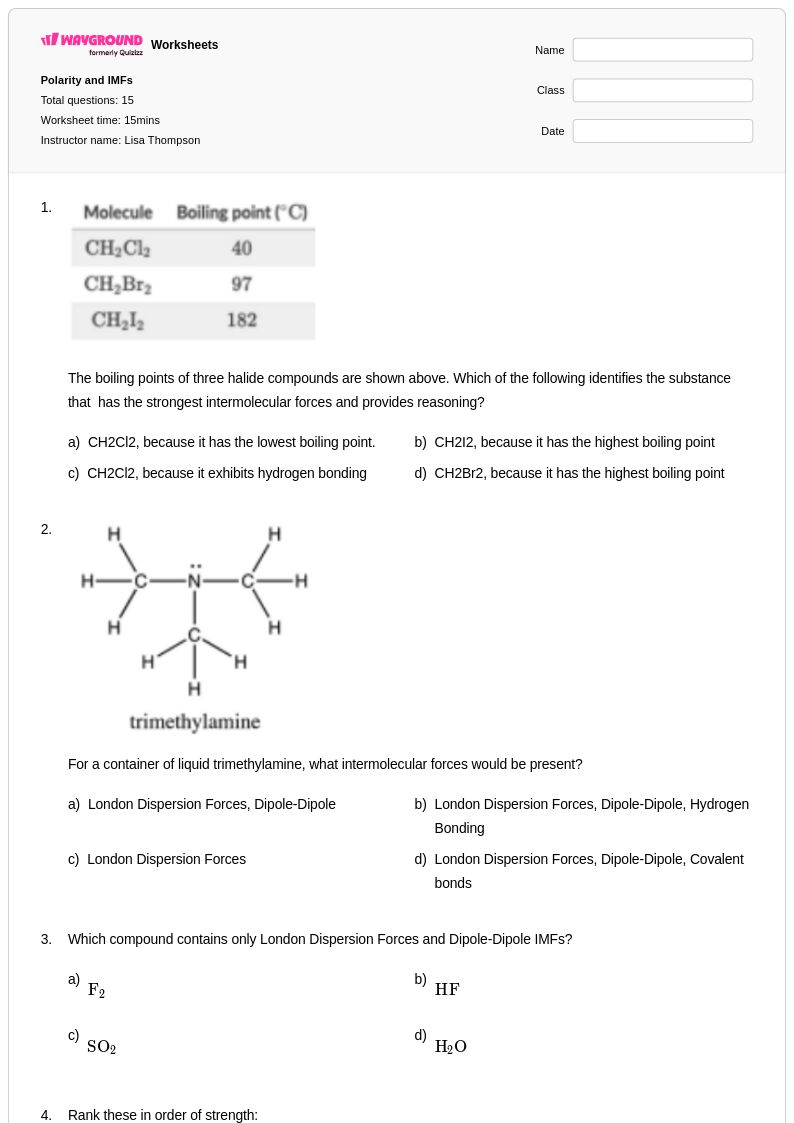
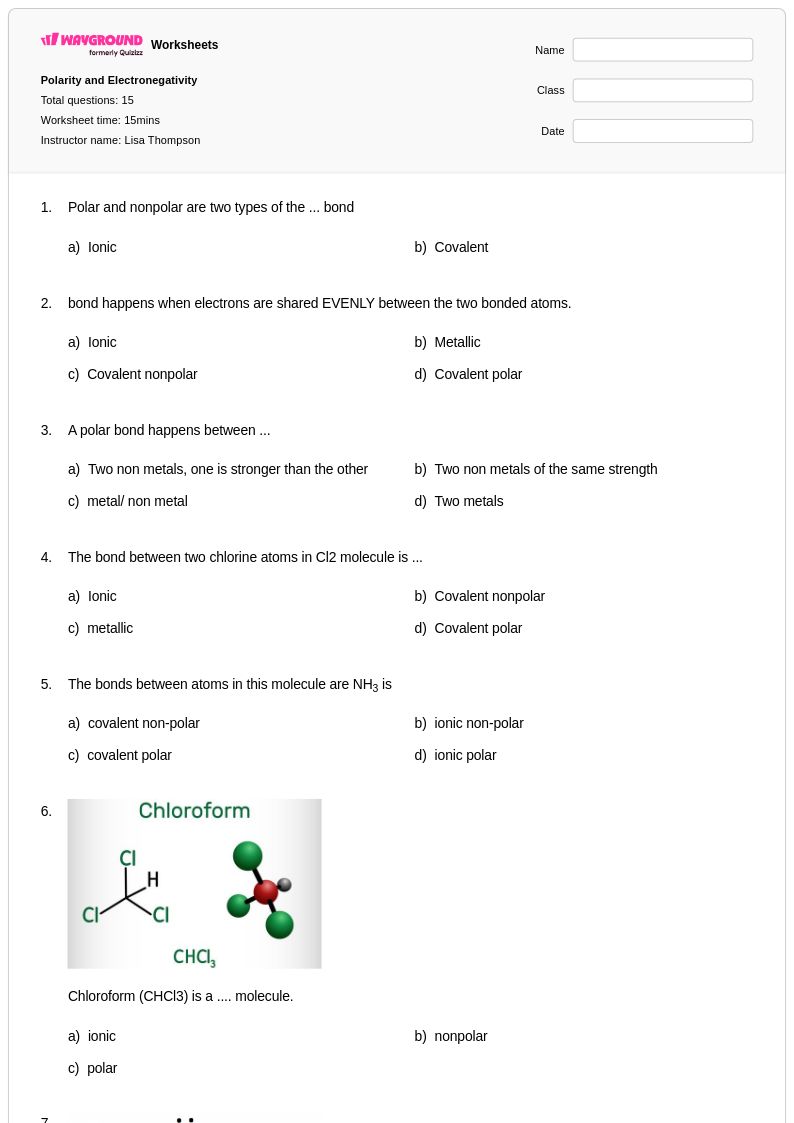
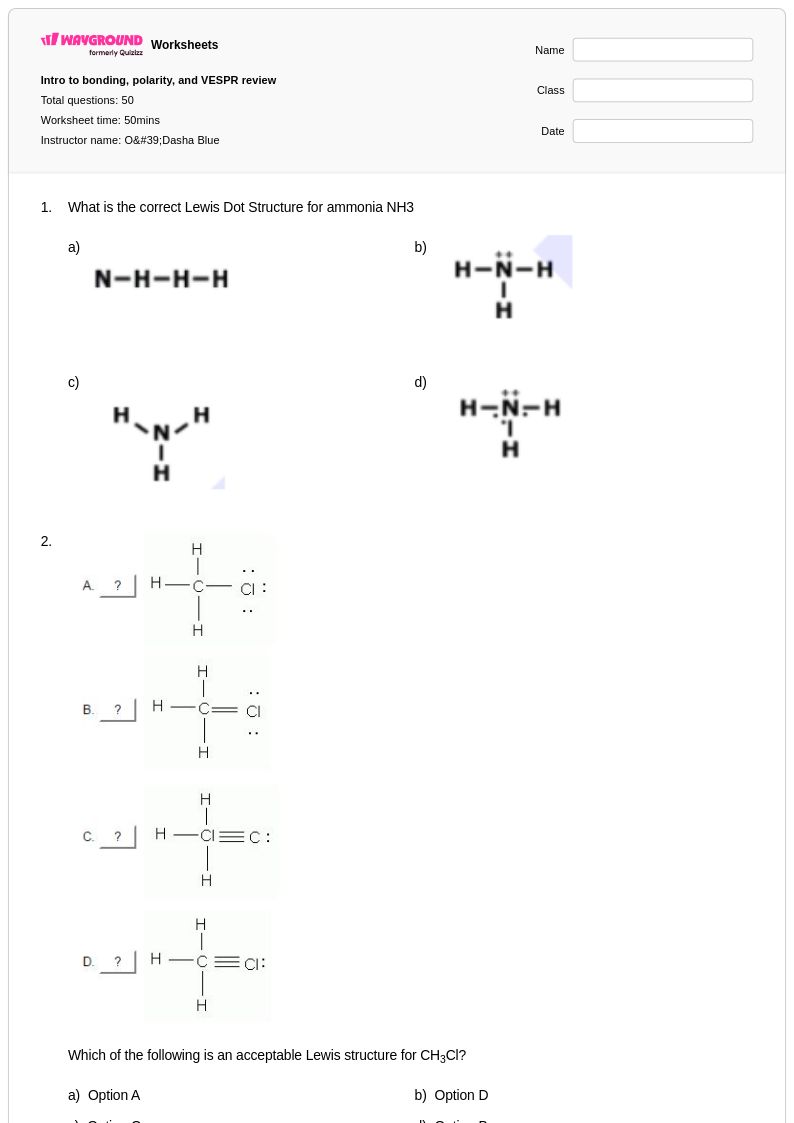
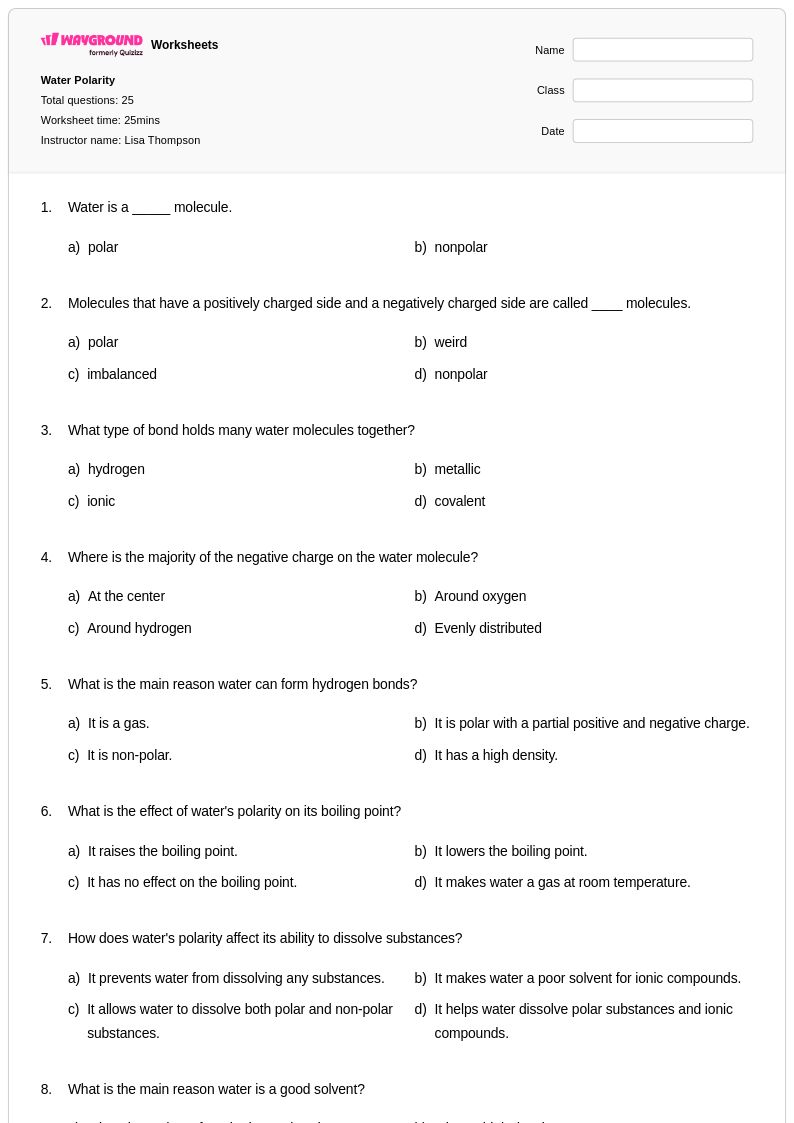
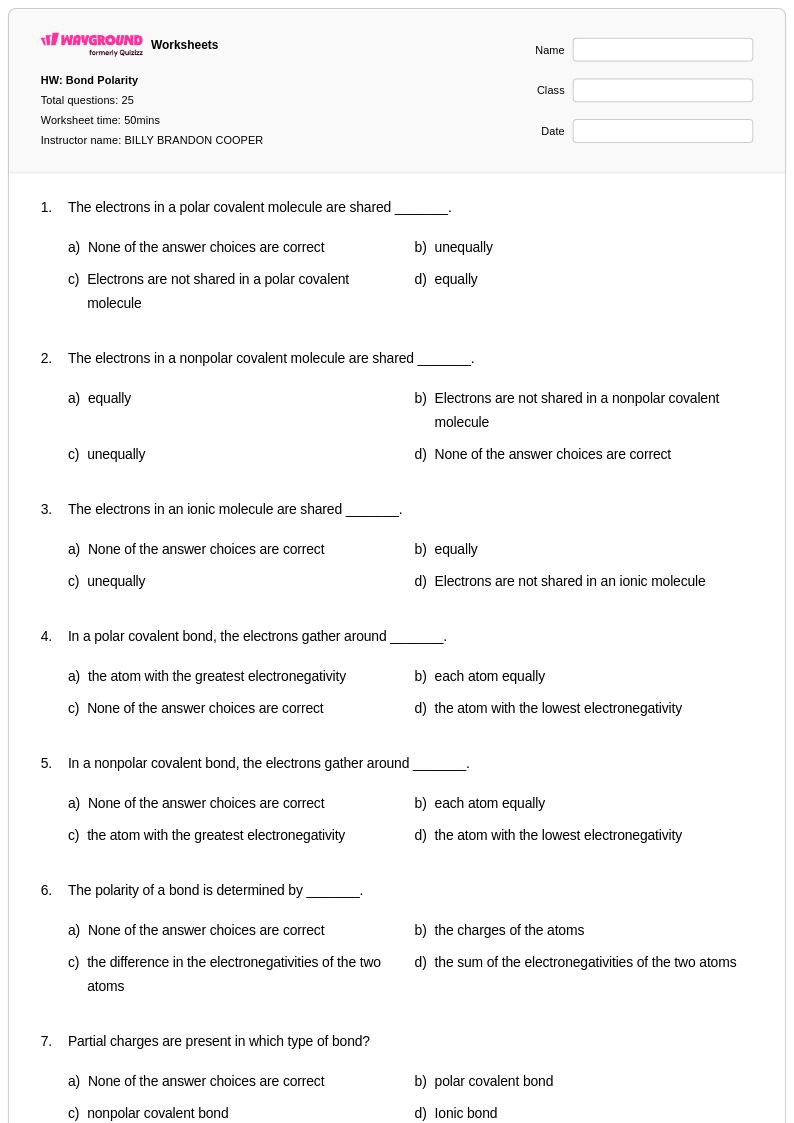
Polarity worksheets for Grade 10 students available through Wayground (formerly Quizizz) provide comprehensive coverage of molecular and bond polarity concepts essential for advanced chemistry understanding. These carefully designed resources help students master the fundamental principles of electronegativity differences, dipole moments, and molecular geometry's influence on overall molecular polarity. Students develop critical analytical skills by working through practice problems that require them to predict bond polarity based on electronegativity values, draw Lewis structures to determine molecular shapes, and evaluate whether molecules are polar or nonpolar. Each worksheet collection includes detailed answer keys that enable students to check their understanding and identify areas requiring additional study, while the free printables and pdf formats ensure accessibility for both classroom instruction and independent practice sessions.
Wayground (formerly Quizizz) empowers educators with an extensive library of millions of teacher-created polarity worksheets specifically aligned with Grade 10 chemistry standards and learning objectives. The platform's robust search and filtering capabilities allow teachers to quickly locate resources that match their specific curriculum needs, whether focusing on simple diatomic molecules or complex organic compounds. Advanced differentiation tools enable instructors to customize worksheet difficulty levels and modify practice problems to accommodate diverse learning styles and academic abilities within their classrooms. These versatile resources are available in both printable and digital formats, including downloadable pdf versions, making them ideal for traditional classroom instruction, remote learning environments, homework assignments, and targeted remediation or enrichment activities that strengthen students' conceptual understanding of molecular polarity principles.
FAQs
How do I teach molecular polarity to chemistry students?
Start by building students' understanding of electronegativity differences between bonded atoms before introducing the concept of dipole moments. From there, connect bond polarity to molecular geometry by having students analyze Lewis structures and apply VSEPR theory to determine whether dipoles cancel or reinforce. Grounding polarity in real physical properties — such as why water dissolves ionic compounds or why nonpolar molecules have lower boiling points — gives students a concrete framework for understanding why polarity matters in chemistry.
What practice problems help students master molecular polarity?
Effective polarity practice should progress from identifying electronegativity differences in individual bonds to evaluating whole molecules using Lewis structures and geometry. Students benefit from exercises that ask them to classify molecules as polar or nonpolar, draw and label dipole moment arrows, and predict physical properties like solubility and boiling point based on polarity. Problems that require students to justify their reasoning — not just select an answer — build the analytical skills needed for more advanced chemistry topics like intermolecular forces.
What mistakes do students commonly make when determining molecular polarity?
The most common error is conflating bond polarity with molecular polarity — students often mark a molecule like CO₂ as polar because it contains polar bonds, without accounting for the fact that its linear geometry causes the dipoles to cancel. Students also frequently misread Lewis structures, omitting lone pairs that affect molecular geometry and therefore polarity. A third recurring mistake is treating electronegativity differences as the sole determinant of polarity without considering molecular shape, which is why pairing polarity problems with geometry review is essential.
How does electronegativity relate to polarity, and how do I explain this to students?
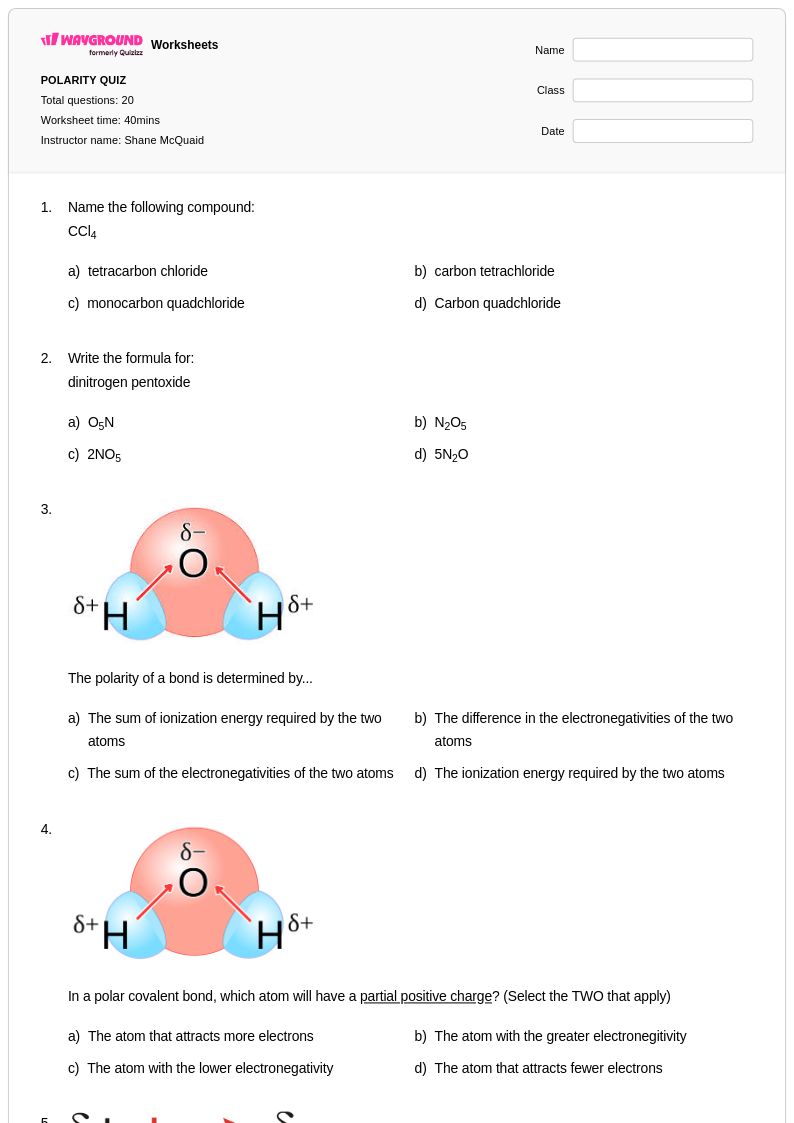
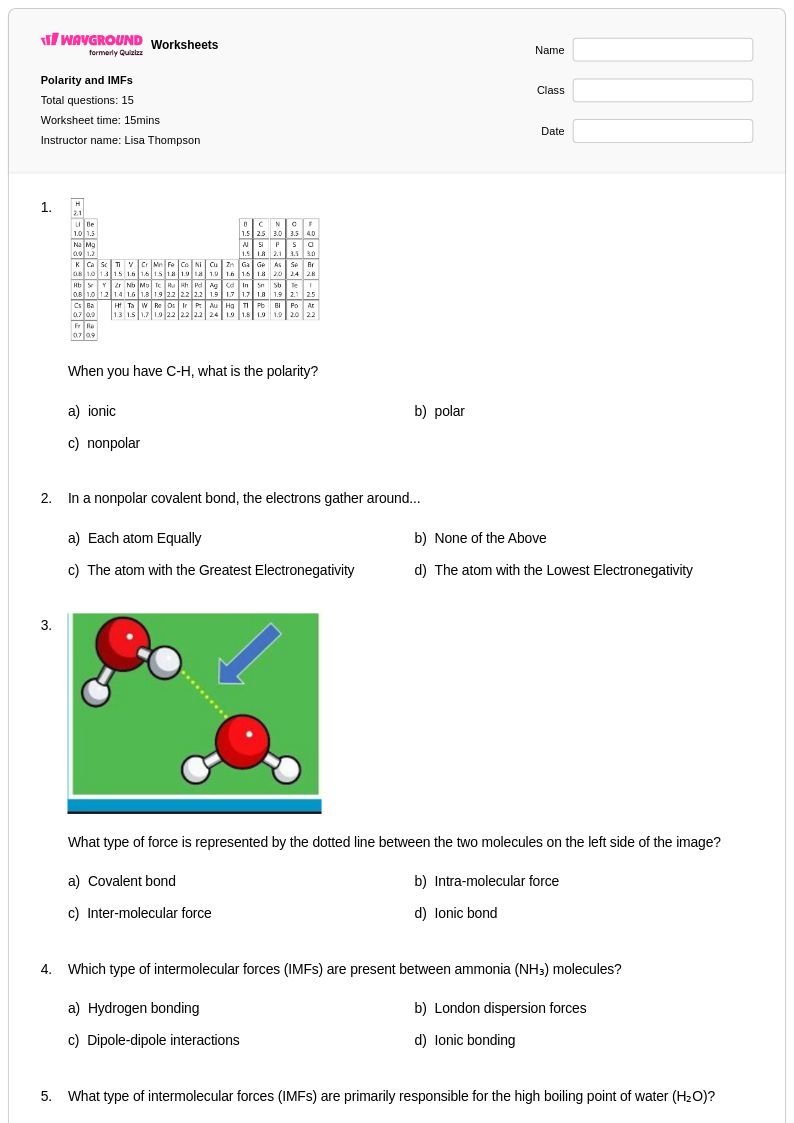
Electronegativity measures how strongly an atom attracts shared electrons in a covalent bond. When two bonded atoms have different electronegativity values, the electron density shifts toward the more electronegative atom, creating a partial negative charge on one end and a partial positive charge on the other — this is a polar bond. Teaching students to use the Pauling electronegativity scale to calculate differences, and then applying a threshold (typically greater than 0.4) to classify bonds, gives them a reliable, repeatable method for predicting polarity.
How can I use polarity worksheets to support students who are struggling with electronegativity concepts?
Polarity worksheets work well as targeted remediation tools when scaffolded appropriately — begin with bond-level polarity problems before moving to molecular analysis. On Wayground, teachers can apply individual accommodations such as Read Aloud, which reads questions aloud for students who need additional support processing written text, or Reduced Answer Choices to lower cognitive load for students who are overwhelmed by complex distractors. These settings can be assigned to specific students without affecting the experience of the rest of the class, making quiet, seamless differentiation possible during independent practice.
How do I use Wayground's polarity worksheets in my chemistry class?
Wayground's polarity worksheets are available as printable PDFs for traditional classroom or homework use and in digital formats for technology-integrated learning environments. Teachers can also host them as a quiz directly on Wayground, giving students an interactive experience while automatically collecting results. Each worksheet includes a complete answer key, so they can be assigned for independent practice, used in small-group review, or deployed as formative assessments without additional preparation on the teacher's part.