Free Printable Mole Relationships Worksheets for Grade 10
Grade 10 mole relationships chemistry worksheets from Wayground provide comprehensive printables and practice problems with answer keys to help students master stoichiometric calculations and chemical quantity conversions.
Explore printable Mole Relationships worksheets for Grade 10
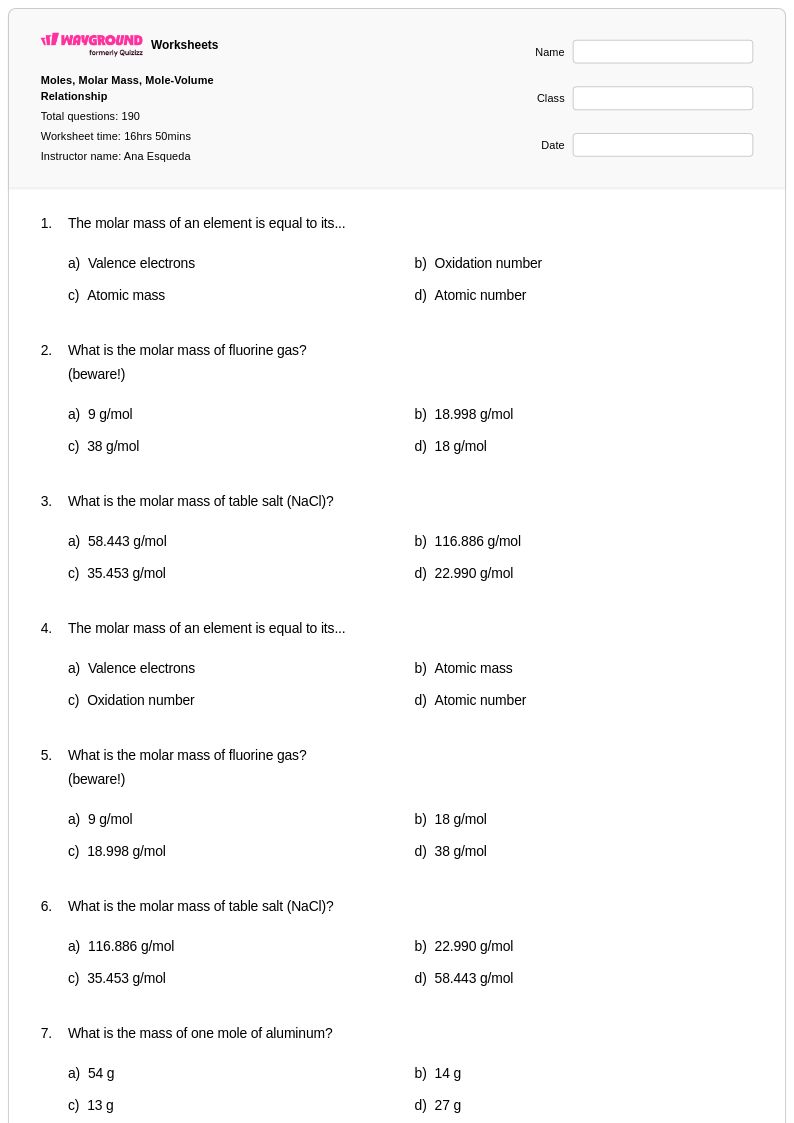
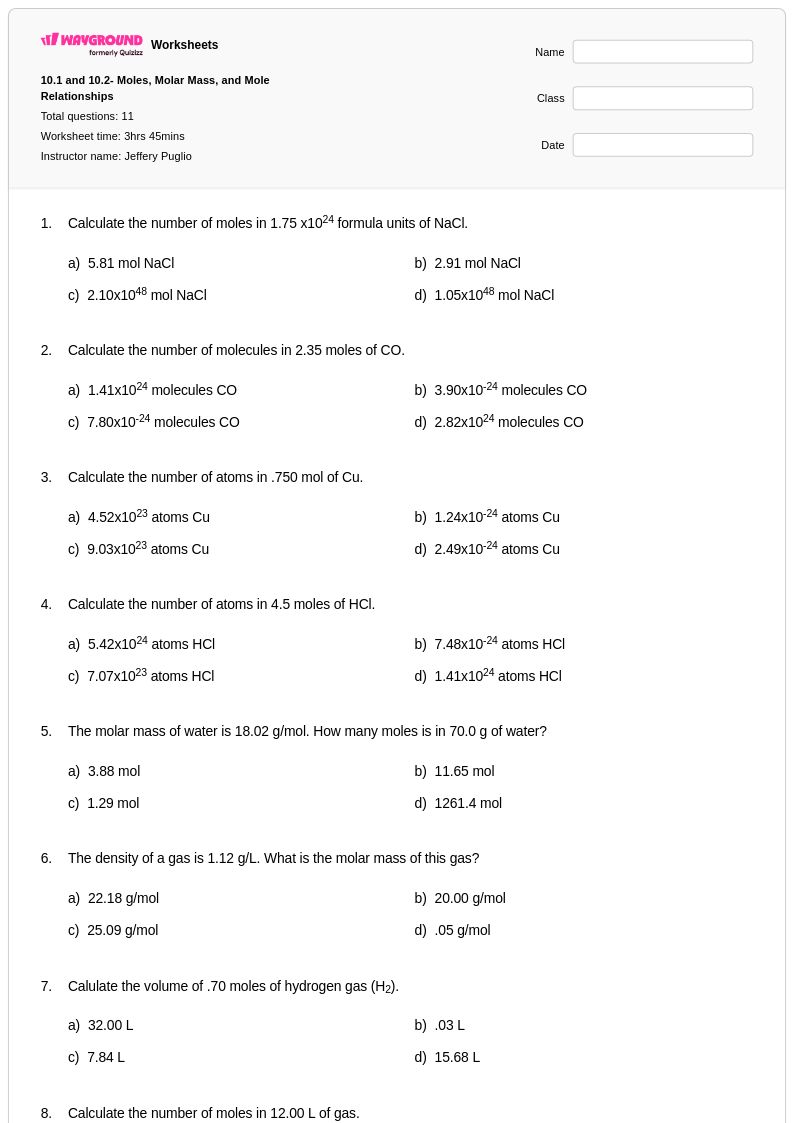
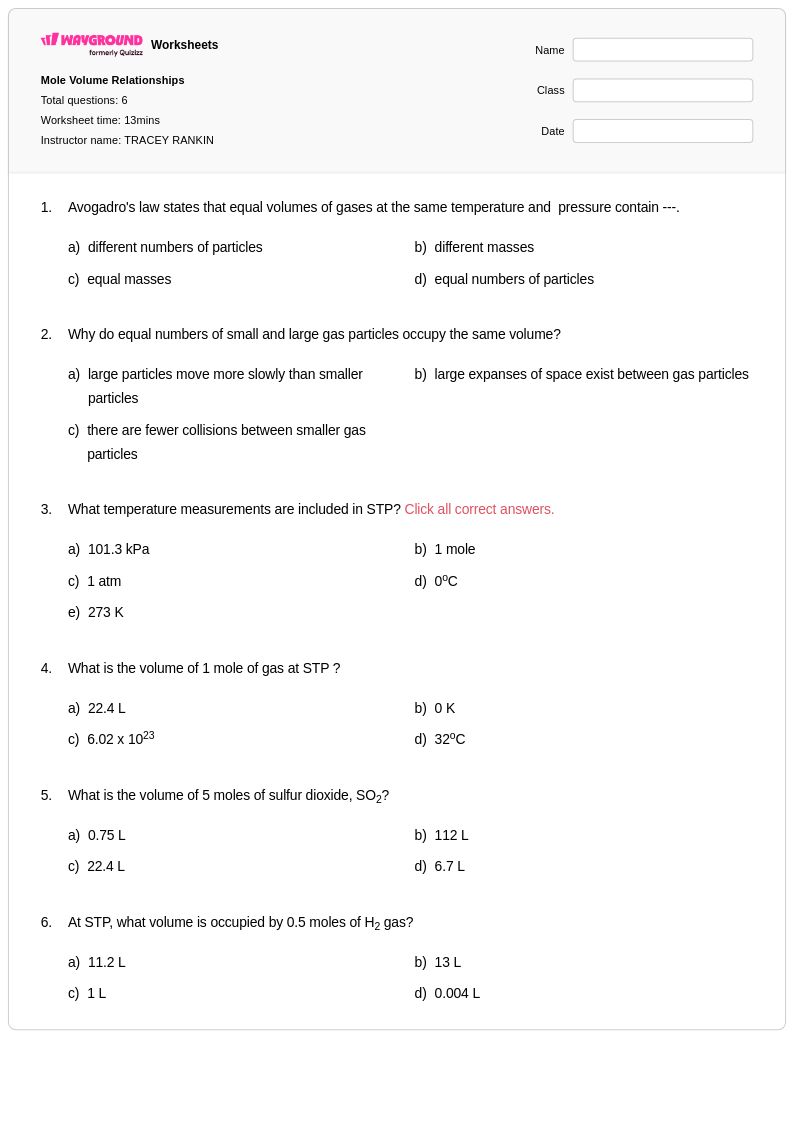
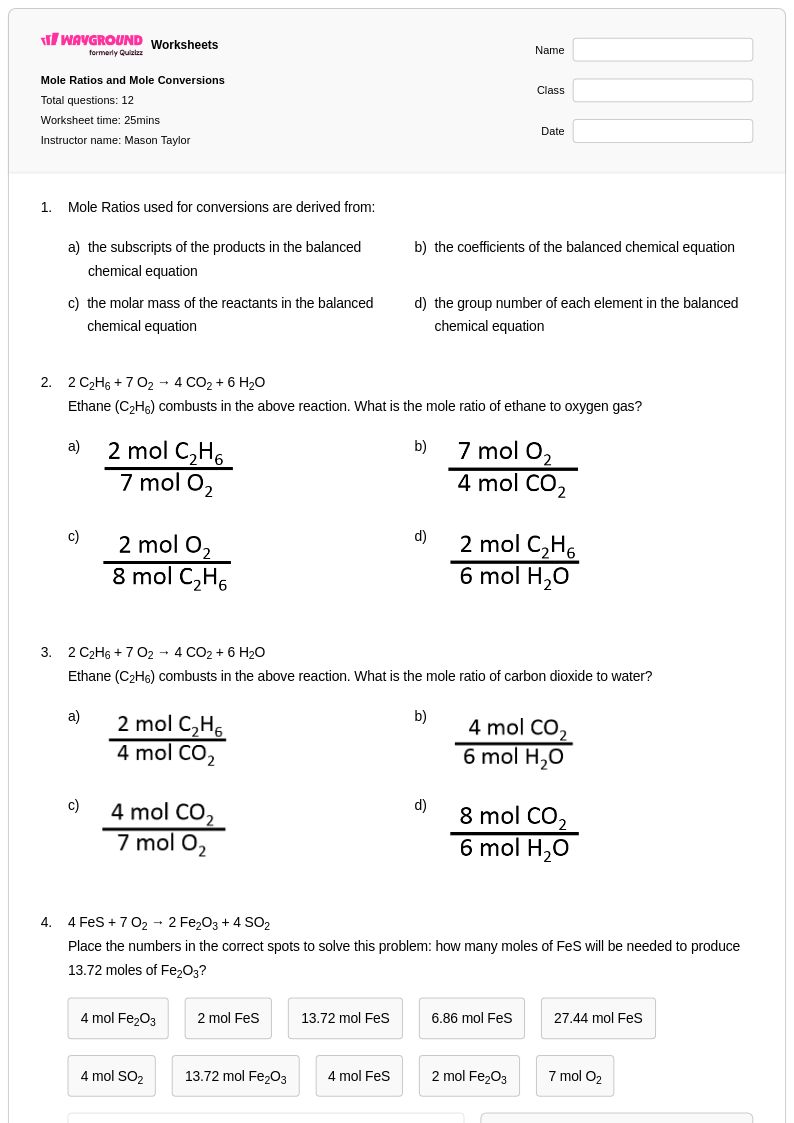
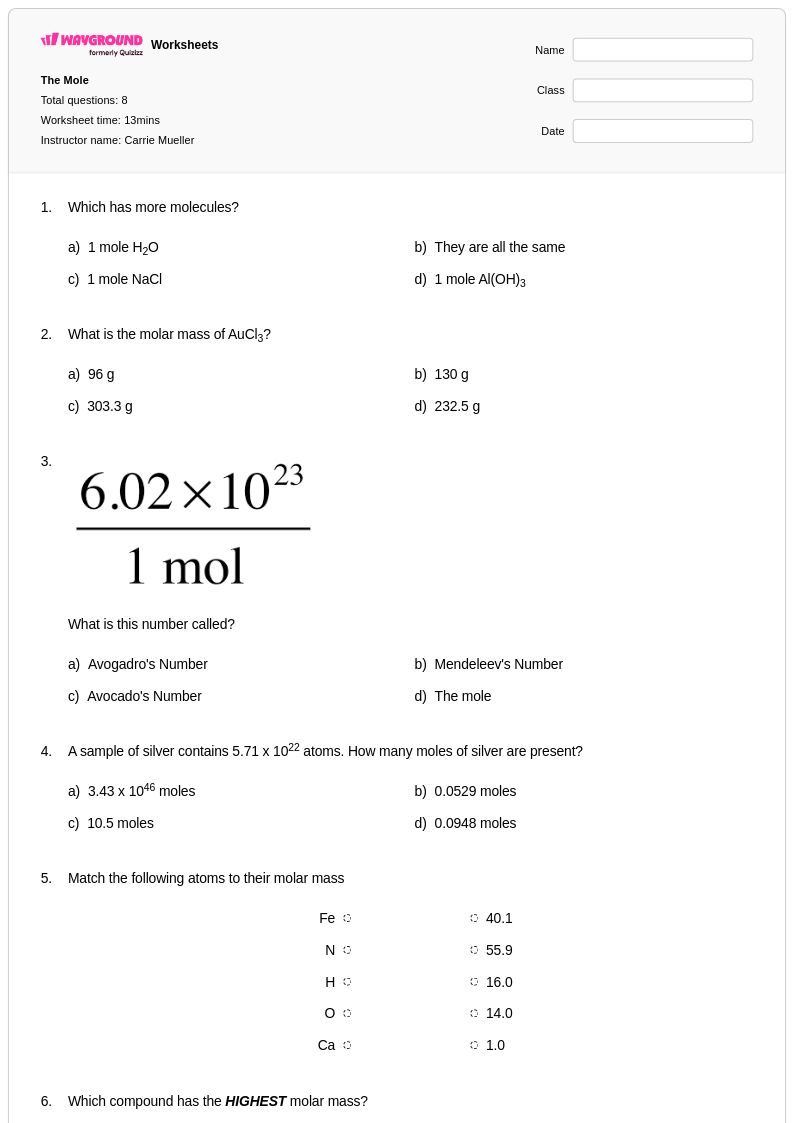
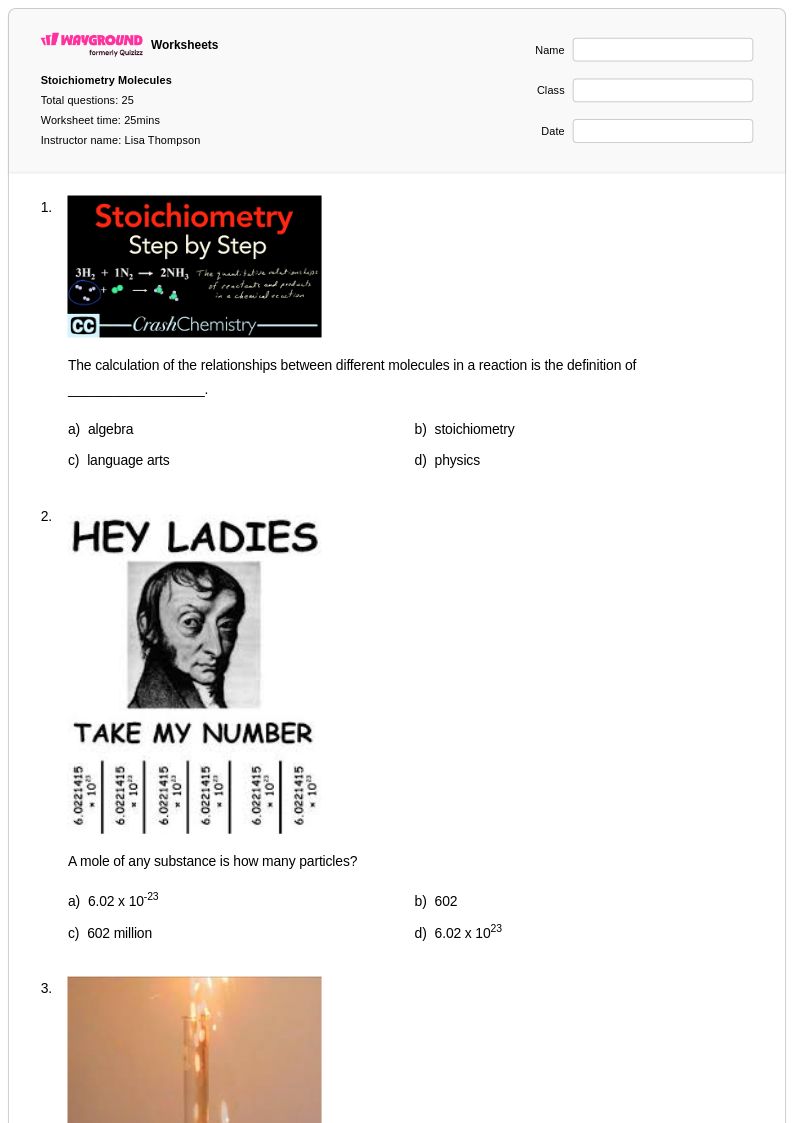
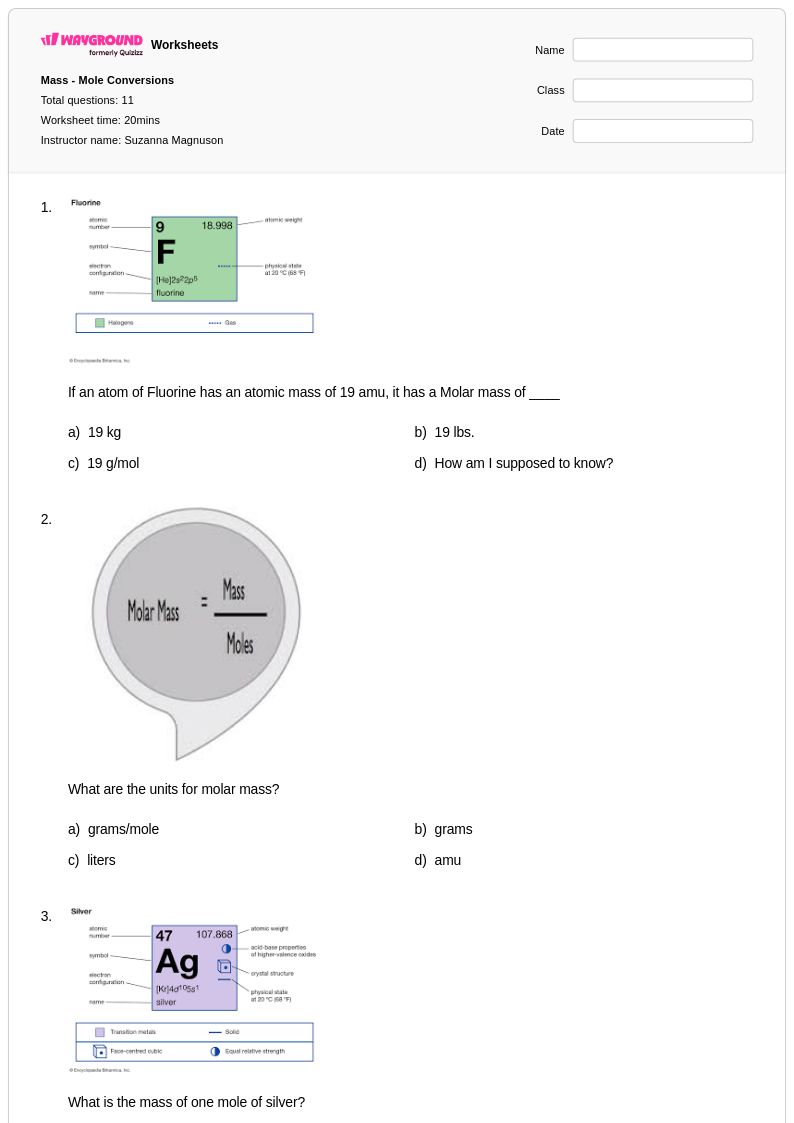
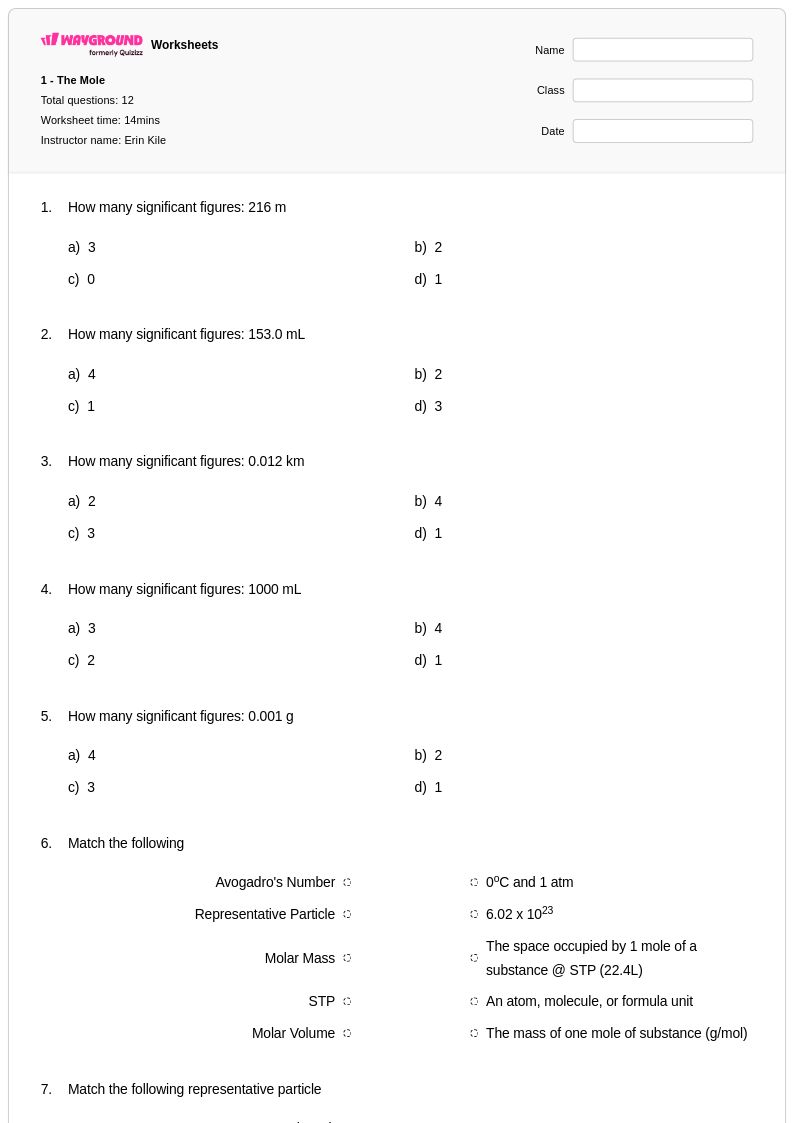
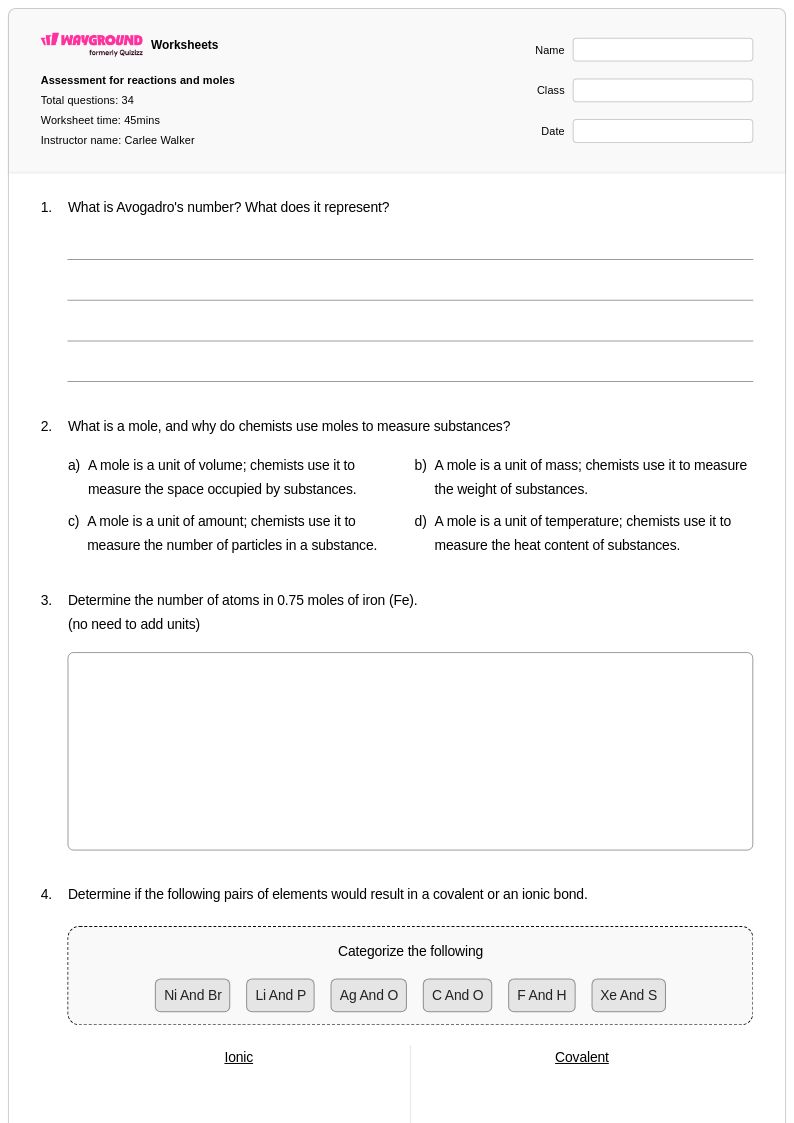
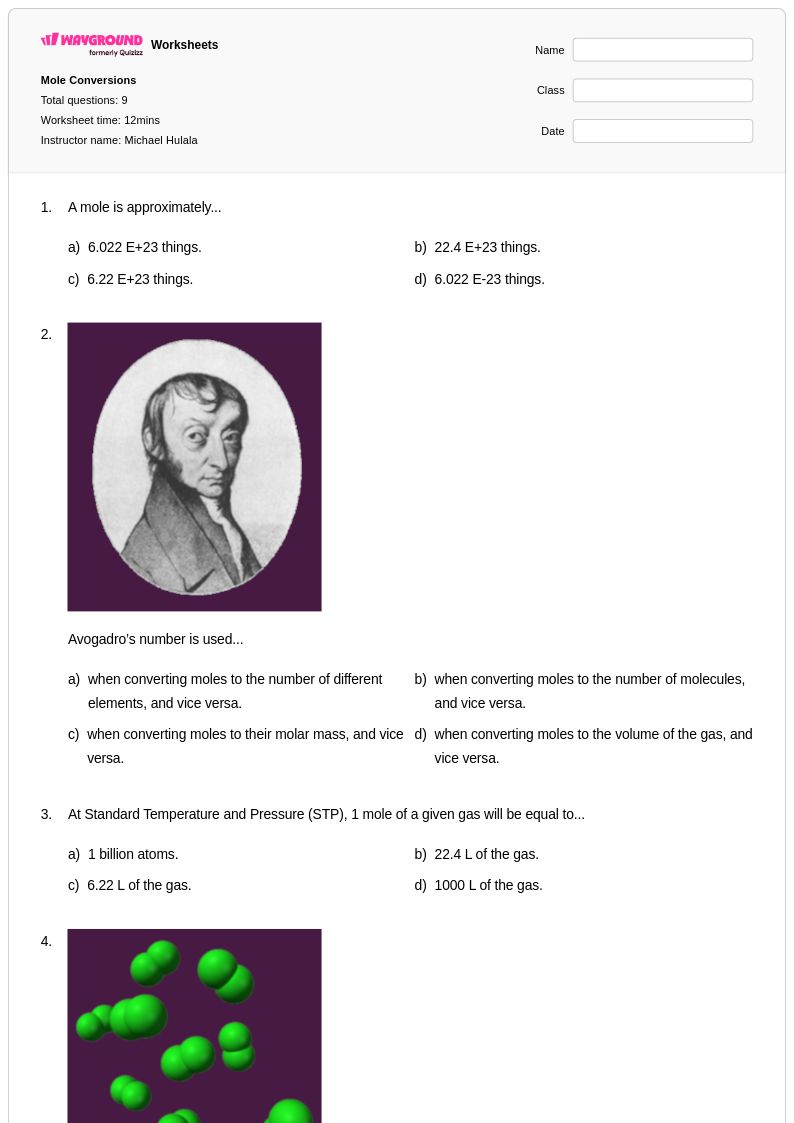
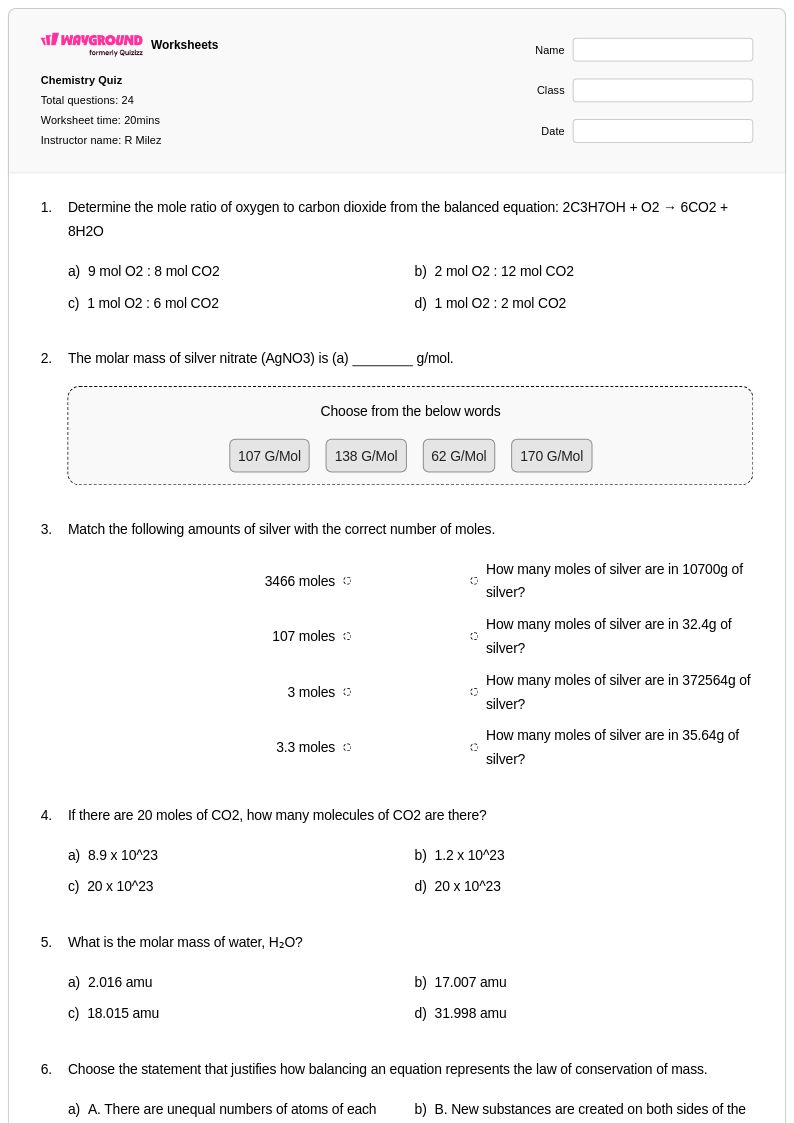
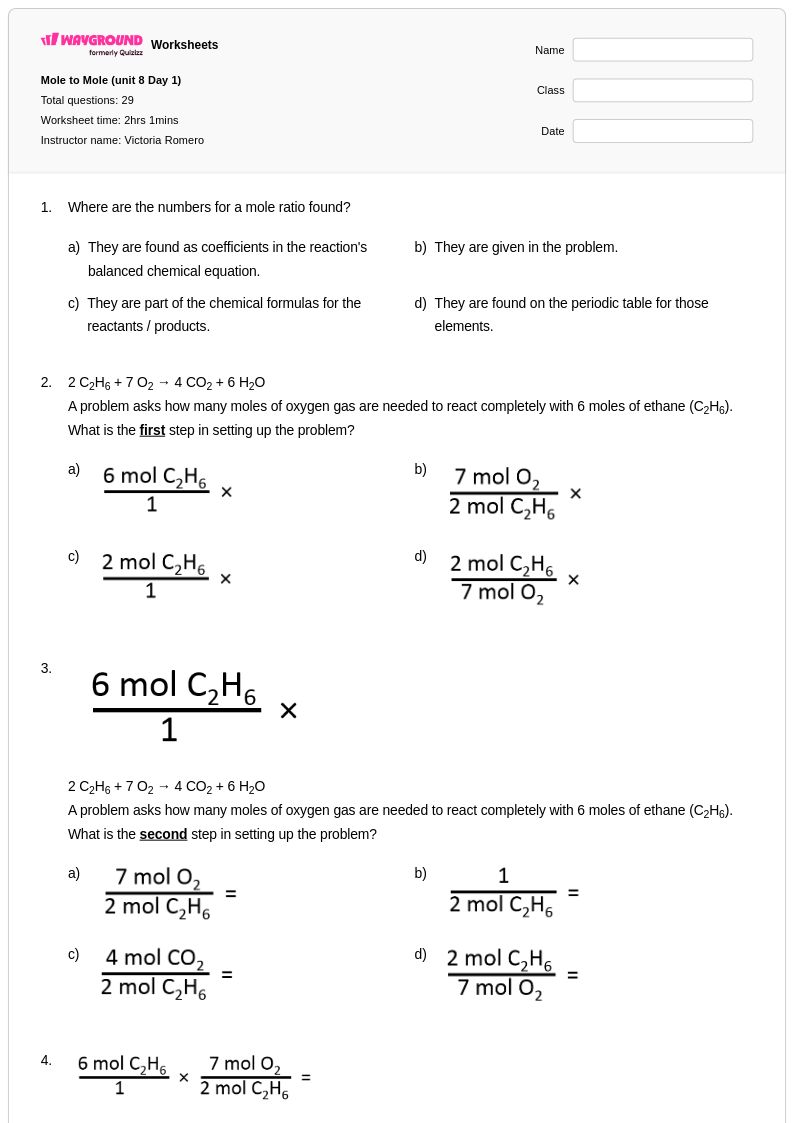
Mole relationships form the cornerstone of quantitative chemistry for Grade 10 students, bridging the gap between atomic-scale concepts and macroscopic measurements that define chemical reactions. Wayground's comprehensive collection of mole relationships worksheets provides students with essential practice in converting between moles, mass, particles, and volume using Avogadro's number and molar mass calculations. These expertly designed resources strengthen critical problem-solving skills including dimensional analysis, stoichiometric calculations, and the interpretation of chemical formulas in quantitative contexts. Students work through carefully scaffolded practice problems that progress from basic mole conversions to complex multi-step calculations, with each worksheet including a detailed answer key to support independent learning and self-assessment. The printable pdf format ensures accessibility for both classroom instruction and homework assignments, while free access removes barriers to high-quality chemistry education.
Wayground's platform, formerly Quizizz, empowers chemistry educators with millions of teacher-created resources specifically designed to address the challenging concepts inherent in mole relationships instruction. The robust search and filtering system allows teachers to quickly locate worksheets that align with specific learning standards and match their students' current skill levels, whether they need foundational practice with Avogadro's number or advanced stoichiometry applications. Differentiation tools enable educators to customize content for diverse learning needs, supporting both remediation for struggling students and enrichment opportunities for advanced learners. The flexible availability of resources in both printable and digital formats, including downloadable pdf versions, streamlines lesson planning and provides seamless integration with existing curriculum materials. These comprehensive features transform mole relationships instruction from abstract mathematical exercises into engaging, standards-aligned practice that builds confidence in quantitative chemistry skills.
FAQs
How do I teach mole relationships to chemistry students?
Start by grounding students in Avogadro's number and molar mass before introducing conversions between moles, mass, molecules, and atoms. Use dimensional analysis as the consistent framework for all mole calculations, so students apply the same problem-solving structure whether they're converting grams to moles or molecules to moles. Scaffolding practice from single-step to multi-step problems helps students build computational confidence before tackling stoichiometry and limiting reactants.
What practice exercises help students get better at mole conversion calculations?
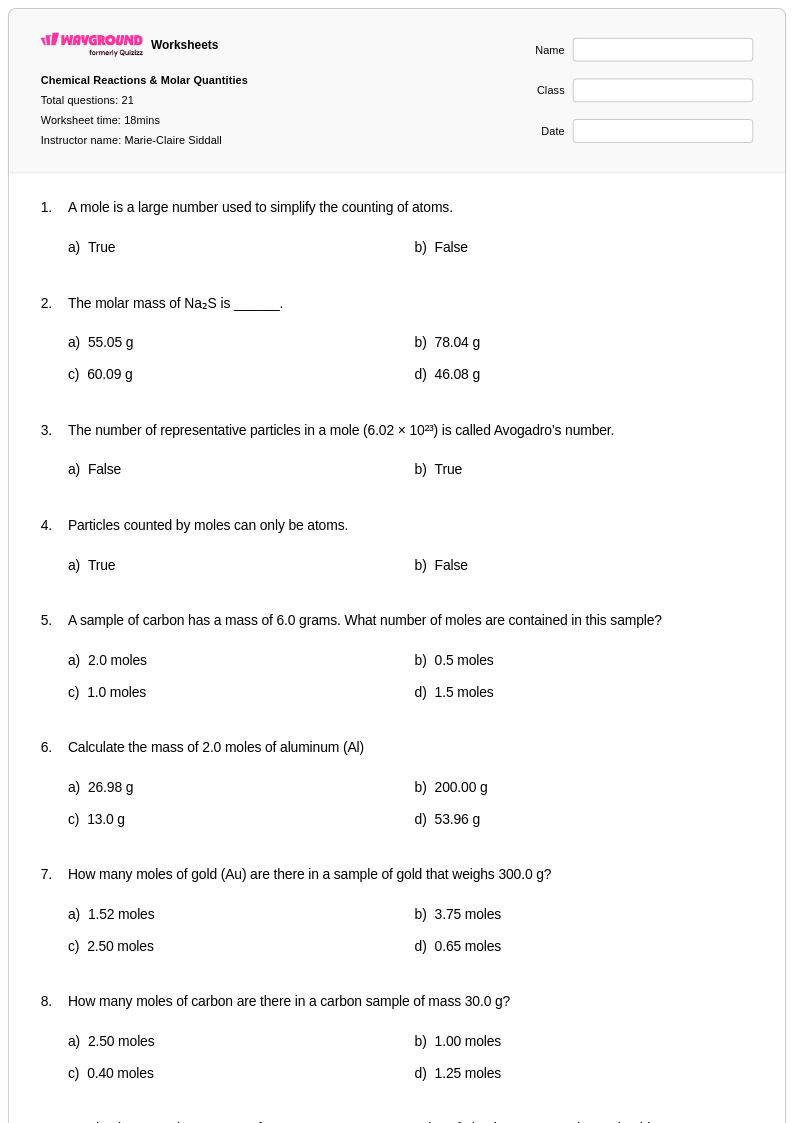
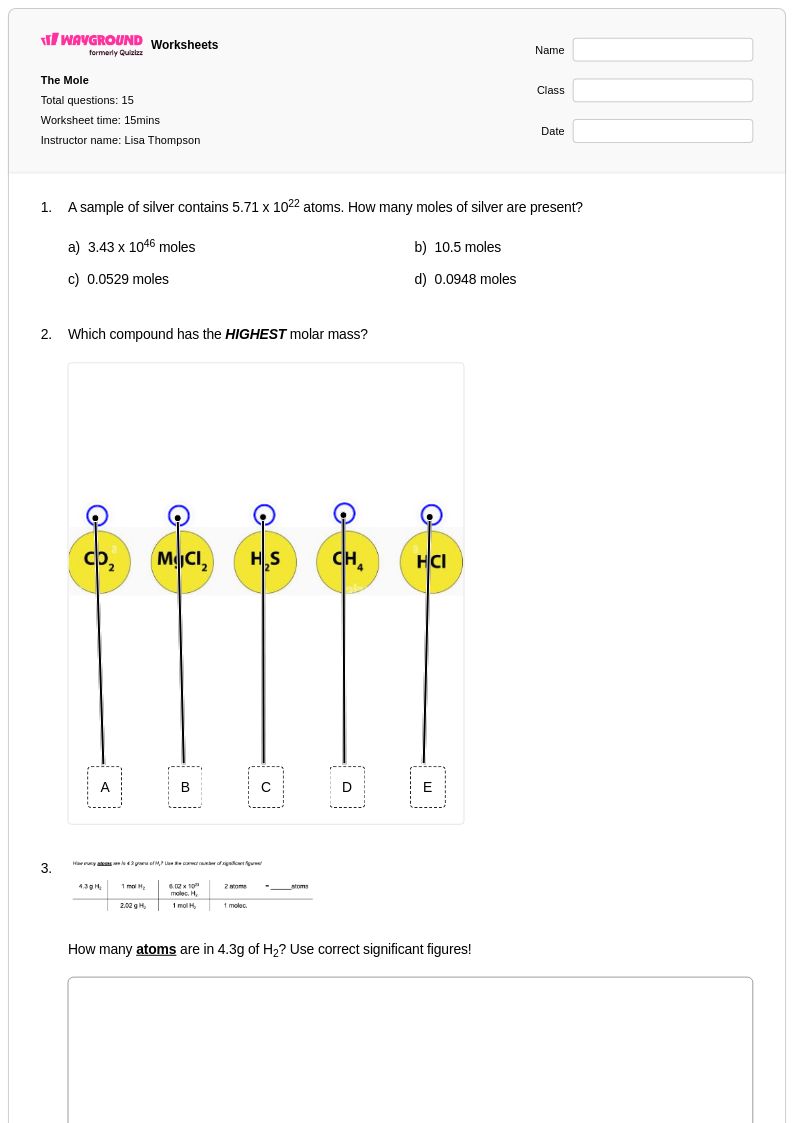
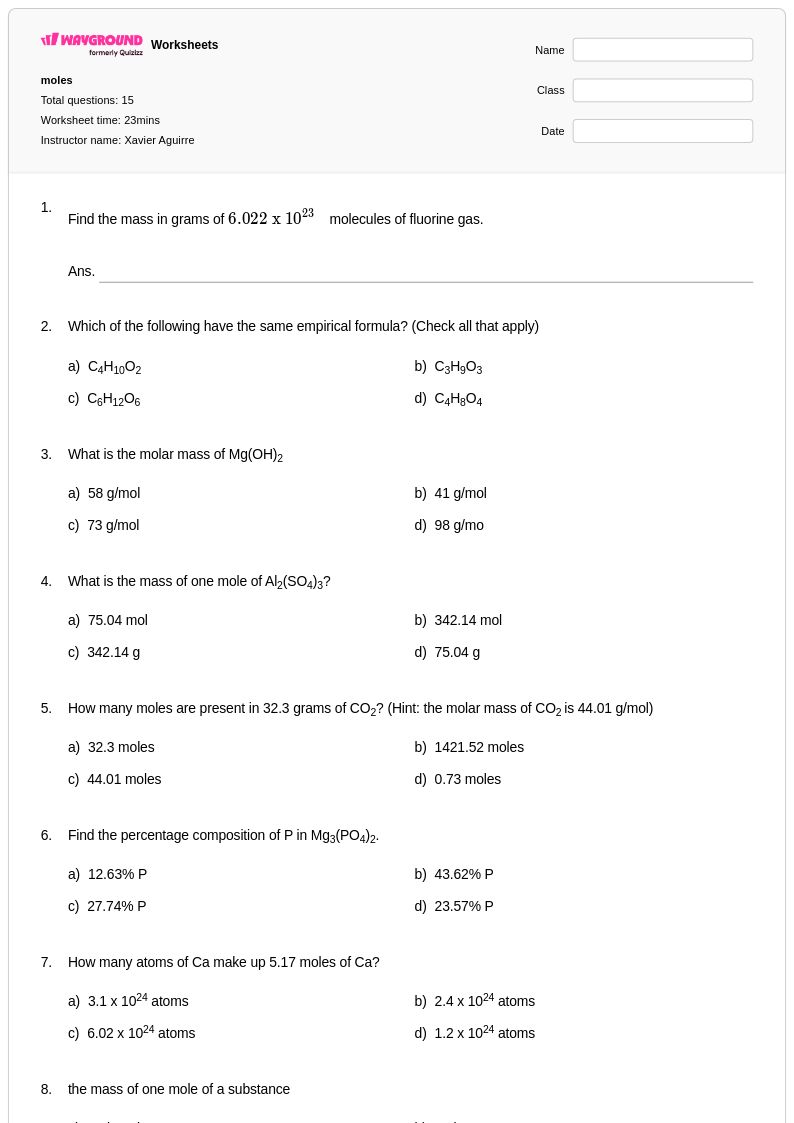
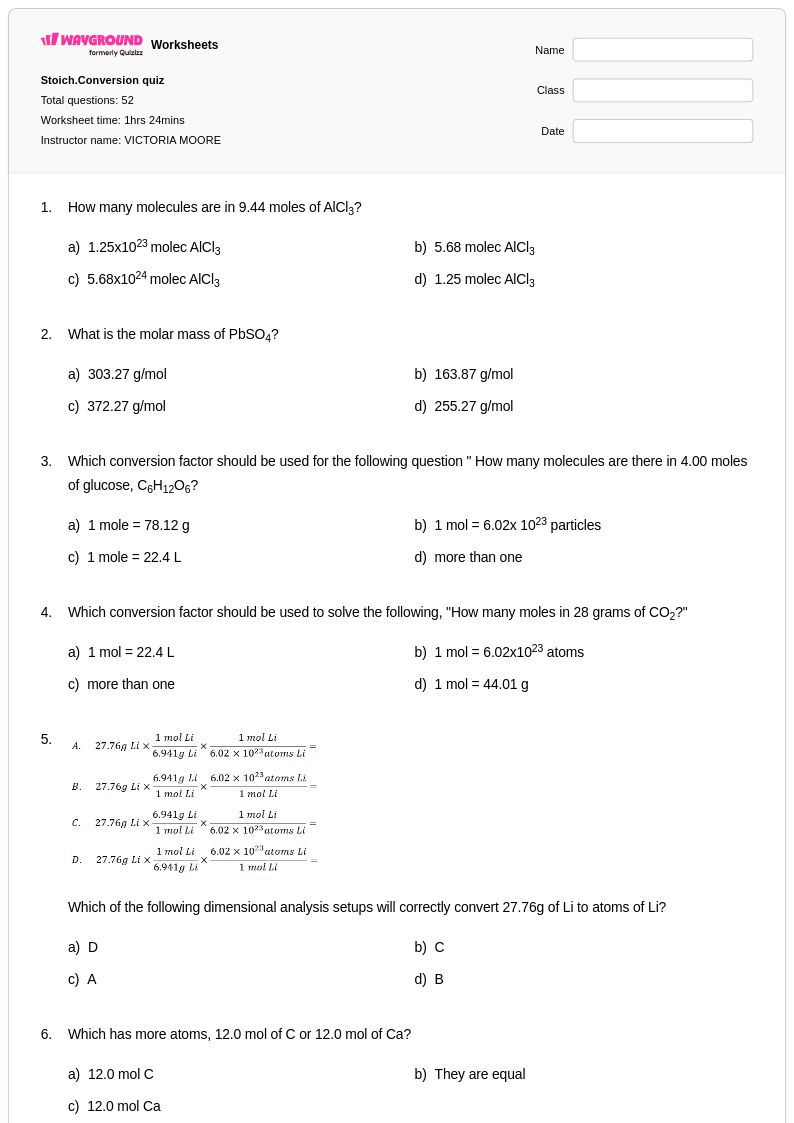
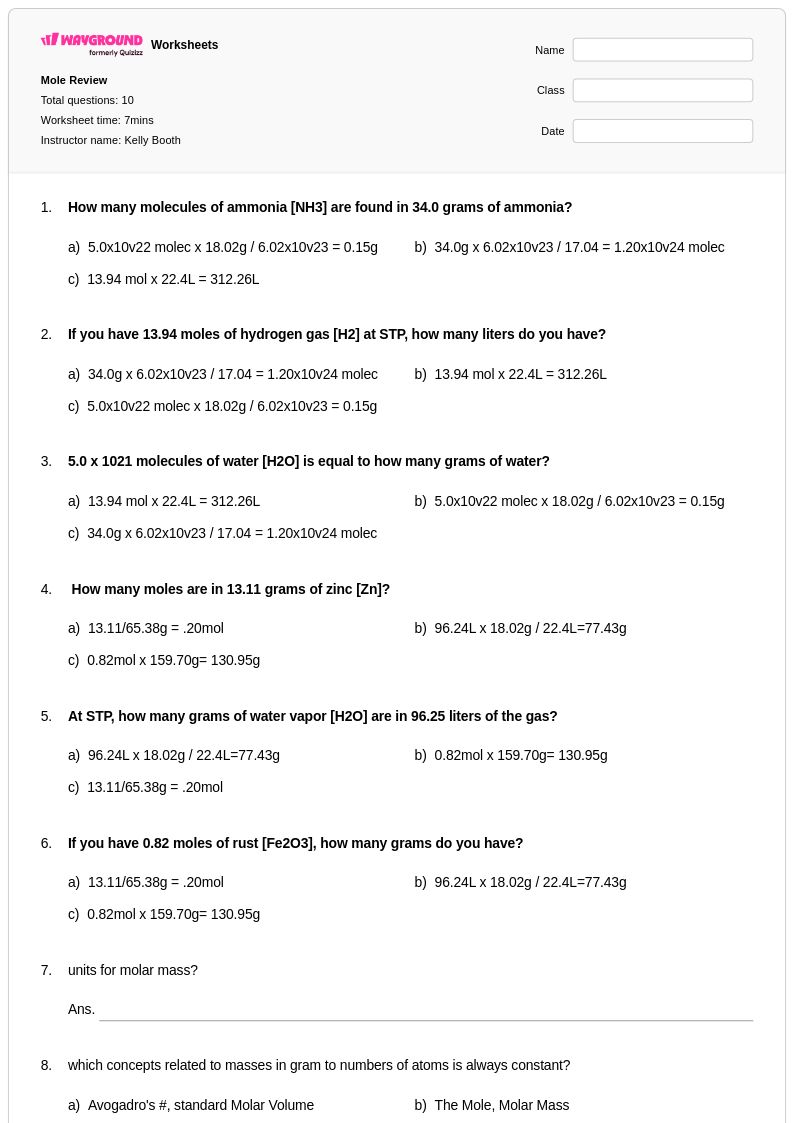
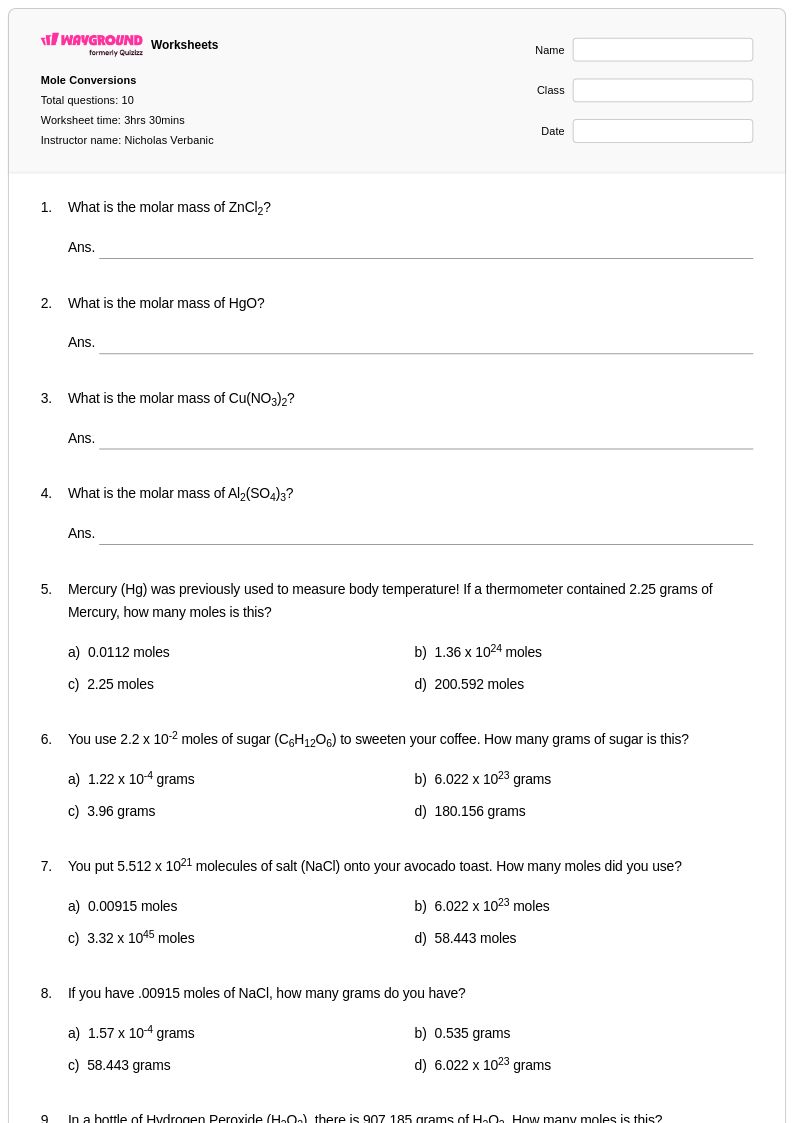
Mole conversion exercises should cover the full range of interconversions: moles to mass, mass to moles, moles to molecules, and molecules to atoms. Dimensional analysis problems that require students to show each conversion factor explicitly are especially effective because they make errors easier to identify and correct. Progressing from single-step conversions to multi-step stoichiometric problems ensures students develop both procedural fluency and conceptual understanding.
What mistakes do students commonly make with mole relationship problems?
The most common error is inverting conversion factors, particularly when moving between moles and grams or moles and molecules. Students also frequently confuse molar mass values by using atomic mass for a compound without summing all atoms in the formula. A third common misconception is treating Avogadro's number as a variable rather than a fixed constant, which leads to errors in molecule-to-atom conversions.
How do students typically struggle with empirical versus molecular formulas?
Students often conflate empirical and molecular formulas, not recognizing that a molecular formula is a whole-number multiple of the empirical formula. A common error is calculating the empirical formula correctly but then stopping there when the problem asks for the molecular formula, requiring the additional step of using the molar mass ratio. Reinforcing the distinction through paired practice problems that ask for both formulas from the same data set helps students internalize the relationship.
How can I use mole relationships worksheets from Wayground in my chemistry class?
Wayground's mole relationships worksheets are available as printable PDFs for traditional classroom use and in digital formats for technology-integrated environments, including the option to host them as a quiz directly on Wayground. Teachers can use them for targeted remediation of challenging stoichiometry concepts, as enrichment activities for advanced learners, or as consistent skill-building practice across molar mass, Avogadro's number, and limiting reactants. Wayground also supports student-level accommodations such as extended time, read aloud, and reduced answer choices, making it straightforward to differentiate for diverse learners without disrupting the rest of the class.
How do I help students who struggle with dimensional analysis in stoichiometry?
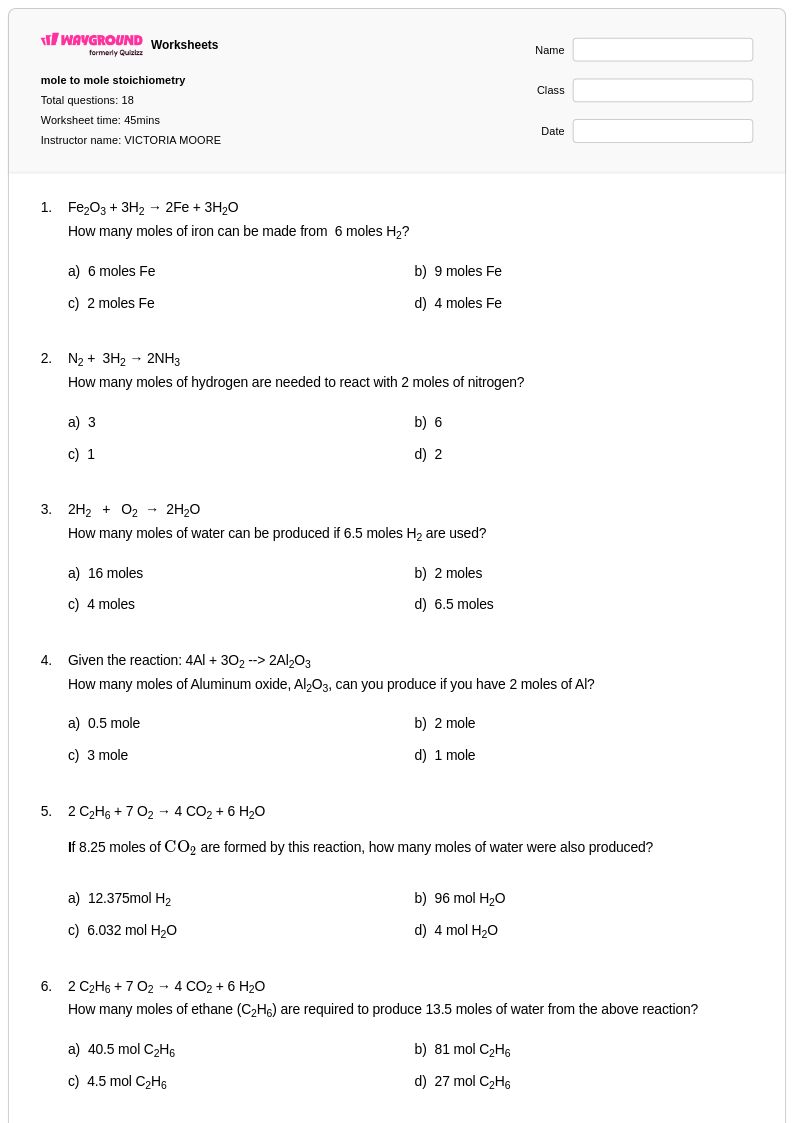
Students who struggle with dimensional analysis often benefit from a consistent, visible template: write what you're given, identify what you need, and chain conversion factors so units cancel systematically. Requiring students to write out every unit in each step, rather than jumping to numerical answers, surfaces unit errors before they compound across multi-step problems. Starting with single-unit conversions and only introducing stoichiometric ratios once the method is secure prevents cognitive overload.