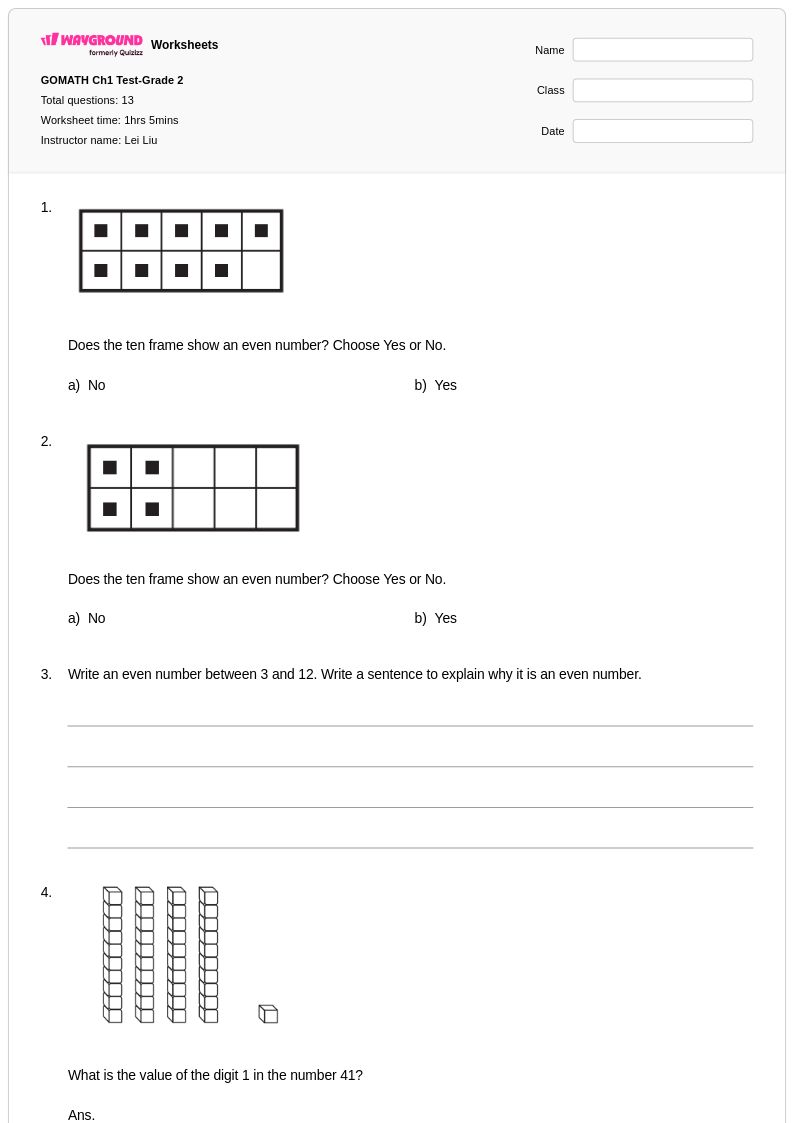
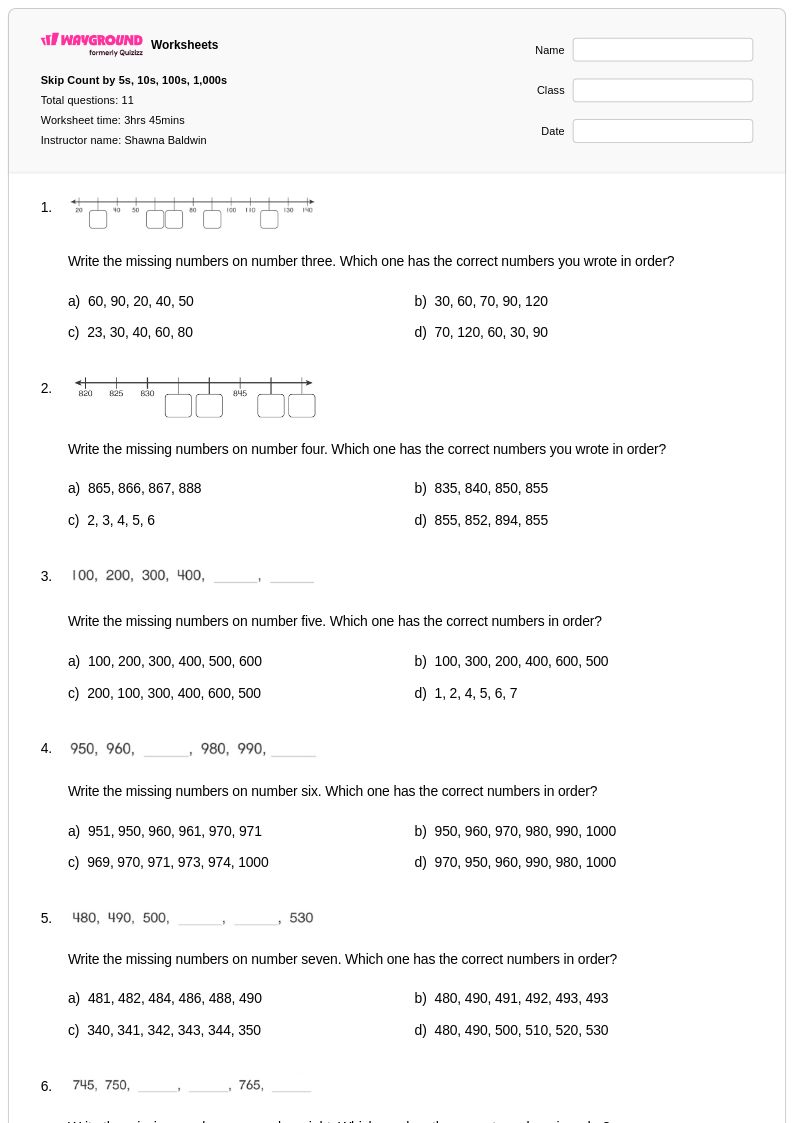
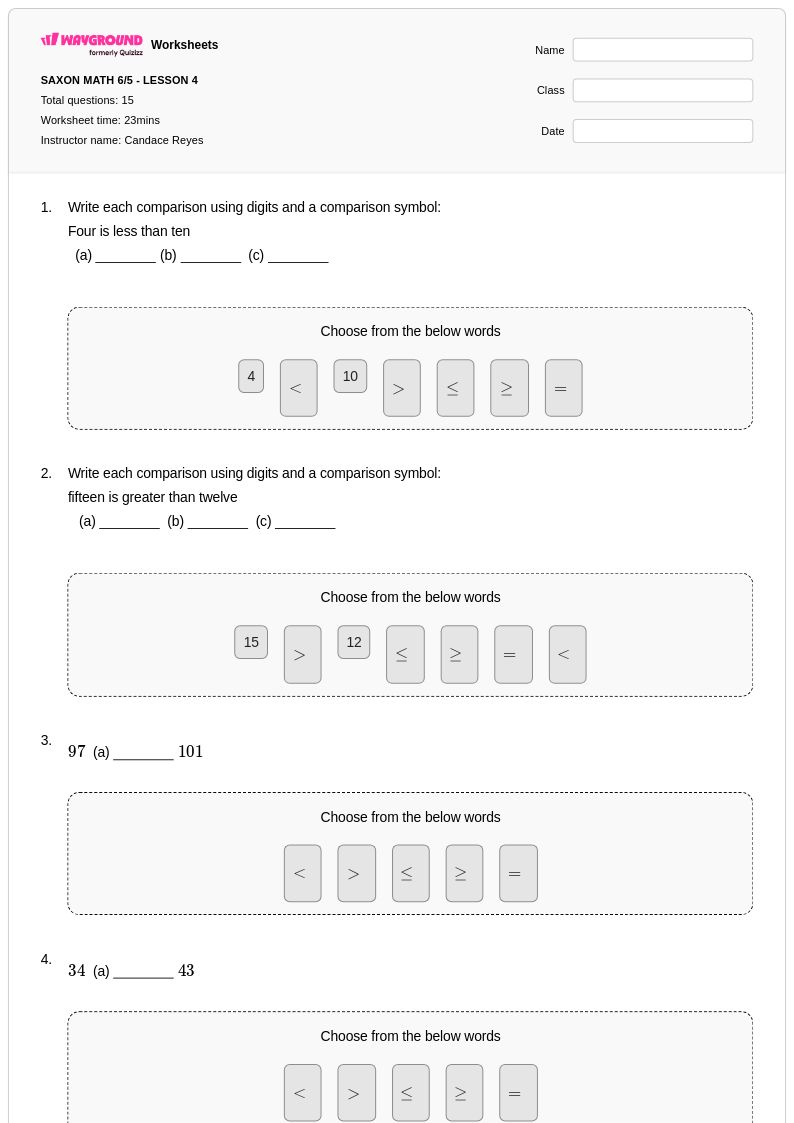
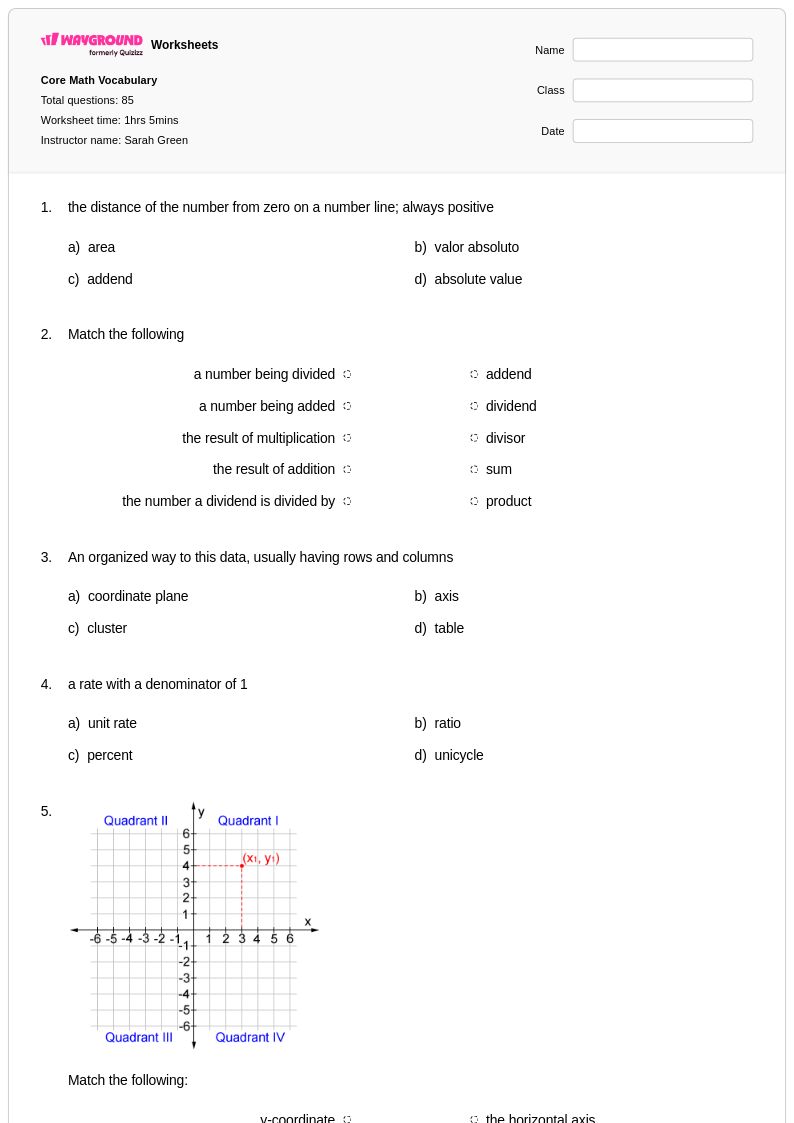
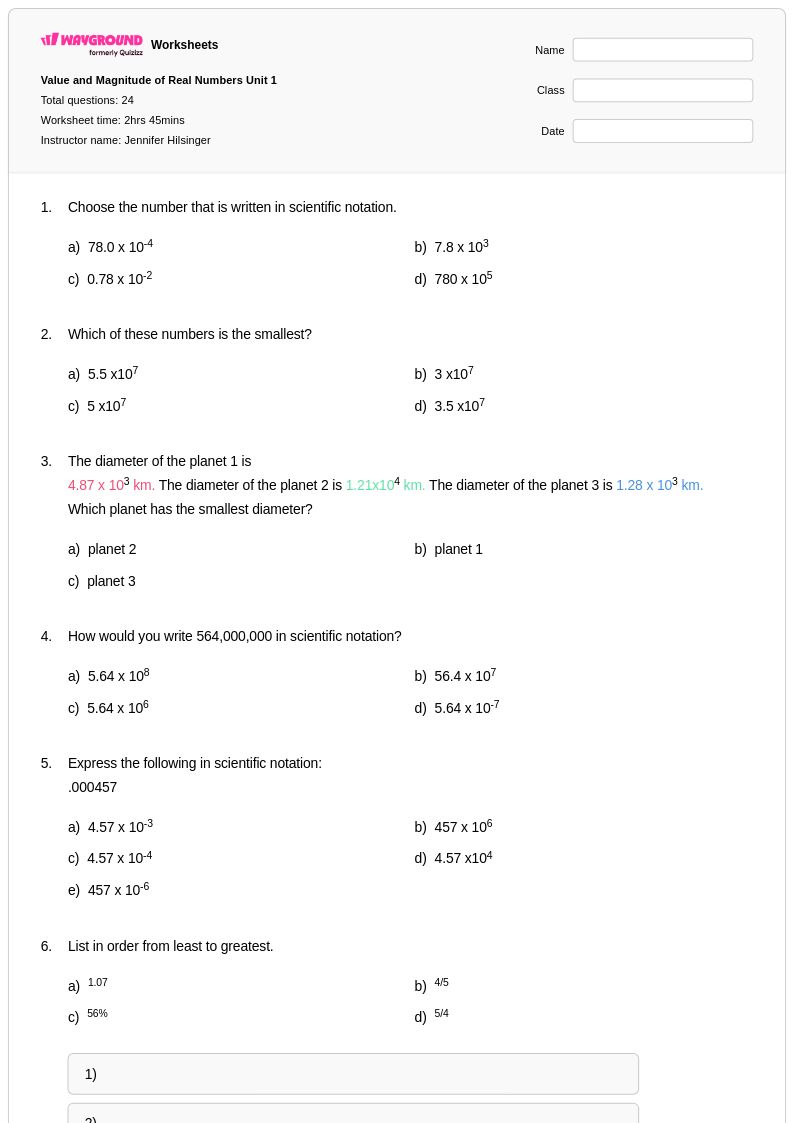
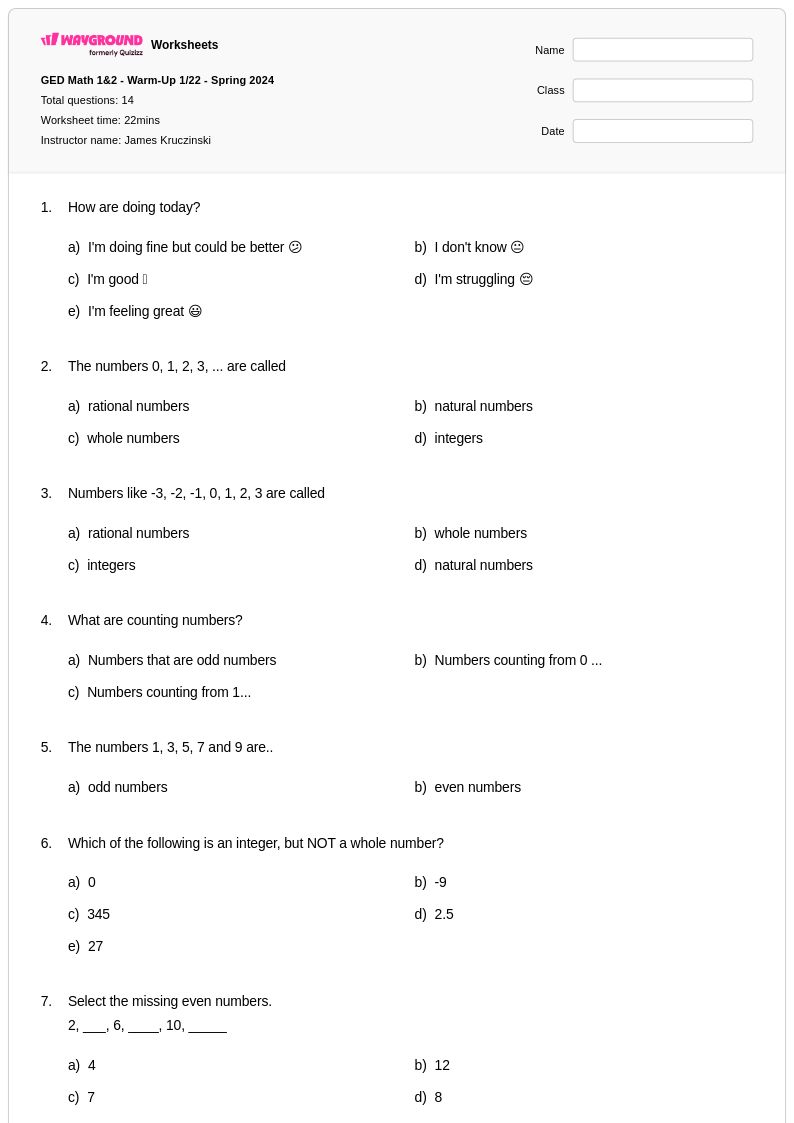
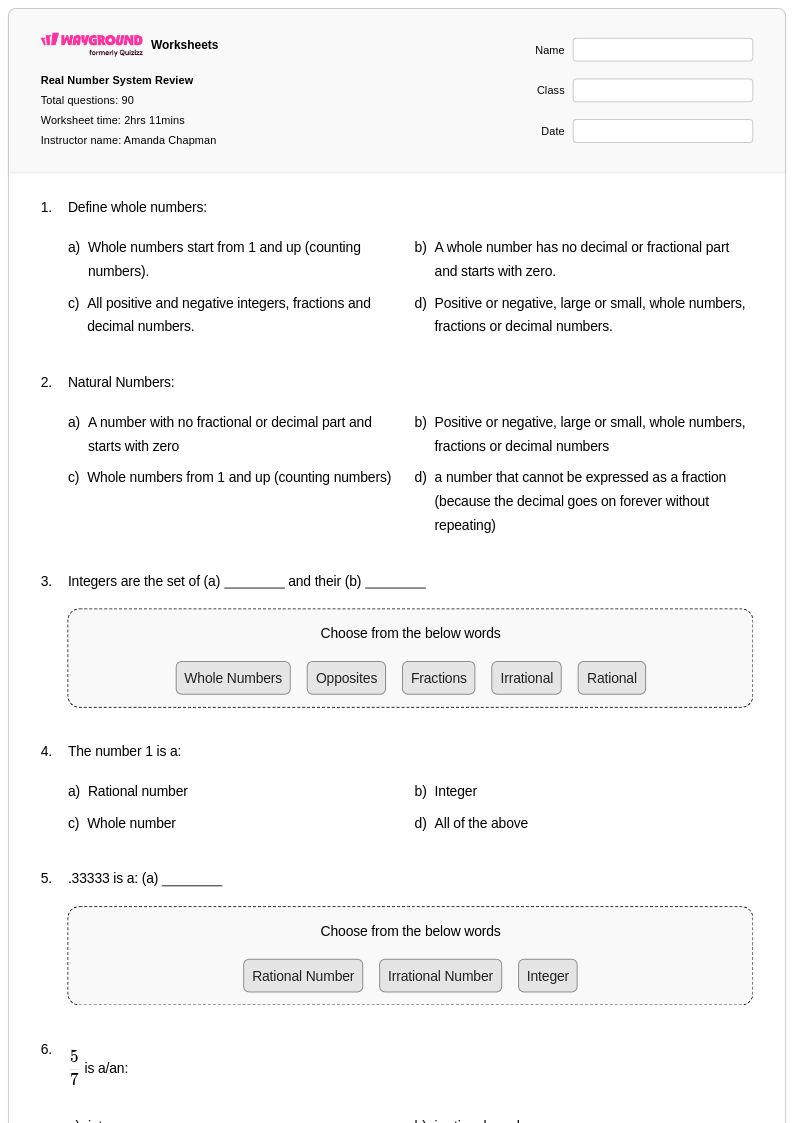
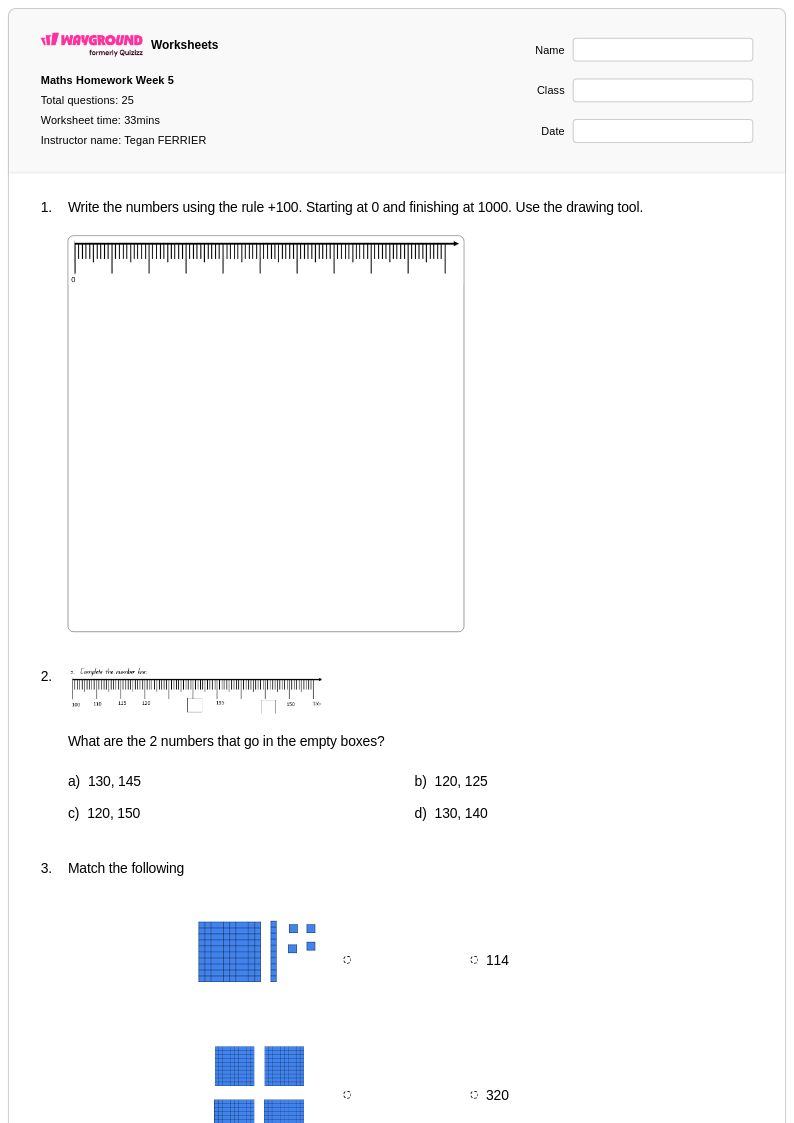
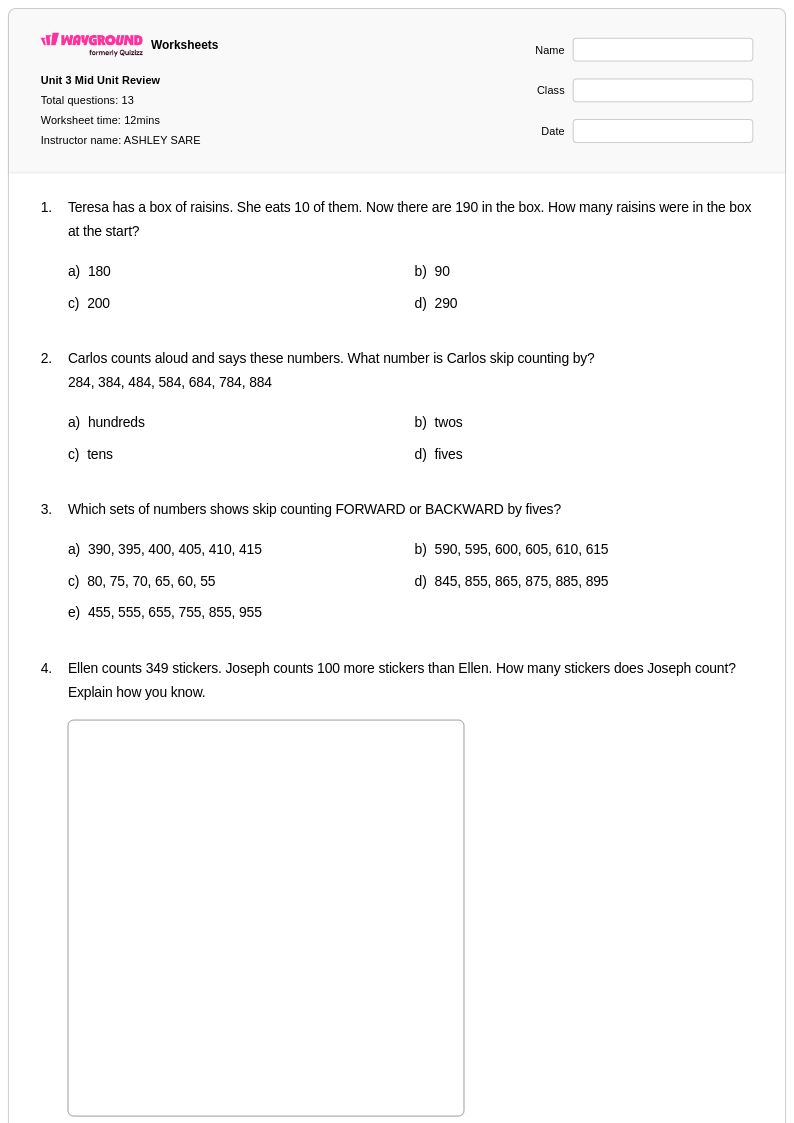
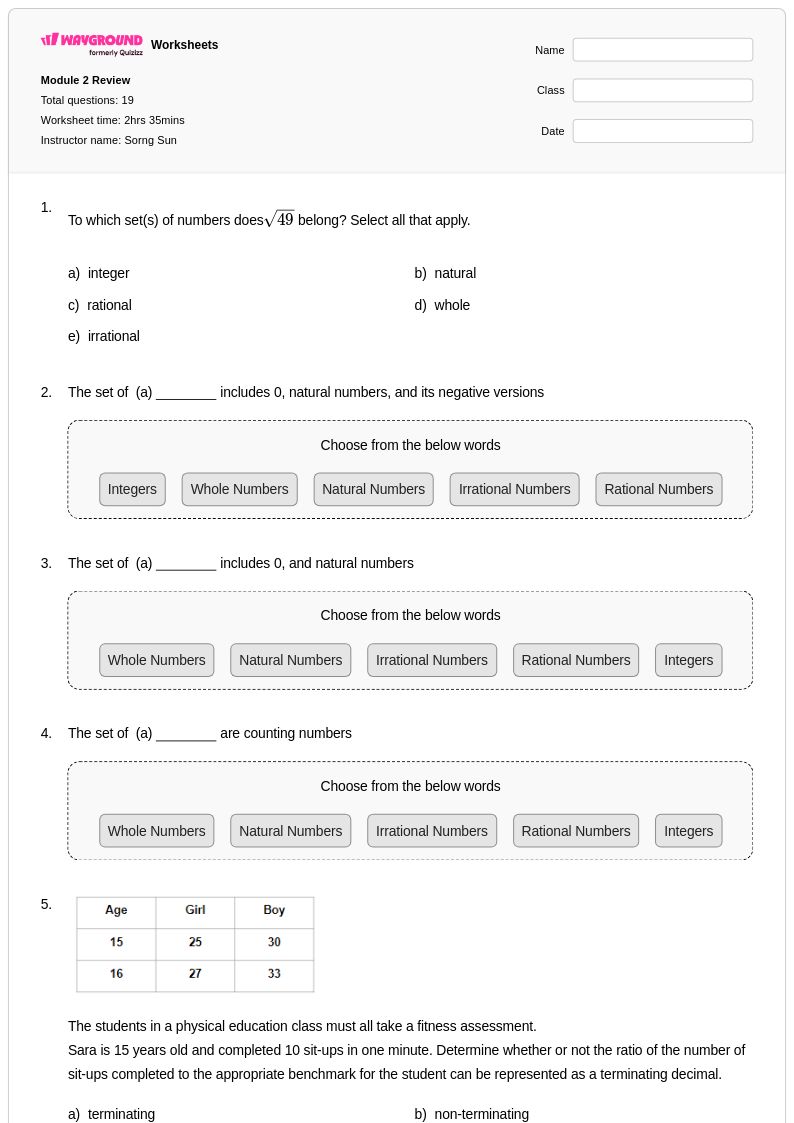
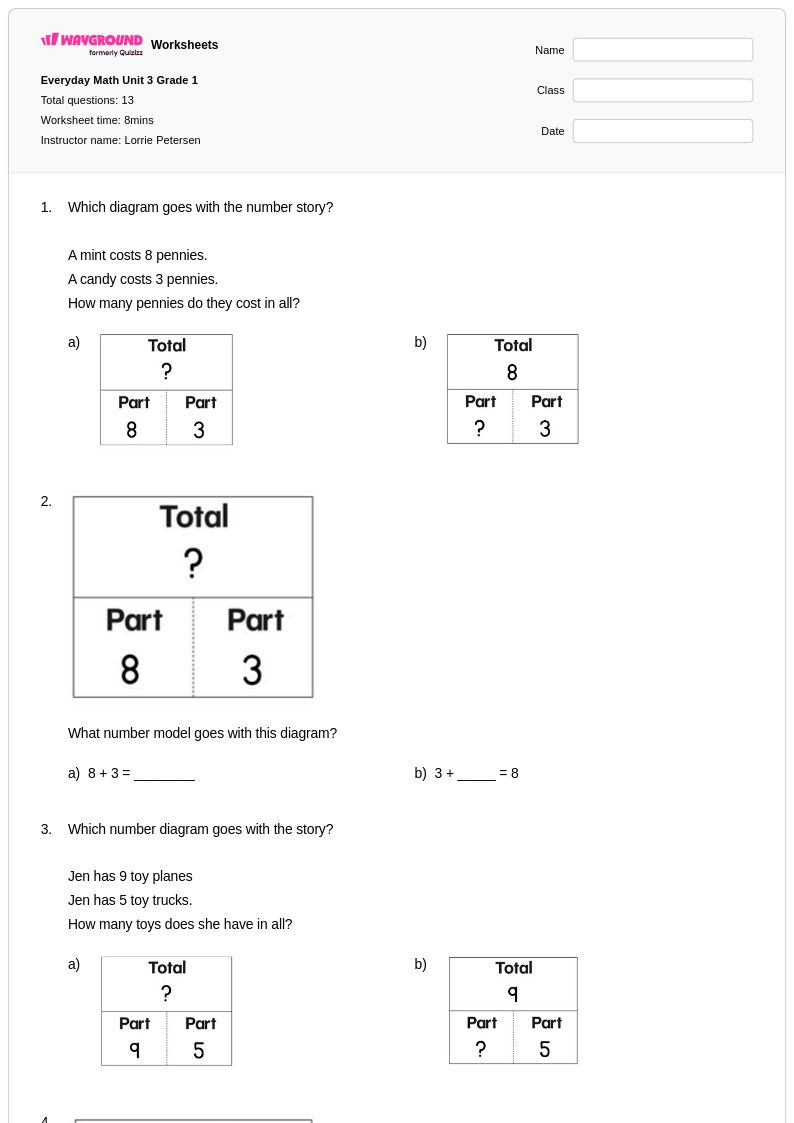
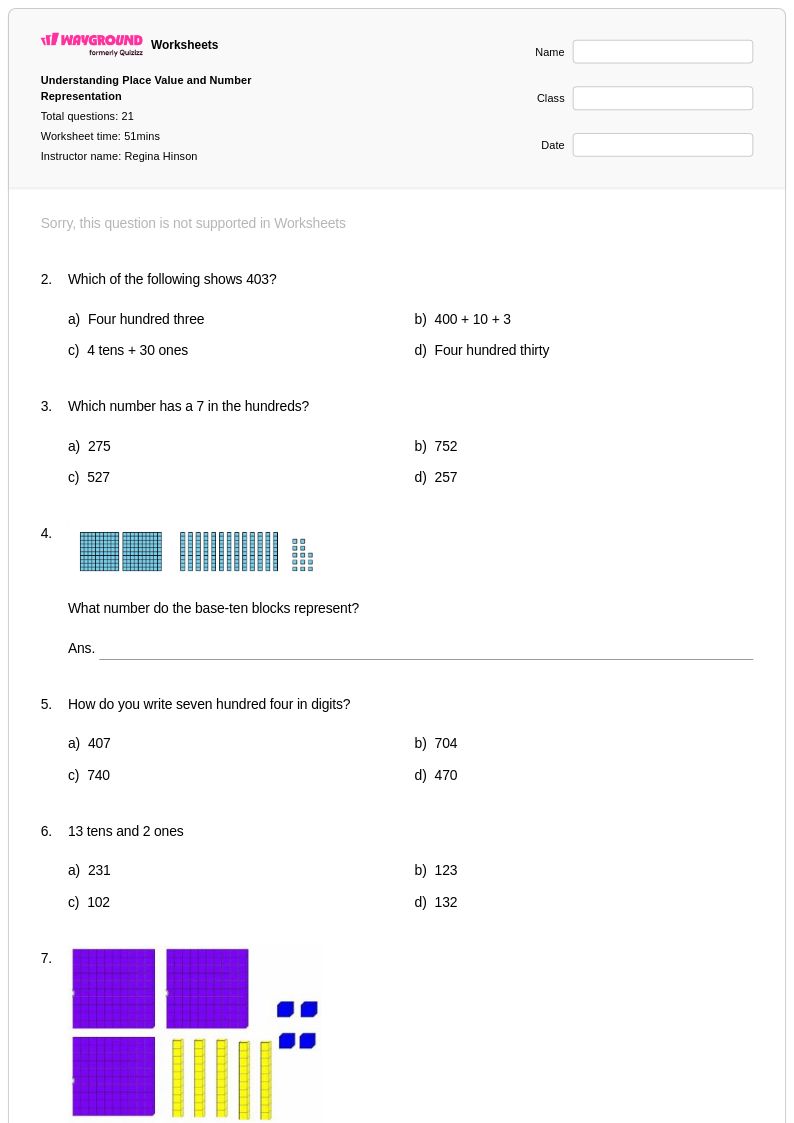
Explore Wayground's free counting numbers 1-10 worksheets and printables that help students master number recognition, sequence, and basic counting skills through engaging practice problems with comprehensive answer keys.
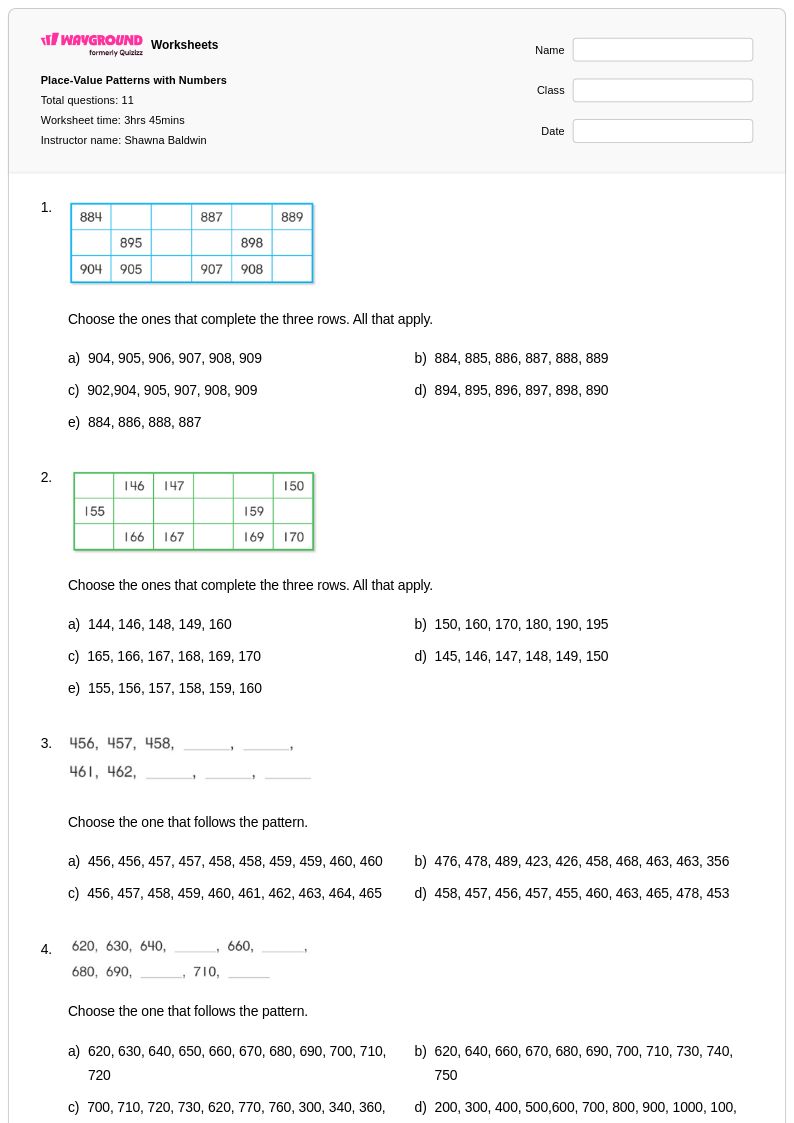
Counting Numbers 1-10 worksheets available through Wayground (formerly Quizizz) provide essential foundational practice for young learners developing their earliest mathematical skills. These comprehensive printables focus on helping students recognize, write, and sequence numbers from one through ten, building the critical number sense that underlies all future mathematical learning. Each worksheet collection includes varied practice problems that engage students through counting exercises, number tracing activities, and sequencing challenges, with complete answer keys provided to support both independent learning and guided instruction. The free pdf resources strengthen core competencies including one-to-one correspondence, number recognition, and basic counting principles that form the bedrock of mathematical understanding.
Wayground (formerly Quizizz) empowers educators with millions of teacher-created Counting Numbers 1-10 worksheet resources that streamline lesson planning and support differentiated instruction across diverse learning needs. The platform's robust search and filtering capabilities allow teachers to quickly locate standards-aligned materials appropriate for their specific classroom requirements, while flexible customization tools enable educators to modify existing worksheets or create personalized versions tailored to individual student goals. Available in both printable and digital formats including downloadable pdf options, these worksheet collections facilitate seamless integration into daily instruction, homework assignments, remediation sessions, and enrichment activities, ensuring that every student receives targeted practice opportunities to master fundamental counting skills at their own pace.
FAQs
How do I teach students to count numbers 1–10?
Begin with concrete objects so students touch or move one item for each number they say, reinforcing one-to-one correspondence. Then connect each quantity to its spoken number, written numeral, and position in the 1–10 sequence before moving to tracing and independent counting.
What exercises help students practice counting from 1 to 10?
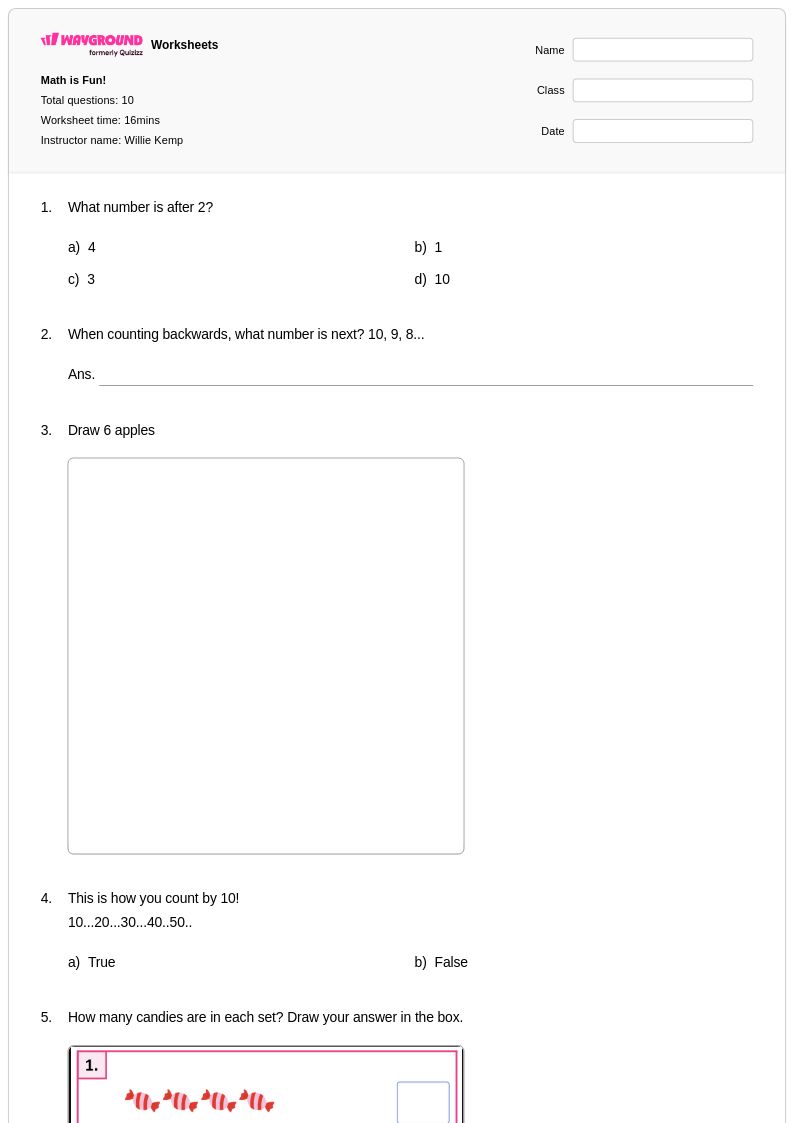
Useful exercises include counting pictured objects, tracing and writing numerals, matching numerals to quantities, filling gaps in number sequences, and ordering numbers from 1 to 10. Mixing these tasks helps students connect number symbols, number words, quantities, and counting order.
What mistakes do students commonly make when counting to 10?
Students may skip or repeat numbers, count an object more than once, or say the correct sequence without understanding that the final number represents the total quantity. Teachers can identify these errors by asking students to point to or move each object as they count and then state how many objects there are altogether.
How can I use a Counting Numbers 1–10 worksheet on Wayground?
Wayground worksheets are available as printable PDFs and digital formats, accommodating different teaching environments and student preferences. Teachers can host a worksheet as a digital quiz or print it for paper-based practice, which can also support efforts to reduce screen time; every worksheet includes a complete answer key. Physical submissions can be scanned or captured and graded with the Wayground for Teachers app.
How does counting from 1 to 10 fit into the Common Core math progression?
Counting from 1 to 10 supports the Common Core progression from reciting number names to counting objects with one-to-one correspondence and understanding that the last number said gives the total quantity. Students also learn to connect quantities with written numerals, preparing them for comparing numbers and working with addition and subtraction.
How can I differentiate counting practice for students with different learning needs?
Teachers can create alternate worksheet versions with wider font spacing, larger text, a dyslexia-friendly font, or another language while keeping the same counting objective. In digital sessions, Wayground also supports reusable student-level settings such as extended time, Read Aloud, reduced answer choices, and reading mode without changing the experience for the rest of the class.