
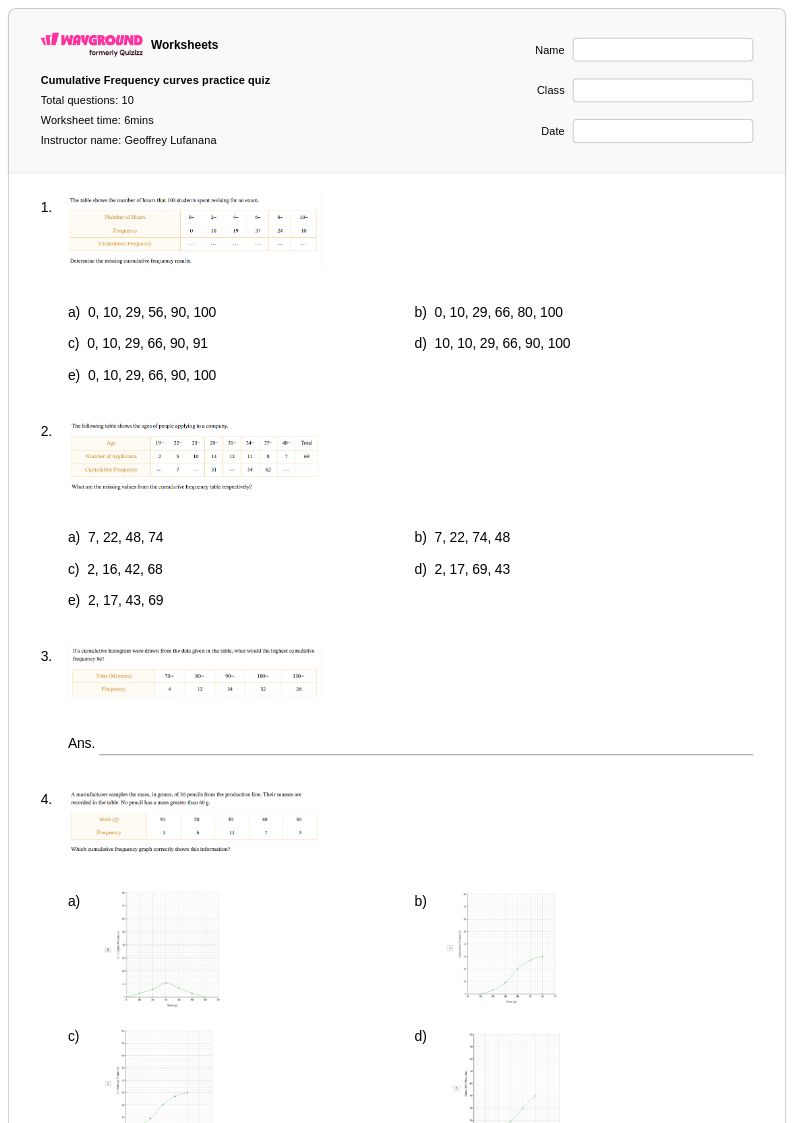
10 Q
10th
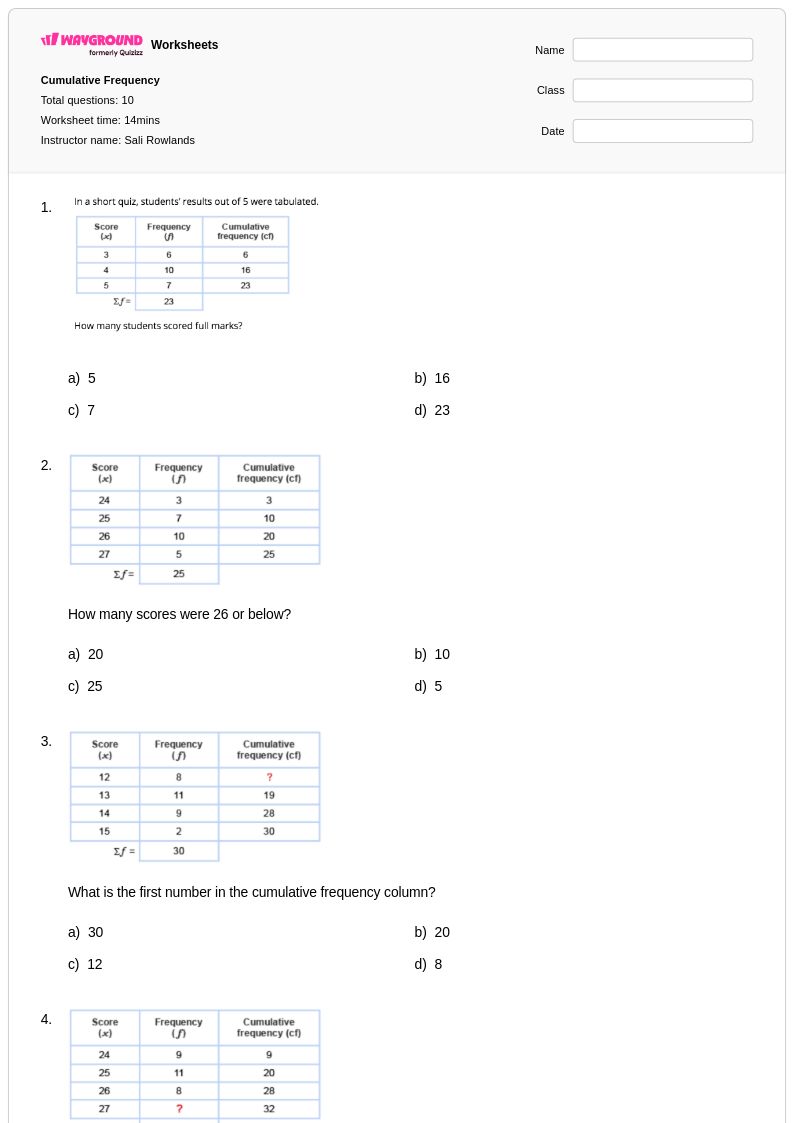
10 Q
10th
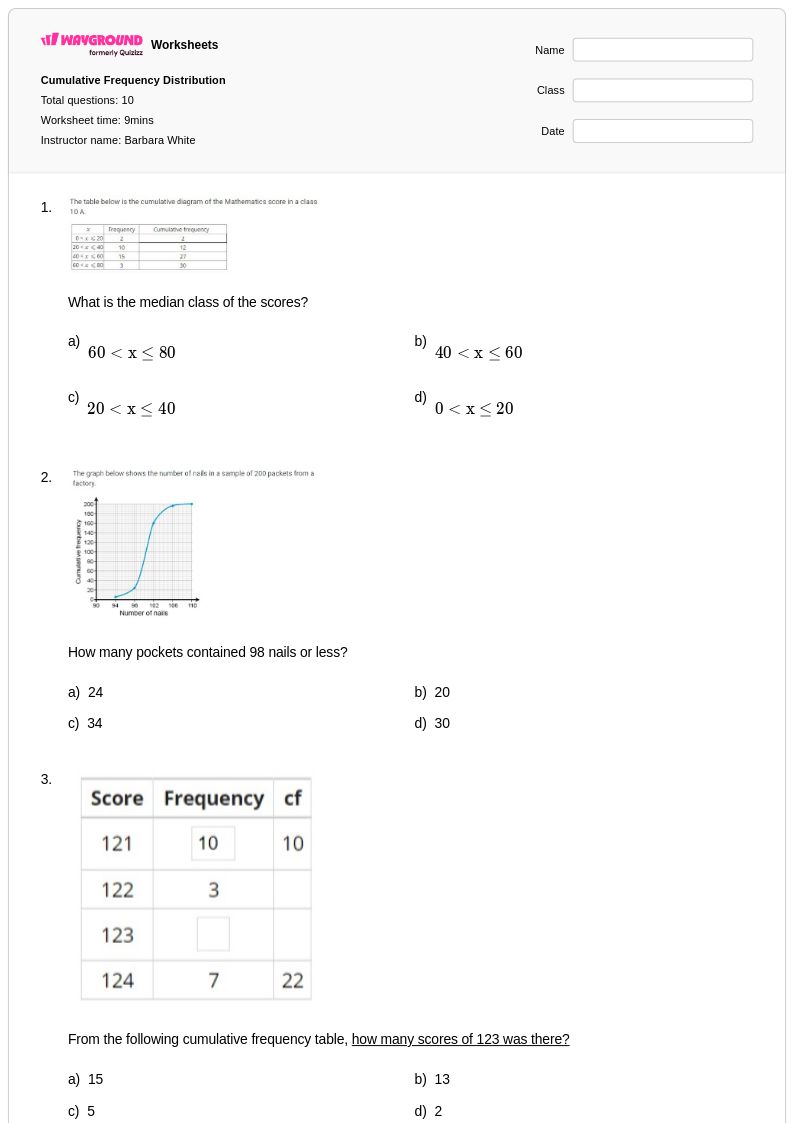
10 Q
10th
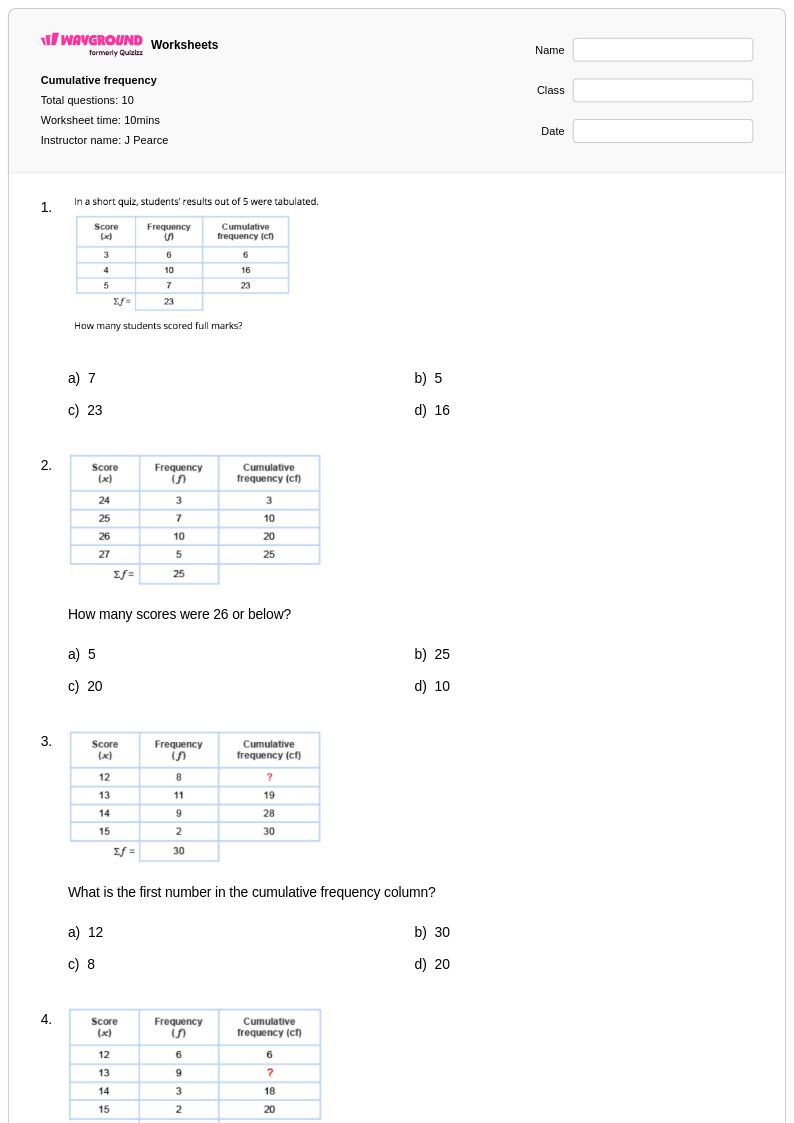
10 Q
8th - 10th
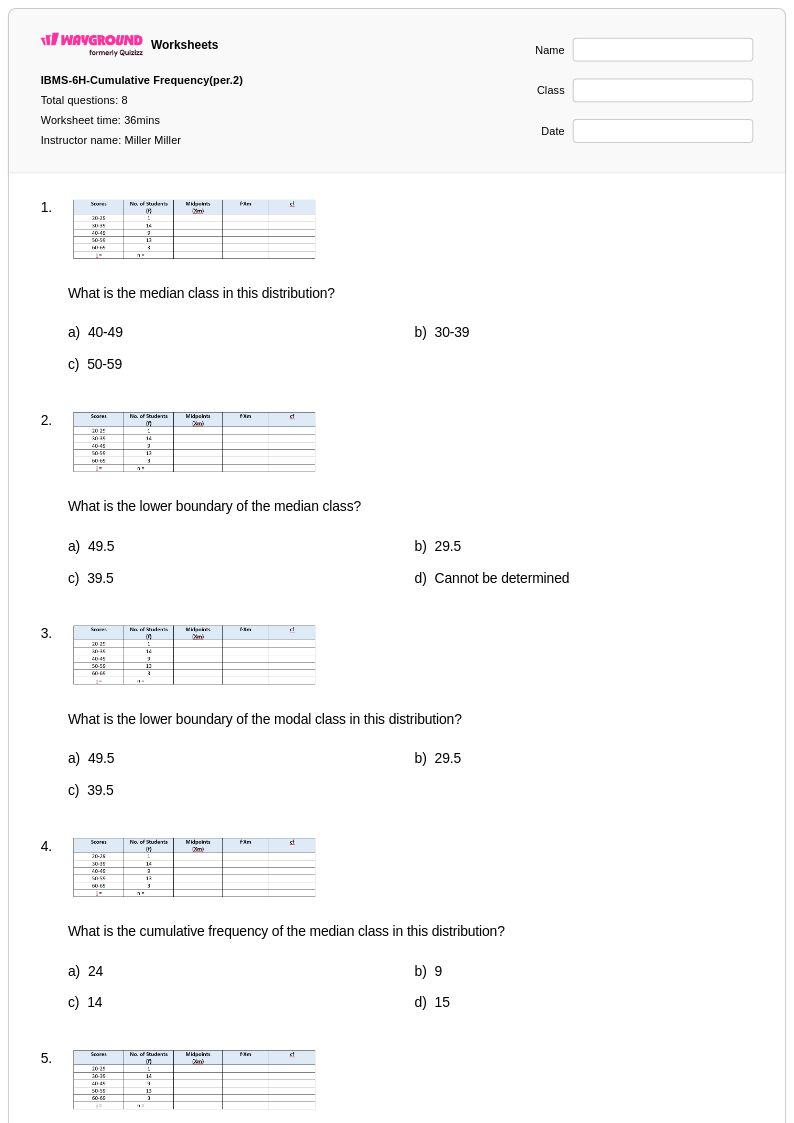
8 Q
9th - 12th
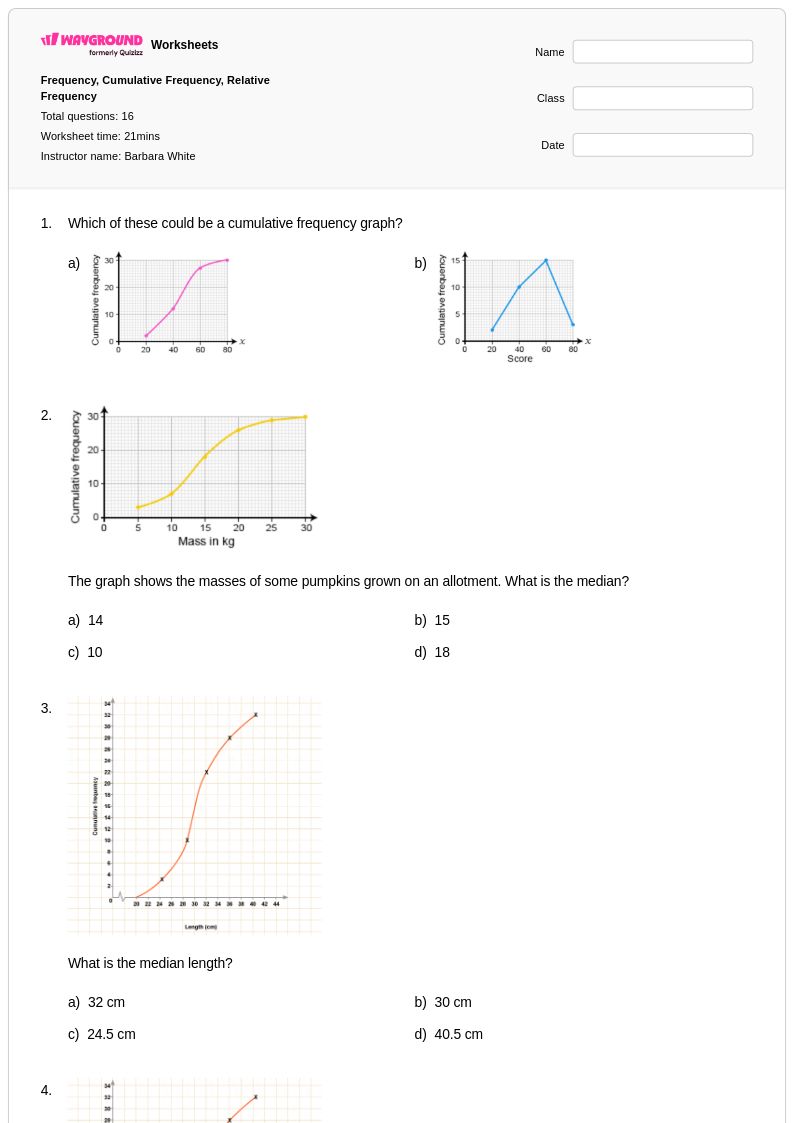
16 Q
10th - 11th
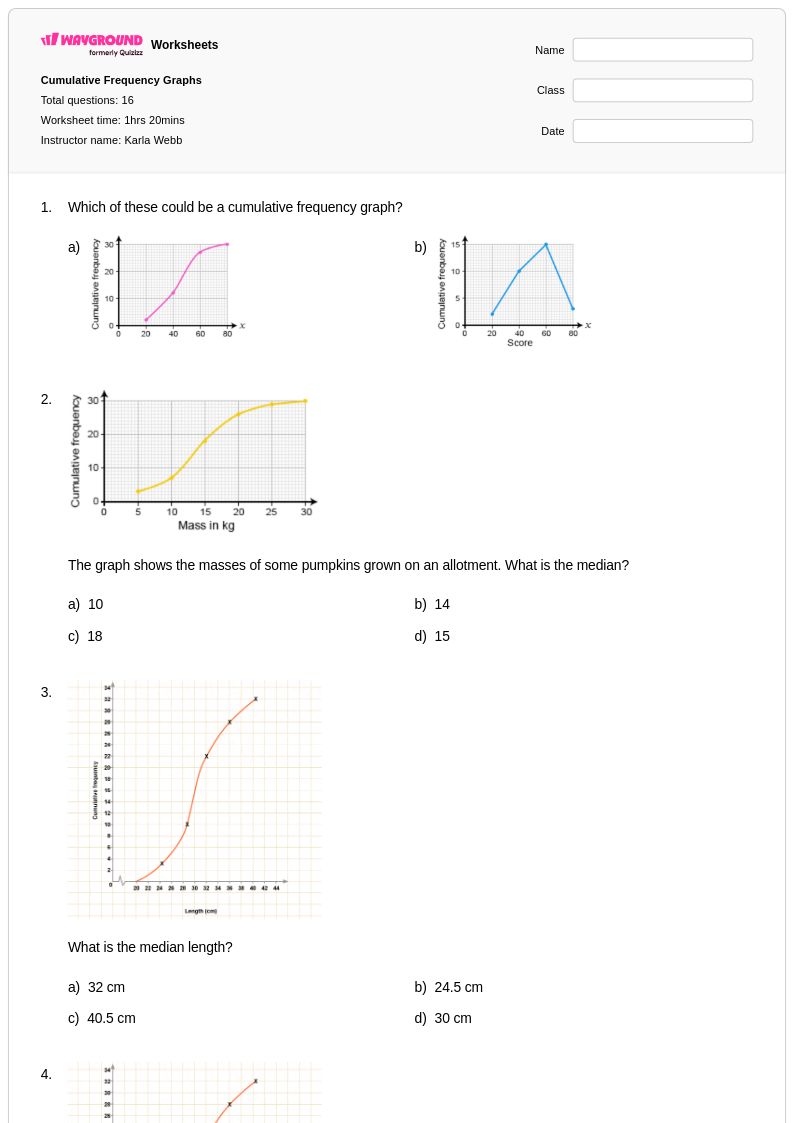
16 Q
10th - 12th
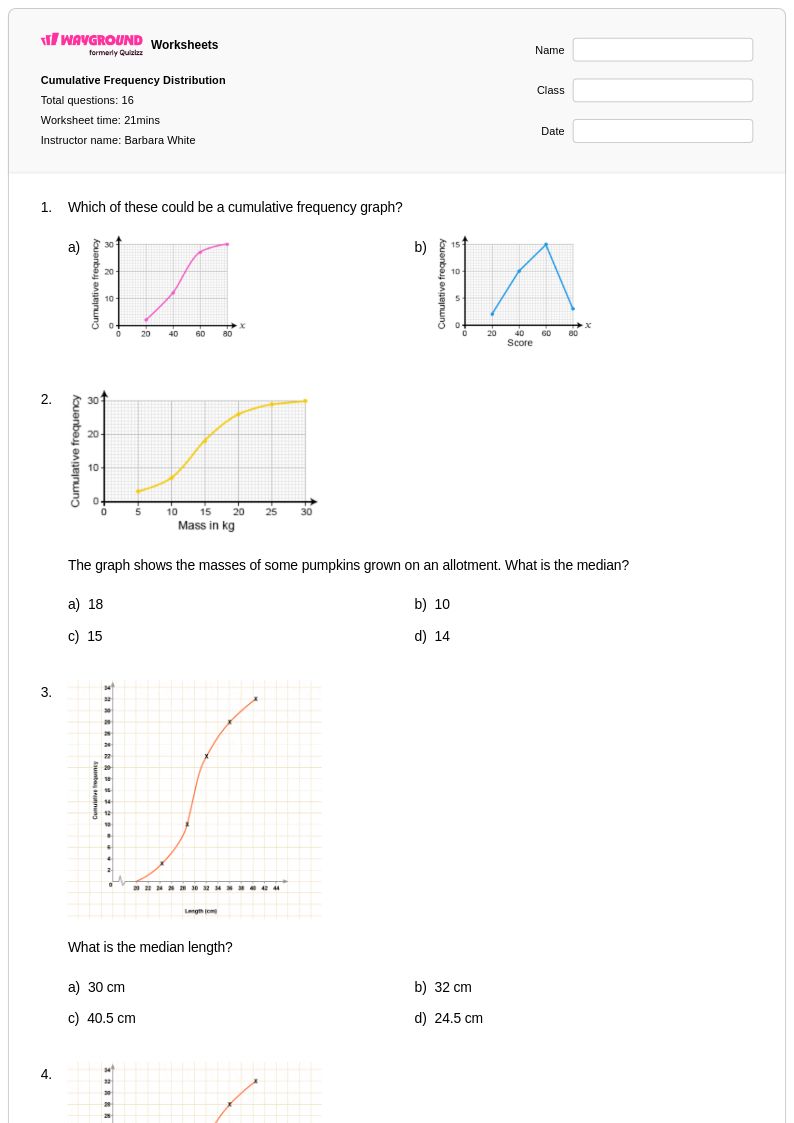
16 Q
10th - 11th
16 Q
10th - 11th
10 Q
10th
20 Q
6th - 10th
20 Q
10th
20 Q
10th
70 Q
10th
15 Q
10th - 11th
25 Q
10th
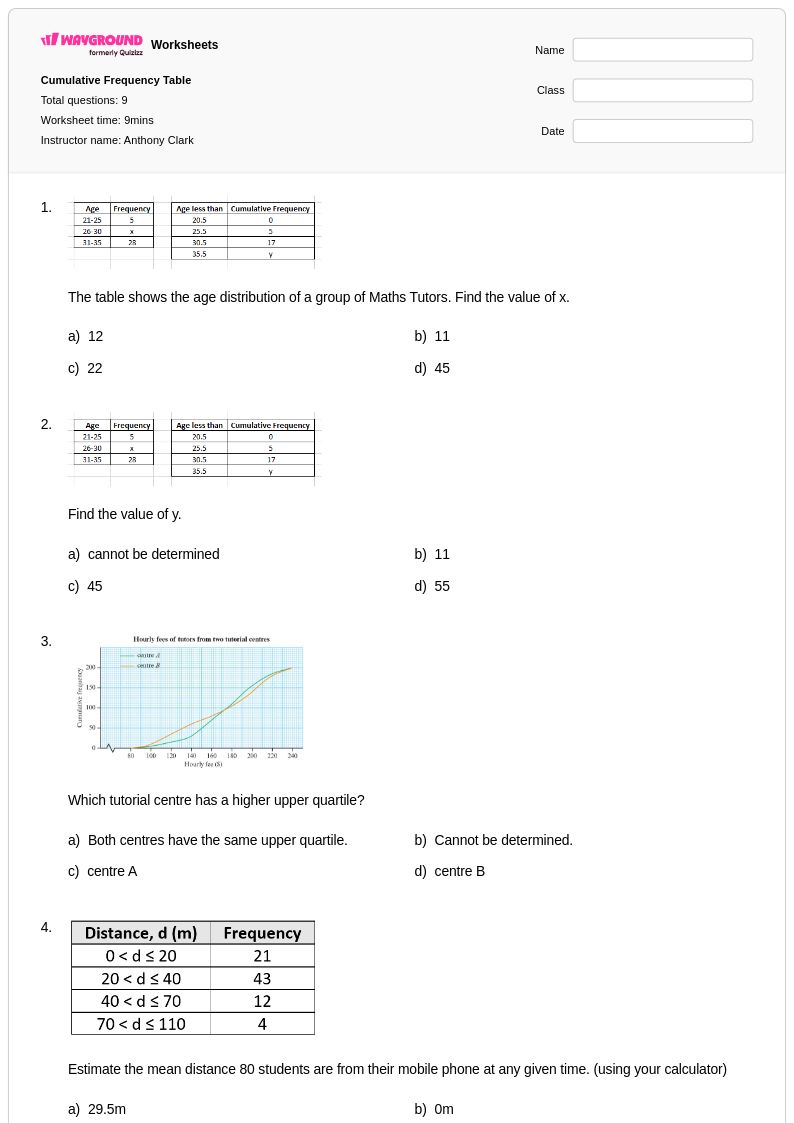
9 Q
10th - Uni
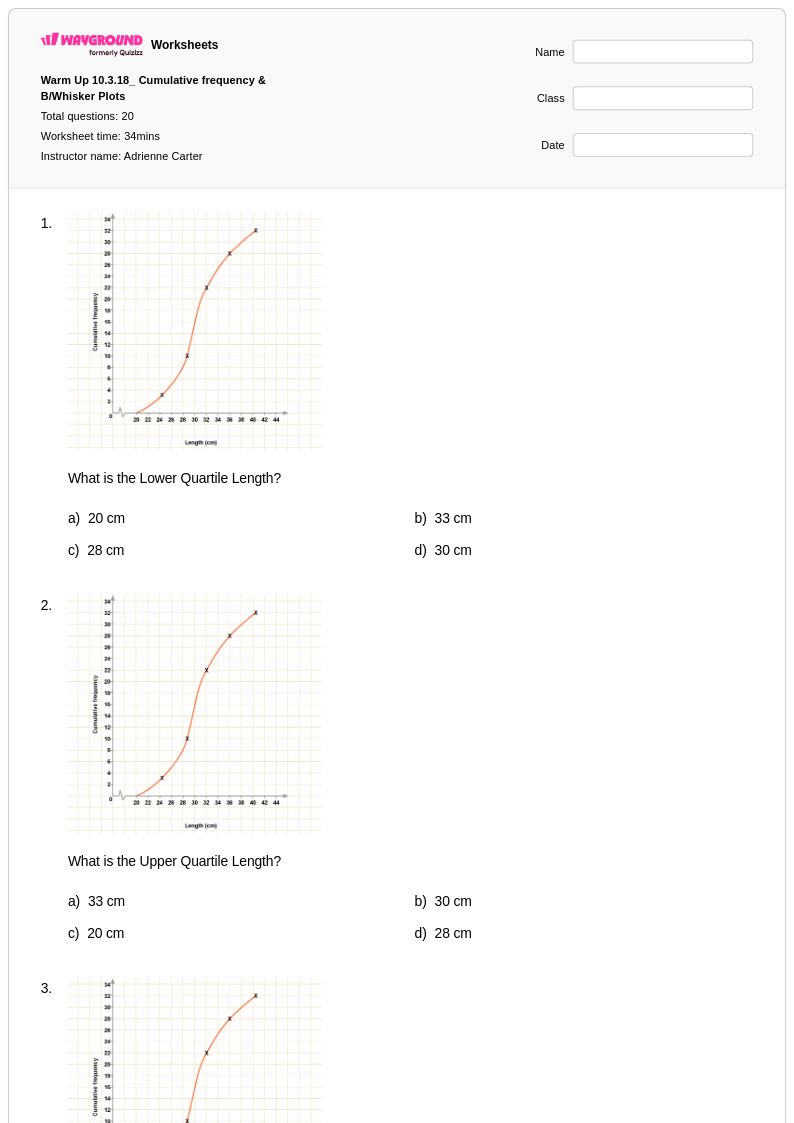
20 Q
8th - 12th
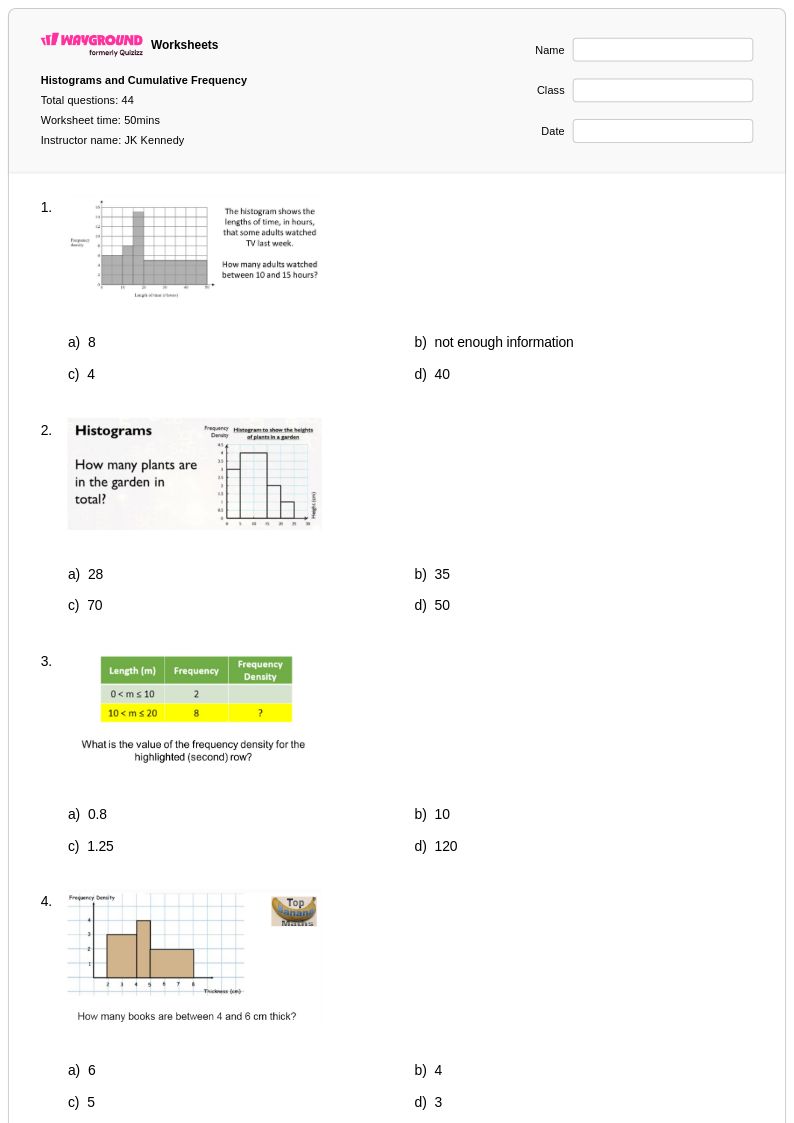
44 Q
10th
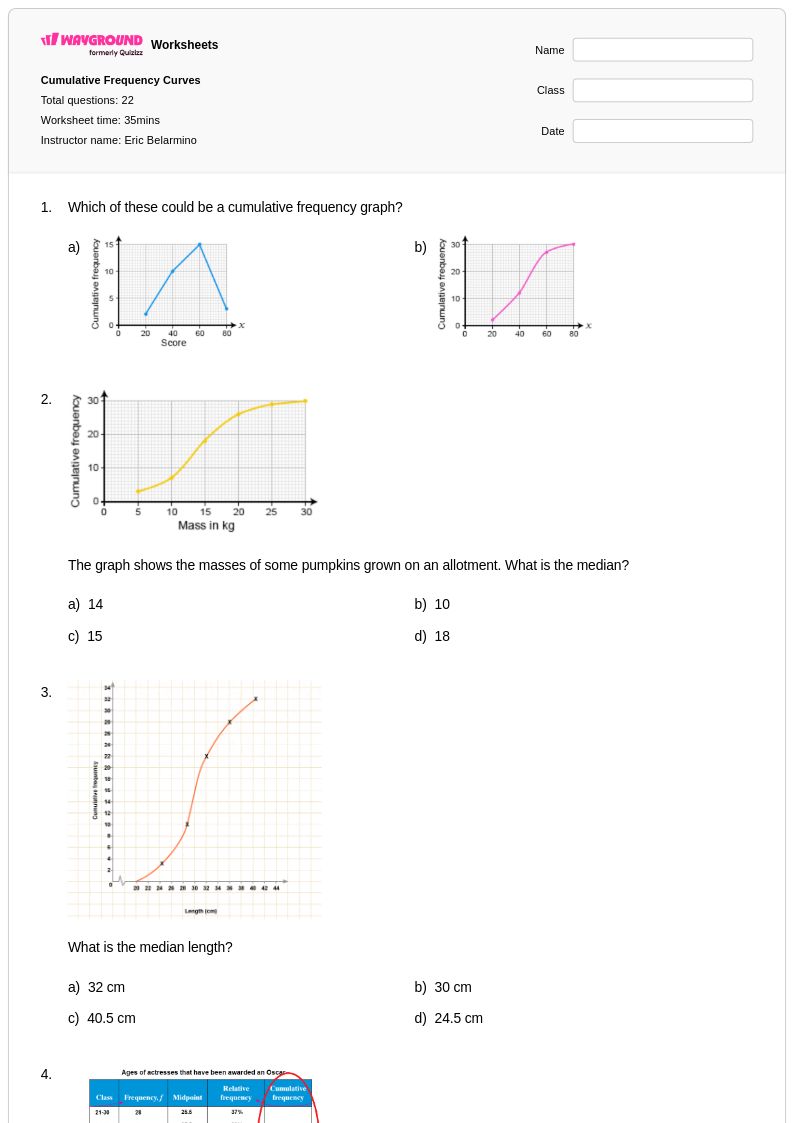
22 Q
10th
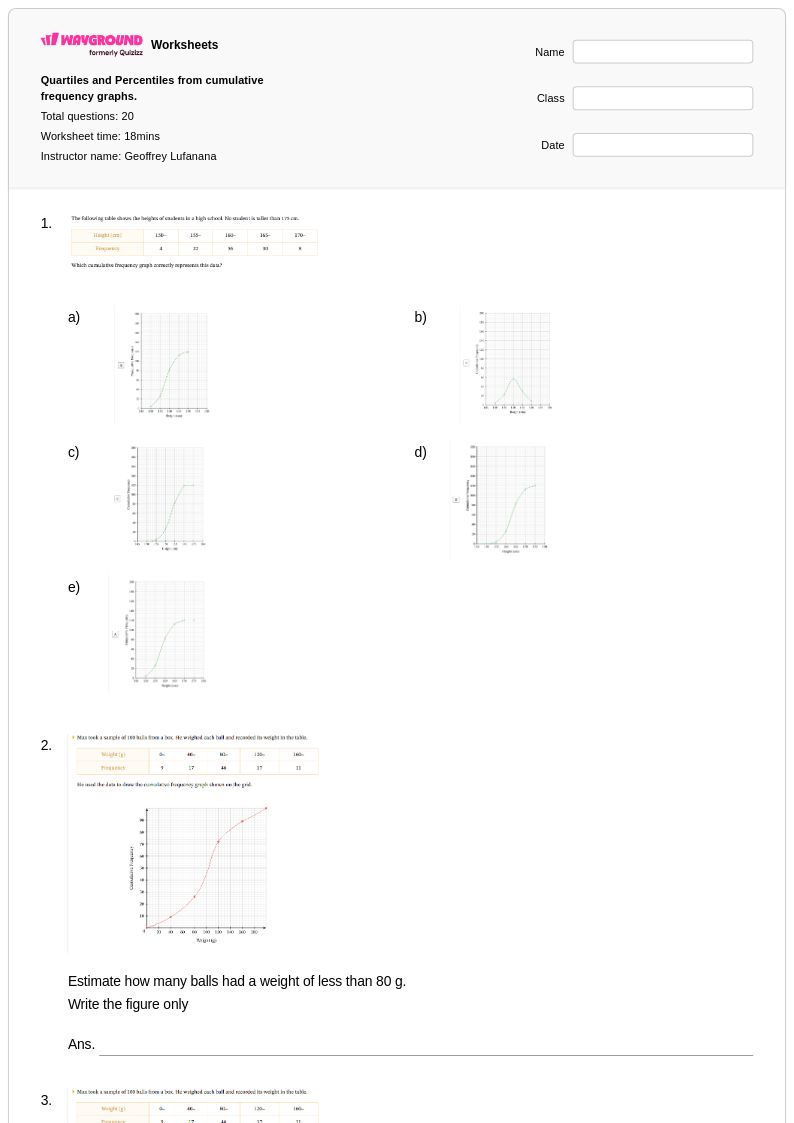
20 Q
10th
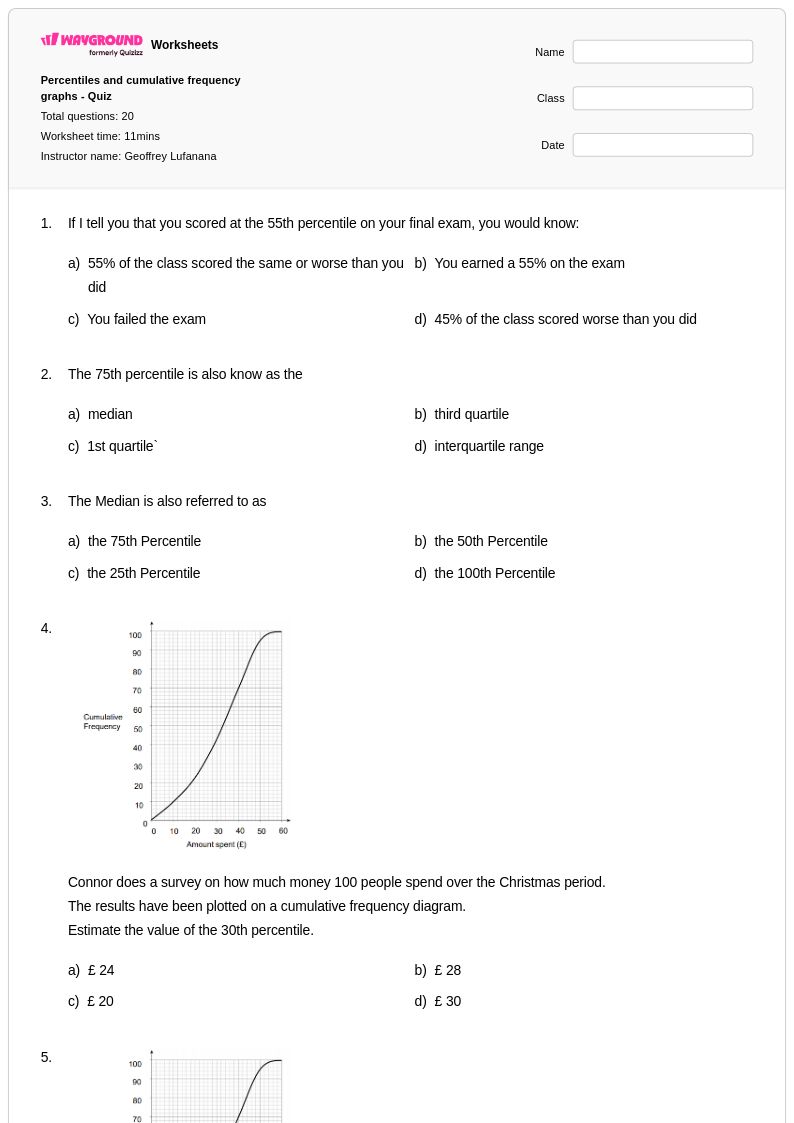
20 Q
10th
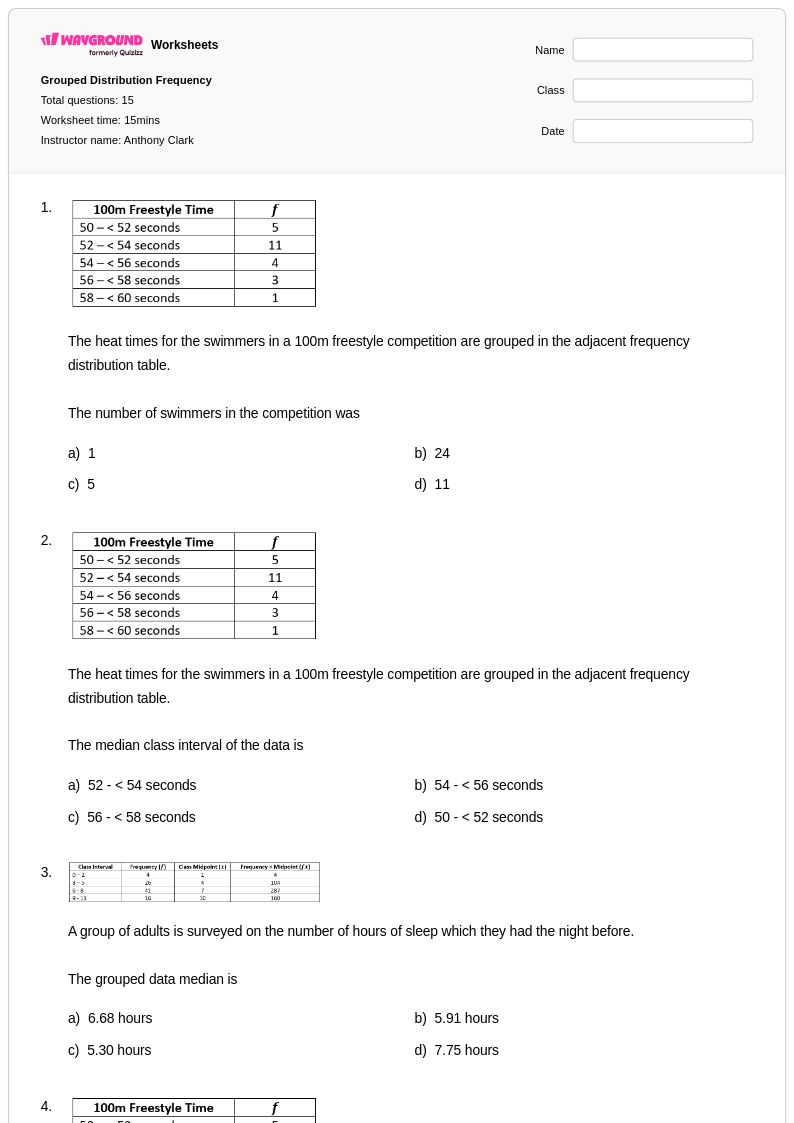
15 Q
9th - Uni
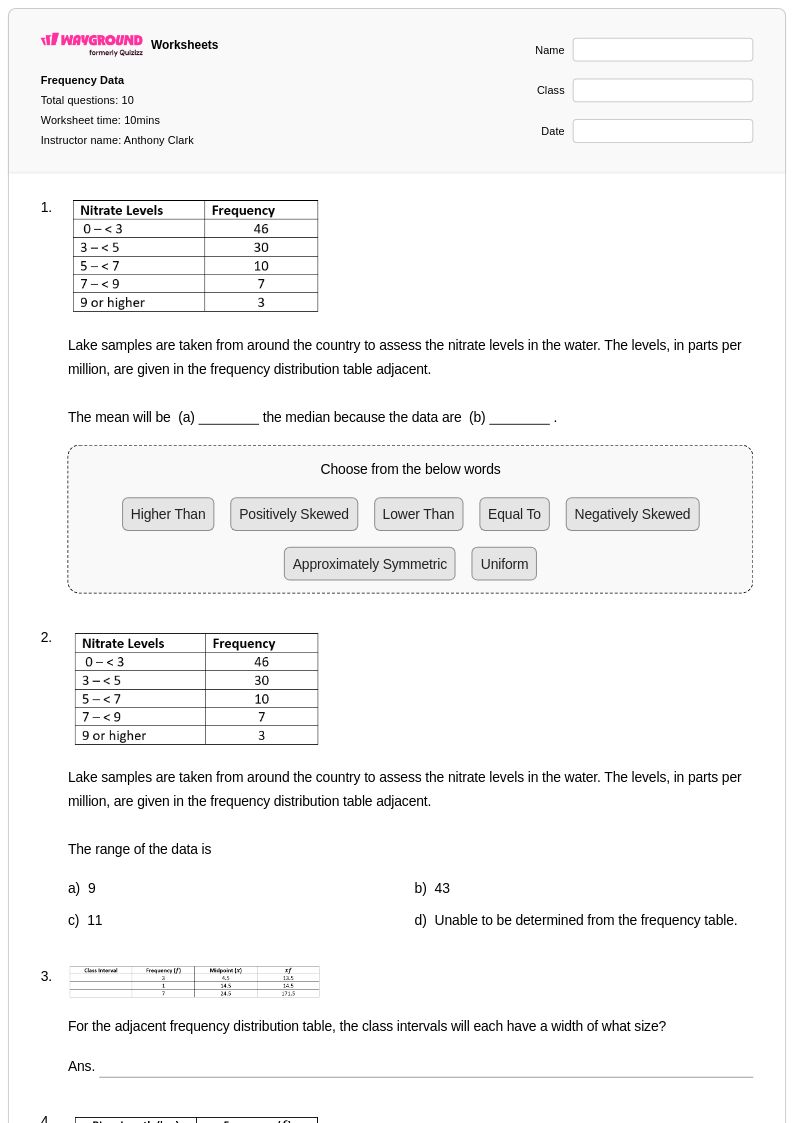
10 Q
10th - Uni
Explore Cumulative Frequency Worksheets by Grades
Explore Other Subject Worksheets for grade 10
Explore printable Cumulative Frequency worksheets for Grade 10
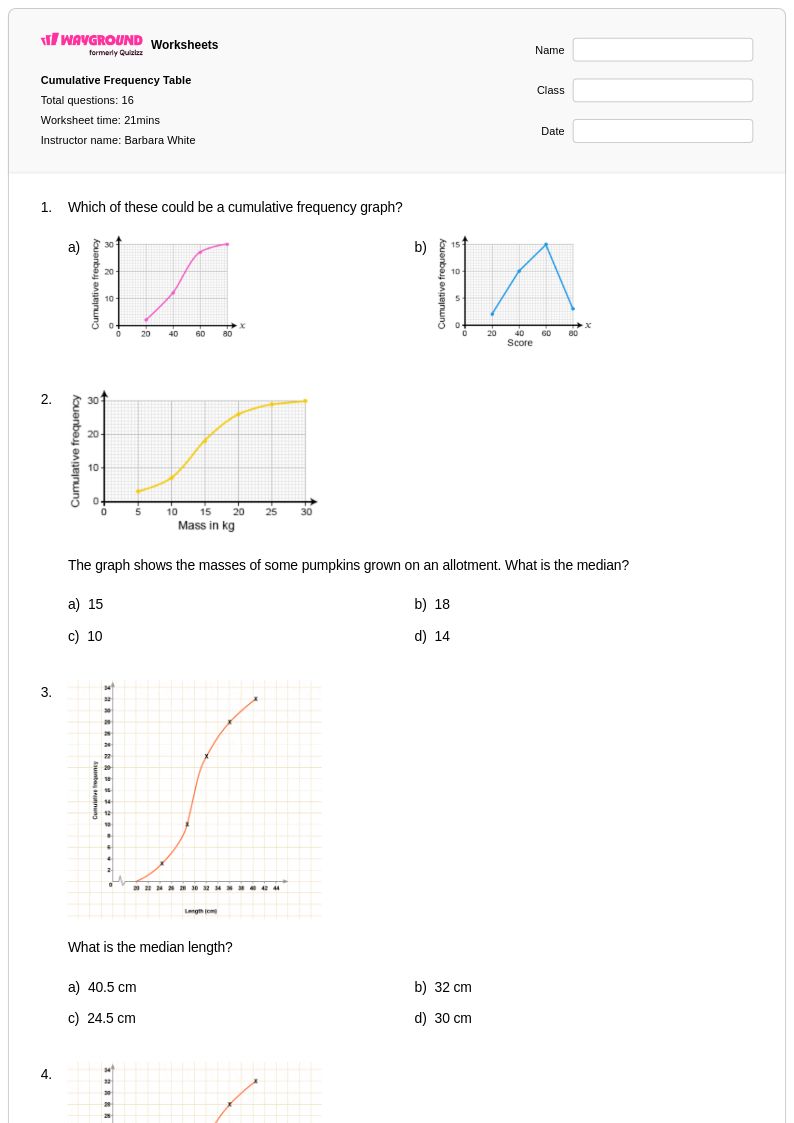
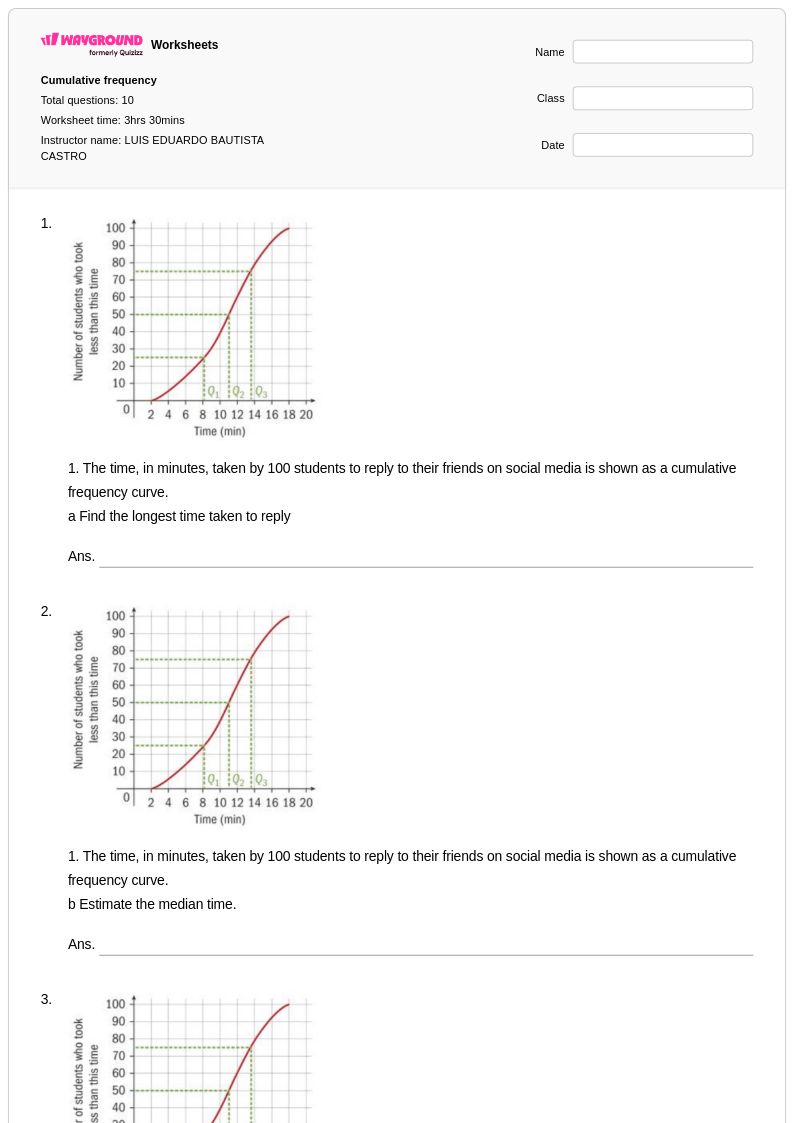
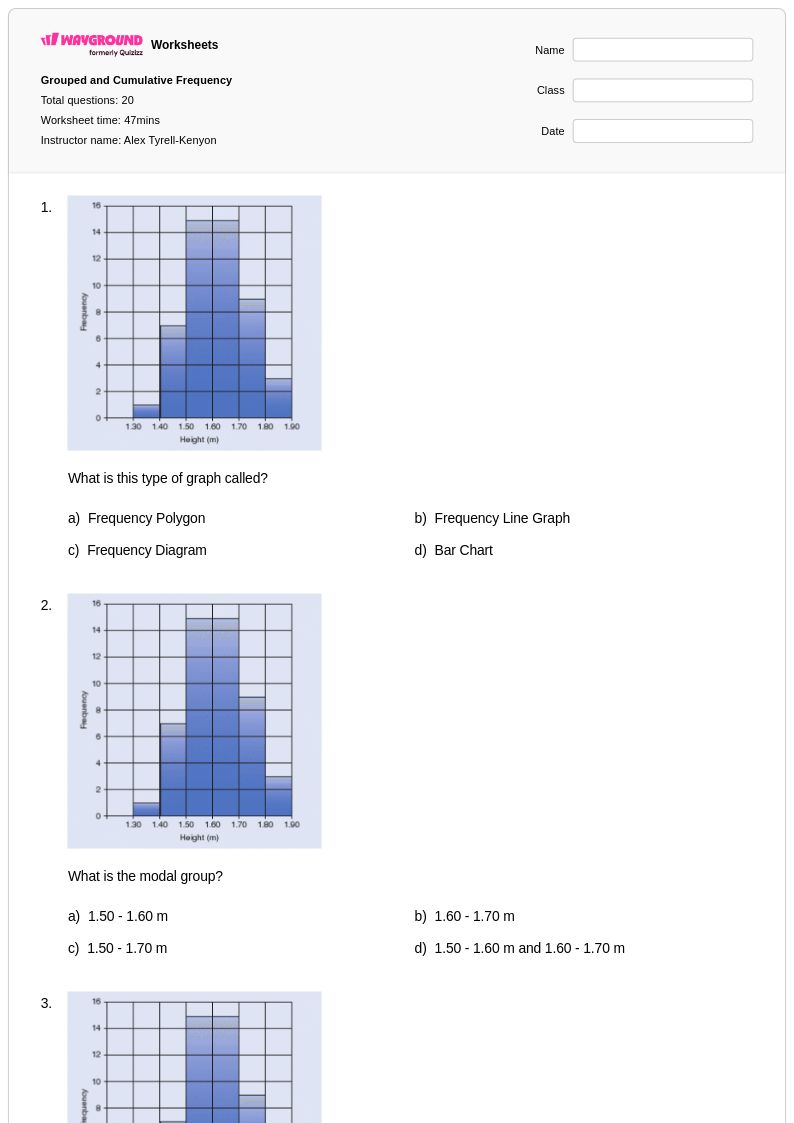
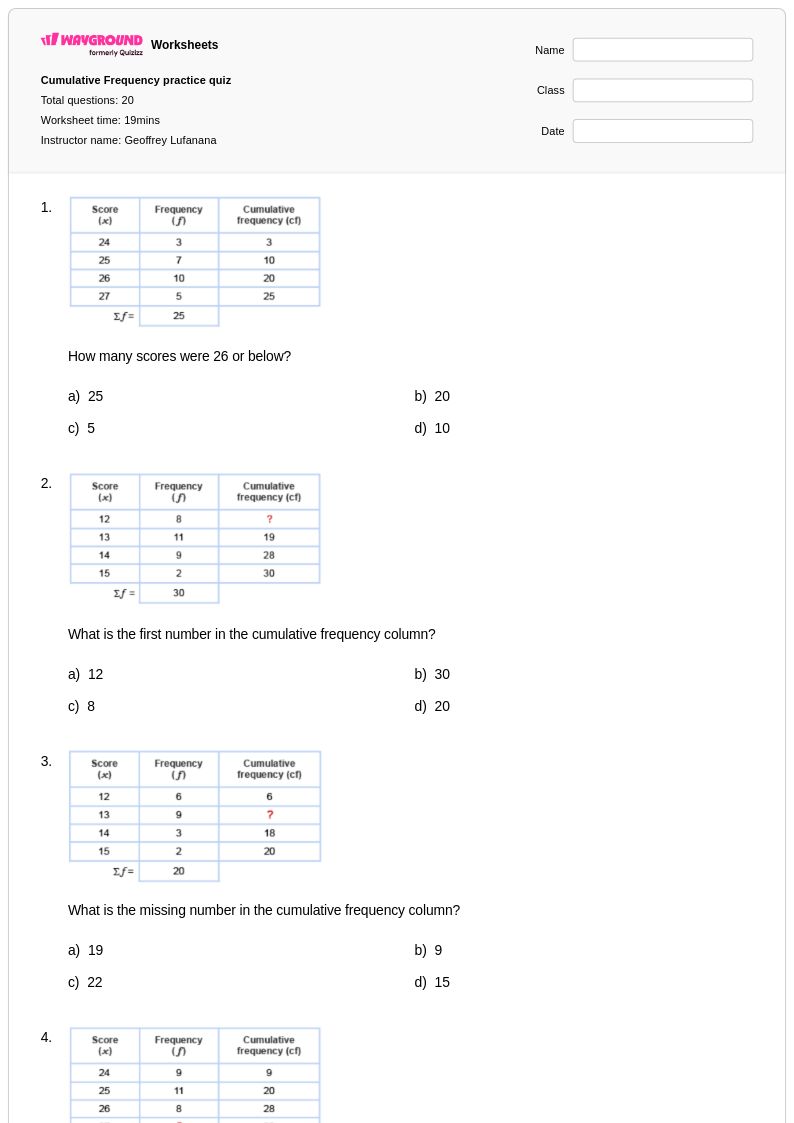
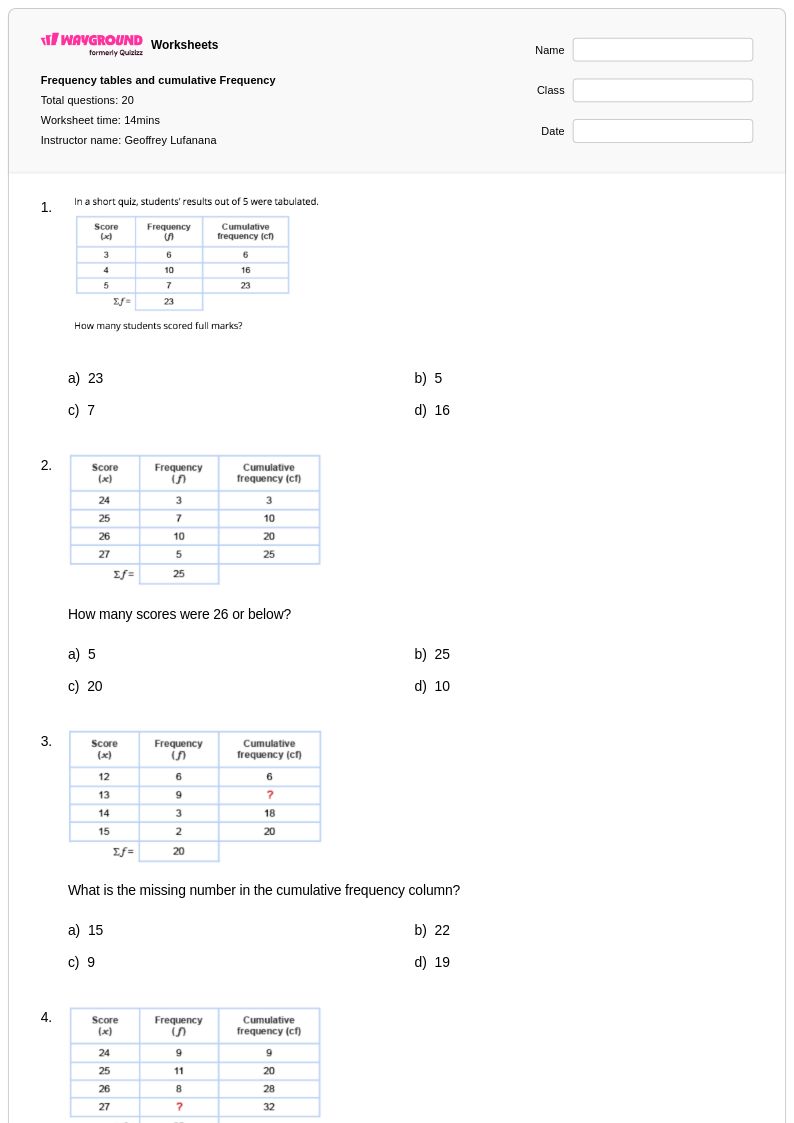
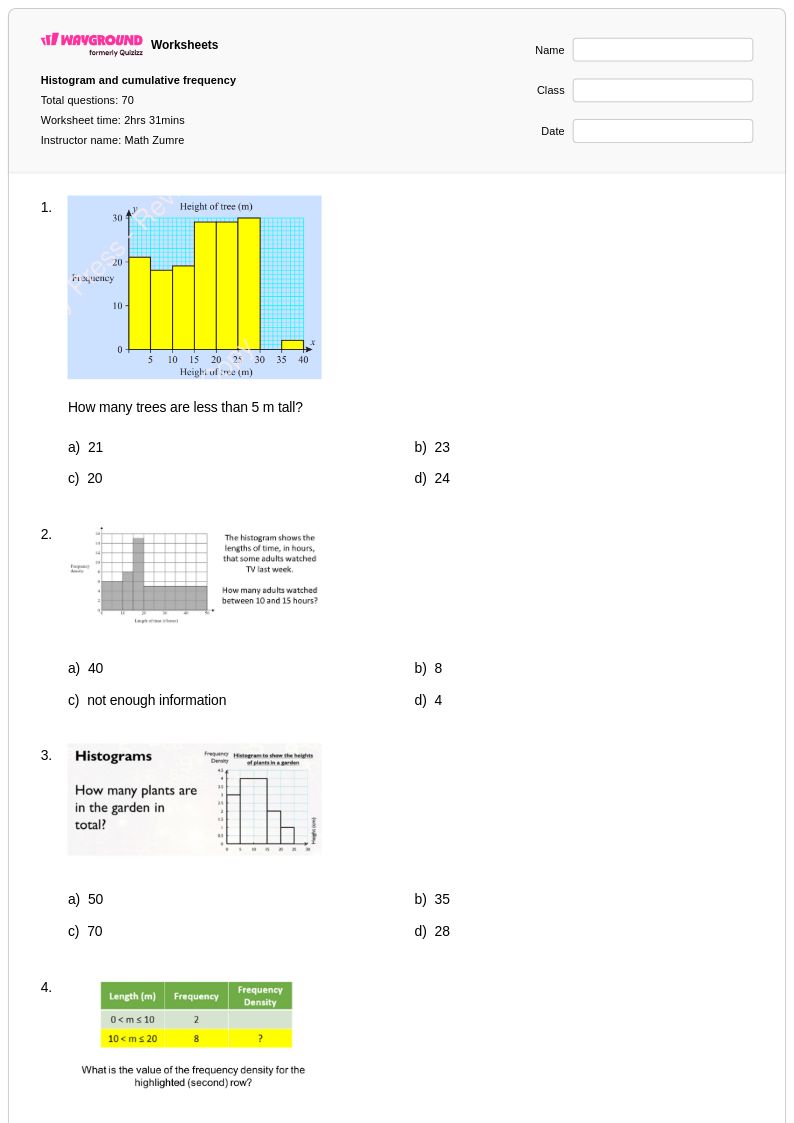
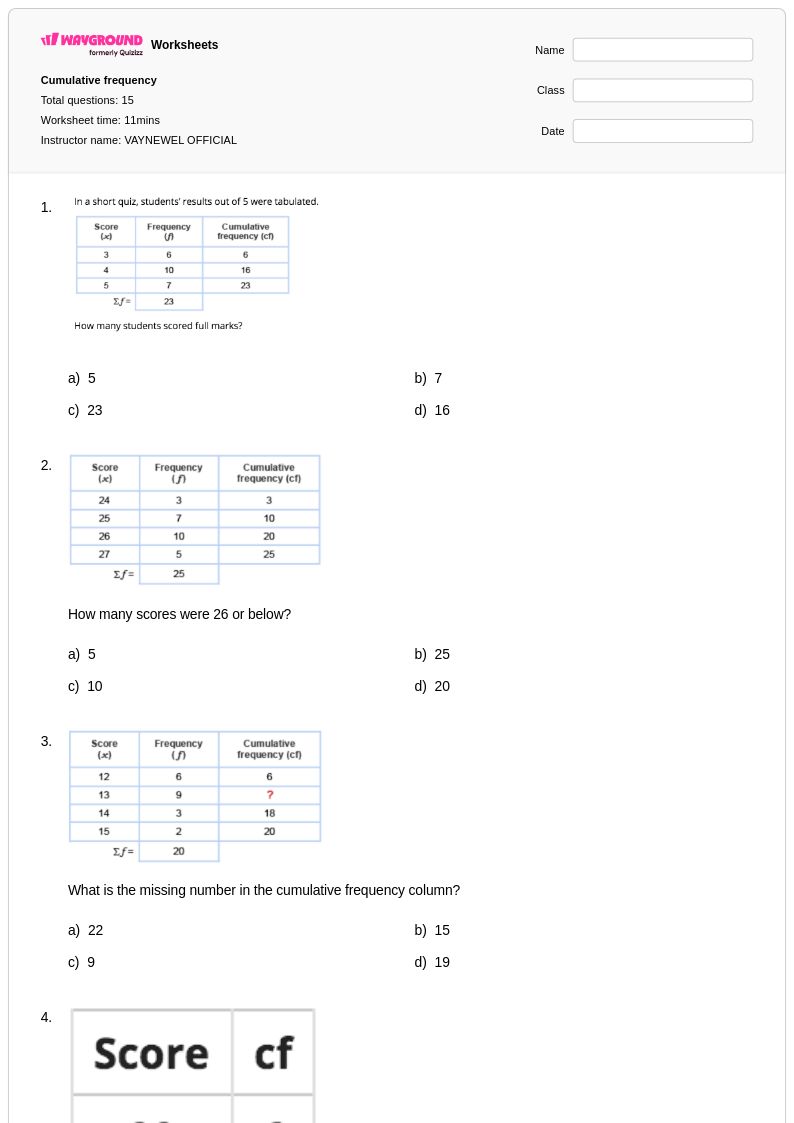
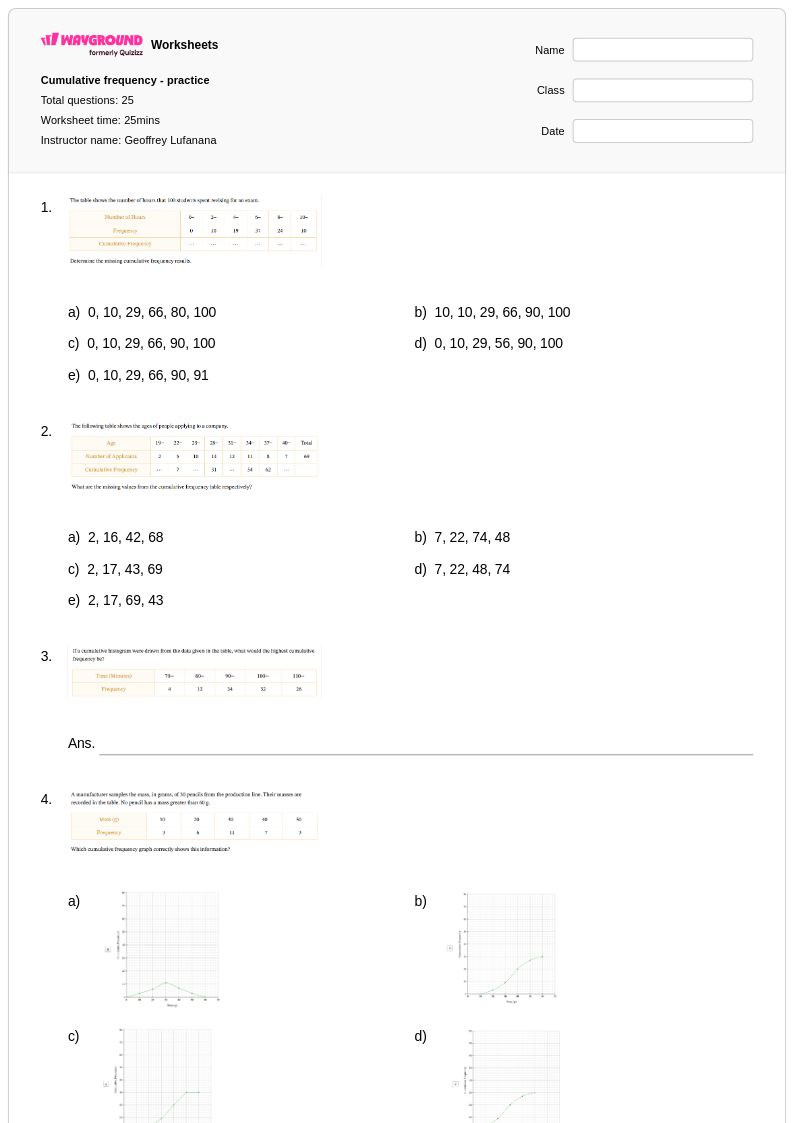
Grade 10 cumulative frequency worksheets available through Wayground (formerly Quizizz) provide comprehensive practice opportunities for students to master this essential statistical concept. These carefully designed resources focus on helping students understand how to construct cumulative frequency tables, interpret cumulative frequency graphs, and analyze data distributions using quartiles, percentiles, and median values. The worksheets strengthen critical analytical skills by guiding students through step-by-step processes for organizing raw data, calculating running totals, and creating visual representations such as cumulative frequency curves and histograms. Each practice problem set includes detailed answer keys that allow students to verify their understanding of concepts like finding the median from cumulative frequency data, determining interquartile ranges, and interpreting the shape of data distributions. These free printable resources serve as valuable pdf downloads that support both classroom instruction and independent study, ensuring students develop confidence in statistical analysis techniques fundamental to advanced mathematics.
Wayground (formerly Quizizz) empowers educators with an extensive collection of millions of teacher-created cumulative frequency resources that streamline lesson planning and differentiated instruction for Grade 10 mathematics classrooms. The platform's robust search and filtering capabilities enable teachers to quickly locate worksheets aligned with specific curriculum standards, while advanced customization tools allow for seamless adaptation of content to meet diverse learning needs and ability levels. Whether accessed in printable pdf format for traditional paper-based activities or utilized through digital platforms for interactive learning experiences, these resources support comprehensive instructional approaches from initial concept introduction through remediation and enrichment activities. Teachers can efficiently identify materials targeting specific skills such as constructing ogives, calculating percentile ranks, or interpreting cumulative frequency distributions, enabling them to provide targeted practice opportunities that address individual student needs while maintaining rigorous academic standards in probability and statistics education.
FAQs
How do I teach cumulative frequency to Grade 10 students?
What exercises help students practice cumulative frequency?
What mistakes do students make with cumulative frequency graphs?
How can I use a Grade 10 cumulative frequency worksheet in class?
How does cumulative frequency fit into the Common Core statistics progression?
How can I differentiate cumulative frequency practice for mixed-ability students?
What grade do students learn cumulative frequency?